
Introduction
Your outdoor space deserves more than a basic pot shoved by the door. The right outdoor planter box changes everything — it adds structure, color, personality, and that polished finishing touch that makes a space feel genuinely designed. Whether you’re working with a tiny balcony, a sprawling front porch, or a garden that needs defining, these 23 styles prove that planters aren’t just containers. They’re statements. Let’s find your perfect match.
1. Classic White Cedar Window Box
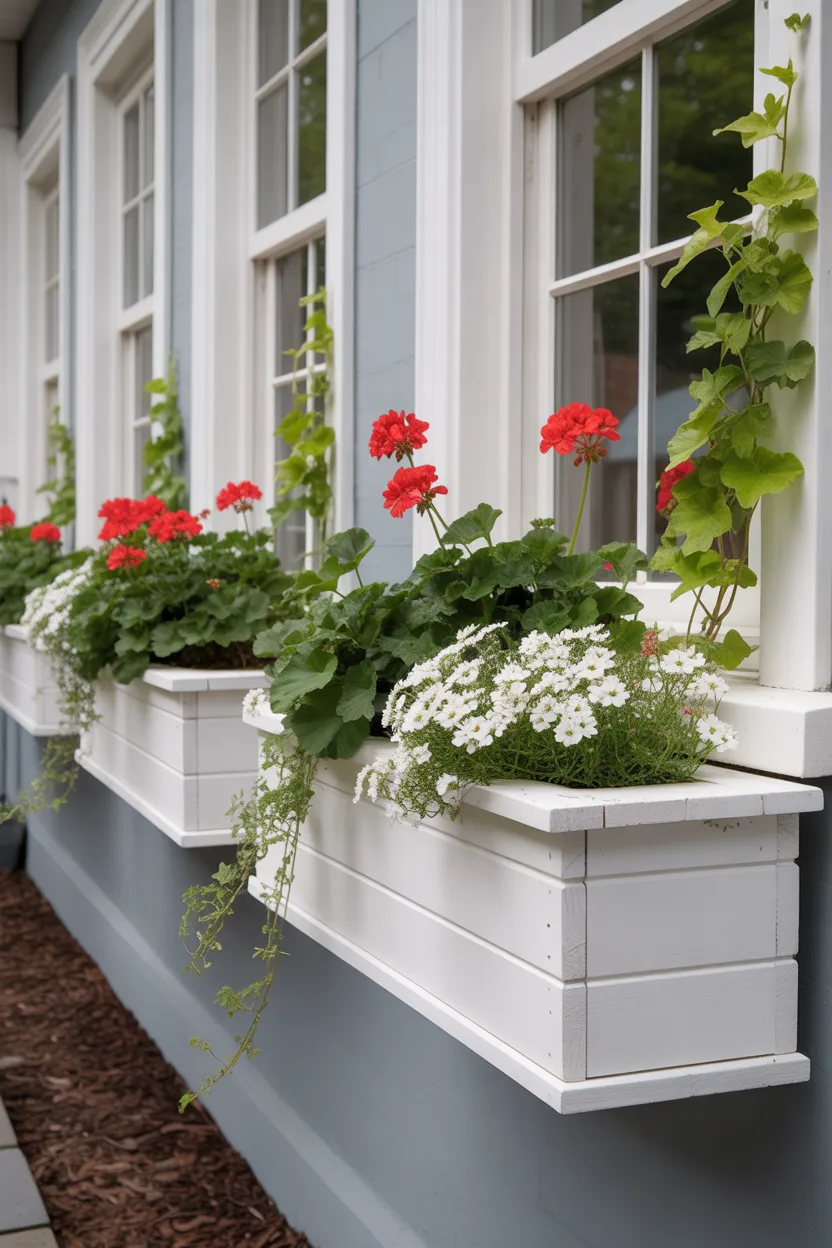
White cedar window boxes are the timeless workhorse of outdoor planter box design — and for good reason. Cedar is naturally rot-resistant, lightweight, and takes paint beautifully, which makes it the most practical wood choice for long-lasting outdoor use. Paint it crisp white and it complements virtually every exterior color imaginable, from deep charcoal siding to warm greige or classic red brick. The clean, rectangular silhouette reads as traditional without being boring, and the neutral base lets your plant choices do all the expressive, colorful heavy lifting.
The secret to making these boxes look expensive is uniformity. Plant each box with the exact same combination — one upright thriller, one rounded filler, one trailing spiller — and repeat that formula across every window. That repetition creates a rhythm across your facade that signals intentional design rather than random decoration. Choose a color story and commit to it: red and white for a classic American look, purple and silver for a sophisticated European feel, or all-white for clean, editorial minimalism. Cedar window boxes reward consistency with results that genuinely stop people in their tracks.
2. Sleek Black Metal Rectangular Planter
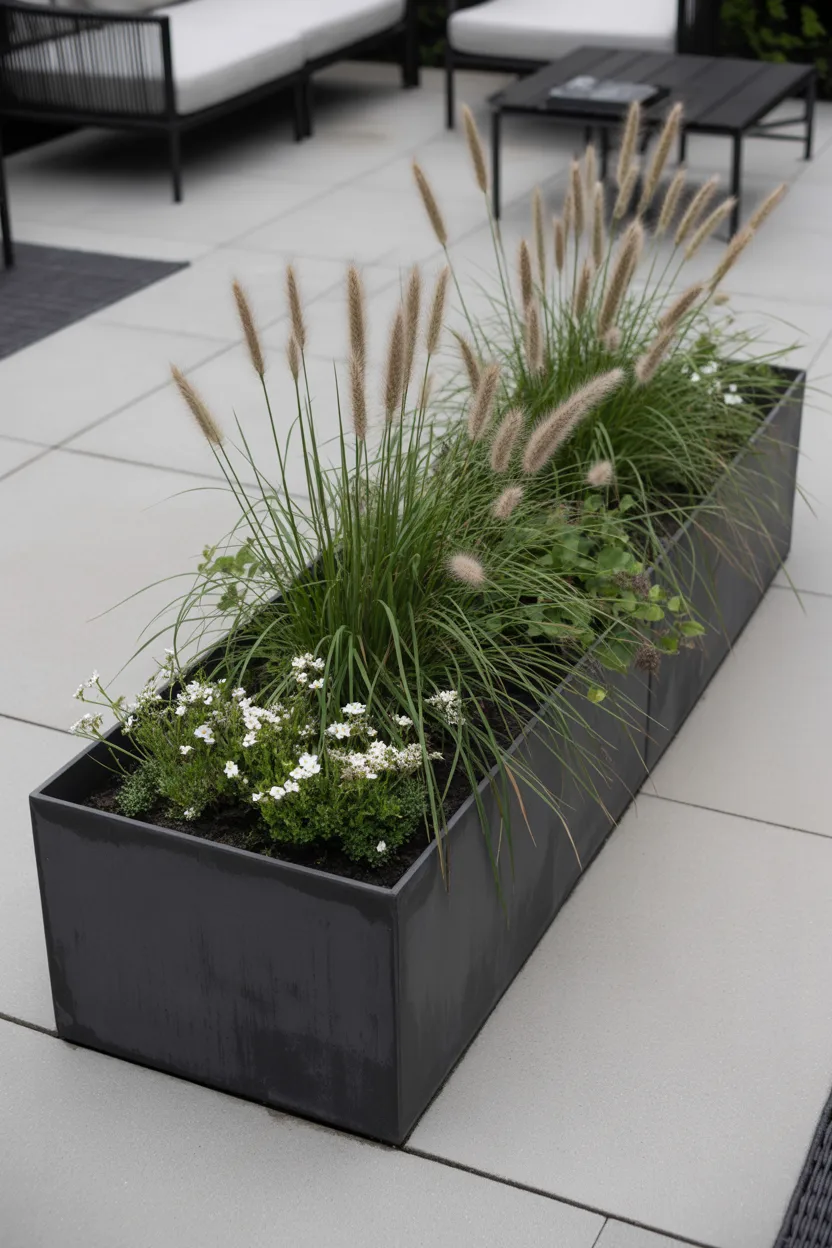
Few outdoor planter box styles communicate modern sophistication as immediately and effortlessly as a sleek black metal rectangle. The matte powder-coated finish absorbs light rather than reflecting it, which gives the planter a quiet visual weight that grounds any space it occupies. Set against a light-colored patio, deck, or exterior wall, the contrast is graphic and intentional — the kind of detail you’d see in an architectural magazine spread. These planters work beautifully in pairs flanking an entryway or in a long single run along a deck railing.
The plant choices you make inside a black metal planter matter enormously. The dark container provides maximum contrast for light-colored and textured plants — white flowering perennials, silver-leaved artemisia, pale ornamental grasses, or the bold architectural spikes of agave and cordyline all look extraordinary against that dark backdrop. Avoid dark-foliaged plants like burgundy heuchera inside black planters, as the contrast disappears entirely. Keep the surrounding space equally minimal and considered — black metal rectangular planters are architectural objects, and they thrive in spaces that give them room to breathe and be seen clearly.
3. Rustic Wooden Crate Planter
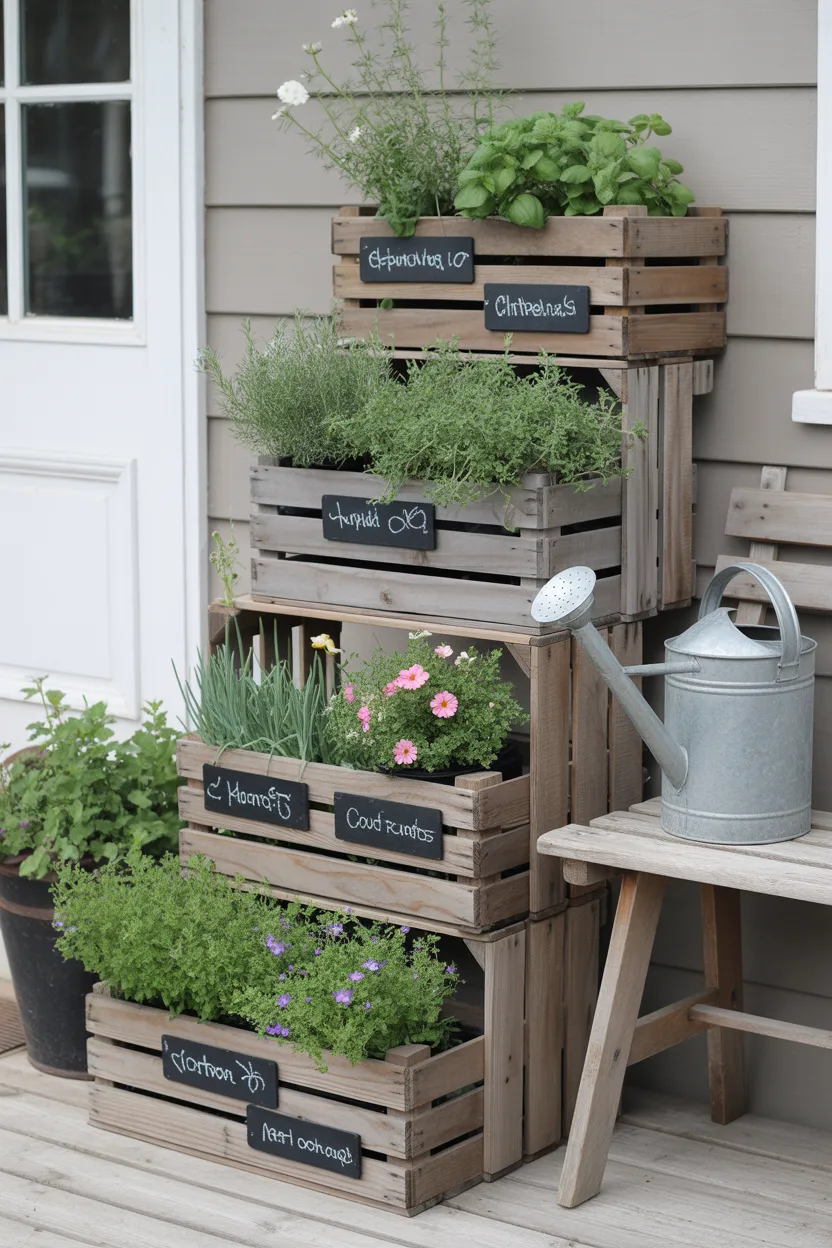
Rustic wooden crate planters bring an instant sense of story and warmth to any outdoor space — they look like they’ve lived a full life before arriving on your porch, and that history is exactly their charm. Old produce crates, wine boxes, or timber packing crates repurposed as planters carry a character that no store-bought container can replicate. Leave them raw and weathered for maximum rusticity, or sand and seal them lightly to extend their outdoor life while preserving that worn, well-loved texture that makes them so visually compelling.
Stacking crates at varying heights creates a display with genuine visual dynamism. The different levels draw the eye upward and add depth that a flat row of matching pots simply can’t achieve. This style suits cottage gardens, farmhouse porches, and boho outdoor spaces perfectly. Plant with herbs for a functional and photogenic combination — rosemary, thyme, basil, and trailing nasturtiums tumbling over the edges look both beautiful and purposeful. For outdoor planter box styling, this rustic crate approach is one of the most repinned aesthetics on Pinterest, and it’s easy to understand why.
4. Tall Fiberglass Urn Planter
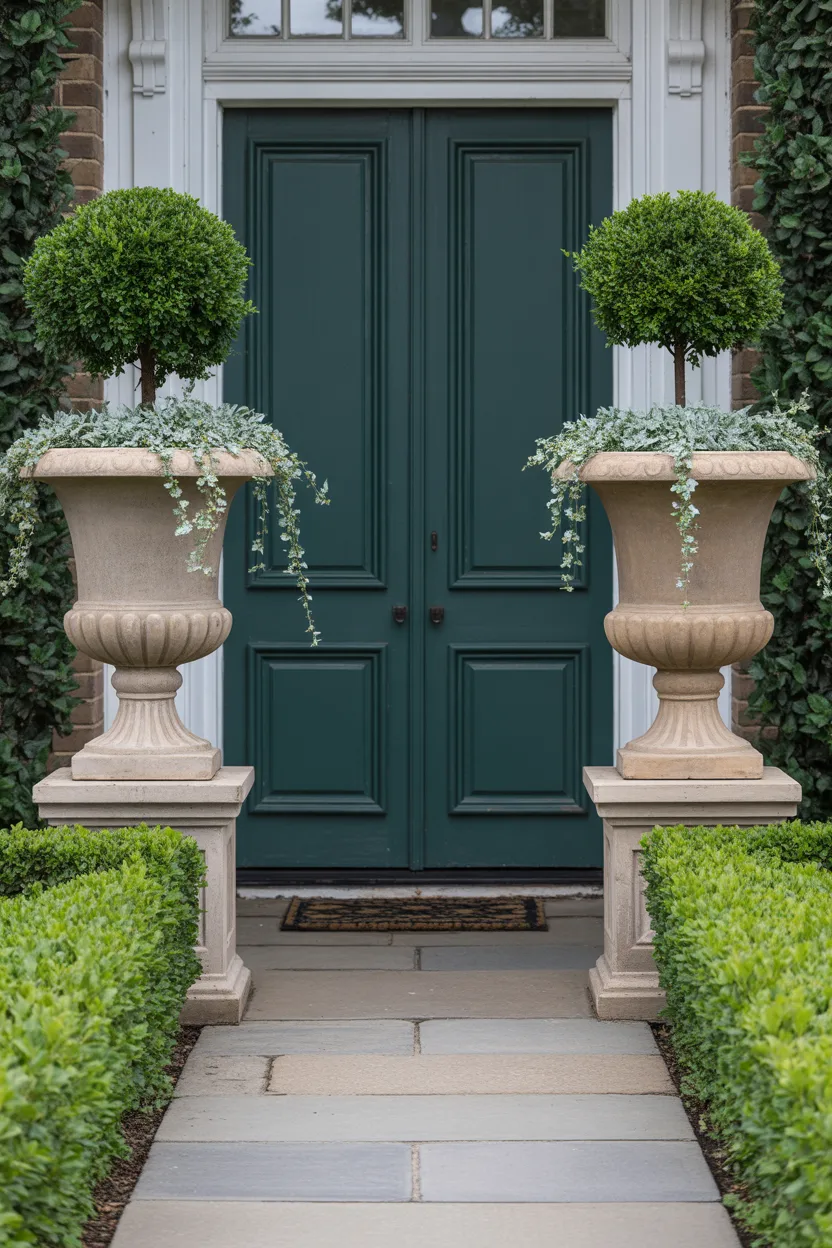
Tall urn-style planters have graced the entrances of grand estates and formal gardens for centuries — and modern fiberglass versions bring that same stately elegance to any home without the backbreaking weight of genuine stone or cast iron. Fiberglass urns can be finished to convincingly mimic antique terracotta, aged lead, Portland stone, or weathered cast iron, yet remain light enough to reposition seasonally. Place them on raised plinths to add even more height and formality, and the effect at a front entrance is genuinely impressive and architectural.
The planting style inside tall urns should match their formal character. A clipped ball or spiral topiary — boxwood, bay, or myrtle — planted centrally and underplanted with a soft trailing variety like silver dichondra or trailing rosemary maintains the structured, symmetrical aesthetic. For a more relaxed seasonal look, fill them with architectural grasses and bold flowering specimens that spill over the rim dramatically. What matters is scale: the plants must be proportional to the urn, which means generous planting rather than a single small specimen lost inside a large outdoor planter box vessel.
5. DIY Concrete Block Planter
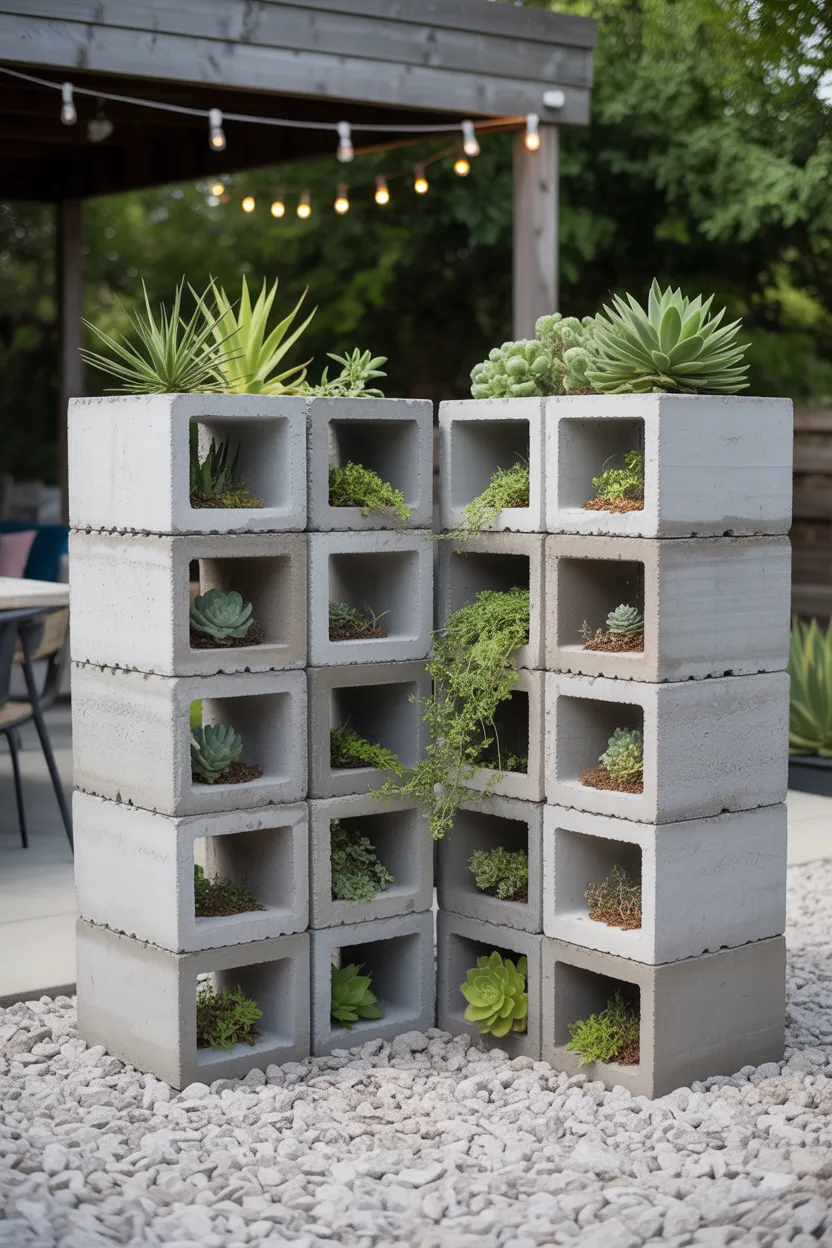
Concrete block planters are one of the most satisfying DIY outdoor planter box projects because the investment is minimal and the design potential is genuinely surprising. Standard cinder blocks cost very little per unit and can be stacked, arranged, and configured in countless ways — straight runs, L-shapes, U-shapes, stepped tiers — without a single tool or drop of adhesive required. Each hollow opening becomes its own individual planting pocket, which means a single block planter can host a dozen different plant varieties simultaneously, creating a rich tapestry of color and texture from simple gray concrete.
The beauty of concrete is its raw honesty. Left in its natural gray finish, it has an industrial-minimalist quality that suits contemporary outdoor spaces beautifully. Paint it white or charcoal for a cleaner look, or apply a concrete stain in terracotta or slate tones for something warmer. Succulents, trailing sedums, and compact herbs are perfect for the individual block openings, while the top planting surface can host larger specimens or grasses. This outdoor planter box approach requires zero carpentry skill and produces a result that genuinely impresses — especially when the plants begin to fill in and spill over the edges.
6. Hanging Wooden Box Planter on Fence Rails
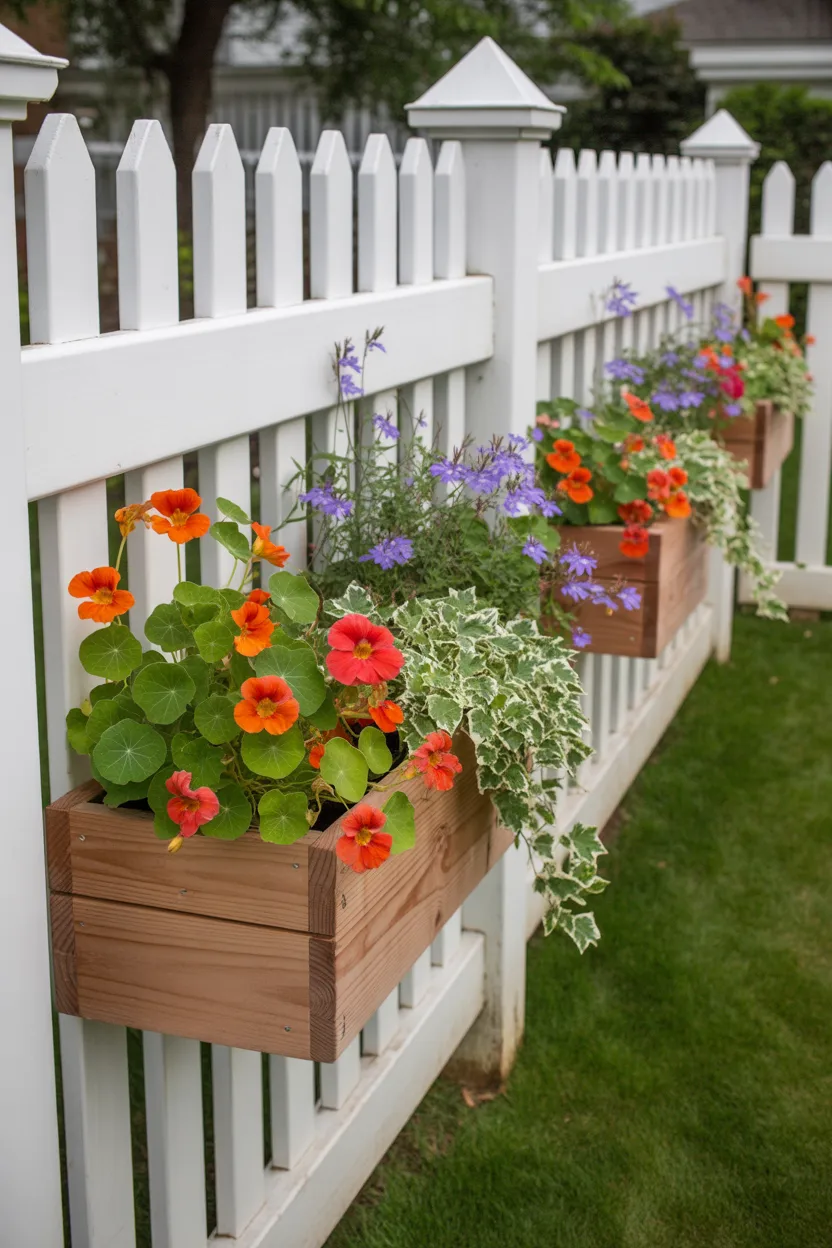
Fence-mounted wooden box planters are one of those ideas that seems simple until you see it done well — and then it’s absolutely impossible to scroll past. Attaching planter boxes directly to fence rails transforms a boundary structure into a living garden feature, adding color and softness at exactly the height where your eye naturally travels. This approach is particularly brilliant in smaller gardens where ground space is limited: you’re effectively gardening vertically, adding planting area without sacrificing a single square foot of patio or lawn.
Cedar is the best material for fence-mounted boxes because of its natural resistance to rot and its light weight — important when you’re hanging a soil-filled box from a fence that wasn’t necessarily designed to carry that load. Use galvanized screws and sturdy mounting brackets rated for the weight of your filled planters. Space the boxes evenly along the fence run for a deliberate, rhythmic effect. Plant with trailing varieties that spill down the fence face — this vertical cascade is what makes fence-mounted outdoor planter boxes so extraordinarily photogenic and so consistently popular as a Pinterest garden idea.
7. Tiered Wooden Planter Stand
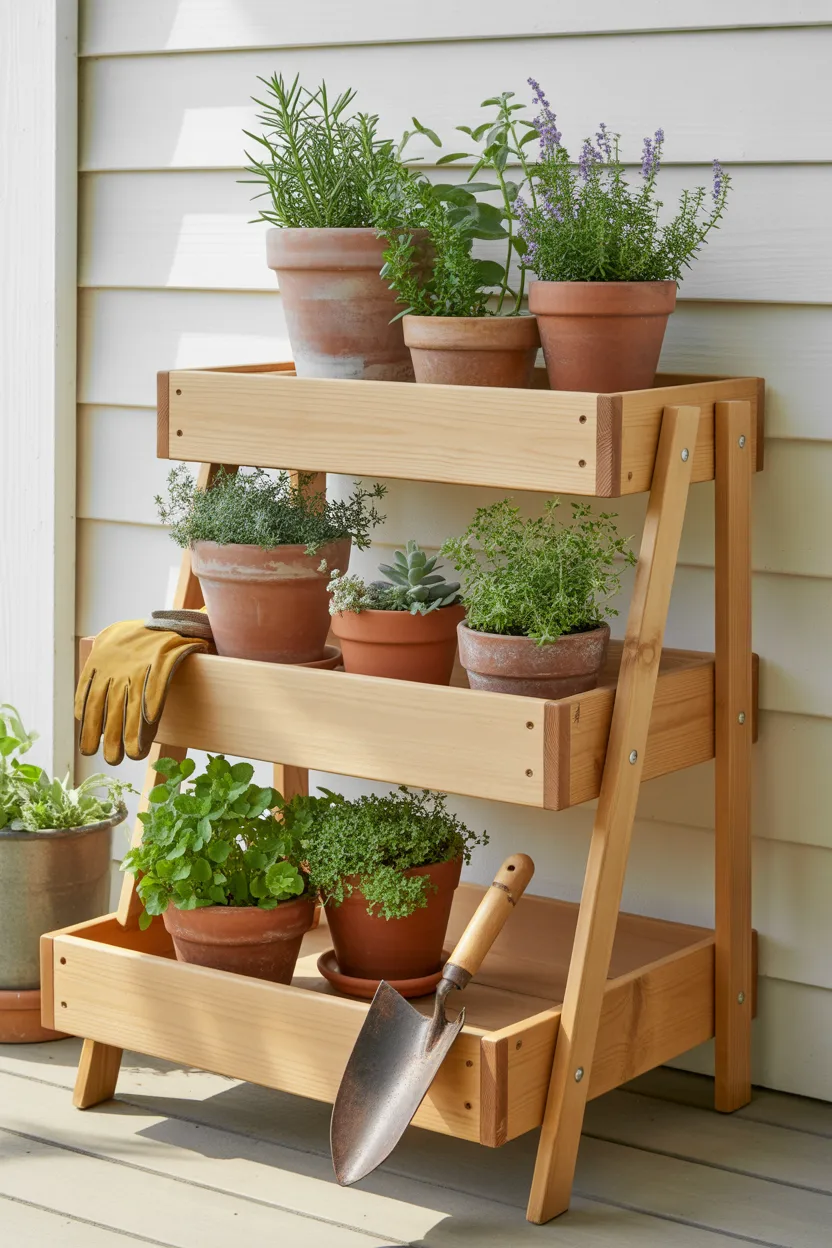
A tiered wooden planter stand does something single-level arrangements simply can’t — it creates a genuine sense of verticality and layered display that turns a collection of pots into a curated garden moment. The staggered height levels allow every plant to be seen individually while contributing to a unified overall composition, and the structure itself becomes part of the display. Positioned on a porch, patio corner, or balcony, a well-made tiered stand draws the eye immediately and anchors the space with a sense of considered, purposeful styling.
The genius of this format is flexibility. Because individual pots sit on the tiers rather than being planted directly into the stand, you can rotate them seasonally — bringing spring bulbs to the front in March, swapping them for summer annuals in June, and introducing autumn foliage in September. This makes the stand a year-round display piece that always looks fresh and current. For an outdoor planter box arrangement that doubles as furniture-quality outdoor decor, invest in a well-jointed hardwood stand — teak, cedar, or oak — and it’ll reward you with years of beautiful, endlessly adaptable garden display.
Explore more at : Pinterset
8. Corrugated Metal Raised Planter Bed
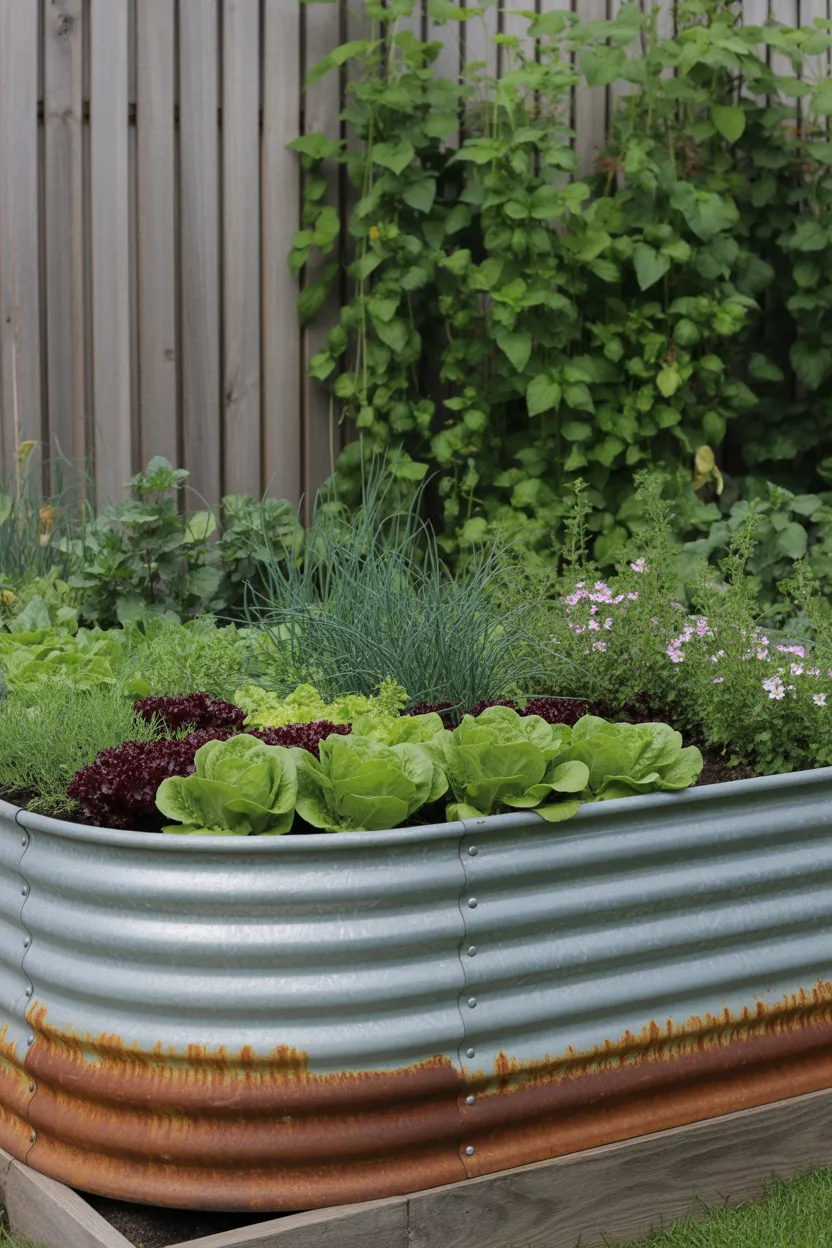
Corrugated galvanized metal raised planters have surged in popularity for one very simple reason: they look extraordinary. The industrial texture and silvery sheen of corrugated steel adds a contemporary edge to garden design that traditional timber beds simply can’t match, and as the metal weathers over time, it develops a natural patina of amber and rust tones that become even more beautiful and characterful. These planters are also incredibly durable — properly constructed galvanized beds can last fifteen to twenty years with virtually zero maintenance beyond occasional cleaning.
Their raised height is another significant advantage. Gardening at waist level eliminates bending, makes soil management easier, and creates a defined, architectural structure within the garden that looks both functional and designed. Fill them with a quality raised bed mix — not standard garden soil, which compacts — and plant generously for that abundant, overflowing look that makes kitchen garden outdoor planter boxes so irresistible on Pinterest. Grow vegetables, herbs, and edible flowers together for a potager-style arrangement that is simultaneously productive and genuinely beautiful to look at throughout the entire growing season.
9. Painted Terracotta Pot Cluster
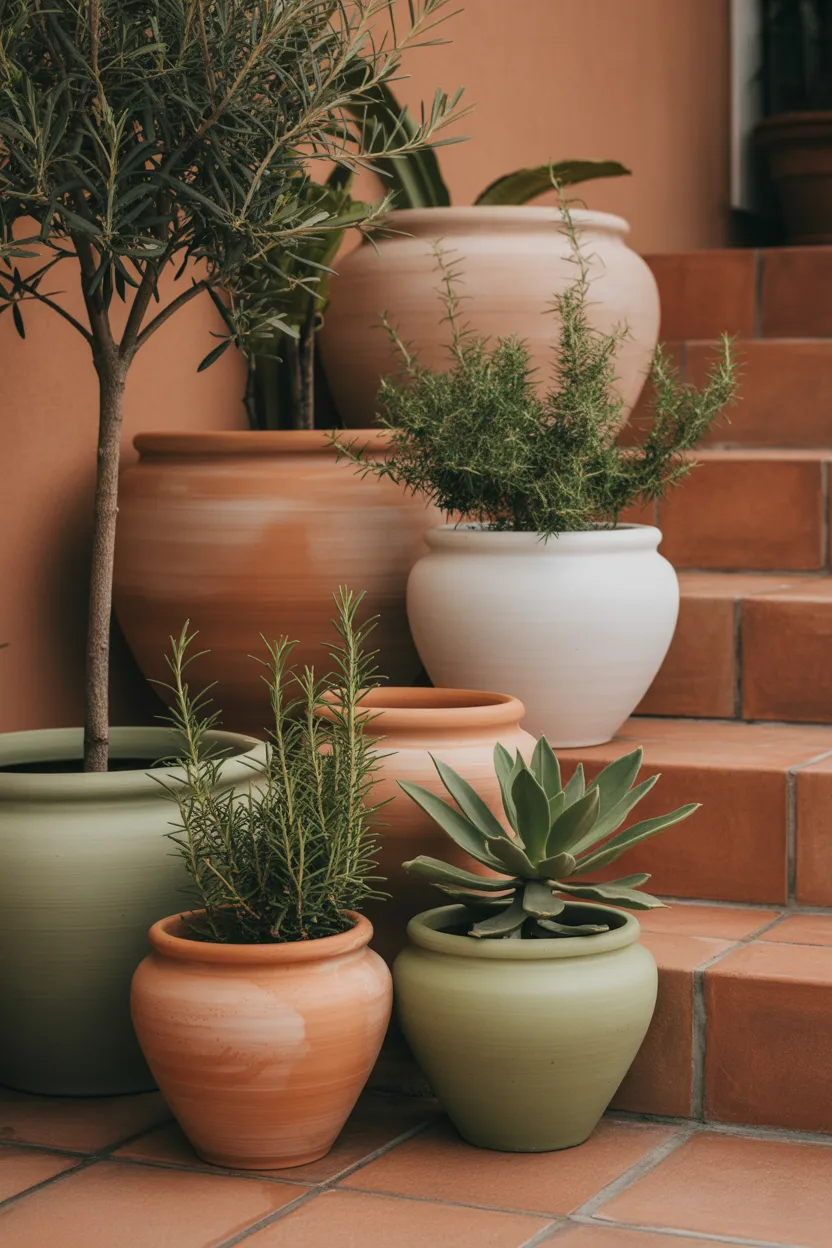
Terracotta pots are perhaps the most ancient and universal form of outdoor planter box, and their enduring popularity is no accident. The warm, earthen color is flattering to virtually every plant palette, the porous material allows roots to breathe, and the classic round silhouette suits every garden style from Mediterranean to contemporary. Painting them takes the aesthetic one step further, allowing you to introduce color, pattern, or artistic detail that transforms a standard nursery pot into something genuinely special and entirely unique to your outdoor space.
The cluster arrangement is where the real design magic happens. Group pots in odd numbers — three, five, or seven — at varying heights, using bricks, upturned pots, or timber blocks to elevate smaller specimens. Vary the sizes dramatically: one large anchor pot, two or three medium companions, and a handful of small accent pots. Coordinate the paint colors but don’t match them perfectly — a family of related tones reads more sophisticated than an exact match. Paint with exterior-grade chalk paint for a matte, artisan finish that weathers beautifully and makes your clustered terracotta outdoor planter box display look like it belongs in a Tuscan courtyard.
10. Vertical Pallet Planter Wall
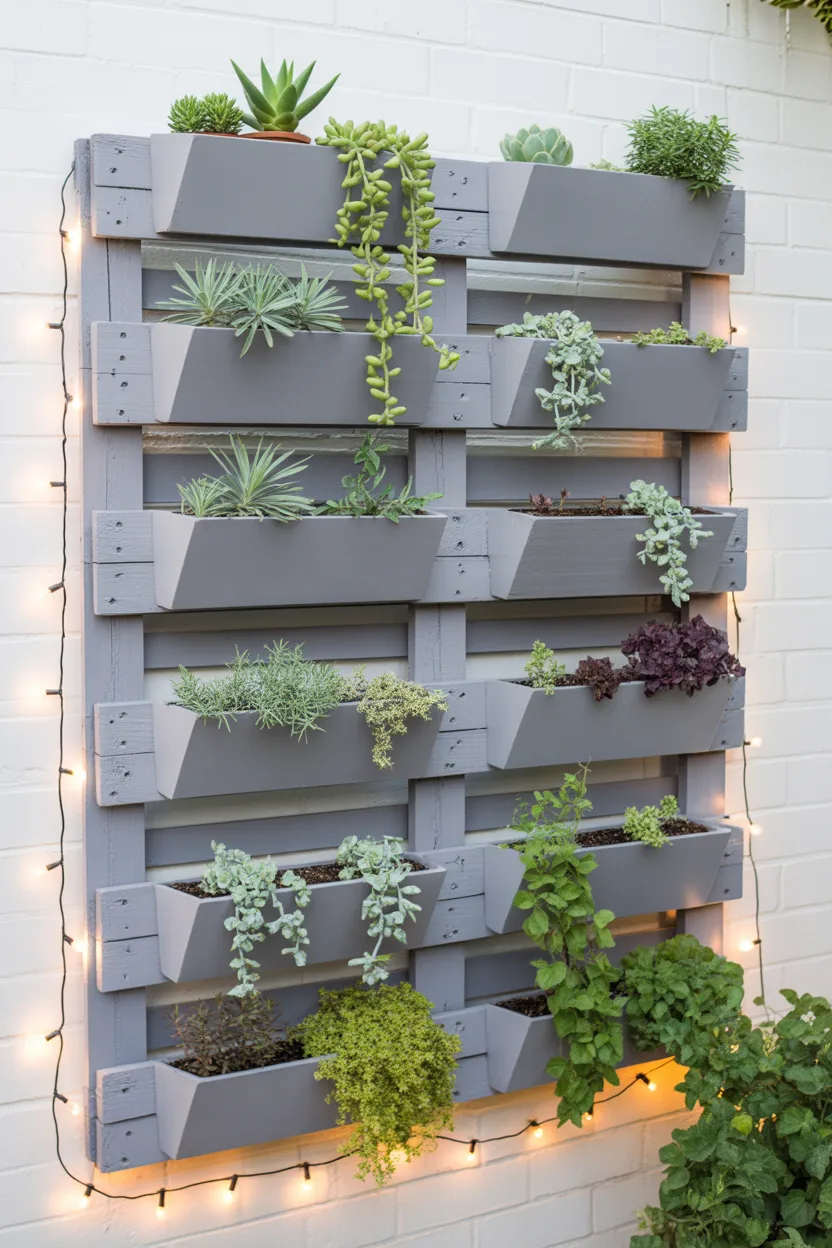
A vertical pallet planter is the ultimate space-saving outdoor planter box solution — it takes a footprint of approximately two square feet and turns it into a garden wall capable of hosting twenty or more individual plants simultaneously. The concept is brilliantly simple: a standard wooden shipping pallet, mounted vertically against a fence or exterior wall, with landscape fabric stapled behind the slat gaps to create individual planting pockets. Fill those pockets with a growing medium and plant with compact, shallow-rooted varieties, and within a few weeks you have a living wall that genuinely impresses.
Succulents are the most popular choice for pallet planters because their shallow root systems suit the limited soil depth and their drought tolerance forgives occasional missed waterings. Herbs work beautifully too — a culinary pallet planter with basil, thyme, oregano, parsley, and chives positioned near your kitchen door is as functional as it is photogenic. Lightly sand and paint the pallet before mounting — gray, white, or a warm walnut stain all look excellent — and seal it with an exterior wood preservative for longevity. This is one of the most budget-friendly and most visually dramatic outdoor planter box ideas on this entire list.
11. Farmhouse Galvanized Trough Planter
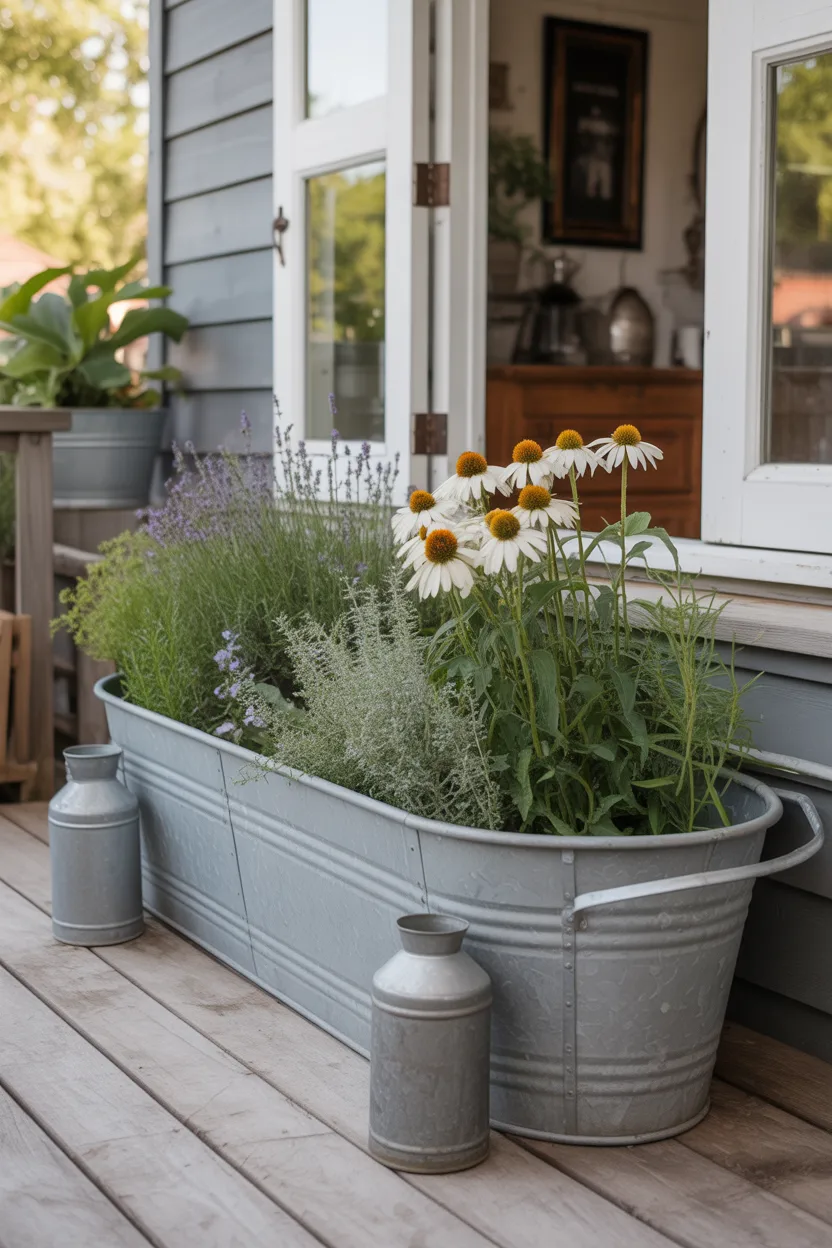
There is something deeply satisfying about a galvanized metal trough planter — it carries a utilitarian history that gives it instant authenticity, and its generous proportions allow for planting schemes that feel truly abundant and lush. Originally designed for watering livestock, these long rectangular troughs have been enthusiastically adopted by gardeners who recognize their ideal planter proportions: deep enough for substantial root development, wide enough for layered planting, and long enough to create a meaningful display rather than a token gesture.
Galvanized metal develops a beautiful, nuanced patina over time — shifting from bright silver to softer gray tones with occasional rust-amber highlights that add warmth and character. Drill drainage holes across the bottom before planting, as the solid metal base holds water that will quickly rot roots without adequate drainage. For an abundant, cottage-style planting, combine tall lavender or salvia at the back, medium-height echinaceas or yarrow in the middle, and trailing artemisia or catmint spilling over the front edge. This outdoor planter box style photographs beautifully, ages gracefully, and suits farmhouse, rustic, and transitional outdoor spaces equally well.
12. Modern Cube Planter in Weathered Teak
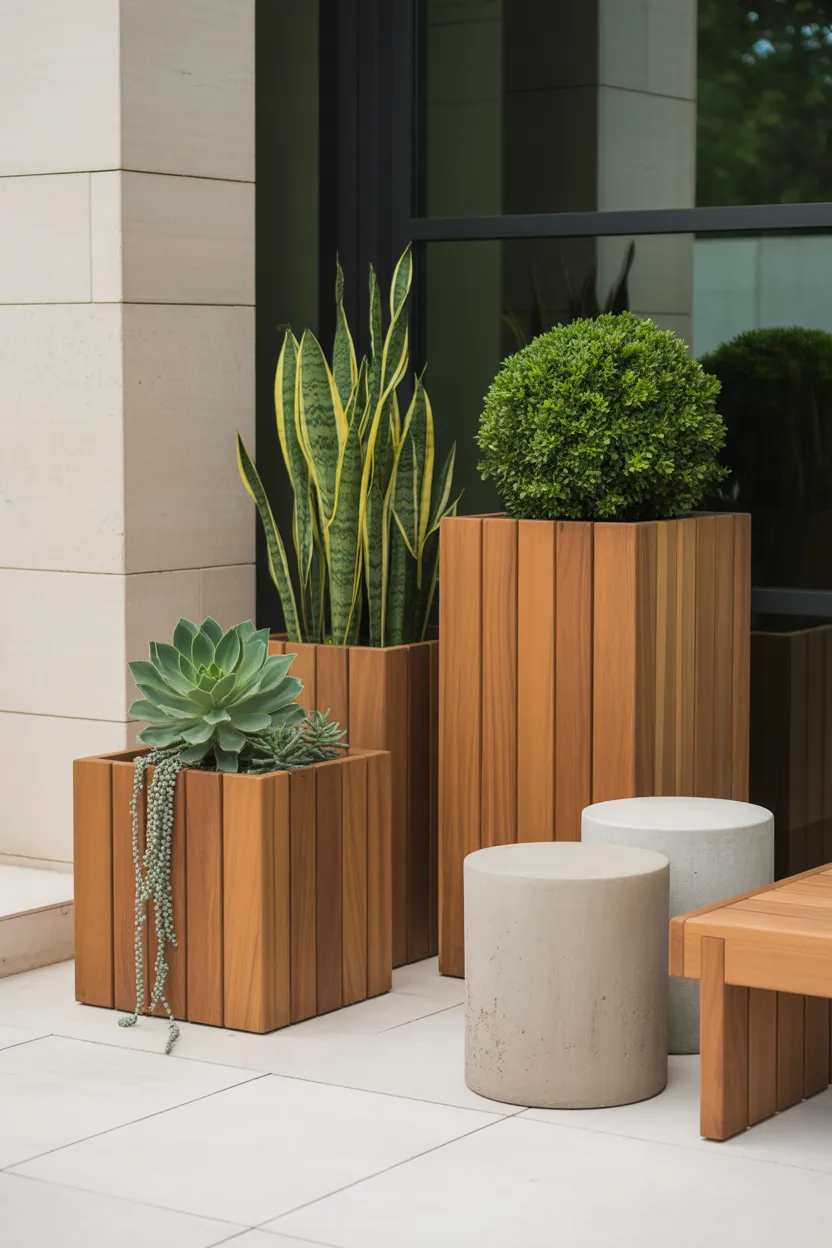
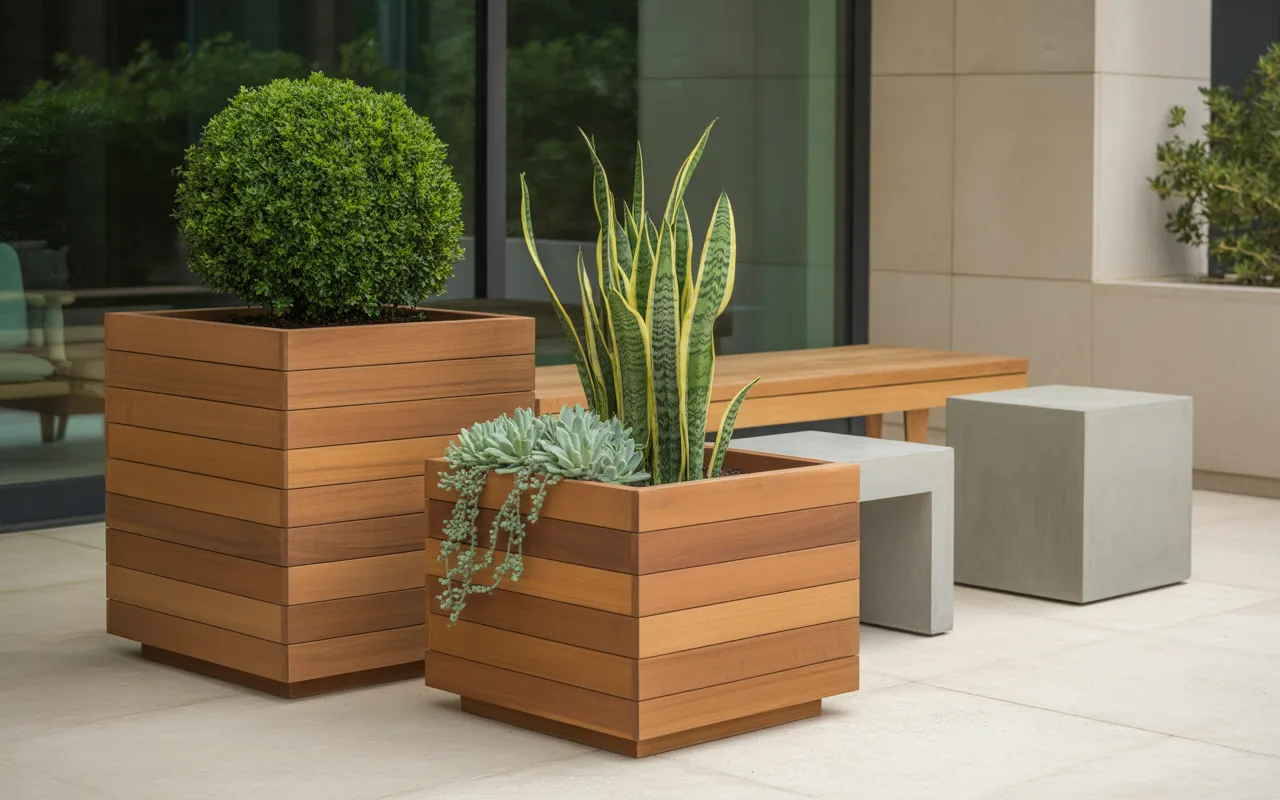
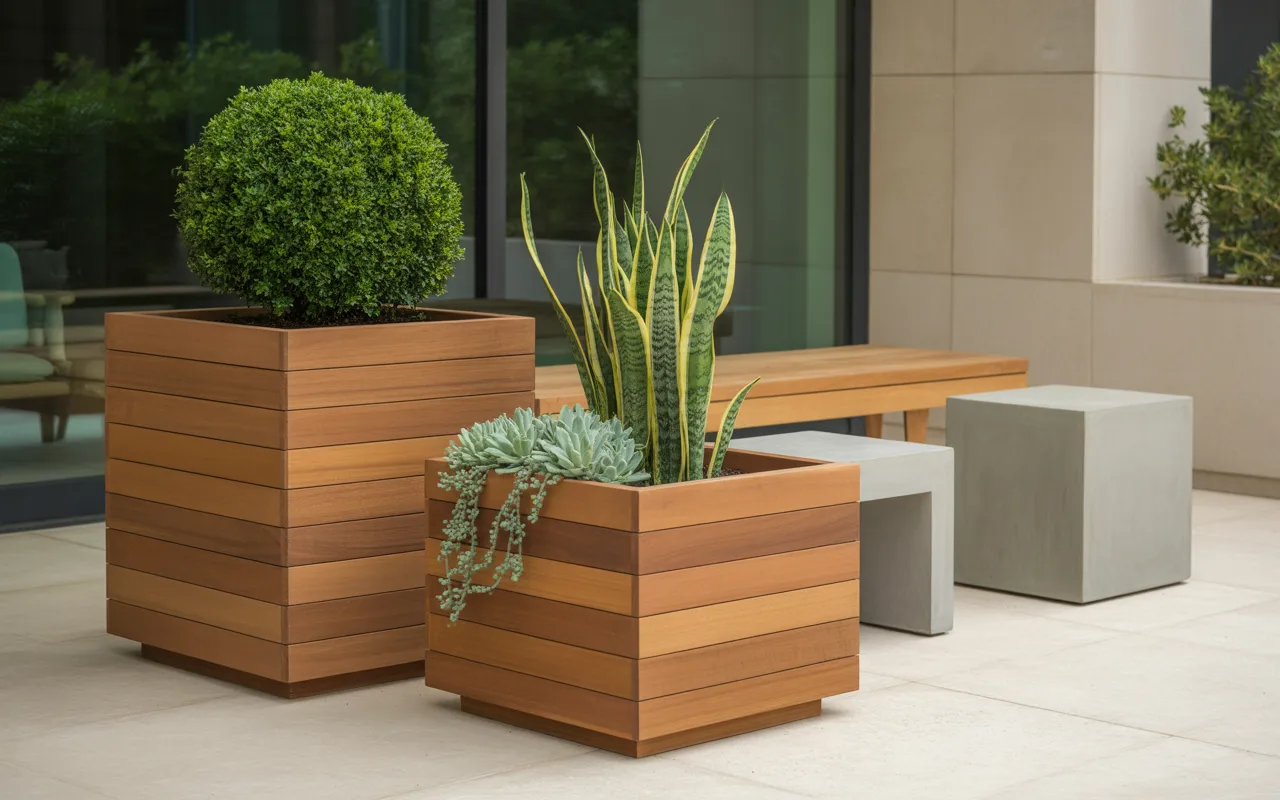
Cube planters in weathered teak occupy the intersection of fine furniture and garden design — they’re the outdoor planter box equivalent of investing in a quality piece of indoor furniture rather than a disposable prop. Teak is one of the most naturally durable hardwoods in the world, rich in natural oils that resist moisture, insects, and rot without any treatment required. Left to weather naturally, teak transitions from warm golden honey tones through silver-gray over its first year outdoors, developing a refined patina that makes it look more beautiful with age rather than less.
The cube form is the most architecturally versatile planter shape: it sits equally well in contemporary minimalist spaces, transitional garden designs, and even warmer, traditional settings when planted appropriately. Group three cubes in different sizes — large, medium, and small — for a designer vignette that feels curated and editorial. Plant each with a single bold specimen: a clipped topiary, a structural grass, or a sculptural succulent. That restraint — one plant per cube — is exactly what makes this outdoor planter box style look luxurious rather than busy. Less truly is more when the container is this beautiful.
13. Painted Ombre Planter Box
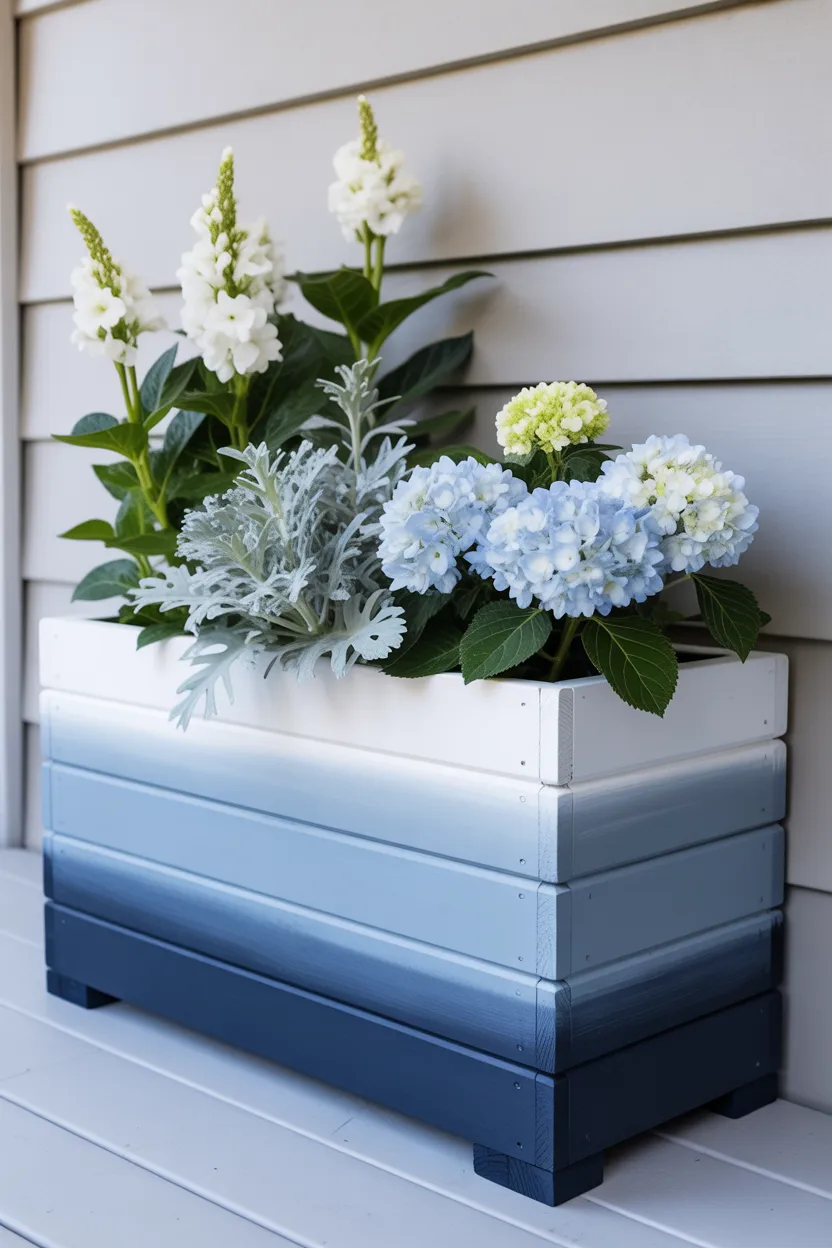
An ombre-painted planter box is the kind of outdoor planter box idea that stops people mid-scroll — it’s unexpected, artistic, and surprisingly achievable with a few cans of exterior paint and a dry brush. The gradient technique involves blending two or three related paint colors from darkest at the base to lightest at the rim, creating a wash of shifting color that gives the planter a hand-crafted, artisan quality that manufactured pots simply can’t replicate. The effect looks complex but requires only patience and a willingness to experiment with blending on the surface.
The most sophisticated ombre color combinations for outdoor planters work within a single color family: deep navy through cobalt to sky blue, forest green through sage to pale mint, terracotta through burnt orange to blush pink. Once your color family is chosen, coordinate your plant palette to either echo or intentionally contrast the gradient. Plants in tones matching the lighter end of your gradient create a seamless, harmonious effect. Plants in contrasting colors create maximum visual drama. Either approach works beautifully — what matters is that the combination looks deliberate rather than accidental. Intentional design always reads as expensive.
14. Hexagonal Wooden Planter Cluster
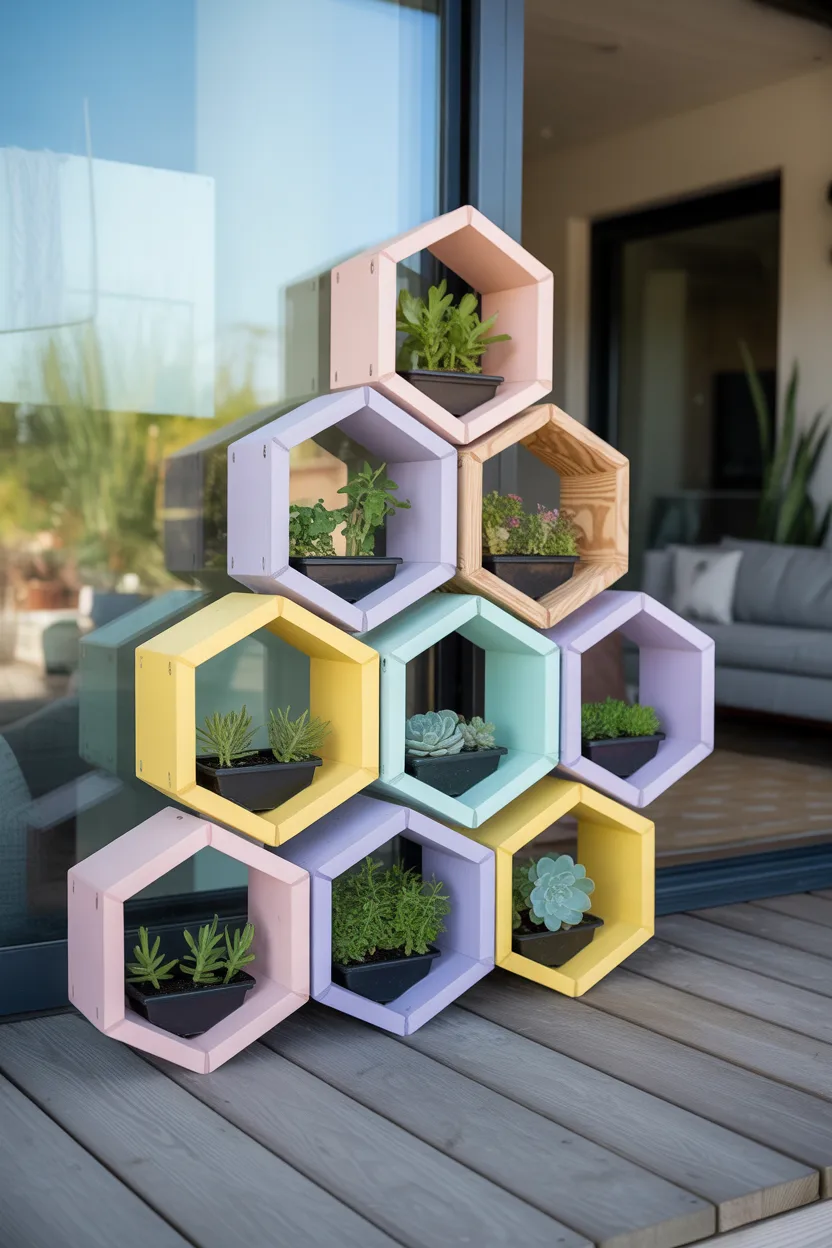
Hexagonal planter boxes bring geometric interest to outdoor spaces that standard rectangular or circular forms simply can’t provide. The six-sided shape interlocks with its neighbors when grouped together, allowing you to build a modular, expanding cluster that grows organically as your collection — and your enthusiasm — develops. Start with three or four hexagons and add more over time, arranging them in a honeycomb pattern that reads as a cohesive installation rather than a random collection of individual pots. The overall effect is graphic, contemporary, and visually compelling.
Cedar is the ideal material for hexagonal planters because it can be cut to precise angles with clean results, accepts paint or stain beautifully, and withstands outdoor conditions without warping or rotting prematurely. Paint each hexagon in a different tone within a single color family for a coordinated, playful display that has personality without chaos. Compact plants work best in these smaller-format boxes — succulents, alpine strawberries, thyme, and mind-your-own-business (Soleirolia) are all excellent choices. This outdoor planter box style is particularly effective on rooftop terraces, modern balconies, and contemporary patios where conventional garden design would look out of place.
15. Stacked Stone Planter with Trailing Greenery
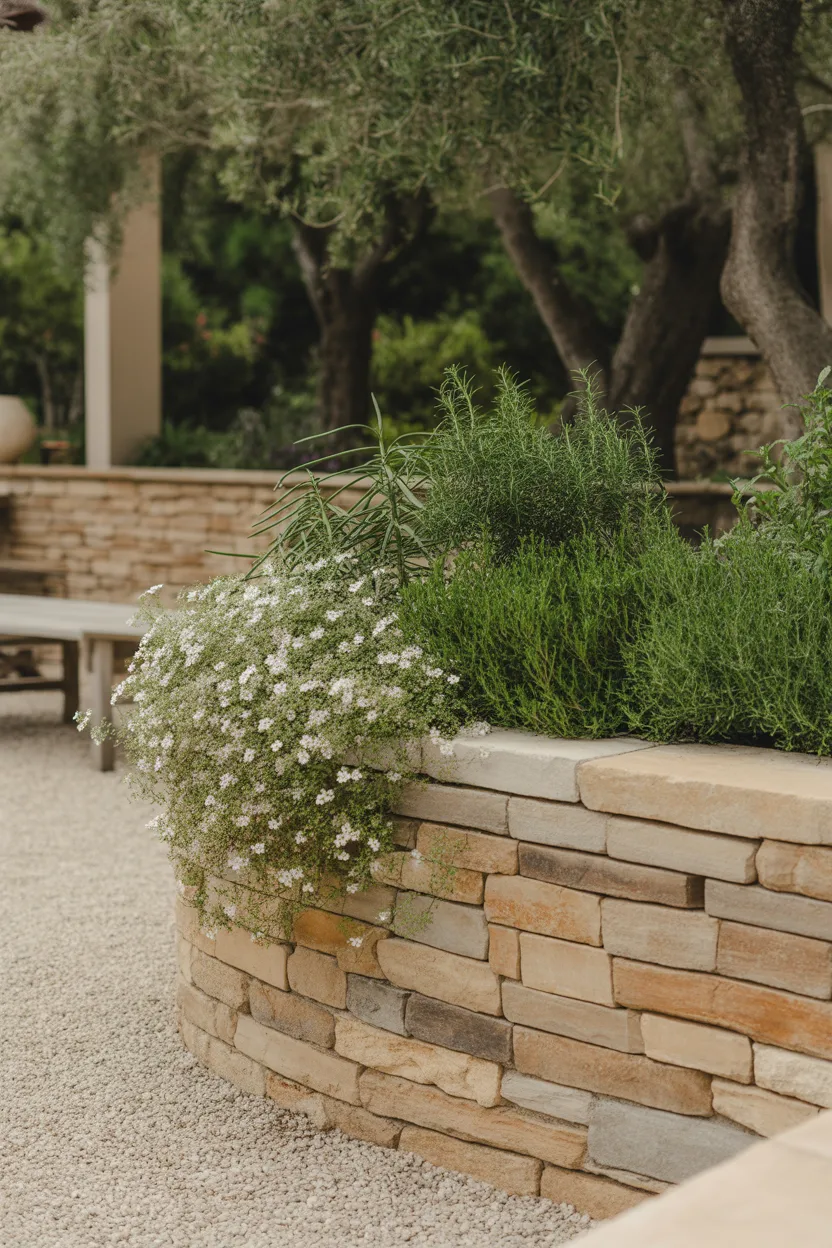
Stacked stone planters occupy a category of outdoor design that goes beyond decoration into genuine landscape architecture. Built from natural limestone, slate, sandstone, or fieldstone, these structures feel permanent and rooted in a way that no portable container can replicate. The dry-stacking technique — laying stones without mortar — allows for natural drainage and creates the characteristic rugged texture that makes these planters look like they’ve been part of the landscape for generations rather than installed last spring. They add extraordinary structure and permanence to any outdoor space they inhabit.
The trailing plants that spill over stone planter walls are what make this outdoor planter box style so romantically beautiful. Trailing rosemary, creeping thyme, alyssum, aubrieta, and stonecrop (sedum) all colonize the edges naturally over time, softening the stone and creating the impression of an ancient, settled garden. Plant the interior with Mediterranean specimens — lavender, sage, cistus, and ornamental alliums — that love the excellent drainage and warmth that stone walls provide. The stone itself heats up in sunlight and creates a microclimate that suits these plants perfectly. It’s a garden structure that actively improves with age and benign neglect.
16. Self-Watering Deck Rail Planter
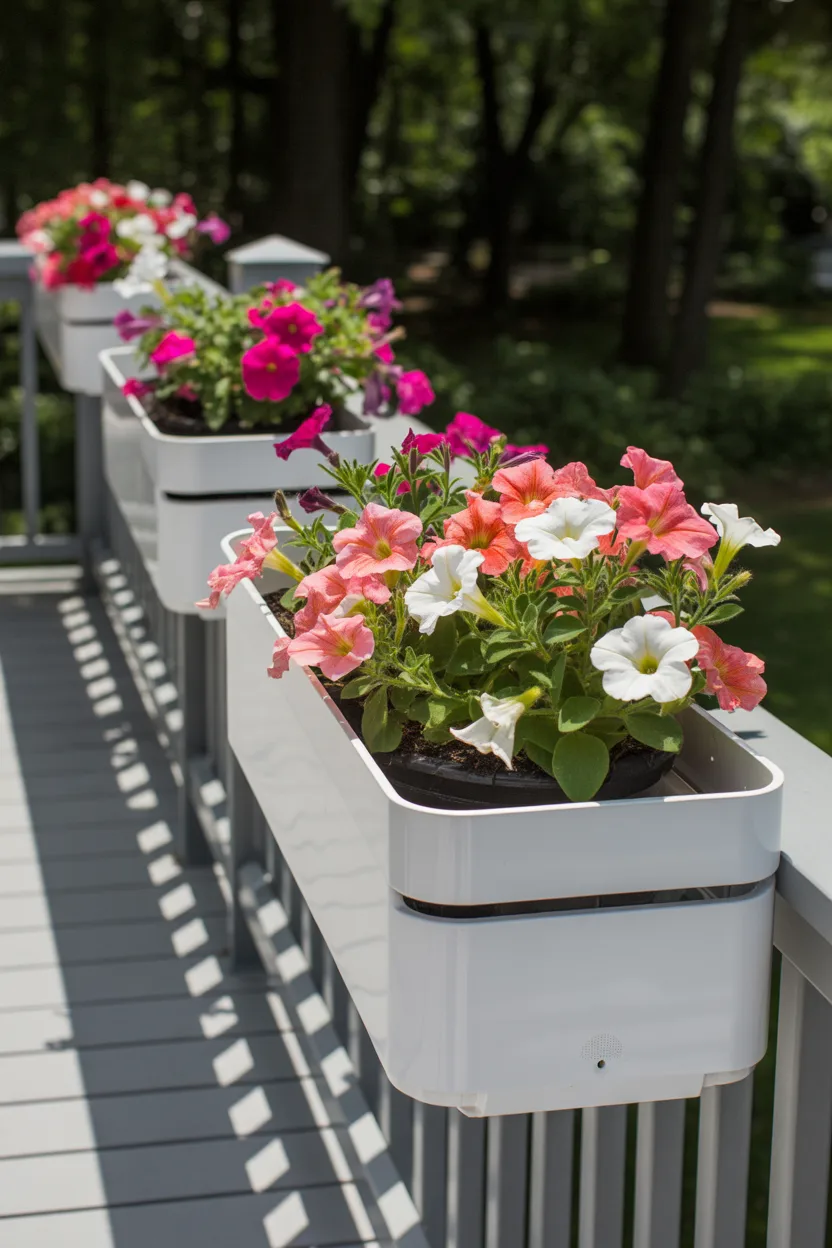
Self-watering deck rail planters solve one of the most persistent frustrations in outdoor container gardening: the constant need for watering that a hot, exposed deck or balcony demands. Built with a reservoir at the base that feeds water upward to roots through capillary action, these planters can sustain plants through several days without attention — a genuine game-changer for anyone who travels regularly or simply forgets to water. The practical advantage is significant, but the design advantage of rail-mounted planters is equally compelling: they add a continuous ribbon of color and life along your deck’s perimeter.
Rail-mounted outdoor planter boxes also serve a spatial function: they soften the hard line where deck meets sky, creating a sense of enclosure and privacy without blocking views or light. For maximum visual impact, plant with trailing varieties — petunias, bacopa, calibrachoa, and trailing verbena — that cascade down the outside of the rail, creating a waterfall effect of color that photographs beautifully from both above and below. Choose a single color family for a sophisticated, coordinated look, or mix warm tones — coral, orange, and yellow — for an exuberant, high-summer energy that signals genuine joy.
17. Reclaimed Wood Planter With Industrial Legs
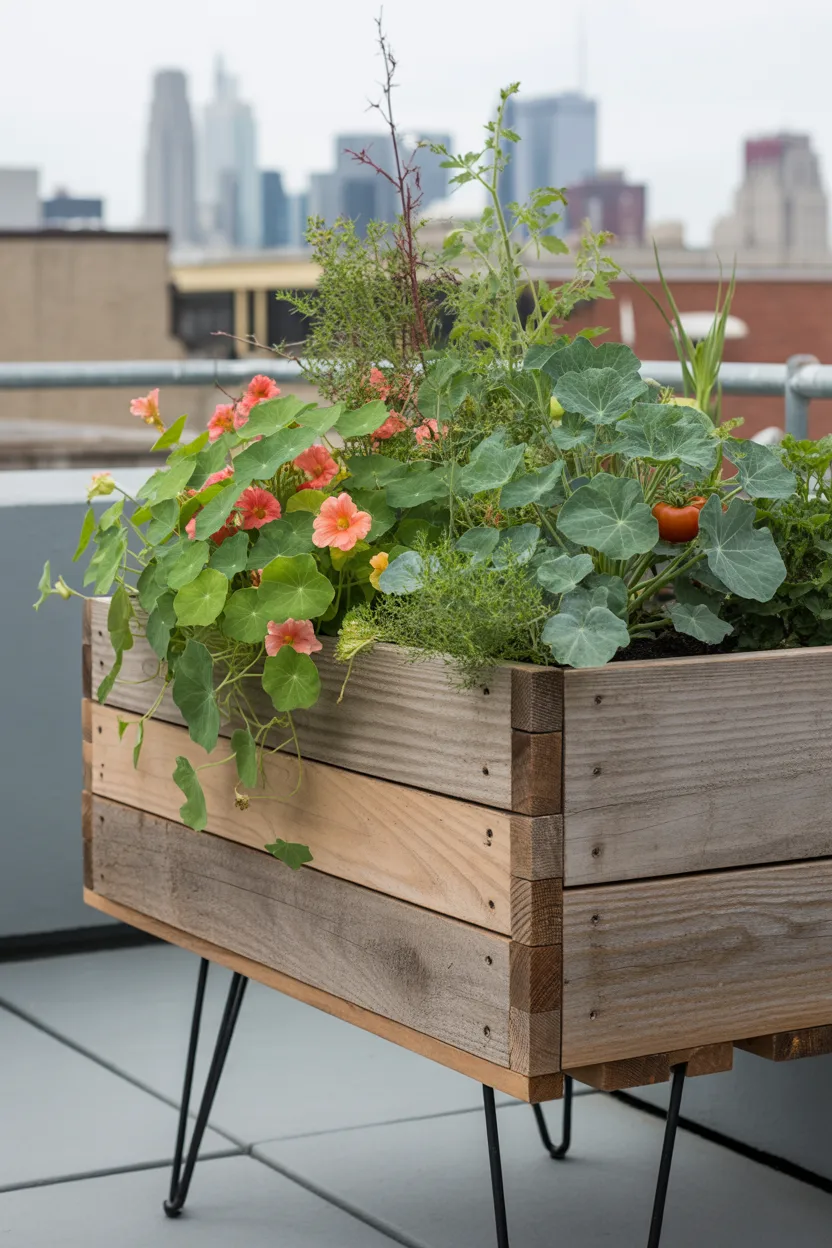
Reclaimed wood planter boxes elevated on steel hairpin legs represent one of the most compelling intersections of industrial and natural design in current outdoor decor — and their popularity on Pinterest and Instagram reflects how universally appealing that combination is. The weathered texture and warm grain of aged barn board brings immediate character and story to a container, while the slender black hairpin legs lift it off the ground in a way that feels furniture-quality and intentionally designed rather than simply planted and placed. Together they create a planter that feels like a proper design object.
The elevated position also offers a practical advantage: improved drainage, better airflow around the root zone, and a height that makes tending and harvesting genuinely comfortable. This outdoor planter box style suits rooftop terraces, urban balconies, and contemporary gardens particularly well — spaces where the industrial element feels contextually appropriate rather than out of place. For planting, lean into the urban-productive aesthetic: mix edibles with ornamentals — trailing nasturtiums, rainbow chard, compact cherry tomatoes, and fragrant basil — for a rooftop garden that looks as good as it tastes. Seal the reclaimed wood with an exterior preservative to extend its life significantly.
18. Ceramic Glazed Planter in Bold Jewel Tones
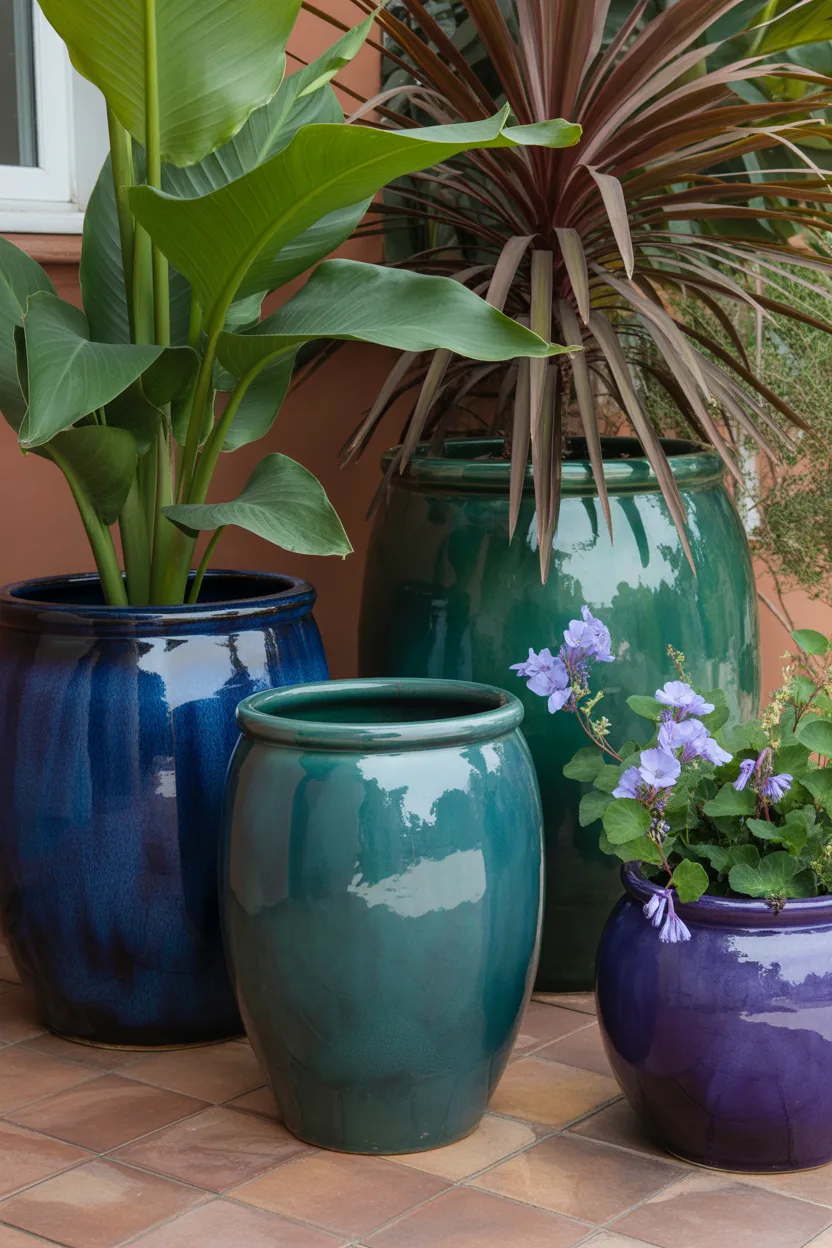
Ceramic glazed planters in bold jewel tones are for gardeners who embrace color without apology — and the outdoor spaces they inhabit are always the most memorable, most photographed, and most admired. Unlike terracotta or wood, glazed ceramic holds color permanently and develops a beautiful depth when light hits its reflective surface, creating a luminous quality that changes subtly throughout the day as the sun moves. A single large glazed planter in sapphire, emerald, or amethyst becomes an anchor piece — a focal point around which the rest of your outdoor design logically organizes itself.
The planting inside bold ceramic outdoor planter boxes should be equally confident. Choose specimens with strong color, architectural form, or dramatic foliage that can hold their own beside the richly colored vessel. Bronze phormiums, purple-leaved cannas, silver agaves, and bold red crocosmias all work beautifully alongside jewel-toned ceramics. Avoid wishy-washy, pale plants that will disappear visually — this is a style that rewards boldness and decisiveness in every design choice. Group multiple jewel-toned planters in complementary colors for a maximalist outdoor moment that is joyful, energetic, and unforgettable.
19. Long Narrow Balcony Planter Box
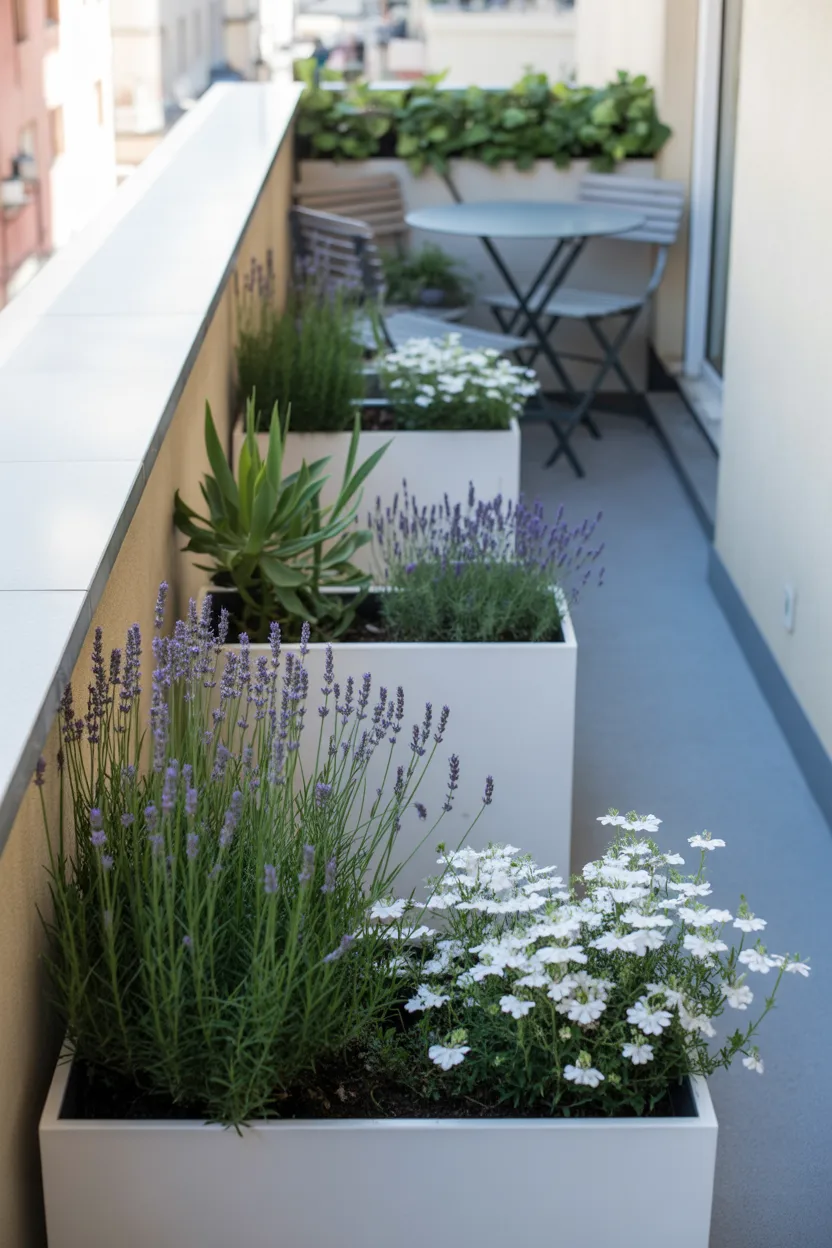
Narrow balconies present a genuine design challenge: they’re too slim for large furniture, too exposed for privacy, and too often left bare and underwhelming despite their potential. A series of long, slim outdoor planter boxes arranged along the railing or inner perimeter edge solves all three problems simultaneously. They define the space, add privacy screening through dense planting, introduce color and life, and transform a utilitarian concrete ledge into what feels like a genuine garden room — a private green retreat above the street. The transformation can happen in a single afternoon.
For balcony planter boxes, weight management is crucial — always check your balcony’s load rating before installing heavy containers filled with wet soil. Lightweight fiberglass or resin planters with a quality potting mix (not garden soil, which is far too heavy) keep the load manageable without sacrificing planting depth. Choose plants that perform well in the typically exposed, windy conditions of elevated balconies: lavender, ornamental grasses, dwarf conifers, and trailing calibrachoa all thrive in these conditions. Plant densely from day one — balcony planters look best when full and lush, creating that continuous ribbon of green that makes a slim balcony feel like a rooftop garden.
20. Antique Enamel Bathtub Planter
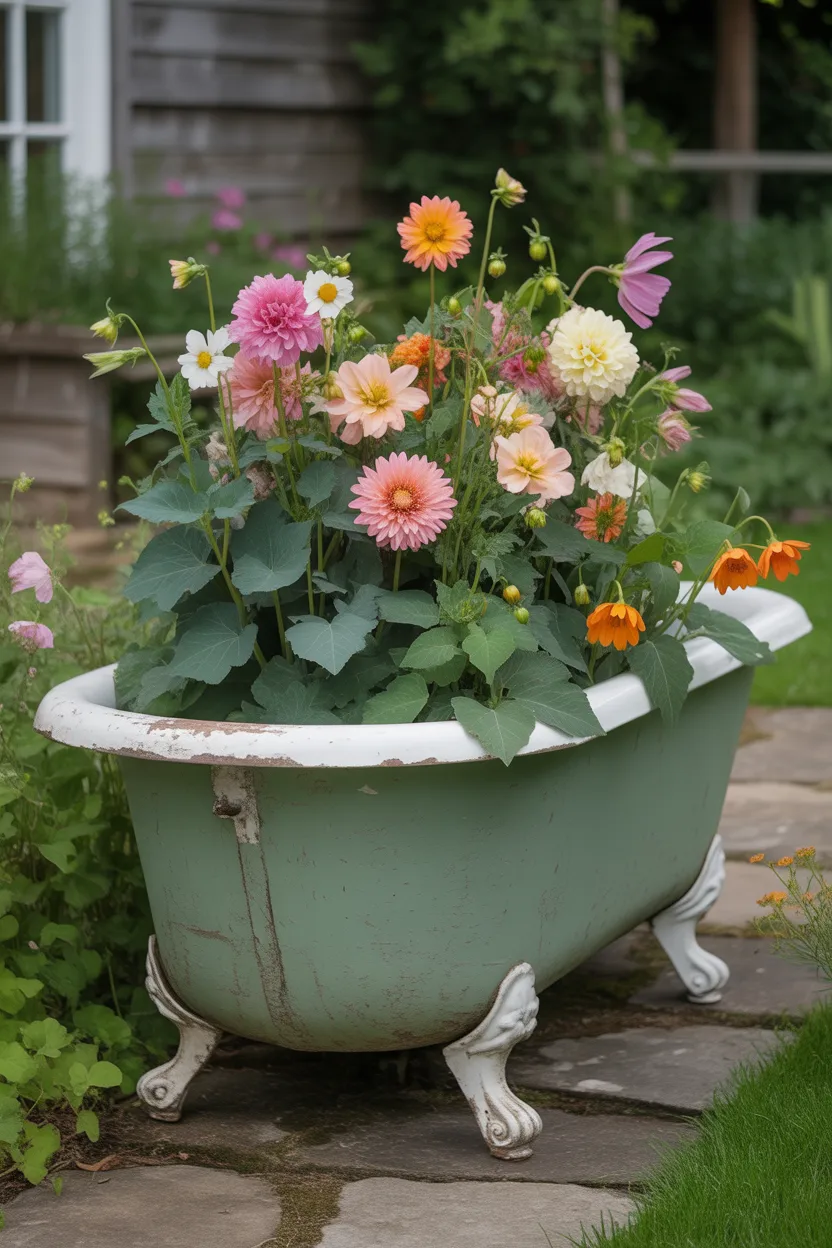
An antique enamel bathtub planter is the ultimate expression of the eclectic, characterful garden philosophy — the idea that great outdoor spaces tell personal stories rather than follow prescribed design rules. The scale of a bathtub provides an enormous planting volume that allows for genuinely lush, abundant plantings impossible in conventional containers. The clawfoot detail and curved silhouette have an inherent elegance that makes even a casually planted tub look beautiful, and the sense of wit and irreverence it brings to a garden creates exactly the kind of personality that makes outdoor spaces truly memorable.
Practically speaking, the enamel bath provides outstanding plant conditions: the depth accommodates long taproots, the smooth interior prevents root damage, and the volume of soil retains moisture longer than shallow containers. Drill several drainage holes across the base — a standard masonry bit handles enamel effectively — and fill with a quality potting mix before planting. This outdoor planter box approach suits cottage gardens, bohemian outdoor spaces, and any garden belonging to someone who prefers personality over perfection. Fill it generously with a cottage-style mix of dahlias, sweet peas, cosmos, and trailing nasturtiums and let it overflow into magnificent abundance.
21. Modern Minimalist Concrete Planter
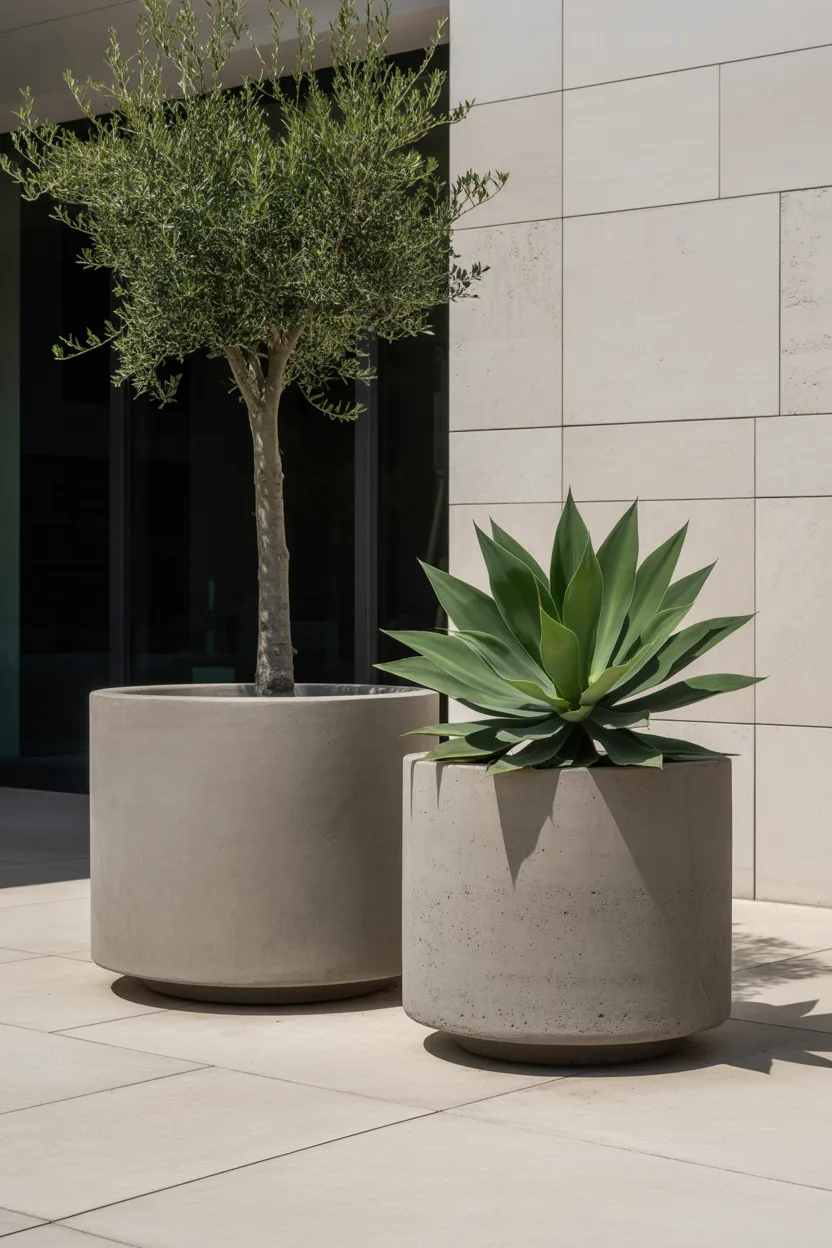
Hand-cast concrete planters represent the most architectural end of the outdoor planter box spectrum — they are objects as much as containers, designed to be appreciated for their material and form independent of what grows inside them. The weight and substance of concrete communicates permanence and intention in a way that lighter materials simply cannot. In a minimalist outdoor setting — a sleek urban terrace, a pared-back modern garden, or a rooftop space with architectural ambitions — a pair of well-proportioned concrete planters anchors the space with a quiet authority that feels considered and genuinely sophisticated.
The surface texture is where concrete planters truly distinguish themselves: smooth and polished for a refined contemporary look, or deliberately rough and organic for something more artisanal and warm. DIY concrete planters have become enormously popular precisely because of that design flexibility — casting your own allows complete control over size, shape, texture, and color through the addition of cement pigments. Plant with single, bold architectural specimens — olive trees, agave, bamboo, or structural ornamental grasses — that honor the planter’s graphic, sculptural quality. This outdoor planter box style is particularly impactful when you resist the urge to overplant and instead let the concrete itself remain part of the visual composition.
22. Tropical Woven Rattan Planter Basket
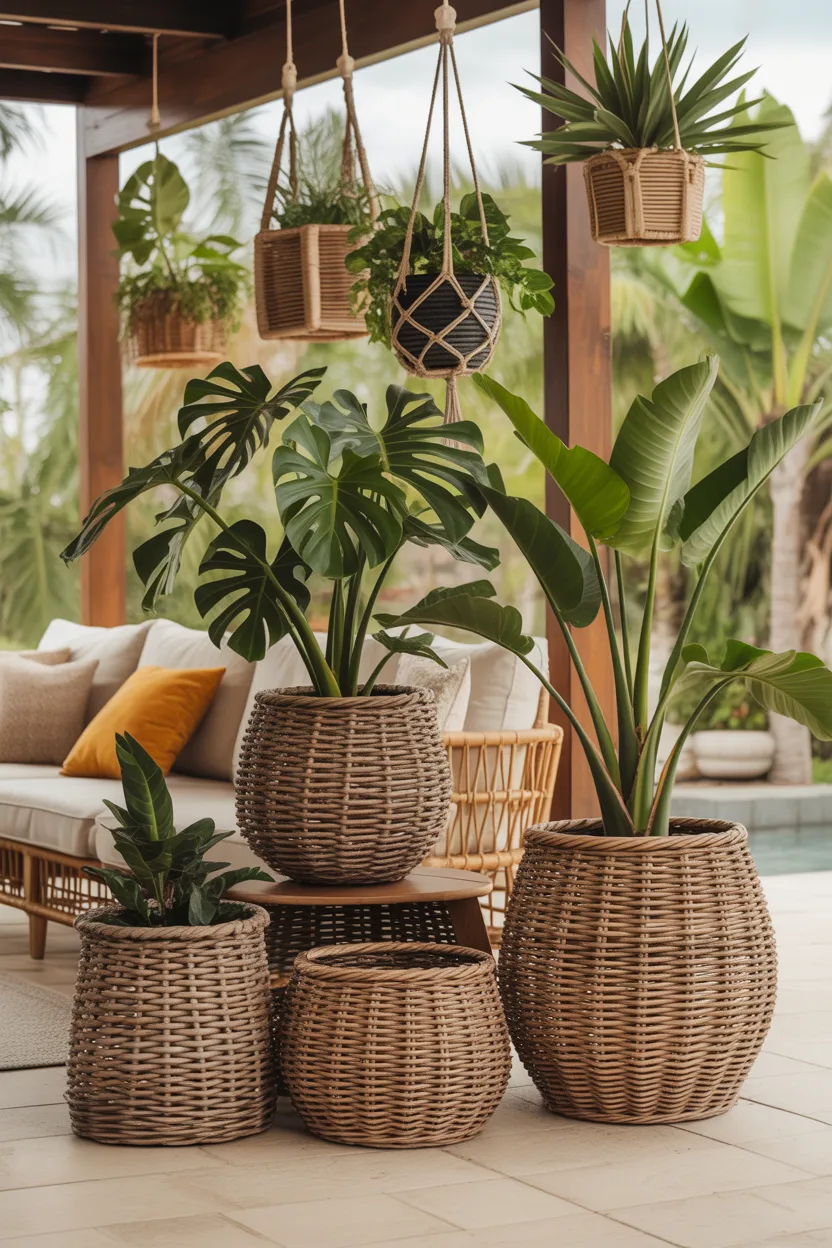
Woven rattan planter baskets bring a warmth and organic texture to outdoor spaces that no other container material quite achieves. The natural fiber construction and warm honey tones create an instant sense of tropical bohemian ease — the kind of relaxed, layered aesthetic that reads as genuinely stylish rather than trying-too-hard. Used in clusters of varying sizes on a covered patio or shaded outdoor living area, they create a lush, resort-like atmosphere that feels both carefully curated and entirely comfortable to inhabit. They’re the outdoor planter box equivalent of a well-traveled collector’s home.
It’s important to note that rattan is not inherently weatherproof, so these planters perform best in covered outdoor spaces — porches, pergolas, and covered patios — rather than exposed gardens where rain and prolonged sun exposure would degrade the fiber. Line each basket with a plastic pot insert or a coco fiber liner to protect the weave from direct soil contact and moisture damage, extending the basket’s useful life considerably. Plant with tropical foliage specimens — monstera, pothos, philodendron, and birds of paradise — that suit shaded or dappled light conditions. Their bold foliage and generous scale create exactly the right visual drama inside these beautifully textured natural containers.
23. Cascading Tiered Strawberry Tower Planter
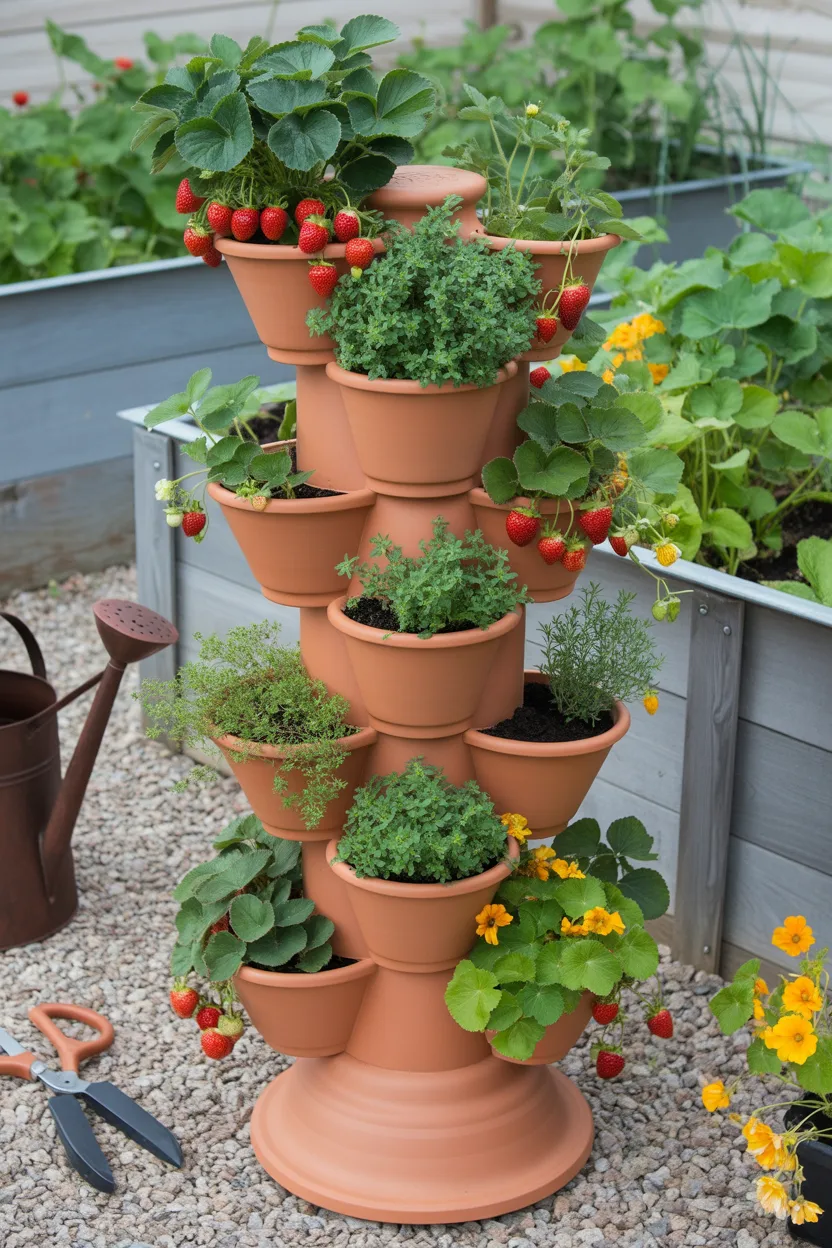
A cascading tower planter is simultaneously one of the most functional and most visually striking outdoor planter box formats available — and its vertical structure makes it a natural centerpiece for kitchen gardens, patios, and compact outdoor spaces where ground area is limited. The spiraling pocket design allows planting at every level simultaneously, meaning a single four-foot tower can accommodate fifteen to twenty individual plants in the footprint of a single large pot. For strawberry growing in particular, this format is practically perfect: the elevated pockets keep fruit off the ground, improving air circulation and dramatically reducing slug damage.
Beyond strawberries, tower planters work beautifully with herbs — imagine a living herb column with basil, thyme, oregano, parsley, and chives planted at each level, providing a season-long supply of fresh culinary herbs within arm’s reach of the kitchen door. The key to keeping a tower planter looking lush and abundant is consistent fertilizing: the limited soil volume combined with the high plant density means nutrients deplete quickly, so a regular liquid feed every two weeks maintains that vigorous, overflowing growth that makes this outdoor planter box format so irresistible in photographs and in real life. Water from the top and let it percolate downward through all levels evenly.
Conclusion
The right outdoor planter box does far more than hold soil — it defines your space, expresses your personality, and elevates every corner it occupies. Whether you choose sleek black metal or rustic reclaimed wood, the key is always intentionality. Pick a style that genuinely speaks to you, plant it generously, maintain it consistently, and your outdoor space will reward you with beauty that impresses every single time.

Join The Discussion