
Introduction
Transforming your outdoor space starts with the right boundary. These 22 wood fence ideas showcase the unique beauty of cedar, redwood, pine, and ipe. Whether you desire the natural rot resistance of cedar, the rich luxury of redwood, the affordability of pine, or the unmatched durability of ipe, there is a perfect design here. Elevate your curb appeal, ensure privacy, and create a stunning backdrop for your garden. Explore these inspiring styles to find the ultimate wooden boundary for your home.
1. Horizontal Cedar Slat Privacy
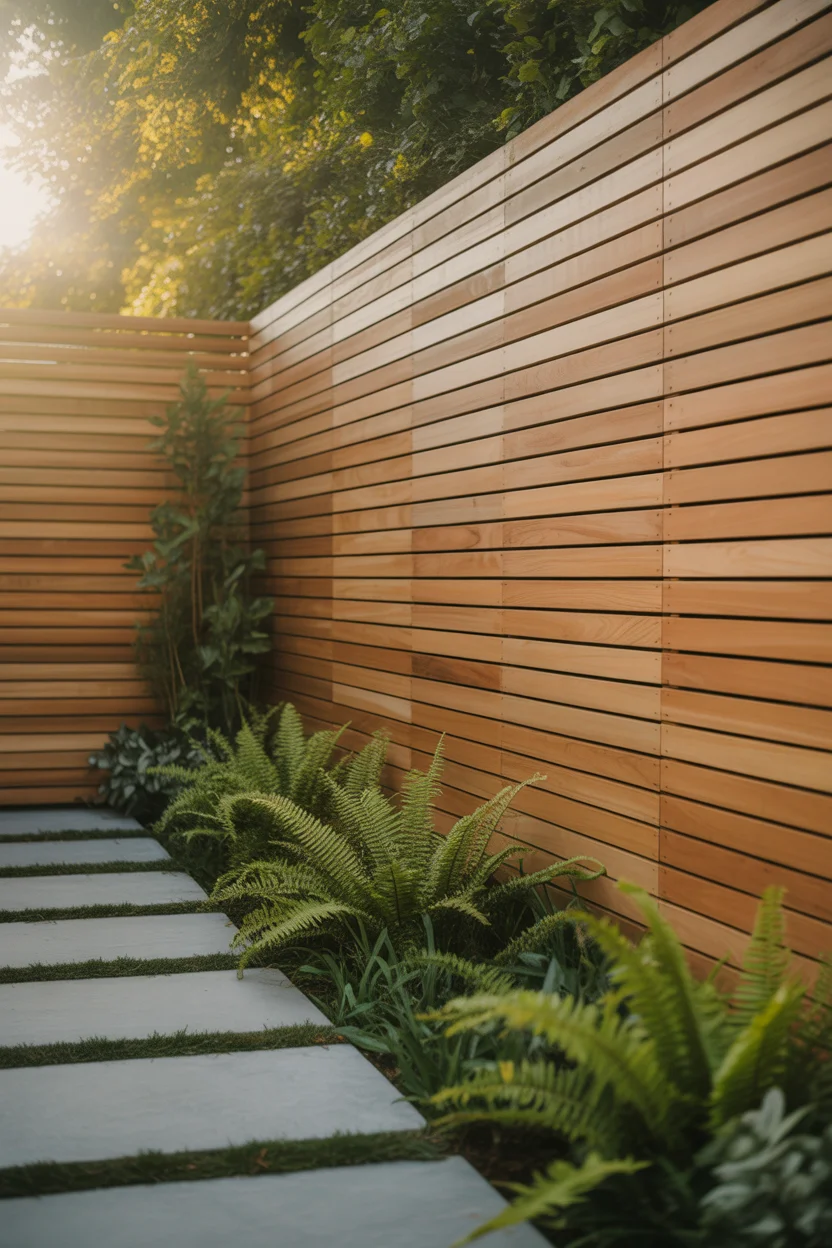
Horizontal cedar slats represent some of the most sought-after wood fence ideas for contemporary homes today. This specific design instantly modernizes a yard by drawing the eye horizontally across the space, making narrow gardens appear significantly wider than they actually are. Cedar is naturally resistant to rot and insects, meaning your investment remains structurally sound for decades. The warm, amber tones of fresh cedar provide an inviting backdrop that complements almost any architectural style, adding immense aesthetic and financial value to your residential property.
Spacing the boards with slight gaps is a brilliant technique for balancing privacy with essential airflow. Unlike solid barriers that can create wind tunnels or trap stagnant heat, this slatted approach allows gentle breezes to pass through while still obscuring the view from neighbors. Over time, cedar weathers to a distinguished silvery-gray if left untreated, or it can be sealed annually to maintain its rich original color. This versatility makes horizontal cedar a top choice for discerning homeowners everywhere.
2. Classic Redwood Stockade Design
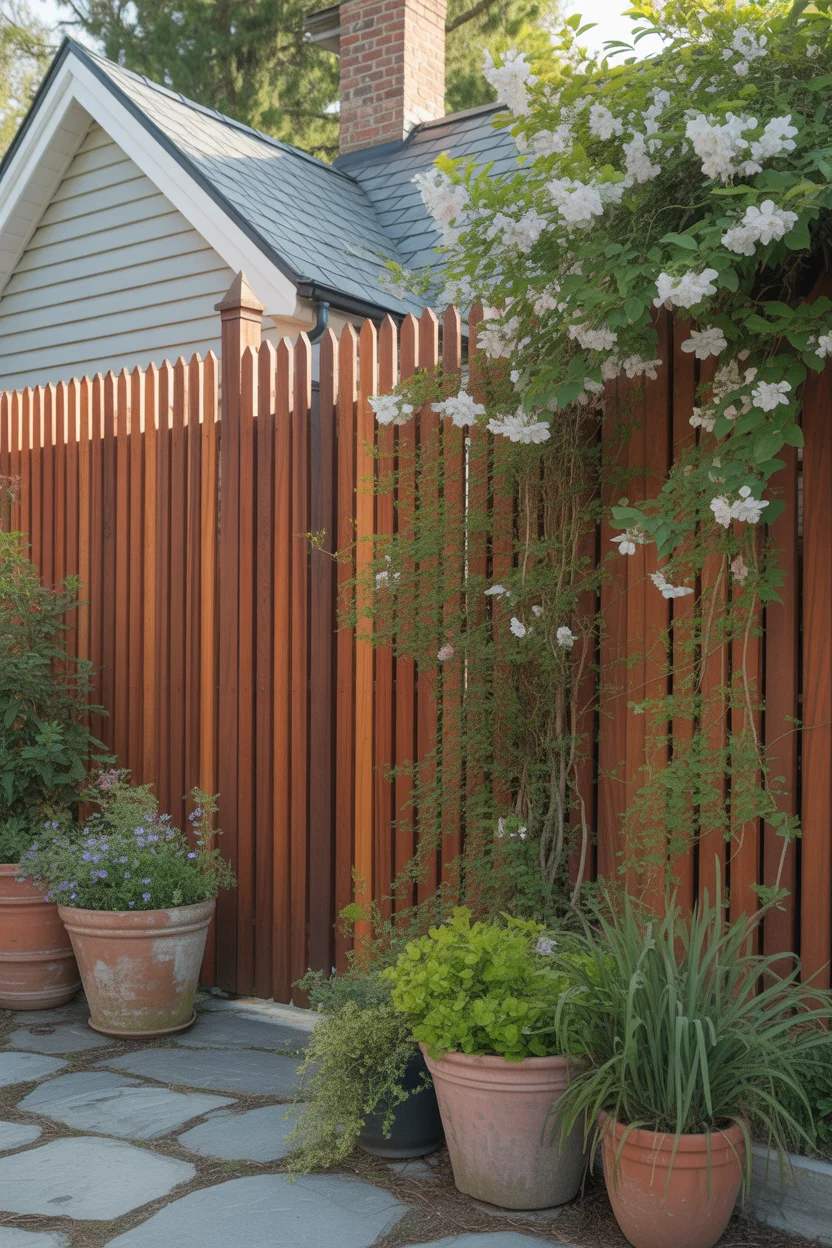
When exploring premium wood fence ideas, redwood stockade designs consistently rank at the absolute top for timeless elegance and structural durability. Redwood contains natural oils and tannins that make it incredibly resilient against decay, warping, and shrinking over time. A stockade style, where boards are placed tightly edge-to-edge, guarantees absolute privacy for your family. The rich, deep reddish-brown coloration of redwood is unmistakable, lending an air of luxury and permanence that cheaper materials simply cannot replicate in any residential setting.
Maintaining a redwood stockade fence is surprisingly straightforward, which adds significantly to its widespread appeal among homeowners. Applying a high-quality, UV-blocking sealant every few years preserves the vibrant color and prevents the wood from drying out under harsh sun exposure. Because redwood is dimensionally stable, the boards are less likely to twist or pull away from the fasteners over time. This structural integrity ensures your fence remains perfectly straight and visually striking, protecting your outdoor sanctuary for generations to come.
View morehttps://dreamgardenspk.com/blog/
3. Budget-Friendly Pressure-Treated Pine
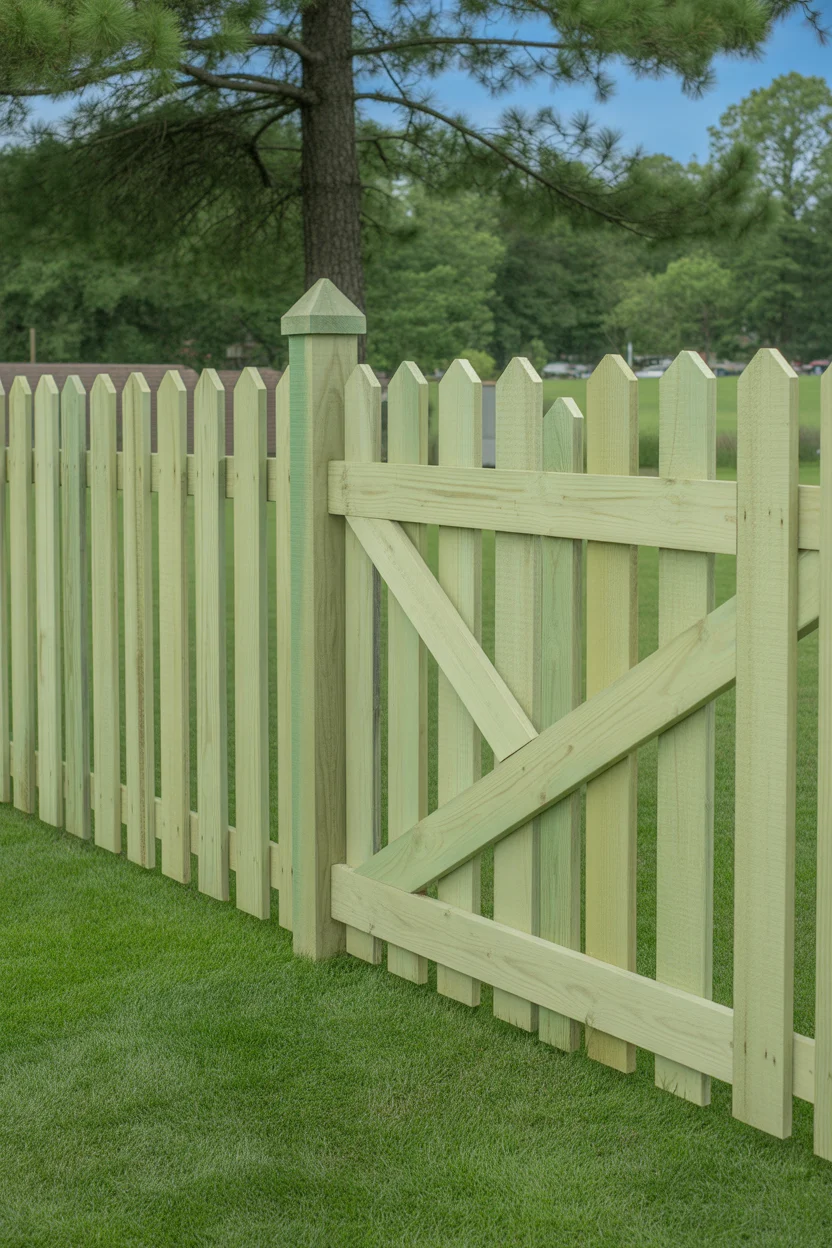
For families seeking practical wood fence ideas without breaking the bank, pressure-treated pine is the undisputed champion of affordability. The treatment process forces preservatives deep into the wood fibers, protecting it from fungal decay and termite damage. This makes pine incredibly durable for ground contact, which is absolutely essential for fence posts. It provides a solid, reliable barrier that fulfills all basic requirements for security and privacy, making it the most commonly installed fencing material across residential neighborhoods today.
One of the greatest advantages of pine is its exceptional ability to take paint and stain beautifully. While it may start with a slight greenish hue from the treatment chemicals, this fades to a neutral pale wood tone as it dries completely. Homeowners can then transform their pine fence into any color imaginable, from crisp whites to moody charcoals. This adaptability allows you to achieve a high-end custom look on a modest budget, perfectly matching your home exterior.
4. Luxury Ipe Hardwood Screen
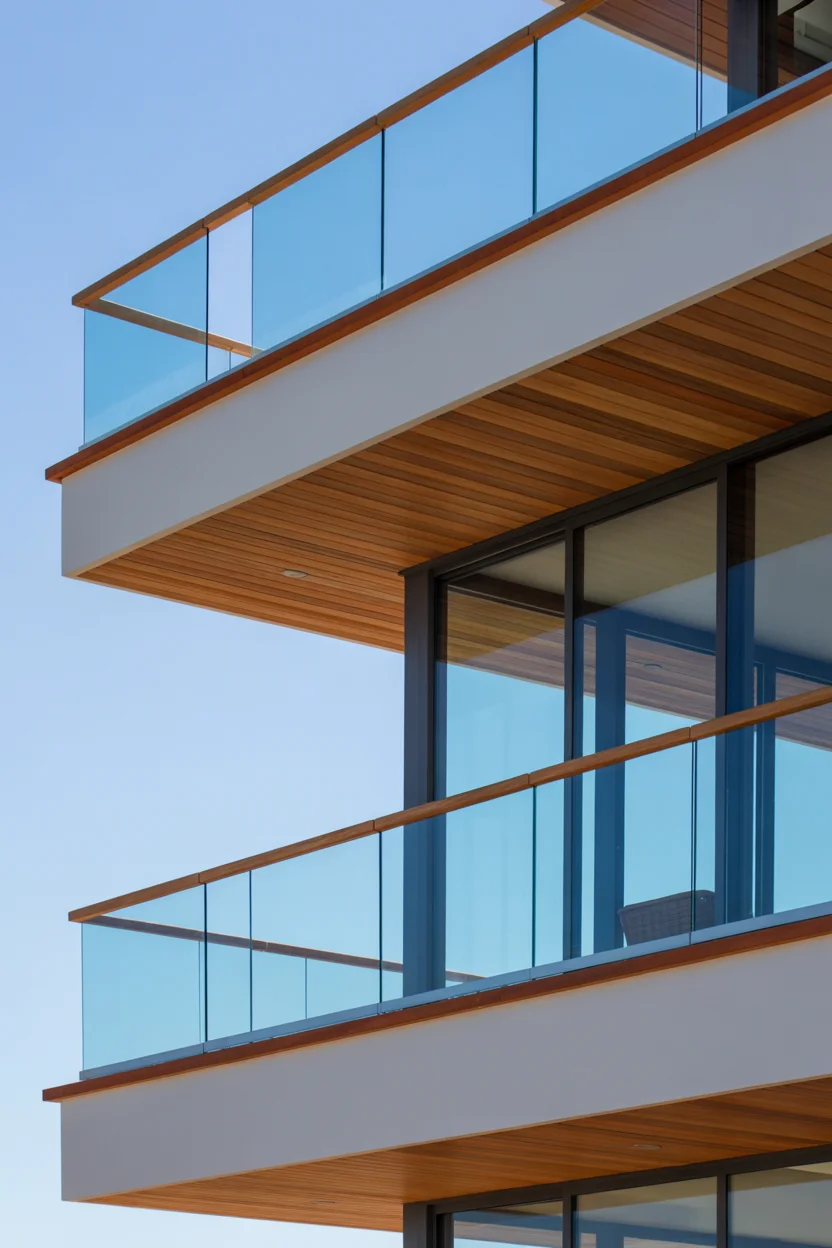
Ipe introduces an entirely different tier of quality when considering high-end wood fence ideas for luxury properties. Often referred to as ironwood, Ipe is so dense that it actually sinks in water and boasts a Class A fire rating, matching the fire resistance of concrete and steel. Its incredible hardness makes it virtually impervious to scratches, dents, and insect damage. Choosing Ipe is a statement of uncompromising quality, intended for homeowners who want a permanent, legacy-grade installation.
The aesthetic appeal of Ipe is just as impressive as its remarkable physical properties. It features a tight, straight grain with colors ranging from olive brown to deep reddish hues. Because it is so hard, installing an Ipe fence requires pre-drilling and specialized hidden fastener systems, which results in a flawlessly clean surface with no visible screw heads. This seamless finish, combined with its natural luster, creates a sophisticated architectural element that elevates the entire property.
5. Cedar Lattice Top for Airflow
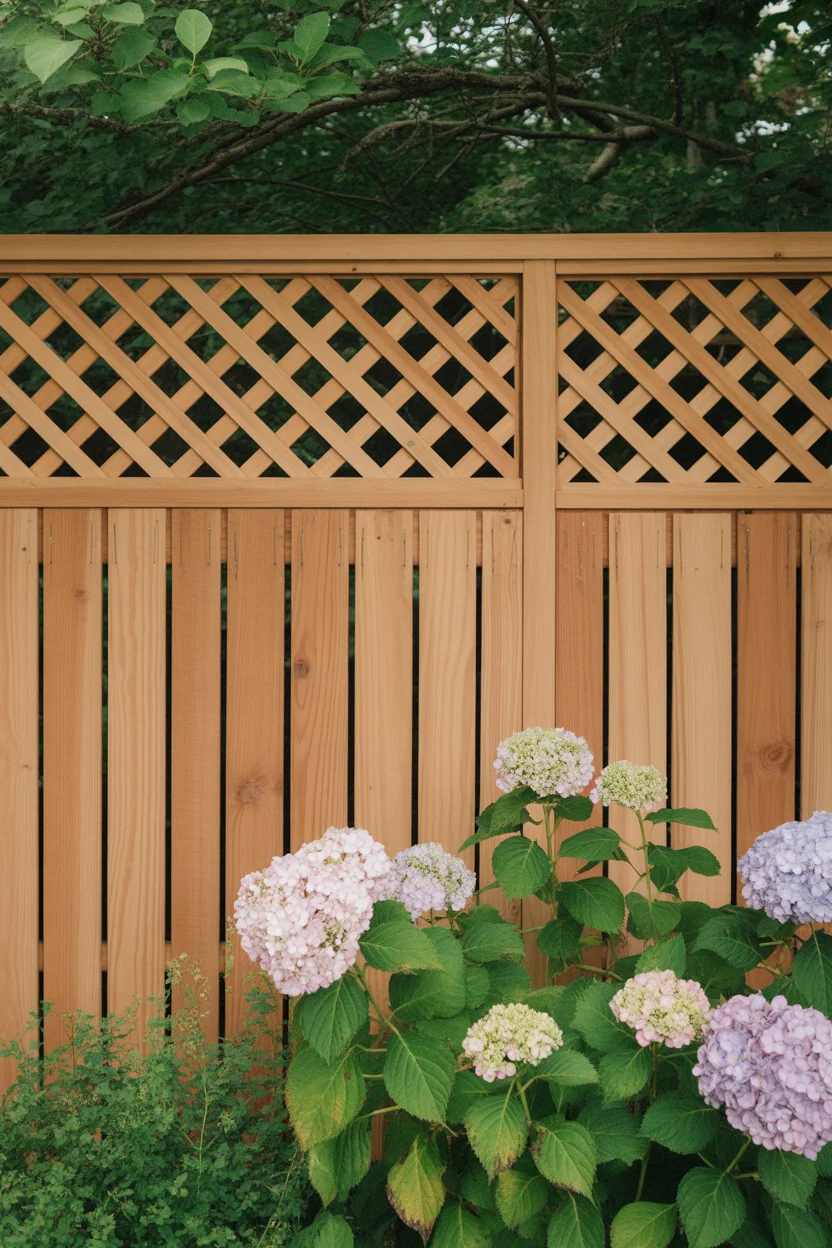
Adding a lattice top is one of the most clever wood fence ideas for maximizing both privacy and natural light. A solid six-foot fence can sometimes make a yard feel like a fortress, but capping it with a foot or two of cedar lattice softens the visual impact significantly. The lower solid section blocks the sightlines from the street and neighboring windows, ensuring your family can relax undisturbed. Meanwhile, the upper lattice allows precious sunlight to reach your garden plants.
Beyond lighting benefits, the lattice top significantly reduces wind load on the overall fence structure. During heavy storms, the open pattern allows gusts to pass through rather than pushing against a solid wall, which greatly extends the lifespan of your posts and prevents leaning. Cedar is the ideal material for this intricate work because it is lightweight yet strong, and it resists the moisture that often collects on horizontal lattice surfaces. It is a highly functional and beautiful upgrade.
6. Redwood Board on Board Style
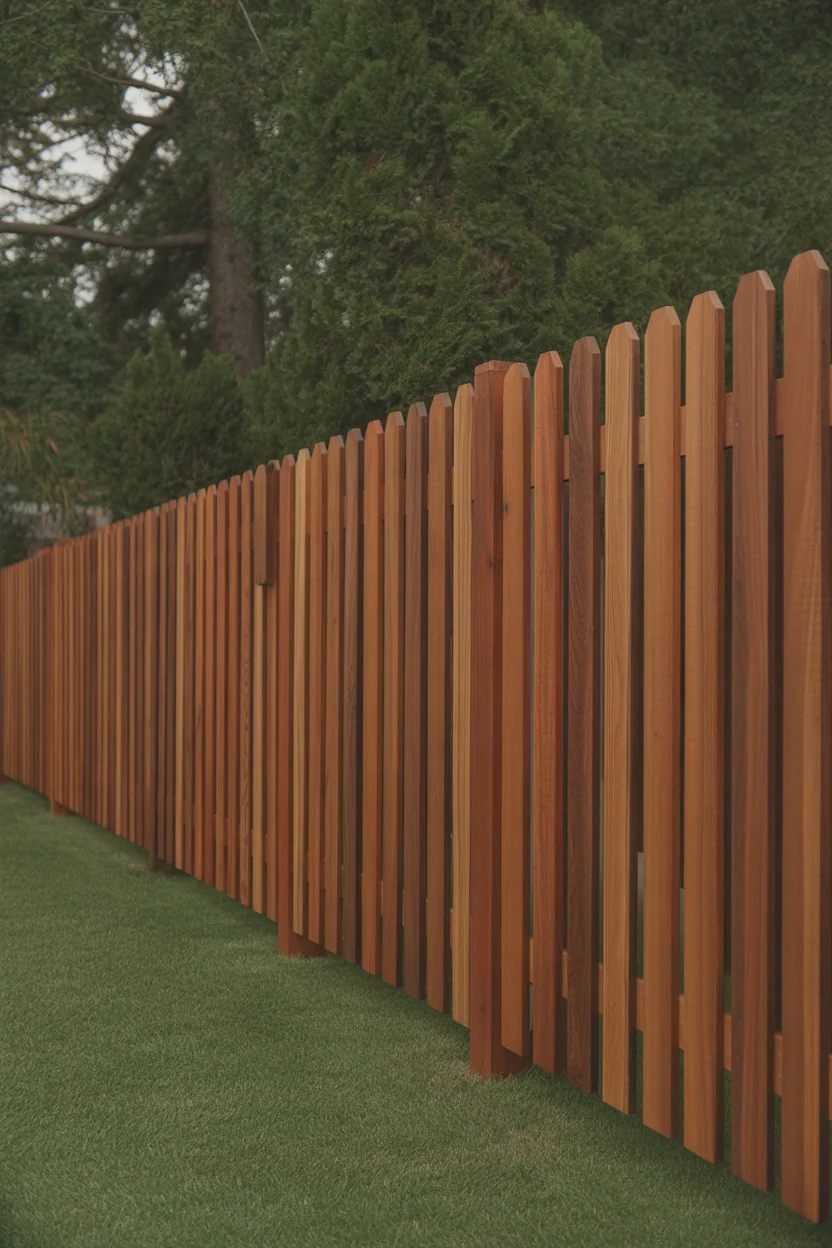
The board on board technique is highly regarded among premium wood fence ideas because it solves the good neighbor dilemma perfectly. By overlapping the vertical boards on alternating sides of the horizontal rails, both you and your neighbor get an identical, attractive view with no exposed structural framework. This overlapping method also ensures that even as the wood naturally expands and contracts with seasonal humidity changes, no gaps will ever appear, maintaining total visual privacy year-round.
Executing this design in redwood maximizes its visual and structural benefits for your landscape. The overlapping boards create beautiful, subtle shadow lines that add depth and texture to an otherwise flat surface. Redwood’s natural stability means the overlapping joints are less prone to cupping or warping, which could otherwise compromise the tight seal. While it requires more lumber than a standard stockade fence, the resulting premium appearance and dual-sided beauty make the board on board redwood fence a worthwhile investment.
Explore morehttp://pinterest.com/Dreamgardenshome/
7. Pine Picket Fence with Charm
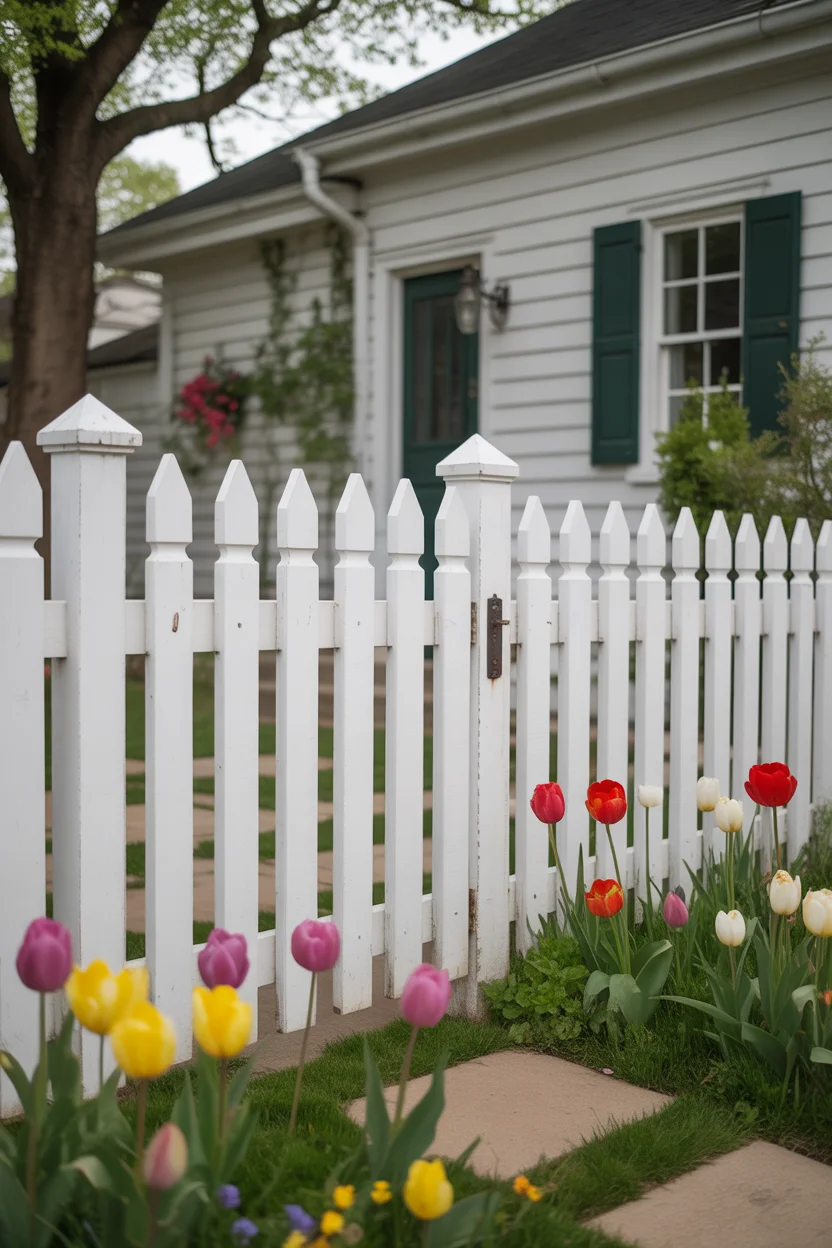
No list of wood fence ideas is complete without the iconic pine picket fence design. This style is the epitome of curb appeal, offering a friendly, welcoming boundary that defines your property without creating a fortress-like atmosphere. Pine is an excellent choice for picket fences because it is affordable, easy to mill into decorative shapes, and holds paint exceptionally well. It establishes a clear perimeter for children and pets while maintaining an open, sociable connection with the neighborhood.
To ensure longevity, it is crucial to use pressure-treated pine for the posts and ideally for the pickets and rails as well, especially if they will be close to the ground. Once the wood has properly dried, applying a high-quality exterior primer and paint seals the surface against moisture. White is the traditional choice, but modern homeowners are increasingly painting pine picket fences in sage greens, navy blues, or soft grays to complement contemporary exterior color palettes beautifully.
8. Ipe Slatted Modern Divider
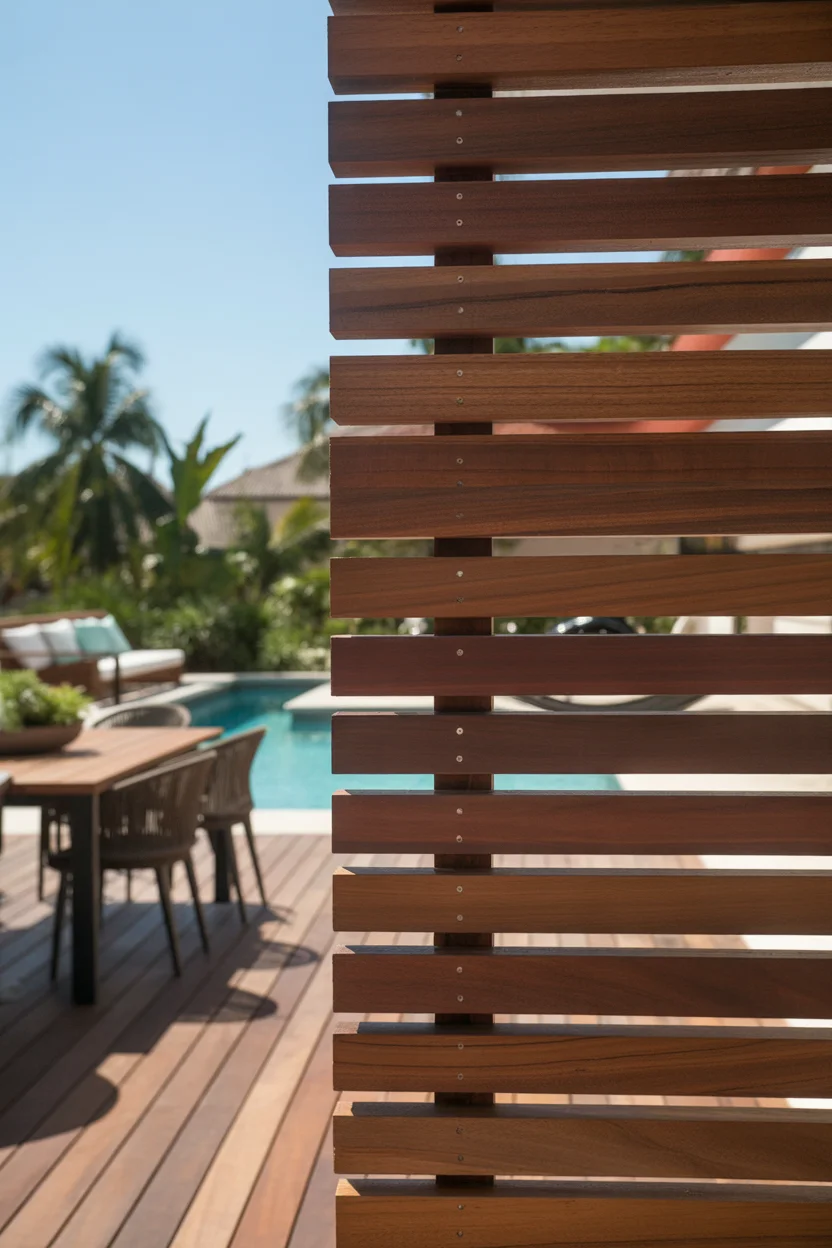
When you need to zone different areas within your yard, Ipe slatted dividers are among the most luxurious wood fence ideas available. Unlike a perimeter fence, an interior divider requires a material that looks spectacular up close and can handle microclimates, like the splash zone near a pool. Ipe’s natural oils make it incredibly resistant to water damage, rot, and the harsh chemicals often found in pool environments, making it the ultimate choice for waterside screening.
The precision required for Ipe slat dividers highlights the skill of the installer and the quality of the material. Because Ipe is so stable, the gaps between the slats remain perfectly uniform over time, never closing up or widening unpredictably. This consistency is vital for modern design, where clean lines and exact proportions are paramount. The divider acts as a piece of functional art, providing just enough screening to create intimate spaces without feeling closed off.
9. Cedar Shadowbox for Dual Beauty
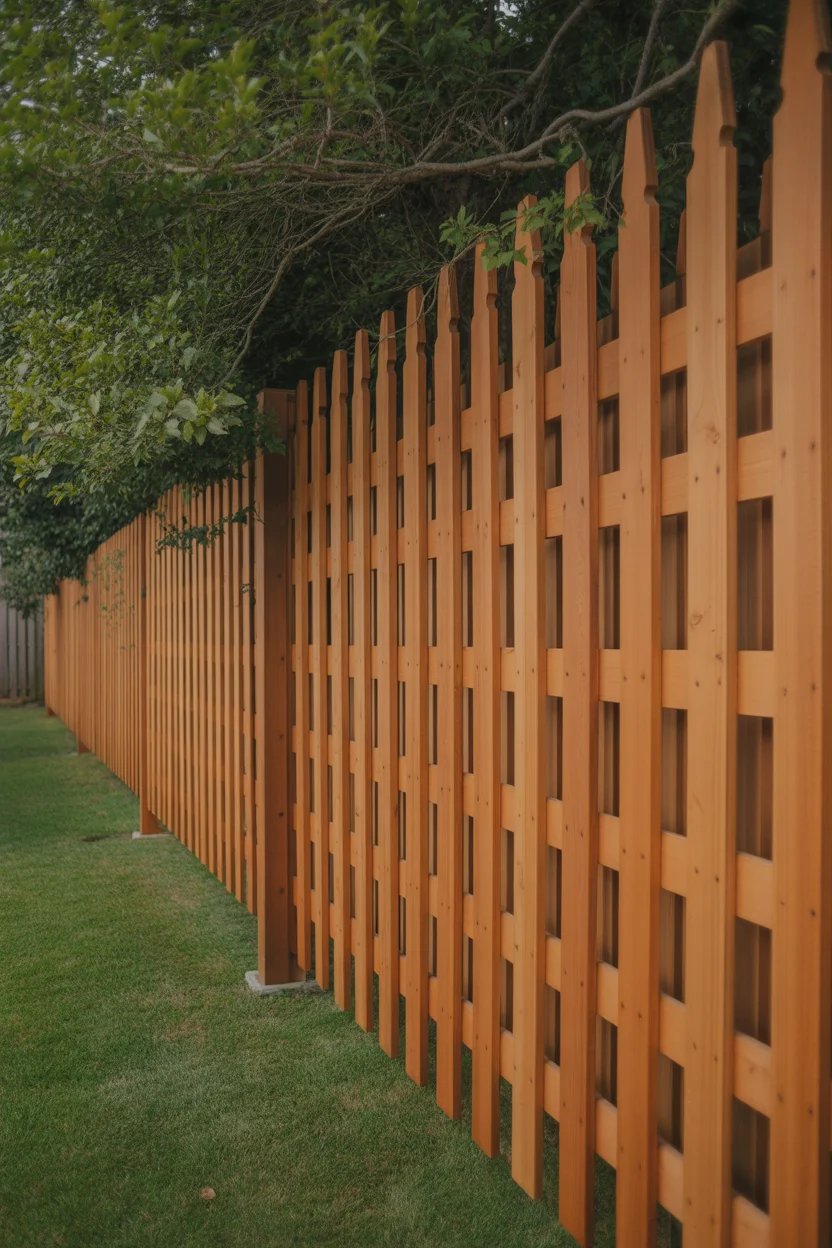
Similar to board on board but with intentional spacing, the cedar shadowbox is one of the most popular wood fence ideas for shared property lines. Boards are attached to alternating sides of the horizontal rails with a slight gap between them. From a straight-on view, the fence appears solid, providing excellent privacy. However, from an angle, the gaps become visible, allowing light and air to pass through. Both sides of the fence look finished and intentional.
The shadowbox design significantly reduces the wind resistance compared to a solid privacy fence. This is a major structural advantage, as it puts less stress on the posts during high winds, preventing the fence from leaning over time. Cedar is perfect for this application because its lightweight nature further reduces the overall load on the framework. The alternating pattern also creates a dynamic visual texture that changes throughout the day as the angle of the sunlight shifts.
10. Redwood with Black Metal Accents
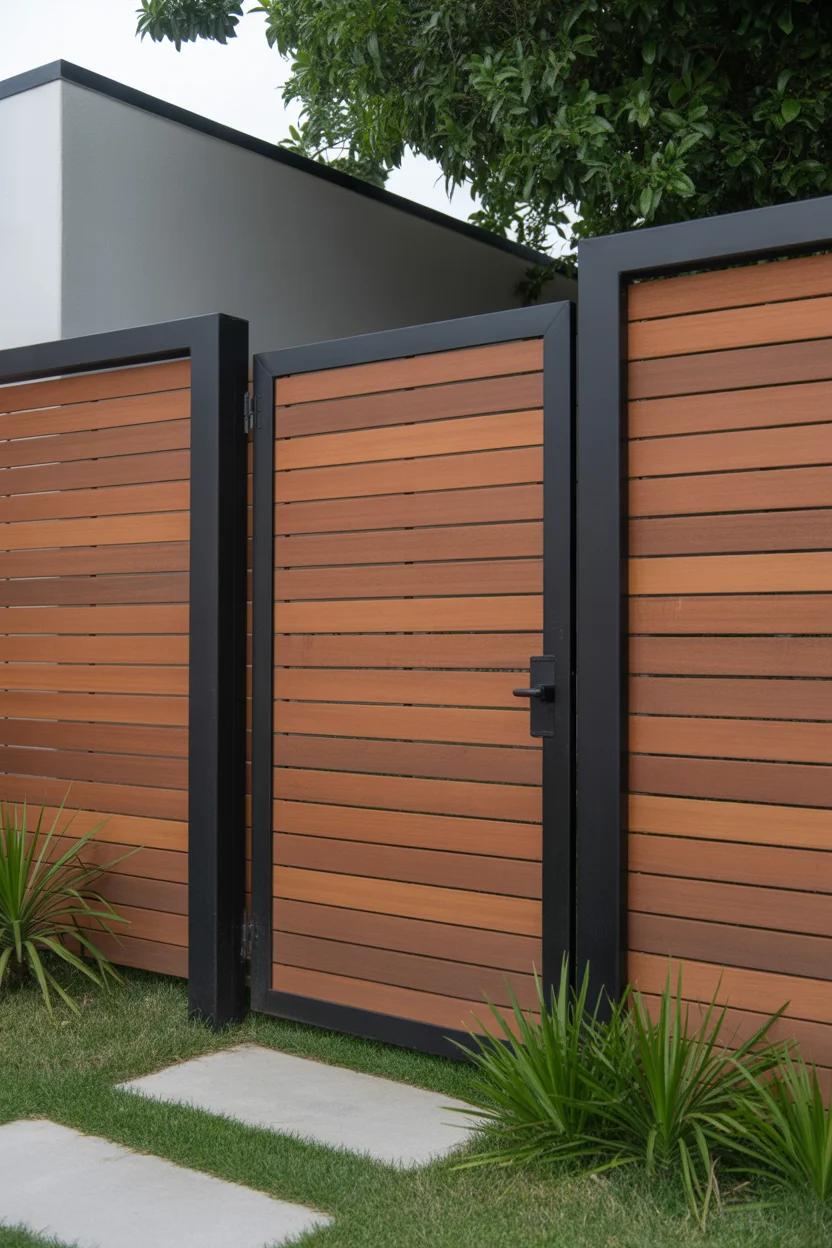
Mixing materials is a major trend in modern wood fence ideas, and pairing redwood with black metal is exceptionally striking. The metal posts, often steel or aluminum, provide unwavering structural support that will never rot or warp at the ground line. By eliminating wooden posts, you solve the most common point of failure in traditional fencing. The black powder-coated metal frames the redwood panels like a picture, creating a crisp, architectural aesthetic that feels highly custom.
The visual contrast between the warm, organic grain of the redwood and the cold, precise lines of the black metal is captivating. This combination works particularly well for front yard boundaries or courtyard enclosures where making a strong design statement is desired. The redwood panels can be easily replaced or refreshed if needed, while the metal framework remains permanently intact. It is a smart, forward-thinking approach to fence construction that blends durability with high-end design.
11. Whitewashed Pine Cottage Style
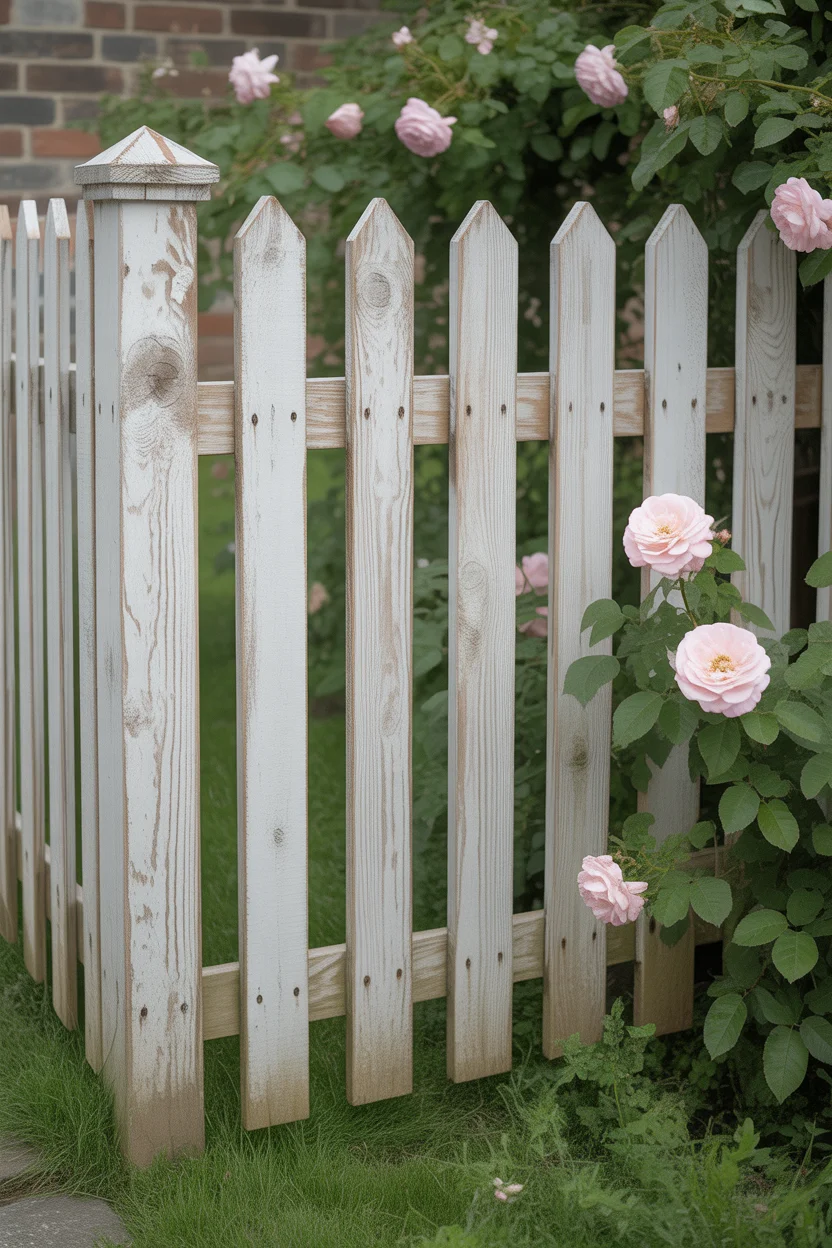
For a softer, more romantic aesthetic, whitewashed pine stands out among wood fence ideas. Instead of a solid, opaque paint job, a whitewash or limewash treatment allows the natural knots and grain patterns of the pine to show through. This creates a weathered, vintage appearance that looks as though it has gracefully aged in a coastal or cottage garden for decades. It provides the protection of a finish without hiding the organic character of the wood.
Achieving this look with pine is highly cost-effective for homeowners on a budget. You can use standard pressure-treated pine, let it dry completely, and then apply a diluted exterior latex paint or a specialized limewash product. The application process is forgiving, and you can control the opacity by adding more or less water to the mixture. Over time, the whitewash will naturally wear and fade in a way that enhances the rustic charm, requiring only occasional touch-ups.
12. Ipe Horizontal with Stainless Steel
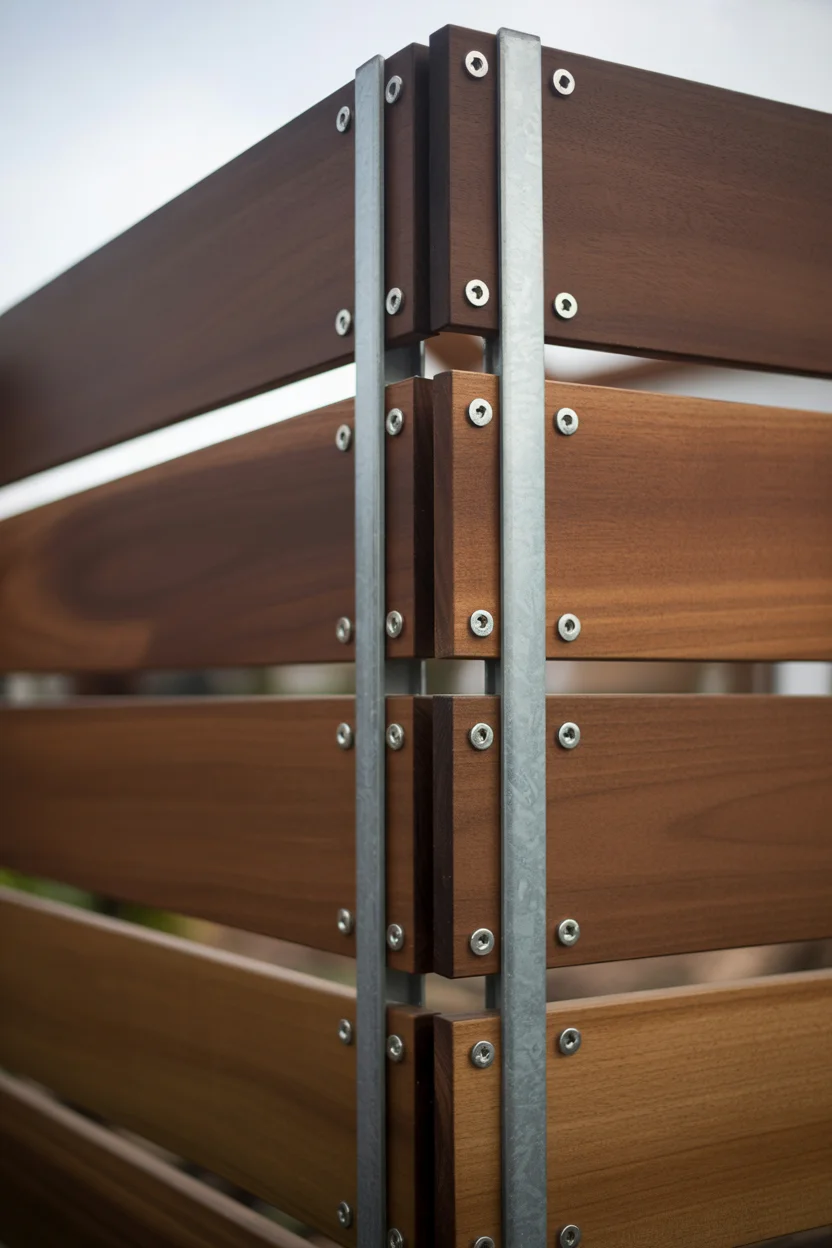
While hidden fasteners are common, deliberately exposing stainless steel hardware is a unique approach in high-end wood fence ideas. When working with a material as premium as Ipe, highlighting the mechanical connection can emphasize the strength and precision of the build. Stainless steel is the only acceptable fastener for Ipe, as the wood’s natural tannins will rapidly corrode standard galvanized screws, causing ugly black streaks. Using high-grade stainless ensures longevity and prevents staining.
The aesthetic of the bright steel dots against the deep brown Ipe boards appeals to those who appreciate industrial and honest design. It celebrates how the fence is put together rather than hiding the construction. To make this look intentional, the screw placement must be perfectly aligned and consistent across every board. This level of detail transforms a simple boundary wall into a testament to quality craftsmanship, proving that functional hardware can also be beautiful.
13. Cedar Pergola and Fence Combo
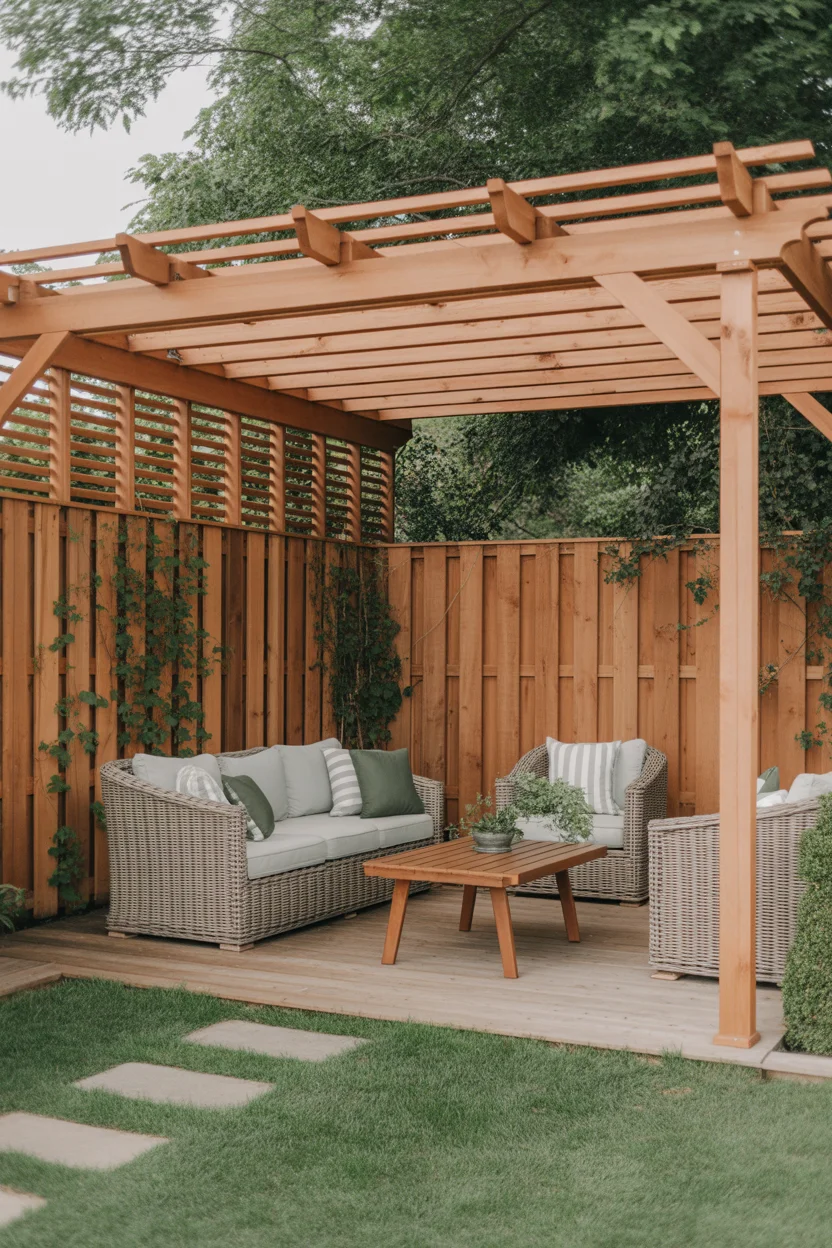
Integrating your fencing with overhead structures is one of the most cohesive wood fence ideas for creating outdoor rooms. By extending the cedar fence posts upward to support a pergola, you blur the line between a simple boundary and an architectural feature. This unified design makes the yard feel intentionally planned rather than pieced together over time. Cedar is ideal here because it is structurally strong enough for posts but light enough to safely support the pergola beams.
This combination provides multi-dimensional privacy for your outdoor living space. The solid fence blocks horizontal sightlines, while the pergola overhead offers a sense of enclosure and partial shade from above. It creates a psychological feeling of a ceiling in your outdoor space, making it feel much more like an extension of your home. Adding climbing plants like clematis or wisteria to the pergola softens the structure further, weaving the fence and roof together into a lush sanctuary.
14. Redwood Louvered Privacy Screen
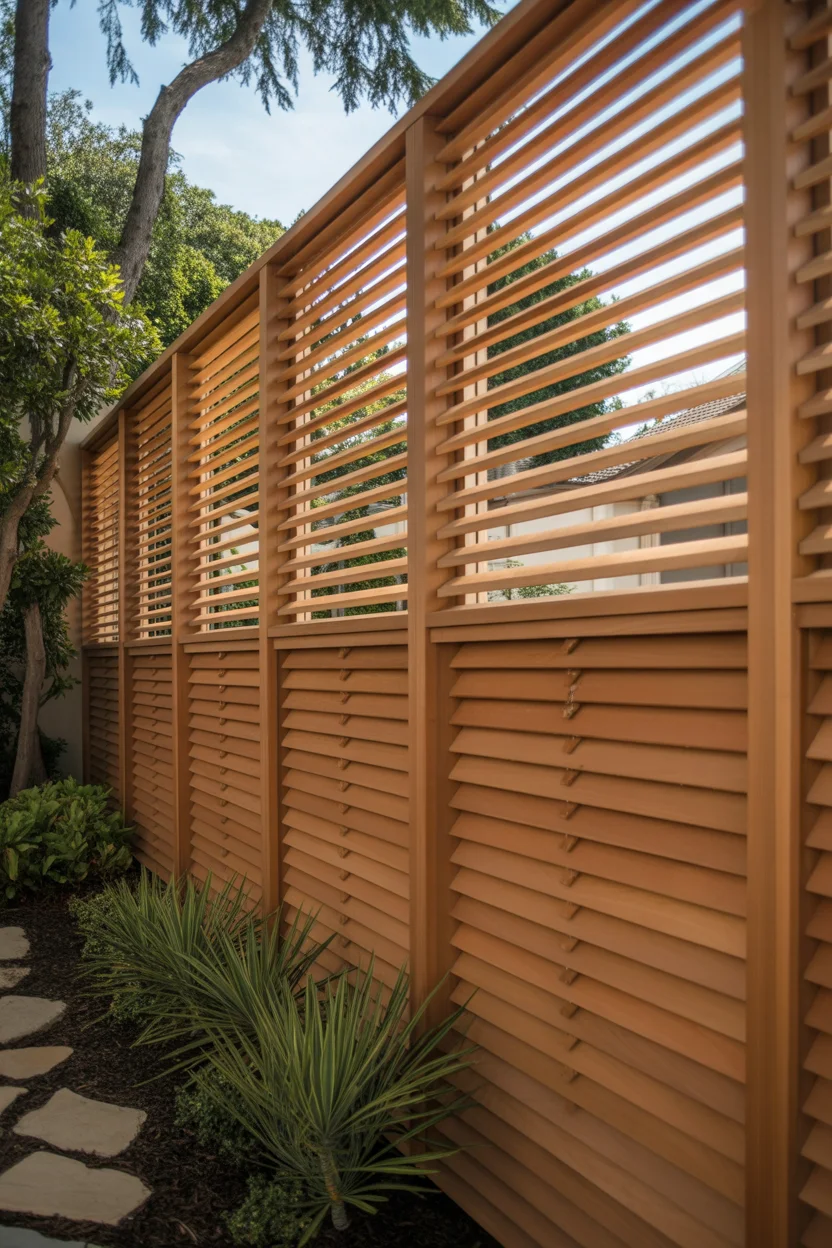
Louvered redwood fences are the pinnacle of customizable wood fence ideas for discerning homeowners. By angling the horizontal slats, you can dictate exactly how much visibility and light passes through the barrier. If angled downward toward your yard, you can see out while preventing neighbors from looking in. This directional privacy is incredibly useful for properties with elevation changes or specific sightline issues, offering a tailored solution that standard flat boards simply cannot provide for your landscape.
Redwood is the premier choice for louvered designs because the angled edges are susceptible to moisture trapping, and redwood’s natural rot resistance handles this vulnerability better than any other wood. The precision milling required for louvers showcases the beautiful, straight grain of the redwood. While this is a more expensive and labor-intensive option, the resulting fence looks like a custom architectural installation. It adds significant sophistication and value to high-end residential properties.
15. Stained Pine for Custom Colors
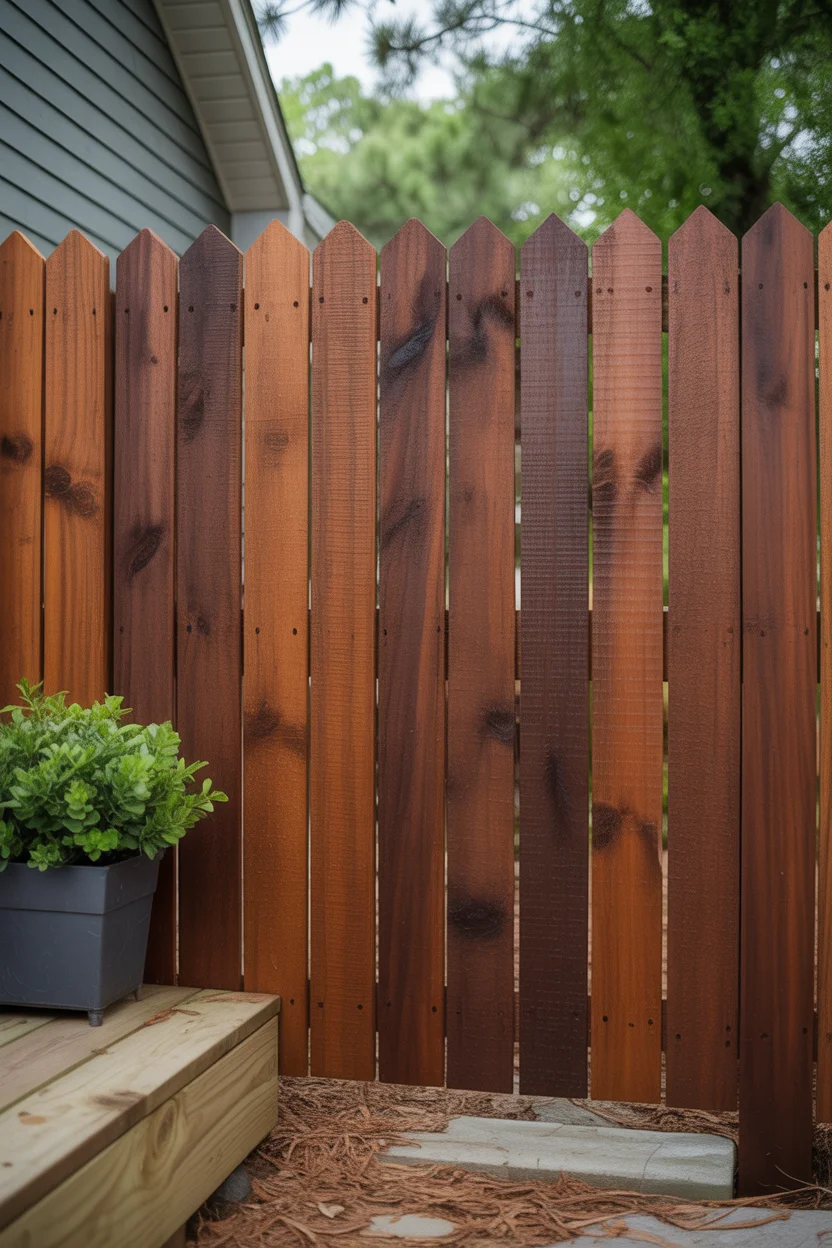
You do not need to purchase expensive hardwoods to achieve a rich, luxurious look; stained pine is one of the smartest wood fence ideas for budget-conscious homeowners. By applying a high-quality, semi-transparent solid or semi-solid stain, you can make humble pine mimic the appearance of cedar, redwood, or even mahogany. The stain penetrates the wood fibers, providing color while still allowing the natural texture and grain patterns to remain visible, avoiding the plastic-like look of cheap paint.
Beyond aesthetics, staining pine is a critical maintenance step that dramatically extends its lifespan. The pigments in the stain act as a sunscreen, blocking harmful UV rays that cause wood to turn gray and degrade. Furthermore, the water-repellent additives in most exterior stains prevent moisture from swelling the wood fibers, reducing cracking and warping. Reapplying the stain every two to three years keeps your pine fence looking vibrant and structurally sound for many years.
16. Ipe Poolside Enclosure
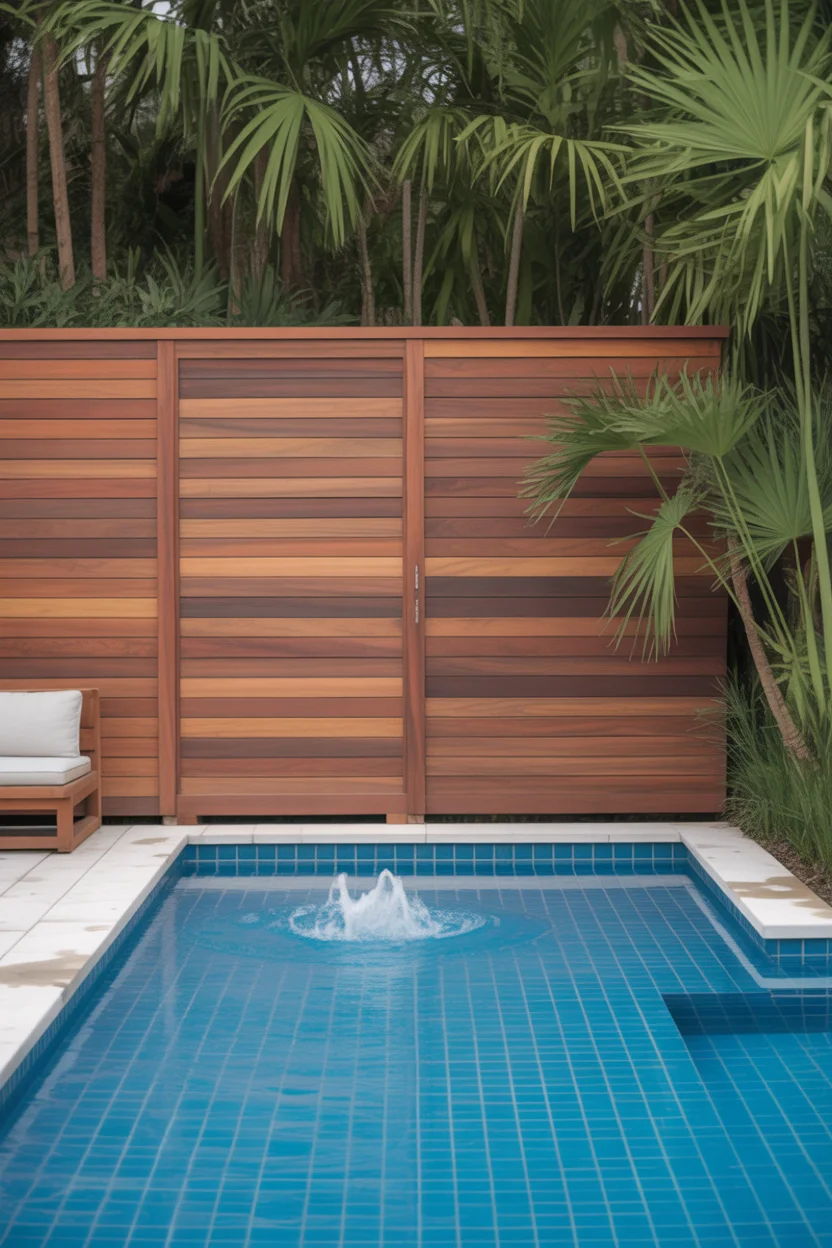
When selecting wood fence ideas for pool enclosures, safety and moisture resistance are the absolute highest priorities. Ipe is uniquely suited for this demanding environment. Its extreme density means it will never splinter, which is crucial for bare feet and children playing near the water. Unlike softer woods that can become slippery or degrade quickly when constantly wet, Ipe maintains its structural integrity and provides a secure, non-slip surface even in high-humidity splash zones.
The visual impact of an Ipe pool fence is undeniable to anyone who sees it. The rich, dark tones of the wood provide a stunning contrast to the bright blue of the pool water and the surrounding hardscaping. It creates a resort-like atmosphere in your own backyard. Because Ipe is so resistant to the chemicals used in pool maintenance, you won’t have to worry about the wood breaking down or discoloring from chlorine splashes, making it a truly worry-free luxury investment.
17. Cedar Dog-Ear Traditional
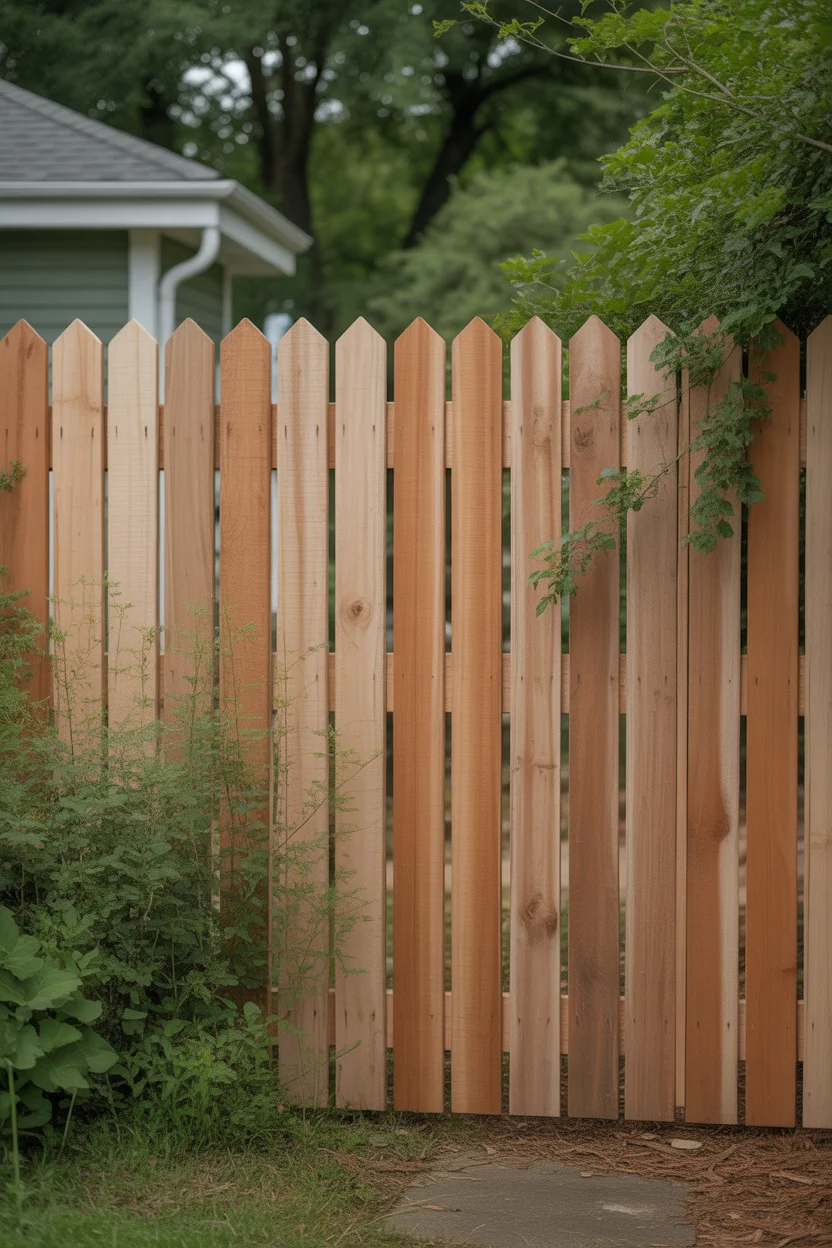
The dog-ear style remains one of the most enduring and practical wood fence ideas on the market today. The slight angle cut off the top corners of each board serves a functional purpose: it prevents water from pooling on the flat end grain, which is where rot typically begins. By shedding water quickly, the dog-ear design significantly extends the life of the individual pickets. It is a simple, cost-effective detail that adds a finished look to standard privacy fencing.
Cedar is the traditional material for dog-ear fences because it offers the best balance of cost, weight, and natural durability. These fences are relatively easy for DIYers to install or for professionals to erect quickly, keeping labor costs down. While it provides complete privacy when new, homeowners should be aware that cedar will shrink slightly as it dries, potentially creating small gaps over time. However, its natural beauty and resistance to decay make it a perennial favorite.
18. Redwood Tiered Landscape Fence
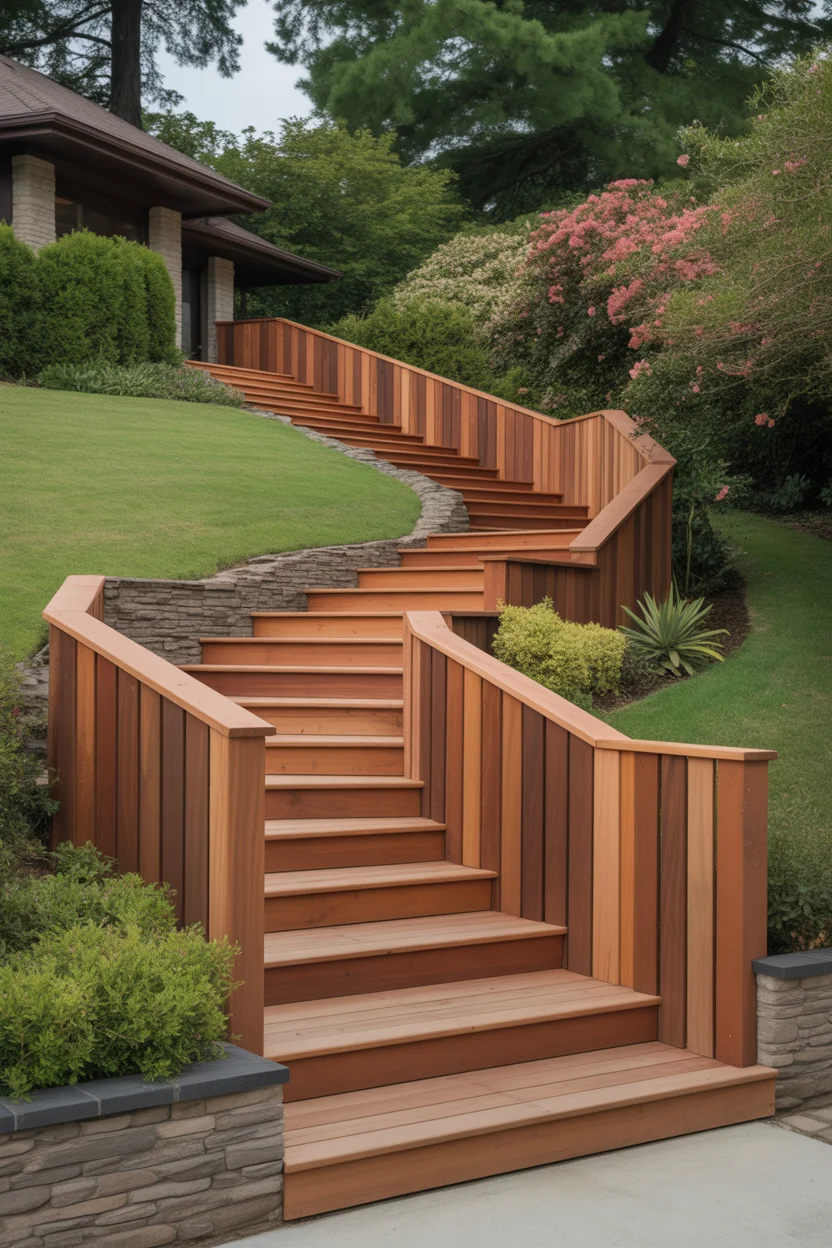
Installing a fence on a slope is challenging, but stepped or tiered redwood designs are among the best wood fence ideas for uneven terrain. Instead of angling the fence panels to follow the slope, which can look awkward and create large triangular gaps at the bottom, the panels are kept level and stepped down the hill. This method maintains a uniform height and a clean, horizontal top line, which is much more pleasing to the eye.
Redwood is particularly well-suited for stepped fencing because its dimensional stability ensures the level panels won’t sag or warp out of square over time. The small gaps created under the stepped panels can be easily filled with decorative rocks, low-growing groundcovers, or custom-cut filler boards. This approach not only solves the topographical challenge but also turns the fence into a terraced architectural feature that complements the natural flow of your landscape rather than fighting against it.
19. Pine Post and Rail Rustic
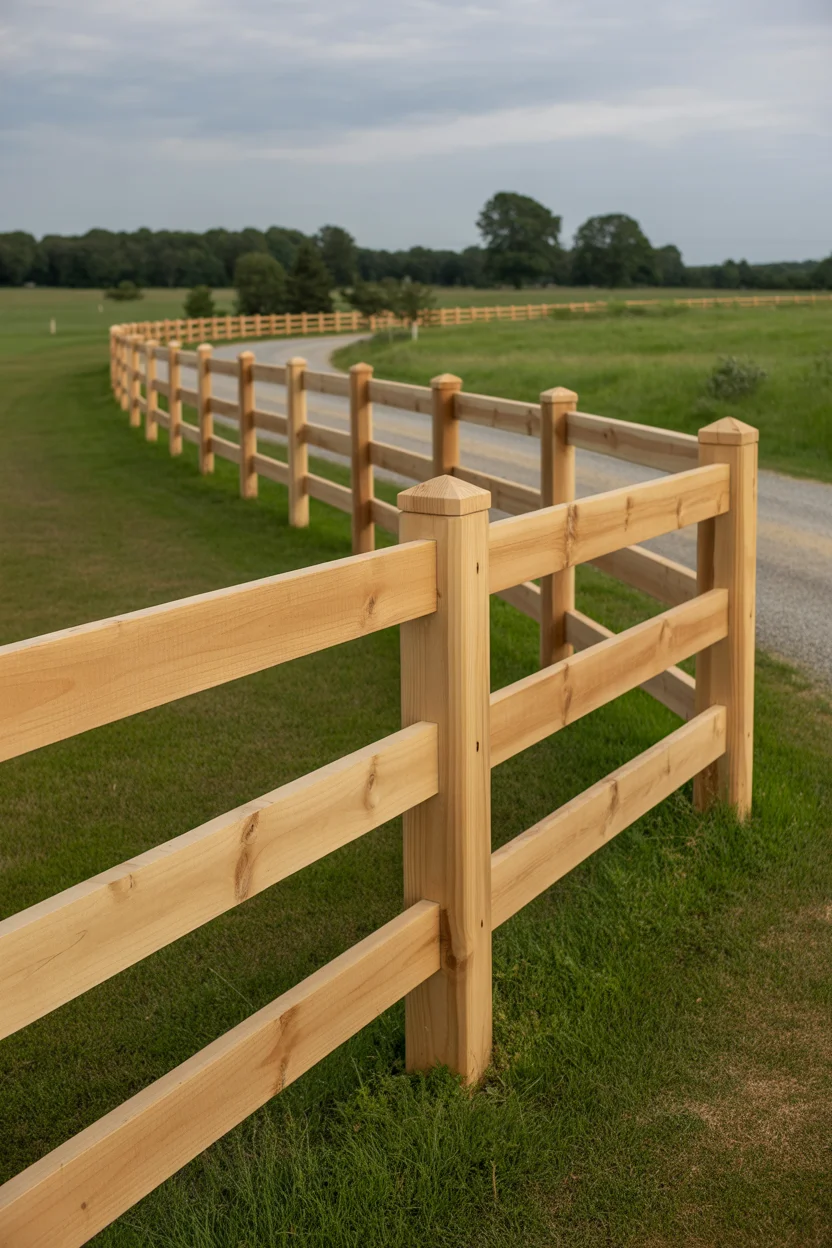
For large properties where enclosing the entire perimeter with a solid privacy fence would be prohibitively expensive and visually overwhelming, pine post and rail is one of the most sensible wood fence ideas. This style uses minimal lumber, consisting only of sturdy posts and horizontal rails. It clearly marks property lines and keeps large animals contained without obstructing the beautiful views that often accompany rural or semi-rural properties. It is the definition of functional, unobtrusive design.
Pressure-treated pine is essential for post and rail fences because the posts are set directly into the ground and the rails are exposed to the elements from all sides. The treatment ensures the wood can withstand these harsh conditions for decades. Many homeowners choose to leave the pine untreated to weather to a natural gray, which blends perfectly with pastoral settings. Alternatively, a dark brown stain can make the fence look like more expensive hardwood while maintaining the low cost.
20. Ipe and Glass Modern Fusion
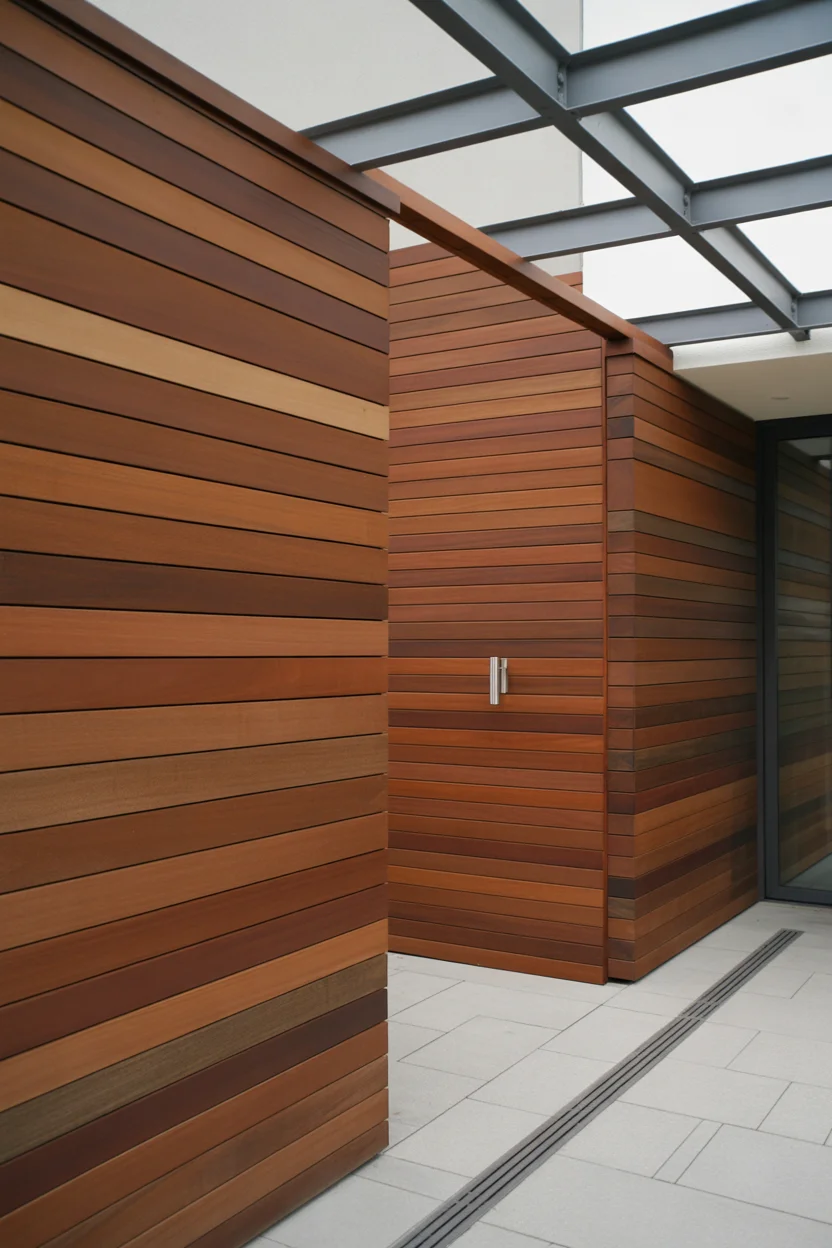
Combining Ipe with frameless glass is a spectacular approach for deck railings and partial yard enclosures, representing the cutting edge of wood fence ideas. The Ipe serves as the structural top rail and posts, providing a warm, tactile surface that is comfortable to lean on. The glass panels below provide the necessary safety barrier without interrupting the view. This fusion of organic warmth and sleek transparency is a hallmark of high-end contemporary landscape architecture.
Ipe is the only wood robust enough to securely anchor heavy tempered glass panels without excessive bracing or fear of the wood compressing over time. Its density holds the specialized glass clamps firmly in place, ensuring the safety of the installation. While this is undoubtedly one of the most expensive options on this list, the result is breathtaking. It allows you to have a physical boundary that feels completely open, perfect for properties with scenic vistas.
21. Cedar with Built-in Planter Boxes
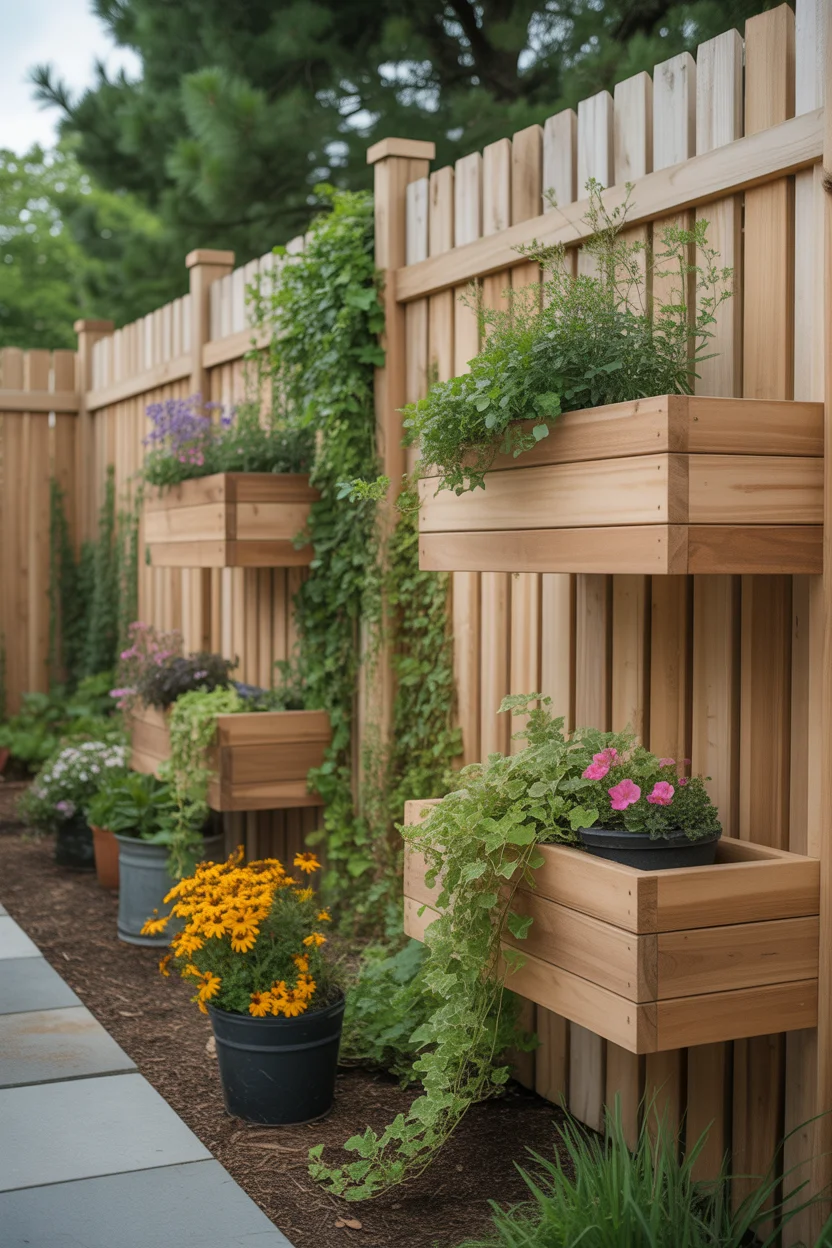
Maximizing space is crucial in smaller yards, and integrating planter boxes is one of the most creative wood fence ideas. By attaching cedar boxes directly to the fence panels or building them into the structure between posts, you create instant vertical gardening opportunities. Cedar is the best wood for this because its natural rot resistance handles the constant moisture from the soil much better than pine. It turns a passive boundary into an active, productive garden feature.
When building planters into your fence, proper drainage and waterproofing are critical to success. Line the inside of the cedar boxes with heavy-duty landscape fabric or a dimpled drainage mat to prevent wet soil from sitting directly against the fence boards. This protects the structural integrity of the fence while allowing your plants to thrive. These integrated planters are perfect for growing herbs, trailing flowers, or shallow-rooted succulents, adding immense charm and utility to your outdoor space.
22. Mixed Wood Tone Geometric Fence
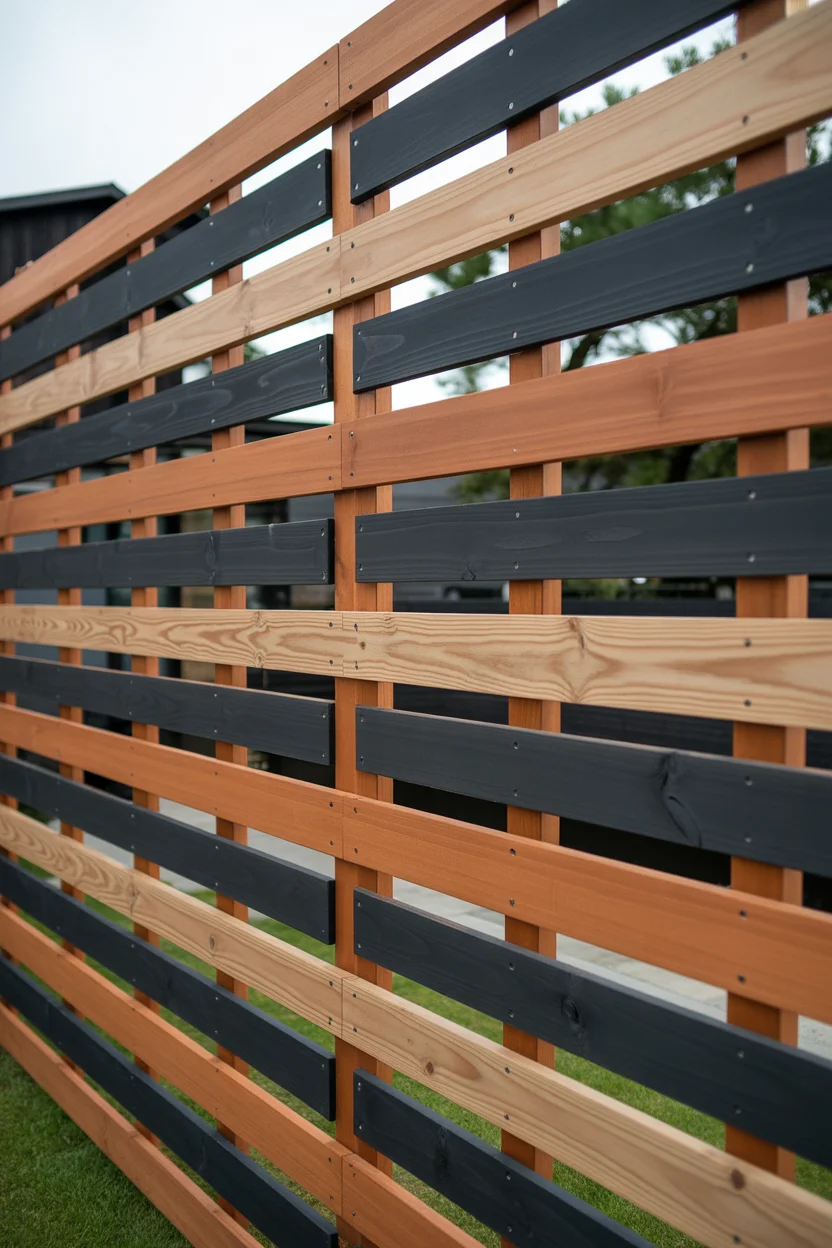
For those who view their landscape as an extension of their personal style, mixed wood tone designs are the most artistic wood fence ideas. By combining different species or different stain colors on the same fence, you can create patterns, gradients, or geometric shapes. For example, alternating bands of natural cedar and dark-stained pine create a striking horizontal stripe effect. This breaks up the visual monotony of a large wooden wall and adds incredible depth.
Executing a mixed-tone fence requires careful planning to ensure the different woods expand and contract at similar rates, preventing buckling. Using cedar and pine together works well because they are both softwoods with somewhat similar movement characteristics. The key is to use high-quality, flexible exterior finishes that can handle the movement. This approach allows homeowners to customize their fence exactly to their aesthetic preferences, resulting in a truly one-of-a-kind boundary that sparks conversation.
Conclusion
Selecting the right material completely transforms your property’s curb appeal. These 22 wood fence ideas highlight the distinct advantages of cedar, redwood, pine, and ipe for every design preference and budget. Whether you prioritize the affordability of treated pine or the unmatched luxury of ipe, thoughtful design ensures lasting beauty and privacy. Save your favorite styles to your Pinterest landscaping boards and start planning your perfect outdoor boundary today. Your dream yard is just one project away.

Join The Discussion