
Introduction
1. Low Platform Bed With Natural Linen Bedding
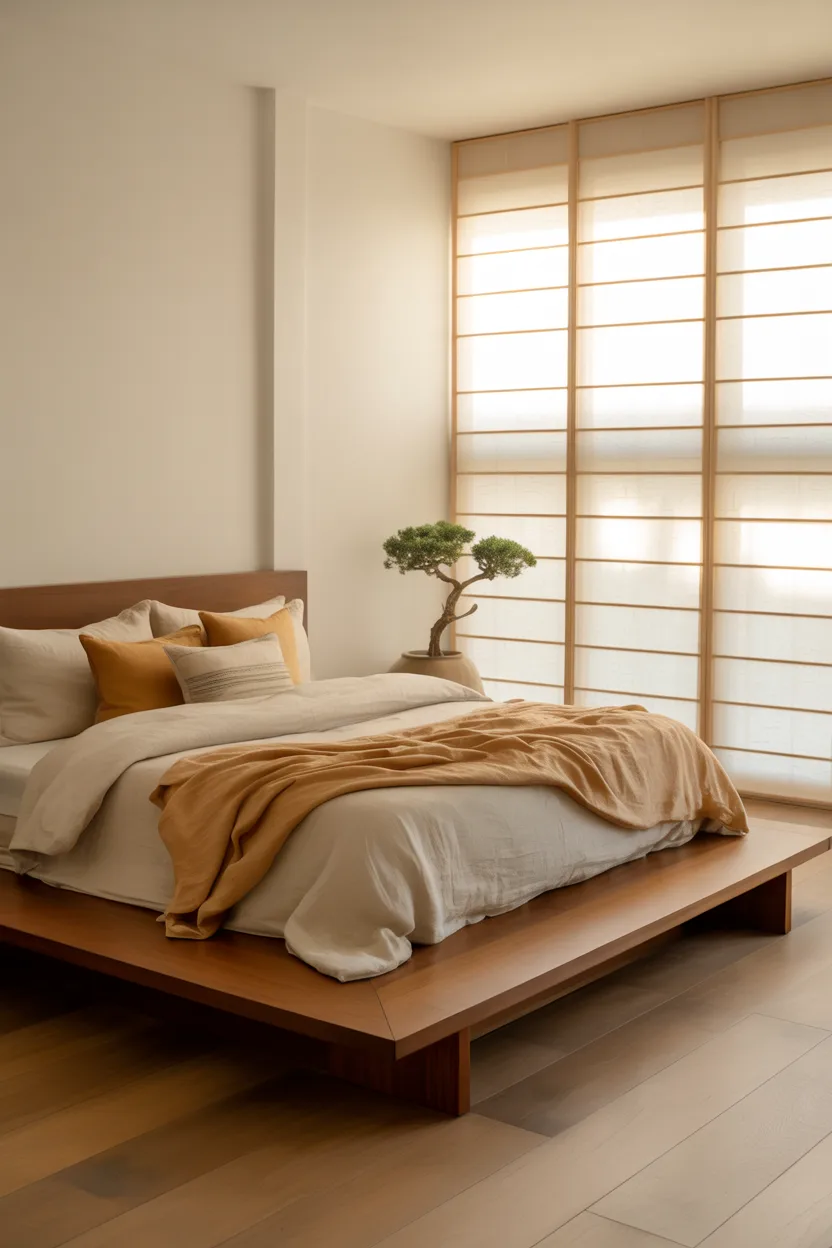
A low platform bed with natural linen bedding is the most fundamental and most universally admired of all modern japandi bedroom designs — the low, floor-connected quality of a platform bed without a headboard creates a sleeping surface that feels grown from the room rather than placed within it, referencing the traditional Japanese futon’s proximity to the floor while maintaining the mattress comfort that Western sleeping preferences require. Natural undyed linen bedding in cream, oat, and pale gray creates the tonal layering within the neutral palette that gives japandi bedding its visual depth and quiet sophistication without introducing any color that would disrupt the room’s fundamental calm.
The bonsai in a simple ceramic pot on the floor beside the bed in this modern japandi bedroom design is the single living element that most completely captures the Japanese philosophical dimension of the japandi aesthetic — a bonsai is not merely a plant but a living practice, a daily meditation on patience, growth, and the finding of extraordinary beauty within profound restraint that mirrors the wabi-sabi values at the heart of Japanese design philosophy. Shoji-inspired paper panel blinds filtering afternoon light into a soft, diffused glow create the specific quality of luminous, non-directional interior light that Japanese architecture has always prioritized as the most beautiful and most restoratively calming of all domestic light conditions.
2. Warm Oak Floating Shelves With Curated Objects
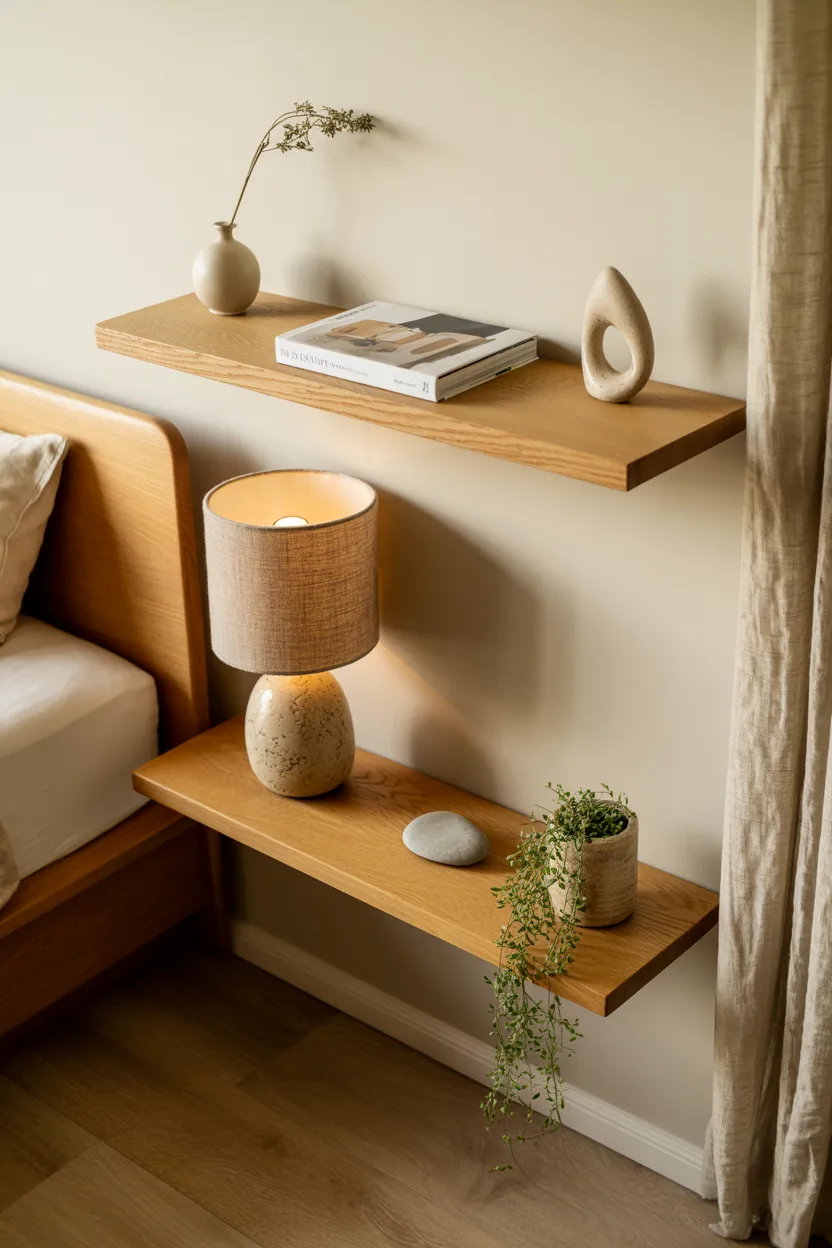
Warm oak floating shelves with a precisely curated selection of objects create the modern japandi bedroom design display philosophy of the most disciplined and most beautifully restrained character — the number of objects on each shelf is limited to three or four maximum, each chosen for its specific contribution of form, material, or organic warmth rather than for decorative abundance or collected variety. This curation discipline is the specific skill that most clearly distinguishes a genuinely japandi shelf from a minimalist shelf that simply has fewer objects — in japandi design, every remaining object after the editing process must justify its presence through genuine material beauty and compositional function.
The trailing plant in a handmade pot on the lower shelf of this modern japandi bedroom design is the organic element that prevents the minimally styled shelves from feeling cold or mechanically sparse — japandi design consistently incorporates living plants as the primary source of organic warmth and natural variation within an otherwise disciplined, human-made material environment. The handmade quality of the ceramic pot — its slight irregularity of form, the variation in its glaze surface, the evidence of the potter’s hands in its making — is as important as the plant it contains, because wabi-sabi aesthetics celebrate the beauty of imperfect, hand-crafted objects over factory-perfect manufacturing in a way that gives japandi spaces their most humanly warm and genuinely beautiful character.
3. Japandi Bedroom With Textured Plaster Walls
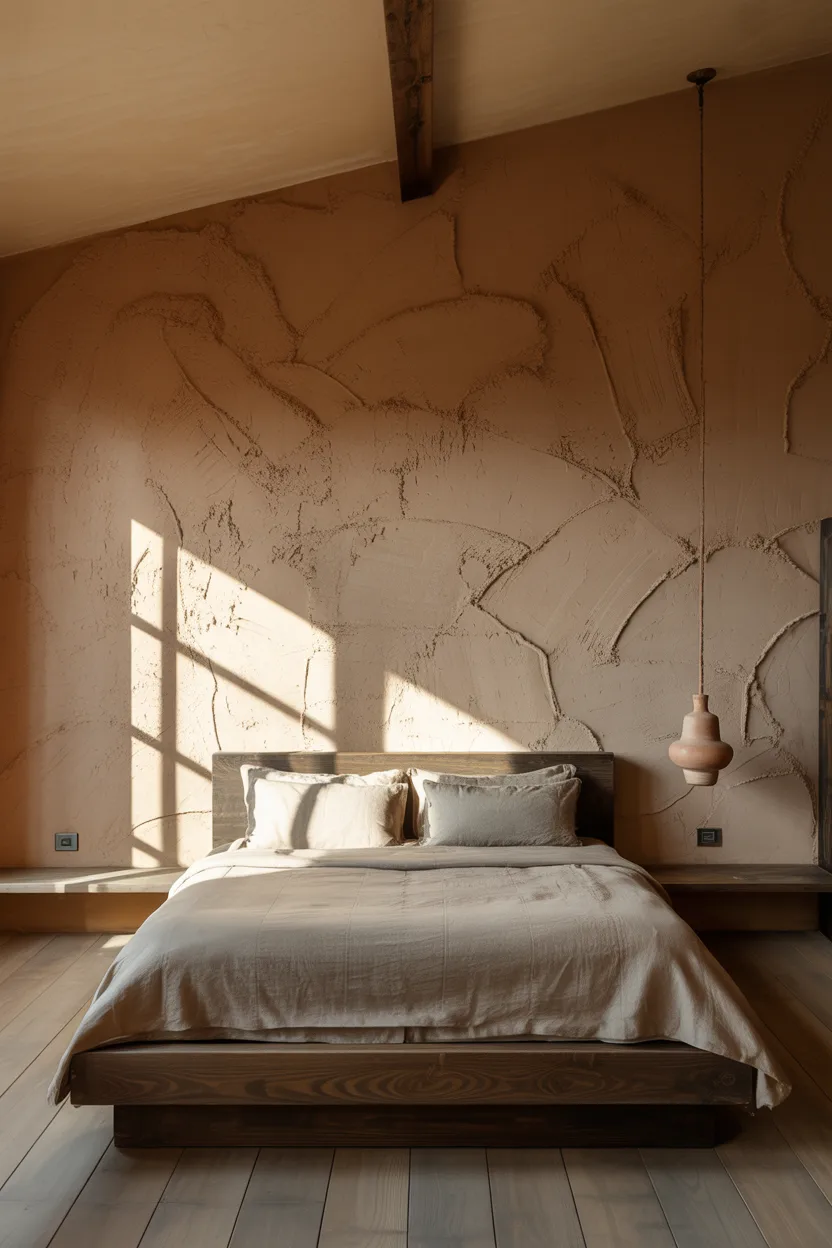
Textured plaster walls in a warm clay tone create the modern japandi bedroom design of the most genuinely architectural personality — where most bedrooms express character through objects placed on surfaces, textured plaster makes the surface itself the personality-carrying element, expressing the aesthetic values of wabi-sabi through the choice of application technique, texture depth, and natural pigmented tone rather than through any added decorative layer whatsoever. This architectural approach to personal expression suits the japandi aesthetic perfectly because it delivers maximum visual interest and warmth without adding a single object to the room that might disrupt its fundamental calm and disciplined restraint.
The warm clay tone of the plaster in this modern japandi bedroom design — a pigment mixed directly into the plaster rather than painted over a completed surface — creates a color depth and material authenticity that paint alone simply cannot achieve. Painted walls reflect light from their surface; tinted plaster absorbs and transmits light through its multiple applied layers, creating a quality of illumination appearing to come from within the wall itself rather than bouncing off it. This translucent light quality changes throughout the day as natural light moves across the textured surface, revealing different details of the trowel work at different hours and making the bedroom wall a genuinely living architectural feature of daily beauty and completely authentic japandi character throughout every beautifully lit hour.
Visit more https://www.pinterest.com/Dreamgardenshome/
4. Dark Stained Timber Bed Frame With White Walls
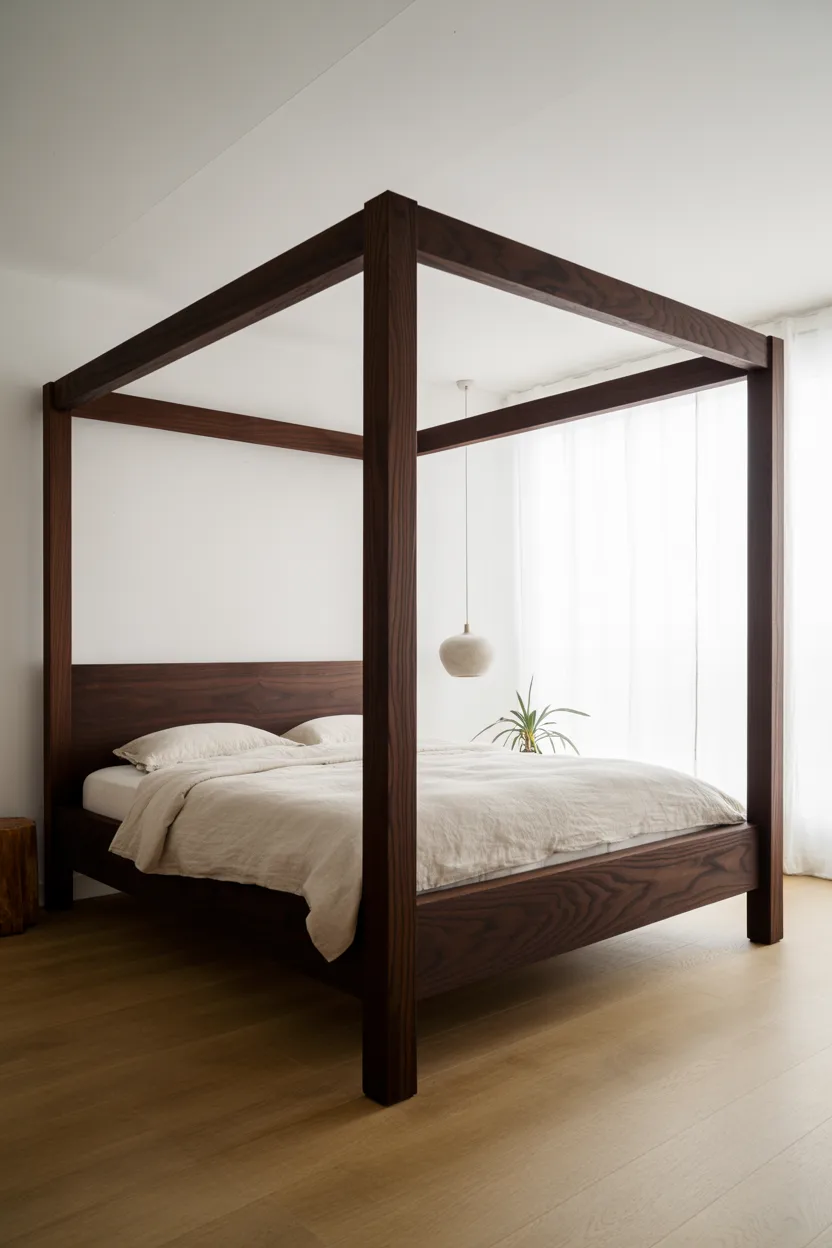
A dark stained timber bed frame against brilliant white walls is the modern japandi bedroom design creating the most powerful graphic contrast and the strongest single-furniture visual statement available in a minimal bedroom space — the maximum tonal contrast between the deep, richly stained timber and the white surrounding walls creates a composition of such graphic clarity and visual authority that the bedroom requires literally nothing else to appear completely, deliberately designed. The Japanese aesthetic tradition of placing one significant, beautifully made dark object within a predominantly white or pale space creates this specific quality of graphic power and material presence that japandi bedrooms celebrate most boldly.
5. Japandi Bedroom With Wabi-Sabi Ceramics
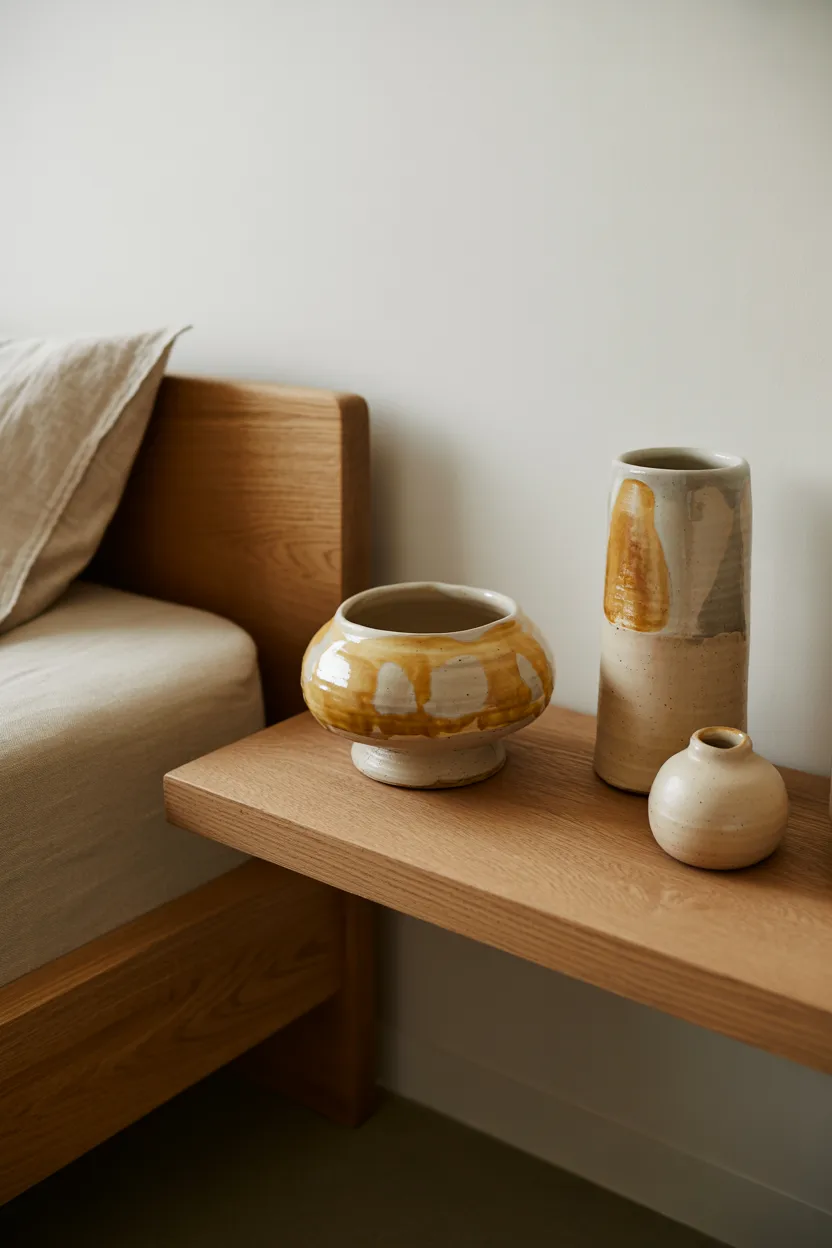
Handmade ceramics as the sole decorative vocabulary of a japandi bedroom create the modern japandi bedroom design of the most philosophically deep and aesthetically authentic character — wabi-sabi, the Japanese aesthetic concept of finding beauty in imperfection, transience, and incompleteness, is expressed most directly and most powerfully through the specific quality of hand-thrown pottery with its slight asymmetries, variable glaze surfaces, and visible evidence of the human hand in every thumbprint and trowel mark in the clay. These imperfections are not flaws to be corrected but the precise qualities that give the ceramics their irreplaceable warmth and genuine wabi-sabi beauty.
The variety of ceramic forms in this modern japandi bedroom design — the wide squat bowl, the tall cylinder, the tiny pinch pot — creates a composition of different scales and silhouettes within a consistent matte, earth-toned material family that makes the shelf display visually interesting without introducing any color contrast that would disrupt the room’s fundamental calm palette. Wabi-sabi teaches that the relationships between objects — the space between them, the way light falls across their surfaces differently at different heights, the visual conversation between their different forms — are as important as the objects themselves. The considered spacing of the ceramics on the shelf, with deliberate empty space between each piece, expresses this relational understanding of beauty with complete authenticity and genuine japandi design intelligence.
6. Japandi Bedroom With Bamboo Accents
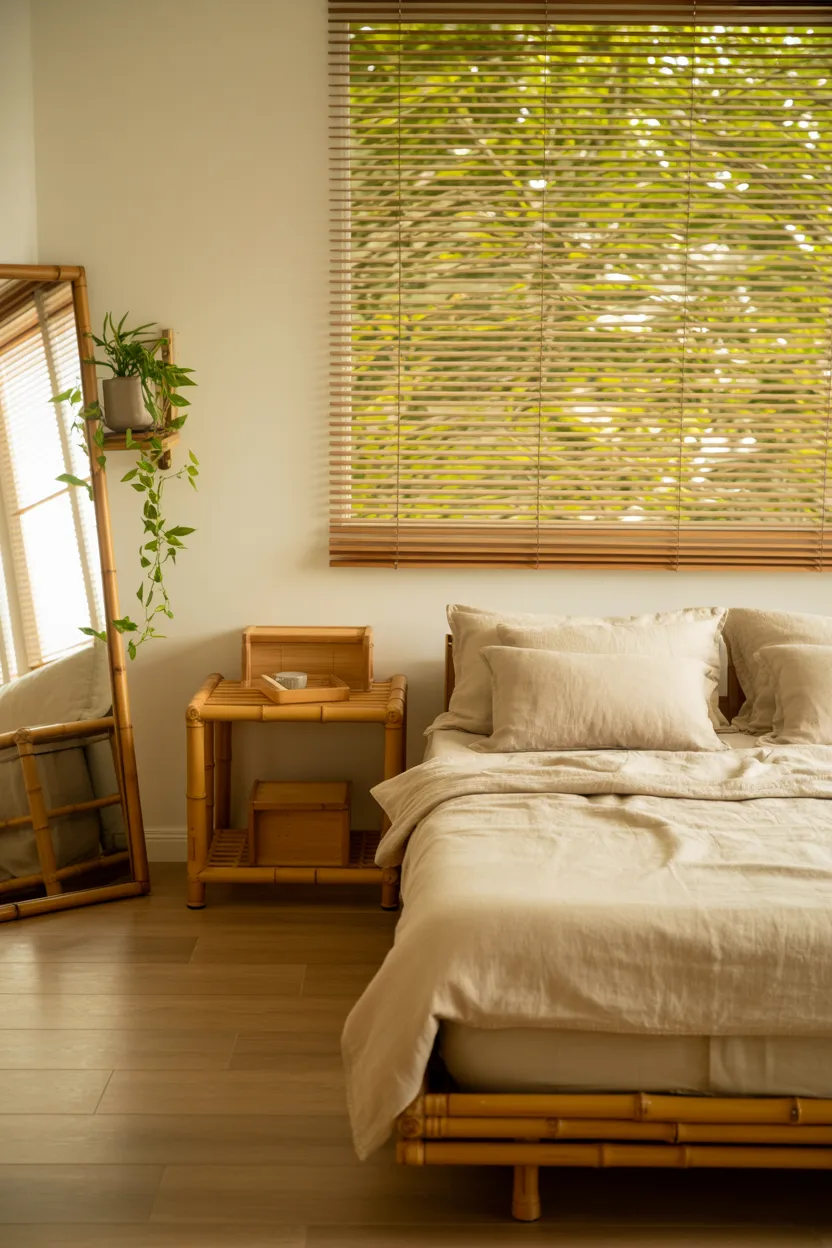
Bamboo accents distributed throughout a japandi bedroom create the modern japandi bedroom design of the most specifically Japanese botanical character — bamboo has been central to Japanese material culture, architecture, and aesthetic tradition for centuries, appearing in traditional Japanese buildings, furniture, craft objects, and garden structures with a consistency of use that makes it the plant material most deeply embedded in the Japanese design consciousness. The introduction of bamboo into a contemporary japandi bedroom creates an immediate and genuine connection to this long aesthetic tradition that manufactured alternatives and other natural materials cannot replicate in terms of authentic cultural resonance and genuine botanical beauty.
The bamboo blind at the window in this modern japandi bedroom design creates the specific quality of warm, golden-green filtered light that is most distinctively associated with Japanese domestic spaces — the dense culm walls of bamboo slats filter direct sunlight into a diffused, slightly warm-toned illumination that removes the harshness of direct sun while maintaining the brightness that energizes and uplifts the bedroom’s morning atmosphere. This specific quality of bamboo-filtered light has a different character from paper, fabric, or wooden slat blinds, creating a slightly botanical quality of indoor illumination that references the light quality beneath bamboo groves and makes the bedroom feel genuinely connected to the natural world and the Japanese garden tradition throughout every beautiful hour of the day.
7. Japandi Bedroom With Linen Curtains Floor to Ceiling
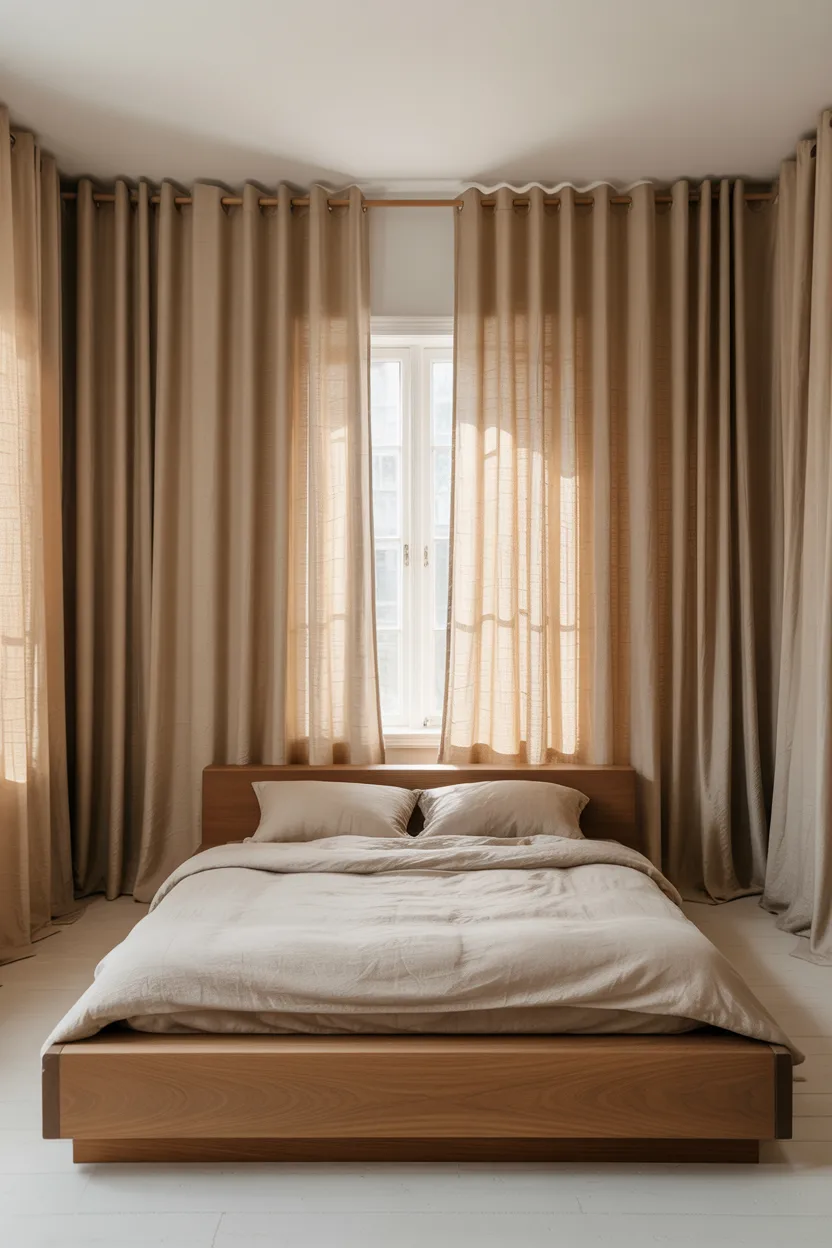
Floor-to-ceiling natural linen curtains are the modern japandi bedroom design element creating the most dramatic and organic textile presence in a bedroom with the greatest economy of decorative means — installed on ceiling-mounted rods rather than wall-mounted tracks, the curtains fall from the maximum possible height, creating the visual extension of the room’s vertical dimension that makes ceiling heights appear greater and the room feel more spaciously generous than its actual proportions. The pooled fabric at the floor adds a quality of generous abundance that pooled curtains always communicate, creating the impression of a room that values materiality and sensory warmth over precise, measured utility.
The specific quality of undyed natural linen in this modern japandi bedroom design curtain application is the material choice of the most complete japandi authenticity — natural linen’s characteristic irregular weave, warm cream-to-oat color range, and the slight translucency that allows diffused natural light to pass through the fabric while filtering direct sun creates a curtain material of both visual and functional beauty that precisely suits the japandi aesthetic’s love of natural, organic materials used with complete honesty and genuine sensory intelligence. The linen curtains and linen bedding in matching natural tones create the tonal unity between soft furnishings that gives this modern japandi bedroom design its most complete and deeply calming sense of material coherence throughout.
8. Japandi Bedroom With Concrete and Wood Combination
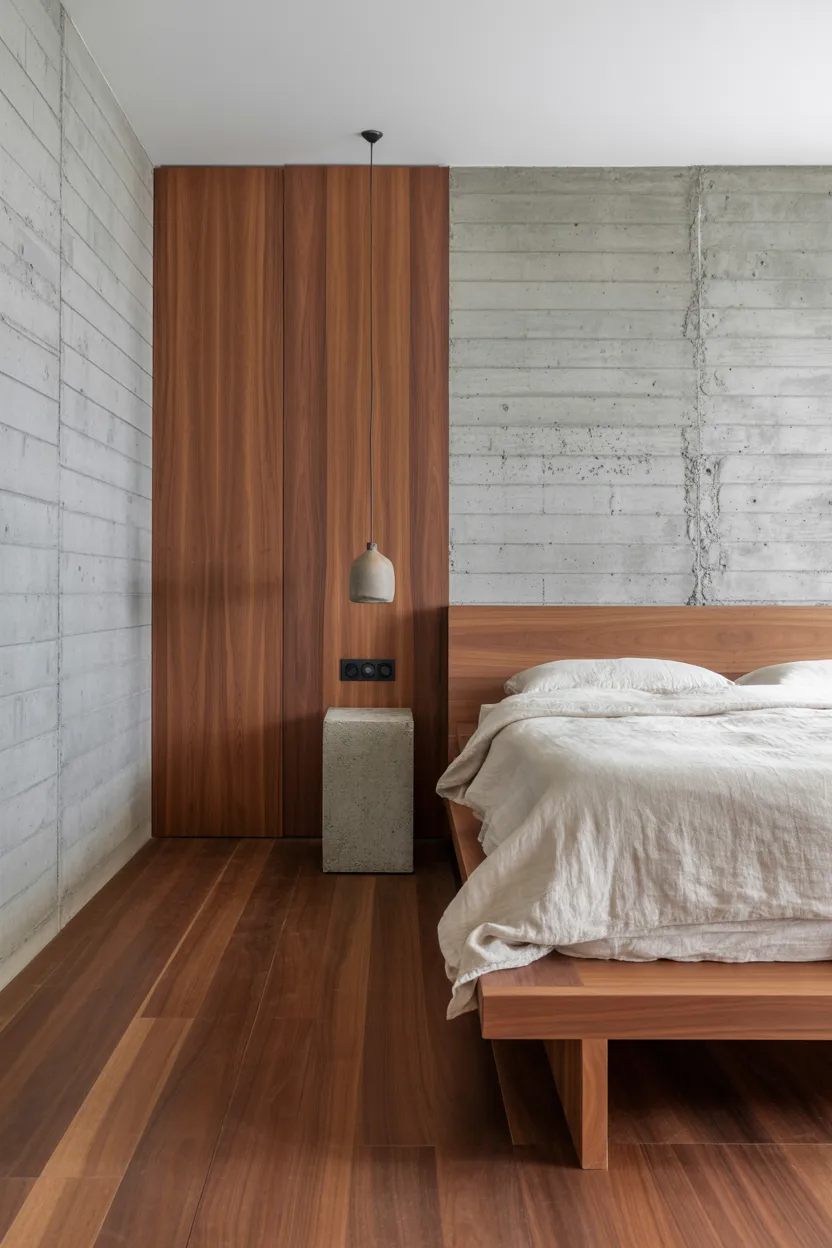
Raw concrete and warm timber in combination create the modern japandi bedroom design of the most powerfully architectural and industrially refined character — concrete’s cool, mineral quality and timber’s warm, organic quality create a material dialogue of extraordinary tension and visual interest that places the bedroom firmly within the contemporary japandi aesthetic’s engagement with honest, structural materials appreciated for their inherent qualities rather than for their decorative potential. The concrete walls’ visible formwork texture is not a limitation to be concealed but a quality to be celebrated, expressing the wabi-sabi appreciation for surfaces that show evidence of their making and their material nature honestly.
The warm walnut flooring running throughout this modern japandi bedroom design is the thermal mediating element that prevents the cool concrete walls from making the bedroom feel cold or institutionally austere rather than warmly, residentially beautiful — the organic warmth of the timber grain at floor level creates a ground plane of natural warmth that physically and visually warms the space from the ground upward, making the cool concrete walls above appear sophisticated rather than harsh. The concrete-topped bedside table of minimal construction — the simplest possible surface on the simplest possible base — demonstrates the japandi principle that furniture serving its function with the least possible material and formal complexity is the most beautiful furniture of all throughout every genuinely designed and considerately inhabited space.
9. Japandi Bedroom With Rattan Pendant Light
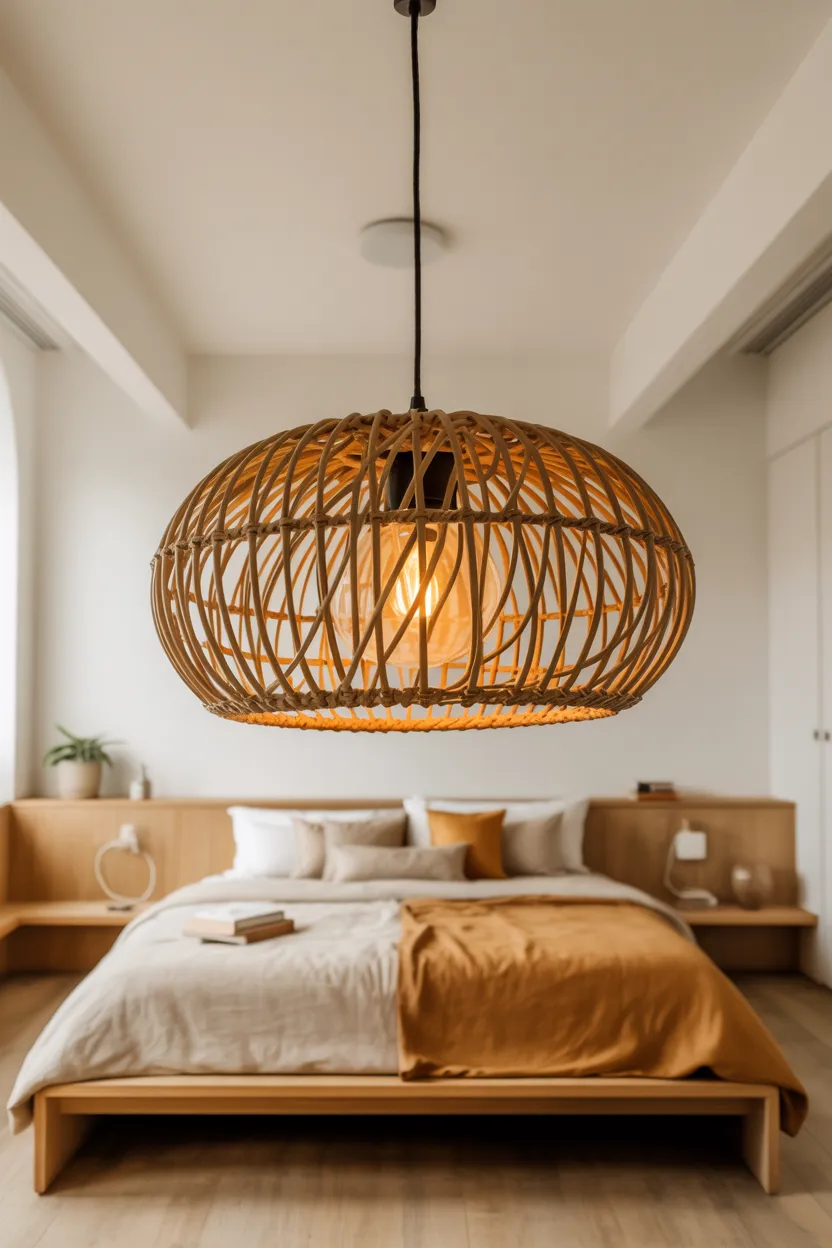
A large woven rattan globe pendant as the modern japandi bedroom design‘s single most expressive design element demonstrates the japandi principle that one perfectly chosen object of genuine material beauty and appropriate organic character can carry a room’s entire atmospheric weight without requiring any supporting cast of additional decorative elements. The rattan globe’s warm, natural fiber weave brings the japandi aesthetic’s love of traditional craft materials into the most visible and light-influential position in the bedroom — the ceiling — where its presence affects not just the visual composition but the actual quality of light throughout the entire sleeping space throughout every daily evening hour.
The dappled light quality created by the rattan pendant in this modern japandi bedroom design — warm amber spots and patterns projected through individual gaps in the weave onto white walls and linen bedding below — creates the most Japanese of all domestic light qualities, the dappled, filtered illumination that traditional Japanese architecture achieved through shoji screens and bamboo screens and that contemporary japandi design recreates through natural fiber lighting objects of authentic craft quality. This dappled quality changes as the light warms from switch-on to full brightness, and shifts gently as the pendant sways with any air movement, making the bedroom’s primary light source a genuinely living, gently animated presence of natural warmth and completely beautiful japandi organic character.
10. Japandi Bedroom With Tatami Mat Flooring Section
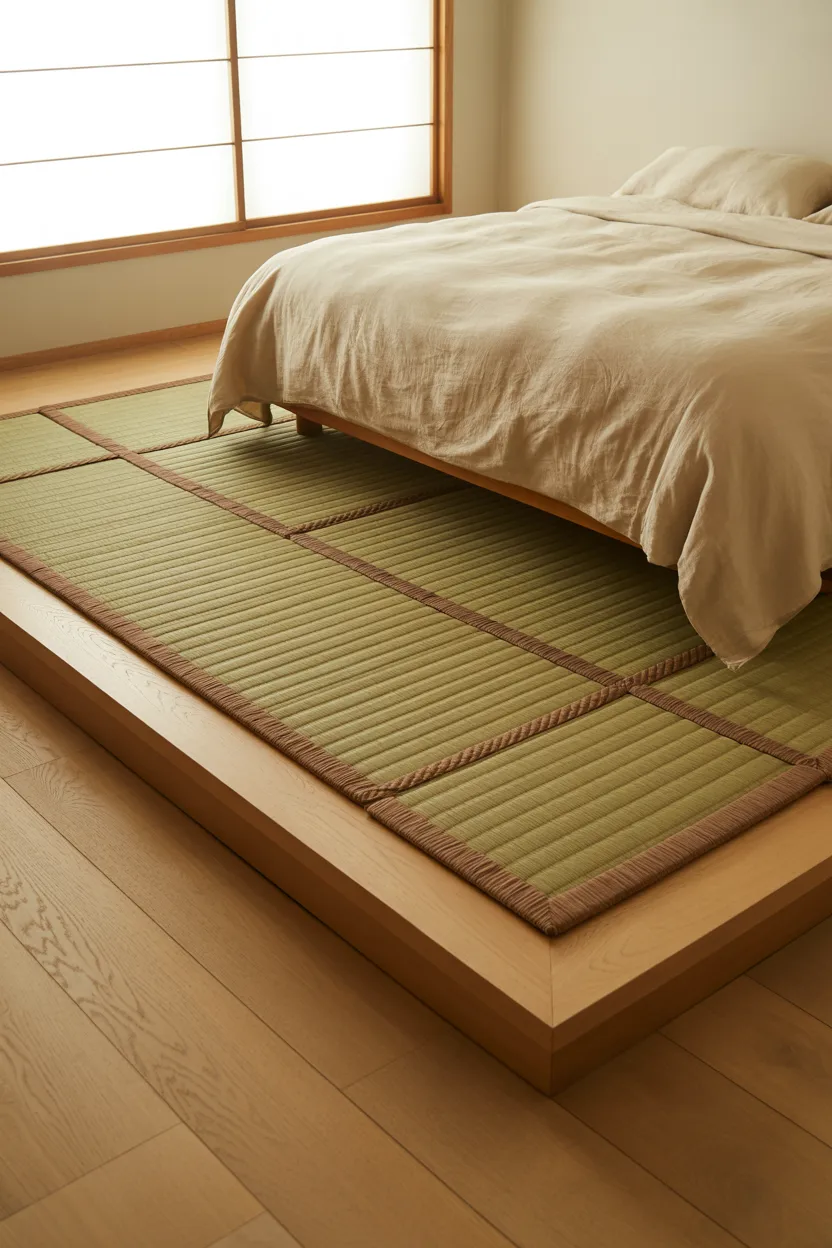
A dedicated tatami mat flooring zone within a japandi bedroom creates the modern japandi bedroom design of the most genuinely Japanese and culturally authentic character — tatami mats have defined the floor surface of the traditional Japanese sleeping room for centuries, their woven grass surface providing a specific tactile quality, a subtle natural fragrance, and a thermal warmth underfoot that no manufactured flooring material can replicate in terms of the specific sensory experience they create within the sleeping space. The raised timber platform beneath the tatami zone creates the architectural definition that separates the Japanese sleeping area from the Scandinavian-influenced surrounding floor, making the cultural fusion explicit in the spatial organization.
The shoji screen panel beside the bed in this modern japandi bedroom design is the architectural element most directly and authentically connecting the bedroom to the tradition of Japanese residential space organization — shoji screens define and filter space in Japanese architecture with a translucent, sliding paper and timber panel system that creates the most beautiful filtered light quality in any domestic space while maintaining the visual connection between adjacent zones that full walls would prevent. The combination of tatami flooring, shoji screen, low platform bed, and simple cream linen creates a sleeping environment of such complete Japanese residential authenticity that the Scandinavian hygge contribution comes through the linen bedding’s warmth and the pale oak surrounding floor rather than any additional element of specifically Nordic character.
11. Japandi Bedroom With Zen Garden Bedside Display
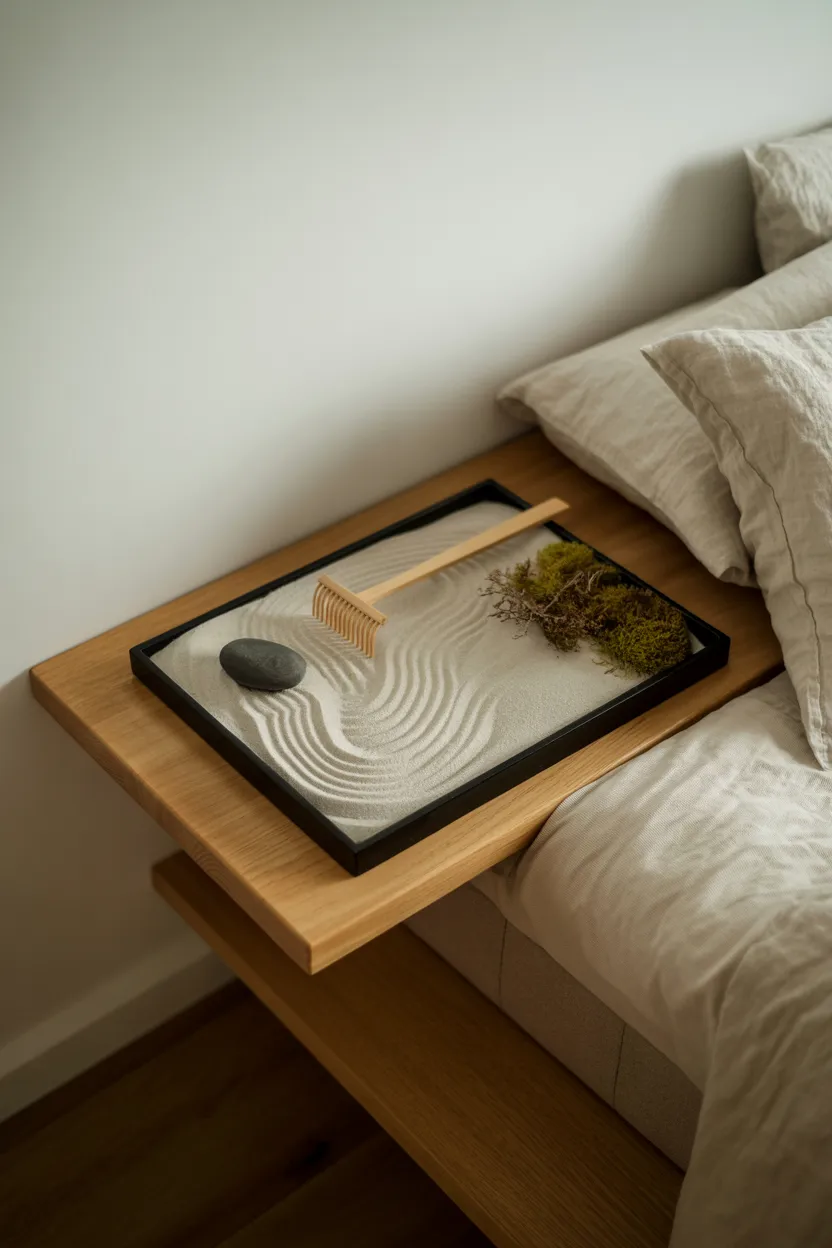
A miniature zen sand garden as the bedside display object creates the modern japandi bedroom design of the most contemplatively intentional and philosophically complete character — the zen garden is not merely a decorative object but a practice tool, a daily invitation to rake the sand into fresh patterns as a meditation on impermanence and the beauty of repeated making and remaking that mirrors the Buddhist philosophy underlying Japanese aesthetic traditions. Placed at the bedside, the zen garden creates the specific quality of bedside presence that encourages contemplative morning and evening moments of genuine mental quietude rather than the passive scrolling that most contemporary bedside habits involve.
The precise placement of the single smooth dark stone within the white sand of this modern japandi bedroom design zen garden is an act of genuine aesthetic consideration that expresses wabi-sabi values with complete economy and perfect clarity — one dark stone against white sand creates the maximum of visual interest and compositional tension with the minimum of material complexity, demonstrating the Japanese aesthetic principle that the relationship between emptiness and presence, between the full and the void, is more beautiful and more meaningful than abundance alone could ever be. The dried moss sprig adds the single organic element that softens the zen garden’s mineral austerity with a tiny gesture of living botanical warmth and complete, quiet, daily japandi beauty throughout every beautifully contemplated morning.
12. Japandi Bedroom With Neutral Color Drenching
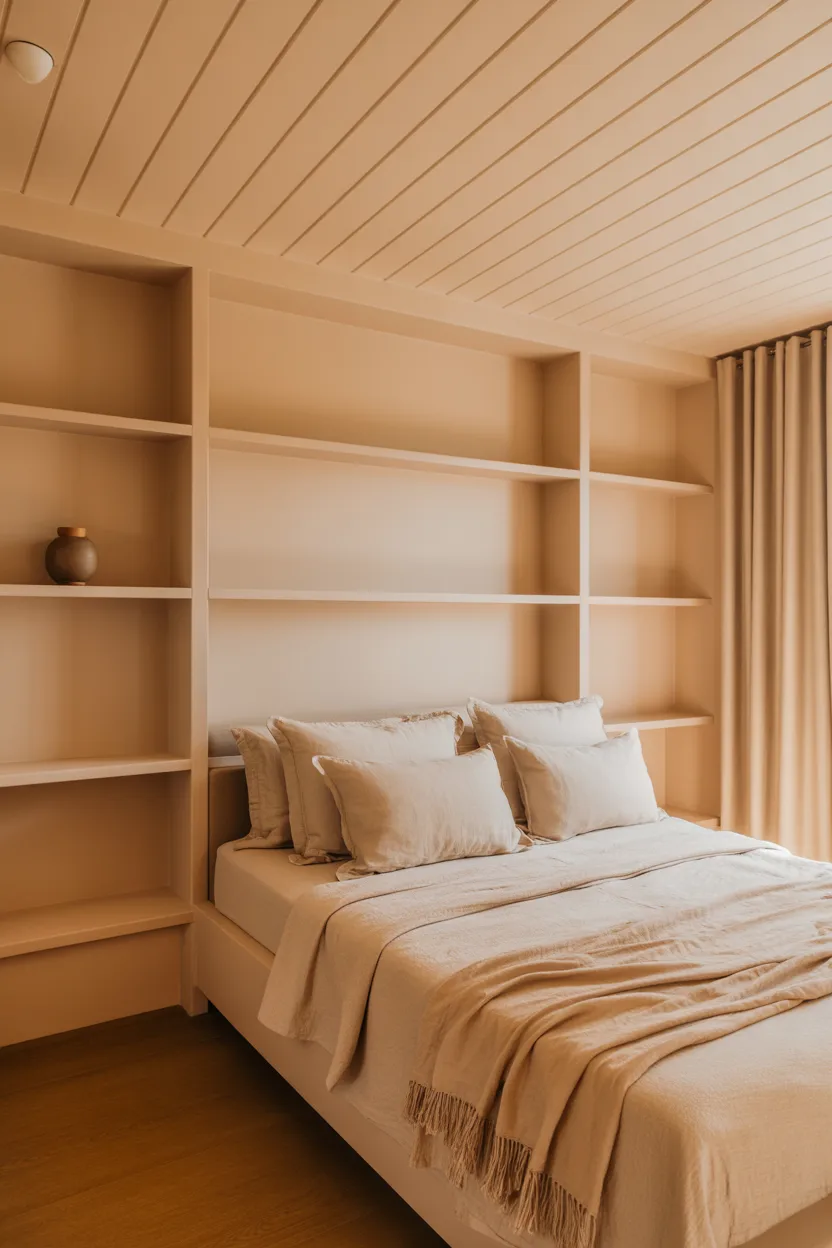
Neutral color drenching — applying the same warm white and oat palette to every surface of the bedroom including walls, ceiling, trim, furniture, and soft furnishings — creates the modern japandi bedroom design of the most visually immersive and psychologically calming character. When every surface shares the same tonal family, the eye finds nowhere disruptive to settle and the visual field becomes a steady, enveloping presence that supports sleep, rest, and the specific quality of mental quietude that the japandi bedroom aspires to create as its primary function. This tonal unity is the design principle most associated with the most restoratively calming bedrooms in contemporary residential design.
The single small dark ceramic object on the floating shelf in this modern japandi bedroom design tonal bedroom is the precisely calibrated visual exception that makes the design rule more powerful rather than undermining it — in a completely neutral tonal environment, one dark object of genuine material beauty and precise placement creates a visual contrast of concentrated impact that objects surrounded by competing visual information and color contrast could never generate with equivalent force or clarity. This is the japandi design intelligence in its most distilled form: the understanding that reducing the number of elements to the absolute essential minimum is not a limitation but an amplification, making each remaining element appear more beautiful, more significant, and more deeply considered than it could ever appear within a conventionally furnished and decorated bedroom space.
13. Japandi Bedroom With Exposed Structural Timber
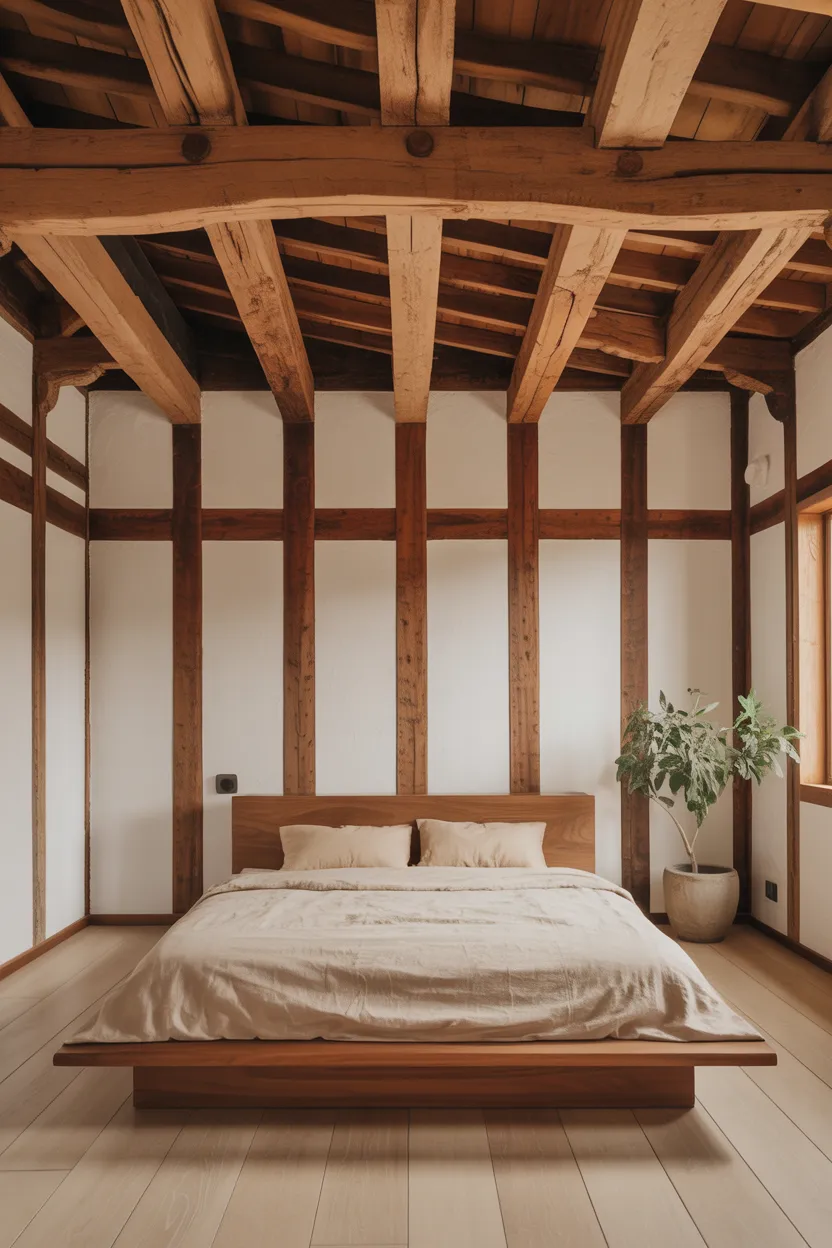
Exposed structural timber in a japandi bedroom — celebrating the building’s actual structural members as the room’s primary decorative feature rather than concealing them behind plasterwork and paint — expresses the Japanese architectural tradition of honest material construction where the structure itself is the beauty, requiring no additional decorative layer to communicate the quality of craftsmanship and the genuine warmth of natural materials. This approach creates a modern japandi bedroom design of the most architecturally authentic character, where the decision to leave the structure exposed is a philosophical statement about honesty, material appreciation, and the specific beauty that functional objects of genuine quality always possess.
The honey-amber tone of the exposed structural timber creating an architectural canopy overhead in this modern japandi bedroom design completely transforms the room’s spatial experience — a ceiling of warm, visible timber structure feels embracing and sheltering in a way that smooth, uniform, painted ceilings cannot approach in terms of the specific quality of warmth and organic visual complexity that natural wood grain creates overhead. The combination of timber structure above and pale oak flooring below creates a vertical material conversation — the structural timber at ceiling level and the finished timber at floor level — that makes the bedroom feel genuinely constructed from natural materials throughout its full vertical dimension in a way that most bedrooms, however beautifully designed, simply and completely fail to achieve.
14. Japandi Bedroom With Single Statement Plant
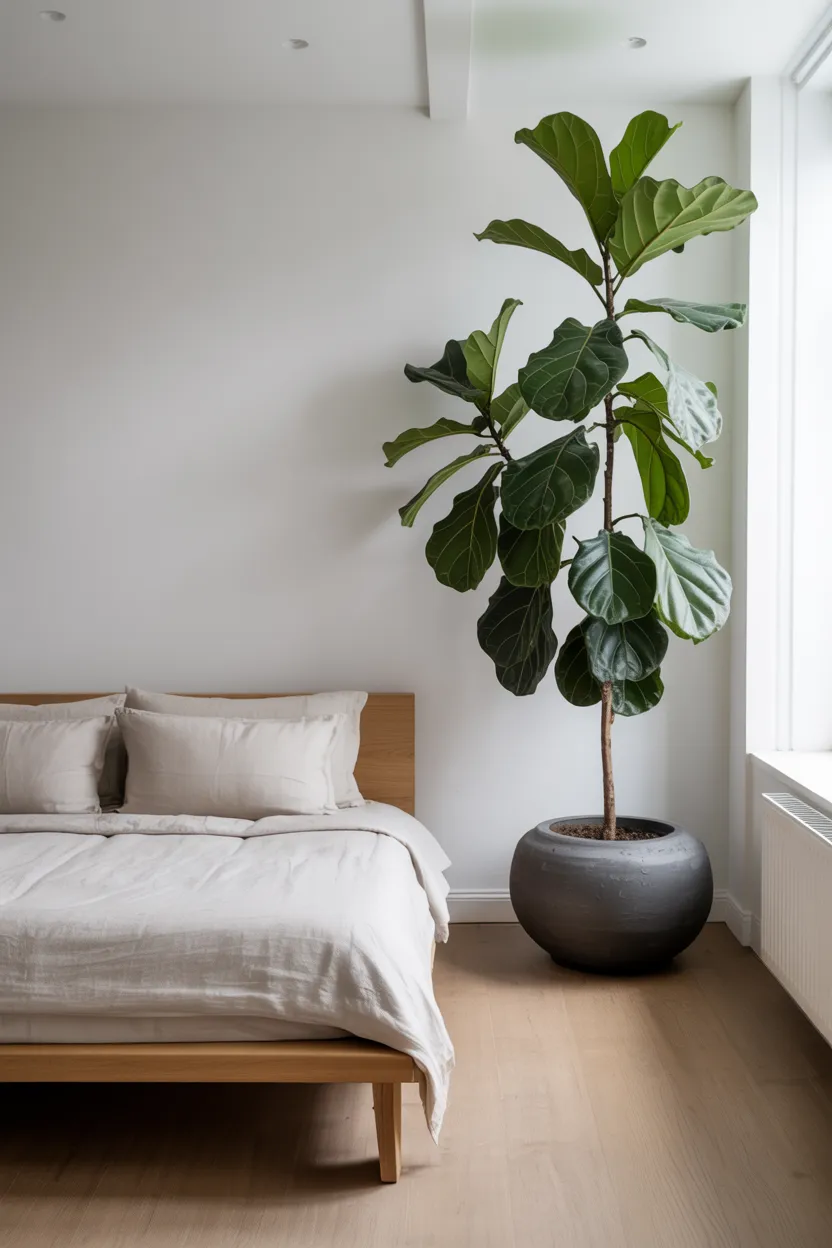
A single architecturally significant plant as the sole decorative element of a japandi bedroom creates the modern japandi bedroom design most powerfully demonstrating the Japanese principle of ma — the concept of meaningful emptiness, where negative space is treated as an active, positive compositional element rather than simply the absence of things. By placing one large, beautifully formed fiddle leaf fig in the bedroom’s brightest corner and removing every other decorative element, the surrounding empty space becomes as much a part of the composition as the plant itself, giving the plant a visual authority and presence that no amount of additional decoration could create or enhance in any way.
The matte black ceramic pot housing the fiddle leaf fig in this modern japandi bedroom design is the material choice most powerfully creating the graphic contrast that makes the dark pot and green plant appear as a composed, deliberate sculptural installation rather than simply a houseplant placed wherever available floor space allowed. The dark pot against the pale oak floor creates a concentrated moment of tonal contrast at ground level that anchors the tall plant within the room’s compositional logic and prevents the large specimen from appearing to float without visual grounding. Together, the single large plant, the dark ceramic pot, and the carefully maintained surrounding empty space create a japandi bedroom of complete, masterful, and deeply beautiful simplicity throughout every beautifully observed and quietly appreciated daily hour.
15. Japandi Bedroom With Sliding Timber Panel Door
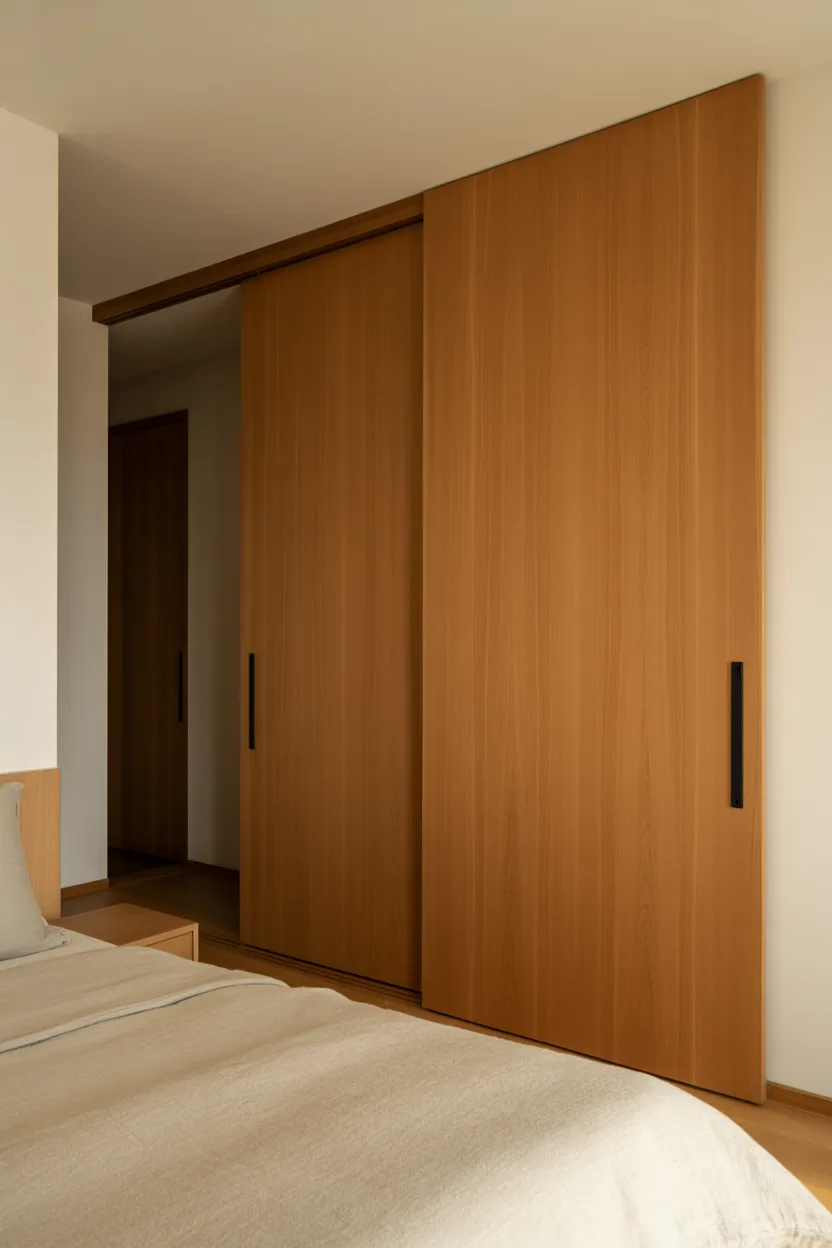
A full-height sliding timber panel door is the modern japandi bedroom design architectural element most directly referencing the Japanese traditional sliding door system — the fusuma and shoji sliding panels of Japanese residential architecture are among the most distinctive and most beautiful contributions to the global tradition of domestic spatial organization, creating the specific quality of fluid, adjustable space definition that hinged doors cannot provide in terms of the smooth, gliding transition between open and closed states. A contemporary sliding timber panel door translates this tradition into a modern material vocabulary while maintaining the essential quality of the Japanese sliding door: the seamless, effortless movement between spatial states.
The ceiling-mounted sliding track in this modern japandi bedroom design — invisible from below and allowing the door panel to appear to float freely without visible structural support from the floor — creates the clean, minimal quality that distinguishes a genuinely designed sliding door system from a rudimentary barn door installation. The matte black hardware at the door’s leading edge provides the single dark metallic accent within the otherwise warm timber and white room palette, creating the specific material punctuation that gives the sliding door its precise, intentional quality. The large warm honey oak surface of the panel door creates a wall-scale material warmth that no framed artwork, mirror, or shelving arrangement could provide with equivalent architectural authority and genuine japandi character throughout.
16. Japandi Bedroom With Arched Window
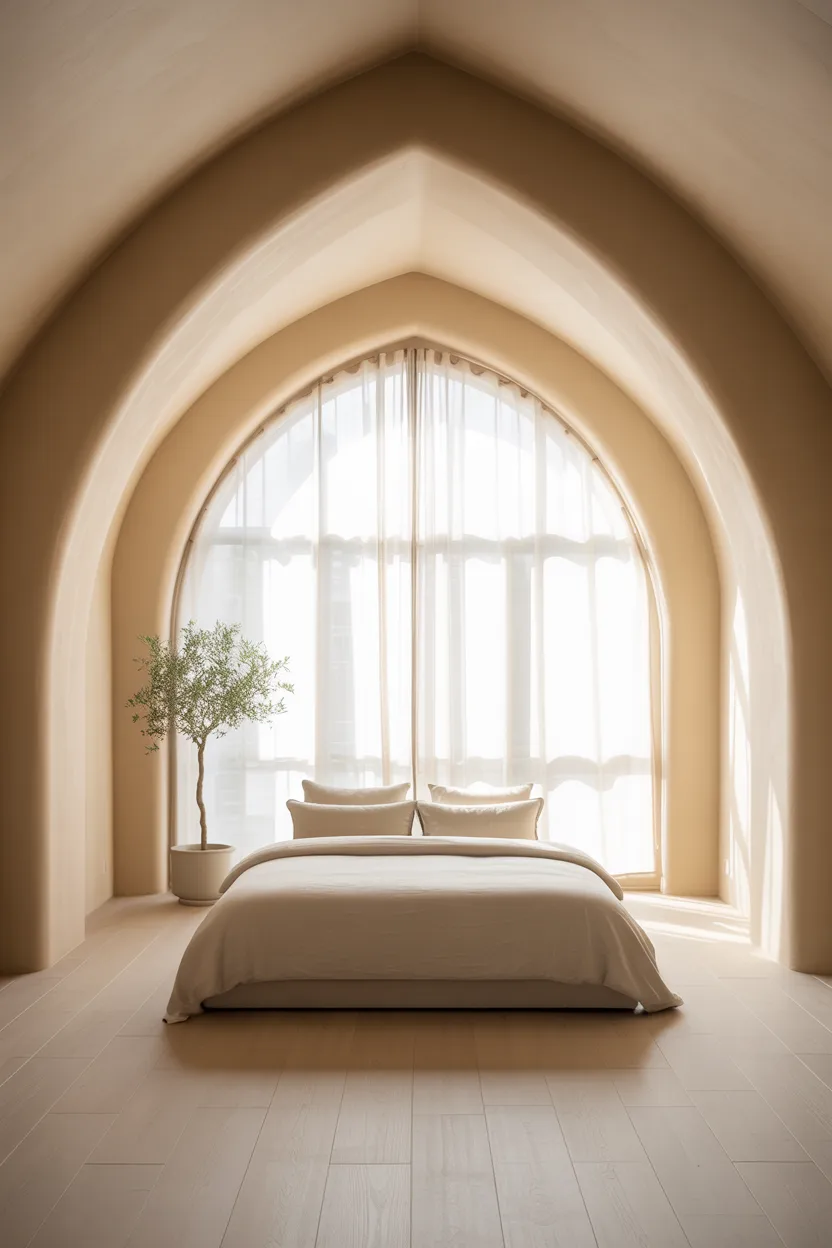
An arched window in a japandi bedroom creates the modern japandi bedroom design of the most architecturally distinctive and naturally luminous character — the arch’s organic curved form introduces a single gesture of organic geometry into an otherwise rectilinear room that creates visual interest and architectural beauty of considerable impact without introducing any additional furniture, decoration, or material. The arched opening also creates a quality of natural light that rectangular windows cannot replicate — the gradual transition from vertical side walls to the curved crown of the arch creates light that enters the room from slightly different angles simultaneously, creating a particularly luminous and multi-directional quality of natural illumination.
Positioning the low platform bed to face the arched window directly from across the room in this modern japandi bedroom design creates the most powerful compositional relationship available in the bedroom’s spatial arrangement — the sleeper waking in the morning sees the arched window and its specific quality of morning light as the first and most beautiful visual experience of each day, creating a morning moment of genuine architectural and natural beauty that conventional window and bed arrangements rarely achieve with such complete compositional intention and daily restorative power. The single potted olive tree beside the arch column adds the Mediterranean botanical warmth that connects the arched window’s architectural reference to the natural world of growing things with complete, organic japandi beauty throughout every beautifully lit morning and evening hour.
17. Japandi Bedroom With Hand-Knotted Rug
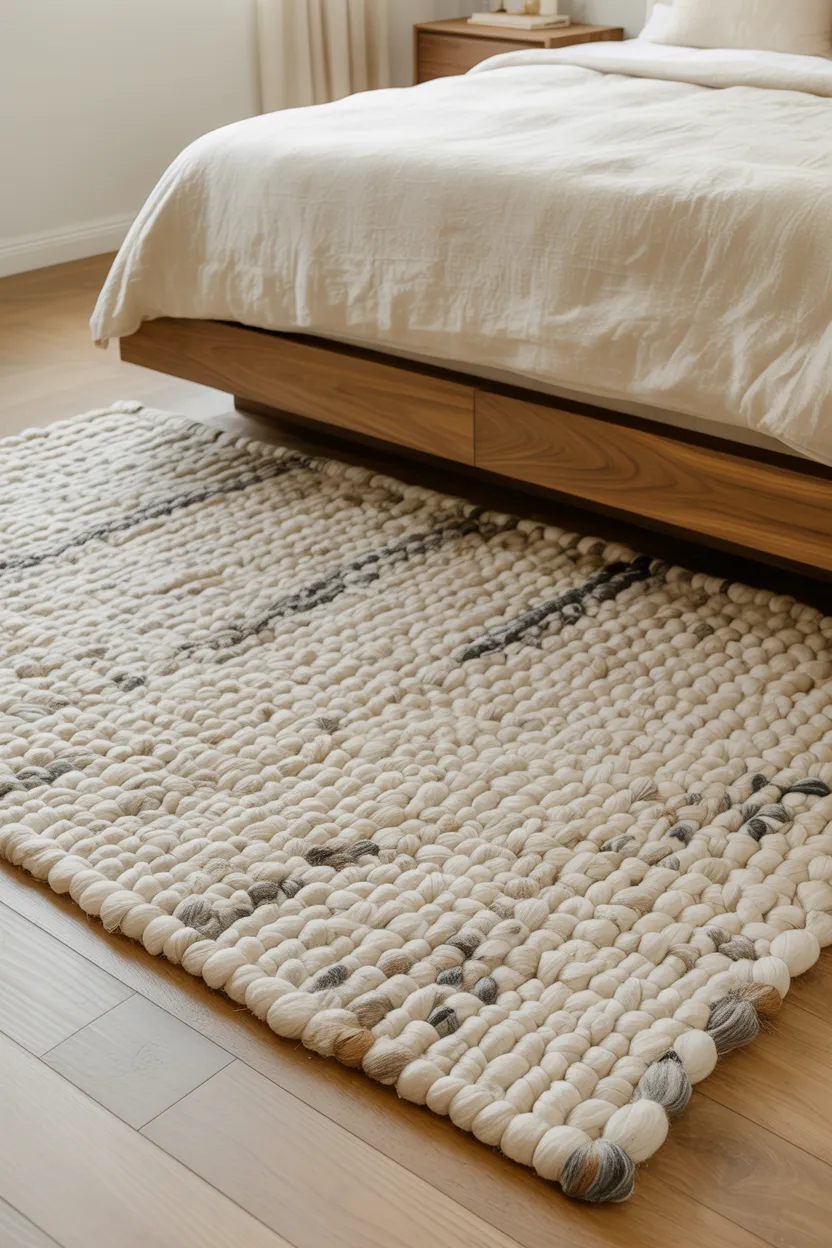
A large hand-knotted rug in natural undyed wool is the modern japandi bedroom design floor element creating the most tactile and sensory warmth in a bedroom dominated by hard surface materials — the natural wool pile’s warmth underfoot, its characteristic slight unevenness across the hand-knotted surface, and the organic color variation of undyed natural fiber create a floor covering of genuine material richness and sensory pleasure that manufactured rugs of equivalent size and visual simplicity cannot replicate in terms of the specific quality of natural warmth and authentic craft that genuinely hand-knotted wool provides. The large scale of the rug extending beyond the bed creates a grounded zone of considerable warmth and physical comfort.
The natural color variation within the undyed wool rug in this modern japandi bedroom design — the warm cream of natural fleece beside the slightly grayer tone of different wool batches within the same rug — creates a surface of subtle tonal complexity within the fundamental neutral palette that gives the japandi bedroom its visual depth without introducing any color contrast that would disturb the room’s essential calm. This is the japandi material principle at its most sophisticated: finding richness and visual interest within restraint, creating depth through tonal variation rather than color contrast, and choosing materials that become more beautiful and more characterful with age and use rather than degrading or requiring replacement as they accumulate the evidence of genuine daily domestic life and warm, regular, pleasurable human habitation throughout every beautiful year.
18. Japandi Bedroom With Ikebana Floral Arrangement
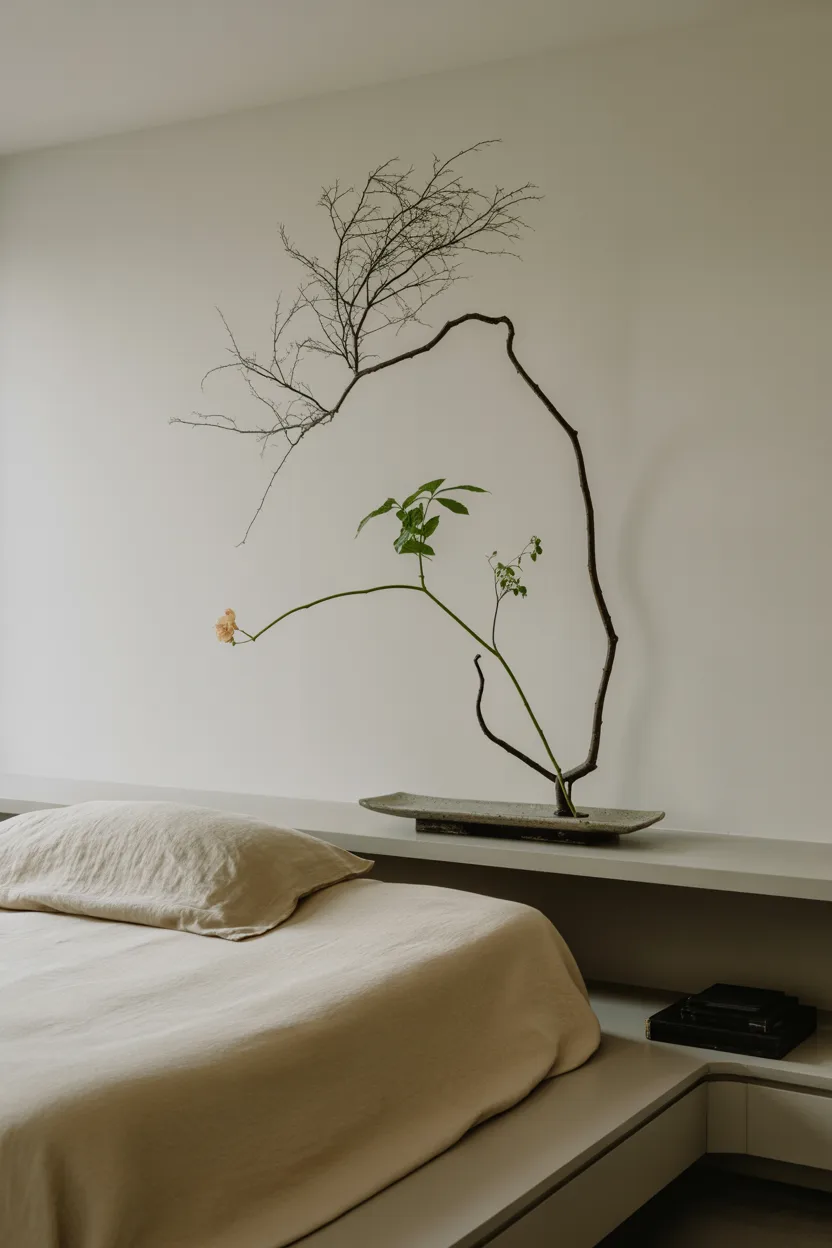
An ikebana floral arrangement as the primary decorative focal point of a japandi bedroom creates the modern japandi bedroom design of the most directly and specifically Japanese artistic expression — ikebana is the Japanese art of flower arrangement developed over centuries as a meditative practice that seeks to express the beauty of natural materials through the most essential possible composition, using asymmetry, empty space, and the precise relationships between a minimum of elements to create arrangements of profound visual beauty and genuine philosophical depth that conventional Western flower arrangements, however abundant and colorful, cannot approach in terms of the specific quality of meditative simplicity and deliberate artistic intention.
The three-element composition of the ikebana arrangement in this modern japandi bedroom design — one tall dried branch, one fresh flowering stem, one small basal stem — expresses the classic ikebana principle of heaven, earth, and humanity represented through three elements of different heights that create the vertical structure within which all other compositional qualities are expressed and appreciated. The flat ceramic vessel at the base of the arrangement is as much a part of the composition as the plant material it holds, its horizontal, earth-toned presence grounding the arrangement’s vertical aspiration in material warmth and structural stability. The combination of dried and fresh materials within the same composition expresses the wabi-sabi awareness of natural cycles of growth and decay that is central to the Japanese aesthetic understanding of beauty throughout every beautiful day.
19. Japandi Bedroom With Minimalist Wardrobe
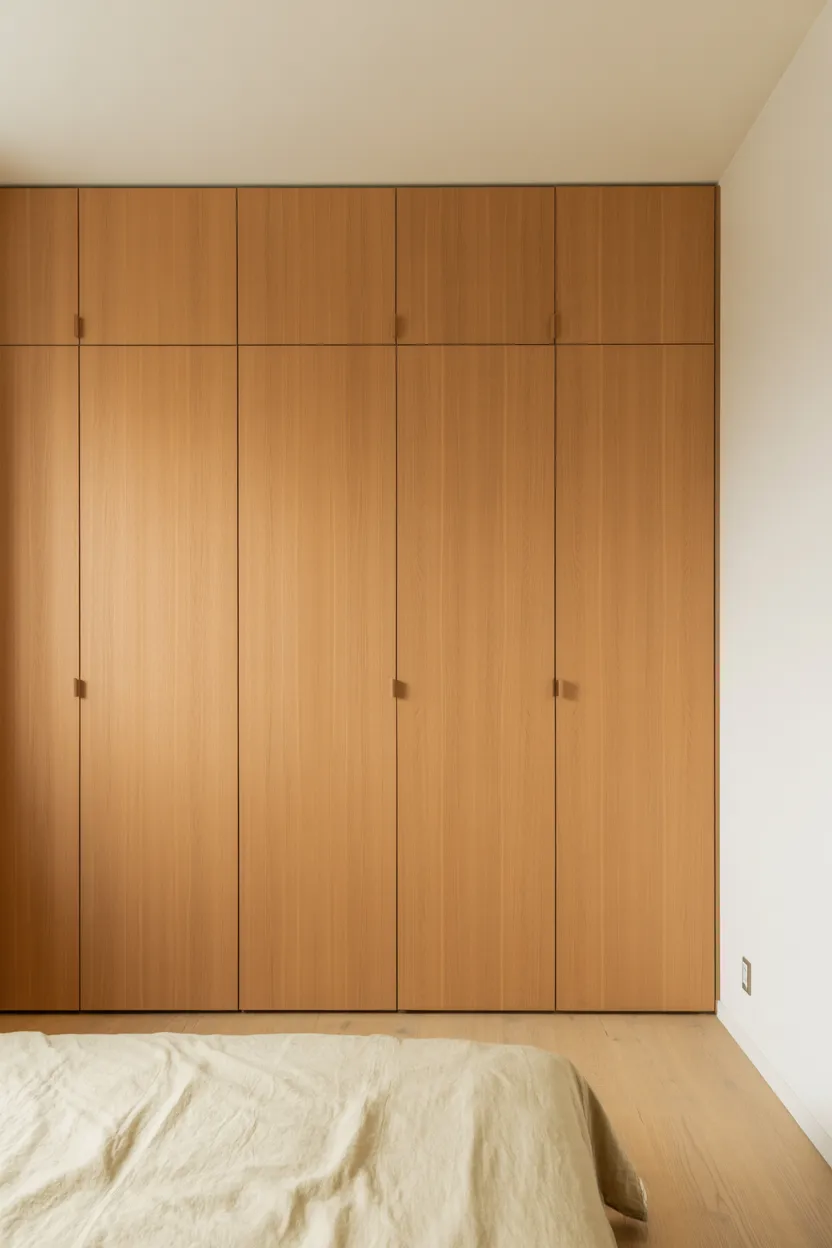
A floor-to-ceiling minimalist wardrobe with flat-panel doors and push-to-open mechanisms is the modern japandi bedroom design storage solution of the most architecturally clean and visually calming character — by eliminating all visible hardware from the wardrobe doors and allowing the full-height flat panel to create an unbroken vertical surface from floor to ceiling, the wardrobe becomes a wall rather than a piece of furniture, receding from the room’s visual composition rather than asserting its presence as a storage unit within it. This architectural receding of the primary storage element is one of the most consistent and most important japandi design strategies for creating bedrooms of genuine visual calm and spatial generosity.
The warm white oak veneer of the minimalist wardrobe doors in this modern japandi bedroom design creates the specific material warmth that prevents the full-wall storage unit from appearing cold or institutional despite its considerable scale and its flat, uninterrupted surface — the natural wood grain visible through the white-washed or lightly bleached veneer finish creates a surface of subtle organic texture and warmth that pure white lacquer or painted MDF lacks entirely. The continuation of the pale oak flooring from the bedroom space to the wardrobe threshold area creates a material continuity that makes the wardrobe zone feel integrated within the bedroom’s complete material landscape rather than separately installed within it throughout every beautifully calm and completely resolved japandi bedroom space.
20. Japandi Bedroom With Kokedama Hanging Plants
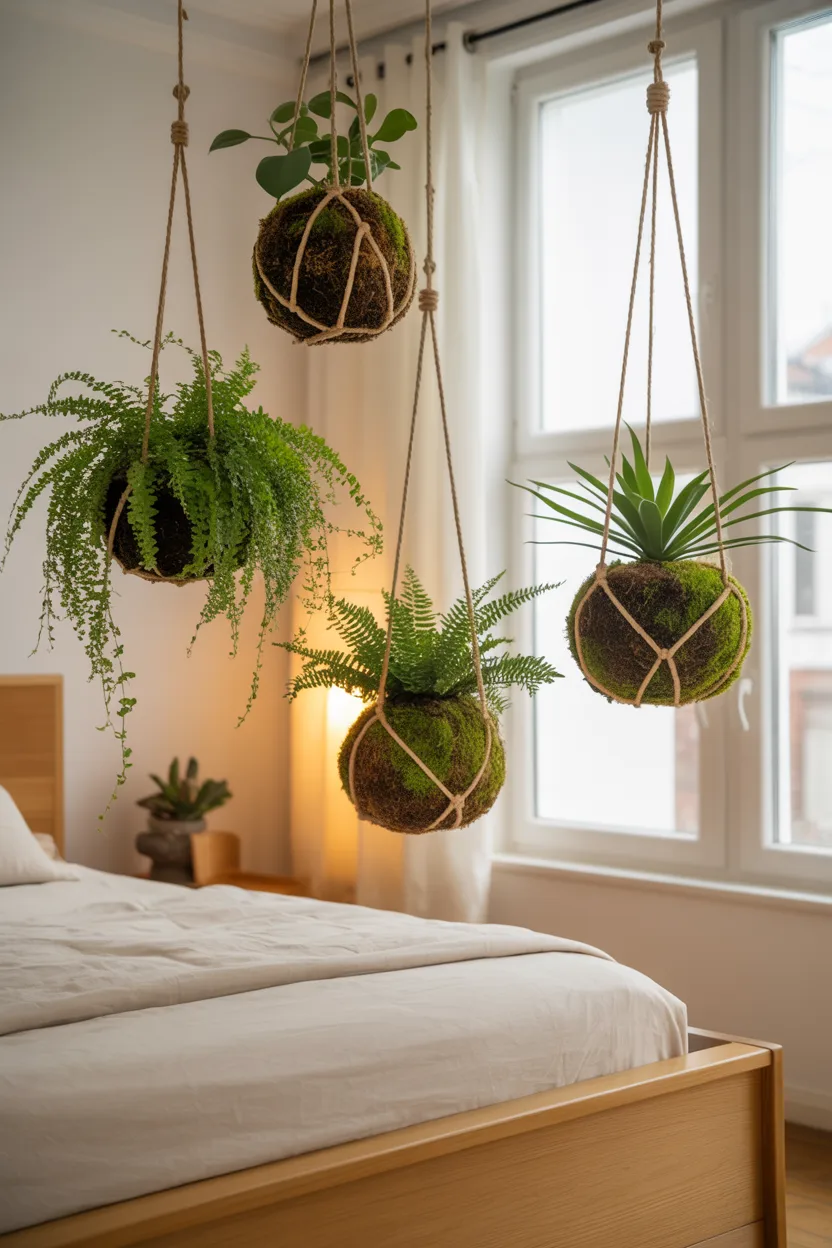
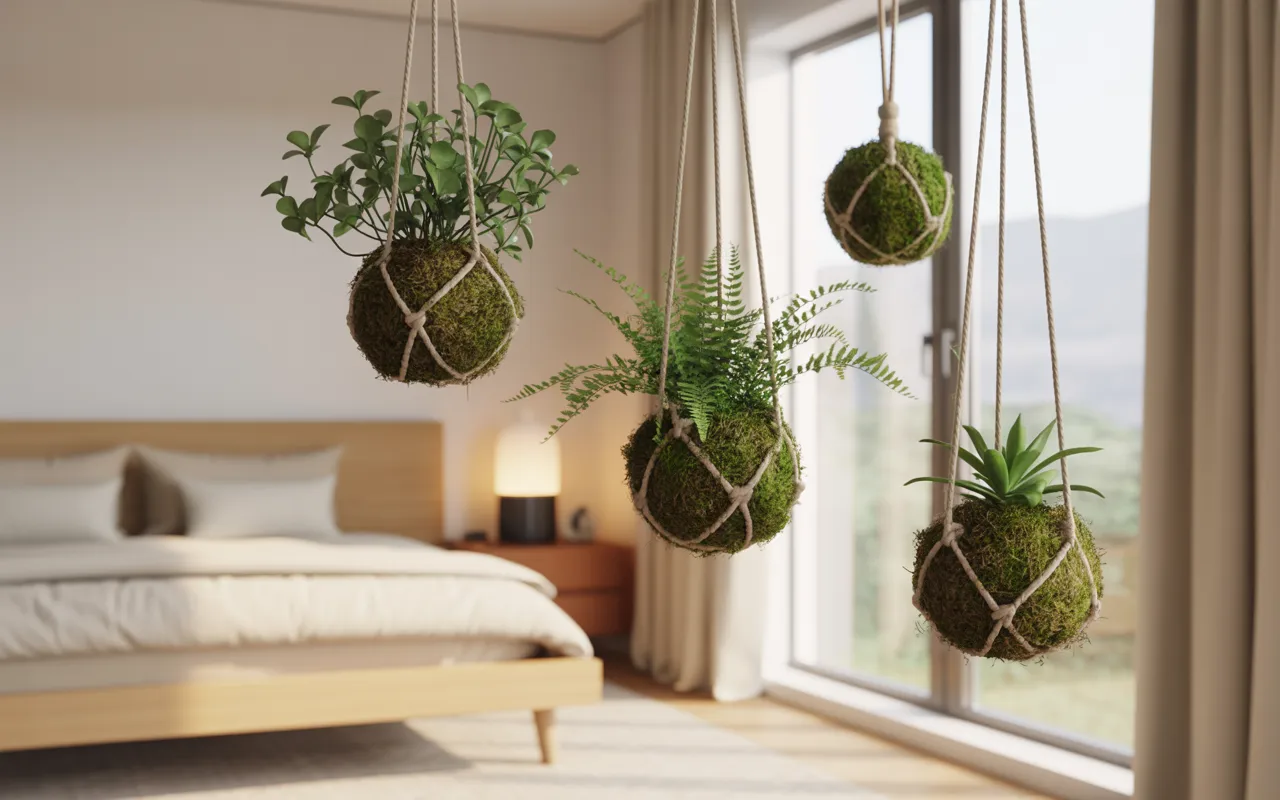
Kokedama hanging plants in a japandi bedroom create the modern japandi bedroom design of the most specifically Japanese botanical art and the most three-dimensionally organic ceiling zone decoration — kokedama, the Japanese technique of wrapping plant root systems in moistened clay soil and binding them in a dense covering of fresh or preserved moss, creates a planting form of extraordinary beauty and conceptual elegance that suspends living plants within the room’s air space as three-dimensional botanical sculptures of genuine artistic quality. The moss-wrapped spheres reference the Japanese garden tradition of moss-covered stones and the specific aesthetic pleasure of the soft, living, green surface of beautiful botanical moss.
The varying heights of the three kokedama displayed beside the window in this modern japandi bedroom design create a three-dimensional botanical installation that occupies the ceiling zone of the bedroom with organic warmth and natural movement — the cords of different lengths allow the moss spheres to hang at different heights, creating a botanical mobile of genuine visual depth and slight natural animation as the plants sway gently with any air movement from the window or the sleeping occupant’s movement. Morning light falling across the hanging moss balls creates extraordinary surface detail in the individual moss fronds and the plant foliage above each sphere, making the kokedama installation a genuinely morning-specific display of botanical beauty that rewards early waking with a quality of natural, organic japandi warmth throughout every beautifully illuminated morning hour.
21. Japandi Bedroom With Washi Paper Lamp
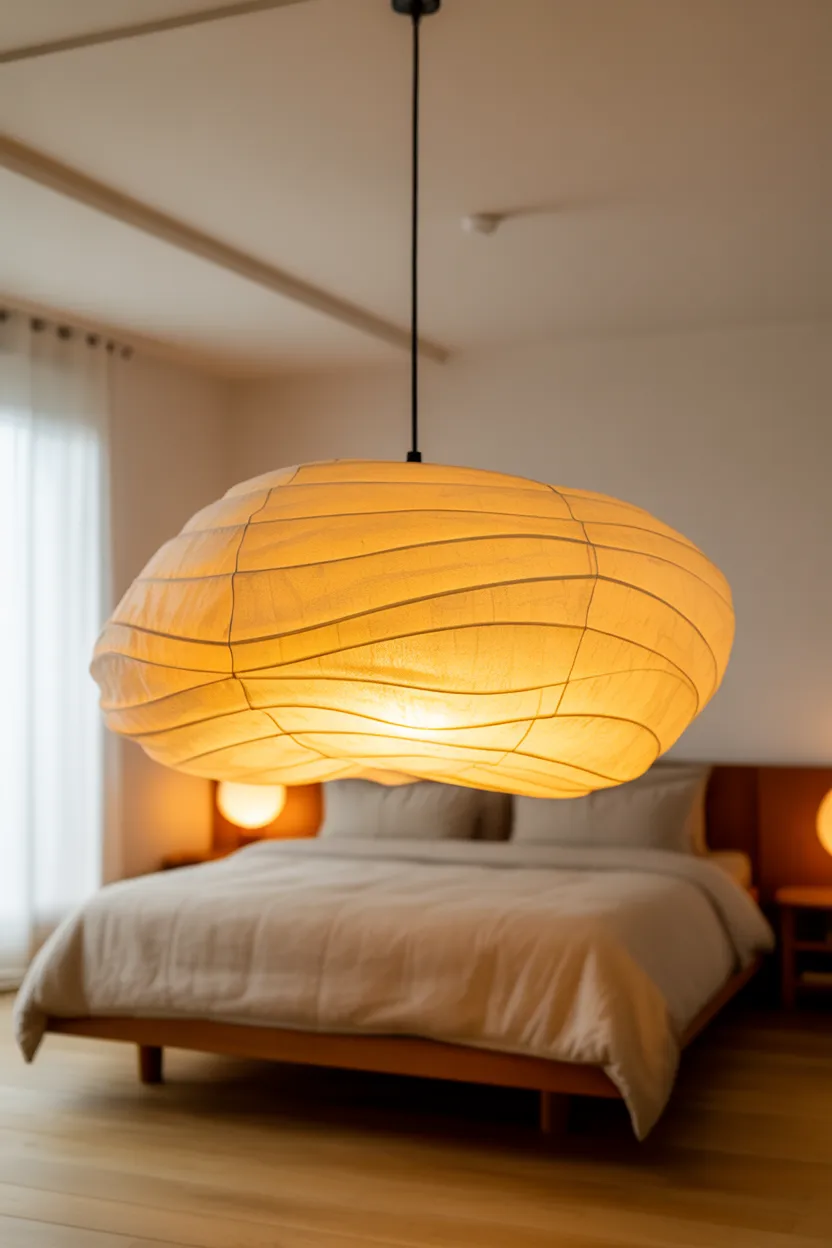
A large washi paper pendant lamp is the modern japandi bedroom design lighting element of the most authentically Japanese and genuinely craft-significant character — washi, the traditional Japanese handmade paper produced from the fibers of native plants, has been used in Japanese domestic architecture for centuries in shoji screens, lamp shades, and decorative panels precisely because its specific translucency and warm cream tone create the most beautiful quality of diffused natural and artificial light that any paper or fabric surface can produce. The warm amber glow that washi transmits from an interior light source has a quality of specific warmth and organic softness that mass-produced synthetic lamp shades cannot approach in terms of the genuine craft beauty and authentic cultural resonance.
The organically sculptural form of the washi paper pendant in this modern japandi bedroom design — neither a perfect sphere nor a precise geometric form but an organic, slightly irregular shape that expresses the washi paper’s natural tendency to form flowing curves when wet-formed over a mold — creates a lighting object of genuine artistic quality that suits the wabi-sabi appreciation for natural, slightly imperfect form over factory-precise manufacturing. The warm, diffused illumination that the large washi pendant casts throughout the bedroom creates the most restoratively calming artificial light quality available for bedroom use, its soft, even wash of warm amber light eliminating the harsh shadows and bright spots of directed task lighting and replacing them with the gentle, enveloping glow that makes the japandi bedroom feel genuinely, completely, and restoratingly calm throughout every beautiful evening hour.
22. Japandi Bedroom With Natural Stone Accessories
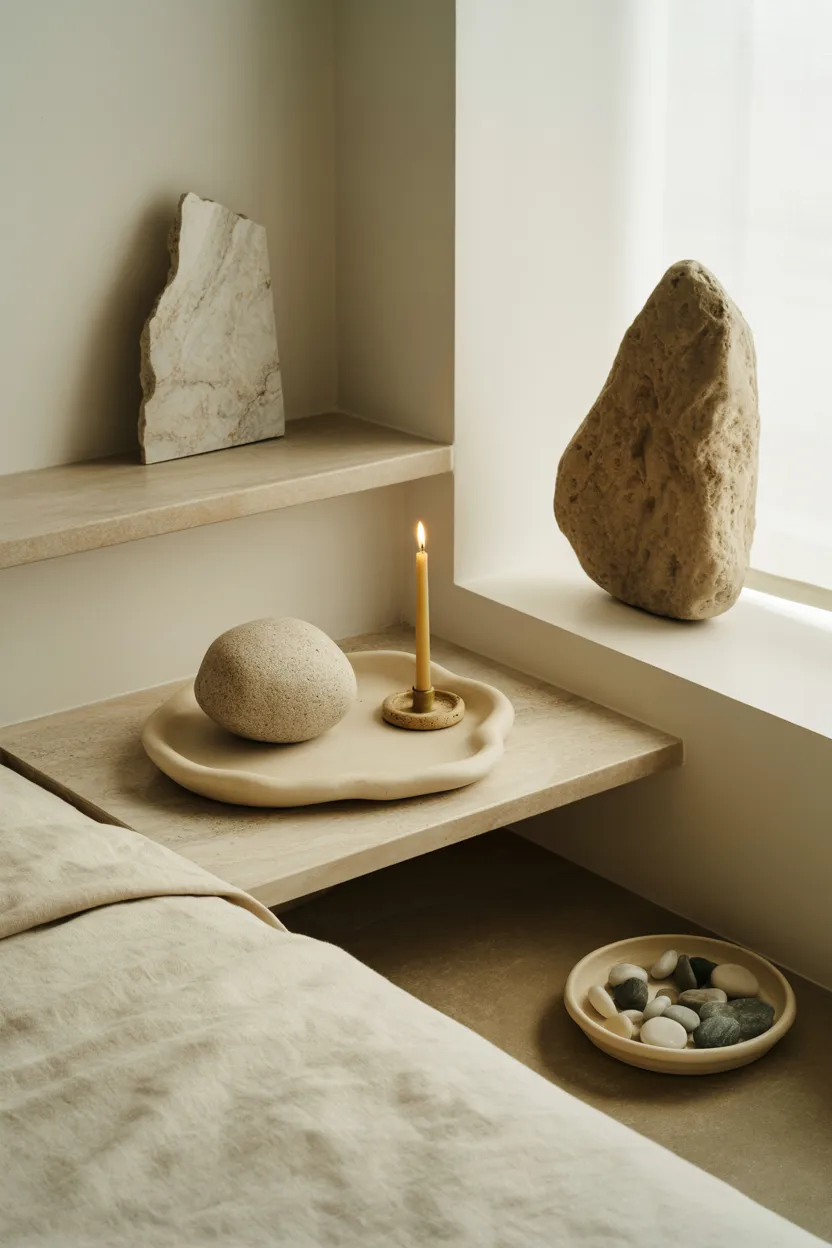
Natural stone accessories used as the primary material accent of a japandi bedroom create the modern japandi bedroom design of the most geologically grounded and elementally calming character — smooth river stones, raw marble slabs, and naturally formed rocks bring the timescale of geological process and the specific visual and tactile qualities of natural mineral surfaces into the bedroom’s material vocabulary in a way that manufactured objects, however beautifully designed and carefully crafted, cannot replicate in terms of the specific quality of deep, ancient material permanence and organic form variation that genuinely natural stone always communicates to the human senses with complete, immediate, and instinctive impact.
The specific placement of a large, naturally shaped stone as a sculptural object on the floor beside the window in this modern japandi bedroom design is the most deliberately Japanese of all the room’s material gestures — the Japanese tradition of suiseki, the appreciation of naturally beautiful stones as objects of contemplative aesthetic value, has a cultural history spanning over a thousand years and creates the philosophical foundation for treating a natural stone as a primary aesthetic object worthy of the most considered placement and the most attentive daily appreciation. In a japandi bedroom, a single large, beautifully formed stone on the floor beside a window creates a moment of profound natural beauty and geological time that the most elaborately decorated bedroom corner could never approach in terms of the specific, deeply calming quality of genuine natural material beauty throughout every quiet and contemplative moment of beautifully inhabited daily life.
23. Japandi Bedroom With Neutral Art Above Bed
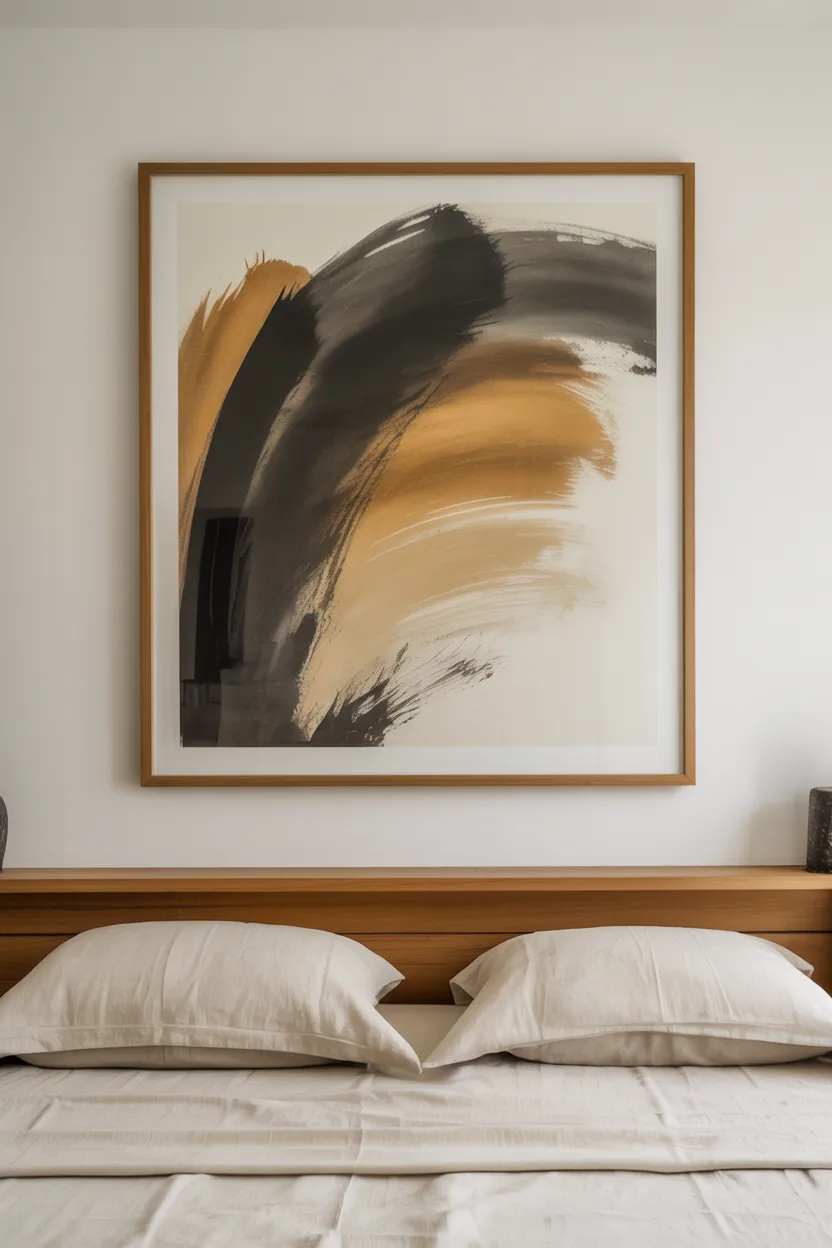
A single large artwork in the sumi-e tradition of Japanese ink wash painting as the sole bedroom wall decoration creates the modern japandi bedroom design focal wall of the most artistically specific and culturally authentic character — sumi-e ink wash painting uses the Japanese brush and ink technique to create paintings of extraordinary expressive economy, capturing the essential quality of a subject through the minimum of brushstrokes and the maximum of empty white space around each mark. This aesthetic philosophy of expressing the most through the least is the artistic parallel to the japandi bedroom’s design philosophy of creating maximum calm through minimum material intervention.
The slim natural oak frame of this modern japandi bedroom design artwork is the framing choice most completely consistent with the japandi aesthetic principle that every material in the room should contribute warmth and natural beauty rather than simply serving a containing or organizing function — a thin natural oak frame suits the brushwork painting with complete aesthetic coherence, sharing the organic warmth and material honesty of the timber with the ink marks and paper fibers of the artwork it contains. The composed focal wall created by one large artwork above a low platform bed in a simple frame against white walls is the most frequently referenced and most widely admired compositional arrangement in contemporary modern japandi bedroom designs, combining artistic beauty, spatial calm, and complete material coherence in one effortlessly elegant and genuinely beautiful bedroom focal composition.
24. Japandi Bedroom With Morning Light Ritual Corner
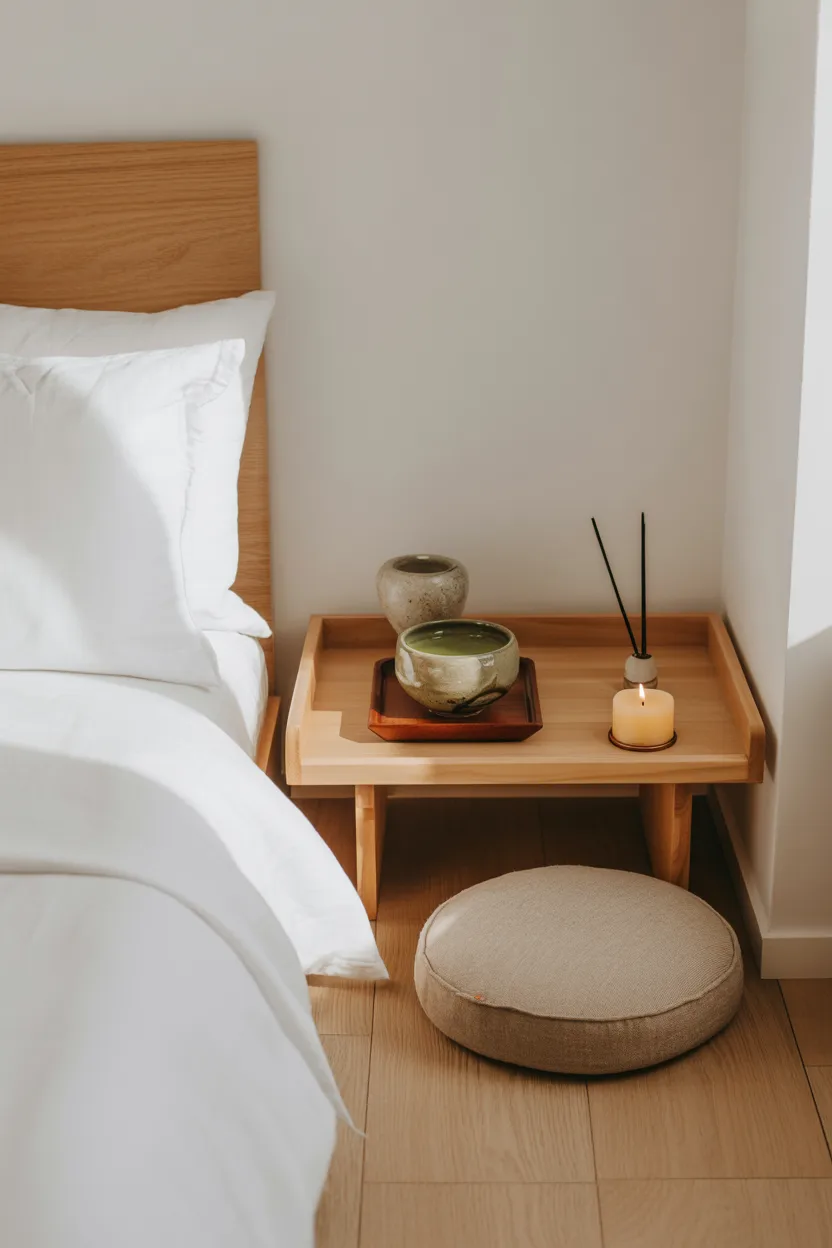
A dedicated morning light ritual corner within a japandi bedroom creates the modern japandi bedroom design of the most personally meaningful and daily-transformative character — the allocation of a specific corner of the bedroom to a consistent morning ritual of meditation, matcha preparation, and mindful beginning-of-day practice communicates that this bedroom is designed not just for sleeping but for the complete quality of conscious, intentional daily living that the japandi philosophy celebrates at its most complete and genuinely beneficial human expression. The corner’s morning light positioning ensures that the ritual is performed within the most energizing and psychologically uplifting quality of natural daily illumination available within the bedroom.
The specific objects assembled on the low timber tray in this modern japandi bedroom design morning corner — ceramic matcha bowl, beeswax candle, tiny incense holder — create a ritual altar of the most essential and complete daily mindfulness practice: the matcha preparation as a meditative sensory ritual, the beeswax candle as a warm, natural light source that anchors attention to the present moment, and the incense as an olfactory practice that directly engages the nervous system’s calm response through the specific aromatic chemistry of quality incense materials. Together these three simple, beautiful, and genuinely functional objects create a morning corner of extraordinary daily value and profound, consistent japandi character that enriches the quality of every morning lived within this beautifully designed and deeply intentionally inhabited bedroom space throughout every beautifully waking day.
25. Complete Japandi Bedroom With Full Design Harmony
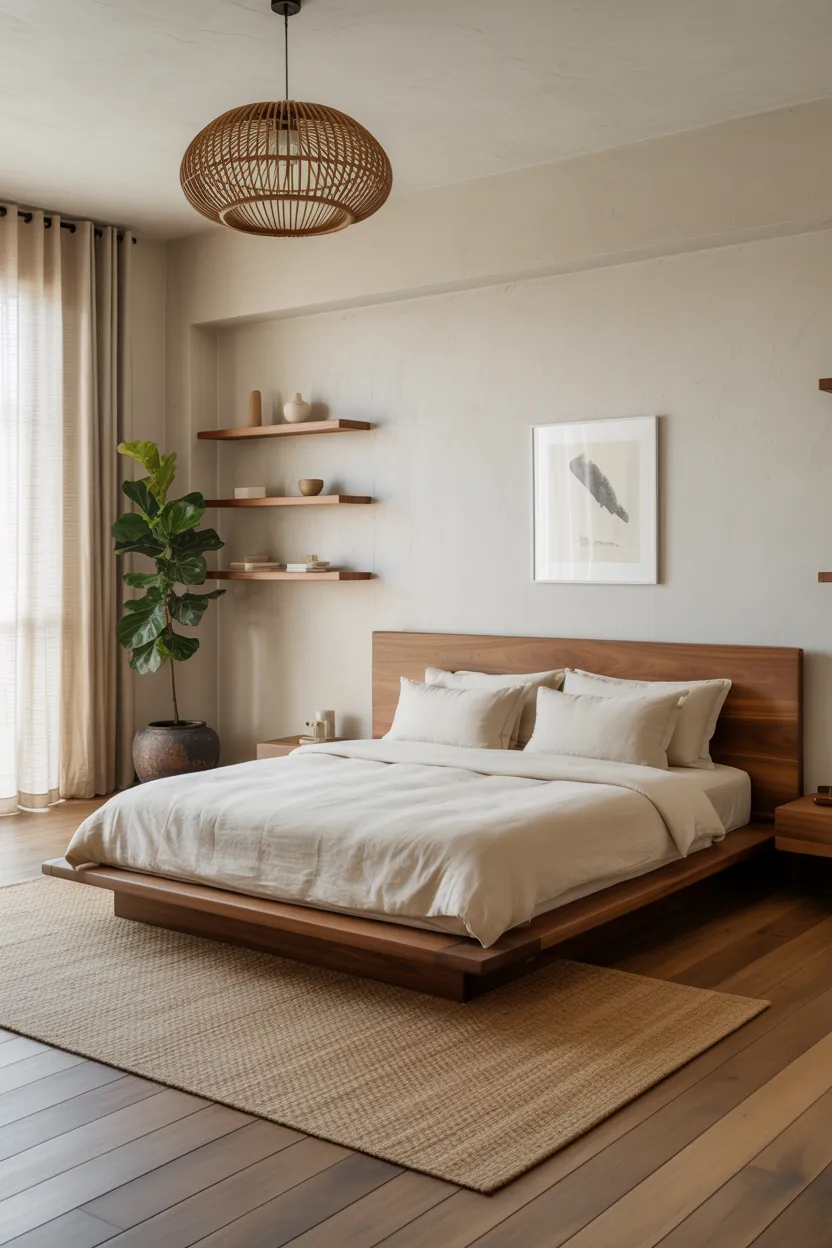
A completely realized japandi bedroom where every element has been chosen, positioned, and related to every other element with complete compositional intention creates the modern japandi bedroom design of the most total and fully achieved character — when the low platform bed, textured plaster walls, rattan pendant, minimal ceramic objects, linen curtains, architectural plant, natural wool rug, and single artwork all coexist within the same room with the sense of inevitability that the best design always conveys, the bedroom achieves the quality of complete, resolved beauty that makes everyone who enters it immediately exhale with genuine pleasure and instinctive recognition of something genuinely, profoundly, and perfectly right.
The full design harmony of this modern japandi bedroom design — where no single element claims more visual attention than it has earned through its genuine material beauty and its specific compositional function, and where every element contributes equally and completely to the room’s total atmosphere of warm, calm, organic minimalism — is the quality that makes japandi bedroom design the most sought-after, most widely admired, and most genuinely life-improving bedroom aesthetic available in contemporary residential design. The room communicates through its complete, harmonious visual presence that genuine beauty is always the result of genuine intention, genuine material quality, and the genuine wisdom to remove everything that does not serve the room’s deepest purpose of creating daily, nightly, and completely restorative human calm throughout every beautiful, peaceful, and deeply intentional moment of genuinely inhabited japandi domestic life.
Conclusion
These 25 modern japandi bedroom designs prove that the most beautiful, most calming, and most genuinely restorative bedroom you can create is one built on the meeting of two great design traditions — Japanese wabi-sabi wisdom and Scandinavian hygge warmth. Every element serves its purpose. Every material earns its place. Every empty space is as intentional as every filled one. Start with one idea from this list, apply genuine restraint and genuine care, and create the japandi bedroom that everyone around you will immediately want to copy too.


Join The Discussion