
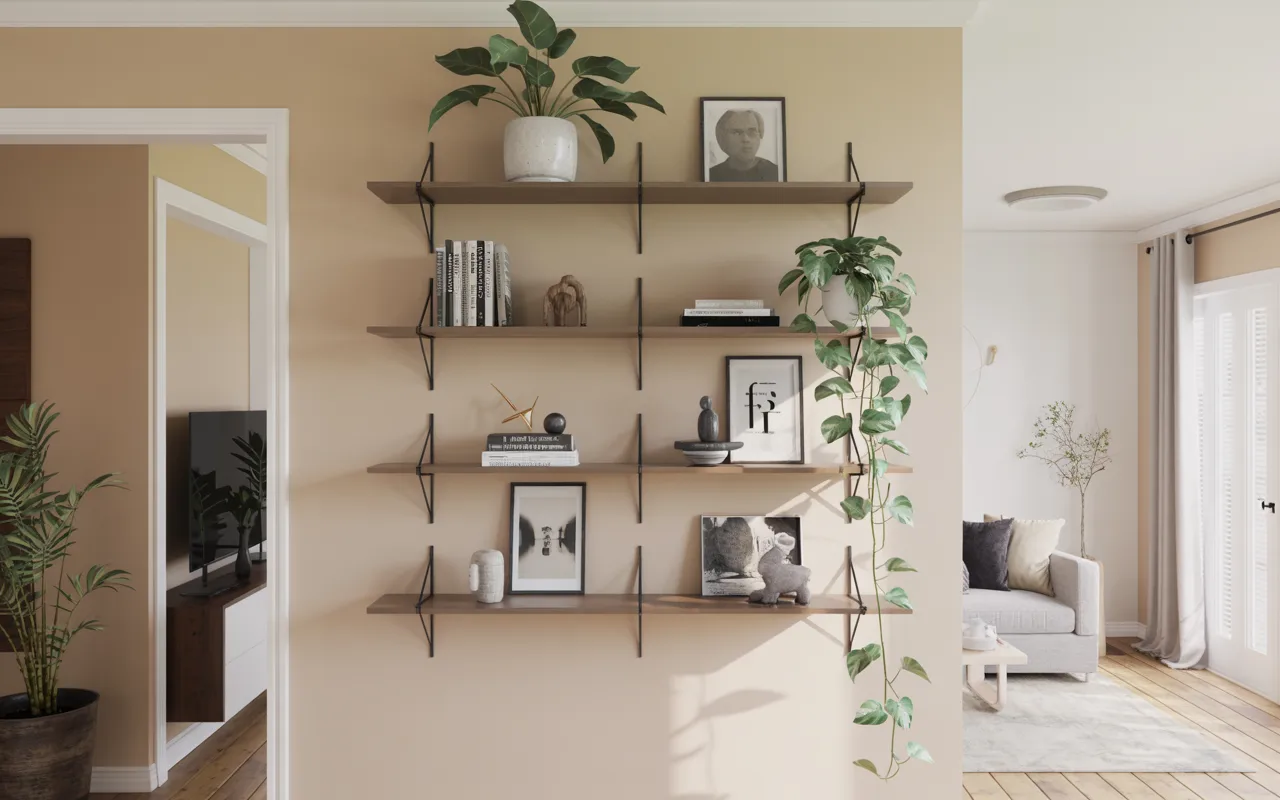
Introduction
Your entryway sets the tone for your entire home — yet most open-plan spaces leave it undefined, exposed, and visually chaotic. A well-placed divider changes everything. It creates privacy, controls traffic flow, and gives your entry a sense of arrival that open layouts desperately need. These 25 entry divider ideas go beyond basic screens and partitions — each one is a design decision that makes your home feel more intentional, more beautiful, and more livable from the very first step inside.
1. Use a Tall Bookshelf as a Functional Entry Divider
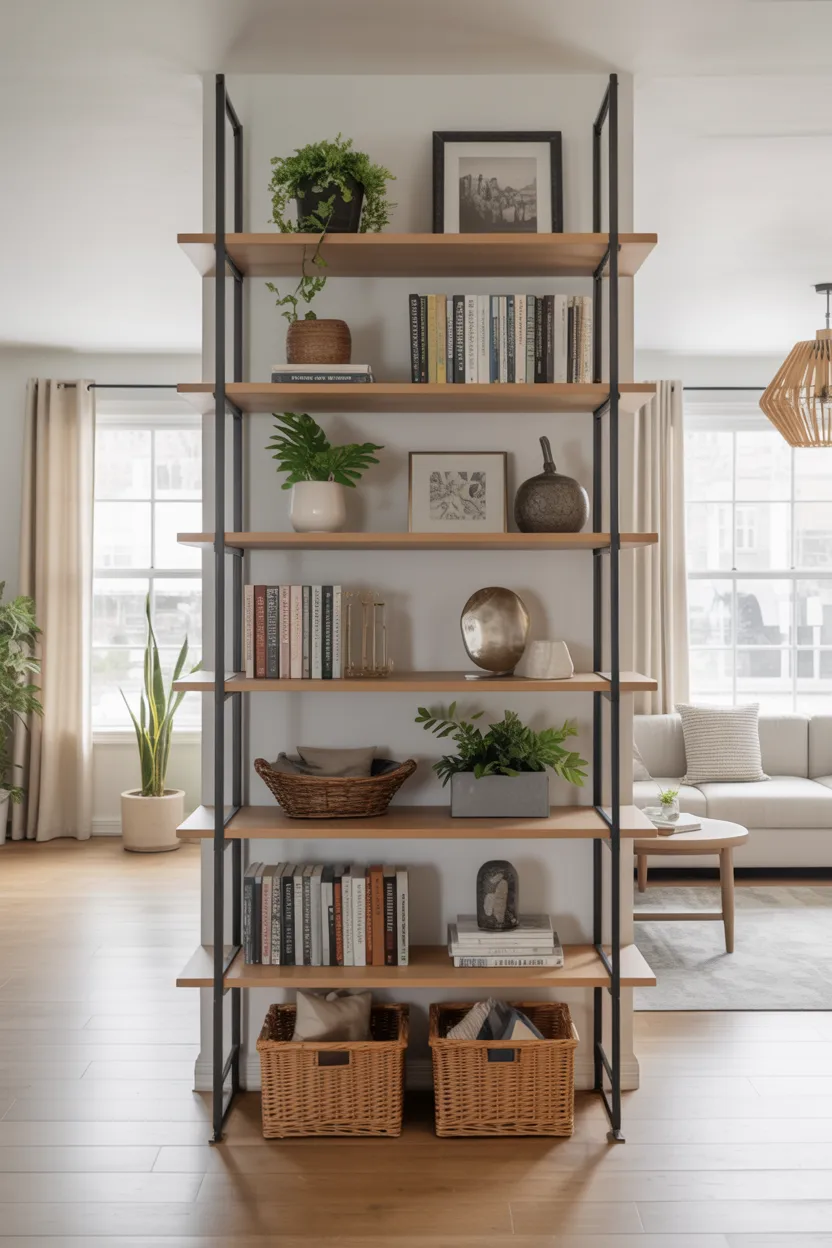
A tall bookshelf used as an entry divider is one of the most practical and visually rewarding entry divider ideas available in any home. Unlike solid walls or heavy screens, an open bookshelf divides space without blocking light or making either side feel closed off and smaller. It creates a permeable boundary — one you can see through, style beautifully, and use for genuine everyday storage simultaneously.
Position the bookshelf perpendicular to the nearest wall so it juts into the room, creating a natural corridor that guides guests from the door into the home. Style the entry-facing side with plants, decorative objects, and a small mirror. Style the living-room-facing side with books and meaningful objects. This two-sided styling approach makes the bookshelf feel like a deliberate architectural feature rather than a piece of furniture placed out of necessity.
2. Hang a Row of Macramé Panels for a Bohemian Entry Screen
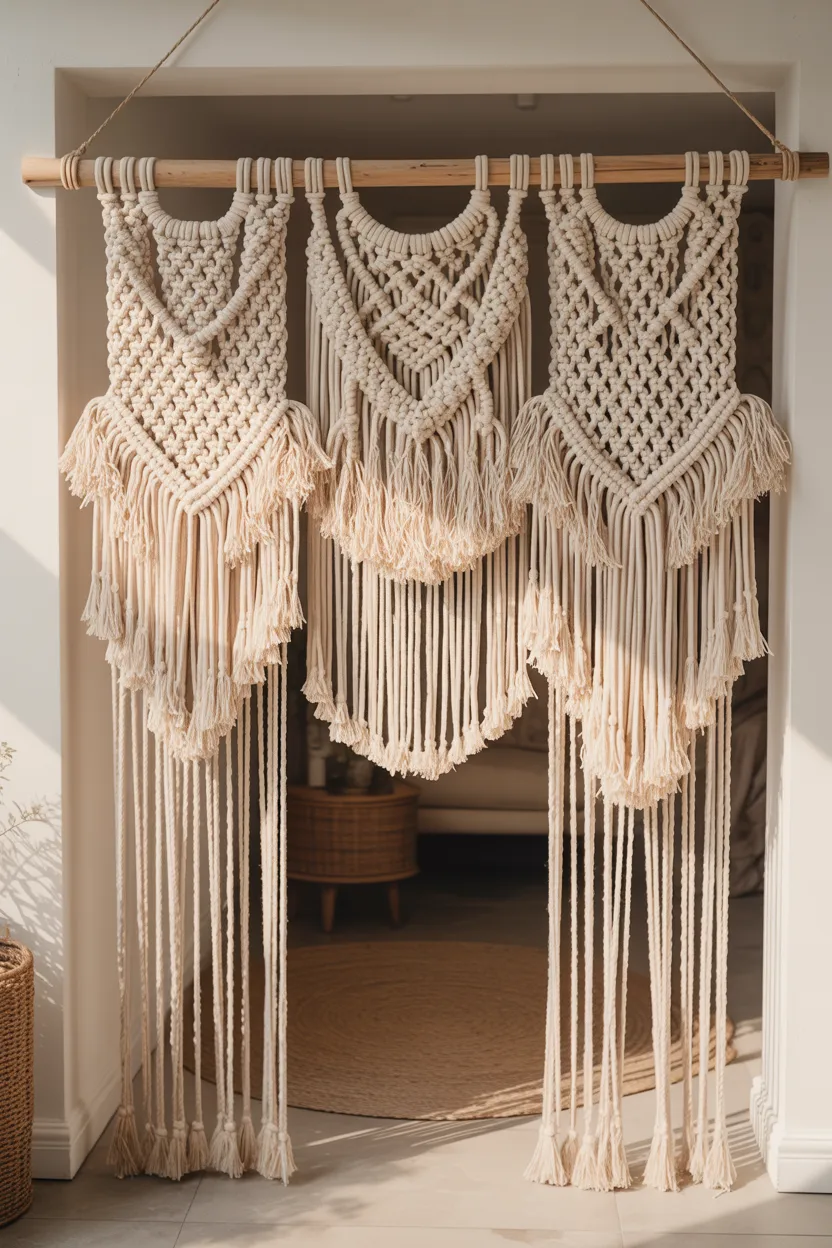
Macramé panels are one of the most creative and unexpected entry divider ideas for homes that lean toward natural, bohemian, or eclectic aesthetics. Unlike rigid screens or furniture dividers, hanging textile panels move gently with air currents, adding organic life and softness to the boundary between your entry and living space. They define the zone without sealing it — light, sound, and conversation flow freely between both sides.
Install a ceiling-mounted wooden dowel or curtain rod and hang three to five macramé panels at slightly varied lengths for a layered, organic effect. The open weave of the knotted fibers filters rather than blocks the view, maintaining visual connection between spaces while still creating a clear psychological boundary. This entry divider idea works beautifully in apartments and rental homes where permanent walls or doors simply aren’t possible or permitted.
3. Place a Slatted Wood Screen Panel for Modern Privacy
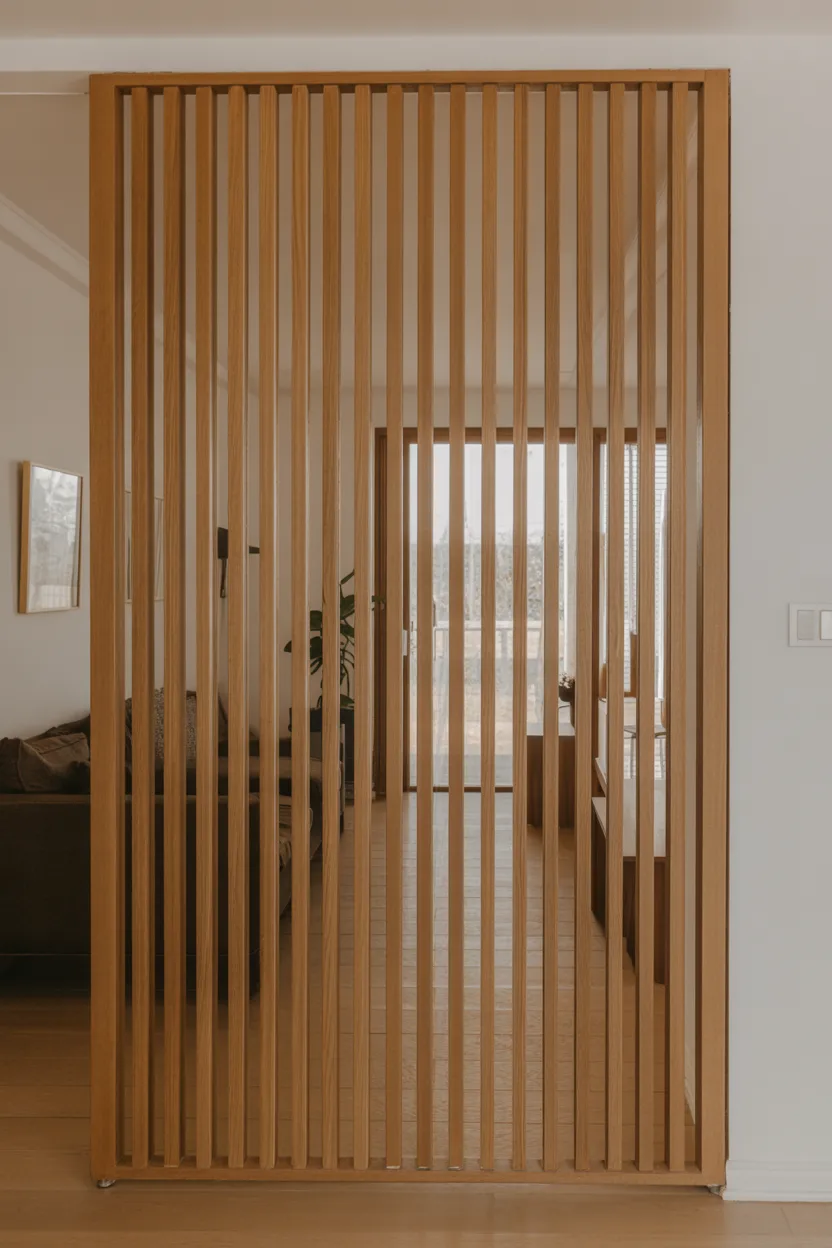
Slatted wood screen panels are among the most architecturally refined entry divider ideas currently trending in modern and Japandi-influenced interiors. The vertical slat design creates privacy without visual heaviness — light passes through the gaps in thin, beautiful strips that shift throughout the day as the sun moves. The result is a divider that feels more like a design statement than a practical partition.
Choose warm-toned oak, walnut, or bamboo for a natural, grounding quality that softens modern interiors. The freestanding format requires no installation and can be repositioned seasonally or when you rearrange the room. A slatted panel at the entry creates immediate visual interest the moment guests arrive — they see through it partially, catching glimpses of the space beyond, which builds anticipation and makes the home feel deliberately designed from the very first glance.
4. Install a Half-Wall with a Planter Ledge for Living Division
![Install a Half-Wall with a Planter Ledge for Living Division\']](https://dreamgardenspk.com/wp-content/uploads/2026/05/vy9MxDfIXJ-q6F9BLlGDzQ@2k.webp)
A half-wall with a planter ledge is one of the most permanent and architecturally integrated entry divider ideas for homeowners willing to make a structural addition. Unlike furniture-based dividers that can be moved or knocked over, a built half-wall becomes part of the home’s architecture — it reads as intentional, custom, and designed rather than improvised. The planter ledge on top adds a living, organic layer that softens the hard construction material below.
Trail pothos, string of pearls, or ivy over the ledge edge so plants cascade naturally down the wall’s face, blurring the boundary between structure and nature. Keep the wall’s finish consistent with surrounding walls for a seamless, built-in appearance. This entry divider idea works especially well in open-plan homes where the front door opens directly into the main living space with no natural separation or transition zone between outside and inside.
5. Hang Floor-to-Ceiling Curtains as a Soft Entry Divider
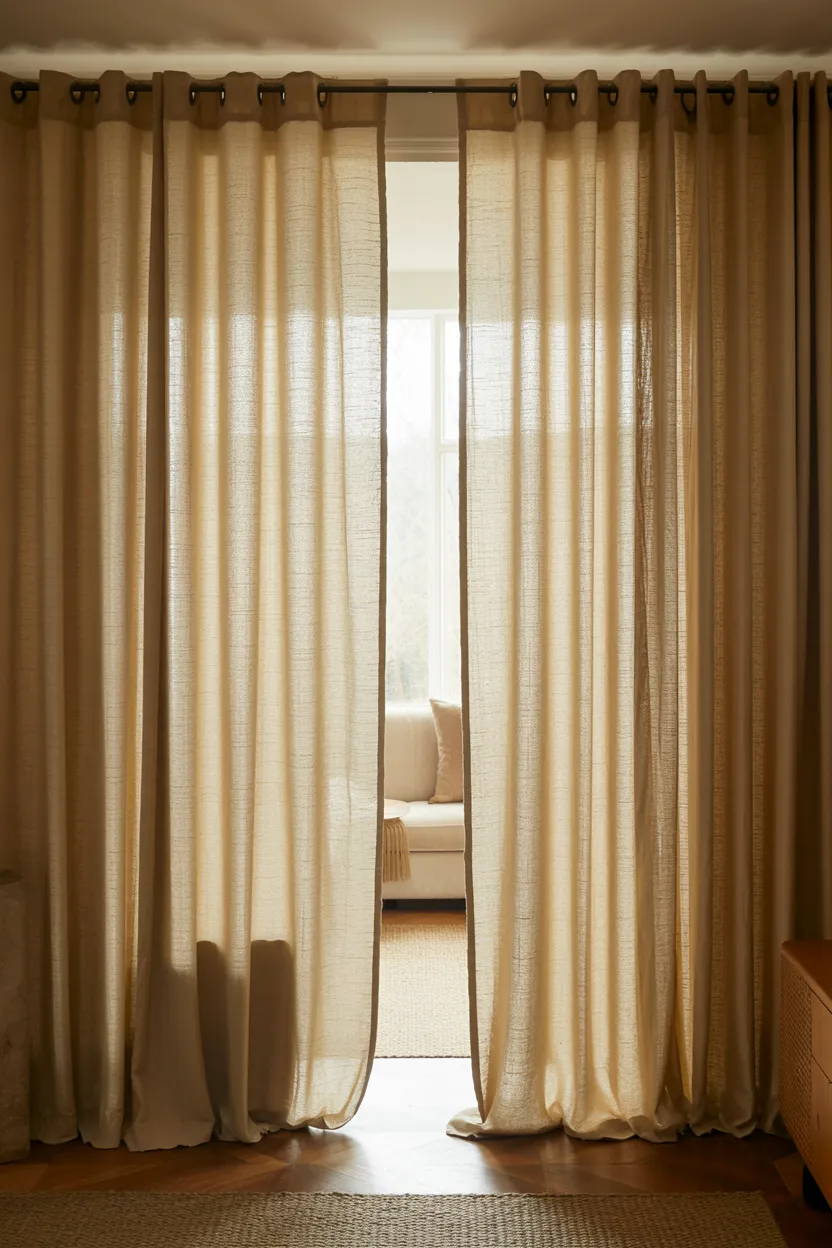
Floor-to-ceiling curtains are one of the most dramatic and affordable entry divider ideas for open-plan homes — and their impact is immediate. A ceiling-mounted curtain rod spanning the width of the transition zone, dressed with heavy linen or lightweight sheer panels, creates a soft, movable boundary that can be fully opened during the day and closed for evening privacy. The drama of floor-length fabric transforms the entry zone into something that feels genuinely luxurious.
Choose fabric weight based on your privacy needs — sheer linen for filtered separation, heavier cotton or velvet for complete visual closure. Mounting the rod as close to the ceiling as possible elongates the perceived ceiling height and makes the curtains feel architectural rather than decorative. This entry divider idea is especially powerful in rental homes where walls and permanent structures aren’t options, as the curtain rod installs with minimal ceiling impact and removes cleanly.
6. Use a Vintage Wardrobe as a Statement Entry Divider
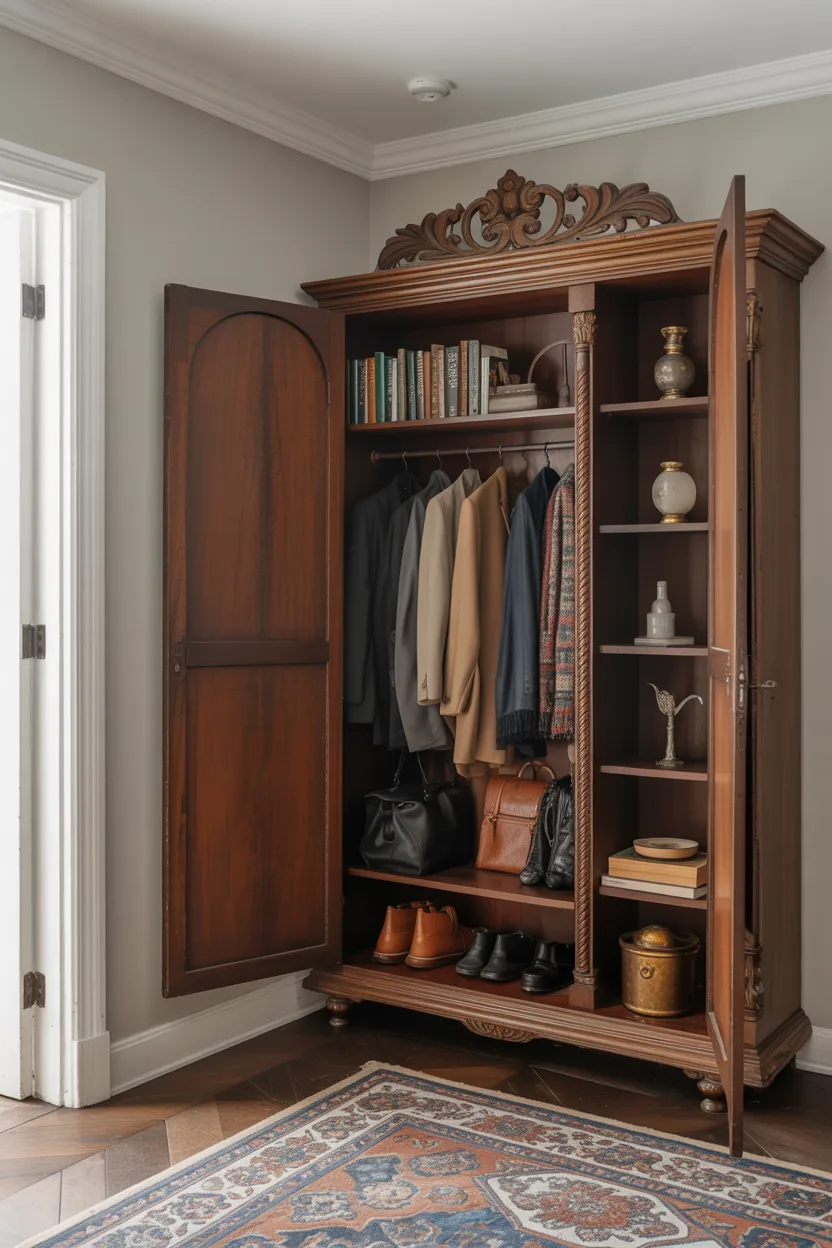
A vintage wardrobe used as an entry divider is one of the most character-rich entry divider ideas for homes that favor collected, maximalist, or traditionally influenced interiors. The wardrobe’s deep footprint and height create an immediate, imposing boundary that no screen or curtain can replicate. It says arrival — there is weight and history to crossing from one side to the other, which is precisely what a great entryway should communicate.
Remove the back panel of the wardrobe so it functions as a double-sided display and storage piece. The entry-facing interior holds coats, bags, shoes, and everyday accessories — functioning as a fully integrated mudroom. The living-room-facing side becomes a display shelf for books, art objects, and plants. This dual functionality makes the wardrobe one of the hardest-working entry divider ideas on this list, earning its significant floor footprint many times over.
7. Create a Living Plant Wall Divider with Freestanding Frames
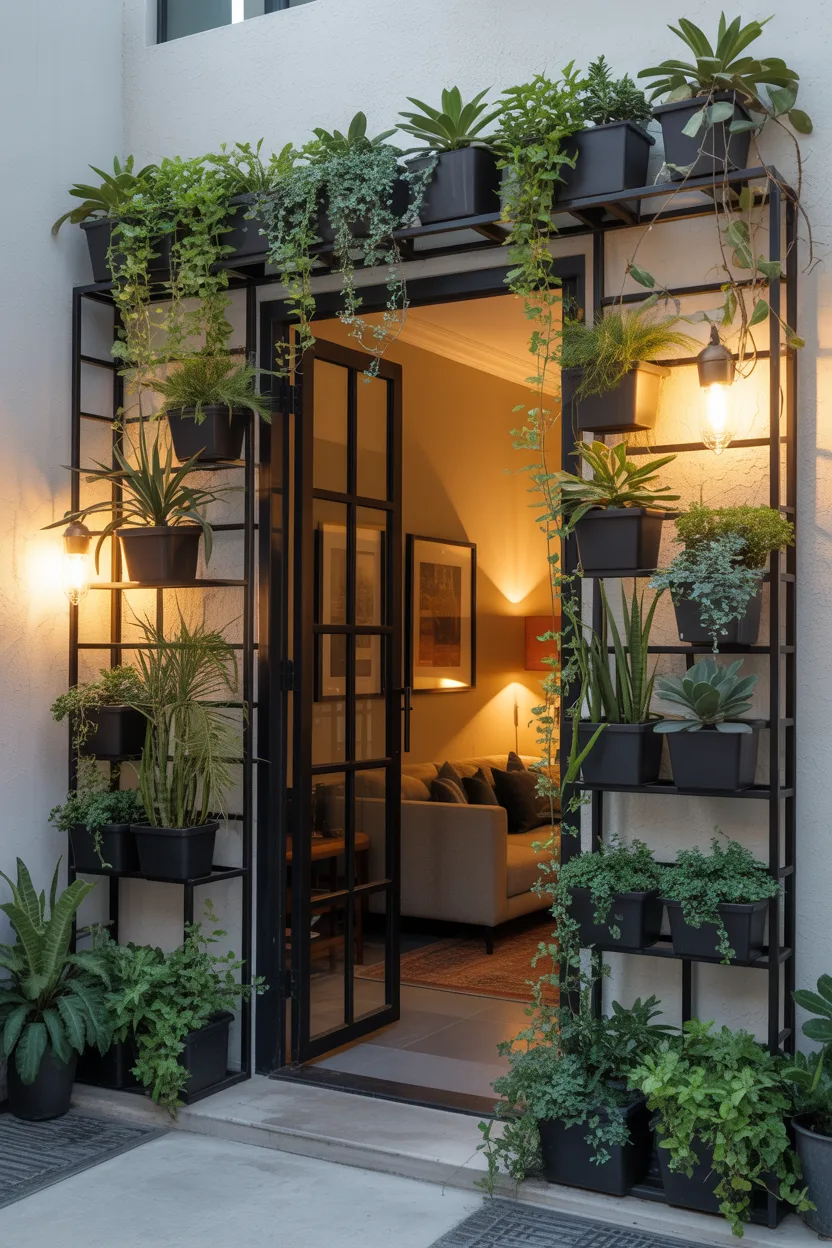
A living plant wall divider is the most organic and visually dramatic of all entry divider ideas — and it changes the atmosphere of a home the moment you walk through the door. Freestanding metal frame structures designed to hold multiple potted plants create a lush green boundary that feels like stepping into a botanical garden rather than a standard open-plan home. The effect is breathtaking and unlike any other divider type.
Choose a mix of trailing plants for the upper sections — pothos, string of hearts, and ivy — and upright specimens for the base, such as snake plants and peace lilies. The varied heights and textures create depth and visual richness that a solid divider simply cannot achieve. Care is minimal if you select low-maintenance species, and the plant wall evolves beautifully over time as growth fills gaps and new cuttings are added throughout the seasons.
8. Position a Pegboard Divider for a Functional Entry Wall
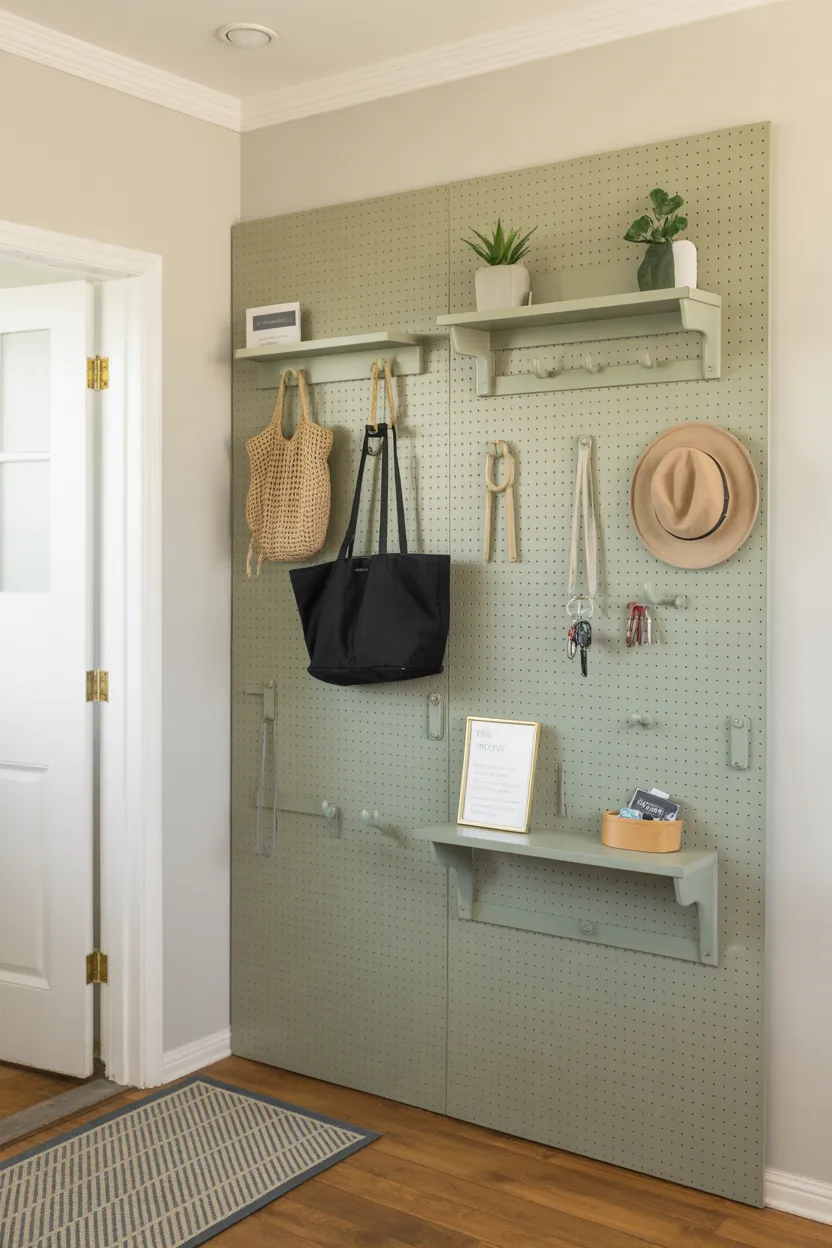
A pegboard entry divider combines the organizational power of a mudroom with the spatial definition of a room divider — making it one of the most functional entry divider ideas for busy households. Facing the front door, the pegboard catches everything coming in and going out — bags, keys, hats, dog leashes, and umbrellas all have designated hooks that keep the entry uncluttered and genuinely usable every single day.
Paint the pegboard in a color that anchors the entry zone visually — sage green, charcoal, or warm terracotta all work beautifully. Add small shelves for a plant, a small tray for mail, and a mirror hook at eye level. The opposite side, facing the living space, can be left plain or finished with paint for a clean, wall-like appearance. This entry divider idea is particularly powerful in homes without a dedicated mudroom or entry closet.
9. Hang a Beaded Curtain for a Retro-Inspired Entry Screen
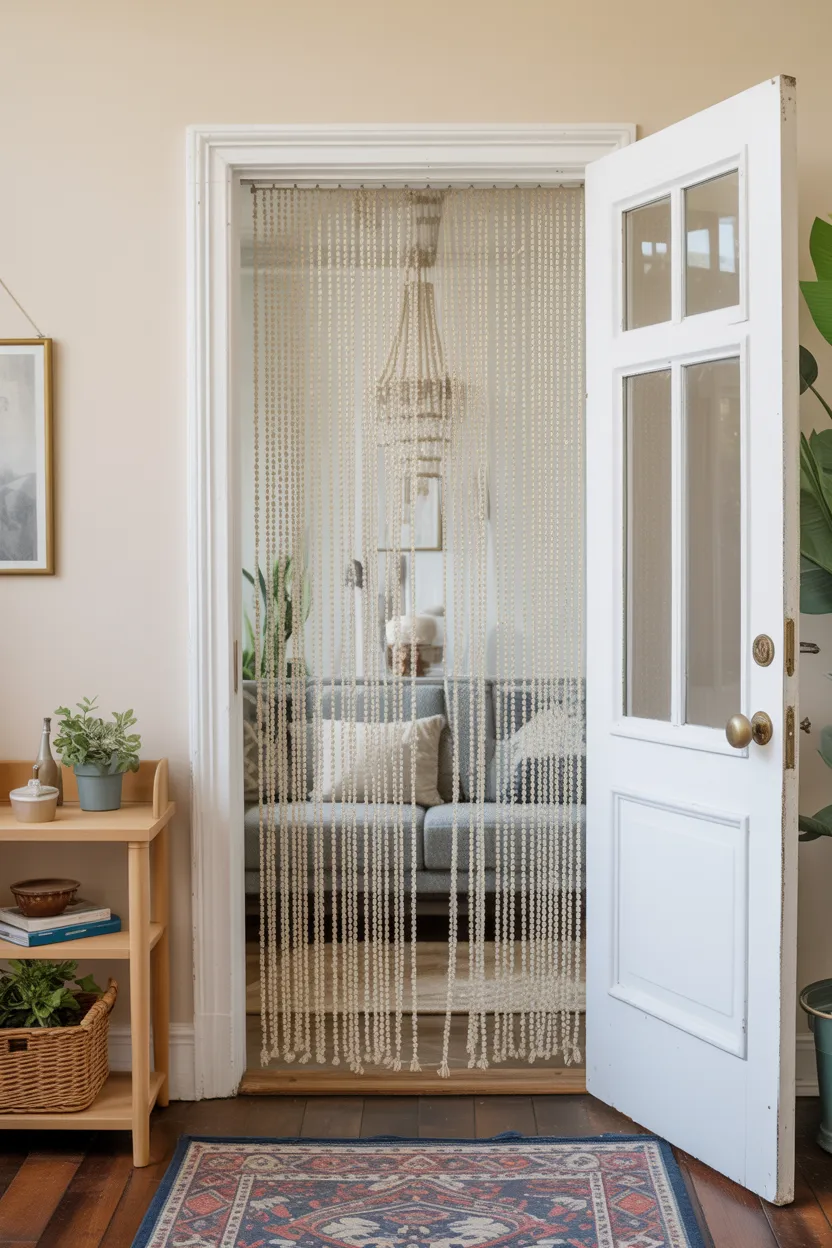
Beaded curtains are experiencing a well-deserved design revival — and as entry divider ideas go, they offer something no other divider type can match: a multi-sensory experience. The soft clicking of beads as you pass through, the scattered light reflections, and the visual shimmer of the strands create a boundary that engages sight, sound, and touch simultaneously. It transforms a simple entry transition into a moment of genuine atmosphere.
Choose natural wood, rattan, or warm-toned glass beads for a sophisticated take on the retro classic. Avoid plastic beads, which read as cheap and dated. Full, dense strands hung from ceiling to floor create the most impactful visual effect. This entry divider idea works particularly well in bohemian, eclectic, or mid-century modern homes where a touch of retro warmth and playful texture is welcome rather than out of place.
10. Use a Console Table with Tall Decor as a Subtle Visual Divider
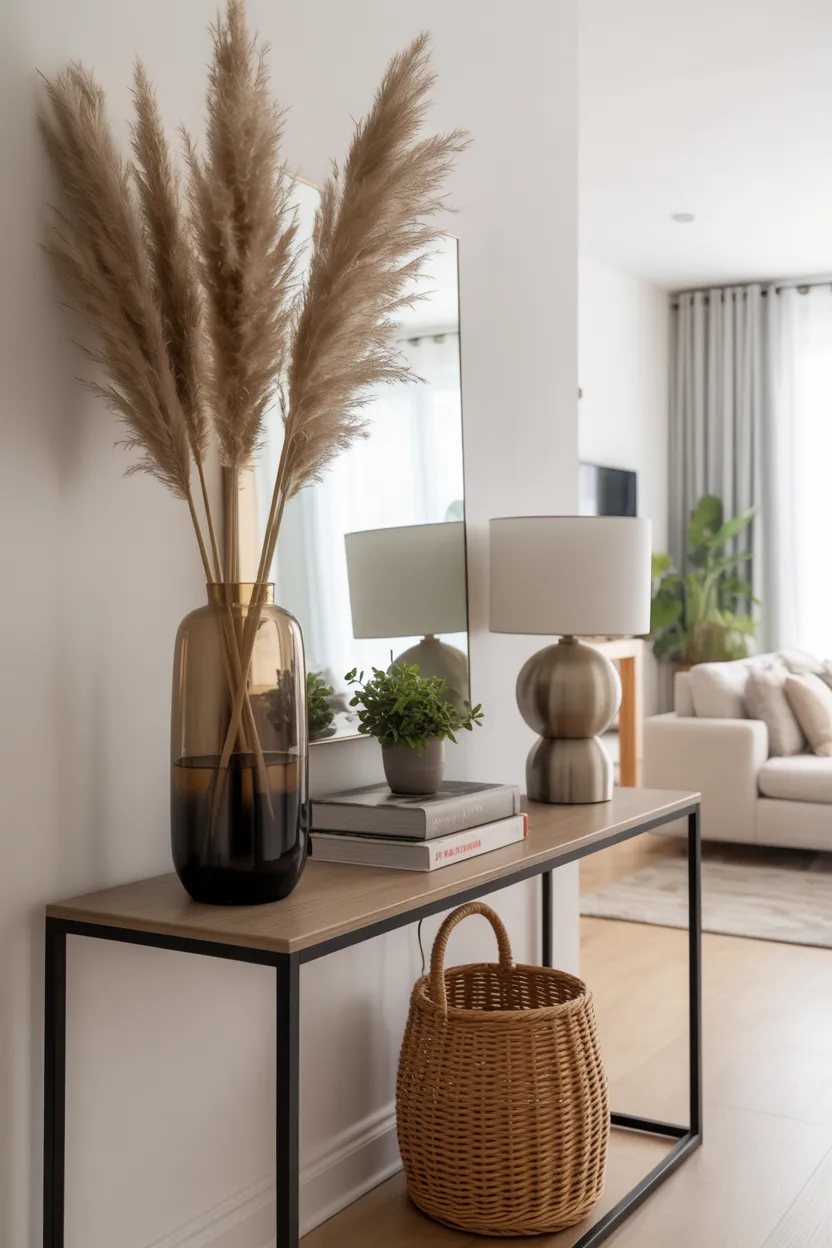
A console table with tall vertical decor is one of the subtlest entry divider ideas — and subtlety is sometimes exactly what an open-plan space needs. Rather than a physical barrier, this approach uses a styled surface and the height of objects placed on it to create a perceived boundary between zones. The human eye reads the shift in visual density as a transition, even without a wall or screen.
Choose decor that reaches at least five to six feet in height — tall dried pampas grass, a sculptural branch arrangement, or a slim floor lamp placed beside the table. The combination of horizontal surface and vertical decor creates a T-shaped visual block that the eye naturally reads as a zone boundary. This entry divider idea suits minimalist and contemporary interiors where heavy screens or furniture dividers would feel visually excessive and out of proportion.
11. Install a Sliding Barn Door for a Dramatic Entry Partition
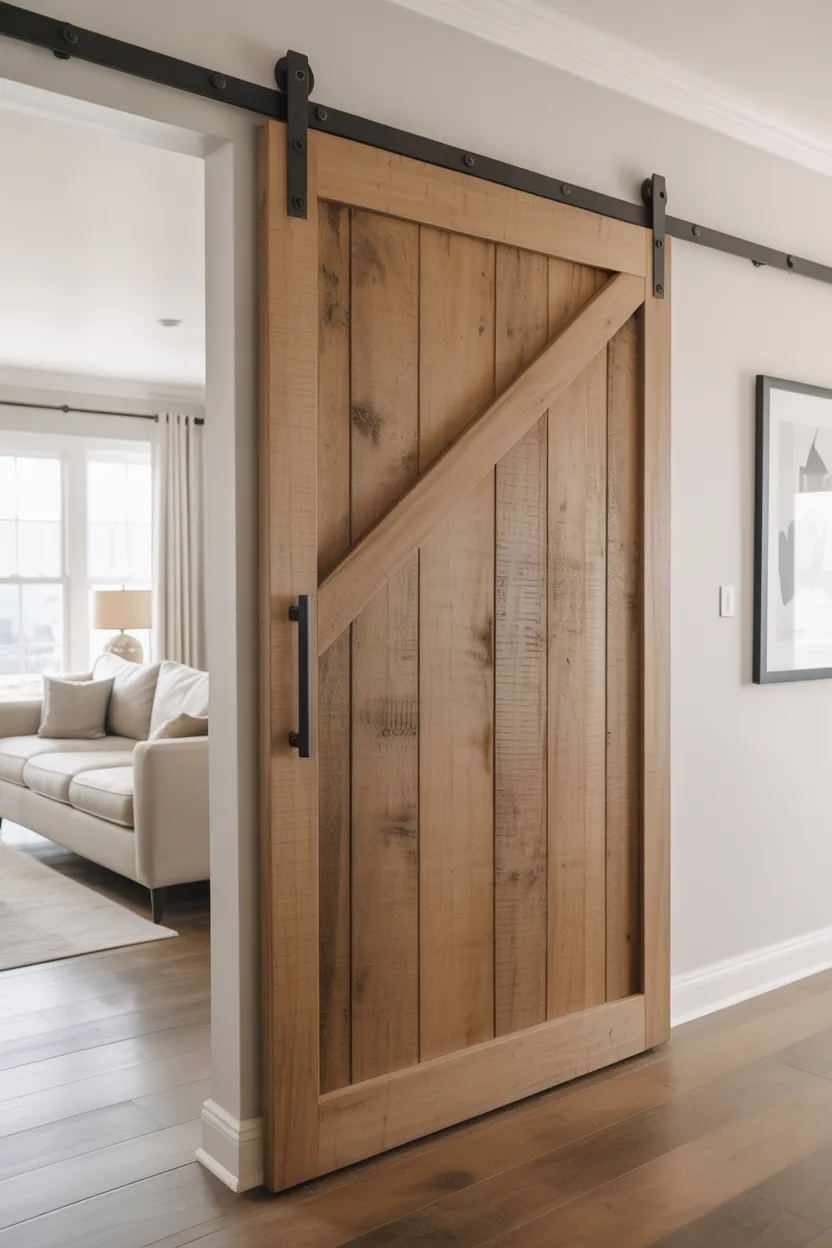
A sliding barn door is one of the most dramatic and architecturally significant entry divider ideas for open-plan homes — and it functions as a true door rather than just a visual separator. When fully closed, it provides complete privacy and noise reduction between the entry and living areas. When open, it slides neatly along the wall, disappearing almost entirely and leaving the full width of the opening clear and unobstructed.
The barn door’s hardware becomes part of the design — choose matte black for modern interiors, antique brass for traditional spaces, or brushed nickel for transitional homes. The door itself can be solid wood for maximum privacy, glass-paneled for light transmission, or slatted for partial visual connection. This entry divider idea requires professional installation for the track system but rewards the investment with a feature that adds genuine architectural value and undeniable visual impact to the home.
12. Stack Wooden Crates as an Eclectic Entry Shelf Divider
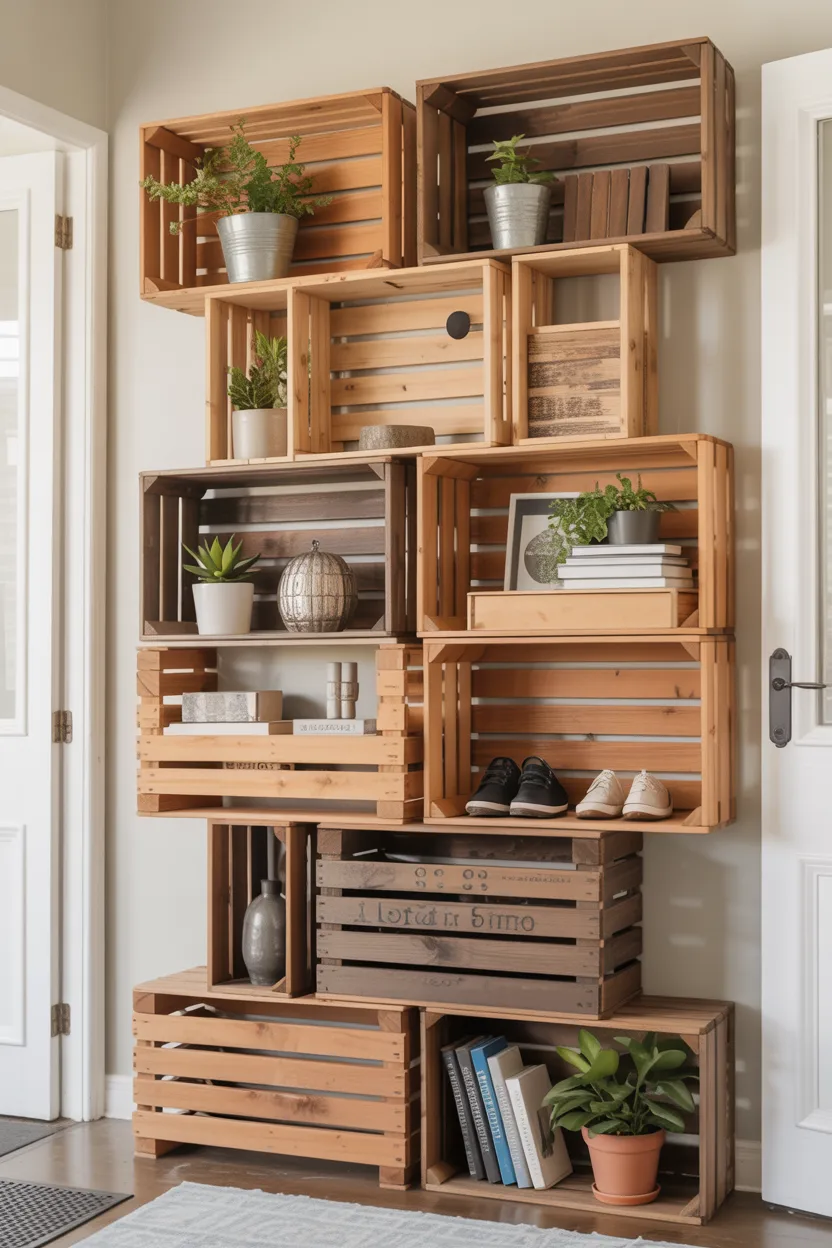
Stacked wooden crates as an entry divider sit at the intersection of resourceful and genuinely stylish — making them one of the most accessible entry divider ideas for renters, students, and budget-conscious decorators. Vintage fruit crates, wine crates, or new wooden storage crates can be stacked and arranged in offset patterns to create a freestanding shelving unit that functions as both divider and storage simultaneously without any construction or installation.
Arrange crates with openings facing alternating directions — some facing forward for display, others facing sideways for deeper storage. The irregular, staggered pattern gives the stack an organic, collected quality that feels deliberately eclectic rather than haphazardly assembled. Weight taller stacks against the wall for stability, or connect crates with corner brackets for added security. This entry divider idea works especially well in industrial, bohemian, or maximalist interiors where the raw wood texture and informal structure feel completely at home.
13. Use a Folding Shoji Screen for a Minimalist Entry Divide
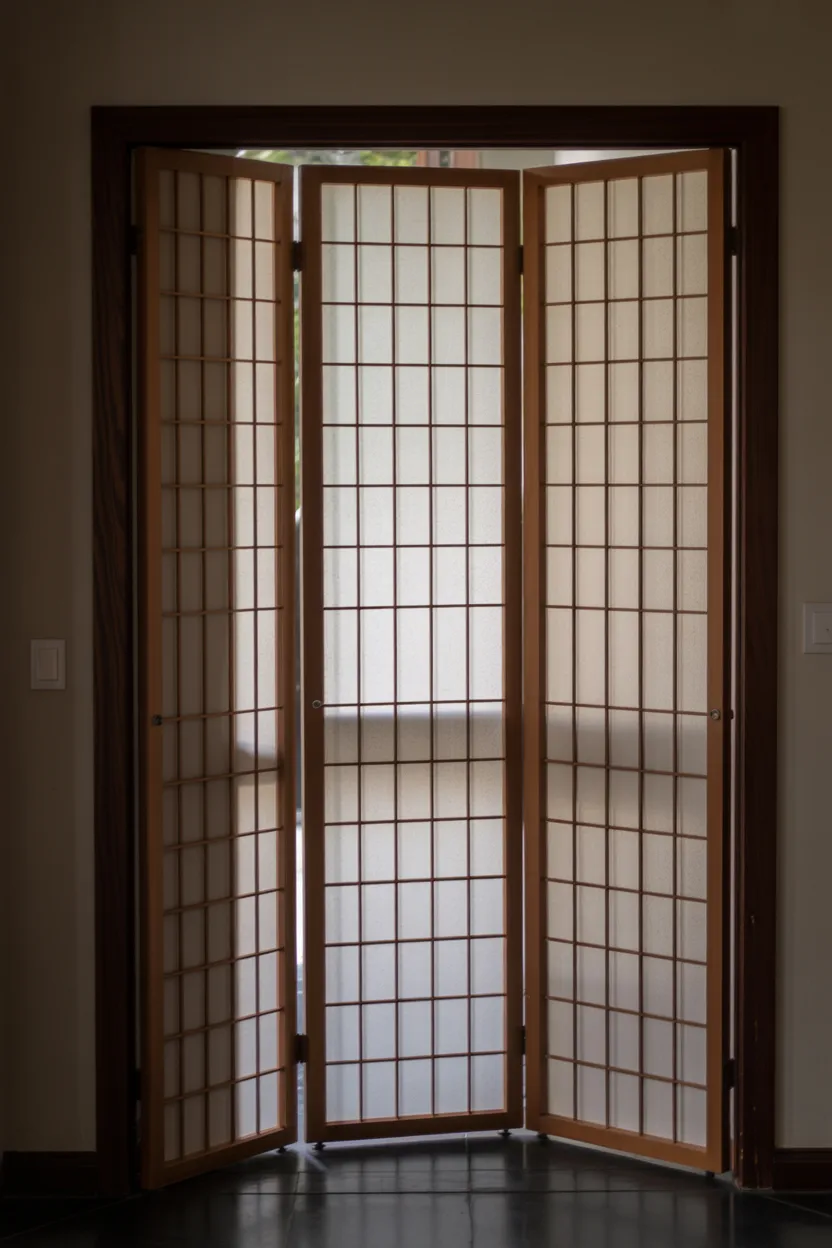
Shoji screens are among the most quietly beautiful entry divider ideas available — rooted in Japanese architectural tradition and perfectly suited to modern minimalist and Japandi-influenced interiors. The translucent rice paper panels filter light rather than block it, creating a luminous, softly glowing boundary that shifts subtly throughout the day as light conditions change outside. The dark wooden frame provides crisp geometric structure that contrasts beautifully with the soft, diffused panel glow.
Angle the screen slightly rather than positioning it flat and parallel to the wall — this angled placement guides foot traffic more naturally and creates a more dynamic, spatial quality. Shoji screens are freestanding and require no installation, making them ideal for renters and for those who like to rearrange spaces seasonally. This entry divider idea works equally well in small apartments and large homes, scaling gracefully with the width of the space it occupies.
14. Hang a Gallery of Framed Art to Define the Entry Zone
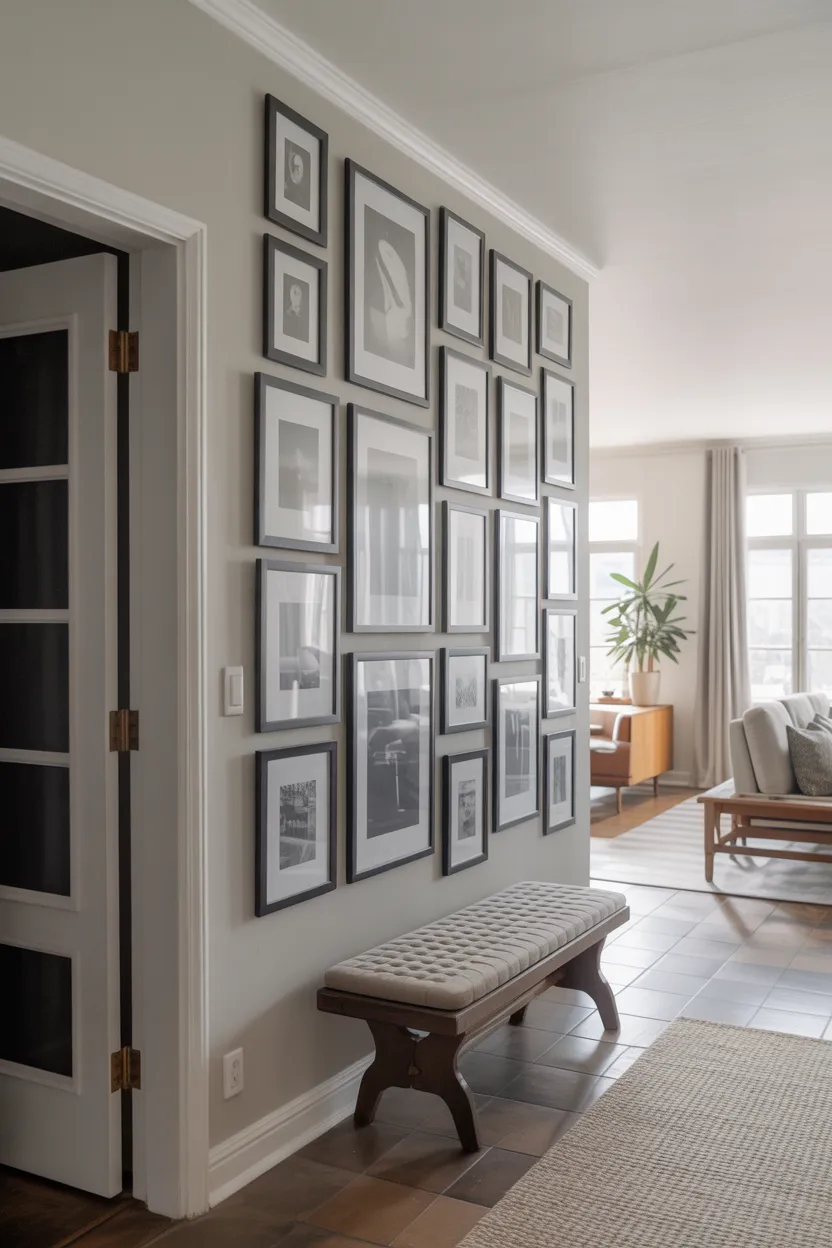
A gallery wall used as an entry divider is one of the most creative and personal entry divider ideas because it defines a zone through visual weight rather than physical structure. When one wall of the entry zone is covered in a dense, curated arrangement of framed art, the eye reads it as a defined space — an arrival point separate from the living room beyond, even without a screen or partition.
This approach works best when the gallery wall runs perpendicular to the main sightline from the front door, creating a visual anchor that draws the eye laterally rather than straight through to the living room. Arrange frames in a salon-style cluster that starts at eye level and expands outward and upward. Place a bench or narrow console below the lowest frames to reinforce the entry zone’s ground level and give the gallery a grounded, complete feeling from floor to ceiling.
Visit more https://www.pinterest.com/Dreamgardenshome/
15. Place a Tall Fiddle Leaf Fig Tree as a Living Entry Marker
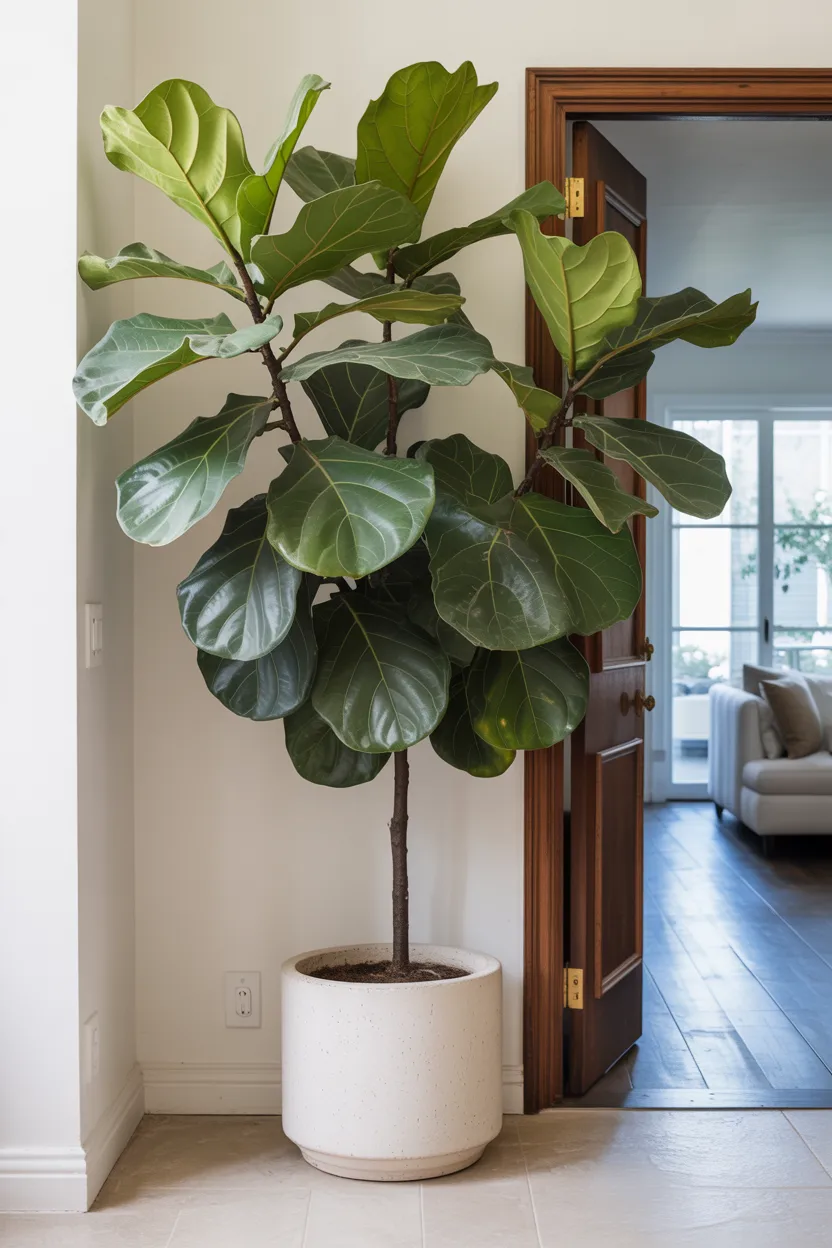
A single large fiddle leaf fig tree used as an entry marker is one of the most effortlessly sophisticated entry divider ideas in contemporary interior design. No screen, shelf, or curtain can match the organic presence of a ceiling-height tree standing at the threshold between two zones. It creates a boundary that feels grown rather than built — natural, alive, and quietly commanding in a way that manufactured dividers rarely achieve.
Position the tree at the exact point where the entry transitions into the main living space. Its canopy spreads naturally to fill the width of the transition zone, and its height draws the eye upward, emphasizing ceiling height and making the whole home feel more expansive. Pair it with a beautiful oversized ceramic or woven basket pot that becomes a design statement in its own right. This entry divider idea requires nothing beyond the plant, the pot, and the right placement.
16. Build a Pegboard and Bench Entry Nook as a Combined Divider
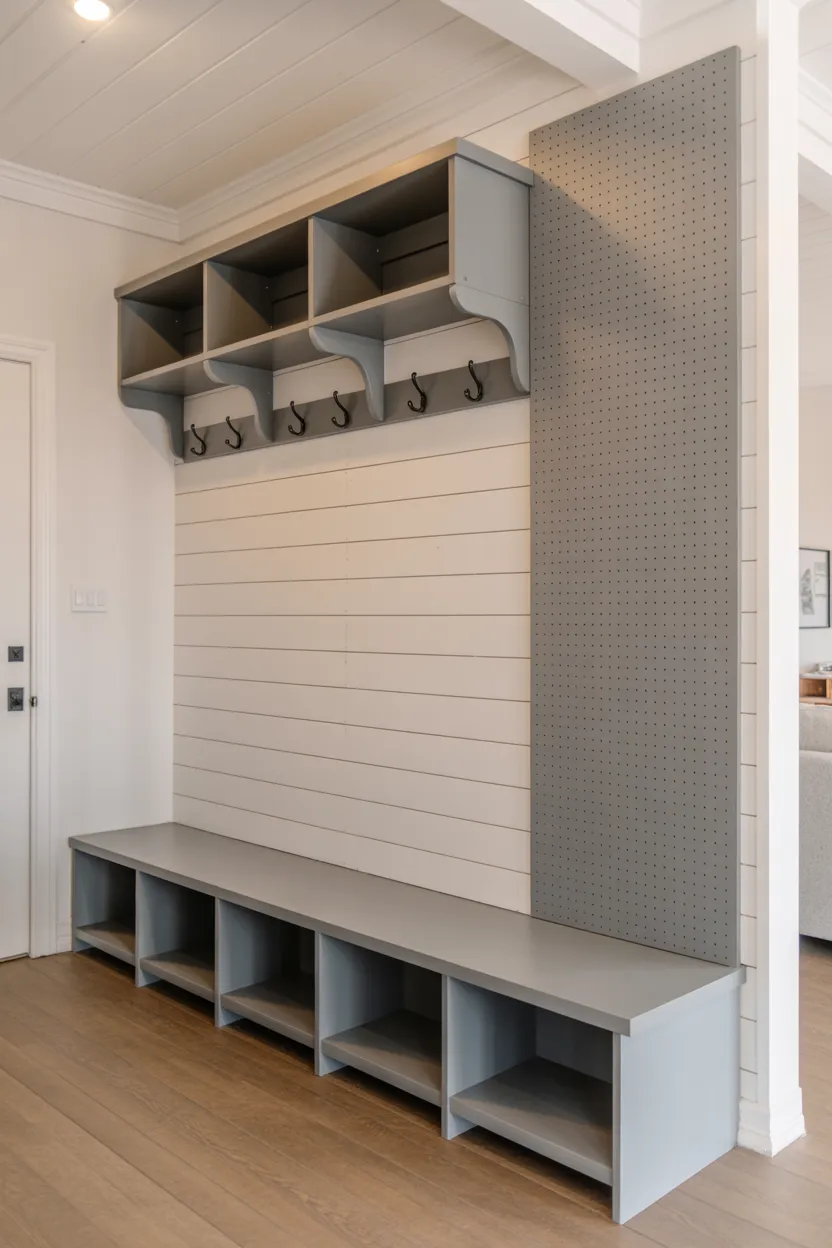
A combined pegboard and bench entry nook is one of the most hardworking entry divider ideas for families and high-traffic households. By building or assembling a structure that includes seating, hook storage, and a tall panel divider in one integrated unit, you solve multiple problems simultaneously — there’s a place to sit while removing shoes, hooks for everyday bags and coats, and a clear visual boundary that defines the entry as its own dedicated zone.
The structure can be assembled from off-the-shelf components — a hall bench, a tall pegboard panel, and connecting hardware — without requiring custom carpentry. Paint everything the same color for a cohesive, built-in appearance that looks far more expensive and intentional than the components individually suggest. This entry divider idea is particularly transformative in homes where the front door opens directly into the living room with no transition space whatsoever.
17. Use a Metal Grid Panel as an Industrial Entry Screen
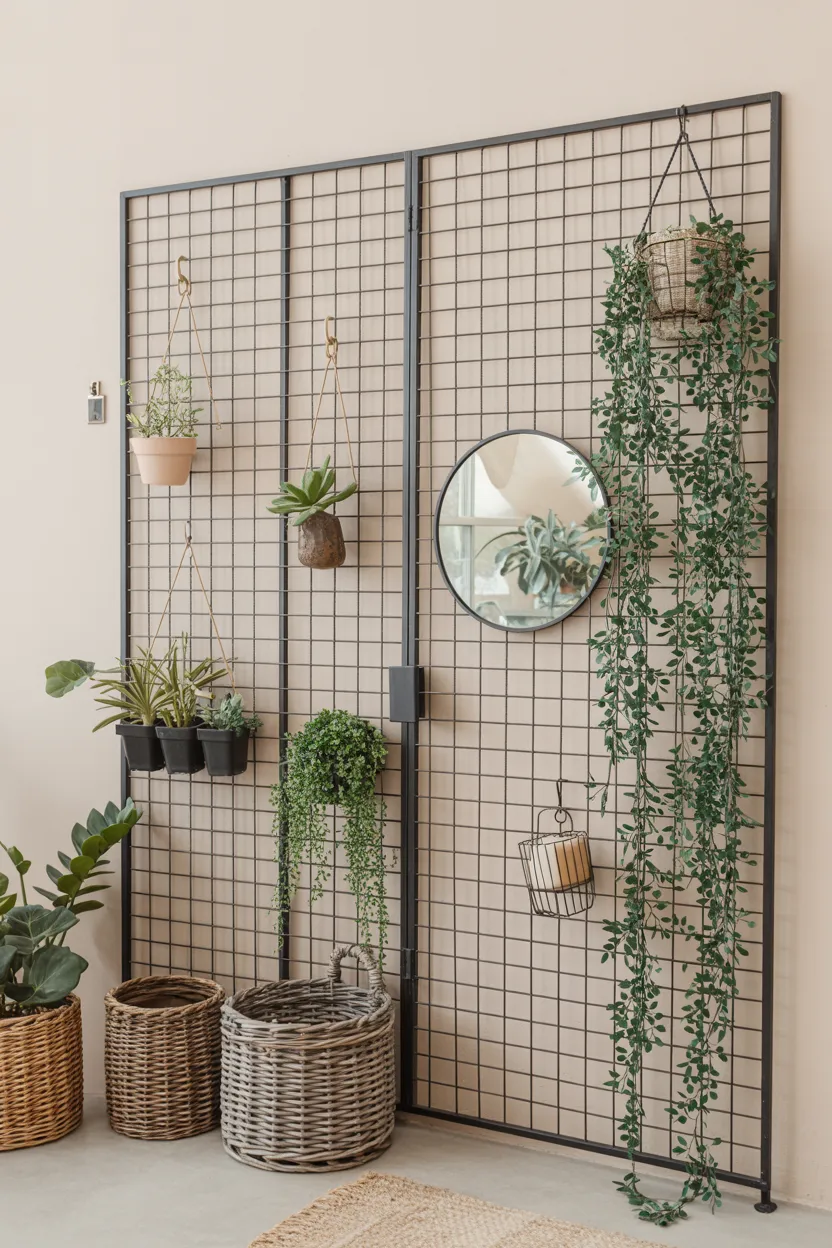
A metal grid panel repurposed as an entry screen is one of the most visually striking entry divider ideas for industrial, modern, or eclectic interiors. The rigid geometric grid creates an immediate graphic statement — bold, structured, and unapologetically architectural. Unlike solid screens that simply block the view, the grid’s open structure lets light and sightlines pass through partially, maintaining visual connection while creating an unmistakable sense of spatial boundary.
Style the grid with hanging planters, woven baskets, a small mirror, and a few hooks for bags and keys to add functional layers to the decorative statement. The combination of hard metal and soft organic elements — trailing plants, natural fiber baskets — creates the kind of tension that makes a space feel genuinely designed rather than accidentally assembled. This entry divider idea works especially well in loft apartments, converted spaces, and homes with concrete floors and exposed architectural elements.
18. Hang a Cluster of Pendant Lights to Mark the Entry Ceiling
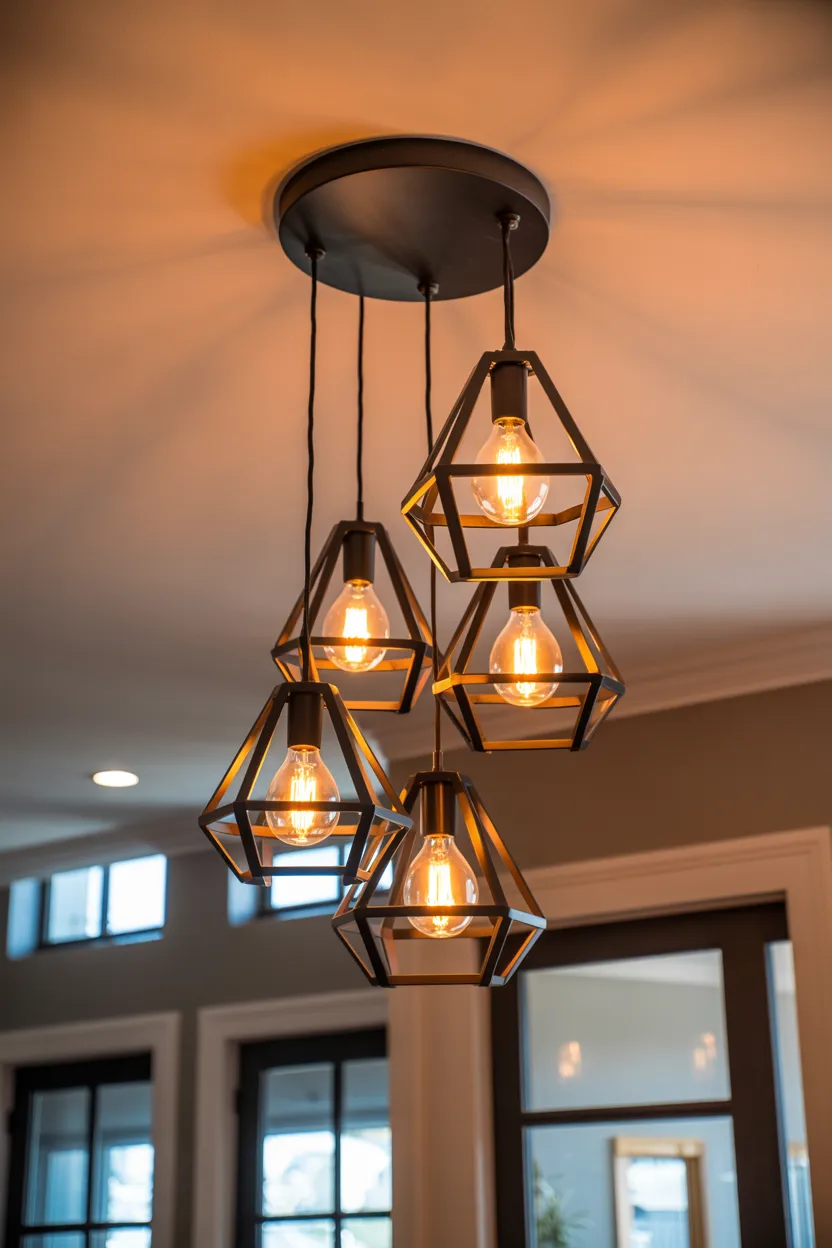
Defining an entry zone from above rather than at floor or eye level is one of the most unexpected and effective entry divider ideas — and a cluster of pendant lights is the most dramatic way to achieve it. By installing five to seven pendants at varied heights directly above the entry zone, you create a ceiling-level marker that the eye immediately reads as a defined, intentional space beneath it.
This overhead approach is especially powerful because it leaves the floor plan completely open and unobstructed — no furniture, no screens, no curtains blocking flow or light at ground level. The lighting cluster creates the psychological sense of arrival and enclosure through visual density above rather than physical barriers below. Choose warm-toned bulbs in cohesive shade styles for a unified installation that reads as deliberate design rather than a random collection of different fixtures hung together.
19. Position a Ladder Shelf Sideways as an Entry Divider
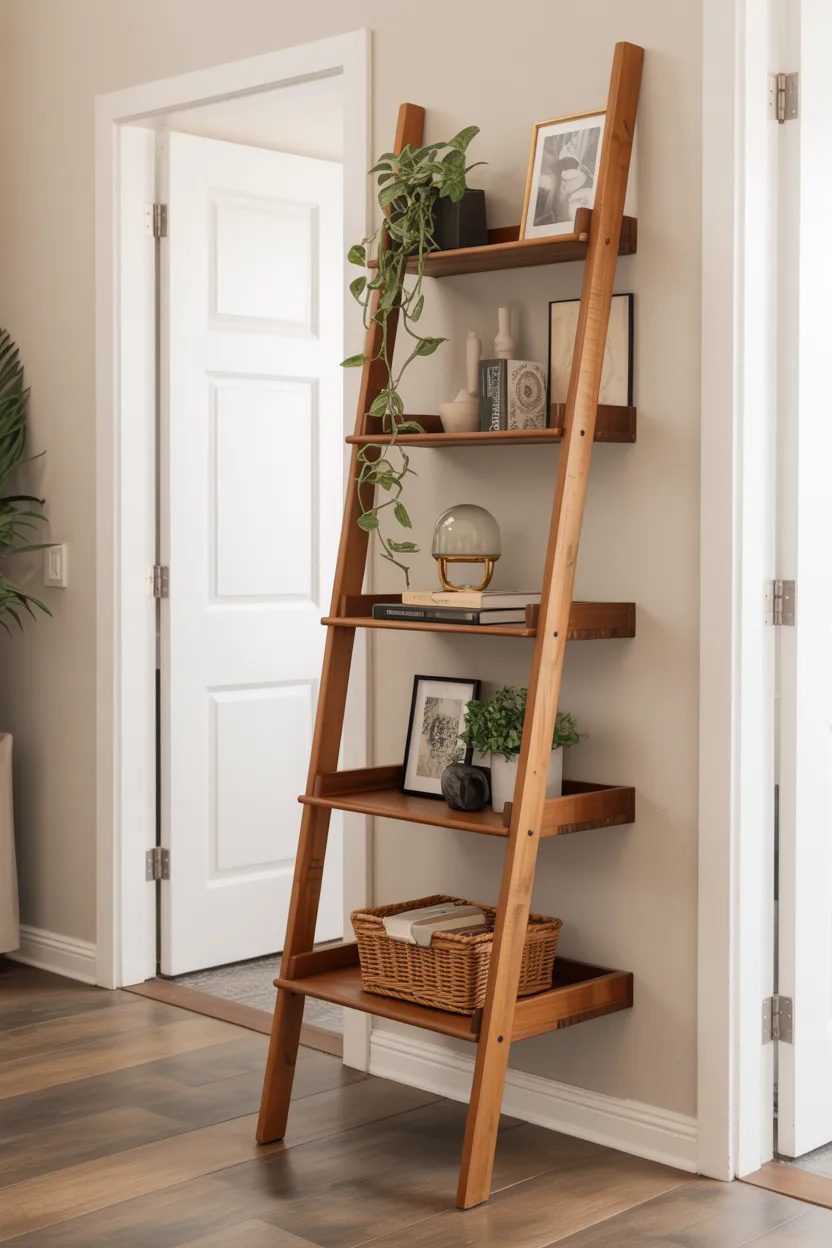
A ladder shelf repositioned as an entry divider is a creative rethinking of a common piece of furniture — and one of the most resourceful entry divider ideas for those who prefer not to buy something new. The ladder’s open rungs filter rather than block light, and its angled lean against the wall creates a casual, organic boundary that feels less like a deliberate partition and more like a beautifully styled moment.
Style the rungs with trailing plants that cascade downward, small framed photos, a few books, and a tiny lamp on the lower rung that illuminates the entry zone at night. The ladder’s natural material — wood, bamboo, or painted metal — integrates warmly with most interior styles. This entry divider idea is particularly effective in small apartments where a large freestanding screen would overwhelm the space but some degree of entry definition is still needed and desired.
20. Use Rattan Room Divider Panels for a Warm Tropical Entry
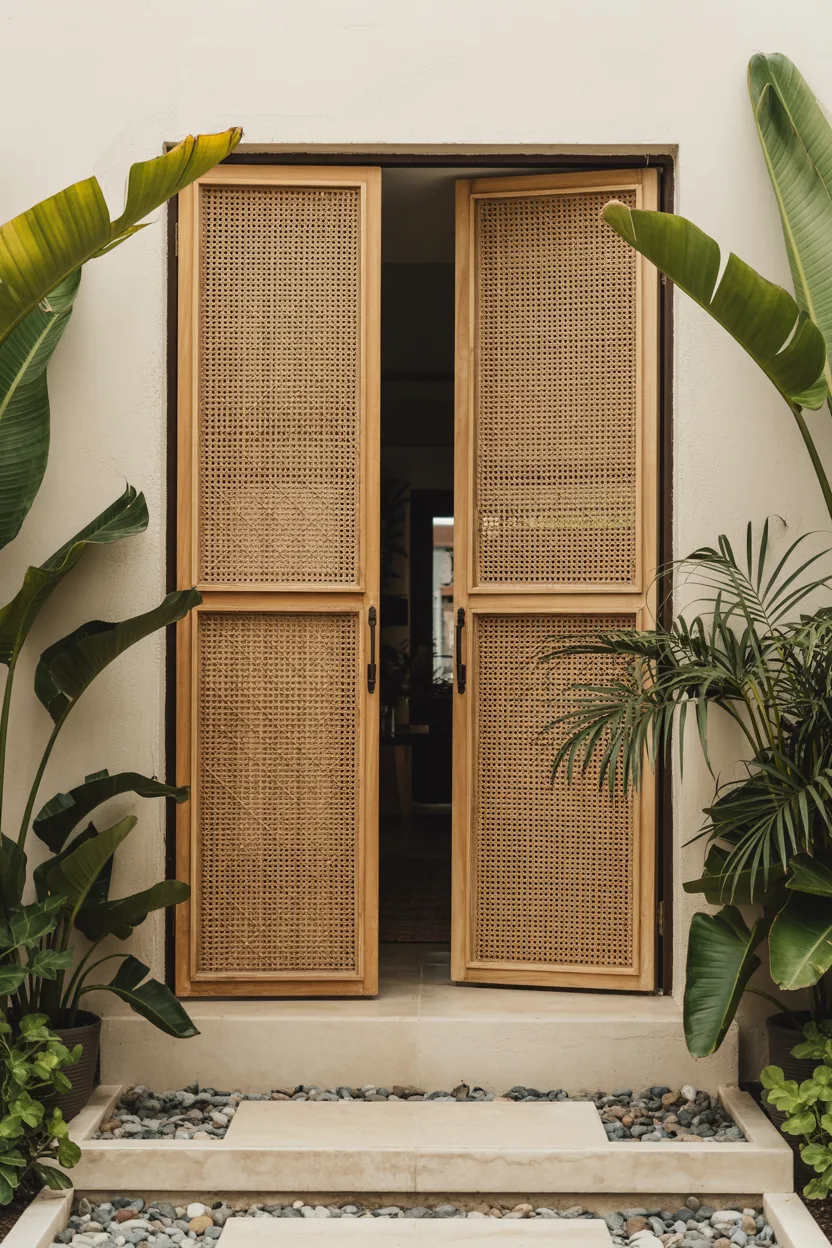
Rattan divider panels are one of the most warmth-generating entry divider ideas for homes that embrace natural materials, tropical influences, or maximalist layering of texture. The woven rattan surface catches and diffuses light in a way that no other material replicates — casting beautiful, dappled shadows on surrounding walls and floors that shift gently throughout the day as the light source moves across the sky.
Position two or three panels side by side to span the full width of the entry transition zone. Flank the panels with large tropical plants — birds of paradise, monstera, or banana leaf plants — to complete the lush, resort-like atmosphere the rattan naturally begins. This entry divider idea works in any home style that embraces natural materials, but it is particularly transformative in interiors that already incorporate warm wood tones, woven textiles, and abundant greenery throughout the space.
21. Create a Floating Shelf Wall Between Entry and Living Room
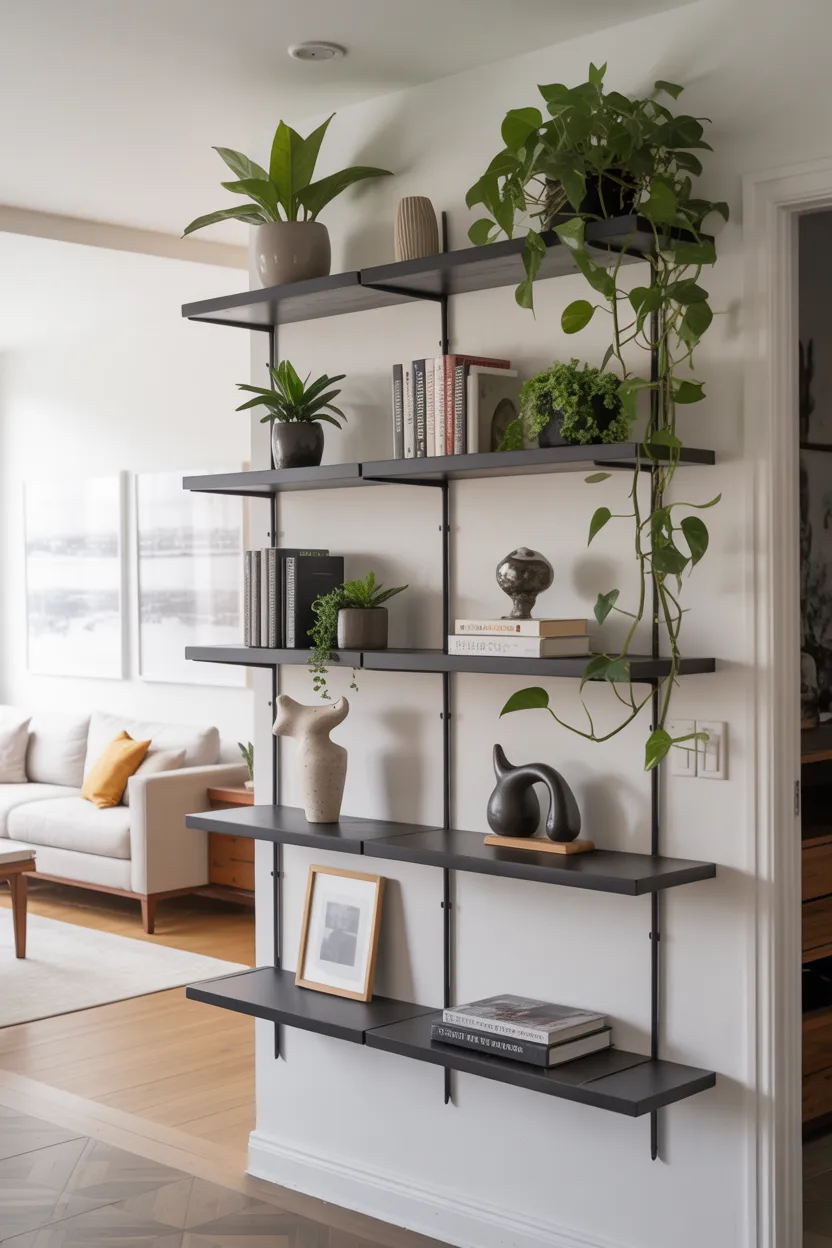
Floating shelves mounted on a partial or half-wall between the entry and living room create one of the most architecturally integrated entry divider ideas for homes undergoing renovation or being designed from scratch. The partial wall provides structural definition at its base while the floating shelves above it extend the visual boundary upward without fully closing off the space — maintaining airiness, light flow, and visual connection between both zones simultaneously.
Style the shelves with a deliberate mix of heights, textures, and materials — tall plants beside flat books beside round ceramic objects creates visual rhythm that keeps the eye moving pleasurably along the display. Illuminate the shelves with small recessed puck lights or flexible LED strip lighting tucked beneath each shelf for a gallery-like effect at night. This entry divider idea becomes a genuine architectural feature that adds lasting value and beauty to the home.
22. Hang a Macramé and Driftwood Art Panel as an Entry Statement
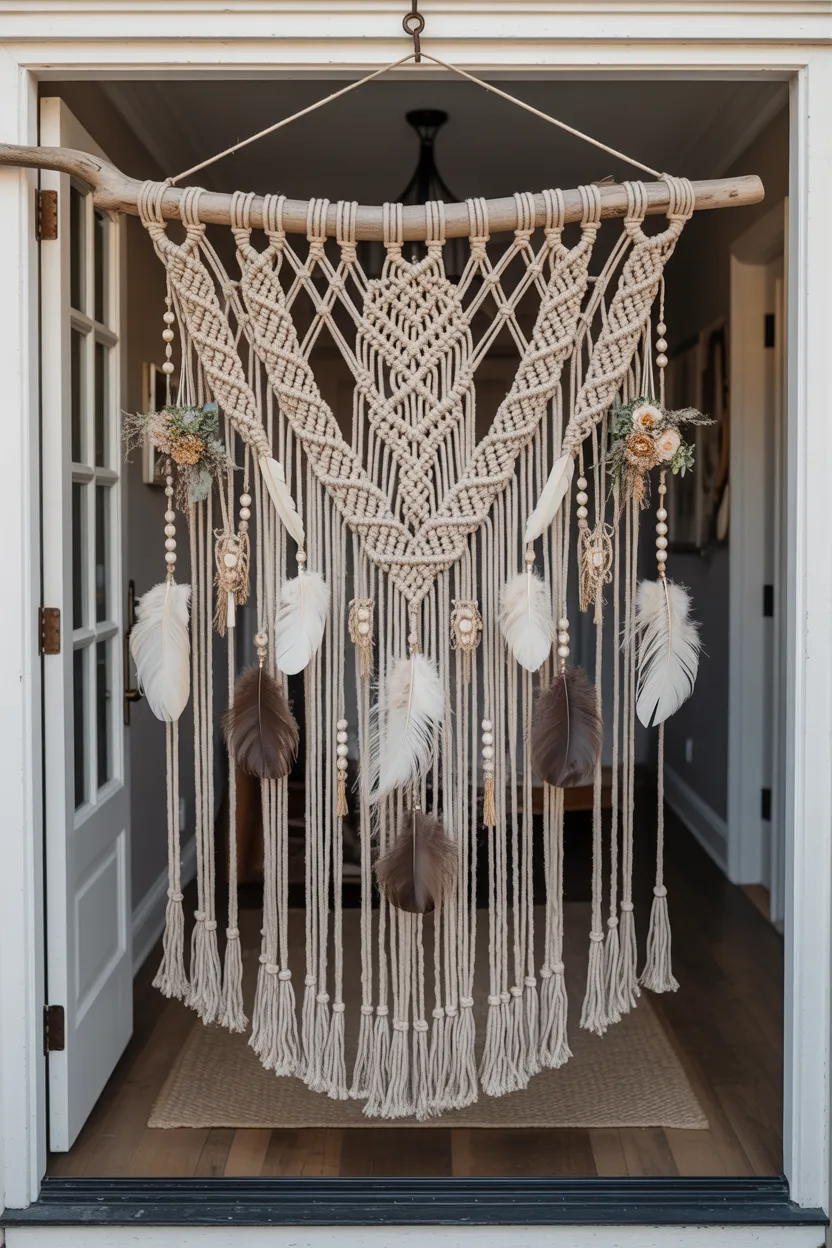
A large macramé and driftwood art panel suspended from the ceiling creates one of the most dramatic single-object entry divider ideas available — because it functions simultaneously as art, divider, and statement piece without requiring floor space, wall mounting, or assembly. The piece hangs freely from a ceiling hook, swaying gently with air movement and drawing every eye from across the room the moment the front door opens.
Commission a custom piece sized to your specific entryway width, or find large-scale handmade panels from artisan markets and online makers. The organic materials — natural jute, driftwood, dried botanicals — bring warmth and handcraft into a space that might otherwise feel polished and impersonal. This entry divider idea works across multiple interior styles but feels most at home in bohemian, coastal, and naturally influenced interiors where handmade objects are celebrated rather than concealed.
23. Use a Mirrored Panel Screen to Expand the Entry Visually
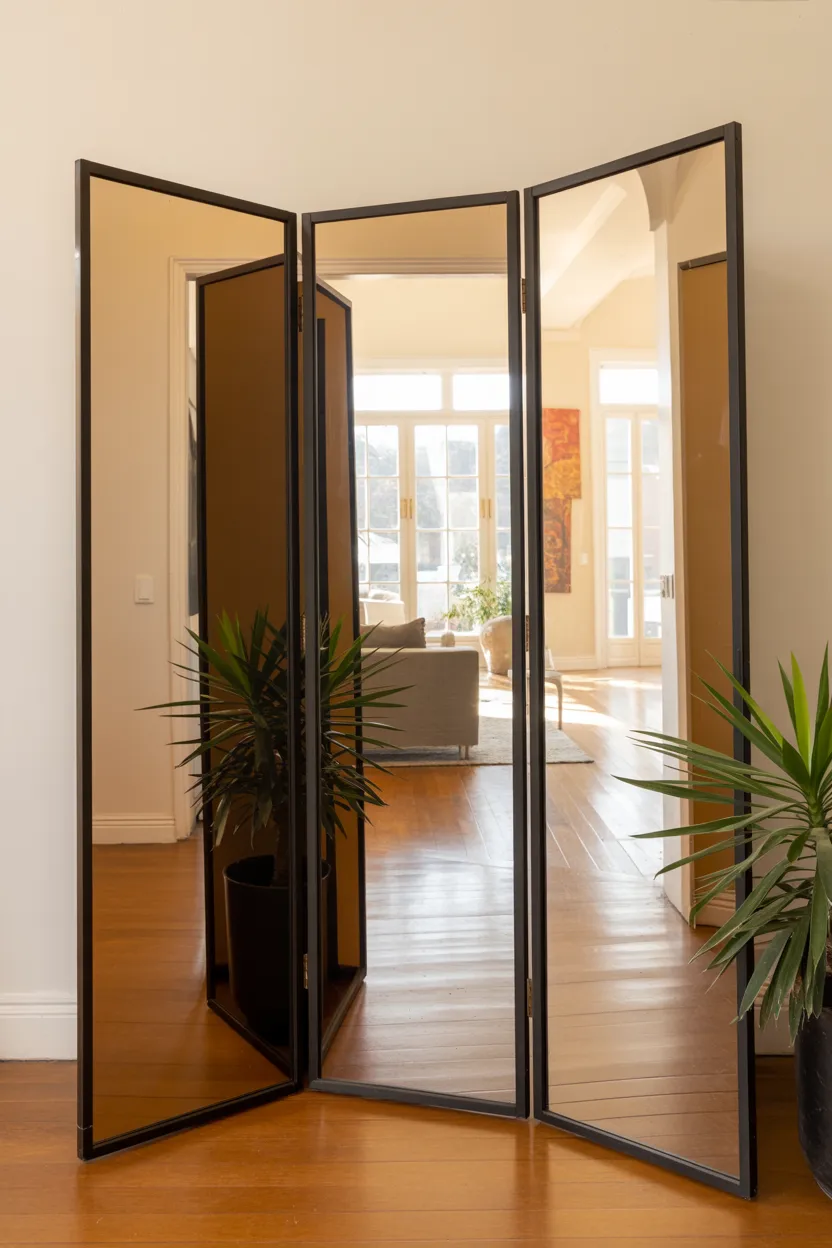
A mirrored panel screen is one of the most spatially intelligent entry divider ideas for small homes and narrow entryways. While most dividers simply add visual mass to the entry zone — which can make compact spaces feel more cramped — a mirrored screen actively makes the space feel larger by reflecting depth, light, and greenery back into the entry from the opposite direction. It divides while simultaneously expanding.
Position the mirrored screen at a slight angle so it reflects the most light-filled part of the entry — ideally a window or the open living room beyond. Place a plant beside it so the greenery doubles in the reflection, creating the impression of a fuller, more botanical entry than the single plant alone provides. This entry divider idea is most powerful in apartments and smaller homes where the entry zone is genuinely tight and every visual trick for expanding space matters enormously.
24. Install a Glass Block Panel for Light-Filled Privacy
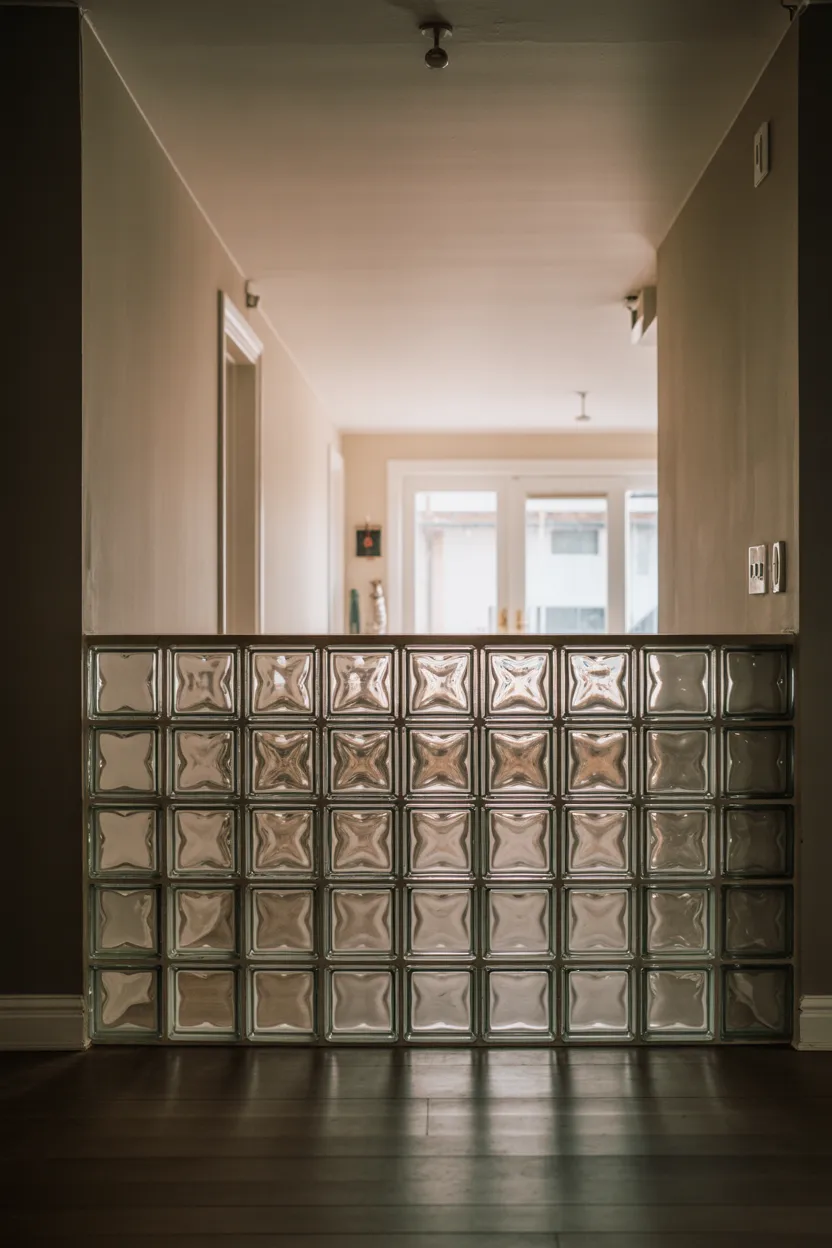
Glass block panels are one of the most architecturally distinctive entry divider ideas — and they solve the fundamental tension between privacy and light transmission better than almost any other material. The frosted glass blocks allow abundant natural light to pass freely between spaces while blurring any direct sightlines, creating privacy without the darkness that solid walls inevitably introduce. The effect is luminous, clean, and unmistakably architectural in character.
Glass block installation is a permanent renovation requiring professional work, but it adds genuine architectural value that no freestanding screen or curtain can replicate. It suits loft apartments, converted industrial spaces, and contemporary homes particularly well — the blocks carry an inherent industrial heritage that feels right at home in these settings. This entry divider idea is for those committed to a truly distinctive, built-in solution that becomes a defining feature of the home’s architecture for years to come.
25. Style a Dried Botanical Arrangement as a Natural Entry Curtain
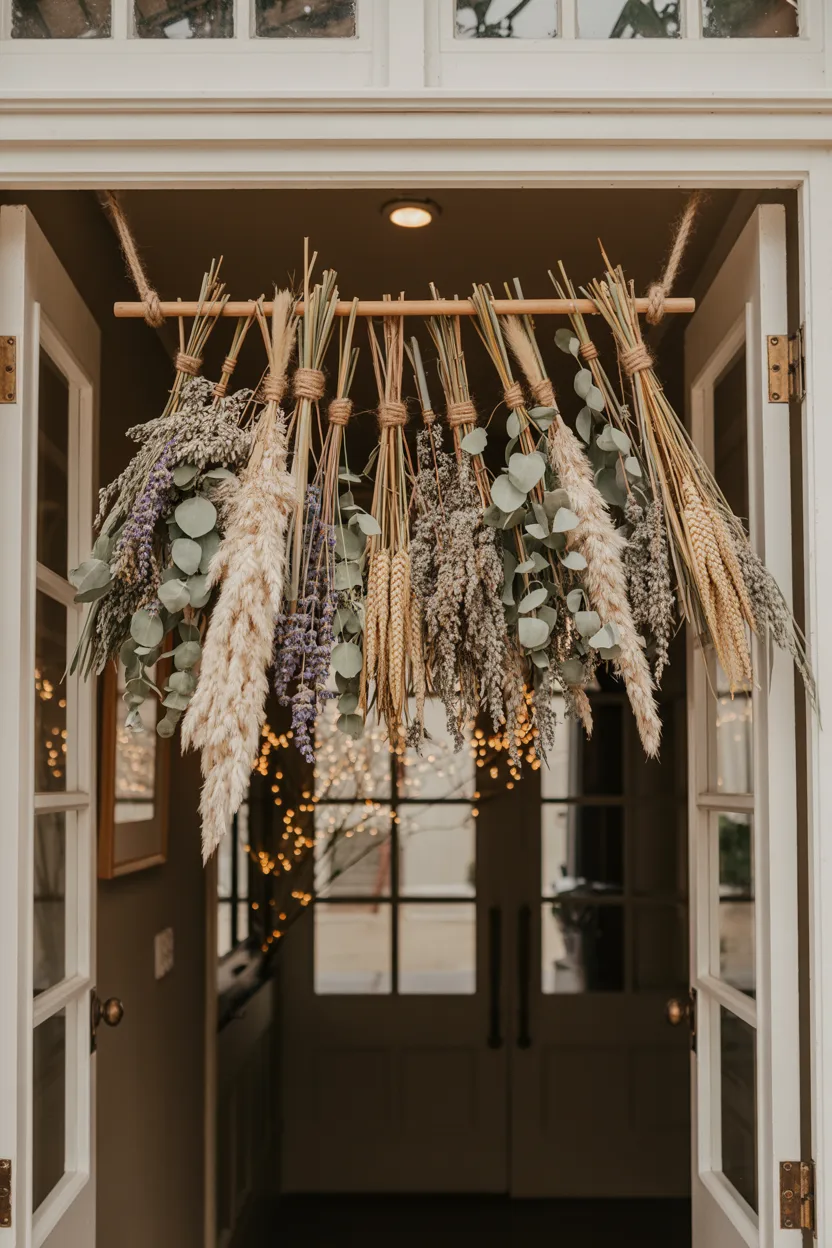
A dried botanical arrangement hung from a ceiling rod as an entry curtain is the most romantically organic of all entry divider ideas — and it creates an atmosphere that no manufactured screen or panel ever could. Walking through a curtain of pampas grass, dried eucalyptus, and lavender bundles is a multi-sensory experience: the soft rustle of stems, the gentle fragrance of dried botanicals, and the warm, golden visual texture of natural plant material overhead and around you.
Source stems in abundance — the arrangement needs to be dense enough to create genuine visual division rather than a sparse, unfinished feeling. Hang bundles at varied lengths from the rod using natural twine, layering stem types so different textures interweave. This entry divider idea requires no watering, no maintenance beyond occasional dusting, and improves in character as the botanicals slowly deepen in color over time. It is seasonal, soul-filled, and unlike anything else on this list.
Conclusion:
The right entry divider doesn’t just separate spaces — it defines how your home feels from the very first step inside. Whether you choose a living plant wall, a slatted wood screen, or a dried botanical curtain, these entry divider ideas give every open-plan home the sense of arrival it deserves. Start with one idea that fits your style, your space, and your budget — and watch your entryway transform completely.

Join The Discussion