
Introduction
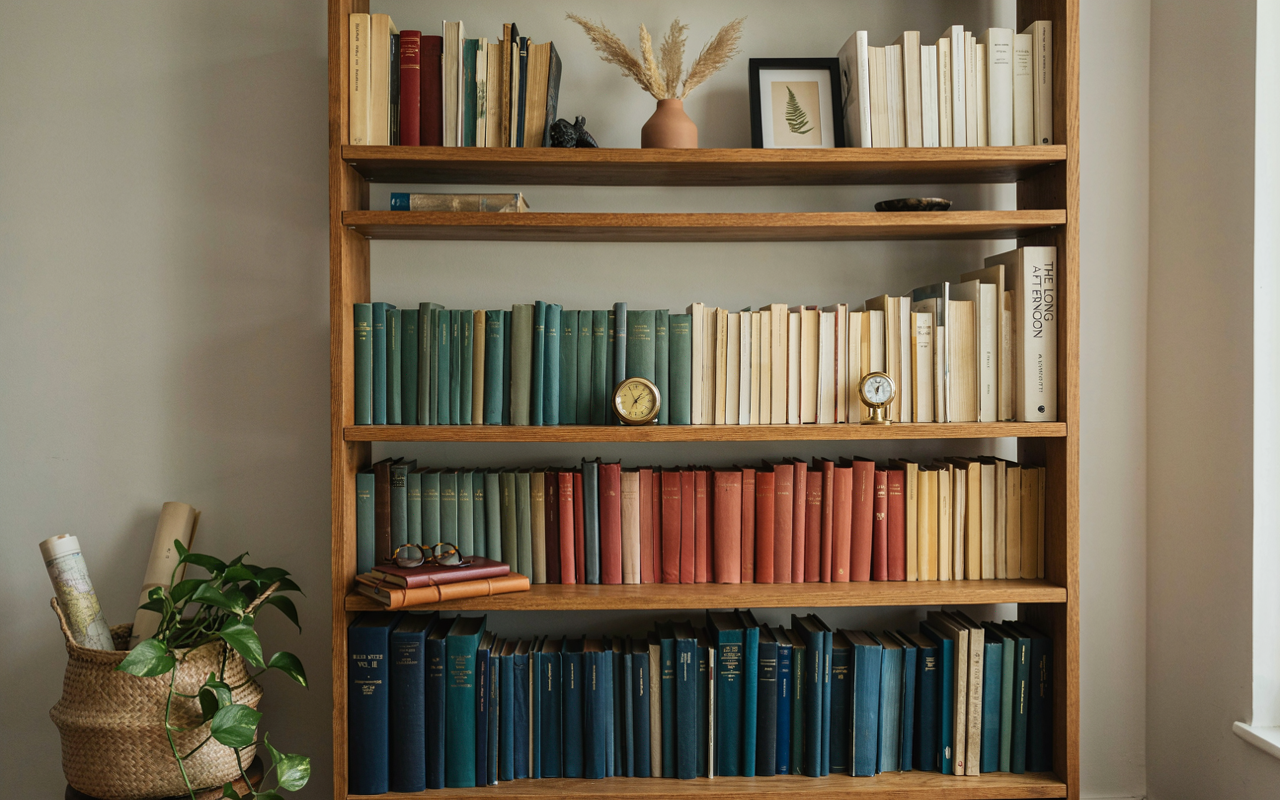
A bookshelf can be so much more than storage for your favorite reads, it can become one of the most stylish focal points in your home. These 18 Bookshelf Styling Ideas offer practical techniques for arranging books, decor, and personal touches into a curated, intentional display. From color-coded spines to layered vignettes with plants and pottery, each idea helps balance function and style. Whether you prefer symmetrical order or relaxed, collected clutter, this list has an approach that fits your space and personality.
1. Color-Coded Book Arrangement
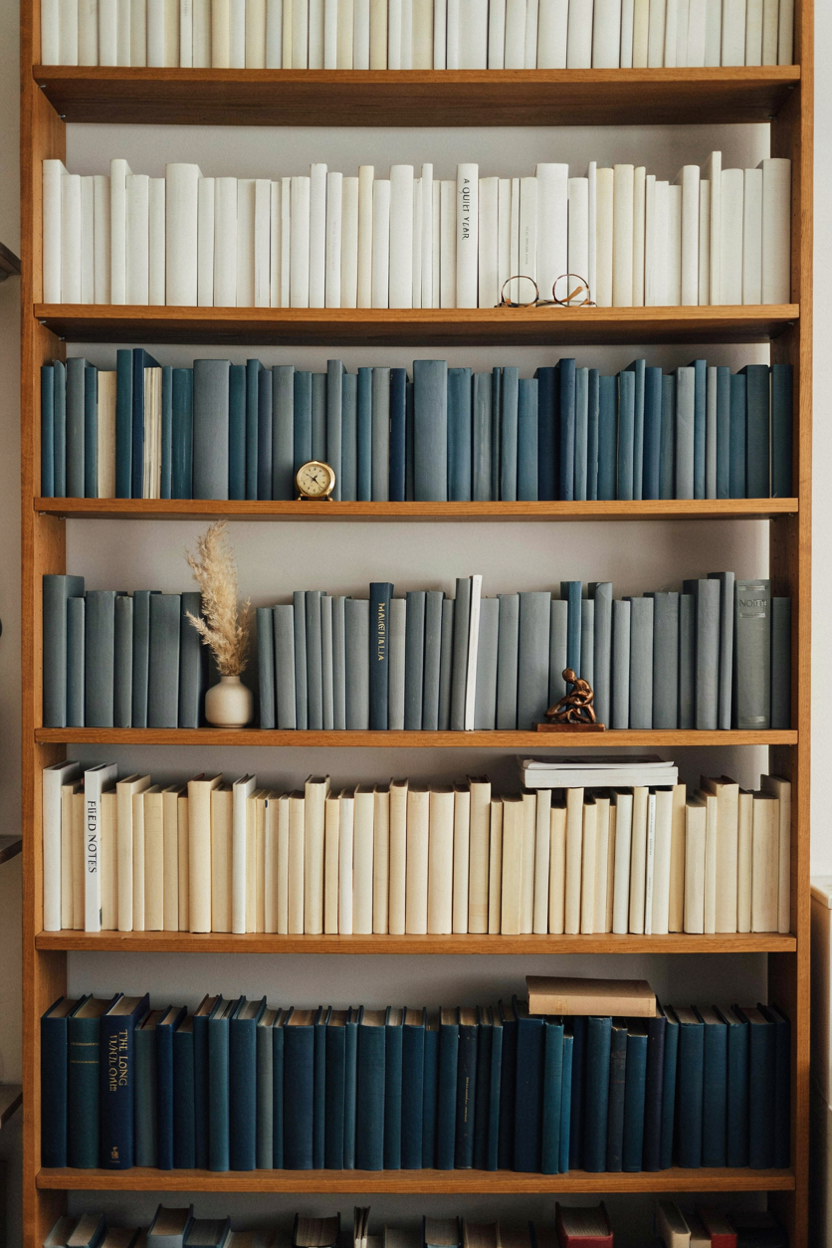
Color coding remains one of the most eye-catching Bookshelf Styling Ideas because it instantly transforms a collection of mismatched spines into a cohesive visual display. Arranging books by color, rather than author or genre, creates a gradient or blocked effect that draws the eye across the entire shelf, turning an ordinary bookcase into a striking piece of functional art worth photographing.
While this method prioritizes aesthetics over easy book retrieval, many people find creative ways to blend both by keeping frequently read books on lower, more accessible shelves. Grouping colors in gentle transitions, rather than abrupt jumps, produces the most polished result. This approach works particularly well for large book collections where hundreds of spines can otherwise feel overwhelming and disorganized.
2. Vertical and Horizontal Stacking Mix
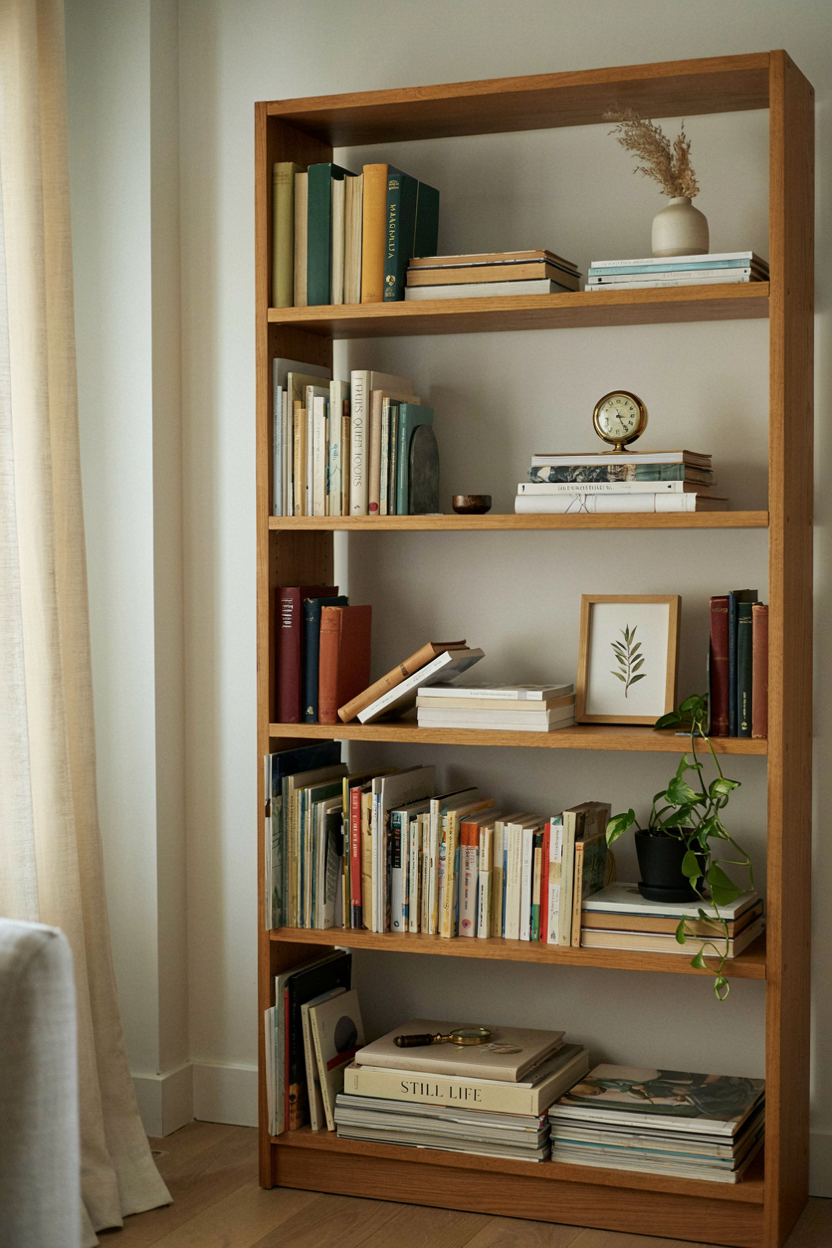
Combining vertical and horizontal book placement is a foundational technique among versatile Bookshelf Styling Ideas, since it breaks up the monotony of an entirely upright row of spines. Stacking a few books flat on their sides creates natural pedestals for small decorative objects, while the remaining upright books maintain a sense of order and provide visual contrast throughout the shelf.
This mixed approach also makes better use of vertical shelf space, since horizontal stacks can fill gaps left by shorter upright books. Varying the height of each stack, rather than keeping them uniform, adds even more visual interest and prevents the shelf from feeling repetitive. This technique works well across nearly every design style, from modern minimalist to eclectic maximalist interiors.
3. Bookends as Decorative Anchors
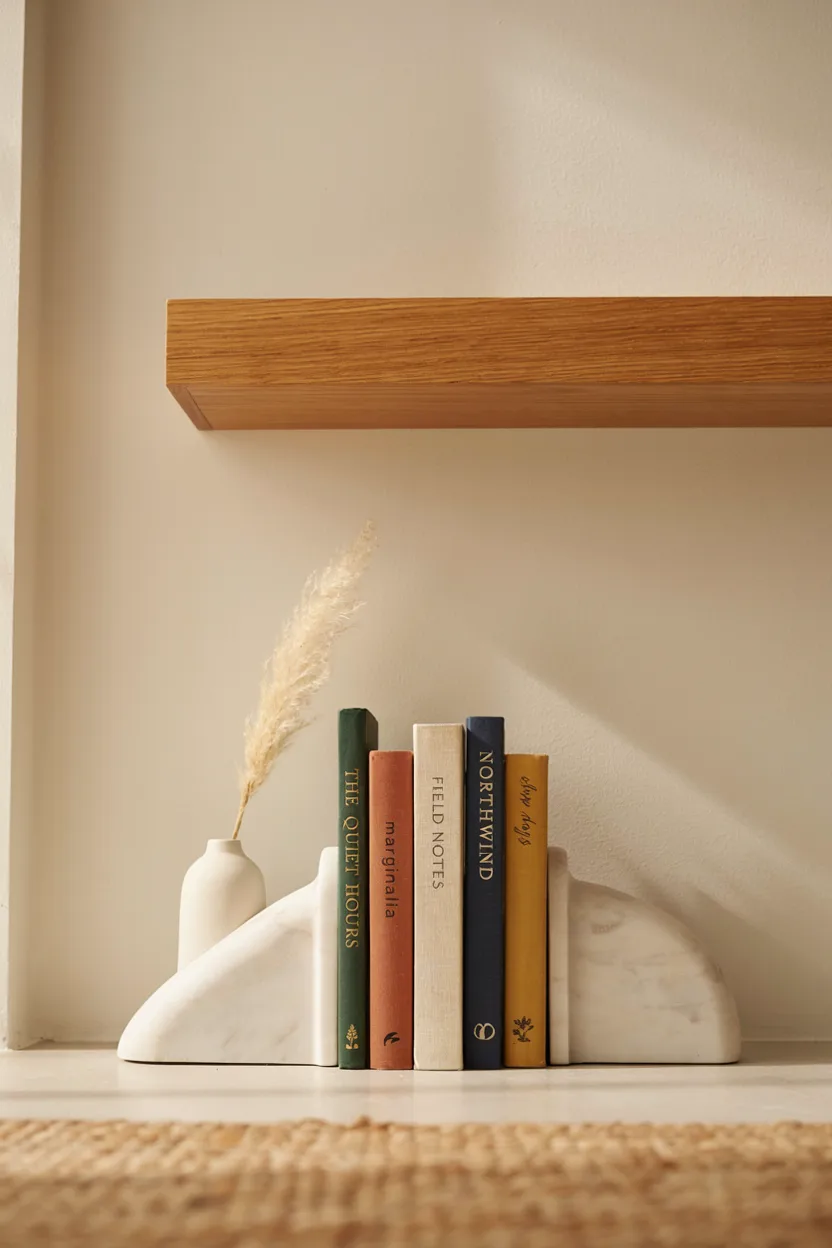
Bookends often go overlooked, but choosing decorative rather than purely functional ones is a simple upgrade among thoughtful Bookshelf Styling Ideas. A sculptural pair in marble, brass, or wood does more than keep books upright, it becomes a design feature in its own right, adding personality and polish to sections of the shelf that might otherwise look plain or unfinished.
This idea works especially well on shelves with only a handful of books, where empty space can otherwise make the arrangement look sparse or incomplete. Choosing bookends that echo other metal or material accents elsewhere in the room ties the shelving into the broader interior design scheme. This small addition delivers a noticeably elevated look for minimal cost and effort.
4. Layering Books with Small Objects

Layering small decorative objects among books is one of the most effective Bookshelf Styling Ideas for creating a curated, collected look rather than a purely functional storage display. Placing miniature vases, stones, or small frames beside stacked books introduces variety in texture, height, and material, transforming a simple row of spines into a thoughtfully arranged vignette worth lingering over.
This method works best when objects are grouped in odd numbers, typically three, since asymmetrical groupings tend to feel more visually balanced than even pairs. Choosing objects with a shared color palette or material, like ceramics or natural stone, keeps the overall look cohesive despite the variety. This layering technique can be repeated across multiple shelves for a consistently styled bookcase.
5. Negative Space for Breathing Room
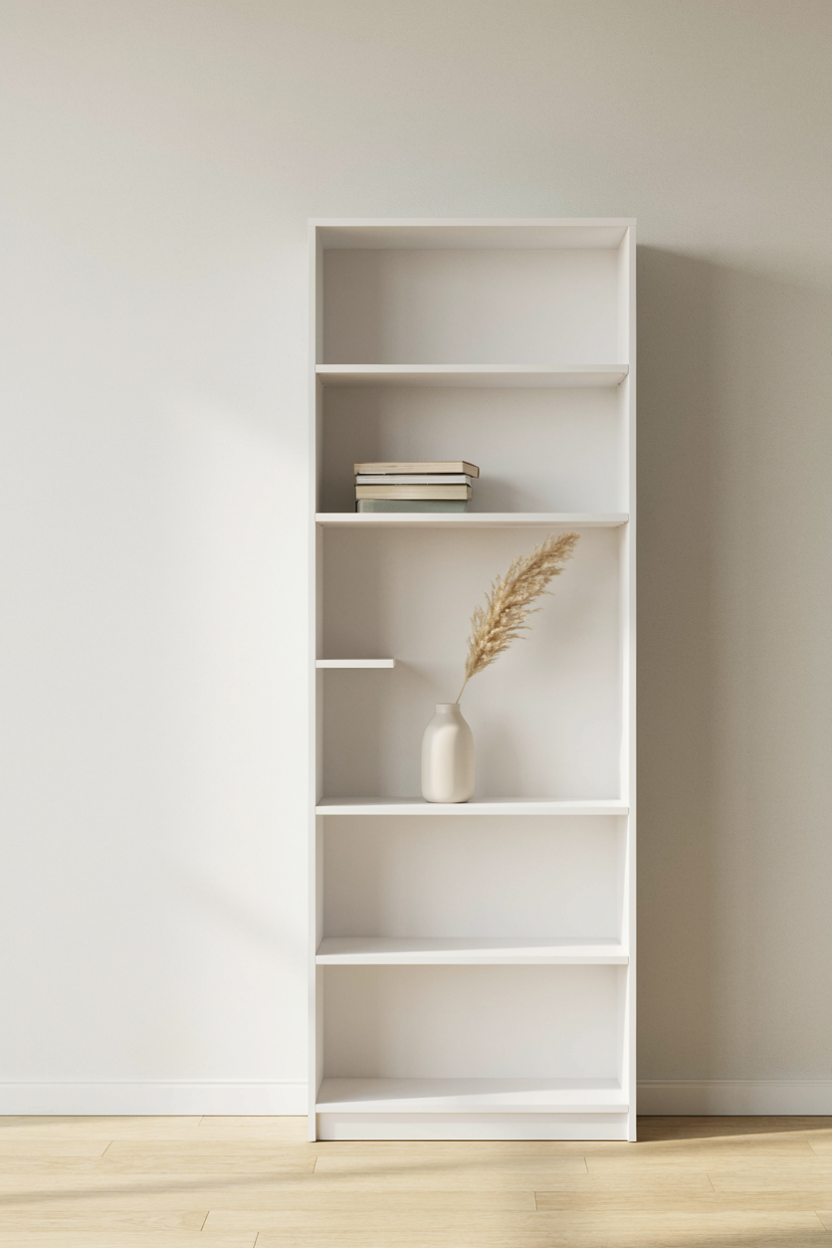
Not every shelf needs to be filled, and embracing negative space is one of the more restrained yet impactful Bookshelf Styling Ideas for minimalist interiors. Leaving some shelves partially or entirely empty allows the eye to rest and prevents the overall unit from feeling overwhelming, especially in smaller rooms where a fully packed bookcase might dominate the visual space unnecessarily.
This approach also gives remaining items more visual weight, since fewer objects naturally draw more attention on a mostly empty shelf. Alternating between full and sparse shelves throughout the unit creates rhythm and prevents monotony. This technique suits Scandinavian, modern, or Japandi-inspired interiors particularly well, where simplicity and intentional space are central design principles.
6. Grouping by Height for Visual Rhythm
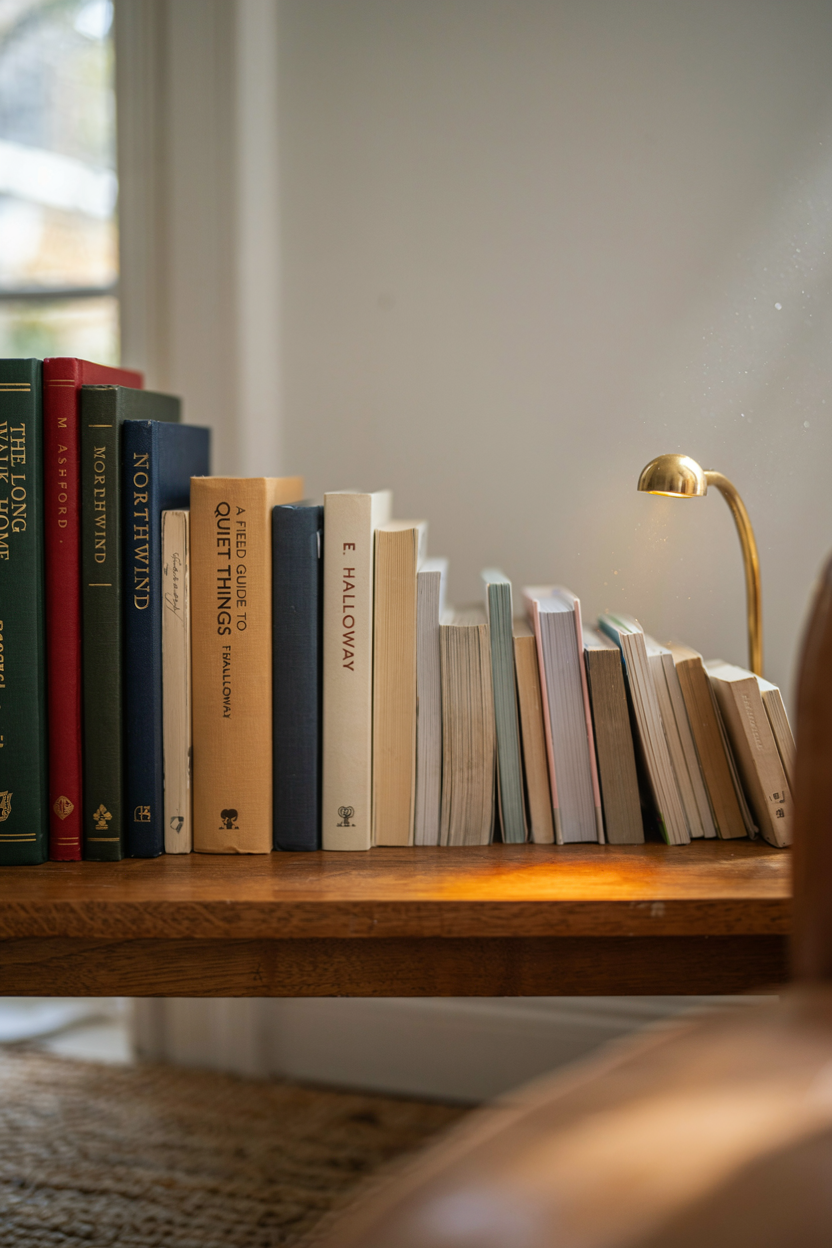
Arranging books by height rather than randomly is a subtle but effective technique among practical Bookshelf Styling Ideas. Grouping tall hardcovers together and gradually transitioning to shorter paperbacks creates a smooth visual flow across the shelf, avoiding the jagged, uneven silhouette that often results from placing books of wildly different sizes next to one another without any planning.
This method works particularly well when combined with color coding or other organizational systems, since height grouping can operate as an underlying structure regardless of color or genre choices. Ending a height progression with a decorative object or bookend softens the transition to the next section. This approach creates a polished, professionally styled look with minimal extra decor required.
7. Incorporating Framed Art Between Shelves

Adding small framed art directly onto shelves, rather than only hanging pieces on the wall, is a clever addition to any list of Bookshelf Styling Ideas. Leaning a small print or photo against the back panel of a shelf, partially behind a stack of books, adds depth and layered visual interest that a purely two-dimensional wall display can’t achieve on its own.
This technique also makes efficient use of limited wall space, since the shelf itself becomes a display surface for art in addition to books. Choosing frames that complement the books’ colors or the room’s overall palette keeps the combination feeling intentional. This idea works particularly well on open shelving units where the back panel is visible and worth styling.
8. Adding Greenery and Trailing Plants
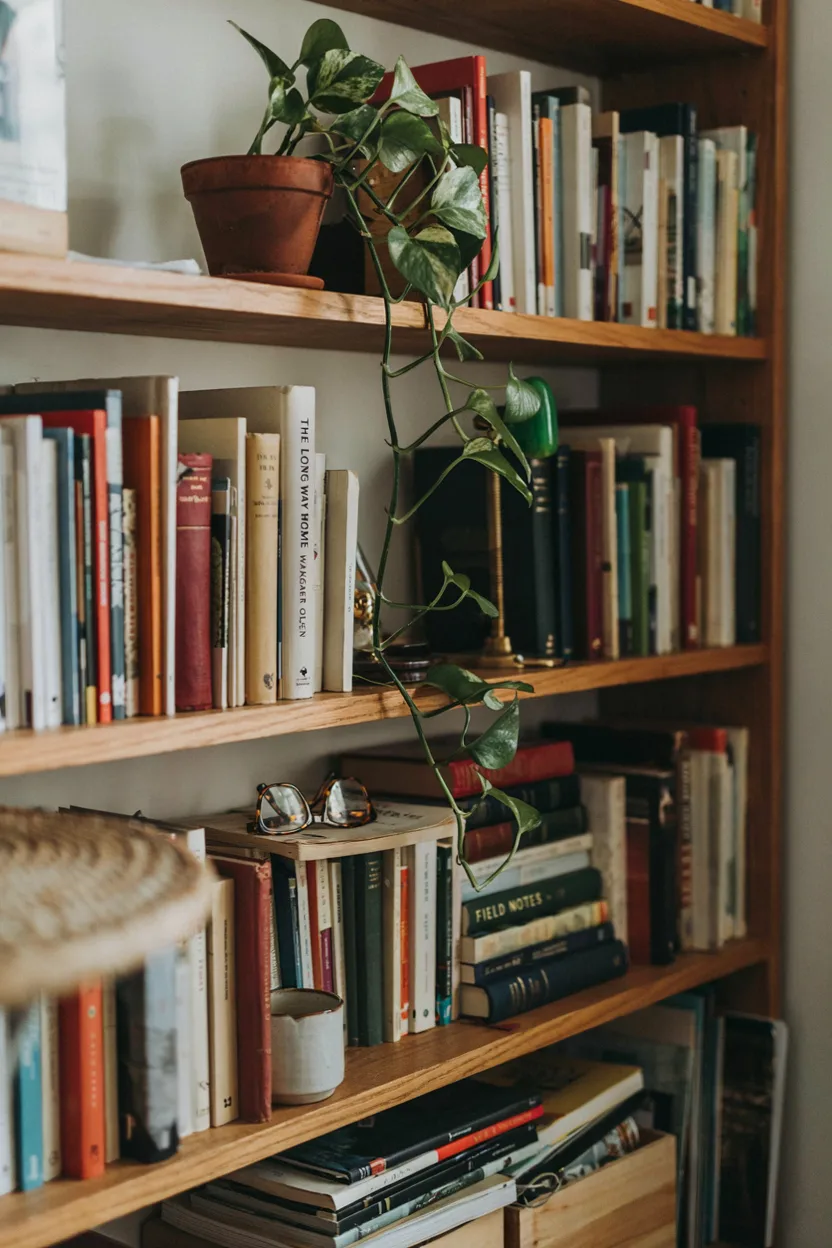
Plants bring life and softness to an otherwise rigid structure, making greenery one of the most refreshing Bookshelf Styling Ideas for any room. Trailing plants like pothos or ivy placed on upper shelves create cascading vines that break up the straight lines of stacked books, adding organic movement and a sense of growth that static decorative objects simply cannot replicate.
Low-maintenance plants work best for shelf placement, since they typically require less direct sunlight than plants situated near windows. Beyond aesthetics, greenery also improves air quality and adds a calming, natural element to home office or living room bookcases. Rotating the plant occasionally ensures even growth and keeps the trailing vines looking full and healthy over time.
9. Rainbow Gradient Spine Display
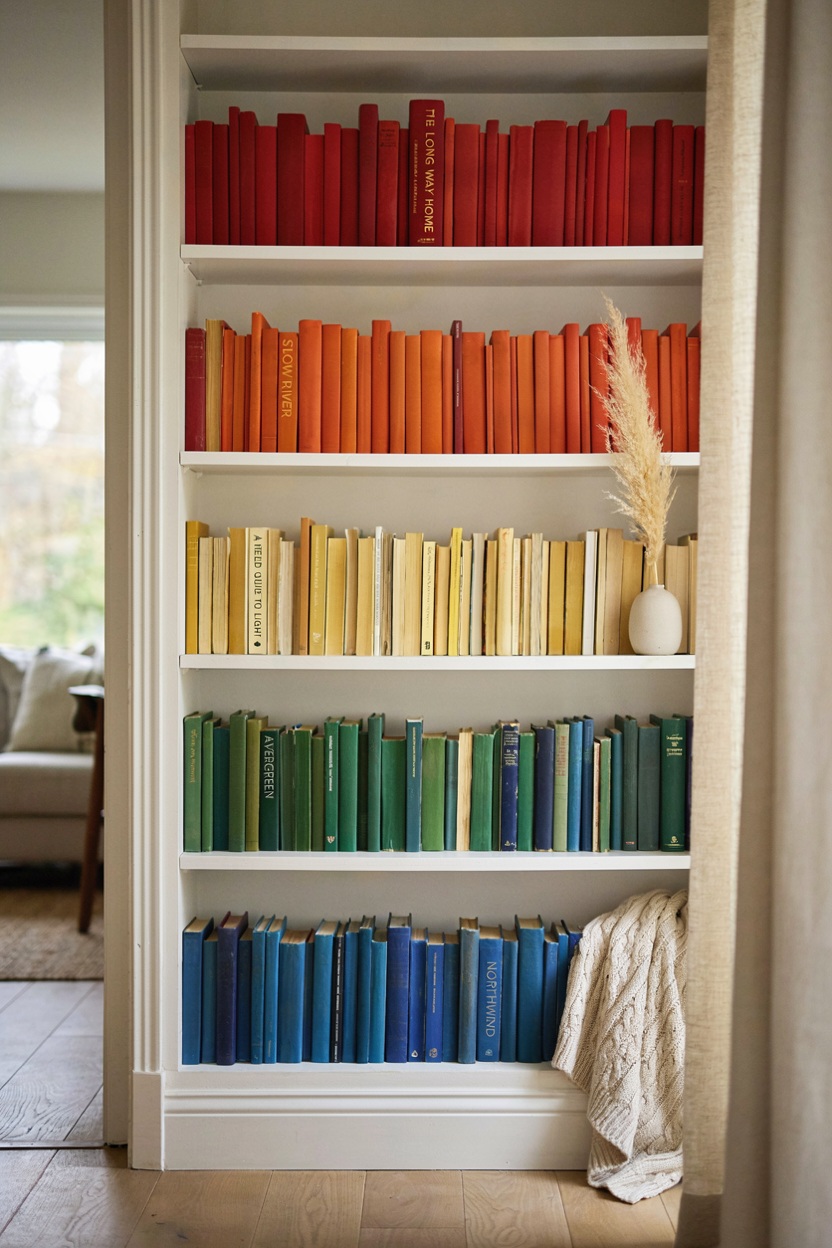
For those who want a bold, playful statement, a rainbow gradient is one of the most vibrant Bookshelf Styling Ideas available. Arranging spines in a smooth color progression across shelves transforms an ordinary bookcase into a striking piece of visual art, injecting personality and energy into a room without requiring any additional decorative purchases beyond the books already owned.
This style works particularly well in creative studios, children’s rooms, or eclectic living spaces where bold color choices are welcomed rather than avoided. Because the arrangement relies entirely on the natural colors of existing book spines, achieving a perfect rainbow may require some experimentation and rearranging. The playful, colorful result makes this one of the most shareable and photogenic styling choices.
10. Ceramic and Pottery Accents
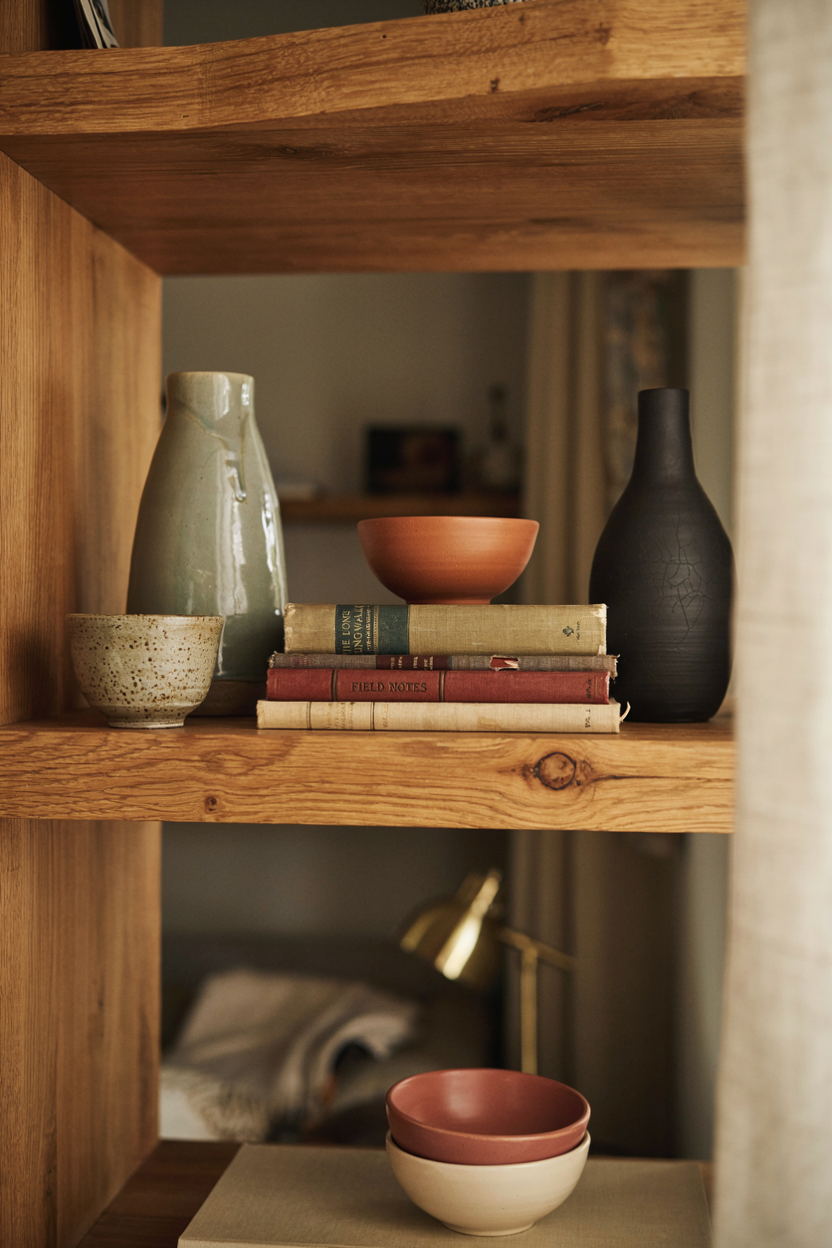
Ceramic and pottery pieces introduce handmade texture and warmth, making them a popular choice among artisanal Bookshelf Styling Ideas. Placing small vases, bowls, or sculptural pottery beside stacked books adds visual variety beyond flat spines and paper, giving the shelf a collected, gallery-like quality that feels personal and intentional rather than purchased as a matching decorative set.
Choosing pottery in earthy, muted glazes tends to complement most book collections without clashing against colorful spines. This styling approach also supports independent ceramicists and small makers, appealing to those who prioritize handmade goods over mass-produced decor. Grouping two or three pottery pieces together, rather than scattering them individually, creates a stronger visual impact across the shelf.
11. Baskets for Hidden Storage
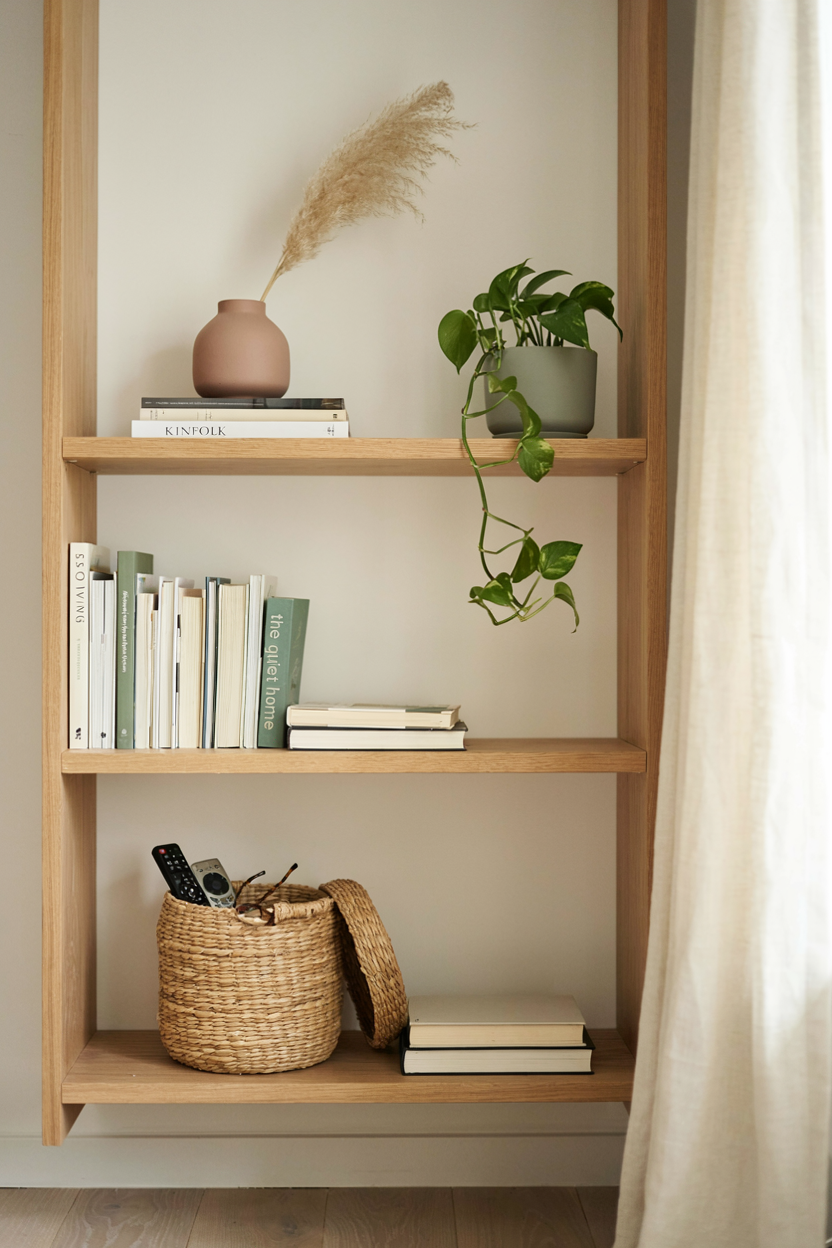
Not every shelf needs to showcase decorative objects, and woven baskets offer a practical solution among functional Bookshelf Styling Ideas. Using a basket to hide remote controls, chargers, or miscellaneous clutter keeps the bookcase looking polished while still providing a convenient storage spot for everyday items that don’t necessarily need to be on display for guests to see.
This method is especially useful for lower shelves within reach of children or pets, where breakable decorative objects might not be practical. Choosing a basket material, like seagrass or rattan, that complements the room’s existing textures keeps the storage solution from looking out of place. This idea proves that a curated bookshelf can still be highly functional for daily household needs.
12. Personal Photos in Small Frames

Adding personal photographs is one of the most meaningful Bookshelf Styling Ideas, transforming a purely decorative display into a space that also tells a family’s story. Tucking small framed photos among books, rather than dedicating an entire separate wall to them, integrates personal memories naturally into the everyday styling of the room without requiring extra wall space or hardware.
This approach works particularly well when photos are grouped by size or frame color to maintain visual cohesion with the rest of the shelf. Rotating photos periodically, especially to reflect new milestones or seasons, keeps the display feeling current and meaningful. This idea adds emotional warmth to a bookshelf that might otherwise feel purely decorative or impersonal.
13. Layered Textiles and Woven Baskets

Textiles aren’t limited to sofas and beds, and incorporating fabric into shelf styling is an underused technique among cozy Bookshelf Styling Ideas. A neatly folded throw blanket or small textile placed on a shelf adds softness and tactile contrast against the harder surfaces of books, wood, and ceramics, creating a more inviting, layered look throughout the overall display.
Pairing textiles with woven baskets reinforces a warm, natural texture story across the shelving unit. This idea works particularly well in living rooms or reading nooks where comfort is just as important as visual style. Choosing fabrics in colors that complement nearby book spines or decorative objects ties the layered textures together into one cohesive design.
14. Sculptural Objects as Focal Points
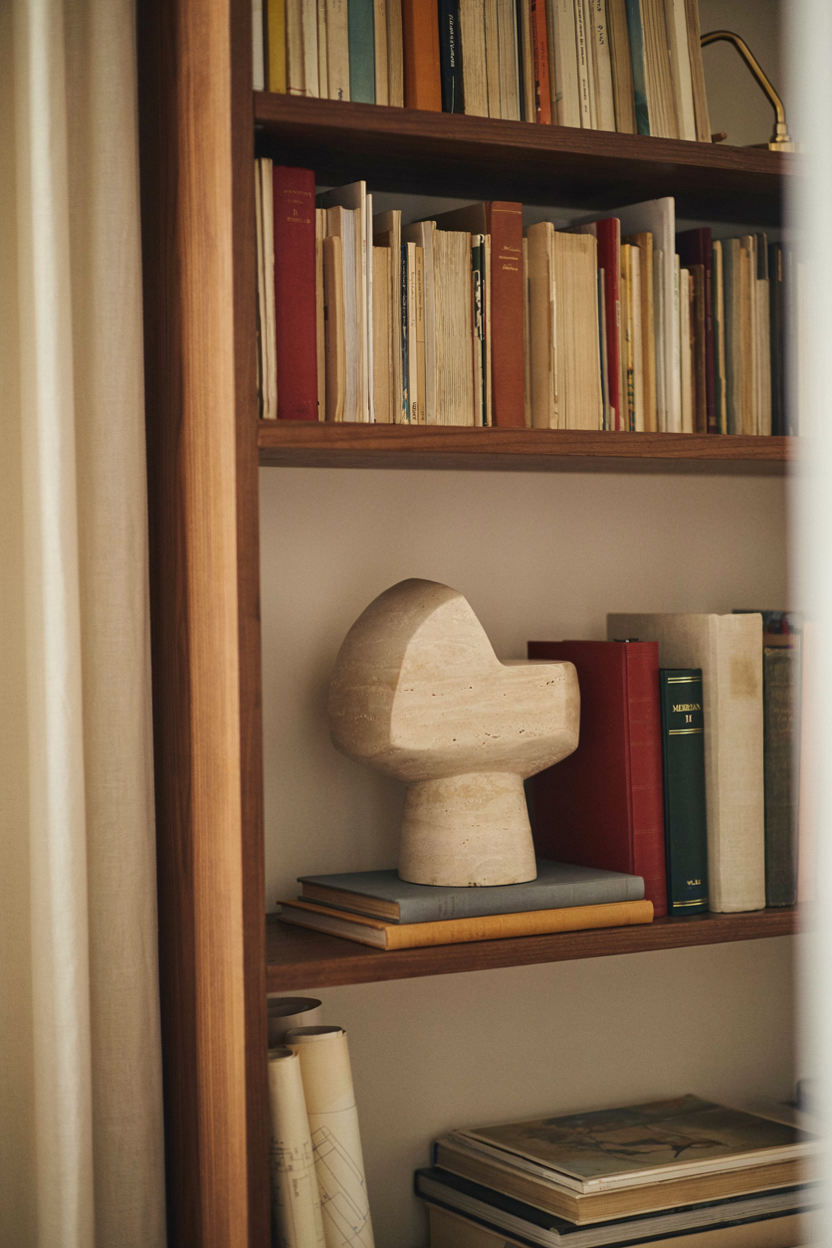
Sculptural objects add an artistic, gallery-like quality to shelving, making them a standout choice among elevated Bookshelf Styling Ideas. Placing a single striking sculpture, whether abstract or figurative, on a shelf with generous surrounding space draws attention and elevates the entire bookcase beyond simple storage, treating the shelf as a legitimate display surface for fine art and design objects.
This technique works best when the sculptural piece has enough negative space around it to stand out clearly, rather than being crowded by too many competing items. Choosing one or two focal sculptures per bookcase, rather than scattering several throughout, maintains a stronger visual impact. This idea suits design-forward, modern, or gallery-inspired interiors particularly well.
15. Mixing Vintage and Modern Decor
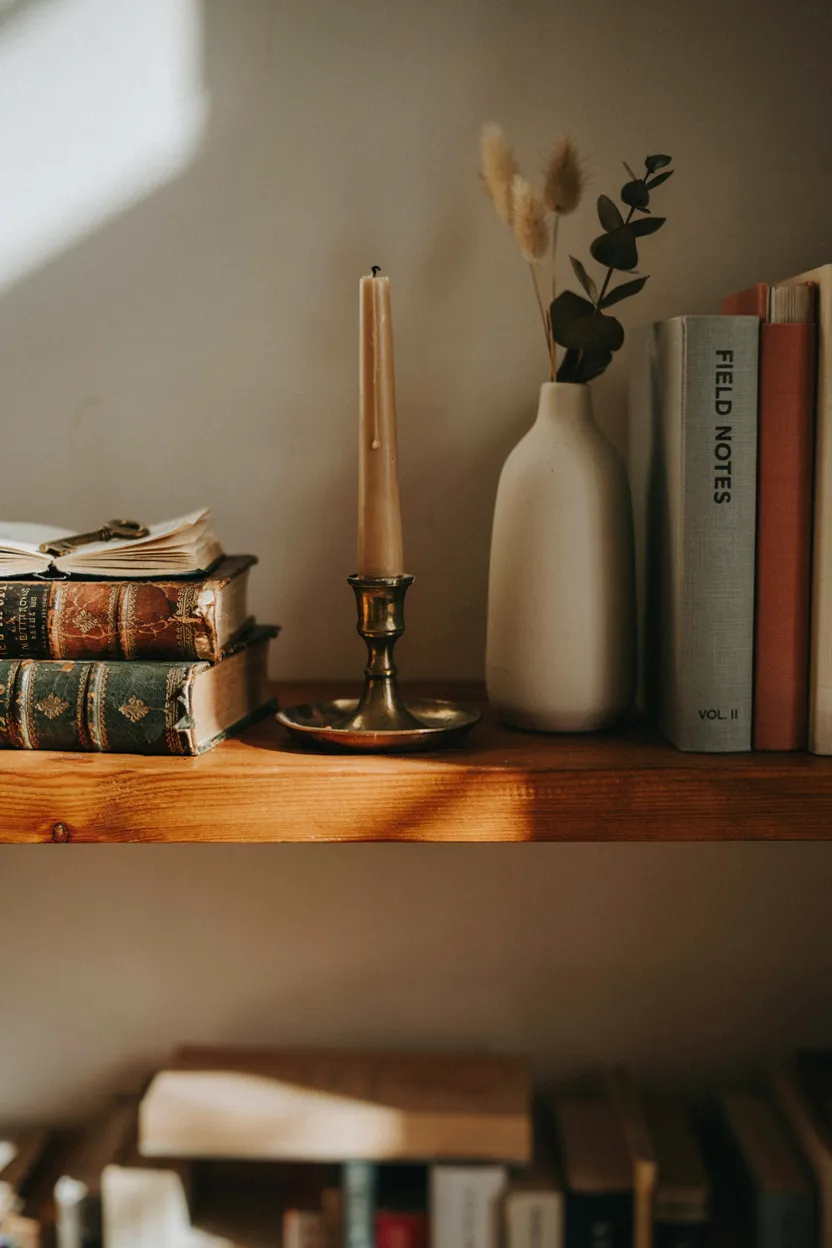
Blending vintage and modern pieces creates depth and storytelling, making this combination one of the more eclectic Bookshelf Styling Ideas for collectors and design enthusiasts. Pairing an antique brass candlestick with a sleek contemporary vase, or mixing old leather-bound books with newer releases, prevents the shelf from feeling like it came from a single matching furniture set, adding authentic character instead.
This approach works particularly well for those who inherit family heirlooms or enjoy thrifting unique finds over time, since it welcomes pieces from different eras naturally. Balancing the ratio of vintage to modern items keeps the overall look from leaning too heavily in either direction. This styling method results in a shelf that feels personally curated rather than store-bought.
16. Symmetrical Shelf Styling
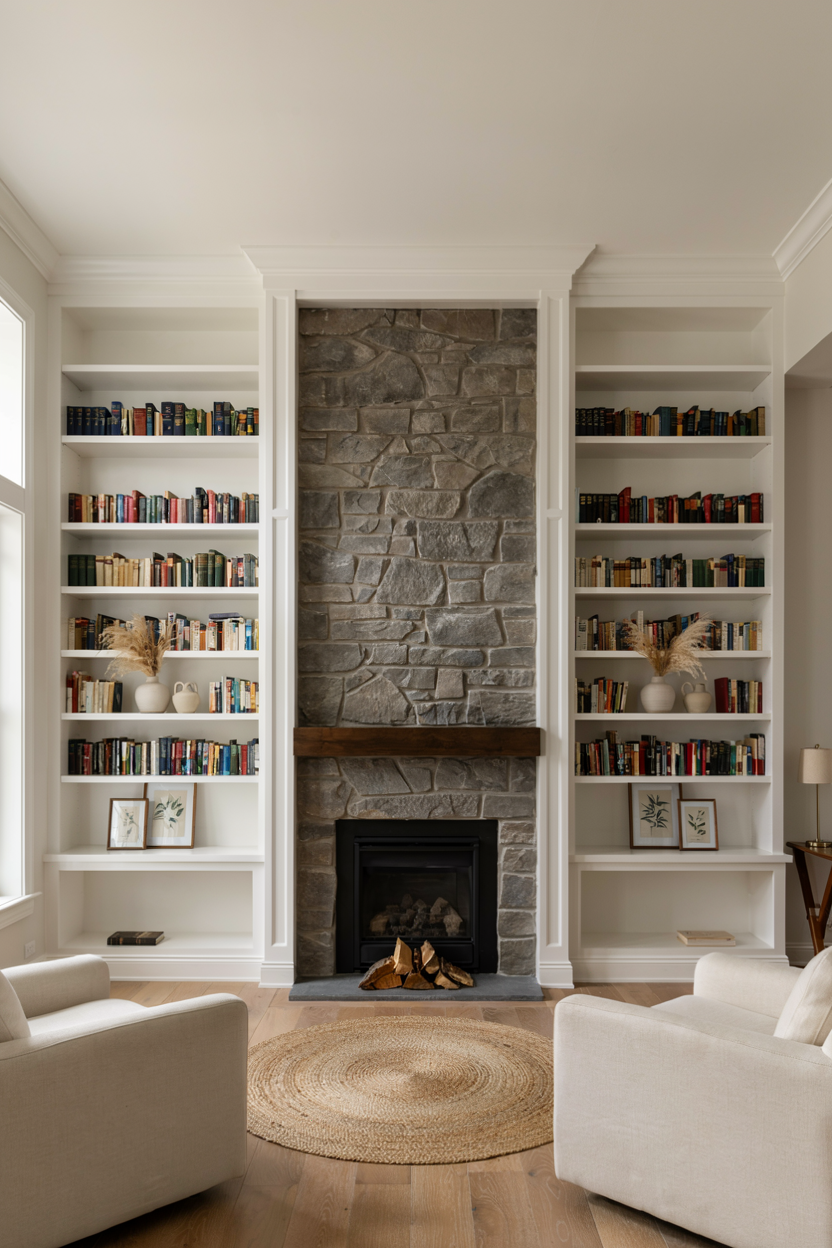
Symmetry offers a formal, polished approach among structured Bookshelf Styling Ideas, particularly suited to built-in shelving that flanks a fireplace or window. Mirroring the arrangement on both sides, using matching books, vases, and frames, creates an intentional, balanced look that feels grand and cohesive, often found in traditional or classically designed living rooms and libraries.
This method requires more planning than asymmetrical styling, since both sides need coordinating pieces in similar quantities and heights. However, the payoff is a highly polished, magazine-worthy result that photographs beautifully from a centered vantage point. This approach works particularly well in formal living rooms, home libraries, or dining rooms where a more traditional aesthetic is desired.
17. Asymmetrical Curated Clutter Look
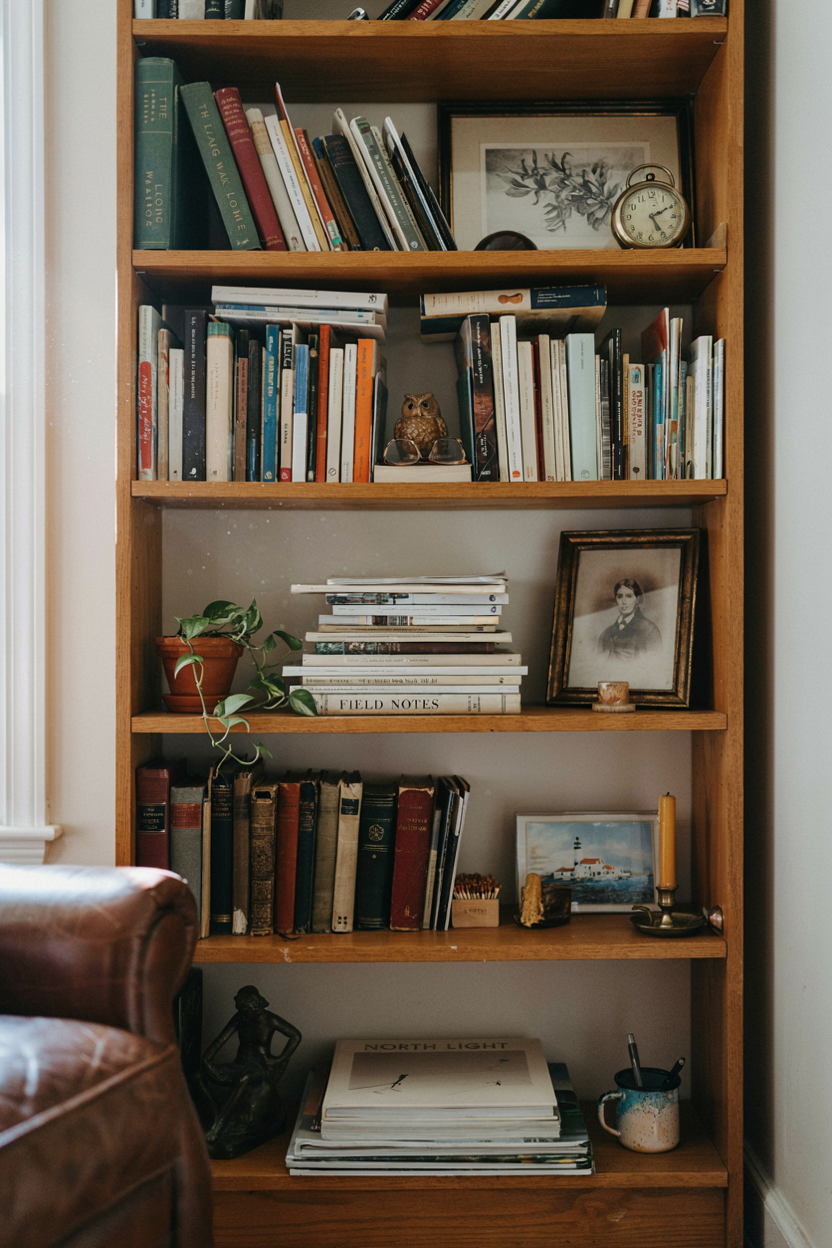
Embracing imperfection is at the heart of the curated clutter approach, one of the more relaxed and personal Bookshelf Styling Ideas available. Rather than forcing strict symmetry or precise spacing, this method allows books and objects to sit unevenly across shelves, mimicking the natural, organic look of a collection gathered slowly over years of travel, gifts, and personal interests.
While the look appears effortless, achieving a successful curated clutter arrangement actually requires thoughtful editing to avoid tipping into genuine disorganization. Grouping items loosely by theme or color, even within the asymmetry, helps maintain visual coherence. This style suits eclectic, bohemian, or maximalist interiors where personality and history are valued over strict formal order.
18. Rotating Seasonal Decor Accents

Keeping a shelf’s foundation consistent while rotating small seasonal accents is one of the most practical long-term Bookshelf Styling Ideas for maintaining a fresh look throughout the year. Establishing a base arrangement of books and a few permanent decorative objects allows small, inexpensive seasonal items, like mini pumpkins or holiday ornaments, to be swapped in and out without redesigning the entire shelf.
This approach saves time and money, since only a few small pieces need updating rather than an entire collection of decor. Storing seasonal accents in a labeled bin makes transitions between seasons quick and effortless whenever the mood strikes. This flexible styling system keeps a bookshelf feeling current and intentional no matter the time of year.
Conclusion
A well-styled bookshelf doesn’t require a complete overhaul, just a few thoughtful adjustments to what you already own. With these 18 Bookshelf Styling Ideas, you have plenty of ways to transform stacks of books into a curated, magazine-worthy display. Start with a base technique, like grouping by height or color, then layer in personal touches and seasonal accents over time. The result is a shelf that reflects your style while still staying functional.

Join The Discussion