
Introduction
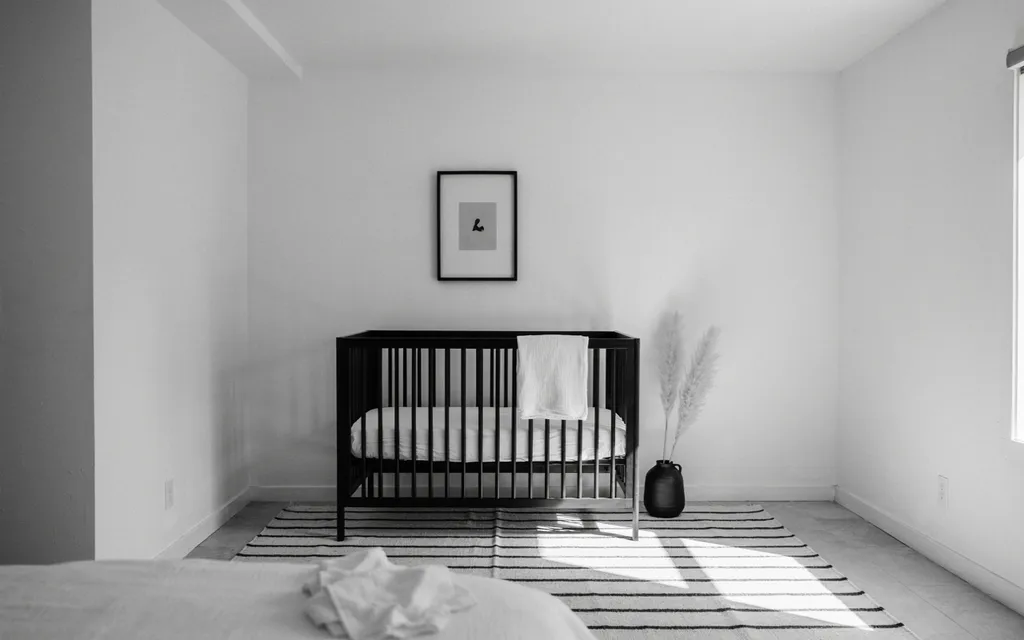
A minimalist nursery is about more than just an empty room — it’s about creating a calm, functional space by choosing only the pieces that truly matter. From all-white foundations and soft neutral tones to hidden storage and multi-functional furniture, minimalist design strips away clutter without sacrificing warmth or comfort. These 20 minimalist nursery ideas show how restraint can still feel welcoming, whether you’re drawn to Scandinavian simplicity, a single bold accent, or a fully monochromatic palette. Find the approach that fits your space and start building a peaceful room for your baby.
1. All-White Minimalist Nursery Foundation
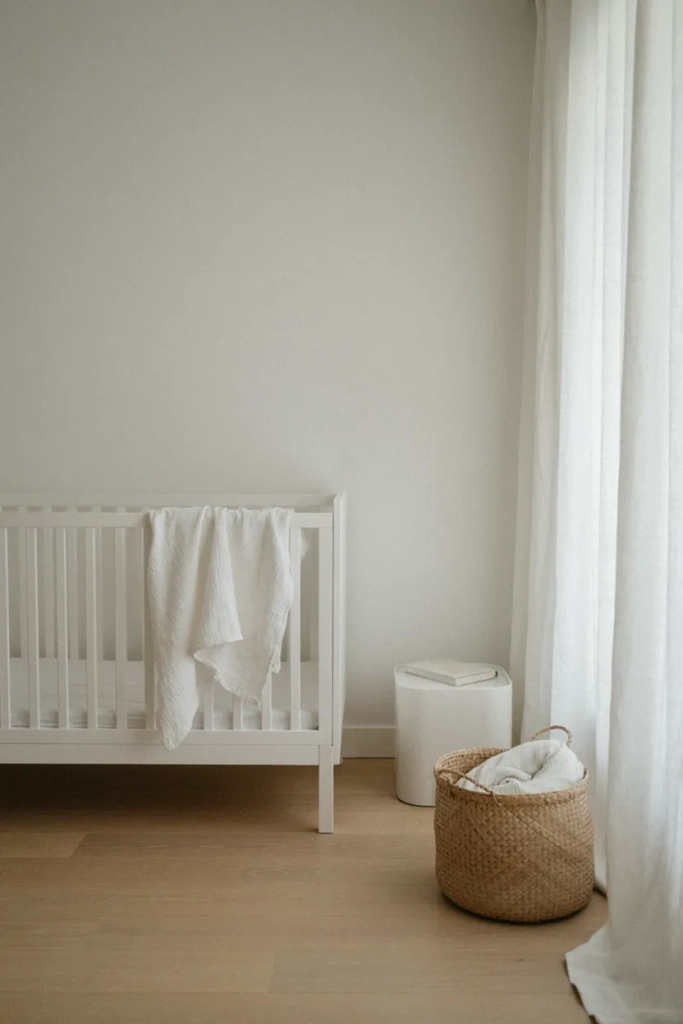
An all-white foundation is the purest expression of minimalist nursery design, relying entirely on texture and light rather than color or pattern to create visual interest. The simple white crib becomes the room’s natural focal point without competing against busy wallpaper or bold accent walls.
Light oak flooring adds warmth to keep the space from feeling cold or clinical. A single woven basket handles storage needs without introducing visual clutter. This approach works especially well in small nurseries, since the lack of contrast makes the room feel more open and airy overall.
2. Neutral Beige and Cream Minimalist Nursery
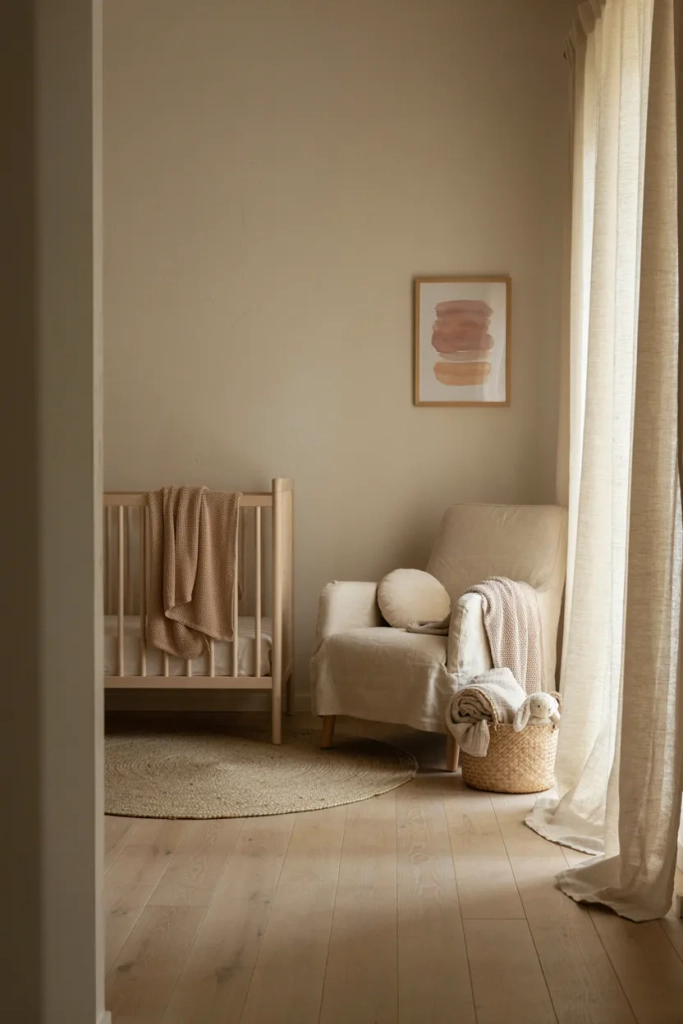
Beige and cream tones create a warmer alternative to a stark white minimalist nursery while still keeping the overall palette quiet and restrained. Every piece in the room stays within the same muted color family, which keeps the eye moving smoothly without any single element demanding attention.
A natural linen glider chair adds texture without introducing pattern, and a single framed print offers just enough visual interest to keep the wall from feeling empty. This style suits parents who want a soft, cozy feel without abandoning the core minimalist principle of restraint.
3. Minimalist Nursery with Hidden Storage Only
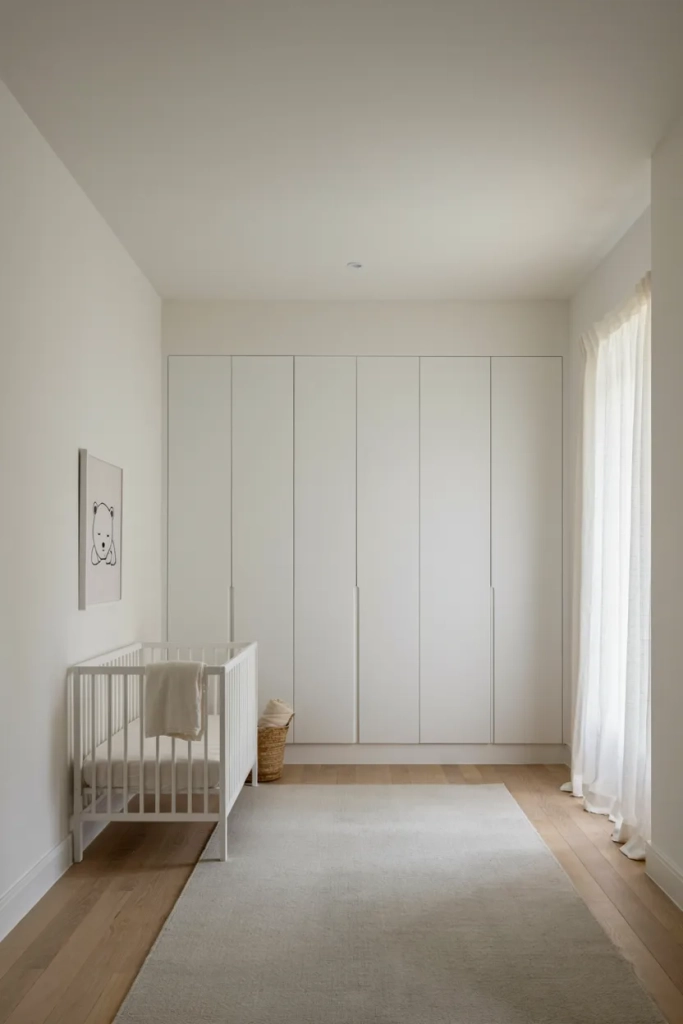
Concealing all storage behind built-in cabinetry is one of the most effective ways to maintain a truly minimalist nursery. Everything from diapers to clothing to toys stays completely out of sight, allowing the room to remain visually calm no matter how much is actually stored inside.
A simple white crib and plain walls keep the rest of the space equally restrained. A light gray rug adds just enough texture underfoot without introducing pattern. This approach suits parents who want maximum function without sacrificing the clean, uncluttered look that defines minimalist design.
4. Scandinavian-Inspired Minimalist Nursery
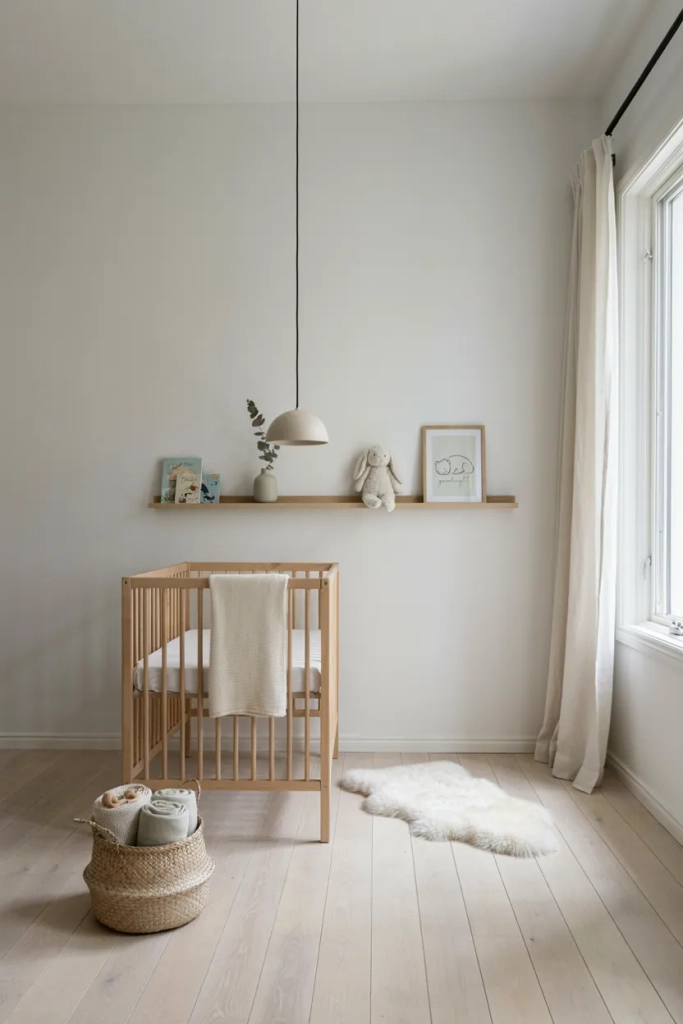
Scandinavian design principles pair naturally with minimalist nursery goals, emphasizing light wood tones, functional furniture, and an abundance of natural light. The simple pendant light overhead avoids any unnecessary ornamentation while still providing a warm, functional glow for evening routines.
A sheepskin throw draped over the crib rail adds a soft, tactile layer without introducing color or pattern. Pale wood flooring ties the room together in a cohesive, natural palette. This style suits parents drawn to Nordic design who want their nursery to feel bright, calm, and clutter-free.
5. Minimalist Nursery with a Single Statement Piece
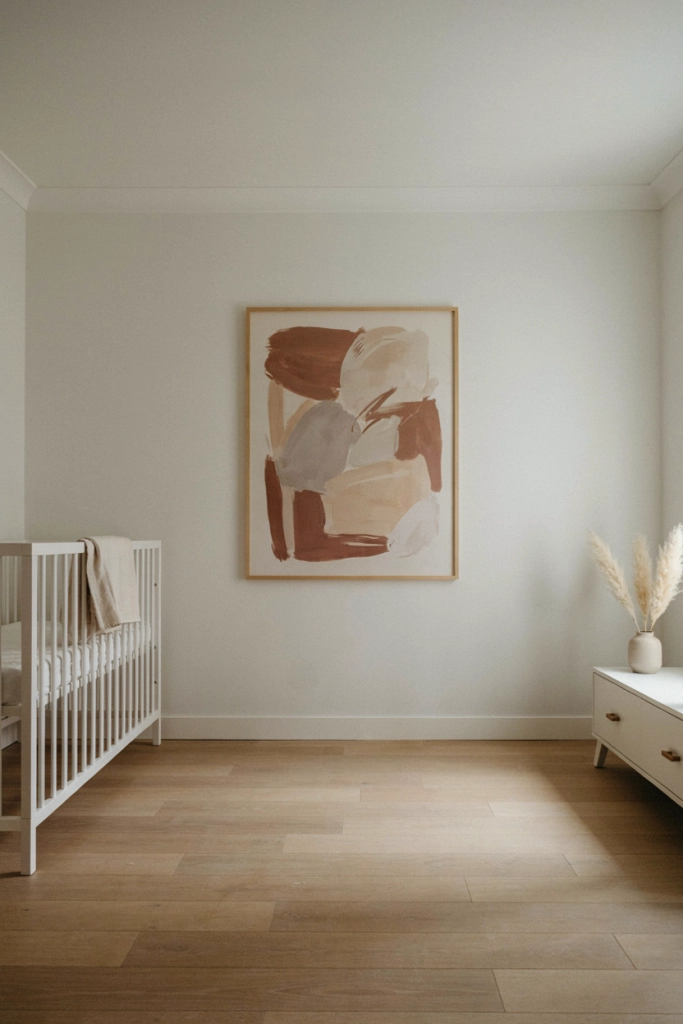
Choosing just one statement piece and building the rest of the room around it is a core minimalist design strategy. An oversized abstract print becomes the clear focal point, allowing every other element in the room to stay simple and unobtrusive in support of that single feature.
A plain white crib and small dresser cover the room’s essential functions without adding visual noise. Light flooring keeps the space feeling open and bright. This approach suits parents who appreciate bold design choices but want to limit that boldness to a single, well-chosen element.
6. Minimalist Nursery with Muted Sage Accents
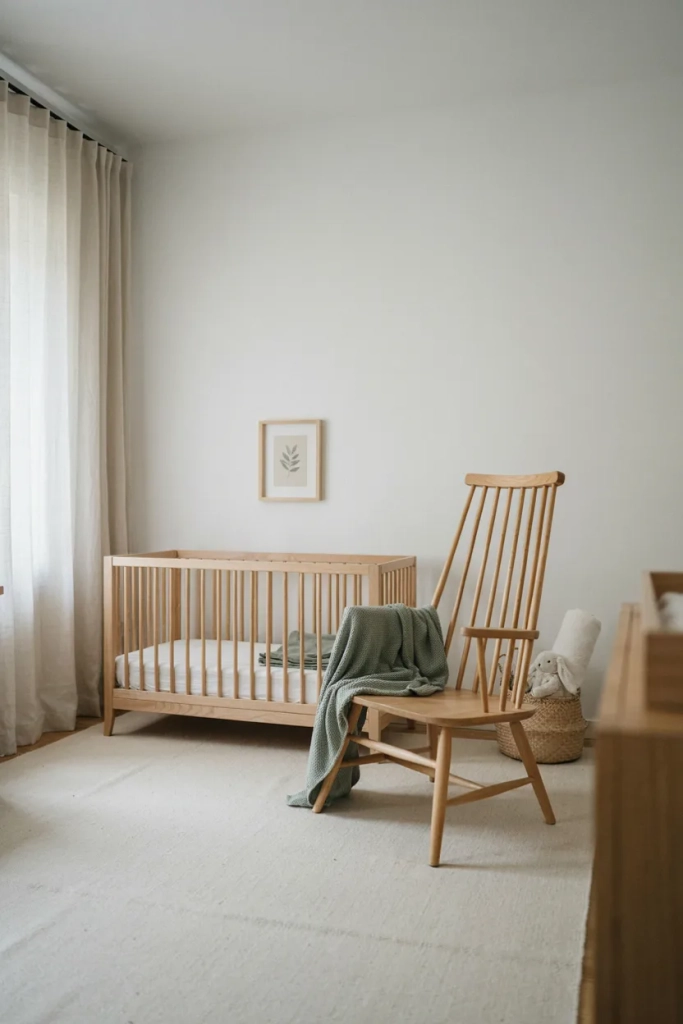
Introducing one muted accent color, like soft sage green, gives a minimalist nursery just enough personality without breaking from the overall restrained aesthetic. Limiting the color to a single throw blanket or small accessory keeps the palette feeling intentional rather than scattered across multiple competing elements.
A natural wood crib and cream rug support the sage accent without adding any additional pattern or texture. This approach works well for parents who find pure white nurseries too stark but still want to follow minimalist principles closely, using color sparingly rather than abandoning restraint altogether.
7. Minimalist Nursery with Floating Shelves Only
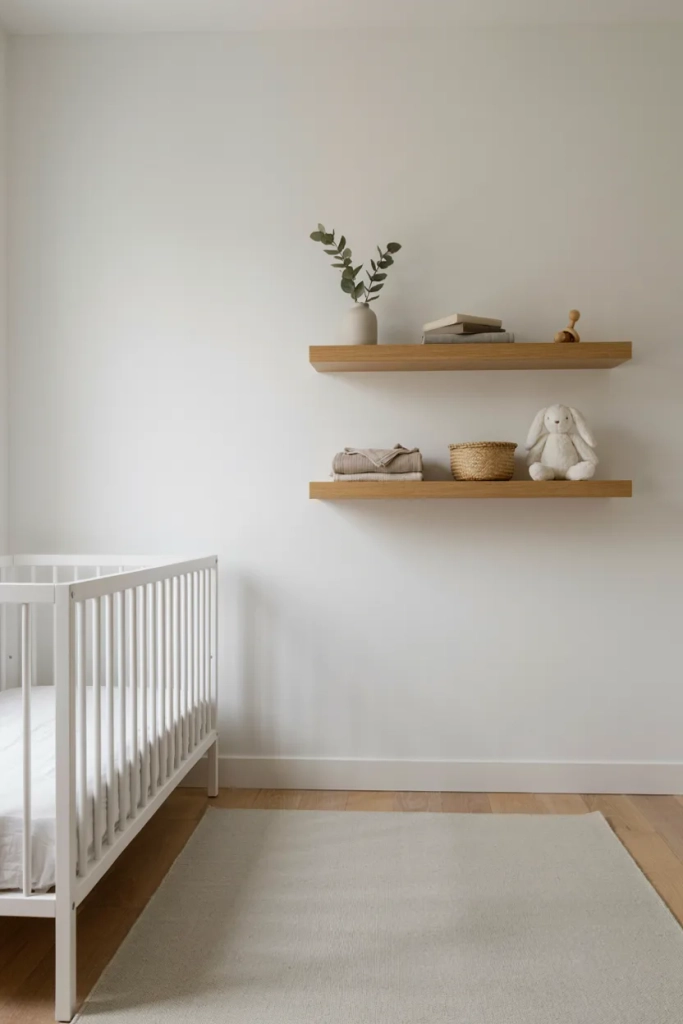
Floating shelves allow for just enough functional display space without the visual weight of a full bookshelf or dresser. Limiting the items displayed to a small, curated handful, rather than filling every inch of shelf space, keeps the room feeling deliberately edited rather than sparse or unfinished.
A plain white crib and light gray rug round out the room’s essential elements. This approach suits smaller nurseries where floor space is limited, since floating shelves add storage without requiring additional footprint. It’s an especially strong choice for parents who value negative space as much as function.
8. Minimalist Nursery in Soft Gray Tones
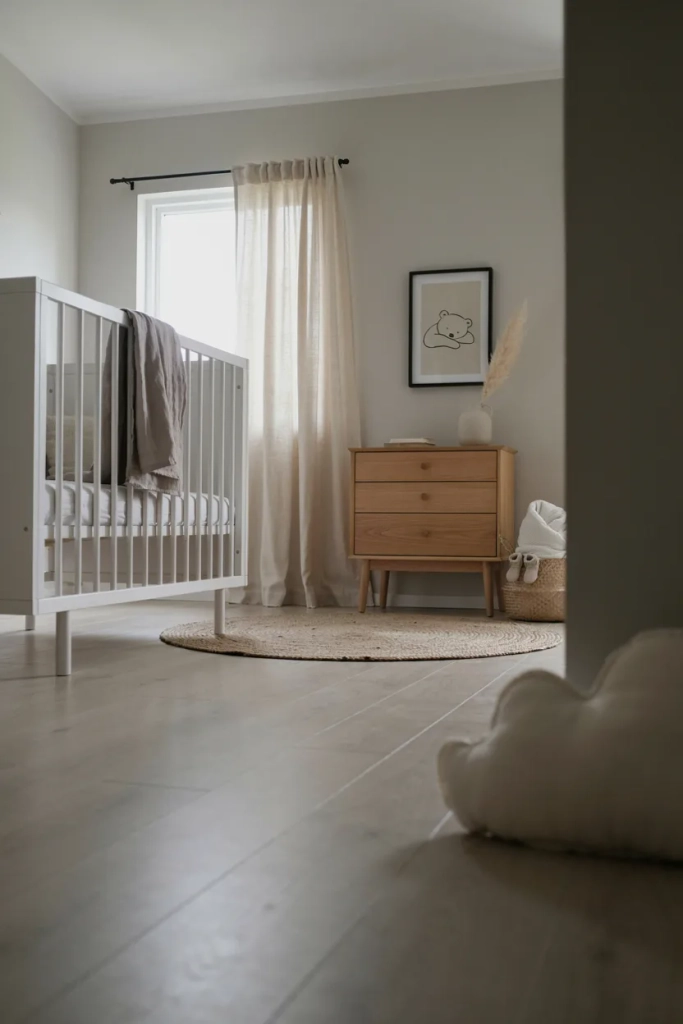
Soft gray walls offer a slightly moodier alternative to an all-white minimalist nursery while still maintaining the same quiet, low-contrast philosophy. Pairing gray with white and light wood tones keeps the room feeling calm and cohesive without introducing any bold color or pattern.
A single round rug adds a soft visual anchor to the room without competing with the walls or furniture. Plain linen curtains filter natural light gently throughout the day. This palette suits parents who want a nursery with subtle depth and dimension while still adhering closely to minimalist principles.
9. Minimalist Nursery with No Wall Decor
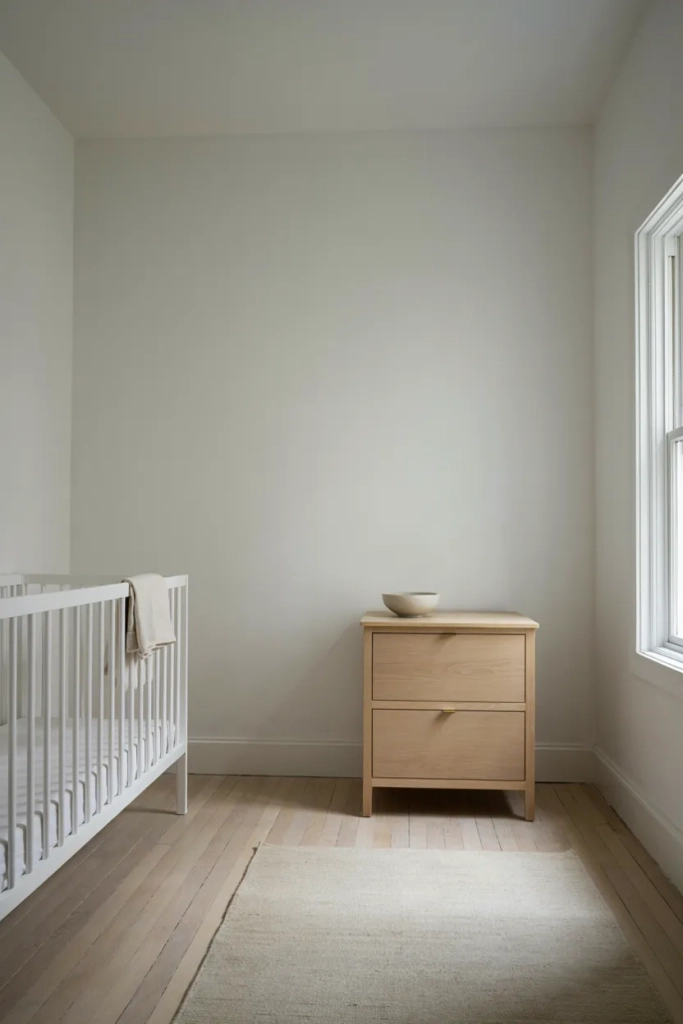
Leaving walls entirely bare is the most extreme expression of minimalist nursery design, relying on negative space itself as the primary design statement. This approach requires confidence in the room’s proportions and lighting, since there’s nothing to distract from the architecture of the space itself.
A simple crib and small dresser handle the room’s essential functions without introducing any additional visual elements. Natural light becomes especially important in this design, since there’s no artwork or pattern to add warmth or interest. This style suits parents who find true calm in visual simplicity.
10. Minimalist Nursery with Woven Texture Focus
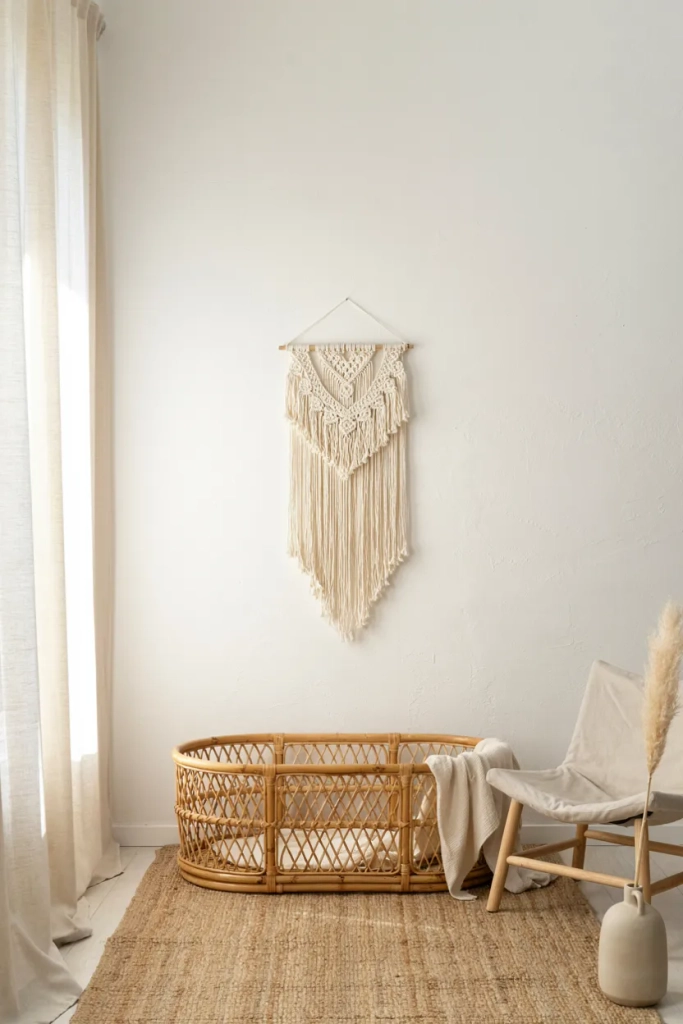
Relying on woven natural textures instead of color or pattern is an effective way to add warmth to a minimalist nursery without breaking from the style’s core restraint. A rattan bassinet and jute rug bring tactile interest through material rather than visual noise, keeping the palette entirely neutral.
A single woven wall hanging adds just enough decorative detail to keep the walls from feeling completely bare. A linen glider chair continues the natural material theme throughout the room. This approach suits parents who want texture and warmth without introducing any actual color into the space.
11. Minimalist Nursery with Low-Profile Furniture
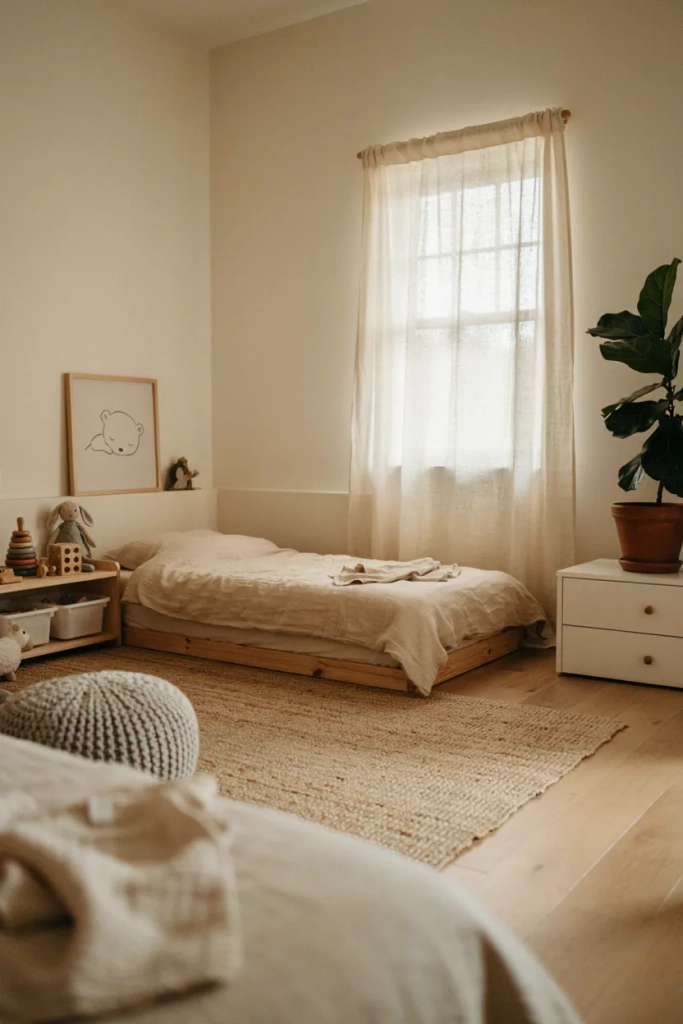
Choosing low-profile furniture, including a floor bed instead of a traditional raised crib, creates an especially open and grounded feeling within a minimalist nursery. This layout draws inspiration from Montessori principles, prioritizing simplicity and a low visual footprint throughout the entire room.
A simple woven rug adds texture at floor level without requiring additional furniture pieces. Keeping every element close to the ground emphasizes open space and natural light. This style suits parents interested in both minimalist design and child-led developmental philosophies within the same nursery layout.
12. Minimalist Nursery with Black and White Contrast
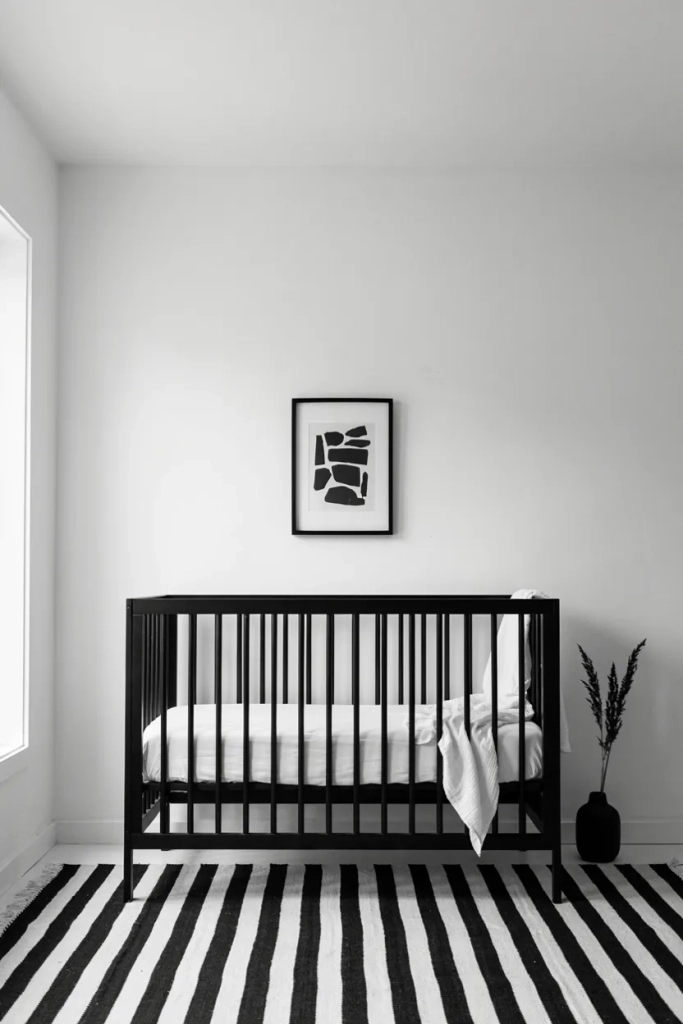
A strict black and white palette proves that minimalist design doesn’t have to mean an absence of visual interest. Limiting the room to just two tones creates strong, deliberate contrast while still adhering to minimalist principles of restraint, since no additional colors are introduced anywhere in the space.
A single black-framed print reinforces the palette without adding clutter. The striped rug ties the black and white theme together at floor level. This style suits parents who want a bold, modern nursery that still feels calm and uncluttered, favoring contrast over color complexity.
13. Minimalist Nursery with Curved Furniture Silhouettes
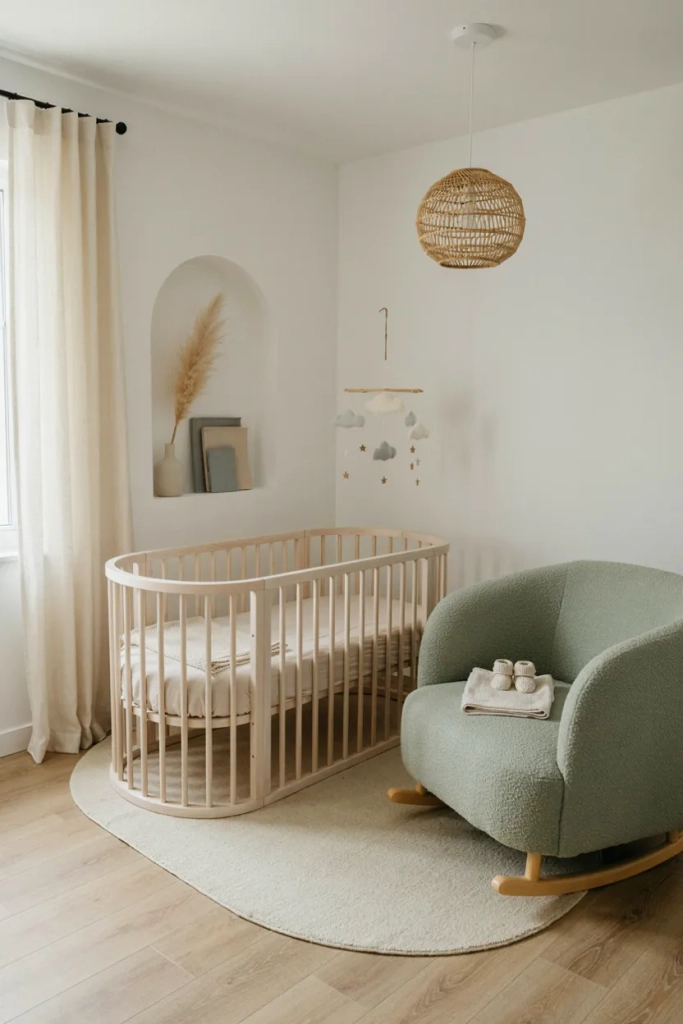
Choosing furniture with soft, curved silhouettes adds a gentle visual interest to a minimalist nursery without requiring any color or pattern. An oval crib and curved glider chair create a softer, more organic feeling than traditional boxy furniture, while still keeping the overall palette restrained and neutral.
Cream walls and a plain rug support the curved furniture without introducing competing shapes or textures. This approach suits parents who want their minimalist nursery to feel soft and welcoming rather than sharp or clinical, using shape rather than decoration to create warmth throughout the room.
14. Minimalist Nursery with Warm Terracotta Accent
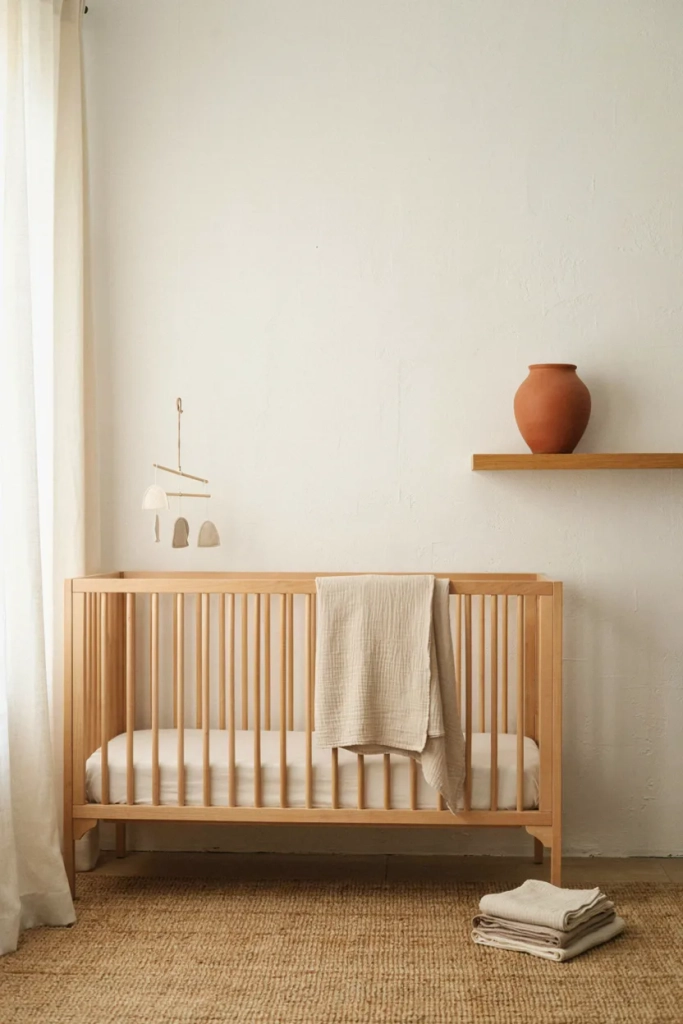
A single terracotta accent brings warmth into an otherwise neutral minimalist nursery without overwhelming the overall restrained palette. Using the color sparingly, in just one ceramic vase or small textile piece, keeps the room feeling intentional and edited rather than colorful throughout.
A natural wood crib and woven rug support the terracotta tone with complementary earthy textures. White walls keep the rest of the room feeling calm and open. This style suits parents who want their minimalist nursery to feel warm and grounded rather than cold or overly stark.
15. Minimalist Nursery with Concealed Changing Station
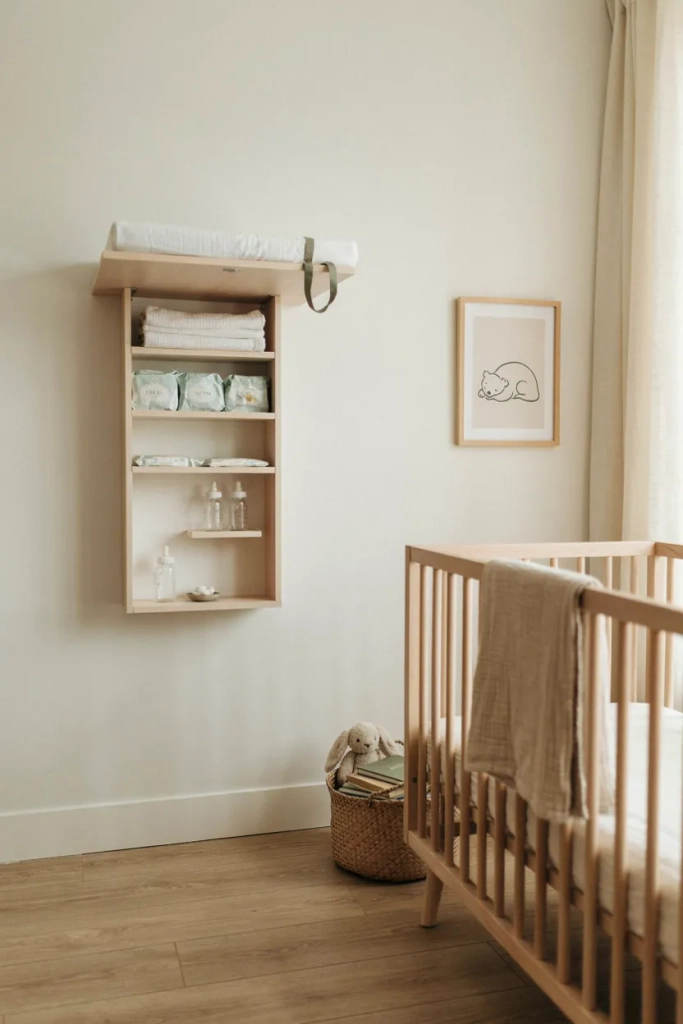
A fold-away changing station keeps one of the busiest, most cluttered nursery zones completely hidden when not actively in use. This approach maintains the room’s minimalist look at all times, rather than only when the changing table happens to be tidy, which matters greatly with a newborn.
A simple crib and light wood flooring round out the room’s essential elements without adding visual competition. White walls keep the space feeling bright and open throughout the day. This idea suits parents who want maximum function from a small nursery footprint without sacrificing visual calm.
16. Minimalist Nursery with Single Accent Wall
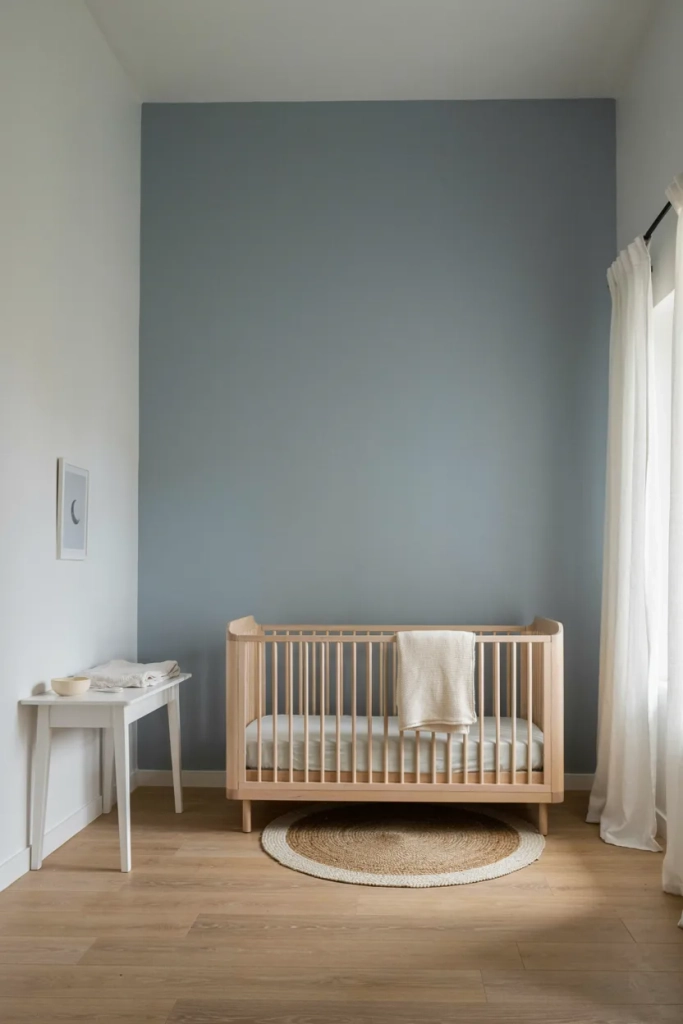
A single accent wall behind the crib offers just enough visual interest to define the room without requiring a full color scheme throughout. Choosing a soft, muted tone like blue-gray keeps the accent subtle rather than bold, maintaining the overall calm atmosphere that defines minimalist nursery design.
A light wood crib and simple round rug support the accent wall without competing for attention. Leaving the remaining walls plain white keeps the room feeling spacious and uncluttered. This approach suits parents who want a hint of color without fully committing to a saturated palette throughout the space.
17. Minimalist Nursery with Capsule Wardrobe Storage
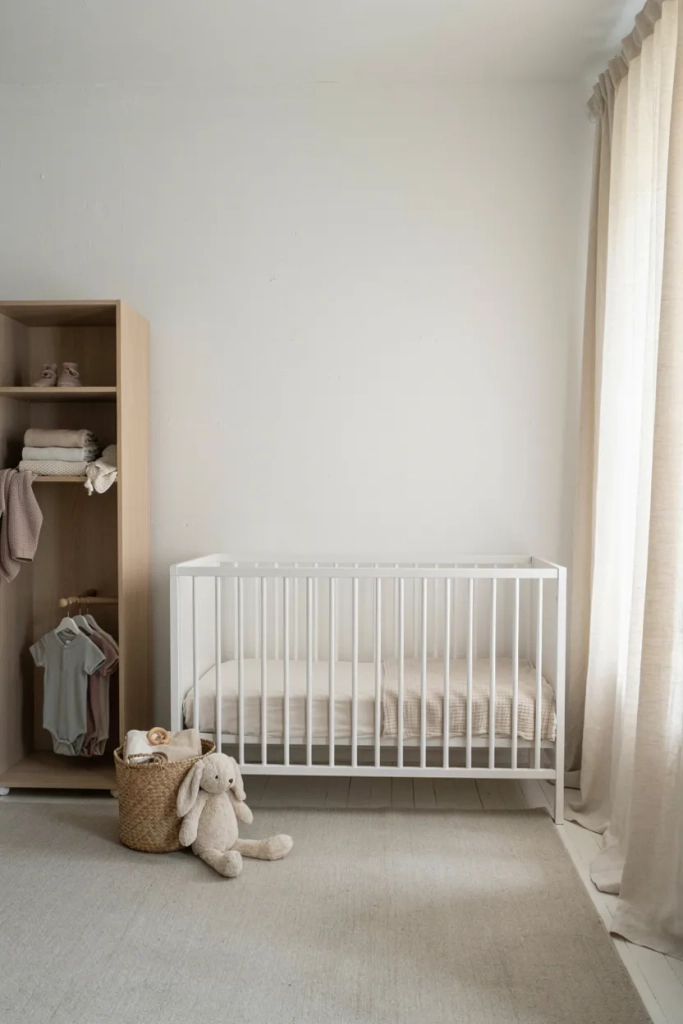
Keeping a deliberately limited, curated capsule wardrobe rather than an overflowing collection of baby clothes supports the minimalist nursery’s broader goals well beyond just visual style. A small open wardrobe with only essential pieces stays tidy without effort, since there simply isn’t excess clutter to manage.
A plain crib and light gray rug complete the room’s essential furniture without adding visual noise. White walls keep the space feeling bright and calm throughout the day. This approach suits parents who want their minimalist philosophy to extend into daily routines, not just the room’s overall appearance.
18. Minimalist Nursery with Natural Light as Design Feature
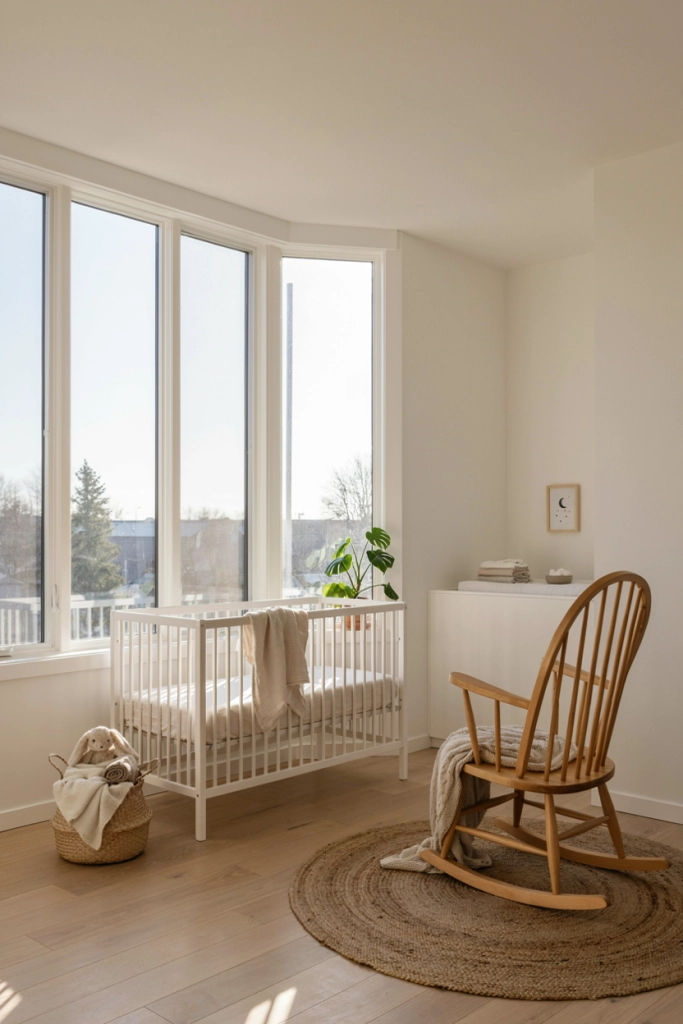
Treating natural light itself as the room’s main design feature is a distinctly minimalist approach, prioritizing function and atmosphere over decorative elements. Leaving windows uncovered, or dressed only in the sheerest possible curtains, allows sunlight to fill the room fully throughout the day without obstruction.
A simple crib positioned to catch morning light becomes the room’s natural focal point. Minimal furniture arrangement ensures nothing blocks the windows or interrupts the flow of light. This style suits nurseries with strong natural light access and parents who prioritize brightness over layered decor.
19. Minimalist Nursery with Matching Tonal Palette
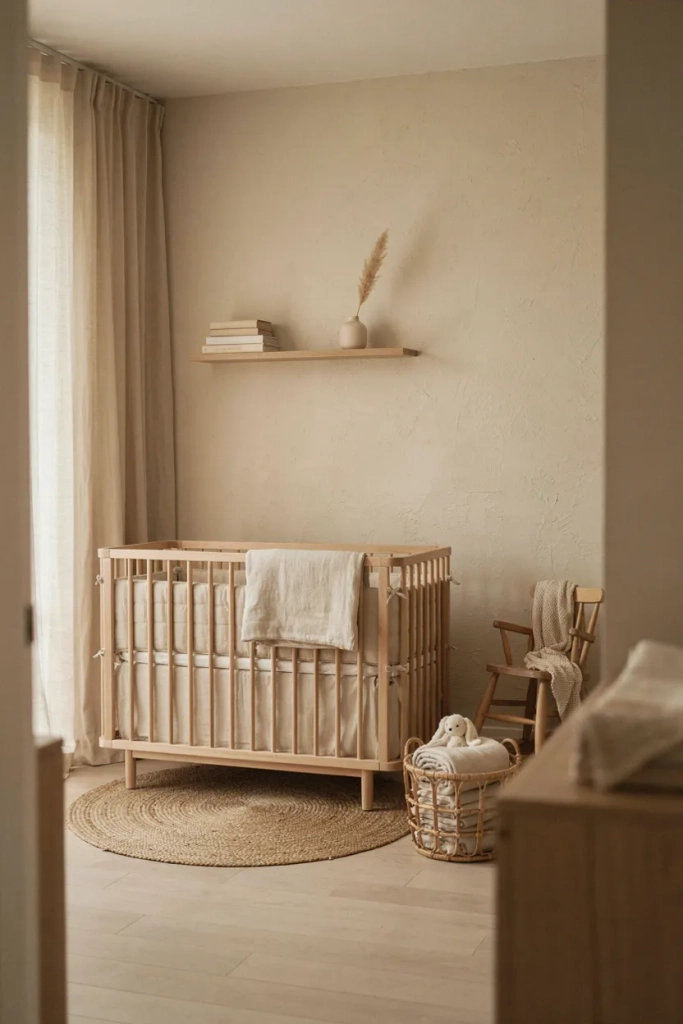
Building an entire nursery around a single tonal color family, rather than mixing multiple neutral shades, creates an especially cohesive and calming minimalist look. Choosing one soft oatmeal tone for walls, bedding, rug, and curtains alike eliminates any visual competition between different elements in the room.
This approach requires careful sourcing to find matching tones across different materials and finishes, but the payoff is a nursery that feels deeply intentional and serene. A simple white crib provides just enough contrast to keep the room from feeling flat. This style suits detail-oriented parents who enjoy careful color curation.
20. Minimalist Nursery with Multi-Functional Furniture Only
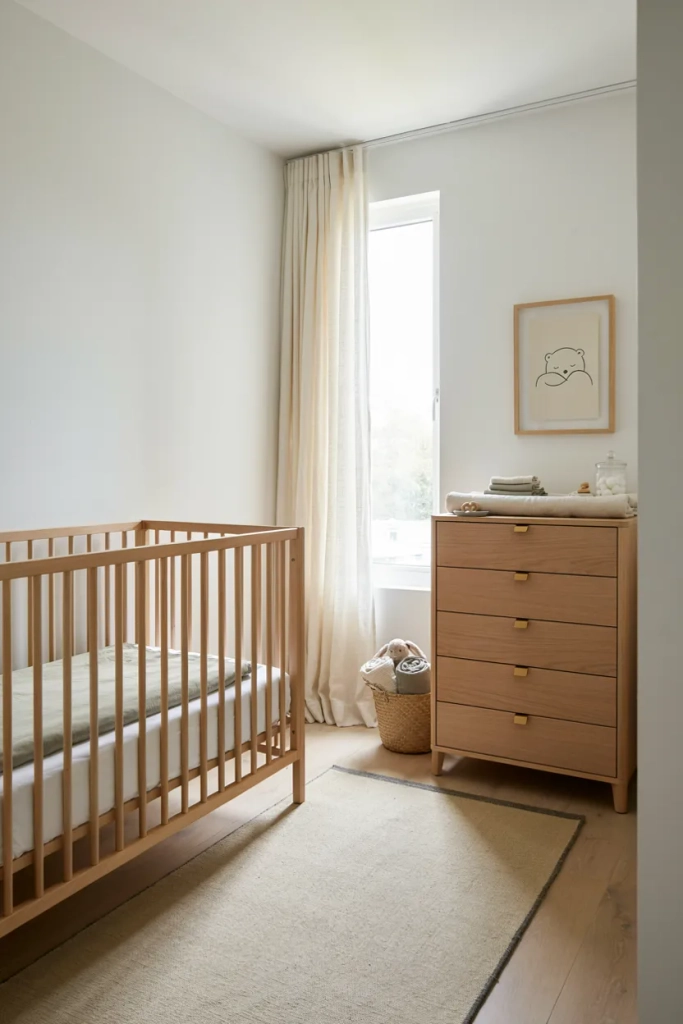
Choosing only multi-functional furniture pieces, like a convertible crib and a dresser that doubles as a changing table, reduces the total number of items needed in the nursery while still covering every practical function. This strategy supports minimalist design goals well beyond initial setup, extending usefulness for years.
White walls and a simple rug keep the room feeling calm and uncluttered around the functional furniture pieces. This approach suits parents who want their minimalist nursery to remain practical and cost-effective over time, avoiding the need to purchase and later remove single-purpose items as the baby grows.
Conclusion
A minimalist nursery proves that less truly can be more, creating a calm and functional space by focusing only on what’s essential. Whether you choose an all-white foundation, a soft neutral palette, or one well-placed accent color, each of these 20 ideas shows how simplicity can still feel warm and inviting. Pick the elements that suit your own space and lifestyle, and you’ll create a nursery that feels peaceful, uncluttered, and easy to live with.

Join The Discussion