
Introduction
The golden ratio, nature’s perfect 1.618:1 proportion, creates visually stunning front yard layouts that feel balanced and inviting. This mathematical principle has guided artists and architects for centuries, and now you can apply it to transform your outdoor space. These 21 front yard layouts demonstrate how the golden ratio creates harmonious designs that boost curb appeal and property value while making your home the neighborhood showpiece.
1. Spiraling Pathway Garden Design
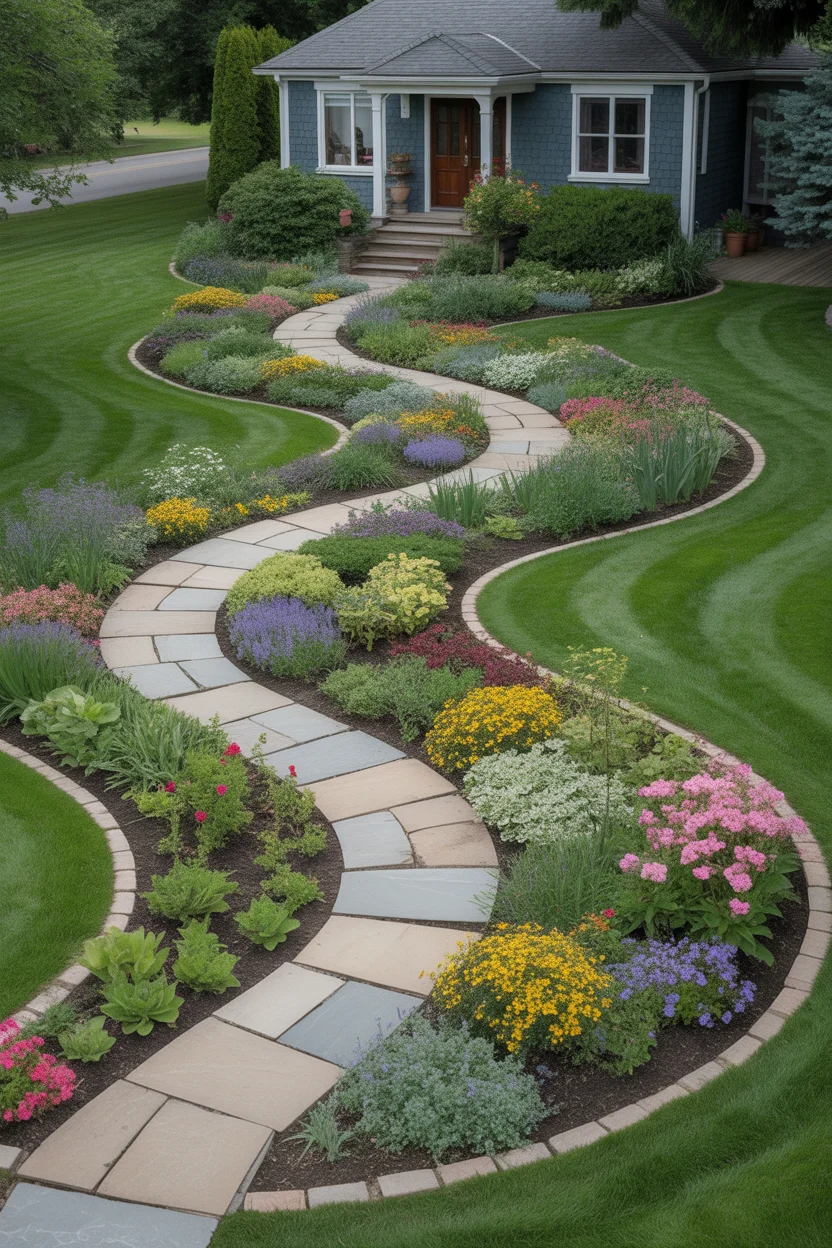
This spiraling pathway design uses the golden ratio’s famous spiral pattern to create an enchanting journey to your front entrance. The curved walkway follows the mathematical proportion, starting narrow near the street and widening as it approaches your door. Plant beds mirror this spiral with decreasing proportions, creating visual rhythm that guides visitors naturally toward your home. The asymmetrical balance feels organic yet intentional, making your front yard memorable and distinctive.
The graduated planting heights follow the 1.618 ratio, with tallest shrubs at the spiral’s origin and progressively shorter plants along the curve. This creates depth and dimension that makes even small front yards appear more spacious. Ground covers, medium perennials, and accent shrubs are positioned using golden ratio measurements, ensuring each element complements the others. The result is a front yard layout that photographs beautifully and creates lasting impressions on everyone who visits.
2. Divided Symmetrical Entrance
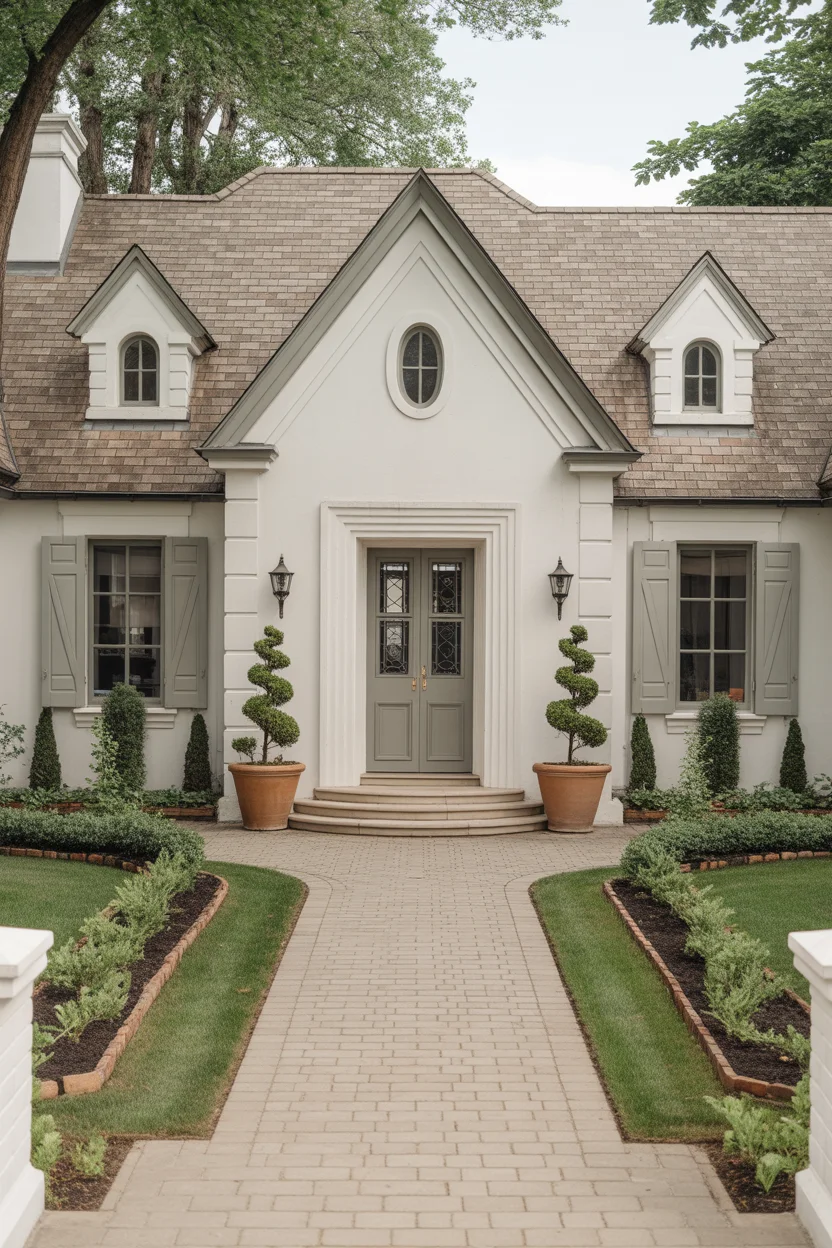
This classical approach divides your front yard into two sections using the golden ratio rather than splitting it exactly in half. The larger section (approximately 62%) features the main walkway and primary plantings, while the smaller portion (38%) showcases complementary landscape elements. This proportional division creates more visual interest than traditional symmetry, making your front yard layouts appear more sophisticated and professionally designed. The mathematical precision provides structure while maintaining organic appeal.
The symmetrical plantings on each side follow golden ratio spacing, with the distance between elements creating pleasing visual rhythms. Matching foundation shrubs, ornamental trees, and seasonal flowers are positioned to emphasize the proportional division without making it obvious. This subtle application of mathematical principles results in a front yard that feels “just right” even when viewers can’t explain why. The balanced yet dynamic composition works beautifully for traditional, colonial, and formal home styles.
view morehttps://dreamgardenspk.com/blog/
3. Layered Terraced Slopes
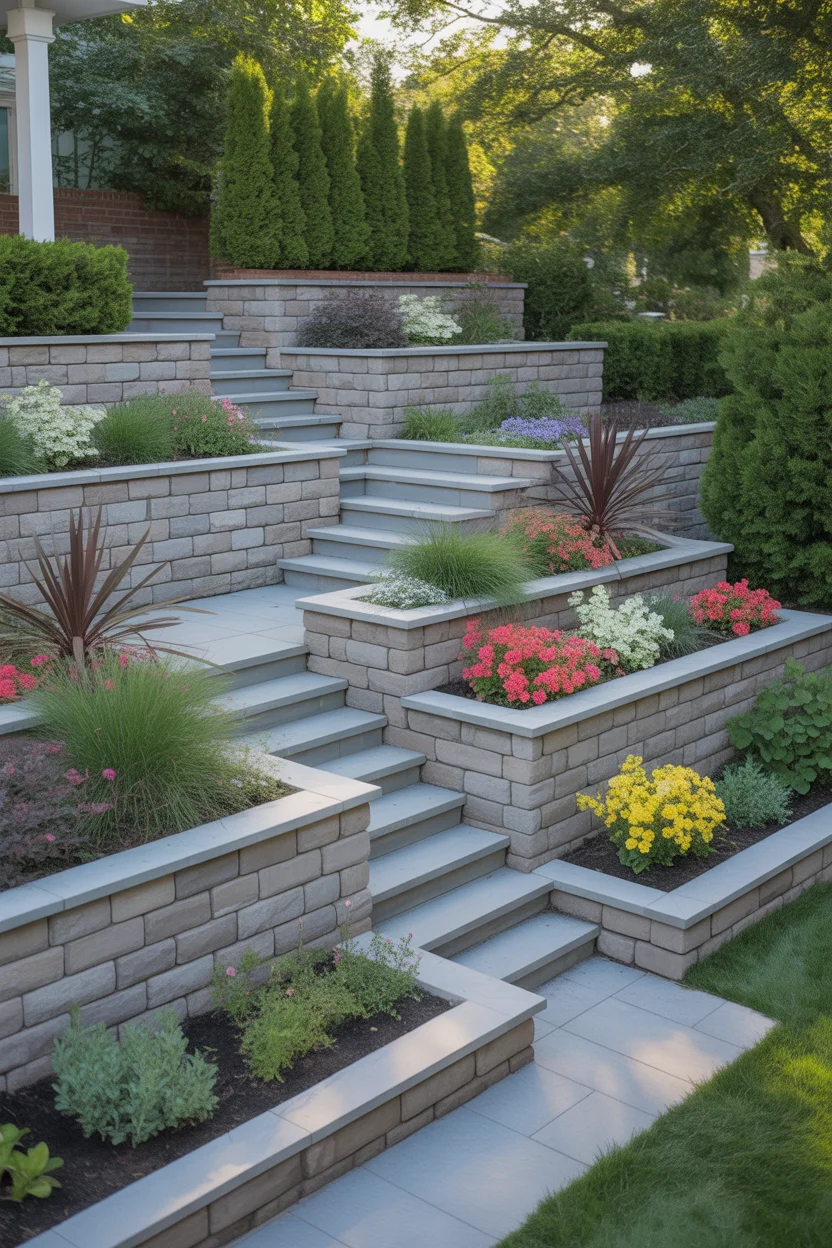
Sloped front yards present unique challenges that the golden ratio solves elegantly through terraced layering. Each terrace level’s height relates to the next using the 1.618 proportion, creating a cascading effect that feels natural rather than constructed. The depth of each planting bed also follows this ratio, with the lowest terrace being the deepest and each successive level becoming proportionally shallower. This mathematical approach to front yard layouts transforms challenging terrain into your home’s most striking feature.
The plant selection for terraced designs should also embrace golden ratio principles, with bloom sizes, foliage textures, and color intensities varying proportionally from level to level. Cascading plants on upper terraces and upright specimens on lower levels create visual flow that guides the eye from street to entrance. The proportional variation in retaining wall materials, whether stone, timber, or brick, adds textural interest while maintaining cohesive design. This layout maximizes planting space on slopes while preventing erosion and creating exceptional curb appeal.
4. Focal Point Feature Tree Placement
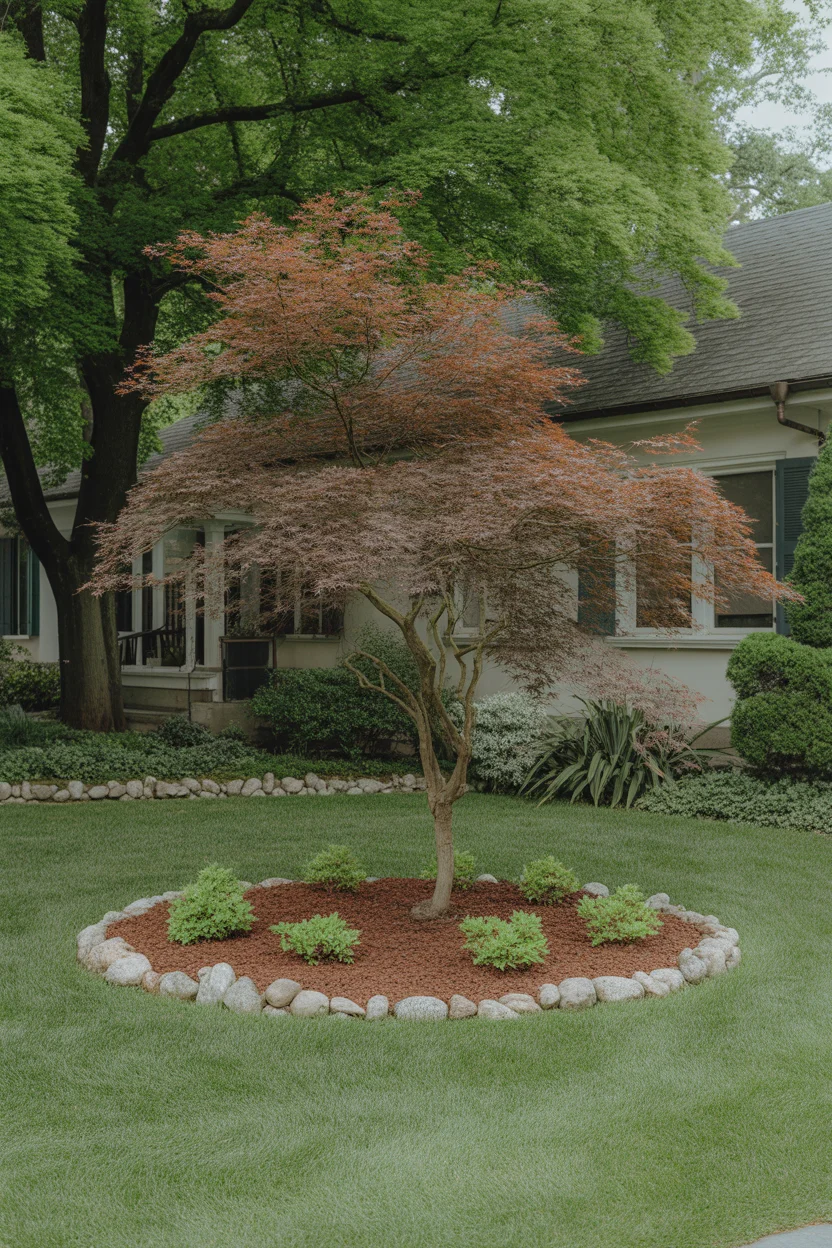
Positioning a feature tree at your front yard’s golden ratio point creates an automatic focal element that balances the entire landscape. Measure your yard’s width and place the tree at approximately 62% from one side rather than dead center. This off-center placement feels more natural and allows for asymmetrical balance in your front yard layouts. The tree becomes an anchor point around which all other design elements orbit, creating cohesive composition that guides the viewer’s eye throughout the space.
The planting bed surrounding your focal tree should also follow golden ratio proportions in its diameter and the spacing of understory plants. Layering plants by height using the 1.618 ratio creates professional-looking depth, with ground covers, medium perennials, and the canopy tree forming three distinct yet harmonious levels. Seasonal interest becomes more pronounced when element sizes relate mathematically, ensuring your front yard looks intentionally designed year-round. This simple technique transforms ordinary tree placement into landscape architecture.
5. Geometric Hedge Partitions
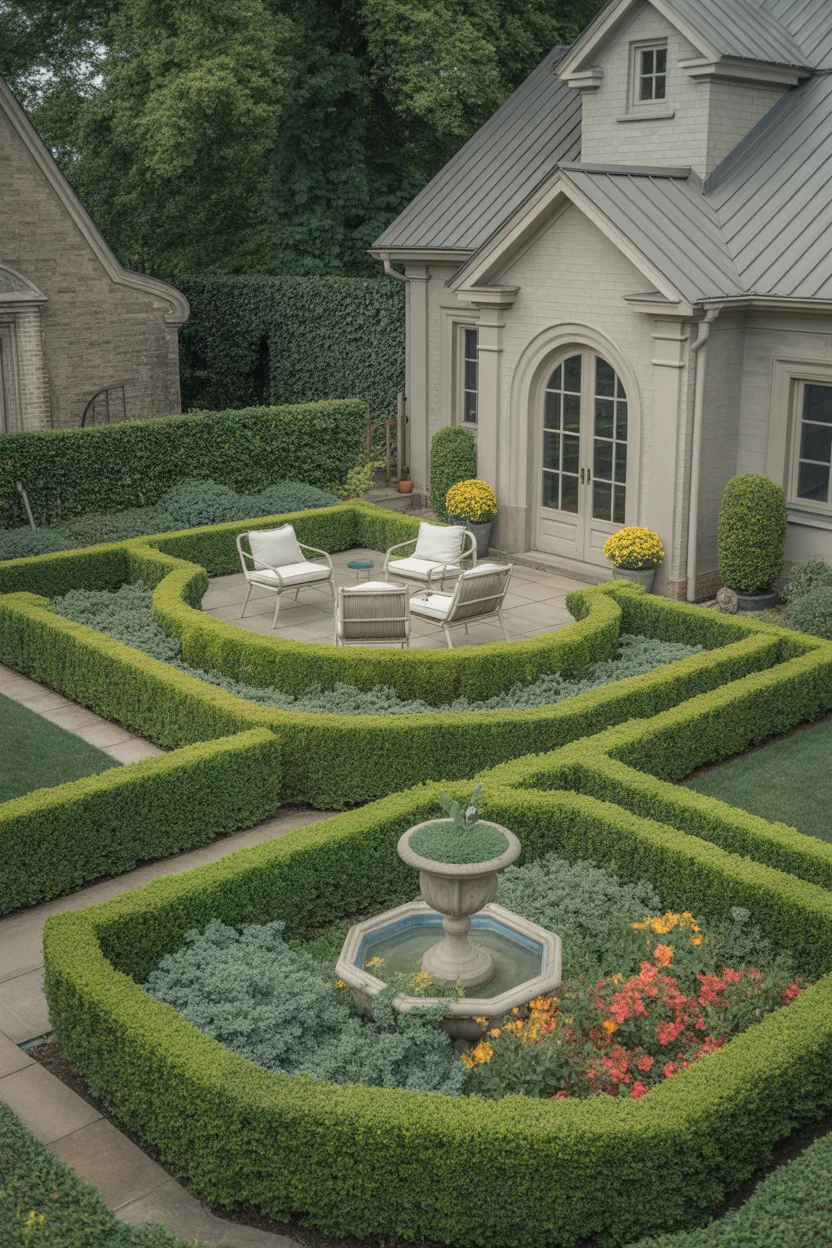
Formal hedge partitions bring structure to front yard layouts while the golden ratio keeps them from appearing too rigid or sterile. Instead of dividing your space equally, use hedges to create two distinct zones in 1.618:1 proportion. The larger section might contain your main walkway and foundation plantings, while the smaller area showcases a special feature like a garden bench, fountain, or specimen plantings. The proportional division creates visual intrigue that makes visitors want to explore your landscape.
Hedge height should also follow golden ratio principles relative to your home’s facade height. Shorter hedges in the foreground and taller ones closer to the house create layered depth that makes front yards appear larger. The spacing between individual hedge plants, when following the mathematical ratio, ensures proper growth patterns and mature fullness. Maintenance becomes easier when hedge geometry follows natural proportions, as the plants grow into their designated spaces more readily, creating the manicured look you desire.
6. Circular Driveway Proportions
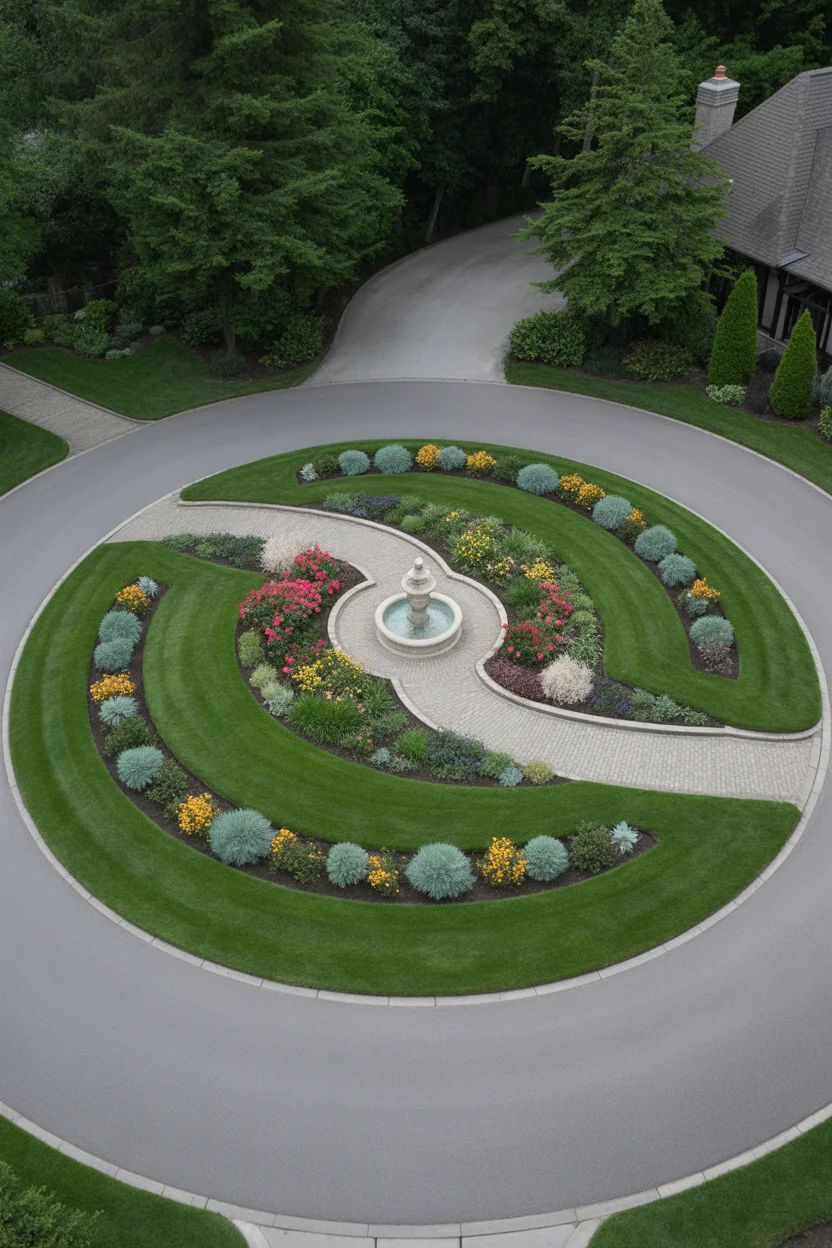
Circular driveways offer excellent opportunities to apply golden ratio principles to your front yard layouts. The curve’s radius and the island’s diameter should relate in 1.618:1 proportion, creating visual harmony between hardscape and planted areas. The driveway width itself can follow this ratio, with the entrance narrower than the area closest to your home. This proportional variation makes the driveway feel welcoming and grand rather than utilitarian, significantly boosting curb appeal and property value.
The center island plantings should mirror the circular proportions with layered elements following the golden ratio from edge to center. Low border plants at approximately 38% of the total height, medium shrubs at 62%, and a tall central element at 100% create the classic spiral effect. Seasonal rotations maintain interest, with spring bulbs, summer perennials, and fall ornamental grasses all positioned using proportional spacing. The mathematical precision transforms your driveway from necessary infrastructure into a landscape centerpiece.
Explore morehttp://pinterest.com/Dreamgardenshome/
7. Cottage Garden Informal Clusters
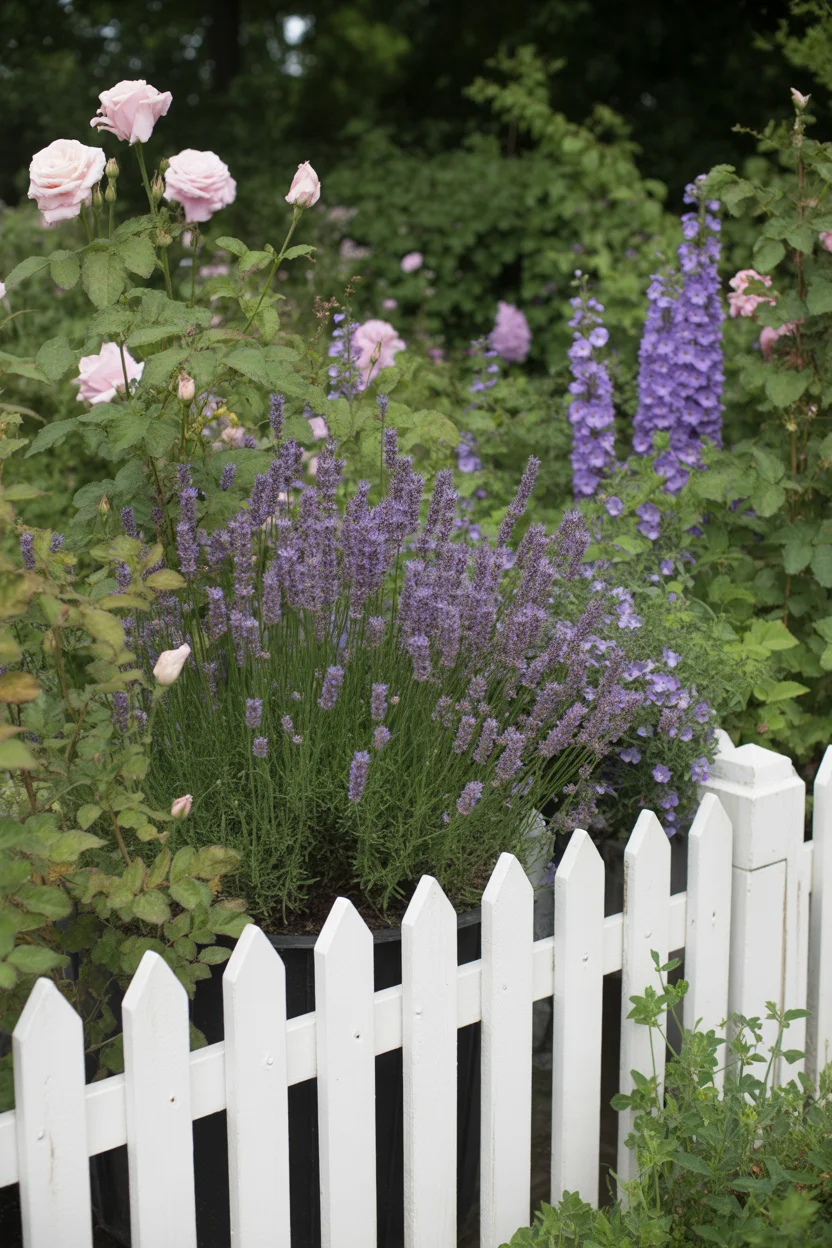
Cottage-style front yard layouts appear effortlessly charming, but applying golden ratio principles creates that “perfectly imperfect” look. Plant clusters are positioned at golden ratio points throughout the space rather than in straight rows or even spacing. The largest cluster occupies roughly 62% of a designated area, while smaller groupings fill the remaining 38%. This proportional approach to plant placement mimics natural growth patterns, making your intentional design appear spontaneous and organic.
Within each plant cluster, vary the number of specimens using Fibonacci numbers (1, 1, 2, 3, 5, 8, 13), which relate directly to the golden ratio. Plant five lavenders here, three roses there, and eight catmints in another spot for visual rhythm that feels natural. The height variation between plant types should also follow the 1.618 proportion, with tallest specimens like delphiniums relating mathematically to medium-height roses and low-growing ground covers. This scientific approach to cottage garden design creates more successful front yard layouts than purely random planting.
8. Modern Minimalist Blocks
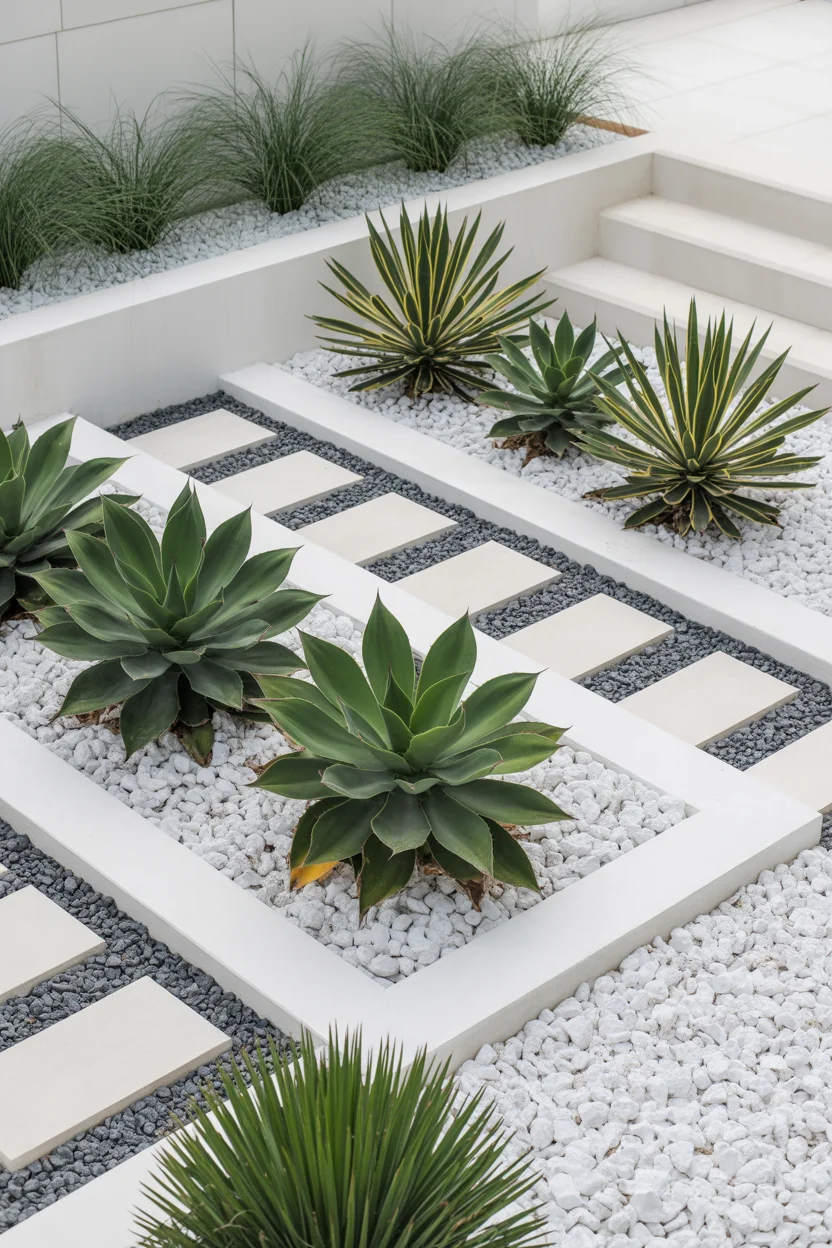
Contemporary front yard layouts benefit enormously from golden ratio applications, as modern design emphasizes proportion and clean lines. Rectangular planting beds with length-to-width ratios of 1.618:1 create more visual interest than squares or arbitrary rectangles. The spacing between beds should also follow this proportion, with larger gaps between some elements and smaller gaps between others according to the mathematical ratio. This creates rhythm and movement in minimalist designs that might otherwise appear static or cold.
Plant selection for modern front yard layouts should emphasize architectural forms with quantities and spacing following golden ratio principles. Three large agaves paired with five medium ornamental grasses and eight smaller succulents create Fibonacci number groupings that please the eye naturally. The negative space between plants becomes as important as the plants themselves, with gravel, mulch, or pavers filling proportional areas. The restrained palette and mathematical precision result in front yards that photograph beautifully and require minimal maintenance while making bold design statements.
9. Foundation Planting Layers
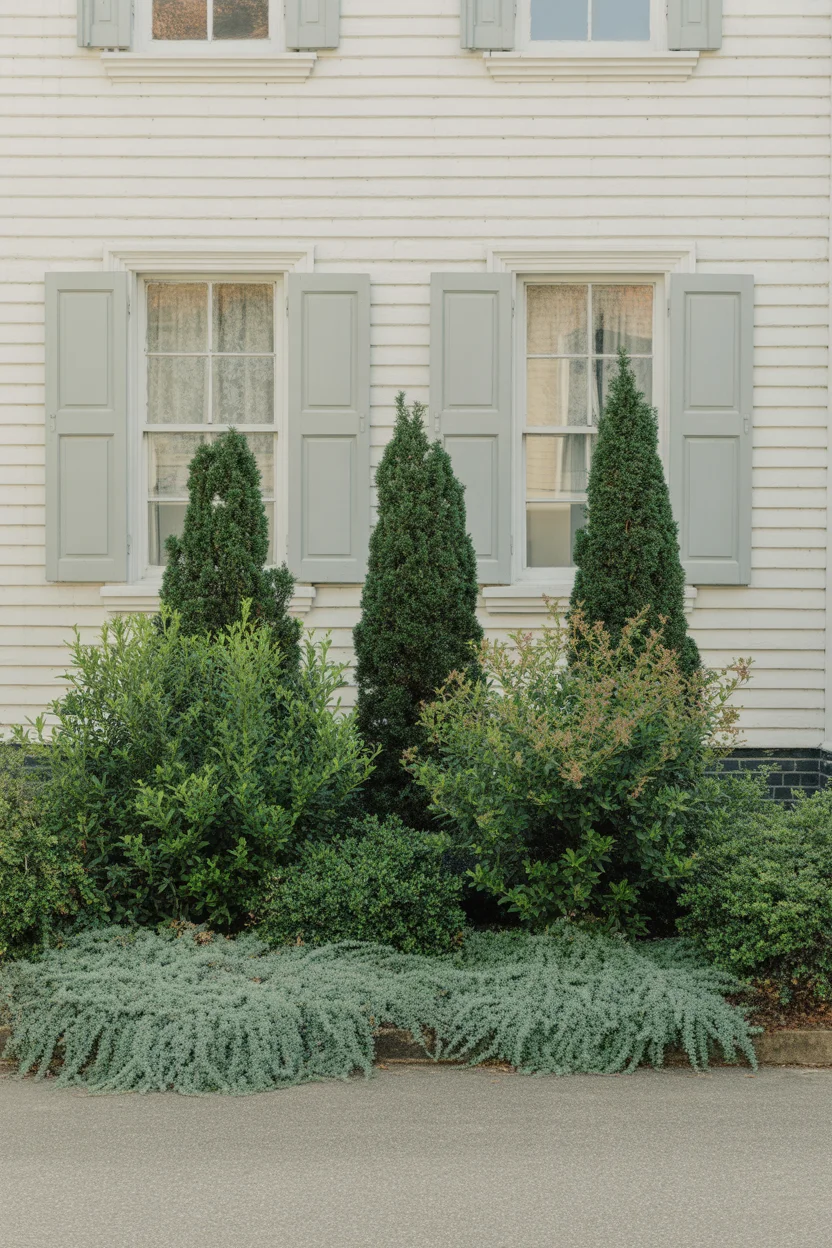
Foundation plantings are essential front yard layout elements that often suffer from poor proportional planning. Apply the golden ratio by creating three layers: tall background plants at 100% of your desired height, medium plants at 62%, and low foreground plants at 38% of that height. This proportional layering creates depth and dimension that makes your home’s foundation appear more substantial and your overall landscape more professionally designed. The mathematical relationship between heights ensures visual harmony.
The spacing between foundation plants should also follow golden ratio measurements, with the distance from house to first layer, first to second layer, and second to third layer relating proportionally. This creates natural-looking progression from architecture to landscape rather than abrupt transitions. Consider the mature width of plants and space them so their canopies will touch when grown, using proportional measurements rather than equal spacing. This approach to front yard layouts ensures your foundation plantings enhance rather than obscure your home’s best architectural features.
10. Perennial Border Waves
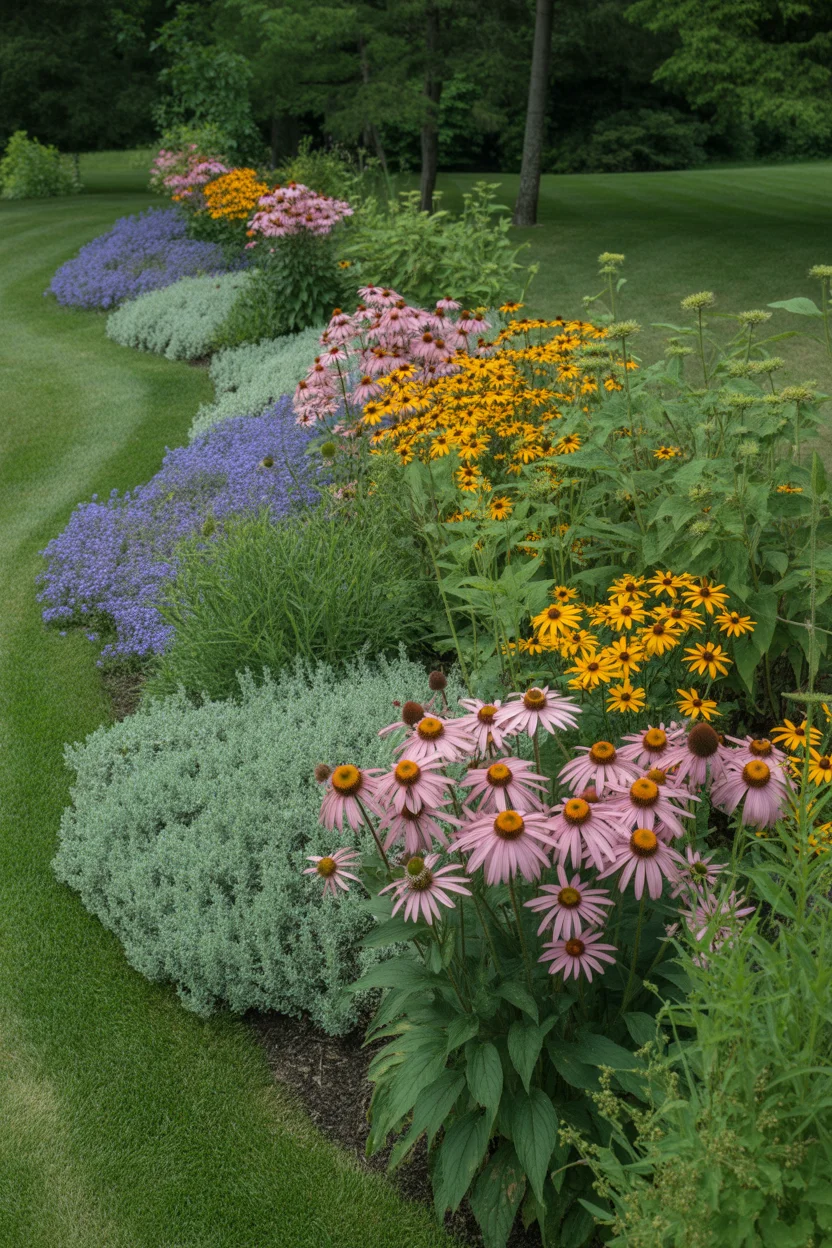
Perennial borders gain professional polish when their undulating heights follow golden ratio principles. The tallest plants should reach a specific height, with the next tier at 62% of that measurement and the lowest tier at 38%. This creates gentle waves that guide the eye along the border’s length while maintaining visual interest. The rhythm of heights and the proportional relationships between plant sizes make front yard layouts appear carefully curated rather than randomly assembled, even in cottage or naturalistic styles.
Drift patterns within borders should also embrace golden ratio proportions, with plant groupings varying in size mathematically rather than arbitrarily. A drift of nine purple coneflowers followed by five black-eyed Susans and three Russian sage plants creates Fibonacci sequencing that feels intuitively right. The length of each drift section can follow the 1.618 ratio, with longer sweeps of one species and shorter punctuations of another. This mathematical approach to perennial border design creates the effortless abundance that makes front yard layouts truly memorable and Instagram-worthy.
11. Pathway Width Variations
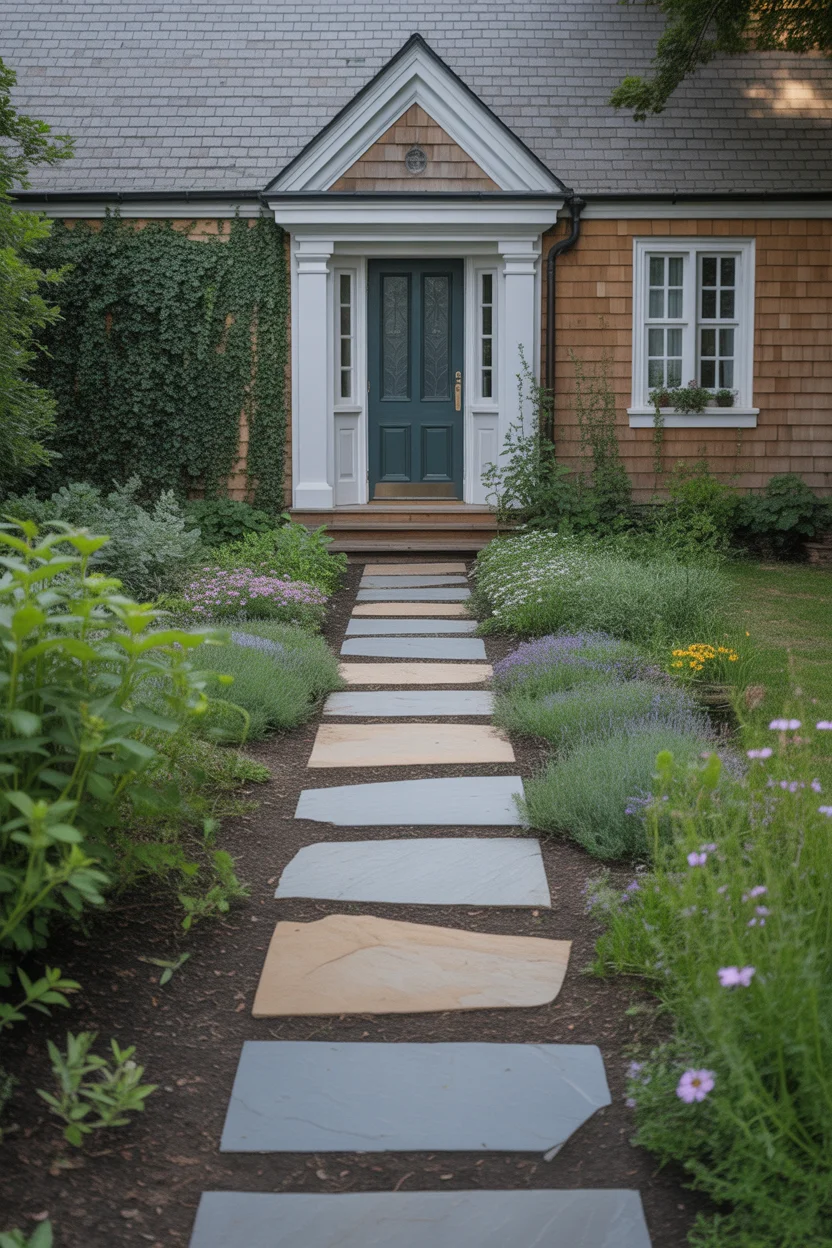
Front yard pathways become more engaging when their width varies according to golden ratio principles rather than maintaining uniform dimensions. Start with a wider section at the street entry, narrow to 62% of that width at the first golden ratio point, then widen again before the entrance. These proportional variations create visual rhythm and practical pausing points along the journey to your door. The mathematical relationships between width changes feel natural and intentional, elevating simple pathways into landscape features.
Material changes along pathways can also follow golden ratio measurements, with sections of different paving materials relating proportionally in length. A stretch of flagstone measuring 62 inches followed by 38 inches of brick or gravel creates subtle pattern variation that adds interest to front yard layouts. Edge plantings should respond to width variations, with fuller borders where paths narrow and more restrained planting where paths widen. This coordinated approach creates cohesive design where hardscape and softscape elements work together harmoniously.
12. Lawn Versus Garden Proportions
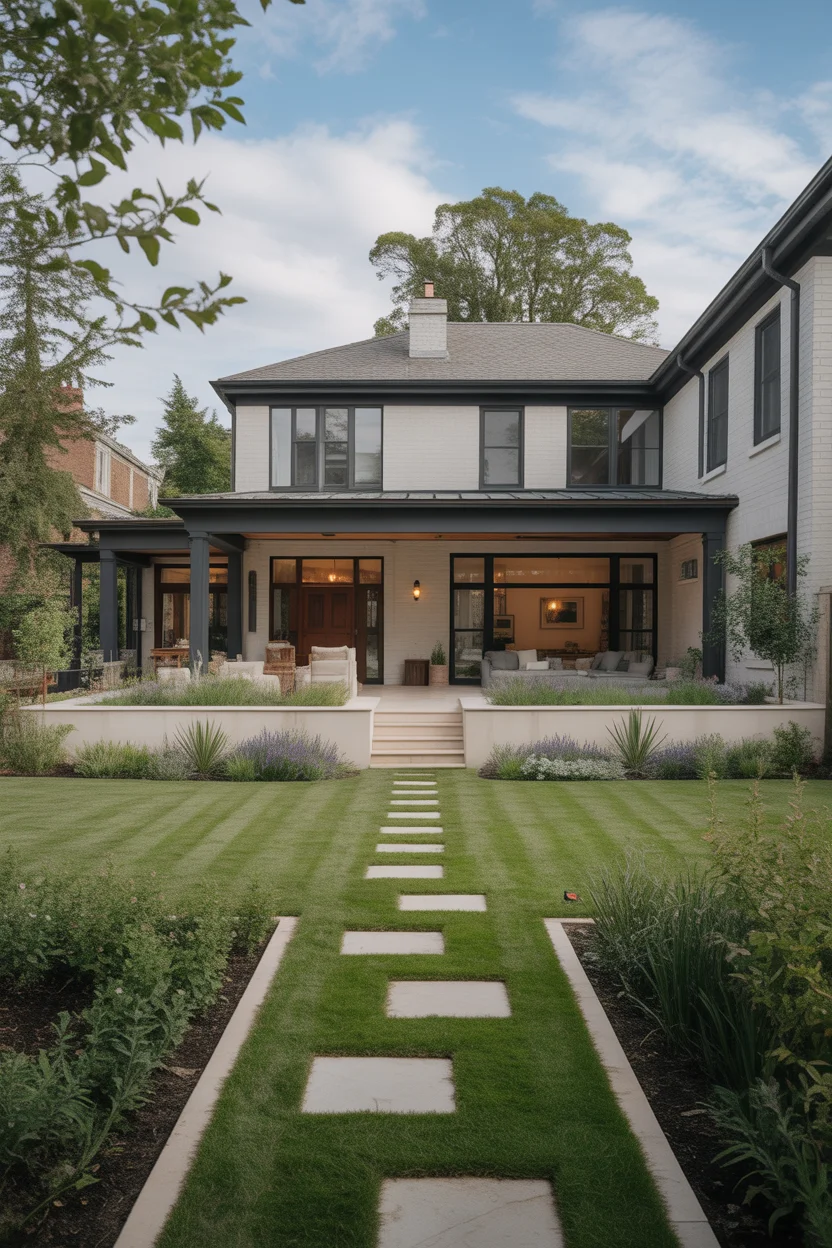
The ratio of lawn to planted garden beds dramatically affects your front yard’s overall appearance and maintenance requirements. Applying the golden ratio by dedicating approximately 62% to lawn and 38% to garden beds creates pleasing balance that feels neither too sparse nor too cluttered. This proportion works across various yard sizes and home styles, providing enough open space to showcase your home while offering sufficient planting area for seasonal color and textural interest. The mathematical approach to front yard layouts removes guesswork from the design process.
This ratio can be inverted for low-water or ecological landscapes, with 62% devoted to garden beds and 38% to lawn, groundcover, or hardscape. Either application of the golden ratio creates more successful front yard layouts than arbitrary divisions or extreme ratios. The proportional balance ensures adequate space for each element to fulfill its purpose, whether that’s providing play area, showcasing plants, or creating visual rest for the eye. Your front yard achieves that elusive quality of looking complete and balanced.
13. Entryway Container Groupings
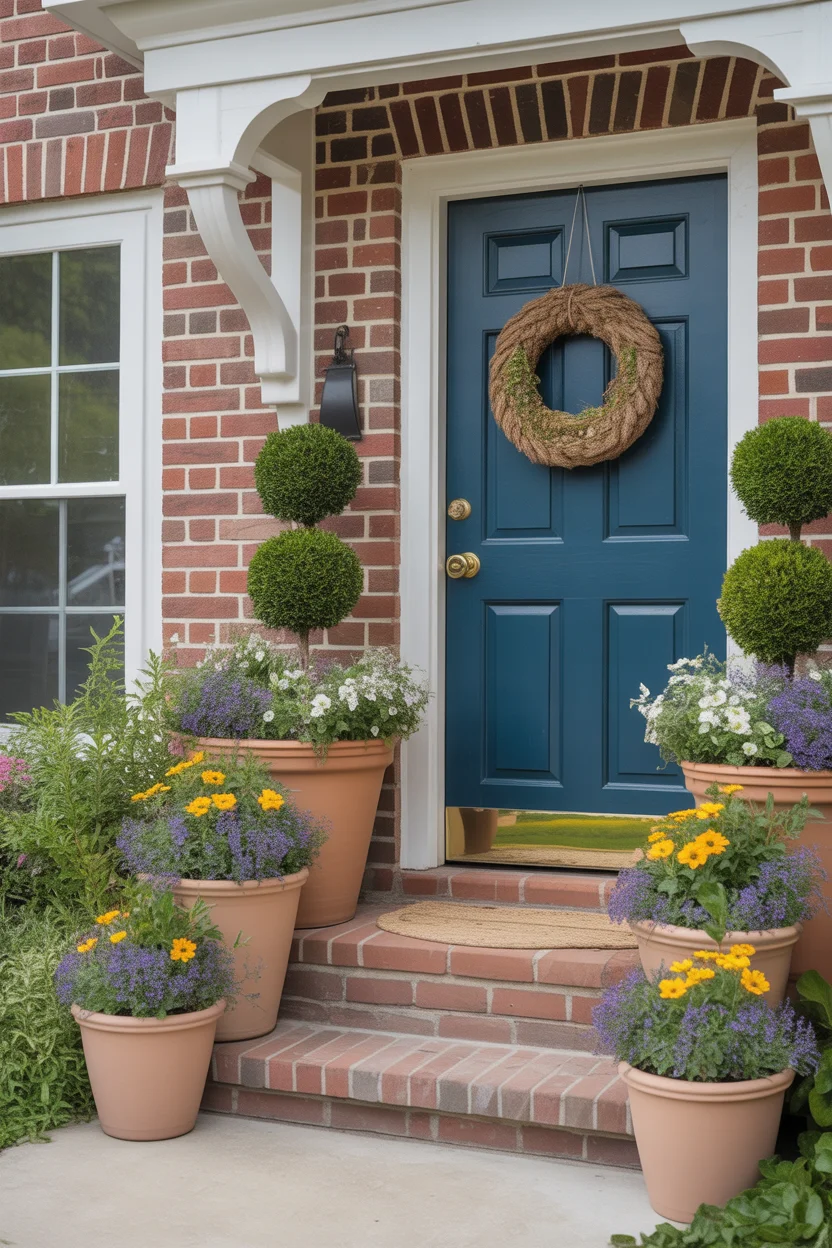
Container groupings at your front entrance make immediate impressions that benefit from golden ratio applications. Use containers in sizes that relate proportionally: if your largest pot is 24 inches in diameter, the next should be approximately 15 inches (62% of 24), and the smallest about 9 inches (38% of 24). Grouping these in Fibonacci numbers—perhaps two large, three medium, and five small pots—creates arrangements that feel naturally balanced. These mathematical relationships elevate front yard layouts from ordinary to exceptional.
The spacing between containers should also follow golden ratio principles, with larger gaps between some pots and smaller gaps between others in proportional relationship. This creates rhythm and prevents the “lineup” appearance of equally-spaced containers. Plant heights within containers should relate to pot sizes using the golden ratio, with taller plants in larger pots and proportionally shorter specimens in smaller containers. This coordinated approach to container design creates cohesive entryway arrangements that welcome visitors and boost curb appeal season after season.
14. Water Feature Positioning
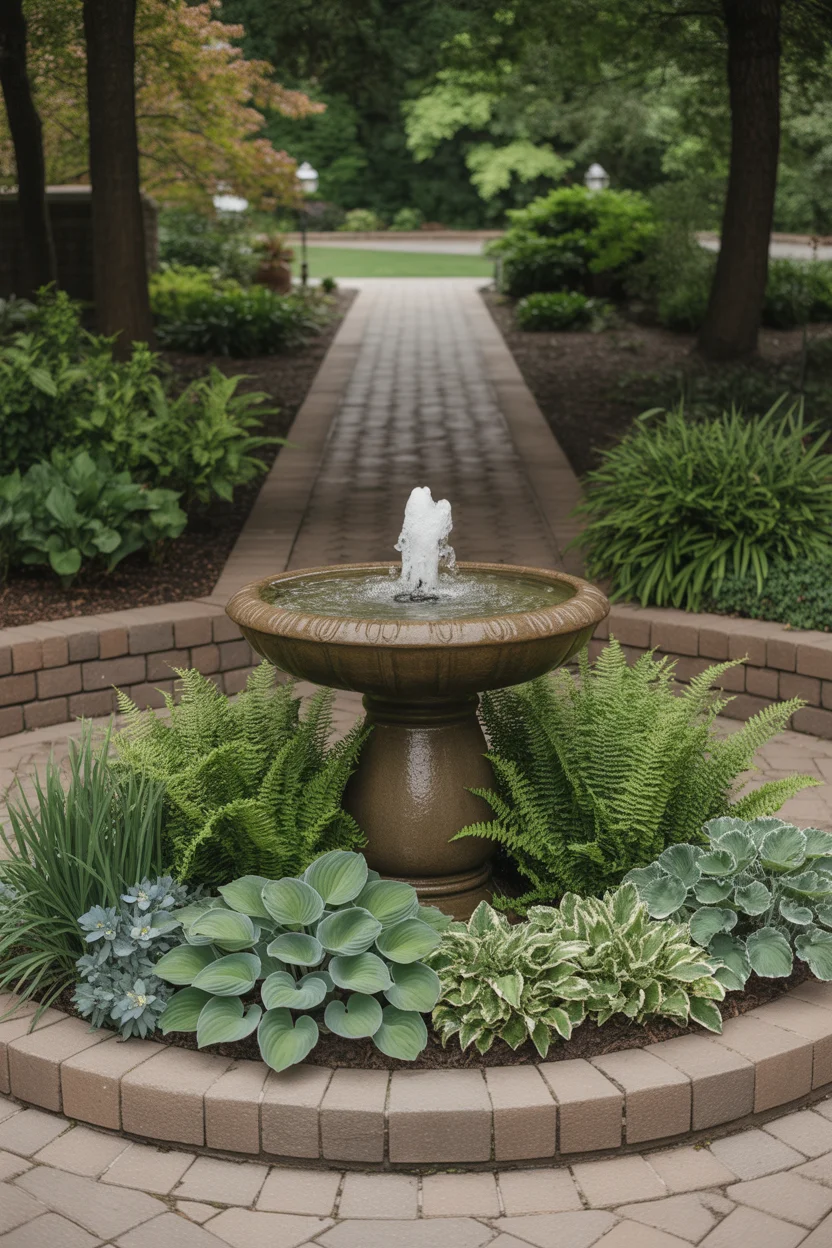
Water features become powerful focal points when positioned at golden ratio coordinates in your front yard layouts. Measure from one side boundary and place the feature at the 62% point; measure from front to back and position it at another golden ratio intersection. This off-center placement creates dynamic tension that draws attention and makes your water feature appear perfectly positioned even though it’s not centered. The mathematical precision creates subconscious satisfaction in viewers, making your landscape memorable and distinctive.
The water feature’s height should relate to surrounding elements using golden ratio proportions. If nearby shrubs reach 40 inches, your fountain might rise to 64 inches (1.618 times taller) or 25 inches (62% of shrub height) depending on whether you want the feature to dominate or integrate. The surrounding planting bed diameter should also relate proportionally to the feature’s height or width. These mathematical relationships create cohesive front yard layouts where every element relates harmoniously to every other element, resulting in professional-quality landscape design.
15. Seasonal Color Block Progression
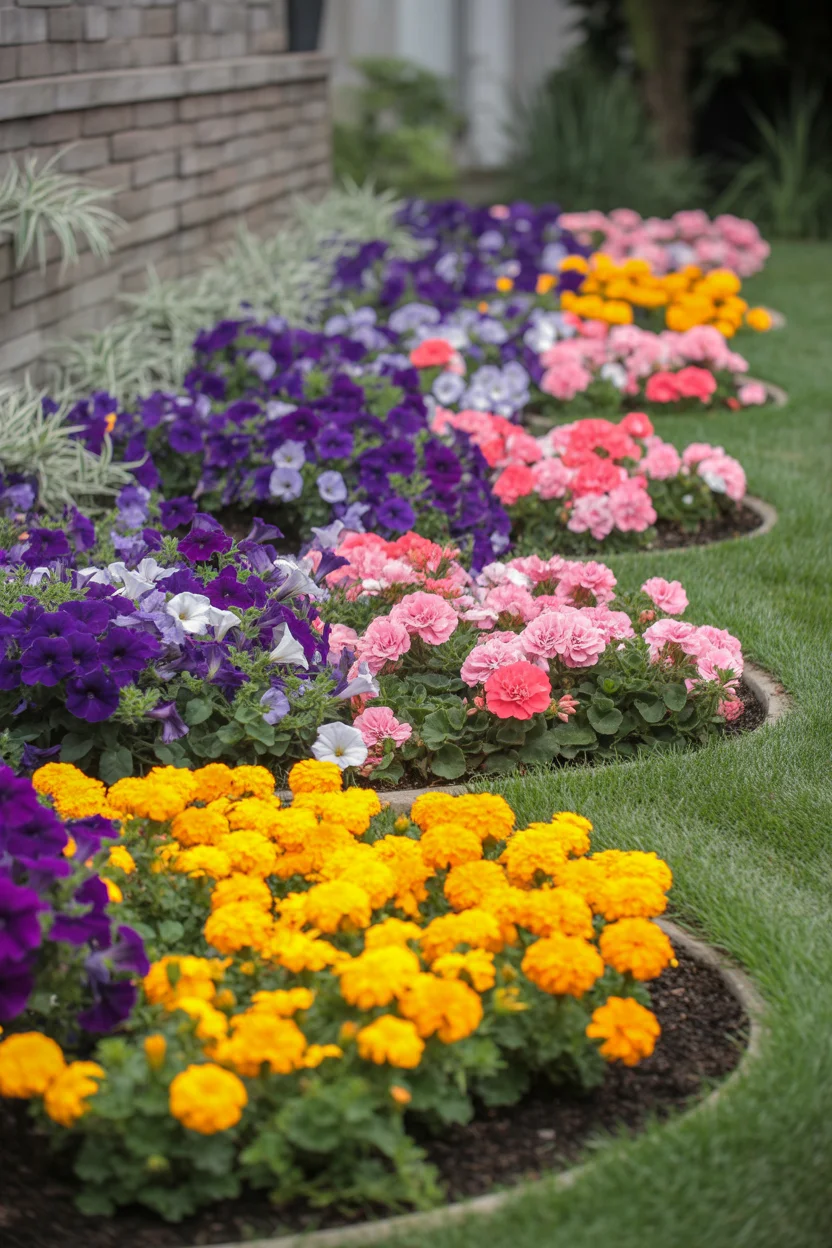
Color blocking in front yard layouts achieves sophistication through golden ratio applications. Instead of equal blocks of different colors, create larger sections of dominant hues (62% of the total area) and smaller sections of accent colors (38%). This proportional approach creates color stories that feel intentional and designed rather than chaotic. The dominant color establishes mood and theme, while accent colors in mathematically-determined proportions provide visual excitement without overwhelming the composition.
The progression from one color block to another can follow golden ratio spacing, with transition points occurring at calculated intervals rather than arbitrary locations. If your front yard is 30 feet wide, the transition from one color to another might occur at 18.5 feet (62%) and again at 11.5 feet (38% of the remaining space). This creates rhythm in color progression that guides viewers’ eyes across the landscape. Combining proportional color blocking with seasonal rotations ensures your front yard layouts remain visually interesting throughout the entire growing season.
16. Vertical Element Heights
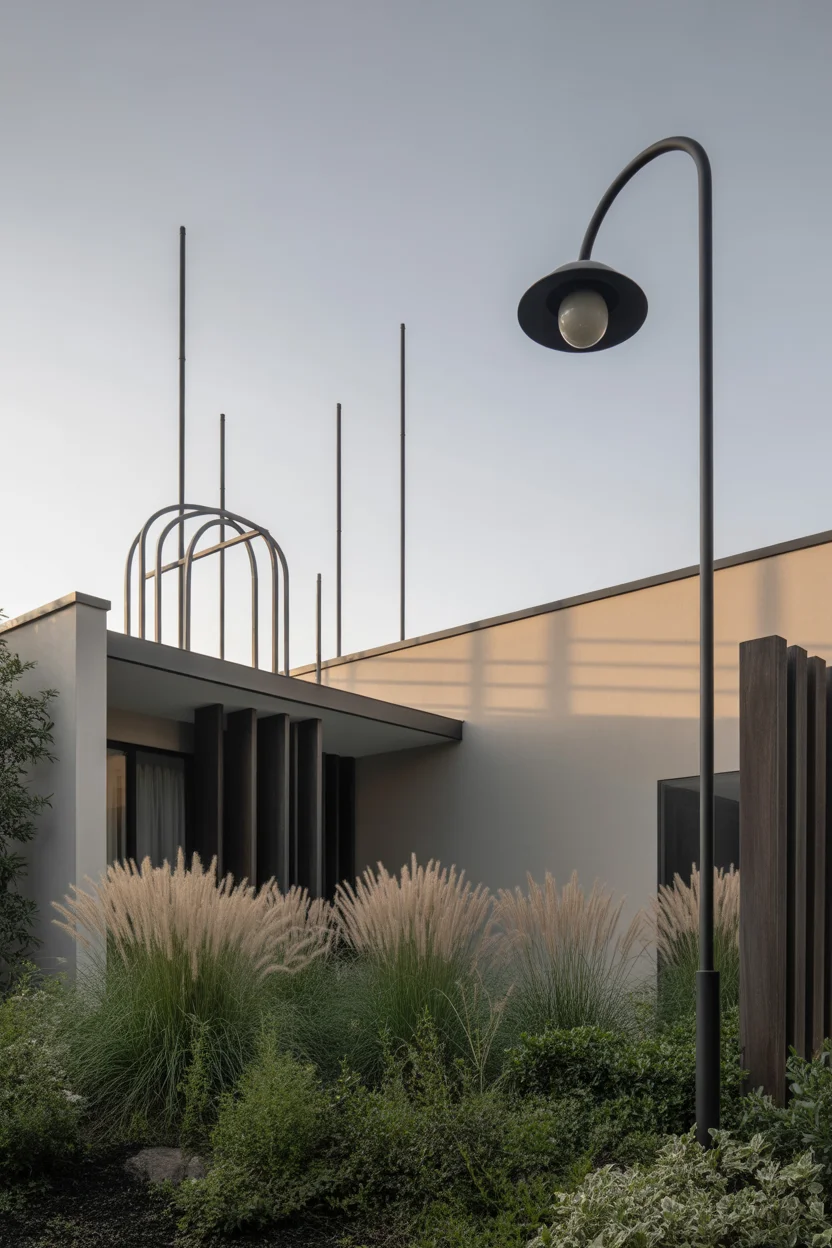
Vertical elements add crucial dimension to front yard layouts, and their heights should relate through golden ratio principles. If your tallest element like an arbor reaches 96 inches, the next vertical feature like a lamp post might stand at 60 inches (62% of 96), and ornamental grasses at 36 inches (62% of 60). These proportional relationships create pleasing skyline variation that adds architectural interest without appearing cluttered or disjointed. The mathematical rhythm guides eyes vertically through your landscape.
The spacing between vertical elements should also follow golden ratio measurements, preventing the “soldiers in a row” appearance of equally-spaced uprights. Vary the distances proportionally, with larger gaps between some elements and smaller gaps between others. This creates dynamic composition that holds interest from multiple viewing angles. When vertical elements relate mathematically in both height and spacing, your front yard layouts achieve three-dimensional sophistication that dramatically enhances curb appeal and makes your home stand out in the neighborhood.
17. Mulch and Hardscape Proportions
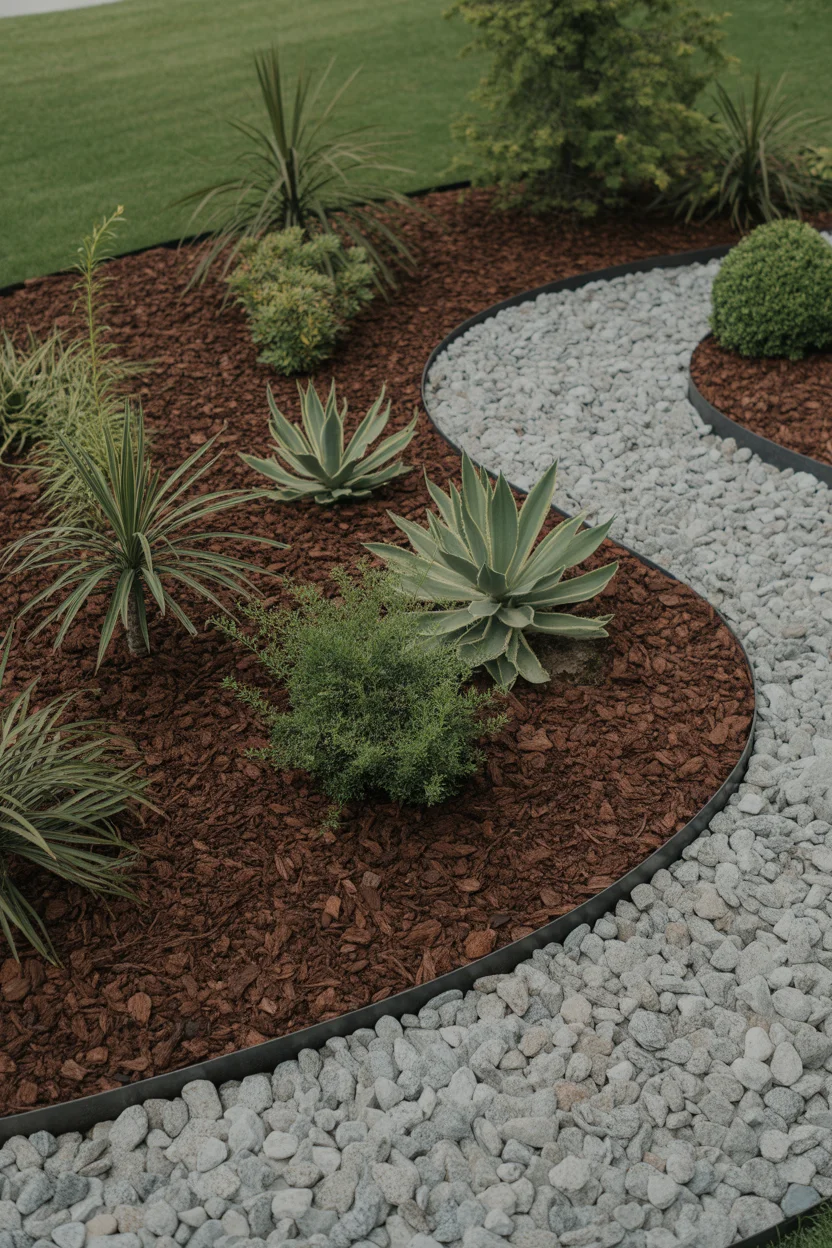
Ground cover materials significantly impact front yard layouts, and their proportional use follows golden ratio principles for maximum effect. When combining mulch and decorative rock, dedicate approximately 62% to one material and 38% to the other rather than equal amounts. This creates dominant and accent ground covers that work together harmoniously. The larger proportion establishes the landscape’s overall tone while the smaller proportion provides contrast and visual interest without competing for attention.
The transition areas between different ground covers should also follow proportional measurements, with border widths and transition zones relating to the overall areas they separate. If your mulch bed is 10 feet deep, the transition to rock might occur over 6 feet (62% of 10), creating gradual rather than abrupt material changes. This proportional approach to hardscape and mulch application creates more sophisticated front yard layouts that appear professionally installed. The mathematical relationships ensure visual harmony even when using boldly contrasting materials or colors.
18. Flowering Tree Canopy Spacing
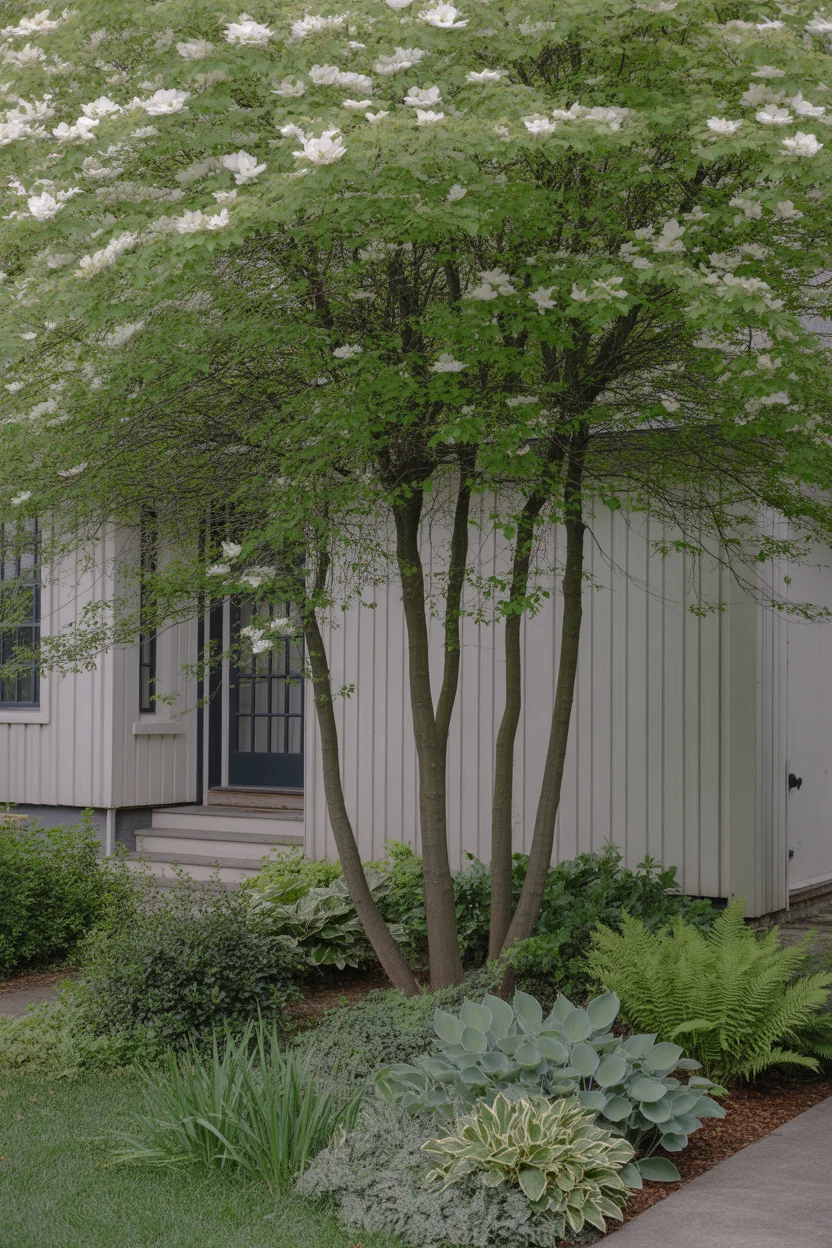
Multiple trees in front yard layouts require careful spacing to prevent overcrowding while avoiding the sparse look of trees planted too far apart. Use golden ratio measurements to determine spacing: if your trees will have mature canopy spreads of 20 feet, plant them approximately 32 feet apart (1.618 times the canopy width). This allows canopies to touch gently at maturity, creating the layered effect professional landscapes achieve. The proportional spacing works for various tree sizes and species, providing a reliable formula for front yard tree placement.
The understory plantings beneath tree canopies should also follow golden ratio proportions, with the planting bed radius relating to tree height or expected canopy spread. If your tree will reach 25 feet tall, the surrounding bed might extend 15 feet in radius (62% of height). Within these beds, layer shade plants using proportional heights: if tall ferns reach 30 inches, medium hostas might grow to 18 inches (62% of 30), and low ground covers spread at 11 inches (62% of 18). These mathematical relationships create cohesive front yard layouts where trees and understory plantings work as unified compositions.
19. Border Depth Variations
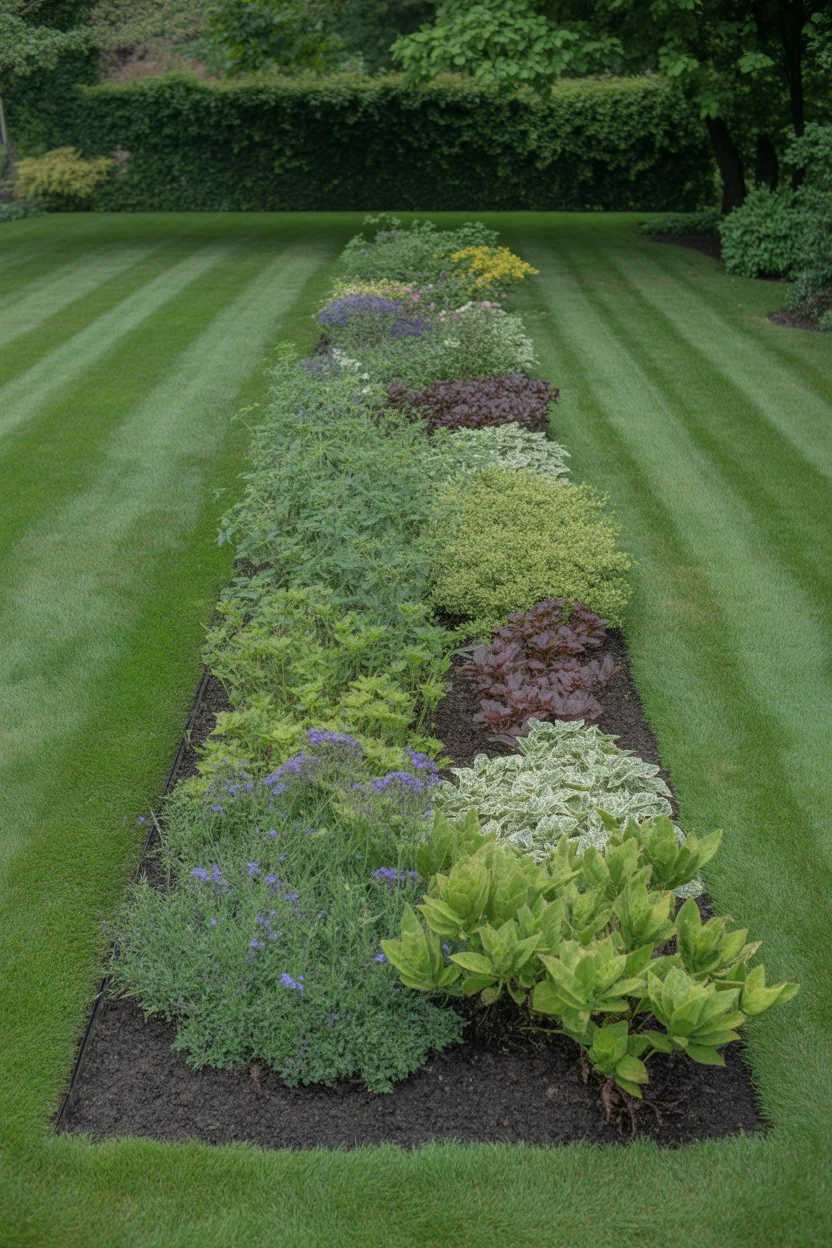
Front yard borders gain visual interest when their depth varies according to golden ratio principles rather than maintaining uniform width. Create deeper planting pockets at calculated intervals, with maximum depth at 62% and 38% points along the border’s length. These proportionally-placed pockets accommodate larger specimen plants or plant groupings while shallower sections maintain visual flow. The depth variations create rhythm that draws eyes along the border’s length while providing practical planting opportunities for different plant sizes and types.
The ratio of the border’s average depth to its total length should also follow golden proportions when possible. A border that’s 40 feet long might average 25 inches deep (though varying along its length), creating pleasing proportional relationship between dimensions. This prevents borders from appearing too skinny or consuming too much lawn area. Within the varied depths, layer plants so those in deeper sections follow the same three-tier height proportions as those in shallower areas. This consistent proportional approach creates unified front yard layouts despite varying border dimensions.
20. Lighting Fixture Placement
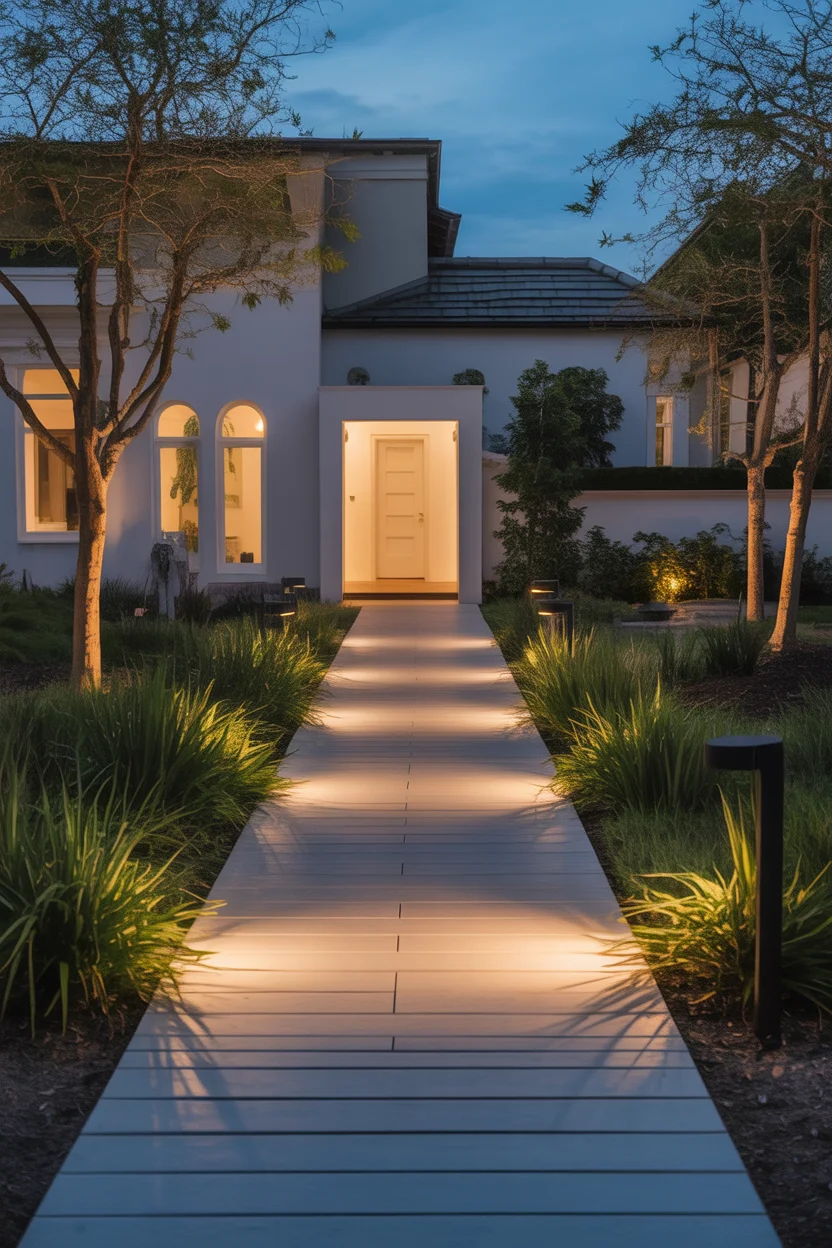
Landscape lighting transforms front yard layouts after dark, and fixture placement benefits from golden ratio applications. Instead of spacing path lights equally, position them at proportionally varying intervals with some closer together and others farther apart according to the 1.618 ratio. If one section has lights every 8 feet, the next section might space them every 13 feet (approximately 1.618 times 8). This mathematical variation creates more interesting light patterns and emphasizes the pathway’s natural curves or width variations.
Accent lighting for specimen plants or architectural features should follow golden ratio principles in positioning relative to the features they illuminate. Place uplights approximately 62% of the distance from the plant’s center to its canopy edge, or at 38% of a tree’s height when measuring from ground level. These proportionally-calculated positions create more dramatic lighting effects than random placement. The combination of mathematically-spaced path lighting and proportionally-positioned accent lights creates nighttime curb appeal that rivals your daytime front yard layouts, extending your home’s visual impact around the clock.
21. Privacy Screen Proportions
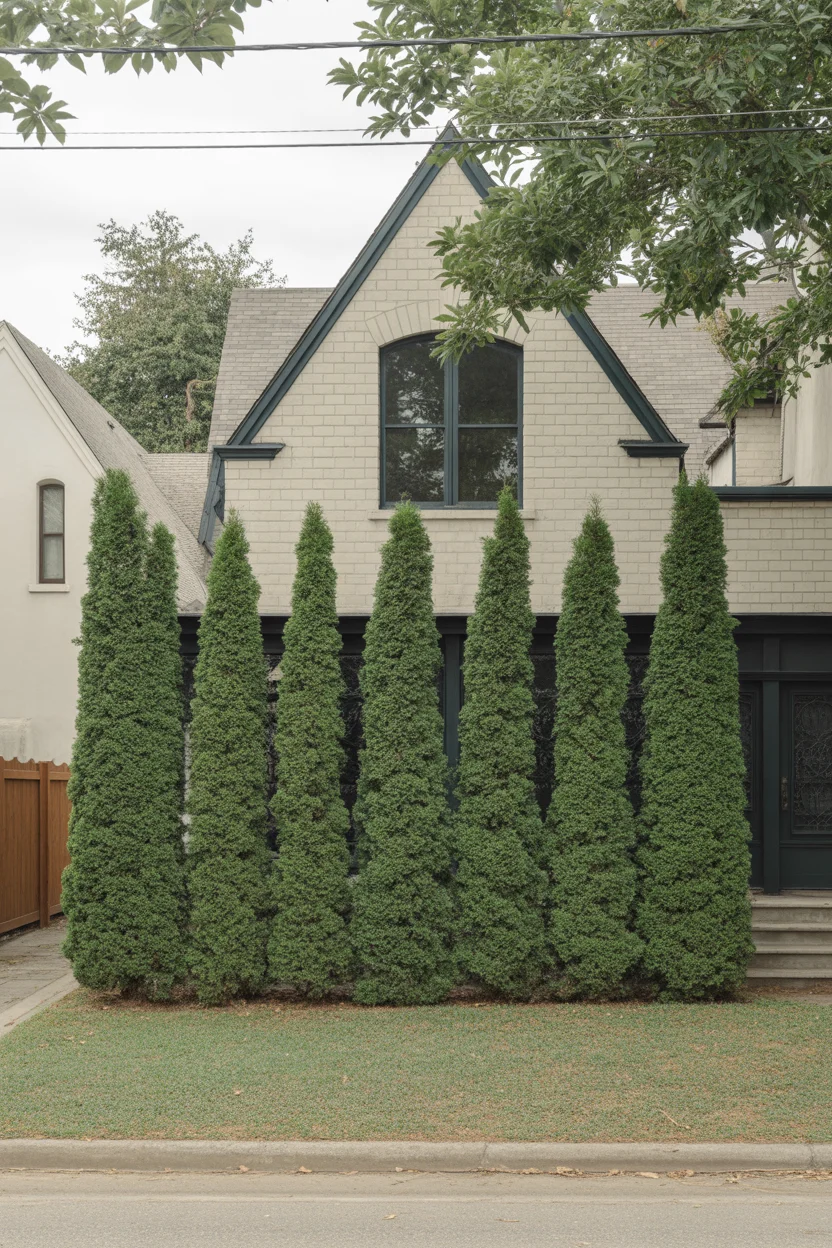
Privacy screens in front yard layouts must balance enclosure with openness, and the golden ratio provides the perfect formula. The screen’s height should relate to your home’s facade height proportionally—if your home’s first floor is 10 feet, a privacy screen at 16 feet (1.618 times 10) creates enclosure without overwhelming the architecture. The screen’s depth (width of the planting) should also relate to its height: a 16-foot-tall screen might be 10 feet deep (62% of height), providing substantial mass without consuming excessive yard space.
The length of privacy screens versus open areas should also follow golden ratio proportions. Rather than screening the entire front yard, cover approximately 62% with the privacy planting and leave 38% open for views, access, and visual connection to the neighborhood. This proportional approach to screening creates the enclosed, garden-like feeling many homeowners desire while maintaining the open, welcoming quality that makes front yard layouts appealing. The mathematical balance prevents privacy features from making your property feel closed-off or fortress-like while still providing the separation you need.
Conclusion
These 21 front yard layouts demonstrate how the golden ratio transforms ordinary spaces into extraordinary landscapes. By applying this timeless 1.618:1 proportion to pathway curves, plant spacing, and design elements, you create mathematically harmonious outdoor spaces that feel intuitively beautiful. Start with one golden ratio principle and watch your front yard’s curb appeal soar, proving that nature’s perfect proportion creates stunning results.

Join The Discussion