
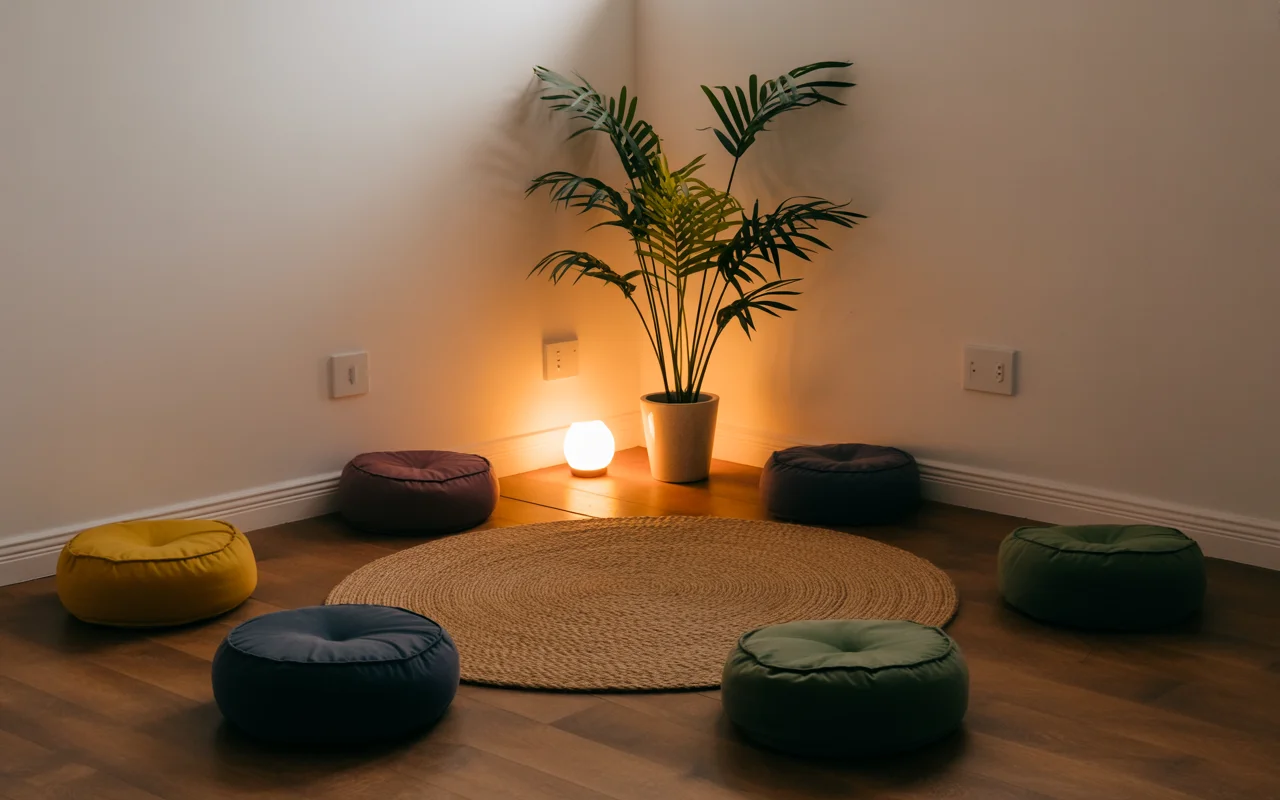
Introduction:
Japandi dining room ideas perfectly blend Japanese minimalism with Scandinavian coziness, creating spaces that feel both serene and inviting. This design style embraces neutral palettes, natural materials, and functional beauty that transforms ordinary dining areas into extraordinary gathering spaces. Whether you’re redesigning your entire dining room or simply seeking fresh inspiration, these 21 ideas will show you how to make neutral tones feel vibrant, warm, and utterly sophisticated.
1. Minimalist Wood Table with Sculptural Pendant Light
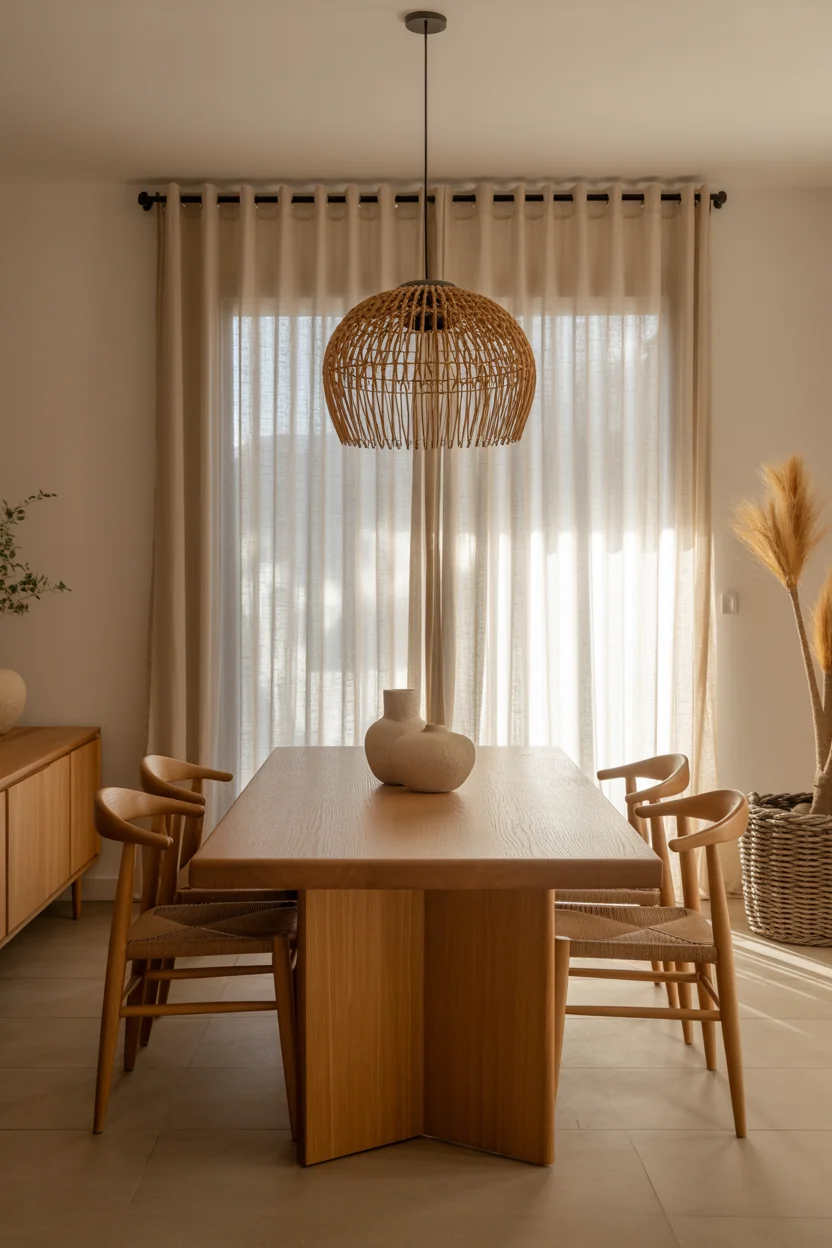
The foundation of any Japandi dining room starts with the right table, and this minimalist wood design exemplifies the style perfectly. The light oak construction showcases beautiful grain patterns while maintaining the understated elegance that defines Japandi aesthetics. The sculptural pendant light above becomes a functional art piece, drawing the eye upward and creating a focal point without overwhelming the space’s inherent simplicity.
Natural fiber chairs complement the wooden table beautifully, introducing tactile variety while staying within the neutral palette. The low-profile sideboard provides essential storage without disrupting the room’s visual flow. This setup demonstrates how Japandi dining room ideas prioritize both form and function, creating spaces where every element serves a purpose while contributing to an overall sense of calm and balance.
2. Neutral Linen Seating with Black Accents
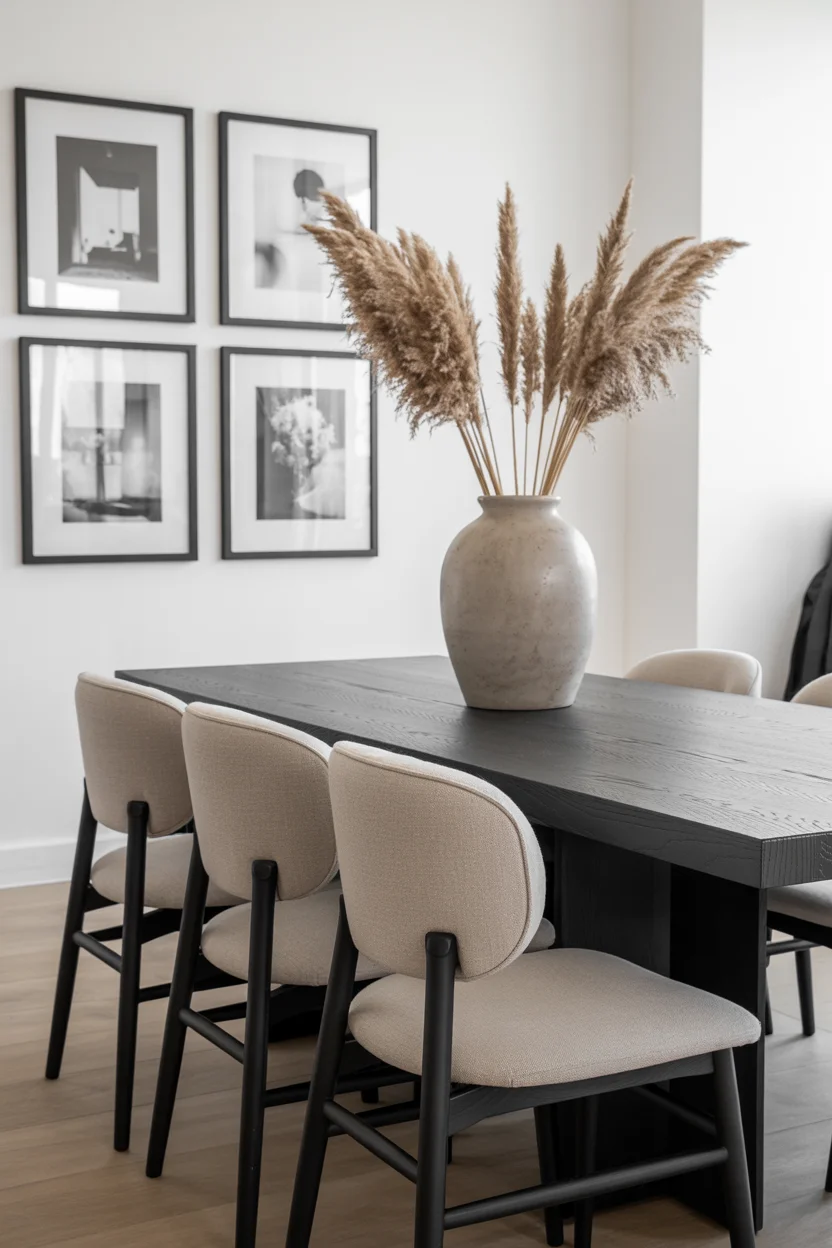
Introducing black accents into your neutral Japandi dining room creates depth and visual interest without sacrificing the style’s characteristic serenity. The matte black table grounds the space, providing a striking yet sophisticated contrast to the warm linen chairs. This combination proves that Japandi design isn’t about avoiding contrast—it’s about creating it thoughtfully and intentionally through careful material selection.
The black-framed artwork continues this theme, adding graphic elements that guide the eye around the room. Dried pampas grass in a ceramic vase softens these harder lines, introducing organic movement and texture. This interplay between structured and natural, dark and light, demonstrates how Japandi dining room ideas achieve visual excitement within a restrained color palette, making neutrals feel dynamic rather than flat.
View morehttps://dreamgardenspk.com/blog/
3. Low-Profile Bench Seating for Casual Elegance
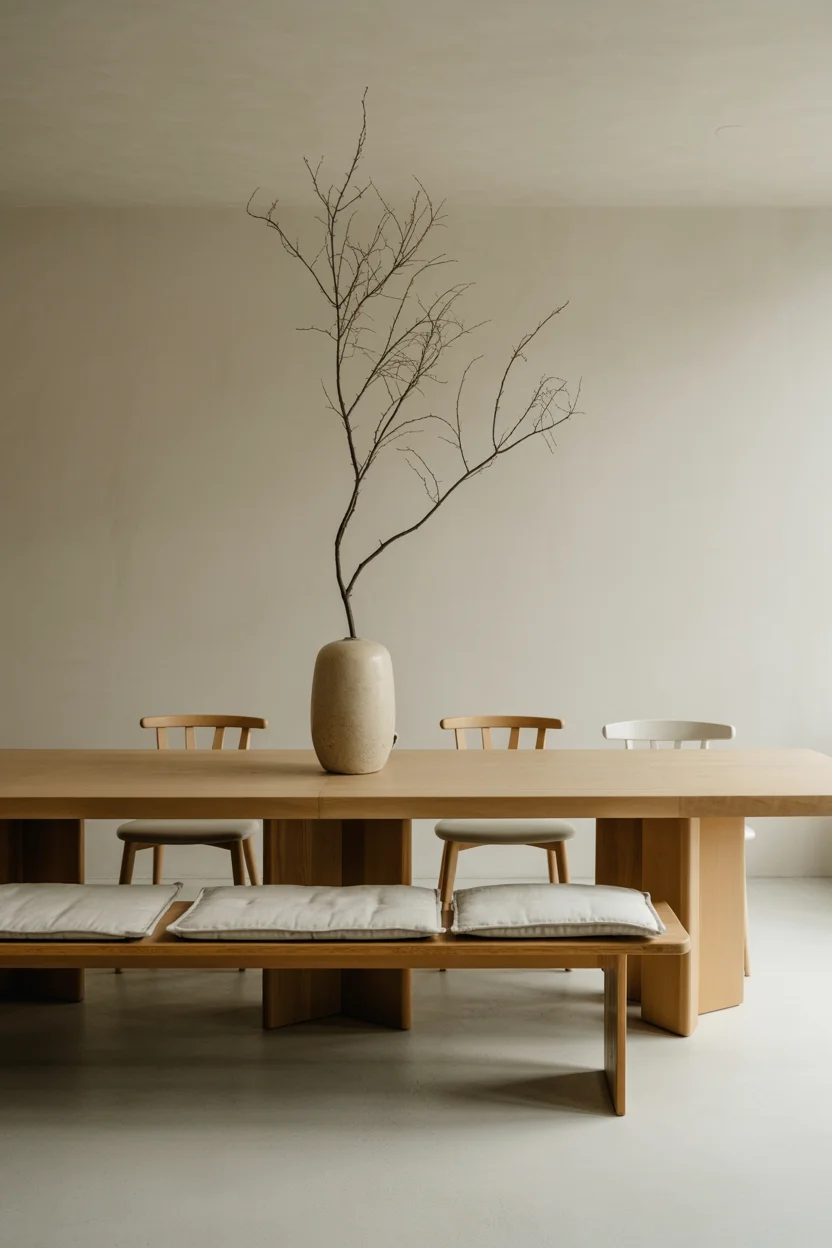
Bench seating embodies the Japandi philosophy of casual comfort meeting refined design. This low-profile approach makes the dining room feel more spacious and less formal, encouraging relaxed family meals and long conversations with friends. The clean-lined wooden construction with minimal cushioning maintains comfort without adding visual clutter, staying true to the minimalist principles at Japandi’s core.
Pairing the bench with simple chairs on the opposite side creates an asymmetrical yet balanced look that feels intentional and curated. The tall ceramic vase with a single branch draws the eye upward, adding height variation to the room’s predominantly horizontal elements. This setup illustrates how Japandi dining room ideas embrace simplicity without becoming boring, using thoughtful arrangements to create spaces that feel both lived-in and artfully composed.
4. Sliding Shoji-Inspired Screens as Room Dividers
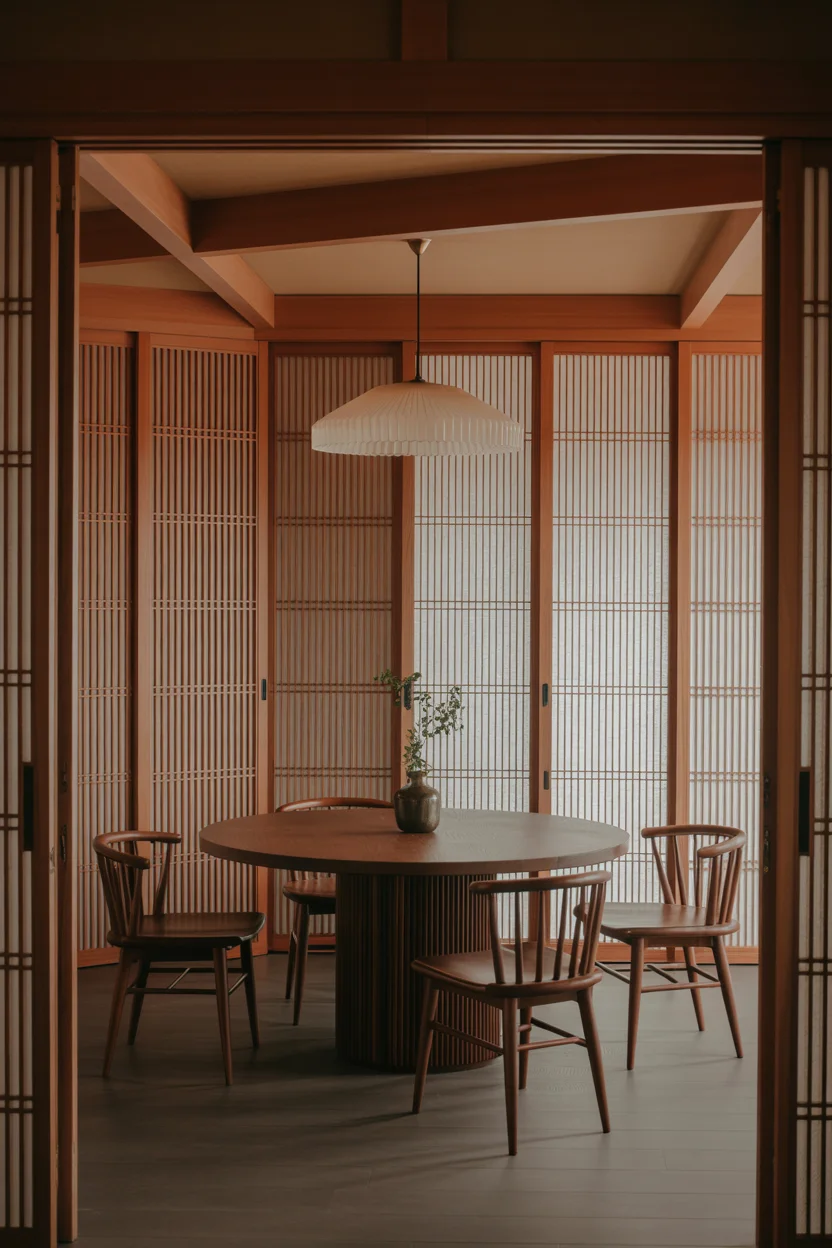
Shoji-inspired screens bring authentic Japanese influence into your Japandi dining room while solving practical spatial challenges. These translucent panels allow light to flow freely between rooms while creating gentle separation, perfect for open-plan homes that need flexible boundaries. The wooden frames add architectural interest and warmth, turning a functional element into a beautiful design feature that honors traditional craftsmanship.
The round walnut table positioned within this screened area creates an intimate dining zone without complete isolation. Spindle-back chairs add delicate detail that complements the screens’ linear framework. This arrangement shows how Japandi dining room ideas can incorporate traditional elements in contemporary ways, respecting cultural heritage while meeting modern living needs and creating spaces that feel both timeless and fresh.
5. Ceramic Tableware Display as Wall Art
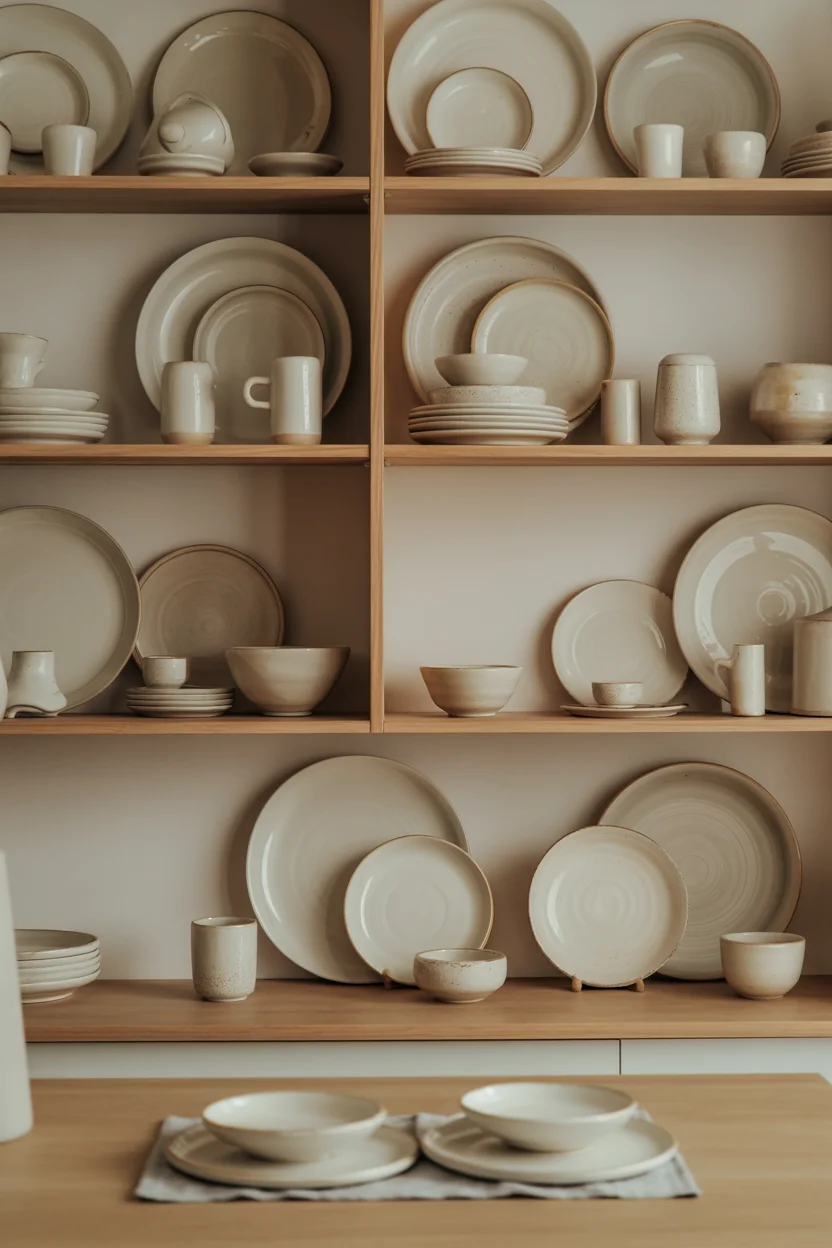
Displaying ceramic tableware transforms everyday objects into wall art, perfectly embodying Japandi’s celebration of functional beauty. These handmade pieces, with their subtle color variations and organic imperfections, add visual interest while remaining completely practical. The open shelving in light wood keeps the display accessible and unpretentious, inviting you to use these beautiful objects daily rather than hiding them away.
This approach to display reflects the Japanese concept of finding beauty in everyday things and the Scandinavian appreciation for craftsmanship. Each ceramic piece tells a story of the artisan who created it, adding soul and character to your dining space. By incorporating this idea into your Japandi dining room, you create a living gallery that evolves with your collection, making neutrals feel alive through texture, form, and the honest beauty of handcrafted objects.
Explore morehttp://pinterest.com/Dreamgardenshome/
6. Wabi-Sabi Table with Imperfect Organic Edges
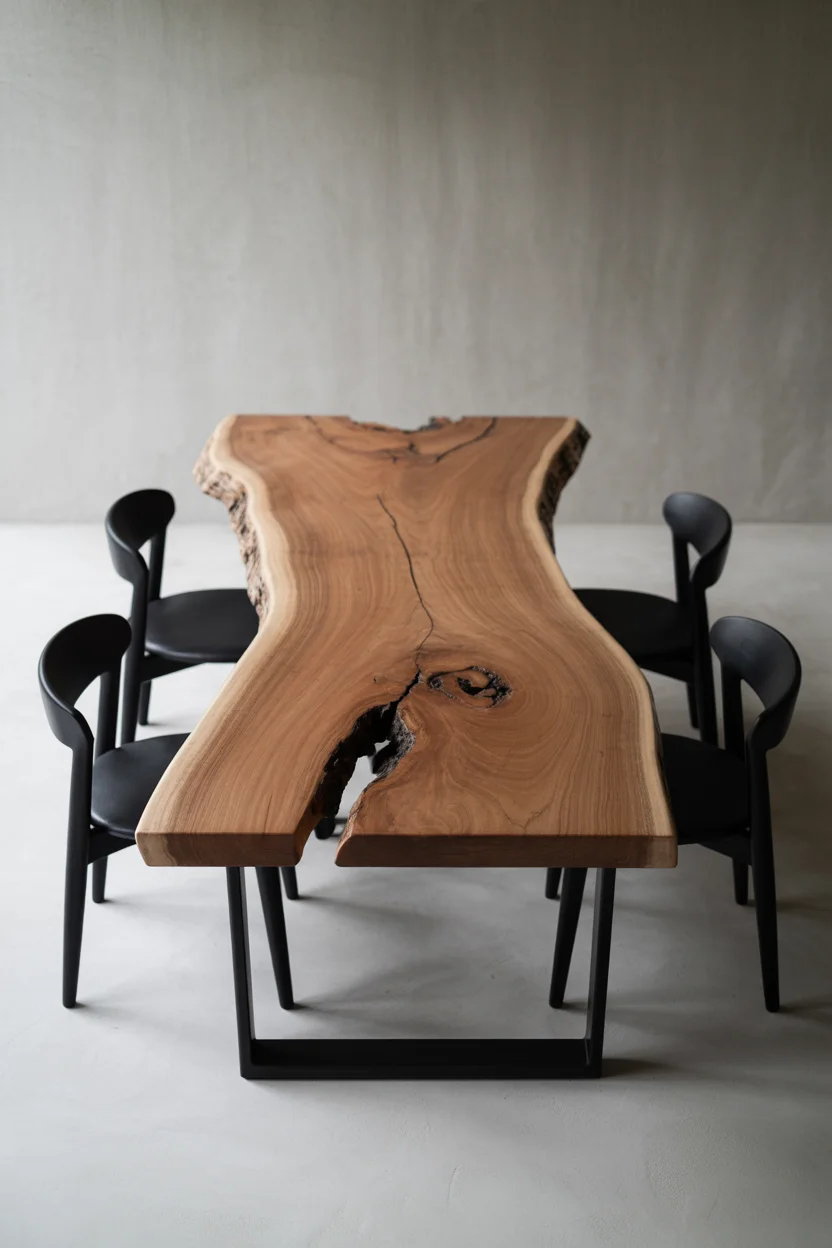
Embracing wabi-sabi principles means finding beauty in imperfection, and a live-edge dining table delivers this philosophy literally. The organic edges, natural knots, and color variations tell the story of the tree it came from, bringing nature’s authentic beauty indoors. This raw honesty contrasts beautifully with the refined simplicity of modern chairs, creating the balanced tension that makes Japandi design so compelling.
The table’s imperfect edges soften the dining room’s geometry, introducing irregular organic lines into a space typically defined by right angles. Each crack, knot, and grain pattern becomes a design feature rather than a flaw. This celebration of natural imperfection demonstrates how Japandi dining room ideas reject sterile perfection in favor of character and authenticity, creating spaces that feel genuinely warm and welcoming rather than showroom-perfect.
7. Tatami-Inspired Mat Under Dining Table
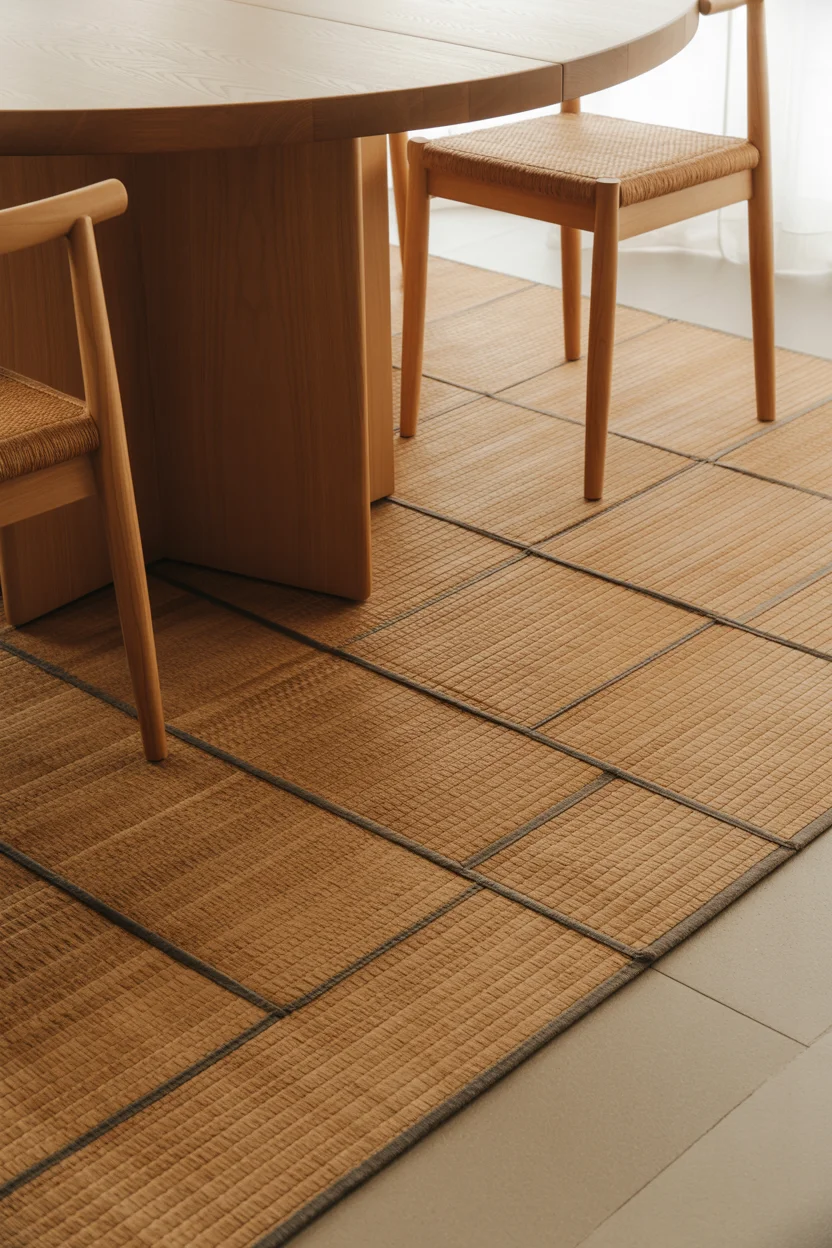
A tatami-inspired mat grounds your dining area while paying homage to Japanese interior traditions. The subtle grid pattern adds visual structure without bold graphics, creating understated interest that complements rather than competes with your furniture. Natural fibers like jute, sisal, or seagrass bring organic texture underfoot, making the neutral palette feel rich and layered rather than one-dimensional.
This grounding element defines the dining zone in open spaces while adding acoustic softness to rooms with hard flooring. The warm beige tones bridge the gap between cool and warm neutrals, creating cohesion throughout your space. Incorporating this element into your Japandi dining room ideas adds depth and comfort while honoring the Japanese influence in this hybrid style, proving that cultural references can be subtle yet meaningful.
8. Paper Lantern Pendant for Soft Ambient Lighting
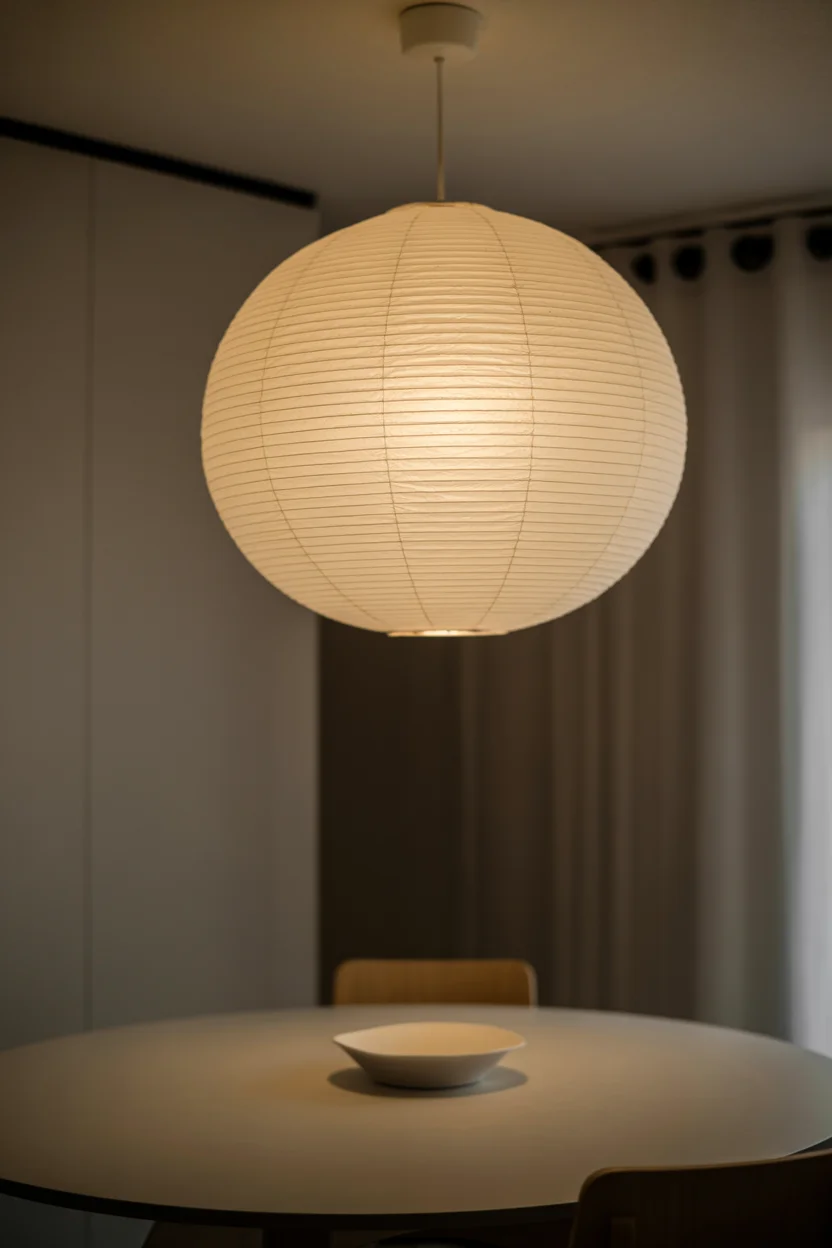
Paper lanterns provide the perfect lighting solution for Japandi dining rooms, offering soft illumination that enhances the space’s calm atmosphere. The diffused light eliminates harsh shadows, creating an even, gentle glow that makes everyone look better and feel more relaxed. This lightweight fixture embodies both Japanese design traditions and Scandinavian love for functional simplicity, making it an ideal choice for this hybrid style.
The spherical shape adds visual softness to a room filled with rectangular furniture and architectural elements. Its weightless appearance keeps the space feeling open and airy, never overwhelming the table below. By choosing a paper lantern for your Japandi dining room ideas, you select a lighting solution that’s beautiful, practical, and culturally meaningful, demonstrating how the right fixture can set the entire mood of your space.
9. Built-In Window Seating with Storage
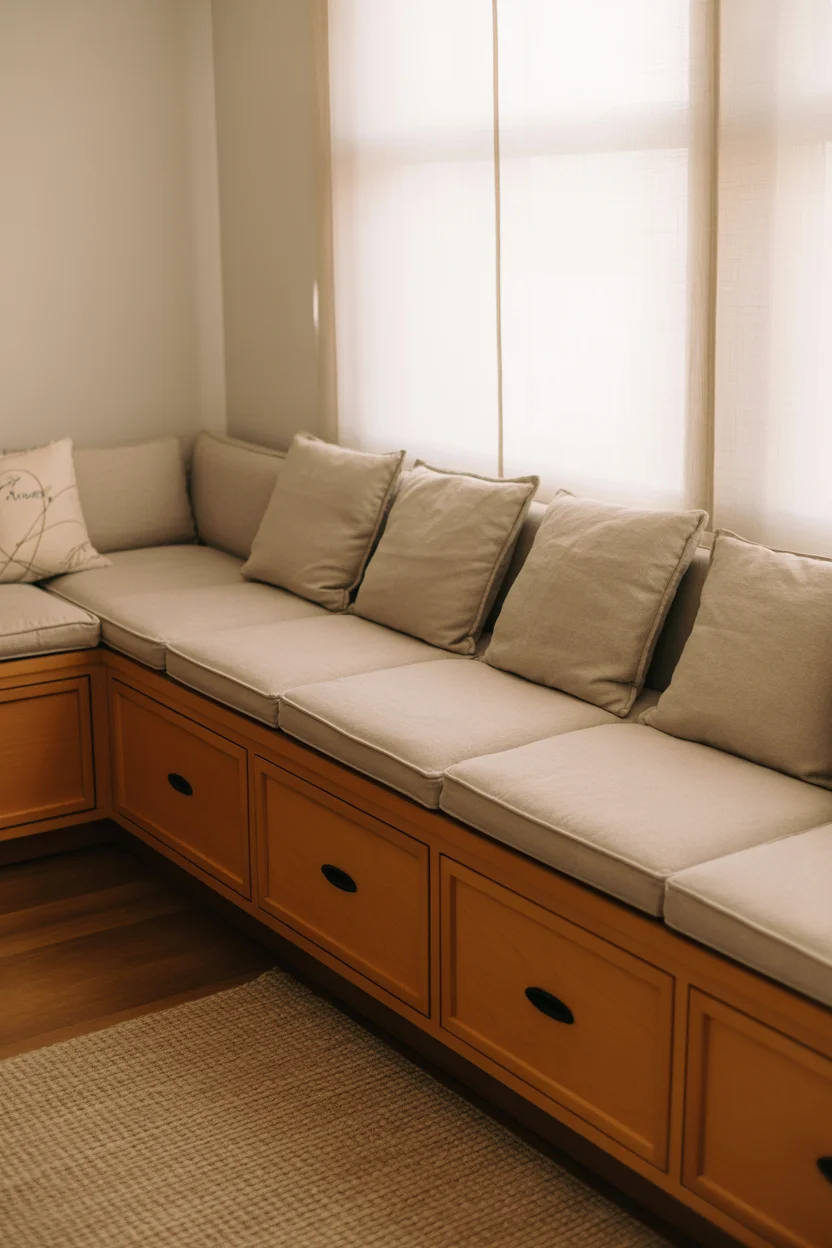
Window seating with hidden storage exemplifies Japandi’s genius for maximizing functionality without sacrificing beauty. The built-in bench provides overflow seating when you’re entertaining while offering concealed storage for table linens, seasonal items, or dining accessories. Upholstered in natural linen, it introduces soft texture and comfortable lounging space that makes your dining room more versatile and inviting.
The clean-lined construction integrates seamlessly with the room’s architecture, looking intentional rather than added as an afterthought. Minimal cushions provide comfort without excessive softness, maintaining the balanced aesthetic that defines Japandi style. This multifunctional approach shows how Japandi dining room ideas prioritize intelligent design solutions that serve multiple purposes, creating homes that work beautifully for real life rather than just looking pretty.
10. Monochromatic Pottery Collection as Centerpiece
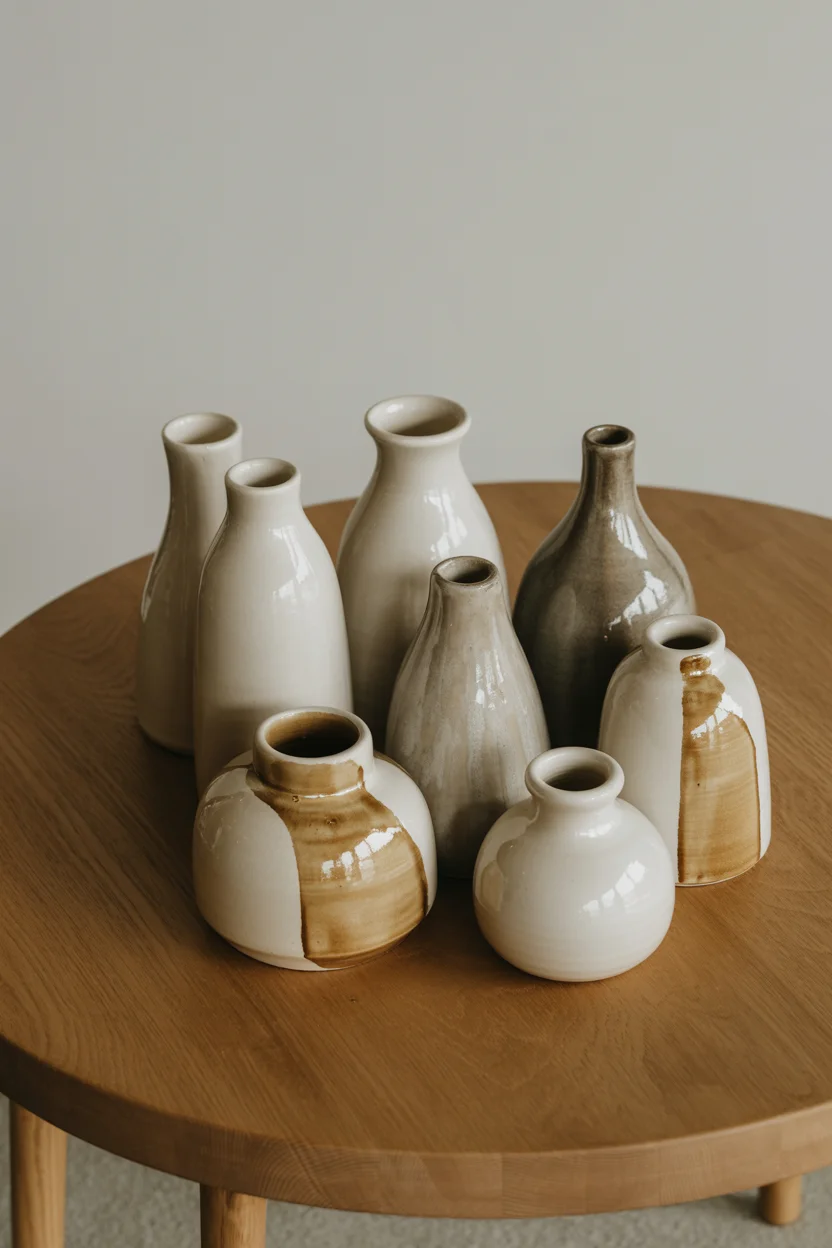
A collection of monochromatic pottery creates a dynamic centerpiece that evolves with your mood and the seasons. The varying heights and shapes add dimensional interest, transforming simple ceramics into a sculptural installation. Each handmade piece brings unique character through glaze variations, finger marks from the potter, and slight asymmetries that make them infinitely more interesting than mass-produced alternatives.
This approach to centerpiece styling allows flexibility—you can display them empty to appreciate their forms, fill them with seasonal branches, or use them for serving during meals. The neutral color palette ensures they’ll never clash with your food presentation or table linens. By incorporating this idea into your Japandi dining room, you create an ever-changing focal point that celebrates handcrafted beauty and makes your neutral palette feel rich, textured, and thoughtfully curated.
11. Floating Shelves for Minimalist Display
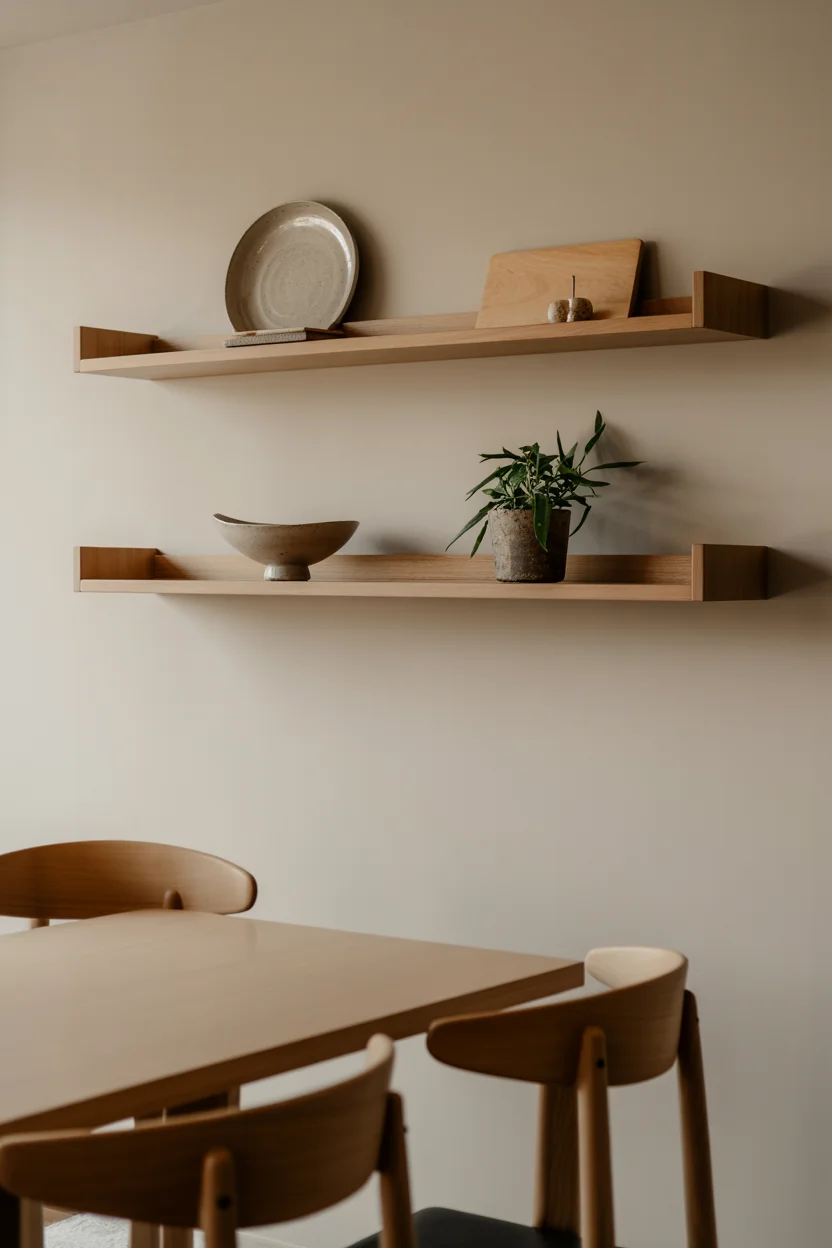
Floating shelves offer display opportunities without the visual weight of traditional furniture, keeping your Japandi dining room feeling open and airy. The key is curation—selecting only the most beautiful, meaningful objects and giving them space to shine. This restrained approach to display demonstrates the Japanese principle of “ma,” or negative space, which is just as important as the objects themselves.
Each item on these shelves should earn its place through beauty, function, or personal meaning. A handmade ceramic bowl becomes sculpture, a small plant brings life, and a wooden tray adds geometric interest. This careful selection process creates a display that enhances your dining experience rather than competing for attention. Adopting this principle in your Japandi dining room ideas teaches you to be more intentional about what you bring into your space, resulting in rooms that feel calm, purposeful, and authentically you.
12. Natural Oak Flooring with Matte Finish
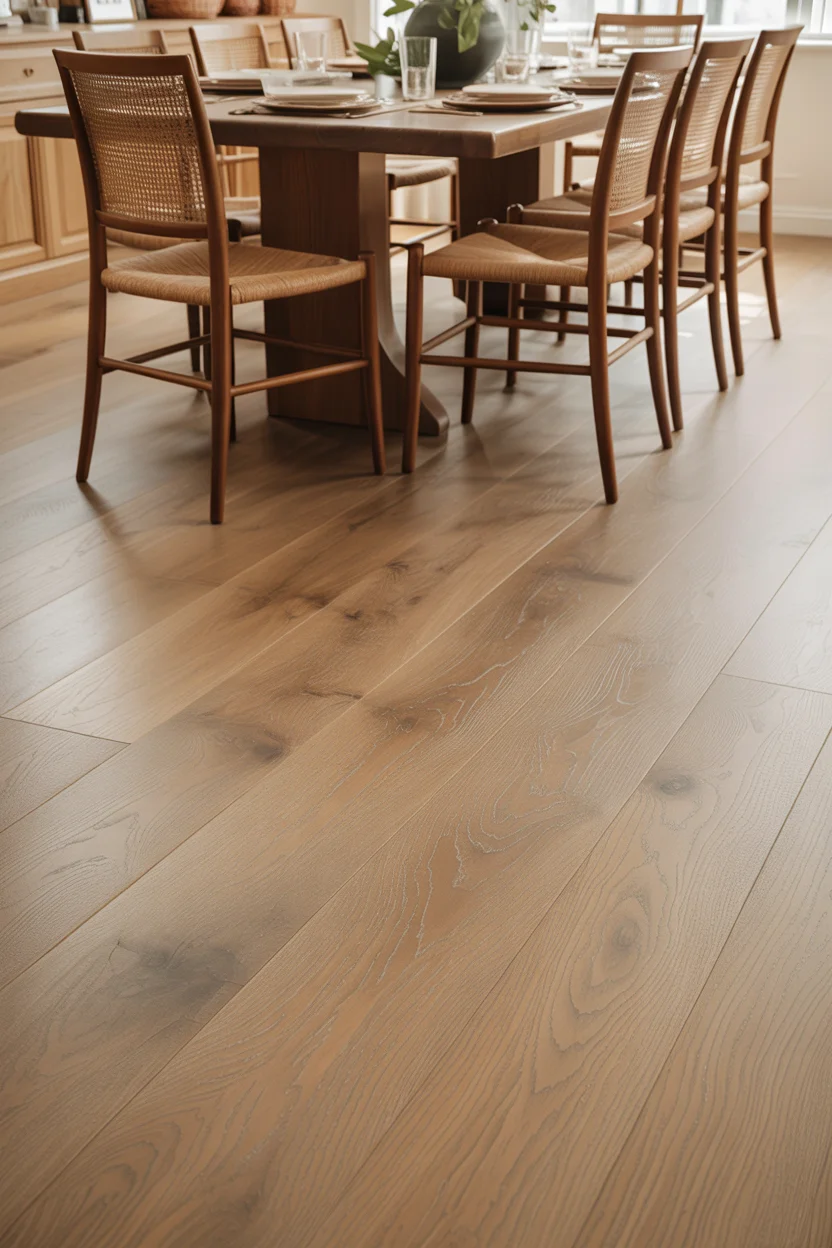
Flooring sets the foundation for your entire Japandi dining room aesthetic, and natural oak with a matte finish delivers the perfect balance of warmth and simplicity. Wide planks make spaces feel larger while showcasing the beautiful grain patterns that make wood endlessly interesting. The matte finish keeps the look contemporary and unpretentious, avoiding the high-gloss treatments that can feel too formal or dated.
This flooring choice works harmoniously with both Japanese minimalism and Scandinavian warmth, providing neutral grounding that lets your furniture and decor shine. The natural variations in tone and grain ensure your floor never looks flat or boring, even within a restrained color palette. Selecting the right flooring for your Japandi dining room ideas might seem like a background decision, but it fundamentally affects how the entire space feels—making this subtle choice surprisingly impactful.
13. Spindle-Back Chairs for Delicate Detail
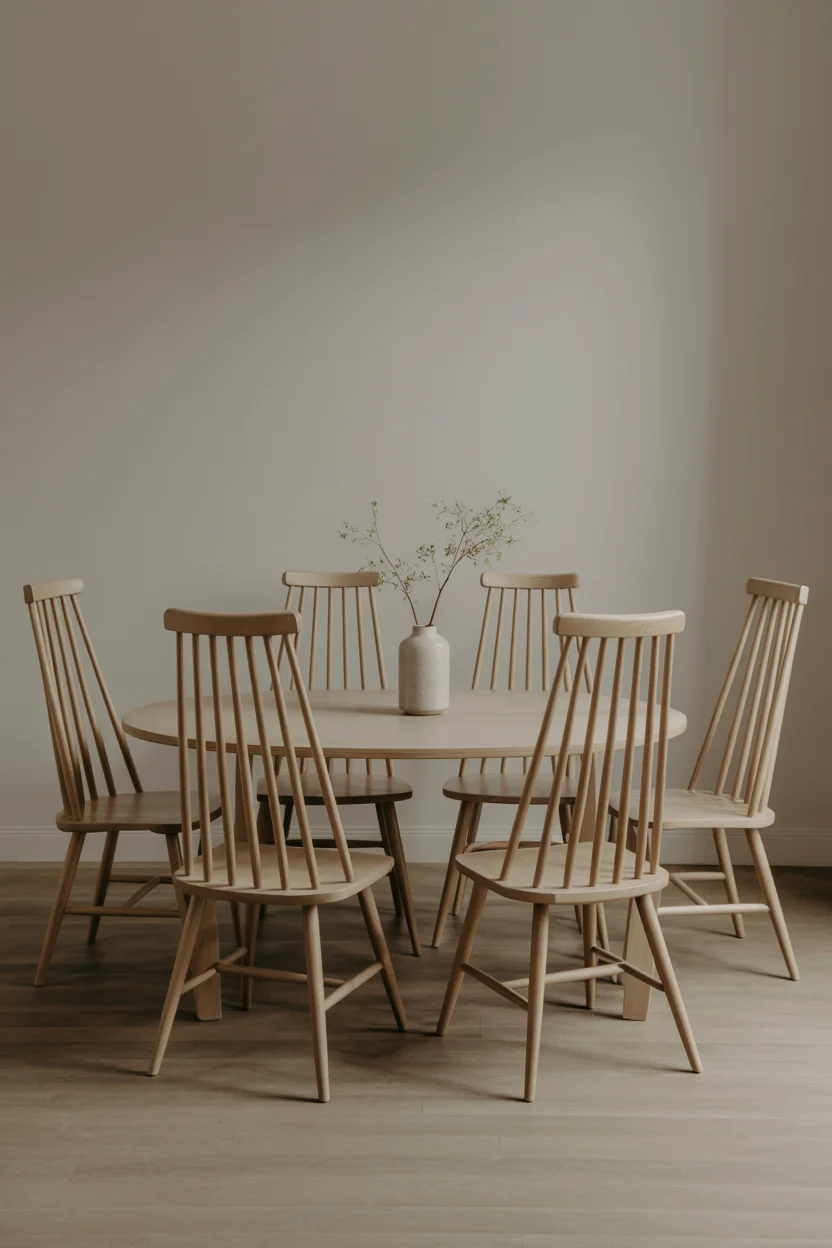
Spindle-back chairs bring delicate architectural detail to Japandi dining rooms without overwhelming the minimalist aesthetic. The vertical lines created by the spindles add rhythmic pattern and visual texture while maintaining an overall sense of lightness and transparency. This chair style has appeared in various cultures for centuries, making it a timeless choice that won’t feel dated in a few years.
The slim profile of spindle-back chairs makes dining rooms feel more spacious compared to upholstered or solid-back alternatives. In light wood finishes, they practically disappear while still providing necessary function and subtle beauty. Incorporating these chairs into your Japandi dining room ideas demonstrates how traditional furniture forms can work beautifully in contemporary spaces when you select simple, well-proportioned versions that respect both the past and present.
14. Sliding Barn Door in Light Wood Finish
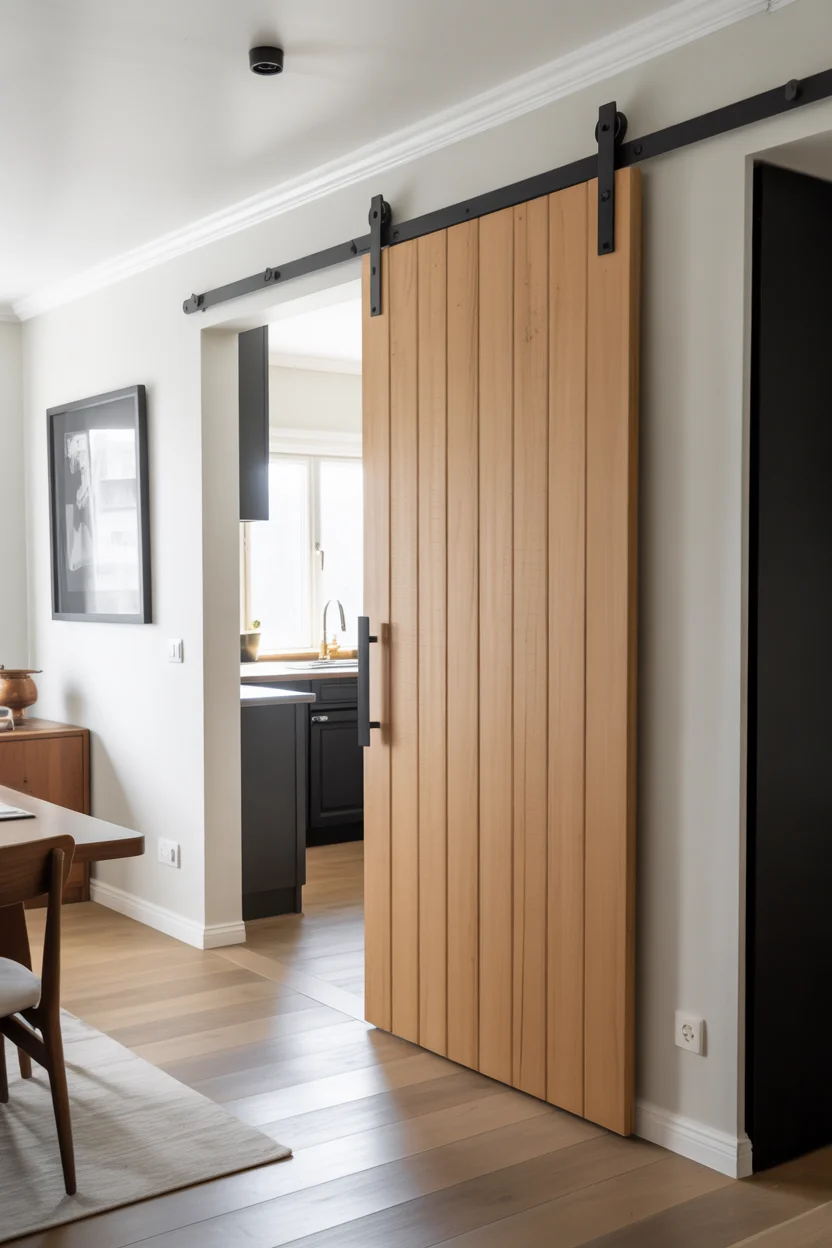
Sliding barn doors solve spatial challenges with style, offering privacy and separation without the clearance requirements of traditional swinging doors. In light wood finishes, they add warmth and architectural character while maintaining the clean aesthetic that Japandi design demands. The visible grain patterns and honest materiality bring nature indoors, connecting your dining space to the organic elements central to this design style.
Minimalist black hardware provides functional contrast without overwhelming the door’s simple beauty. This solution works particularly well in open-plan homes where you occasionally want to separate cooking mess from dining elegance or close off spaces for intimate gatherings. Including sliding doors in your Japandi dining room ideas adds flexibility to how you use your space, proving that beautiful design should always enhance lifestyle rather than restrict it.
15. Bouclé Upholstered Bench for Textural Contrast
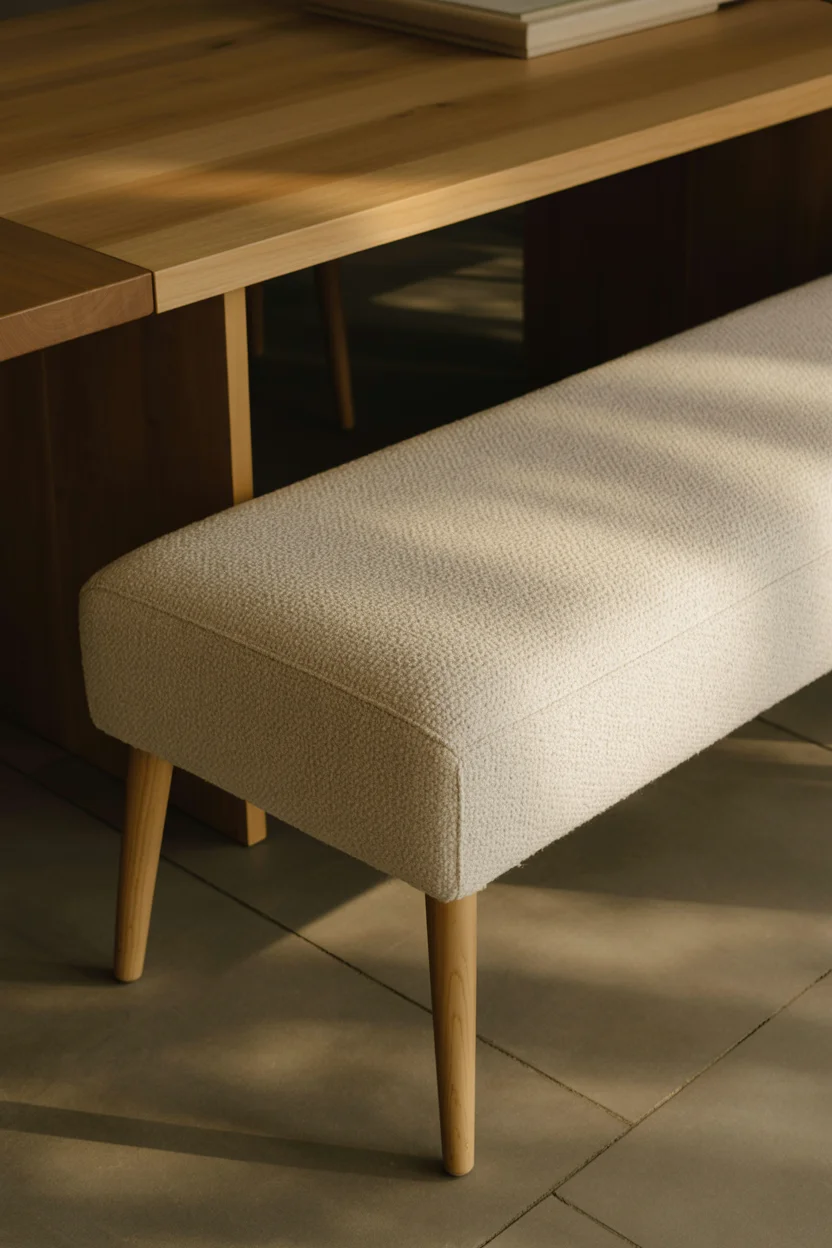
Bouclé upholstery introduces irresistible texture into Japandi dining rooms, making neutral palettes feel rich and inviting. The fabric’s characteristic loops and nubs catch light in constantly changing ways, creating visual interest that shifts throughout the day. This tactile element invites touch and makes seating feel luxurious while staying within the neutral color story that defines Japandi aesthetics.
A low-profile bench in bouclé offers comfortable, casual seating that encourages guests to settle in for long meals and extended conversation. The combination of soft upholstery with simple wooden legs exemplifies the Scandinavian concept of hygge—creating cozy comfort within clean-lined design. By incorporating this element into your Japandi dining room ideas, you ensure your space feels as good to touch and use as it looks, creating rooms that engage all the senses.
16. Concrete Pendant Light for Industrial Softness
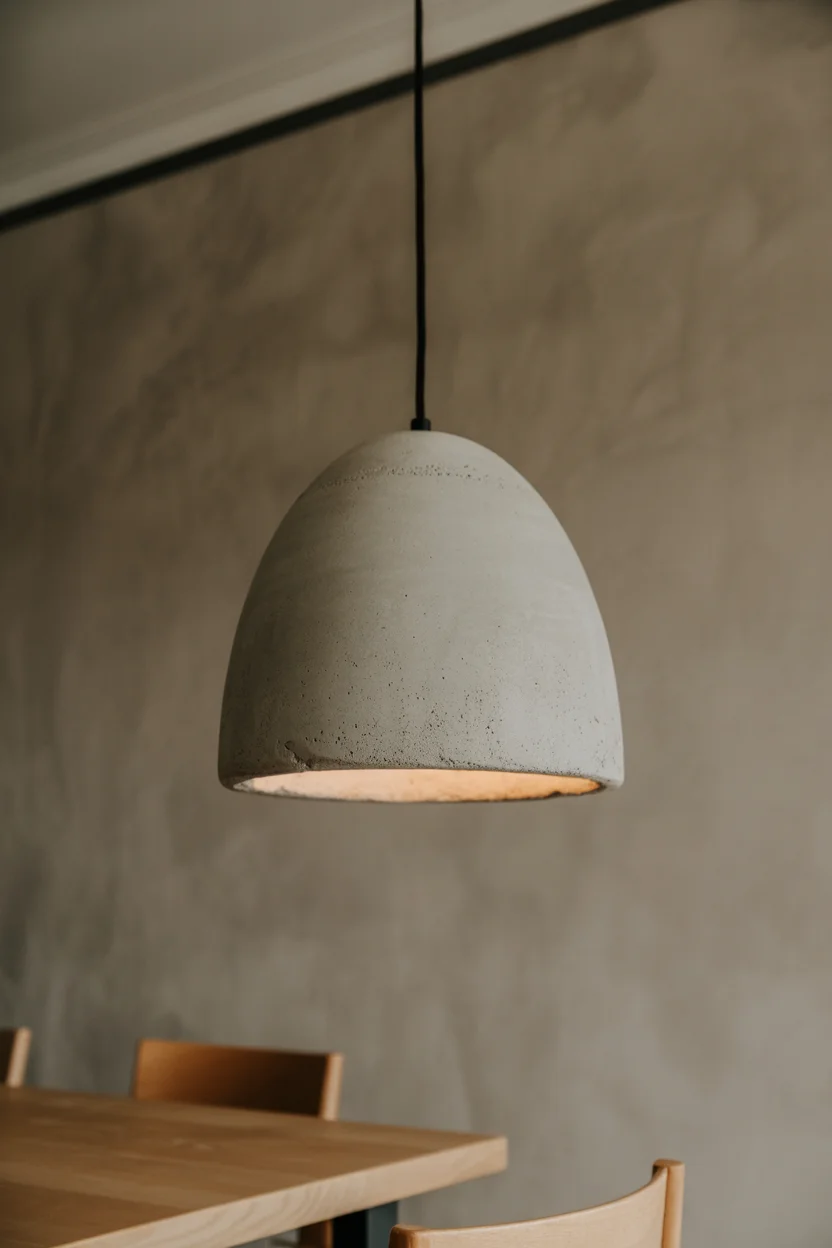
Concrete might seem like an unexpected choice for Japandi dining rooms, but its natural gray tones and honest materiality fit perfectly within this aesthetic. A handcrafted concrete pendant adds subtle weight and grounding presence, balancing lighter wood elements throughout the space. The material’s raw, unfinished quality aligns with wabi-sabi appreciation for honest materials that show their true nature rather than pretending to be something else.
The matte surface and simple dome shape keep the fixture feeling calm rather than industrial or harsh. Concrete’s thermal mass actually makes the space feel more grounded and permanent, creating psychological comfort alongside visual interest. Choosing unexpected materials like concrete for your Japandi dining room ideas demonstrates sophisticated design thinking—understanding that this style isn’t about following a formula but about thoughtfully combining natural materials, honest finishes, and functional beauty.
17. Floor-to-Ceiling Sheer Curtains for Soft Light
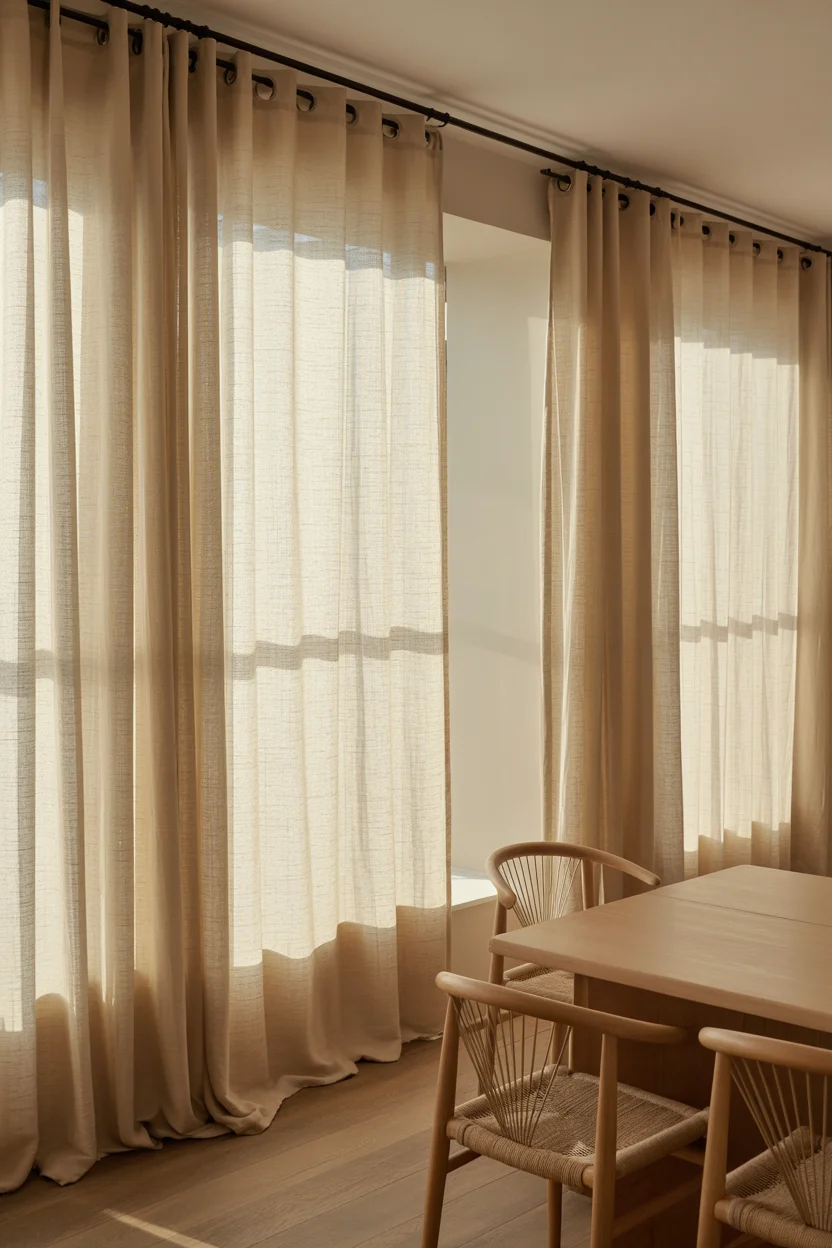
Floor-to-ceiling sheer curtains transform harsh daylight into the soft, even illumination that makes Japandi dining rooms feel so serene. Mounting curtains at ceiling height rather than just above the window creates vertical emphasis that makes rooms feel more spacious and architecturally refined. Natural linen in ivory or cream tones warms the light filtering through while maintaining privacy without complete darkness.
The gentle movement of lightweight fabric adds life and organic motion to a space otherwise filled with static furniture. This subtle animation makes rooms feel alive and breathing rather than frozen or staged. Incorporating floor-to-ceiling sheers into your Japandi dining room ideas is one of the most impactful yet simple changes you can make, fundamentally altering how light behaves in your space and creating that coveted soft, glowing atmosphere.
18. Whitewashed Brick Accent Wall
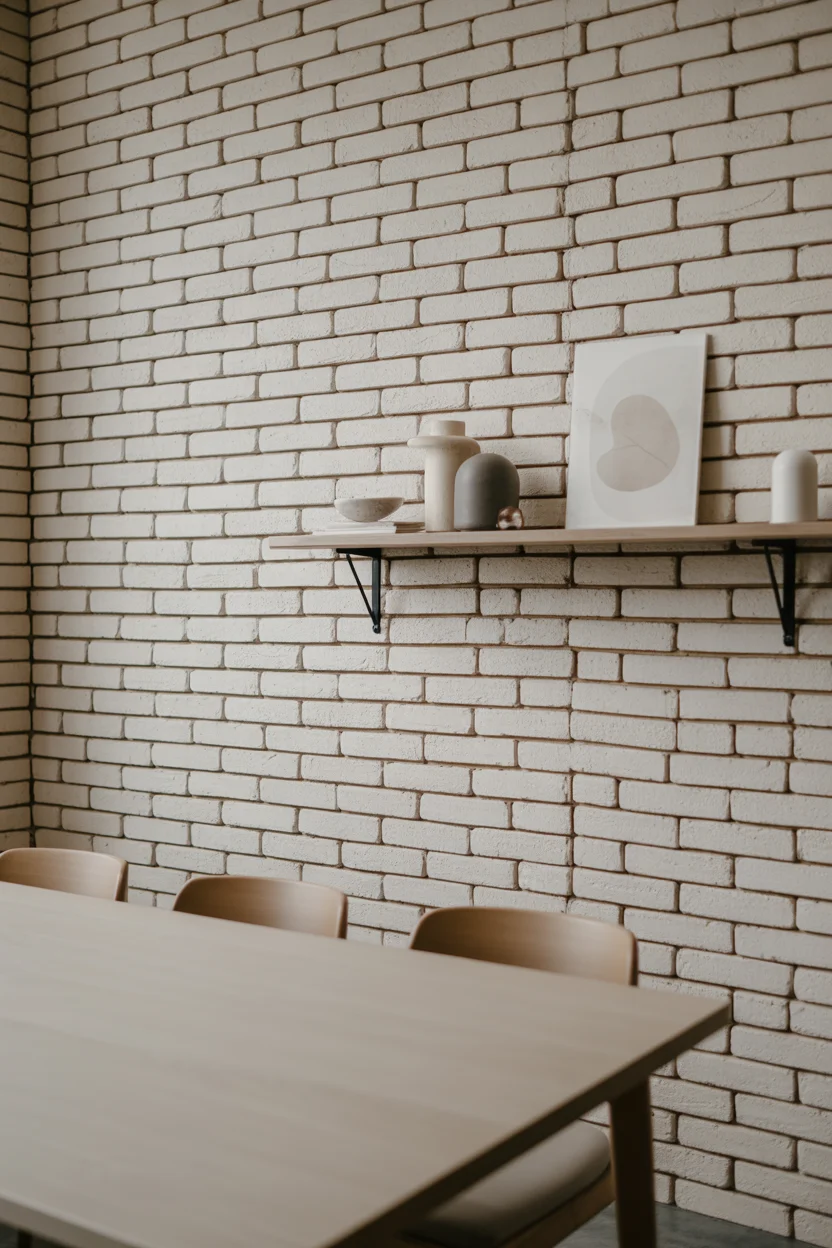
Whitewashed brick adds architectural texture and history to Japandi dining rooms while maintaining the neutral palette essential to this style. The technique allows the brick’s natural patterns and dimensional quality to show through while toning down any reddish or orange undertones. This treatment creates a feature wall that adds significant visual interest without the boldness of exposed natural brick or the flatness of plain drywall.
The subtle shadows created by mortar lines and slightly irregular brick surfaces make the wall engaging from different angles and lighting conditions throughout the day. This ever-changing quality keeps neutrals feeling dynamic rather than static. Including whitewashed brick in your Japandi dining room ideas works particularly well in older homes where you can celebrate existing architectural features, or in new construction where you want to add character and depth to otherwise plain walls.
19. Minimalist Credenza with Hidden Storage
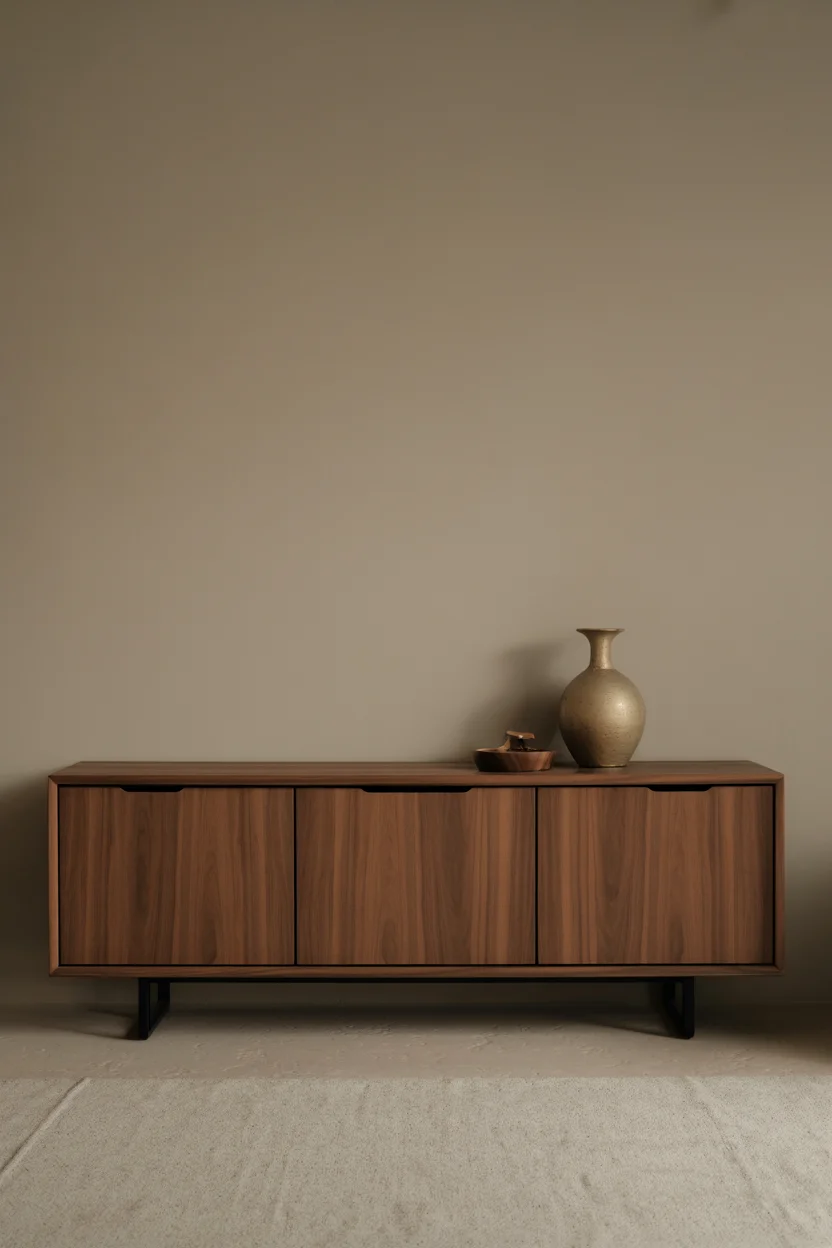
A minimalist credenza serves as the unsung hero of Japandi dining rooms, providing essential storage that keeps clutter hidden and surfaces clear. Push-to-open mechanisms eliminate visible hardware, maintaining the clean lines that define this aesthetic. The low profile keeps sightlines open and the room feeling spacious, while the light walnut finish adds warmth without visual weight.
The credenza’s real magic lies in what it conceals—table linens, serving pieces, candles, and all the practical items dining rooms require but don’t need on display. This hidden storage allows you to maintain the minimal, uncluttered aesthetic Japandi design demands while accommodating real-life needs. By including smart storage solutions in your Japandi dining room ideas, you create spaces that look beautiful effortlessly because everything has its place, making tidiness sustainable rather than aspirational.
20. Dried Floral Arrangements for Lasting Natural Beauty

Dried florals bring the beauty of nature into Japandi dining rooms in a low-maintenance, sustainable way that aligns perfectly with this style’s principles. Preserved grasses, seed pods, and branches in their natural neutral tones add organic texture and sculptural interest without the vivid colors that might disrupt the calm palette. These arrangements last for months, making them both practical and beautiful—a combination Japandi design always seeks.
The vertical nature of dried arrangements draws the eye upward, adding height variation that makes rooms feel more dynamic. Unlike fresh flowers that require regular replacement, dried botanicals evolve slowly, developing character as they age and shift position. Incorporating dried arrangements into your Japandi dining room ideas demonstrates respect for natural materials, appreciation for subtle beauty, and commitment to sustainable choices that reduce waste while maintaining beauty.
21. Meditation Corner with Floor Cushions
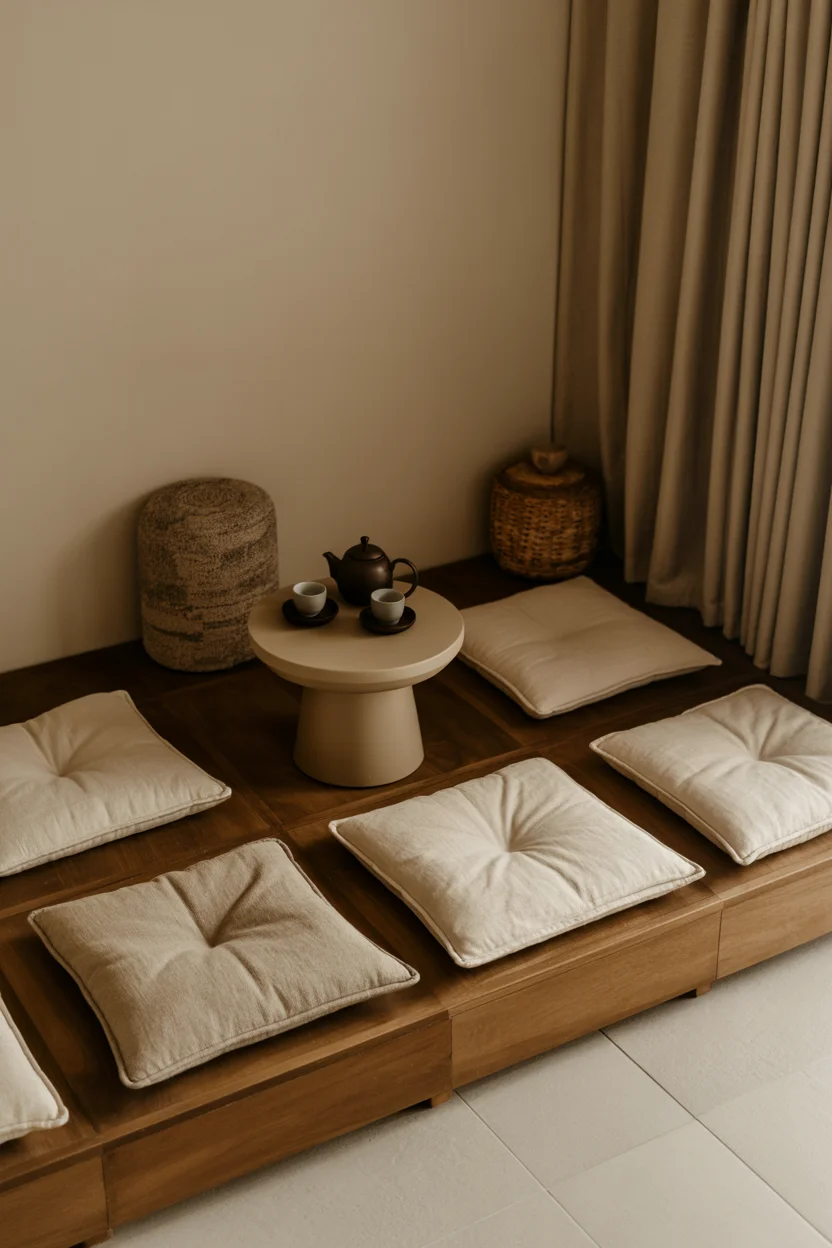
Creating a meditation or tea corner within your dining room expands how you use the space, honoring the Japanese tradition of mindful pauses throughout the day. Floor cushions on a low platform invite you to sit differently, changing your perspective and encouraging a slower pace. This dedicated area for tea, reading, or quiet contemplation makes your dining room more than just a place for meals—it becomes a sanctuary for various forms of nourishment.
The low-profile seating creates visual variety within the room, breaking up the standard table-and-chairs arrangement with an alternative gathering space. This flexibility allows your dining room to accommodate different activities and moods, from formal dinners to casual floor picnics to solitary morning tea. Including a meditation corner in your Japandi dining room ideas demonstrates the style’s deeper philosophy—that our homes should support not just our physical needs but our emotional and spiritual well-being too.
Conclusion:
These Japandi dining room ideas prove that neutral palettes can feel vibrant, warm, and endlessly interesting when you layer textures, embrace natural materials, and honor both Japanese and Scandinavian design principles. By focusing on quality over quantity, celebrating imperfection, and creating spaces that serve both function and soul, you’ll design a dining room that nourishes everyone who gathers there. Start with one idea that resonates, and watch your space transform.

Join The Discussion