

Introduction
Your master bedroom should be more than just a place to sleep—it’s your personal sanctuary. Whether you’re drawn to minimalist elegance, cozy bohemian vibes, or luxurious hotel-inspired designs, the right master bedroom ideas can completely transform your space. We’ve curated 21 stunning concepts that blend style with comfort, helping you create a retreat that reflects your personality while promoting rest and relaxation. Let’s explore these inspiring master bedroom ideas together.
1. Layered Neutral Bedding for Timeless Elegance
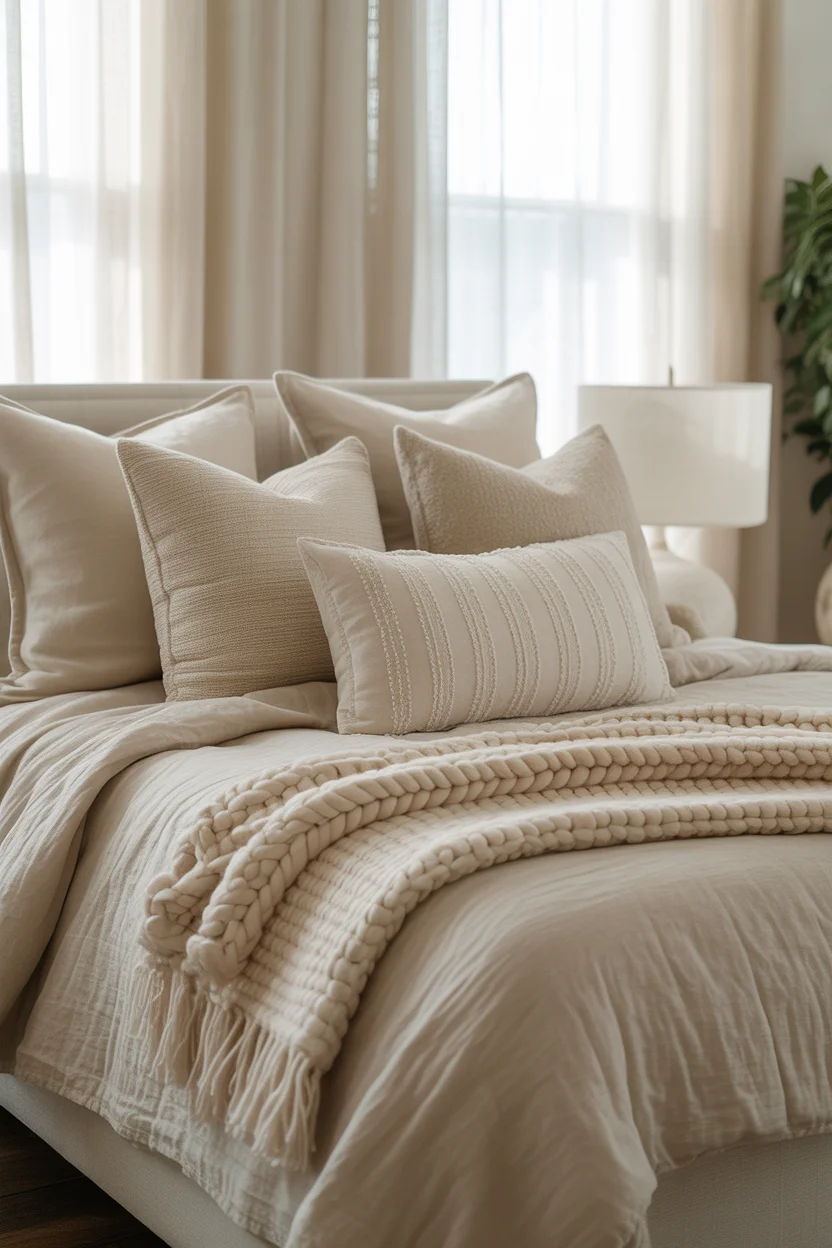
Neutral bedding creates an effortlessly sophisticated foundation for any master bedroom. By layering various shades of cream, ivory, and beige, you develop depth and visual interest without overwhelming the space. The key is mixing different textures—think linen duvet covers, cotton sheets, velvet pillows, and chunky knit throws. This approach allows you to change the room’s mood seasonally by simply swapping out accent pieces while maintaining a cohesive, timeless aesthetic that never goes out of style.
The beauty of neutral master bedroom ideas lies in their versatility and calming effect. These soft, earthy tones promote relaxation and create a hotel-like atmosphere that feels both luxurious and inviting. To prevent the space from feeling flat, incorporate varying fabric weights and weaves. Add dimension with quilted coverlets, waffle-weave blankets, or silk pillowcases. This layered approach not only looks beautiful but also provides practical comfort options for different seasons and temperature preferences throughout the year.
2. Statement Headboard as a Focal Point
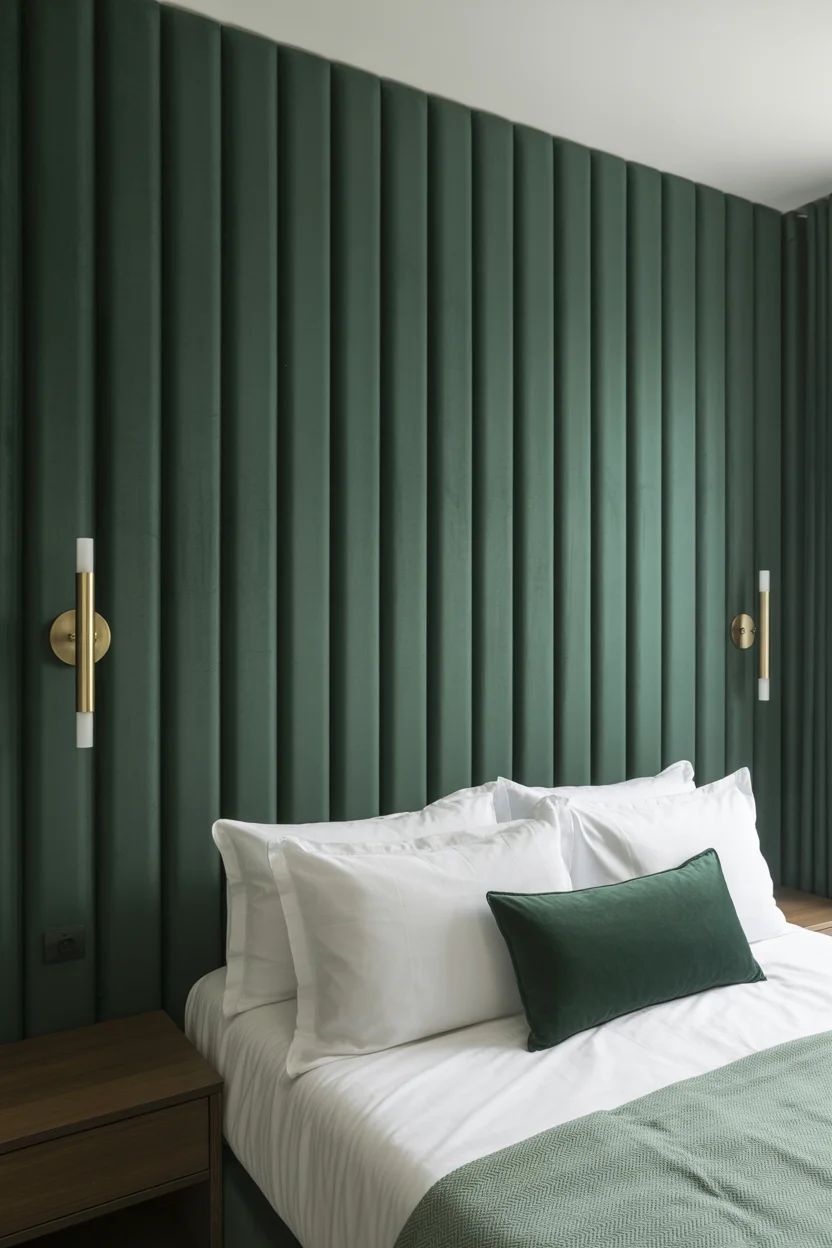
A statement headboard instantly elevates your master bedroom from ordinary to extraordinary. Whether you choose upholstered luxury, carved wood, or even a dramatic wall-mounted design, the headboard becomes the room’s natural focal point. Oversized headboards that reach toward the ceiling create a sense of grandeur and make the room feel more expensive. Consider bold colors like deep navy, forest green, or even dramatic black for maximum impact, or opt for textured neutrals if you prefer understated elegance.
When implementing this master bedroom idea, proportion is everything. Your headboard should be substantial enough to anchor the bed without overwhelming the entire room. For king-sized beds, consider headboards that extend 60-80 inches wide. The height can vary based on ceiling height, but floor-to-ceiling designs work beautifully in rooms with 9-foot ceilings or higher. Pair your statement headboard with simpler bedding and nightstands to let it truly shine as the star of your sleeping sanctuary.
View morehttps://dreamgardenspk.com/blog/
3. Moody Dark Walls for Cozy Sophistication
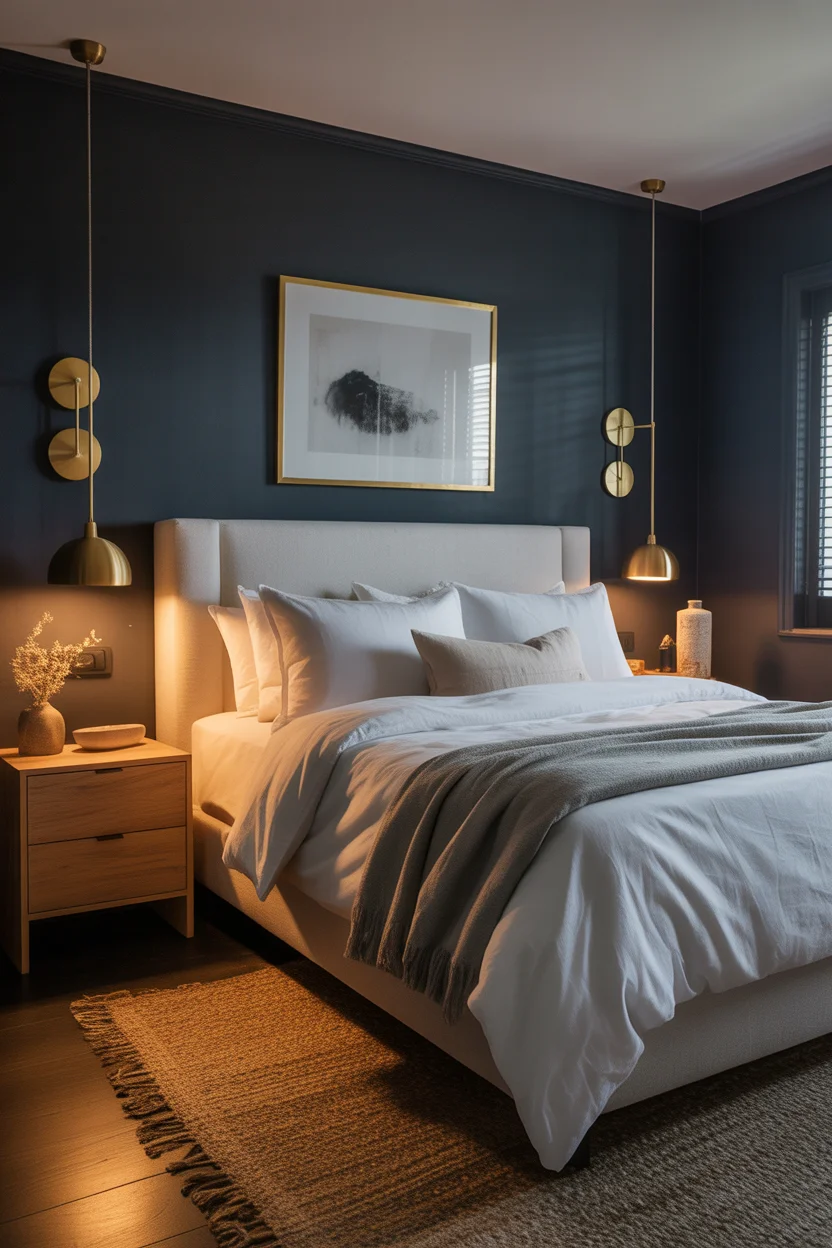
Dark wall colors have become increasingly popular in master bedroom ideas, and for good reason. Shades like navy, charcoal, deep green, or even black create an enveloping, intimate atmosphere perfect for sleep. Contrary to popular belief, dark colors don’t make rooms feel smaller—they actually blur boundaries, making walls recede and creating a sophisticated, womb-like retreat. The key is balancing the darkness with adequate lighting, light-colored bedding, and reflective surfaces that prevent the space from feeling cave-like.
To successfully execute moody master bedroom ideas, layer your lighting carefully. Install dimmer switches, incorporate bedside table lamps with warm bulbs, and consider wall sconces for ambient glow. Add texture through your bedding, rugs, and window treatments to create depth and prevent the dark walls from appearing flat. Metallic accents in brass, gold, or copper add warmth and catch light beautifully against dark backgrounds. This bold design choice rewards those willing to embrace drama, resulting in a truly unique and restful sanctuary.
4. Canopy Bed for Romantic Drama
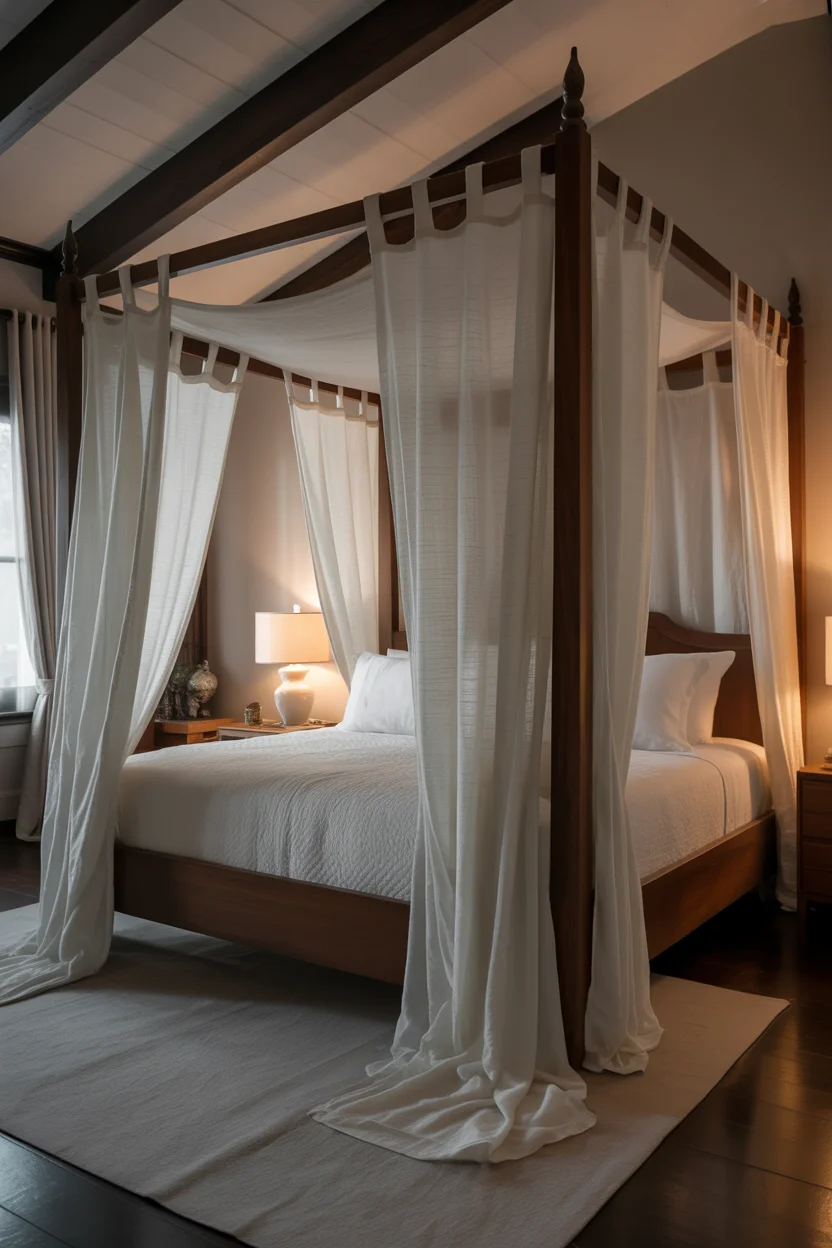
Canopy beds bring instant romance and architectural interest to master bedrooms. Whether you choose a traditional four-poster design, a minimalist metal frame, or even a ceiling-mounted option, canopies create a room within a room feeling. Draping the frame with sheer fabrics adds softness and filters light beautifully, while leaving it bare showcases the structural beauty of the frame itself. This classic master bedroom idea works in both traditional and contemporary spaces when styled appropriately with coordinating décor.
The practical benefits of canopy beds extend beyond aesthetics. The enclosed feeling promotes better sleep by creating a psychological boundary that signals rest time. Heavier curtains can also block light and provide additional privacy if needed. When selecting a canopy bed, consider your ceiling height—rooms with at least 9-foot ceilings accommodate these dramatic pieces best. Style your canopy with fabrics that complement your overall design: flowing linen for bohemian vibes, velvet for luxury, or leave it unadorned for modern minimalism.
5. Built-In Storage for Clutter-Free Serenity
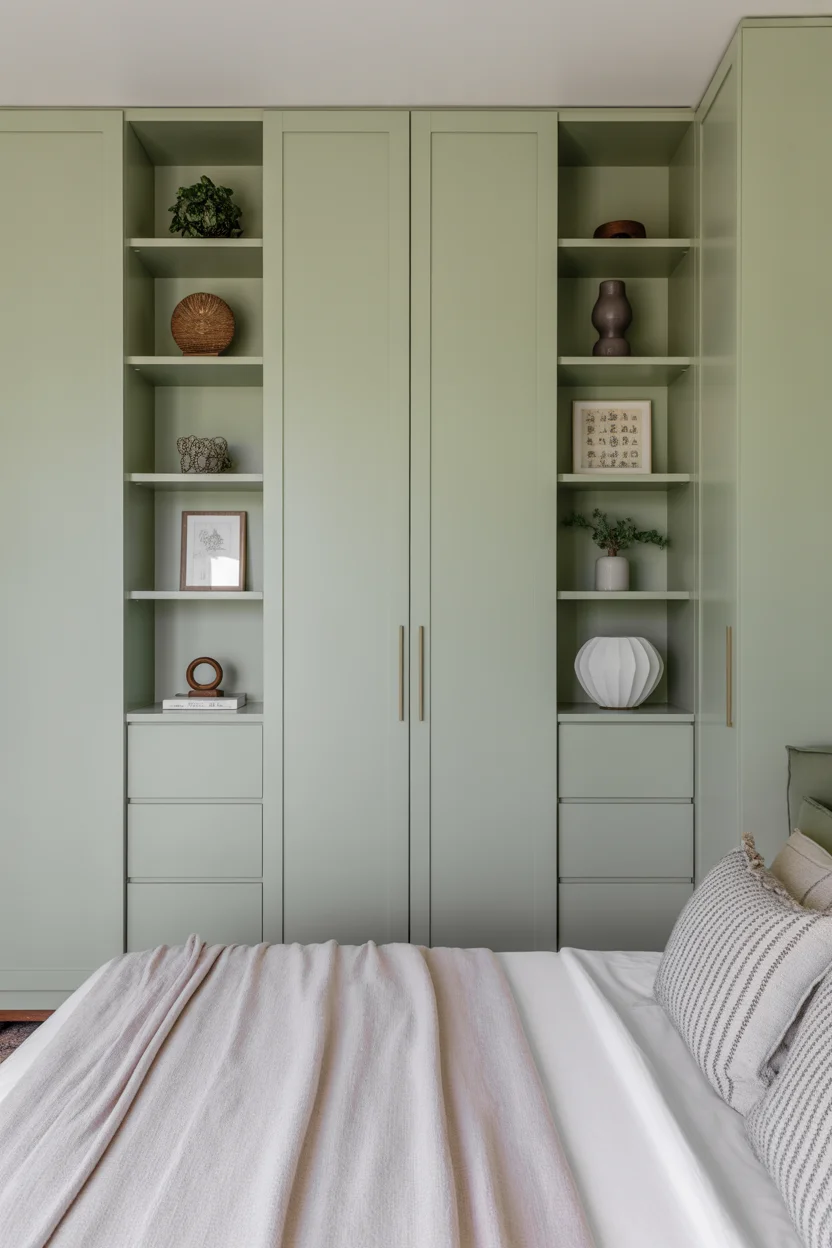
Built-in storage solutions represent some of the smartest master bedroom ideas for maintaining a peaceful, clutter-free environment. Custom cabinetry maximizes every inch of available space, providing designated spots for clothing, shoes, accessories, and linens. Unlike freestanding furniture, built-ins create seamless, architectural looks that make rooms feel more spacious and intentionally designed. Flanking the bed with matching built-in units creates beautiful symmetry while offering easily accessible storage for books, charging stations, and nighttime essentials.
Investing in built-in storage pays dividends in both functionality and home value. Work with the room’s existing architecture, utilizing alcoves, awkward corners, and vertical space that would otherwise go unused. Paint built-ins the same color as walls for a cohesive look, or choose contrasting colors to make them statement features. Include a mix of closed cabinets for concealing clutter and open shelving for displaying beautiful objects. Incorporate LED strip lighting inside glass-front cabinets or on shelves to add ambiance and functionality to your master bedroom retreat.
6. Luxurious Sitting Area for Ultimate Relaxation
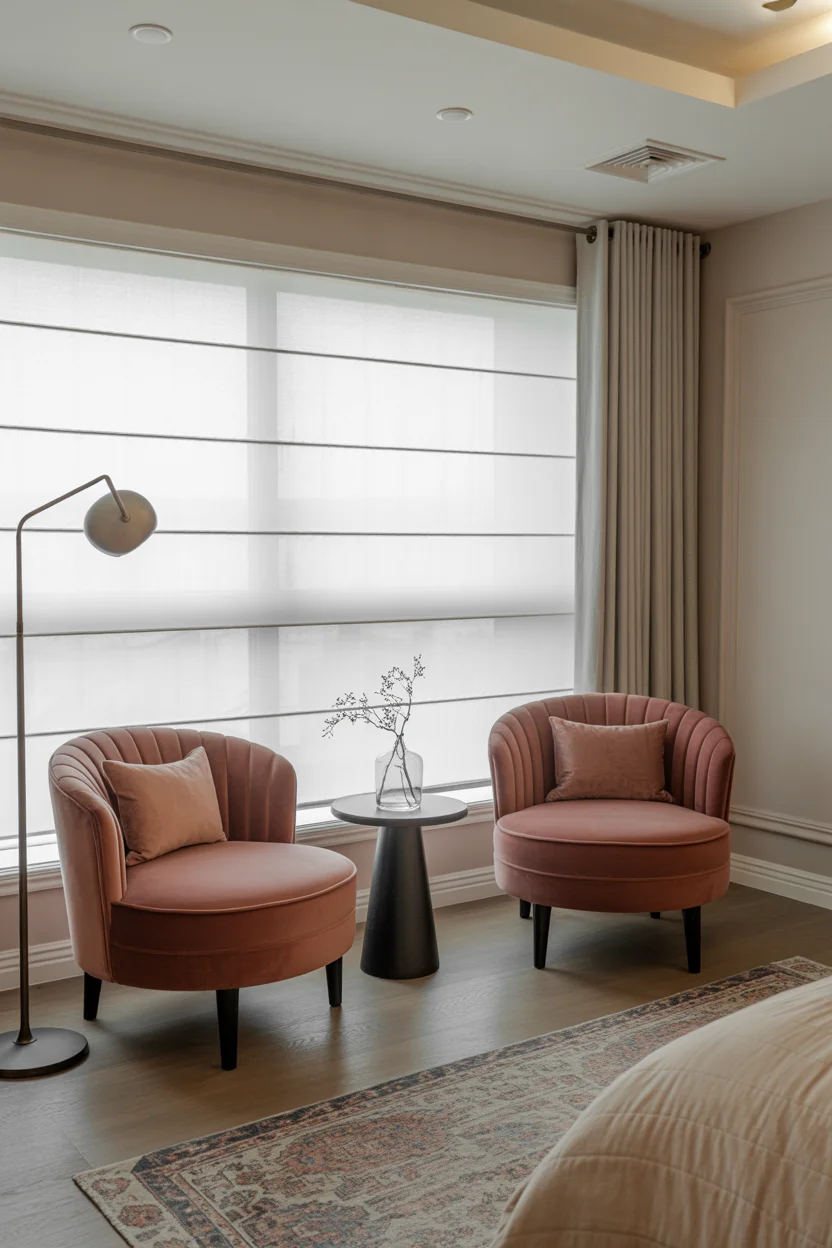
If space allows, incorporating a sitting area transforms your master bedroom into a true suite. This dedicated zone provides a place to read, enjoy morning coffee, or simply unwind without getting back into bed. The sitting area can be as simple as a comfortable chair with good lighting or as elaborate as a loveseat with coordinating side tables and ottoman. This master bedroom idea works especially well in larger rooms, but even modest spaces can accommodate a single accent chair tucked into a corner with purposeful styling.
When designing your sitting area, create visual separation from the sleeping zone using area rugs, different lighting, or even a partial room divider. Choose comfortable, inviting furniture that beckons you to linger—this isn’t just for show. Position seating near windows to take advantage of natural light for reading, or create a cozy corner away from the bed for a distinct retreat-within-a-retreat feeling. Style with personal touches like favorite books, a soft throw blanket, and a small table for beverages to make this space truly functional.
Explore morehttp://pinterest.com/Dreamgardenshome/
7. Gallery Wall Above the Bed
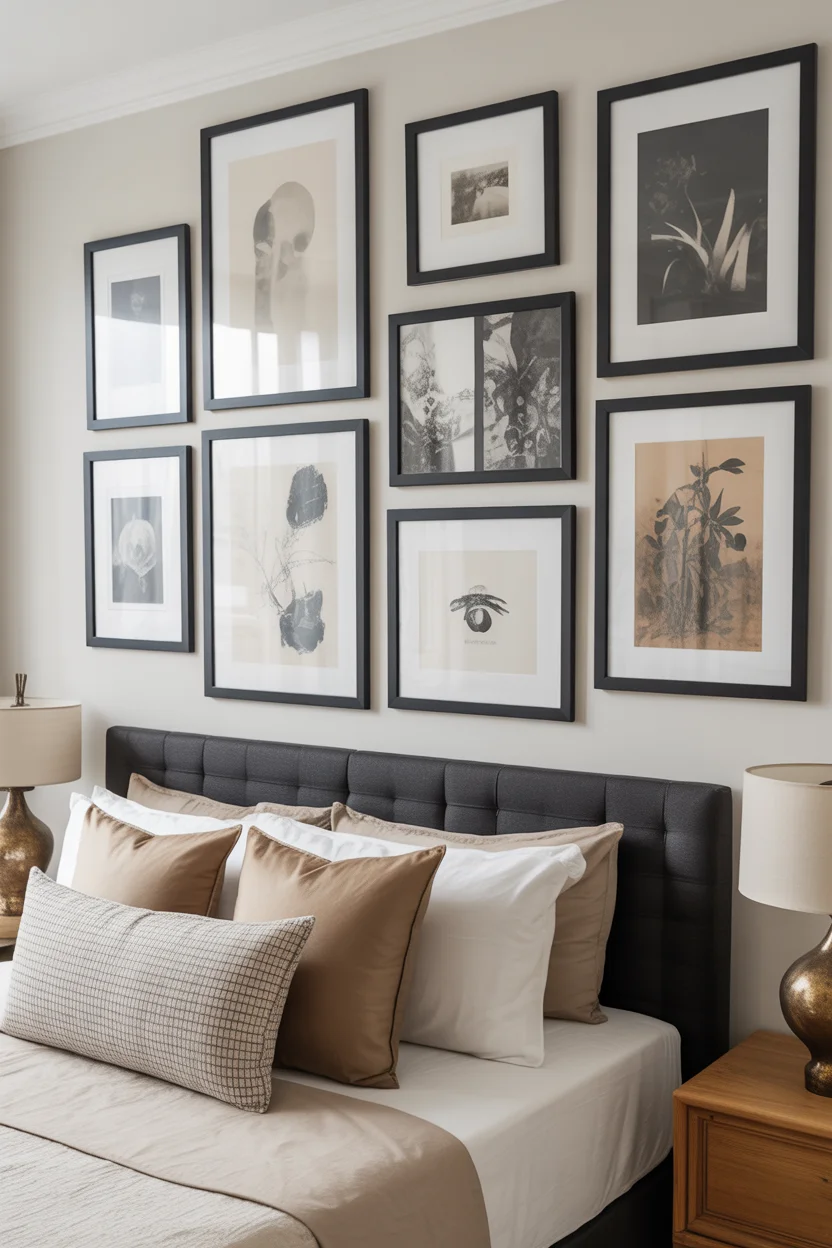
Gallery walls bring personality and visual interest to master bedrooms in ways that single statement pieces cannot. Above the bed is prime real estate for showcasing art collections, family photos, or meaningful prints. The key to successful gallery wall master bedroom ideas is creating cohesion through consistent framing, color palettes, or themes while allowing each piece to contribute to the overall story. Start by arranging frames on the floor to experiment with layouts before committing to hammer and nails.
Scale matters when creating bedroom gallery walls. The entire arrangement should be proportional to your bed width—typically about two-thirds to three-quarters as wide as your headboard or mattress. Hang the bottom row of frames 8-12 inches above your headboard (or mattress if you don’t have a headboard) to create proper visual connection. Mix frame sizes and orientations to create dynamic movement, but maintain consistent spacing between pieces—usually 2-3 inches works well. This personalized approach to master bedroom décor makes your space feel curated and uniquely yours.
8. Natural Wood Accent Wall for Warmth
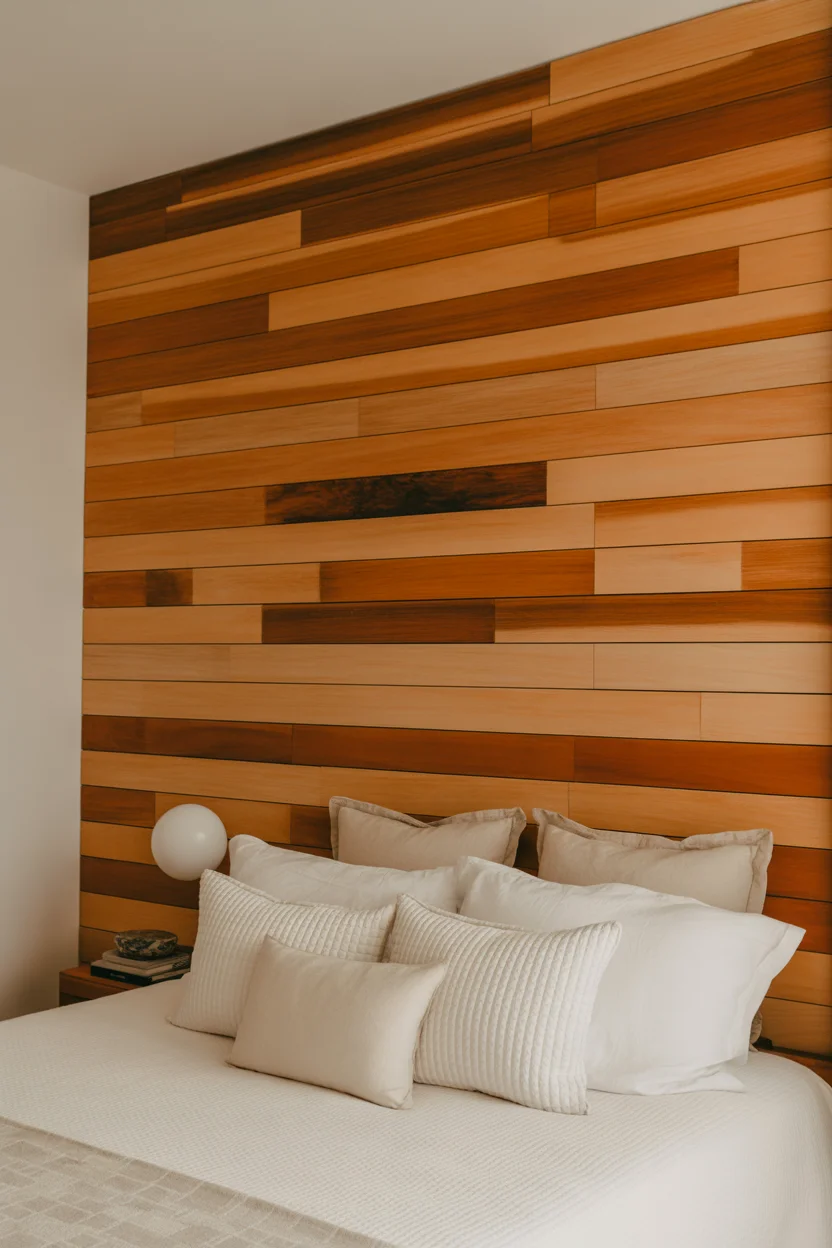
Wood accent walls introduce natural warmth and texture that instantly makes master bedrooms feel more inviting. Whether you choose reclaimed barn wood, sleek horizontal planks, or geometric wood tile patterns, this organic material adds depth and character impossible to achieve with paint alone. The beauty of wood accent wall master bedroom ideas lies in their versatility—from rustic farmhouse aesthetics to modern minimalist designs. The natural variation in grain and color creates visual interest without requiring additional artwork or decoration.
Installing a wood accent wall is more accessible than many homeowners realize. Options range from traditional tongue-and-groove planking to peel-and-stick wood panels that make this a weekend DIY project. Focus the wood treatment on the wall behind your bed to create a natural focal point that grounds the entire room. The horizontal orientation of planks can make walls appear wider, while vertical installation draws the eye upward, emphasizing ceiling height. Seal or finish the wood appropriately to ensure durability and easy cleaning in your sleeping space.
9. Oversized Mirror for Light and Space
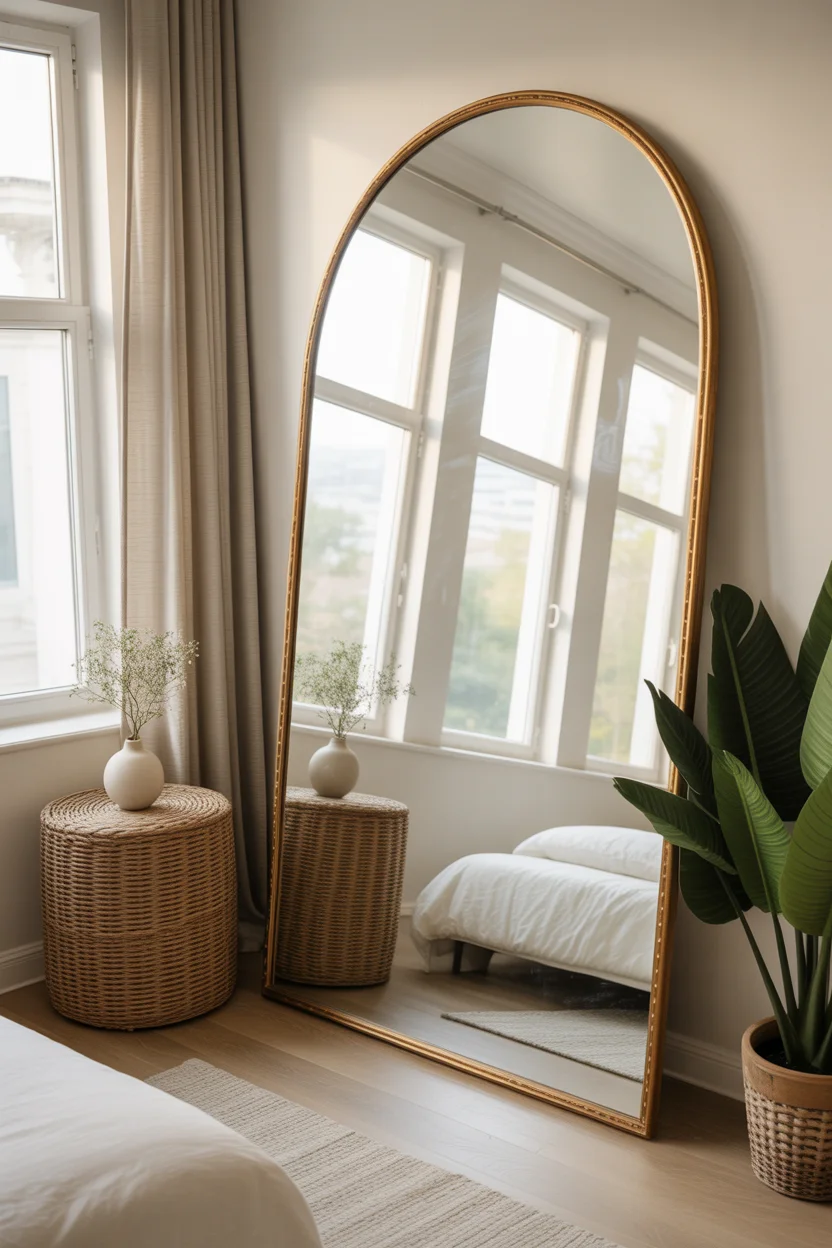
Oversized mirrors rank among the most effective master bedroom ideas for enhancing both light and perceived space. Large mirrors reflect natural and artificial light, making rooms feel brighter and more open. Whether you choose a floor-length leaning mirror, a wall-mounted statement piece, or even mirrored closet doors, the reflective surface adds dimension while serving practical purposes. Position mirrors opposite or adjacent to windows to maximize light reflection, creating an airier, more spacious feeling regardless of actual square footage.
The style of your mirror frame significantly impacts your bedroom’s overall aesthetic. Ornate gilt frames suit traditional or glam bedrooms, while simple black metal frames complement modern spaces beautifully. Arched mirrors add architectural interest and soften rectangular room shapes. For maximum impact, choose mirrors that are at least 3-4 feet tall, though floor-to-ceiling options create the most dramatic effect. Beyond aesthetics, oversized mirrors provide full-length views for getting dressed, making them both beautiful and functional additions to master bedroom spaces.
10. Layered Lighting for Ambiance and Function
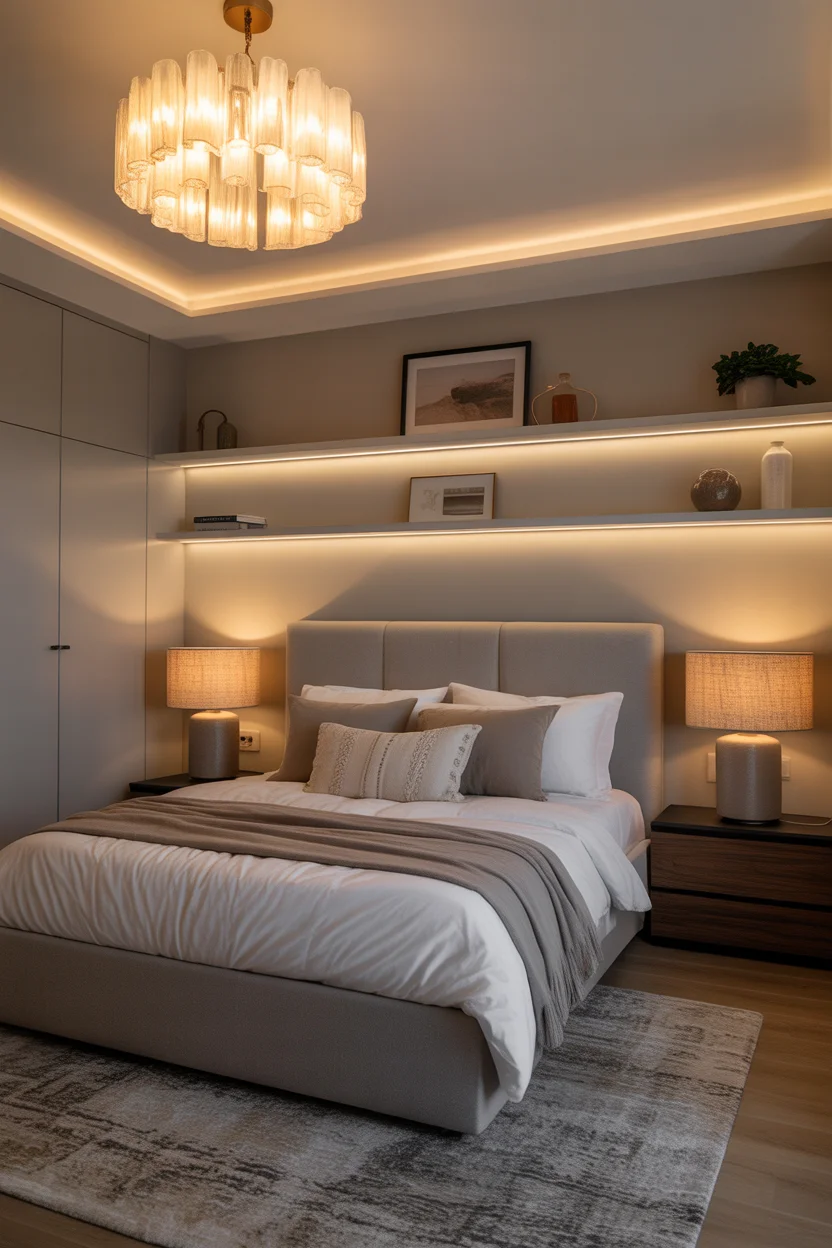
Thoughtful lighting design separates mediocre master bedrooms from truly exceptional ones. Layered lighting combines ambient, task, and accent illumination to create a flexible, functional space. Start with overhead fixtures for general illumination—chandeliers or flush-mounts depending on ceiling height. Add bedside table lamps or wall sconces for reading and nighttime navigation. Finally, incorporate accent lighting like LED strips, picture lights, or decorative string lights to add depth and atmosphere. This multi-source approach allows you to adjust lighting for different activities and moods.
Installing dimmer switches on all light circuits represents one of the smartest master bedroom ideas for controlling ambiance. Bright lighting energizes you while getting ready in the morning, while dimmed lights signal your body it’s time to wind down in the evening. Consider the color temperature of your bulbs too—warm white (2700K-3000K) creates cozy, relaxing atmospheres better than cooler daylight bulbs. Layer your lighting at different heights throughout the room to eliminate harsh shadows and create visual interest. Well-designed lighting transforms your bedroom from simply functional to genuinely luxurious.
11. Botanical Prints and Greenery for Fresh Energy
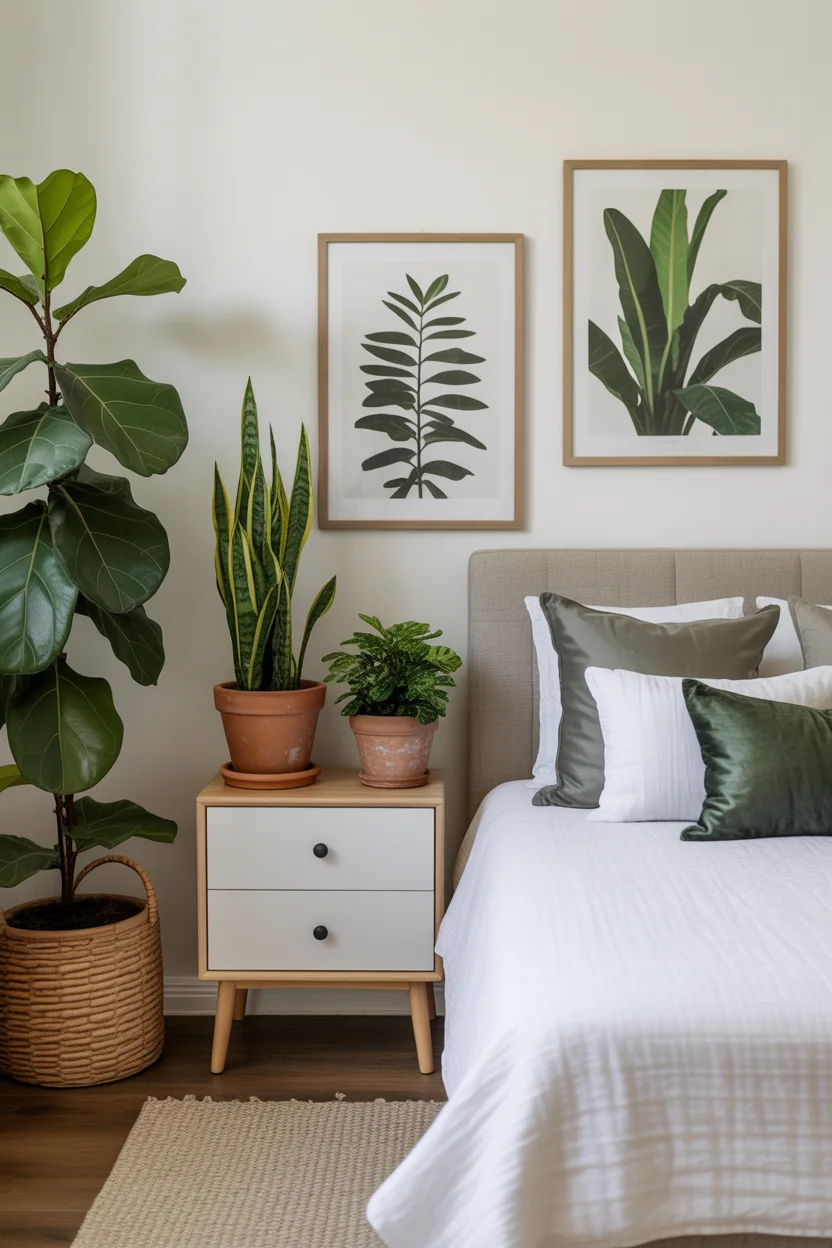
Incorporating plants and botanical elements creates some of the most refreshing master bedroom ideas. Living greenery purifies air, adds organic shapes that soften hard architectural lines, and connects your indoor space with nature. Low-maintenance options like snake plants, pothos, and ZZ plants thrive in bedroom conditions and require minimal care. Position larger plants in corners to fill empty space, place medium-sized plants on dressers or wide windowsills, and add small succulents to nightstands for layered greenery throughout the room.
Complement living plants with botanical artwork for a cohesive nature-inspired theme. Framed pressed flowers, vintage botanical illustrations, or modern leaf prints enhance the organic atmosphere without requiring watering. This approach works especially well in master bedrooms with limited natural light where maintaining numerous living plants proves challenging. The combination of green hues and natural forms creates psychologically soothing environments that promote rest. Even artificial plants can work if chosen carefully—today’s faux botanicals look remarkably realistic and provide the visual benefits without the maintenance commitment.
12. Textured Wallpaper for Depth and Interest
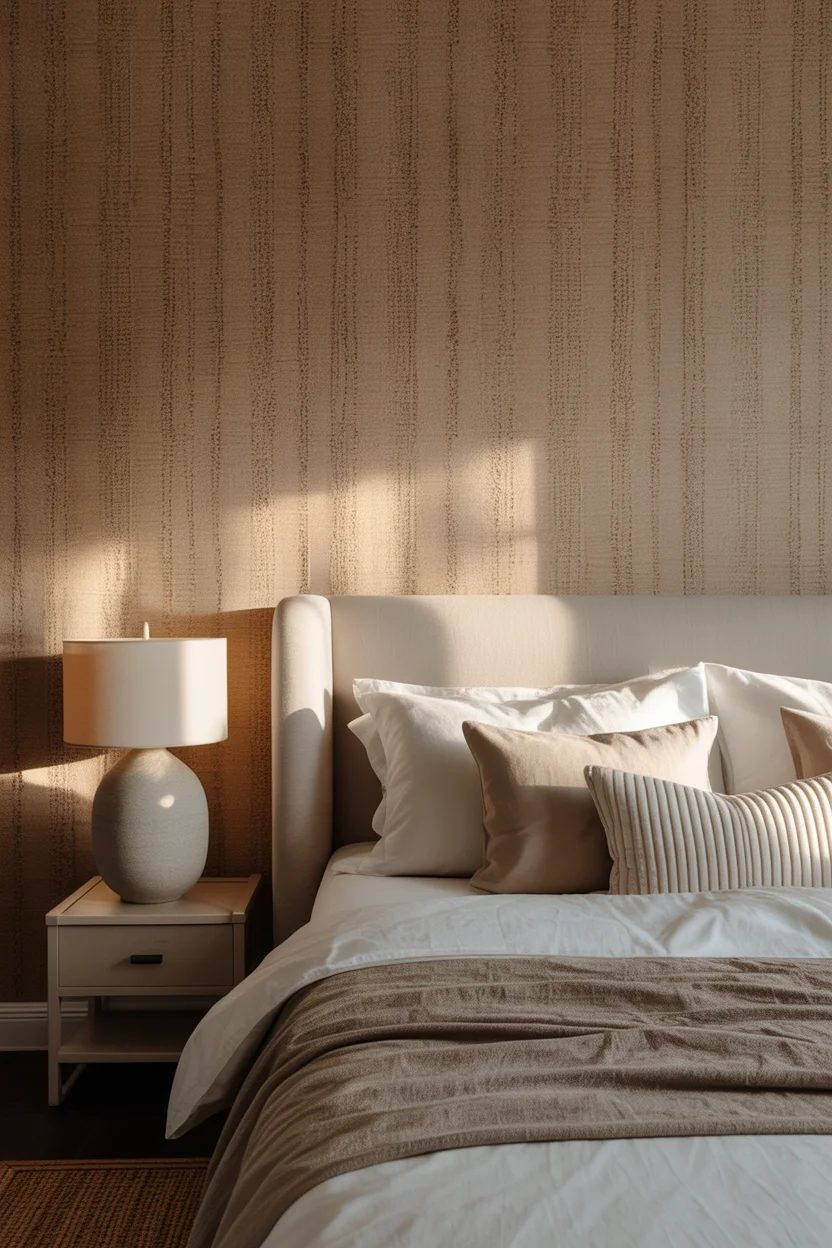
Textured wallpaper offers an elegant alternative to paint, adding dimensional interest that transforms master bedrooms from flat to sophisticated. Materials like grasscloth, linen-weave, or embossed patterns create subtle luxury that paint simply cannot replicate. The texture catches and reflects light differently throughout the day, creating dynamic visual interest. Limiting textured wallpaper to a single accent wall—typically behind the bed—provides impact without overwhelming the space. This master bedroom idea works across design styles from coastal to contemporary when you select appropriate patterns and colors.
Installing wallpaper has become increasingly accessible with peel-and-stick options that make it a DIY-friendly weekend project. Traditional paste wallpapers remain the premium choice for longevity and luxury feel, especially with natural materials like grasscloth or silk. Consider the room’s existing elements when selecting wallpaper—choose complementary colors and scales that harmonize with your bedding, furniture, and overall aesthetic. Textured neutral wallpapers provide sophisticated backdrops for bold bedding, while patterned options work best with solid-colored linens. The investment in quality wallpaper pays dividends in elevated ambiance and visual richness.
13. Upholstered Bench at Foot of Bed
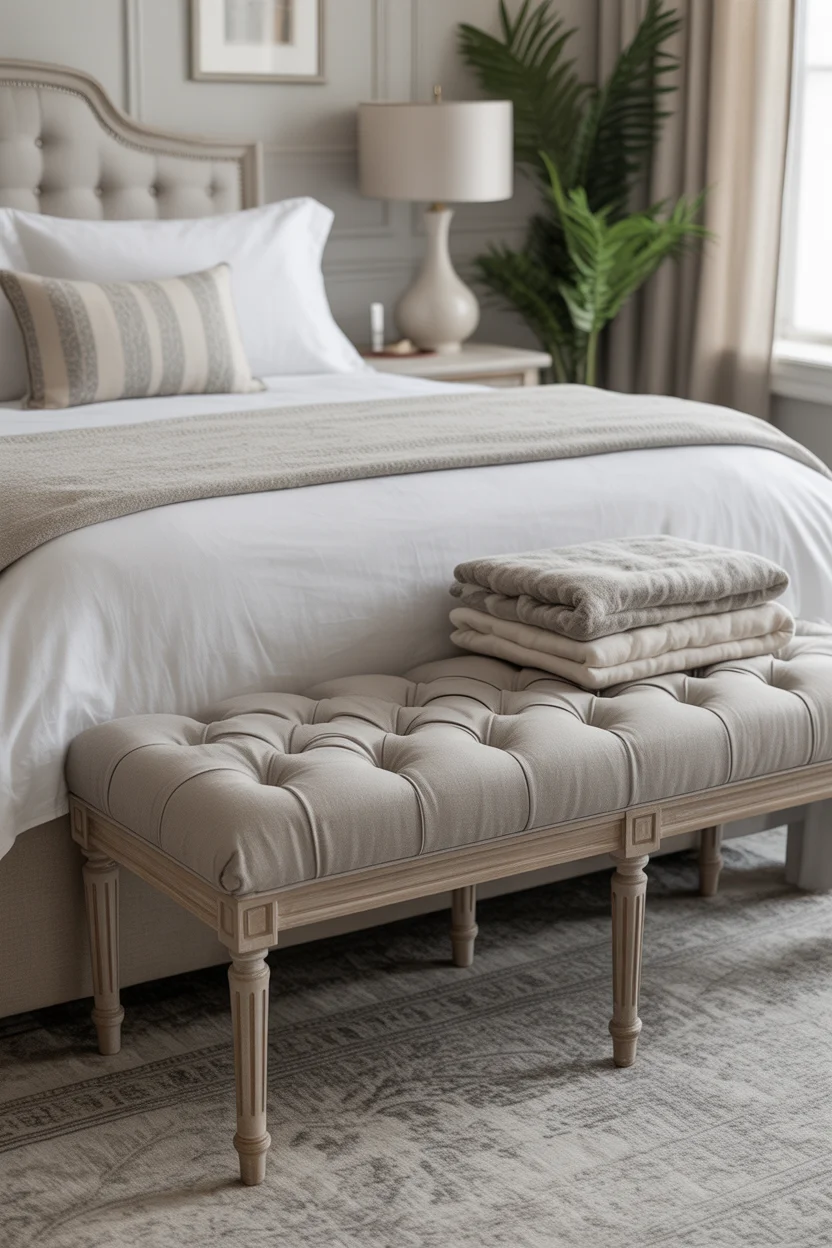
An upholstered bench at the bed’s foot combines practicality with polished aesthetics in master bedroom ideas. This furniture piece provides convenient seating for putting on shoes, a surface for laying out tomorrow’s outfit, or a resting spot for decorative throws. Benches also visually ground the bed, making the sleeping area feel more complete and intentionally designed. Choose upholstery that either coordinates with your headboard for cohesion or contrasts with bedding for visual interest. The bench’s horizontal line adds balance to the bed’s vertical headboard.
Sizing your bed bench correctly ensures both function and proportion. The bench should be 12-24 inches shorter than your mattress width, allowing comfortable passage on either side. For king beds, a 60-inch bench works well, while queen beds pair nicely with 48-inch options. Consider storage benches with lift-up seats for concealing extra blankets, off-season clothing, or other bedroom items you want hidden but accessible. Style your bench with a coordinating throw or a couple accent pillows to tie it into your overall design scheme, transforming it from functional furniture into a decorative element.
14. Symmetrical Nightstand Styling for Balance
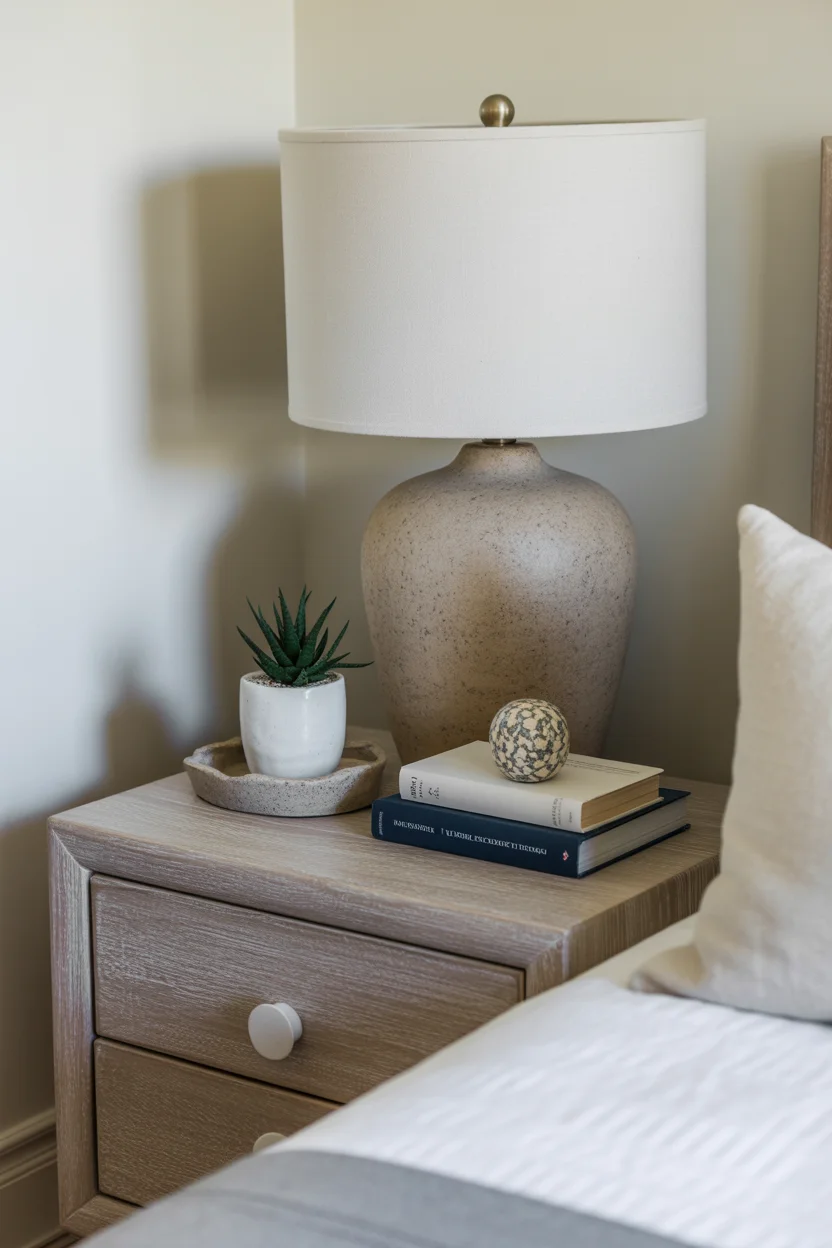
Symmetrical styling creates inherently calming master bedroom ideas that appeal to our natural preference for balance. Flanking your bed with matching nightstands styled identically establishes order and visual harmony. Each nightstand should feature a lamp for task lighting, a small decorative element like a plant or candle, and perhaps a small tray for corralling everyday items like jewelry or glasses. This mirrored approach creates hotel-like sophistication that feels professionally designed. The predictability of symmetry paradoxically makes spaces feel more luxurious and intentional.
Achieving successful symmetry requires discipline in both selection and styling. Choose nightstands of identical size, style, and color, then position them equidistant from the bed’s center. Replicate accessories on both sides—if one nightstand has a table lamp, the other should feature an identical or visually similar lamp. Heights matter too; lamp shades should align at the same level for true balance. This doesn’t mean your nightstands must be boring—you can still express personality through your choices, simply ensure those choices are mirrored. Symmetrical master bedroom styling creates restful, balanced spaces that promote relaxation.
15. Cozy Reading Nook by the Window
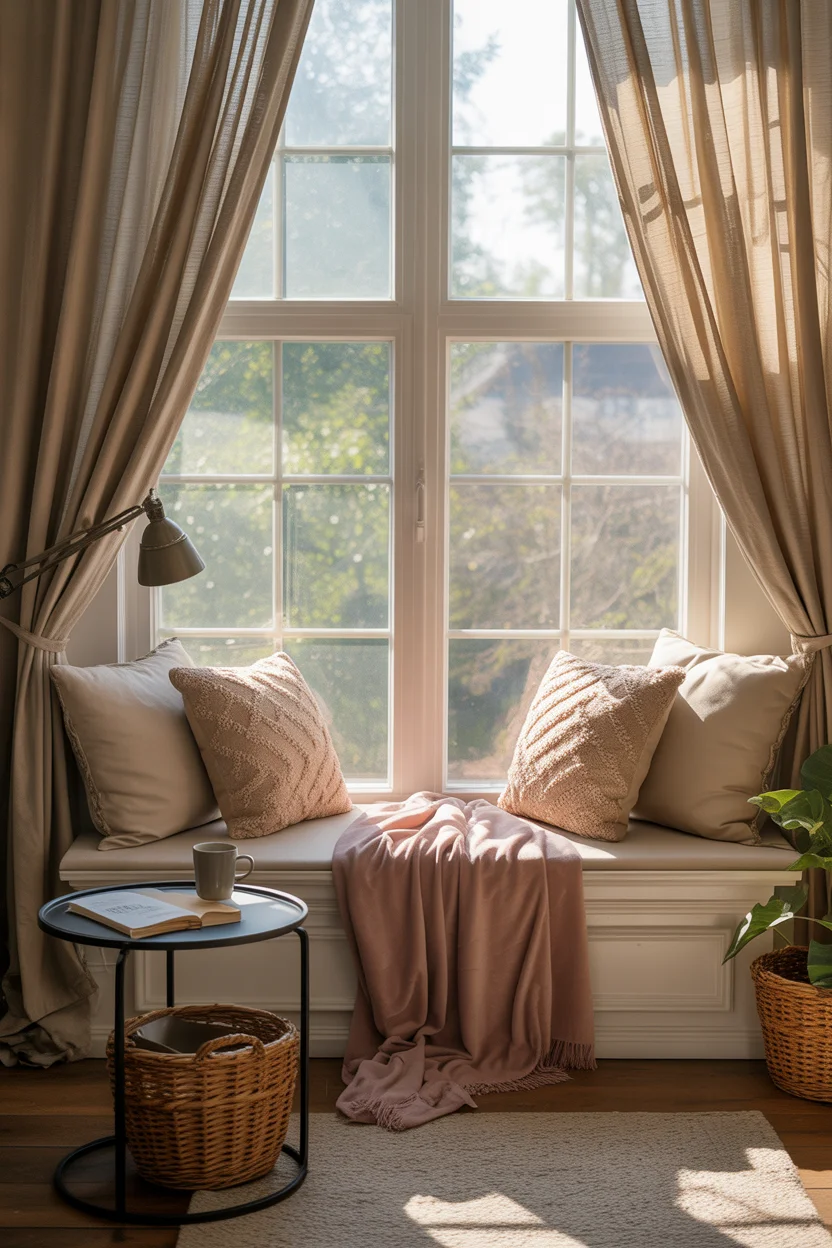
Window reading nooks represent some of the most coveted master bedroom ideas, transforming underutilized window space into functional retreats. If you’re fortunate enough to have a wide window, installing a built-in bench with storage underneath maximizes the area’s potential. Alternatively, positioning a comfortable chair or loveseat near windows achieves similar effects. Layer the seating with plush cushions and soft throws to create an irresistible spot for morning coffee, afternoon reading, or simply gazing outside. The natural light benefits both mood and functionality during daytime hours.
Creating a successful reading nook requires attention to comfort and lighting. Ensure your seating is genuinely comfortable for extended periods—add lumbar pillows if needed. While natural light is wonderful during the day, incorporate a reading lamp with adjustable arm or gooseneck for evening use. A small side table keeps books, beverages, and reading glasses within easy reach. Sheer curtains filter harsh sunlight while maintaining brightness, and heavier drapes can be added for privacy or light blocking when needed. This dedicated space within your master bedroom becomes a cherished retreat for quiet moments.
16. Floating Shelves for Display and Storage
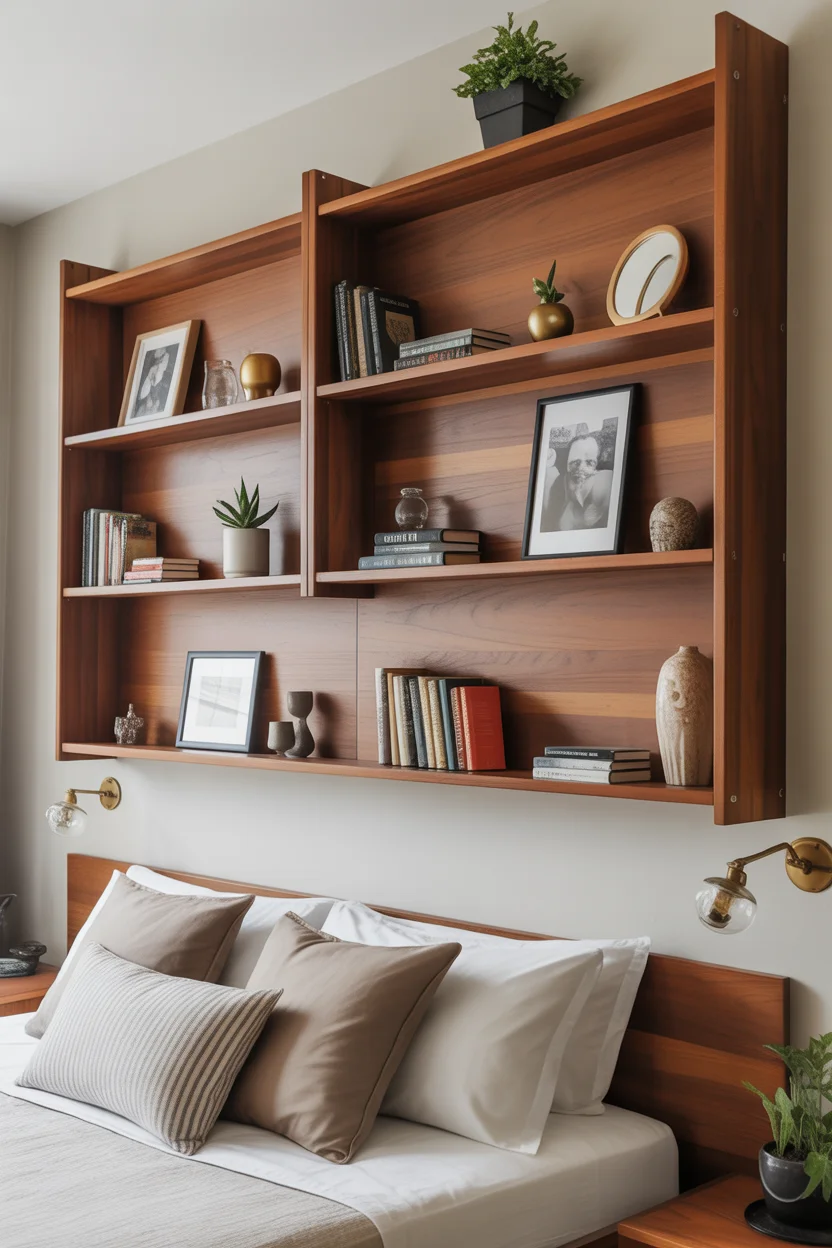
Floating shelves deliver storage and display opportunities without consuming valuable floor space, making them ideal master bedroom ideas for smaller rooms. These wall-mounted shelves appear to float without visible brackets, creating clean, modern lines. Use floating shelves to display favorite books, small plants, meaningful photographs, or decorative objects that express your personality. The key is curating rather than cluttering—edit your displays regularly, leaving some negative space so individual items can shine. Grouping items in odd numbers and varying heights creates more visually interesting arrangements.
Installation placement significantly affects both functionality and aesthetics. Beside the bed, floating shelves can replace traditional nightstands in tight spaces while providing surface area for lamps, phones, and water glasses. Above dressers, they add vertical storage without the closed-in feeling of upper cabinets. Behind the bed, a series of floating shelves creates architectural interest similar to a headboard. Choose shelf depth based on intended use—6-8 inches works for most decorative purposes, while 10-12 inches accommodates larger books and objects. Match wood tones to existing furniture or choose contrasting colors for statement-making design features.
17. Luxe Velvet Accents for Instant Glamour
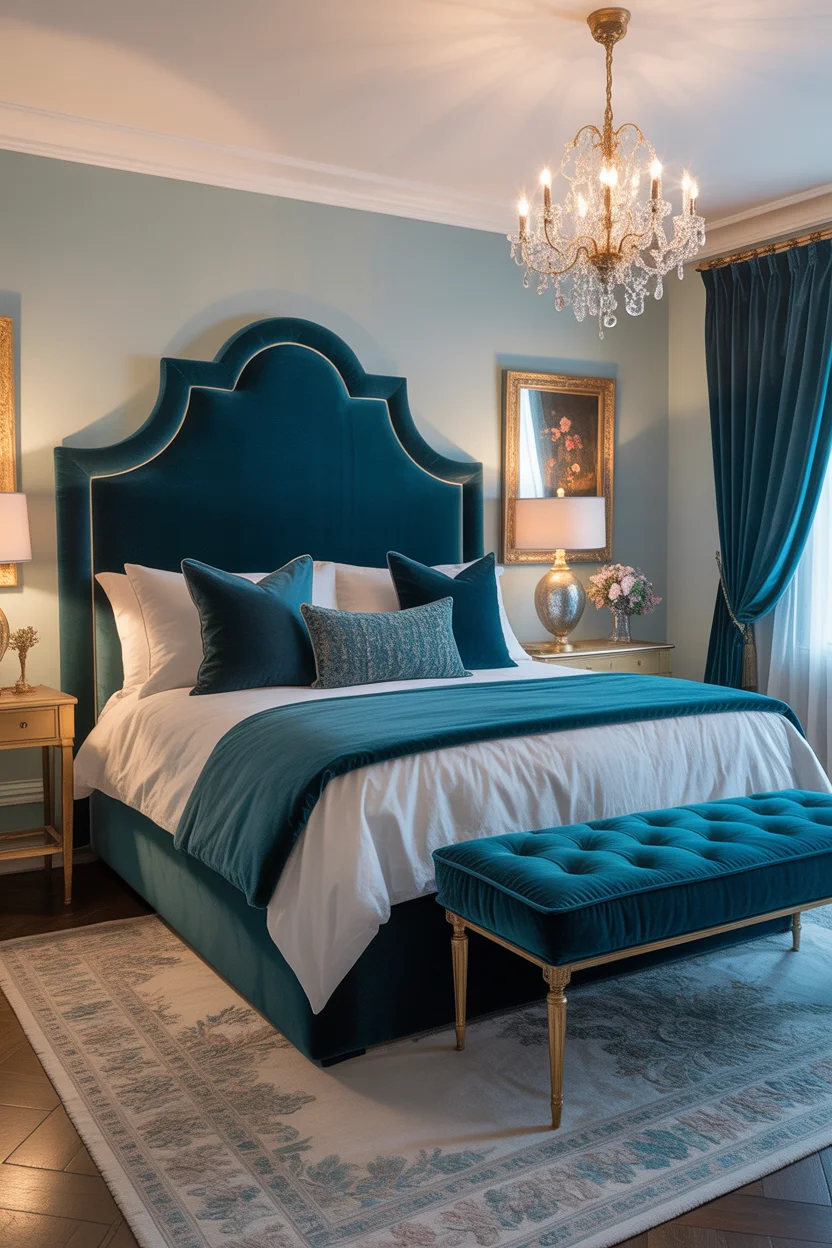
Velvet fabric instantly elevates master bedroom ideas from ordinary to opulent. The pile fabric catches and reflects light dynamically, creating depth and visual interest that flat fabrics cannot match. Incorporate velvet through headboards, throw pillows, window treatments, or upholstered furniture pieces like benches or accent chairs. Jewel tones like emerald, sapphire, and ruby create dramatic, luxurious atmospheres, while neutral velvets in gray, cream, or blush offer subtle sophistication. The tactile quality of velvet also adds sensory luxury—bedrooms should engage multiple senses beyond just sight.
Balancing velvet in bedroom design prevents the space from feeling overdone or heavy. If you choose a velvet headboard, pair it with crisp cotton or linen bedding rather than velvet pillows for contrast. Alternatively, a neutral upholstered headboard can handle richer velvet accent pillows. Mix velvet with other textures like rough linen, smooth leather, or natural wood to create dimensional interest. Modern performance velvets resist crushing and clean more easily than traditional varieties, making them practical for frequently used bedroom furniture. These luxurious touches transform master bedrooms into sophisticated sanctuaries worthy of five-star hotels.
18. Minimalist Design for Calm Simplicity
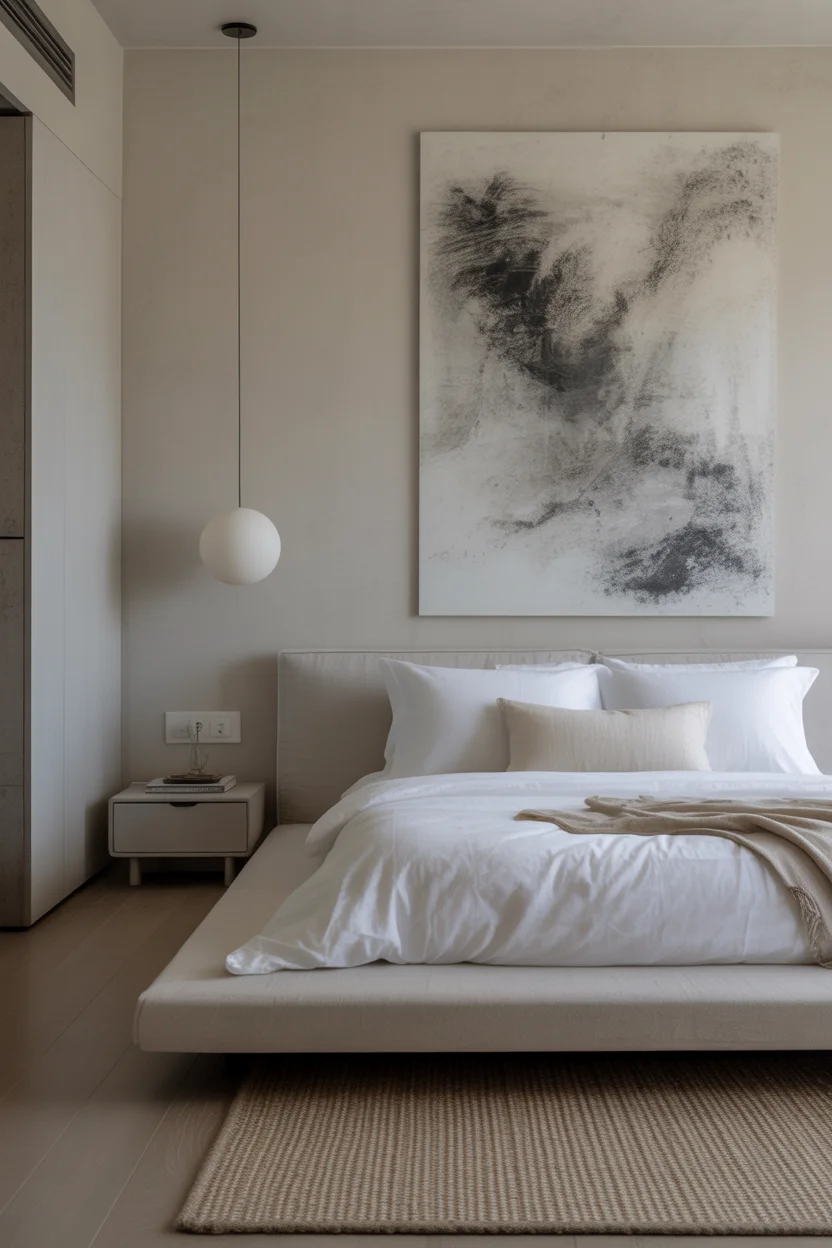
Minimalist master bedroom ideas embrace the “less is more” philosophy, creating serene spaces free from visual clutter. This approach focuses on essential furniture pieces in simple silhouettes, neutral color palettes, and edited decorative items. The absence of excess allows your mind to rest along with your body, making minimalist bedrooms particularly effective for people who struggle with sleep or anxiety. Quality trumps quantity in minimalist design—invest in fewer but better pieces, from premium bedding to well-crafted furniture that will last decades.
Achieving successful minimalism requires intentional curation rather than simply removing items. Choose a limited color palette of 2-3 colors, typically neutrals like white, gray, and beige with perhaps one subtle accent color. Furniture should feature clean lines without excessive ornamentation—think platform beds, simple nightstands, and streamlined dressers. Maximize hidden storage to keep surfaces clear of daily clutter. The few decorative items you display should be meaningful and beautiful, carefully selected to contribute to the peaceful atmosphere. Minimalist master bedrooms prove that simplicity, when executed thoughtfully, creates profound impact.
19. Bold Accent Wall Color for Personality
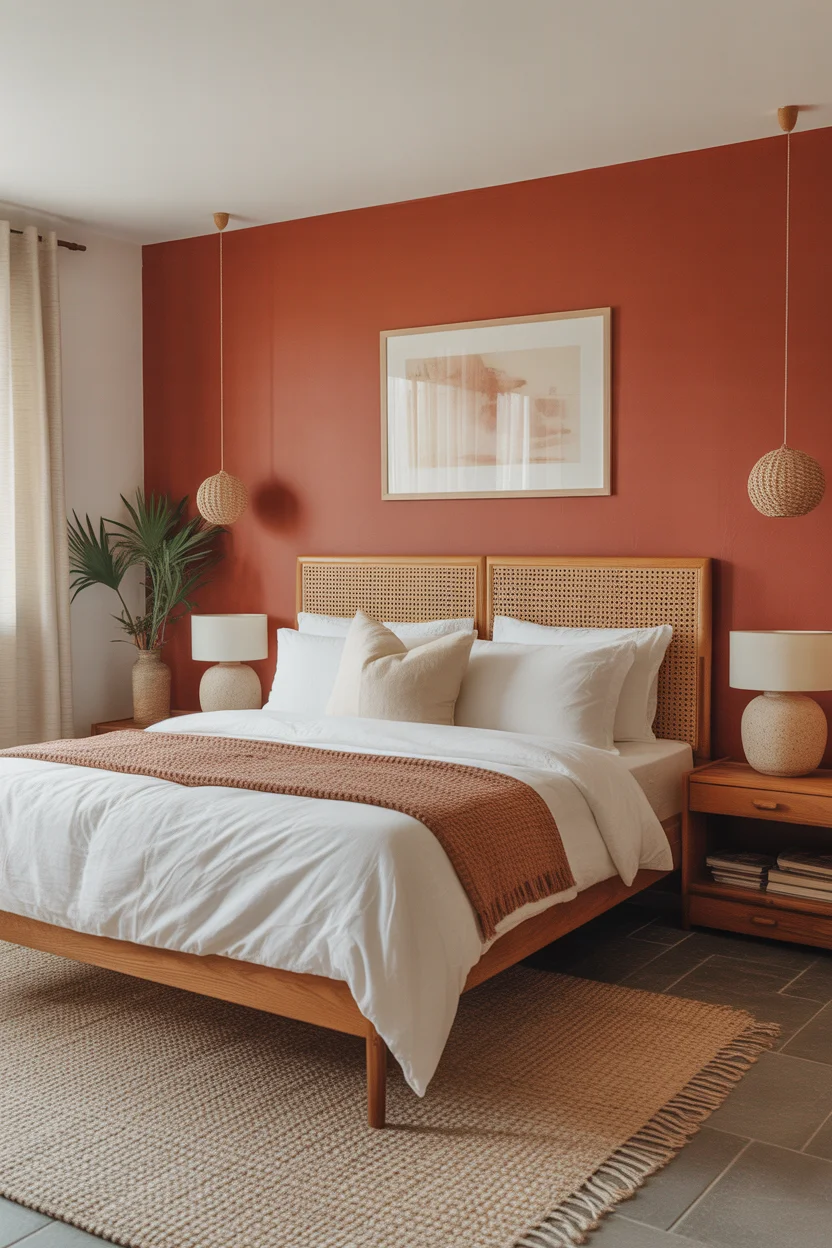
A bold accent wall allows you to experiment with saturated color in master bedroom ideas without overwhelming the entire space. Choose the wall behind your bed as the natural focal point for color treatment, keeping remaining walls neutral for balance. Rich, saturated hues like deep terracotta, forest green, dusty blue, or even dramatic black make sophisticated statements. The psychology of color affects mood—warm colors like terracotta and burnt orange create cozy, grounding feelings, while cooler blues and greens promote calm. Select colors that resonate with your personal preferences and desired bedroom atmosphere.
Successfully executing bold accent walls requires considering the room’s lighting and existing elements. Test paint samples on your wall, observing them at different times of day as natural light changes. Colors appear different in morning sunlight versus evening lamplight. Balance your bold wall with neutral bedding and furniture to prevent visual chaos. You can incorporate your accent color in small doses throughout the room—throw pillows, artwork, or decorative objects—to create cohesion. This confident design choice personalizes your master bedroom, making it uniquely yours rather than generic catalog-styled space.
20. Ceiling Fan with Style and Function
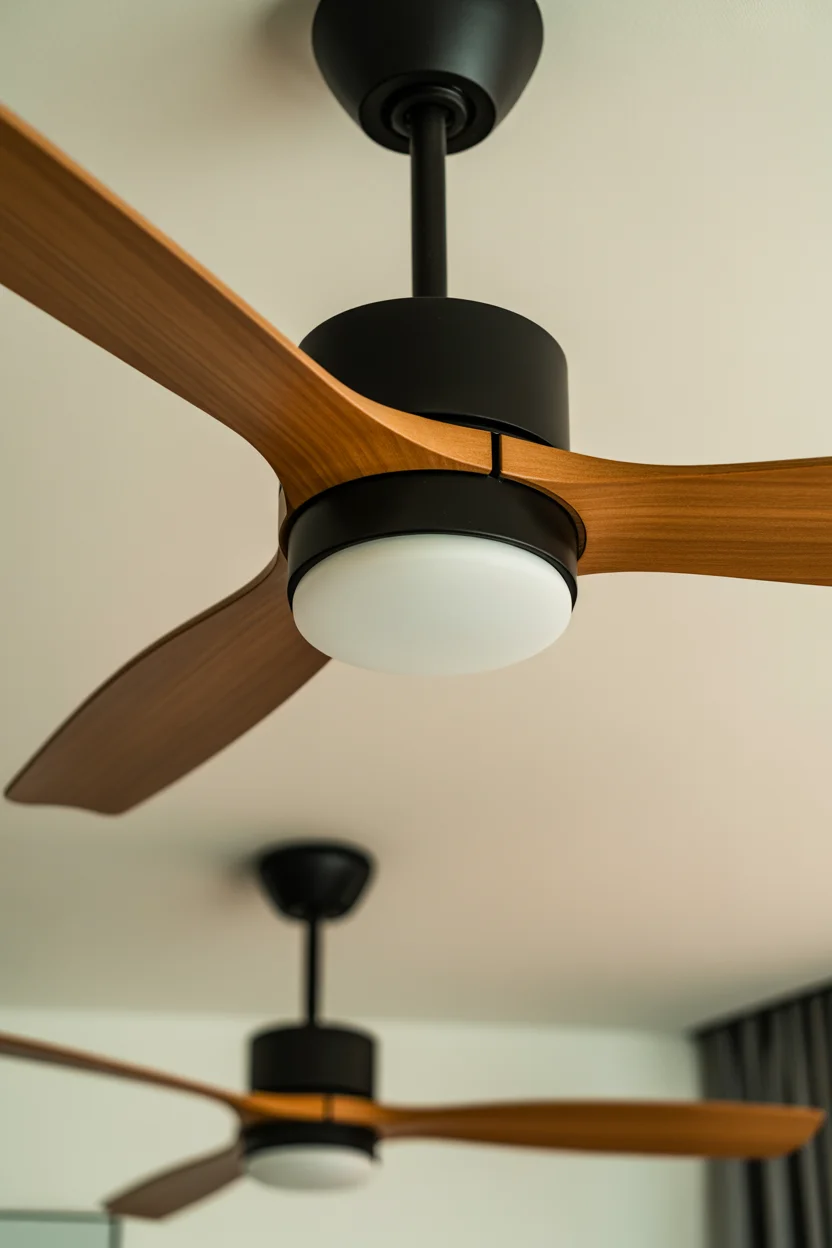
Modern ceiling fans have evolved far beyond dated, builder-grade options, now offering master bedroom ideas that combine practical air circulation with genuine style. Today’s fans feature beautiful designs with wooden blades, interesting finishes, and integrated lighting that enhance rather than detract from bedroom aesthetics. Proper air circulation improves sleep quality and allows you to adjust thermostat settings, saving energy costs year-round. Fans with reverse settings push warm air down in winter and create cooling breezes in summer, making them functional throughout all seasons.
Selecting the right ceiling fan requires considering room size, ceiling height, and design aesthetic. For master bedrooms, choose fans with 52-inch blade spans for rooms up to 225 square feet, or larger for bigger spaces. Low-profile or flush-mount fans work in rooms with standard 8-foot ceilings, while downrod-mounted fans suit spaces with higher ceilings for optimal air circulation. Modern farmhouse styles feature wood blades with metal housing, mid-century designs offer clean lines and interesting shapes, and contemporary options provide minimalist profiles. Look for DC motor fans that operate more quietly and efficiently than traditional AC motors—silence matters in sleeping spaces.
21. Personalized Gallery Ledge for Rotating Displays
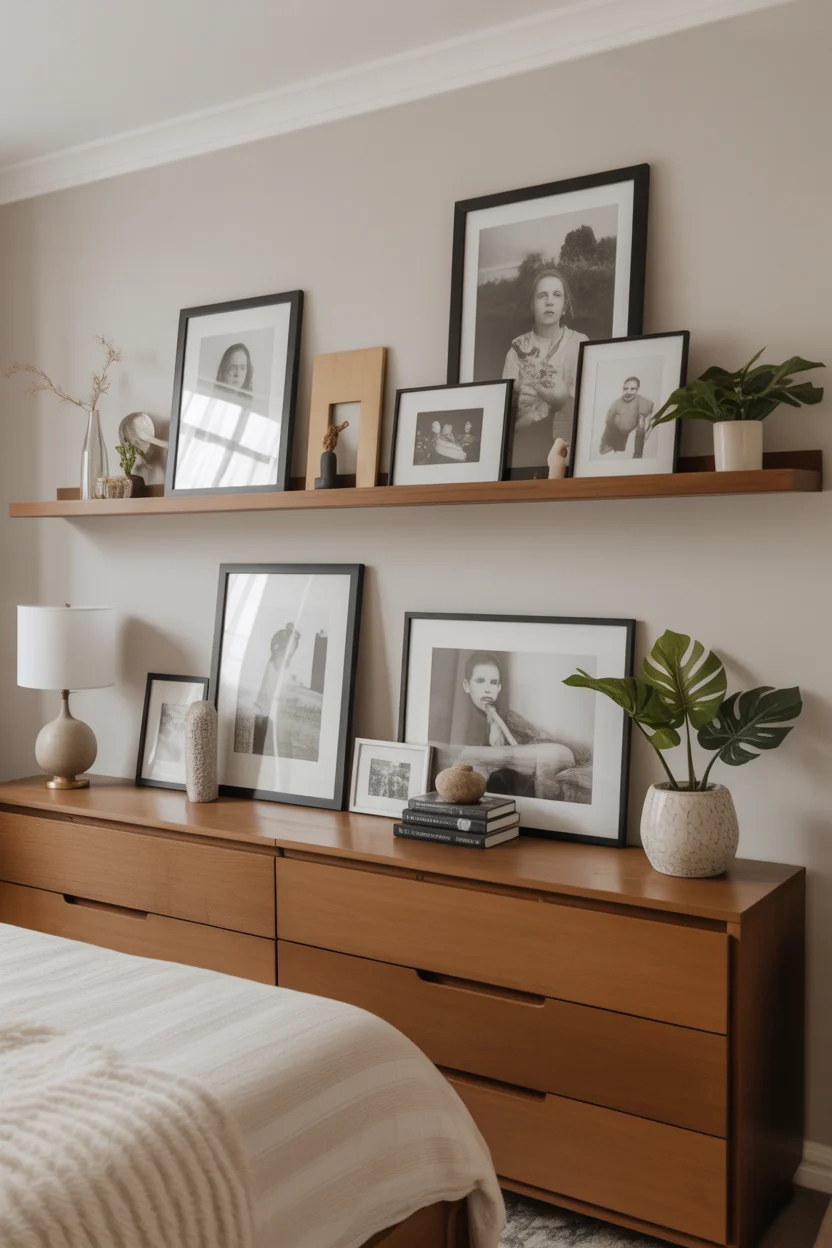
Picture ledges offer flexible alternatives to traditional gallery walls in master bedroom ideas, allowing you to change displays easily without new nail holes. These shallow floating shelves hold framed photos, small artwork, greeting cards, and three-dimensional objects, all arranged in layered, overlapping compositions. The beauty of ledges lies in their adaptability—swap seasonal decorations, rotate family photos, or refresh artwork whenever the mood strikes. This approach keeps your bedroom feeling current and personalized without permanent commitment, perfect for people who like regularly updating their spaces.
Styling gallery ledges successfully requires balancing variety with cohesion. Mix frame sizes and orientations, overlapping pieces at different depths for dimensional interest. Include three-dimensional objects like small sculptures, plants, or meaningful collectibles among the frames. Maintain some consistency through similar frame colors or a unified color palette in the displayed artwork. Leave some negative space rather than overcrowding the ledge—breathing room allows individual pieces to stand out. Position ledges at eye level (around 57-60 inches from the floor) for optimal viewing. These personalized displays make master bedrooms feel intimately yours, showcasing memories and items that bring daily joy.
Conclusion
Creating your ideal master bedroom doesn’t require a complete renovation—often, implementing just a few of these master bedroom ideas can dramatically transform your space. Whether you’re drawn to moody drama, minimalist serenity, or layered luxury, the key is designing a room that reflects your personal style while promoting rest. Start with one or two ideas that resonate most, then build your dream bedroom gradually, creating a sanctuary you’ll love retreating to every night.

Join The Discussion