
Introduction
Dreaming of a kitchen that exudes Old World charm and Mediterranean warmth? Italian Tuscan kitchen ideas bring together rustic elegance, natural materials, and sun-drenched color palettes that transform ordinary cooking spaces into extraordinary gathering places. From terracotta floors to hand-painted tiles, exposed wooden beams to wrought iron accents, these design elements capture the essence of Tuscan countryside living. Let these 22 inspiring ideas guide you in creating your own slice of Italian paradise right at home.
1. Warm Terracotta Floor Tiles
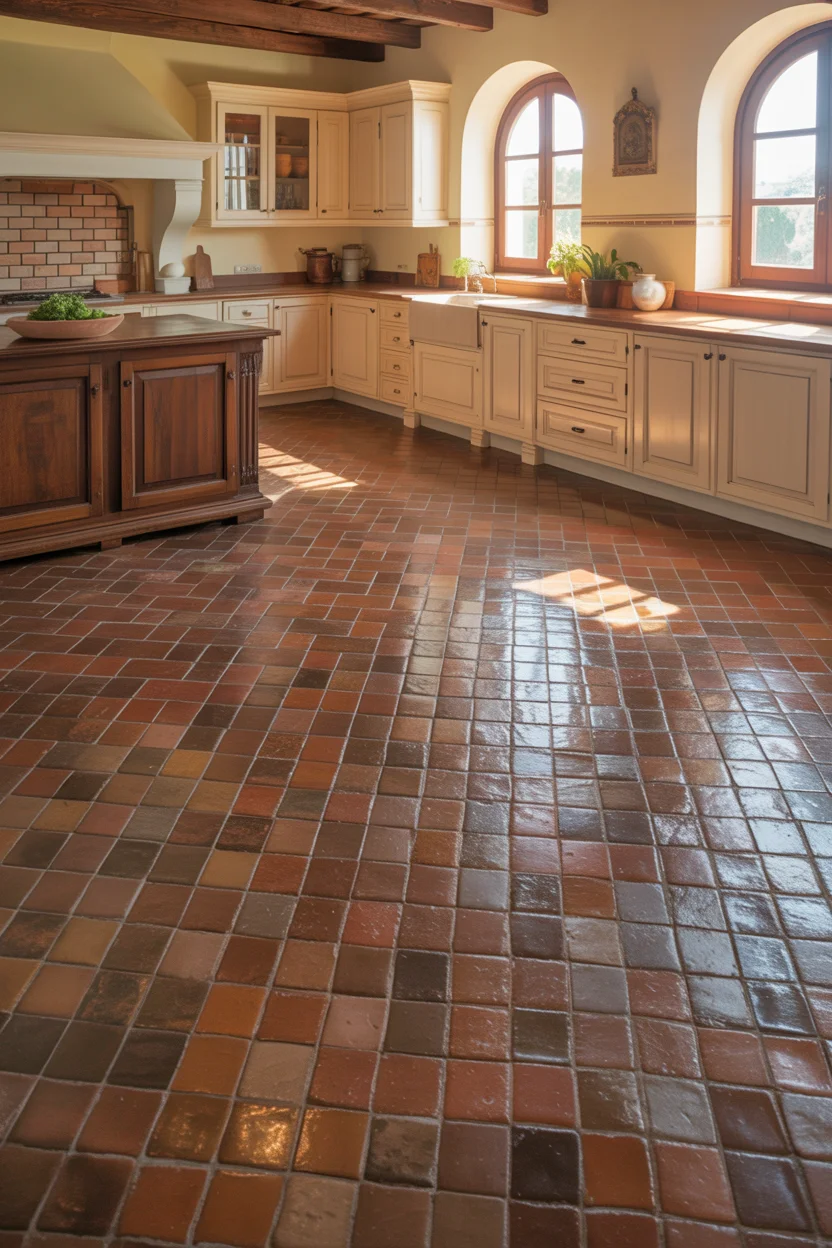
The foundation of any authentic Tuscan kitchen begins with terracotta flooring that instantly transports you to the Italian countryside. These handcrafted clay tiles bring warmth and character with their naturally uneven surfaces and variations in color, ranging from soft peachy tones to deep burnt orange. The material’s porous nature creates a living floor that develops a beautiful patina over time, adding to its rustic charm and authenticity.
Terracotta tiles are not only aesthetically pleasing but also incredibly practical for kitchen environments. Their natural thermal properties help keep spaces cool during warm months, while their durability withstands heavy foot traffic and the demands of a busy cooking space. Pair these classic tiles with complementary elements like distressed wood cabinetry and stone countertops to create a cohesive Tuscan aesthetic that feels both timeless and inviting.
2. Exposed Wooden Beam Ceilings
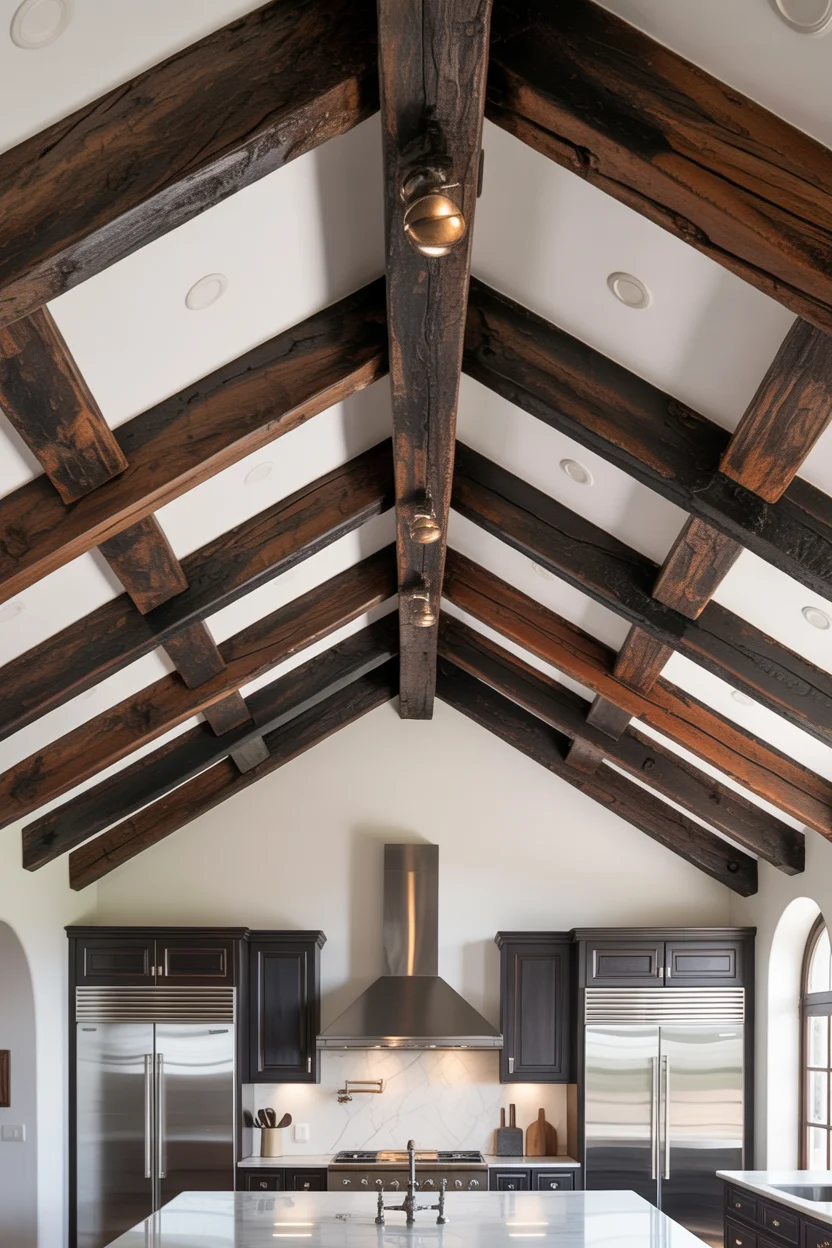
Exposed wooden beams serve as the crowning glory of Italian Tuscan kitchen ideas, adding architectural drama and rustic sophistication to your space. These substantial timbers, whether reclaimed from old barns or newly installed to mimic aged wood, draw the eye upward and create a sense of history and permanence. Dark walnut or chestnut beams against white or cream plaster ceilings offer the most authentic Tuscan contrast, evoking centuries-old farmhouses nestled in rolling hills.
The installation of ceiling beams does more than add visual interest; it transforms the entire atmosphere of your kitchen. These structural elements create defined zones in open-plan spaces and can make rooms with lower ceilings feel more intimate and cozy. Consider adding wrought iron details or hanging copper pots from the beams to enhance the Tuscan aesthetic while incorporating functional storage solutions that celebrate traditional Italian craftsmanship.
3. Stone or Brick Accent Walls
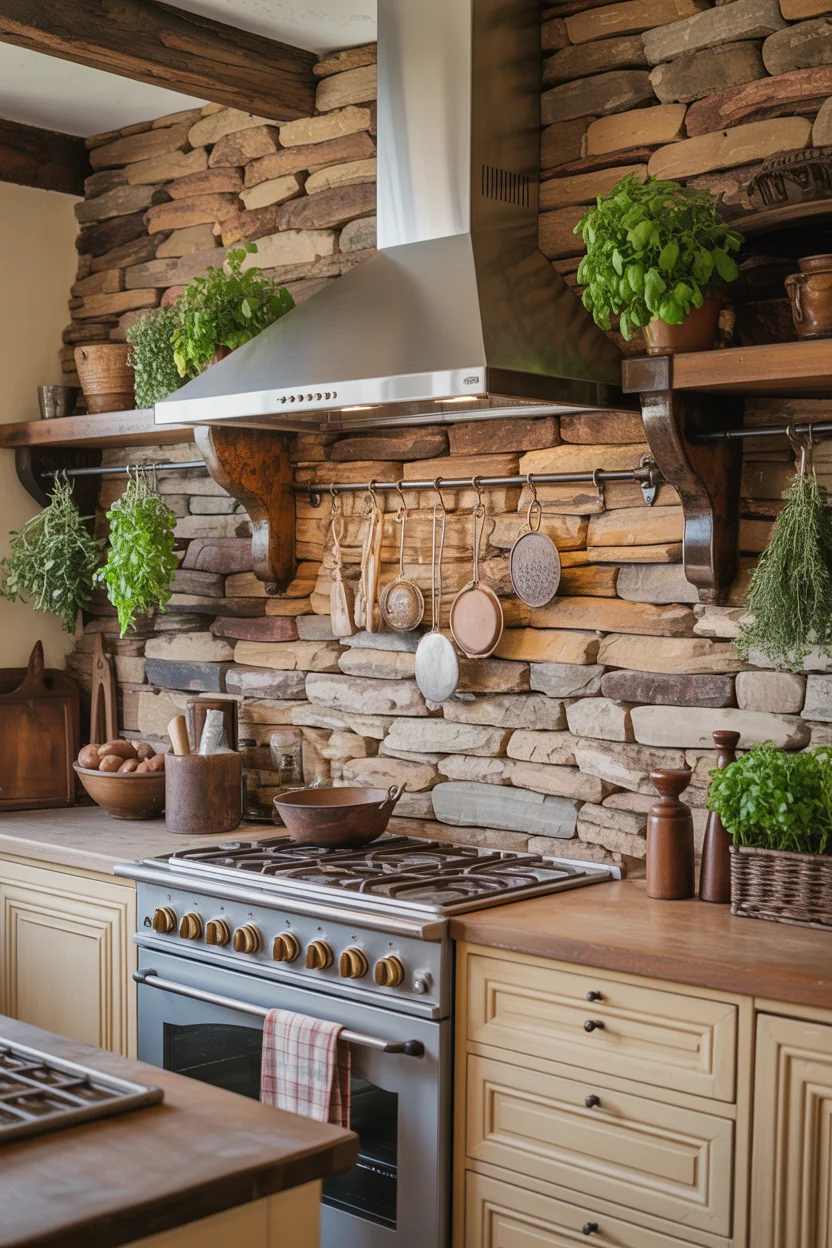
Nothing captures the essence of Tuscan architecture quite like an exposed stone or brick accent wall that adds texture, depth, and Old World character to your kitchen. These walls tell a story of traditional building methods passed down through generations, where local materials shaped the aesthetic of each region. Whether you choose rough-hewn limestone, weathered brick, or river rock, each stone brings unique variations in color and texture that create an organic, lived-in feel impossible to replicate with modern materials.
Strategically placing your stone accent wall behind the stove or sink creates a stunning focal point that anchors the entire kitchen design. The natural irregularities and earthy tones of stone provide a perfect backdrop for open shelving displaying ceramic dishware or hanging copper cookware. This feature wall also offers practical benefits, as stone is naturally heat-resistant and easy to maintain, making it ideal for high-activity areas where cooking splashes and heat are constant concerns.
View morehttps://dreamgardenspk.com/blog/
4. Rustic Wood Cabinetry with Distressed Finish
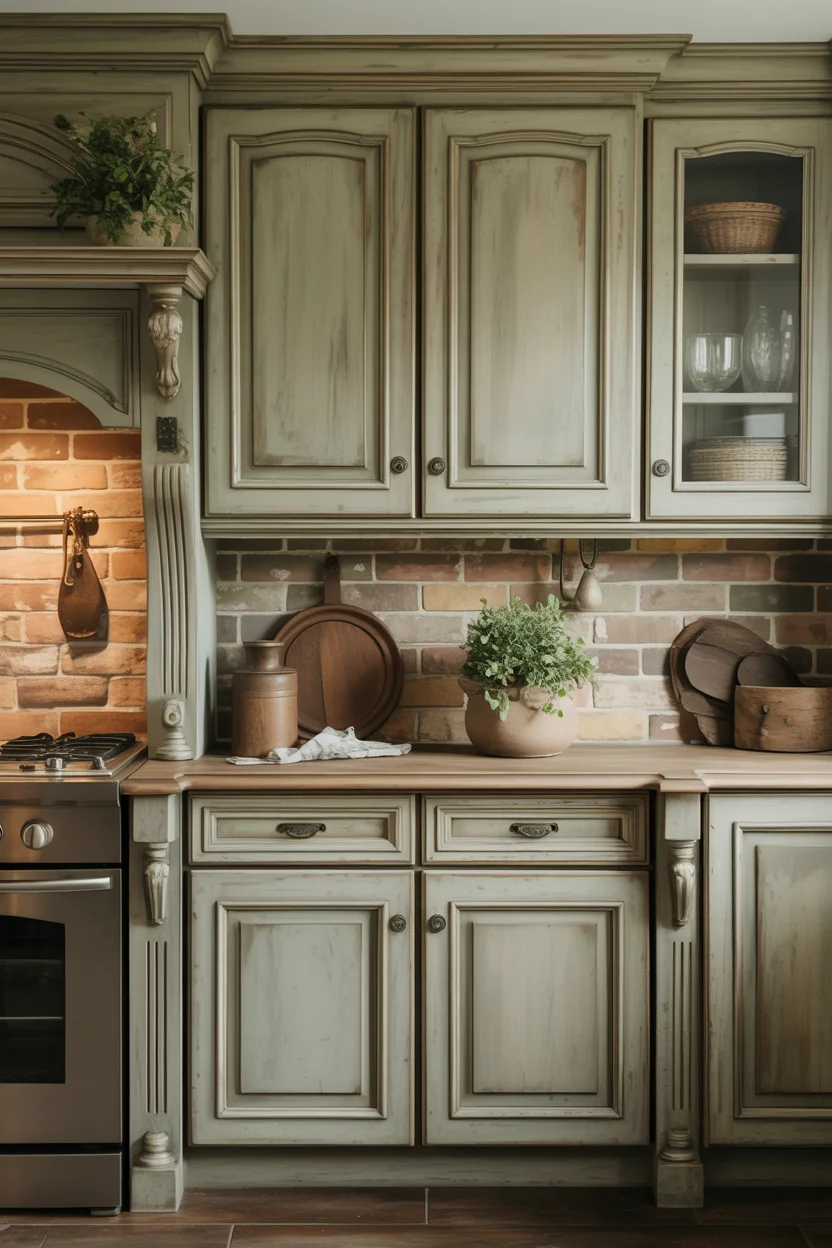
Tuscan-style cabinetry embraces imperfection and celebrates the beauty of aged wood that tells a story of years gone by. Distressed finishes in muted colors like sage green, soft cream, or weathered blue create that sought-after vintage aesthetic central to Italian country design. The technique of hand-scraping, sanding edges, and applying multiple layers of paint mimics the natural wear patterns that occur over decades, giving your kitchen an instant heritage that feels collected rather than decorated.
Choosing the right wood and finish for your cabinets sets the tone for your entire Tuscan kitchen transformation. Solid wood species like oak, pine, or cherry provide the substantial feel and grain patterns that work best with distressing techniques. Consider incorporating glass-front upper cabinets to display colorful Italian pottery and adding decorative corbels or turned legs to island bases for additional architectural detail that reflects traditional Italian carpentry and craftsmanship.
5. Hand-Painted Decorative Tile Backsplash
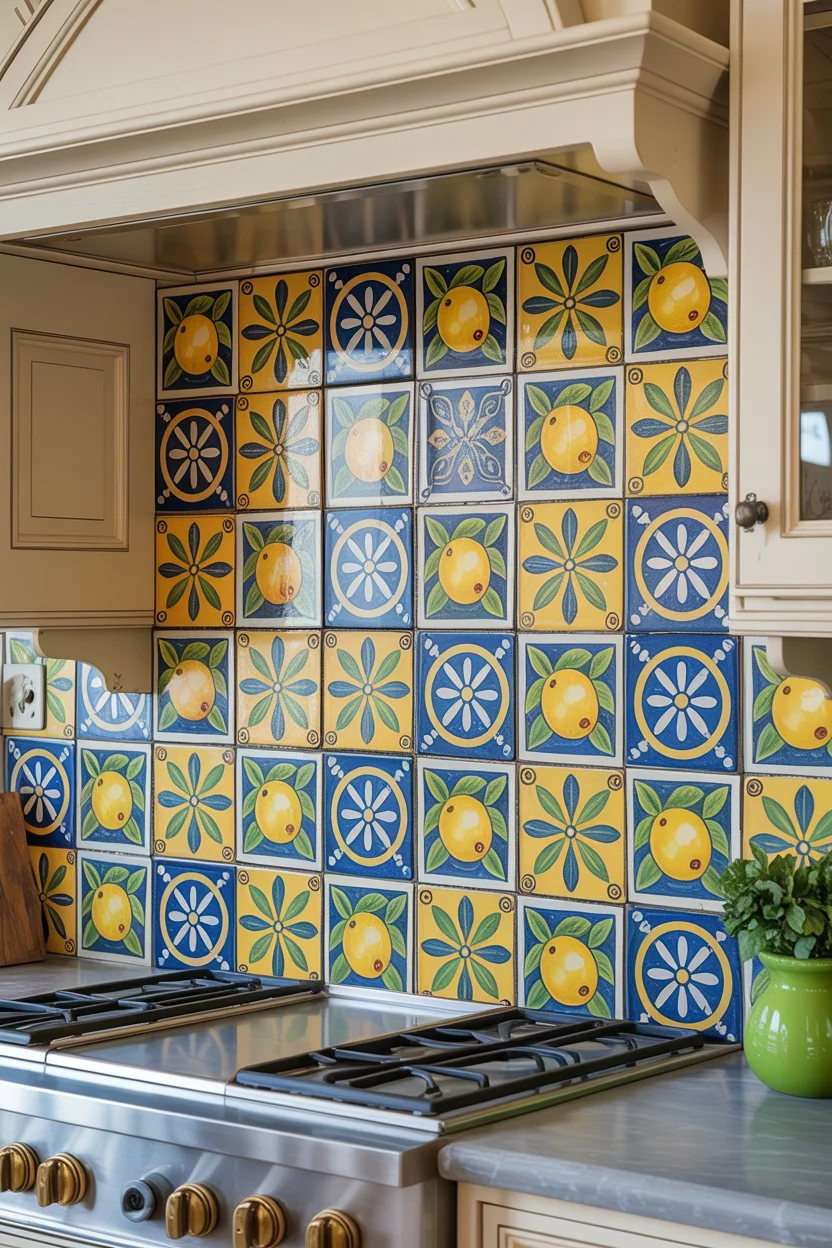
Hand-painted tiles represent the artistic soul of Italian Tuscan kitchen ideas, bringing vibrant personality and artisanal craftsmanship to functional spaces. These ceramic masterpieces, often imported from regions like Deruta or Vietri, feature motifs inspired by Tuscan landscapes—sunflowers, grapes, lemons, and olive branches rendered in the brilliant blues, yellows, and greens characteristic of Mediterranean palette. Each tile is a small work of art, and together they create a stunning mosaic that serves as the kitchen’s jewelry.
Installing decorative tiles as a backsplash offers the perfect opportunity to inject bold color and pattern into an otherwise neutral Tuscan kitchen scheme. You can create a cohesive look with matching tiles throughout or develop a more eclectic aesthetic by mixing patterns and designs that share a common color palette. These glazed surfaces are not only beautiful but also practical, providing easy-to-clean protection for walls while resisting moisture and heat from cooking activities.
6. Marble or Granite Countertops
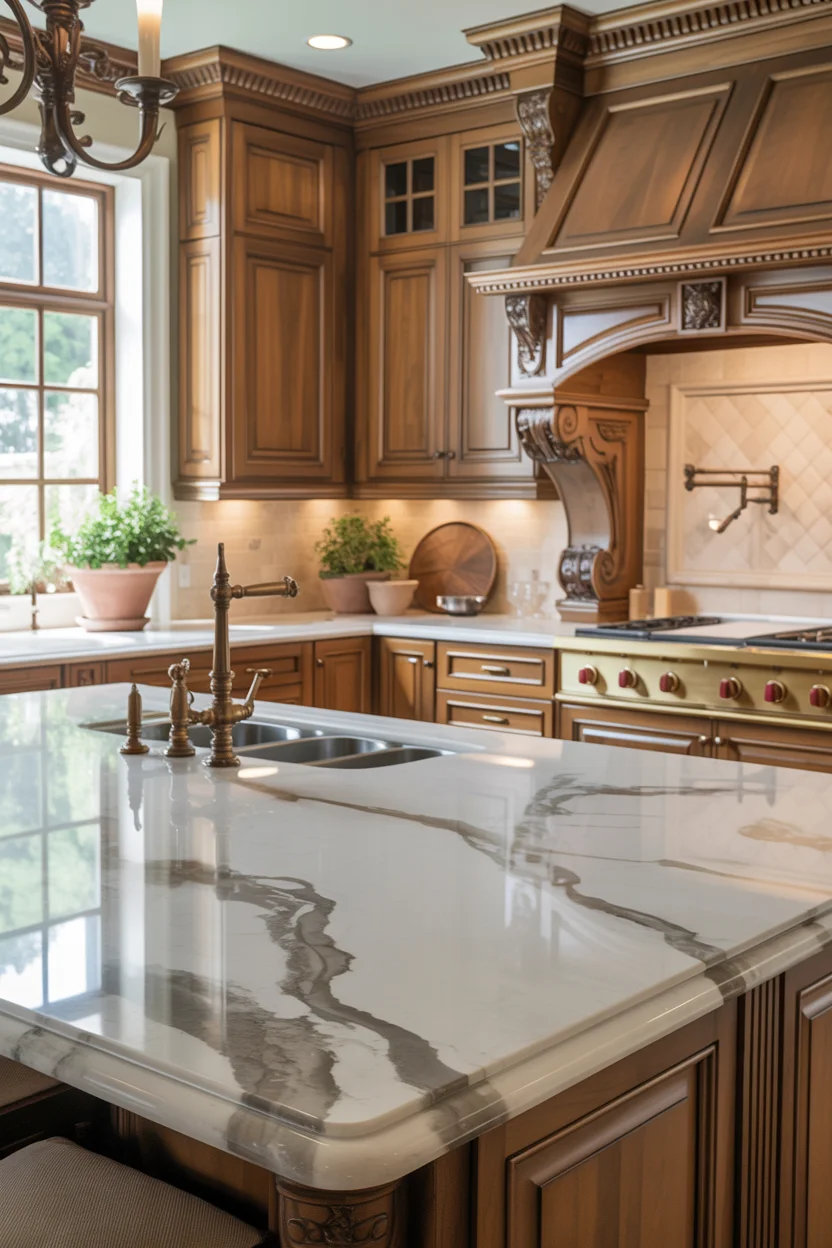
Italian marble and granite countertops bring a touch of luxury that balances the rustic elements in Tuscan kitchen design. Carrara, Calacatta, or Statuario marble varieties offer the creamy whites and soft gray veining synonymous with Italian elegance, while granite options in earth tones provide durability without sacrificing aesthetic appeal. These natural stone surfaces connect your kitchen to Italy’s rich quarrying heritage, where master craftsmen have extracted and shaped stone for millennia.
The practical benefits of stone countertops complement their undeniable beauty in a hardworking kitchen environment. Marble provides a naturally cool surface ideal for rolling pasta dough and working with pastry, a feature Italian bakers have appreciated for centuries. While marble requires some maintenance to prevent staining, granite offers similar aesthetic appeal with enhanced durability. Both materials develop character over time, with gentle patinas that add to rather than detract from their beauty and charm.
Explore morehttp://pinterest.com/Dreamgardenshome/
7. Large Farmhouse Sink in Copper or Fireclay
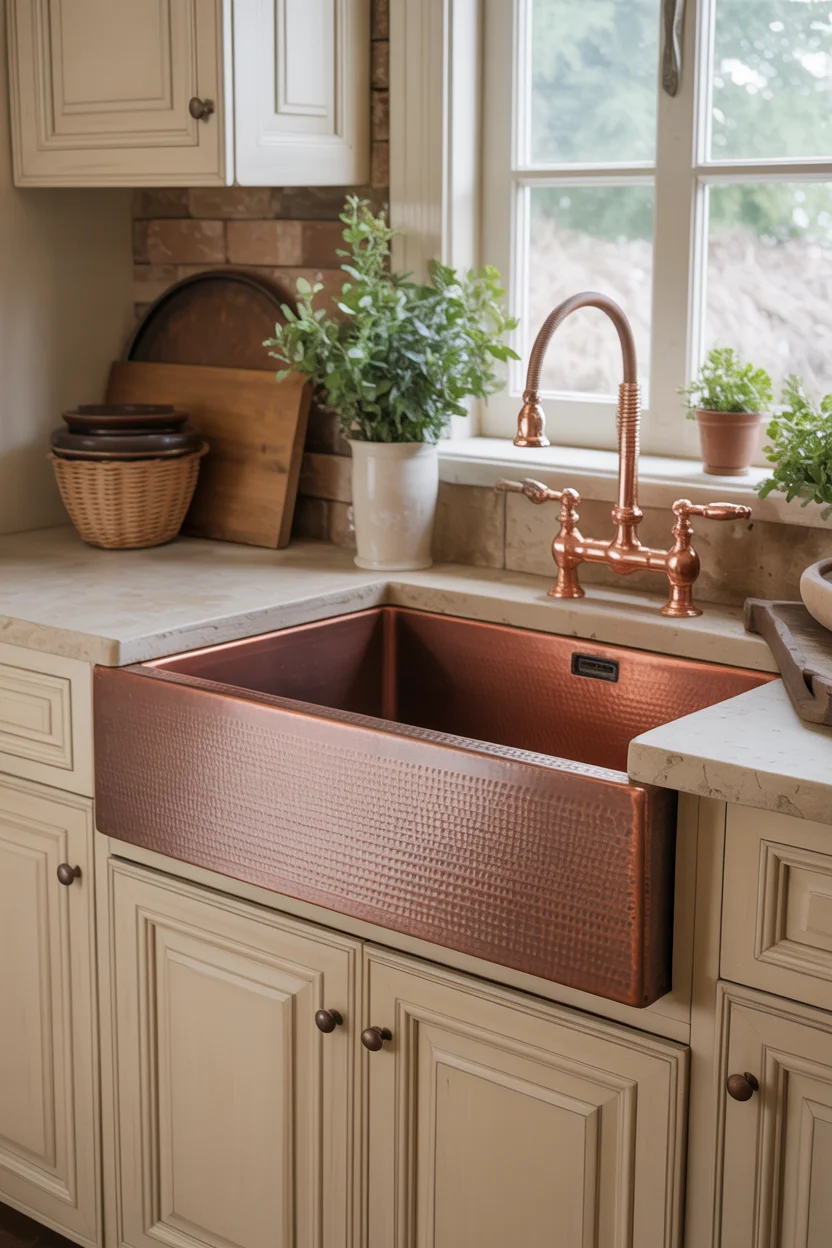
The farmhouse sink stands as an iconic centerpiece in Italian Tuscan kitchen ideas, combining form and function in one statement piece. Whether crafted from traditional fireclay in creamy white or gleaming hammered copper with its living finish, these deep, apron-front basins recall a time when kitchen sinks served as workhorses for large families and abundant harvests. The exposed front panel becomes a design feature rather than hiding beneath countertops, celebrating utility as an art form.
Copper farmhouse sinks deserve special attention for their unique ability to develop a rich patina that evolves with use and age. The antimicrobial properties of copper make it naturally hygienic, while its warmth adds a distinctive glow to the kitchen. Fireclay options offer classic simplicity and exceptional durability, resistant to chips and scratches from daily use. Both materials provide the generous depth needed for washing large pots, preparing vegetables, or even bathing infants in traditional Italian household fashion.
8. Wrought Iron Lighting Fixtures
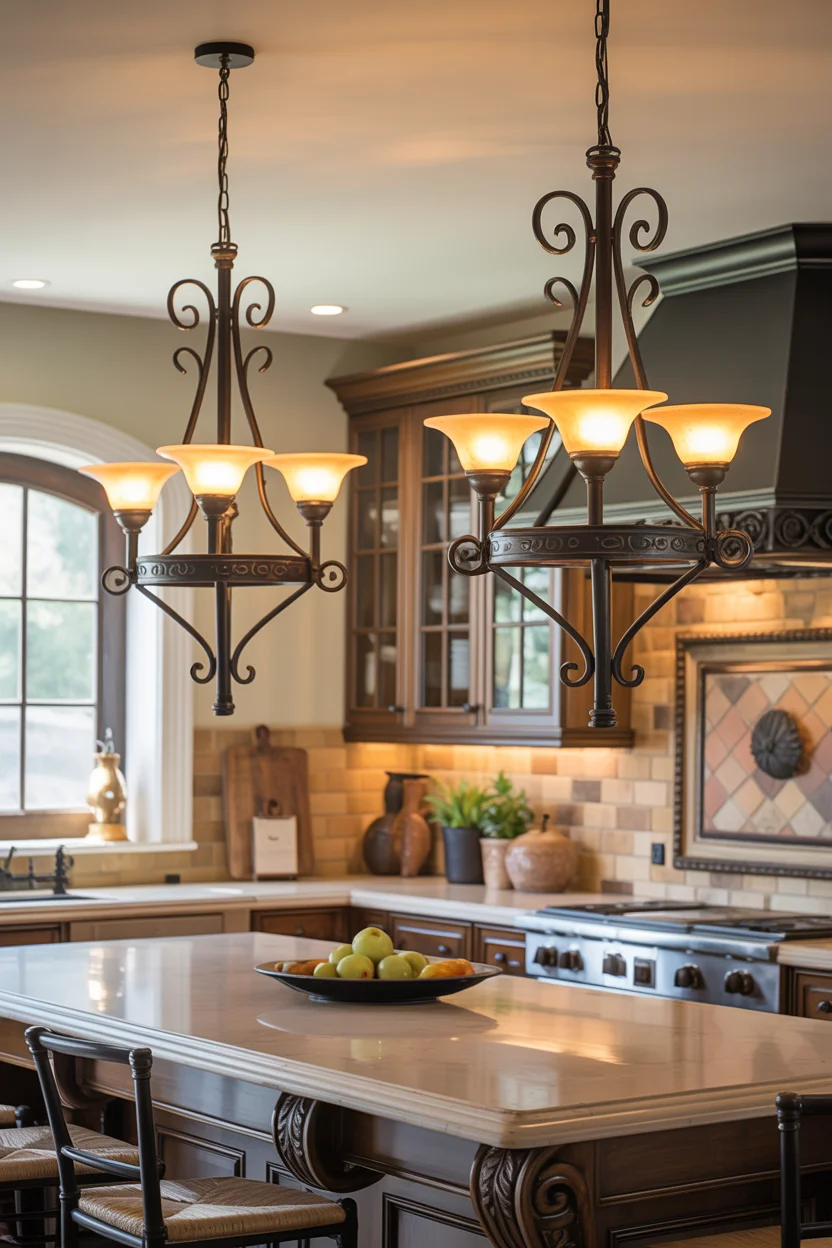
Wrought iron lighting fixtures bring the romance and craftsmanship of Italian metalworking into your kitchen, serving as functional sculpture that illuminates while it inspires. These hand-forged pieces, whether chandeliers over dining areas or pendant lights above islands, feature the scrollwork, twisted details, and robust construction that characterized medieval and Renaissance ironwork. The dark finishes—from matte black to oil-rubbed bronze—provide striking contrast against light-colored ceilings and walls typical of Tuscan interiors.
Selecting the right iron fixtures requires consideration of both scale and style to achieve balanced, authentic design. Large kitchens with high ceilings can accommodate substantial chandeliers with multiple arms and elaborate details, while more modest spaces benefit from simpler pendant designs or wall sconces. Pair wrought iron lighting with other metal accents like pot racks, cabinet hardware, and range hoods to create cohesive visual flow that ties the entire space together in true Tuscan fashion.
9. Arched Doorways and Windows
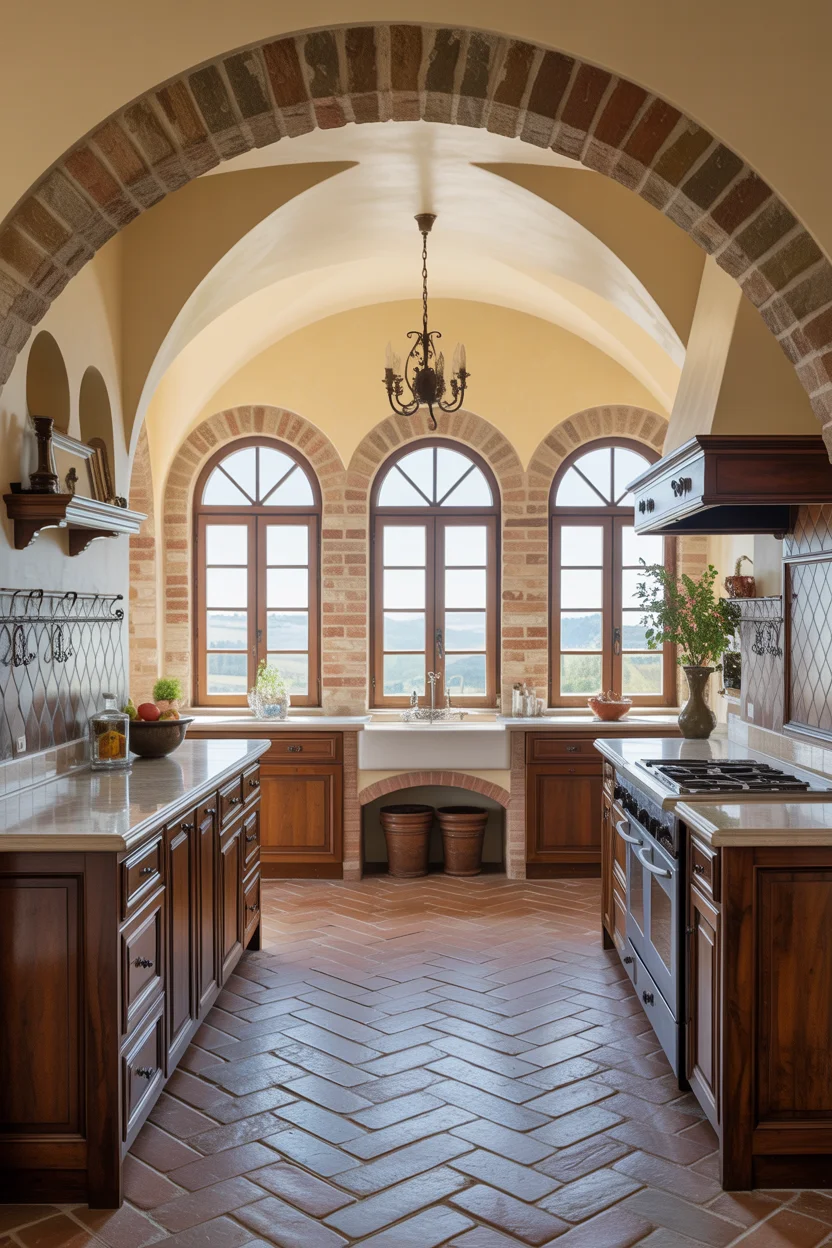
Arched architectural elements represent one of the most defining characteristics of Italian Tuscan kitchen ideas, creating graceful transitions and evoking the romance of ancient Roman engineering. These curved openings soften the rigid lines of modern construction, adding visual interest and a sense of flow between spaces. Whether framing windows that overlook imagined vineyards or doorways leading to dining areas, arches immediately transport your kitchen to the sun-soaked hills of central Italy.
Incorporating arches into existing spaces might seem challenging, but creative solutions exist for various budgets and construction limitations. Full structural arches require significant renovation but deliver the most authentic impact, especially when finished with stone or brick surrounds. Alternative approaches include adding arch-shaped trim over existing rectangular openings or installing arched window treatments that create the illusion of curved architecture. These modifications, combined with other Tuscan elements, contribute to an overall aesthetic that feels cohesive and intentionally designed.
10. Open Wooden Shelving
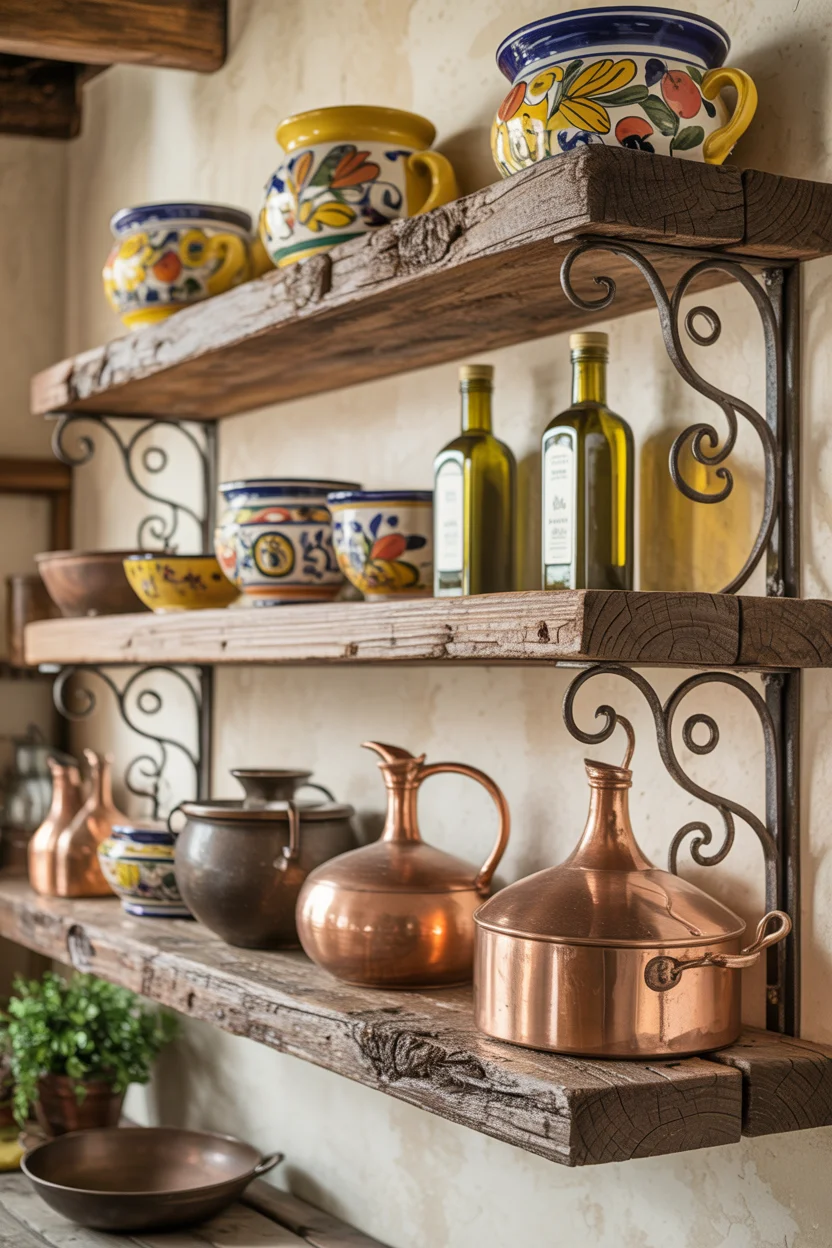
Open wooden shelving embodies the accessible, lived-in quality central to authentic Tuscan kitchen design, where beautiful objects serve practical purposes in daily life. Thick wooden planks, preferably reclaimed or distressed to show age and character, provide sturdy platforms for displaying the colorful ceramics, glassware, and cookware that make Italian kitchens so visually appealing. This approach to storage celebrates abundance and hospitality, inviting guests to admire collections accumulated over time rather than hiding everything behind closed doors.
The practical advantages of open shelving extend beyond aesthetics to improve kitchen functionality and workflow. Items used frequently remain visible and easily accessible, eliminating the need to search through cabinets and making cooking more efficient and enjoyable. Styling these shelves requires thoughtful curation—group items by color or type, vary heights, and include both functional pieces and decorative elements like herbs, cookbooks, and small potted plants to achieve that effortlessly collected Tuscan look that appears unplanned yet perfectly composed.
11. Trestle-Style Wooden Island
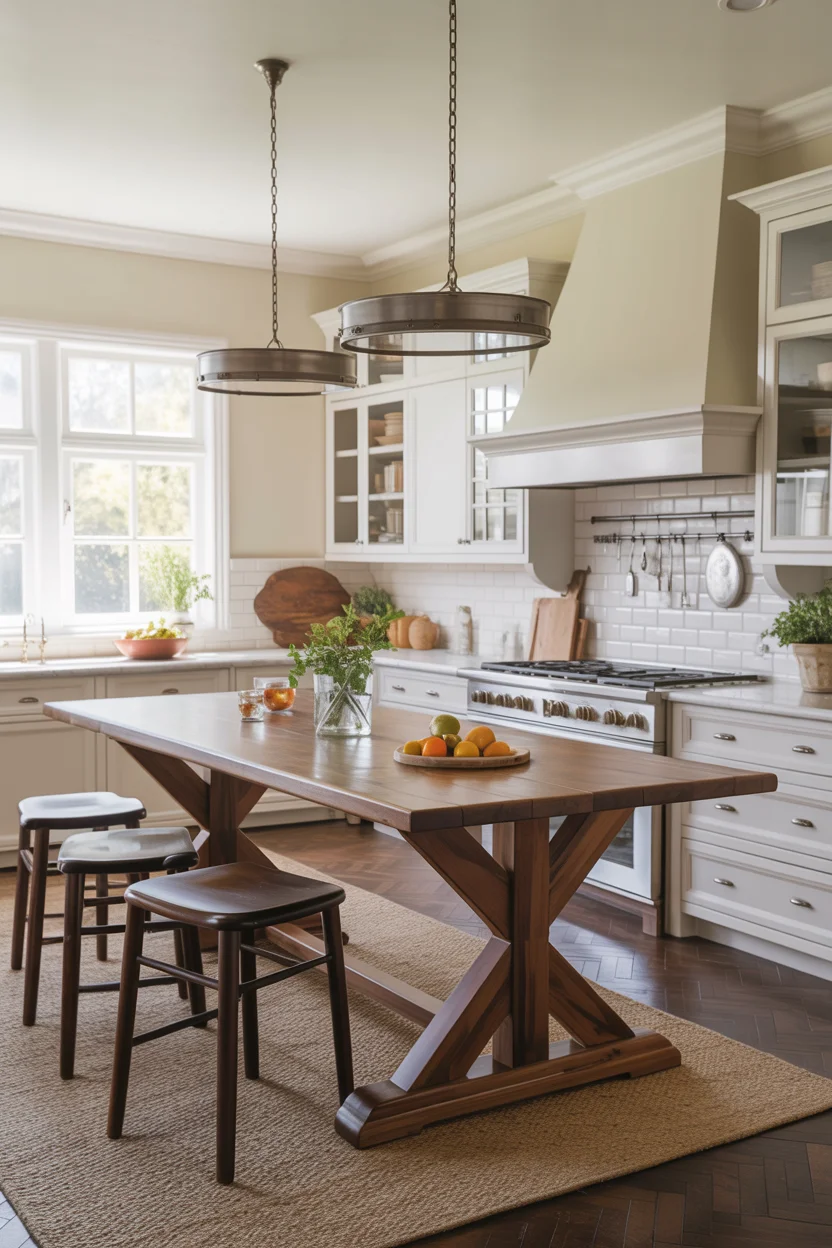
A trestle-style island serves as the commanding centerpiece in Tuscan-inspired kitchens, combining substantial workspace with architectural presence that references Italian furniture-making traditions. These islands feature exposed support structures—usually substantial wooden legs connected by stretchers—that recall medieval monastery tables and rustic farmhouse dining furniture. The generous proportions accommodate multiple cooks and provide ample surface area for food preparation, casual dining, and social gathering central to Italian culinary culture.
Designing your trestle island requires careful consideration of wood selection, finish, and countertop material to achieve authentic Tuscan character. Rich woods like walnut, chestnut, or reclaimed oak bring warmth and grain patterns that improve with age, while butcher block, marble, or granite tops offer functional work surfaces suited to different tasks. The base can incorporate storage through drawers and shelves while maintaining the open, furniture-like quality that distinguishes these islands from standard cabinetry, creating a kitchen that feels collected over time rather than installed all at once.
12. Venetian Plaster Walls
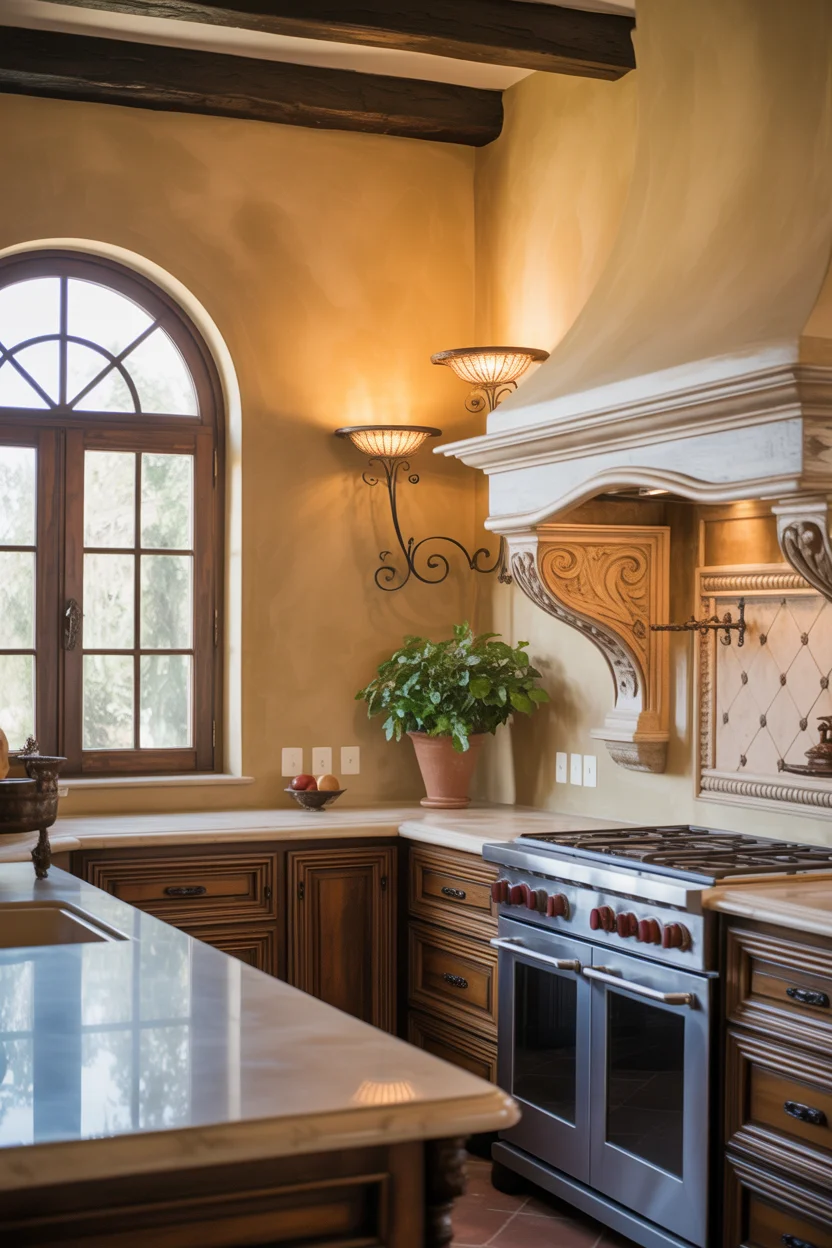
Venetian plaster walls introduce subtle sophistication and Old World technique to Italian Tuscan kitchen ideas through their distinctive finish and timeless appeal. This ancient application method layers thin coats of plaster containing marble dust, then burnishes the surface to create a polished, luminous appearance with gentle variations and depth impossible to achieve with standard paint. The technique requires skilled craftsmanship, but the resulting walls seem to glow from within, capturing and reflecting light throughout the day.
The color palette for Venetian plaster in Tuscan kitchens typically draws from nature—warm creams, soft golds, terra cotta tones, and muted ochres that evoke sun-baked earth and aged stucco. These neutral backgrounds allow other design elements to shine while providing cohesive warmth that unifies the space. Beyond beauty, Venetian plaster offers practical benefits including durability, resistance to mold and mildew, and the ability to be cleaned easily, making it well-suited to the moisture and activity levels common in busy kitchens.
13. Mediterranean Color Palette
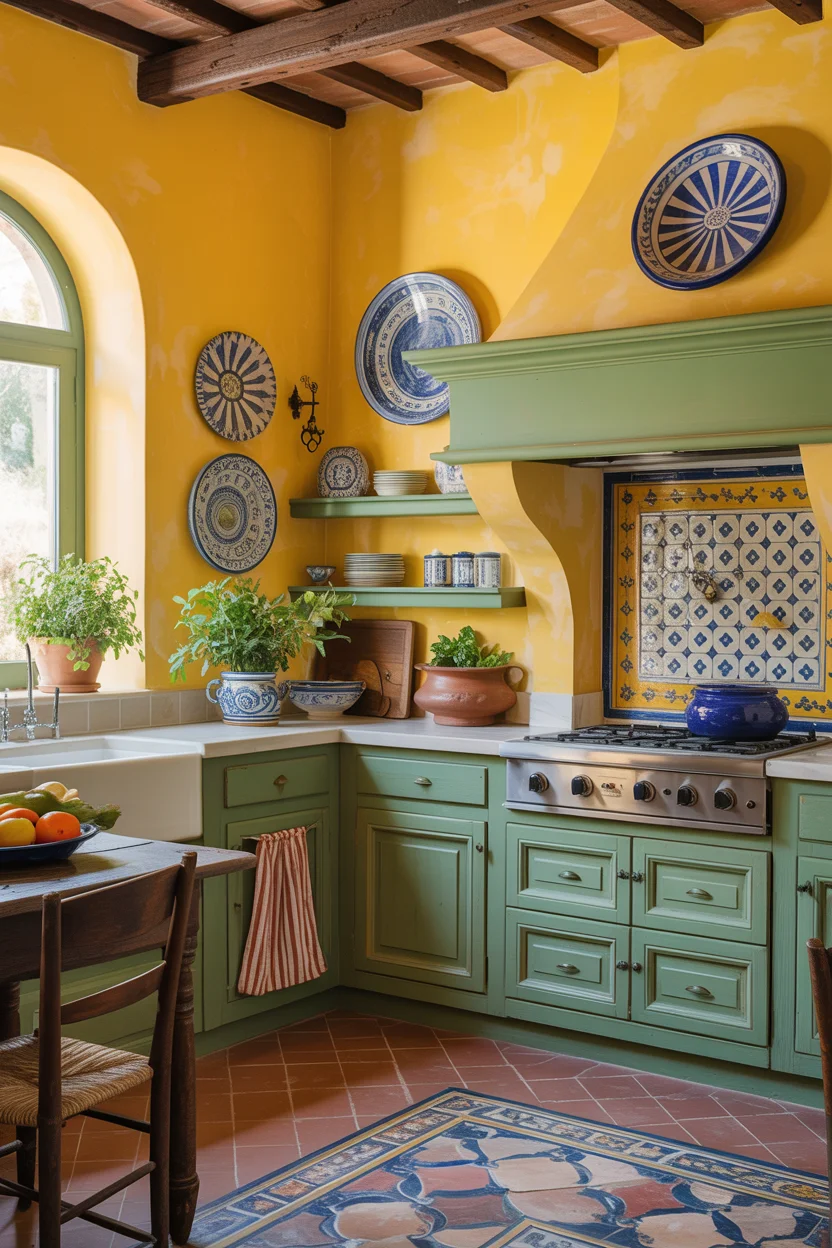
The Mediterranean color palette forms the emotional foundation of Tuscan kitchen design, using warm, saturated hues inspired by the Italian landscape to create spaces that feel perpetually sun-drenched and welcoming. These colors—golden yellows recalling wheat fields, terracotta oranges echoing clay roofs, olive greens reflecting ancient groves, and sky blues mirroring the Mediterranean—work together to evoke the sensory richness of Tuscany. When balanced correctly, this palette creates energy and warmth without overwhelming, establishing a backdrop that makes people want to linger and gather.
Implementing this color scheme successfully requires understanding the relationship between dominant and accent colors in your kitchen. Typically, walls and larger cabinetry areas feature more neutral tones like cream, soft yellow, or sage green, while vibrant blues, deep terracottas, and rich golds appear in smaller doses through tile work, pottery, fabrics, and decorative elements. This approach prevents color overload while allowing you to incorporate the full spectrum of Mediterranean hues that give Tuscan kitchens their distinctive warmth and personality.
14. Rustic Range Hood with Stone or Plaster
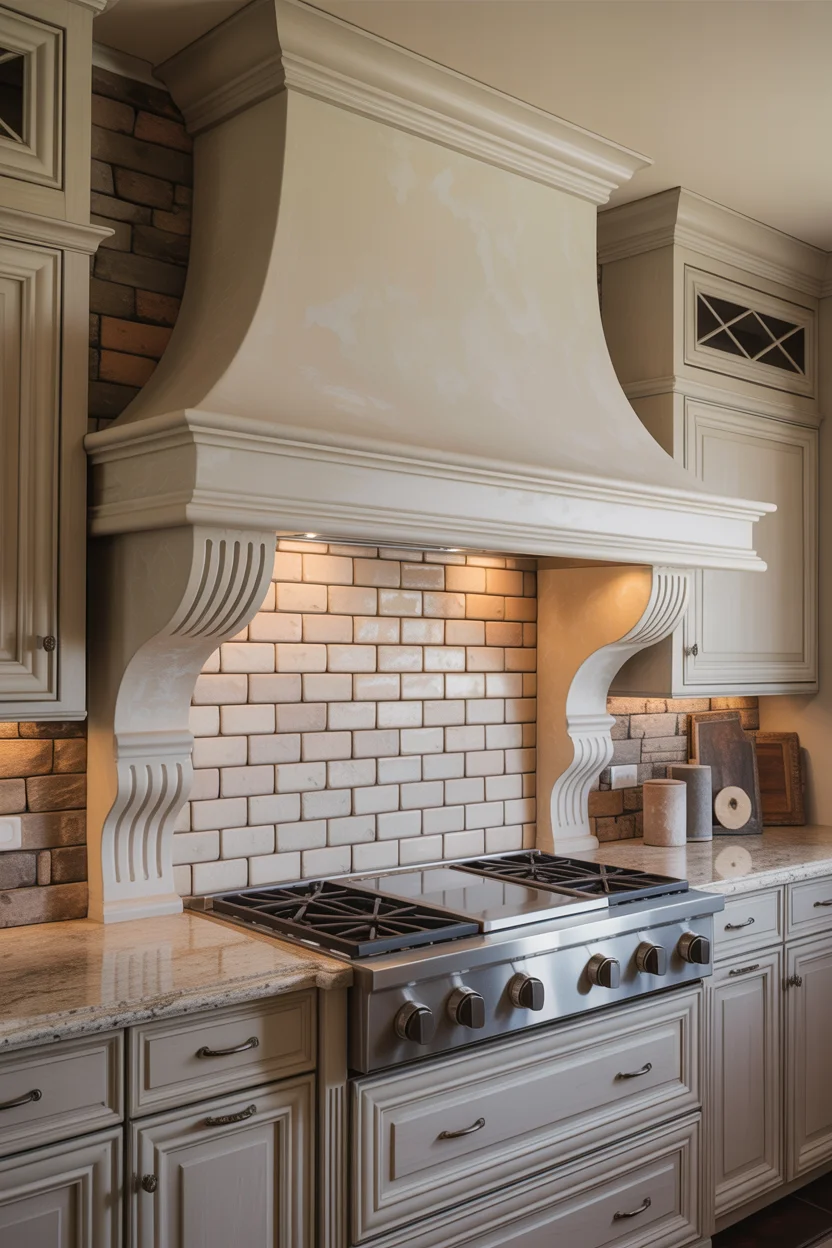
The range hood in a Tuscan kitchen transcends mere ventilation to become a defining architectural feature that anchors the cooking zone. Custom hoods built from plaster, stone, or a combination of materials can be shaped into dramatic curves and arches that reference Italian villa architecture and traditional farmhouse fireplaces. These substantial structures, often extending from countertop to ceiling, create a sense of importance around the cooking area, elevating the act of meal preparation to a central, honored activity.
Designing your range hood offers opportunities for personalization through materials, shape, and decorative details that reflect your interpretation of Tuscan style. Consider incorporating stone accents, corbels, or hand-painted tiles to add visual interest and connect the hood to other design elements throughout the kitchen. The finish might be smooth Venetian plaster, roughly textured stucco, or exposed stone, depending on whether you prefer refined elegance or rustic charm. Functionally, ensure adequate ventilation capacity concealed within the beautiful exterior to maintain air quality while cooking.
15. Antique or Vintage-Look Hardware
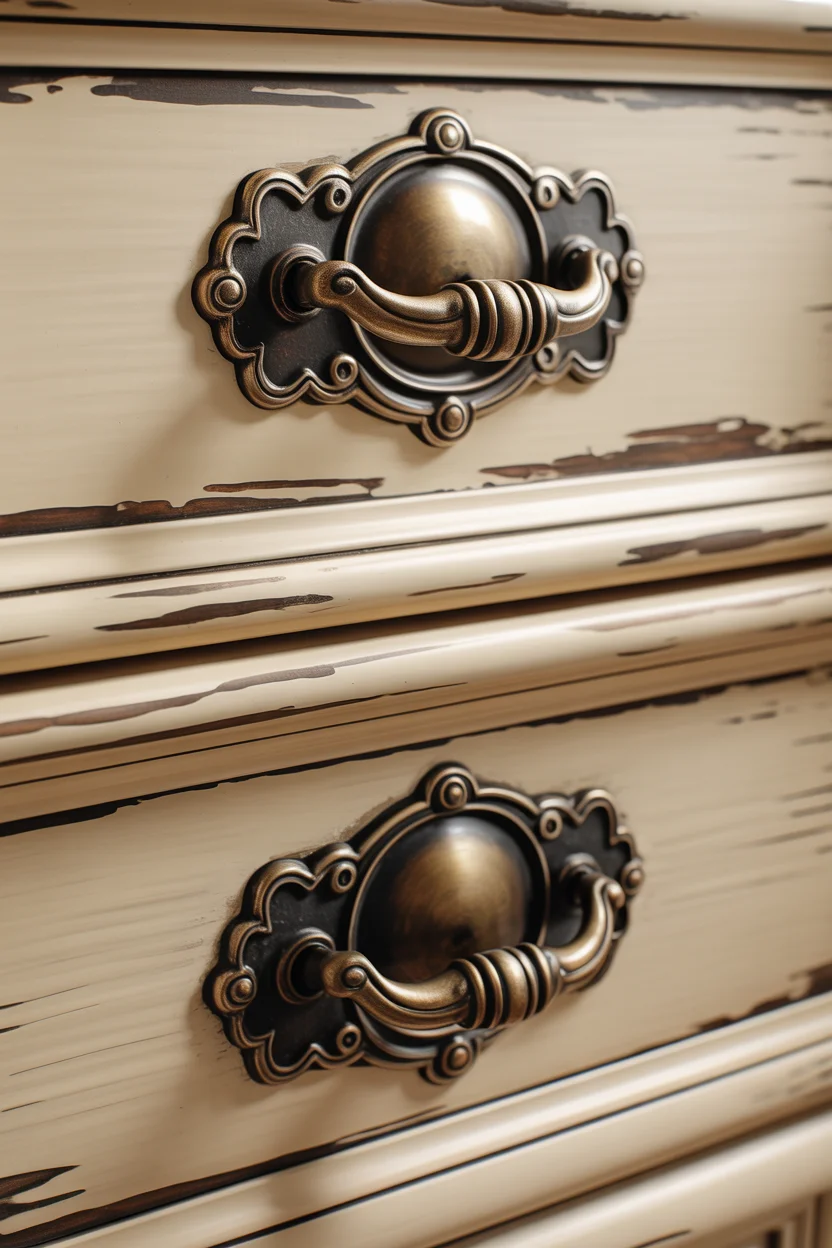
Hardware selections represent the jewelry of your kitchen, and choosing antique or vintage-inspired pieces adds essential finishing touches to Italian Tuscan kitchen ideas. These small but significant details—drawer pulls, cabinet knobs, hinges, and latches—in materials like aged brass, oil-rubbed bronze, or wrought iron bring tactile richness and authentic character. Look for pieces with visible craftsmanship including hammered textures, decorative backplates, and substantial weight that references traditional metalworking rather than modern mass production.
The beauty of hardware lies in how these subtle elements create cohesion when coordinated with other metal finishes throughout your kitchen. Match cabinet hardware to faucet finishes, lighting fixtures, and decorative accessories to establish visual harmony that feels intentional rather than accidental. Don’t shy away from mixing slightly different finishes within the same metal family—combining brushed and hammered bronze, for example—as this variation adds depth and authenticity, suggesting pieces collected over time rather than purchased as a matching set.
16. Wine Storage and Display
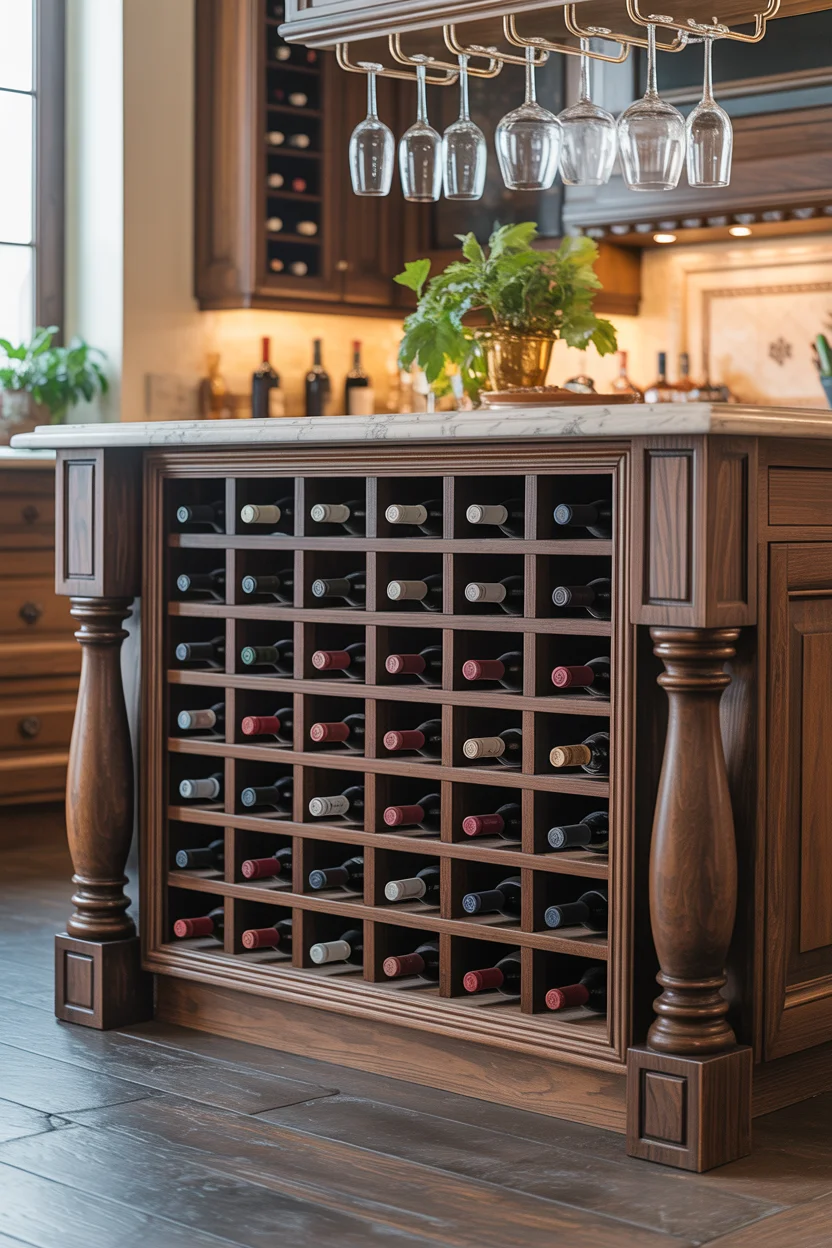
Wine storage and display opportunities celebrate Italian culture and viticulture while adding both function and visual interest to your Tuscan kitchen. Dedicated wine storage can take many forms—built-in racks beneath islands, temperature-controlled wine refrigerators disguised behind cabinet panels, or even entire walls devoted to bottle display. These elements acknowledge wine’s central role in Italian dining culture, ensuring your favorite vintages are properly stored and readily accessible for meals and entertaining.
Creating an attractive wine display requires balancing accessibility with aesthetic appeal and proper storage conditions. Individual bottle slots cut into wooden cabinetry or metal wine racks mounted to walls keep bottles horizontal to preserve cork moisture while creating graphic patterns through the arrangement of bottles and labels. Consider incorporating a small wine-tasting area within your kitchen layout, complete with a secondary sink, glassware storage, and countertop space for opening and serving, transforming your kitchen into a destination for gathering and celebration.
17. Pottery and Ceramic Display
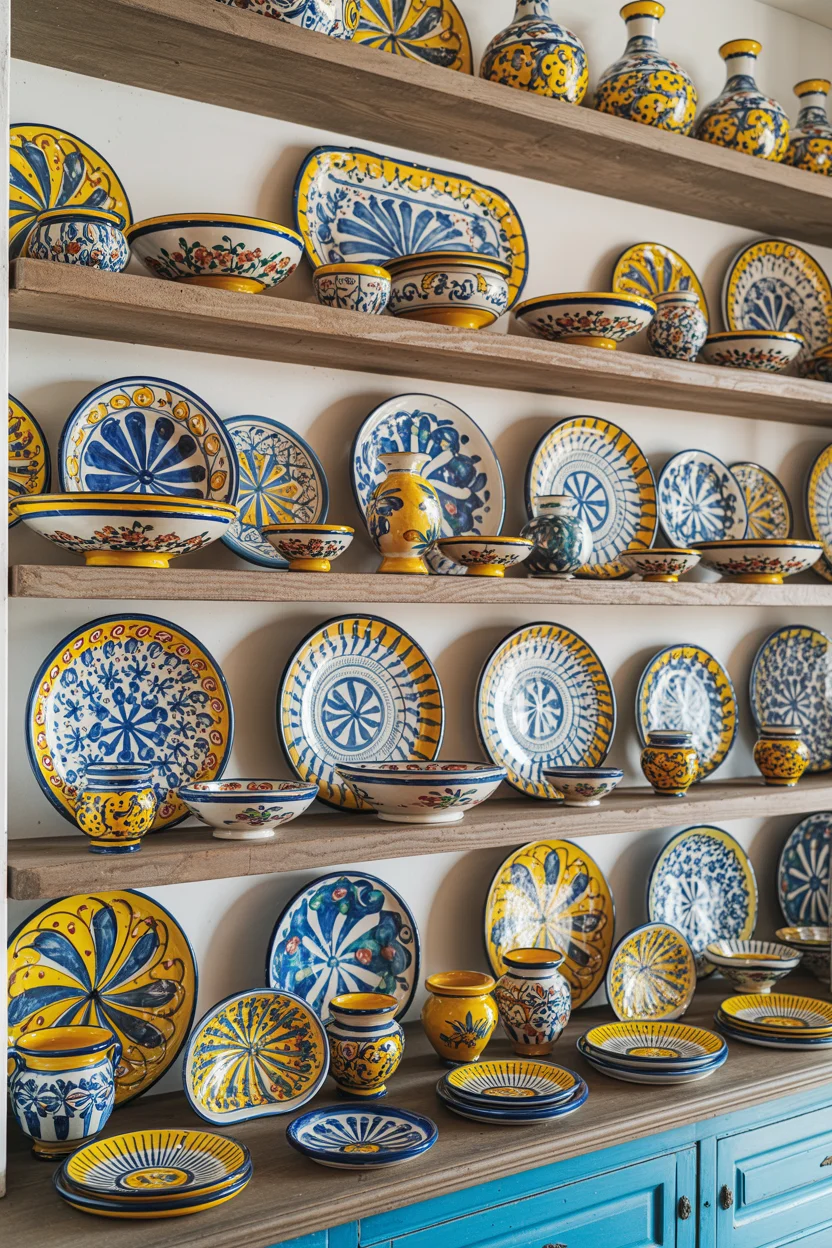
Displaying pottery and ceramics transforms functional dishware into art while infusing your kitchen with the colors and patterns quintessential to Italian Tuscan kitchen ideas. These pieces, whether authentic imports from Italian ceramic centers or inspired reproductions, feature the bold blues, sunny yellows, and vibrant greens painted in traditional motifs—lemons, olives, geometric patterns, and floral designs. Arranged on open shelving, plate racks, or in glass-front cabinets, these collections create visual interest and reflect the Italian appreciation for beauty in everyday objects.
Building a pottery collection allows for personal expression while incorporating authentic Italian craftsmanship into your kitchen design. Mix pieces from different regions and eras, combining antique finds with contemporary artisan work to create a curated look that appears gathered during travels rather than purchased all at once. Rotate displayed pieces seasonally or for different occasions, and don’t hesitate to actually use these beautiful items—Italian pottery is made for daily enjoyment, and the occasional chip or crack only adds character and story to pieces meant to be lived with and loved.
18. Rustic Wooden Furniture and Accents
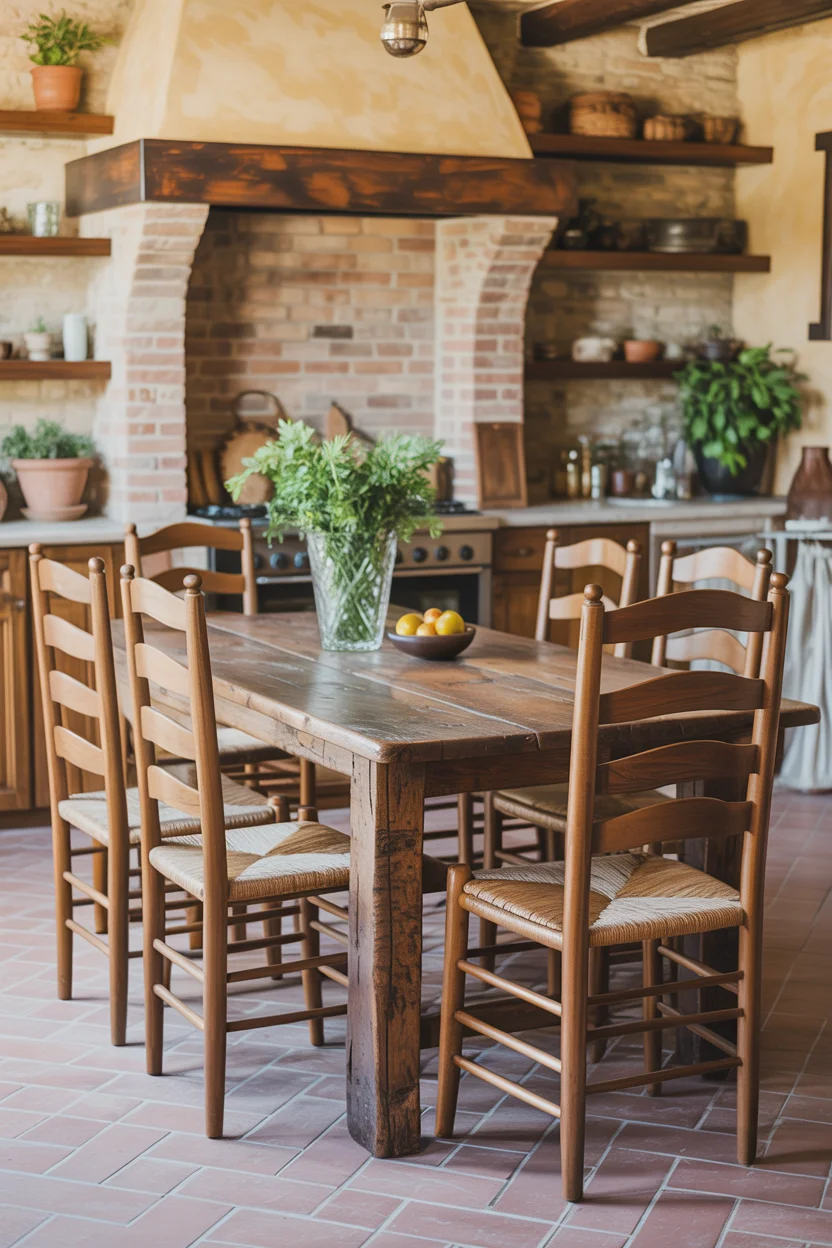
Rustic wooden furniture brings warmth, texture, and the imperfect beauty central to authentic Tuscan design into your kitchen living spaces. These pieces—dining tables, benches, chairs, and freestanding hutches—feature substantial construction, visible grain patterns, knots, and variations that celebrate the natural material rather than hiding it beneath perfect finishes. The furniture-quality approach to kitchen design creates spaces that feel more like living rooms than purely functional cooking areas, encouraging gathering, conversation, and the long, leisurely meals central to Italian culture.
Selecting wooden furniture for your Tuscan kitchen means choosing pieces with honest construction and character that will improve with age and use. Look for solid wood rather than veneers, traditional joinery like dovetails and mortise-and-tenon, and finishes that allow the wood to breathe and develop patina over time. Consider including a large farmhouse table as a secondary work surface and casual dining spot, or incorporate a wooden baker’s rack for additional storage and display that reinforces the collected, unfitted quality that distinguishes truly authentic Tuscan kitchens.
19. Herb Garden and Natural Elements
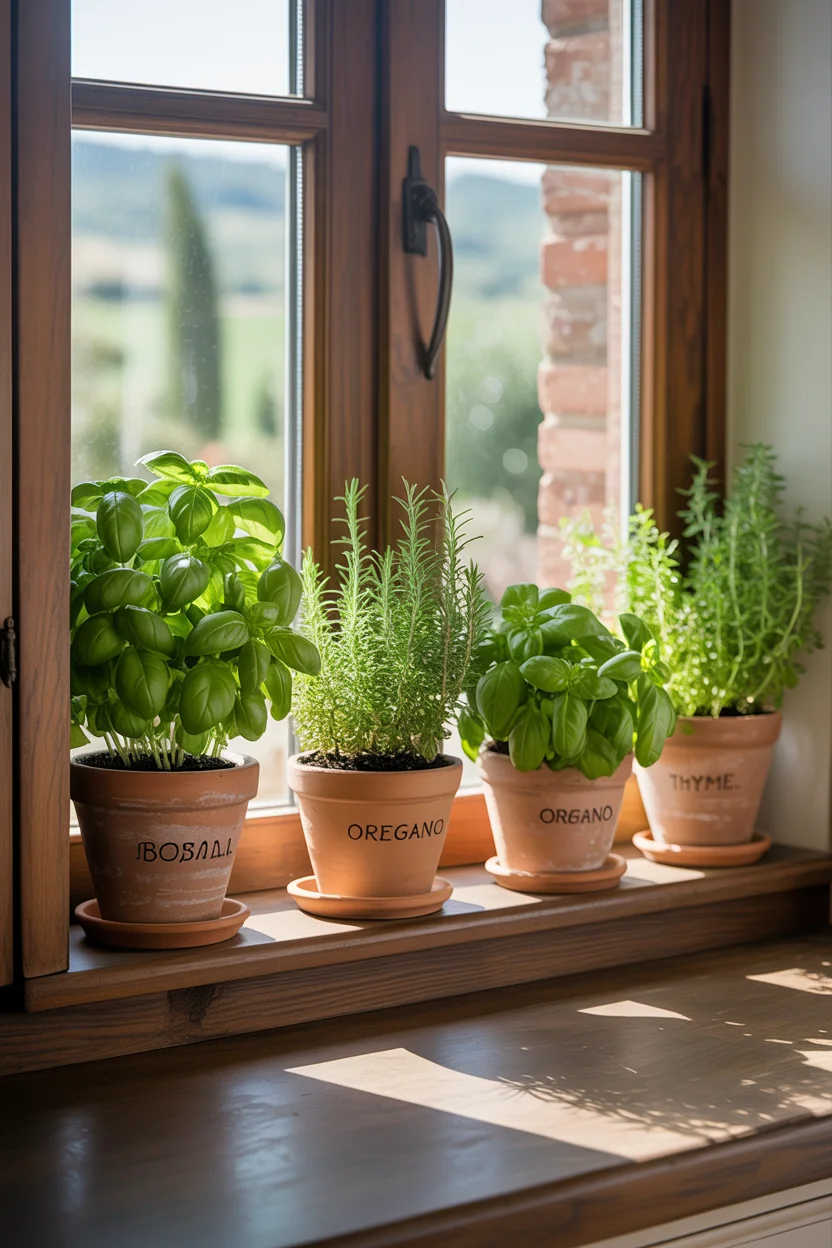
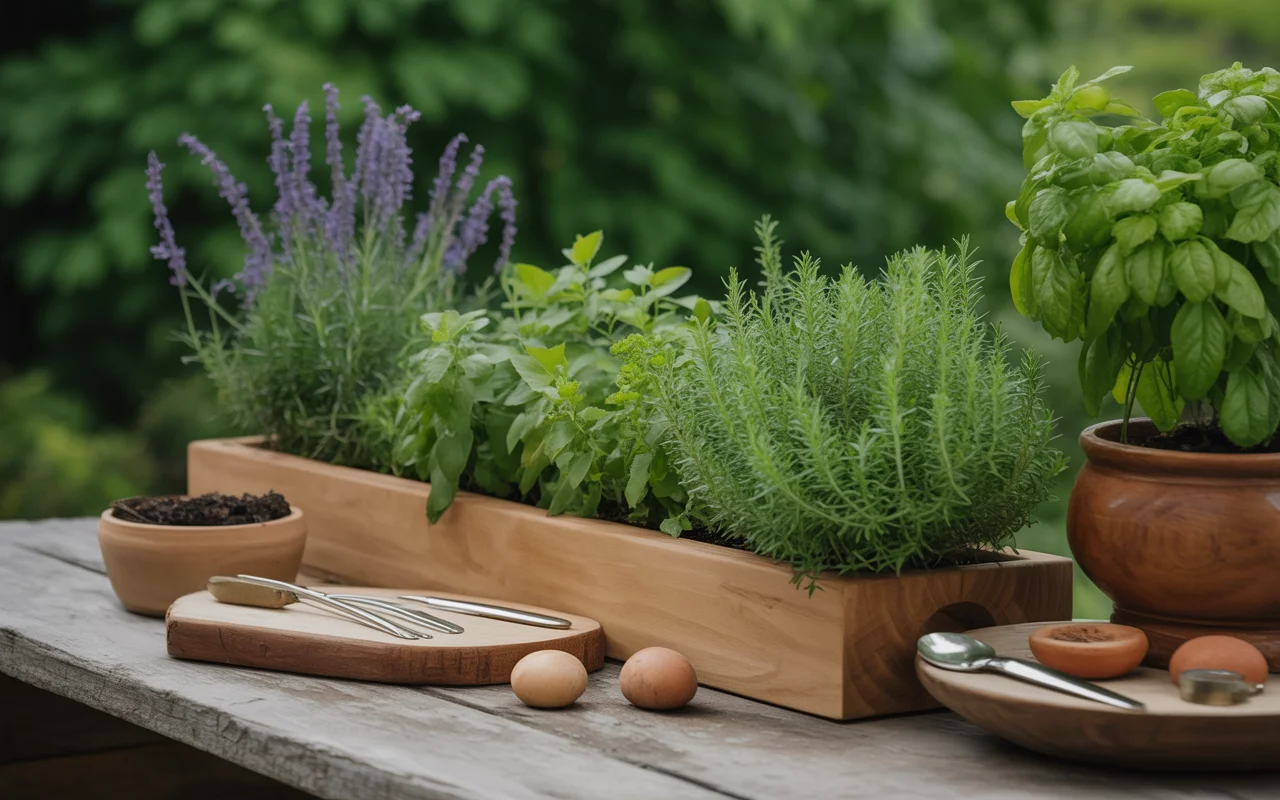
Incorporating living herbs and natural elements brings the Tuscan countryside indoors while providing fresh ingredients that elevate your cooking. Window boxes overflowing with basil, rosemary, sage, and oregano not only supply aromatic herbs for Italian recipes but also contribute green, living beauty that changes with the seasons. Terracotta pots, wooden boxes, or vintage containers add to the rustic aesthetic while housing these essential plants, creating a connection between your kitchen and the agricultural traditions of Italian farming.
Beyond herbs, natural elements like olive branches in ceramic vases, bowls of lemons and artichokes, and hanging garlic and onion braids reinforce the garden-to-table philosophy central to Tuscan cooking. These organic touches soften hard surfaces and introduce textures, scents, and colors that artificial decorations cannot replicate. They also serve practical purposes, keeping frequently used ingredients within reach while they simultaneously beautify the space. This approach to decoration celebrates abundance and the seasons, changing naturally as different ingredients come into and out of availability throughout the year.
20. Stone or Brick Flooring Alternatives
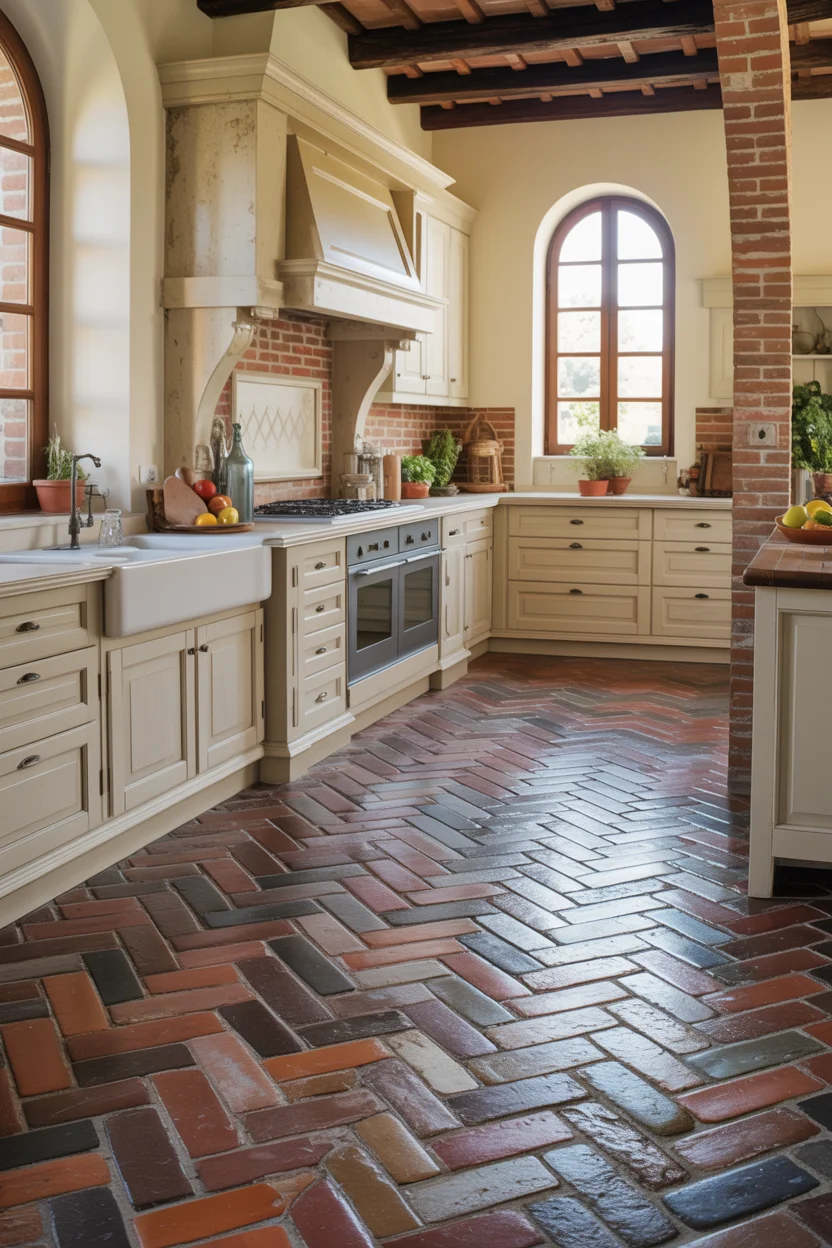
When terracotta isn’t feasible, stone and brick flooring alternatives deliver similar rustic charm while offering different aesthetic and practical benefits for Italian Tuscan kitchen ideas. Reclaimed brick brings texture and warmth through its varied colors and weathered surfaces, telling stories of previous lives in old buildings and walkways. Natural stone options like limestone, travertine, or slate provide earthy neutrals with unique veining and variation in each piece, creating floors that are as individual as fingerprints while evoking ancient Roman construction techniques.
These flooring alternatives each bring distinct characteristics that influence your kitchen’s overall feeling and maintenance requirements. Brick offers exceptional durability and a more casual, farmhouse aesthetic with its irregular surfaces and grout lines. Stone flooring tends toward sophistication, especially when cut into larger format tiles and installed with minimal grout lines, though its smooth surface can be slippery when wet. Both materials benefit from proper sealing to resist stains and moisture, ensuring they remain beautiful and functional for decades while developing the character that makes antique surfaces so desirable.
21. Decorative Corbels and Architectural Details
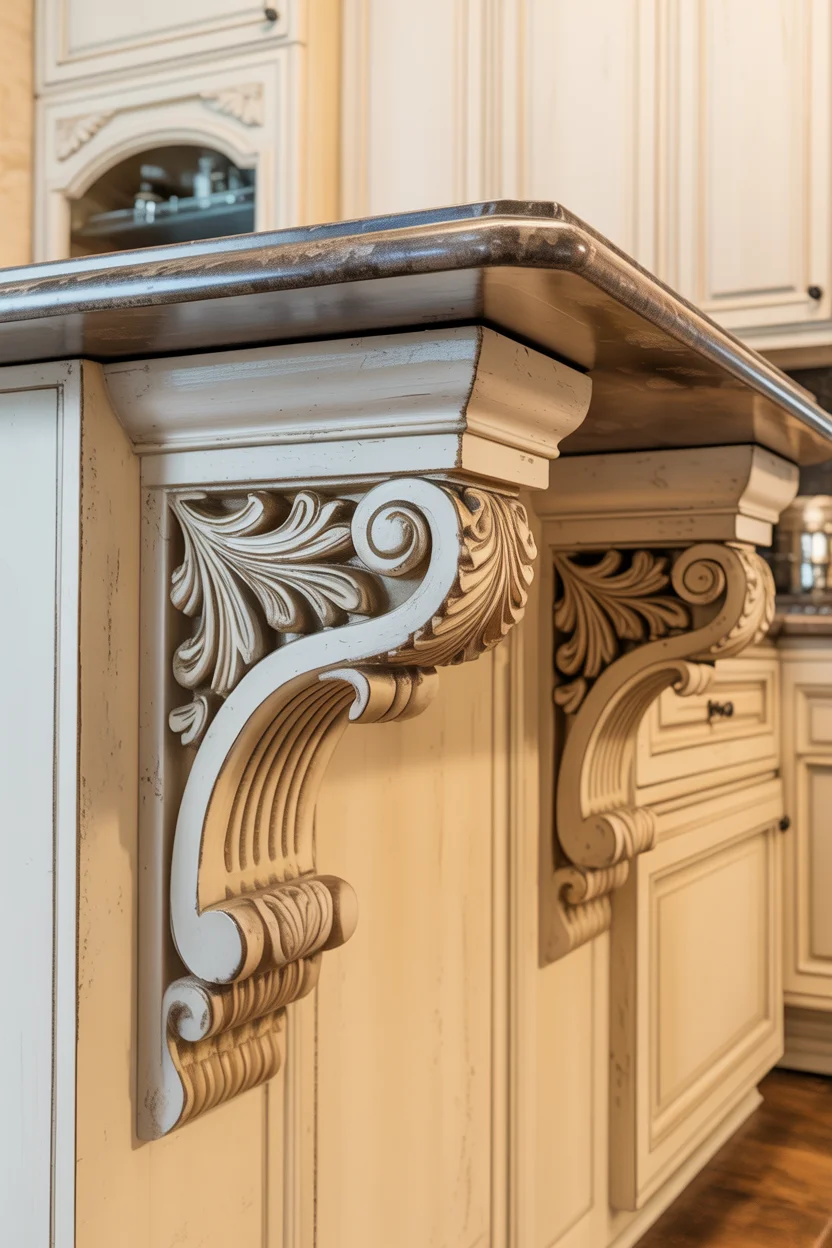
Decorative corbels and architectural details transform functional elements into design features that elevate Italian Tuscan kitchen ideas beyond simple decoration. These carved wooden or plaster brackets originally served structural purposes in ancient buildings, supporting beams, counters, and shelving. In contemporary applications, they maintain this practical function while adding layers of visual interest and artisan detail that reference centuries of Italian craftsmanship. Whether supporting a countertop overhang, range hood, or open shelving, corbels create shadow lines and dimensional interest that flat surfaces cannot provide.
Incorporating architectural details requires selecting pieces proportional to your space and consistent with your overall design aesthetic. Ornately carved corbels suit more formal, elaborate Tuscan interpretations, while simpler, chunky wooden brackets work better in rustic farmhouse settings. Beyond corbels, consider adding crown molding, decorative ceiling medallions, or carved wood panels to cabinet doors and range hoods. These thoughtful details demonstrate attention to craft and quality that distinguishes truly considered design from surface-level decoration, creating kitchens with depth and character.
22. Copper Cookware and Accessories
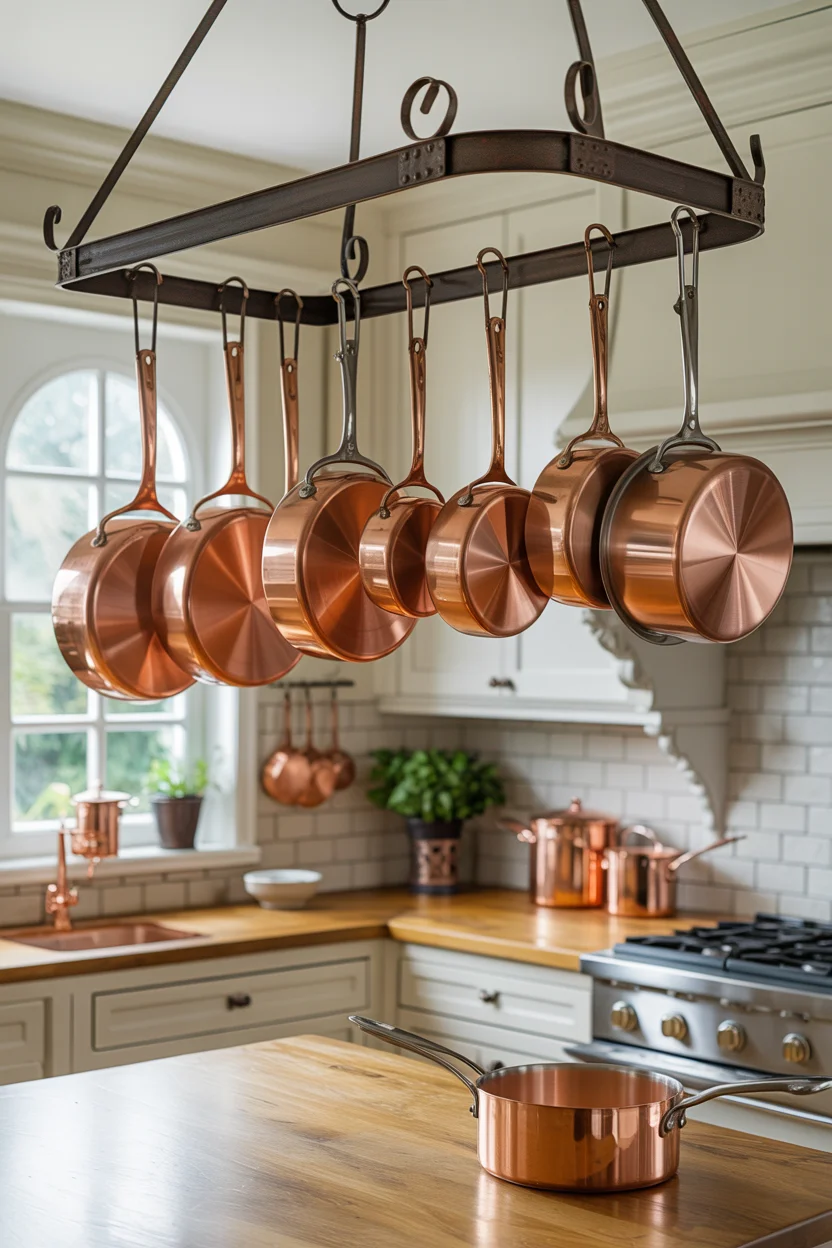
Copper cookware and accessories serve as both practical tools and decorative elements that capture the warmth and richness essential to authentic Tuscan kitchens. These lustrous pieces, whether hanging from pot racks, displayed on open shelving, or positioned on stovetops ready for use, introduce a metallic glow that complements the earth tones and natural materials throughout Tuscan design. Beyond beauty, copper offers superior heat conductivity prized by serious cooks, making these pieces genuine kitchen workhorses rather than mere decoration.
Building a copper collection allows you to invest in quality pieces that will last generations while simultaneously enhancing your kitchen’s aesthetic appeal. Start with essential items like sauté pans, saucepans, and a stockpot, then expand to include specialty pieces like polenta pots, fish poachers, or decorative molds. The metal’s living finish develops character through use, developing a natural patina that some cooks cherish while others prefer to polish away. Complement copper cookware with matching accessories—utensil holders, canister sets, or a farmhouse sink—to create cohesive metallic warmth that ties together your entire Tuscan kitchen vision.
Conclusion
Creating your dream Italian Tuscan kitchen combines timeless materials, warm colors, and artisan craftsmanship into spaces that celebrate cooking, gathering, and living well. These 22 ideas provide starting points for your transformation, whether you implement every element or select favorites that speak to your personal style. Remember, authentic Tuscan design embraces imperfection and welcomes the patina of daily life, creating kitchens that improve with age and use, just like fine Italian wine.

Join The Discussion