
Introduction
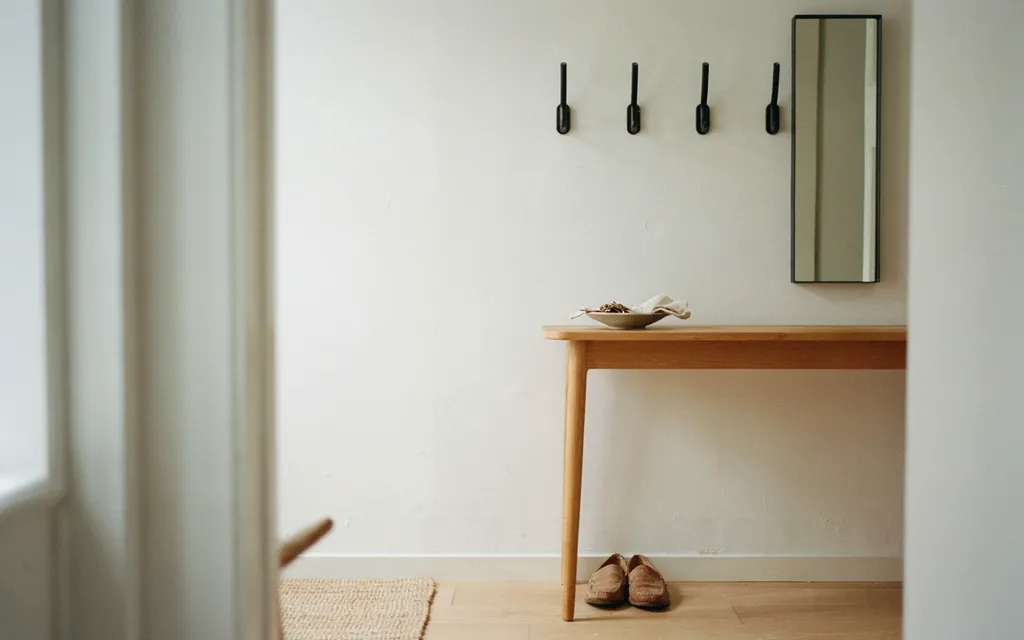
Japandi design looks effortless, but achieving that calm, intentional feel is easier said than done. Many entryways miss the mark by adding too much decor, choosing the wrong finishes, or covering windows that should stay bright and open. These Japandi entryway ideas break down exactly where people typically go wrong, from cluttered console tables to mismatched hardware, and show how to fix it. Whether you’re starting from scratch or refining an existing space, this list of 22 Japandi entryway ideas will help you get the details genuinely right.
1. Low Wood Entry Bench
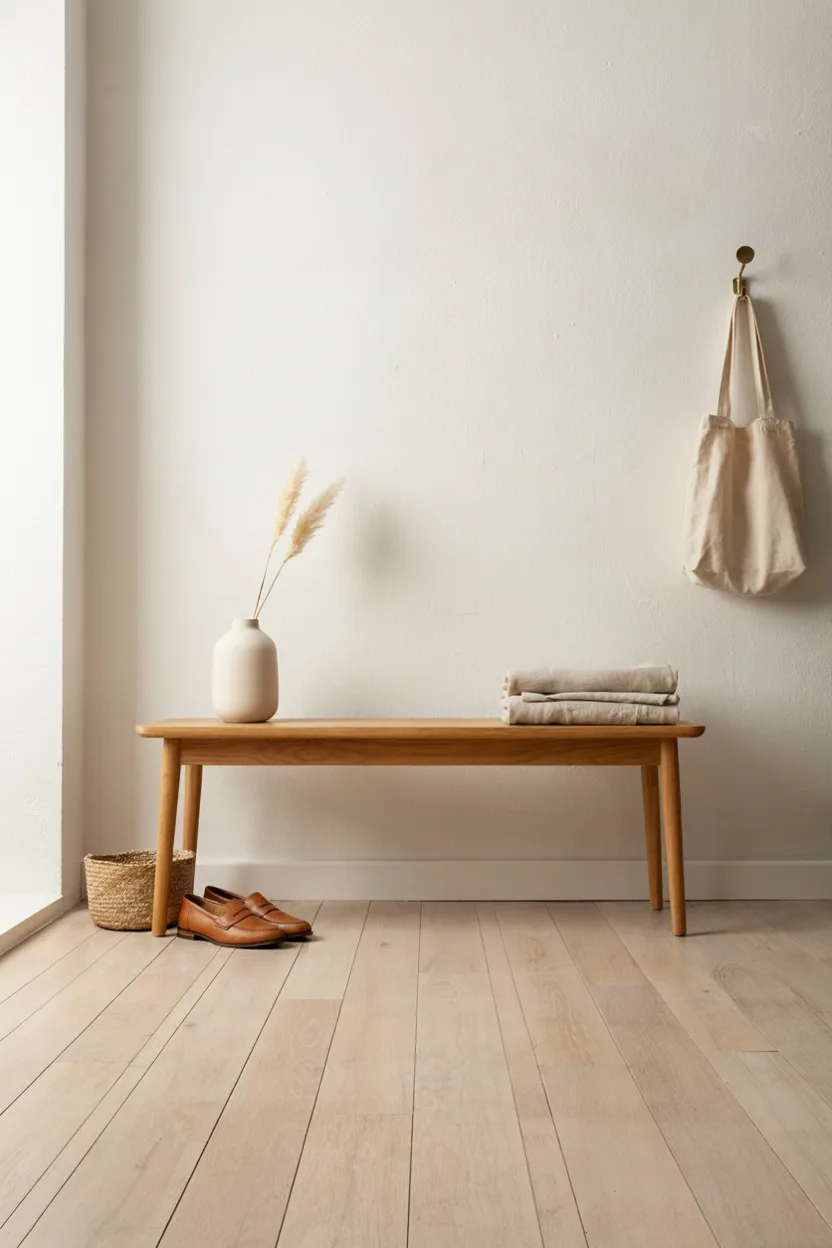
A low wood bench is one of the most essential Japandi entryway ideas, offering a place to sit while removing shoes without overwhelming the space with bulk or unnecessary ornamentation. Unlike taller, heavier entryway furniture, a low-profile bench keeps sightlines open and reinforces the grounded, horizontal lines central to Japandi design, which blends Japanese minimalism with Scandinavian warmth and function.
Choosing a bench crafted from natural, unfinished or lightly stained wood reinforces the organic materiality this style relies on, avoiding painted or heavily lacquered finishes that feel too polished for the aesthetic. This Japandi entryway idea works best when the bench is left mostly bare, styled with perhaps one simple object, rather than layered with decorative throw pillows or clutter that disrupts the intentional simplicity.
2. Minimalist Shoe Storage Cabinet
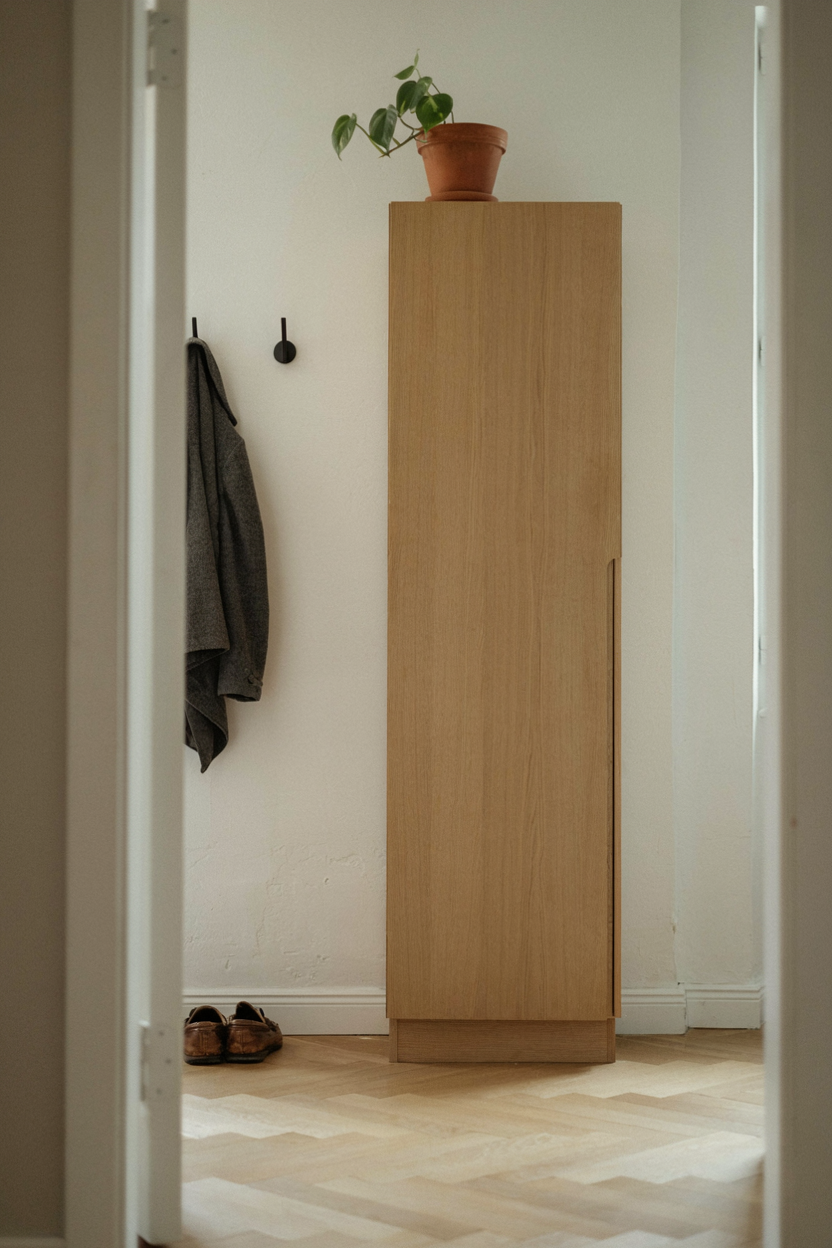
Concealed shoe storage is a defining element among Japandi entryway ideas, since visible shoe piles directly contradict the calm, uncluttered philosophy central to this design style. A slim cabinet with simple, unadorned doors keeps shoes completely out of sight, maintaining the entryway’s clean visual line while still providing practical, everyday storage for the whole household’s footwear.
Choosing a cabinet in natural or lightly stained wood, without ornate hardware or heavy detailing, keeps the piece feeling authentically Japandi rather than simply utilitarian. This entryway idea is one people frequently get wrong by leaving shoes out on open racks or trays, which undermines the sense of order this style depends on. Concealment, not just organization, is the key distinction here.
3. Soft Neutral Wall Color
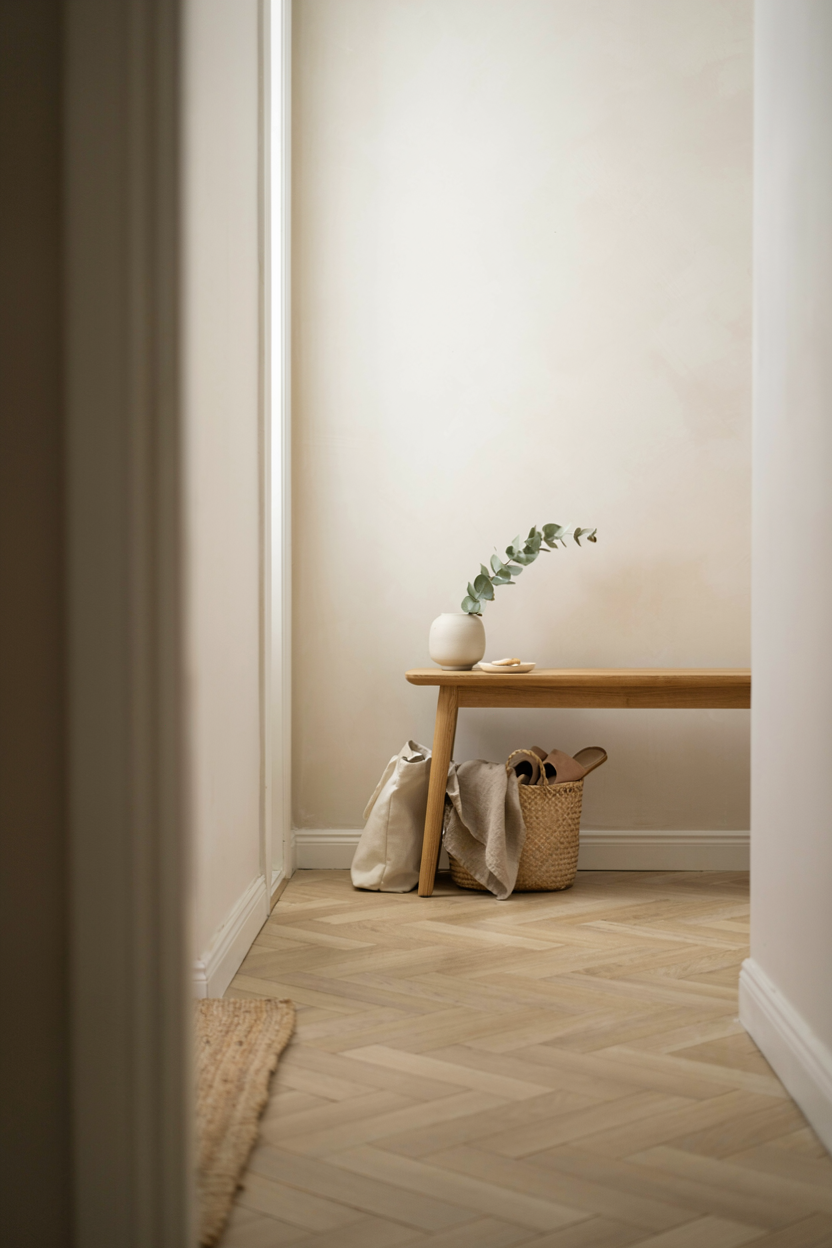
Choosing the right wall color is one of the more overlooked Japandi entryway ideas, since many homeowners default to stark, cool white when a warmer, softer neutral actually captures this style’s intended mood far more accurately. Japandi design favors gentle, muted tones with subtle warmth, avoiding the clinical starkness often associated with purely Scandinavian minimalism in favor of something calmer and more grounded.
This softer approach to color creates a welcoming, cocoon-like first impression rather than a cold, sterile one, which is a common misstep in entryways attempting this style. Pairing warm white or soft beige walls with natural wood tones and muted textiles reinforces the intended balance between simplicity and warmth. This Japandi entryway idea sets the tone for the rest of the home’s design.
4. Natural Wood Console Table
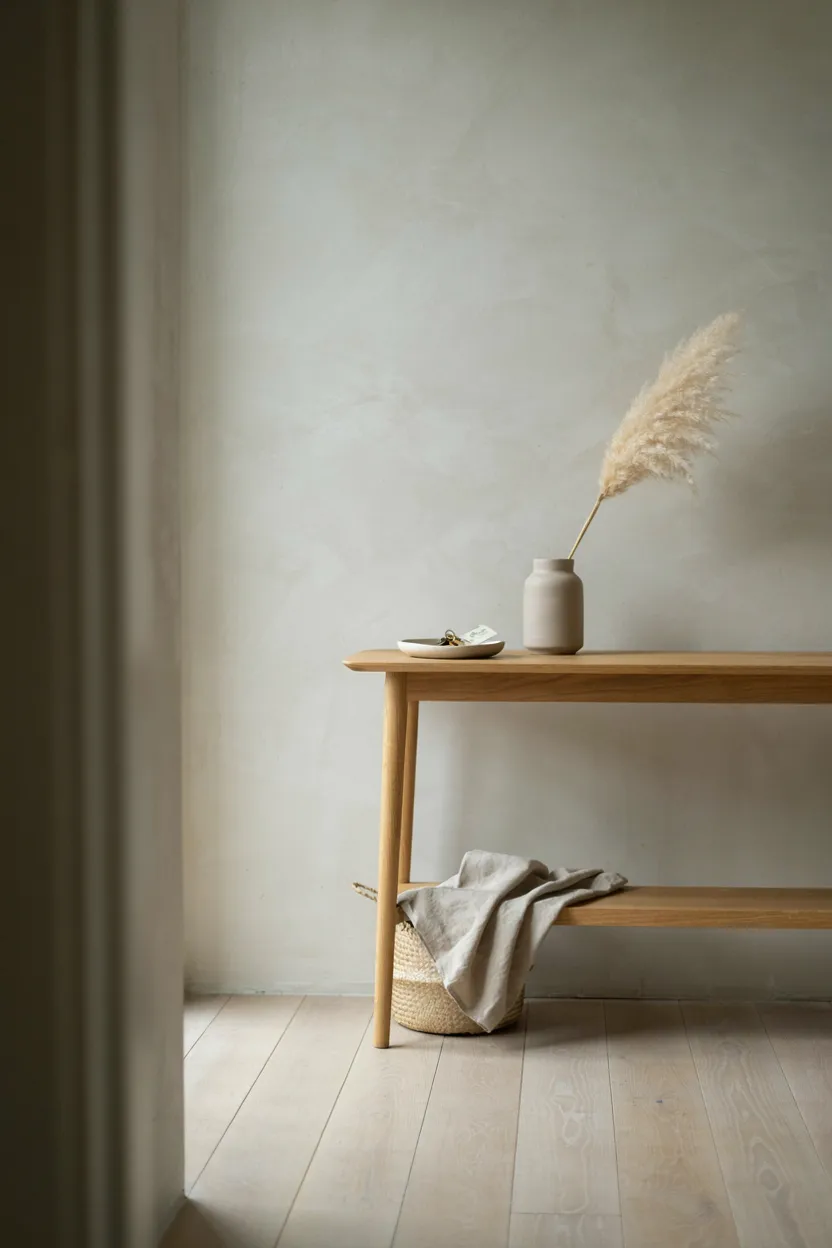
A natural wood console table serves as a foundational piece among Japandi entryway ideas, offering a functional surface for keys, mail, and small essentials without disrupting the room’s overall sense of calm. The key to styling this piece correctly lies in restraint, since many homeowners mistakenly pile the surface with decor, photos, and miscellaneous items that undermine the style’s core minimalist philosophy.
Choosing a table with simple, straight legs and minimal ornamentation reinforces the clean lines central to Japandi design. This entryway idea works best when only one or two carefully chosen objects, such as a small ceramic dish or a single vase, sit atop the surface, leaving the majority of the table intentionally bare to preserve the visual quiet this style depends on.
5. Woven Basket Storage
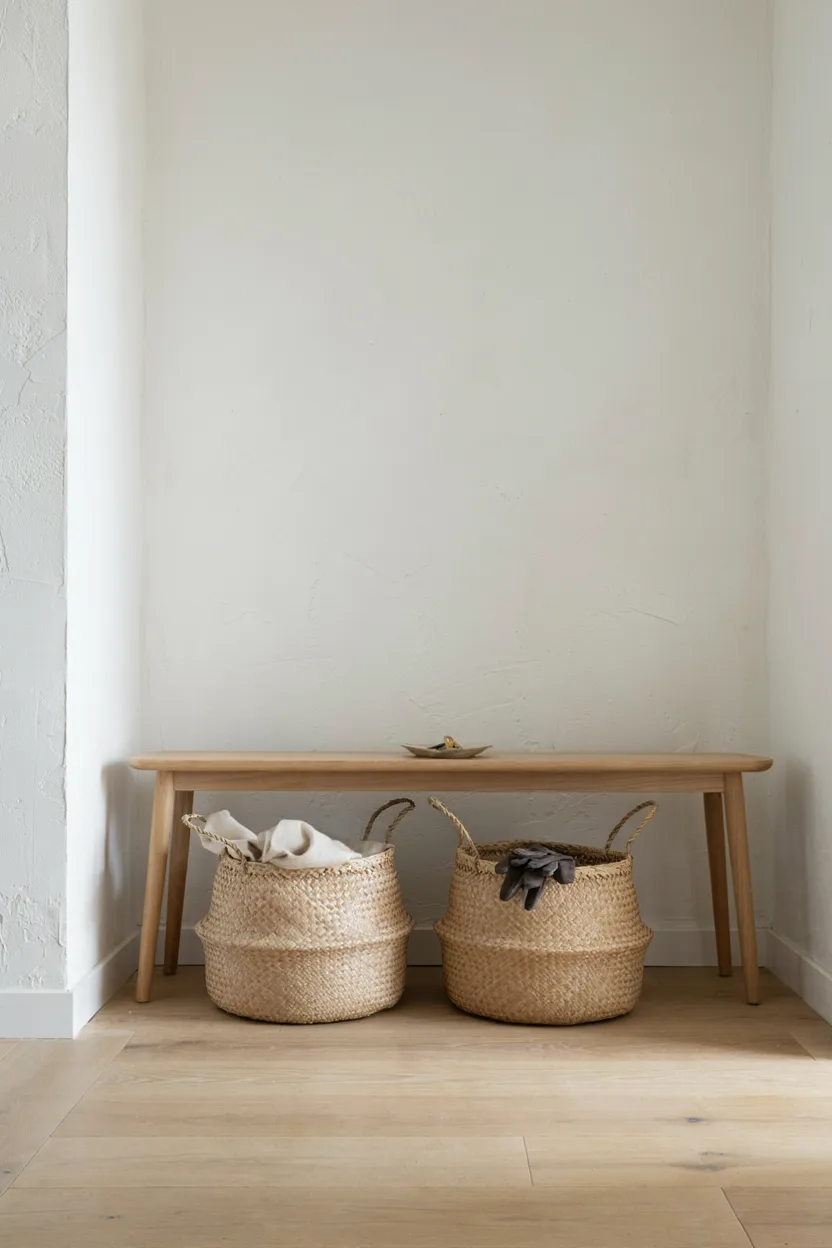
Woven baskets bring natural texture to Japandi entryway ideas, offering practical storage for scarves, gloves, and other small items while reinforcing the organic materiality central to this design style. Unlike plastic bins or metal containers, woven natural fiber baskets add warmth and tactile interest without introducing any visual clutter or breaking from the muted, earthy color palette this aesthetic relies on.
Tucking baskets beneath a bench or console table keeps them functional but out of the way, maintaining clean sightlines throughout the entryway. This Japandi entryway idea is frequently styled incorrectly when baskets are left overflowing or mismatched in size and material, which disrupts the sense of order. Choosing baskets in coordinating tones and consistent weave patterns preserves the intended calm, cohesive look.
6. Ceramic Vase with Branches
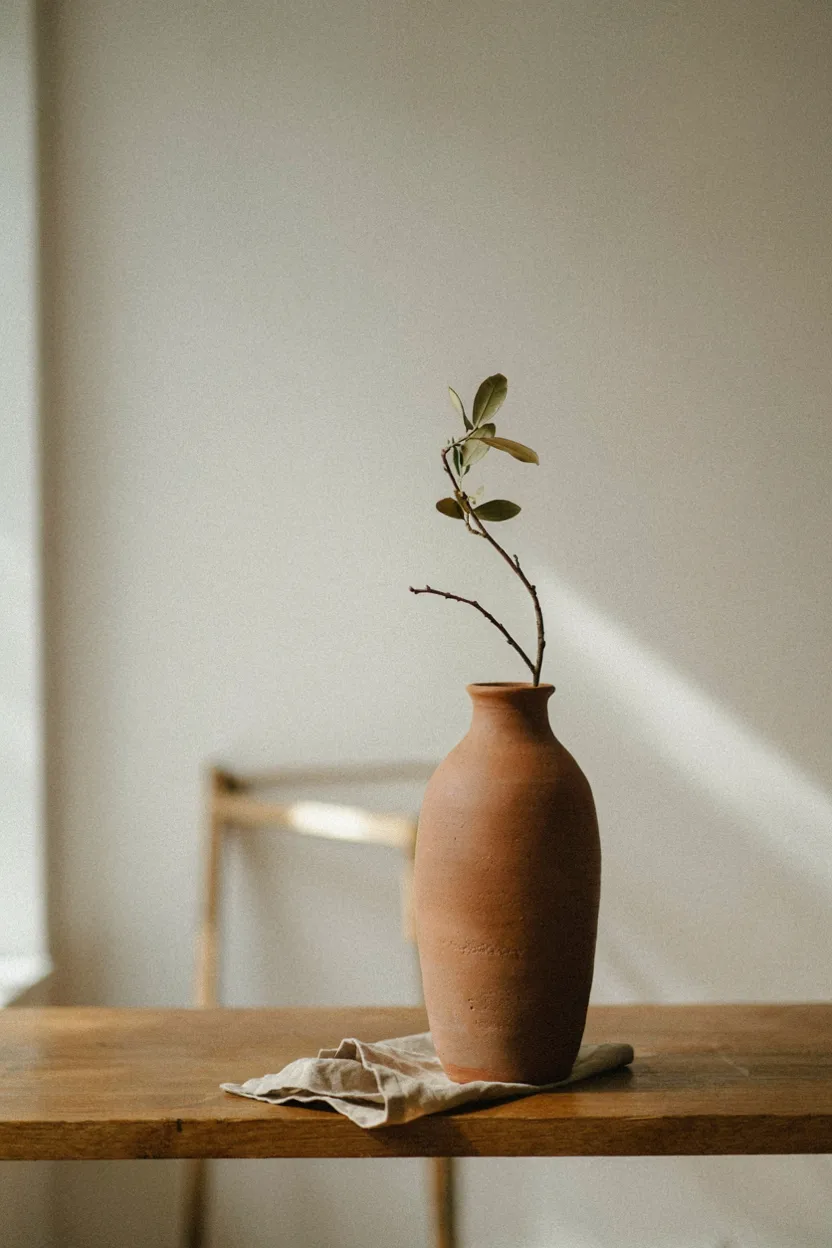
A single ceramic vase with sparse branches is one of the more nuanced Japandi entryway ideas, embracing the wabi-sabi principle of finding beauty in imperfection and simplicity rather than abundance. Unlike a full, lush floral arrangement, this styling choice uses just one or two branches, celebrating negative space and quiet visual interest over an ornate, overflowing display.
This detail is frequently styled incorrectly when homeowners default to bright, full flower arrangements more suited to traditional Western decor. Choosing a handmade, slightly imperfect ceramic vase in a matte, earthy glaze reinforces the authentic materiality central to Japandi style. This entryway idea rewards restraint, proving that sometimes the most impactful decorative choice is also the simplest one.
7. Wall-Mounted Wood Coat Hooks
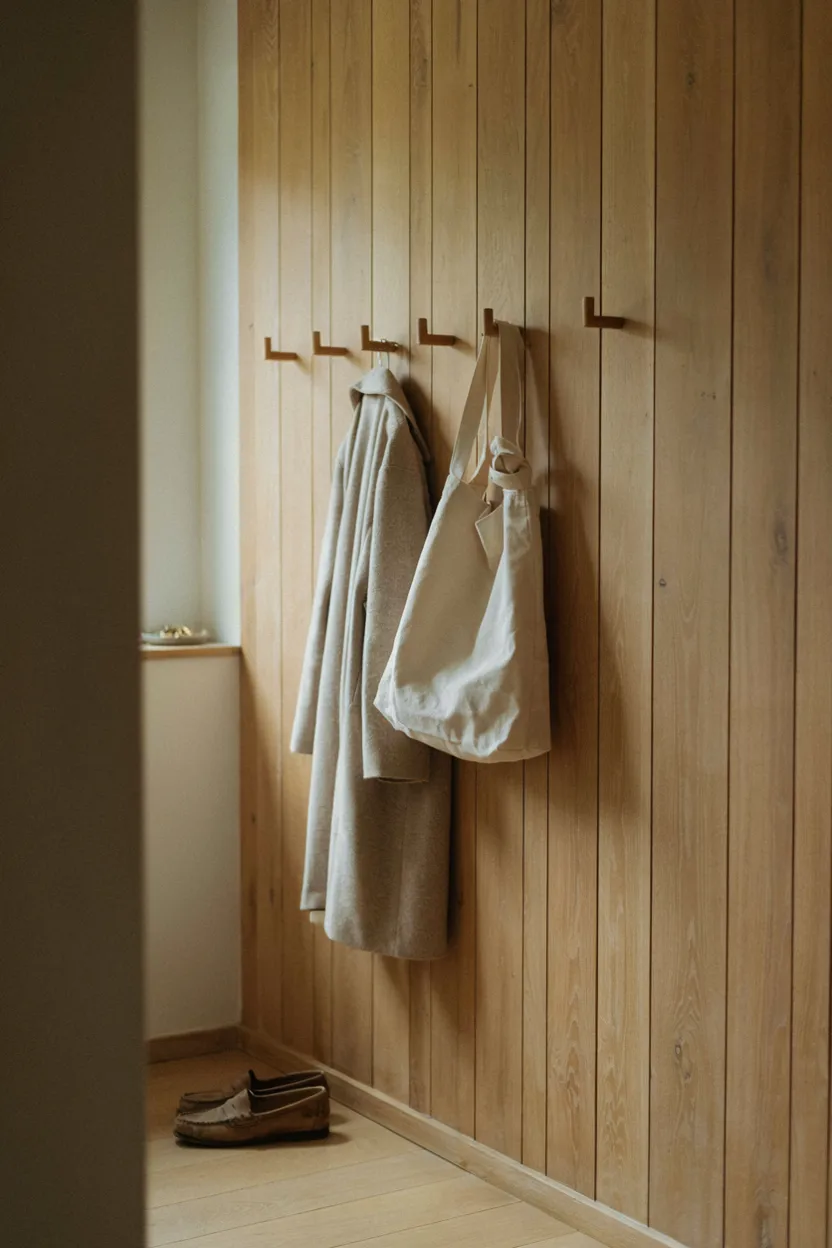
Wall-mounted wood hooks offer a functional, understated storage solution among Japandi entryway ideas, replacing bulkier coat racks or closets with a simple, low-profile alternative. Choosing hooks crafted from natural wood rather than polished metal keeps the hardware feeling organic and consistent with the surrounding materials, reinforcing the cohesive, nature-inspired palette this design style depends on throughout the space.
This detail is commonly styled incorrectly when too many coats, bags, and accessories are left hanging simultaneously, creating visual clutter that contradicts the intended minimalism. This Japandi entryway idea works best when only a few items hang at any given time, with the rest stored out of sight. Spacing the hooks generously apart also reinforces the sense of calm, uncluttered simplicity.
8. Round Wood-Framed Mirror
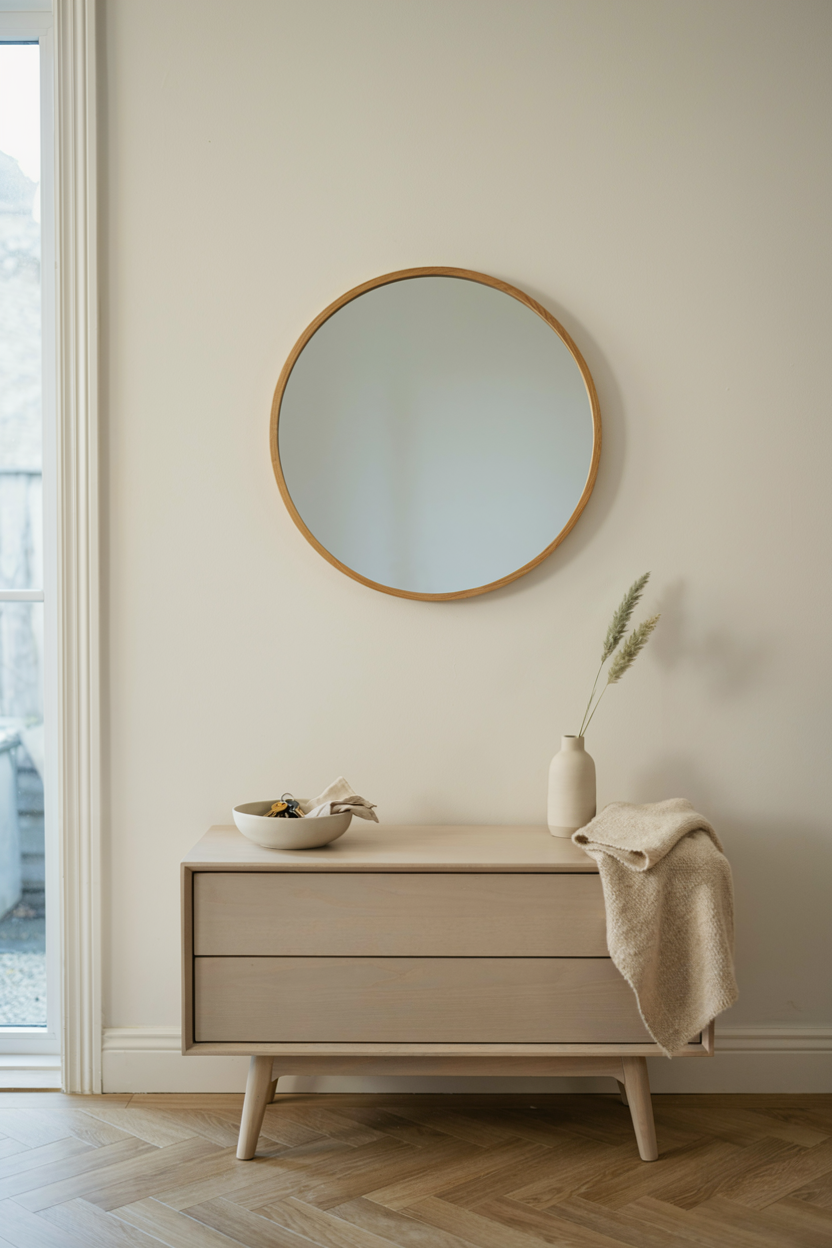
A round, wood-framed mirror is a popular choice among Japandi entryway ideas, offering both practical function and soft, organic visual interest through its curved silhouette. The rounded shape provides a gentle contrast to the straight lines found elsewhere in Japandi furniture and architecture, while the natural wood frame keeps the piece consistent with the style’s broader material palette.
This mirror choice is often styled incorrectly when paired with ornate or heavily embellished frames that clash with the surrounding minimalism. This Japandi entryway idea works best with a genuinely simple, unadorned frame that lets the mirror’s function and gentle shape speak for themselves. Hanging it at a height that reflects natural light from a nearby window further enhances the entryway’s airy feel.
9. Paper Lantern Pendant Light
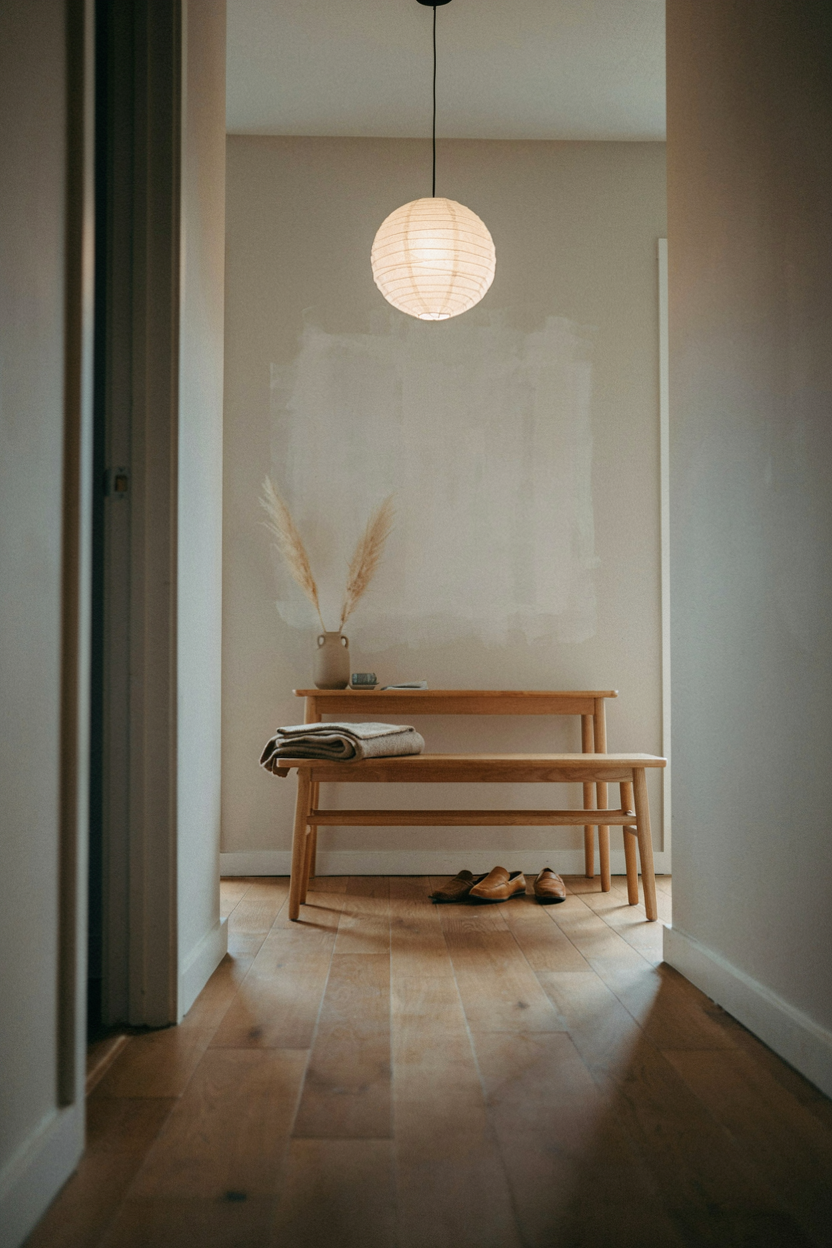
Paper lantern lighting brings authentic Japanese design influence to Japandi entryway ideas, offering a soft, diffused glow that feels considerably warmer and more organic than a typical glass or metal fixture. This lighting choice draws directly from traditional Japanese paper lanterns, reinforcing the cultural roots of this design style while still fitting seamlessly into a broader, minimalist Scandinavian-influenced space.
This detail is sometimes overlooked entirely in favor of more generic modern fixtures that don’t capture the same warmth or cultural authenticity. This Japandi entryway idea works particularly well as a single statement fixture rather than multiple lanterns, which could overwhelm a small entry space. The soft, filtered light it produces also enhances the calm, welcoming atmosphere central to Japandi design.
10. Pebble Accent Tray
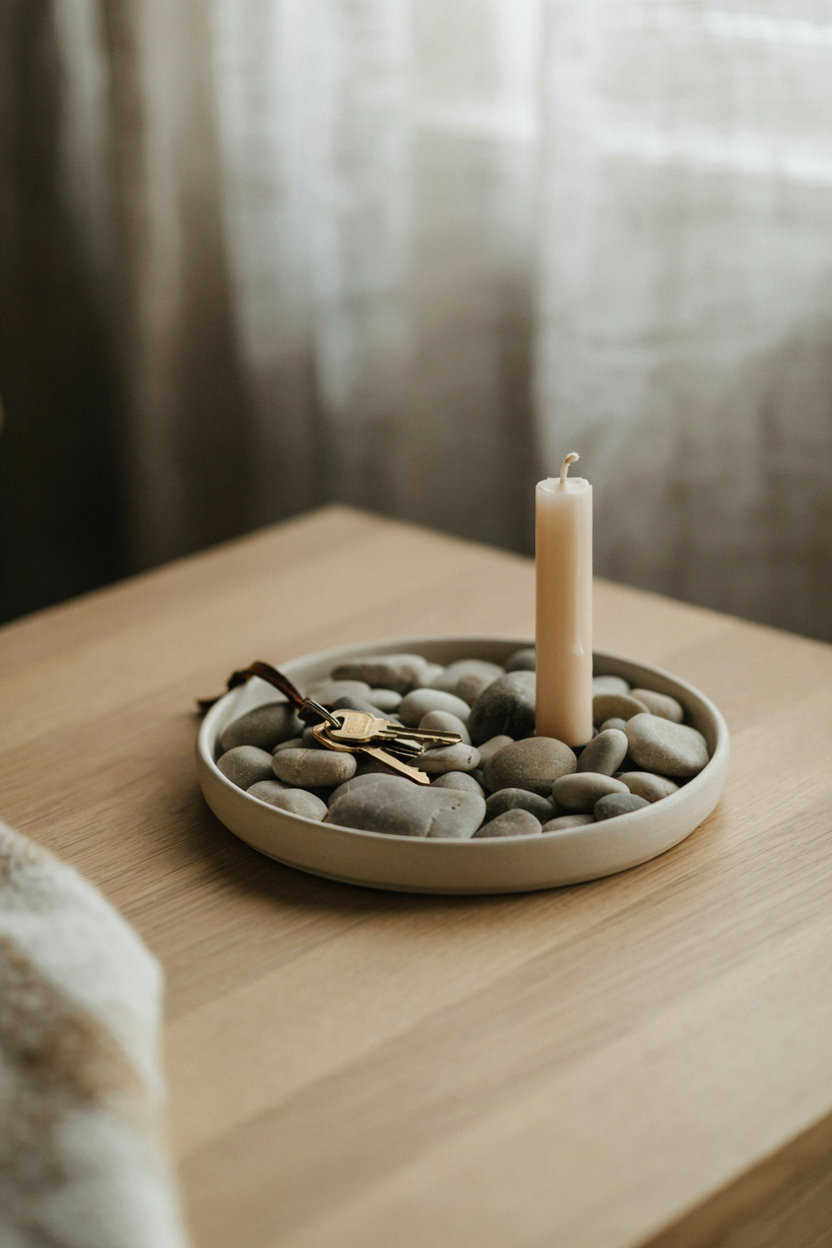
A pebble-filled tray offers a subtle, nature-inspired detail among Japandi entryway ideas, using smooth stones to add texture and visual interest to an otherwise simple catch-all surface. This small styling choice reflects the broader Japandi emphasis on natural materials, replacing a plain ceramic dish with something that feels slightly more considered and connected to the outdoors.
This detail is frequently overlooked or replaced with mismatched, colorful catchall dishes that disrupt the entryway’s overall neutral palette. This Japandi entryway idea works best when the tray and pebbles remain in muted, natural tones like gray, tan, or white, ensuring the accent blends seamlessly into the surrounding decor rather than becoming an unintentional pop of clashing color.
11. Simple Jute Runner Rug
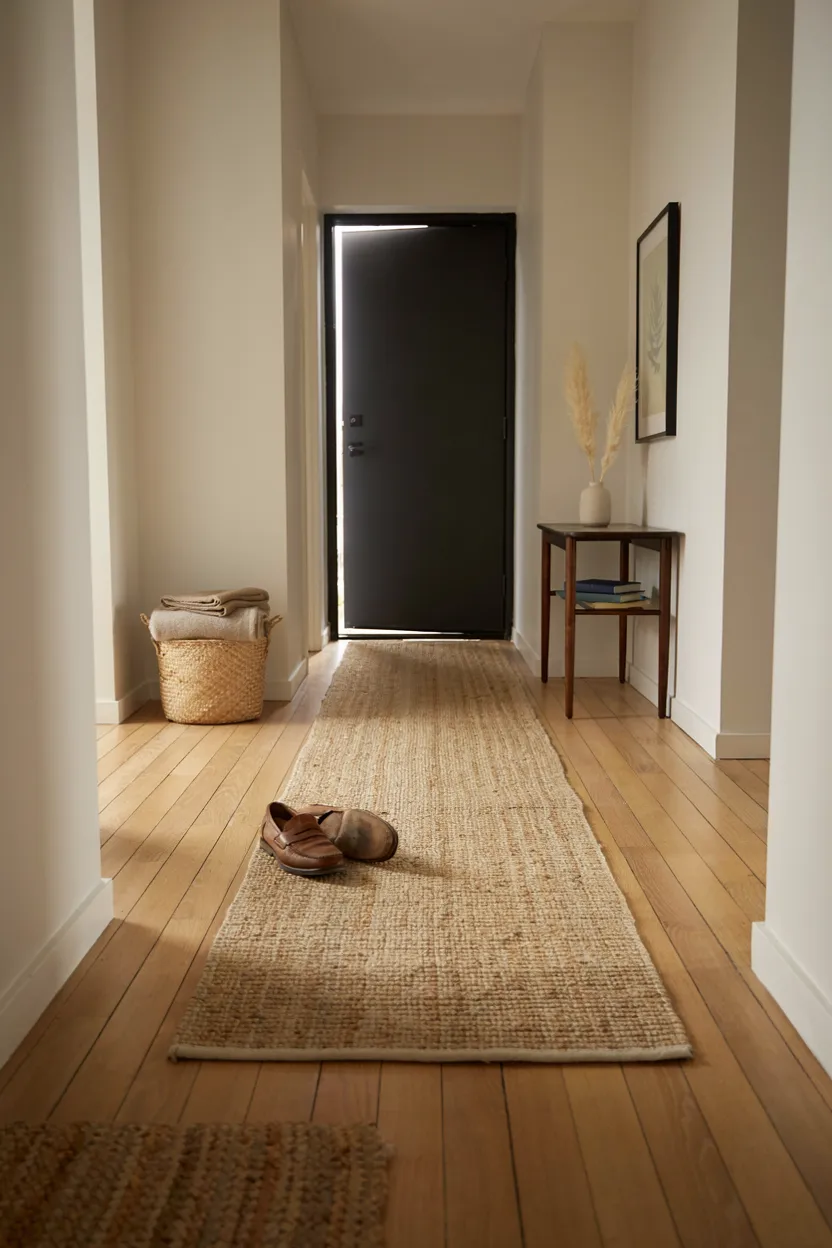
A jute runner rug adds natural texture underfoot among Japandi entryway ideas, using an organic woven material rather than a synthetic or heavily patterned rug that might clash with the style’s muted, earthy palette. This flooring choice reinforces the tactile, nature-inspired quality central to Japandi design while also providing practical protection for entryway flooring against dirt and moisture.
This detail is commonly styled incorrectly when homeowners choose rugs with bold patterns, bright colors, or busy geometric designs more suited to maximalist interiors. This Japandi entryway idea works best with a simple, texturally interesting runner in a single neutral tone, allowing the material’s natural weave to provide visual interest rather than relying on a distracting printed pattern.
12. Floating Wood Shelf
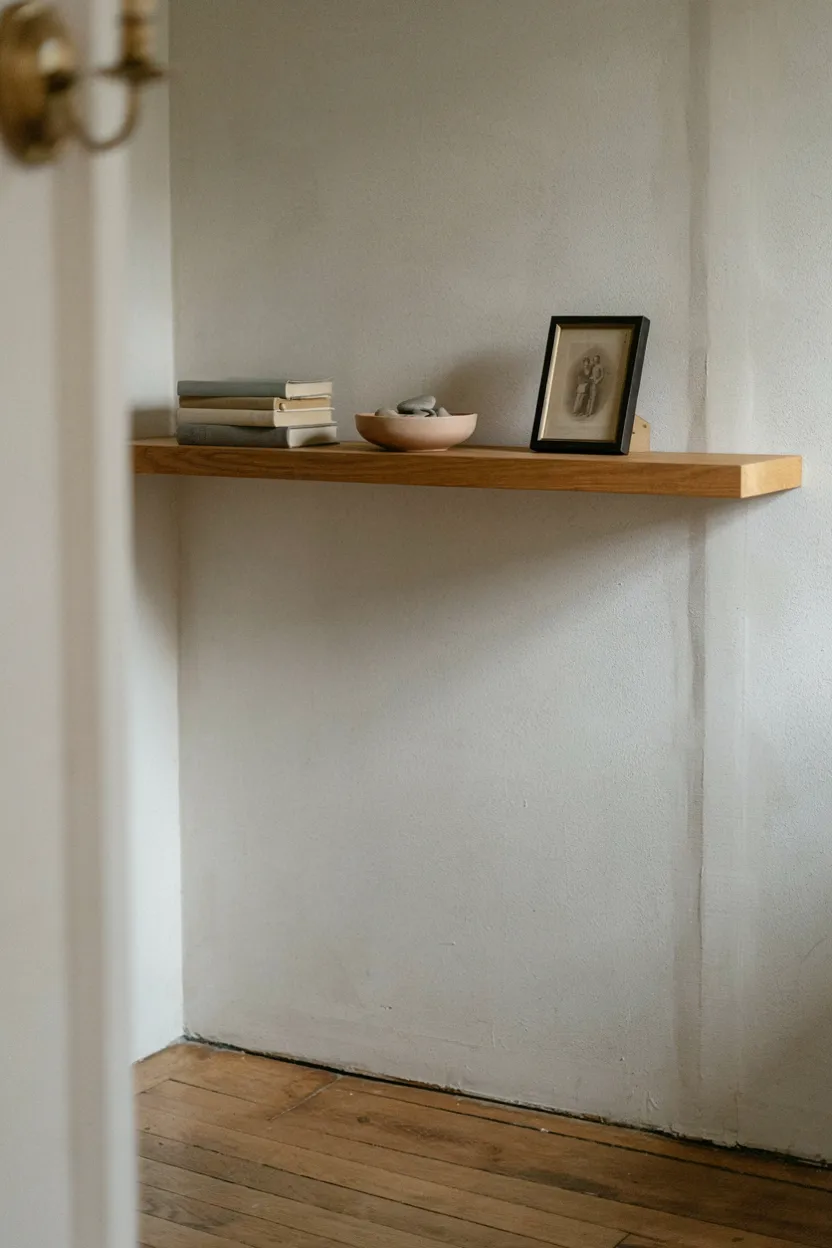
A floating wood shelf offers a space-efficient display solution among Japandi entryway ideas, keeping the floor completely clear while still providing a surface for a few carefully chosen decorative or functional items. Mounting the shelf directly to the wall reinforces the airy, uncluttered feeling central to Japandi design, avoiding the visual weight that a standing shelving unit might introduce into a small space.
This detail is frequently styled incorrectly when the shelf becomes overloaded with too many objects, undermining the intentional minimalism this style relies on. This Japandi entryway idea works best with just two or three items displayed with generous negative space between them, echoing the Japanese design principle of ma, or the meaningful use of empty space within a composition.
13. Sliding Shoji-Style Screen
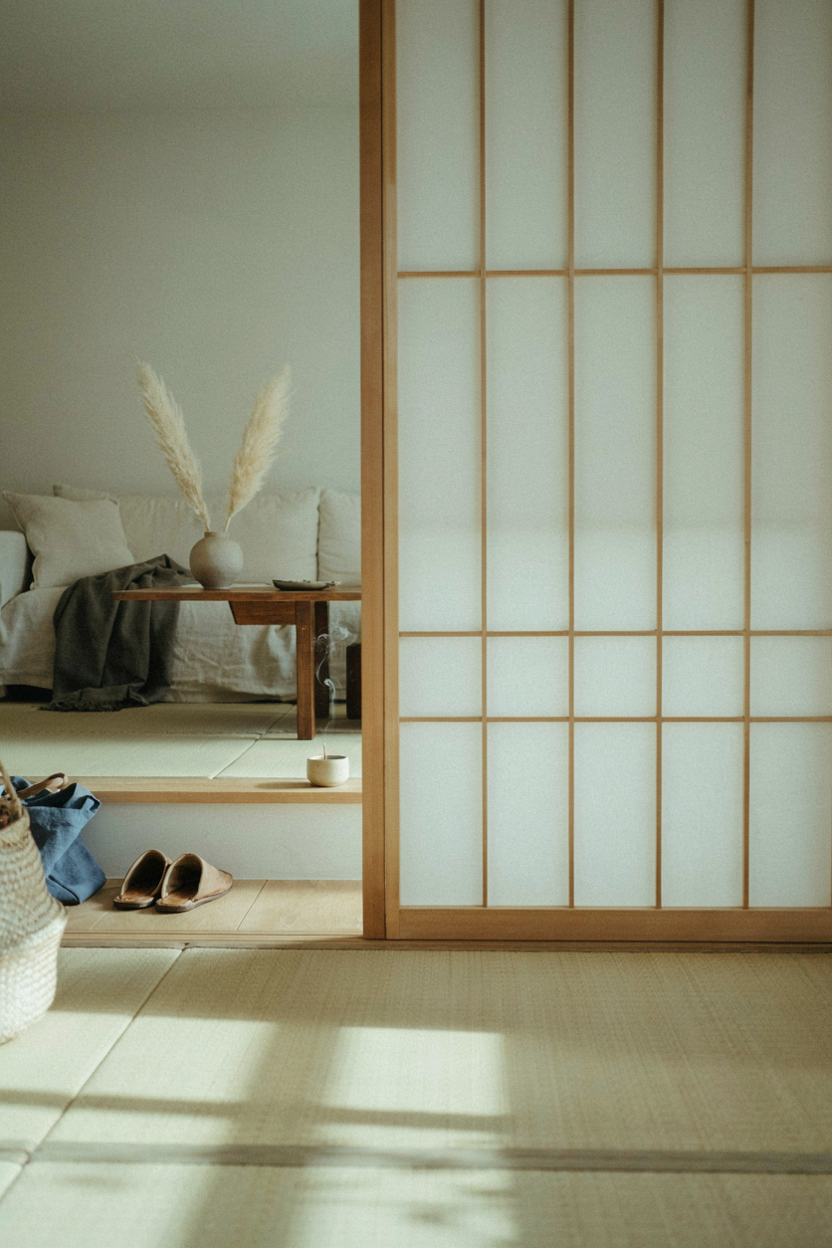
A sliding shoji-style screen brings authentic Japanese architectural influence to Japandi entryway ideas, using a wood-framed panel with translucent paper or fabric inserts to create gentle separation between the entry and the rest of the home. This traditional element allows light to pass through while still providing a sense of division, avoiding the heaviness of a solid door or wall.
This feature is often overlooked in favor of standard doors or open floor plans that don’t capture the same sense of considered, layered privacy. This Japandi entryway idea works particularly well in homes with an entry that opens directly into a living space, offering a soft, adjustable boundary that can slide open or closed depending on the household’s needs throughout the day.
14. Corner Potted Plant
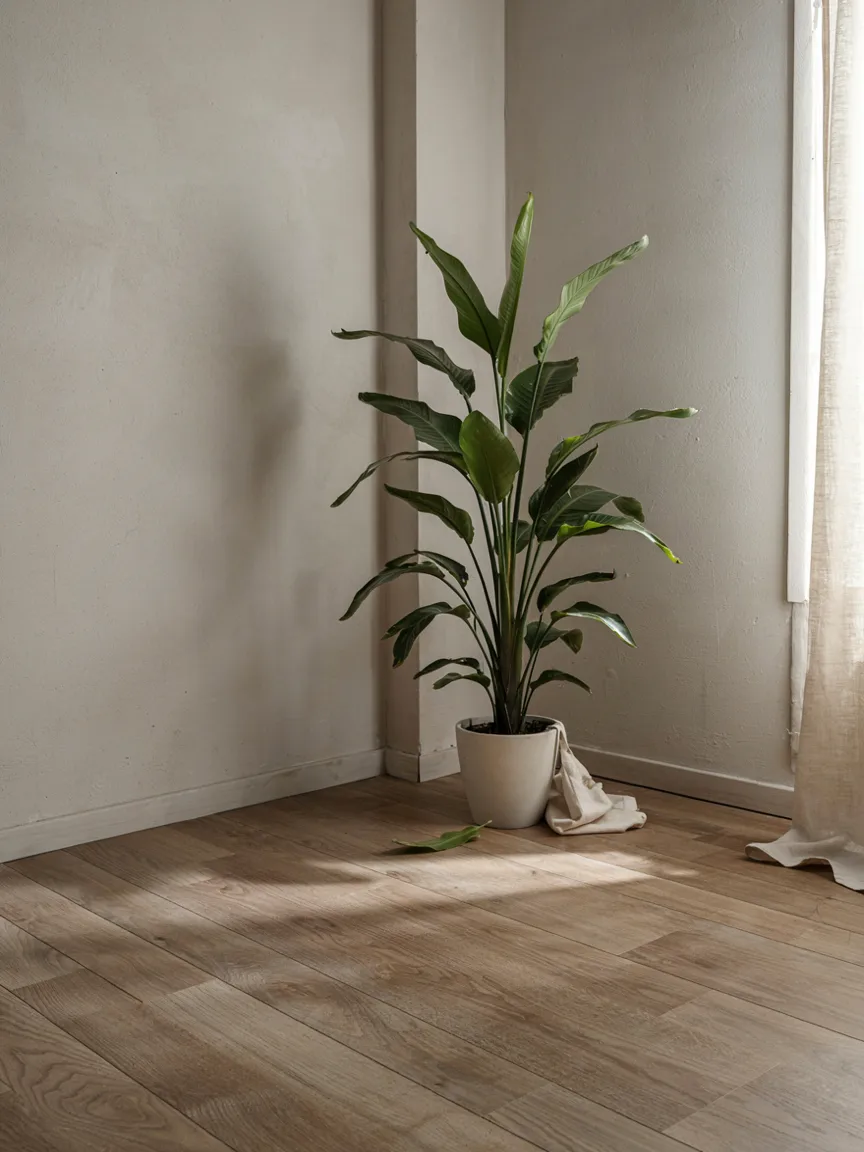
Introducing one carefully chosen plant is one of the more understated Japandi entryway ideas for bringing life and organic texture into an otherwise neutral space. Rather than filling the entry with multiple plants, this approach favors a single, structural specimen, such as a fiddle leaf fig or snake plant, placed in a simple, unadorned ceramic planter.
This detail is often styled incorrectly when too many plants crowd a small entryway, creating visual clutter that works against the intended sense of calm. This Japandi entryway idea works best with restraint, allowing one well-placed plant to add just enough natural life to the space without overwhelming it. Choosing a plant with clean, sculptural leaves reinforces the minimalist aesthetic further.
15. Hidden Storage Bench
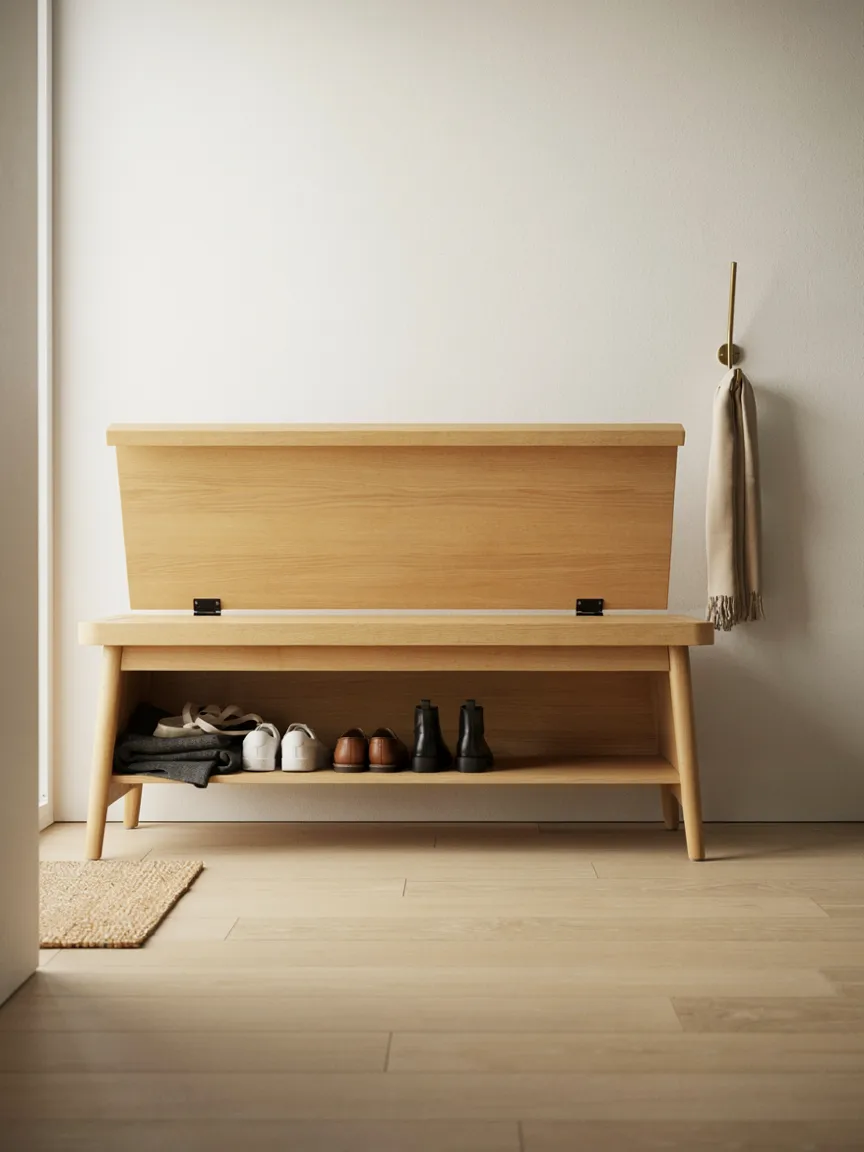
A hidden storage bench combines two of the most important Japandi entryway ideas into a single functional piece, offering seating alongside concealed storage for shoes, bags, or outdoor gear. The bench’s hinged lid opens to reveal ample interior space, while the closed exterior remains completely smooth and unadorned, maintaining the entryway’s clean, uncluttered visual line at all times.
This piece is especially valuable for smaller entryways lacking room for a separate bench and storage cabinet. This Japandi entryway idea is frequently styled incorrectly when the bench top is left cluttered with bags or mail, undermining its dual purpose. Keeping the surface clear reinforces both the functional and aesthetic value central to well-executed Japandi design throughout the entry.
16. Linen Curtain Room Divider
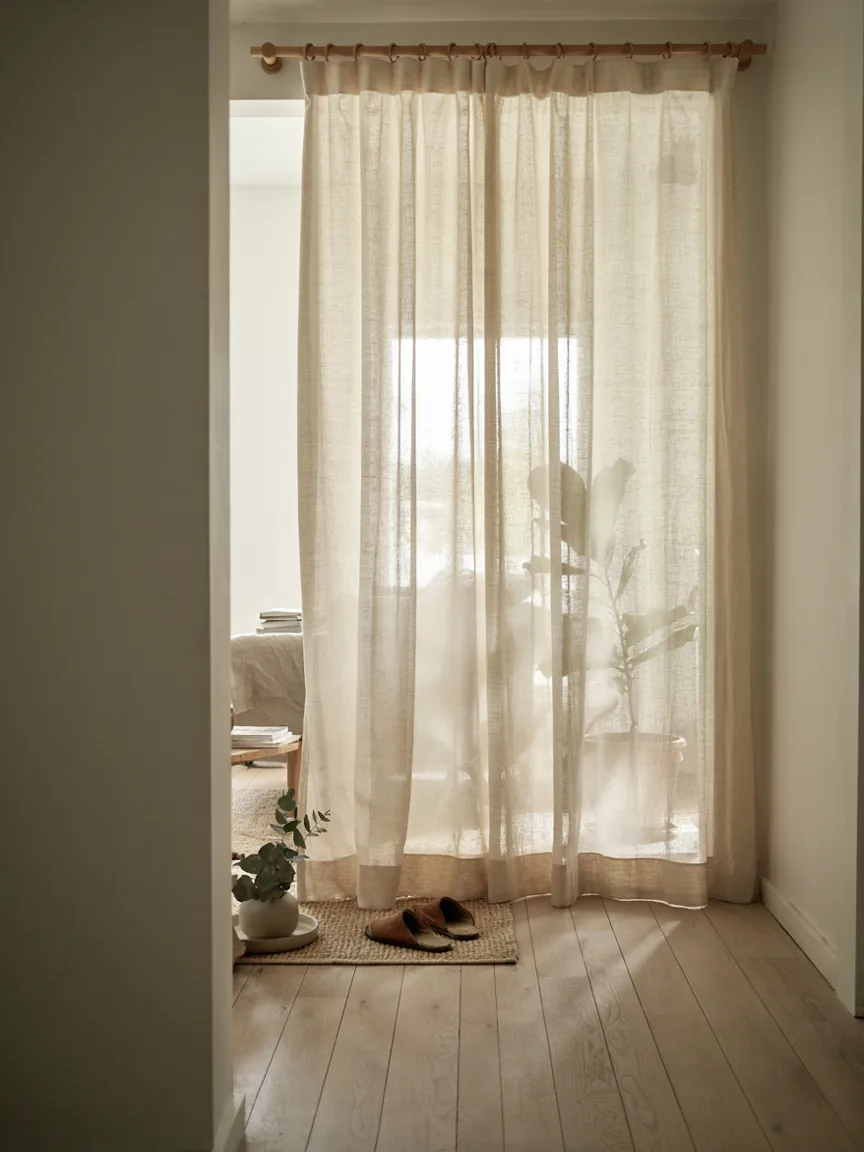
A linen curtain offers a soft, textural alternative to a solid wall or door among Japandi entryway ideas, using natural, undyed fabric to create gentle separation without fully closing off the entry from the rest of the home. This approach allows light and air to pass through freely, reinforcing the airy, connected feeling central to Japandi design while still providing a visual boundary.
This detail is often overlooked in favor of a more conventional door, missing an opportunity to add natural texture and softness to the entryway. This Japandi entryway idea works particularly well in open-concept homes where a full door would feel too heavy or formal. Choosing a raw, unbleached linen keeps the fabric consistent with the style’s muted, organic color palette.
17. Wabi-Sabi Ceramic Bowl Display
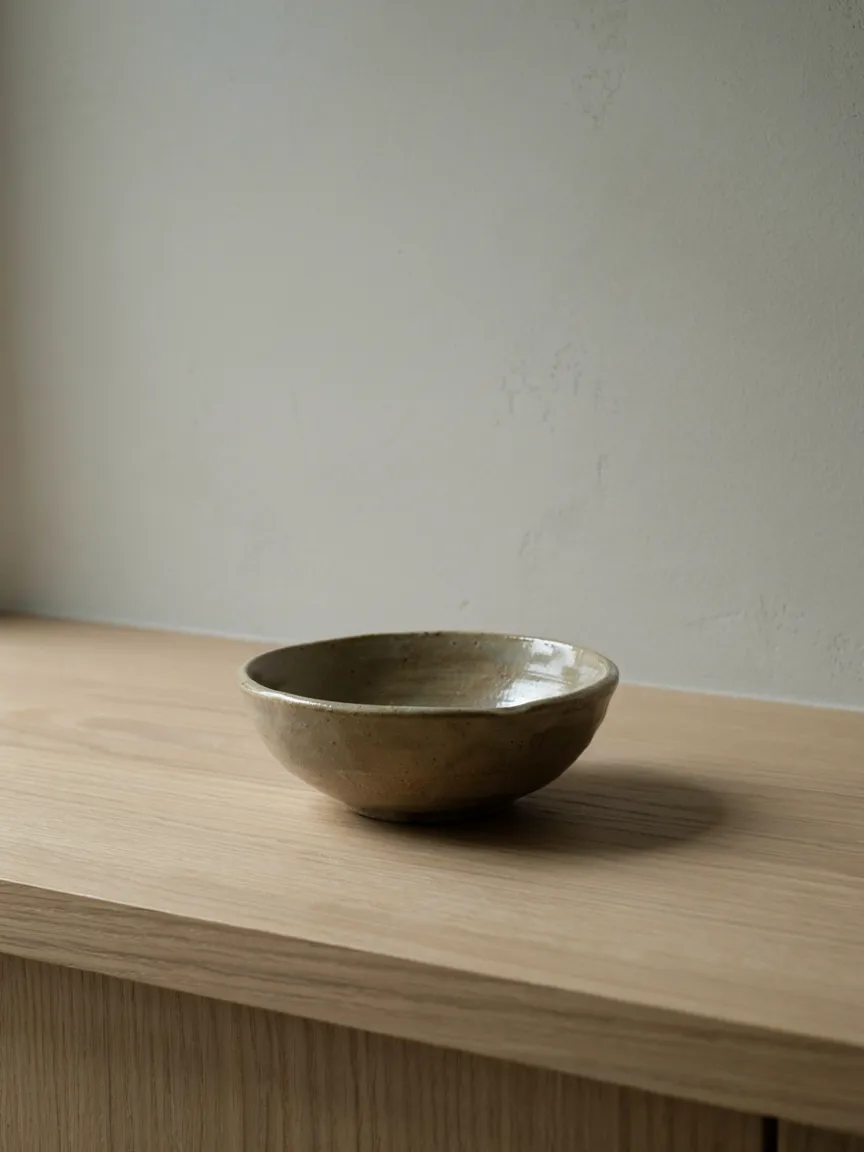
Displaying a single handmade ceramic bowl embraces the wabi-sabi philosophy central to authentic Japandi entryway ideas, celebrating imperfection and natural variation over flawless, mass-produced decor. The bowl’s slightly irregular shape, visible texture, and matte, earthy glaze reflect genuine handcraftsmanship, offering a quiet, meaningful decorative moment rather than a purely ornamental object chosen for its polish.
This detail is frequently styled incorrectly when replaced with a perfectly smooth, glossy, or brightly colored decorative bowl that misses the point of this design philosophy entirely. This Japandi entryway idea works best when the bowl is left empty or holds just one or two natural objects, like a small stone or dried seed pod, reinforcing the intentional simplicity of the display.
18. Woven Wall Art
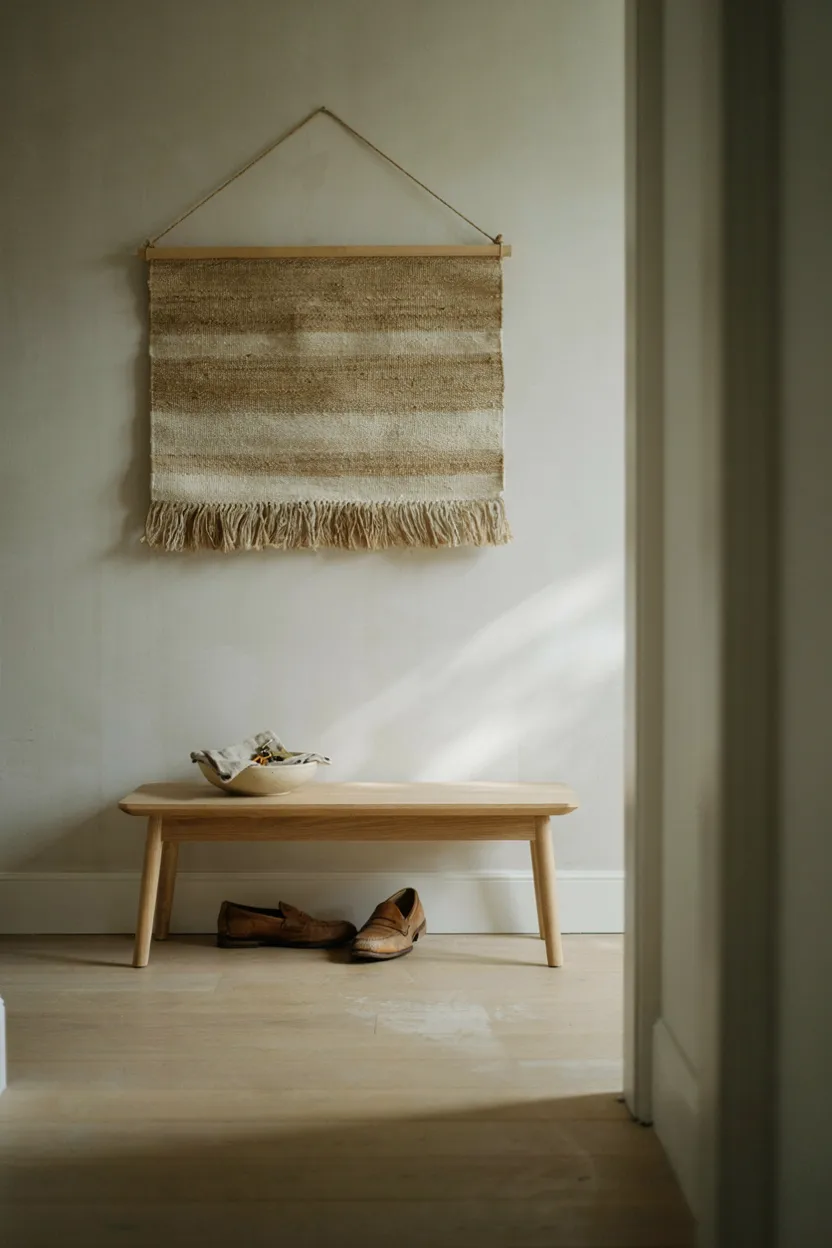
Woven wall art brings understated texture to Japandi entryway ideas, offering a decorative element that relies on natural material and craftsmanship rather than bold color or busy pattern. A simple macrame or woven wall hanging in cream and natural tan tones adds visual interest above a bench or console table without disrupting the calm, muted palette central to this design style.
This detail is often styled incorrectly when replaced with bright, graphic artwork or oversized statement pieces that feel out of place within a Japandi space. This Japandi entryway idea works best with a modestly sized piece that complements rather than dominates the room. Choosing natural fiber materials over synthetic ones further reinforces the organic, tactile quality this aesthetic depends on.
19. Matte Black Metal Accents
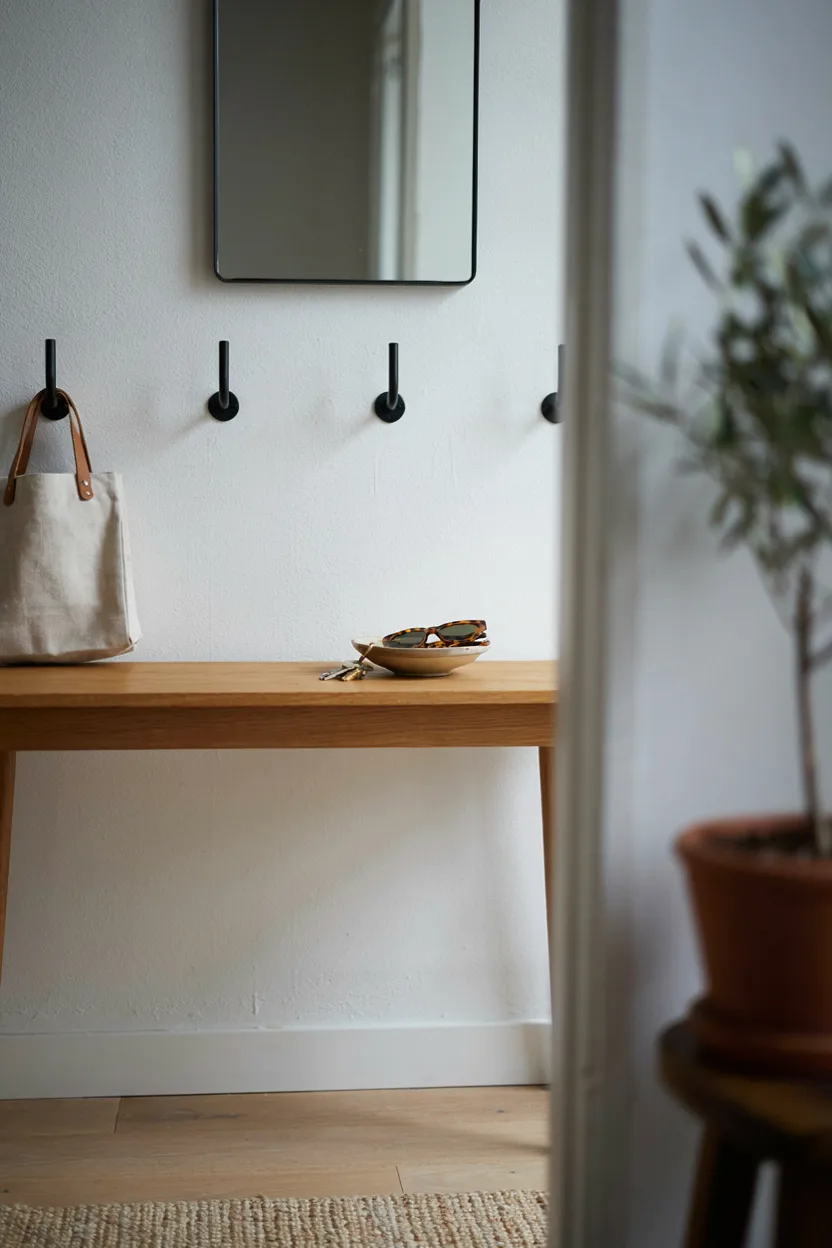
Matte black metal accents add subtle definition to Japandi entryway ideas, using small doses of dark hardware, such as hooks, light fixtures, or mirror frames, to create gentle contrast against the surrounding warm wood and neutral tones. This detail keeps the space from feeling flat or one-dimensional, adding just enough visual weight to ground the room without introducing unnecessary boldness.
This detail is frequently overdone when too many black elements are introduced throughout the space, creating a starker, more industrial look that strays from Japandi’s intended warmth. This entryway idea works best when black accents remain small and intentional, limited to just a few key pieces like hardware or a light fixture, keeping the overall palette balanced and harmonious throughout the room.
20. Slatted Wood Wall Panel
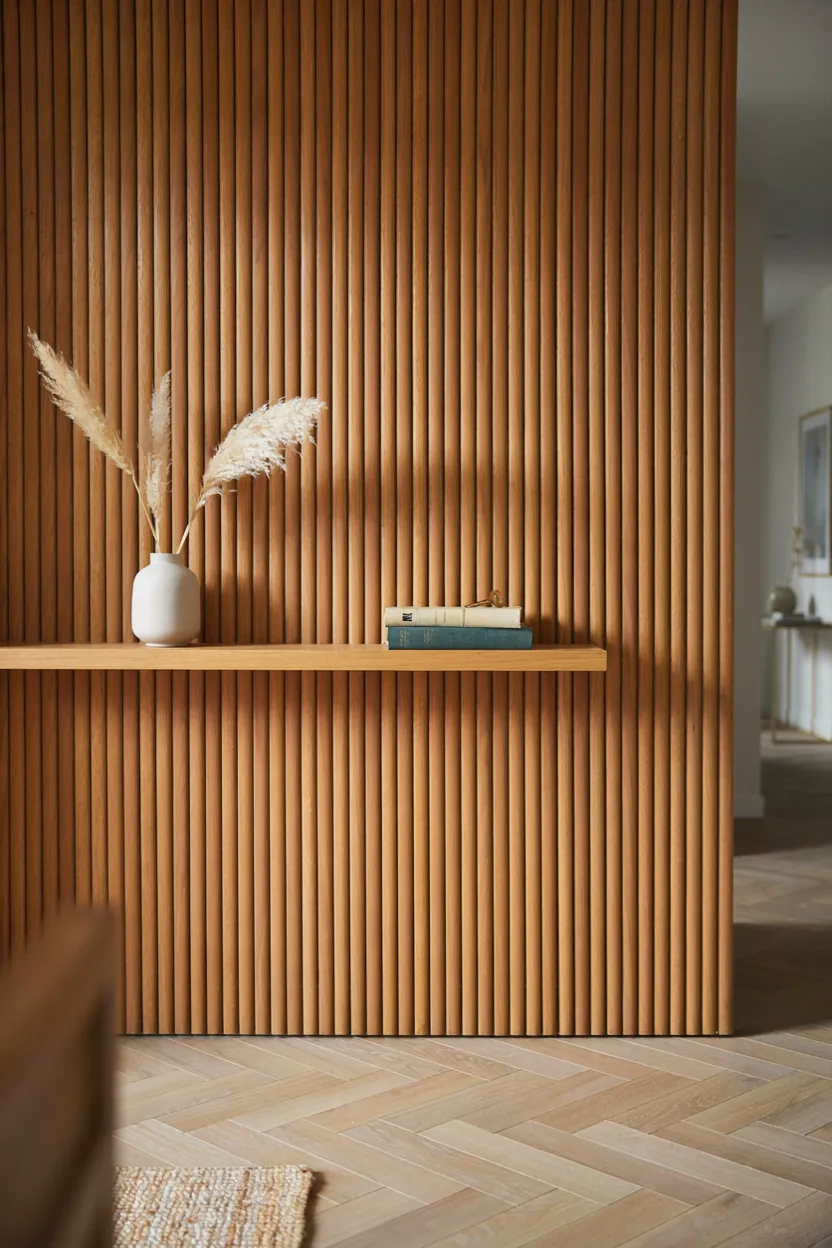
Slatted wood paneling introduces architectural texture to Japandi entryway ideas, using vertical wood slats to add depth and visual interest to an otherwise flat wall. This design detail draws on traditional Japanese woodworking techniques, reinforcing the natural materiality central to this aesthetic while creating a sophisticated, intentional backdrop for the rest of the entryway’s furnishings and decor.
This feature is sometimes skipped entirely in favor of plain drywall, missing an opportunity to add genuine texture and craftsmanship to the space. This Japandi entryway idea works particularly well as a focal accent wall behind a bench or console table, rather than covering the entire entryway, allowing the paneling to remain a considered design statement rather than an overwhelming feature.
21. Minimalist Umbrella Stand
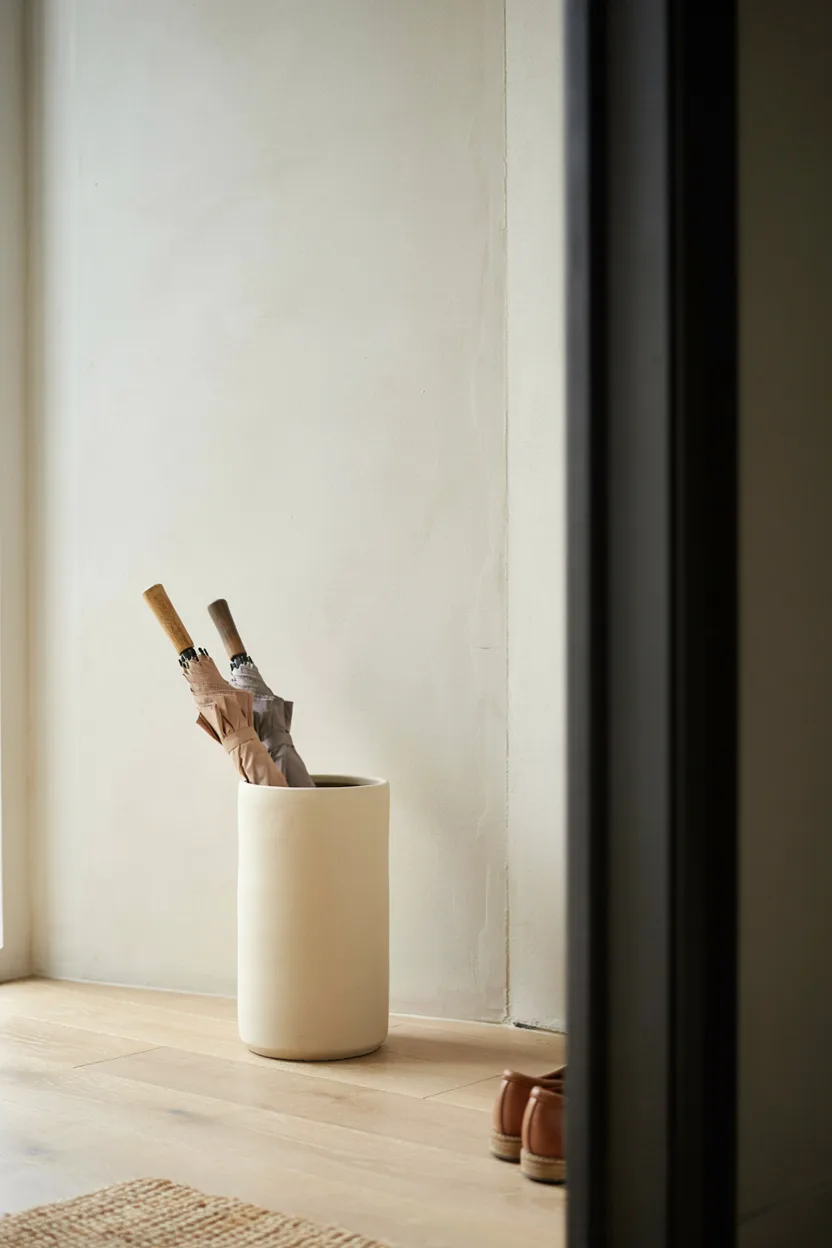
Even a small, everyday item like an umbrella stand deserves consideration among Japandi entryway ideas, since a mismatched or overly decorative stand can disrupt an otherwise carefully curated space. Choosing a simple, unadorned ceramic or wood stand in a neutral tone keeps this practical necessity consistent with the surrounding minimalist aesthetic rather than standing out as an obvious afterthought.
This detail is frequently overlooked entirely, with many households defaulting to whatever mismatched container happens to be available. This Japandi entryway idea benefits from the same intentionality applied to larger furniture pieces, proving that even small, functional objects contribute to the overall cohesion of a well-styled Japandi space when chosen thoughtfully rather than as an afterthought.
22. Sunlit Window Nook
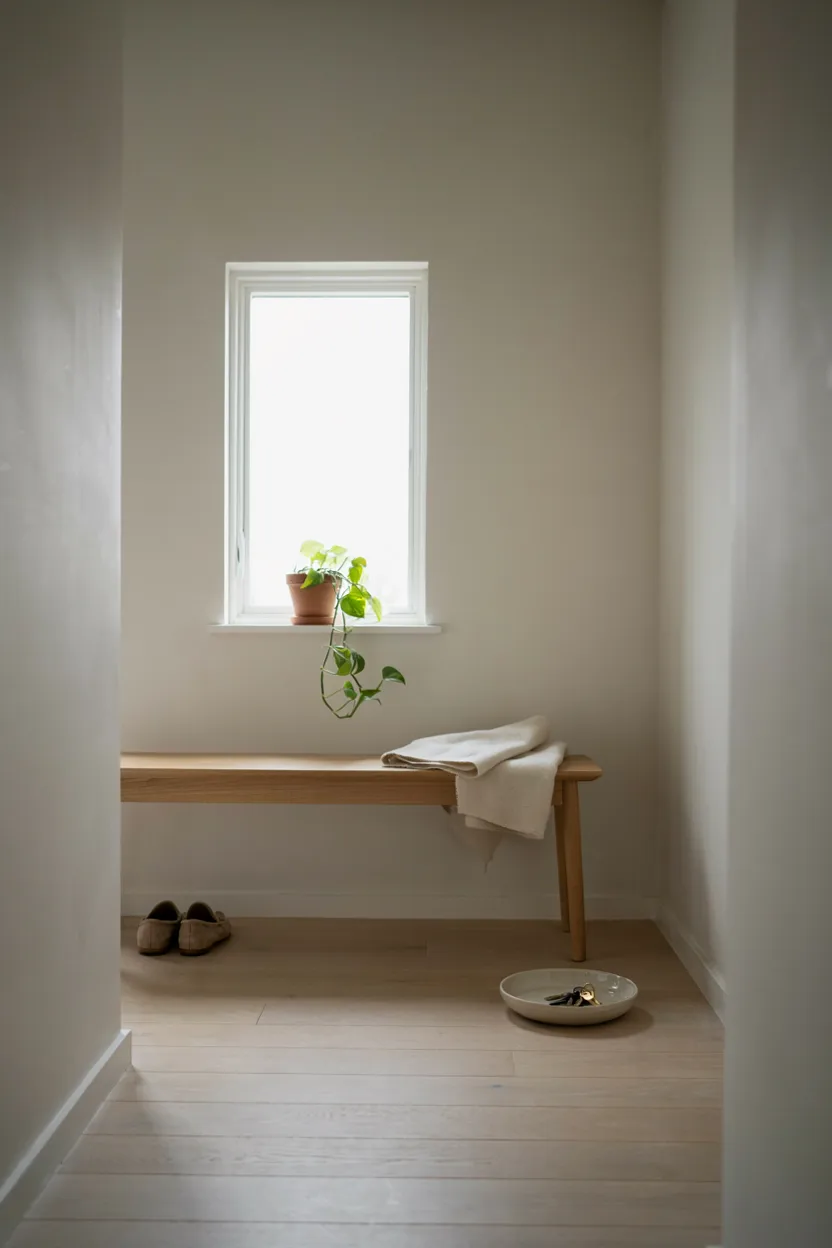
Maximizing natural light is one of the most important yet frequently overlooked Japandi entryway ideas, since heavy curtains or blinds can make an entry feel closed off and dim rather than open and welcoming. Leaving a window uncovered, or dressing it minimally with sheer linen, allows daylight to spill freely into the space, reinforcing the bright, airy quality central to this design style.
This detail is often styled incorrectly when homeowners add heavy drapery more suited to a living room or bedroom, unnecessarily darkening what should be one of the brightest spots in the home. This Japandi entryway idea works best when window treatments are kept minimal or omitted entirely, letting natural light become an active part of the room’s overall calm, welcoming atmosphere.
Conclusion
From hidden storage benches to sunlit window nooks, these Japandi entryway ideas prove that this style lives in the details most people overlook. It’s not about adding more — it’s about choosing fewer, more intentional pieces and giving them room to breathe. Take a look at your own entryway with fresh eyes, apply a few of these Japandi entryway ideas, and you’ll likely spot exactly where a small adjustment makes the biggest difference.

Join The Discussion