
Introduction
A cluttered pantry can turn a simple cooking task into a frustrating search, but it doesn’t have to stay that way. These 22 Pantry Organization Ideas help transform any pantry, big or small, into a functional, beautiful space. From clear glass containers to clever door storage, each idea focuses on maximizing visibility, saving space, and making everyday items easier to find. Whether you’re starting from scratch or refreshing an existing setup, this list offers practical inspiration for a pantry that stays tidy long after the organizing session ends.
1. Clear Airtight Storage Containers
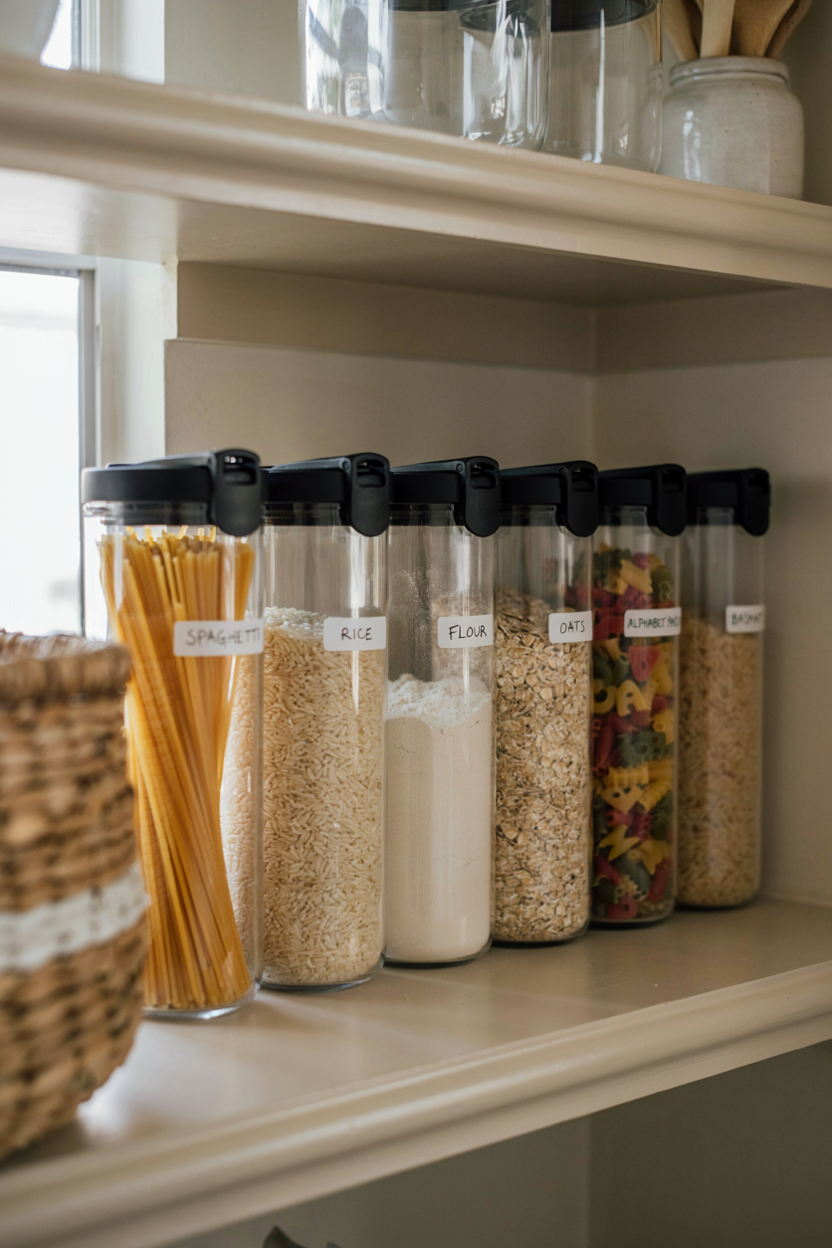
Clear airtight containers are one of the most foundational pantry organization ideas, since they solve two problems at once: keeping food fresh and creating a visually cohesive display. Transferring pantry staples like flour, rice, and cereal out of their original bulky, mismatched packaging into matching clear containers instantly makes the entire pantry feel more organized, since everything follows the same visual format regardless of what it actually contains.
Beyond the aesthetic benefits, airtight seals also help extend the shelf life of dry goods by keeping out moisture, pests, and air exposure that can cause staleness. Being able to see exactly how much of an item remains at a glance also simplifies grocery shopping, since there’s no need to open packaging to check supply levels. Many households find that switching to clear containers is one of the single most impactful pantry organization ideas they implement.
2. Labeled Bin System
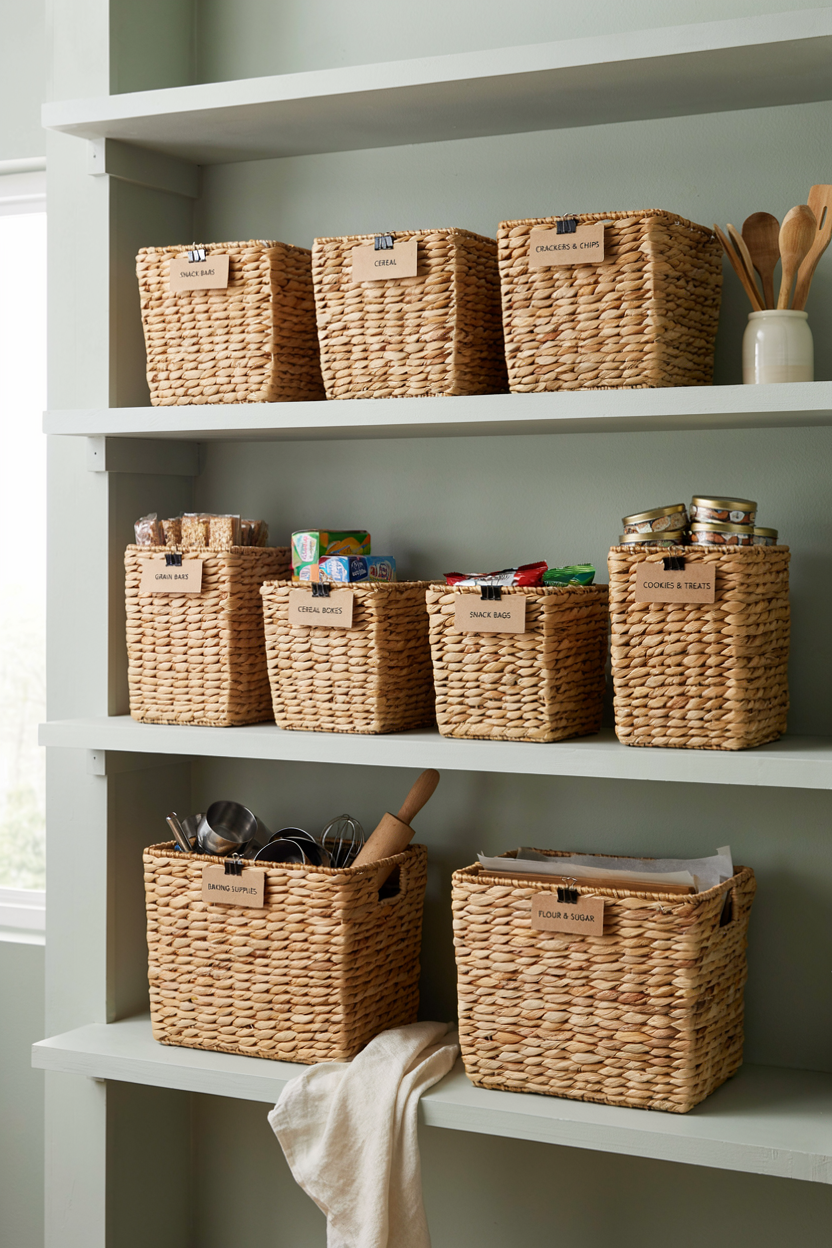
A labeled bin system is one of the most practical pantry organization ideas for corralling smaller or irregularly shaped items that don’t fit neatly into containers on their own. Grouping related items, like snack bars, seasoning packets, or baking supplies, into individual labeled bins keeps the pantry shelves from becoming a jumbled mix of miscellaneous packaging, while still allowing for quick, obvious identification of where everything belongs.
This system also makes it significantly easier for other household members, including kids, to independently locate items and return them to the correct spot after use. Choosing durable, consistent labels, whether printed or handwritten in matching handwriting, reinforces the overall sense of order throughout the pantry. Many households find that a labeled bin system is one of the most effective ways to maintain long-term organization, since everyone in the home understands exactly where things go.
3. Lazy Susan Turntable Shelf
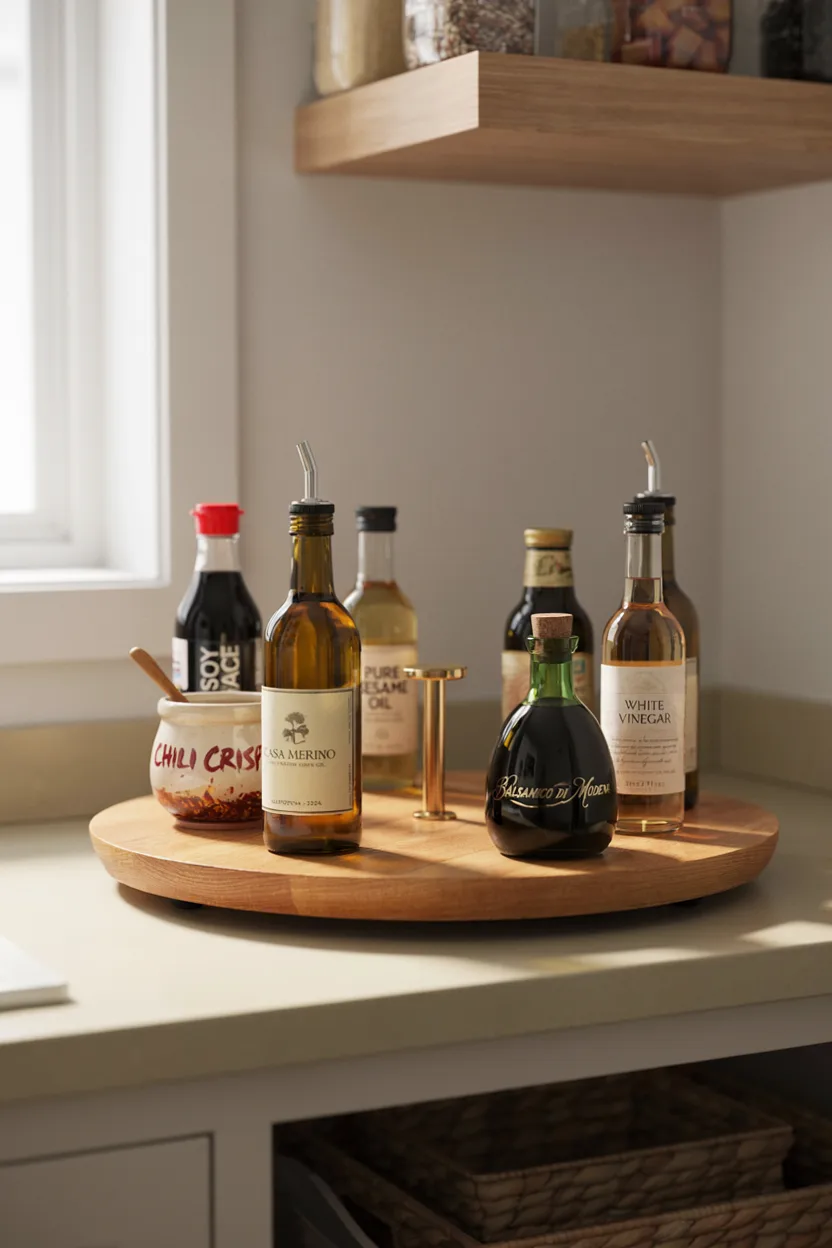
A lazy susan turntable is one of the most functional pantry organization ideas for deep shelves where items toward the back often get forgotten or become difficult to reach. Placing a rotating tray on the shelf allows every item, regardless of its position, to be brought to the front with a simple spin, eliminating the need to dig through rows of bottles or jars to find what’s needed.
This solution works particularly well for oils, vinegars, and condiments, which tend to come in similarly shaped bottles that are easy to lose track of in a standard static shelf arrangement. Choosing a turntable sized appropriately for the shelf depth ensures maximum storage capacity without wasted space around the edges. Many households find that a lazy susan significantly reduces the frustration of digging through deep pantry shelves for a specific item.
4. Tiered Can Organizer Shelf
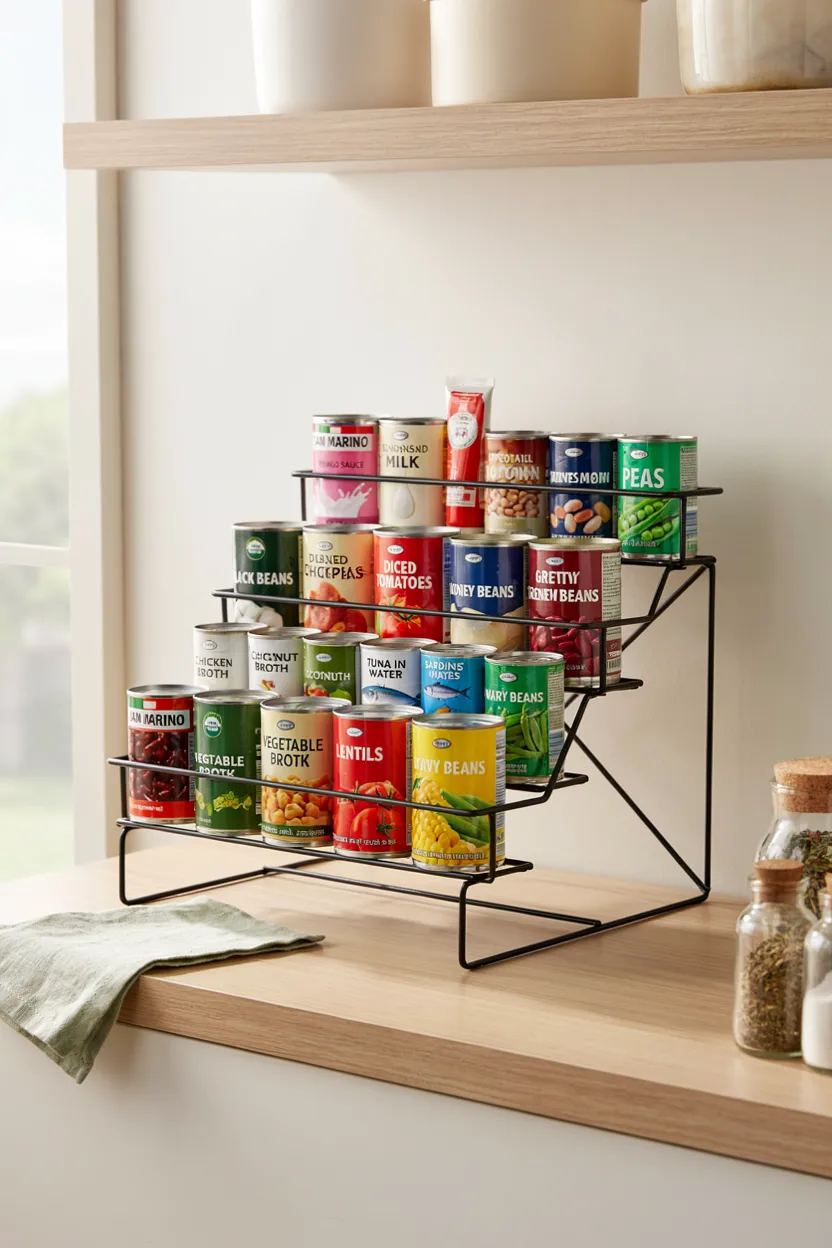
A tiered can organizer is one of the most space-efficient pantry organization ideas for households that stock a significant number of canned goods. The stepped, staircase-like design allows cans to be arranged in multiple visible rows without stacking them directly on top of one another, which often leads to cans getting buried or forgotten at the back of a standard flat shelf.
This system also automatically implements a simple rotation method, since new cans can be loaded from the back while older cans naturally remain accessible at the front. Choosing an organizer with an appropriate width and depth for the specific pantry shelf ensures maximum capacity without wasted space. Many households find that a tiered can organizer eliminates the common problem of expired canned goods hiding unnoticed in the back of the pantry.
5. Door-Mounted Spice Rack
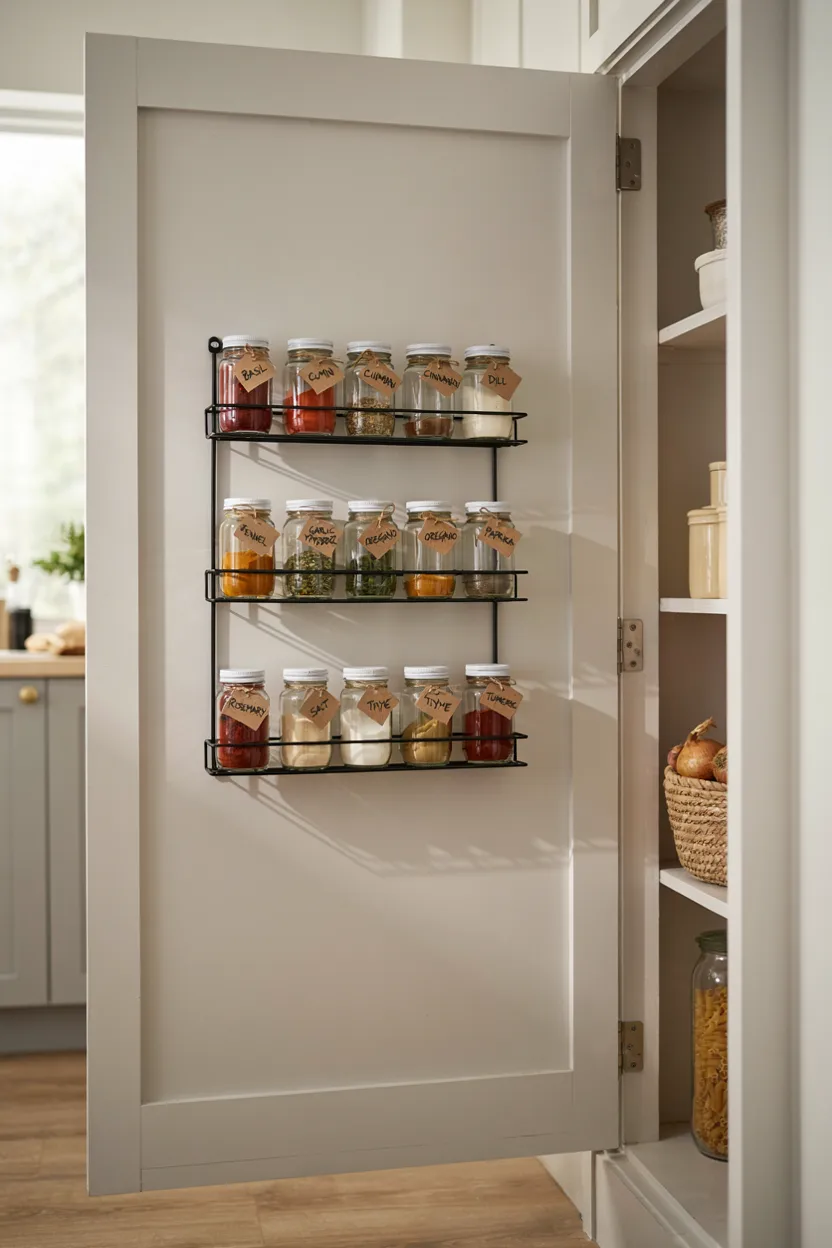
Mounting a spice rack directly to the pantry door is one of the more space-maximizing pantry organization ideas, taking advantage of an area that would otherwise remain completely unused. This approach frees up valuable shelf space inside the pantry for larger items, while still keeping spices organized, visible, and within easy reach whenever the door is open.
This solution works particularly well for households with an extensive spice collection that would otherwise consume significant shelf real estate. Arranging the spices alphabetically or by cooking frequency further streamlines the process of locating specific seasonings while cooking. Many households find that a door-mounted rack solves a common small-space organization challenge, delivering meaningful additional storage without sacrificing any of the pantry’s existing shelf capacity.
6. Category-Based Zone Organization
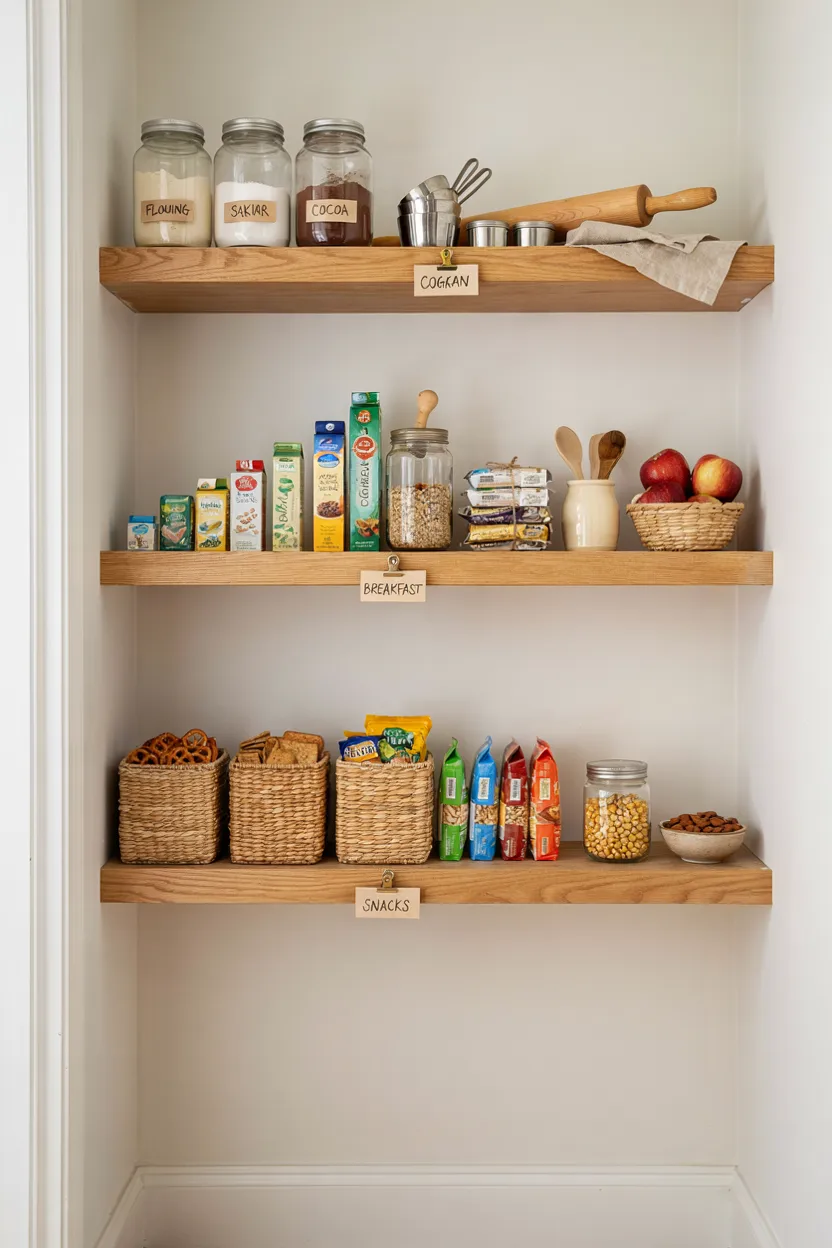
Organizing the pantry by category is one of the most foundational pantry organization ideas, establishing a logical system that makes locating and restocking items significantly easier. Dedicating specific shelves or sections to particular categories, such as baking supplies, breakfast items, canned goods, and snacks, ensures that related items stay grouped together rather than scattered randomly throughout the space based on whatever fit at the time of restocking.
This zoning system also simplifies grocery shopping and meal planning, since it’s easy to see at a glance which categories are running low. Labeling each zone reinforces the system for every household member, helping maintain the organization over time even as different people put items away. Many households find that category-based zoning is the essential first step before implementing any other, more detailed pantry organization ideas.
7. Pull-Out Drawer Baskets
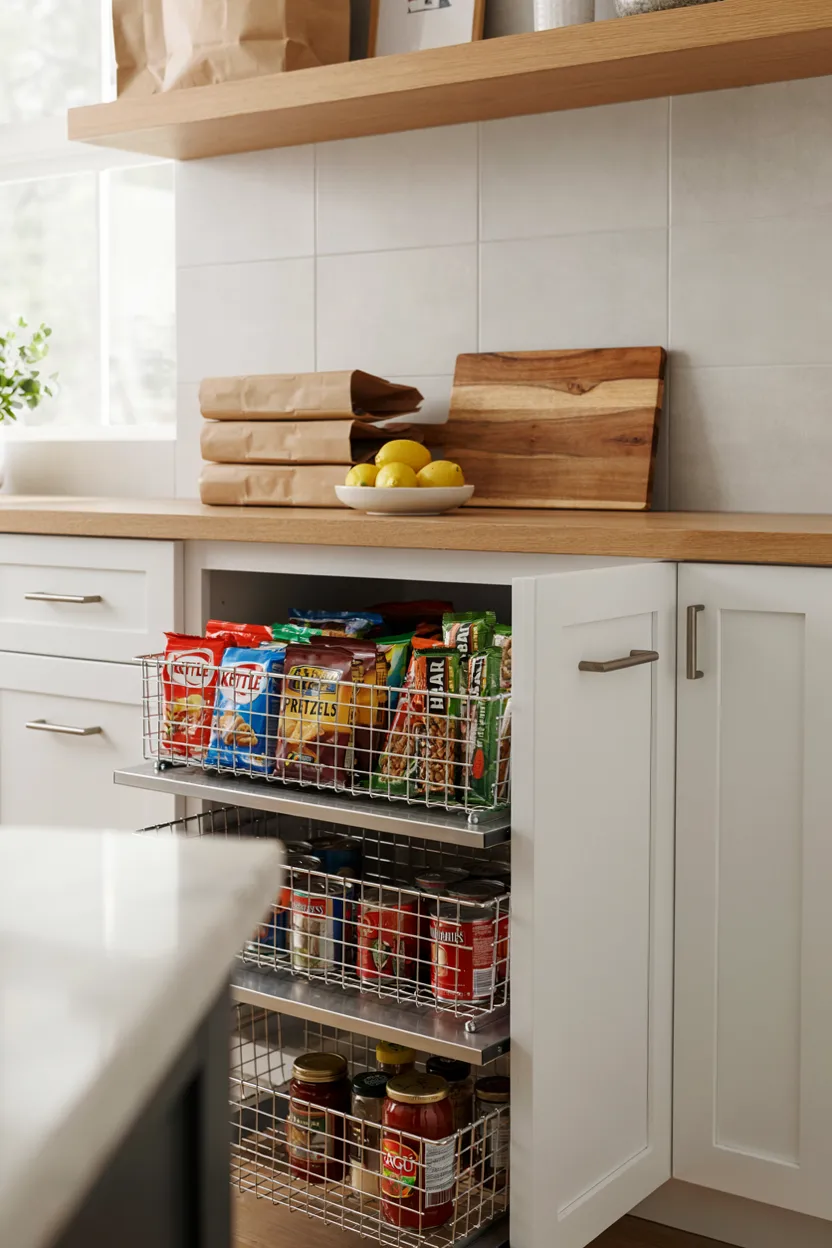
Installing pull-out drawer baskets is one of the more functional pantry organization ideas for deep shelving where visibility is often a challenge. Rather than requiring items to be moved aside or removed entirely to see what’s stored behind them, a pull-out basket slides forward on its own, revealing everything inside at once, significantly improving accessibility compared to a standard static shelf.
This system works particularly well for lower or harder-to-reach shelves, since the pull-out mechanism eliminates the need to bend down and peer into a dark shelf space. Choosing wire baskets rather than solid drawers also allows for some airflow, which can be beneficial for certain produce or packaged goods. Many households find that pull-out baskets dramatically improve the overall usability of pantry shelves that were previously difficult to organize effectively.
8. Vertical Wire Basket Shelving
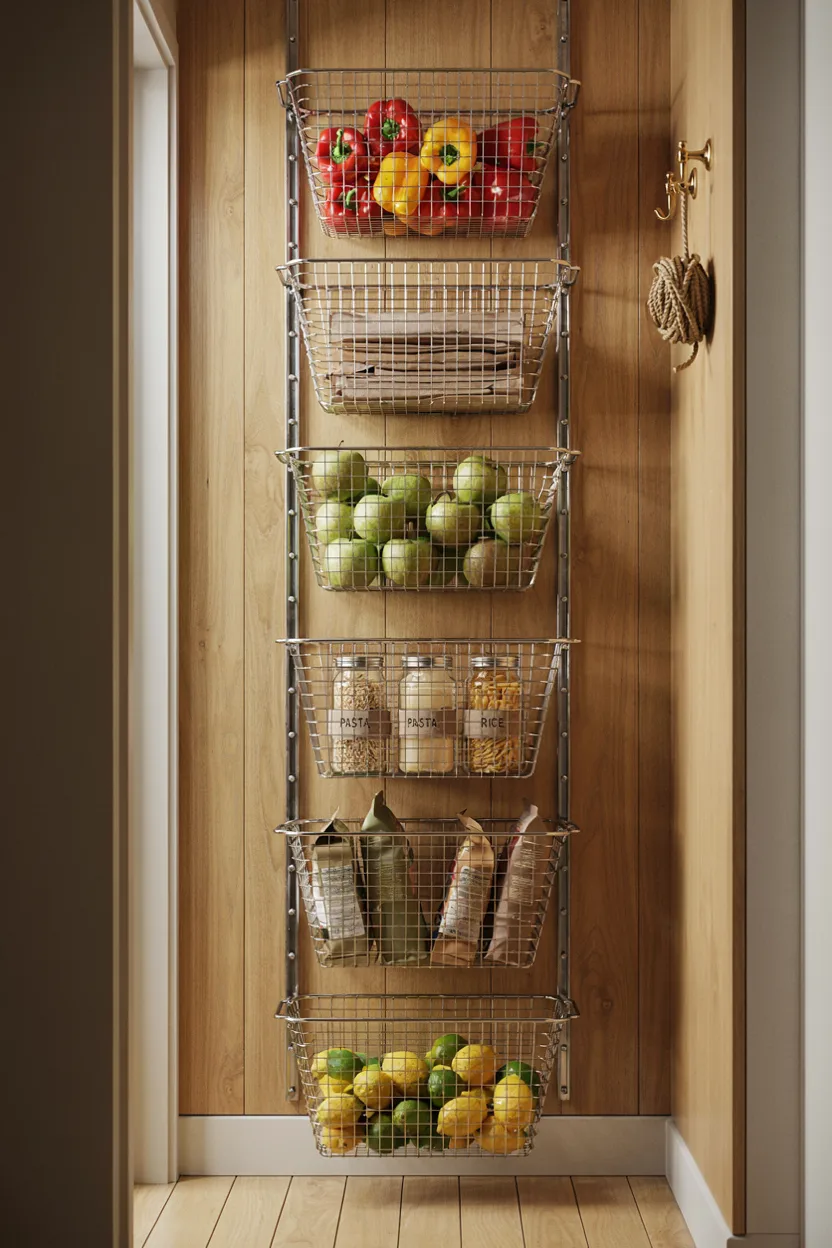
Mounting wire baskets vertically is one of the more space-maximizing pantry organization ideas for narrow pantries or closets where floor space is especially limited. Stacking baskets from floor to ceiling along a single wall allows for significant storage capacity within a minimal footprint, making efficient use of vertical space that might otherwise remain unused in a standard shelving configuration.
The open wire design of each basket also allows for good airflow, which is particularly beneficial for storing fresh produce like onions or potatoes that need ventilation to stay fresh longer. This system works well for households with limited built-in pantry shelving, since the vertical baskets can often be mounted to an existing wall or door with relatively simple hardware. Many households find that vertical wire baskets deliver substantial storage capacity in even the tightest pantry spaces.
9. Chalkboard Label Tags
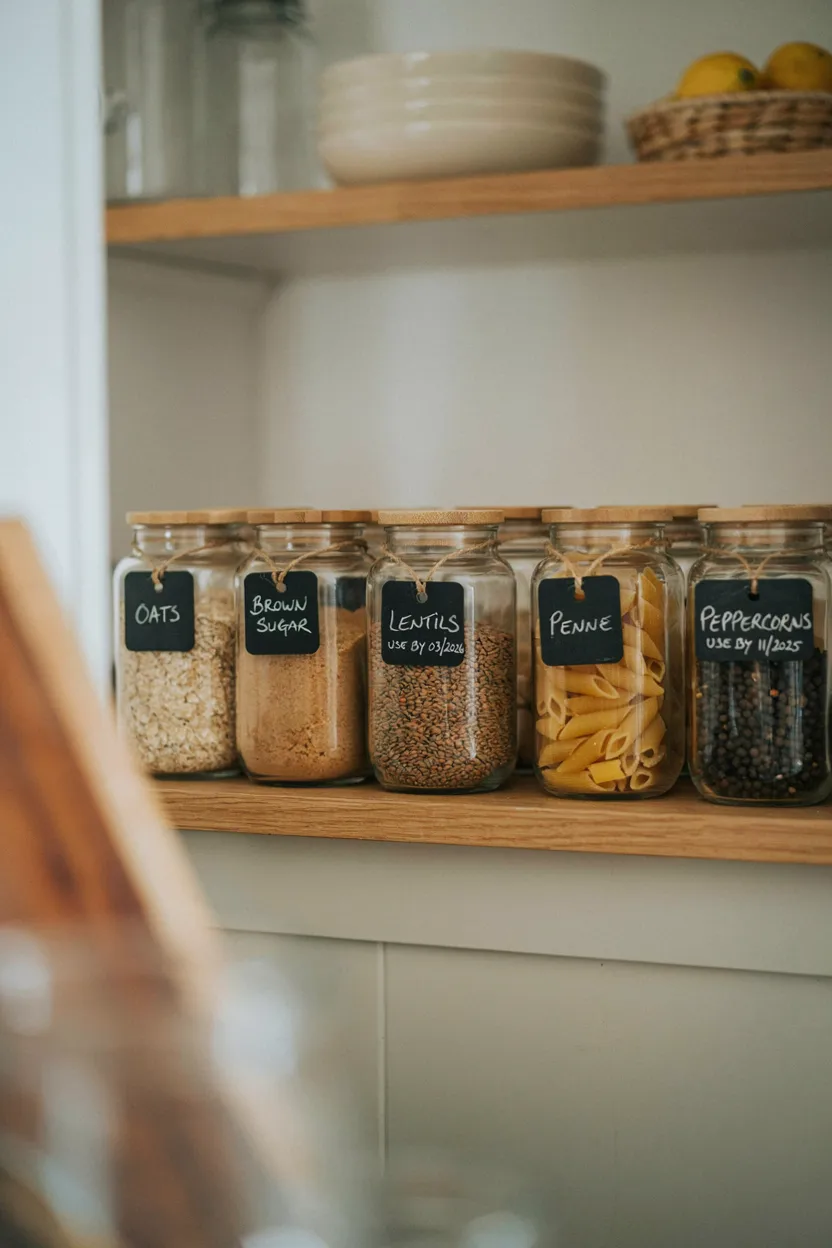
Using chalkboard tags is one of the more flexible pantry organization ideas for labeling containers whose contents might change over time. Because chalk markers can be wiped away and rewritten, these reusable tags allow the same set of containers to be relabeled as needed, whether switching from one type of flour to another or updating a use-by date, without needing to purchase or print new labels each time.
This approach also adds a warm, personal touch to the pantry’s overall look, since handwritten labels tend to feel more custom and intentional compared to printed stickers. Choosing tags with a consistent size and shape across all containers maintains visual cohesion throughout the shelving. Many households find that chalkboard tags offer the perfect balance of practicality and flexibility for a pantry labeling system that needs to evolve over time.
10. Wicker Basket Grouping
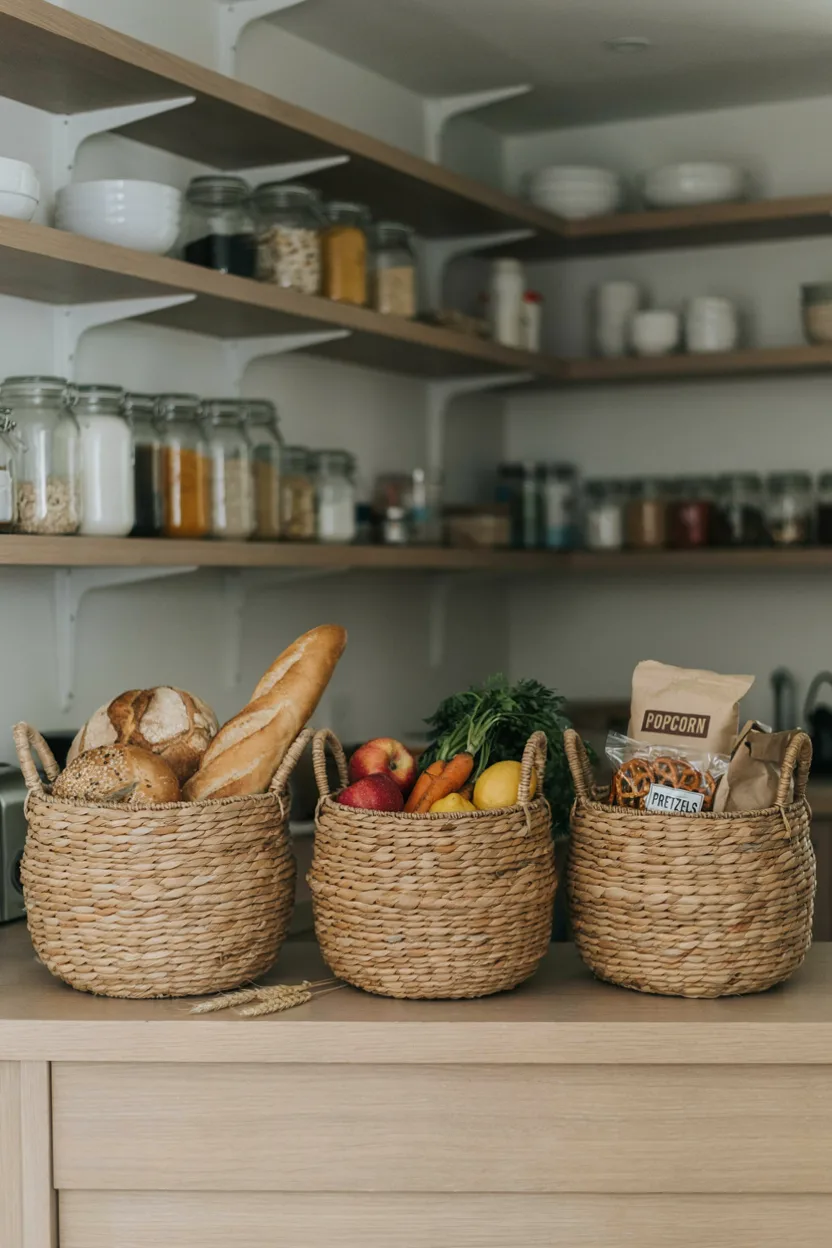
Grouping items into matching wicker baskets is one of the more visually warm pantry organization ideas, softening what can otherwise be a purely utilitarian storage space. Using baskets to corral loose or oddly shaped items, like bread, root vegetables, or snack packaging that doesn’t fit neatly into containers, keeps the pantry looking tidy even when the contents themselves aren’t uniform in shape or size.
This approach works particularly well for open shelving pantries, where the baskets themselves become part of the overall visual design rather than simply hidden storage. Choosing baskets in a consistent material and size creates a cohesive look across the entire pantry, even as the specific contents of each basket change over time. Many households find that wicker baskets successfully balance practical organization with genuine aesthetic appeal.
11. Stackable Bin Storage
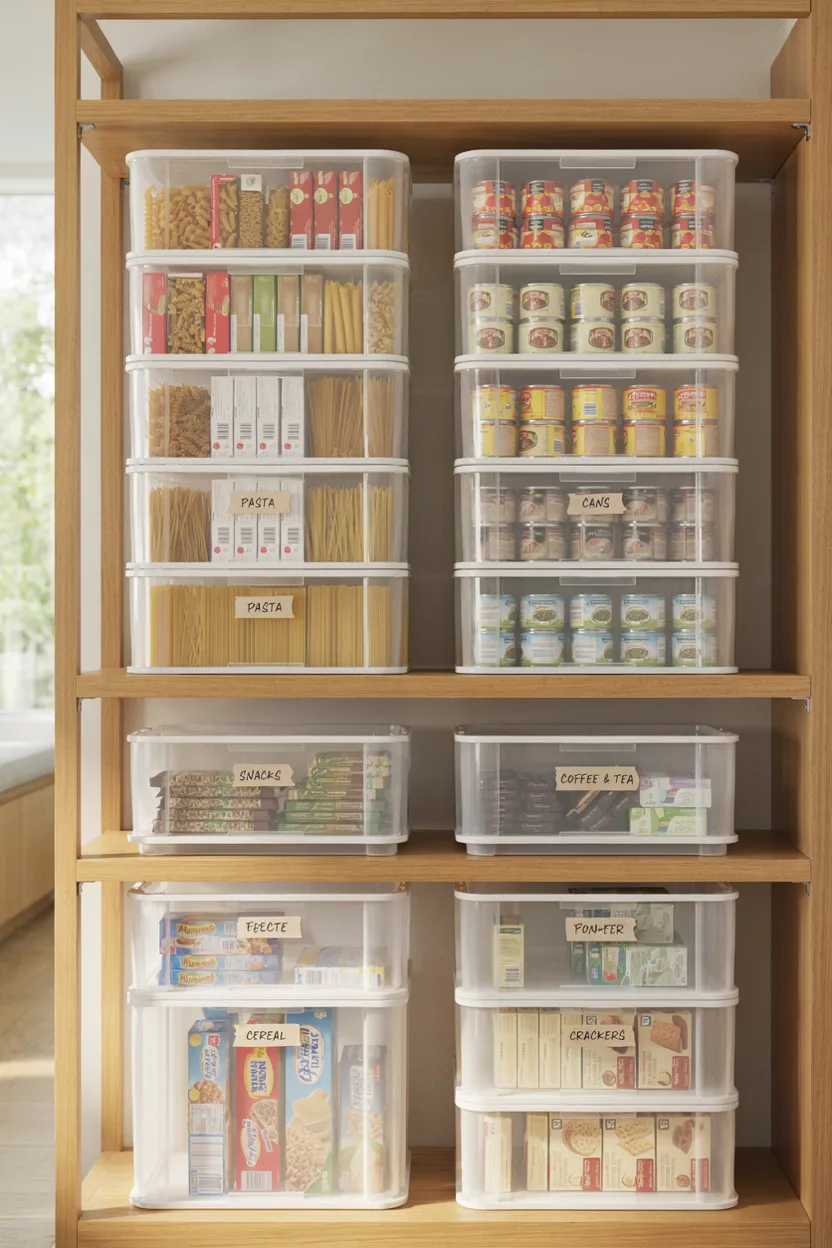
Stackable bins are one of the more space-efficient pantry organization ideas for maximizing vertical storage on standard shelving. Because these bins are specifically designed to interlock or stack securely on top of one another, they allow multiple layers of storage within a single shelf’s height, effectively doubling or tripling the usable capacity compared to simply placing loose items directly on the shelf.
This system works particularly well for households with limited overall pantry space, since it makes the most of every available inch of shelf height. Choosing bins with a consistent size and shape ensures they stack evenly and securely without risk of toppling. Many households find that stackable bins deliver significant additional storage capacity without requiring any structural changes to the existing pantry shelving.
12. Snack Station Organization
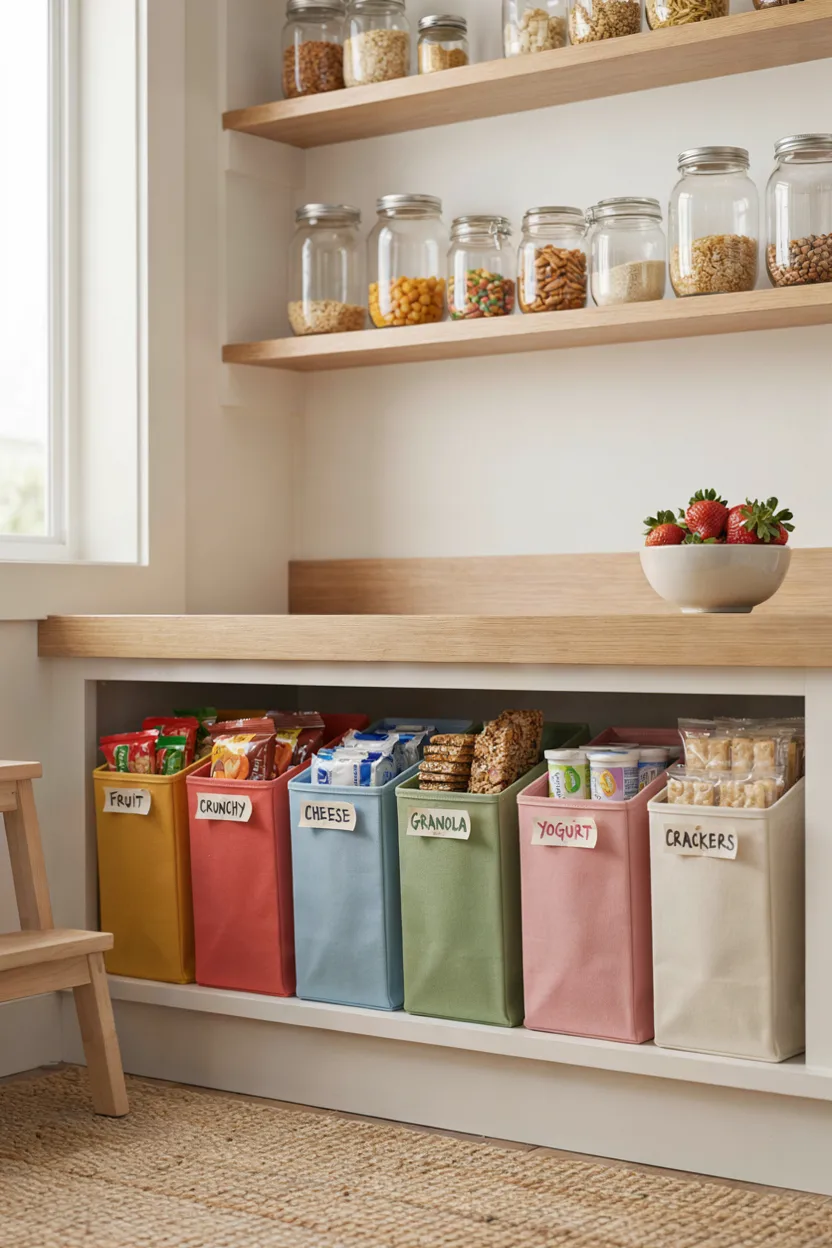
Creating a dedicated snack station is one of the more family-friendly pantry organization ideas, particularly useful for households with children who want to grab their own snacks. Positioning open bins filled with individually packaged snack items on a lower, easily reachable shelf allows kids to independently select their own food without needing to ask for help or dig through higher, less accessible shelves.
This system also helps parents maintain some control over portion sizes and food choices, since the snack station can be stocked specifically with pre-approved options rather than leaving the entire pantry open to browsing. Labeling each bin clearly, sometimes with pictures for younger children who can’t yet read, reinforces the self-serve system. Many households find that a dedicated snack station reduces daily requests for snacks while encouraging independence in younger family members.
13. Baking Supply Zone
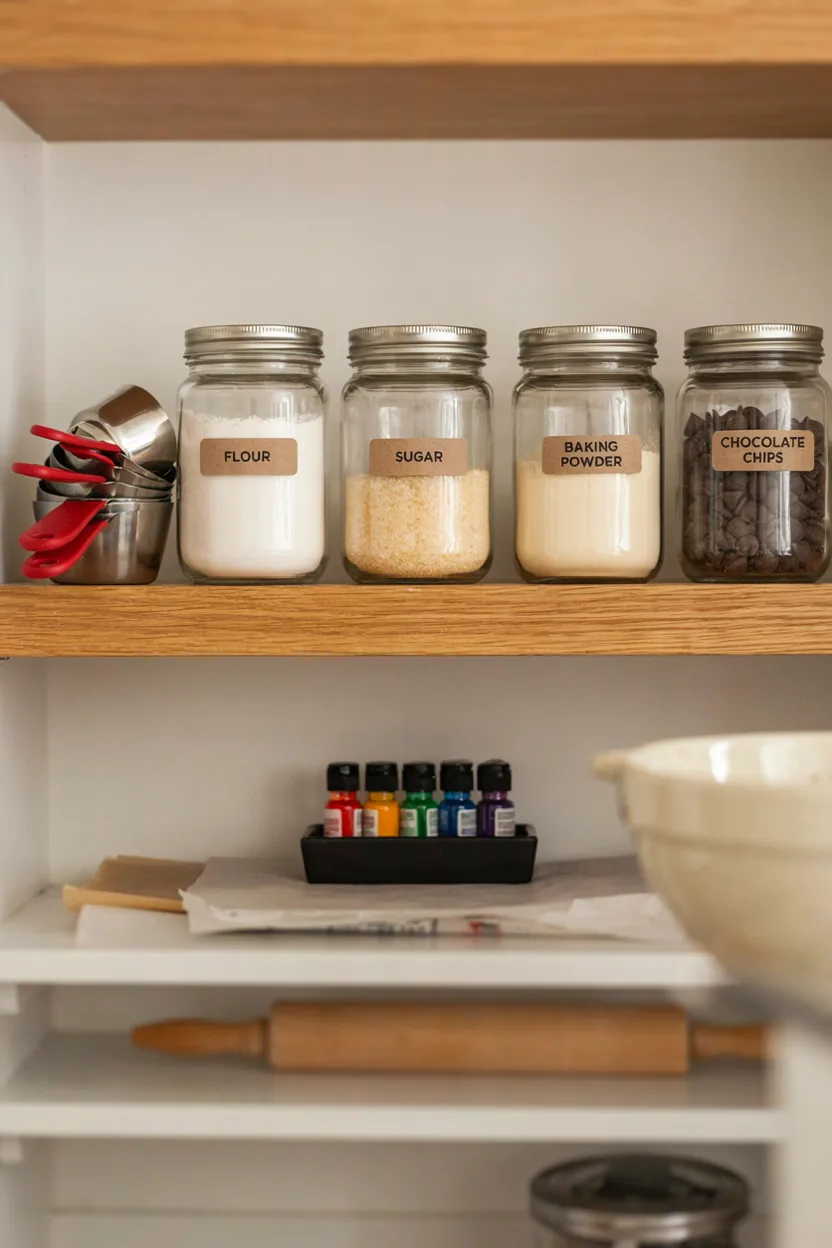
Consolidating all baking supplies into a single dedicated zone is one of the more practical pantry organization ideas for anyone who bakes regularly. Grouping flour, sugar, baking powder, chocolate chips, and other common baking ingredients together in one section eliminates the need to search across multiple shelves when preparing a recipe, streamlining the entire baking process from start to finish.
This approach also makes it easier to notice when baking staples are running low, since everything needed for a typical recipe sits together in one visible area. Including small tools like measuring cups or food coloring within the same zone further consolidates the baking workflow into a single convenient location. Many households find that a dedicated baking zone significantly reduces the time spent gathering ingredients before starting a recipe.
14. First-In-First-Out Rotation Shelf
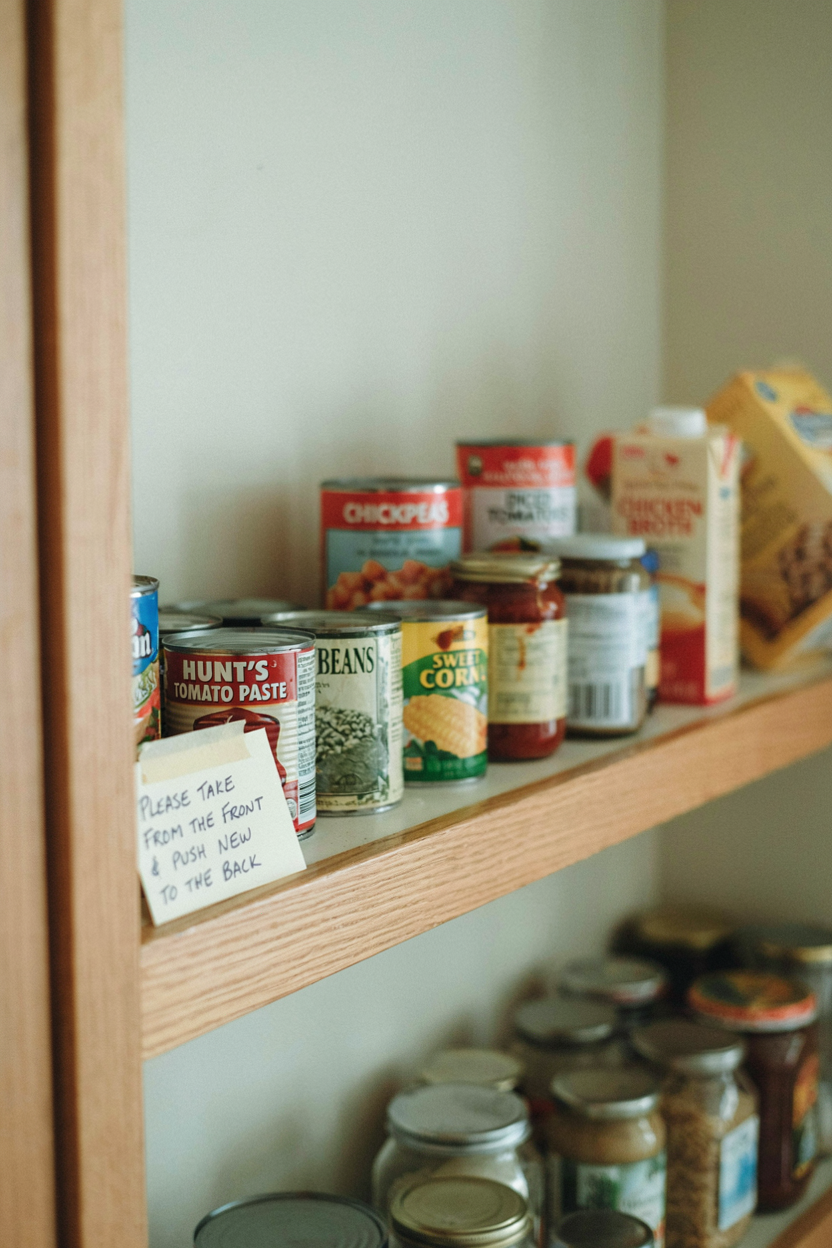
Implementing a first-in-first-out rotation system is one of the more strategic pantry organization ideas for reducing food waste and preventing expired items from being forgotten. This method involves always placing newly purchased items toward the back of the shelf while pulling older stock toward the front, ensuring that products with earlier expiration dates get used before newer purchases, similar to the system commonly used in grocery stores.
This approach requires a bit of ongoing discipline when restocking the pantry, but it pays off significantly in reduced waste and fewer expired items discovered months after their use-by date. Adding a simple reminder sign or label helps reinforce the system for every household member responsible for putting groceries away. Many households find that consistent rotation is one of the most impactful, if often overlooked, pantry organization ideas for saving money over time.
15. Under-Shelf Basket Hooks
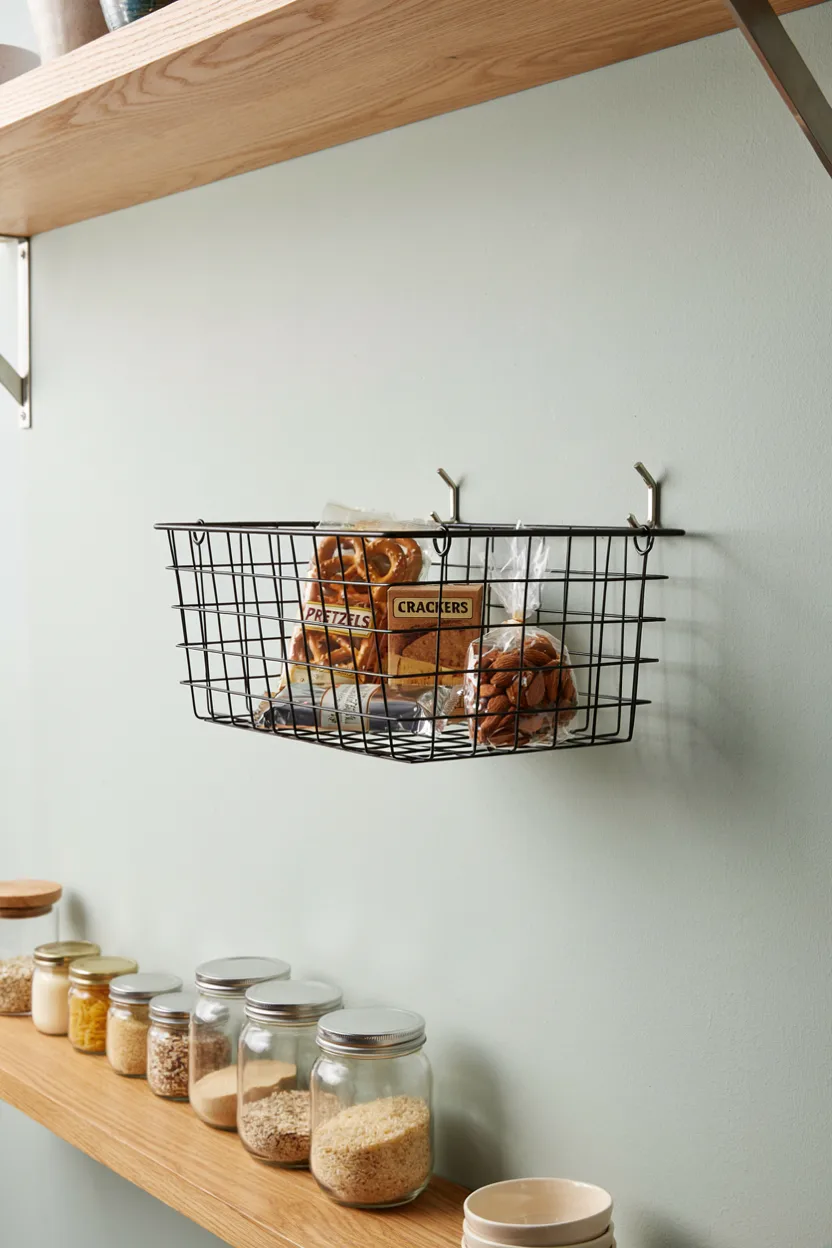
Adding under-shelf basket hooks is one of the more clever pantry organization ideas for creating additional storage without any permanent installation or renovation. Hanging a small wire basket from hooks attached to the underside of an existing shelf takes advantage of the often-wasted gap between shelves, effectively adding an extra tier of storage within the pantry’s existing structure.
This solution works particularly well for lightweight items that don’t require deep storage, like packaged snacks, small produce, or extra dish towels. Because the hooks typically require no tools or permanent modification, this idea is especially popular among renters looking to maximize pantry storage without making structural changes. Many households find that under-shelf baskets deliver surprising additional capacity from a space that would otherwise remain completely unused.
16. Adjustable Wire Shelving System
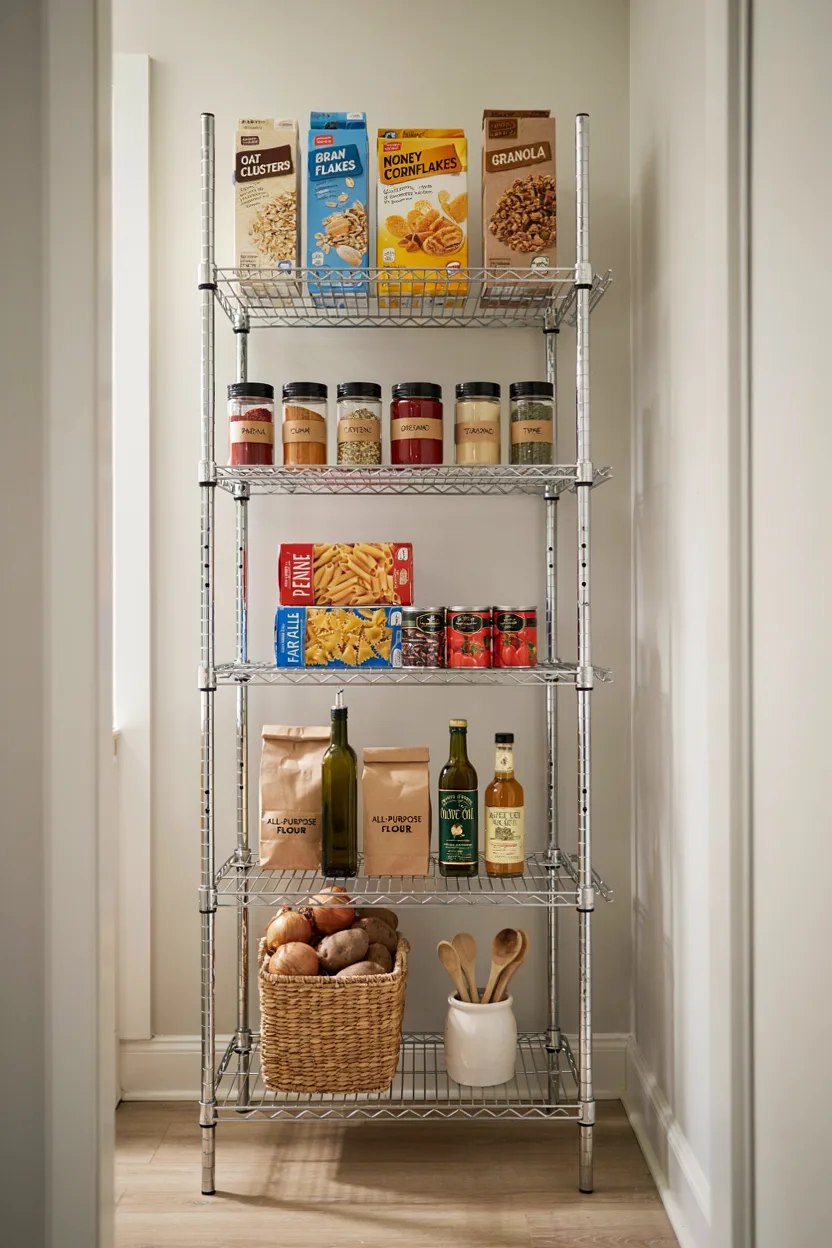
Installing adjustable wire shelving is one of the most customizable pantry organization ideas, allowing the entire storage system to be reconfigured as needs change over time. Rather than working around fixed shelf heights that may leave excessive wasted space above shorter items, an adjustable system lets each shelf be repositioned to closely match the height of whatever it’s storing, whether tall cereal boxes or short spice jars.
This flexibility makes the pantry significantly more efficient overall, since every inch of vertical space can be put to productive use rather than left empty due to a mismatched shelf configuration. Wire shelving also allows for better airflow and visibility compared to solid shelving materials. Many households find that investing in an adjustable system delivers long-term organizational benefits that fixed shelving simply can’t match as storage needs evolve.
17. Mason Jar Bulk Storage
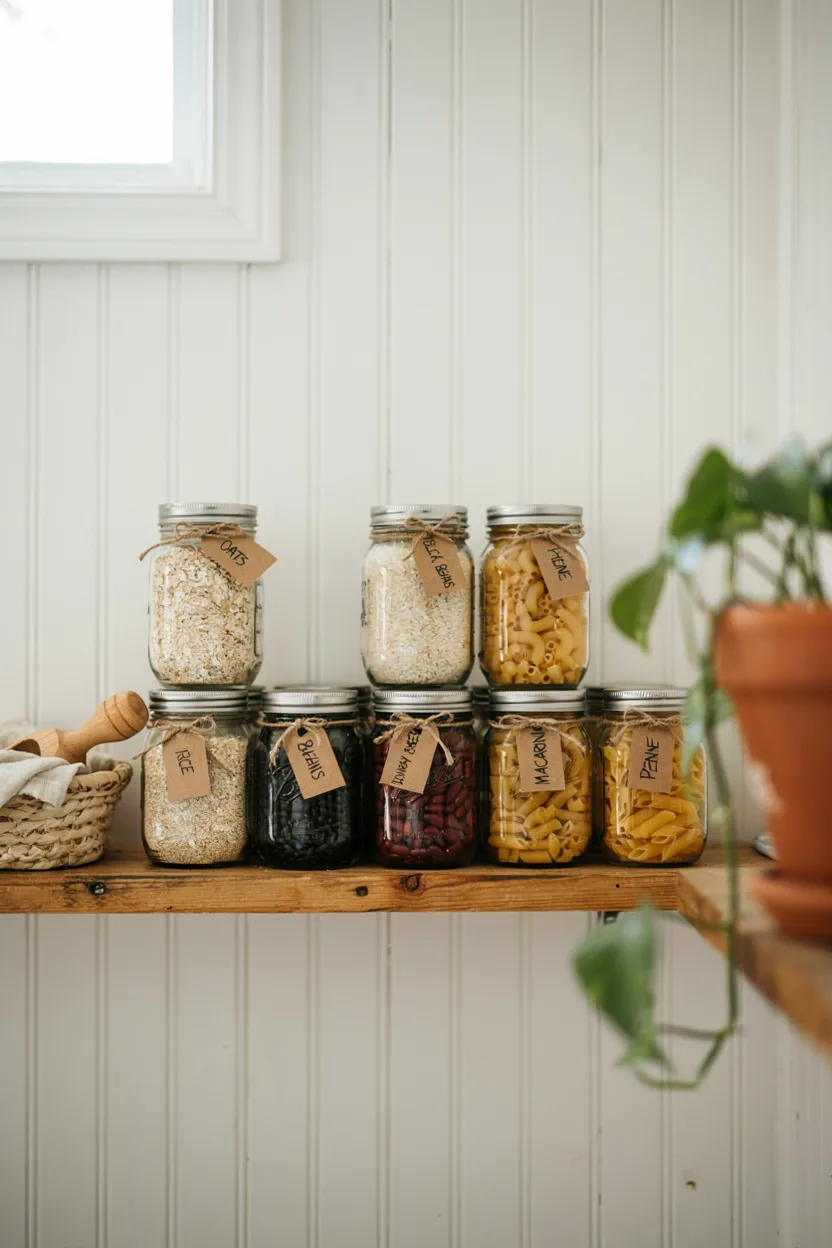
Using mason jars for bulk storage is one of the more charming pantry organization ideas, combining practical airtight storage with a rustic, farmhouse-inspired aesthetic. Transferring bulk dry goods like oats, rice, and beans into uniform glass jars not only keeps everything visually organized but also protects these items from pests and moisture more effectively than their original packaging often allows.
This approach works particularly well for households that buy pantry staples in bulk, since the uniform jar sizes make it easy to gauge remaining supply at a glance. Adding simple twine or a small handwritten tag to each jar reinforces the rustic aesthetic while keeping contents clearly identified. Many households find that mason jar storage delivers both genuine function and a distinctly charming visual style that fits well with farmhouse or cottage-inspired kitchen decor.
18. Kids Snack Bin Access
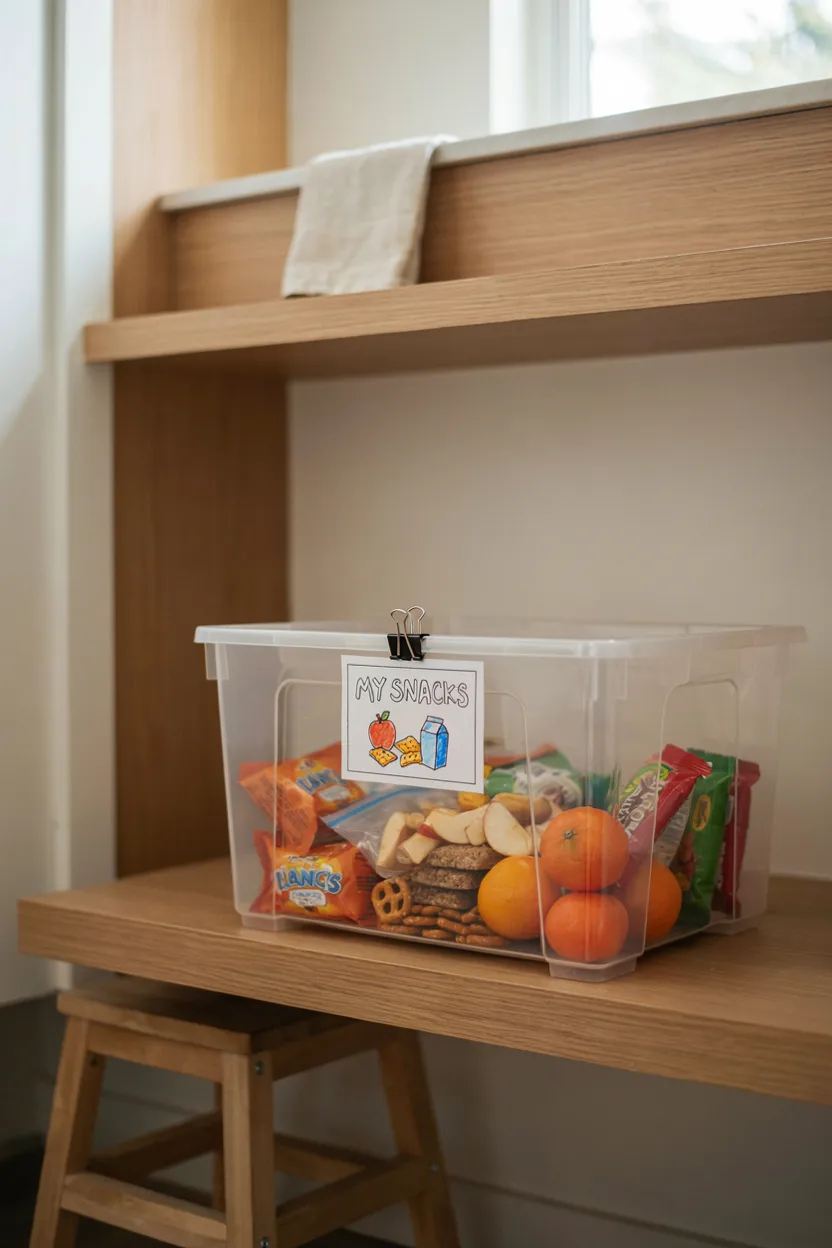
Designating a specific, easily reachable bin for kids’ snacks is one of the more family-focused pantry organization ideas, similar to a full snack station but scaled down to a single accessible bin rather than an entire shelf. This simplified version works particularly well for younger children who benefit from having just one clear, consistent spot to check for approved snack options, rather than navigating multiple bins or categories.
Using a picture-based label, rather than relying solely on text, helps even non-reading children understand where their designated snacks are located. This system also simplifies restocking for parents, since only a single bin needs regular attention rather than managing kid-accessible items scattered throughout the pantry. Many households find that a single, clearly defined snack bin reduces confusion and encourages appropriate independence for younger family members.
19. Freestanding Shelving Unit Pantry
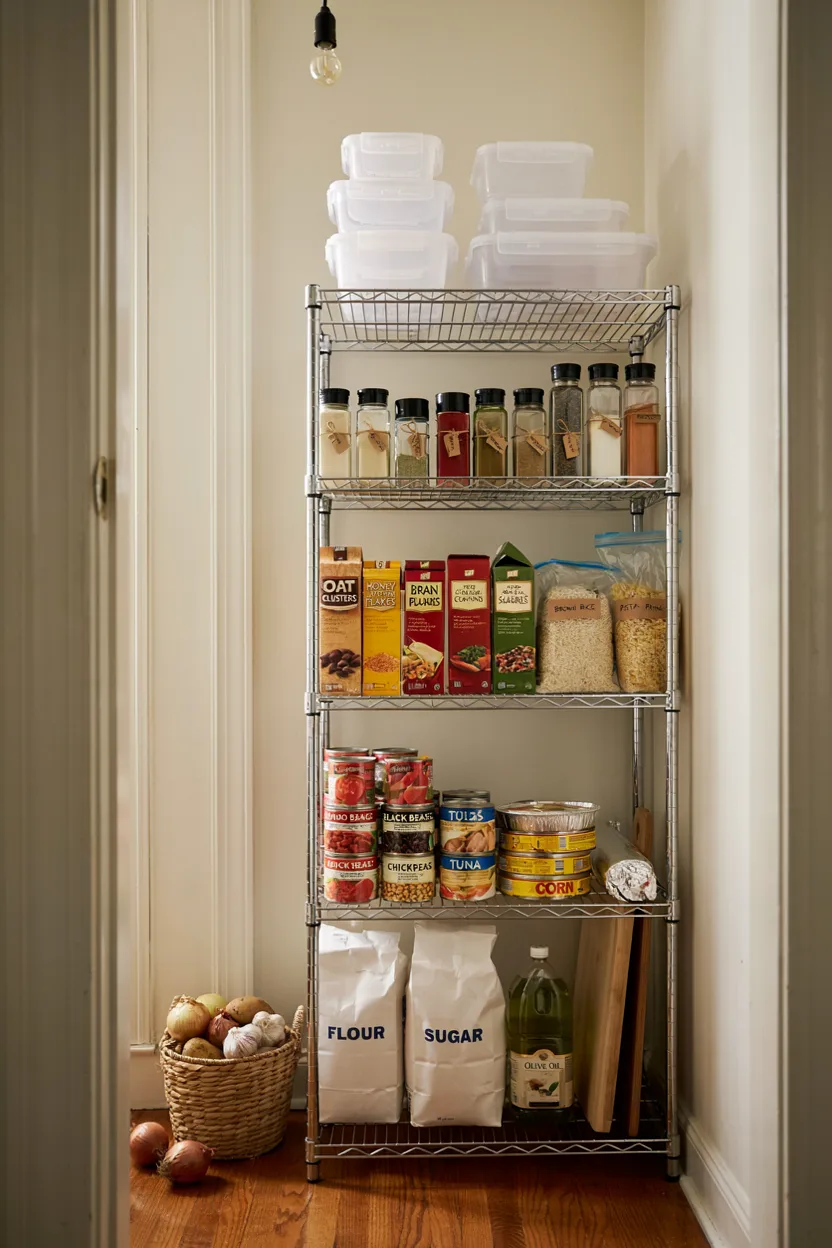
For homes without a dedicated pantry closet, a freestanding shelving unit is one of the most adaptable pantry organization ideas for creating meaningful food storage in an alternative space. Converting a small closet, an unused corner, or even a section of the garage into a functional pantry using freestanding wire or wood shelving allows households without built-in pantry space to still achieve organized, accessible food storage.
This approach offers significant flexibility, since the shelving unit itself can be relocated or reconfigured if the household’s storage needs change over time. Choosing adjustable shelving within the unit ensures it can accommodate a wide range of item sizes, from tall cereal boxes to small spice jars. Many households find that a freestanding shelving unit delivers genuine pantry functionality even without a dedicated, purpose-built pantry room.
20. Command Center Pantry Wall
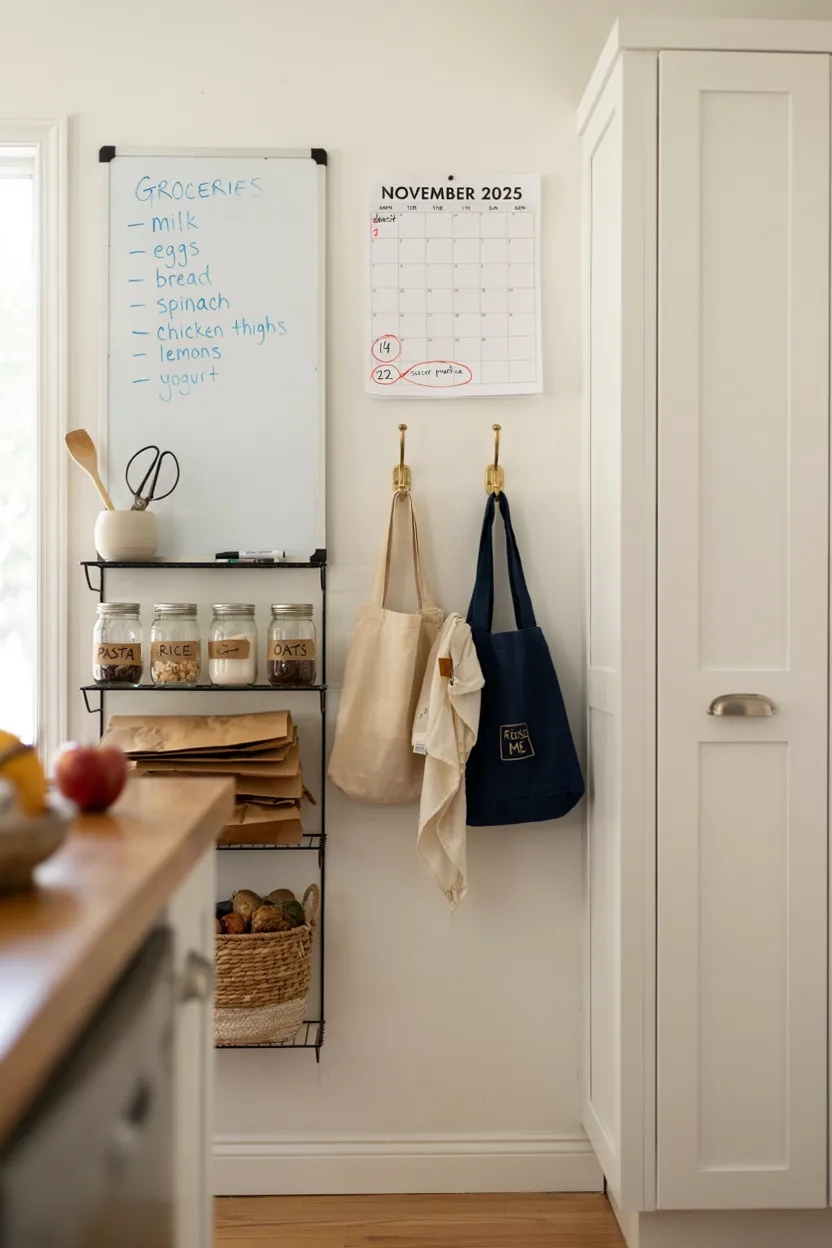
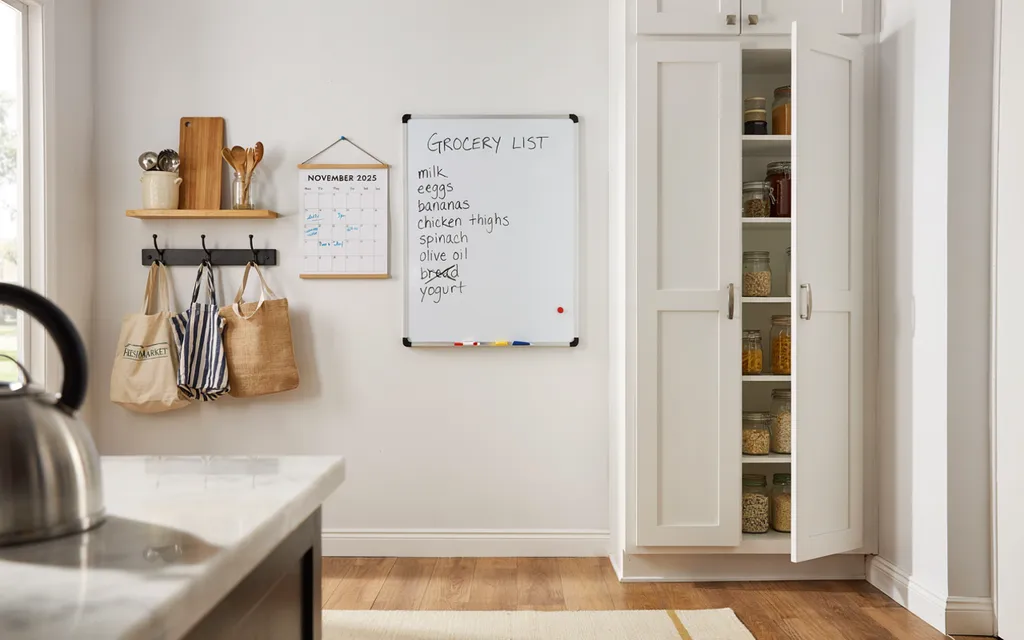
Combining pantry storage with a small household command center is one of the more multi-functional pantry organization ideas, particularly useful for busy families managing grocery lists and meal planning. Installing a whiteboard or chalkboard directly in the pantry allows household members to jot down items as they run low, creating a running grocery list that stays conveniently located right where the need is first noticed.
Adding hooks for reusable shopping bags or a small calendar for meal planning further extends the pantry’s function beyond simple food storage into a genuine household organization hub. This approach works particularly well for households that do most of their meal planning and grocery list-making in the kitchen area anyway. Many families find that this combined command center significantly streamlines the entire process of tracking, planning, and shopping for pantry staples.
21. Color-Coded Bin Organization
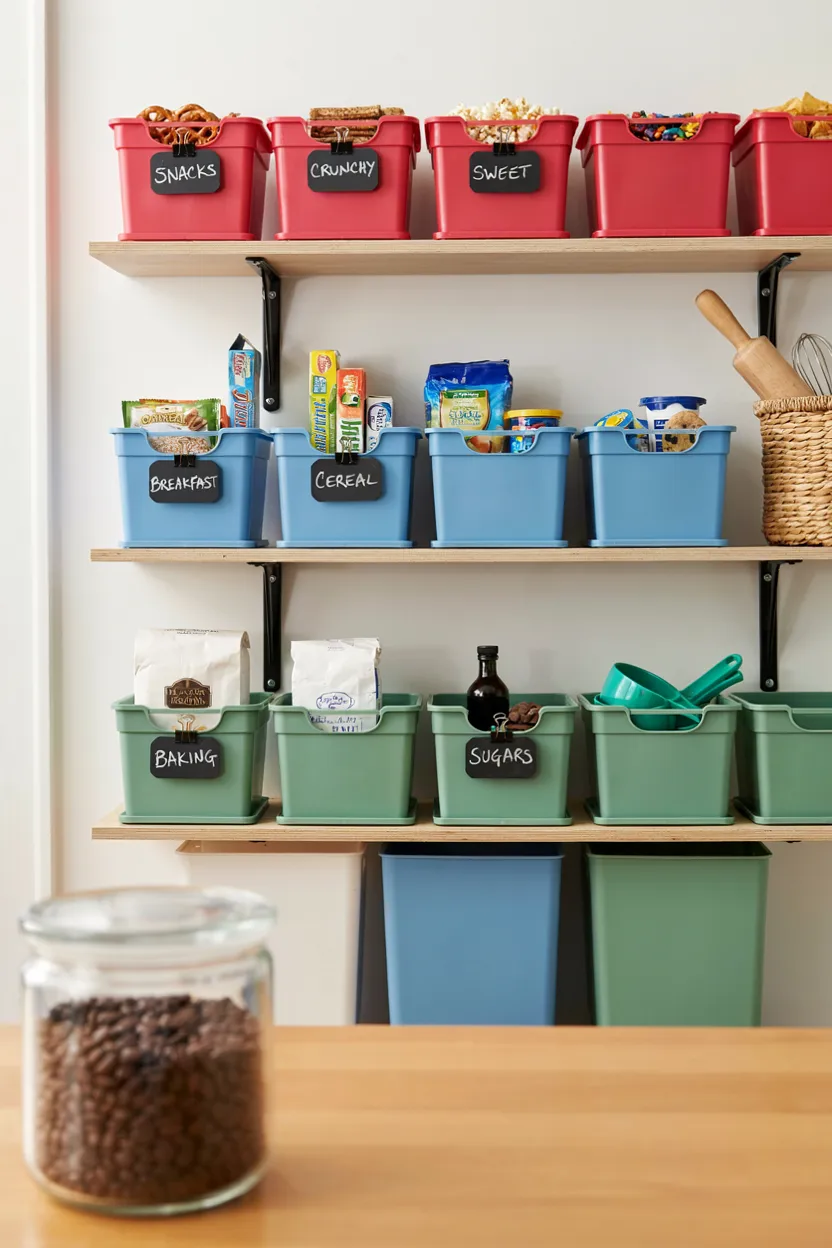
Using a color-coded system is one of the more intuitive pantry organization ideas, particularly helpful for households with multiple family members who need to quickly identify where specific items belong. Assigning a consistent color to each category, such as red for snacks or blue for breakfast items, creates a visual shorthand that even young children can learn and follow without needing to read detailed labels.
This system also adds a cohesive, visually pleasing element to the pantry’s overall design, since the varied but coordinated colors create intentional visual interest rather than a random mismatch. Choosing bins in a consistent material and shape, varying only in color, maintains a clean, organized look despite the multiple categories represented. Many households find that color-coding significantly speeds up the process of both locating and returning items to their correct spot.
22. Small Pantry Closet Maximization
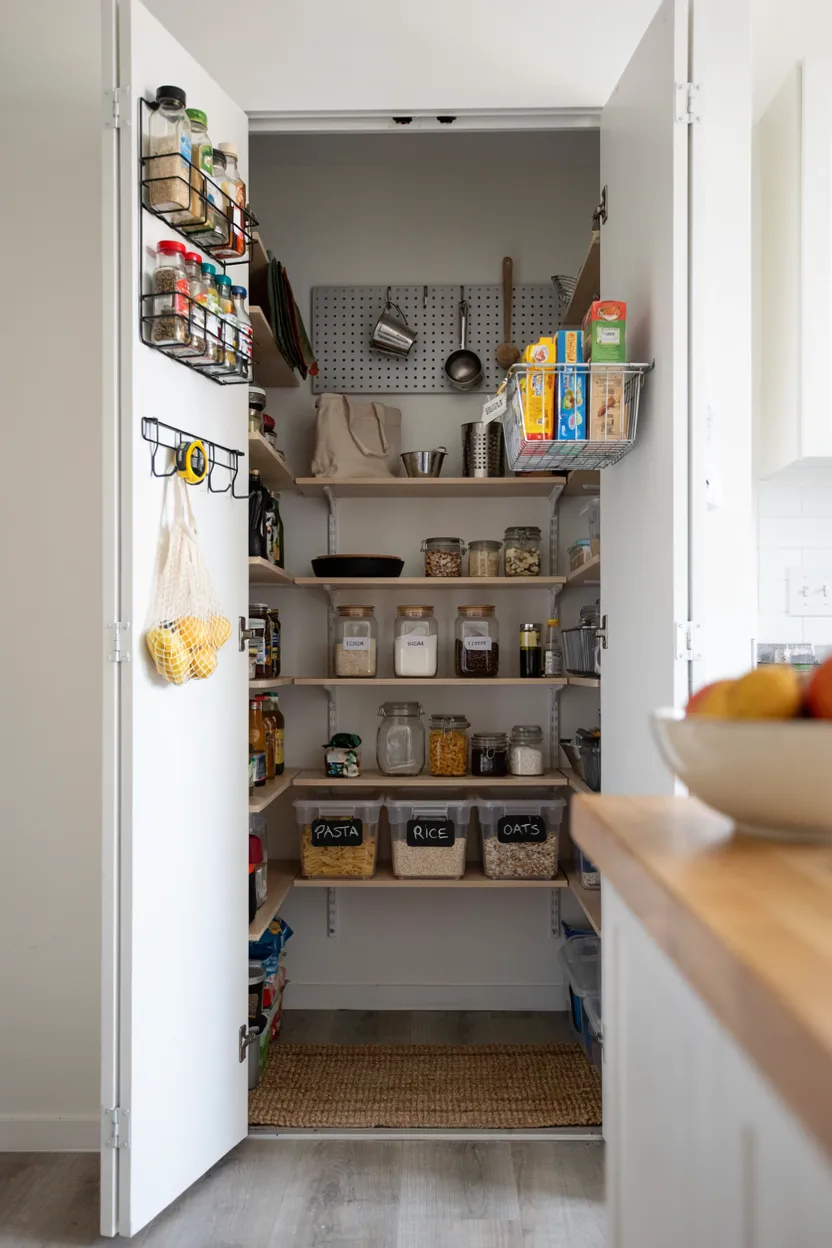
Rounding out this list of pantry organization ideas, fully maximizing a small pantry closet requires combining several strategies to make the most of limited square footage. Layering door-mounted storage, adjustable shelving, and stackable bins within a single compact closet ensures that every available inch, including often-overlooked vertical and door space, contributes to the pantry’s overall storage capacity.
This comprehensive approach works particularly well for apartments or older homes with minimal built-in pantry space, where a full walk-in pantry simply isn’t an option. Prioritizing which storage solutions matter most for the household’s specific needs helps avoid overcrowding an already tight space. Many households find that combining multiple organization strategies within a small pantry closet delivers surprisingly comprehensive storage capacity despite the limited square footage available.
Conclusion
Staying organized doesn’t require a full renovation — small, intentional changes make the biggest difference over time. With these 22 Pantry Organization Ideas, you have practical solutions to fit any budget, kitchen size, or personal style. Start with one or two ideas that feel manageable, then build from there as your pantry evolves. A well-organized pantry saves time, reduces food waste, and makes cooking more enjoyable, so pick your favorites and start creating a space you’ll love opening every day.


Join The Discussion