
Introduction
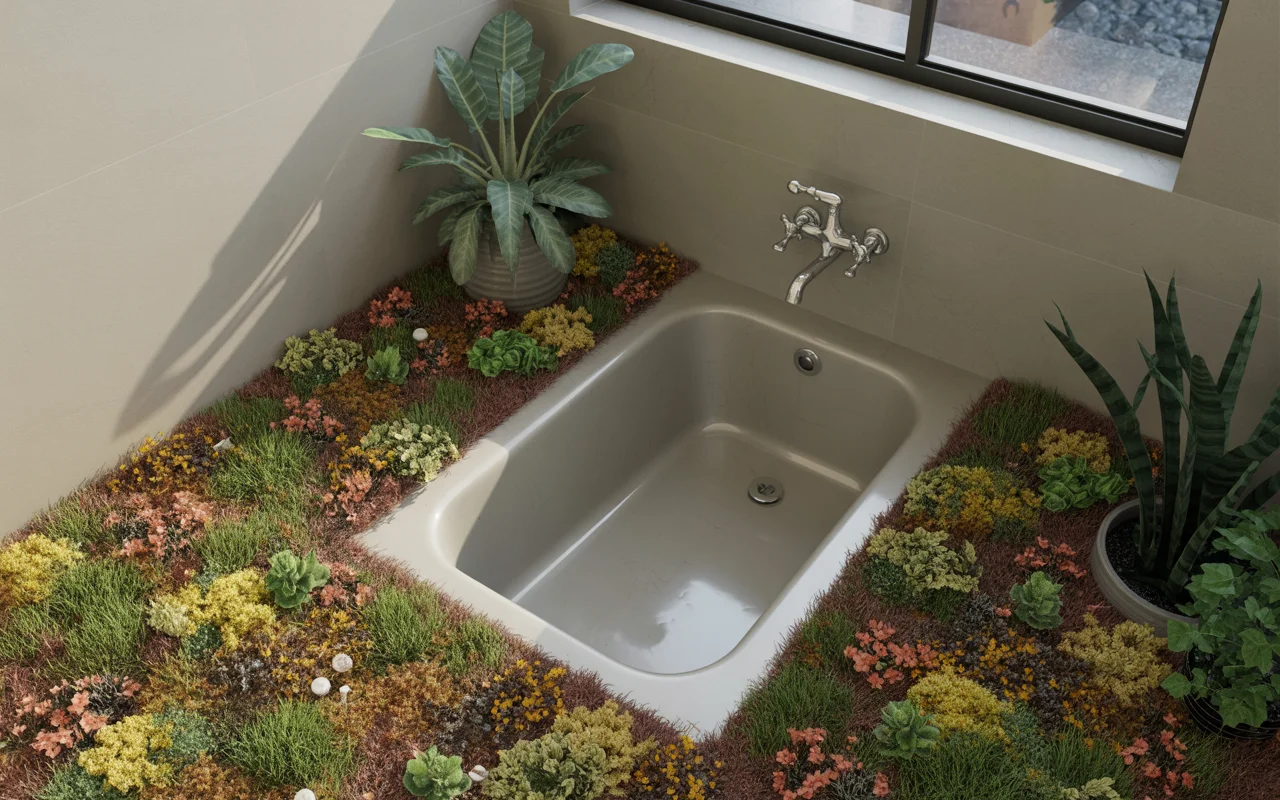
Bird baths serve dual purposes in garden design—they provide essential water sources for wildlife while acting as stunning focal points. Yet many homeowners place generic concrete bowls randomly in their yards without considering overall design cohesion. The right bird bath should complement your garden’s style, scale appropriately to its surroundings, and integrate seamlessly into your landscape plan. These 24 bird bath ideas will help you choose and position the perfect water feature that birds love and that completes your garden layout beautifully.
H2: Position a Classic Pedestal at Garden Center
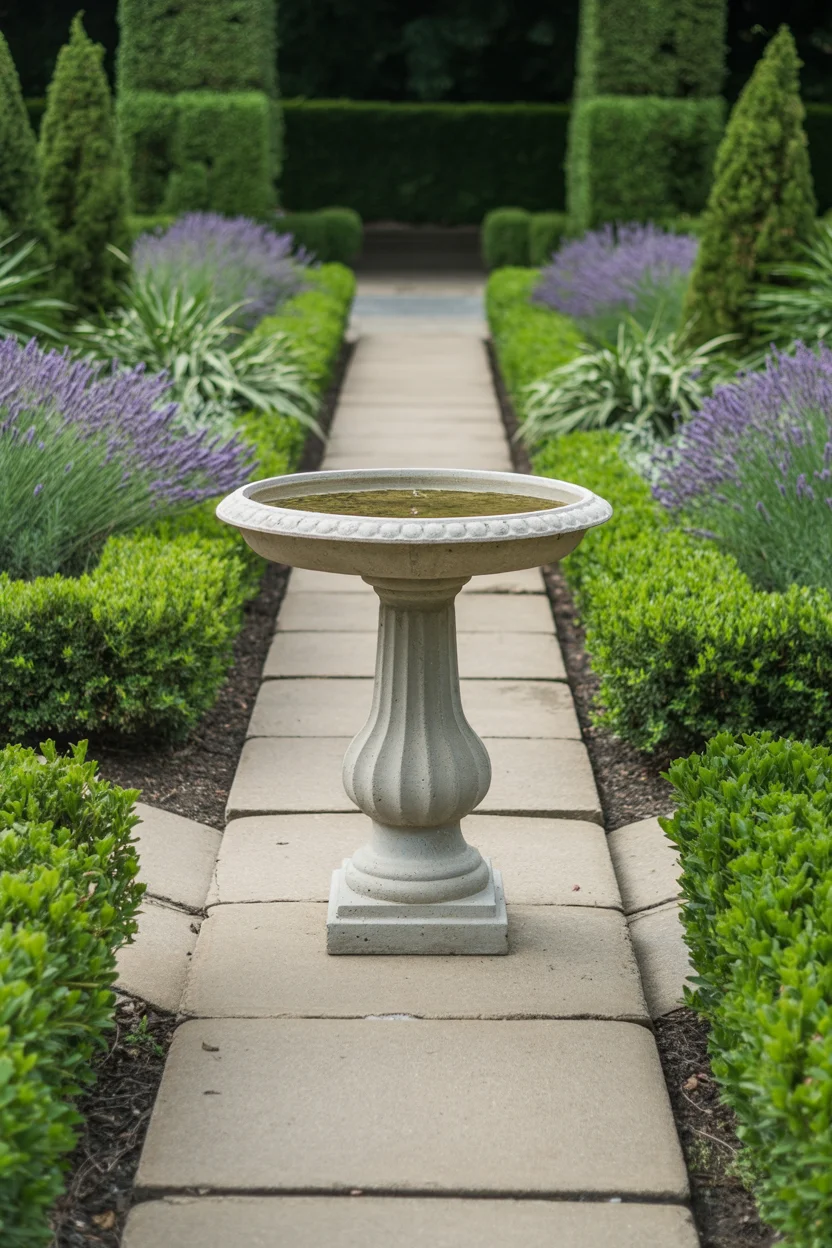
Centering a pedestal bird bath where pathways intersect creates instant garden structure in ways that embody timeless bird bath ideas. This positioning makes the bath a destination point that draws the eye and feet through the garden. The elevated height—typically 28-32 inches—allows birds to feel safe from ground predators while giving you excellent viewing opportunities from windows or seating areas. Classical pedestal styles work particularly well in formal, cottage, or traditional garden layouts.
Choose materials that complement your home’s architecture—concrete or stone for traditional homes, lightweight resin for casual settings, or aged metal for farmhouse gardens. The key is ensuring the pedestal remains stable; a wobbling bath won’t attract nervous birds. Surround with low-growing perennials that won’t obstruct bird approach but provide nearby cover where they can preen after bathing. This classic placement works in gardens of any size, scaling the bath proportionally to the available space.
H2: Install a Ground-Level Natural Stone Basin
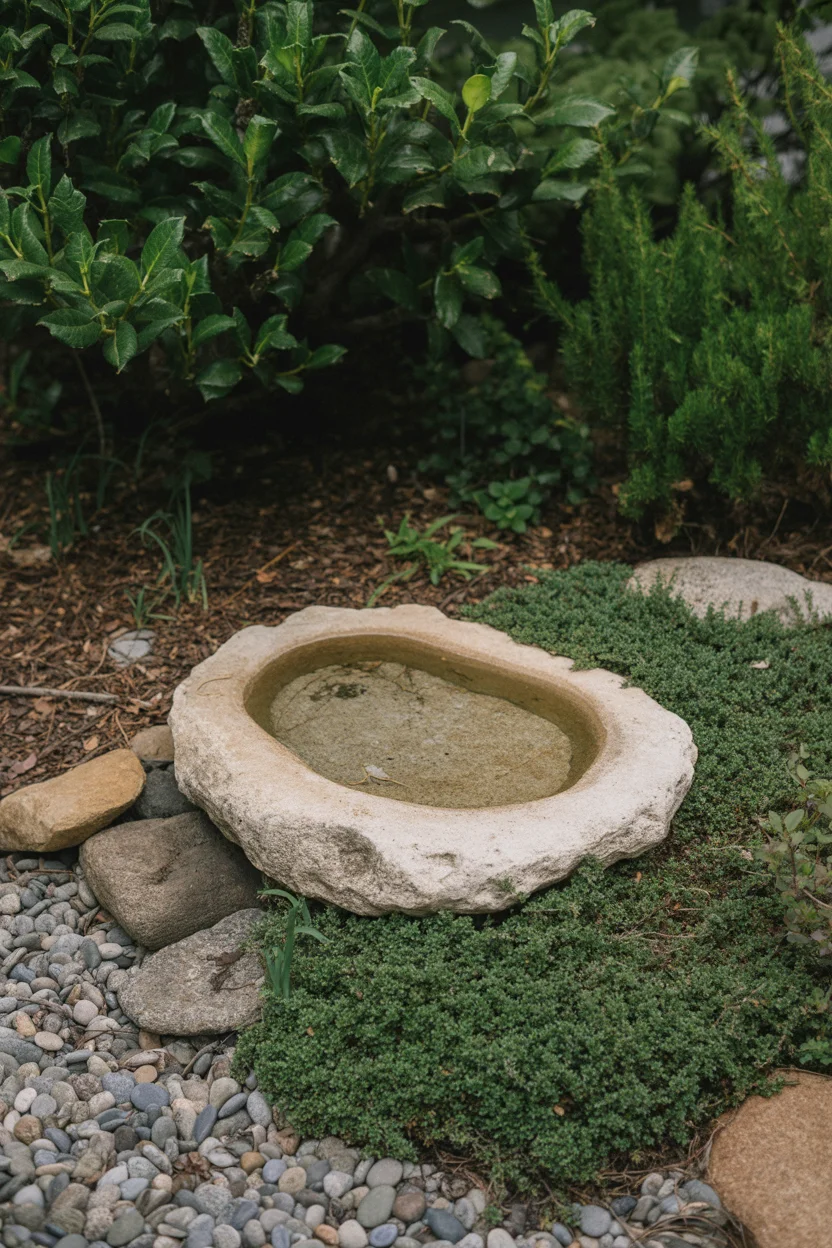
Ground-level bird bath ideas mimic natural puddles and streams that birds instinctively seek. A large, shallow stone or concrete basin placed directly on the ground appeals to ground-feeding birds like robins, doves, and towhees that may hesitate at elevated baths. The natural positioning feels organic rather than decorative, integrating into landscape beds as though it’s always been there. Maximum depth should be 2-3 inches with gradual slopes allowing birds of various sizes to wade comfortably.
Position your ground basin in a spot with clear sightlines so birds can watch for predators while bathing. Surround with low plants and small stones that facilitate drainage and prevent muddy splashing areas. This style works beautifully in naturalistic gardens, woodland settings, or Japanese-inspired landscapes where human intervention should appear minimal. The ground position also makes refilling easier since you’re not reaching up to elevated basins. Consider adding a solar fountain attachment to create movement that attracts birds from greater distances.
View morehttps://dreamgardenspk.com/blog/
H2: Hang a Shallow Dish from Tree Branches
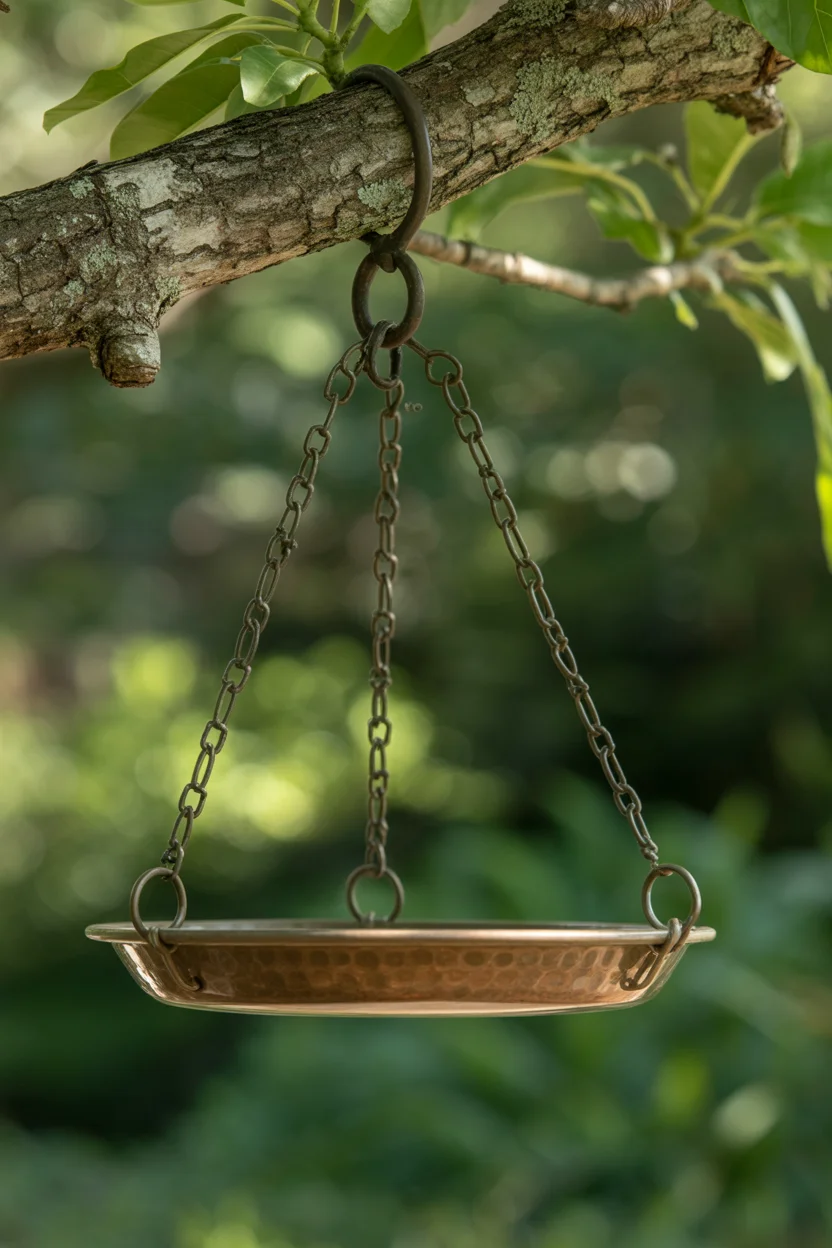
Hanging bird bath ideas solve space constraints in small gardens while adding vertical interest. Suspended baths work particularly well under tree canopies where shade keeps water cooler and overhanging branches provide safety for nervous birds. The movement of a gently swaying bath actually attracts attention better than stationary basins, though you’ll want secure hanging mechanisms to prevent excessive swing that frightens birds. Choose dishes with textured interiors so wet bird feet can grip safely.
Select hanging spots where you can easily reach to refill and clean—generally 4-6 feet high works well. The chains or ropes should be durable and weather-resistant; marine-grade stainless steel chains or thick natural rope both work beautifully. This approach works in established gardens with mature trees, small urban gardens without ground space, or anywhere you want water features without permanent installation. Position where falling water during refills won’t damage sensitive plants below. The hanging nature also deters cats and other predators from ambushing bathing birds.
H2: Incorporate a Modern Concrete Bowl Design
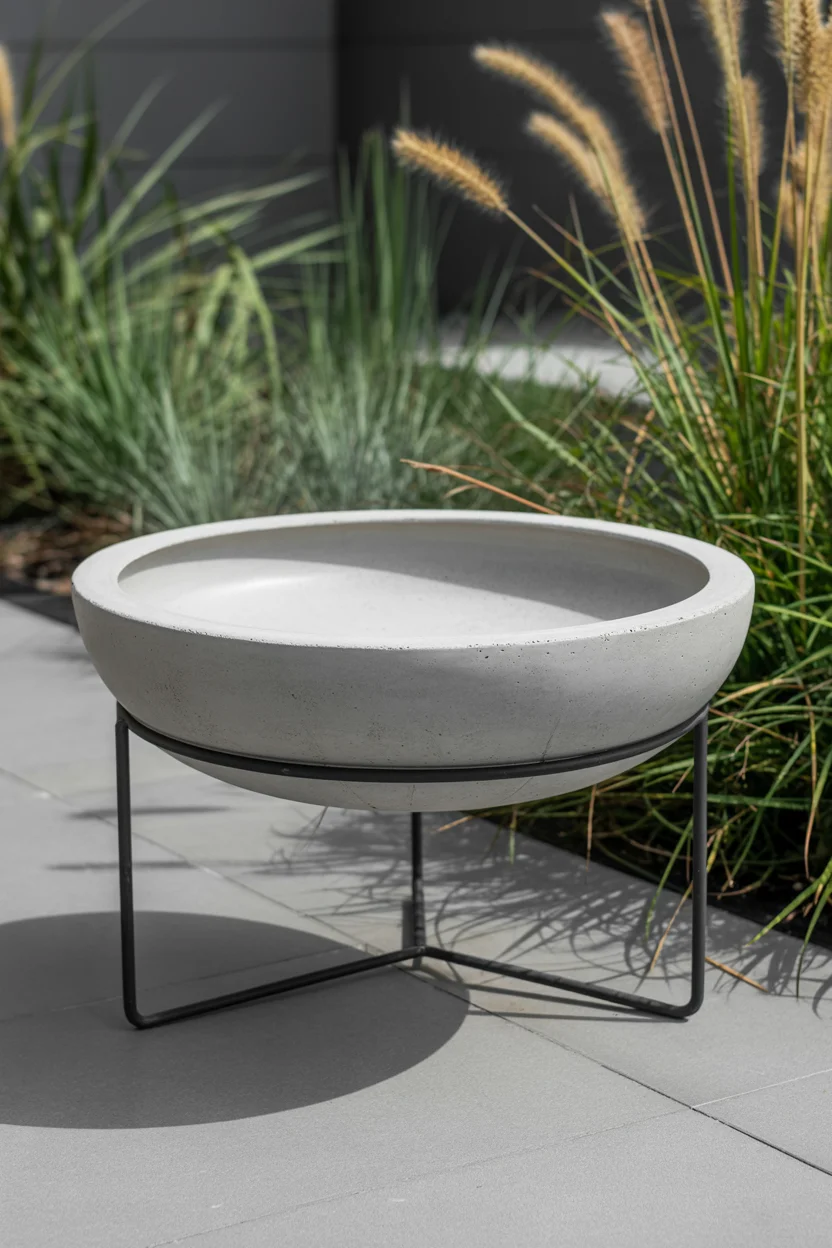
Contemporary bird bath ideas prove that wildlife features can align with modern aesthetic preferences. Smooth concrete bowls in geometric shapes—perfect circles, shallow cones, or squared basins—complement modern and mid-century garden designs. The industrial material feels current when formed into clean shapes without traditional ornamentation. Pair with simple metal stands in matte black or brushed steel rather than decorative pedestals for cohesive modern styling.
Modern bird baths work beautifully in minimalist gardens where every element serves clear purpose and unnecessary decoration is eliminated. The neutral gray of concrete complements modern plant palettes of grasses, sedums, and architectural specimens. Position these baths as sculptural elements that happen to serve birds rather than overtly decorative garden accents. The smooth surfaces are easy to clean and the substantial weight prevents tipping in wind. This style bridges the gap between functional wildlife support and contemporary art installation.
Explore morehttp://pinterest.com/Dreamgardenshome/
H2: Create a Recirculating Rock Fountain Bath
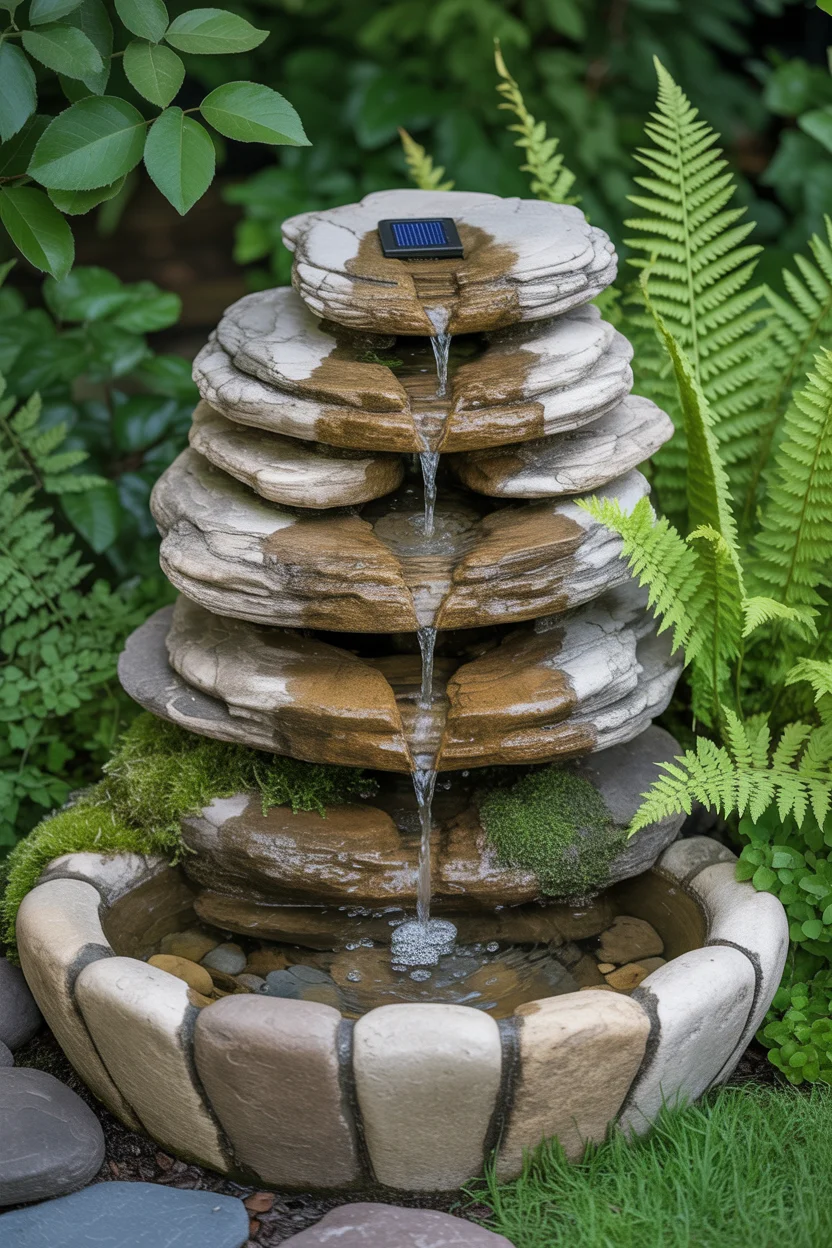
Moving water in bird bath ideas attracts birds through sound and sparkle while preventing mosquito breeding. A recirculating fountain with water flowing over stones into a shallow catching basin creates the natural stream conditions birds prefer. Solar-powered pumps eliminate electrical wiring, making installation possible anywhere with adequate sunlight. The trickling sound draws birds from surprising distances—you’ll notice species visiting that never used stationary baths.
Build your rock fountain using flat stones that create gentle cascades rather than splashing falls that empty the basin too quickly. The catching pool should be shallow (1-2 inches) with textured stone providing secure footing. This natural style works beautifully in cottage gardens, woodland settings, or naturalistic landscapes where it appears as a discovered spring. Position where you’ll hear the water from favorite outdoor seating—the sound enhances human enjoyment as much as it attracts birds. Clean the pump monthly during active season to maintain proper flow.
H2: Install a Wall-Mounted Fountain Bath
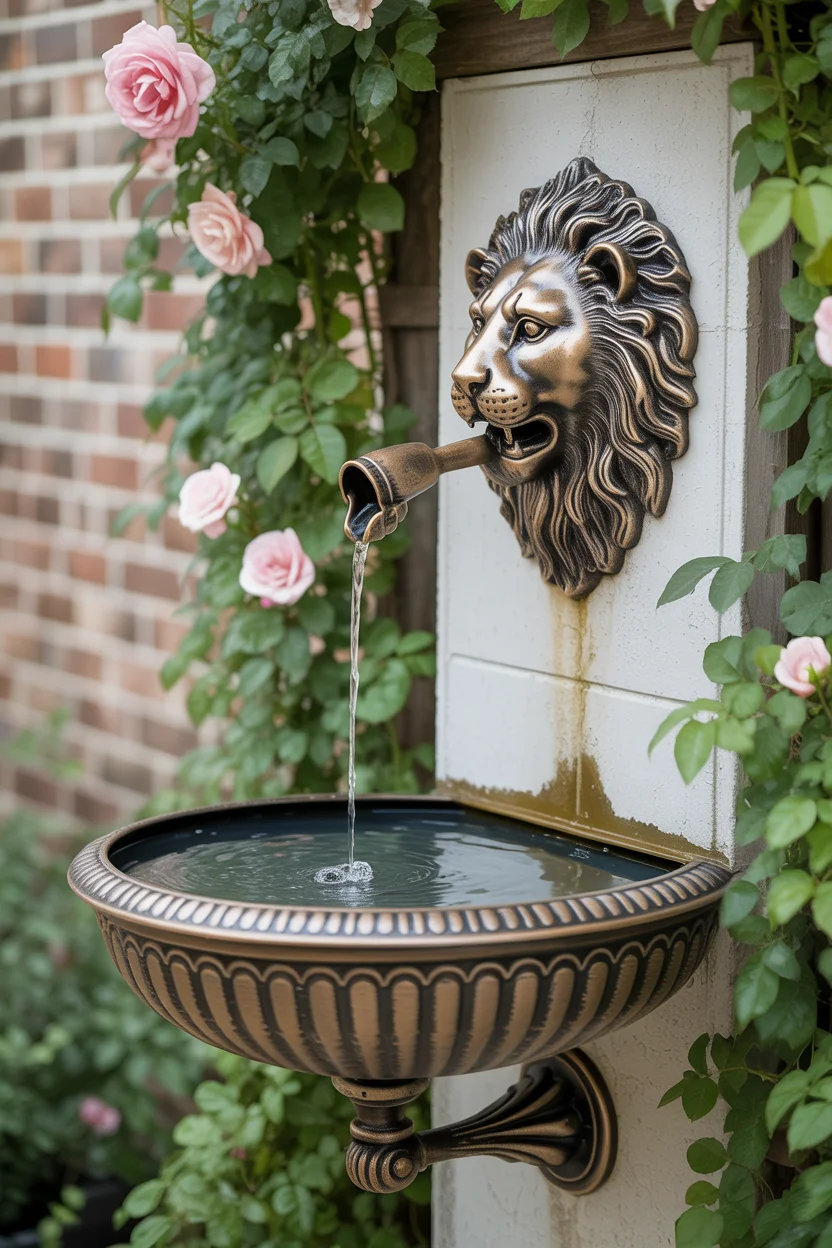
Vertical bird bath ideas maximize limited ground space while creating focal points on blank walls or fences. Wall-mounted fountain baths combine water feature drama with bird utility, transforming boring vertical surfaces into garden highlights. The continuous water flow from decorative spouts keeps water fresh and oxygenated while the sound attracts birds. This style works particularly well in courtyard gardens, along house foundations, or on privacy fences where vertical interest is needed.
Choose wall fountains with shallow basins rather than deep bowls—birds need wading depth, not swimming pools. Ensure the wall or fence can support the weight of the fixture plus water, using appropriate anchors for your surface material. Mediterranean, French, and English garden styles particularly suit ornate wall fountains, while simple modern spouts work in contemporary settings. Position where overflow won’t damage foundations or create muddy areas. The elevated position provides excellent viewing from indoor windows while keeping bathing birds safe from ground-dwelling predators.
H2: Design a Tiered Water Feature
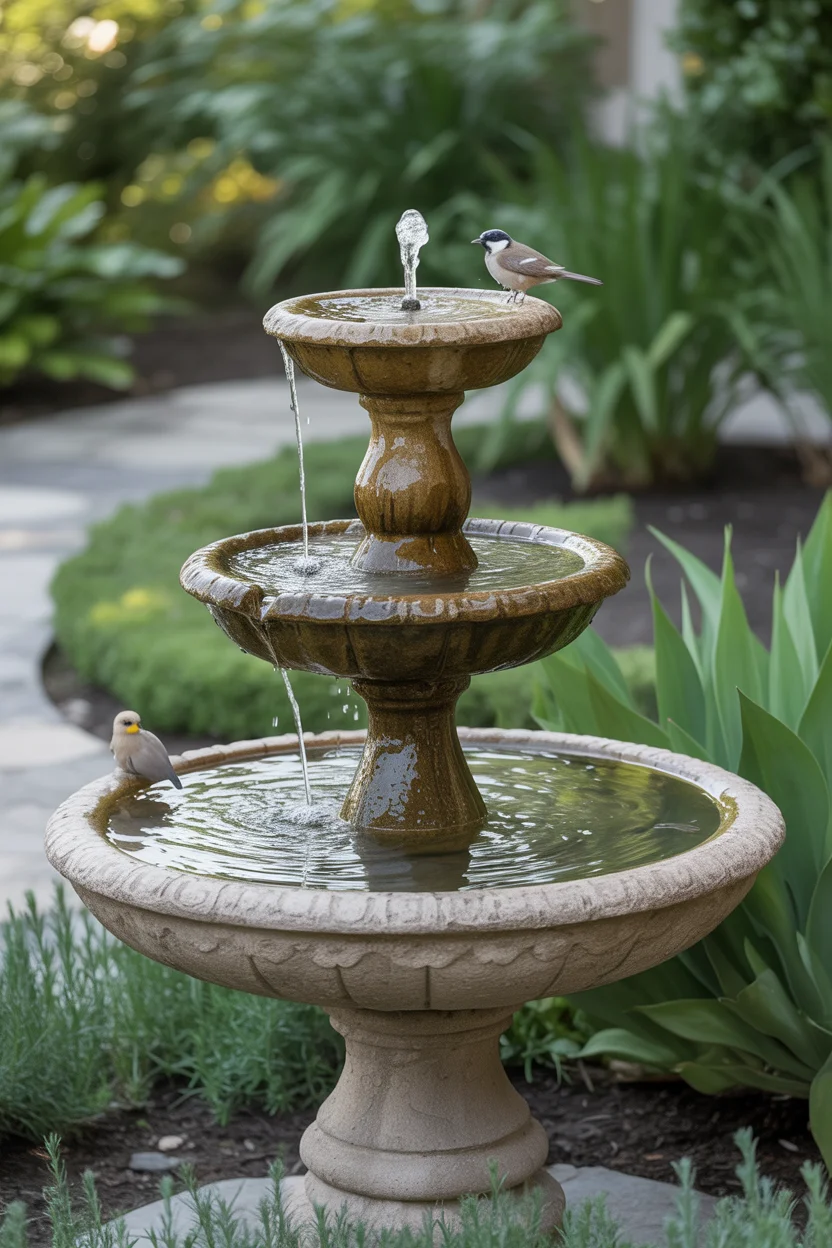
Multi-level bird bath ideas accommodate various bird species simultaneously by offering different heights and water depths. Tiered fountains allow small songbirds to use upper shallow basins while larger birds prefer lower, more spacious levels. The cascading water creates movement and sound that attracts birds while aerating the water naturally. This grand style works as a statement piece in larger gardens where it becomes a primary focal point.
Position tiered baths where they can be appreciated from multiple viewpoints—patios, windows, and pathway approaches. The substantial presence requires adequate space; crowding a large tiered fountain into a small garden overwhelms the layout. Surround with proportionally scaled plantings—bold hostas, substantial shrubs, or ornamental grasses that balance the fountain’s visual weight. This style suits formal, English cottage, or estate-style gardens where traditional elegance is the goal. The multiple basins mean less frequent refilling since water redistributes as birds use upper levels.
H2: Use a Vintage Repurposed Container
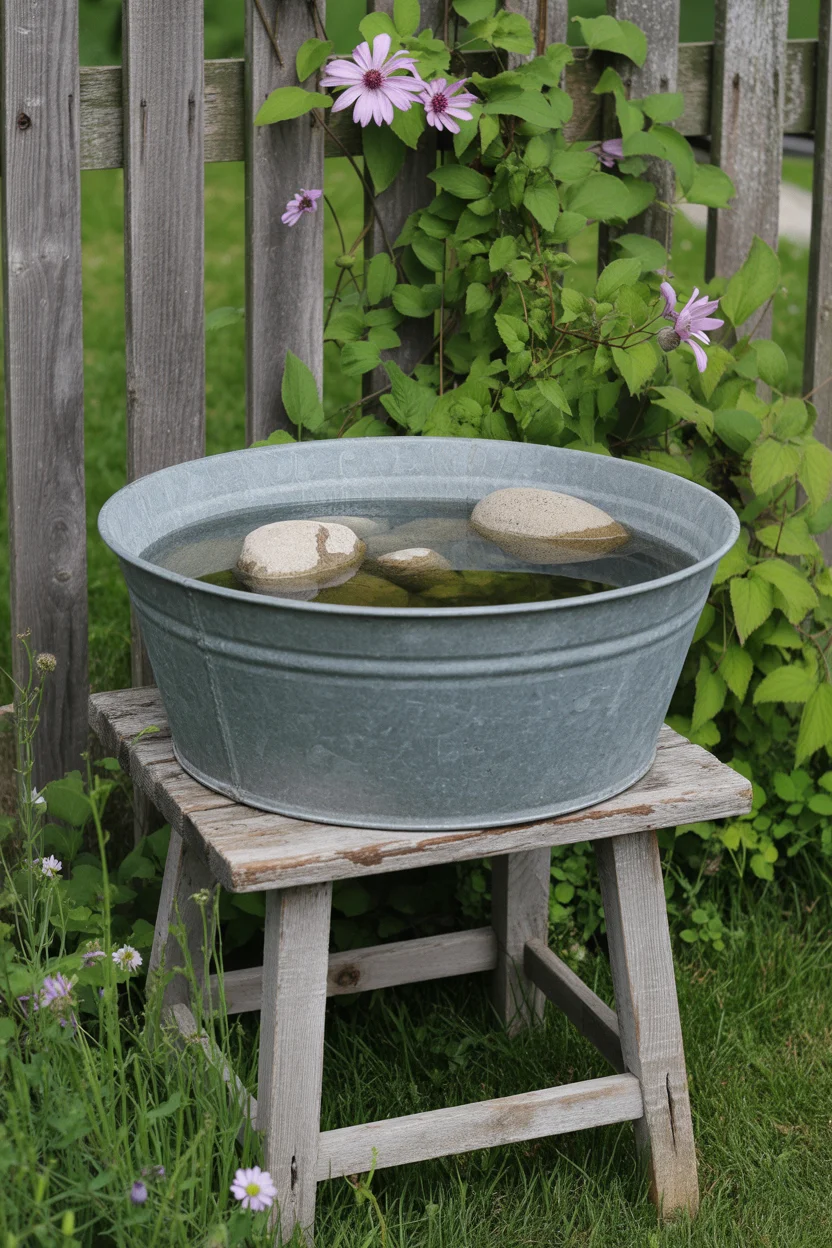
Creative bird bath ideas using repurposed items add personality and sustainability to gardens. Vintage washtubs, old wheelbarrows, antique pans, or architectural salvage pieces become unique bird baths with character that new purchases can’t match. These found-object baths tell stories and create conversation points while serving birds perfectly well. The key is ensuring whatever container you choose has adequate size (minimum 12-14 inches across) and can be kept shallow enough for safe bathing.
Vintage metal containers develop beautiful patina over time that enhances cottage, farmhouse, and rustic garden styles. Add drainage holes if you want them to empty during rain, or embrace the natural collection of water. Elevate containers on stumps, upturned crates, or tree rounds to achieve proper height while maintaining casual aesthetic. This approach costs little—thrift stores and estate sales yield perfect candidates—while creating one-of-a-kind garden features. Position these charming baths where their vintage character complements similar garden elements like antique tools, old gates, or weathered furniture.
H2: Install a Heated Winter Bird Bath
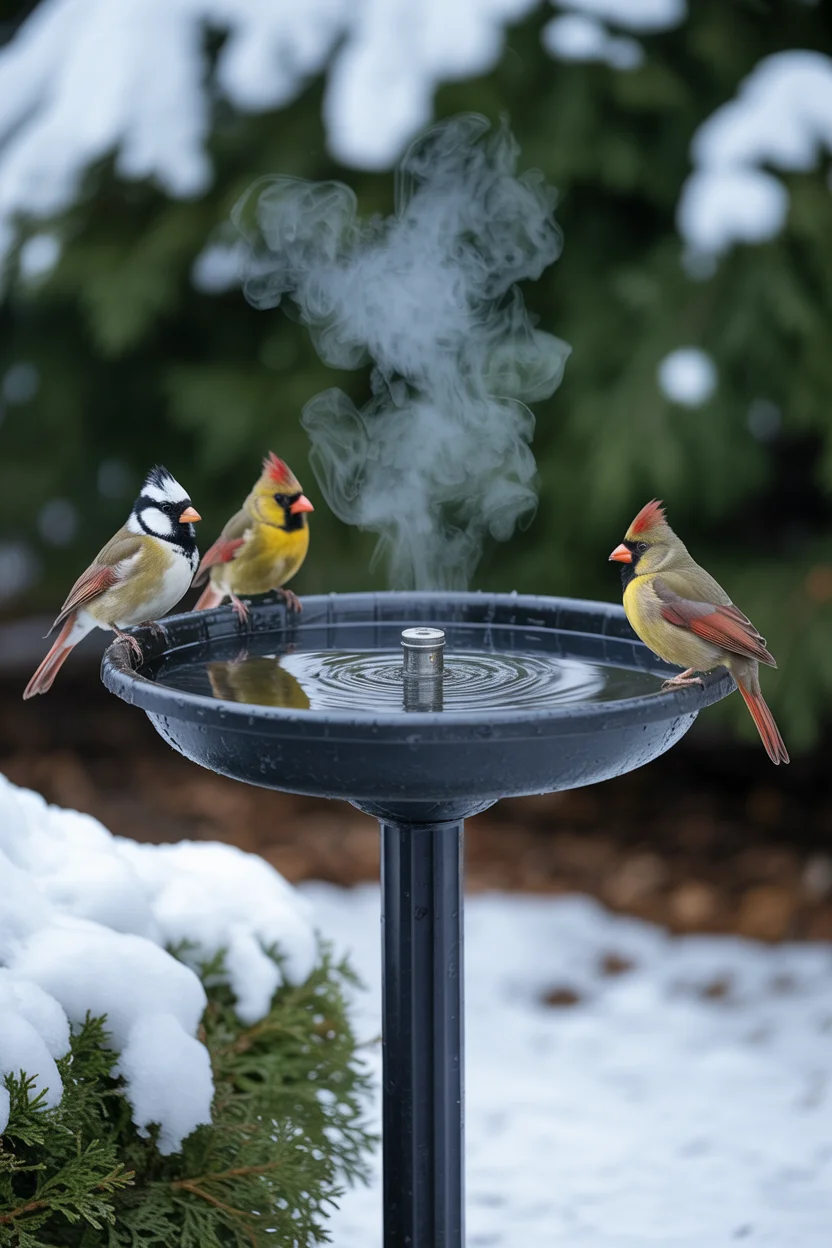
Year-round bird bath ideas require heating elements in cold climates where water freezes. Heated baths provide critical water sources when natural options ice over, supporting overwintering bird populations that struggle during frozen months. Thermostatically controlled heaters activate only when temperatures approach freezing, minimizing energy use. This thoughtful addition transforms your garden into essential bird habitat during the harshest season when birds need support most.
Choose baths with built-in heaters or add submersible heating elements to existing baths. Position near outdoor outlets or use long outdoor-rated extension cords with waterproof connections. Plastic and resin baths work better than ceramic or concrete in freezing temperatures since they won’t crack from ice expansion. Winter bird activity around heated baths is remarkable—you’ll see species in your garden that might otherwise migrate, providing unexpected cold-season wildlife viewing. Clean heated baths frequently since warm water encourages faster algae growth even in winter.
H2: Create a Mosaic Tile Decorated Basin
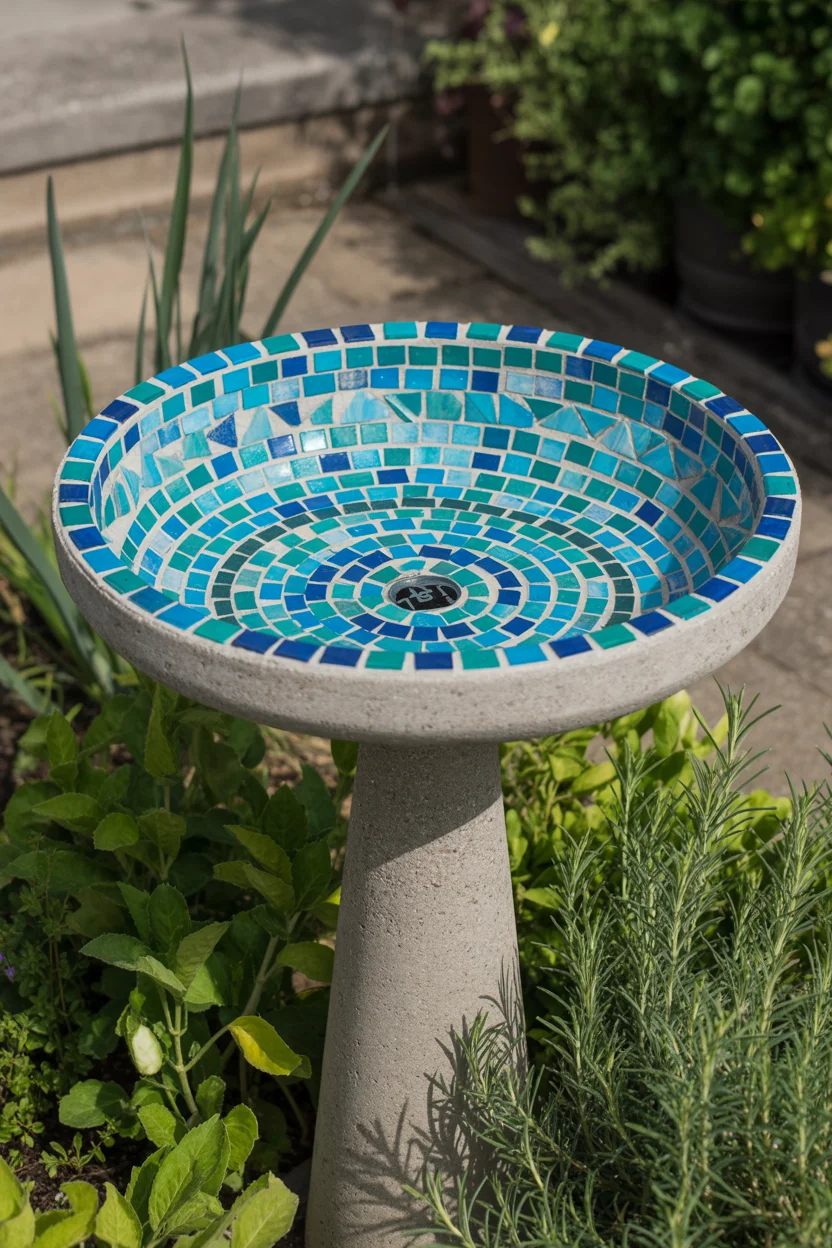
Artistic bird bath ideas let you express creativity while serving birds. Decorating plain concrete basins with mosaic tiles creates custom pieces that match your garden’s color palette perfectly. Use frost-proof tiles in colors that complement nearby plantings—cool blues and greens for calm spaces, warm oranges and yellows for vibrant gardens, or earth tones for natural settings. The waterproof nature of tile mosaics makes them ideal for this wet application.
Apply tiles using waterproof adhesive and grout, sealing thoroughly to prevent water penetration and freeze damage in cold climates. Leave the basin bottom relatively smooth—highly textured mosaics can hurt delicate bird feet—concentrating decorative patterns on exterior surfaces and rims. This DIY project transforms inexpensive concrete baths into heirloom pieces with personal meaning. Position where sunlight hits the tiles to maximize sparkle and color reflection. The artistic nature works beautifully in eclectic, cottage, or Mediterranean gardens where handcrafted elements enhance authentic character.
H2: Position a Reflecting Pool Style Bath
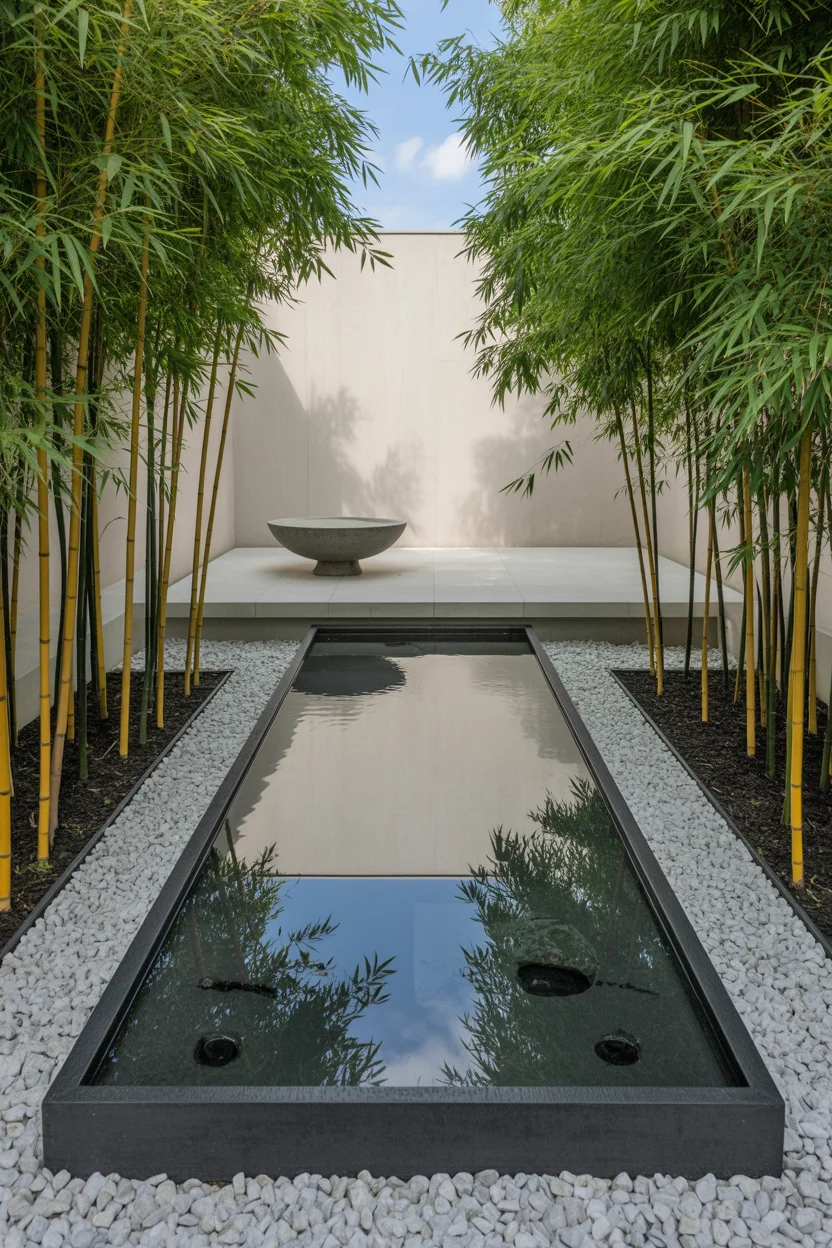
Contemplative bird bath ideas serve aesthetic purposes equally with practical ones. Shallow reflecting basins create mirror-like surfaces that add light and dimension to gardens while providing the 1-2 inch depths birds prefer. The reflective quality doubles surrounding plantings visually and captures sky movements, adding dynamic interest to static garden beds. Dark interior finishes enhance reflection better than light colors, creating dramatic contrast in modern or Asian-inspired gardens.
These ultra-shallow basins work beautifully in minimalist, Japanese, or contemporary gardens where water represents design element as much as bird amenity. The wide surface area accommodates multiple birds simultaneously despite shallow depth. Position where reflections capture interesting elements—architectural plants, sculptures, or sky. This style requires more frequent refilling since shallow water evaporates quickly, but the visual impact justifies the maintenance. Surrounding plantings should be equally thoughtful and minimal, allowing the water feature to shine as a primary focal point.
H2: Hang Multiple Saucer-Style Baths
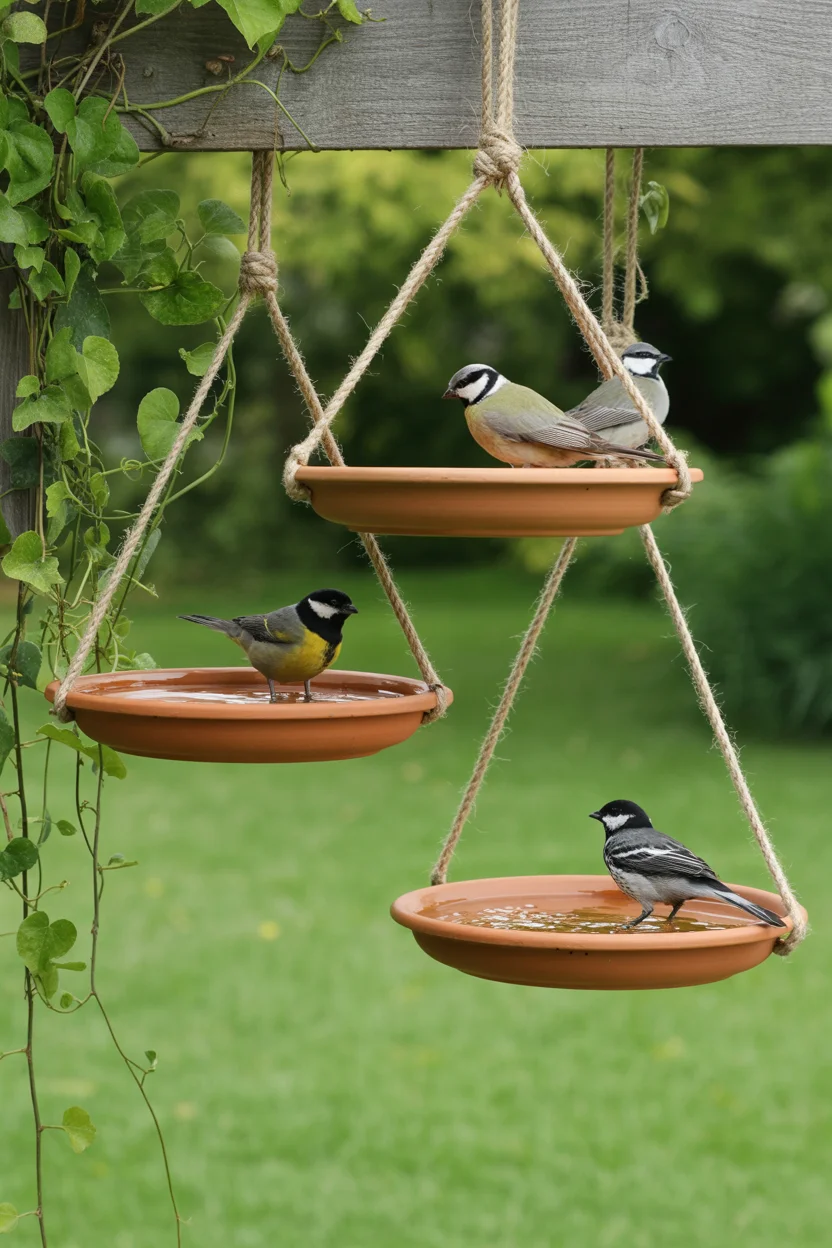
Clustered bird bath ideas create abundant water sources while adding dimensional interest. Hanging multiple shallow saucers at varied heights accommodates different bird species’ preferences—some prefer higher positions, others lower—while creating visual rhythm through repetition. The grouped arrangement makes a stronger design statement than single baths scattered randomly. Terracotta saucers are inexpensive, lightweight for hanging, and develop beautiful patina with age and weather exposure.
Drill drainage holes and thread strong rope or chain through, knotting securely underneath. Hang from pergolas, arbors, sturdy tree branches, or installed hooks on fence posts. The varied heights create layers that draw the eye upward, making small gardens feel larger. This approach works beautifully in cottage gardens, casual landscapes, or anywhere you want abundant bird activity. The multiple water sources mean you’ll attract more birds simultaneously since territorial species can each claim their own bath. Replace saucers every few years as they weather, or embrace the cracked, aged look as part of the garden’s character.
H2: Install a Solar-Powered Bubbling Bath
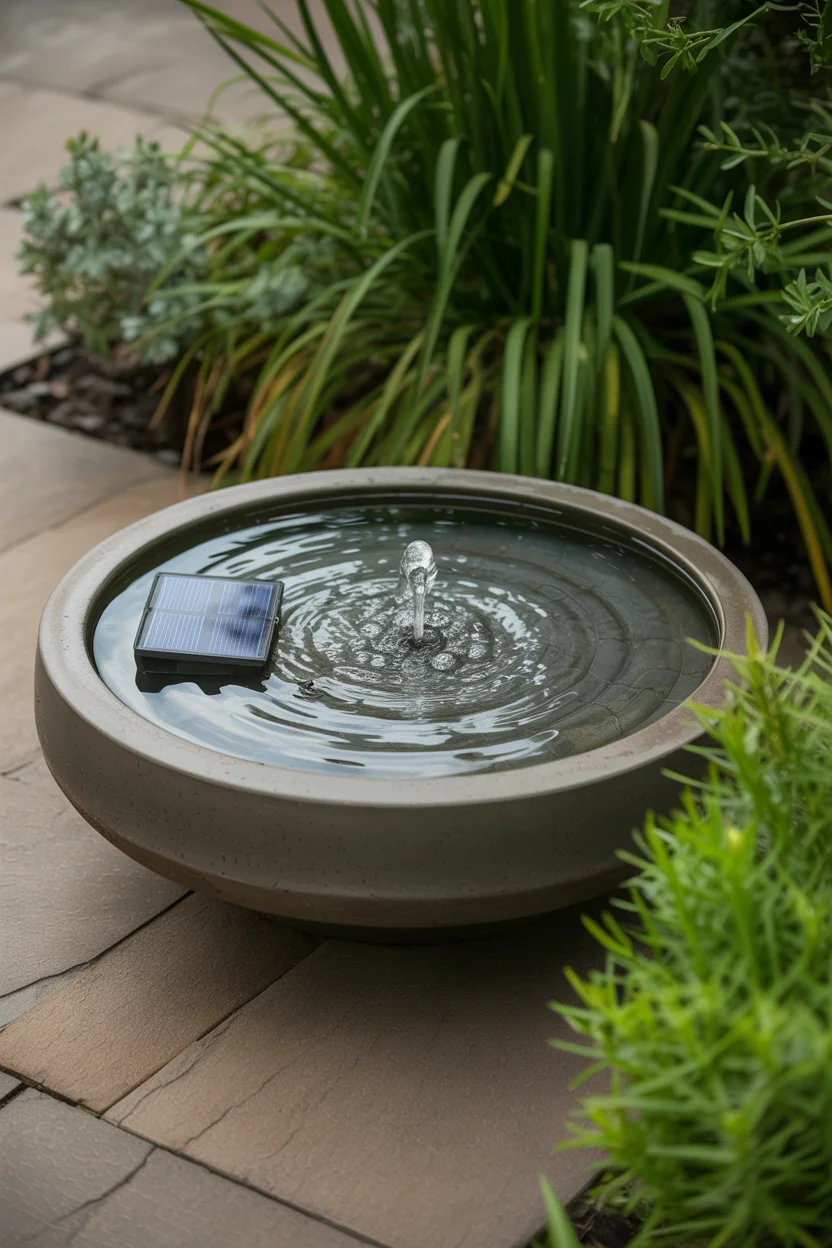
Sustainable bird bath ideas incorporate solar technology for water movement without electrical costs or wiring. Small solar fountains create the gentle bubbling that attracts birds while preventing mosquito breeding, running completely free after the initial equipment purchase. The subtle movement catches light beautifully, adding sparkle to garden beds. Birds are drawn to the sound and motion from remarkable distances, increasing the variety of species visiting your garden.
Position solar baths where panels receive 6-8 hours of direct sunlight for reliable operation. The fountain stops at night and on cloudy days, but this actually benefits birds by providing calm water for drinking when they don’t want the splash of active fountains. Many solar units are removable, allowing you to clean the bath thoroughly or bring pumps indoors during winter. This technology works in any garden style—choose fountain heads that match your aesthetic from modern jets to naturalistic bubblers. The eco-friendly operation aligns perfectly with the environmental values that drive wildlife gardening.
H2: Create a Rock Garden Integrated Bath
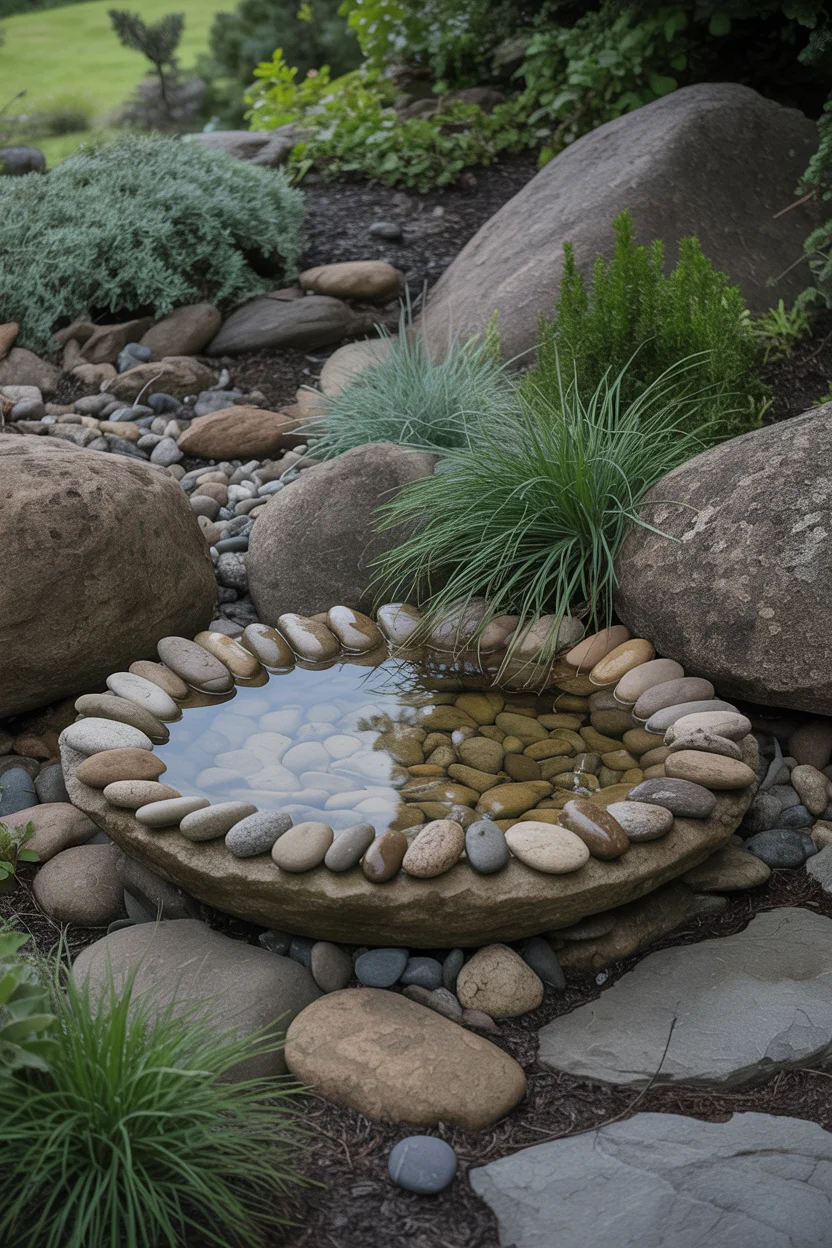
Naturalistic bird bath ideas blend into landscape design so thoroughly they appear as natural features rather than human additions. Lining a shallow depression with waterproof membrane and topping with smooth river rocks creates pools that mimic natural water sources. The integration into existing rock gardens makes the bath feel discovered rather than installed, appealing to birds and humans alike. This approach works beautifully in xeriscaping, alpine gardens, or any landscape using substantial stone elements.
Ensure proper drainage or add overflow routes for heavy rains. The rock surround provides excellent perching spots where birds can assess safety before entering water. Use smooth stones rather than rough gravel on the basin bottom—sharp edges can damage bird feet. This labor-intensive installation becomes a permanent garden feature that improves with age as moss grows on rocks and plants fill in naturally. Position where the rock work makes geological sense, perhaps as an outcropping destination or along a slope where water would naturally collect.
H2: Use a Glazed Ceramic Pedestal Bowl
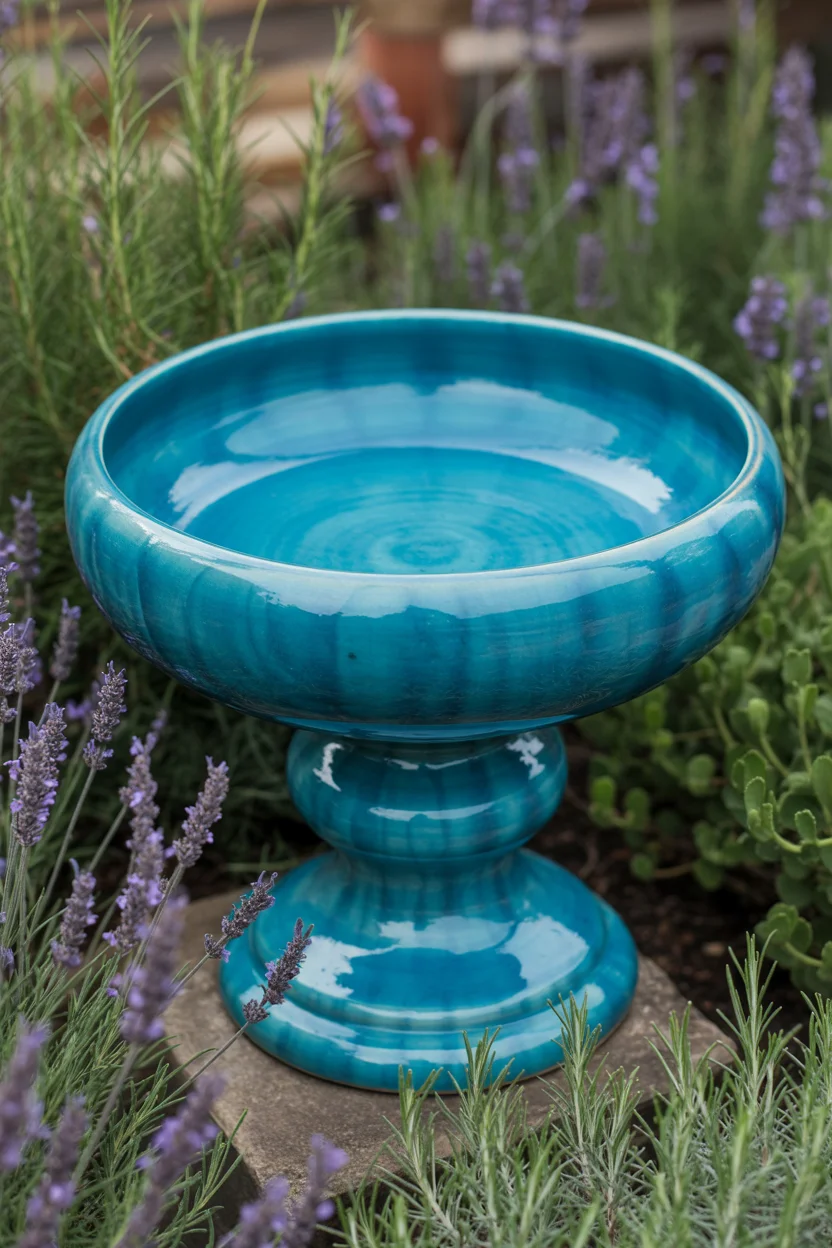
Colorful bird bath ideas introduce intentional accent colors that coordinate with planting schemes. Glazed ceramic baths in bold colors—cobalt blue, turquoise, sunny yellow, or terracotta red—become garden jewelry that brightens beds. The smooth glazed surface is easy to clean and doesn’t absorb water or develop algae as readily as porous materials. Choose colors that either complement or contrast with surrounding flowers for maximum impact.
Glazed ceramics work beautifully in Mediterranean, cottage, or eclectic gardens where color is embraced rather than restrained. Ensure the glaze is frost-proof if you live in cold climates, or bring decorative bowls indoors during winter and substitute inexpensive alternatives during freezing months. The substantial weight of quality ceramic prevents tipping but makes moving for cleaning more challenging—position on sturdy bases at comfortable working height. This style lets you change garden focal points seasonally by swapping bowl colors, refreshing the landscape without replacing plants.
H2: Install a Deck-Mounted Rail Bath
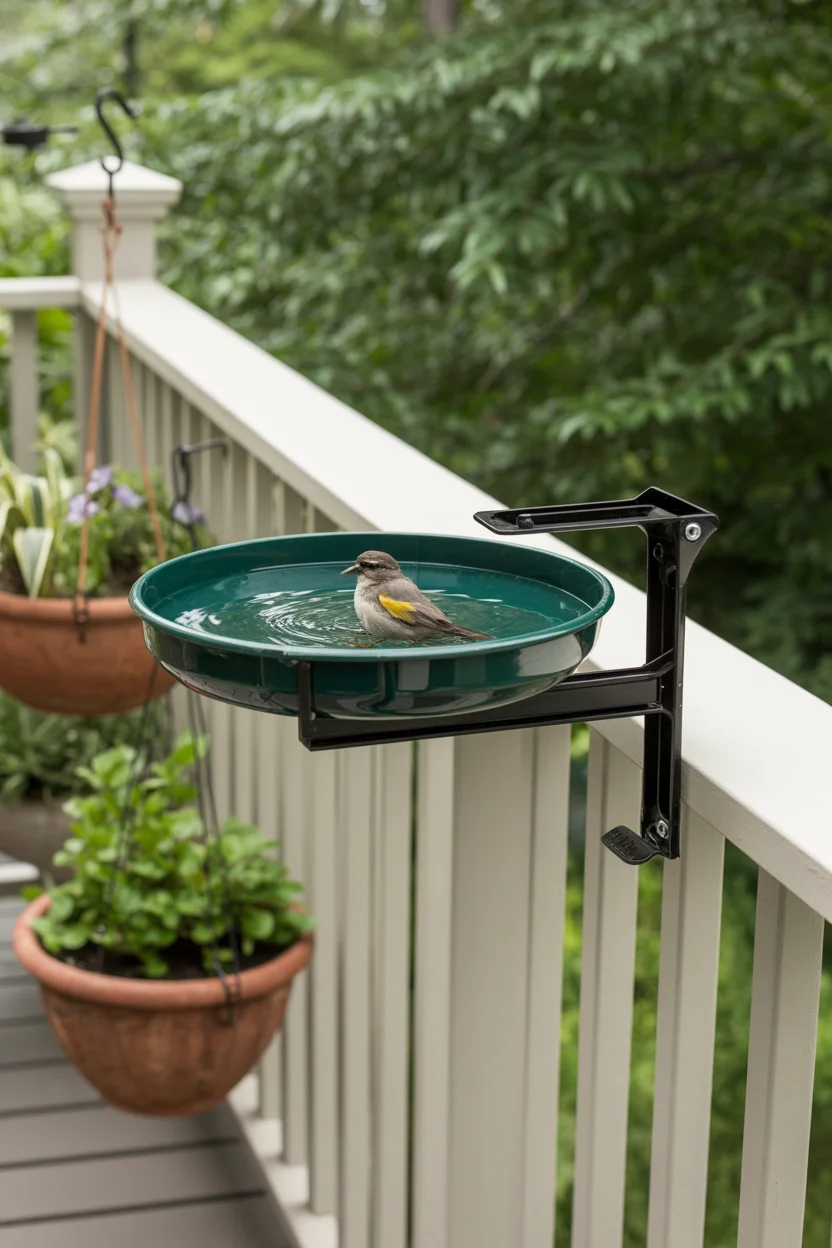
Space-saving bird bath ideas allow apartment and condo dwellers to enjoy bird activity despite lacking ground-level gardens. Deck rail baths clamp securely to standard railings, bringing water sources to elevated outdoor spaces where birds are already attracted to container gardens and hanging baskets. The compact size suits small balconies without consuming precious floor space. This innovation extends wildlife gardening to vertical living, proving you don’t need acreage to support birds.
Choose models with secure mounting systems that withstand wind without tipping. The elevation provides excellent viewing from indoor spaces and makes cats or other predators less threatening. Position where water won’t drip onto lower balconies or entry areas. Pair with rail-mounted planters containing bird-friendly flowers for a complete wildlife habitat. The accessibility makes cleaning and refilling convenient—important since these small basins need frequent attention. This approach works for urban gardeners, those with mobility limitations who find ground-level baths difficult, or anyone wanting to bring bird activity closer to primary living spaces.
H2: Design a Formal Four-Basin Layout
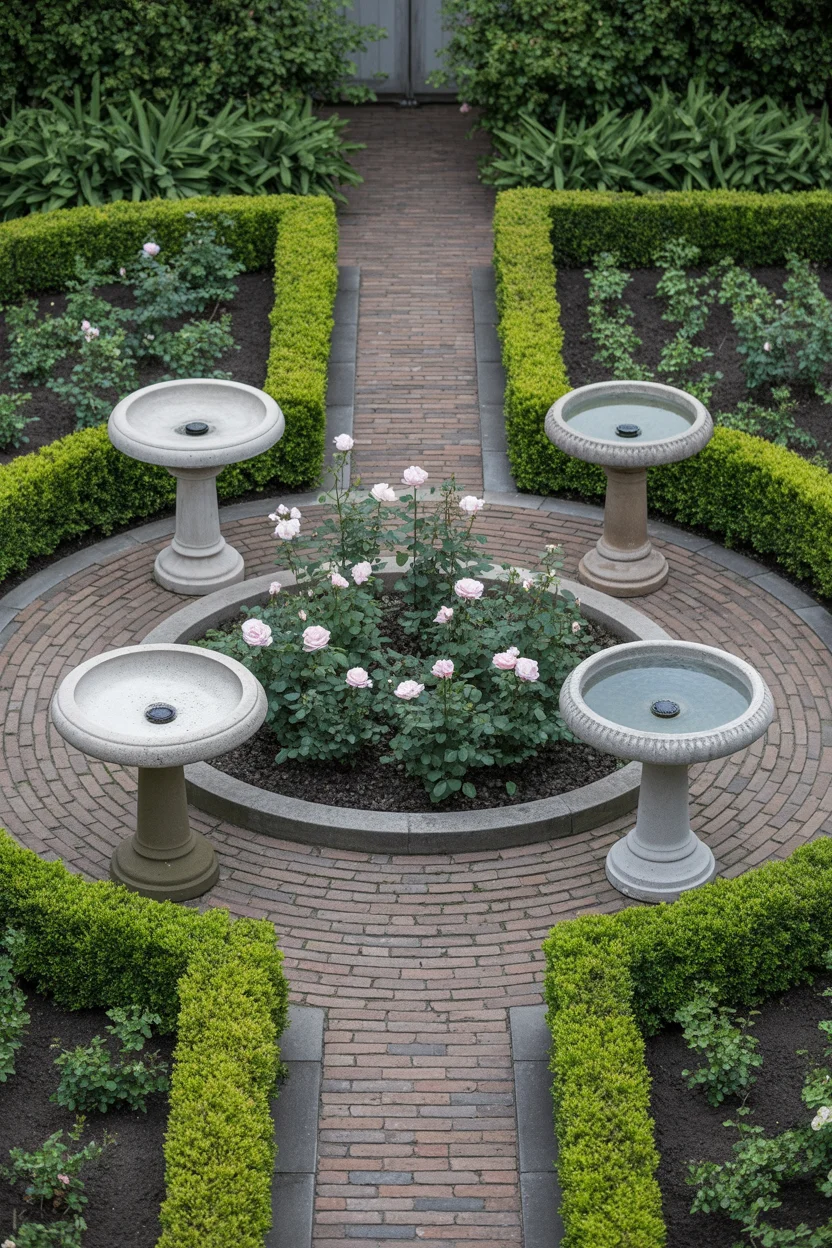
Traditional bird bath ideas honor classical garden design principles through symmetry and repetition. Multiple identical baths positioned formally create rhythm and balance in estate-style gardens. The repeated elements guide movement through the space while the symmetry feels timeless and elegant. This approach requires adequate space—smaller gardens feel overwhelmed by multiple substantial features—but creates breathtaking impact in larger landscapes where formality is desired.
Maintain the baths identically for maximum effect—same water levels, same cleanliness, perhaps the same floating flowers in each. The formality works best in traditional, French, or English garden styles where manicured perfection is the goal. Surround with equally formal elements like clipped hedges, standard roses, or geometric bedding plants. While this requires more maintenance than single baths, the dramatic effect creates special-occasion garden experiences. Consider this layout for front yards where curb appeal benefits from obvious design investment, or in walled gardens where formal bones provide structure for softer perennial plantings.
H2: Incorporate a Bamboo Spout and Basin
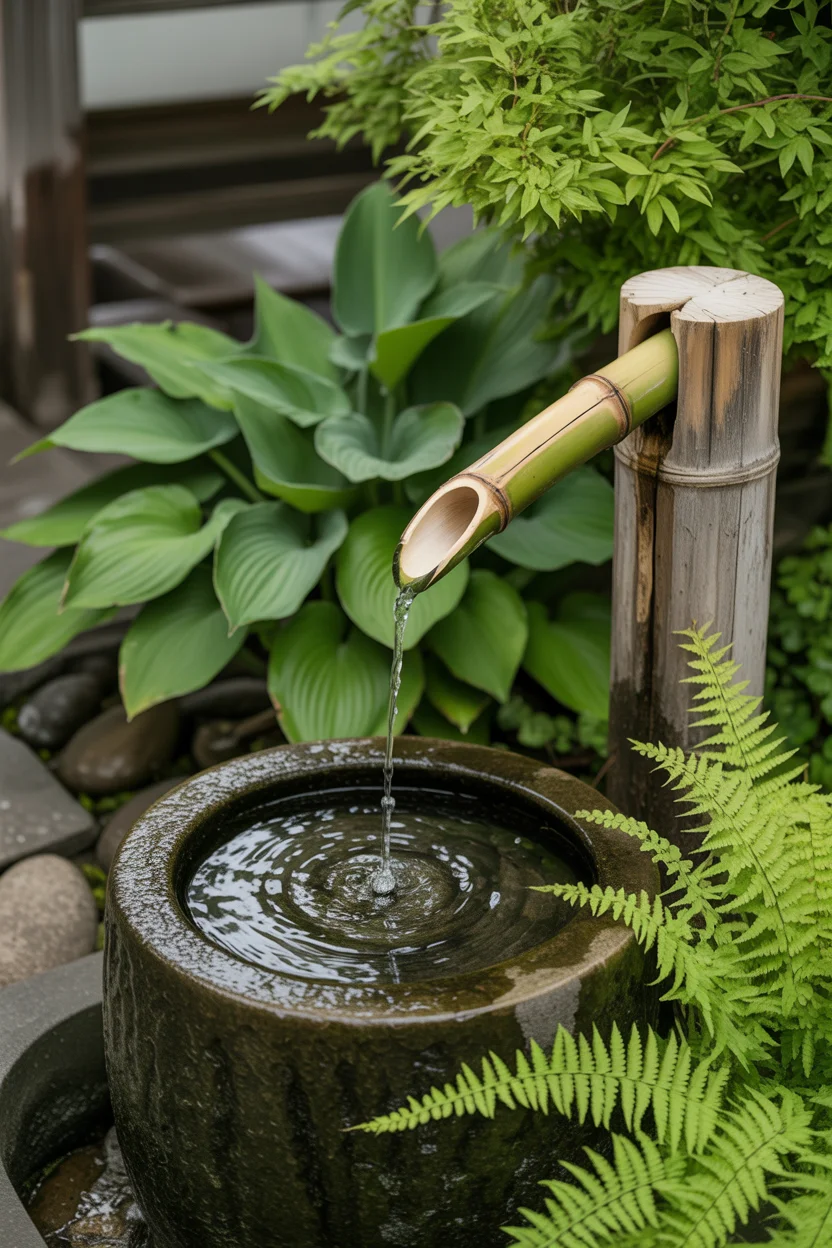
Zen-inspired bird bath ideas create contemplative spaces while serving wildlife. Bamboo spouts directing water into stone basins reference traditional Japanese garden elements while providing the movement birds prefer. The natural materials age beautifully, developing silvery patina on bamboo and moss on stones. The minimalist aesthetic and gentle water sounds create meditation-worthy garden corners that benefit humans as much as birds.
Install these features in shade or partial shade gardens where the quiet atmosphere suits contemplative design. The water source can be recirculating with hidden pumps, or connect to slow-drip irrigation systems for continuous fresh water. This style requires commitment to ongoing Japanese aesthetic—surround with appropriate plants like bamboo, Japanese maples, hostas, and mosses rather than mixing with incongruous cottage flowers. The restraint and naturalism create powerful garden moments that prove more isn’t always better. Position where you’ll hear the water from meditation benches or viewing areas.
H2: Create a Shallow Stream Bed Basin
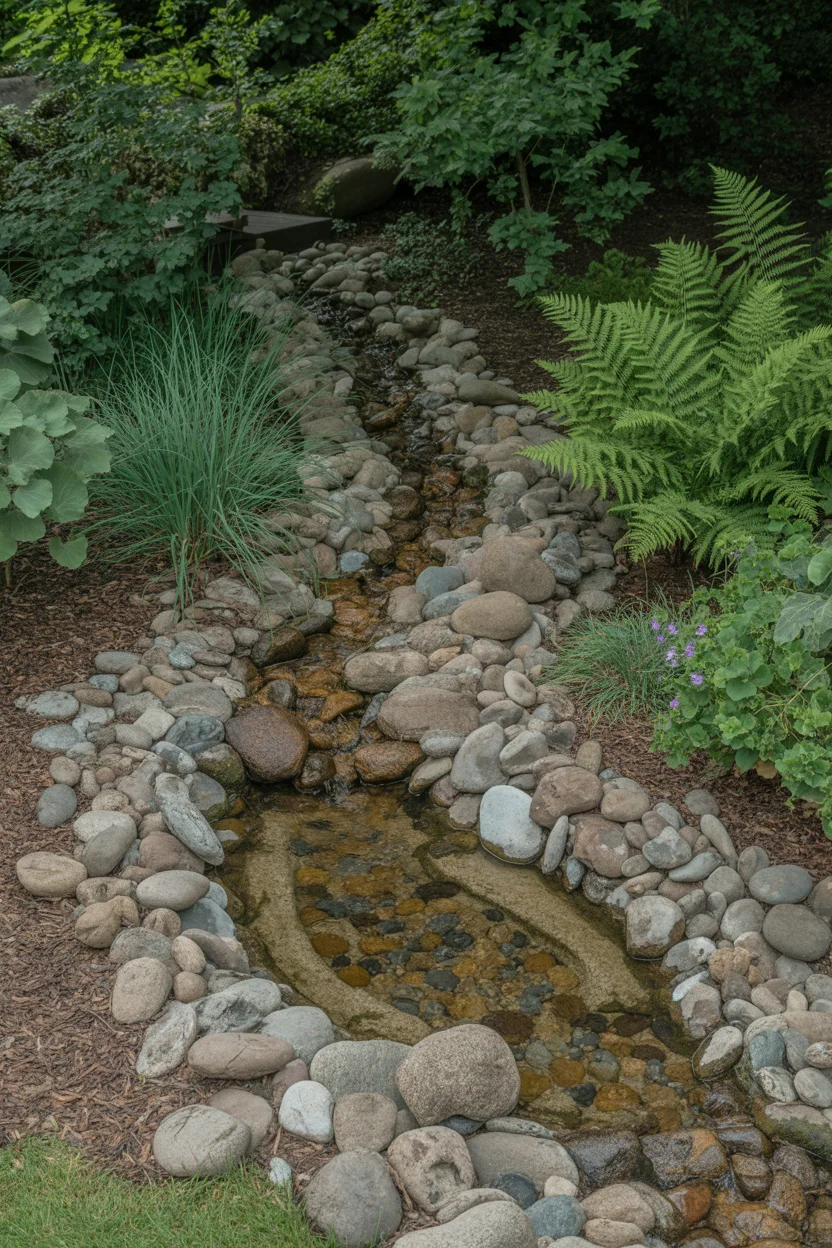
Naturalistic bird bath ideas that mimic streams attract species that might avoid traditional basins. Creating a shallow rock-lined channel with slow-moving water provides the stream conditions many birds instinctively seek. The gradual slopes and varied depths accommodate different species from tiny warblers to larger jays. The natural appearance integrates beautifully into woodland gardens, native plantings, or any landscape aiming for naturalistic rather than formal styling.
This installation requires more planning than basin baths—you’ll need pond liner, a recirculating pump system, and careful grading to create gentle water flow. Position in naturally low areas where streams would logically form, perhaps leading from downspouts or rain gardens. The rocky edges provide perching and wading spots while plants along the margins offer security. This substantial feature becomes a garden destination that attracts not just birds but butterflies, beneficial insects, and human observers. Maintain clean water through filtration or frequent flushing since shallow moving water can accumulate debris.
H2: Use Hypertufa Handcrafted Bowls
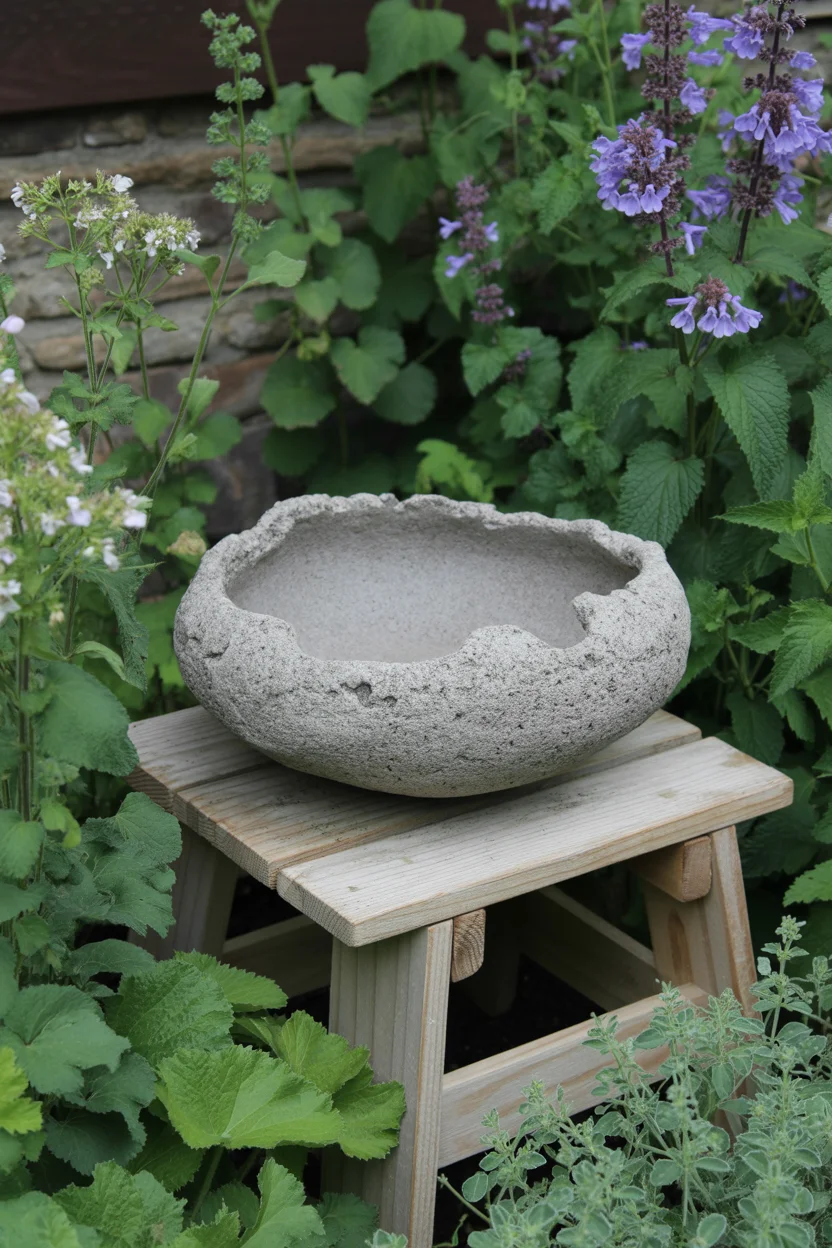
DIY bird bath ideas using hypertufa combine artistic expression with functionality. This concrete-based material can be molded into custom shapes and sizes, developing moss and lichen over time that creates genuinely aged appearance. The porous texture mimics natural stone at a fraction of the cost while being lighter and easier to move. Making hypertufa bowls is an accessible project requiring just cement, peat moss, perlite, and molds.
The rough, organic texture suits cottage, rustic, and naturalistic gardens where machine-perfect finishes feel wrong. Seal the interior with non-toxic sealer to reduce porosity and ease cleaning while leaving the exterior unsealed to encourage moss development. The handcrafted nature means each bowl is unique—embrace irregularities and asymmetry as artisan characteristics. Position on simple stands or pedestals that don’t compete with the bowl’s texture. This project satisfies creative impulses while producing genuinely functional garden features. The aging process means your bath improves yearly, developing the character that new purchases lack.
H2: Install a Copper Verdigris Basin
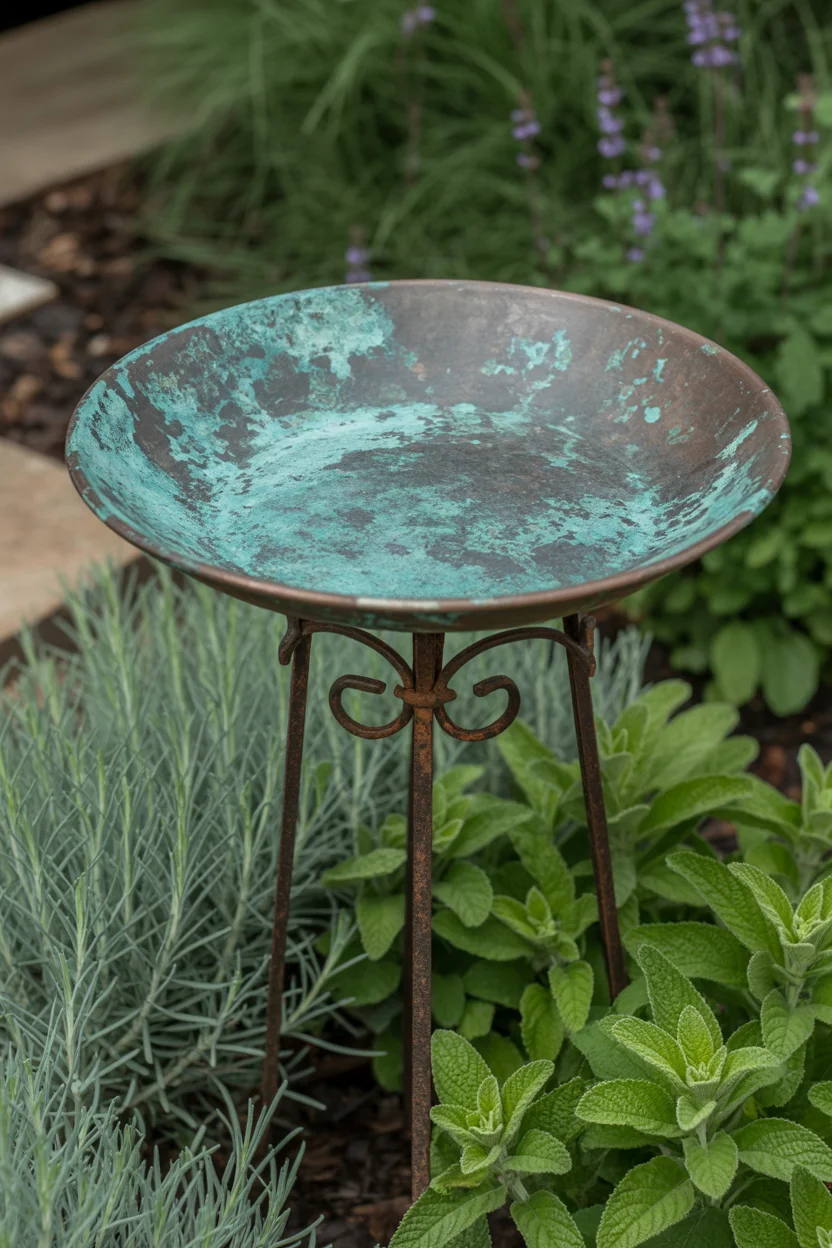
Aged metal bird bath ideas provide color and texture through natural oxidation processes. Copper develops stunning verdigris patina when exposed to weather, transforming from bright penny-colored new installations into blue-green antique-looking features over months and years. This living finish constantly evolves, ensuring your bath never looks identical from season to season. The antimicrobial properties of copper naturally discourage algae growth, keeping water cleaner longer than other materials.
New copper baths are investment pieces, but the durability justifies the cost—properly maintained copper lasts generations. The evolving patina suits cottage, formal, and eclectic gardens where aged materials add authenticity. Pair with iron stands for traditional looks or modern geometric bases for contemporary settings. The blue-green coloring complements silver foliage plants beautifully and contrasts boldly with burgundy or purple flowers. Some gardeners accelerate patina development using vinegar and salt solutions, while others prefer natural aging. Either way, copper baths become more beautiful with time rather than deteriorating—a rare quality in garden features.
H2: Create a Beach Stone Gradient Bath
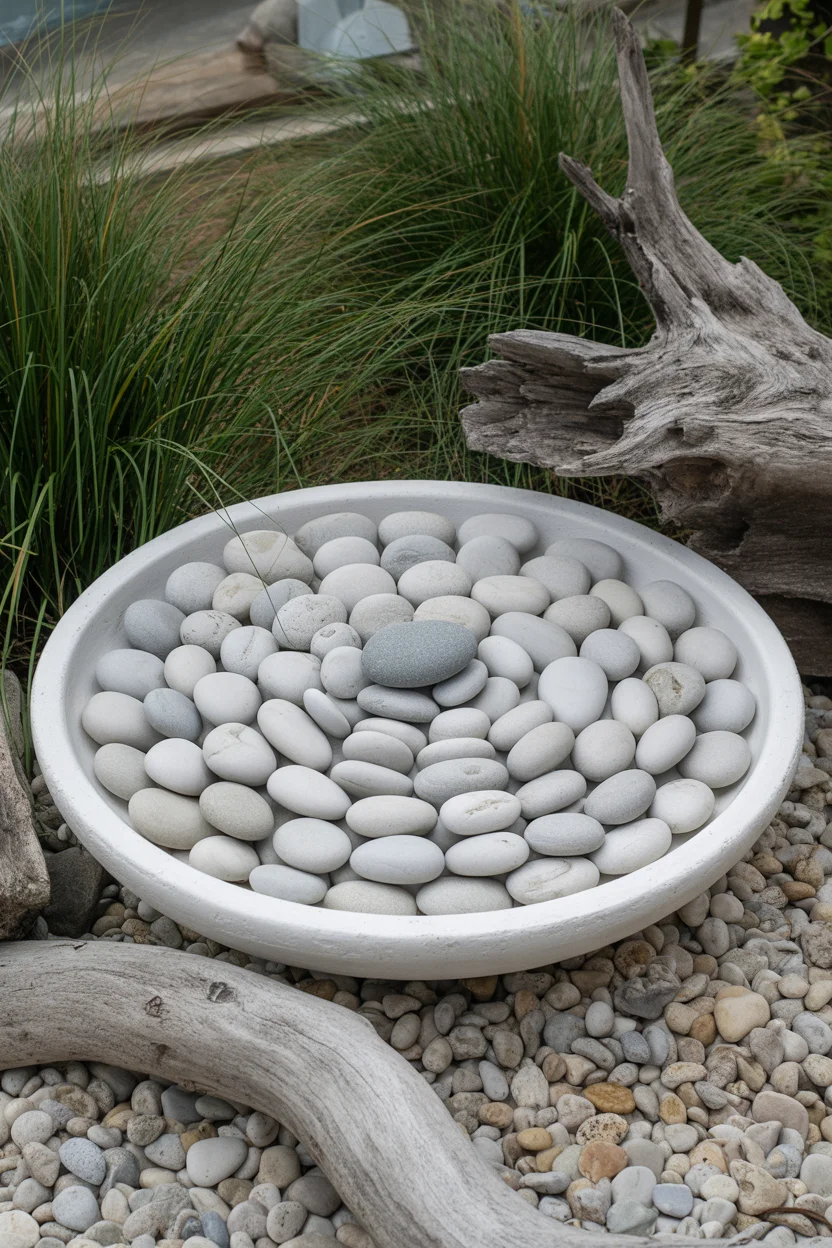
Coastal bird bath ideas bring beach aesthetics to gardens regardless of proximity to water. Lining basins with smooth beach stones in graduated sizes creates attractive, functional surfaces that provide excellent footing while looking naturally collected. The stones also create varying depths as they slope toward the center, accommodating different bird sizes. White, gray, and tan stones maintain the neutral palette that coastal design favors while adding substantial texture.
Source stones ethically—many beaches prohibit collection, but landscape supply companies sell river rocks and beach pebbles. Arrange larger stones around the perimeter, graduating to smaller pebbles in the center, using thin-set mortar to secure them permanently. This prevents birds from displacing stones during vigorous bathing. The textured surface is less slippery than smooth basins, making birds more comfortable and confident. This style suits coastal gardens obviously, but also works in contemporary and naturalistic settings where organic materials feel appropriate. Pair with weathered wood, grasses, and plants with silvery or blue-green foliage for complete coastal aesthetic.
H2: Design a Stacked Stone Vessel Bath
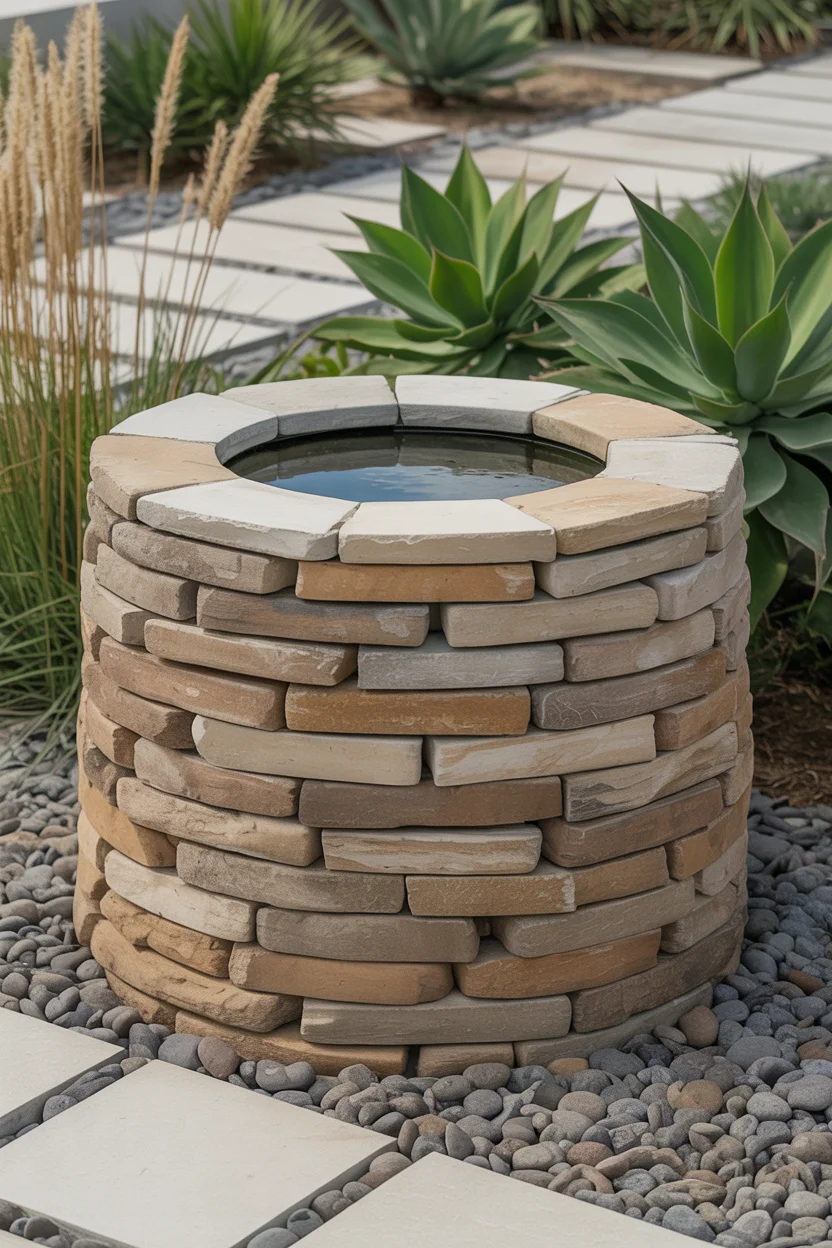
Architectural bird bath ideas using stacked stone create dramatic vertical elements in garden beds. Building vessels from flat stacking stones showcases both natural materials and construction techniques, resulting in substantial features with textural beauty. The dry-stack method allows gradual settling and adjustment while creating the dimensional interest that flat pedestal baths lack. A waterproof liner or bowl inserted in the top holds water while the stone structure provides visual impact.
This DIY project requires patience but minimal skill—the stone weight creates stability without mortar. Choose flat flagstone or fieldstone pieces in colors that complement your garden palette. The substantial presence works in larger gardens where bold features anchor planting beds. This style bridges rustic and contemporary depending on stone choice and surrounding plantings—irregular fieldstone reads rustic, cut flagstone more modern. The height (typically 16-24 inches) brings the bath to comfortable bird height while creating strong vertical garden elements. Surround with proportionally scaled plants that don’t hide your stone work but provide the setting that prevents the bath from appearing dropped randomly into the landscape.
H2: Incorporate a Living Roof Planted Bath
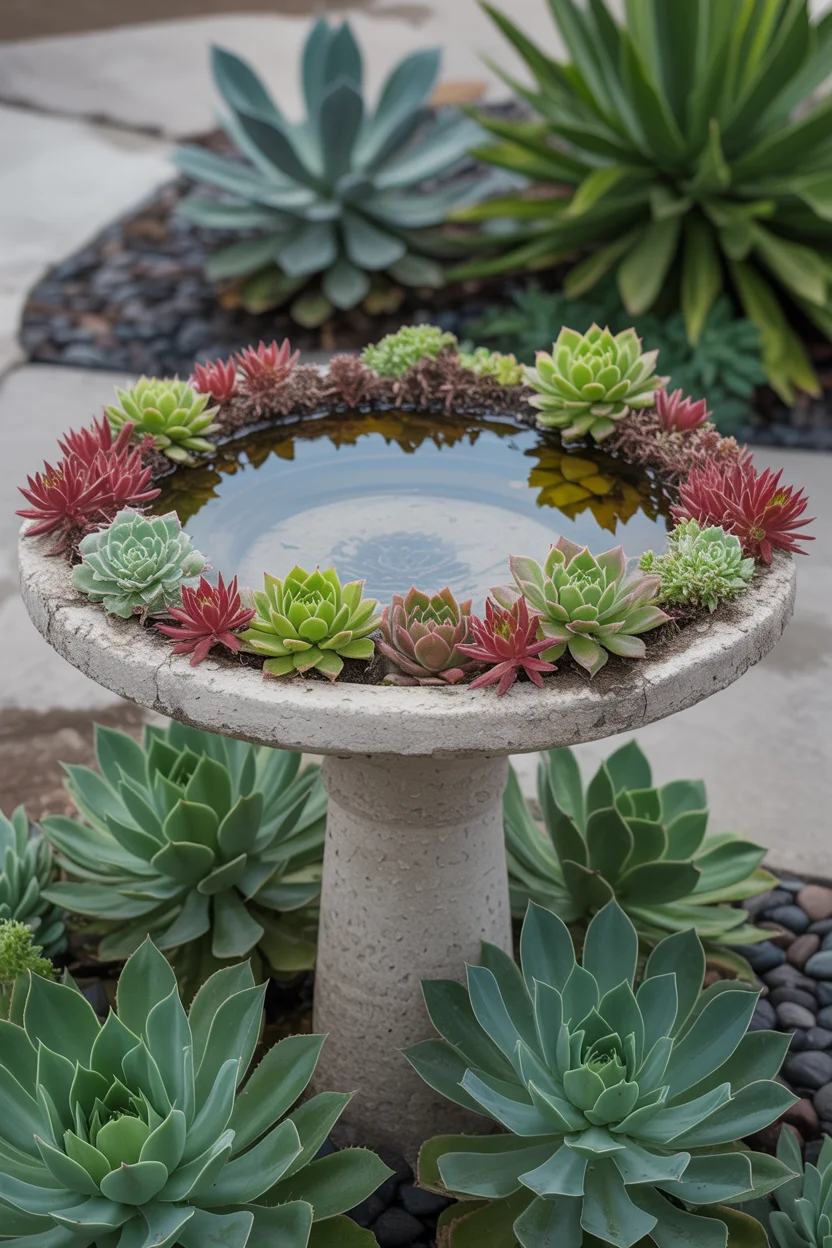
Innovative bird bath ideas include planted rims that blend water features with container gardening. Wide-rimmed baths with soil-filled channels support succulent plantings that surround the central water basin. The living frame creates the illusion of water emerging from planted landscapes while the shallow-rooted succulents thrive in minimal soil. This approach works beautifully in water-wise gardens where every element should serve multiple purposes and demonstrate environmental consciousness.
Choose drought-tolerant plants for the rim since the location receives regular water splashing but shouldn’t stay soggy. Sedums, sempervivums, and other succulents handle this perfectly while requiring minimal care. The planted rim attracts butterflies and beneficial insects in addition to birds, maximizing wildlife support. This style suits contemporary, xeriscape, and cottage gardens where creativity and sustainability align. Ensure the bath base is substantial enough to support soil weight, and position where you can easily access the central basin for cleaning without damaging plants. The living rim changes seasonally as plants bloom, providing evolving visual interest.
H2: Install a Rain Chain Collection Basin
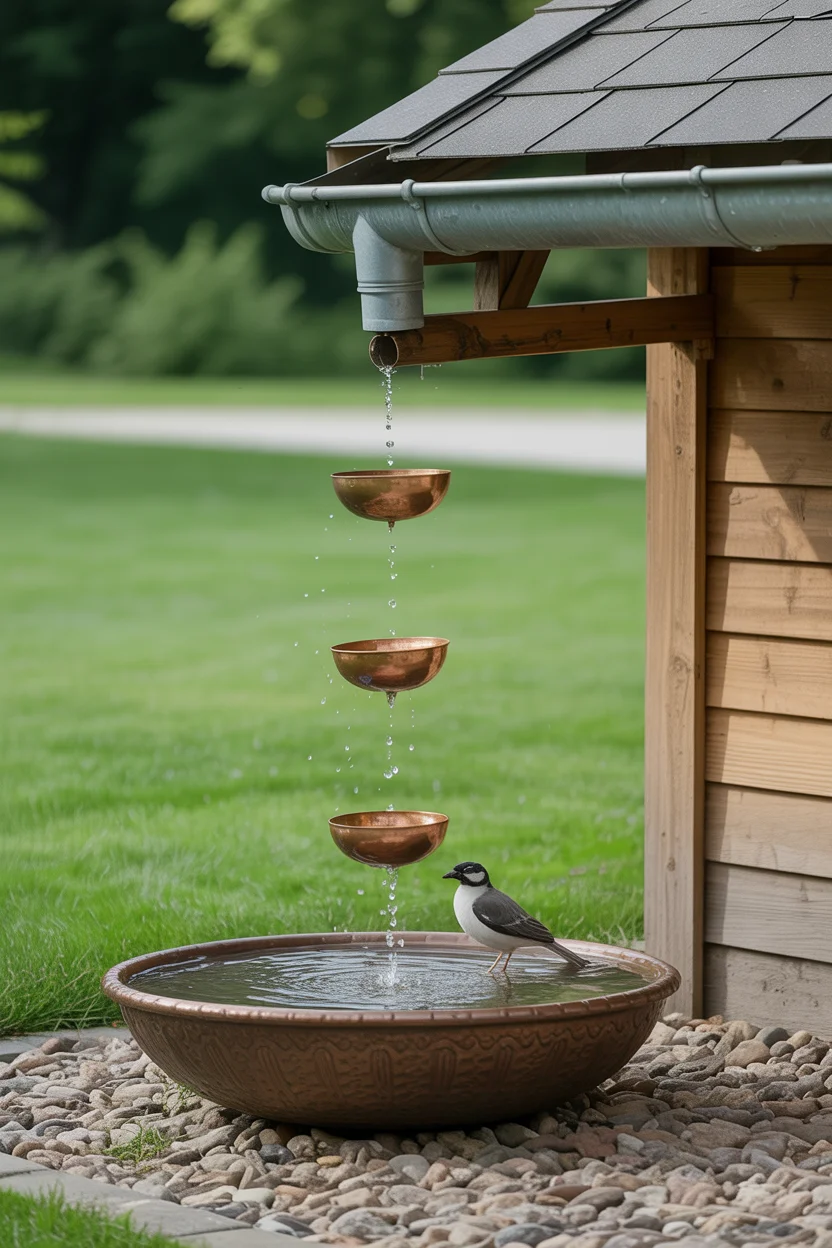
Functional bird bath ideas that harvest rainwater demonstrate environmental stewardship while serving birds. Positioning decorative basins beneath rain chains creates water features during storms and bird baths during dry periods. Rain chains are beautiful alternatives to downspouts that guide roof runoff through linked cups or chains, and terminating them in substantial basins makes the water useful rather than purely decorative. Birds benefit from fresh rainwater while you reduce runoff and erosion.
Choose basins large enough to handle your roof’s water volume during typical rains—generally 20-30 inches for standard residential downspouts. Surround with gravel or create overflow routes for heavy rains that exceed basin capacity. The dual purpose means placement must satisfy both drainage needs and bird viewing desires—often near building corners or along pathways. This approach works in any garden style depending on rain chain and basin selection—contemporary copper for modern homes, rustic iron for farmhouses, decorative ceramic for cottage styles. The basin provides year-round function in rainy climates while creating dynamic storm experiences as water cascades down chains.
Conclusion
These 24 bird bath ideas prove that supporting wildlife doesn’t mean sacrificing garden aesthetics. The perfect bird bath enhances your landscape design while meeting birds’ basic needs for shallow, clean water. Consider your garden’s style, available space, and maintenance commitment when selecting from these options. Start with proper positioning and appropriate depth, then let your creative preferences guide material and style choices. Your garden will reward you with increased bird activity and a complete, cohesive landscape.

Join The Discussion