
Introduction
Retro kitchens are having the most deserved comeback in interior design right now — and honestly, they never should have left. The bold color choices, chrome accents, checkerboard floors, and vintage appliance silhouettes of mid-century American kitchens created spaces with more personality than anything being produced today. These 25 retro kitchen ideas prove that looking backward is sometimes the most forward-thinking design decision available. Pinterest agrees completely — and so will everyone who walks into your home.
1. The Classic 1950s Diner Kitchen With Checkerboard Floors and Chrome Everything
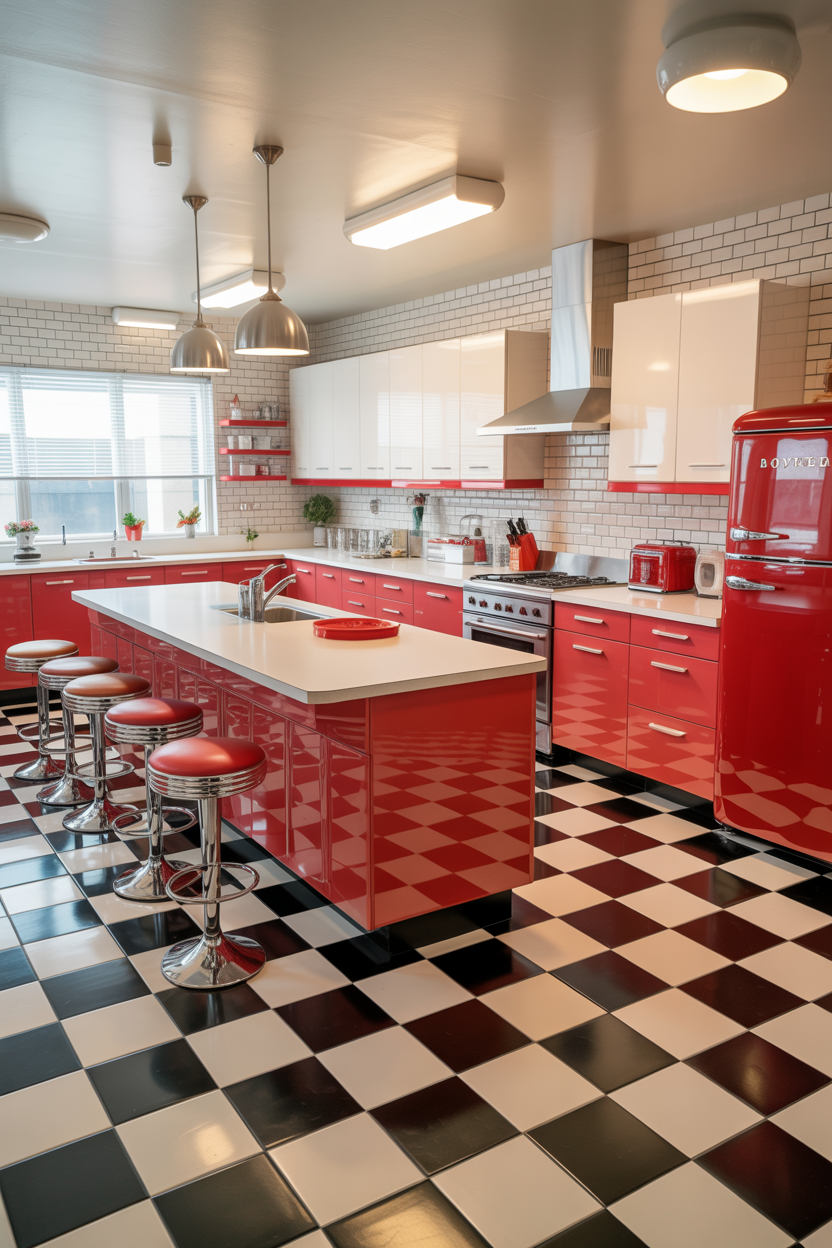
Nothing communicates retro kitchen design more immediately and completely than the 1950s American diner aesthetic — it’s a visual language so culturally embedded that the checkerboard floor alone triggers the entire associated atmosphere before any other element registers. Black and white checkerboard vinyl flooring is the retro kitchen idea’s single most powerful single-surface decision, instantly establishing the temporal context that every subsequent design choice then reinforces or elaborates. Cherry red lower cabinetry against white uppers creates the bold two-tone combination that defines the era’s domestic kitchen confidence.
Polished chrome hardware and appliances are the metallic choice that specifically belongs to this retro direction — the high-shine reflective quality of chrome creates the optimistic, forward-looking gleam that characterized 1950s American design thinking across every consumer product category simultaneously. A vintage-style red refrigerator positioned as the kitchen’s primary statement appliance commits the entire room to its retro identity with the kind of unambiguous enthusiasm that makes kitchens genuinely memorable. This retro kitchen idea belongs in homes where personality is prioritized over resale value — and in kitchens where cooking feels like a genuine celebration.
2. The Pastel Mint and White Retro Kitchen With Soft 1950s Charm
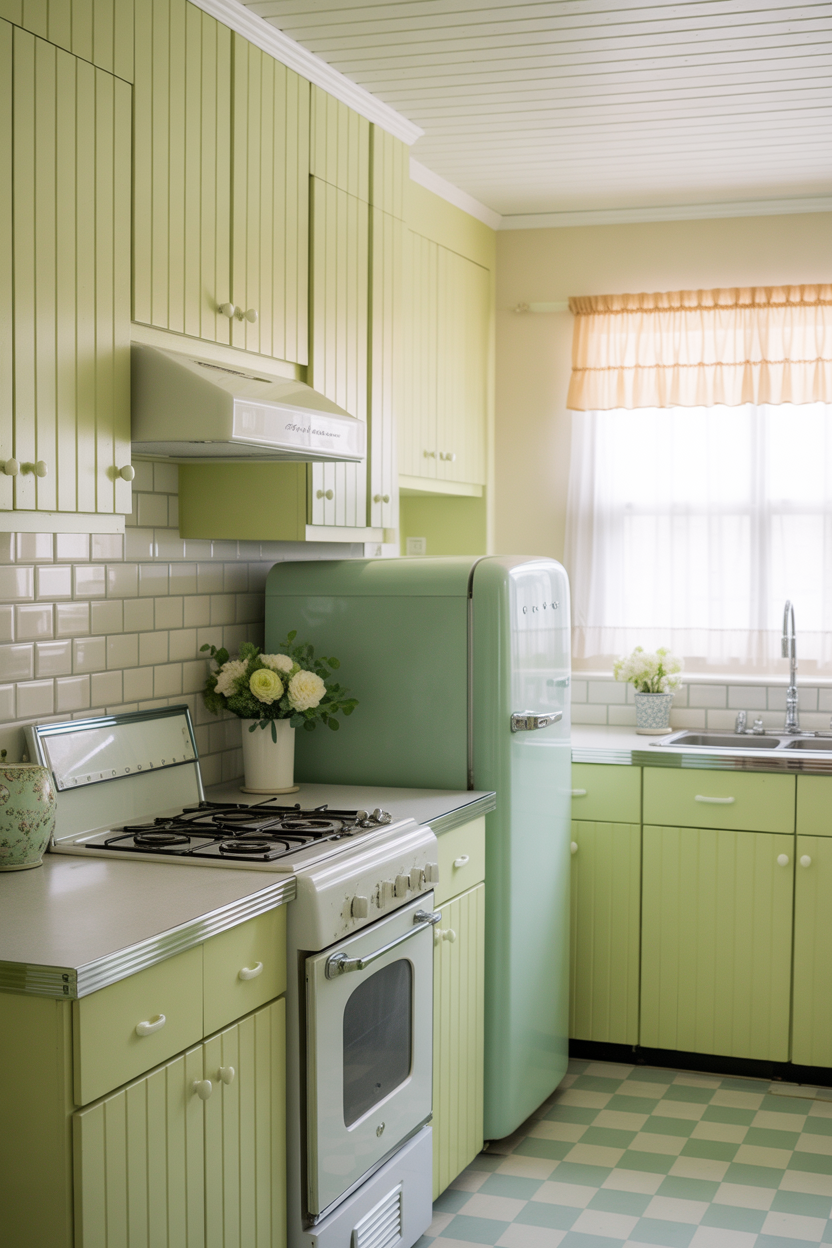
Pastel mint retro kitchens capture the softer, more domestic dimension of 1950s American kitchen design — the aesthetic developed specifically for women’s magazines of the era that presented kitchen spaces as places of genuine creative expression rather than simply functional necessity. Pale mint green cabinetry throughout creates an enveloping warmth that feels simultaneously vintage and completely fresh — the color’s grey-green undertones prevent it from reading as simply light green while maintaining the unmistakable period reference that makes it immediately recognizable as retro rather than contemporary.
White laminate countertops with chrome edge banding are the surface detail most specifically associated with authentic 1950s kitchen materiality — the chrome banding transforms a humble material into something that feels deliberately designed and period-correct in ways that stone or quartz countertops never could. Ruffled white café curtains at the window introduce the domestic textile detail that period photographs of 1950s kitchens consistently featured — they’re simultaneously functional privacy screens and expressions of the decorative sensibility that characterized mid-century American home culture. This retro kitchen idea rewards authentic period sourcing over contemporary approximation.
3. The Bold Turquoise Retro Kitchen That Feels Like a Havana Postcard
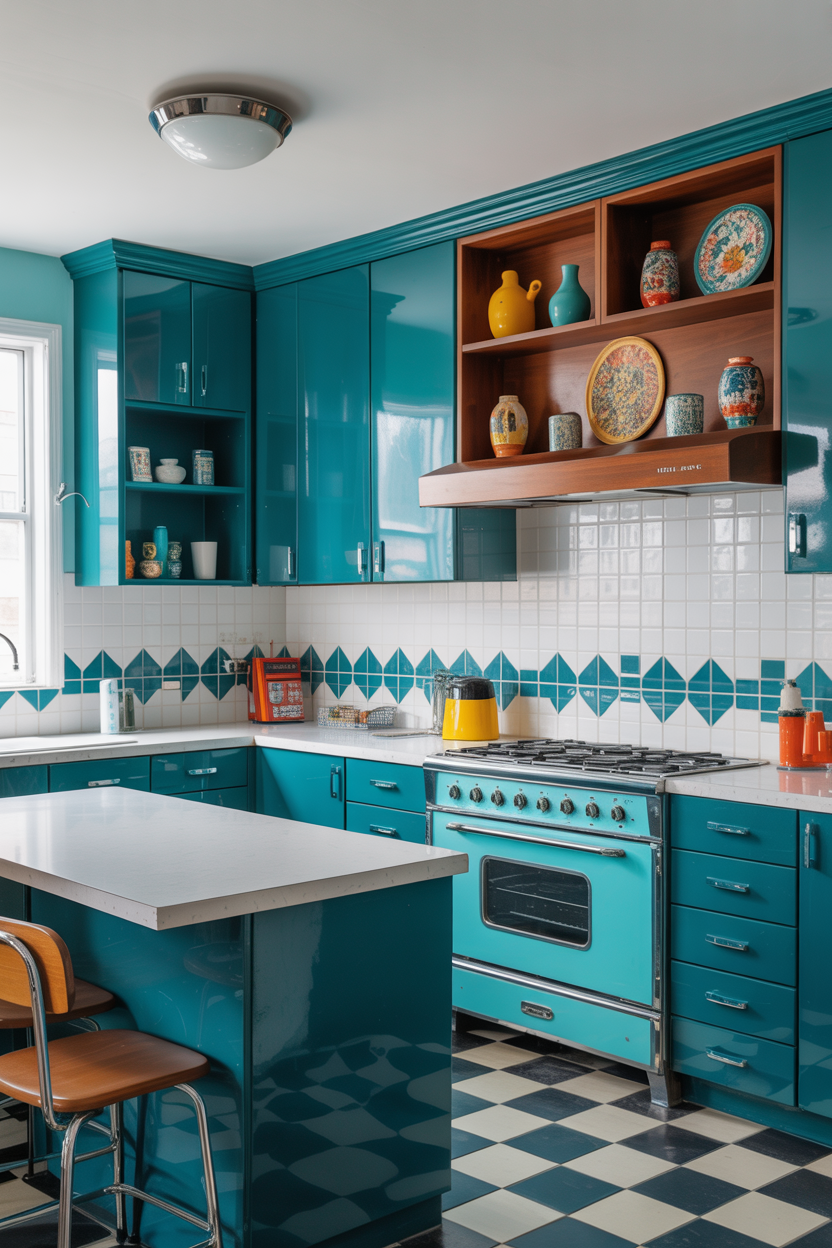
Deep turquoise retro kitchens draw from a broader mid-century design tradition than purely American sources — they reference the tropical modernism of Cuban and Caribbean design that applied the same optimistic color confidence of the 1950s to warmer climates and more vibrant cultural contexts. Deep turquoise cabinetry throughout creates a completely immersive color environment that transforms the kitchen into a genuinely atmospheric space rather than simply a boldly colored functional room. The color’s position between blue and green simultaneously creates freshness and warmth in remarkable equilibrium.
Vintage-style chrome bar stools at a white laminate island introduce the diner-counter seating arrangement that bridges domestic kitchen design and public dining culture — creating a social dynamic within the kitchen space that feels genuinely retro in its informality and genuine warmth. Warm wood open shelving displaying colorful vintage ceramics introduces the organic material counterpoint that prevents the chrome and turquoise combination from feeling too cool or industrially slick. This retro kitchen idea suits homeowners whose design philosophy genuinely embraces exuberance as a virtue rather than a problem requiring restraint.
4. The Avocado Green Retro Kitchen Celebrating 1970s Without Apology
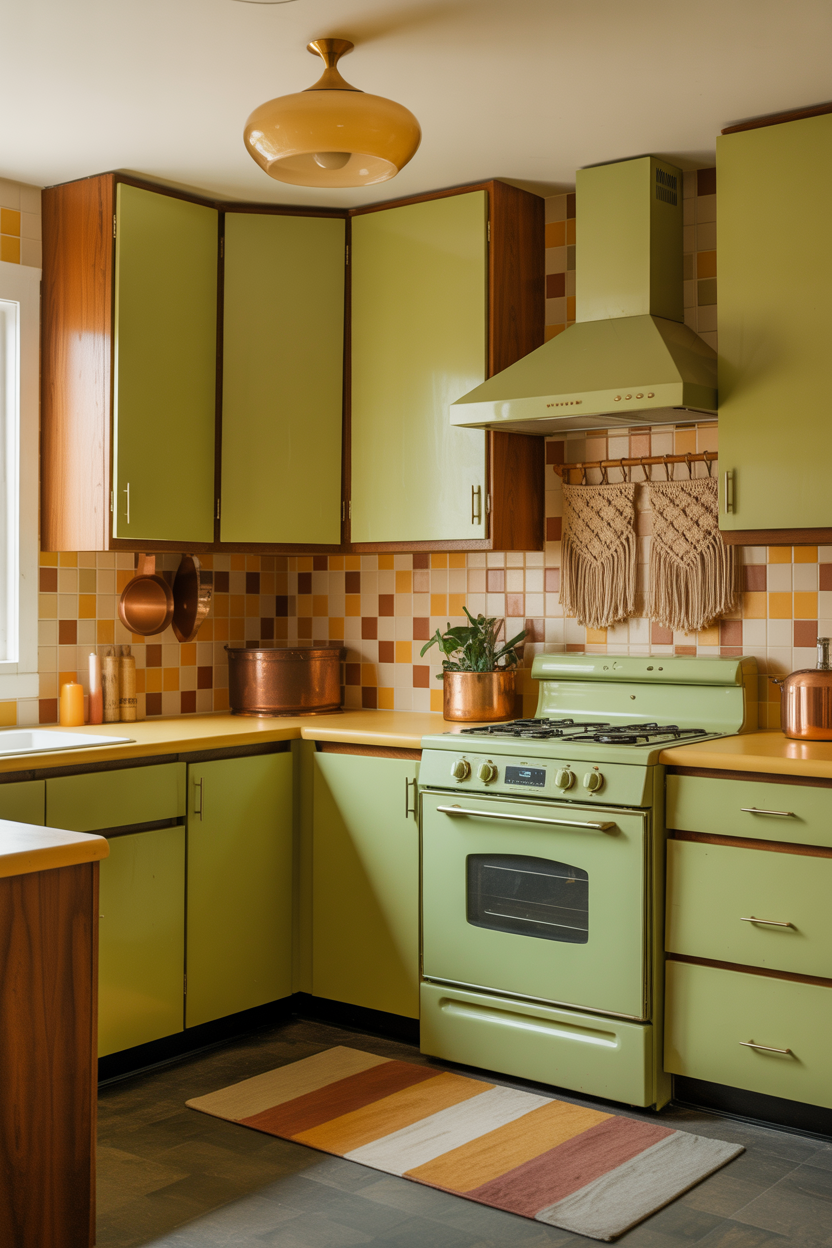
Avocado green retro kitchens are the design world’s most polarizing and simultaneously most fascinating direction — a color so specifically associated with a single decade that encountering it deployed with full intentionality creates an immediate and complex aesthetic experience. The 1970s kitchen palette of avocado green, harvest gold, and burnt orange was considered the height of contemporary domestic sophistication during its moment — and its rehabilitation as a deliberate retro design choice carries genuine wit and cultural self-awareness that arbitrary color choices never possess.
Harvest gold countertops alongside avocado green cabinetry create the specific chromatic combination that 1970s kitchen design catalogs presented as aspirational domestic luxury — seeing these colors together now produces a time-capsule effect so complete that the kitchen feels genuinely transported rather than simply styled. Macramé pot holders, hanging copper cookware, and warm amber lighting complete the decade’s material vocabulary with the same commitment to period authenticity that makes vintage clothing more compelling than contemporary approximations. This retro kitchen idea requires genuine enthusiasm for the 1970s aesthetic rather than ironic distance from it to succeed completely.
5. The Cherry Red and White Retro Kitchen With Rockabilly Energy
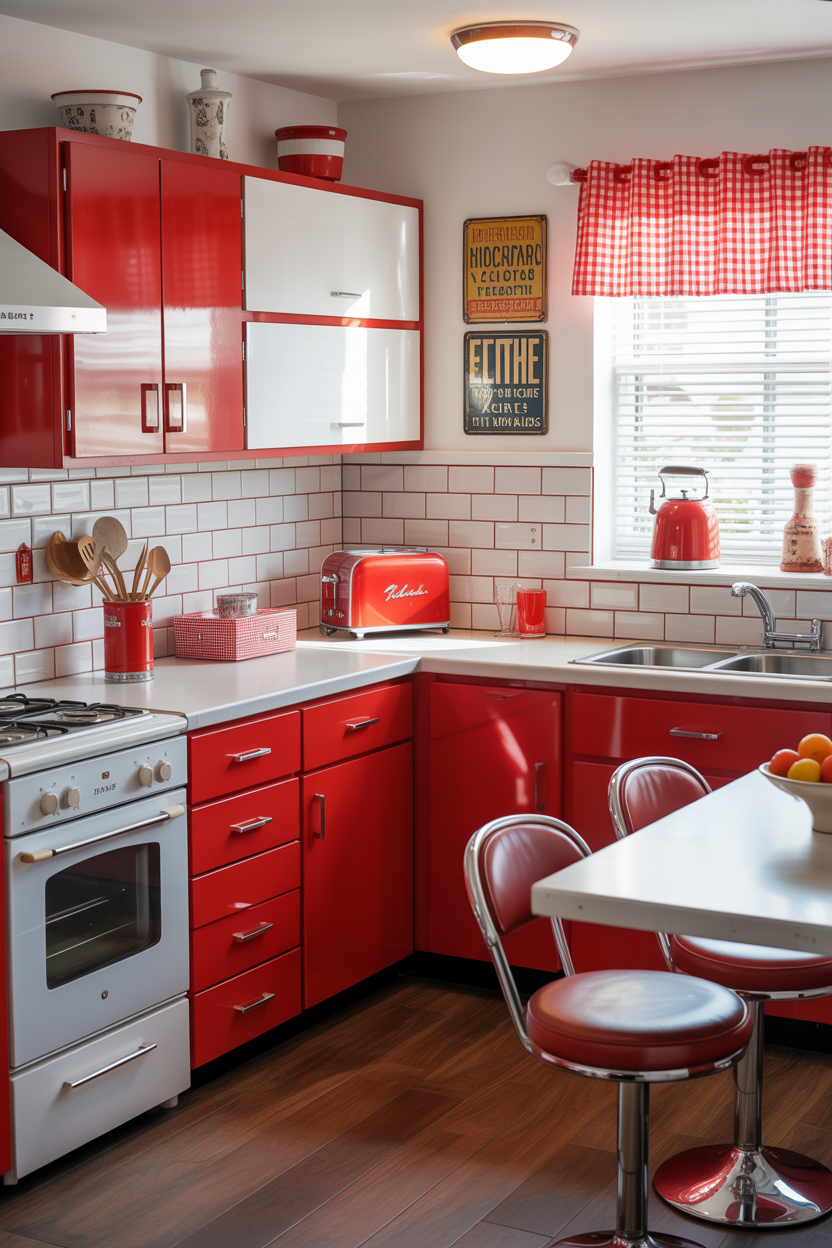
Cherry red and white retro kitchens channel the rockabilly dimension of 1950s American culture — the bold, slightly rebellious energy of the decade’s popular music translated into domestic space through color confidence and chrome enthusiasm. Cherry red lower cabinets against bright white uppers create the maximum contrast version of the 1950s two-tone kitchen formula — this isn’t a subtle retro nod but a full-commitment declaration of aesthetic allegiance to the decade’s most energetic design expressions.
Vintage tin signs as wall decoration introduce the commercial graphics dimension of 1950s American visual culture into the domestic kitchen context — they reference the roadside diners, soda fountains, and drive-in restaurants that shaped mid-century American popular culture alongside the domestic kitchen spaces of the same era. Red and white gingham window valances are the textile detail that adds domestic femininity to the rockabilly energy, creating a gender-fluid retro atmosphere that feels authentically of the period rather than stylistically simplified. Displayed retro small appliances in matching red continue the color story across every surface simultaneously.
6. The Powder Blue Retro Kitchen With 1960s Mod Sensibility
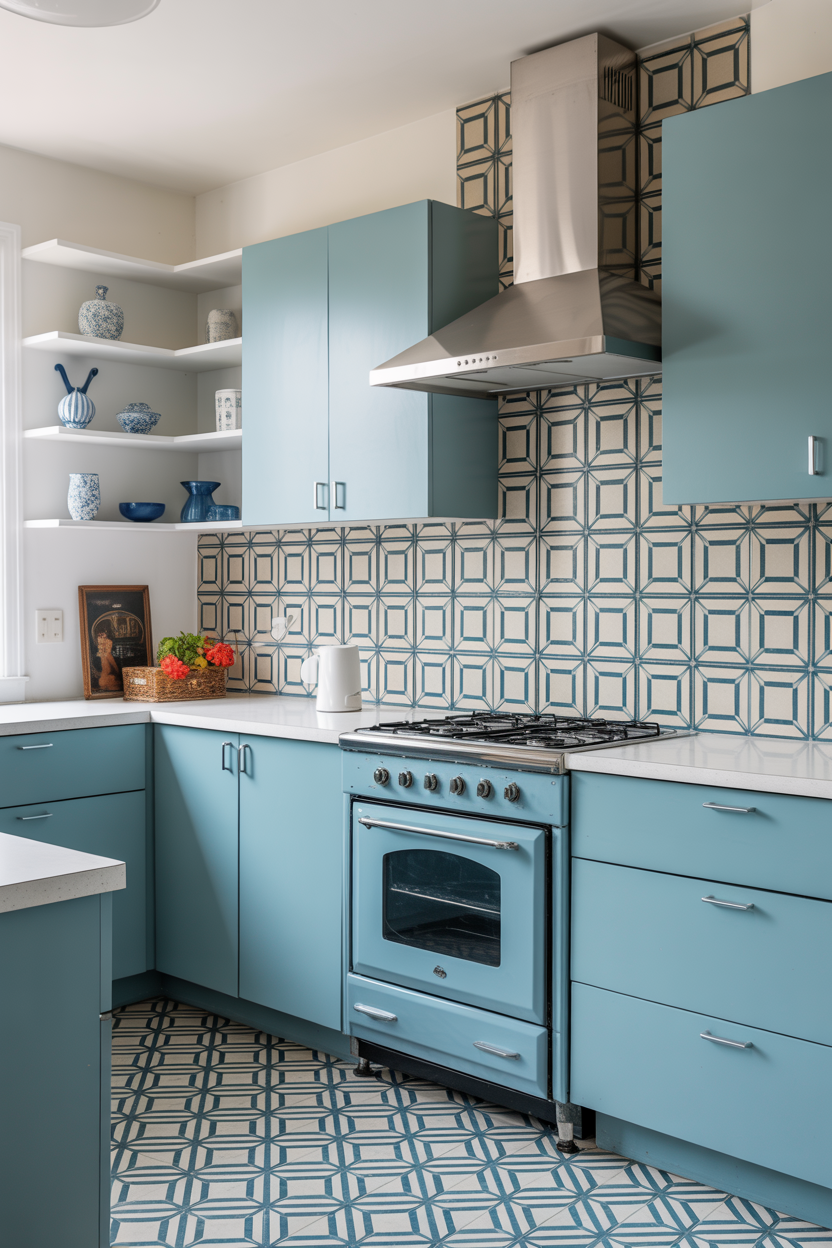
Powder blue 1960s mod retro kitchens occupy a more graphically sophisticated design territory than the warmer 1950s diner aesthetic — they reflect the decade’s shift from organic optimism toward geometric precision and cool chromatic restraint. Powder blue cabinetry in clean-lined 1960s profiles creates a kitchen architecture that feels genuinely designed rather than assembled — the profile’s relationship to the decade’s broader design language gives the cabinetry a period-specific character that contemporary shaker profiles never possess regardless of their color choice.
Geometric blue and white mod tile backsplashes are the surface detail that most directly references 1960s graphic design culture — the bold pattern vocabulary developed simultaneously in fashion, product design, and interior spaces during that decade. Op-art inspired geometric floor patterns extending the graphic language from vertical to horizontal surfaces create an immersive visual environment where the retro kitchen idea operates as a complete spatial design statement rather than a collection of individual vintage-referencing choices. This retro kitchen idea suits people with genuine appreciation for the decade’s design intelligence rather than simply its nostalgic associations.
7. The Harvest Gold and Brown Retro Kitchen With 1970s Warmth
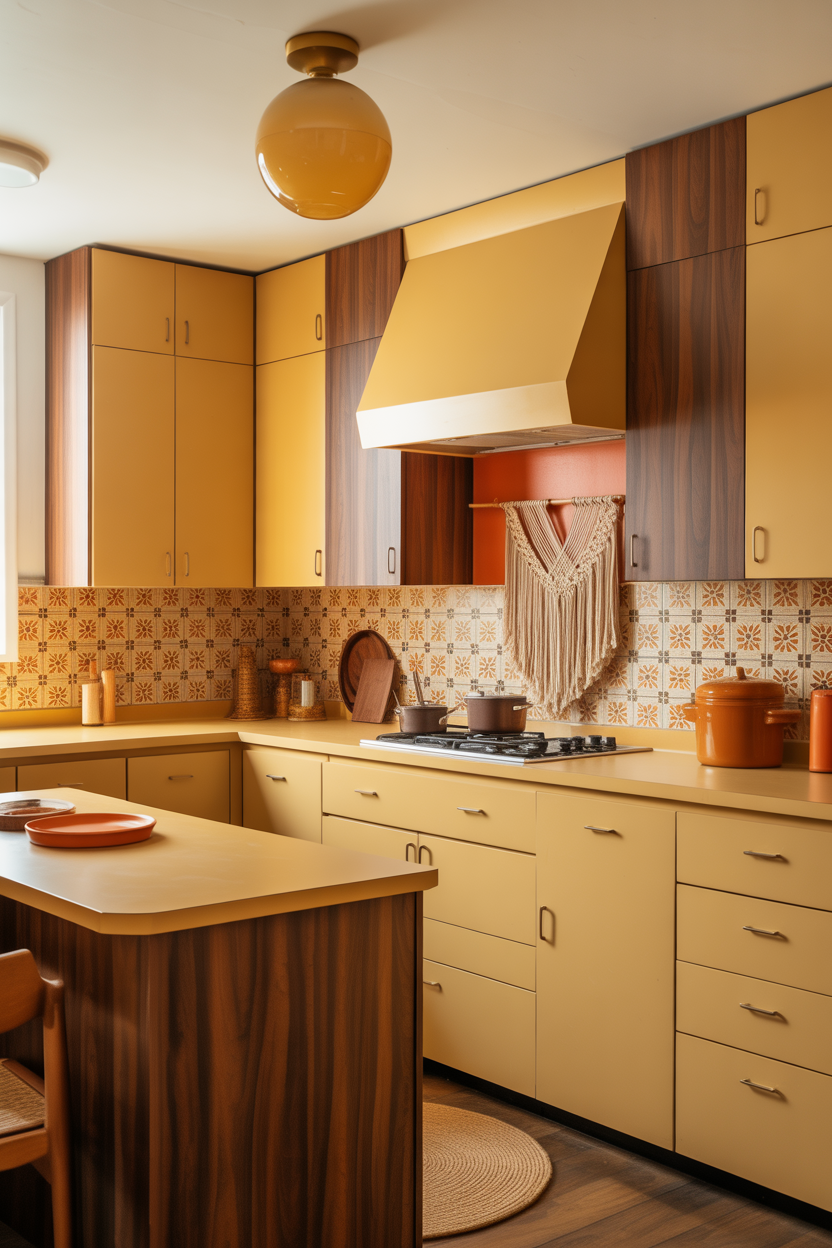
Harvest gold retro kitchens deserve complete rehabilitation from their decades of design mockery — because when approached with genuine enthusiasm rather than ironic distance, the warmth and enveloping quality of the 1970s kitchen palette creates domestic atmospheres of extraordinary coziness that cooler contemporary kitchens simply cannot replicate. Harvest gold cabinetry throughout creates a kitchen environment that reads as uniformly warm from every position within the space — the color’s amber undertones catch artificial light with a luminosity that makes the kitchen feel perpetually golden regardless of the actual light conditions outside.
Brown wood grain laminate accents on cabinet sides and island surfaces introduce the decade’s characteristic marriage of solid color cabinetry with faux-wood surface material — a combination that 1970s kitchen design catalogs presented as the sophisticated alternative to purely painted surfaces. Macramé wall hangings as kitchen art are the textile detail that most immediately anchors the decade’s design sensibility — the fiber art movement that flourished during the 1970s produced domestic objects of genuine craft quality whose rehabilitation in contemporary retro kitchen design feels increasingly deserved and intelligent.
8. The Black and White Retro Kitchen With 1950s Graphic Precision
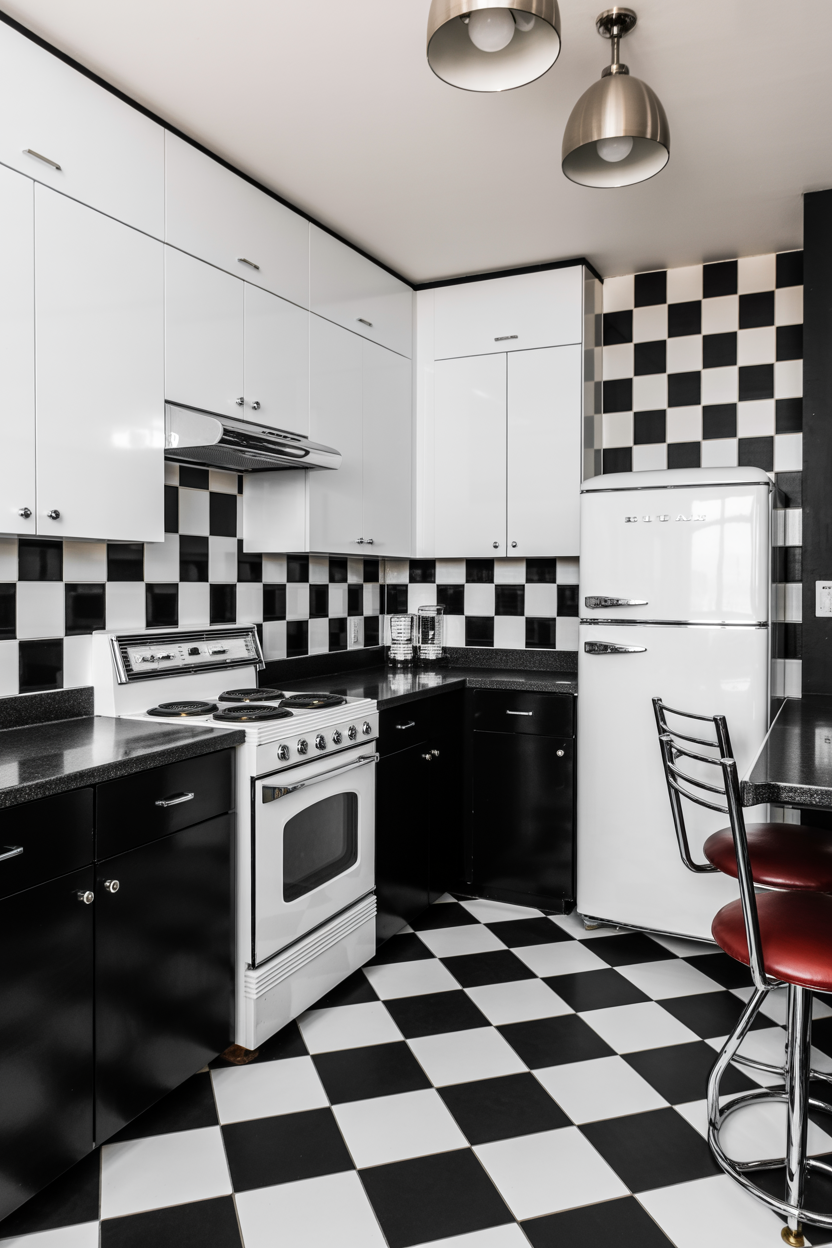
Black and white retro kitchens represent the most graphically sophisticated direction within the mid-century American kitchen aesthetic — they strip the era’s design vocabulary down to its most fundamental chromatic relationship and execute it with the kind of precision that makes the result feel genuinely designed rather than simply decorated. Pure black lower cabinetry against brilliant white uppers creates maximum contrast within the two-tone formula, producing a kitchen that reads as boldly graphic from every position rather than warmly colorful. That graphic quality is what makes this retro kitchen idea feel simultaneously vintage and completely contemporary.
Extending the checkerboard pattern from the floor up the backsplash wall as tile creates an immersive pattern environment that completely surrounds the kitchen’s work zone with the era’s most iconic graphic motif. That decision transforms what could have been simply a flooring detail into an architectural statement that envelops the cooking experience within the retro design language. The single red accent in bar stool cushions is the editorial decision that prevents the black and white composition from feeling too severe — one warm color note among the graphic monochromes creates just enough human warmth to make the kitchen feel genuinely inviting.
9. The Lemon Yellow Retro Kitchen With Sunshine and Chrome
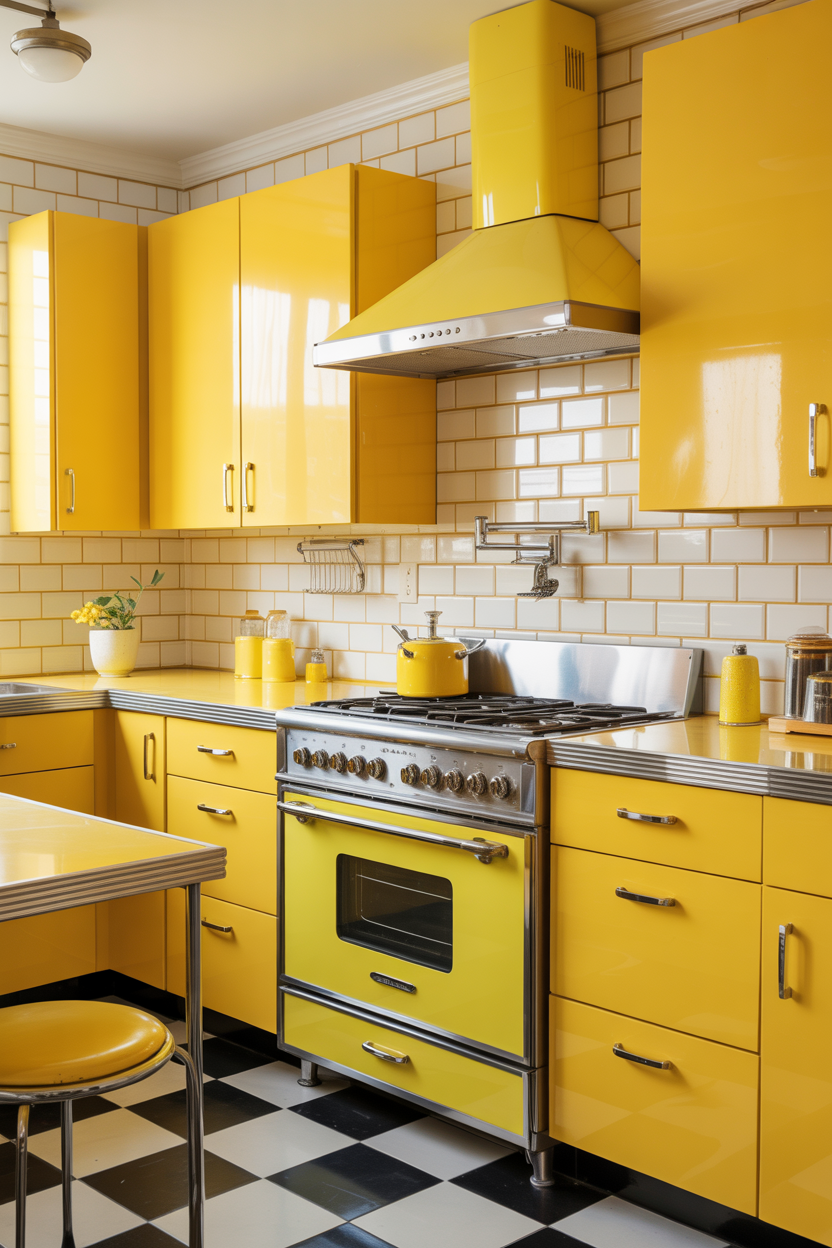
Lemon yellow retro kitchens are the most emotionally immediate colorful retro kitchen idea available — the color’s psychological warmth creates an instant mood elevation that no other chromatic direction quite matches in intensity or reliability. Bright lemon yellow cabinetry throughout creates an environment of concentrated sunshine warmth that makes every activity performed within it feel slightly more cheerful than the same activity performed anywhere else. The color’s period authenticity is genuine — yellow kitchens appeared consistently throughout 1950s American home design publications as expressions of optimistic domestic energy.
Chrome hardware and appliance accents alongside lemon yellow create the specific material pairing that most completely references the 1950s design sensibility — the combination of warm saturated color with cool high-shine metal is characteristic of the decade’s approach to domestic product design across every category from kitchen appliances to automobile interiors. Yellow laminate countertops with chrome edge banding are the surface detail that commits most completely to period materiality — laminate was genuinely the aspirational countertop material of the 1950s, and embracing it fully rather than substituting stone creates authentic retro character that approximations never achieve.
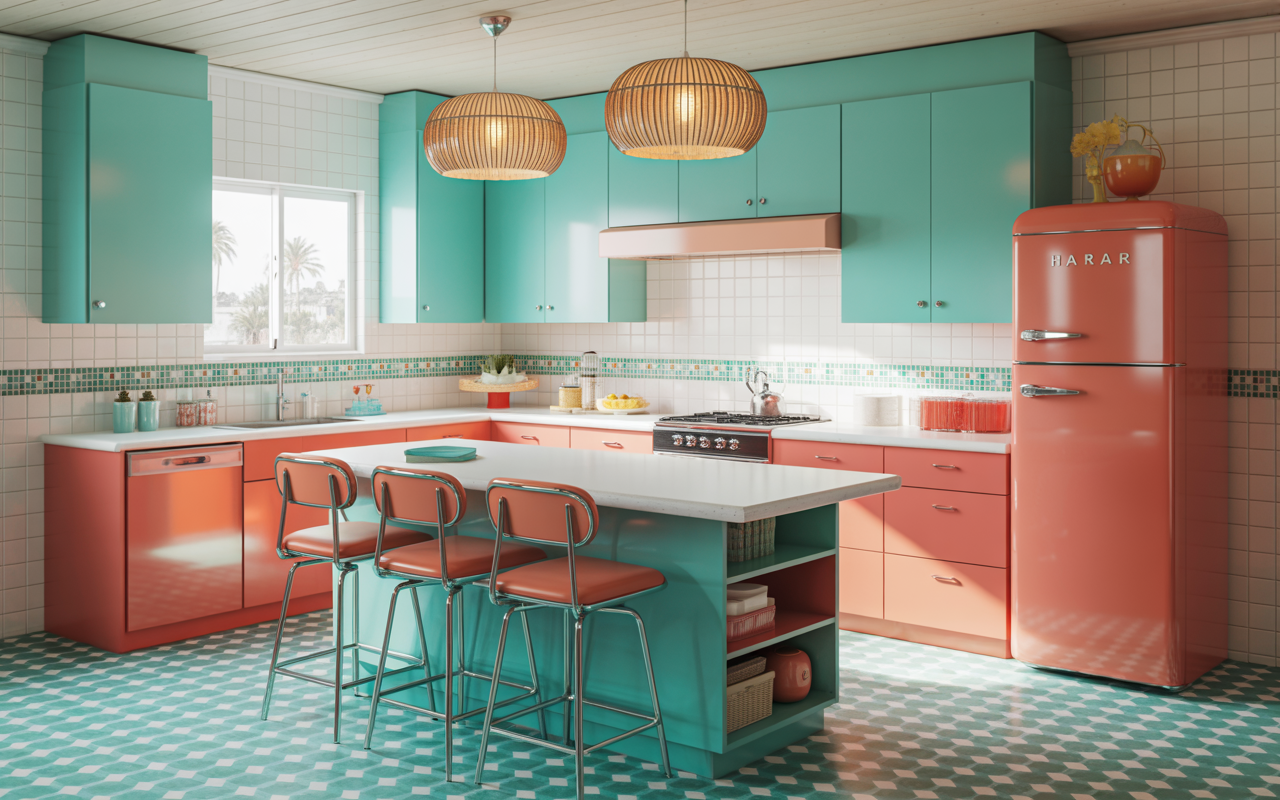
10. The Turquoise and Coral Retro Kitchen With Palm Springs Energy
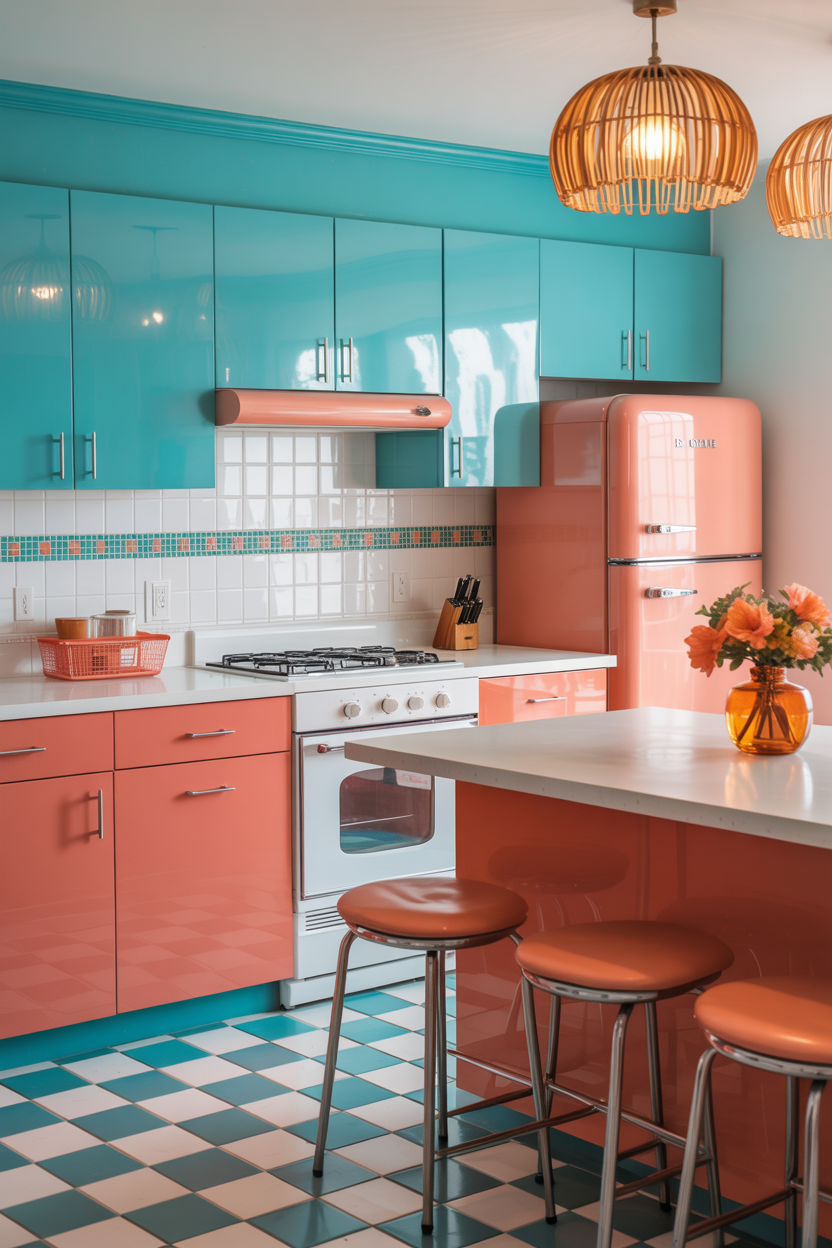
Turquoise and coral retro kitchens reference the specific mid-century modernism of Palm Springs and California desert design — the design culture that applied the optimistic color confidence of 1950s American design to a climate and lifestyle defined by outdoor living, swimming pools, and the sense of permanent vacation that desert resort towns cultivated deliberately. Turquoise upper cabinetry against coral lower cabinets creates a complementary color relationship of extraordinary vibrancy — these colors sit opposite each other on the color wheel in a way that makes each appear more intensely saturated in the other’s proximity.
Rattan pendant shades filtering warm amber light into the turquoise and coral environment introduce the organic material note that connects desert modernism’s indoor spaces to the natural landscape outside — rattan and wicker were as characteristic of mid-century California interior design as chrome and laminate were of American kitchen design more broadly. A vintage coral refrigerator continuing the lower cabinet color into the kitchen’s largest appliance creates chromatic consistency that makes the room feel comprehensively designed rather than incrementally decorated. This retro kitchen idea is the most vacation-like domestic design experience available.
Visit more https://www.pinterest.com/Dreamgardenshome/
11. The Pink Retro Kitchen With 1950s Feminine Glamour
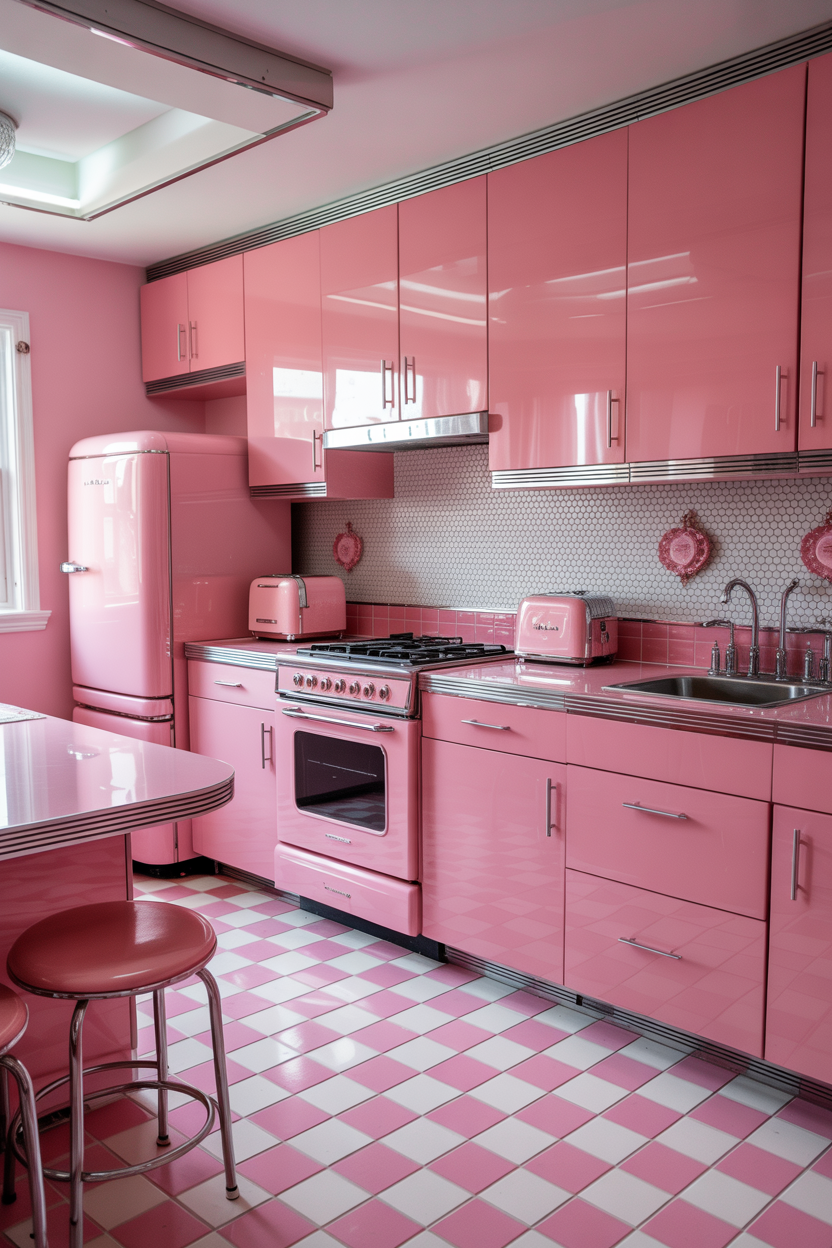
Pink retro kitchens are the most specific period document available in retro kitchen design — the bubble gum and bubblegum-adjacent pinks that appeared in American kitchen design during the late 1950s were so precisely associated with a particular moment in domestic design history that encountering them now creates an immediate and specific temporal recognition impossible to achieve with any other color choice. Bubble gum pink cabinetry throughout commits entirely to that period-specific color with the authenticity that makes retro design genuinely transportive rather than simply nostalgic-feeling.
A vintage pink refrigerator is the appliance investment that completes this retro kitchen idea’s period authenticity most dramatically — colored refrigerators in period-correct shades represent the full commitment to the design direction that separates genuinely excellent retro kitchens from simply pink-painted contemporary ones. Pink vinyl cushions on chrome bar stools continue the color story into the seating details while introducing the specific material — vinyl — that authentically belongs to the era’s furniture culture. This retro kitchen idea rewards complete commitment and looks extraordinary in period-correct photographs that genuinely could have been taken in 1958.
12. The Sage and Cream Retro Kitchen With 1940s Farmhouse Roots
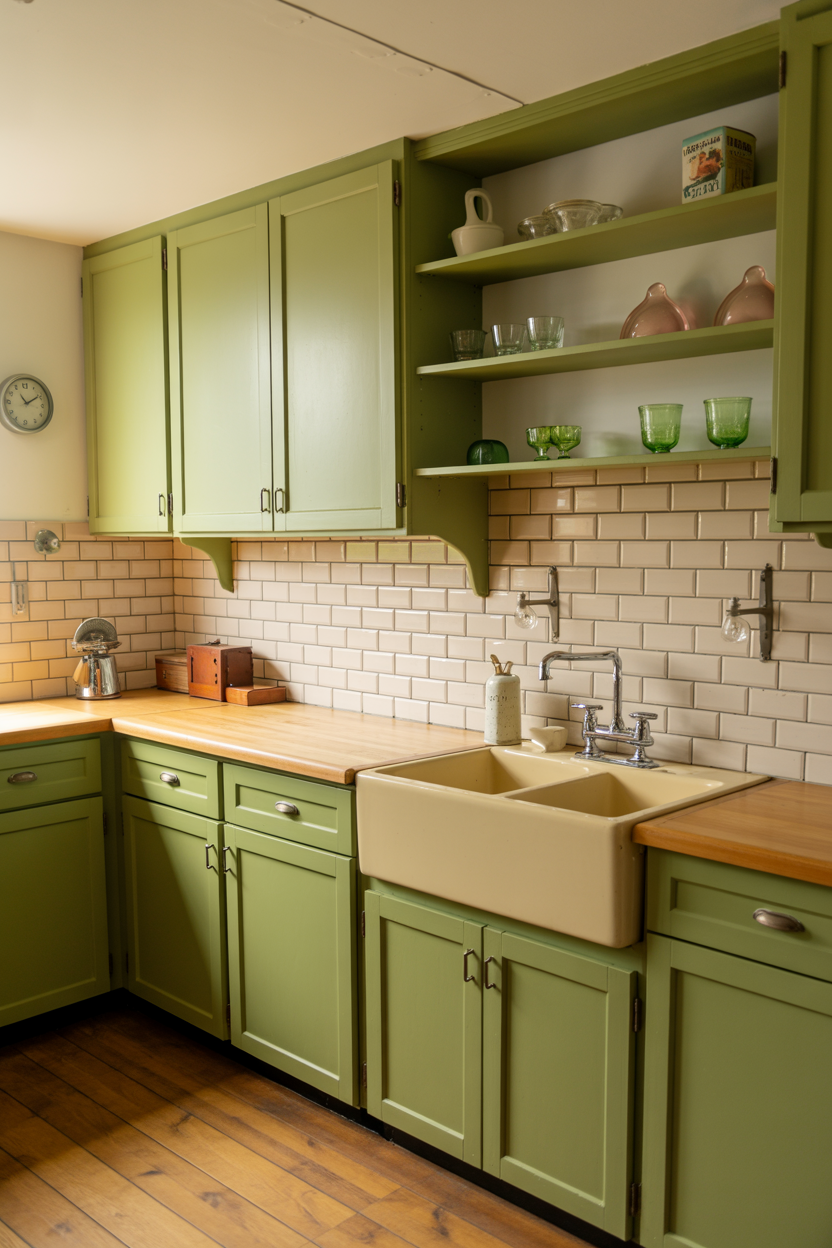
Sage and cream retro kitchens reach further back in American domestic design history than most retro kitchen ideas — they reference the pre-war farmhouse kitchen aesthetic of the 1940s rather than the consumer-optimism-driven color explosion of the 1950s and 1960s. Sage green Shaker cabinetry in simple profiles creates a kitchen architecture that communicates a different kind of period authenticity — quieter, more restrained, and rooted in craft tradition rather than manufactured optimism. The color’s grey-green tones reference the paint palettes available to mid-century homemakers working with limited chromatic options.
Depression-era glassware displayed on open shelving introduces the specific material culture of the 1930s and 1940s into the kitchen’s visual identity — the characteristic green and pink hues of Depression glass create color accents with genuine historical significance rather than simply decorative value. A retro wall clock maintaining period-specific graphic design in its face and numerals continues the temporal specificity throughout every design choice. This retro kitchen idea suits homes with genuine historical character — farmhouses, craftsman bungalows, and period cottages where the kitchen’s retro direction feels architecturally appropriate rather than contrarily applied.
13. The Orange and White Retro Kitchen With 1970s Groovy Confidence
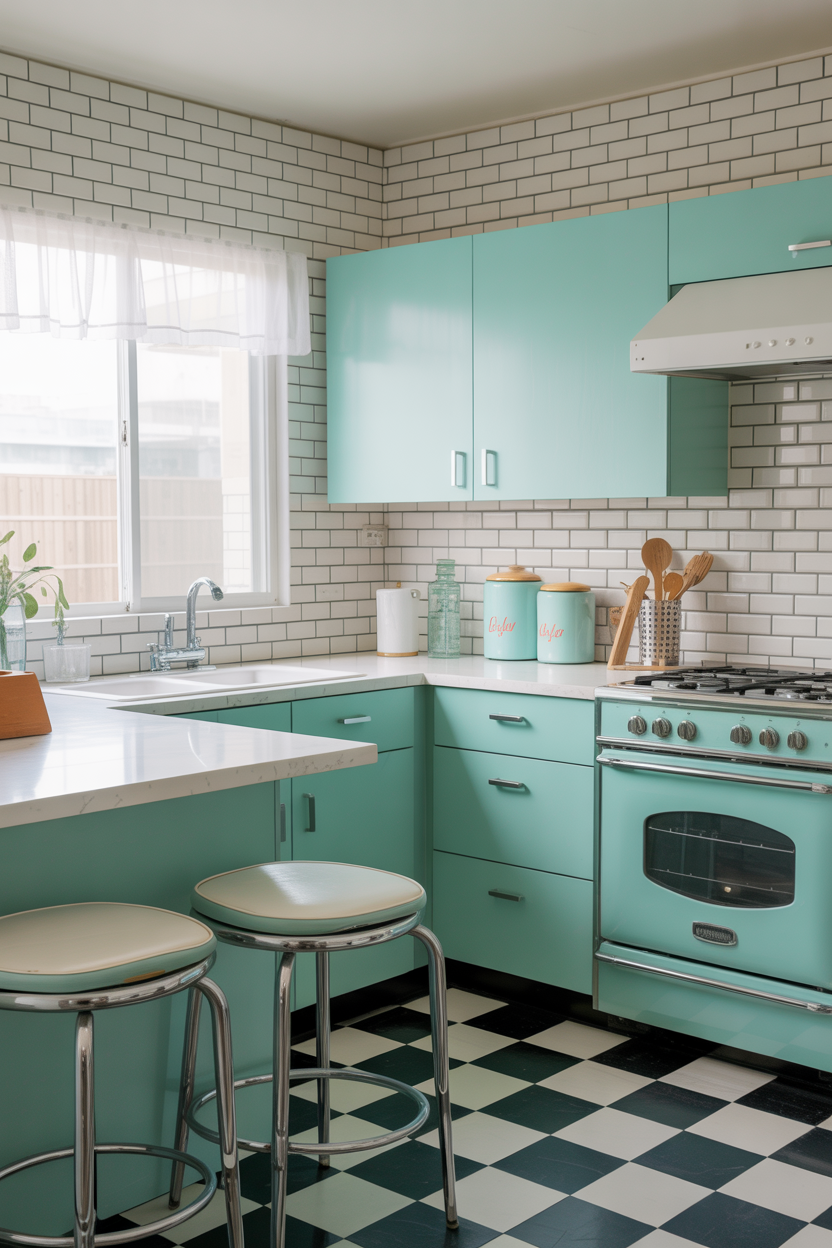
Burnt orange retro kitchens capture the decade’s most characteristic color contribution to American domestic design — orange appeared across every category of 1970s consumer products with a frequency and confidence that reflected genuine cultural enthusiasm rather than trend-following, making it the most authentically period-specific color choice available for 1970s retro kitchen design. Burnt orange lower cabinetry against white uppers creates the two-tone formula within the 1970s palette rather than the 1950s one — the color temperature difference between the earthy orange and clinical white creates a period-specific tension that feels genuinely characteristic of the decade.
Orange and brown geometric tile backsplashes in bold 1970s patterns are the surface detail that most dramatically commits the kitchen to its decade reference — the graphic vocabulary of 1970s ceramic tile design is so specifically identified with the period that even a small area of it immediately situates the entire kitchen within its cultural moment. Macramé pot hangers introduce the decade’s signature craft aesthetic into the kitchen’s functional accessories — these were genuine household objects rather than decorative flourishes in 1970s American homes, and treating them as such gives this retro kitchen idea its authentic character.
14. The Aqua and White Retro Kitchen With 1960s Beach Town Charm
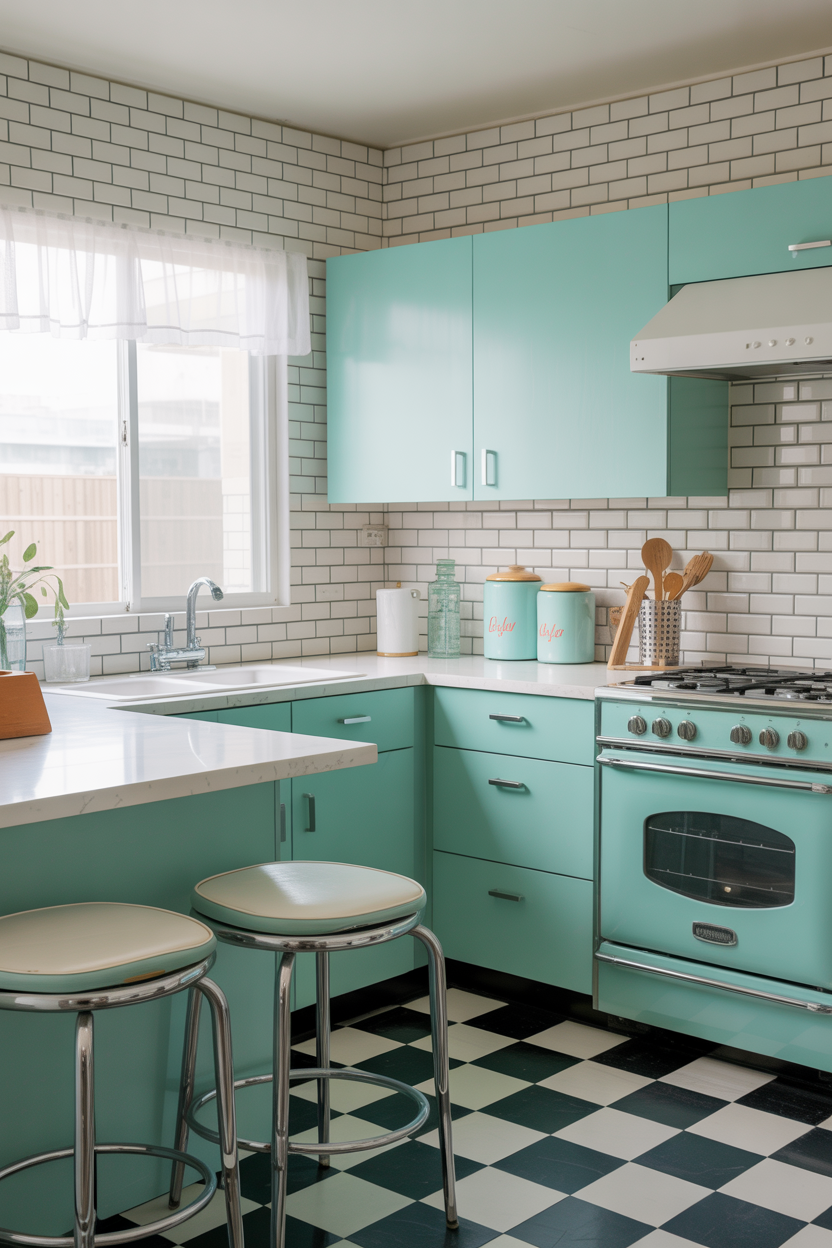
Aqua retro kitchens reference the specific intersection of mid-century modernism and American coastal culture — the beach town design vernacular that took the clean-lined optimism of 1960s design and saturated it with the blue-green colors of ocean environments. Aqua blue-green cabinetry in clean-lined 1960s profiles creates a kitchen that simultaneously references the decade’s graphic design sensibility and the coastal landscapes that inspired so much mid-century Californian and Floridian domestic design. The color sits precisely between the turquoise of tropical water and the blue of ocean horizons.
Vintage-style aqua canisters displayed on the counter as functional decorative objects introduce the coordinated kitchen accessory culture of the 1960s — when matching sets of canisters, mixing bowls, and small appliances in complementary colors were considered the height of domestic sophistication. Chrome bar stools with aqua vinyl seat pads continue the period’s characteristic combination of industrial metal and domestic color with the specific material — vinyl — that authentically belonged to 1960s seating culture. This retro kitchen idea creates the most vacation-light domestic atmosphere available within the retro kitchen design vocabulary.
15. The Mustard Yellow and Green Retro Kitchen With 1970s Earthiness
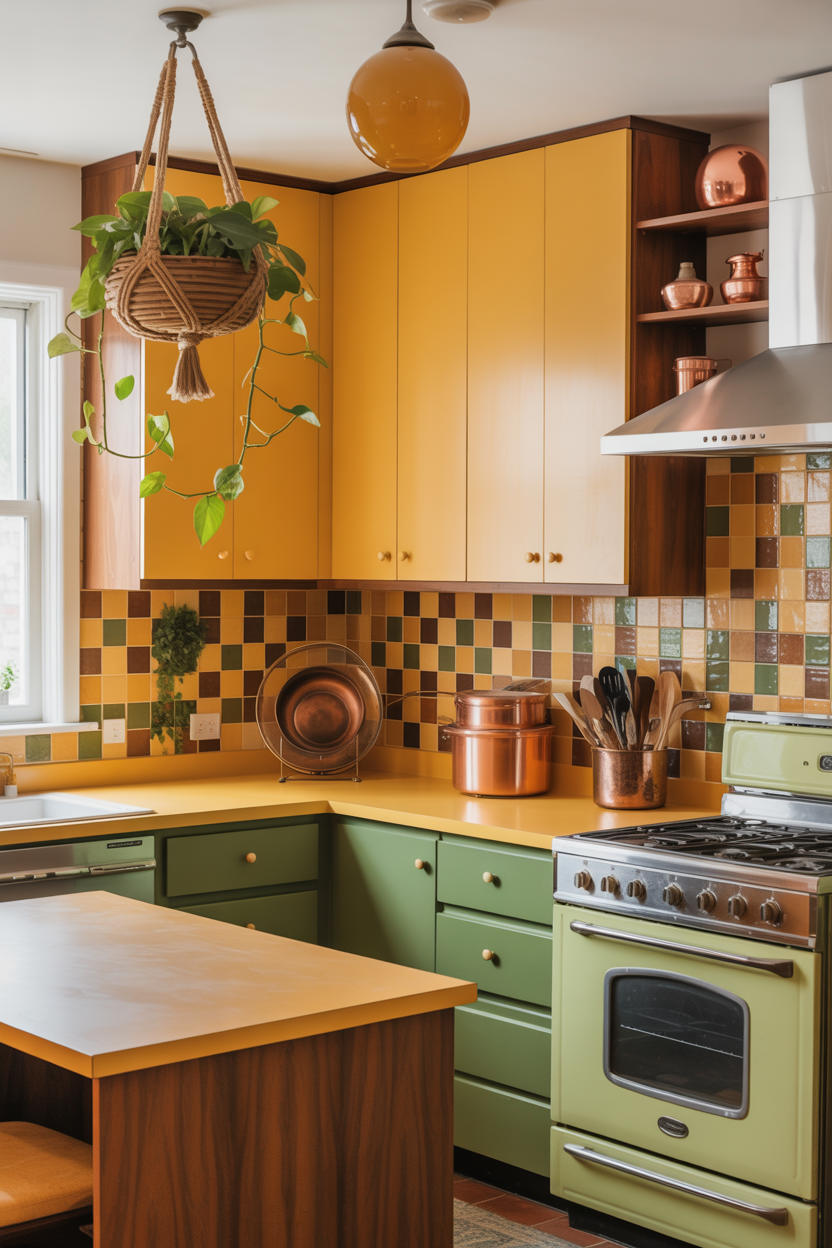
Mustard yellow and avocado green retro kitchens represent the 1970s palette at its most complete and characteristic — both colors appearing simultaneously in the same kitchen creates the full immersive experience of the decade’s domestic design aesthetic rather than a partial reference. Mustard yellow upper cabinetry against avocado green lower cabinets reverses the conventional two-tone formula by placing the lighter color above and the deeper tone below — a compositional decision that creates visual grounding while maintaining the warm color temperature throughout both zones simultaneously.
Vintage copper cookware displayed on open shelving is the material detail that bridges the 1970s kitchen’s earthy color palette with the decade’s enthusiasm for natural and craft materials — copper appeared extensively throughout 1970s kitchen design as a warm metallic alternative to chrome’s cool modernity. Macramé hanging planters with trailing pothos are simultaneously the decade’s most iconic craft object and the most biophilic element available in the retro kitchen vocabulary — the combination of handcrafted fiber art and living plants represents the 1970s at its most warmly domestic and genuinely interesting. This retro kitchen idea is for people who find the 1970s genuinely beautiful rather than simply nostalgically amusing.
16. The Candy Apple Red Retro Kitchen With Italian Espresso Bar Energy
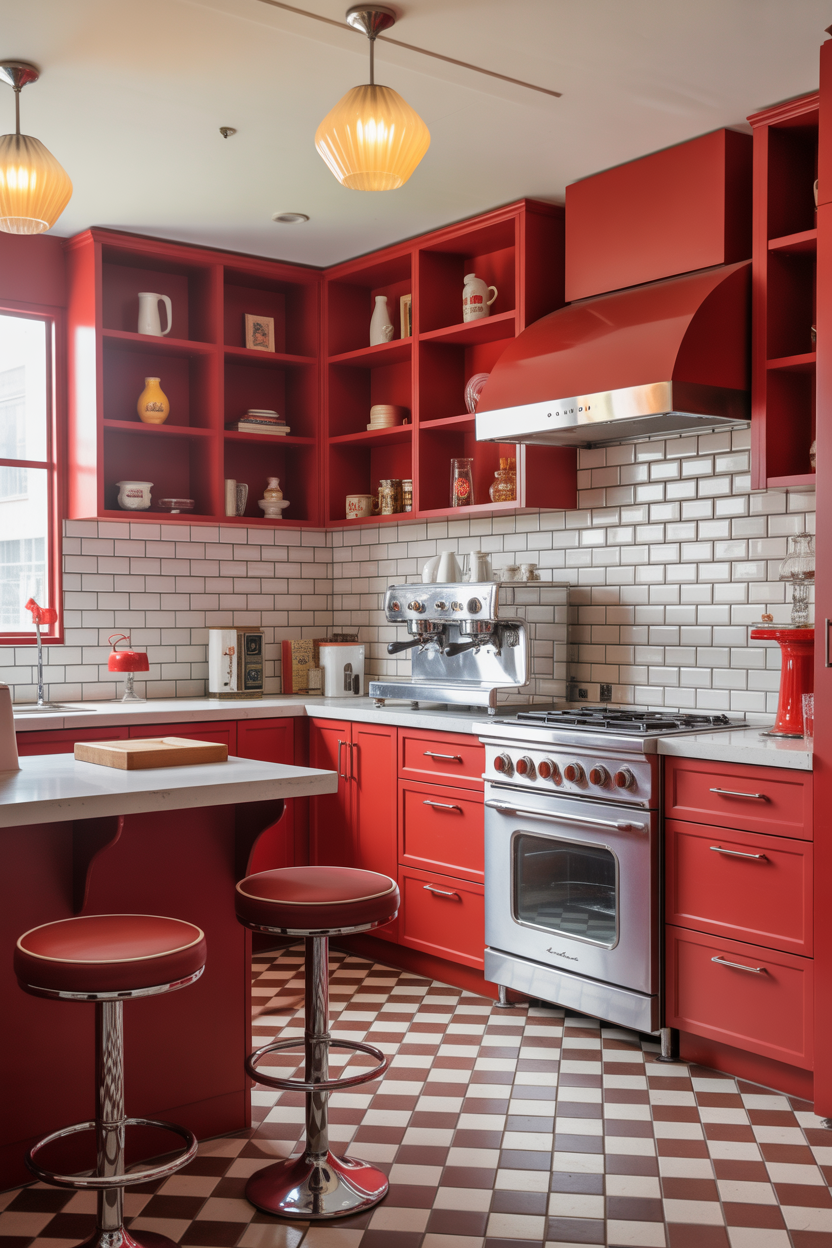
Candy apple red Italian-inspired retro kitchens draw from a European mid-century design tradition rather than the American domestic sources that most retro kitchen ideas reference — specifically the urban Italian espresso bar culture of the late 1950s and 1960s that created some of the most dramatically colored and chrome-intensive commercial interiors of the entire mid-century period. Candy apple red cabinetry throughout creates the same total immersive color environment that Italian bar interiors achieved through their characteristic red lacquered surfaces — the color doesn’t simply appear in the kitchen, it defines the room’s entire atmospheric character.
A professional chrome espresso machine positioned as the kitchen’s focal point is simultaneously a functional appliance and a period-correct decorative object — the Gaggia and La Pavoni machines of the era possessed design qualities so extraordinary that they function as sculpture as much as equipment. Chrome bar stools with red leather cushions introduce the specific material combination characteristic of Italian mid-century seating — leather and chrome together reference the same design tradition that produced the era’s most celebrated furniture designs. This retro kitchen idea produces the most cinematically atmospheric domestic coffee experience available.
17. The Mint and Gold Retro Kitchen With Art Deco Influence
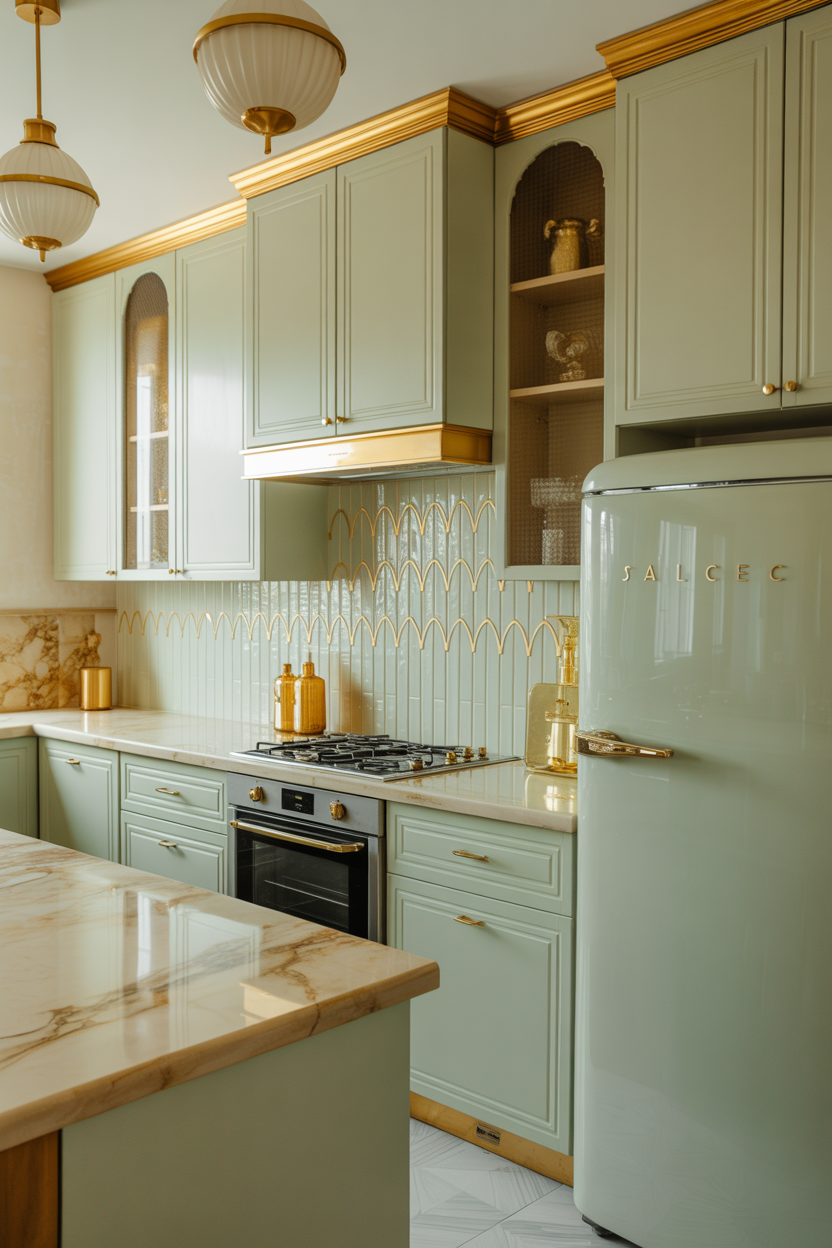
Mint and gold Art Deco-influenced retro kitchens reach further back in design history than most retro kitchen directions — they reference the 1930s design movement that brought geometric glamour to every scale of object from skyscraper lobbies to kitchen fixtures. Pale mint green cabinetry with subtle Art Deco profile detailing creates a kitchen architecture that communicates period-specific design language through the cabinet construction itself rather than simply through color and hardware choice — the profiles repeat geometric motifs characteristic of the Art Deco vocabulary at the scale of every individual cabinet door.
Warm gold hardware is the metallic choice that specifically belongs to Art Deco design — the movement’s preference for gold over chrome distinguished it from the later modernism that replaced warm metals with cool industrial ones. Gold pendant lights with frosted glass shades continue the glamorous metallic story at ceiling height while introducing the frosted glass material that Art Deco lighting design used extensively in both residential and commercial contexts. This retro kitchen idea suits homes with genuine 1920s and 1930s architectural character — apartments with period details, houses with Art Deco ornamentation — where the kitchen’s design language converses intelligently with the surrounding architecture.
18. The Two-Tone Blue Retro Kitchen With 1960s Mod Sophistication
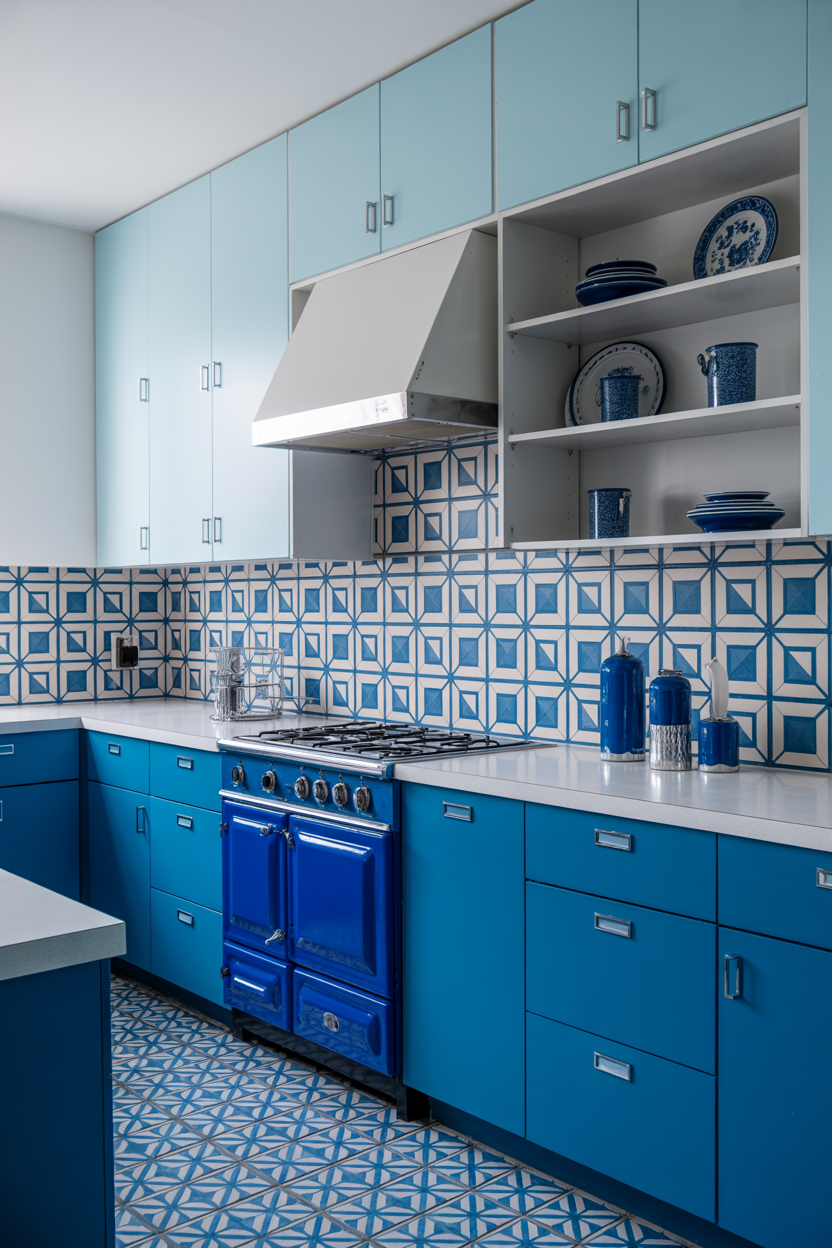
Two-tone blue retro kitchens demonstrate the most chromatic sophistication available within the retro kitchen idea vocabulary — operating entirely within a single color family but across dramatically different values creates depth and visual interest that multi-color approaches often fail to achieve. Royal blue lower cabinetry against pale sky blue uppers creates a tonal relationship where the darker lower zone visually grounds the kitchen while the lighter upper zone keeps the ceiling feeling open and airy — a compositional intelligence that applies specifically to the two-tone formula regardless of the color family chosen.
Blue transferware ceramics displayed on open white shelving introduce a material that bridges the 1960s retro kitchen’s design vocabulary with a much older British ceramic tradition — the combination of period-specific design with genuinely antique objects creates the layered temporality that distinguishes the most interesting retro kitchens from simply vintage-styled ones. Bold geometric floor patterns in blue and white extending the graphic language to the room’s lowest surface create the complete immersive graphic environment that 1960s mod design achieved in its most ambitious interior applications. This retro kitchen idea rewards homeowners who appreciate design intelligence as much as decorative personality.
19. The Peach and Cream Retro Kitchen With 1950s Softness
Peach retro kitchens occupy the gentlest and most warmly approachable position within the 1950s American kitchen color vocabulary — the color’s warm pink-orange blend creates an atmosphere of domestic welcome that feels neither as energetic as cherry red nor as cool as powder blue. Warm peach cabinetry throughout creates an enveloping warmth that makes the kitchen feel specifically like a space designed for human comfort rather than simply efficient food preparation — the color’s psychological warmth operates below conscious design awareness, making people feel instinctively comfortable without necessarily identifying why.
Peach Depression-era glassware displayed on open shelving creates the most specifically period-authenticated material choice in this retro kitchen idea — Depression glass was produced in the 1930s and 1940s in colors including peach and pink as affordable decorative objects for American households, making their display in a mid-century inspired kitchen feel genuinely connected to the era’s domestic material culture rather than simply decoratively appropriate. Ruffled gingham café curtains in peach and white introduce the domestic textile detail that 1950s kitchen design photographs consistently featured — their cheerful domesticity is inseparable from the era’s design identity.
20. The Copper and Cream Retro Kitchen With Victorian Warmth
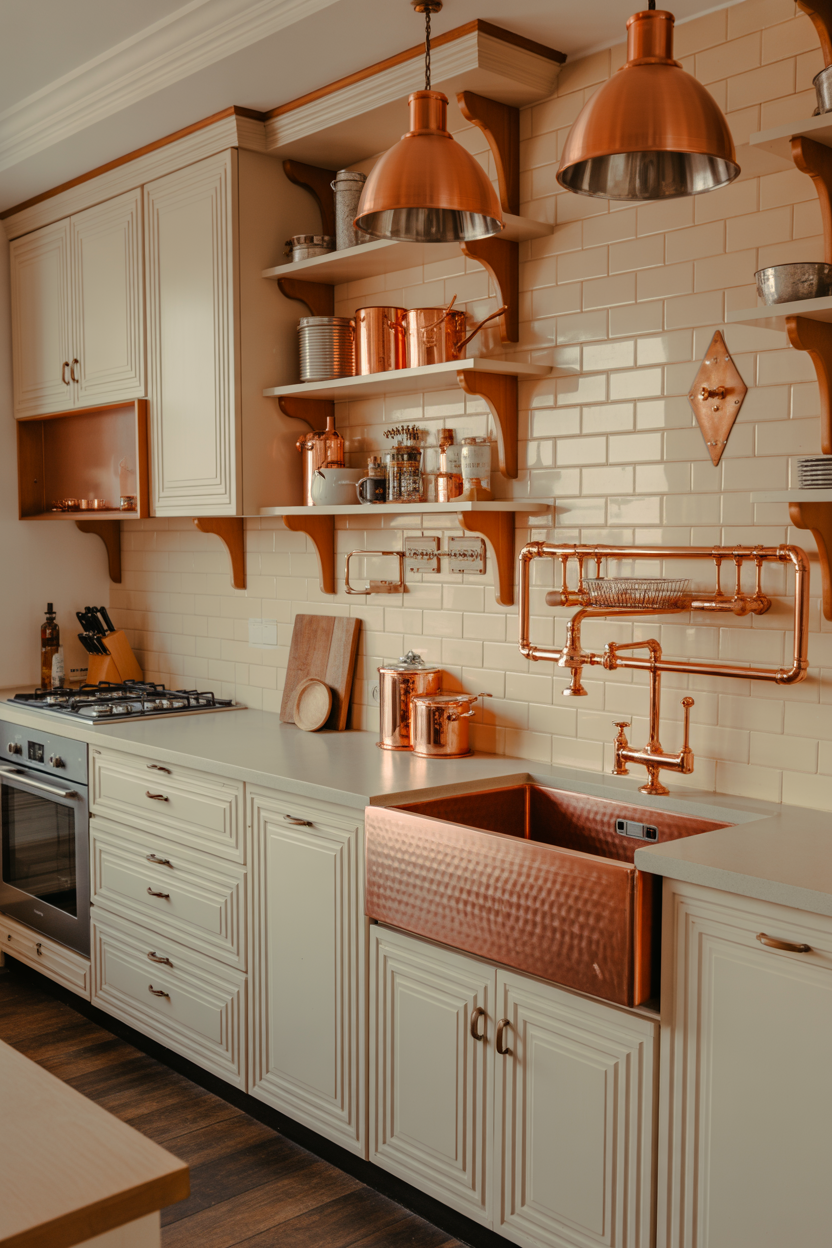
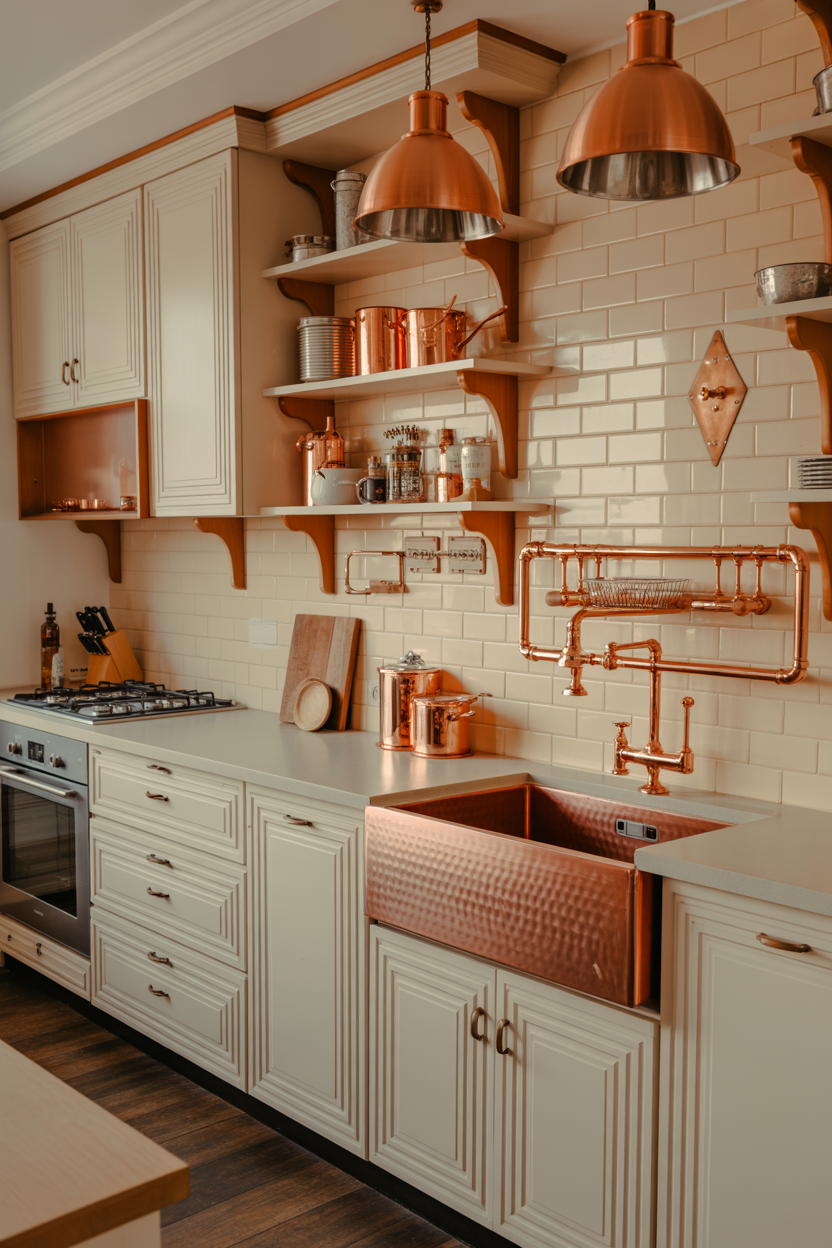
Copper and cream Victorian-influenced retro kitchens reach the furthest back in design history available within the retro kitchen vocabulary — referencing the late nineteenth-century kitchen aesthetic that preceded all of the mid-century American directions that most retro design explores. Cream cabinetry with subtle Victorian-era profile detailing creates kitchen architecture that communicates a period design language through the construction vocabulary itself — the profiles, moldings, and proportional relationships of Victorian cabinetry differ fundamentally from mid-century American examples in ways that period-knowledgeable observers recognize immediately.
Exposed copper pipe plumbing treated as deliberate decorative elements rather than hidden infrastructure is the design decision that most dramatically references the Victorian interior design philosophy — the era’s decorative arts movement celebrated honest material expression and craft quality rather than concealing functional elements behind decorative surfaces. Hammered copper farmhouse sinks combine the Victorian commitment to quality craft materials with the practical farmhouse kitchen tradition that pre-dates even the Victorian period — creating a focal point whose historical depth exceeds the kitchen’s surface retro styling. This retro kitchen idea rewards genuine appreciation for nineteenth-century material culture.
21. The Orange and Blue Retro Kitchen With 1960s Complementary Boldness
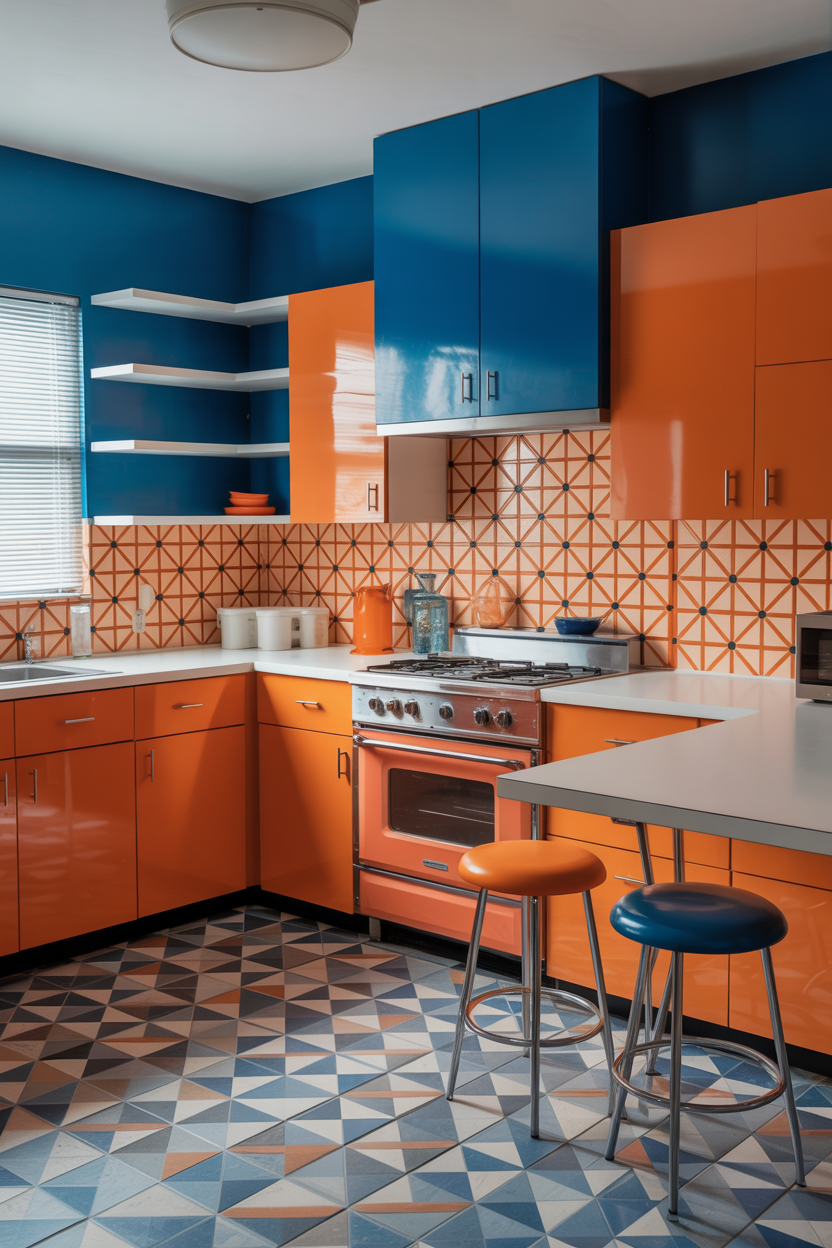
Orange and blue complementary retro kitchens make the most graphically sophisticated color theory statement available within the retro kitchen design vocabulary — placing complementary colors in direct relationship creates mutual intensification that makes each appear more saturated than it would look alongside neutral surroundings. Burnt orange lower cabinetry against cobalt blue uppers creates a relationship of maximum chromatic tension where each color simultaneously competes with and activates the other — the visual energy this produces is consistent with the most adventurous interior applications of 1960s graphic design thinking.
Geometric patterned floors repeating the orange and blue palette at the room’s lowest surface level create complete chromatic immersion that extends the complementary relationship through every plane of the kitchen simultaneously. Chrome bar stools with alternating orange and blue vinyl cushions introduce the complementary color story into the seating detail with characteristic 1960s enthusiasm for graphic color application across every possible object within a designed environment. This retro kitchen idea requires commitment to both colors simultaneously — any retreat toward neutralizing one in favor of the other reduces the graphic power that makes this direction so genuinely extraordinary.
22. The Red and White Gingham Retro Kitchen With Country Store Charm
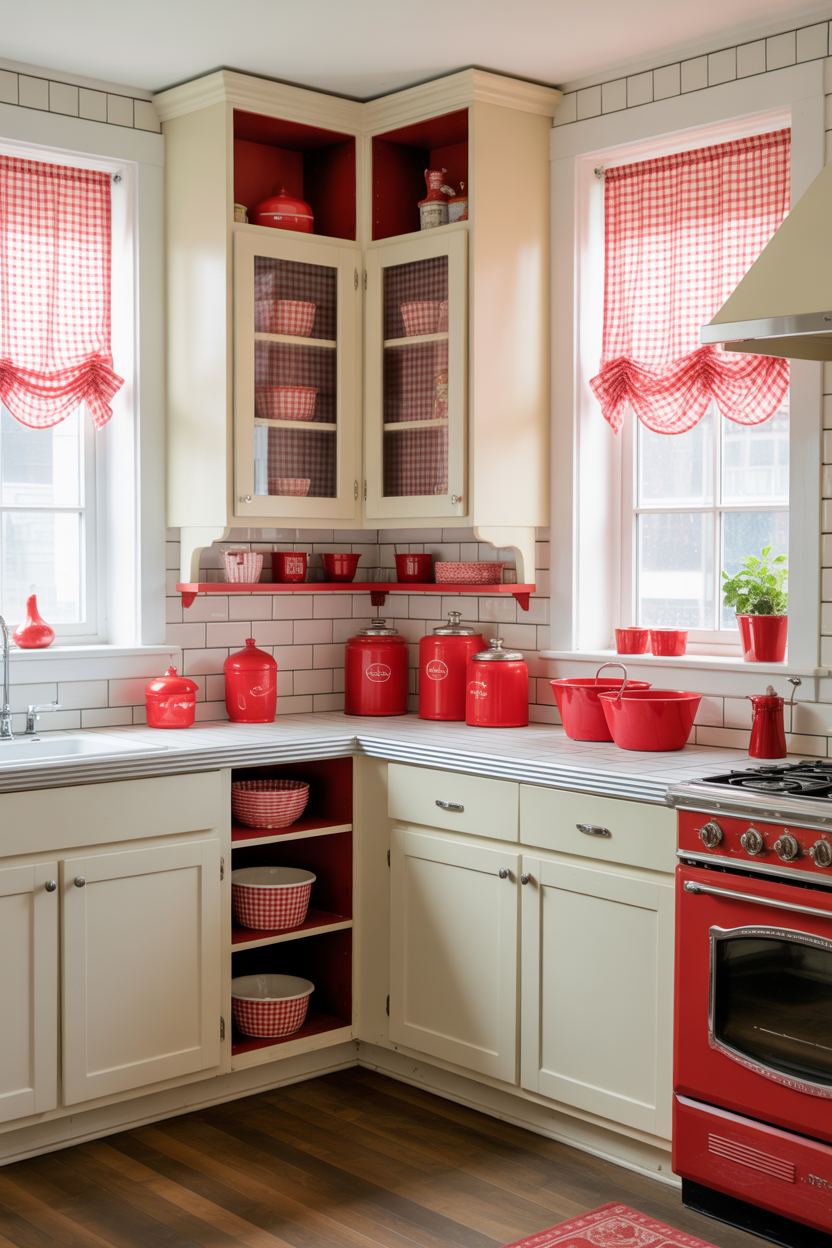
Red and white gingham retro kitchens reference the American country store and rural domestic design tradition that existed alongside and somewhat separately from the urban diner aesthetic of 1950s American kitchen culture — the gingham pattern’s association with rural American domestic life predates the mid-century period considerably while remaining completely authentic to the postwar domestic design imagination. White cabinetry with red gingham-patterned glass inserts in upper cabinet doors creates the period’s characteristic approach to decorative cabinet glazing — introducing pattern into the cabinet door without sacrificing the storage visibility that glass inserts provide.
Red Roman blinds in gingham at every window create the complete textile environment that makes this retro kitchen idea feel genuinely immersive rather than simply accessorized — when the window treatment, the cabinet inserts, and the displayed ceramics all share the same pattern, the room develops the coordinated domestic personality that mid-century American home design publications consistently presented as the aspirational standard for kitchen decoration. Red ceramic canisters and mixing bowls displayed openly on countertops and shelving continue the color and pattern story through the kitchen’s functional objects. This retro kitchen idea creates the most authentically wholesome domestic atmosphere on this list.
23. The Sage Green and Copper Retro Kitchen With Arts and Crafts Heritage
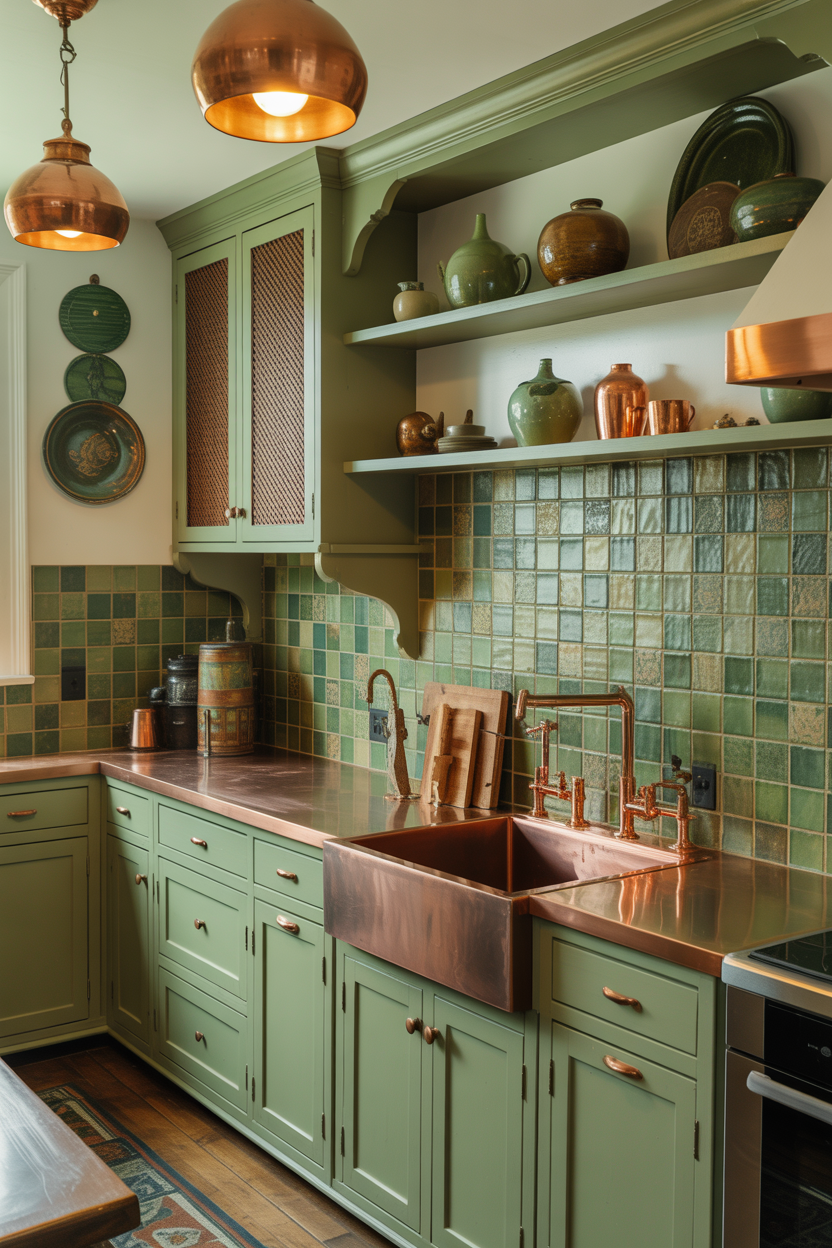
Sage green and copper Arts and Crafts retro kitchens reference the American design movement of the early twentieth century that positioned honest material craft as the most authentic design value available — a philosophy whose continued relevance makes this retro kitchen idea feel genuinely timeless rather than simply nostalgic. Sage green cabinetry with Arts and Crafts-era profile detailing creates kitchen architecture that communicates the movement’s design values through construction as much as decoration — the profiles’ relationship to the movement’s broader furniture-making tradition places the kitchen within a specific design philosophical context.
Hammered copper hardware developing natural patina is the material choice that most completely expresses the Arts and Crafts movement’s core values — the visible evidence of hand-hammering demonstrates the craft investment that the movement celebrated over industrial manufacture. Arts and Crafts pottery in characteristic green and brown glazes displayed on open shelving introduces material objects of genuine period authenticity — the Rookwood, Roseville, and Weller pottery produced during the movement’s height possesses design qualities that contemporary reproductions never fully capture. This retro kitchen idea rewards homeowners who collect genuinely rather than simply style curatorially.
24. The Yellow and Gray Retro Kitchen With 1950s Modern Restraint
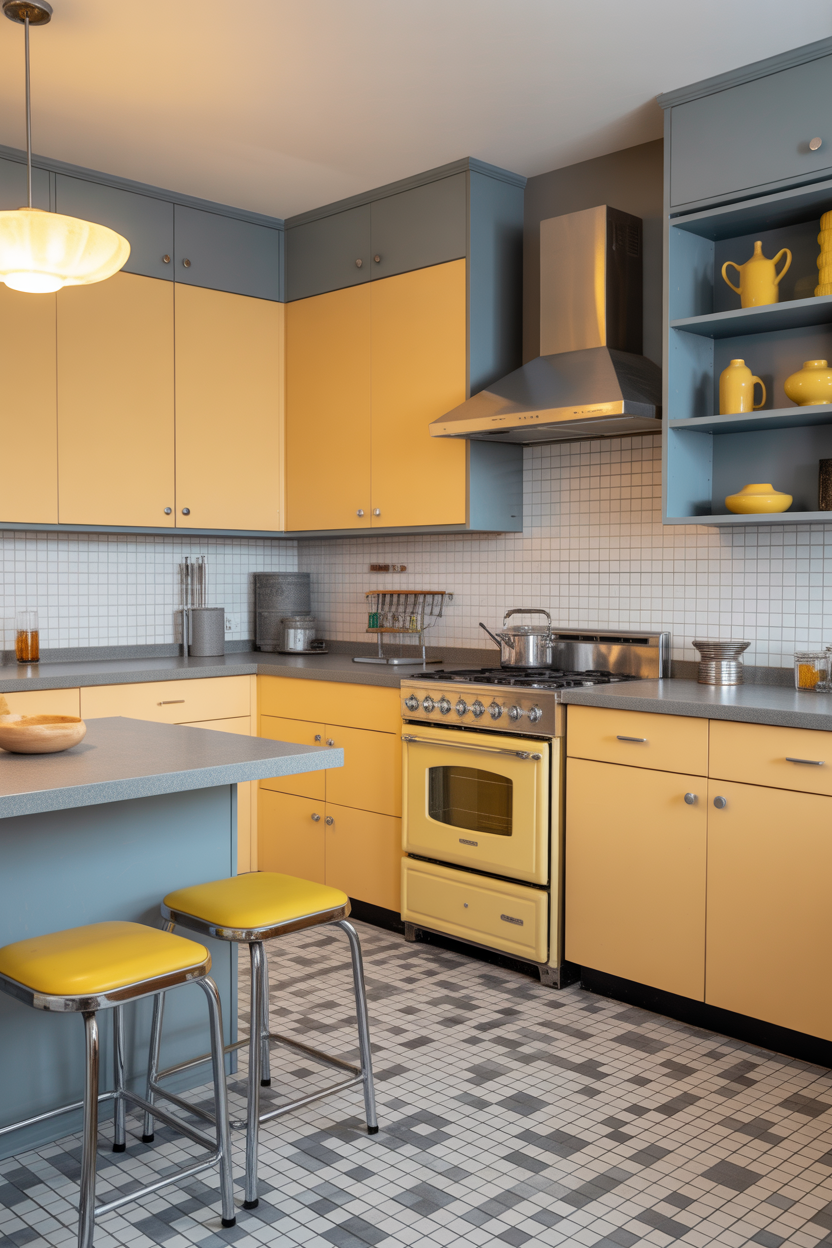
Yellow and gray retro kitchens explore the more modernist-influenced dimension of 1950s American design — the aesthetic direction that looked toward Scandinavian and European modernism for its design cues rather than toward American popular culture’s more exuberant expressions. Warm yellow cabinetry against cool gray uppers creates a specific temperature relationship between the two colors that feels deliberately considered rather than emotionally spontaneous — the warmth of the yellow and the coolness of the gray create a designed tension that gives the retro kitchen idea genuine visual complexity.
Gray laminate countertops with chrome edge banding are the surface choice that most completely references the modernist dimension of 1950s material culture — gray was the color of the decade’s most architecturally sophisticated kitchen designs, which positioned themselves as functional modernist spaces rather than domestic entertainment venues. The geometric vocabulary in the tile backsplash and floor pattern references the decade’s broader design interest in pattern and abstraction without committing to the more exuberant graphic energy of 1960s mod design. This retro kitchen idea suits homeowners who appreciate the 1950s for its design intelligence rather than its pop cultural associations.
25. The Timeless Black and White Retro Kitchen That Always Looks Pinterest Perfect
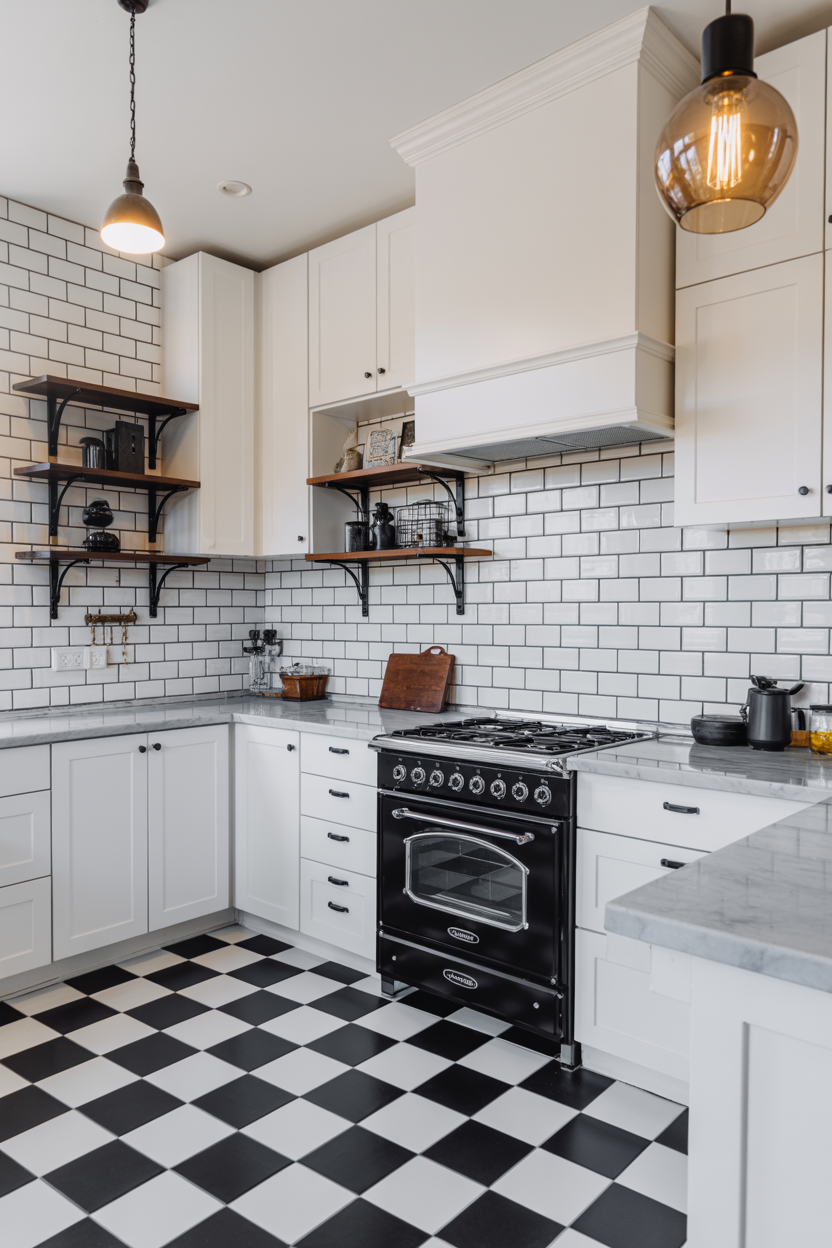
Timeless black and white retro kitchens earn their permanent Pinterest presence through the same principle that makes all truly timeless design endure — they’re built on a visual relationship so fundamentally strong that no trend cycle can displace it. The large-format black and white checkerboard floor is the design decision that anchors this retro kitchen idea in its historical reference while remaining completely beautiful by any contemporary design standard — the pattern’s graphic power is simply too strong to become dated because it operates at the level of visual principle rather than trend.
White shaker cabinetry with matte black hardware creates the contemporary articulation of the retro aesthetic — maintaining the period’s chromatic vocabulary while updating the hardware finish from chrome to matte black produces a kitchen that reads as retro-influenced rather than period-costumed. A vintage-style black range as the statement appliance commits the room to its retro identity through the kitchen’s most functionally prominent object — when the range makes the design statement, the entire room’s aesthetic direction becomes unambiguous and authoritative. This retro kitchen idea is the one to choose when longevity matters as much as personality — because it delivers both with equal generosity.
Conclusion
Retro kitchen ideas reward the single quality that contemporary design most frequently discourages — genuine commitment to a direction. Every kitchen on this list became Pinterest-perfect the moment its designer stopped second-guessing the checkerboard floor, the cherry red cabinets, or the avocado green appliances and simply followed the aesthetic with complete conviction. Pick your decade, honor it faithfully, and build the kitchen that makes every person who enters it immediately feel something real. That emotional response is what Pinterest saves are actually for.

Join The Discussion