
Introduction
Your pool deserves more than plain concrete edges and basic blue tile. The right swimming pool coping and tile combination transforms the entire backyard — defining the water’s edge, protecting the pool structure, and setting the visual tone for everything surrounding it. Whether you’re building new or renovating an existing pool, these 20 ideas prove that the details make all the difference. Get ready to fall completely in love with your next pool design.
1. Travertine Coping With Herringbone Pool Deck
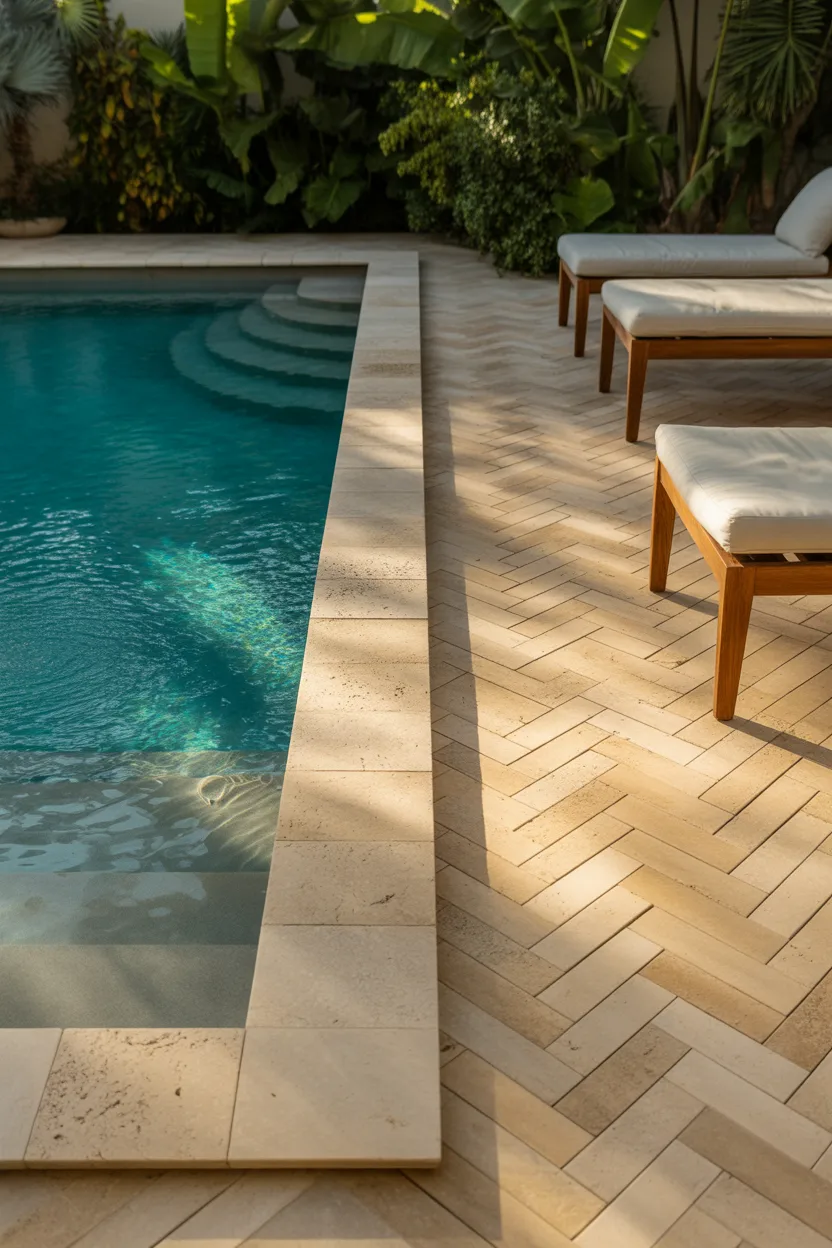
Travertine is arguably the most beloved swimming pool coping material in luxury residential design, and its enduring popularity is entirely justified. The natural limestone-based stone comes in warm ivory, walnut, and noce tones that pair beautifully with water, reflecting light in a way that makes pool water appear more vivid and inviting. Its naturally pitted surface provides inherent slip resistance — a critical safety consideration for wet pool surrounds — while its relatively cool surface temperature underfoot makes it comfortable even on the hottest summer afternoons when darker stones become uncomfortably warm.
The herringbone deck pattern amplifies everything travertine already does well. The angled arrangement of the rectangular tiles creates a sense of movement and visual complexity that a standard running bond or grid pattern simply can’t provide. It also makes smaller pool decks appear larger by drawing the eye diagonally across the surface. When the coping and deck use the same travertine material, the transition between water’s edge and surrounding deck becomes seamless and architecturally coherent. This swimming pool coping and deck combination consistently photographs beautifully — it’s the reason travertine dominates luxury pool design portfolios worldwide.
2. Bullnose Brick Coping With Cobalt Blue Waterline Tile
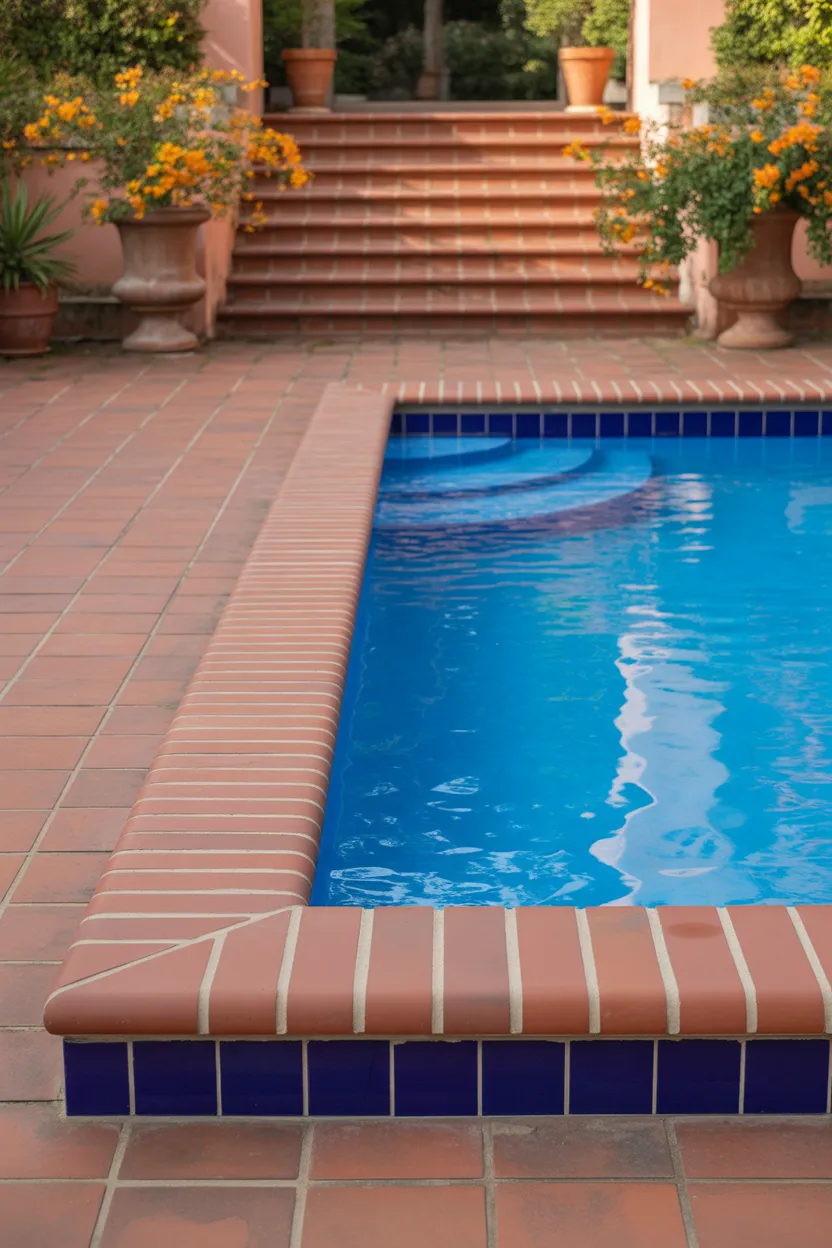
Bullnose brick coping carries a timeless residential character that suits traditional, colonial, and Mediterranean-style homes with extraordinary ease. The rounded edge profile — the defining feature of bullnose coping — creates a smooth, comfortable surface for swimmers gripping the edge, while the brick material itself provides a warmth and familiarity that more exotic stone materials sometimes lack. Laid in a contrasting color to the pool deck, brick coping creates a clearly defined water’s edge that is both functional and visually satisfying, framing the pool with the quiet confidence of a well-established garden feature.
The cobalt blue waterline tile band is where this design truly ignites. Running continuously just below the swimming pool coping line at the waterline, that band of vivid cobalt tile reflects in the water surface, intensifying the blue of the pool and creating a color saturation that draws the eye immediately. The contrast between warm red brick and electric blue tile is bold and deliberate — a Mediterranean color pairing with centuries of design precedent behind it. Keep the surrounding deck in warm terracotta tones to complete the Southern European palette and the result is a pool that feels like a private villa retreat.
3. Limestone Coping With Mosaic Waterline Tile
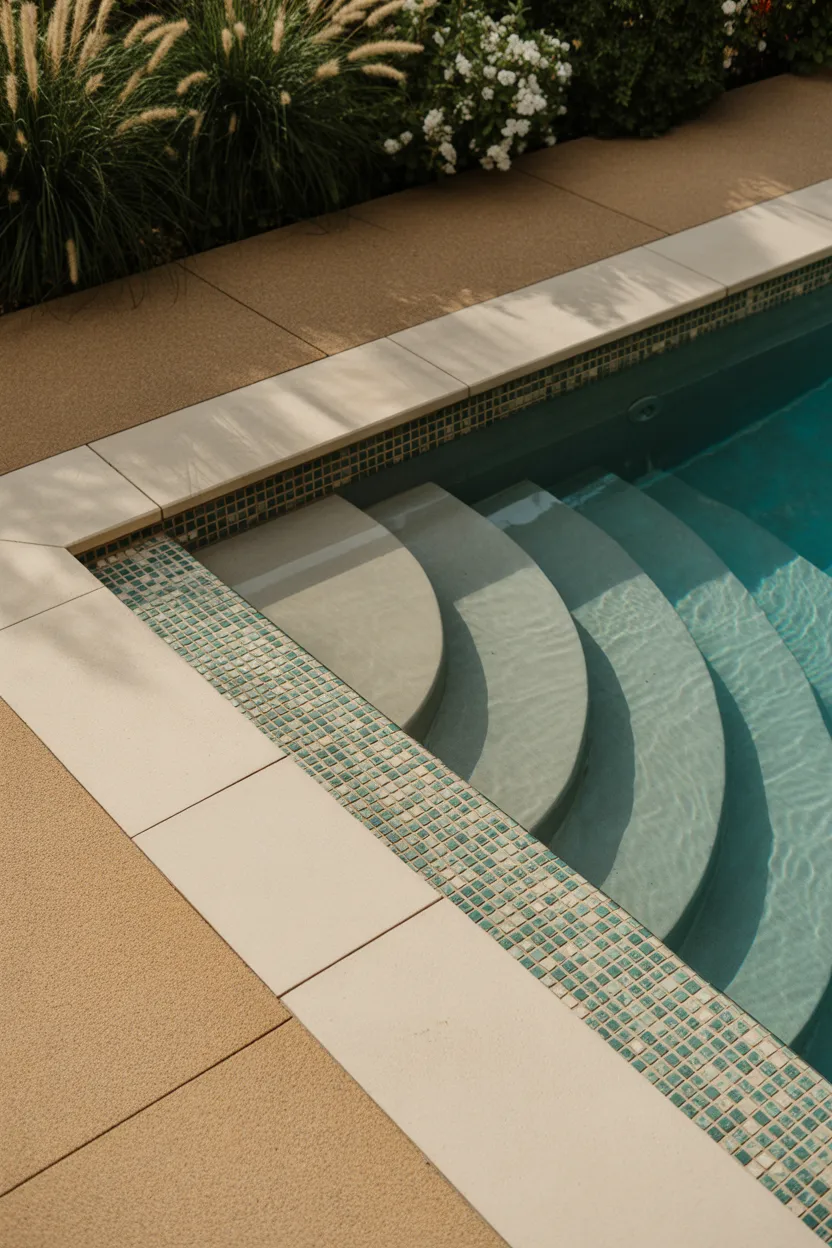
Limestone coping brings a refined, architectural quality to pool design that immediately elevates the overall aesthetic of any backyard. Its smooth, consistent surface and warm cream-to-gray color range provides a neutral, sophisticated border that complements virtually every waterline tile choice, pool water color, and surrounding landscape style. Unlike travertine, which has a pitted texture, limestone can be honed to a perfectly smooth finish that feels genuinely luxurious underfoot and photographs with a clean, editorial quality. Its density makes it naturally cool underfoot — a practical luxury in summer sun.
The hand-laid mosaic waterline tile is what transforms this pool from elegant to extraordinary. Individual tesserae in teal, turquoise, and gold tones catch light at every angle, creating a shimmering, kinetic border that seems to move with the water. Mosaic waterline tiles have been used in pool design since Roman bath culture — they bring a historical depth to the aesthetic that manufactured ceramic bands simply can’t replicate. For the most impactful result, choose a mosaic palette that references your pool water’s natural color and carry one accent tone into a nearby landscape or architectural feature, creating visual continuity between the swimming pool coping detail and the broader outdoor design.
4. Cantilevered Concrete Coping With Large Format Porcelain Tile
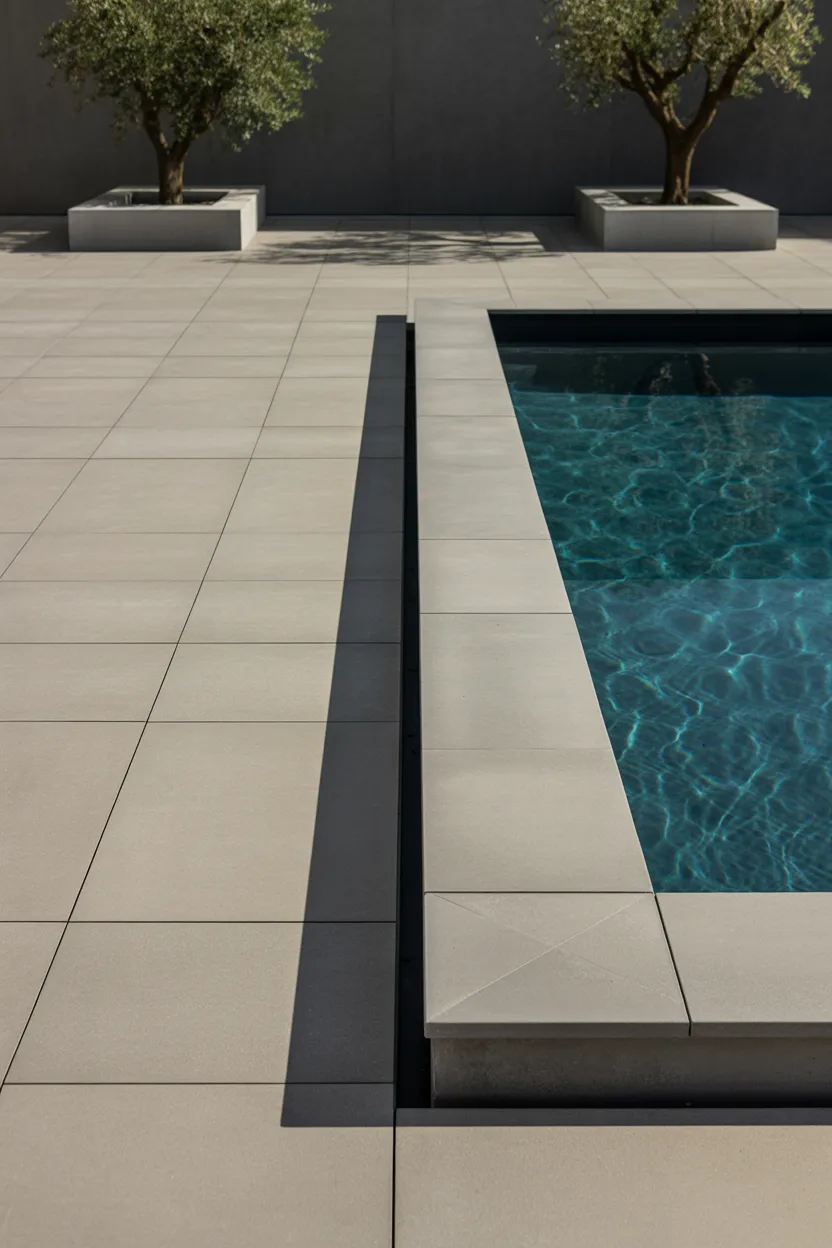
Cantilevered concrete coping is the definitive choice for contemporary and minimalist pool design — it communicates architectural precision and design confidence in a way that no other coping profile quite matches. The cantilever extends the coping slab one to two inches beyond the pool wall face, creating a sharp shadow line at the water’s edge that emphasizes the pool’s geometry and makes the water appear to sit inside a precisely engineered vessel. That shadow line is a subtle detail but one that distinguishes a designed pool from an ordinary one immediately.
Paired with large format porcelain tiles — 24×48 inches or larger — the overall effect is seamless and sophisticated. Fewer grout lines mean a cleaner visual surface, and the large tiles emphasize the scale of the deck in a way that smaller formats cannot. Porcelain is an outstanding pool deck material: it’s dense, non-porous, slip-resistant when textured, and maintains a comfortable surface temperature in direct sunlight. Choose a wood-effect or stone-effect porcelain finish to introduce warmth into what can otherwise feel like a cold, purely architectural space. This swimming pool coping approach defines the modern luxury pool aesthetic completely.
5. Natural Bluestone Coping With Glass Mosaic Tile
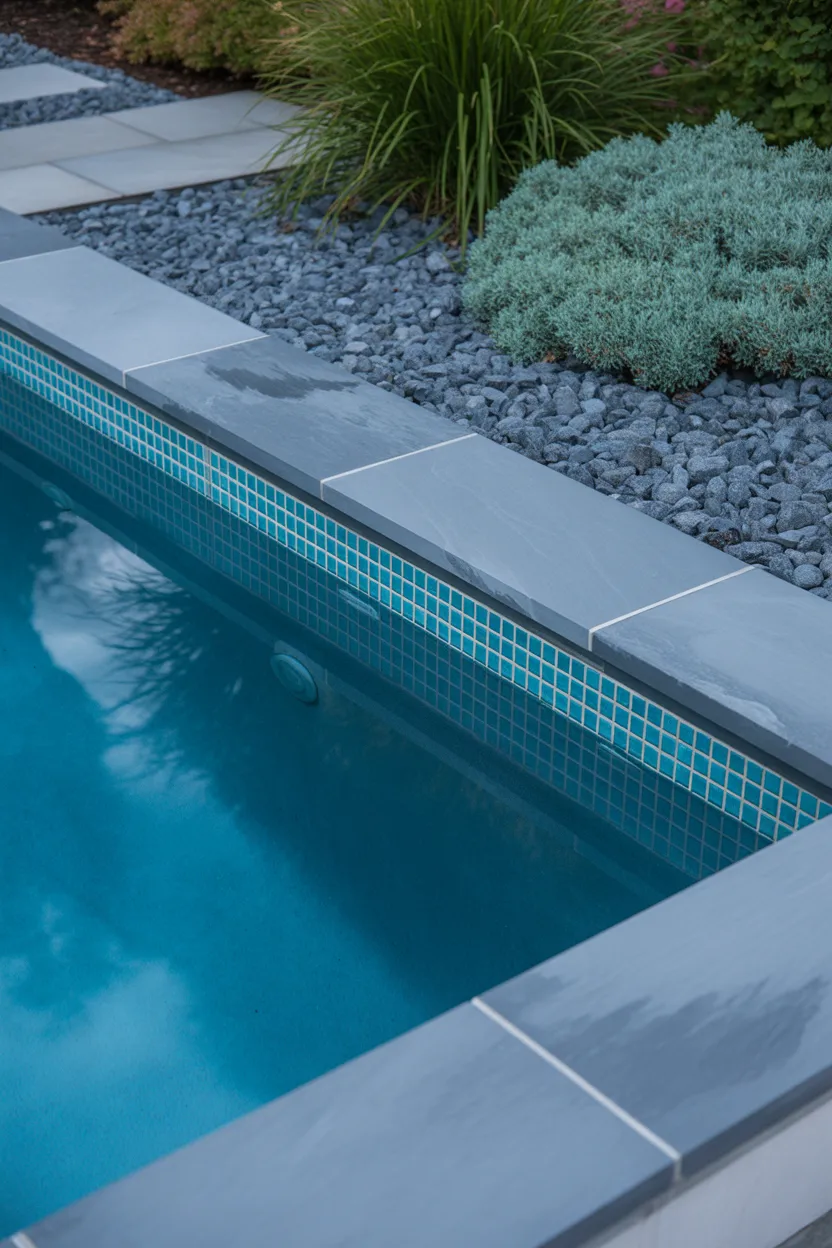
Natural bluestone is one of the most genuinely beautiful swimming pool coping materials available — its cool blue-gray tones create an extraordinary visual relationship with pool water, making even a standard blue-tiled pool appear more vivid, deeper, and somehow more elemental than it would against warmer stone. Bluestone is quarried primarily in Pennsylvania and Australia, and while the specific colorations differ slightly between sources, both share that distinctive blue-tinged gray hue that has made this stone a perennial favorite among pool designers who work in contemporary, transitional, and naturalistic styles.
The glass mosaic waterline tile is the perfect companion for bluestone coping — both materials share an affinity for light, reflecting and refracting it in ways that create that signature luminous quality around the water’s edge. Glass mosaic tiles in aquamarine, teal, or iridescent blue tones interact with water movement to create a constantly shifting, shimmering border that is mesmerizing to watch on a sunny afternoon. The grout color matters enormously with glass mosaic: choose a grout that matches the darker tiles in your mosaic blend to maintain the richness of the color and prevent the overall effect from looking washed out and pale.
6. Tumbled Travertine Coping With Pebble Mosaic Pool Floor
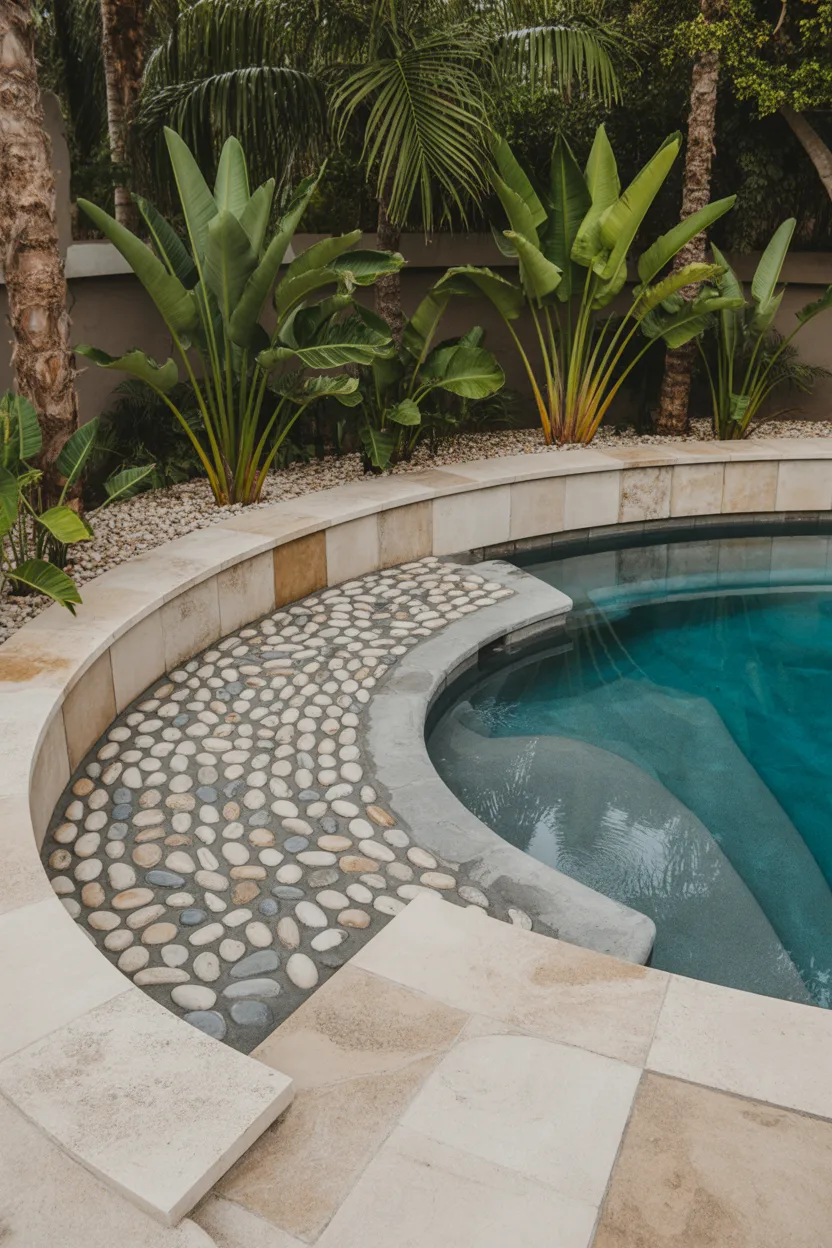
Tumbled travertine coping differs from its honed or brushed counterpart in one significant way: the tumbling process softens and rounds every edge and corner of the stone, creating a worn, antique quality that looks centuries old from day one. This aged character suits naturalistic and tropical pool designs with extraordinary ease — the rough-edged, characterful coping reads as organic and relaxed rather than precise and architectural. It also feels particularly comfortable underfoot, with no sharp edges to catch bare feet, making it a genuinely family-friendly swimming pool coping choice.
The pebbled mosaic pool floor is one of the most visually arresting pool interior finishes possible. Individual river pebbles laid by hand in the pool floor create a texture and color depth that conventional plaster or tile finishes cannot approach. The water over the pebbled surface takes on a natural, lagoon-like quality — the textured floor breaks up reflections and creates a constantly shifting visual experience that feels genuinely alive. It also provides excellent slip resistance on the pool floor. Combined with tumbled travertine coping, this design creates a backyard that doesn’t look like a pool at all — it looks like a private natural wonder.
7. White Marble Coping With Penny Round Tile
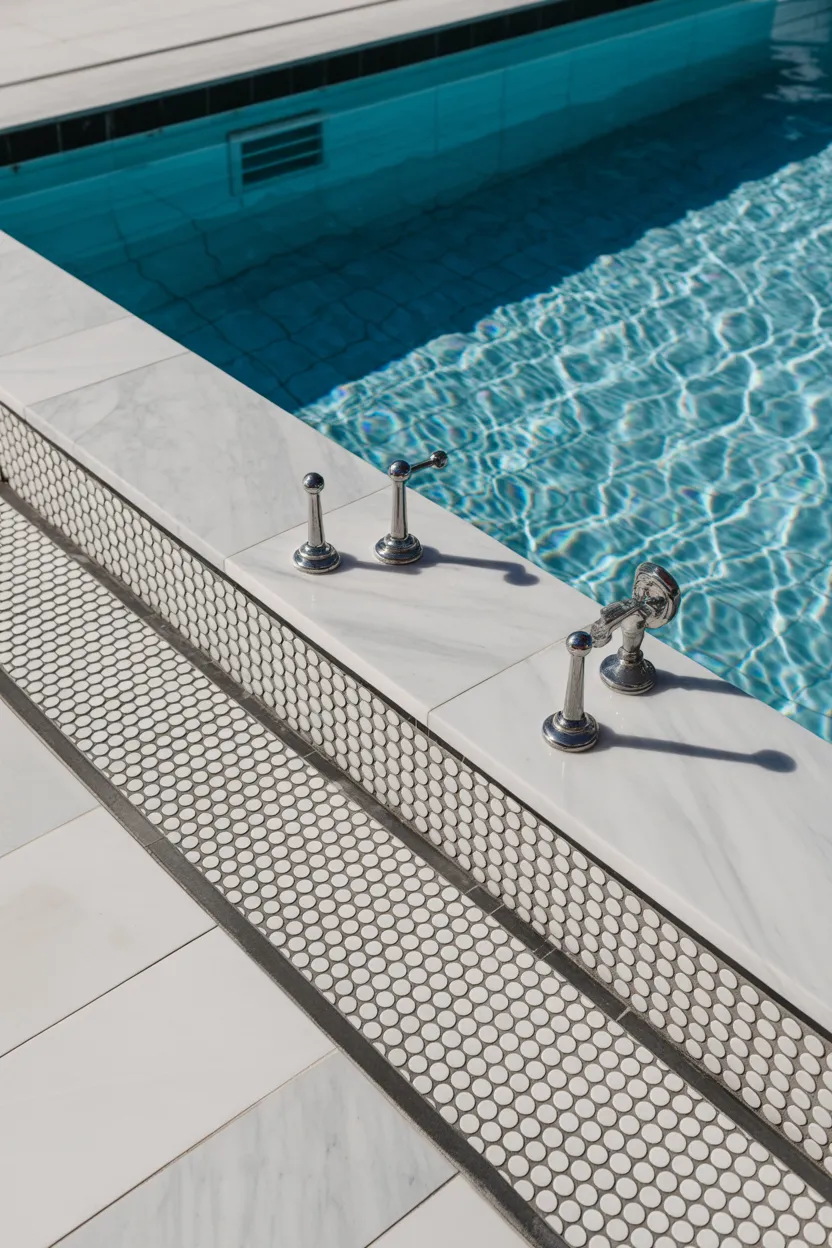
White Carrara marble coping is the most openly luxurious swimming pool coping choice on this list — it announces its quality immediately and unapologetically, and the spaces it graces reflect that confidence back in every direction. The polished or honed surface of Carrara marble, with its characteristic gray veining against a white ground, creates a brilliance at the pool’s edge that no other natural stone quite replicates. In direct sunlight, polished marble borders gleam with an almost architectural drama that makes even a simple rectangular pool look like a five-star hotel amenity.
White penny round tiles at the waterline introduce a graphic, retro-inspired texture that contrasts beautifully with the smooth marble above. The circular form of penny rounds creates a visual softness that prevents the all-white palette from feeling sterile or clinical, and the dark grout lines between each tiny disc create a pattern depth that reads as intentional and designed. This swimming pool coping and tile combination suits Mediterranean villas, contemporary minimal homes, and glamorous Hollywood-Regency style outdoor spaces equally well — because white marble transcends style categories the same way a classic white linen suit does. It’s simply permanently, effortlessly elegant.
8. Dark Slate Coping With Iridescent Tile
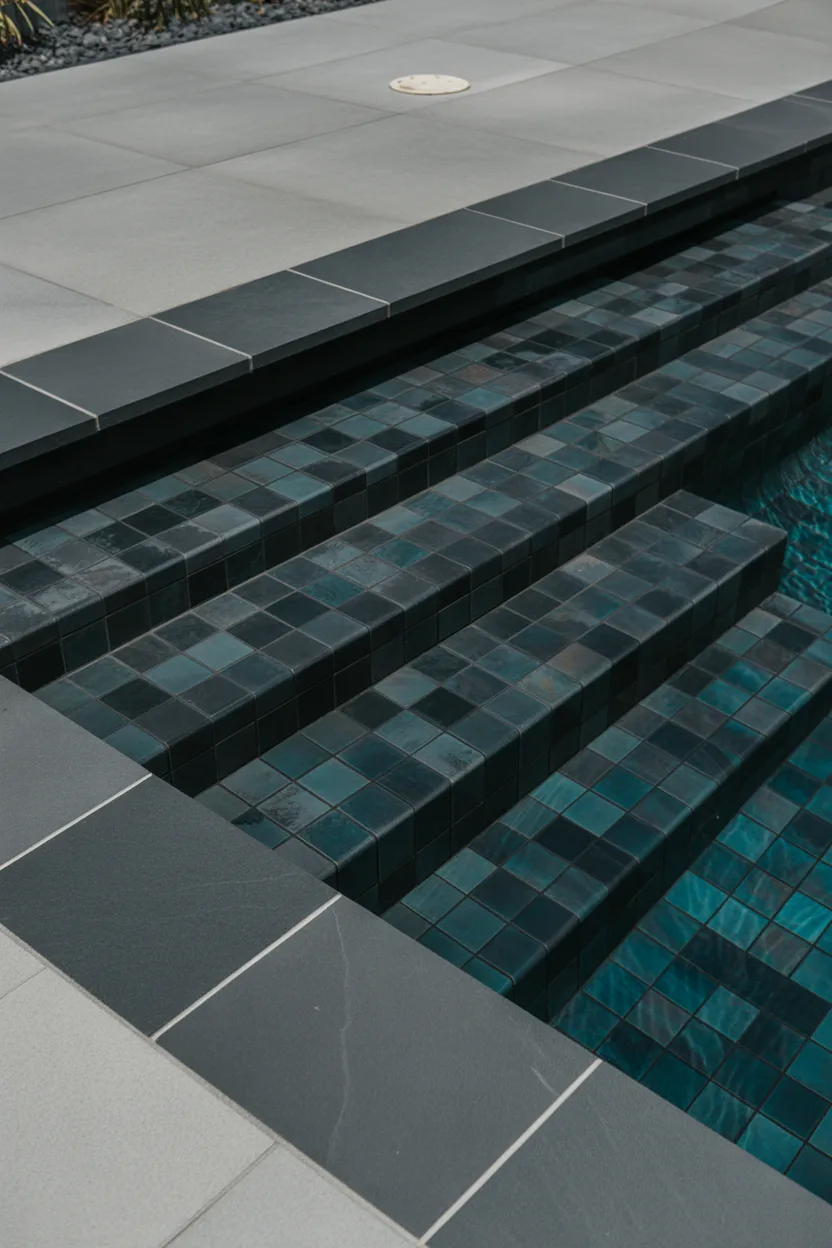
Dark slate coping creates one of the most dramatically sophisticated pool aesthetics possible — a moody, grounded palette that makes the water appear deeper, the space feel more intimate, and the entire backyard take on a distinctly luxurious, boutique-hotel quality. Slate’s naturally layered, slightly rough surface provides excellent grip when wet, and its dark tones absorb heat efficiently, making the coping warm and comfortable underfoot on cool spring or autumn mornings. The slate’s muted, sophisticated presence as swimming pool coping allows everything else in the design — the tile, the water, the landscaping — to amplify in contrast.
Iridescent tiles are the showstopper companion to dark coping — they’re the design element that turns a beautiful pool into a genuinely unforgettable one. Shifting from gunmetal gray to turquoise to deep teal depending on the light angle and time of day, iridescent tiles create a living, dynamic border that seems to have a personality of its own. The effect at the waterline — where the tile’s color shifts interact with actual water movement and light reflection — is mesmerizing. Combine dark slate coping with iridescent tile in the pool interior as well as at the waterline for a total design statement that photographs extraordinarily well in every light condition.
Explore more at : Pinterset
9. Sandstone Coping With Terracotta Waterline Tile
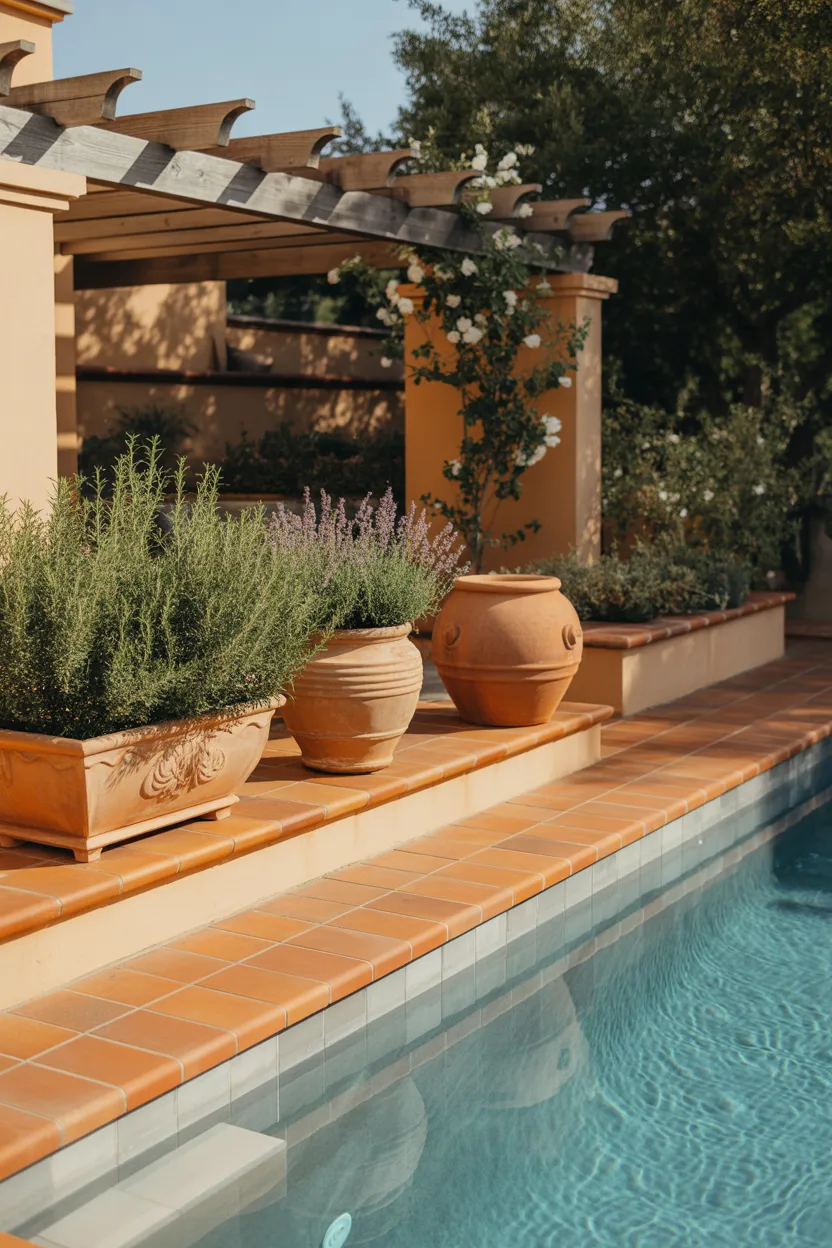
Sandstone coping brings an immediate warmth and organic character to pool design that cooler stones like bluestone or slate simply cannot replicate. Its honey, amber, and warm tan tones glow in sunlight with a richness that makes the entire outdoor space feel generous and sun-soaked — like a private Mediterranean retreat rather than a suburban backyard pool. Sandstone is a sedimentary stone with a naturally textured surface that provides inherent slip resistance, and its warm tonality pairs beautifully with terracotta, warm wood, aged copper, and abundant Mediterranean planting.
The terracotta waterline tile carries that warmth all the way to the water’s edge with complete design coherence. That warm orange-red band at the waterline is an unexpected and charming detail — most pools default to blue or teal waterline tiles, but terracotta creates a color story that is entirely distinctive and thoroughly beautiful when paired with the right coping and surrounding palette. The warm tones of the swimming pool coping and tile combination also interact generously with the turquoise of pool water, creating a complementary contrast between warm stone and cool water that is visually dynamic and endlessly satisfying. This palette simply makes people feel good.
10. Pavers Coping With Geometric Waterline Tile
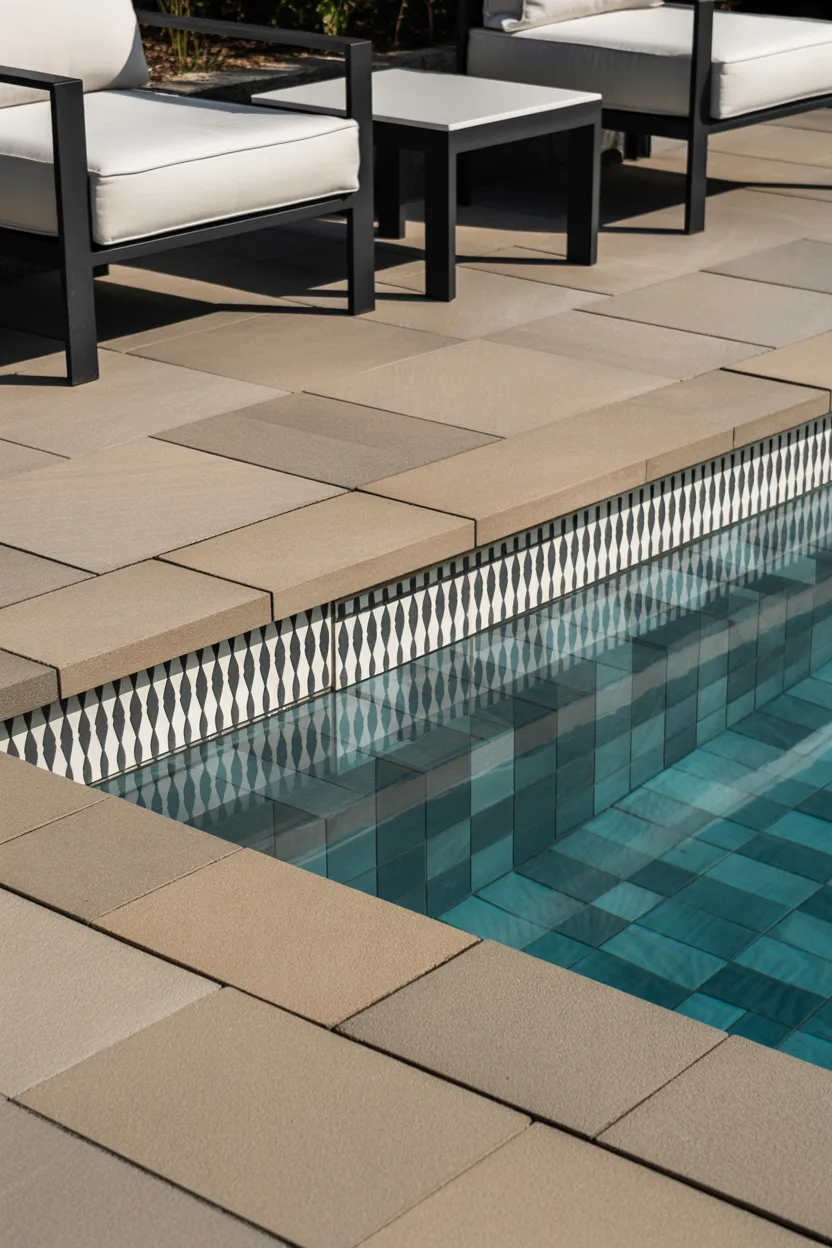
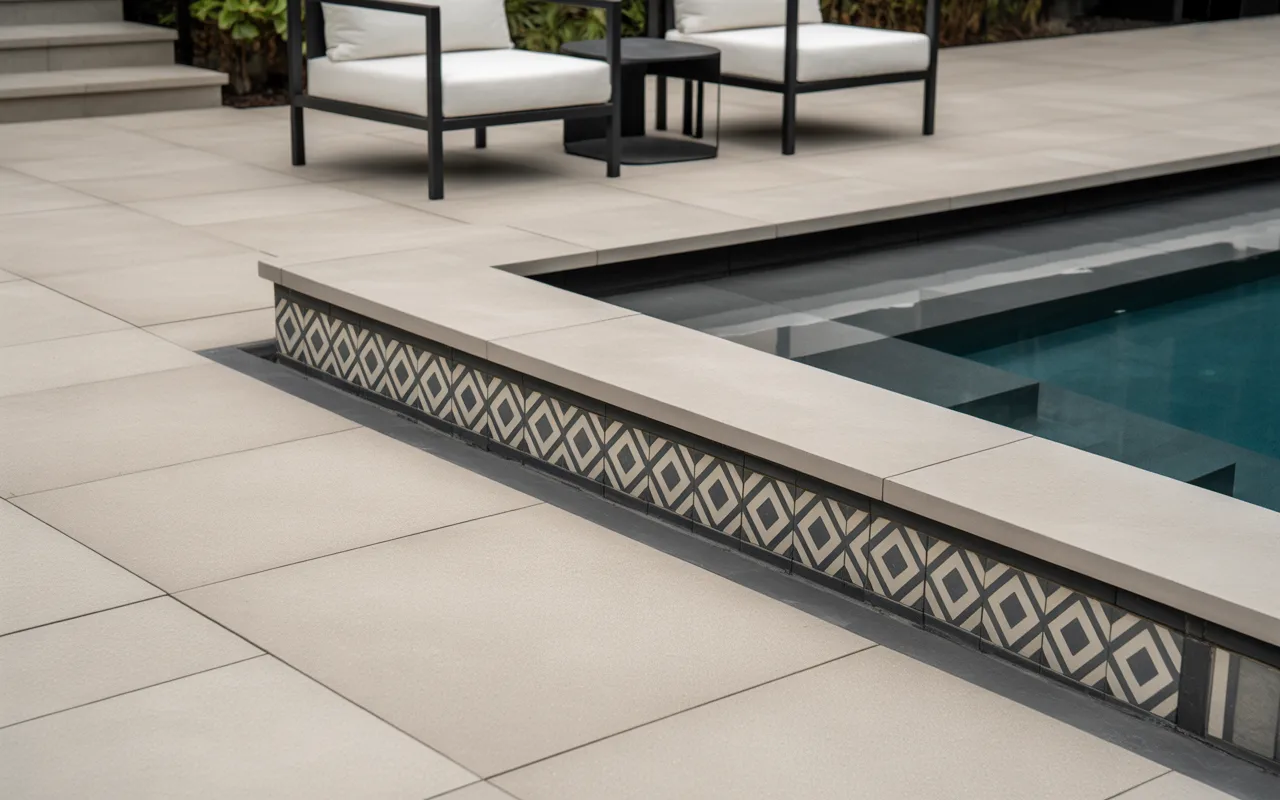
Concrete paver coping offers one of the most versatile and cost-effective routes to a genuinely polished pool surround. Modern concrete pavers are produced in an extraordinary range of sizes, finishes, and tones — from smooth polished surfaces to brushed, sandblasted, or exposed aggregate textures — and their consistent manufactured dimensions make installation clean and precise. For contemporary pool designs, large format paver coping in buff, warm gray, or charcoal tones creates a strong, architectural perimeter that grounds the pool in its landscape with quiet confidence and lasting visual appeal.
The geometric black and white waterline tile band introduces graphic energy that elevates the entire pool design from simply neat to genuinely considered. Repeating diamond, chevron, or Greek key patterns at the waterline have a graphic boldness that reads well from every viewing angle — from the pool interior, from the deck, and from the house looking out across the garden. This swimming pool coping and tile pairing suits modernist homes, mid-century inspired outdoor spaces, and any pool where the owner wants a design that feels both contemporary and classically grounded. It’s a combination that never dates because geometry itself never does.
11. Timber Coping With Zellige Tile
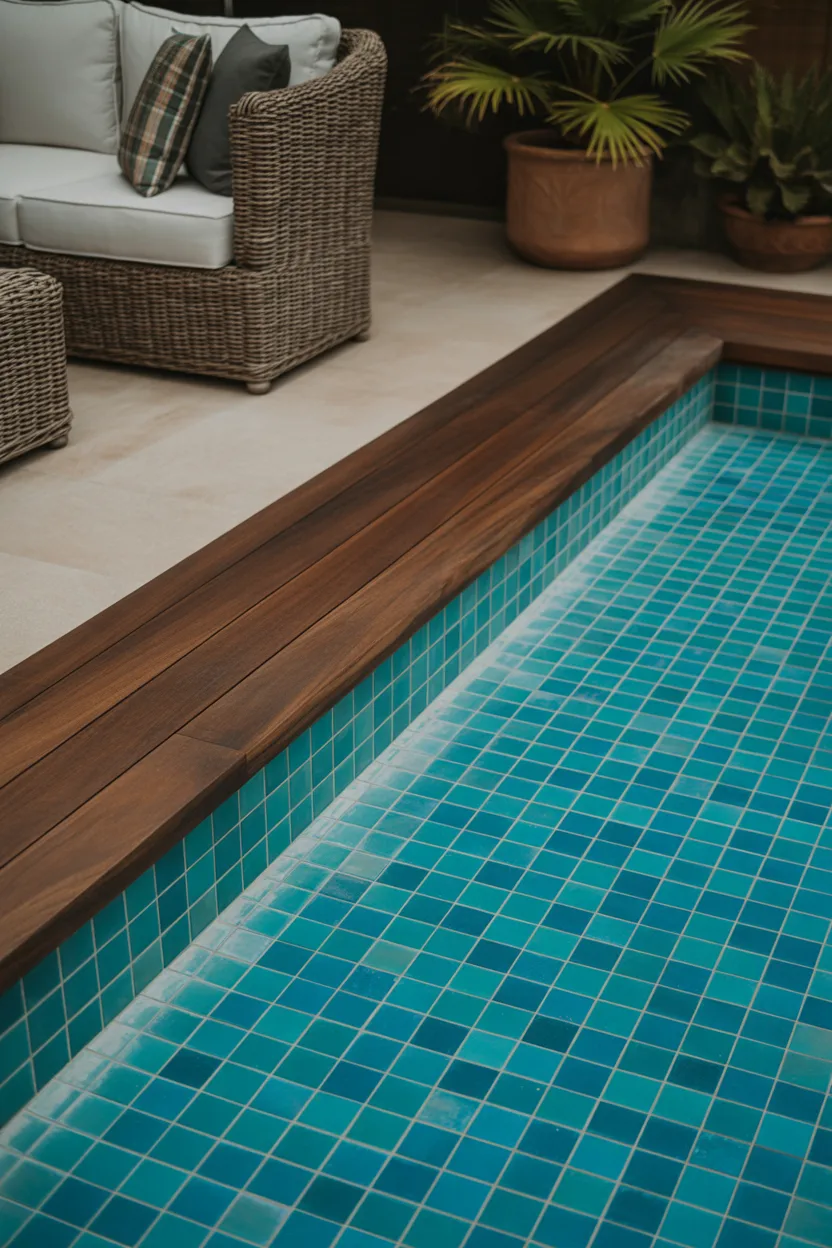
Timber pool coping is a warm, organic choice that brings the material language of decking directly to the water’s edge, creating a seamless visual connection between pool and surrounding deck. Hardwood species like ipe, teak, spotted gum, and jarrah are the ideal choices — their natural density and oil content provide exceptional resistance to moisture, sun, and the chemicals inherent in pool water. A deep walnut stain applied to the timber coping creates a luxurious, furniture-quality finish at the water’s edge that makes the pool feel less like a water feature and more like a living room that happens to be filled with water.
Moroccan zellige tile is perhaps the most characterful and visually complex pool tile choice available anywhere. Handmade from natural clay and individually glazed, each zellige tile has a subtly different surface, color depth, and light response — when laid across a pool interior or at the waterline, the cumulative effect is a shimmering, jewel-like surface that seems almost alive in sunlight. The slight irregularity of handmade tile is precisely what makes zellige extraordinary rather than merely attractive. This swimming pool coping and tile pairing represents a genuine commitment to artisanal design — a pool that looks like it was assembled by craftspeople rather than installed by contractors.
12. Cantilevered Limestone With Infinity Edge Detail
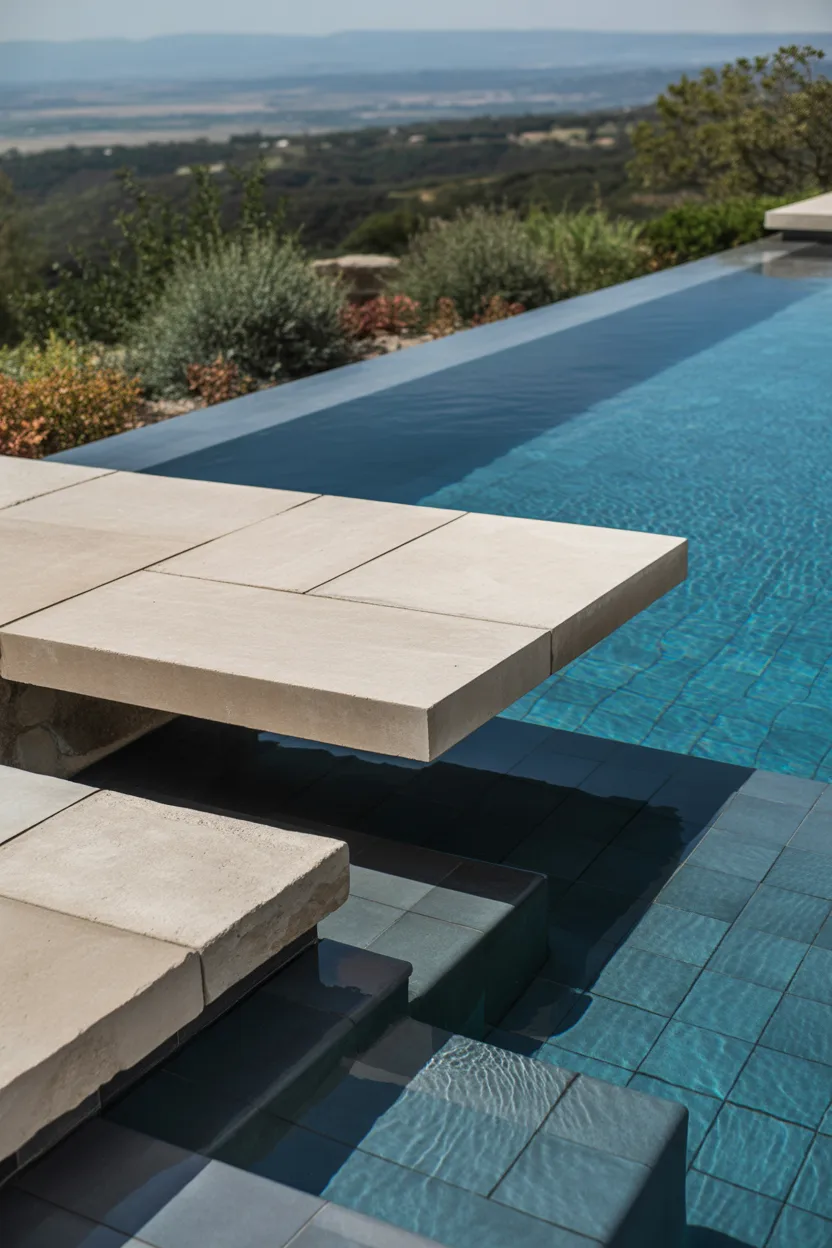
An infinity edge pool with cantilevered limestone coping represents the absolute pinnacle of residential pool design — a combination that prioritizes the visual experience of the water over every other consideration. The cantilevered coping extends flush with the infinity edge, allowing the water surface to meet the horizon in an unbroken, shimmering line that creates the impression of water extending to the edge of the world itself. The limestone’s neutral, creamy tone disappears at the edges, placing all visual focus on the water and the view beyond. It’s a design choice that requires extraordinary site conditions but rewards them magnificently.
The technical execution of this detail requires precision — the coping must be perfectly level, the overhang precisely consistent, and the stone selected for structural suitability given its cantilevered position over moving water. But when done correctly, the result is a swimming pool coping detail so visually powerful that it becomes the defining feature of the entire property. Pair with deep blue-gray glass mosaic tile in the pool interior to create a water color rich enough to hold its own against any landscape view. This is the pool design that ends the conversation — there is simply nothing more beautiful in residential outdoor design.
13. Brick Coping With Blue and White Portuguese Tile
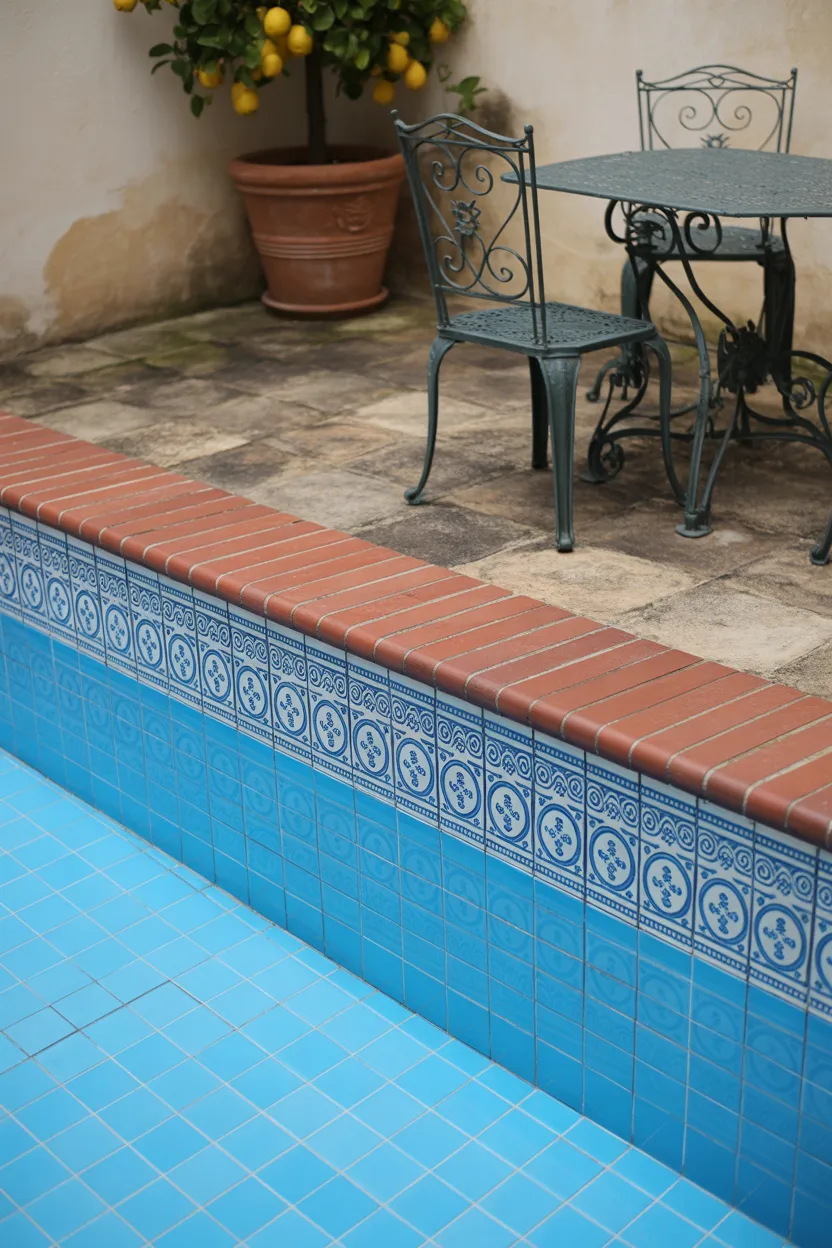
Red brick coping and blue and white Portuguese tile is a pairing with the confidence of centuries behind it — azulejo tile tradition dates to 15th-century Portugal, and its marriage with warm red brick is a combination that has graced palaces, monastery gardens, and aristocratic villas across the Iberian Peninsula for generations. Bringing this historic partnership to a residential swimming pool creates a space that feels genuinely cultured and historically informed rather than simply decorated. The swimming pool coping in warm red brick grounds the design in familiar, residential warmth while the tile elevates it into something extraordinary.
Hand-painted blue and white tiles at the waterline create a detail that rewards close inspection — the intricate floral, geometric, and narrative patterns become visible through the water surface and take on an additional dimension of beauty when seen through that refracting lens. Every angle reveals something slightly different. Choose authentic hand-painted azulejo tiles from Portuguese artisans rather than machine-printed imitations — the slight variation in color and hand-drawn quality of genuine hand-painted tile is precisely what makes this detail magical rather than merely decorative. This pool design tells a story, and that narrative depth is what makes it utterly unforgettable.
14. Honed Granite Coping With Dark Grout Tile
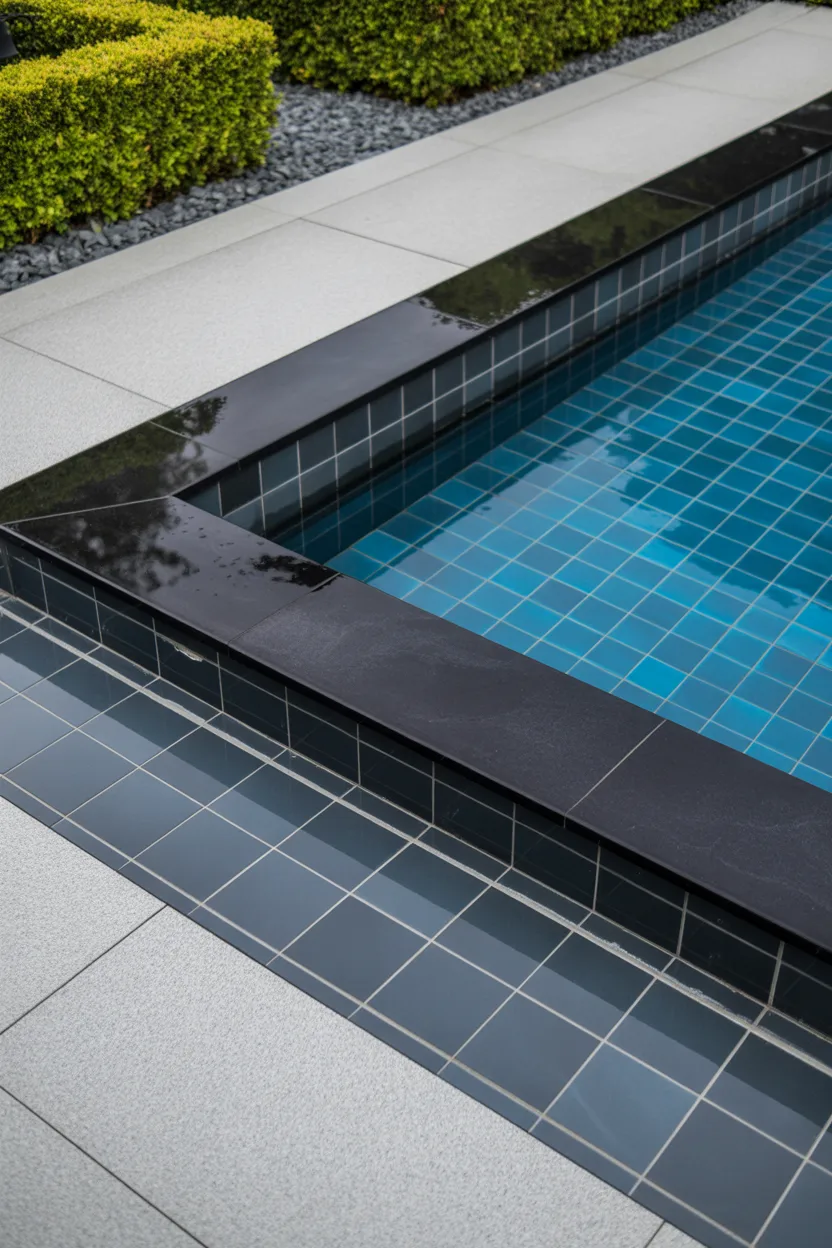
Honed black granite swimming pool coping makes an unambiguous design statement — this is a pool that has been designed rather than simply installed. The dense, smooth surface of honed granite has a matte elegance that polished stone doesn’t quite capture: it absorbs light gently rather than reflecting it harshly, creating a sophisticated presence at the water’s edge that feels refined rather than flashy. Black granite provides extraordinary contrast against any pool water color — whether your pool is vivid turquoise, deep cobalt, or soft aquamarine, the dark coping makes that water color appear more saturated and more vivid.
Dark coping and light tile create a graphic contrast that strengthens the visual architecture of the pool space, making the water boundaries sharper and the overall composition more defined. Large format charcoal tiles with clean white grout lines at the waterline reference the grid aesthetic of contemporary architecture in a way that suits modernist homes with particular elegance. The precision of the grid requires precise installation — grout lines must be perfectly consistent and the tiles perfectly level — but that exactitude is the entire point. This swimming pool coping and tile pairing is an exercise in controlled perfectionism, and the results are exactly as impressive as that description implies.
15. Recycled Terracotta Coping With Hand-Painted Tile
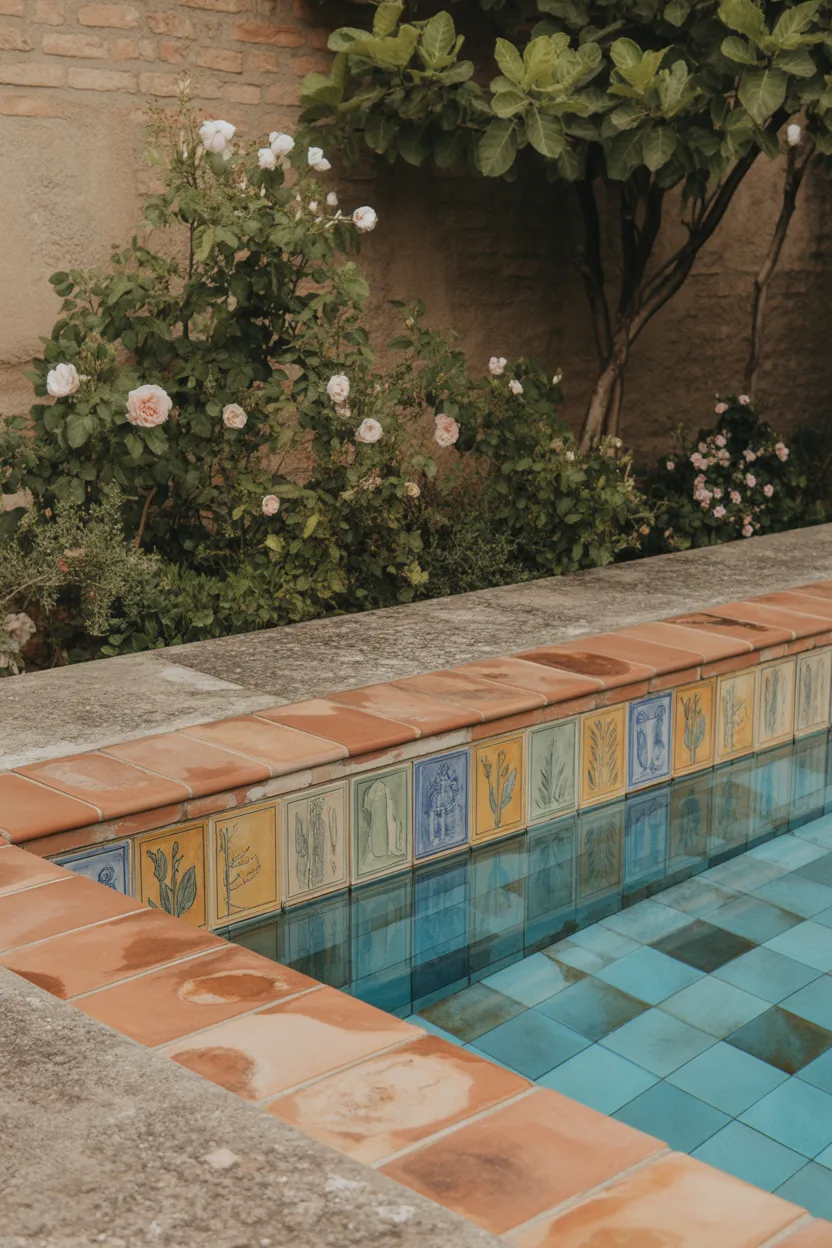
Reclaimed terracotta coping carries a beauty that no new material can purchase — decades of weathering, mineral staining, and use have created a surface with genuine depth and character that looks as though the pool has always been part of the landscape rather than installed in it. Sourced from demolished Mediterranean buildings, antique terracotta roofing tiles, or specialist reclaim yards, these coping tiles bring an irreplaceable authenticity to pool design that suits walled garden settings, Provençal-style homes, and any outdoor space where the goal is romantic, timeworn beauty rather than crisp contemporary polish.
Individual hand-painted tiles as the waterline band complement reclaimed terracotta beautifully, sharing the same artisanal, imperfect quality while introducing a richness of color and motif that makes the swimming pool coping and tile combination genuinely extraordinary. Commissioning tiles with botanical motifs — herbs, flowers, birds, or fruit — adds a narrative layer to the pool design that makes the space feel personal and curated. Mix up to a dozen different tile designs within a single waterline band for a collected, antique feel, or use a single repeating motif for a more formal, considered look. Either way, this is pool design at its most romantic and most human.
16. Porcelain Wood-Effect Coping With Pebble Mosaic Border
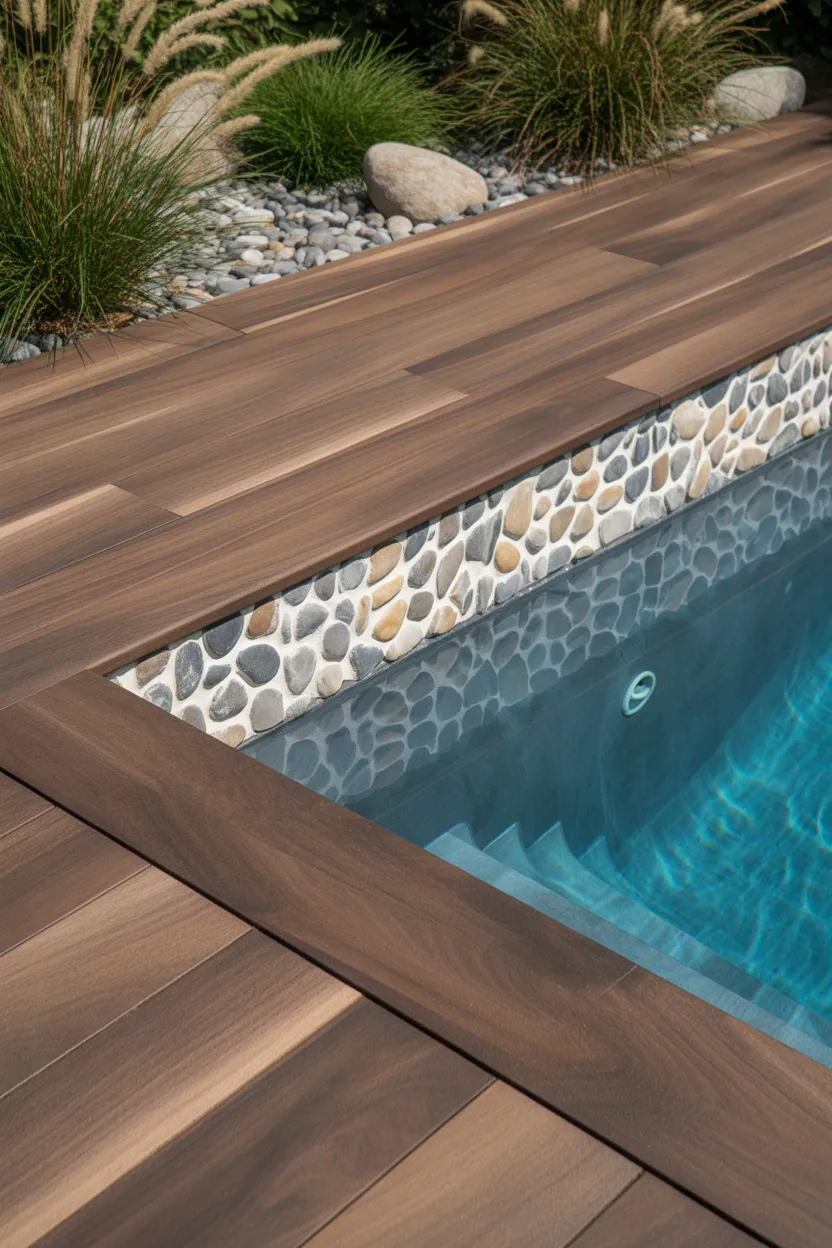
Porcelain wood-effect coping tiles deliver the warm, organic visual appeal of timber without any of timber’s practical limitations in a pool environment. Genuine wood degrades, warps, splinters, and requires regular maintenance when exposed to the constant moisture, chlorine, and UV radiation of a pool surround. Porcelain, by contrast, is impervious to all of these conditions — it won’t rot, fade, splinter, or stain, and it maintains its visual integrity indefinitely with minimal maintenance. Modern digital printing technology produces wood-effect porcelain of such visual accuracy that the material distinction is undetectable except by touch at very close range.
The pebble mosaic border tile creates a naturalistic transition from the structured architectural coping to the pool interior, softening what might otherwise feel like a too-crisp boundary between materials. River pebbles in neutral gray, tan, and warm white tones work beautifully alongside the wood-effect coping, referencing natural water edges and creating the impression of a thoughtfully designed natural swimming environment. This swimming pool coping and tile combination suits contemporary homes with biophilic design ambitions — spaces where the goal is to blur the boundary between built structure and natural landscape as convincingly and as beautifully as possible.
17. Bluestone Coping With Geometric Black and Gold Tile
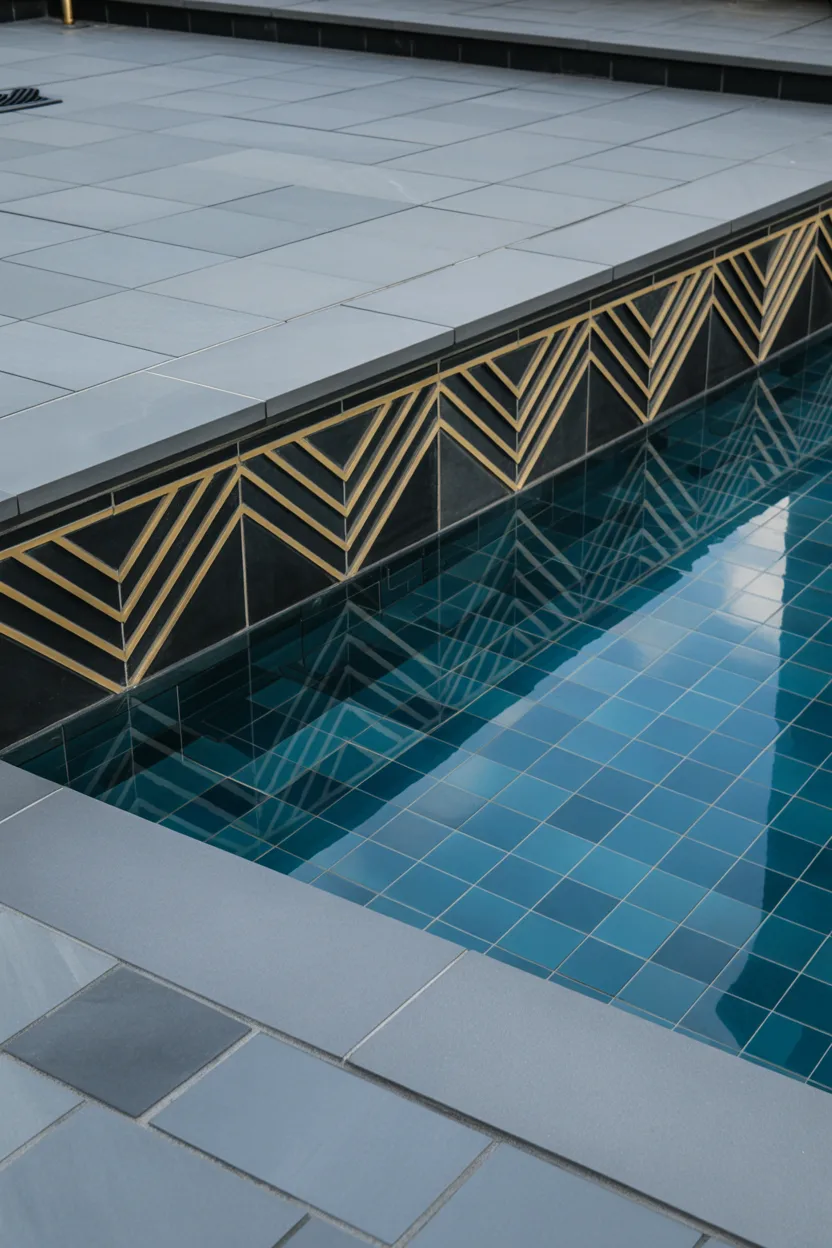
Bluestone coping and black-and-gold geometric tile is a pairing with unambiguous glamour — it channels the opulence of art deco design and brings it poolside with a confidence that is genuinely exciting. The cool blue-gray of the bluestone provides a sophisticated, restrained perimeter that allows the waterline tile to command full visual attention without competing for it. This is thoughtful swimming pool coping design: the coping itself is beautiful and well-chosen, but its primary role is to set the stage for the tile detail below it, and it performs that supporting role with quiet, understated excellence.
The black and gold geometric tile band is where this design makes its most dramatic statement. Art deco diamond and chevron patterns in matte black with brushed gold accents create a border of extraordinary visual richness — complex enough to reward close inspection, bold enough to read as a strong design gesture from the far end of the backyard. Gold grout within the black tiles amplifies the metallic warmth and creates a shimmer at the waterline that intensifies in sunlight. Carry the gold accent tone through to pool hardware — ladders, handrails, and light fixtures — for a design that feels entirely considered and thrillingly luxurious from every viewing angle.
18. Exposed Aggregate Coping With Teal Glass Tile
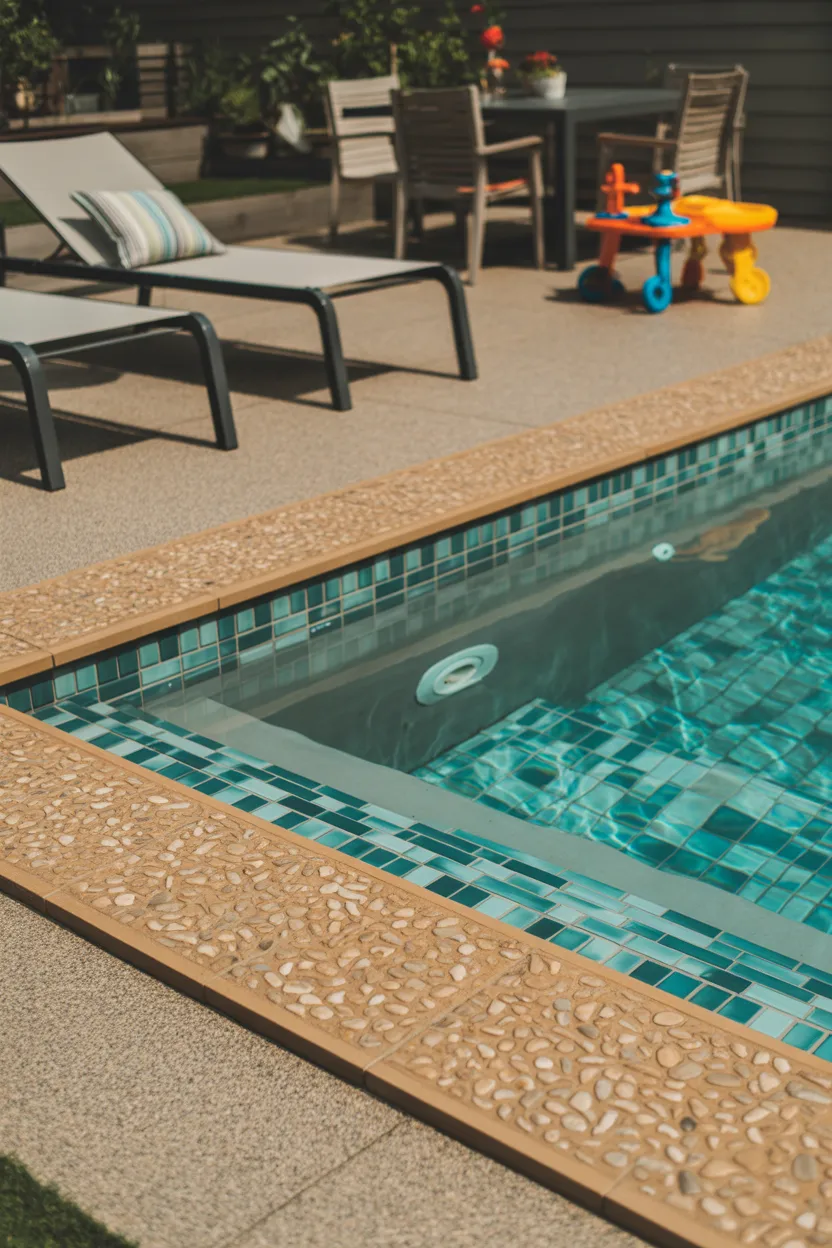
Exposed aggregate coping occupies a design position that bridges the gap between functional practicality and genuine visual interest — it’s the swimming pool coping choice for homeowners who want texture, slip resistance, and a naturalistic character without the premium price point of natural stone. Small smooth pebbles, crushed shells, or decorative stone chips embedded in a concrete base create a surface with both visual depth and tactile richness that plain concrete simply cannot match. The aggregate palette — warm tans, soft whites, and sandy grays — pairs naturally with the outdoor environment and suits a wide range of home styles.
Teal glass tile at the waterline introduces vivid color that makes the pool water appear extraordinarily beautiful — the luminous, slightly iridescent quality of glass tile interacts with water movement and sunlight to create a shimmering, animated border that plain ceramic tile cannot approach. Teal is a particularly effective waterline tile color because it amplifies the natural blue-green tones of pool water while remaining clearly visible through the water surface. Pair with a white or light gray interior plaster finish for maximum water clarity and brilliance. This honest, family-friendly swimming pool coping and tile combination delivers a pool that looks genuinely beautiful every single day it’s used.
19. Sandblasted Concrete Coping With Mediterranean Blue Tile
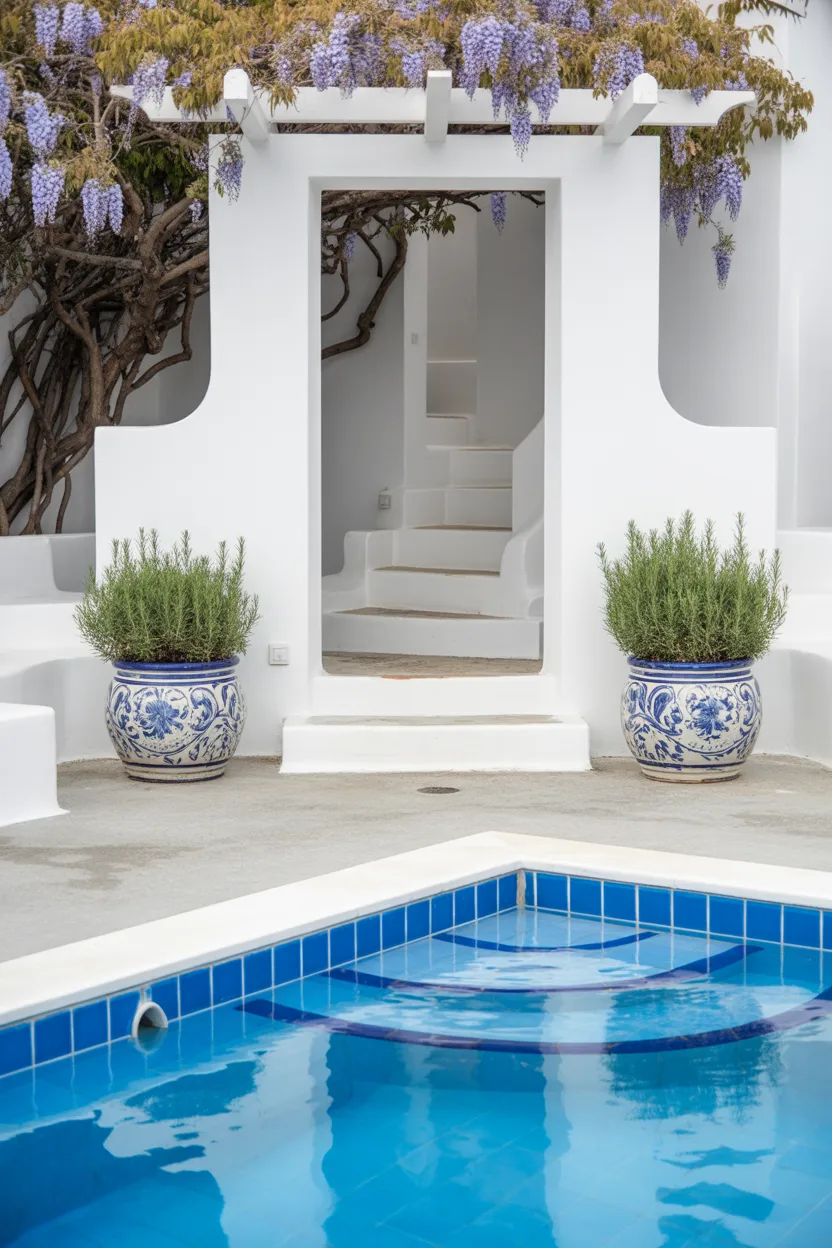
Sandblasted concrete coping has a chalky, sun-bleached quality that evokes the whitewashed architecture of Greek island villages with immediate and powerful effect. The sandblasting process strips the smooth surface of cast concrete to reveal the fine aggregate beneath, creating a slightly rough, light-absorbing texture that appears almost luminous white in direct sunlight. This quality — reflective, warm, and architecturally bold — has made sandblasted white concrete coping the defining material of Mediterranean-style pool design in warm-climate residential architecture from California to Queensland to the South of France.
The deep cobalt blue Mediterranean waterline tile completes the Greek island aesthetic with an assurance that no other color could match. The specific quality of hand-glazed Mediterranean ceramic — slightly uneven glaze, subtle color variation between individual tiles, a depth that manufactured tiles lack — creates a waterline border with genuine artisanal character. This swimming pool coping and tile combination creates one of the most emotionally powerful pool aesthetics possible: it doesn’t just look beautiful, it transports you. The combination of white, cobalt, and water blue creates a color story so deeply associated with happiness, warmth, and holidays that simply sitting beside the pool lifts the spirit immediately and completely.
20. Natural Fieldstone Coping With Pebble Mosaic Tile
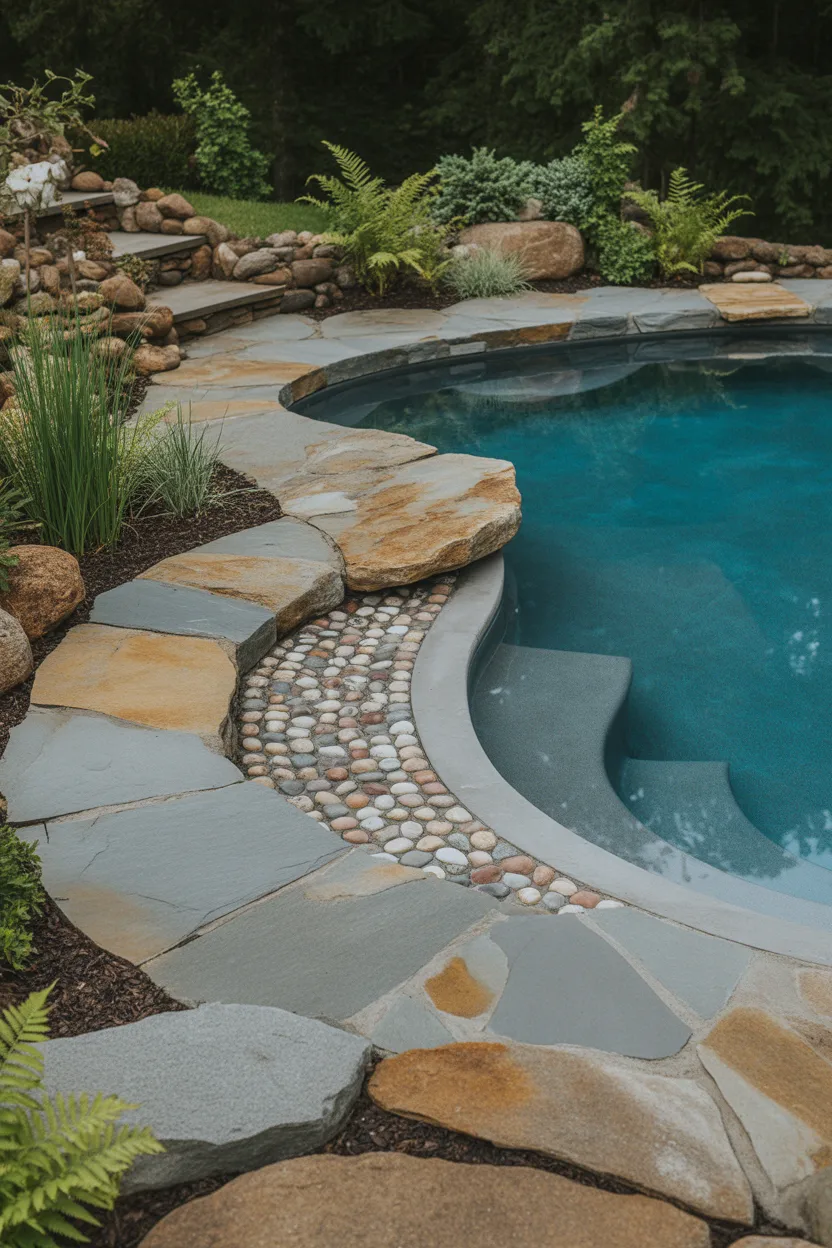
Natural fieldstone coping represents the most organically beautiful end of the swimming pool coping spectrum — stones sourced directly from the local landscape, laid with a deliberate naturalness that creates the impression of a pool that has always been part of the site rather than installed upon it. Fieldstone’s irregular shapes, varied sizes, and complex natural coloration create a coping line that moves and breathes rather than marching in rigid uniformity. This quality is precisely what makes it so compelling: it looks like nature made it rather than contractors installed it, and achieving that impression requires both skill and restraint.
The hand-laid pebble mosaic waterline tile completes the naturalistic vision with extraordinary coherence. River pebbles in earth tones — gray, white, tan, rust, and occasional dark charcoal — create a waterline border that references the coping material above and the pool interior below, acting as a visual bridge between constructed stone and water. The texture of the pebble mosaic is also deeply tactile and pleasurable to touch and walk across at the pool’s entry steps. This pool design has no sharp edges, no glossy surfaces, and no rigid geometry — it is the most human and most quietly beautiful of all swimming pool coping and tile combinations, a pool designed to feel like a gift from the natural world.
Conclusion
The right swimming pool coping and tile choice does more than finish an edge — it defines the entire character of your pool and backyard. From travertine to fieldstone, glass mosaic to hand-painted azulejo, every combination on this list proves that great pool design lives in the details. Choose the style that genuinely moves you, invest in quality materials and installation, and you’ll have a pool that impresses every single day for decades

Join The Discussion