
Introduction
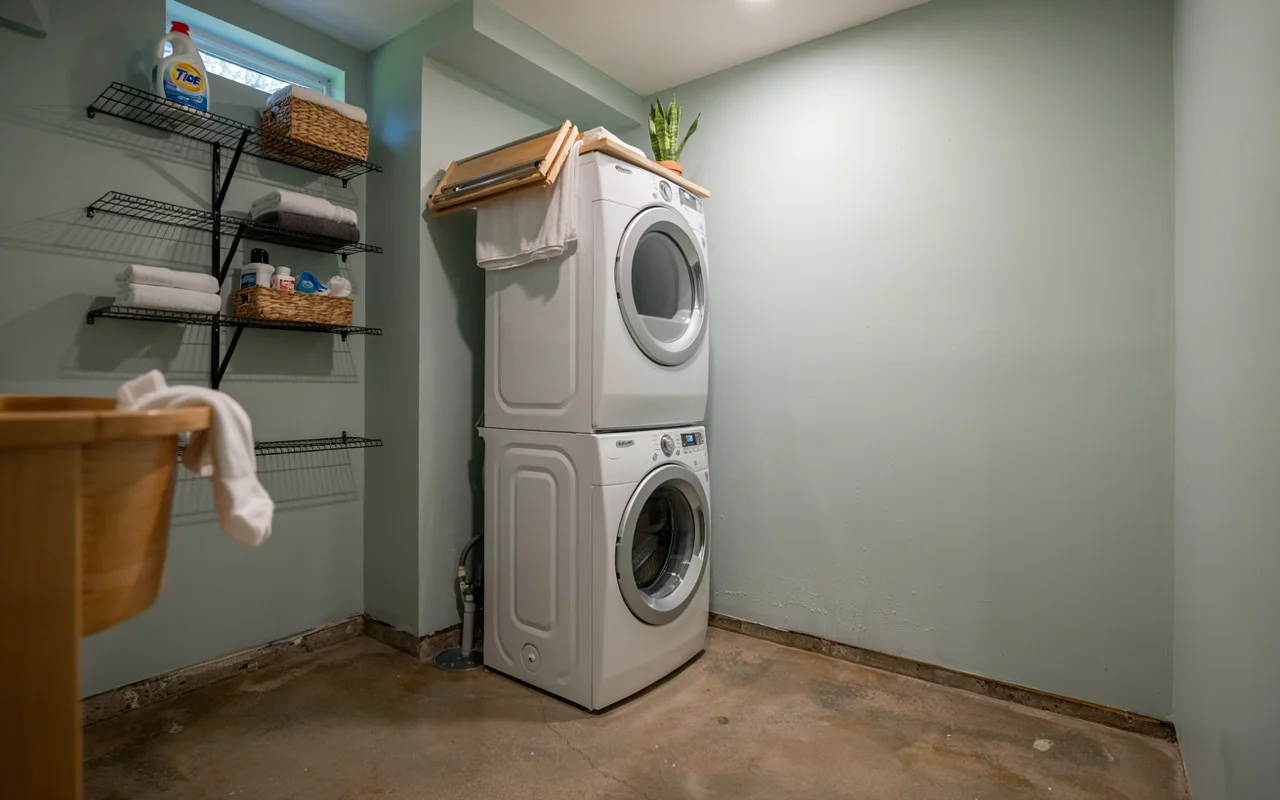
Basement laundry rooms often get overlooked, but the best ones are built around more than just a washer and dryer. From smart storage solutions to layouts designed around your actual laundry workflow, small design choices can make a huge difference in how functional and enjoyable the space feels. Whether you’re dealing with low ceilings, limited natural light, or an awkward layout, these ideas prove that basement laundry rooms can be both practical and stylish. Below are 23 basement laundry room ideas built around real, hidden design logic.
1. Bright White Basement Laundry Room
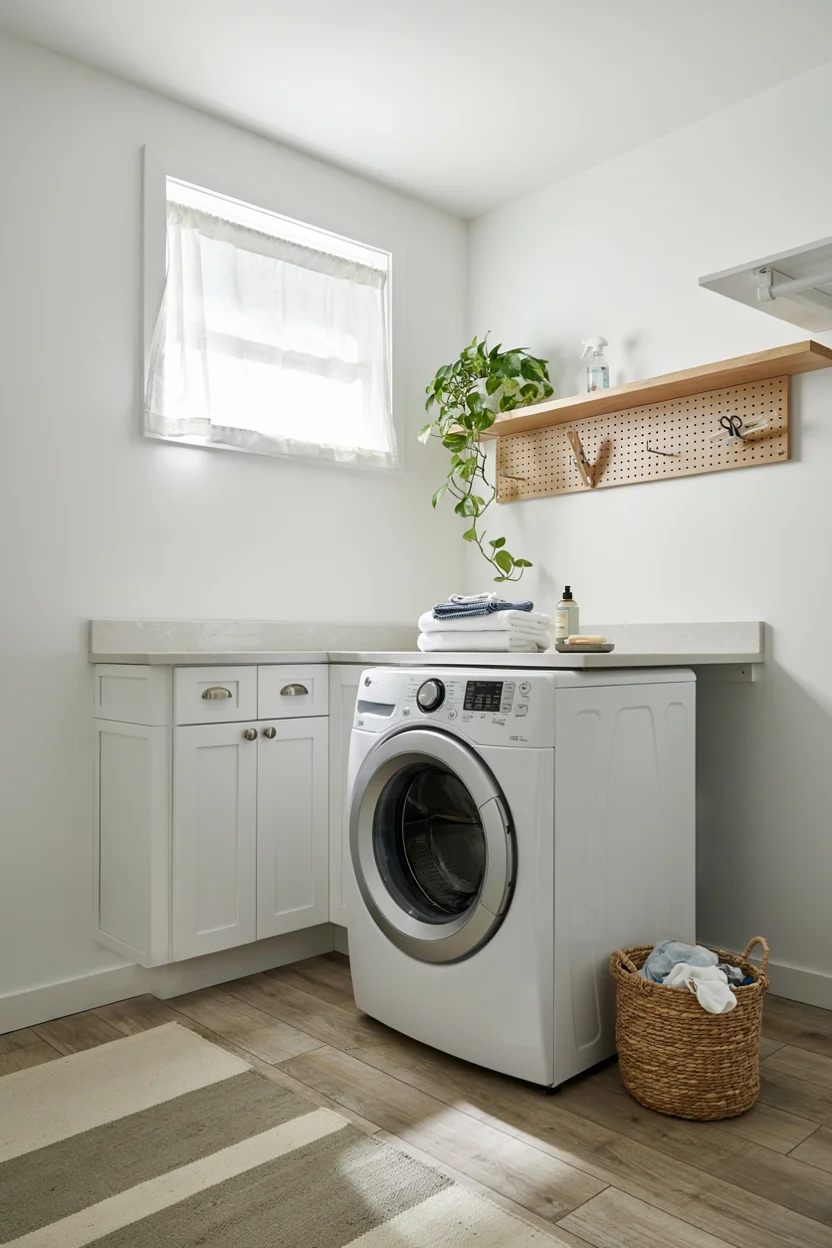
Basements often struggle with limited natural light, making a bright white color palette one of the most effective design choices for a basement laundry room. White walls, cabinetry, and flooring reflect available artificial light, helping the space feel larger and more open despite being below ground level.
Layering multiple light sources, such as recessed ceiling lights and under-cabinet fixtures, further combats the natural darkness of a basement setting. Choosing a slightly warm white bulb temperature keeps the space from feeling sterile or clinical. This foundational bright approach makes it easier to layer in other decorative elements without the room ever feeling dim or cave-like.
2. Hidden Laundry Behind Barn Doors
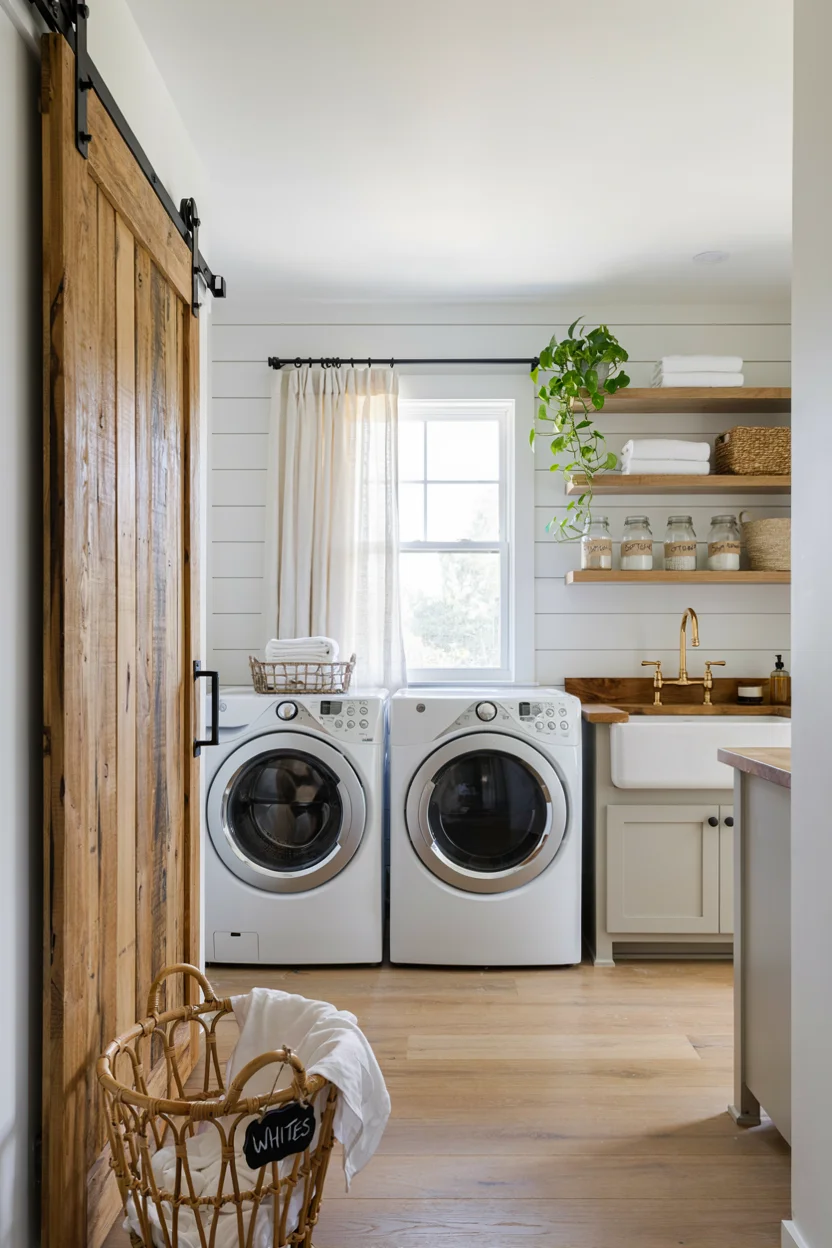
Sliding barn doors solve a common basement design challenge: how to visually separate a laundry area from an open basement living space without sacrificing square footage to a swinging door. This solution works particularly well in finished basements that double as home theaters, playrooms, or guest suites, where laundry appliances need to stay out of sight.
Choosing a door finish that complements the rest of the basement’s design, whether rustic wood or a sleek painted panel, ensures the barn door reads as an intentional design feature rather than a purely functional add-on. Because barn doors slide along the wall rather than swinging outward, they save valuable floor space in what are often tight basement layouts.
3. Basement Laundry with Open Shelving
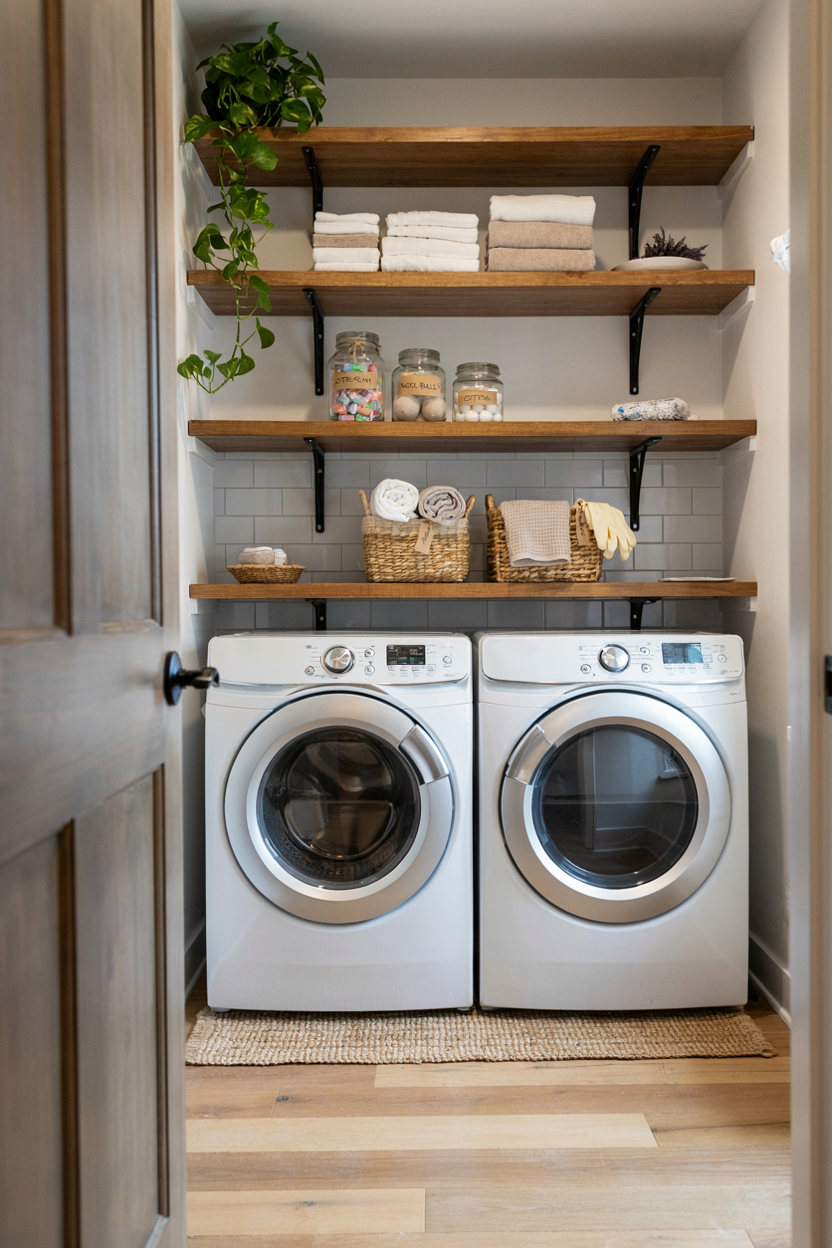
Open shelving offers a practical, budget-friendly alternative to closed cabinetry in basement laundry rooms, particularly in spaces with lower ceilings where bulky upper cabinets might feel oppressive. This approach also encourages better organization, since everything stored on open shelves remains visible and accessible during everyday laundry tasks.
Styling the shelves with a mix of practical items, like labeled jars for detergent, and softer touches, like folded towels or a small plant, keeps the space feeling curated rather than purely utilitorian. Wood shelving in particular adds warmth to a basement laundry room, helping to counteract the concrete and metal surfaces often found in below-ground spaces.
4. Basement Laundry Folding Station
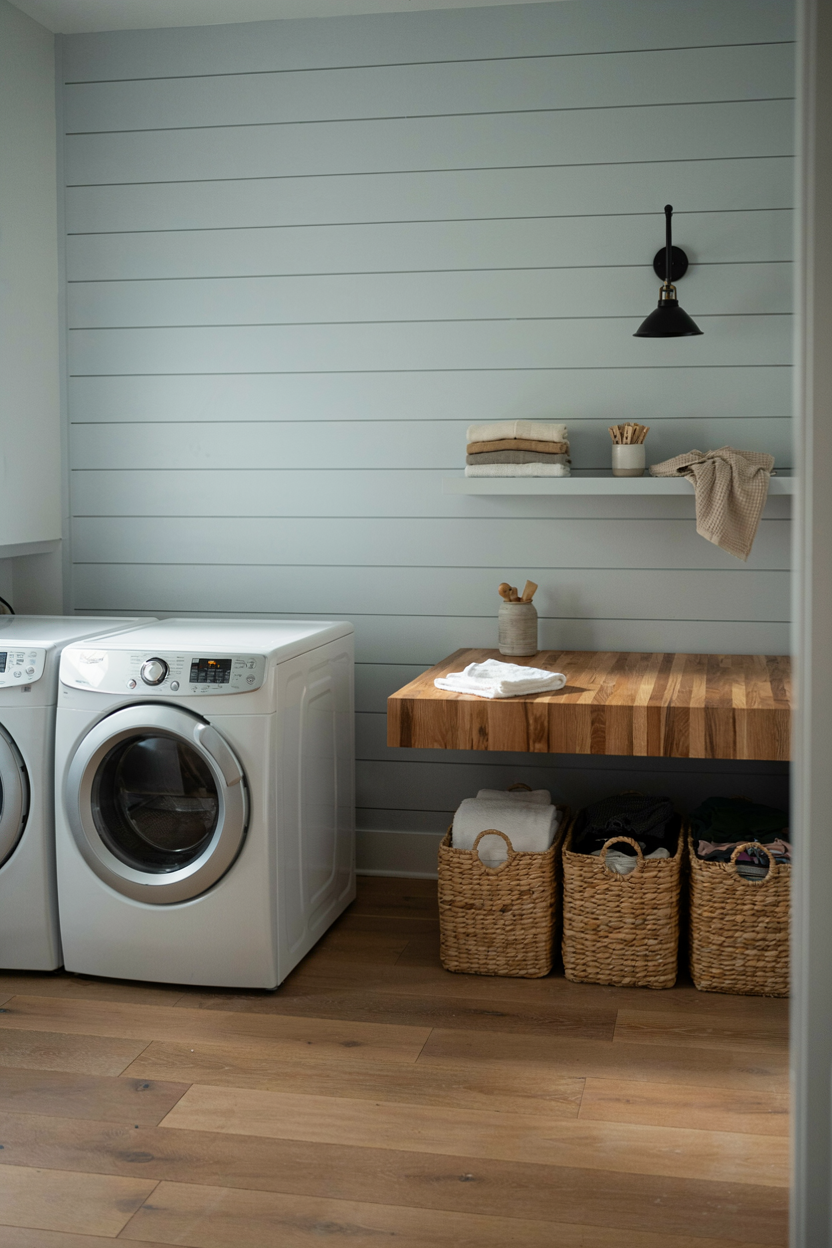
A dedicated folding station transforms a basement laundry room from a purely functional space into one designed around an efficient workflow. Positioning a countertop at standing height directly beside the appliances eliminates the need to carry laundry to another room for folding, saving time and effort during regular laundry routines.
Butcher block or laminate countertops both hold up well to the humidity often found in basement environments. Adding storage directly beneath the folding counter, such as baskets or pull-out bins, keeps sorting supplies within easy reach. This hidden logic — designing around the actual laundry process rather than just appliance placement — is what separates a truly functional basement laundry room from a merely decorated one.
5. Basement Laundry with Vinyl Plank Flooring
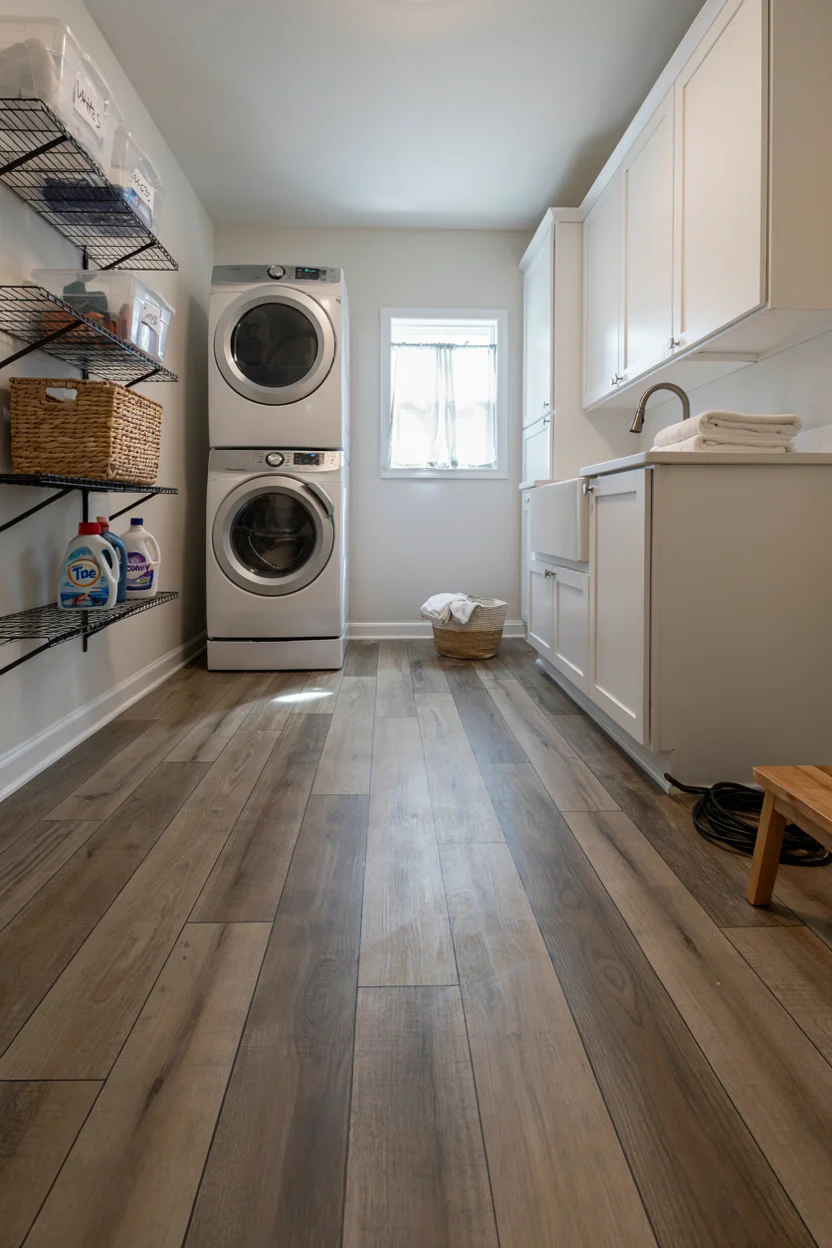
Waterproof vinyl plank flooring has become a go-to choice for basement laundry rooms due to its ability to withstand moisture, a common concern in below-ground spaces prone to humidity or occasional water exposure. Unlike hardwood, vinyl plank resists warping and water damage while still offering the warm, natural look of real wood grain.
Beyond its practical benefits, vinyl plank flooring is also relatively easy and affordable to install compared to tile or hardwood, making it accessible for basement renovations on a budget. Choosing a lighter wood tone helps brighten the naturally dim basement space. This flooring choice quietly supports the room’s function while still contributing to its overall design.
6. Basement Laundry Room with Statement Wallpaper
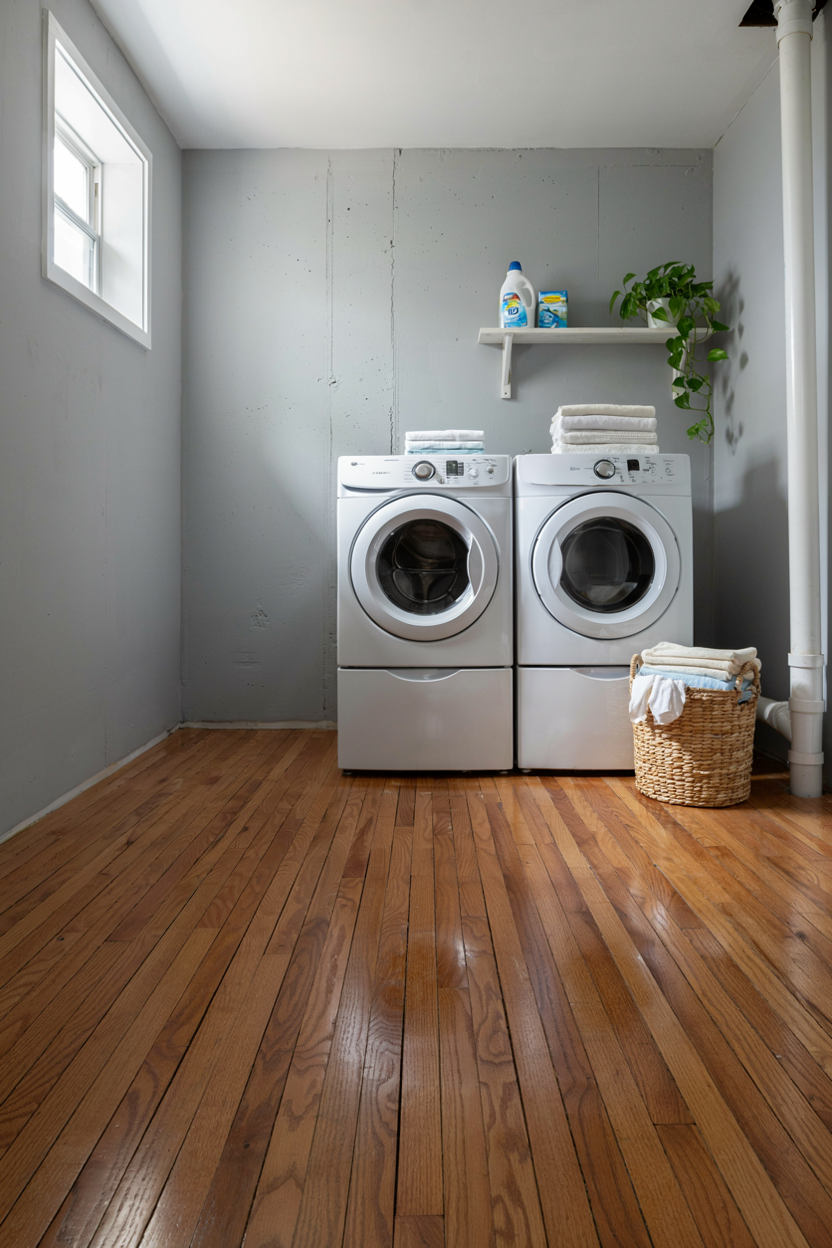
Statement wallpaper allows a basement laundry room to feel personal and stylish, even within a small, purely functional footprint. Because laundry rooms are typically compact spaces, they offer an ideal opportunity to experiment with bold patterns or colors that might feel overwhelming in a larger room, without a significant financial commitment.
Choosing a peel-and-stick wallpaper option makes this idea especially approachable for renters or those hesitant to commit to a permanent wall treatment. Pairing the bold pattern with simple, neutral cabinetry and appliances ensures the wallpaper remains the room’s clear focal point. This small design choice often makes the biggest visual impact within the entire basement laundry space.
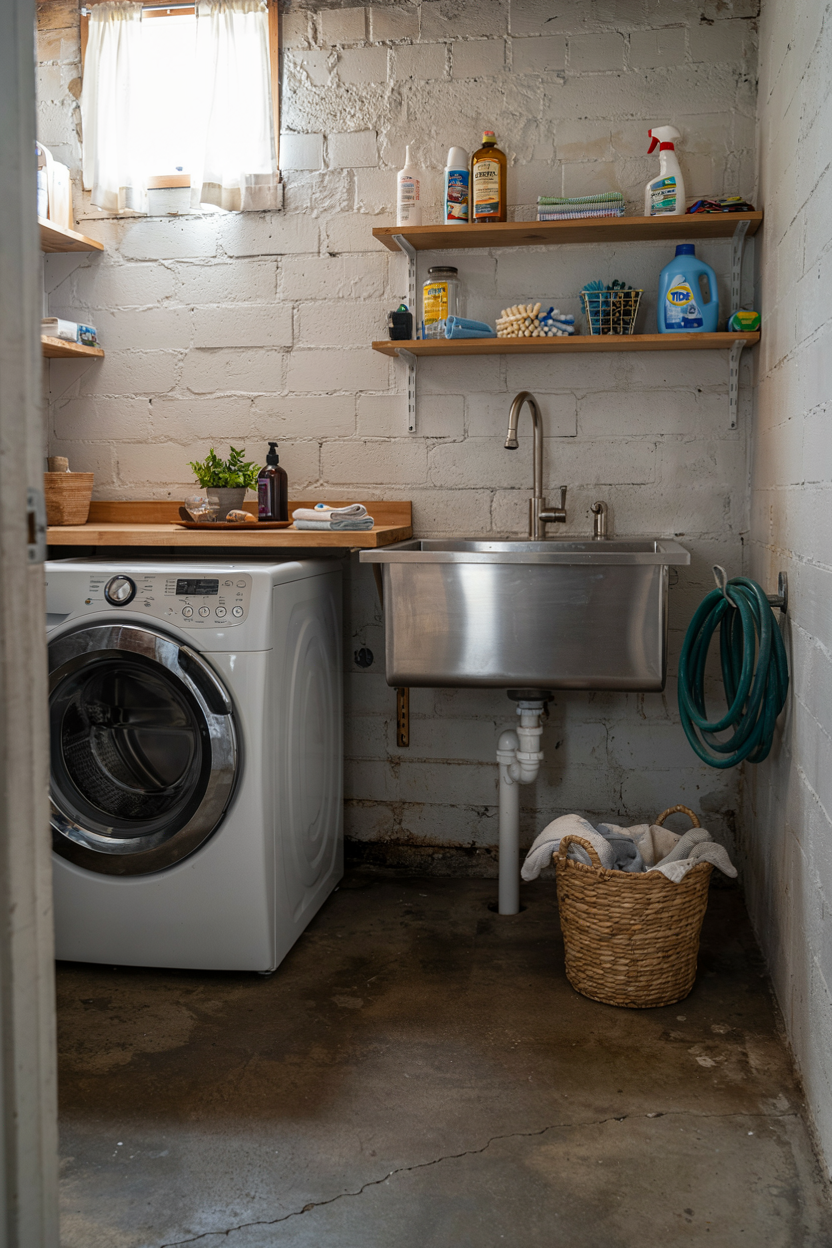
7. Basement Laundry with Utility Sink
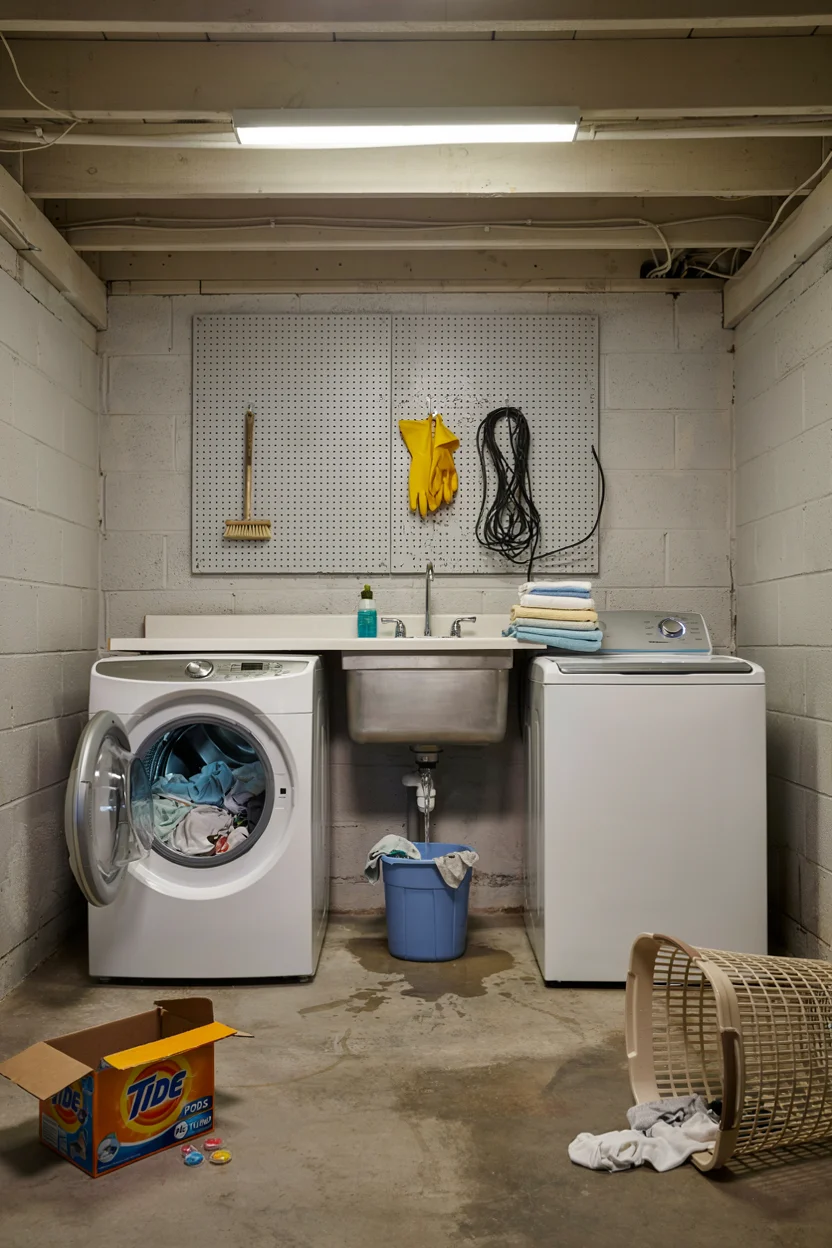
A utility sink adds significant functionality to a basement laundry room, supporting tasks like hand-washing delicate items, treating stains before a full wash cycle, or simply rinsing muddy boots and gear common in basement entryways. This addition reflects the hidden design logic behind truly functional laundry spaces — anticipating needs beyond just washing and drying.
Positioning the sink within easy reach of the washing machine streamlines pre-treatment tasks without requiring extra steps across the room. A wall-mounted faucet saves counter space compared to a standard fixture. Open shelving above the sink keeps cleaning supplies and stain treatments visible and accessible exactly where they’re needed most during the laundry process.
8. Basement Laundry Room with Drying Rack
A fold-down drying rack solves a common basement laundry challenge: where to air-dry delicate items without permanently sacrificing floor or counter space. This built-in solution folds flat against the wall when not in use, making it especially valuable in smaller basement laundry rooms where every inch of space serves a purpose.
Positioning the rack above the washer and dryer takes advantage of otherwise unused vertical space in the room. Choosing a rack with adjustable rods allows for flexibility depending on the size and quantity of items being dried at any given time. This hidden storage logic reflects the kind of thoughtful planning that separates a well-designed basement laundry room from a purely functional afterthought.
9. Basement Laundry with Exposed Pipe Styling
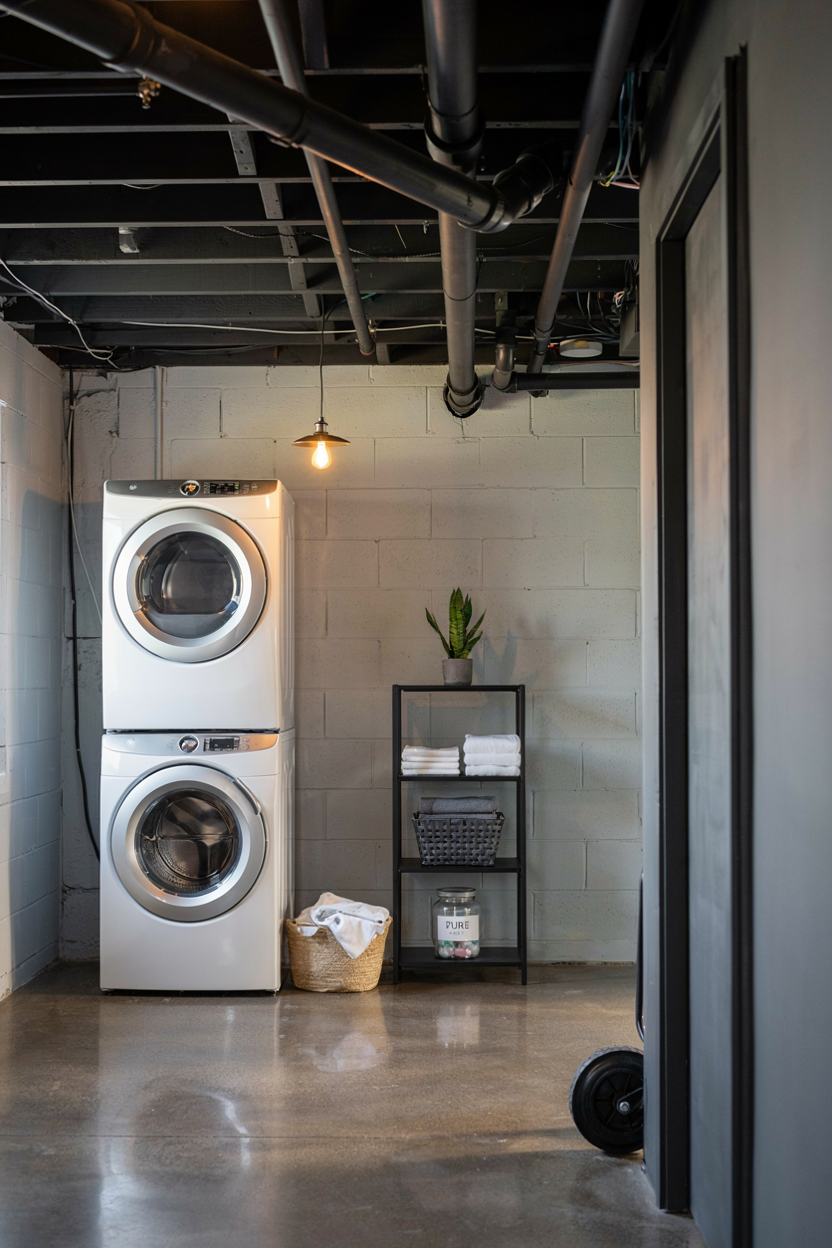
Rather than concealing exposed pipes and ductwork behind a dropped ceiling, some basement laundry rooms lean into the industrial aesthetic by painting these structural elements a uniform dark color. This approach saves the cost of ceiling construction while transforming what might otherwise look unfinished into an intentional, stylish design choice.
Painting all exposed pipes, ducts, and wiring the same matte black or charcoal color creates visual cohesion, making the ceiling read as a deliberate design decision rather than an incomplete renovation. Pairing this ceiling treatment with simple metal shelving and utilitarian fixtures reinforces the industrial theme throughout the rest of the basement laundry room.
10. Basement Laundry Room Command Center
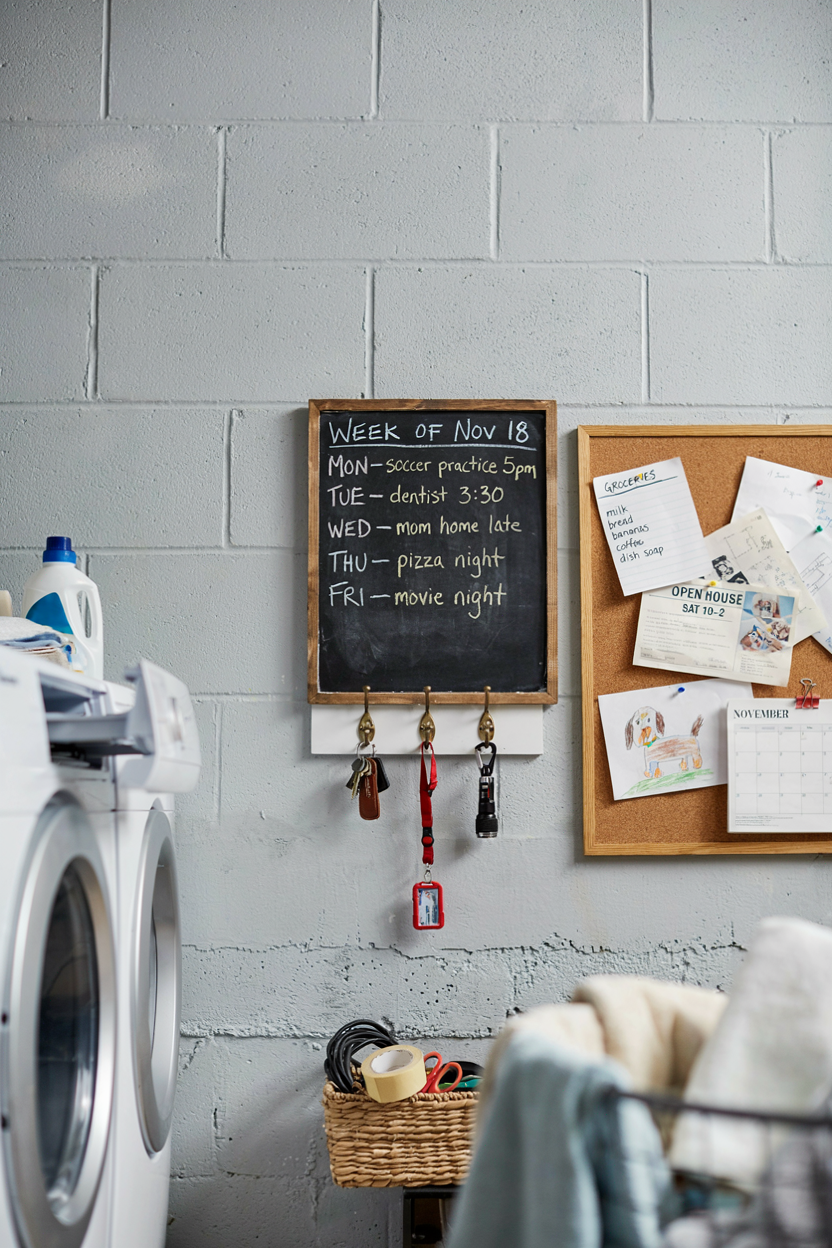
Many basements double as a transitional space between the garage and the main living areas, making the laundry room a natural spot for a household command center. This hidden design logic takes advantage of a space people pass through daily, centralizing keys, mail, and reminders in one easily accessible location.
A small chalkboard for grocery lists, hooks for keys or dog leashes, and a cork board for important notes all work together to streamline daily household logistics. Positioning this command center near the laundry room door, rather than inside the wash area itself, keeps the appliances’ surrounding space free from clutter while still centralizing these everyday essentials.
11. Basement Laundry with Pet Washing Station
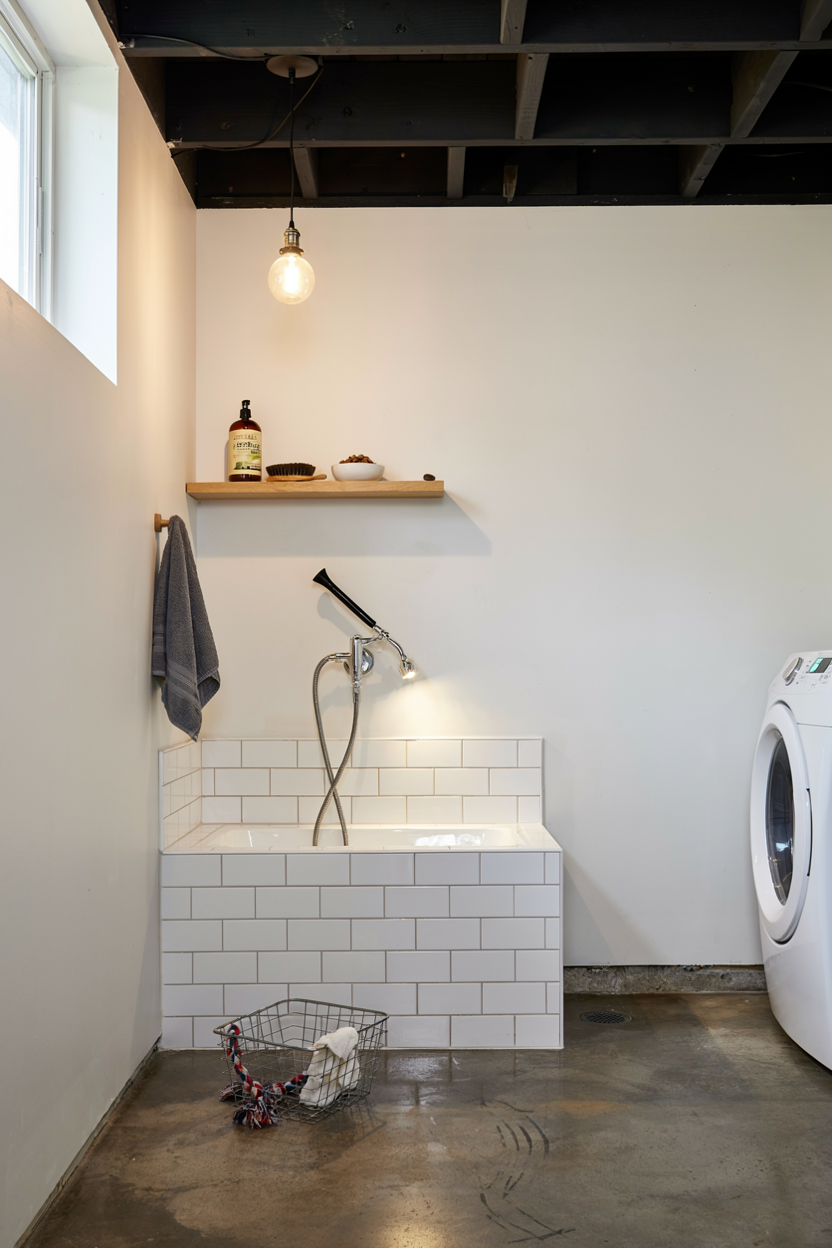
Combining a pet washing station with the basement laundry room reflects a particularly clever piece of hidden design logic, especially for households with dogs that need regular bathing after outdoor play. Positioning this feature in the basement, rather than a full bathroom upstairs, keeps mud and pet hair contained to an easy-to-clean, utilitarian space.
A raised basin reduces the need for bending or kneeling during bath time, while a handheld sprayer offers more control than a standard faucet. Tiling the surrounding walls protects them from water splashing during use. This dual-purpose design choice maximizes the basement laundry room’s functionality well beyond its primary purpose of washing clothes.
12. Basement Laundry Room with Bold Cabinet Color
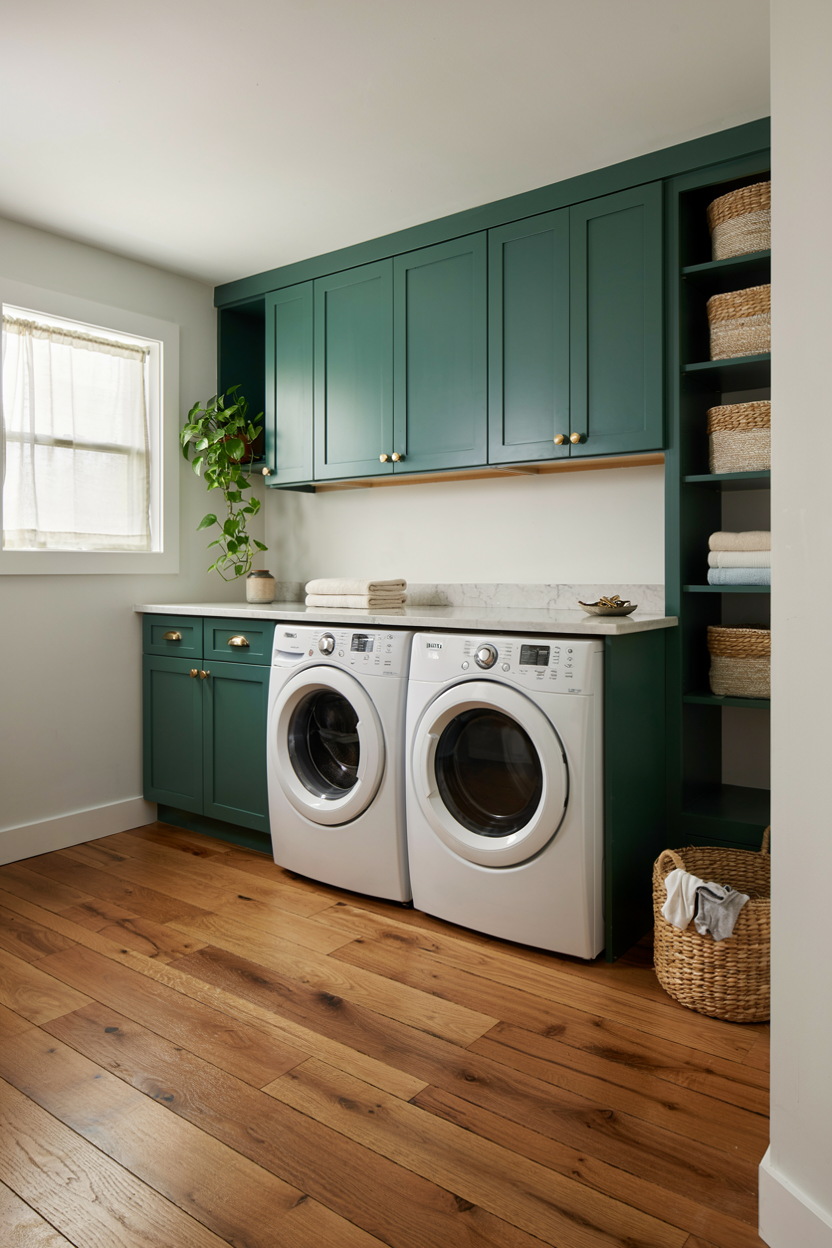
r choice adds personality and warmth to the otherwise neutral, below-ground space.
Choosing a bold cabinet color is one of the simplest ways to inject personality into an otherwise purely functional basement laundry room. Deep, saturated tones like forest green, navy, or burgundy add richness and visual interest, transforming what could be an afterthought space into a room with genuine design intention.
Pairing bold cabinetry with a lighter countertop and walls prevents the space from feeling too dark or heavy, especially important in basements with limited natural light. Brass or gold hardware adds a warm, finishing touch against the saturated cabinet color. This small design choice consistently ranks among the most impactful updates for basement laundry rooms.
13. Basement Laundry with Built-In Ironing Station
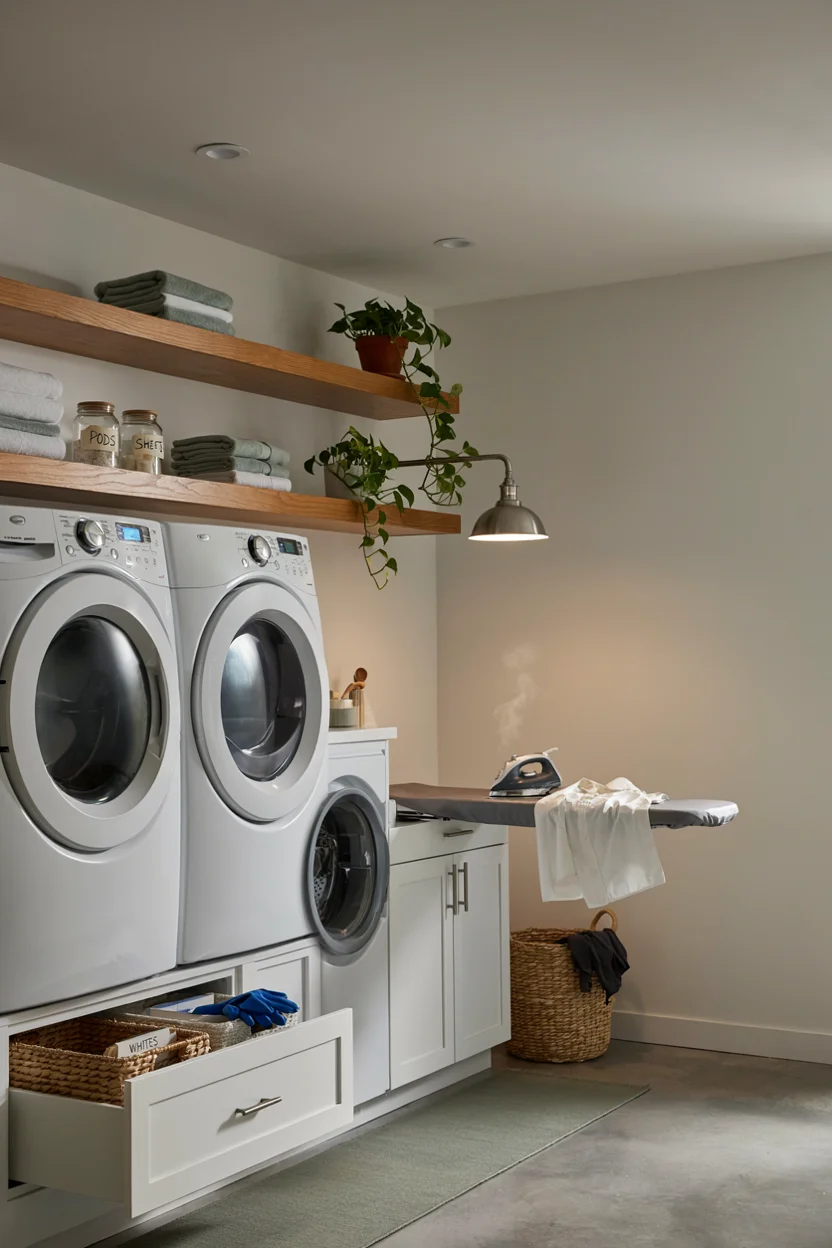
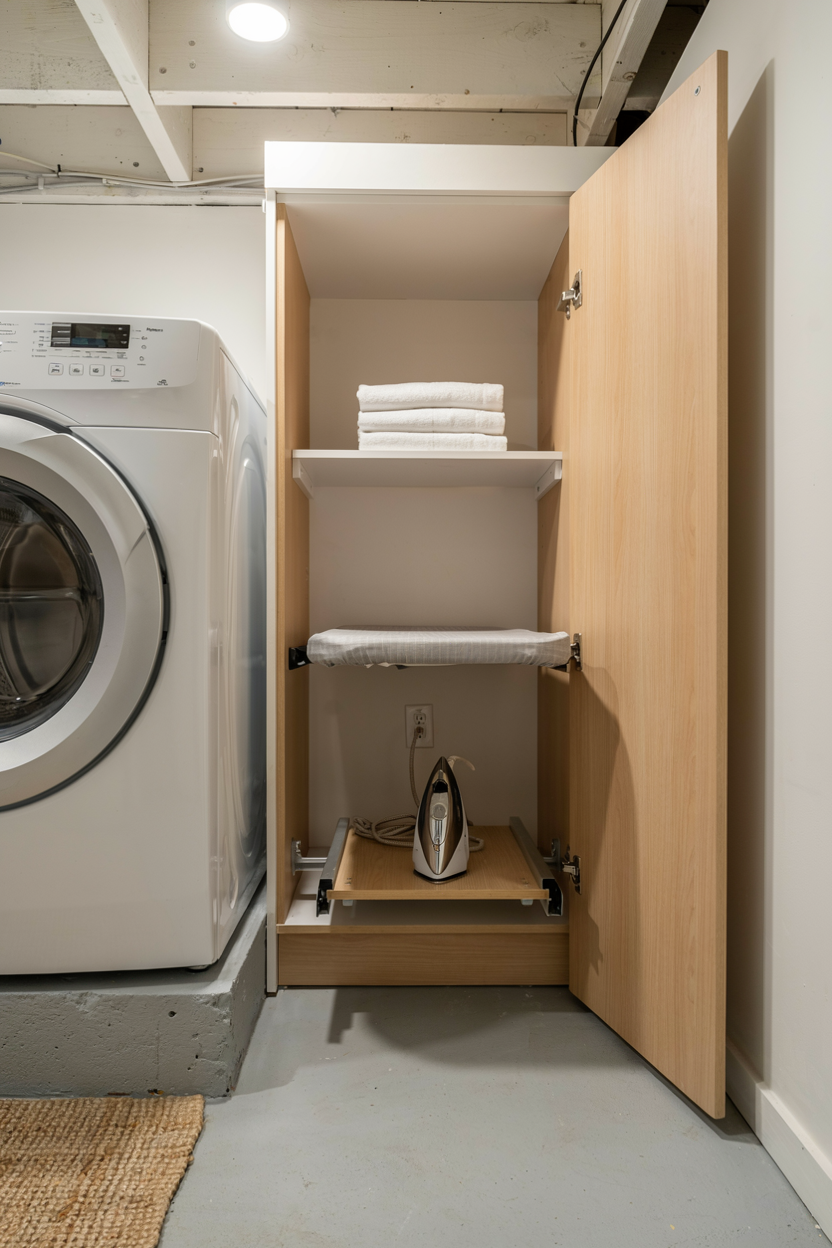
A built-in ironing station eliminates the need for a separate freestanding ironing board, which often ends up stored awkwardly or taking up valuable floor space. This hidden design logic tucks the entire ironing setup into a cabinet, folding away completely when not in use and keeping the basement laundry room feeling uncluttered.
Positioning the built-in station near an outlet ensures the iron itself has a convenient, dedicated spot as well. This solution works particularly well in smaller basement laundry rooms, where every square foot needs to serve a clear purpose. Guests or family members quickly notice this thoughtful, space-saving detail during regular use of the room.
14. Basement Laundry Room with Patterned Tile Floor
Patterned tile flooring brings personality and visual interest to a basement laundry room without requiring changes to walls or cabinetry. Because the appliances and storage in a laundry room typically stay simple and functional, the floor offers an opportunity to introduce bold pattern in a way that feels intentional rather than overwhelming.
Choosing a classic black and white pattern keeps the look timeless, even as other design trends shift over the years. This flooring choice pairs particularly well with white or light-colored cabinetry, allowing the pattern to remain the room’s clear focal point. Durable cement or porcelain tile also stands up well to the moisture commonly found in basement environments.
15. Basement Laundry with Concealed Appliances
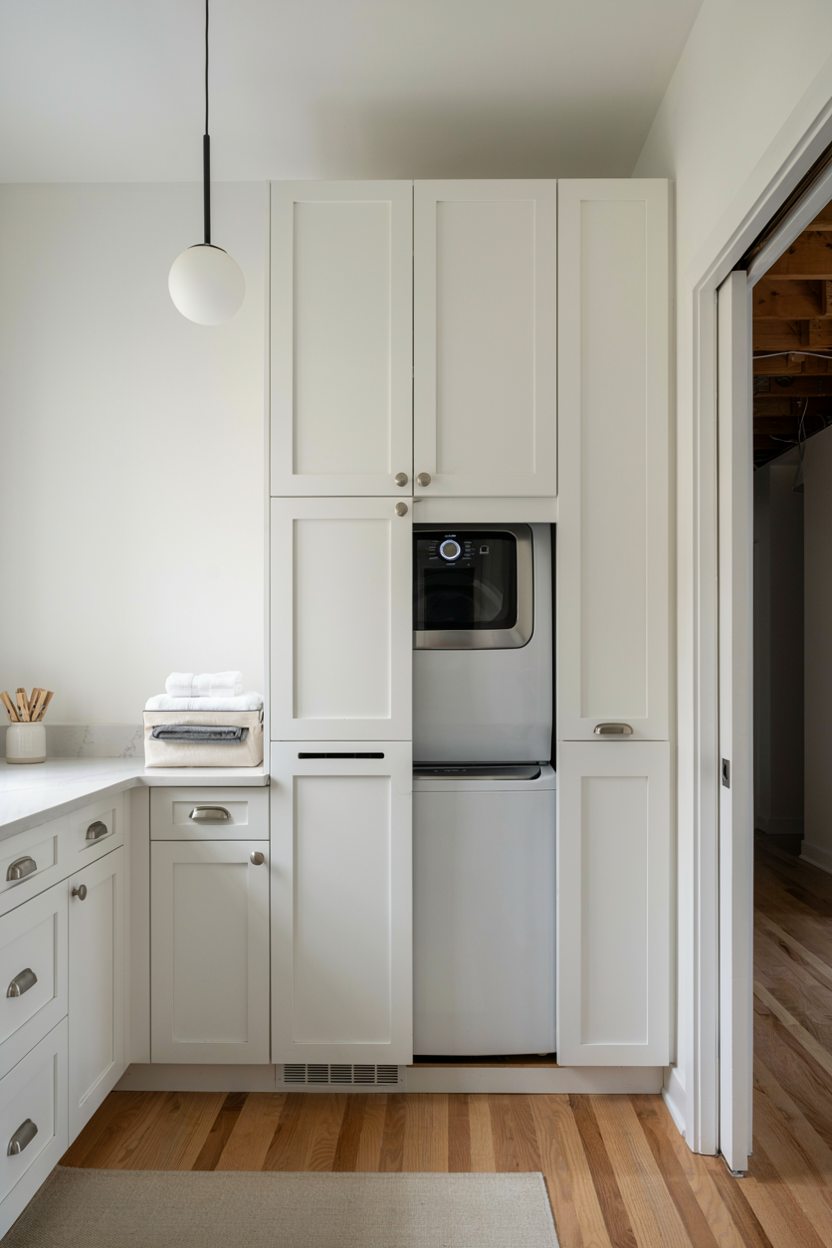
Concealing the washer and dryer behind matching cabinet panels creates an especially sleek, streamlined basement laundry room, particularly useful in basements that double as guest suites or additional living space. This design choice hides the appliances’ bulky, utilitarian appearance, allowing the room to blend more seamlessly with the rest of the home’s finished aesthetic.
While this approach typically requires a higher upfront investment in custom cabinetry, the payoff is a laundry room that looks more like a stylish pantry or built-in closet than a purely functional utility space. This hidden design logic prioritizes visual cohesion, making it a popular choice for finished basements used for entertaining or hosting overnight guests.
16. Basement Laundry Room with Task Lighting
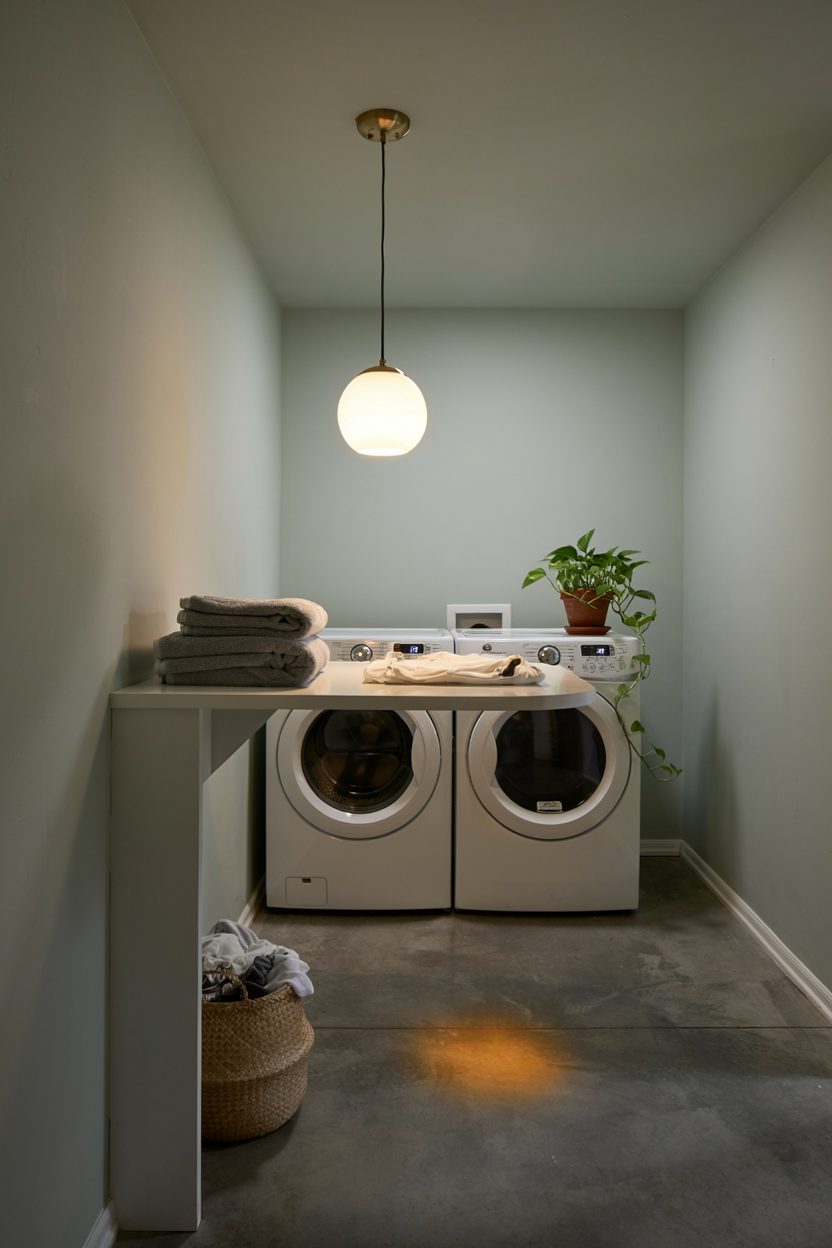
Task lighting plays a critical role in basement laundry room design, given the near-total absence of natural light in most below-ground spaces. Positioning a bright, focused fixture directly above key work areas, such as the folding counter or sink, ensures these frequently used surfaces remain well-lit regardless of the room’s overall ambient lighting.
Pendant lights or under-cabinet fixtures both work well for this purpose, depending on the room’s layout and ceiling height. Choosing a daylight-toned bulb, rather than a warm yellow tone, helps compensate for the total lack of natural sunlight found in most basements. This layered lighting approach reflects thoughtful planning that goes beyond simply installing one overhead fixture.
17. Basement Laundry with Chalkboard Labels
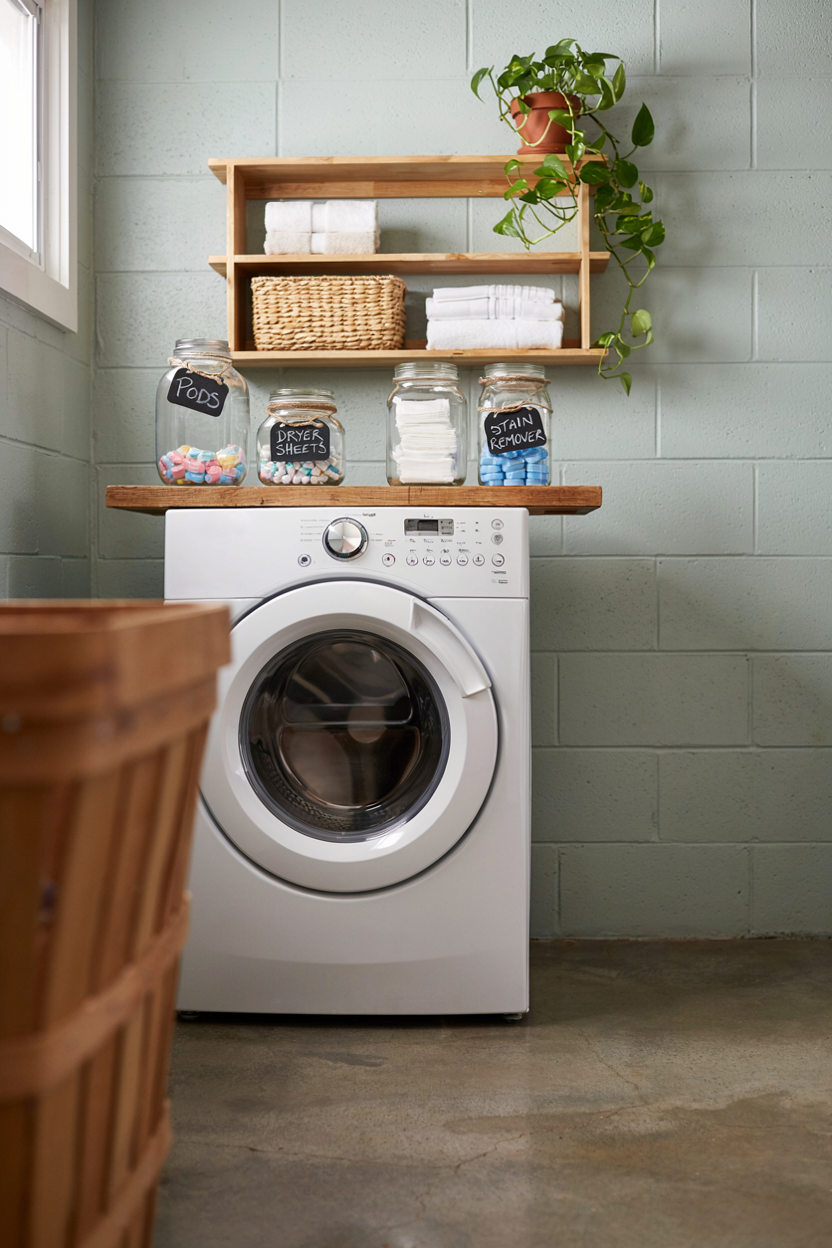
Chalkboard labels on storage containers add a personal, charming touch to an otherwise purely functional basement laundry room. Beyond their decorative appeal, these labels also improve everyday organization, making it easy to identify contents at a glance without needing to open multiple containers while doing laundry.
Using matching glass or ceramic jars for items like detergent pods, dryer sheets, and stain removers creates a cohesive, curated look on open shelving. Chalkboard labels offer the added benefit of being easily updated or changed as household needs shift over time. This small organizational detail consistently photographs well and adds genuine functional value to the space.
18. Basement Laundry Room with Runner Rug
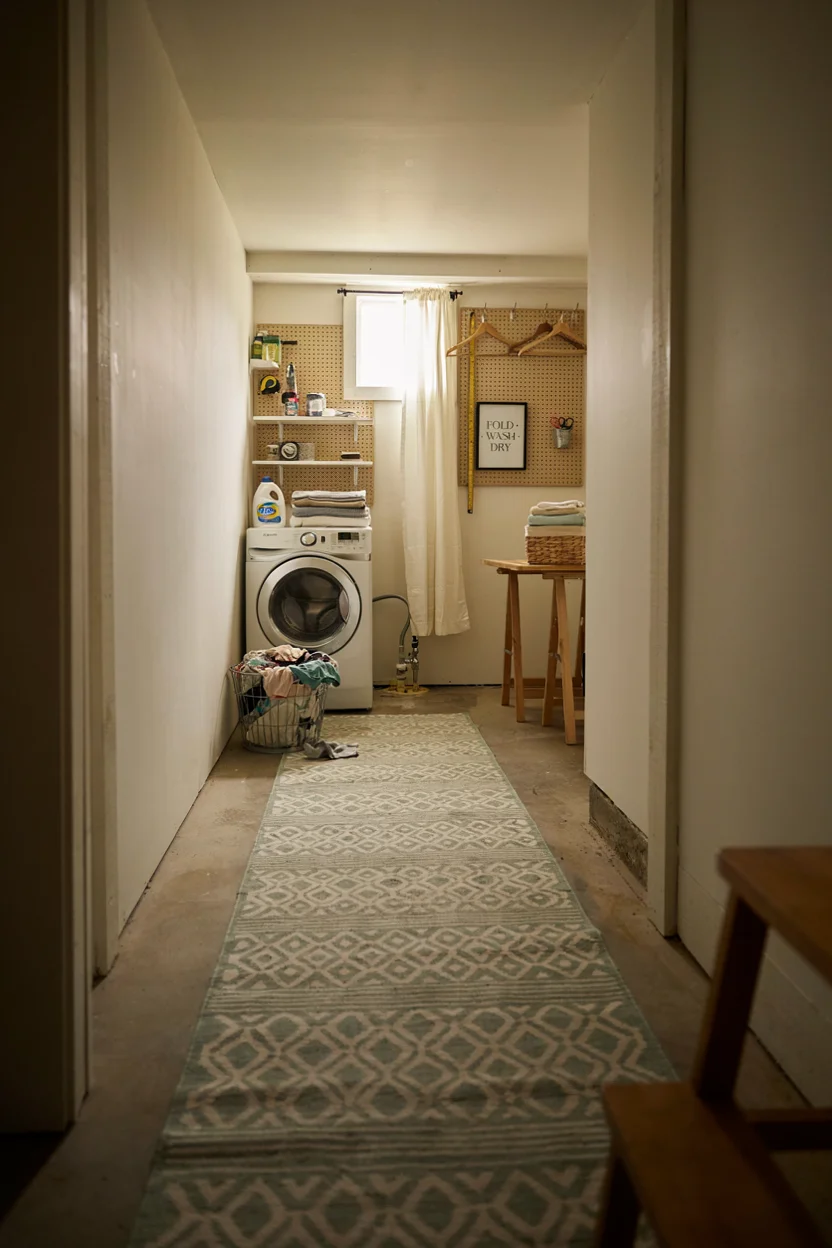
A runner rug adds both comfort and visual warmth to a basement laundry room, softening the cold, hard flooring often found in below-ground spaces. Standing on concrete or tile for extended periods while folding laundry can be uncomfortable, making a well-placed runner both a practical and decorative addition to the room.
Choosing a rug in a bold pattern or warm color introduces personality into the space without requiring any permanent changes to the flooring itself. Because basement laundry rooms are prone to moisture, selecting a washable, low-pile runner ensures the rug remains easy to maintain over time. This simple addition consistently improves both comfort and style within the room.
19. Basement Laundry with Vertical Storage Tower
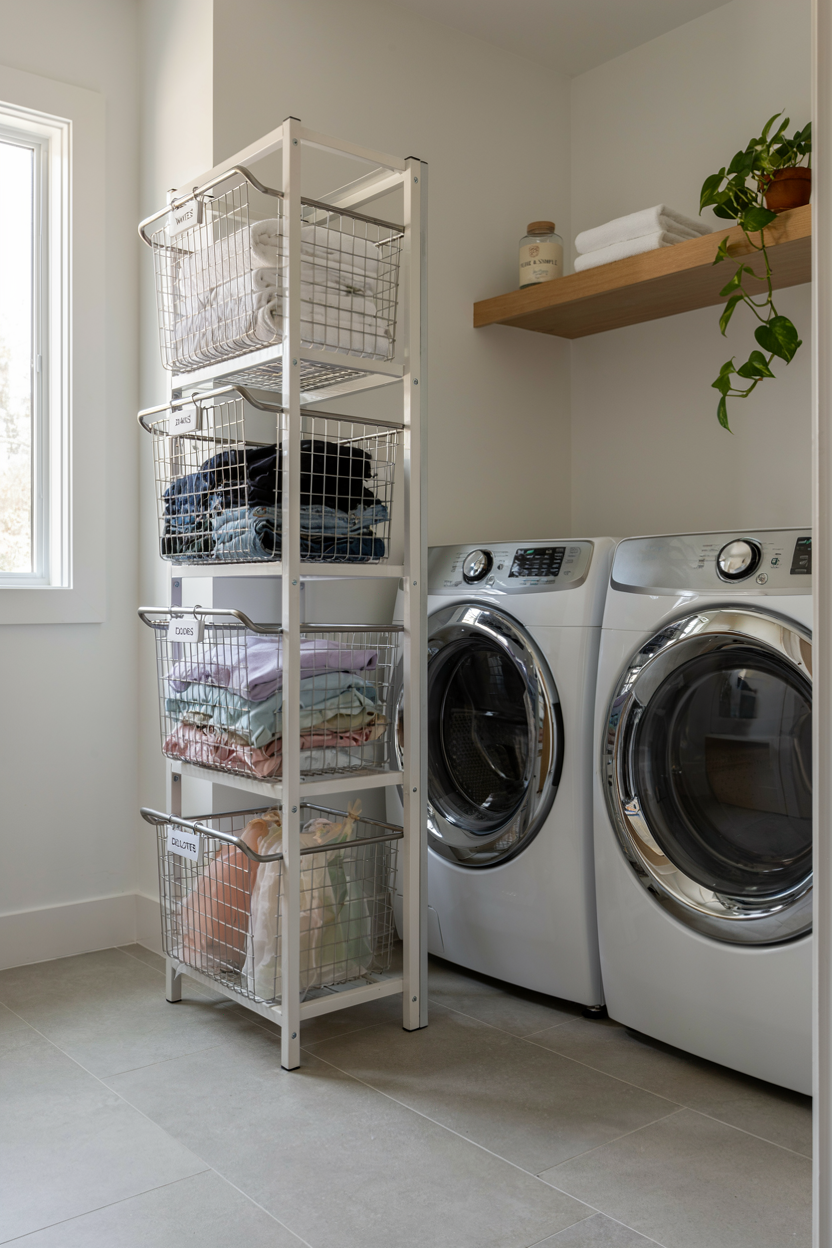
A vertical storage tower addresses one of the most common basement laundry room challenges: limited square footage. Rather than expanding storage outward, this solution builds upward, taking advantage of unused vertical space between the washer, dryer, and ceiling to house sorting bins, extra supplies, or seasonal linens.
Pull-out wire baskets within the tower make it easy to sort laundry by color, fabric type, or household member before washing. This hidden design logic prioritizes efficient use of a narrow footprint, a common constraint in basement layouts. Even in the smallest basement laundry rooms, a vertical tower can meaningfully increase both storage and organization.
20. Basement Laundry Room with Skylight Well
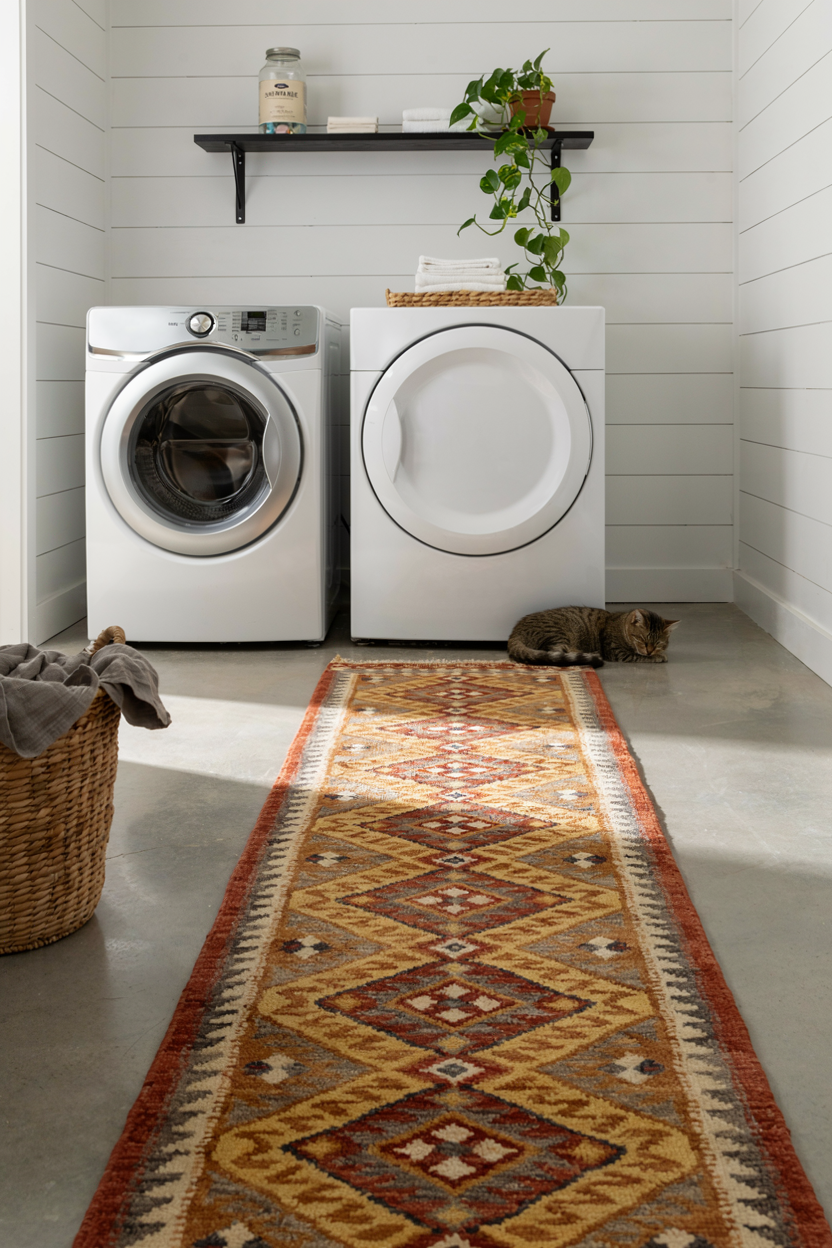
.While full-sized windows are rare in basement spaces, many basement laundry rooms include a small window well positioned near the ceiling line. Maximizing this limited natural light source, rather than covering or ignoring it, can meaningfully improve the room’s overall atmosphere, reducing the need for artificial lighting during daytime hours.
Positioning the folding counter or a frequently used work area near the window well takes full advantage of the available daylight. Keeping window treatments minimal, or skipping them altogether if privacy isn’t a concern, allows as much natural light as possible to reach the space. This small architectural detail is often overlooked but significantly impacts the room’s overall feel.
21. Basement Laundry with Multi-Zone Layout
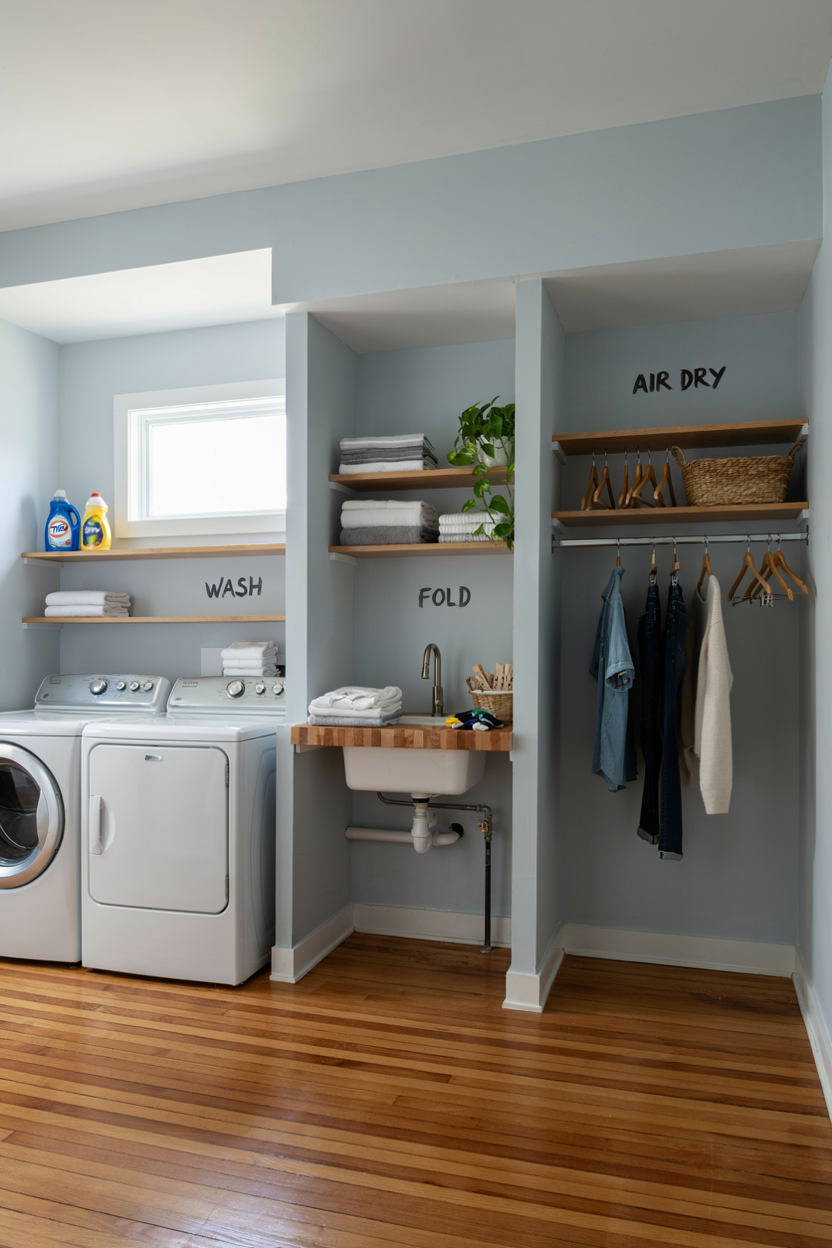
Organizing a basement laundry room into distinct functional zones — washing, folding, and hanging — creates a more efficient workflow than simply placing appliances and storage wherever space allows. This hidden design logic mirrors commercial laundry facility layouts, where each step of the laundry process has its own clearly defined area.
Arranging these zones in the natural order of the laundry process, from washing through folding and finally hanging or storage, minimizes backtracking during regular use. Even in smaller basement layouts, maintaining some degree of zone separation, even if compact, improves the room’s overall functionality. This thoughtful arrangement is often what distinguishes a truly well-designed laundry room from a cluttered one.
22. Basement Laundry Room with Moisture-Resistant Paint
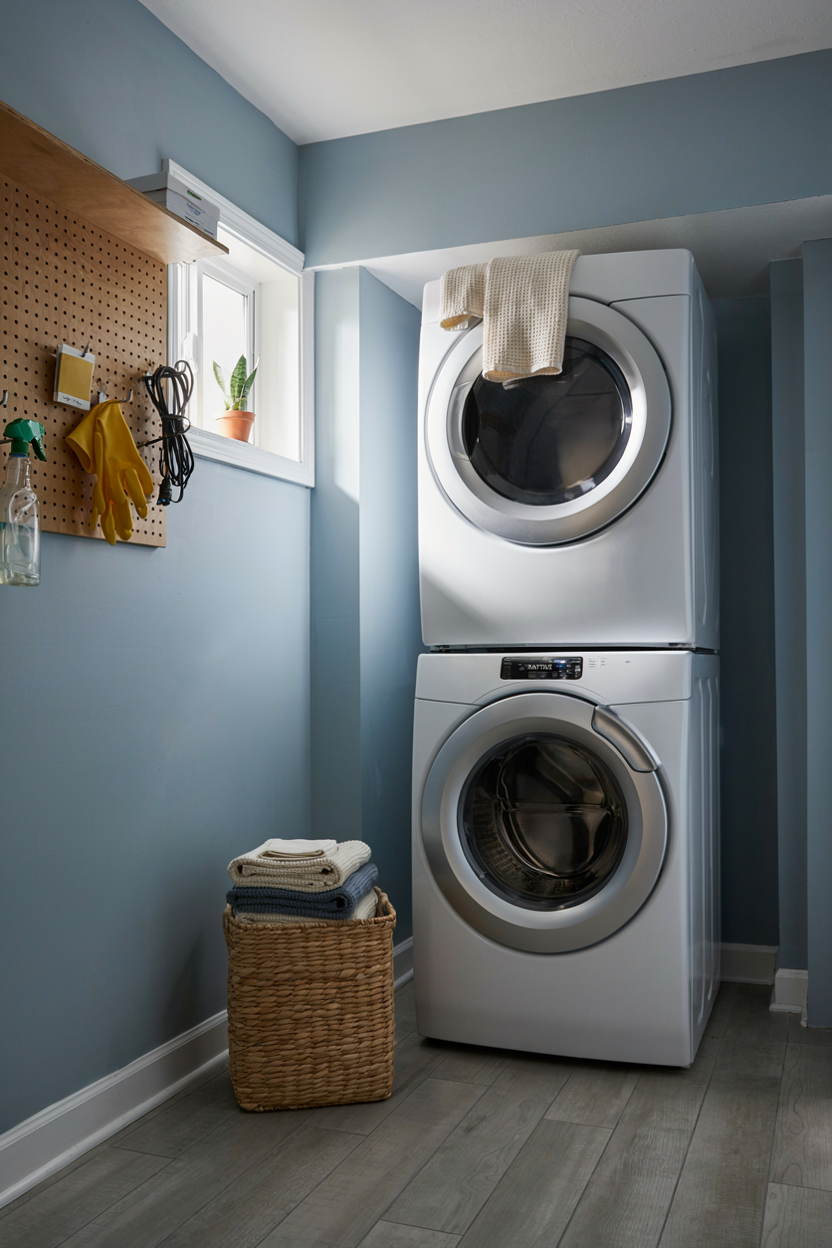
Basements are naturally more prone to humidity and moisture than above-ground rooms, making paint selection an important, if often overlooked, design consideration for basement laundry rooms. Specialty moisture-resistant or mildew-resistant paint formulas help protect walls from the added humidity generated by washing and drying appliances over time.
Beyond its practical protective qualities, this type of paint is available in the same wide range of colors as standard formulas, meaning function doesn’t require sacrificing style. Choosing a soft, calming color like blue-gray or sage green adds a pleasant atmosphere to the room while the paint itself works to prevent long-term moisture damage.
Conclusion
A basement laundry room doesn’t have to be an afterthought. With the right mix of smart storage, thoughtful lighting, and a few personal touches, this often-overlooked space can become one of the most functional rooms in your home. These 23 basement laundry room ideas show that good design isn’t just about how a space looks — it’s about how well it works. Pick a few ideas that fit your layout and start transforming your basement laundry room today.

Join The Discussion