
Introduction
There’s a certain magic to a garden that looks like it grew entirely on its own, with flowers spilling over paths, roses climbing untamed across a fence, and color layered richly in every possible direction. That’s the heart of cottage garden ideas: a romantic, slightly wild style that favors abundance over strict order and formality. From overflowing perennial borders and rose-covered arches to self-seeding wildflower patches, these 17 ideas will help you create a garden that feels timeless, personal, and full of quiet, lasting charm.
1. Overflowing Perennial Border
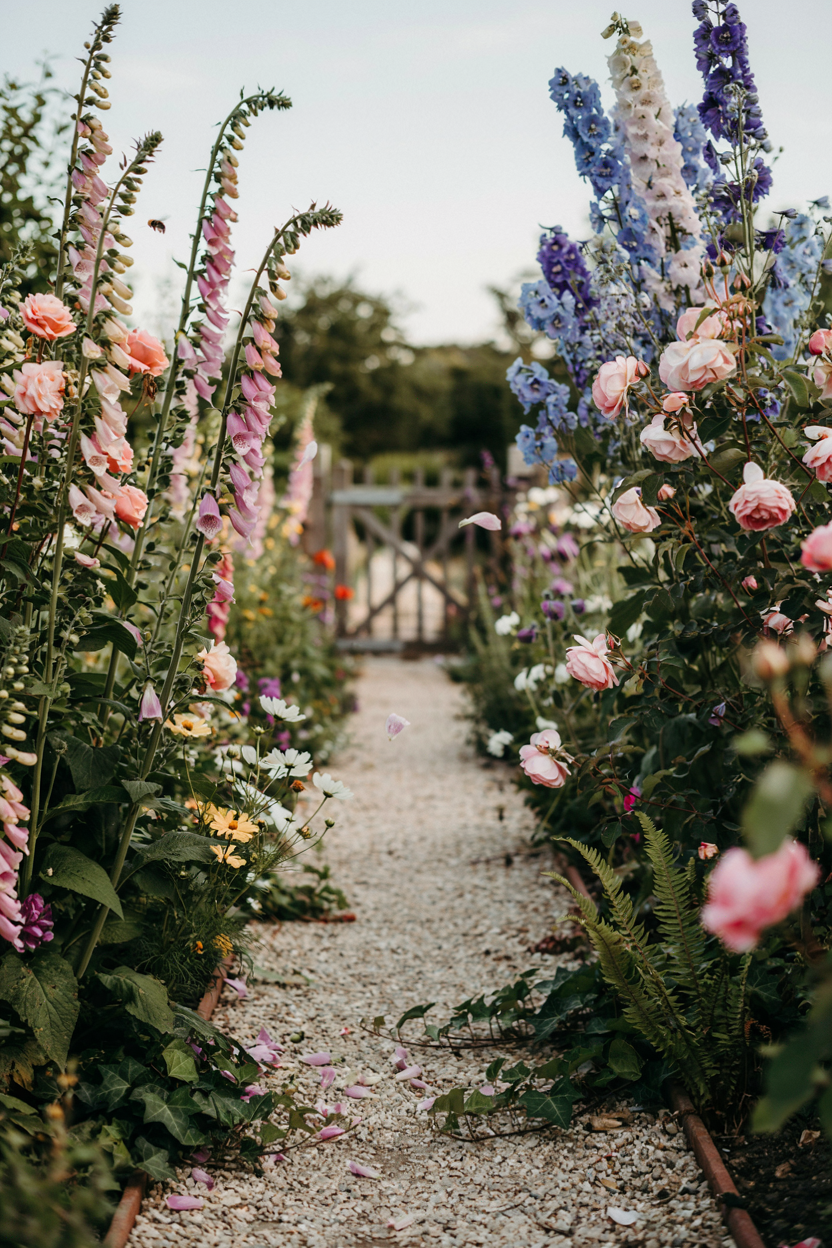
An overflowing perennial border is one of the most iconic cottage garden ideas, defined by its dense, informal planting style that lets flowers spill naturally over pathways and edges. Rather than arranging plants in tidy, evenly spaced rows, cottage gardeners layer varieties of different heights and bloom times closely together, allowing the border to feel wild and abundant rather than manicured. This approach mimics the way flowers grow naturally in the wild, creating a romantic, effortless look.
Choosing a mix of perennials with staggered bloom times ensures the border stays colorful from early spring through fall, rather than peaking all at once and fading. Taller plants like delphiniums and foxgloves toward the back give way to shorter, spreading varieties near the path’s edge, creating natural depth. Many gardeners find that this layered, overflowing style is what truly defines the classic cottage garden look, more than any single plant choice alone.
2. Rose-Covered Garden Arch
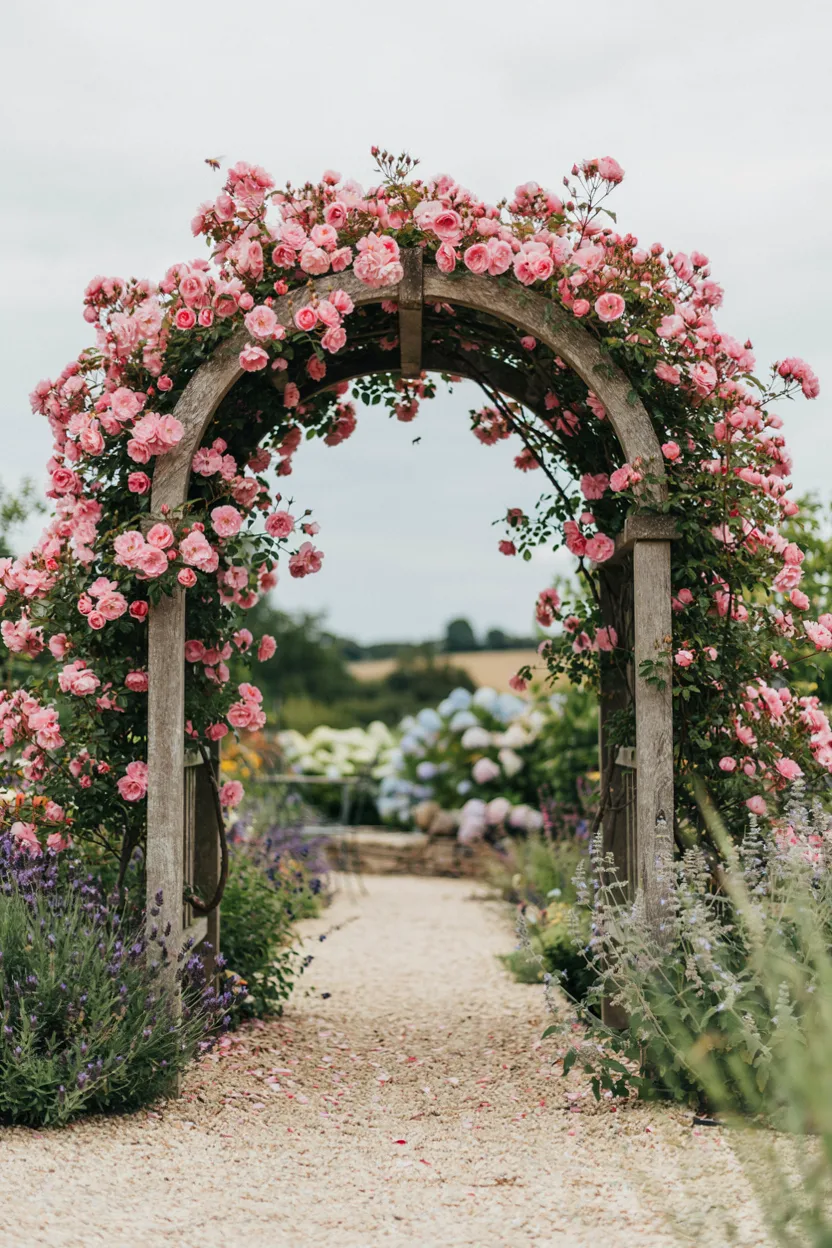
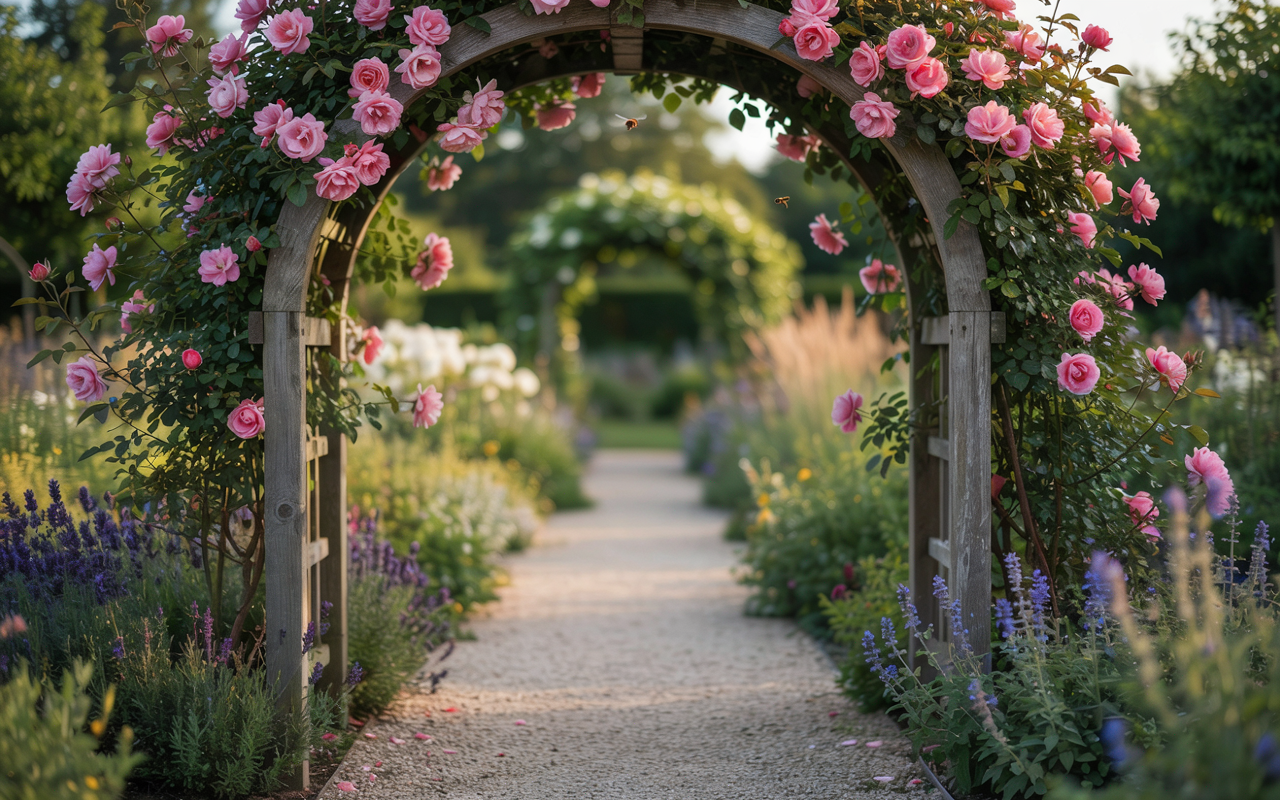
A rose-covered arch is one of the most romantic cottage garden ideas, instantly signaling entry into a lush, informal garden space. Positioning the arch at the start of a path or the entrance to a garden room creates a natural focal point, drawing the eye upward and inviting visitors to walk beneath the fragrant blooms. Climbing roses, particularly repeat-blooming varieties, offer months of color and scent once established on the structure.
Underplanting the base of the arch with complementary flowers like lavender or catmint softens the transition between the structure and the surrounding garden bed. This combination of vertical and ground-level planting adds depth and layers to the entrance, making it feel fully integrated into the garden rather than a standalone feature. Many gardeners find that a rose arch becomes the most photographed and beloved spot in the entire cottage garden.
3. Winding Gravel Garden Path
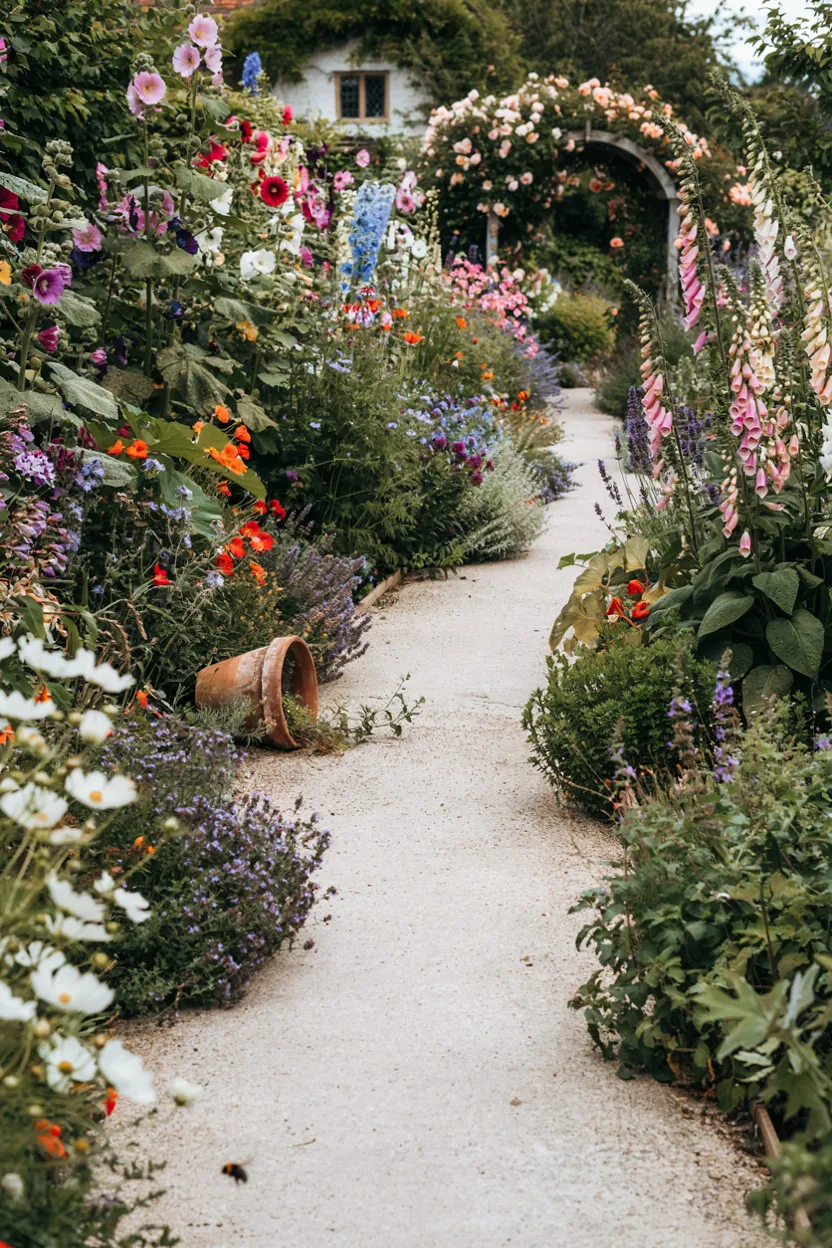
A winding gravel path is one of the most charming cottage garden ideas, guiding visitors through the space while enhancing the sense of discovery that defines this romantic garden style. Unlike straight, formal walkways, a curved path encourages a slower, more meandering stroll, revealing different plant combinations and garden views as it bends through the space. This layout works particularly well in gardens with limited sightlines, since it creates an impression of a much larger space than actually exists.
Allowing plants to spill slightly over the path’s edges, rather than keeping a strict boundary, reinforces the relaxed, informal character central to cottage gardening. Gravel also offers excellent drainage and a soft, natural crunch underfoot that complements the garden’s overall aesthetic. Many gardeners find that a winding path transforms even a small garden into a space that feels expansive, immersive, and endlessly interesting to explore.
4. Cottage Garden Picket Fence
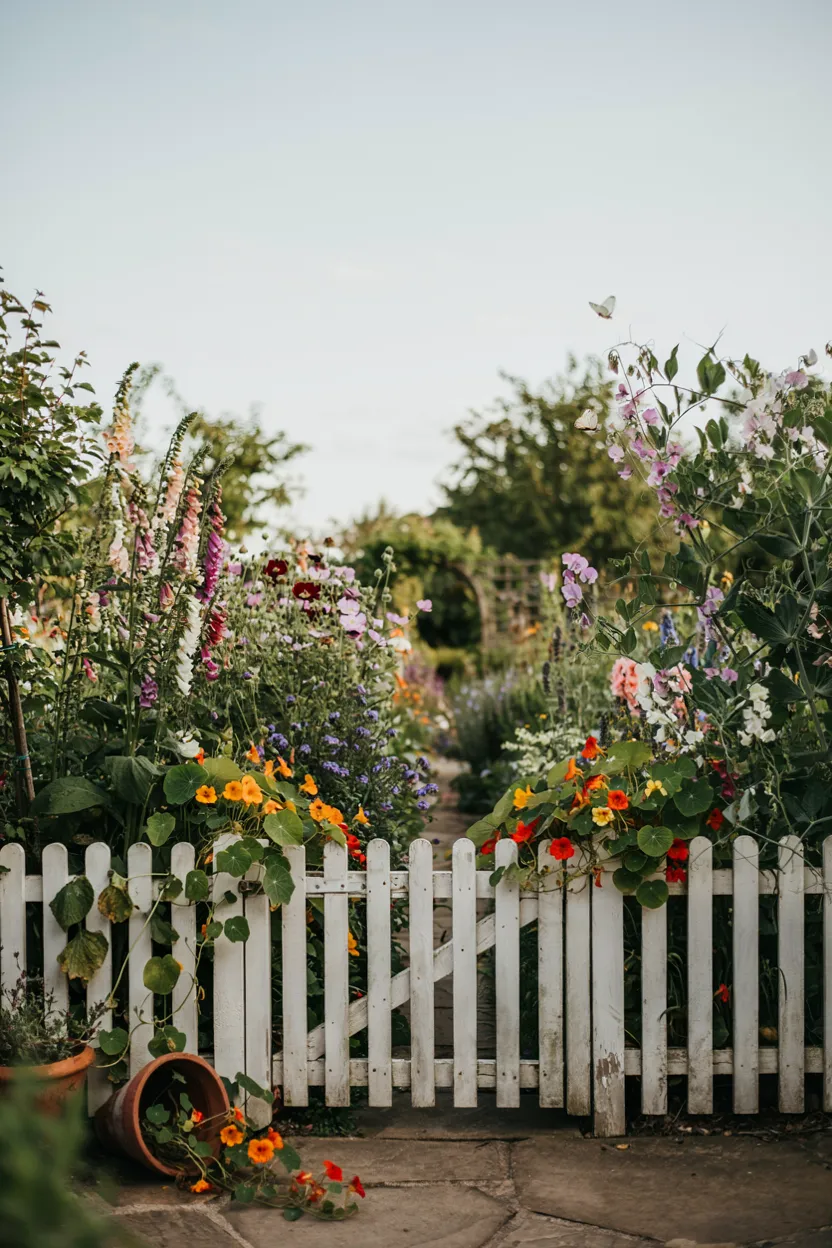
A classic white picket fence is one of the most recognizable cottage garden ideas, offering a simple, timeless boundary that lets the plants themselves take center stage. Rather than serving as a dominant structural feature, the fence acts as a soft frame for the garden, especially once climbing plants like sweet peas or nasturtiums begin to grow up and over the pickets. This partial concealment adds to the garden’s characteristically relaxed, undone appearance.
Choosing a slightly weathered or hand-painted finish over a perfectly uniform, factory-style fence enhances the garden’s rustic, lived-in charm. Positioning low-growing flowers directly at the fence’s base further blurs the line between structure and planting. Many gardeners find that a picket fence provides just enough definition to separate the garden from the surrounding lawn or street, without disrupting the wild, romantic feel that makes cottage gardens so appealing.
5. Self-Seeding Wildflower Patch
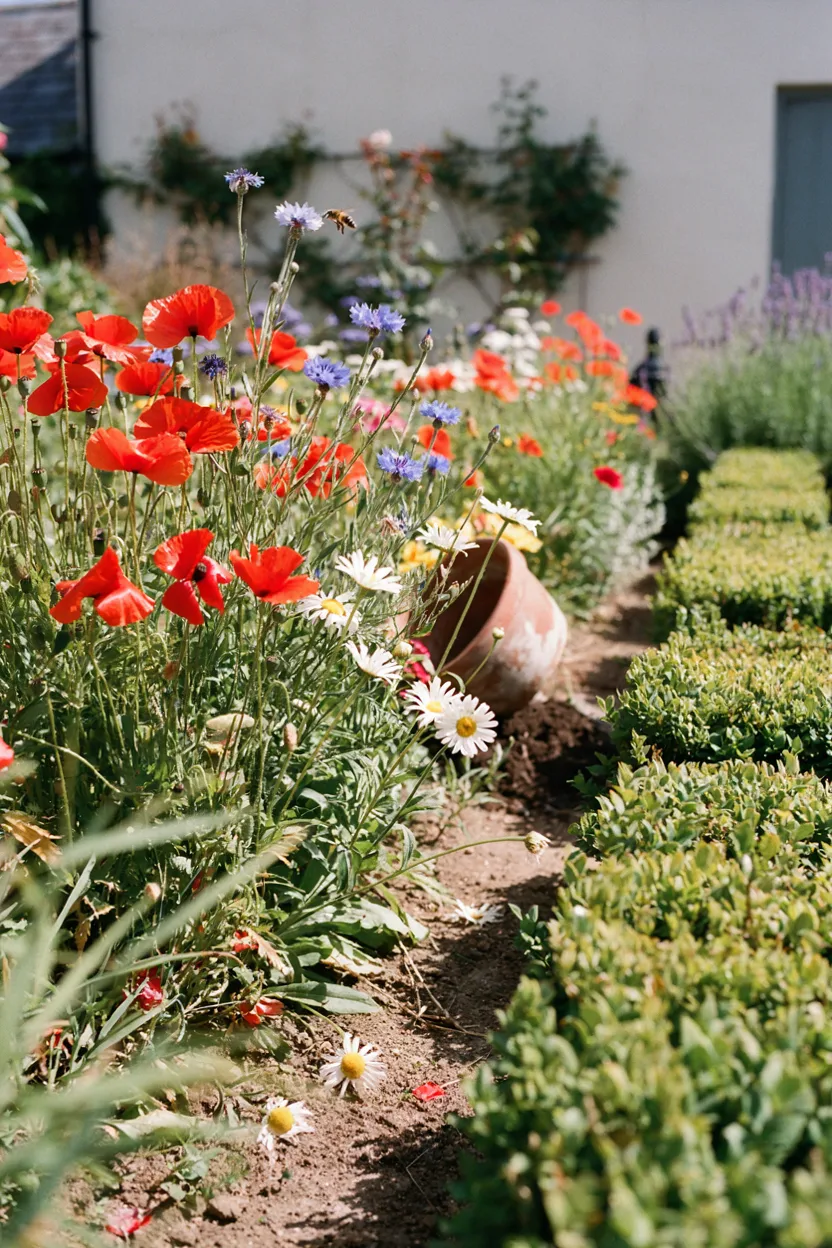
Incorporating self-seeding wildflowers is one of the most effortless cottage garden ideas, allowing plants like poppies, cornflowers, and larkspur to spread and reseed naturally year after year with minimal intervention. Once established, these flowers often return in slightly different patterns each season, adding an element of pleasant unpredictability that aligns perfectly with the loose, informal spirit of cottage gardening. This approach also reduces the need for repurchasing annual seeds each spring.
Allowing a dedicated corner or patch to self-seed freely, rather than deadheading every spent bloom, gives the wildflowers room to establish themselves over time. This technique works particularly well in sunny areas with well-draining soil, where these hardy annuals tend to thrive without much additional care. Many gardeners find that a self-seeding patch becomes one of the lowest-maintenance yet most rewarding sections of their entire cottage garden.
6. Climbing Vines on a Cottage Facade
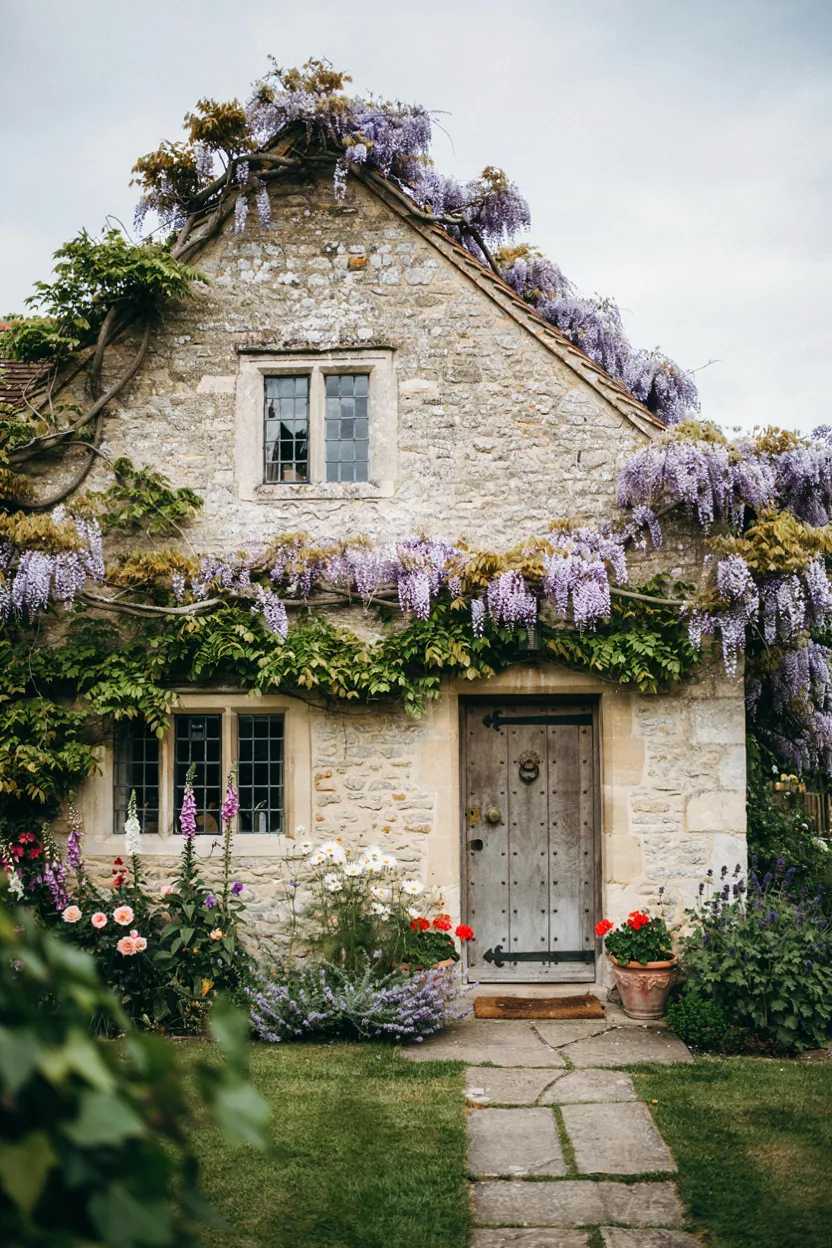
Training climbing plants directly onto a home’s exterior is one of the most transformative cottage garden ideas, blurring the line between the house and the surrounding landscape. Wisteria, climbing hydrangea, and ivy are popular choices for softening stone or brick facades, their twisting growth adding age and character even to newer homes. This technique effectively extends the garden vertically, making the entire structure feel like a natural extension of the planting beds below.
Careful pruning is necessary to keep vigorous climbers like wisteria from damaging gutters, window frames, or roofing materials over time. Positioning plants strategically around windows and doorways, rather than allowing unchecked growth across the entire facade, keeps the look intentional rather than overgrown. Many homeowners find that climbing vines on the house exterior create one of the most striking and photogenic elements of a well-established cottage garden.
7. Mixed Herb and Flower Border
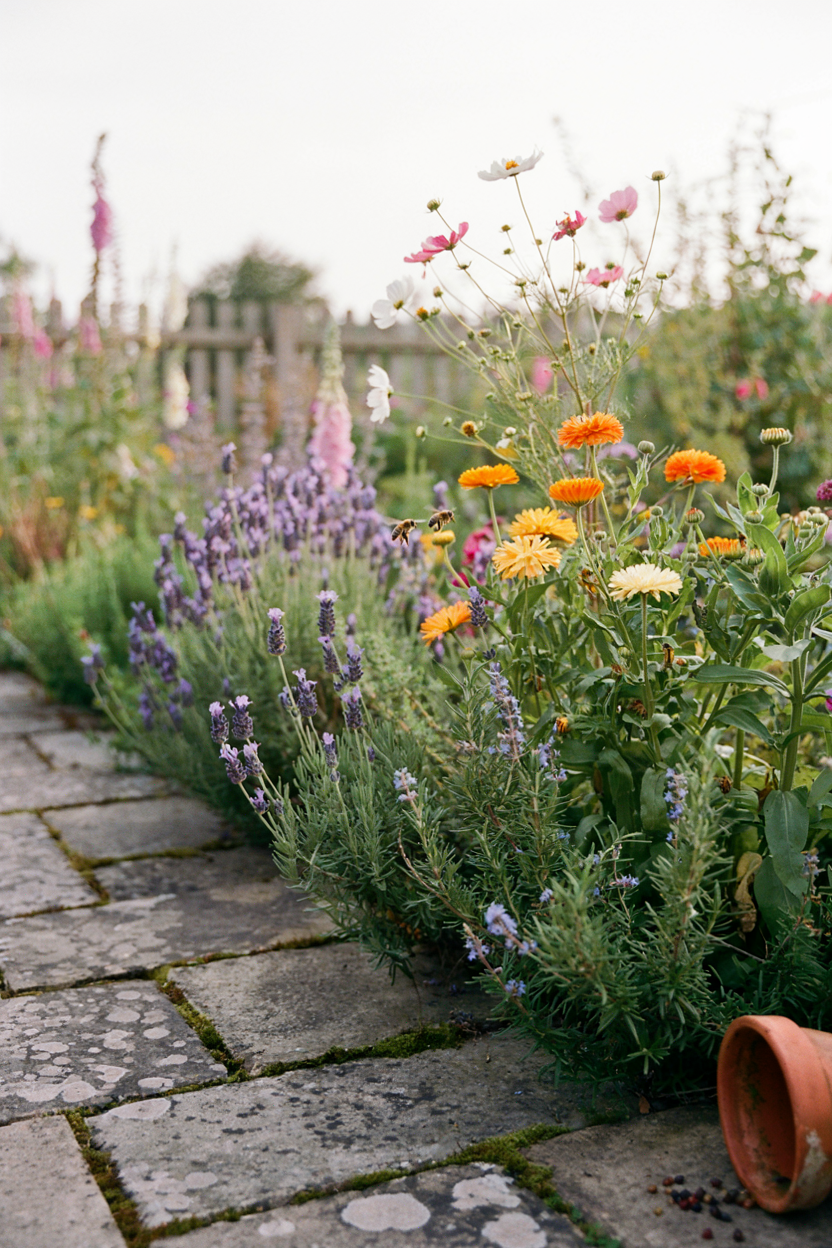
Mixing herbs with flowers is one of the most practical cottage garden ideas, reflecting the traditional cottage garden’s roots as a space meant to provide both beauty and food. Interplanting lavender, rosemary, and thyme alongside colorful annuals like calendula and cosmos creates a border that’s as useful as it is attractive, offering fresh herbs for cooking while still delivering the lush, romantic look central to the style.
This combination also benefits the garden ecologically, since many culinary herbs attract pollinators that help support the flowering plants nearby. Because herbs and flowers often share similar sun and soil requirements, they tend to grow well together without much special accommodation. Many gardeners find that this mixed approach captures the authentic spirit of historical cottage gardens, which were originally designed for practicality just as much as visual charm.
8. Vintage Garden Bench Nook
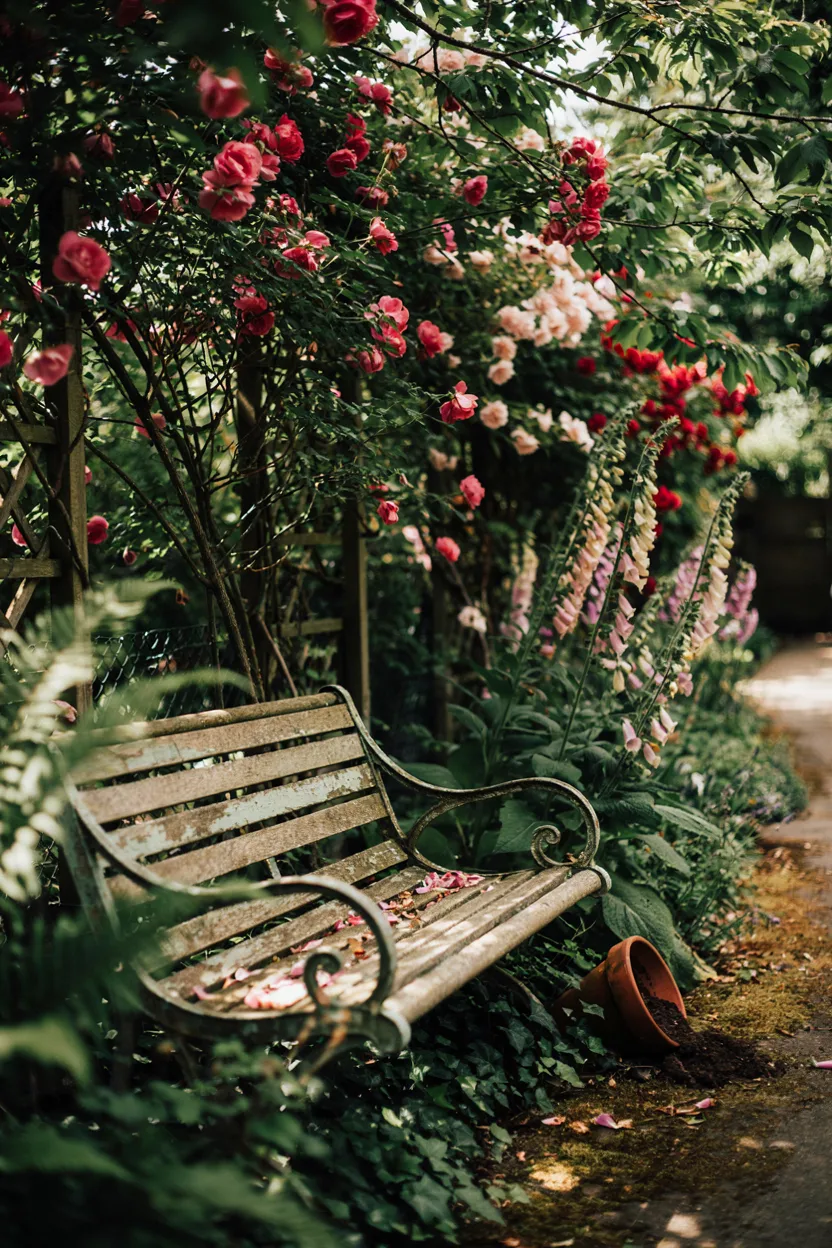
Tucking a vintage-style bench into a shaded, plant-filled corner is one of the more inviting cottage garden ideas, creating a quiet spot to sit and fully experience the garden’s abundance up close. Surrounding the bench on multiple sides with tall, billowing plants gives the seating area a sense of enclosure and privacy, making it feel like a discovered secret rather than an obvious focal point within the larger garden.
Choosing a weathered or antique-style bench, rather than a sleek modern design, reinforces the timeless, slightly untamed character that defines cottage gardening. Positioning the bench along a well-used path ensures it gets noticed and used regularly, rather than becoming purely decorative. Many gardeners find that a garden nook like this becomes a favorite personal retreat, offering a peaceful place to pause amid the garden’s lush, romantic chaos.
9. Layered Cottage Border Planting
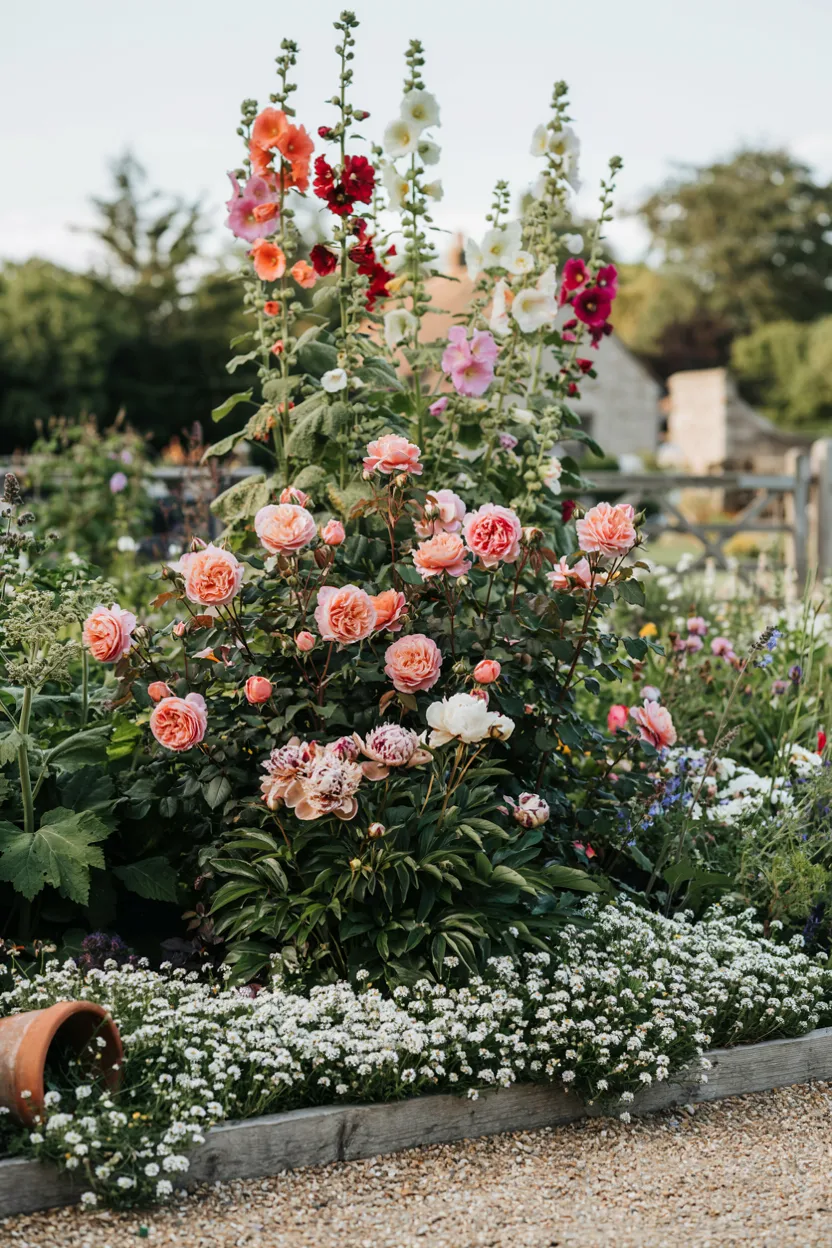
Layering plants by height is one of the foundational cottage garden ideas for achieving the style’s signature lush, full look. Positioning the tallest plants, like hollyhocks or delphiniums, toward the back of the border, with progressively shorter plants in front, ensures every layer remains visible while creating a dense, textured wall of color from front to back. This technique also maximizes the growing space within a single border, since every height level is put to use.
Choosing plants with varying bloom times across the different layers helps maintain continuous color and interest throughout the growing season, rather than the entire border peaking and fading all at once. This layered approach also provides visual depth, making even a relatively narrow border feel substantial and full. Many gardeners find that mastering this layering technique is key to achieving the dense, overflowing look that distinguishes cottage gardens from more sparse, formal planting styles.
10. Antique Watering Can Planters
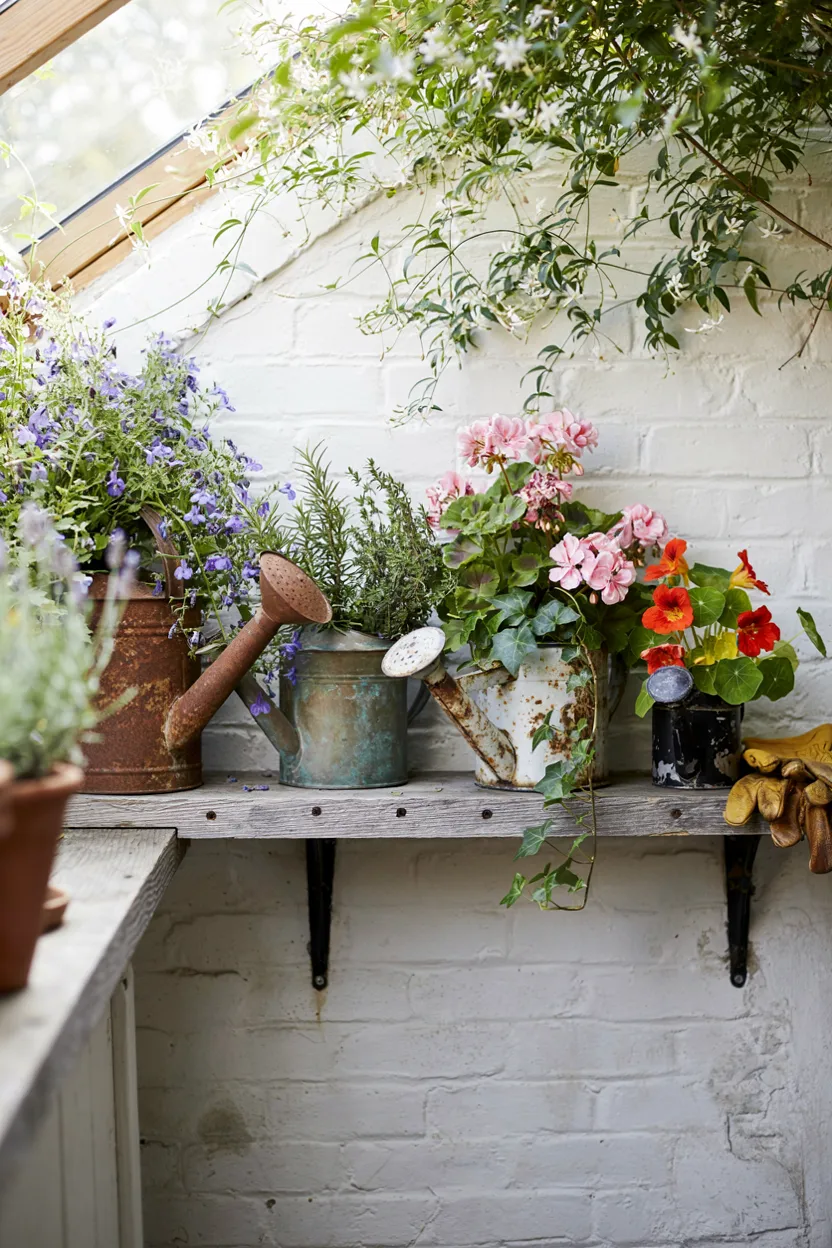
Repurposing vintage garden tools as planters is one of the more whimsical cottage garden ideas, adding character and personality that store-bought pots often lack. Old watering cans, washtubs, and wheelbarrows can all be transformed into unique planting vessels, their weathered patina and rusted edges perfectly complementing the informal, slightly worn aesthetic central to cottage-style gardening. This approach also offers an affordable way to add decorative interest without purchasing new containers.
Drilling drainage holes into the bottom of repurposed metal containers ensures plants stay healthy despite the vessel’s original non-gardening purpose. Grouping several vintage pieces together on a shelf or garden table creates an eclectic, collected-over-time display that feels authentic rather than staged. Many gardeners find that these small nostalgic touches add significant charm, reinforcing the sense that the cottage garden has been lovingly tended and gradually built up over many years.
11. Rustic Trellis with Sweet Peas
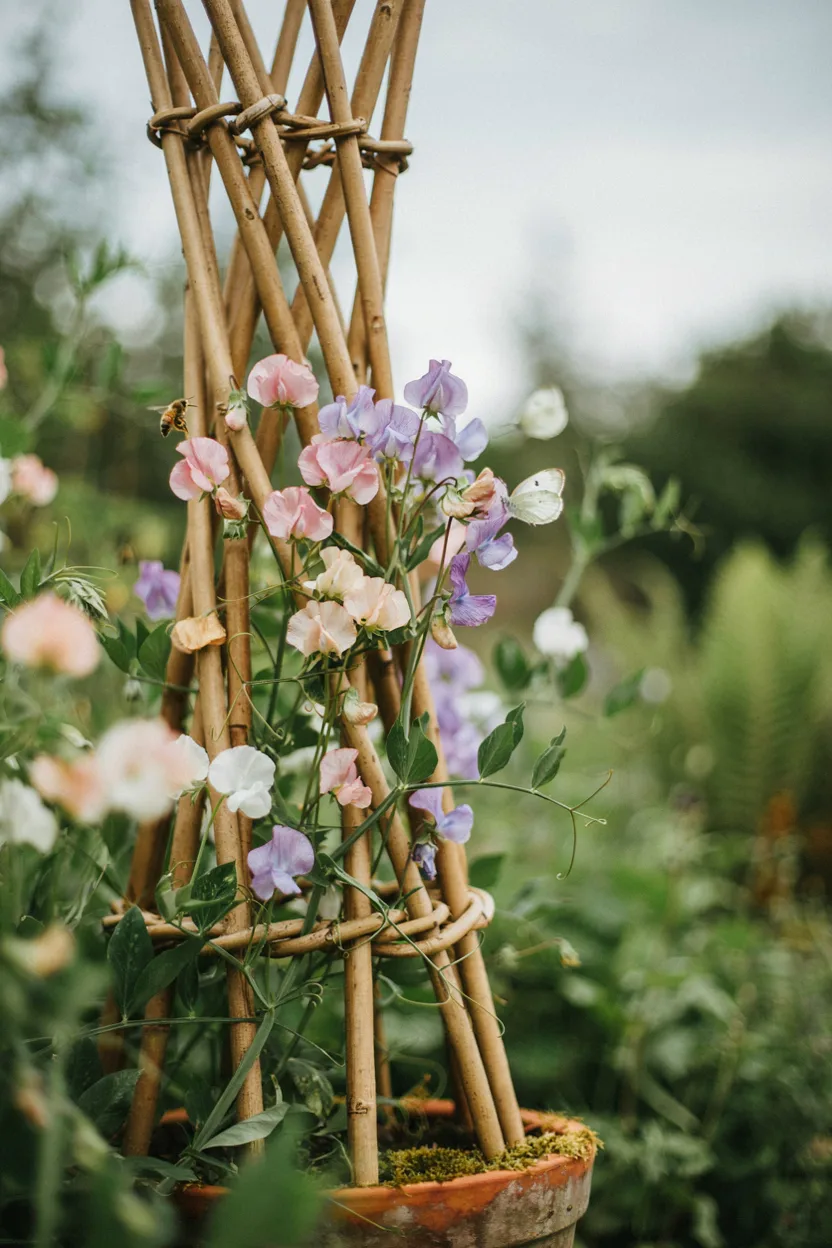
A handmade willow or twig trellis is one of the more rustic cottage garden ideas, offering an affordable and charmingly imperfect alternative to manufactured garden structures. Sweet peas, with their delicate tendrils and fragrant blooms, climb naturally up simple woven supports, making this pairing a classic combination in traditional cottage gardens. The slightly irregular, handmade quality of the trellis itself contributes to the garden’s overall relaxed, unpolished character.
Because sweet peas are relatively fast-growing annuals, this feature can be recreated fresh each year, allowing gardeners to experiment with different trellis shapes or plant color combinations season to season. Positioning the trellis near a path or seating area lets visitors fully appreciate the flowers’ sweet fragrance up close. Many gardeners find that this simple, low-cost project delivers one of the most fragrant and visually charming elements within the entire cottage garden.
12. Cottage Garden Vegetable Patch
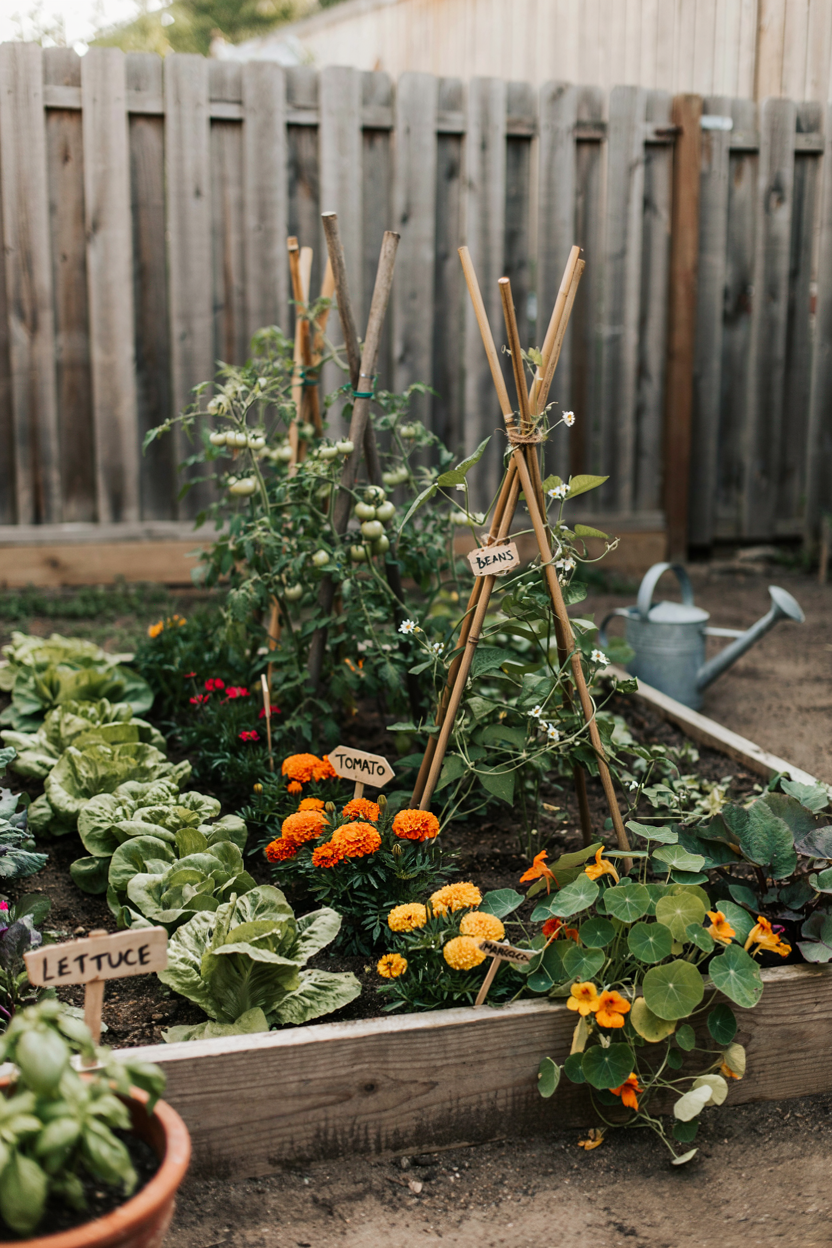
Blending vegetables with flowers is one of the most historically authentic cottage garden ideas, reflecting the style’s origins as a practical garden meant to feed a household while still offering beauty. Interplanting marigolds or nasturtiums among rows of vegetables not only adds color but also helps deter certain pests naturally, making this combination both decorative and functional. This approach avoids the strict separation between ornamental and edible gardening found in more formal garden designs.
Choosing companion plants that benefit each other, such as basil planted near tomatoes, adds another layer of practical benefit to this mixed planting style. Allowing the vegetable patch to feel slightly informal, rather than arranged in perfectly straight rows, keeps it consistent with the overall relaxed cottage garden aesthetic. Many gardeners find that this productive, flower-filled vegetable patch becomes one of the most rewarding and frequently visited areas of their garden.
13. Wildflower Meadow Lawn Alternative
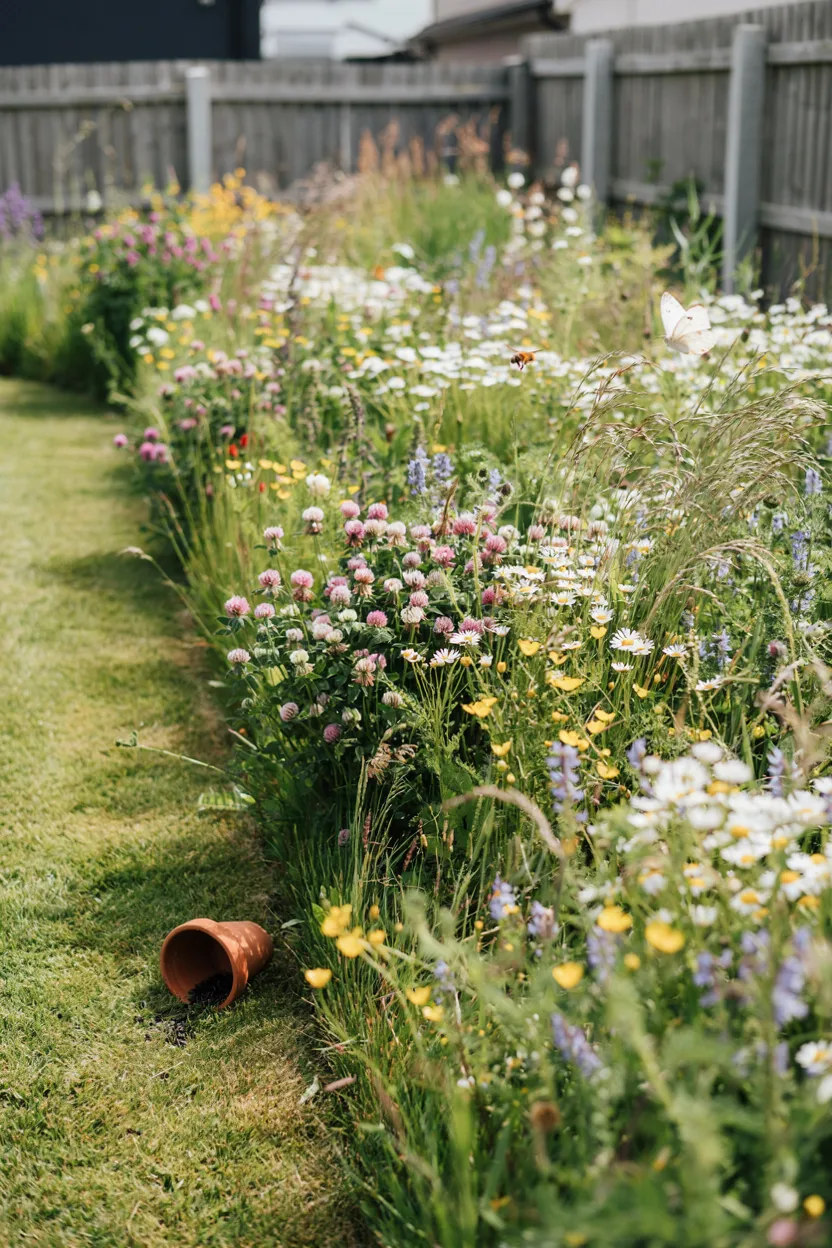
Replacing a portion of traditional lawn with a wildflower meadow is one of the more eco-conscious cottage garden ideas, offering a low-maintenance alternative that supports local pollinators. Allowing native grasses and wildflowers to grow freely, rather than mowing regularly, creates a naturalistic, meadow-like space that requires significantly less water, fertilizer, and mowing than a traditional lawn. This approach also introduces habitat and food sources for bees, butterflies, and other beneficial insects.
Mowing a simple path through the meadow keeps the space accessible and intentional, preventing it from looking merely neglected rather than purposefully wild. Choosing a mix of native wildflower seeds ensures the meadow thrives in local soil and climate conditions with minimal additional care. Many homeowners find that converting even a small section of lawn into a wildflower meadow captures the essence of cottage gardening’s relaxed, naturalistic philosophy.
14. Foxglove and Delphinium Backdrop
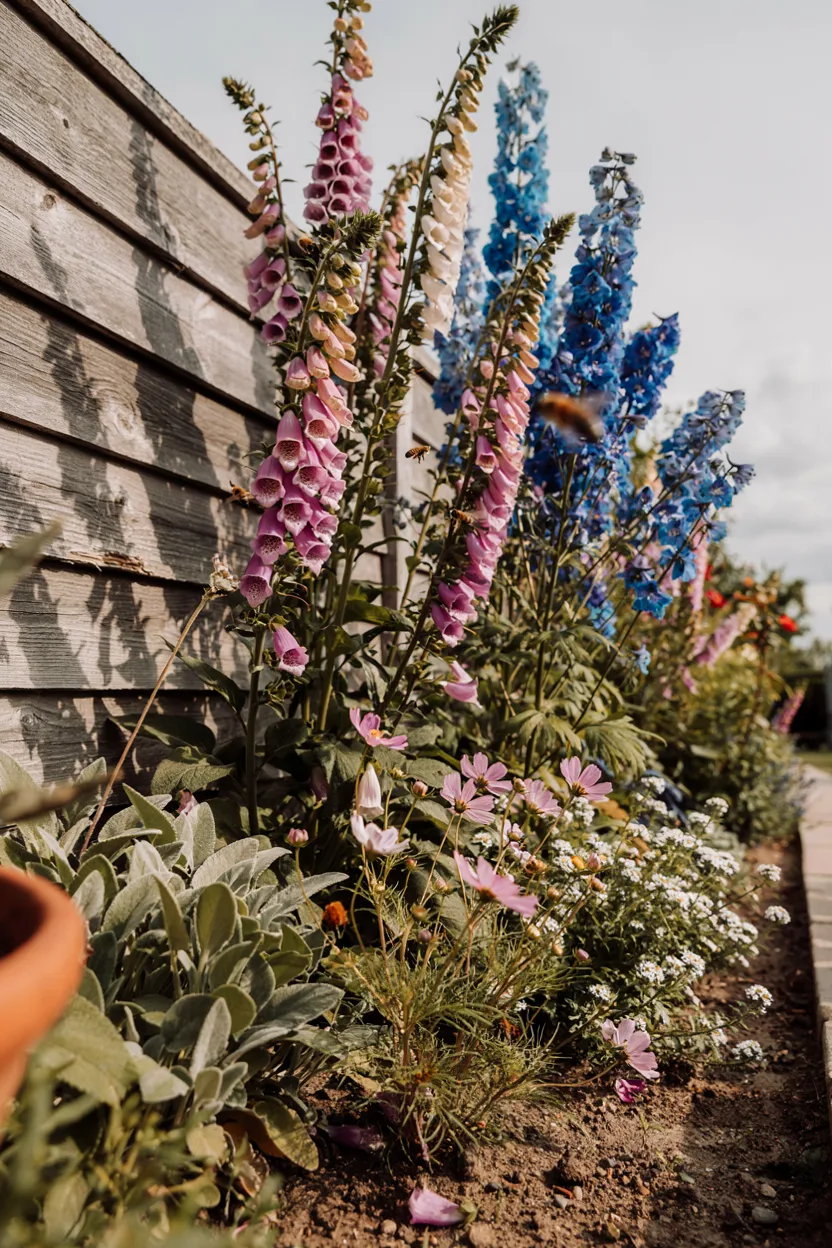
Using tall spike flowers like foxglove and delphinium as a backdrop is one of the most dramatic cottage garden ideas for adding vertical drama to an otherwise low, spreading border. Positioning these statuesque plants against a fence or wall creates a stunning visual anchor, drawing the eye upward and giving the entire border a sense of scale and grandeur. Their tall, colorful spikes also provide essential structure among the more rounded, mounding shapes of typical cottage flowers.
Because foxglove and delphinium bloom in early to midsummer, pairing them with later-blooming perennials in front helps extend the border’s visual interest throughout the season. These tall flowers also tend to attract a significant number of pollinators, adding movement and life to the garden. Many gardeners find that incorporating this kind of vertical backdrop elevates an otherwise flat border into one of the most memorable and photogenic features of the entire garden.
15. Cottage Garden Birdbath Corner
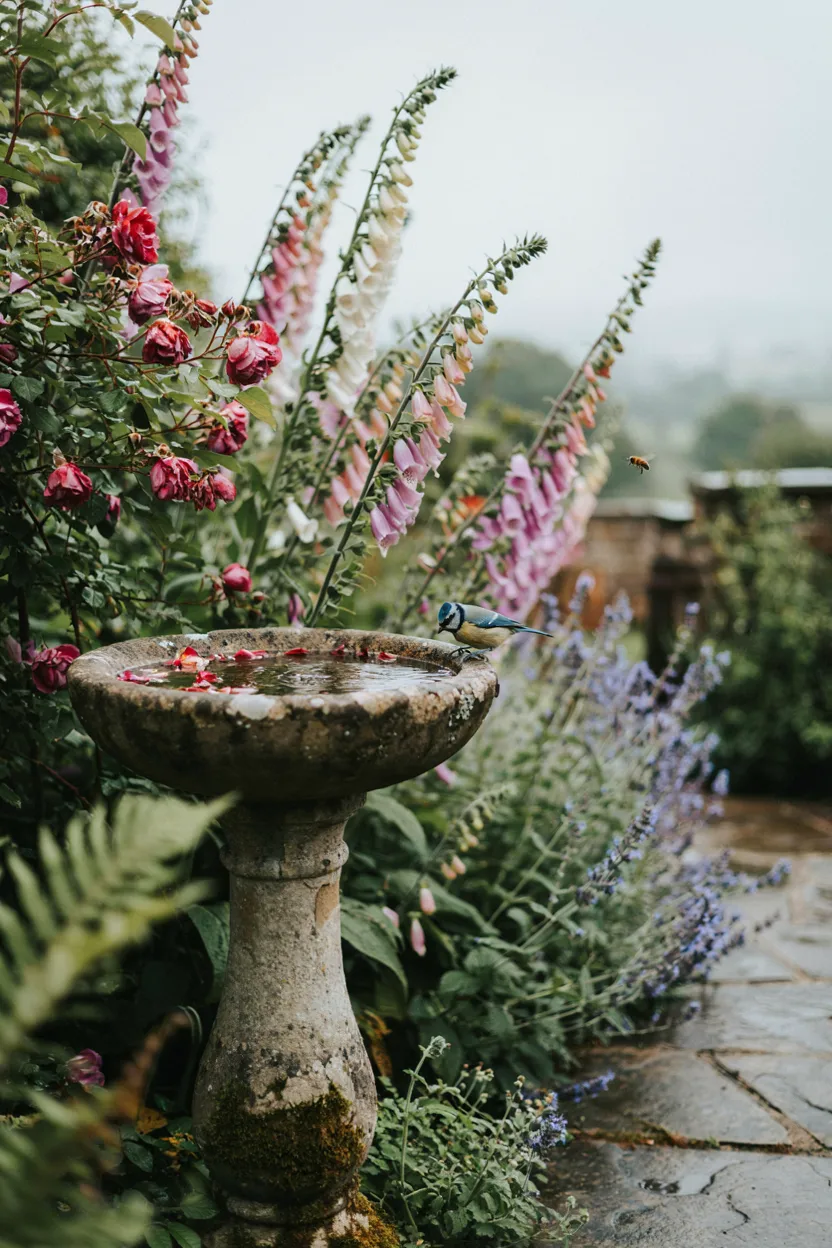
Tucking a birdbath into a densely planted corner is one of the more welcoming cottage garden ideas, inviting local wildlife into the space while adding a charming focal point. Surrounding the birdbath with tall, billowing flowers creates a sense of natural shelter that encourages birds to visit and linger, reinforcing the garden’s connection to the surrounding ecosystem rather than treating it as purely ornamental space.
Choosing a weathered stone or concrete birdbath, rather than a sleek modern design, keeps the feature consistent with the garden’s overall aged, romantic character. Positioning it at a slight distance from the busiest garden paths gives birds a quieter, more private spot to bathe and drink. Many gardeners find that a birdbath corner becomes a favorite spot to sit quietly and observe, adding another layer of life and movement to the cottage garden’s already abundant charm.
16. Climbing Clematis on a Garden Gate
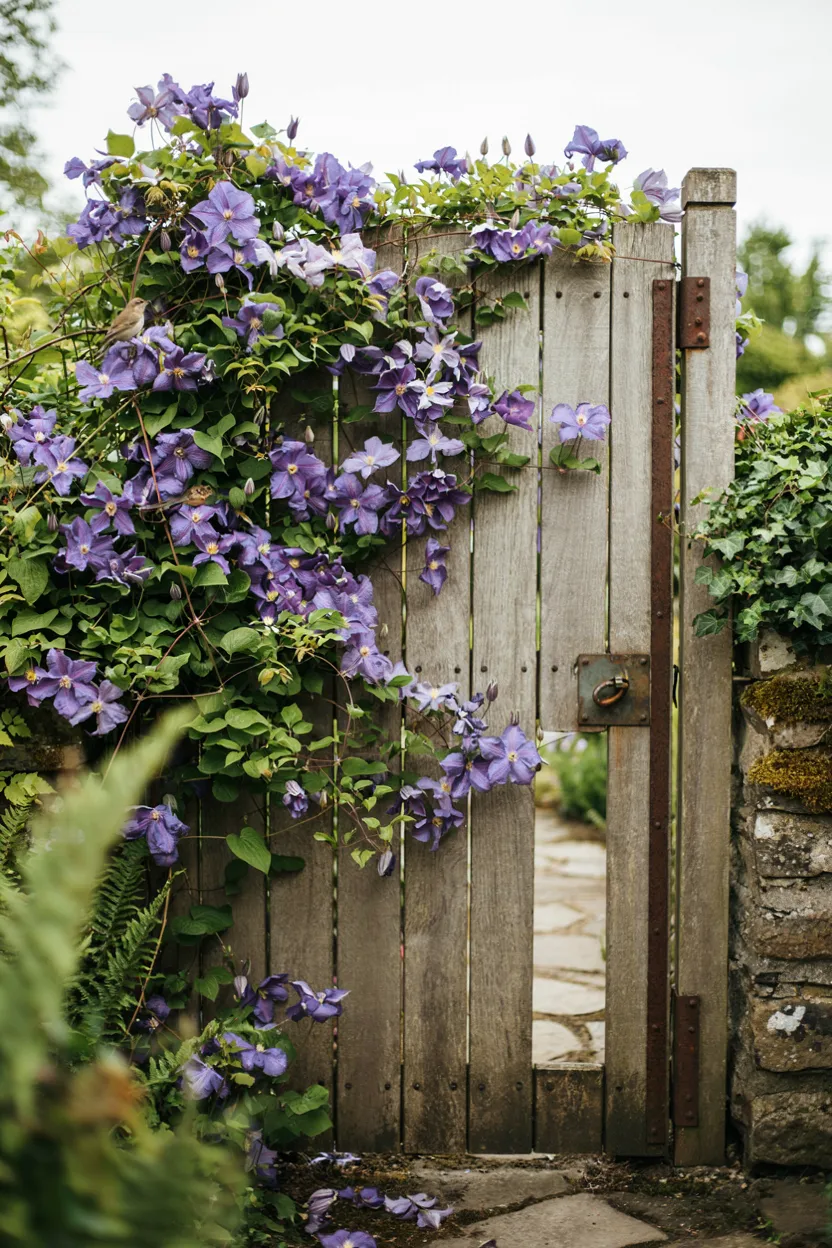
A clematis-covered garden gate is one of the most enchanting cottage garden ideas, transforming a simple entry point into a memorable, storybook-like feature. Clematis vines climb readily with minimal support, quickly covering a gate’s structure in dense foliage and striking, star-shaped blooms. This creates a sense of anticipation and discovery, as visitors can only partially glimpse the garden beyond until they step through the flower-covered opening.
Choosing a large-flowered clematis variety maximizes visual impact, while smaller-flowered types offer a more delicate, textured covering across the gate. Regular light pruning helps keep the vine’s growth focused on the gate itself, rather than sprawling excessively into the surrounding path. Many gardeners find that a flowering gate like this becomes one of the most beloved and photographed entry points into their entire cottage garden.
17. Cottage Garden Container Grouping
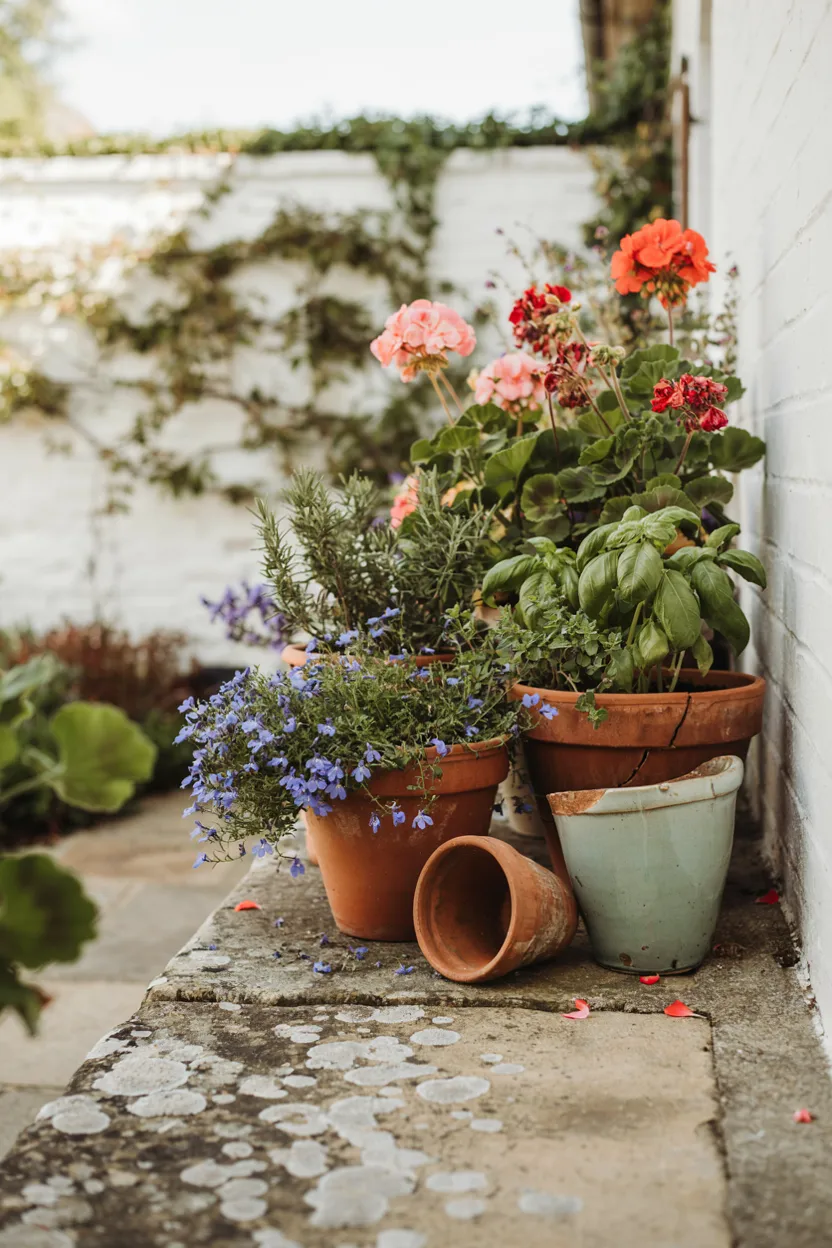
Rounding out this list of cottage garden ideas, grouping mismatched containers together offers a flexible way to bring the style’s abundant, layered look to patios, steps, or entryways where in-ground planting isn’t possible. Combining pots of different sizes, materials, and heights creates a collected, evolved-over-time appearance that feels authentically cottage-inspired, rather than a single uniform planting arrangement.
Filling each container with a mix of trailing, upright, and filler plants mimics the layered planting style found throughout the rest of the garden, ensuring the containers feel cohesive with the larger space. This approach also offers flexibility for renters or those with limited garden space, since the entire grouping can be rearranged or relocated as needed. Many gardeners find that a well-planned container grouping delivers cottage garden charm even in the smallest or most unconventional spaces.
Conclusion
A true cottage garden isn’t about perfection, it’s about layers, fragrance, and a sense of joyful abundance everywhere you look. Whether you start with a single rose-covered arch or commit to a full overflowing border, these cottage garden ideas offer plenty of inspiration for embracing a wilder, more romantic style. Let your garden grow a little untamed, and you’ll be rewarded with a space that feels alive, personal, and beautifully imperfect.

Join The Discussion