
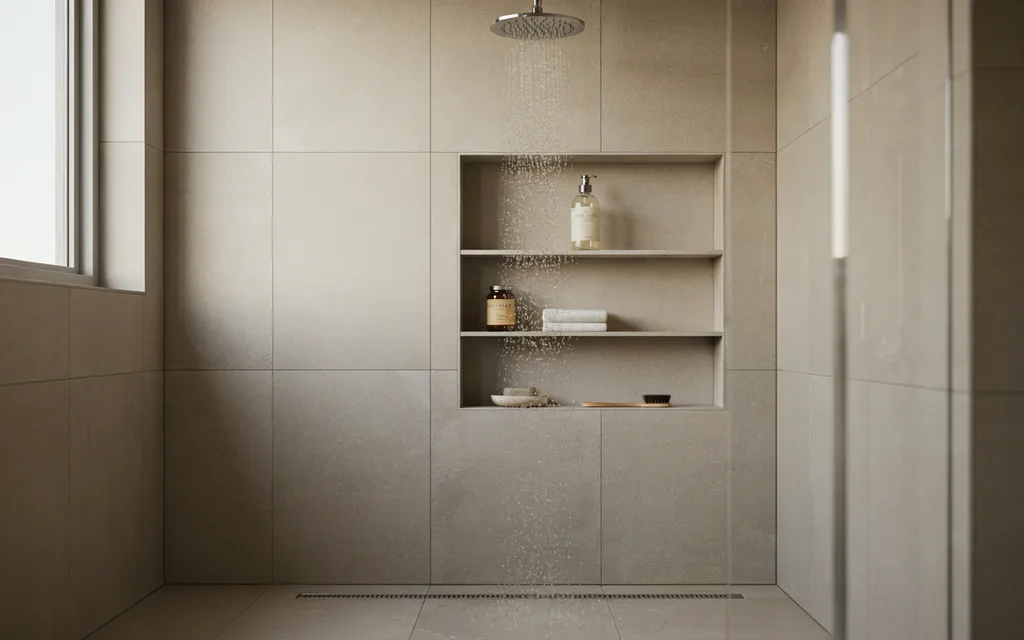
Introduction
Few design styles understand relaxation quite like Japandi, blending Japanese ritual with Scandinavian simplicity to create bathrooms that feel genuinely restorative. These Japandi bathroom ideas go beyond neutral tile and wood accents, exploring details like sunken soaking tubs, pebble shower floors, and dedicated ritual corners for candles and incense. Whether you’re planning a full renovation or looking for small, meaningful updates, this list of 25 Japandi bathroom ideas offers inspiration for turning an ordinary bathroom into a calm, spa-like retreat you’ll actually look forward to using every day.
1. Freestanding Wood-Look Soaking Tub
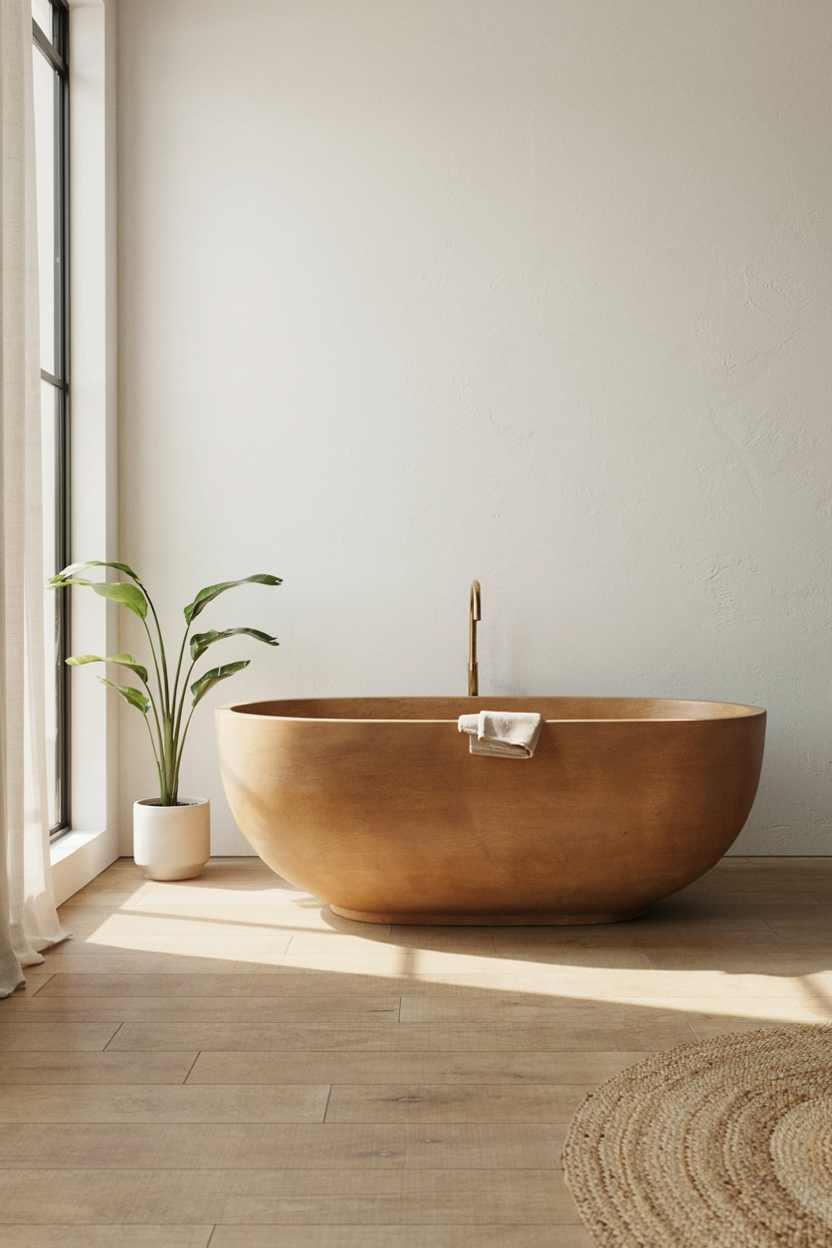
A freestanding soaking tub is one of the most transformative Japandi bathroom ideas, offering deep, immersive bathing reminiscent of traditional Japanese ofuro tubs. Choosing a wood-look finish over stark white porcelain reinforces the warm, natural materiality central to this design style, creating a bathing experience that feels grounded and organic rather than clinical or purely functional.
Positioning the tub as a standalone sculptural feature, rather than tucking it against a wall, allows it to become the room’s clear focal point. This Japandi bathroom idea works particularly well in larger primary bathrooms with enough space to appreciate the tub’s full silhouette from multiple angles, reinforcing the sense of ritual and intentional relaxation this design style is known for creating.
2. Natural Stone Vessel Sink
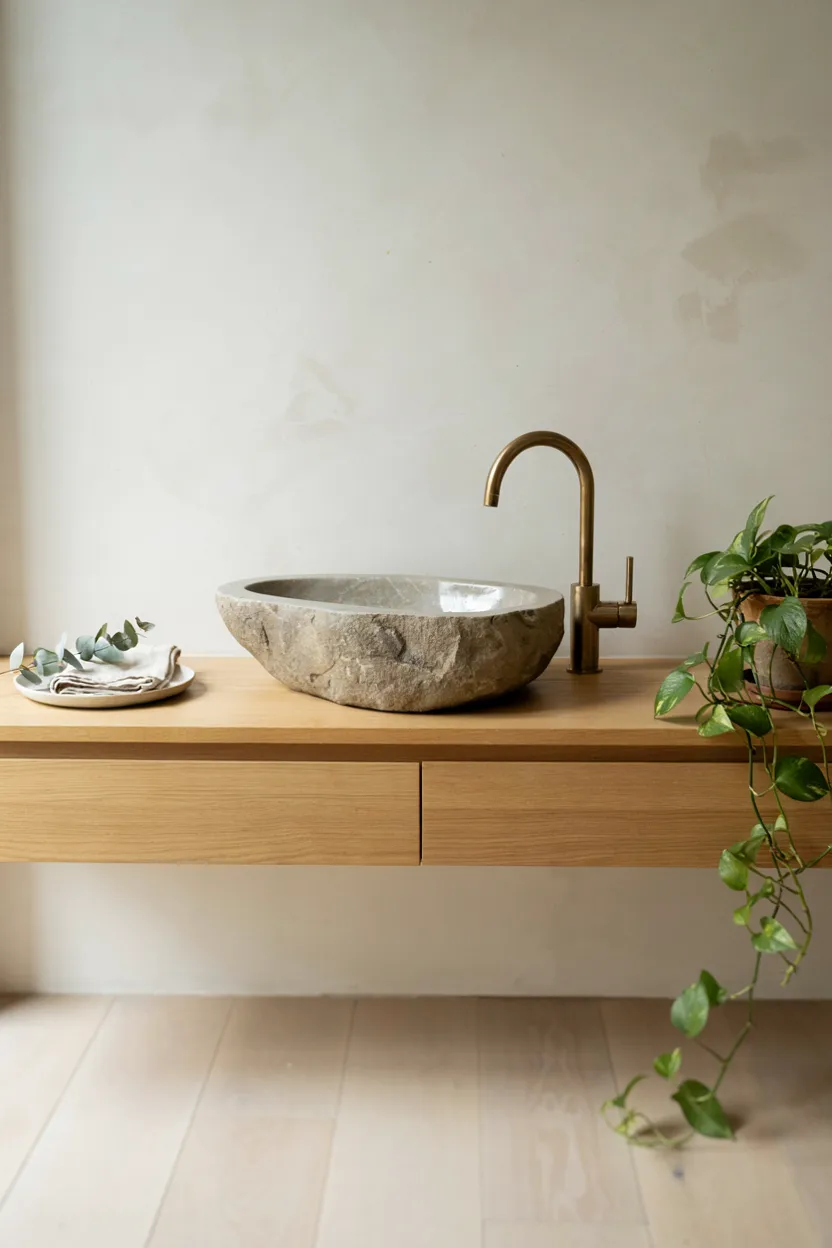
A natural stone vessel sink brings genuine organic texture to Japandi bathroom ideas, using unpolished or lightly finished stone to create a striking, sculptural focal point above the vanity. Unlike a standard undermount sink, the vessel style sits prominently on top of the counter, celebrating the stone’s natural variation and irregular shape as a deliberate design feature rather than hiding it away.
Pairing the stone basin with a simple wood vanity and brushed brass or matte black fixtures reinforces the balanced warmth central to Japandi style. This Japandi bathroom idea works particularly well when the stone’s natural color variations are allowed to stand out against a otherwise neutral, uncluttered backdrop, creating a genuine connection to nature within the bathroom’s overall design.
3. Floating Wood Vanity
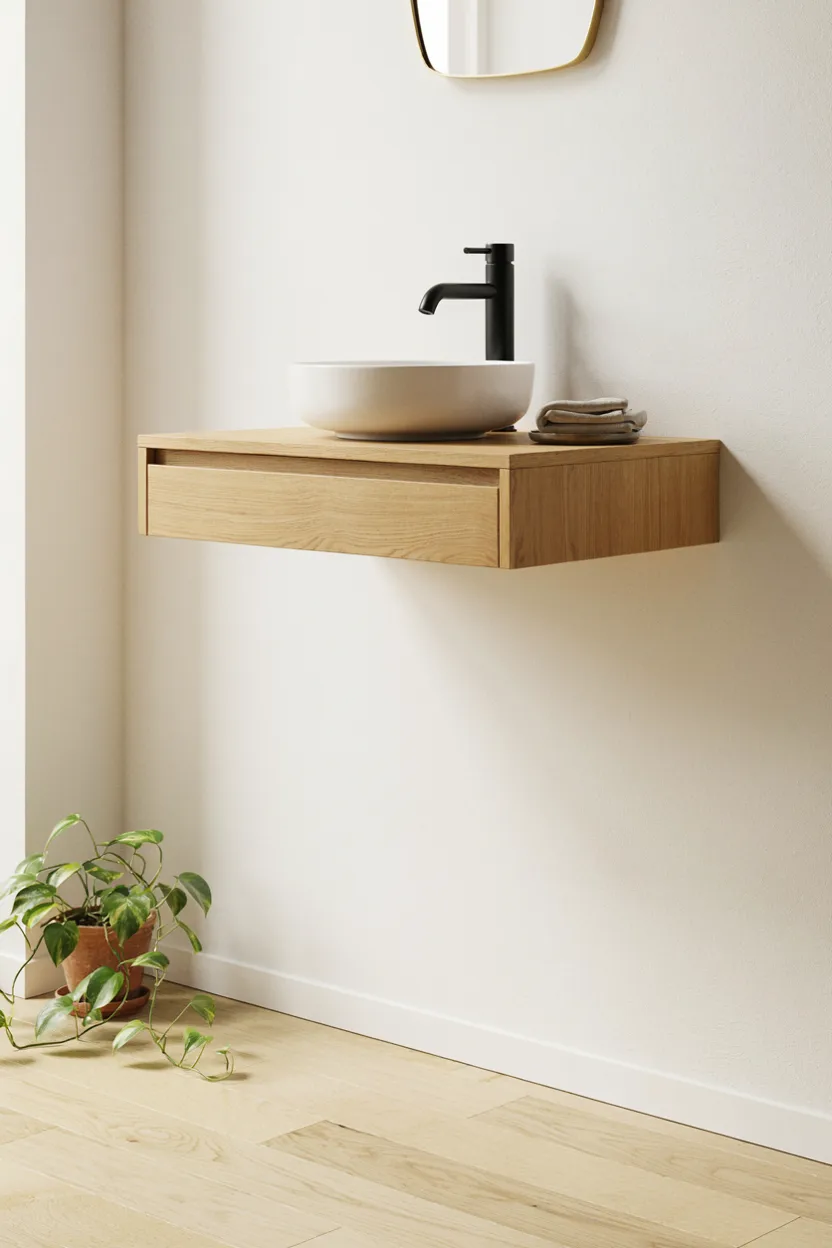
A floating wood vanity is a foundational element among Japandi bathroom ideas, combining the warmth of natural wood with the clean, minimalist lines central to Scandinavian design influence. Mounting the vanity directly to the wall rather than resting it on the floor creates a sense of visual lightness, making even a small bathroom feel more open and spacious than a traditional floor-standing cabinet would allow.
This Japandi bathroom idea also simplifies cleaning, since the open space beneath the vanity eliminates hard-to-reach corners that collect dust and moisture. Choosing wood in a light, natural finish rather than a painted or heavily stained option keeps the piece consistent with the organic material palette this style depends on throughout the rest of the bathroom’s design.
4. Pebble Shower Floor
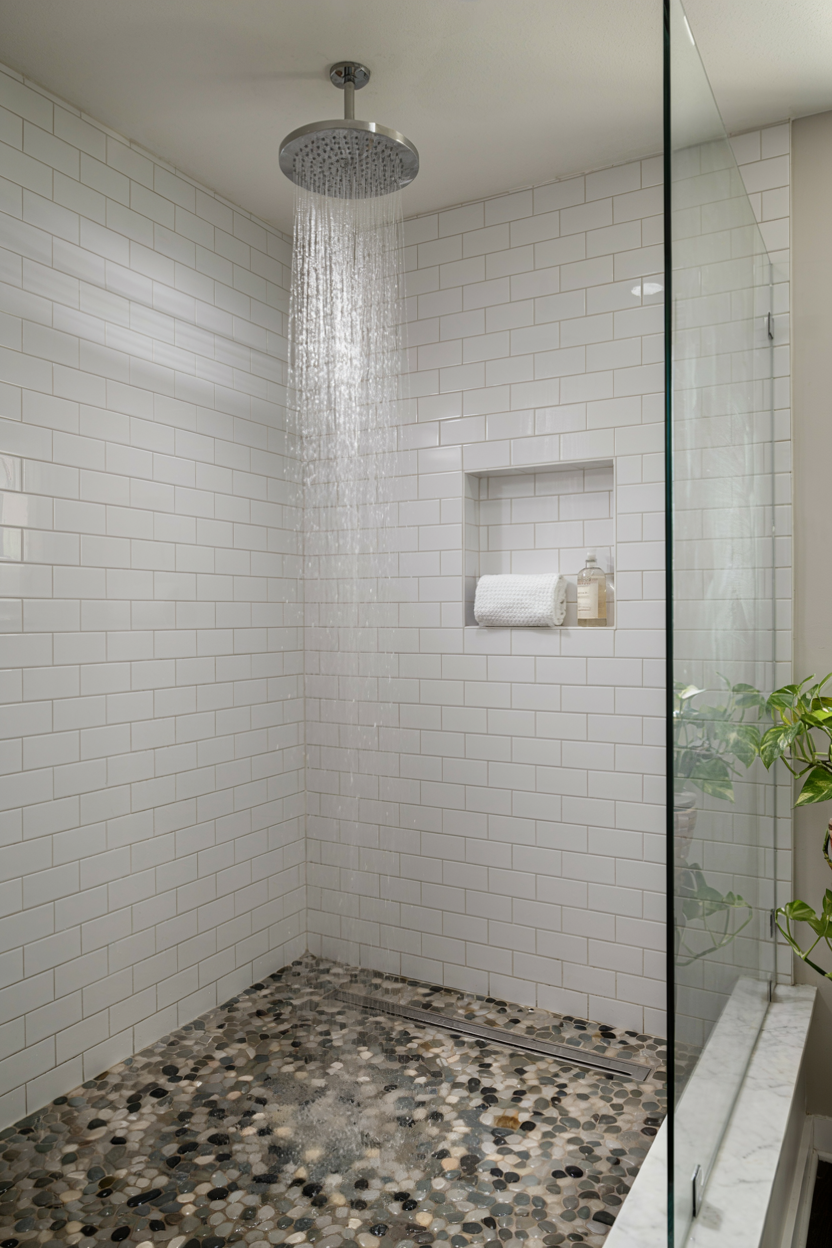
A pebble shower floor brings genuine spa-like texture to Japandi bathroom ideas, using smooth, naturally rounded stones instead of standard flat tile to create a tactile, reflexology-inspired surface underfoot. This detail reinforces the deep connection to nature central to Japanese bathing traditions, transforming an everyday shower into a more mindful, sensory experience with each step taken across the textured stone surface.
Pairing the pebble floor with simple, plain tile walls keeps the overall shower design from feeling too busy, allowing the flooring detail to remain the clear focal point. This Japandi bathroom idea also offers practical slip resistance thanks to the pebbles’ naturally uneven surface, combining genuine function with the organic, calming aesthetic this design style consistently prioritizes throughout the space.
5. Matte Black Fixtures
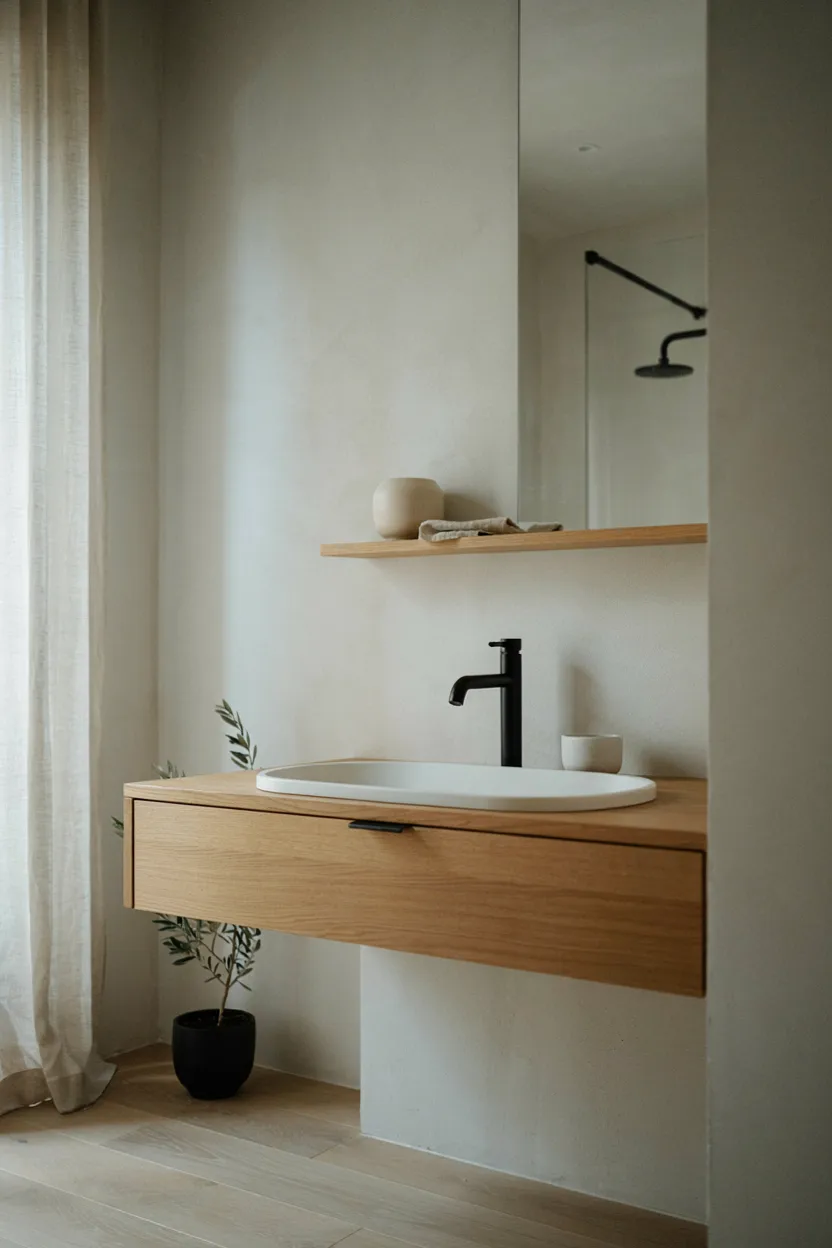
Matte black fixtures add subtle definition to Japandi bathroom ideas, using small doses of dark hardware to create gentle contrast against the surrounding light wood and neutral tile. This detail keeps the bathroom from feeling flat or one-dimensional, grounding the space visually without introducing the boldness or shine that polished chrome or brass fixtures might bring to an otherwise understated design.
Because matte black has a non-reflective finish, it maintains the calm, subdued quality central to Japandi style, unlike glossier metal finishes that can feel more attention-grabbing. This Japandi bathroom idea works particularly well when black accents remain limited to just a few key pieces, such as the faucet and showerhead, keeping the overall palette balanced rather than overly stark or industrial.
6. Wabi-Sabi Ceramic Accessories
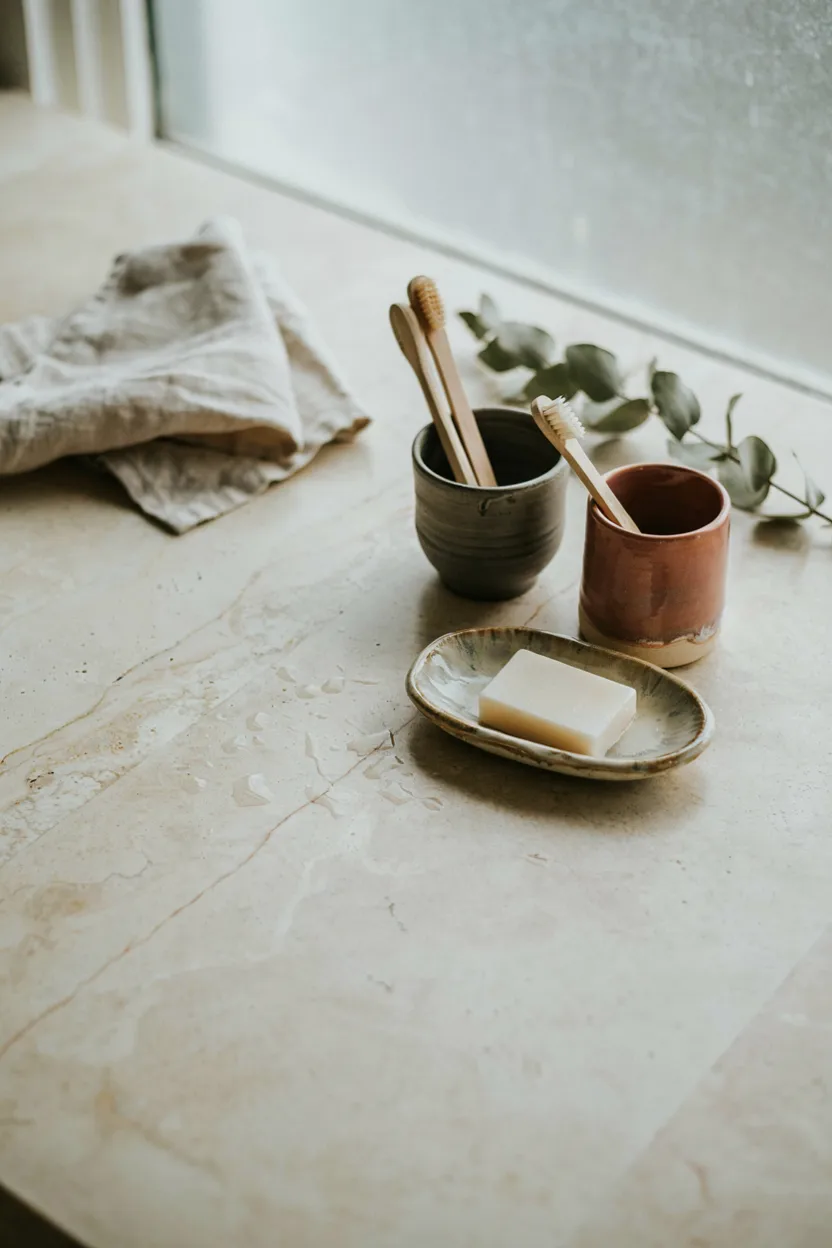
Handmade ceramic accessories embrace the wabi-sabi philosophy central to authentic Japandi bathroom ideas, celebrating slight irregularity and natural variation over flawless, mass-produced bath accessories. A soap dish or tumbler with a visibly handcrafted texture and imperfect shape adds genuine character and warmth, offering a meaningful decorative detail rather than a purely functional object chosen for polish alone.
This detail is particularly effective when chosen in muted, earthy glazes that complement the bathroom’s broader neutral palette rather than introducing bold color. This Japandi bathroom idea works best in small doses, with just a few carefully selected pieces displayed rather than an entire matching set, reinforcing the intentional simplicity and quiet craftsmanship this design philosophy consistently celebrates.
7. Bamboo Bath Mat
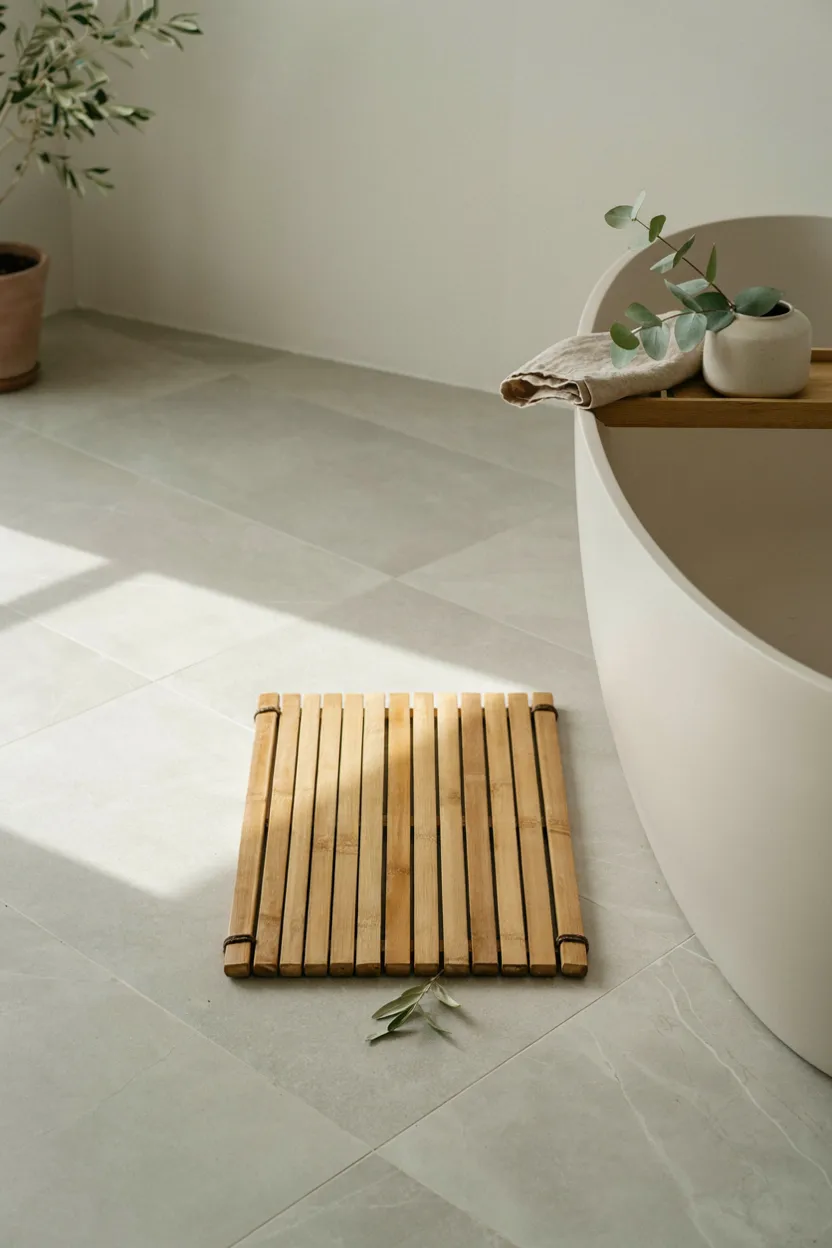
A bamboo bath mat introduces natural texture underfoot among Japandi bathroom ideas, replacing a typical cotton or synthetic mat with a material that reinforces the organic, nature-connected quality central to this design style. Bamboo also offers practical benefits in a wet bathroom environment, since it dries quickly and resists mold and mildew far better than absorbent fabric alternatives commonly used elsewhere.
This detail is often overlooked in favor of plush, plain bath mats that, while comfortable, don’t contribute the same textural or material interest to the overall design. This Japandi bathroom idea works particularly well positioned beside a tub or shower, adding a warm, tactile transition point between wet and dry areas of the bathroom while reinforcing the space’s broader natural material palette.
8. Minimalist Open Shelving
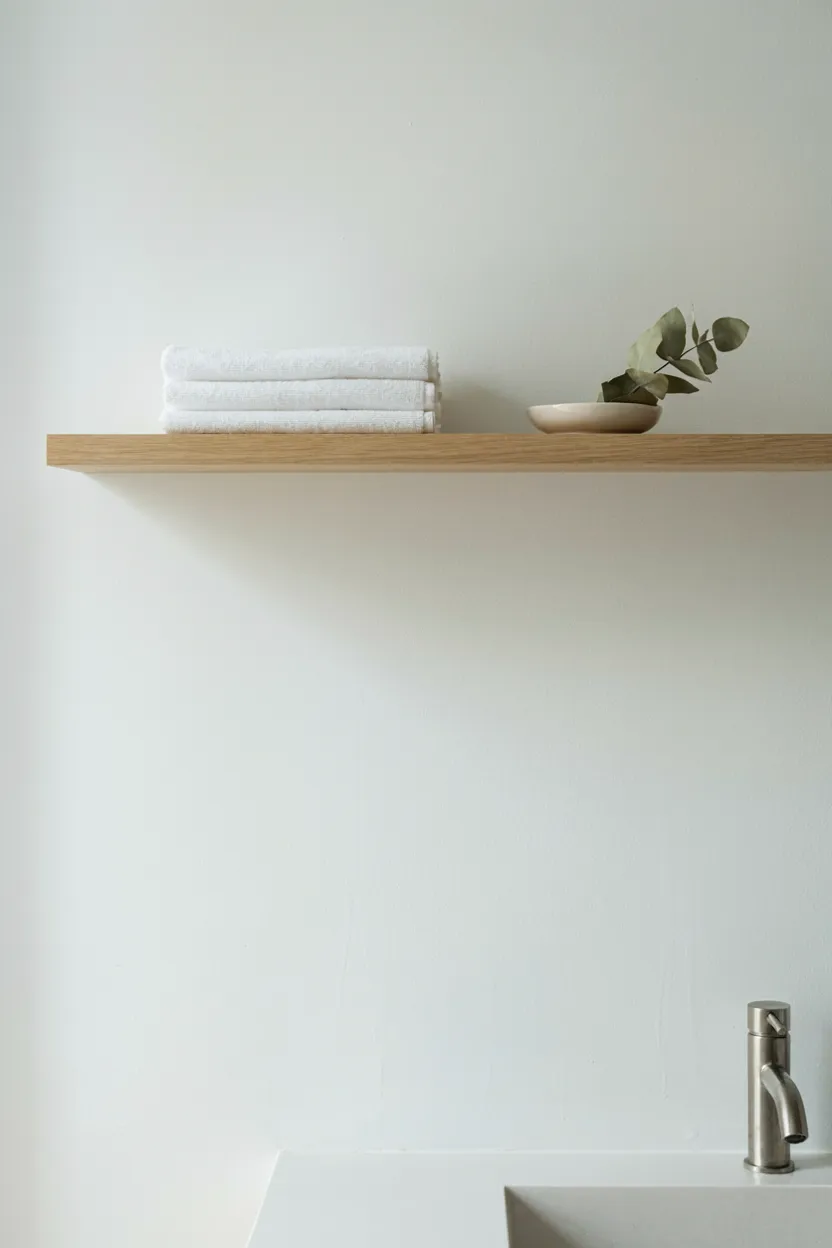
Open shelving offers a space-efficient, visually light storage solution among Japandi bathroom ideas, keeping walls from feeling heavy or overloaded with closed cabinetry. A simple floating wood shelf provides just enough surface for folded towels or a few essential toiletries, while the surrounding open wall space reinforces the airy, uncluttered feeling central to this design style throughout the bathroom.
This detail is frequently styled incorrectly when the shelf becomes overloaded with too many products or decorative objects, undermining the intentional minimalism Japandi design relies on. This bathroom idea works best with just a few carefully chosen items displayed with generous negative space between them, echoing the Japanese design principle of ma, or meaningful emptiness, within the overall composition.
9. Neutral Linen Shower Curtain
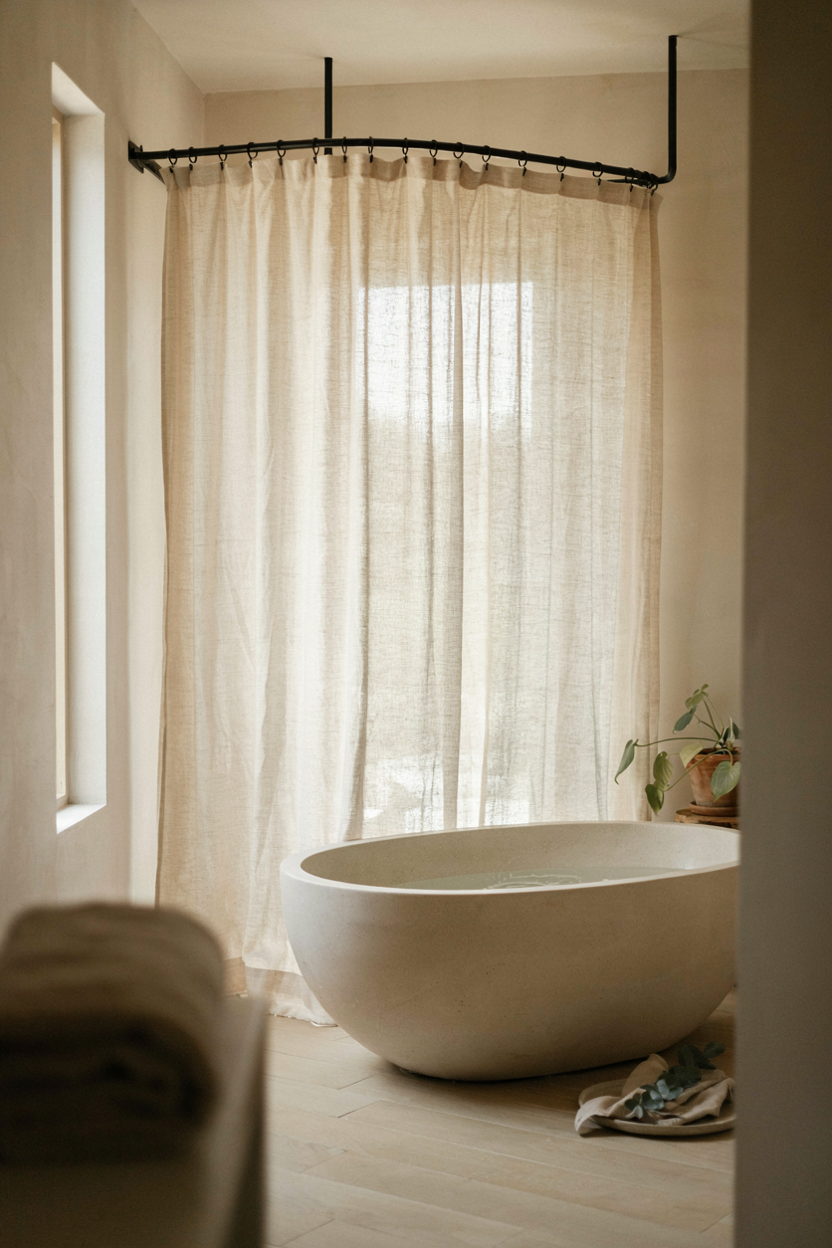
A linen shower curtain brings natural texture to Japandi bathroom ideas, using raw, undyed fabric instead of a typical vinyl or heavily patterned curtain. This material choice reinforces the organic, tactile quality central to Japandi design while allowing soft, filtered light to pass through the semi-translucent fabric, maintaining the room’s bright, airy atmosphere even when the curtain is drawn closed.
This detail is often overlooked in favor of more common plastic or polyester curtains that don’t contribute the same natural warmth to the space. This Japandi bathroom idea works particularly well around a freestanding tub, where the soft, flowing fabric echoes the room’s overall emphasis on natural materials and unhurried, intentional design throughout every visible surface.
10. Slatted Wood Wall Panel
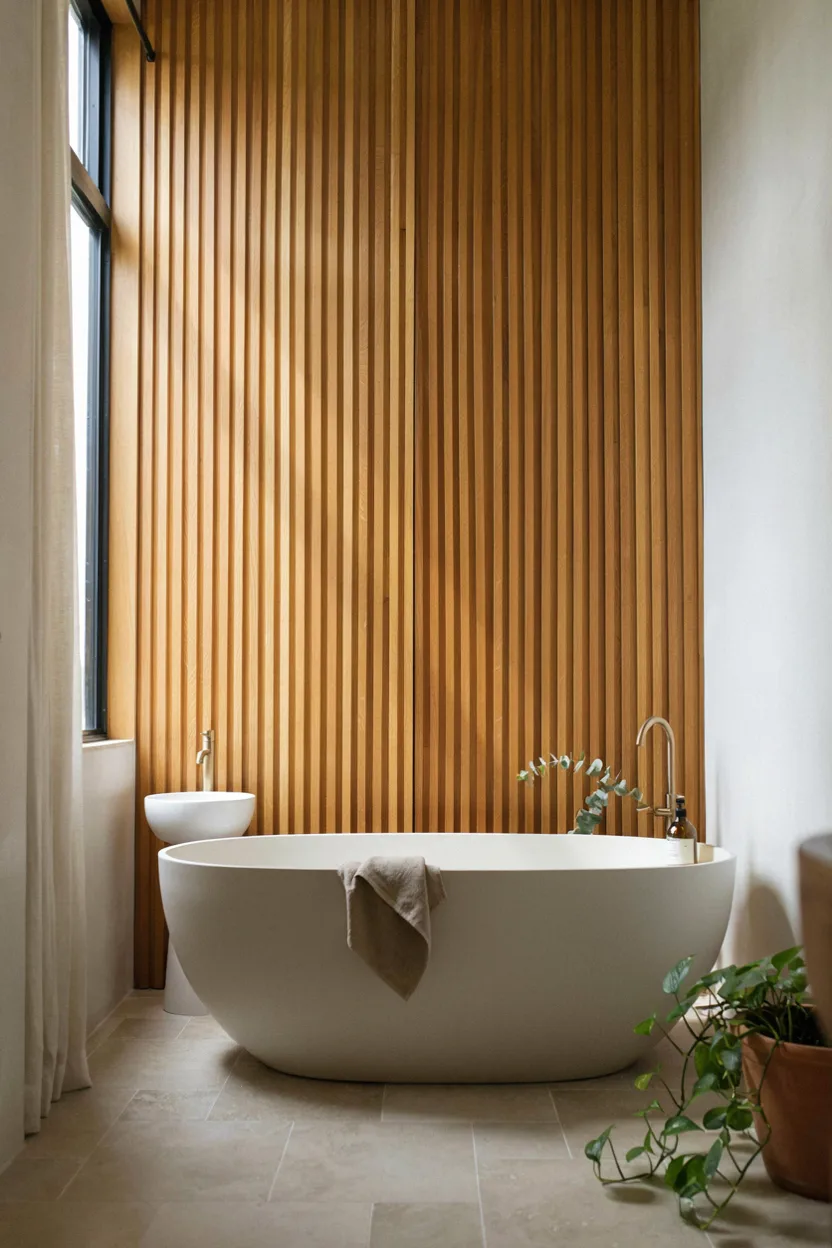
Slatted wood paneling introduces architectural texture to Japandi bathroom ideas, using vertical wood slats to add depth and warmth to an otherwise flat, tiled wall. This design detail draws on traditional Japanese woodworking techniques, reinforcing the natural materiality central to this aesthetic while creating a sophisticated, considered backdrop for a freestanding tub or vanity area within the bathroom.
Because wood requires proper sealing and ventilation to withstand a bathroom’s humidity, this Japandi bathroom idea works best in well-ventilated spaces or when using moisture-resistant treated wood. Positioning the paneling as an accent wall behind the tub, rather than covering the entire room, allows it to remain a considered design statement rather than an overwhelming or impractical feature throughout the space.
11. Recessed Niche Storage
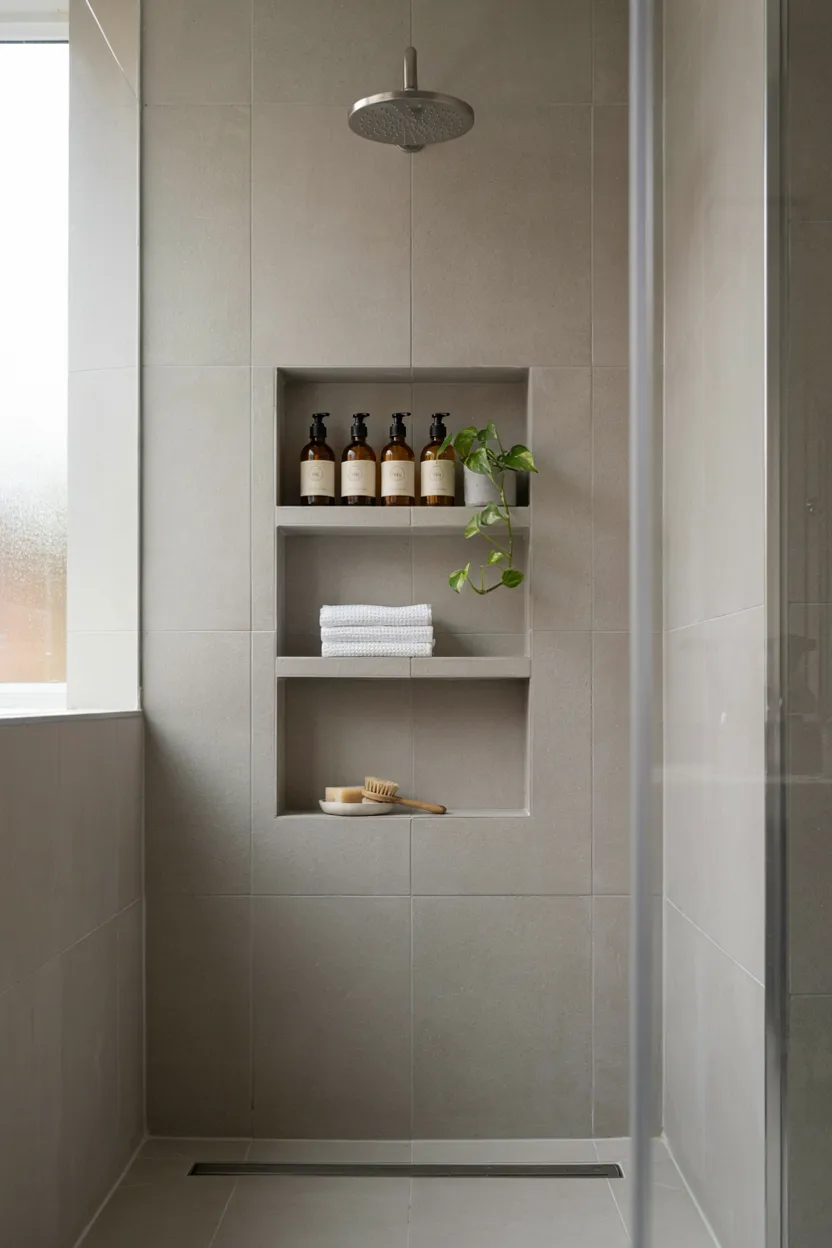
A built-in wall niche is one of the most seamlessly integrated Japandi bathroom ideas, embedding storage directly into the shower or vanity wall rather than relying on freestanding caddies or shelving units. This approach keeps the bathroom’s surfaces clean and uncluttered, reinforcing the intentional minimalism central to Japandi style while still providing practical storage for everyday bath essentials.
Because the niche is tiled to match the surrounding wall, it blends seamlessly into the overall design rather than standing out as an obvious storage addition. This Japandi bathroom idea requires construction planning during a renovation, but the payoff is elegant, space-efficient storage that supports the room’s calm visual simplicity without sacrificing genuine everyday function.
12. Paper Lantern Lighting
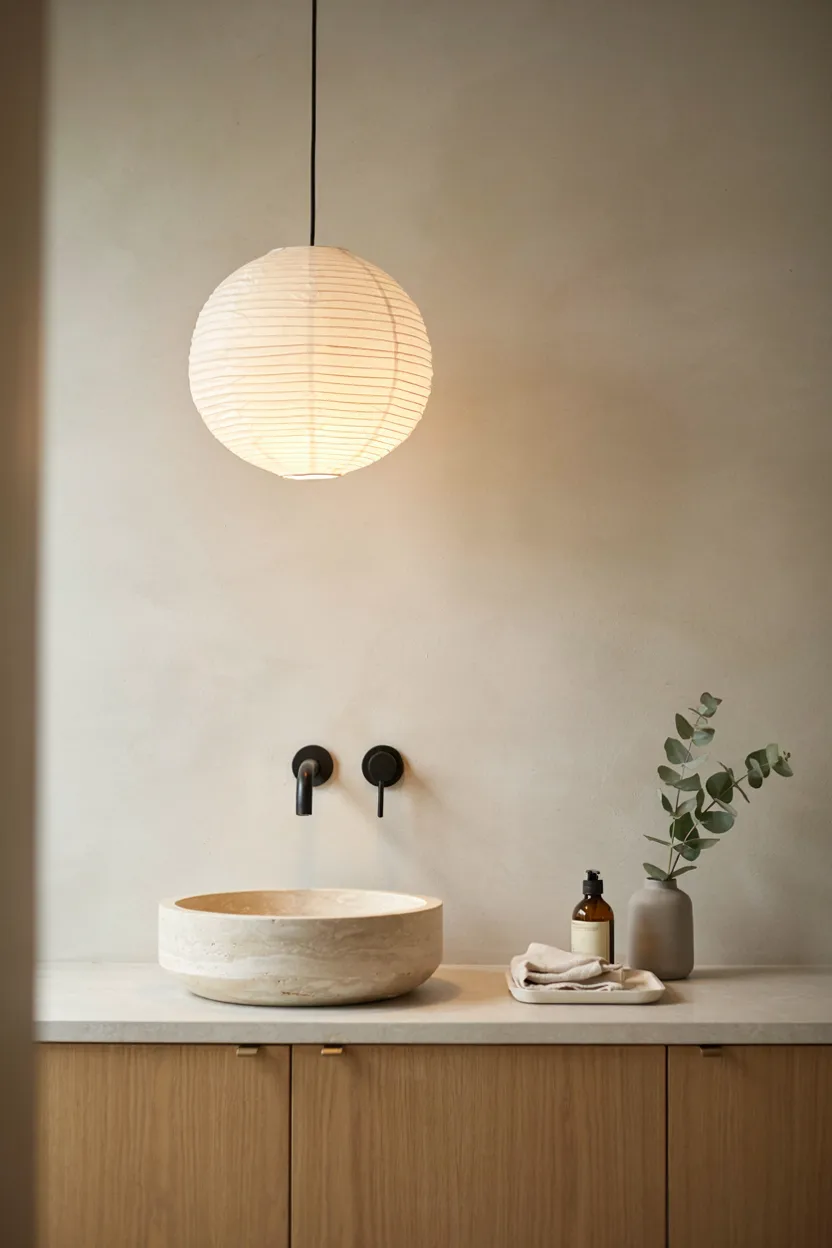
Paper lantern lighting brings authentic Japanese design influence to Japandi bathroom ideas, offering a soft, diffused glow that feels considerably warmer and gentler than a typical vanity light bar. This lighting choice draws directly from traditional Japanese paper lanterns, reinforcing the cultural roots of this design style while creating flattering, ambient light throughout the bathroom’s calming, spa-like atmosphere.
This detail is sometimes overlooked entirely in favor of more generic modern fixtures that produce harsher, more clinical lighting. This Japandi bathroom idea works particularly well as a single statement fixture above the vanity, paired with additional task lighting for practical grooming needs, ensuring the space remains both beautifully ambient and genuinely functional for everyday use.
13. Corner Potted Plant
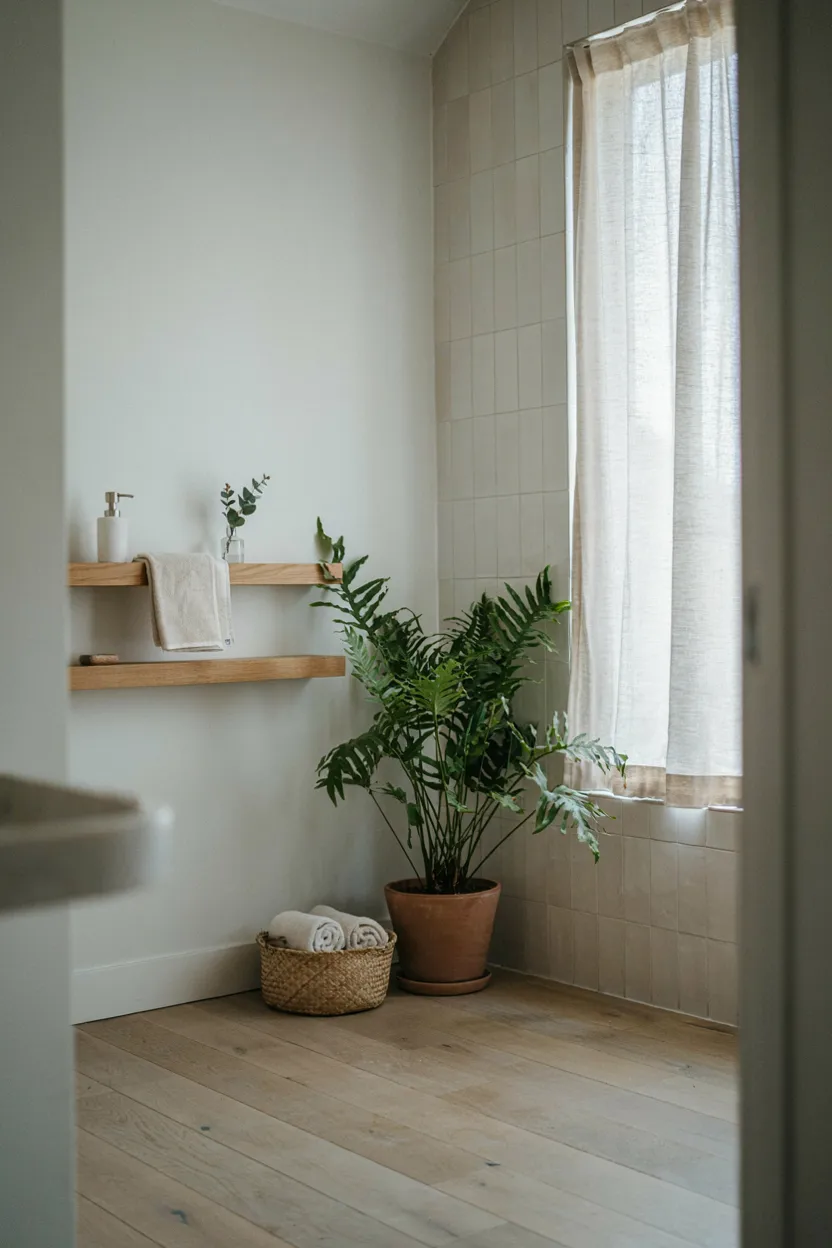
Introducing one carefully chosen plant is one of the more understated Japandi bathroom ideas for bringing life and organic texture into a naturally humid, often plant-friendly environment. Ferns and other moisture-loving varieties thrive particularly well in bathrooms, making this an especially practical choice for adding greenery without requiring extra maintenance effort beyond the room’s existing humidity levels.
This detail is often styled incorrectly when too many plants crowd a small bathroom, creating visual clutter that works against the intended sense of calm. This Japandi bathroom idea works best with restraint, allowing one well-placed plant to add just enough natural life to the space without overwhelming the room’s otherwise carefully balanced, minimalist composition throughout every surface.
14. Stone Pebble Accent Tray
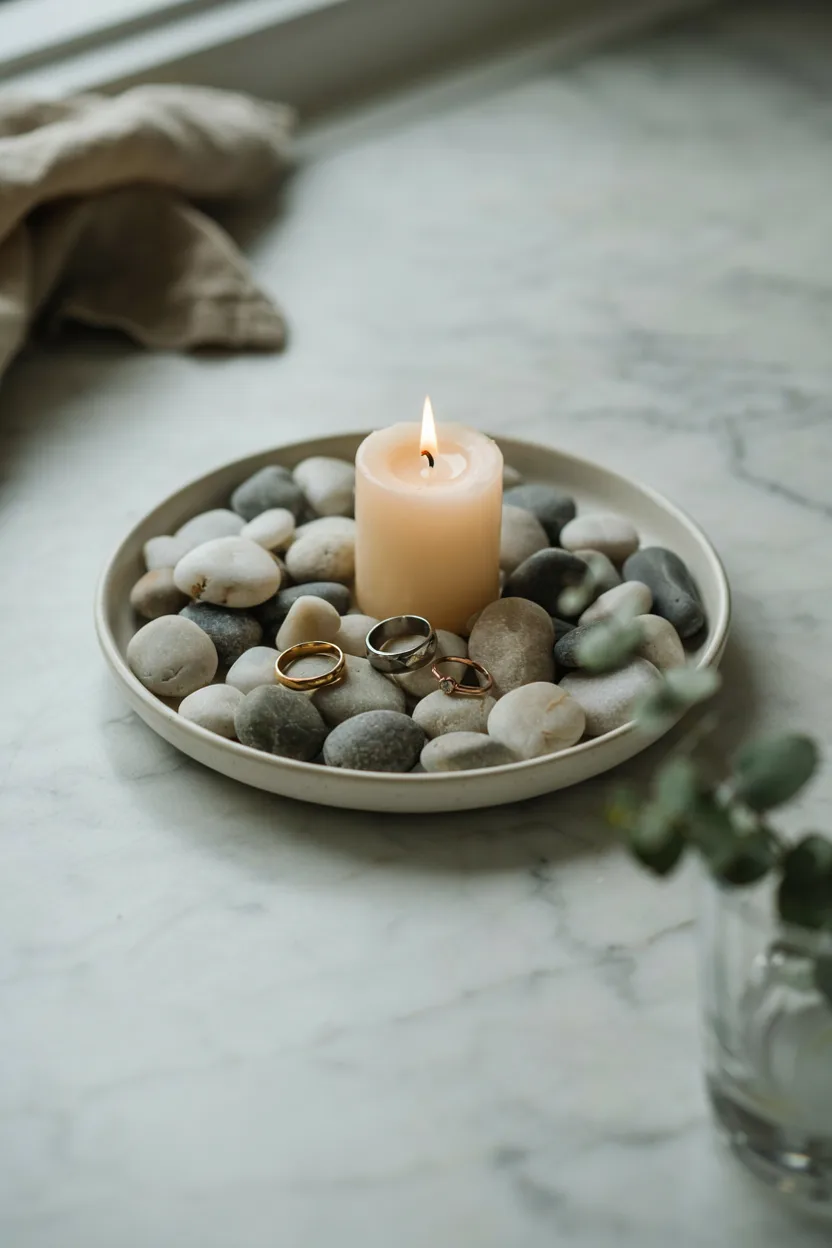
A pebble-filled tray offers a subtle, nature-inspired detail among Japandi bathroom ideas, using smooth stones to add texture and visual interest to an otherwise simple vanity surface. This small styling choice reflects the broader Japandi emphasis on natural materials, replacing a plain dish with something that feels slightly more considered and connected to the outdoors within the bathroom space.
This detail is frequently overlooked or replaced with mismatched, colorful trays that disrupt the bathroom’s overall neutral palette. This Japandi bathroom idea works best when the tray and pebbles remain in muted, natural tones like gray, tan, or white, ensuring the accent blends seamlessly into the surrounding decor rather than becoming an unintentional pop of clashing color.
15. Woven Storage Baskets
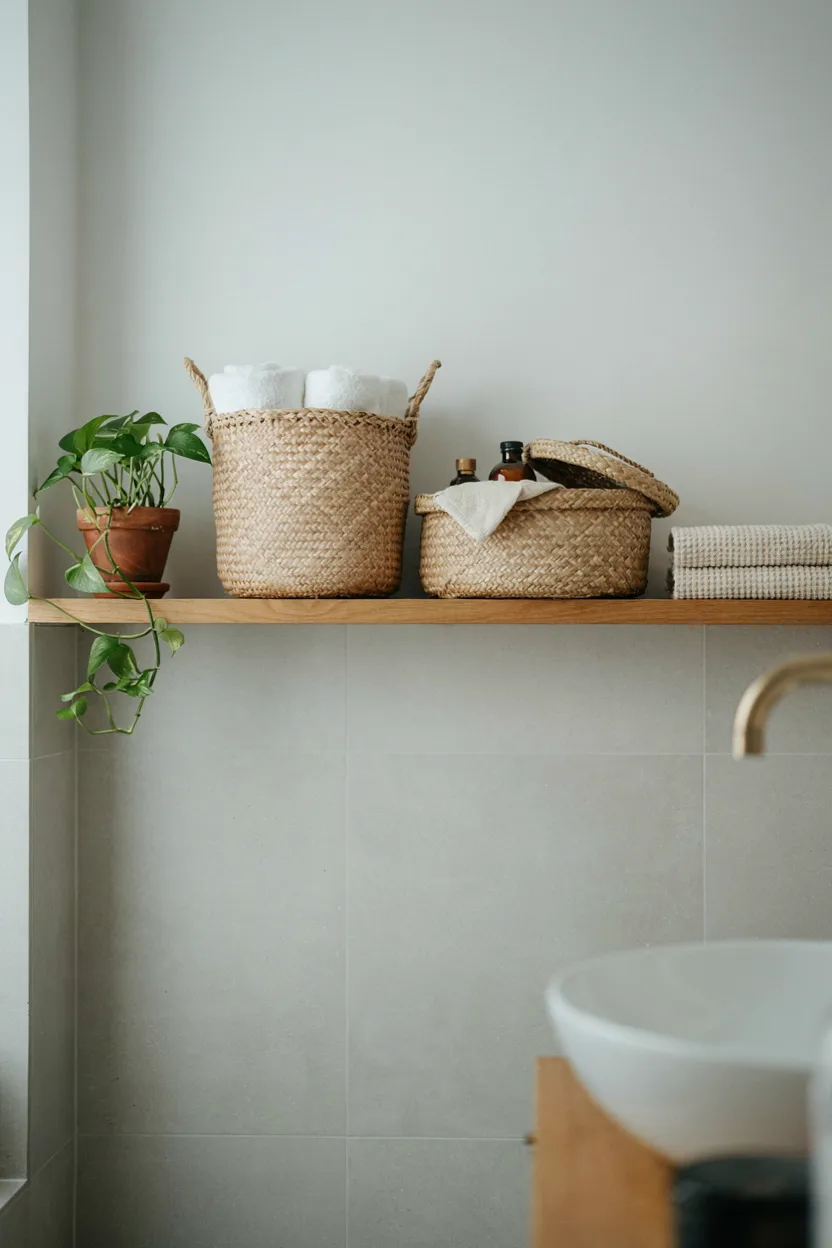
Woven baskets bring natural texture to Japandi bathroom ideas, offering practical storage for towels and toiletries while reinforcing the organic materiality central to this design style. Unlike plastic bins, woven natural fiber baskets add warmth and tactile interest without introducing visual clutter or breaking from the muted, earthy color palette this aesthetic consistently relies on throughout the space.
Placing baskets on open shelving keeps them functional but tidy, maintaining clean sightlines throughout the bathroom. This Japandi bathroom idea is frequently styled incorrectly when baskets are left overflowing or mismatched in size and material, disrupting the sense of order. Choosing baskets in coordinating tones and consistent weave patterns preserves the intended calm, cohesive look this style depends on.
16. Low Wood Stool
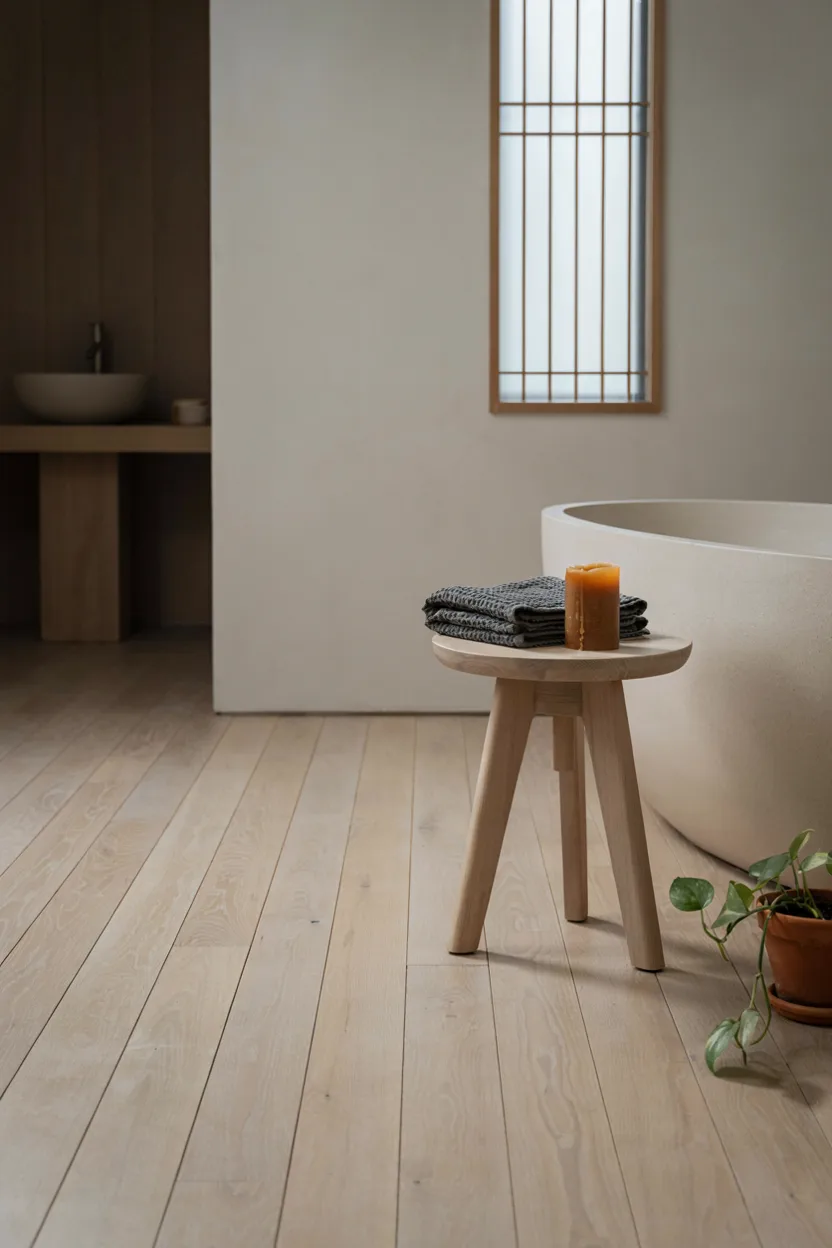
A low wood stool draws directly on traditional Japanese bathing culture among Japandi bathroom ideas, referencing the small stools used during a proper ofuro-style soak. Positioned beside a freestanding tub, this simple piece of furniture provides a practical spot for towels, candles, or a cup of tea, while also adding a sculptural, intentional design element to the floor space.
This detail is often overlooked entirely in bathrooms that rely solely on built-in storage, missing an opportunity to add both function and cultural authenticity to the space. This Japandi bathroom idea works particularly well crafted from the same natural wood tone as the vanity or shelving, creating a cohesive material palette throughout the room’s overall minimalist design.
17. Sliding Shoji Screen Divider
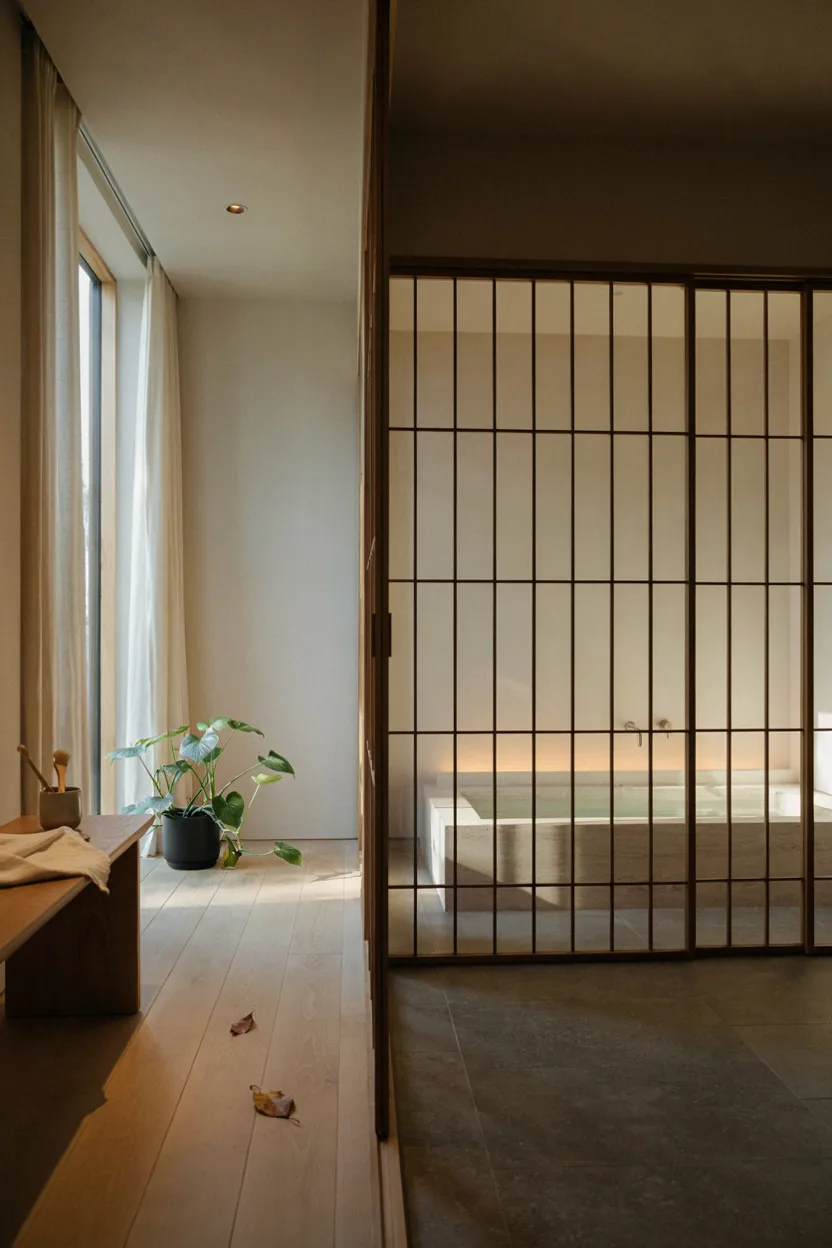
A sliding shoji-style screen brings authentic Japanese architectural influence to Japandi bathroom ideas, using a wood-framed panel with translucent paper or fabric inserts to divide wet and dry zones within the bathroom. This traditional element allows light to pass through while still providing a sense of separation, avoiding the heaviness of a solid glass enclosure or opaque wall.
This feature is often overlooked in favor of standard glass shower doors that don’t capture the same sense of considered, layered privacy. This Japandi bathroom idea works particularly well in larger bathrooms with distinct wet and dry areas, offering a soft, adjustable boundary that reinforces the overall calm, intentional atmosphere central to this design philosophy.
18. Round Wood-Framed Mirror
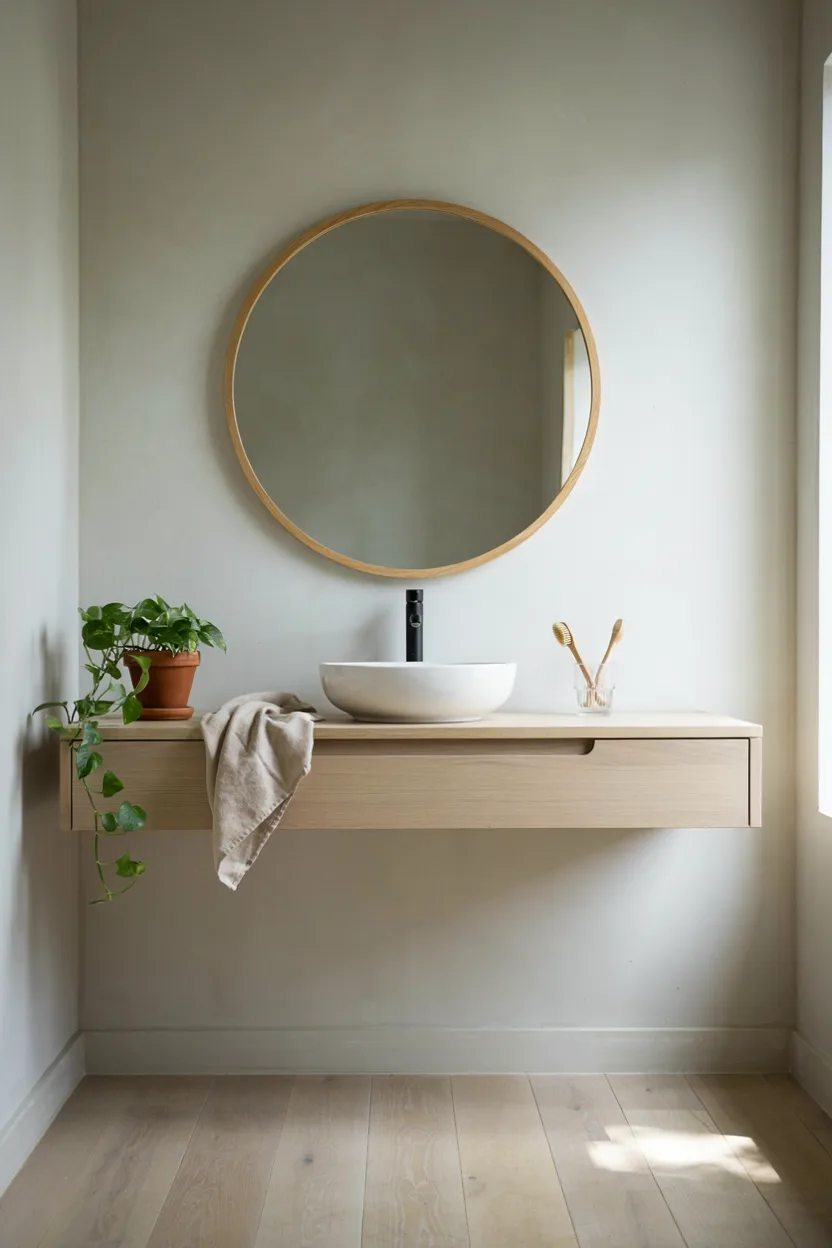
A round, wood-framed mirror is a popular choice among Japandi bathroom ideas, offering both practical function and soft, organic visual interest through its curved silhouette. The rounded shape provides a gentle contrast to the straight lines found elsewhere in Japandi vanities and tile work, while the natural wood frame keeps the piece consistent with the style’s broader material palette throughout the room.
This mirror choice is often styled incorrectly when paired with ornate or heavily embellished frames that clash with the surrounding minimalism. This Japandi bathroom idea works best with a genuinely simple, unadorned frame that lets the mirror’s function and gentle shape speak for themselves, reinforcing the calm, intentional design found throughout the rest of the bathroom’s furnishings.
19. Warm Neutral Tile
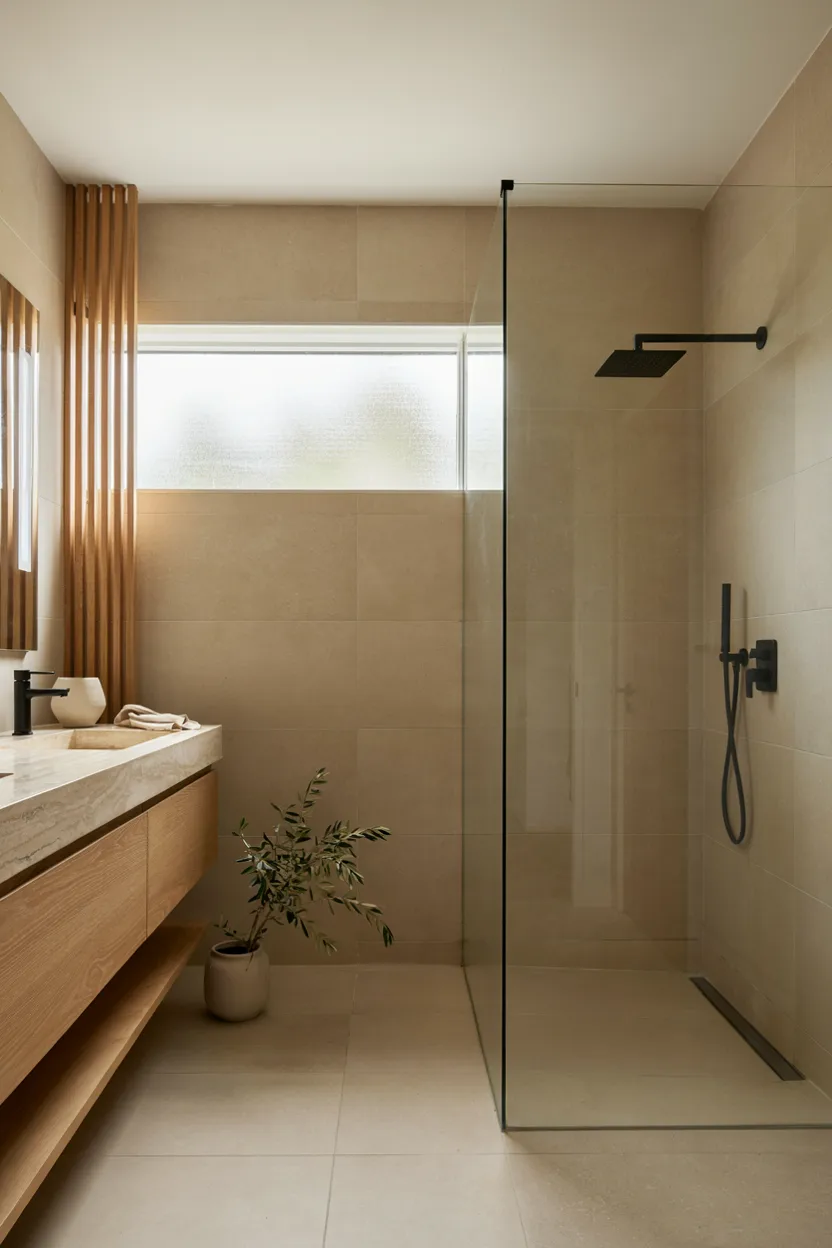
Choosing warm neutral tile over stark white or cool gray is one of the more important yet frequently overlooked Japandi bathroom ideas, since the wrong tile tone can push a space toward clinical Scandinavian minimalism rather than the warmer, more grounded feeling Japandi design intends. Soft beige, warm gray, or greige tones create a considerably cozier foundation throughout the bathroom.
Large-format tile with minimal grout lines further enhances the seamless, calming quality this style depends on, avoiding the busy, fragmented look that smaller tile with heavy grout can create. This Japandi bathroom idea works particularly well when the same warm tile tone continues from floor to shower wall, creating a cohesive, uninterrupted surface throughout the entire room.
20. Rainfall Showerhead
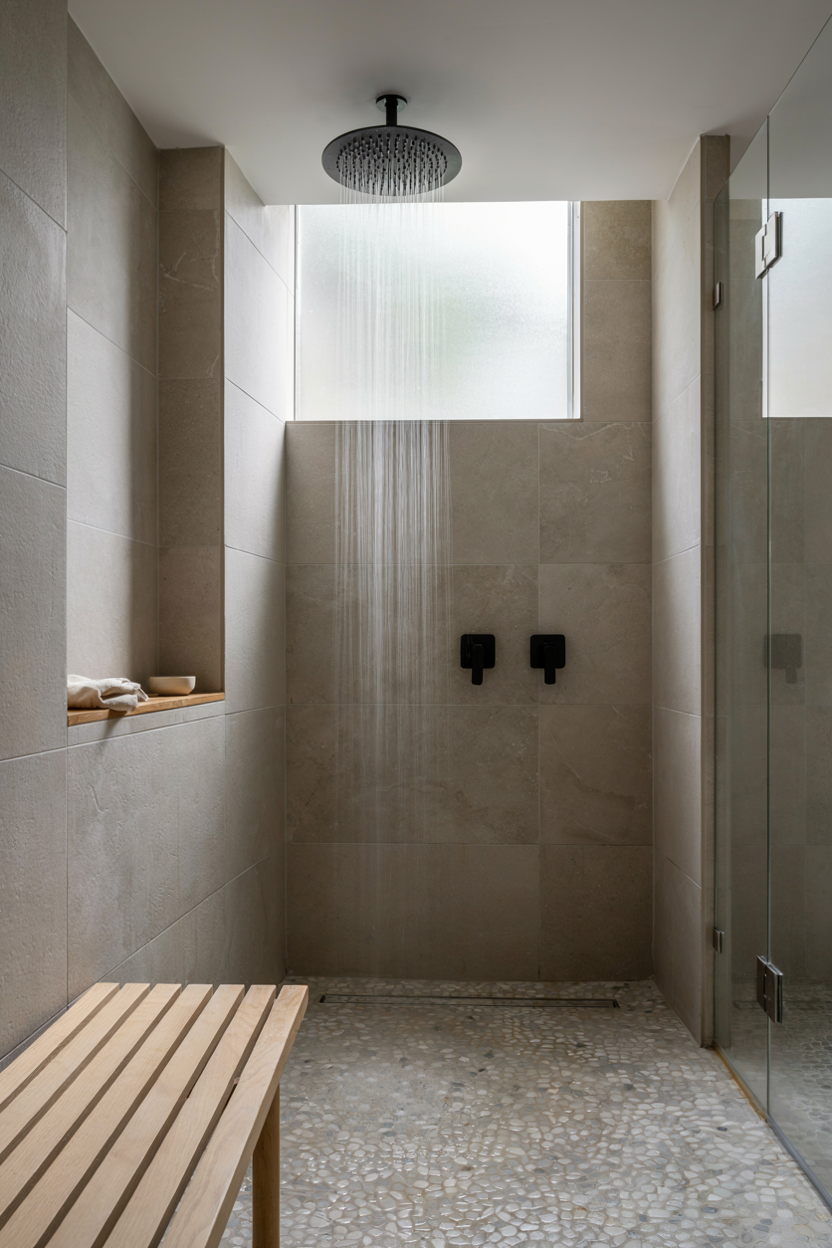
A rainfall showerhead elevates simple Japandi bathroom ideas into a genuinely meditative daily ritual, mounted directly overhead to release water in a wide, gentle cascade that mimics natural rainfall. This fixture style reinforces the mindful, unhurried approach to bathing central to Japandi design, transforming an everyday shower into a moment of intentional calm rather than a purely functional task.
Pairing the rainfall head with matte black or brushed metal fixtures maintains the room’s understated, cohesive palette. This Japandi bathroom idea works particularly well in open, doorless shower designs, since the water falls straight down rather than spraying outward, minimizing overspray while reinforcing the sense of open, spa-like tranquility this design style consistently prioritizes throughout the bathing space.
21. Wooden Bath Tray
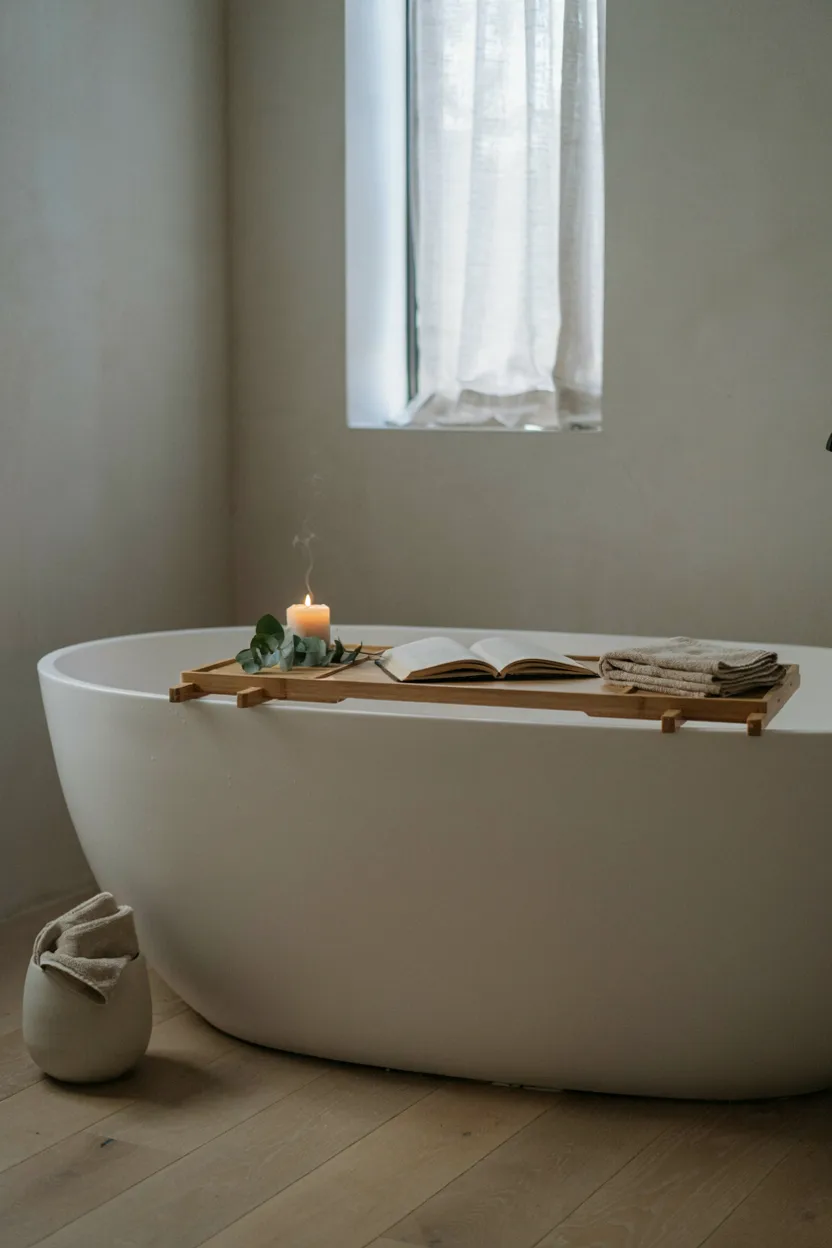
A wooden bath tray adds functional warmth to Japandi bathroom ideas, spanning the width of a freestanding tub to hold candles, books, or a cup of tea within easy reach during a long, relaxing soak. This detail reinforces the ritualistic, unhurried approach to bathing central to Japandi design, encouraging genuine relaxation rather than treating the tub as a purely practical fixture.
Choosing a tray crafted from the same natural wood tone as the vanity or flooring creates a cohesive material palette throughout the bathroom. This Japandi bathroom idea works particularly well when styled with just a few simple items, reinforcing the intentional minimalism this design style depends on rather than cluttering the tray with too many decorative objects at once.
22. Zen Garden Window Box
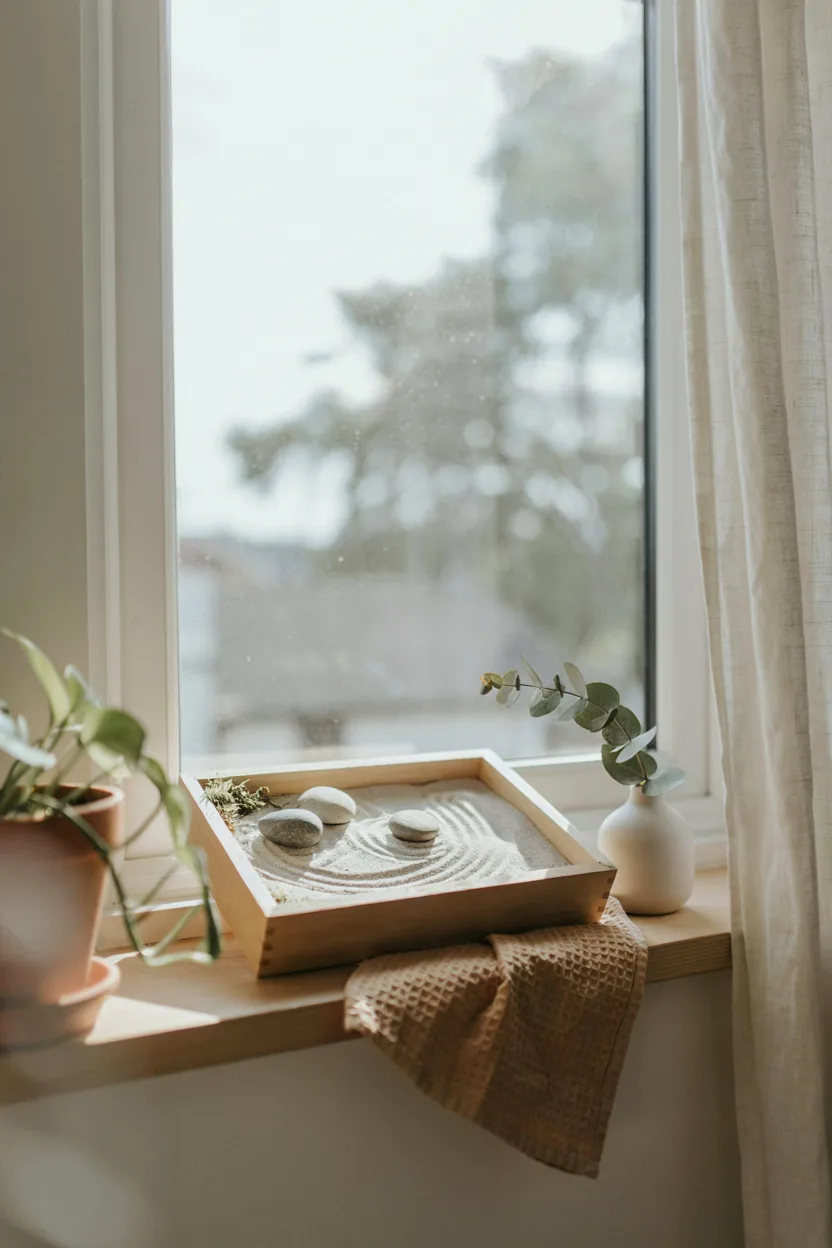
A miniature zen garden brings meditative detail to Japandi bathroom ideas, using raked sand and carefully placed stones to create a small, contemplative feature reminiscent of traditional Japanese rock gardens. Positioned on a windowsill or vanity corner, this tiny arrangement adds a moment of quiet mindfulness to the bathroom, reinforcing the sense of ritual and intentional calm central to this design philosophy.
This detail is a genuinely unique addition that few bathrooms incorporate, offering an unexpected point of interest beyond typical decor choices. This Japandi bathroom idea works particularly well for anyone drawn to the meditative aspects of Japandi design, providing a small, tactile object that can be rearranged and re-raked as a calming, mindful ritual during everyday routines.
23. Concrete Sink Basin
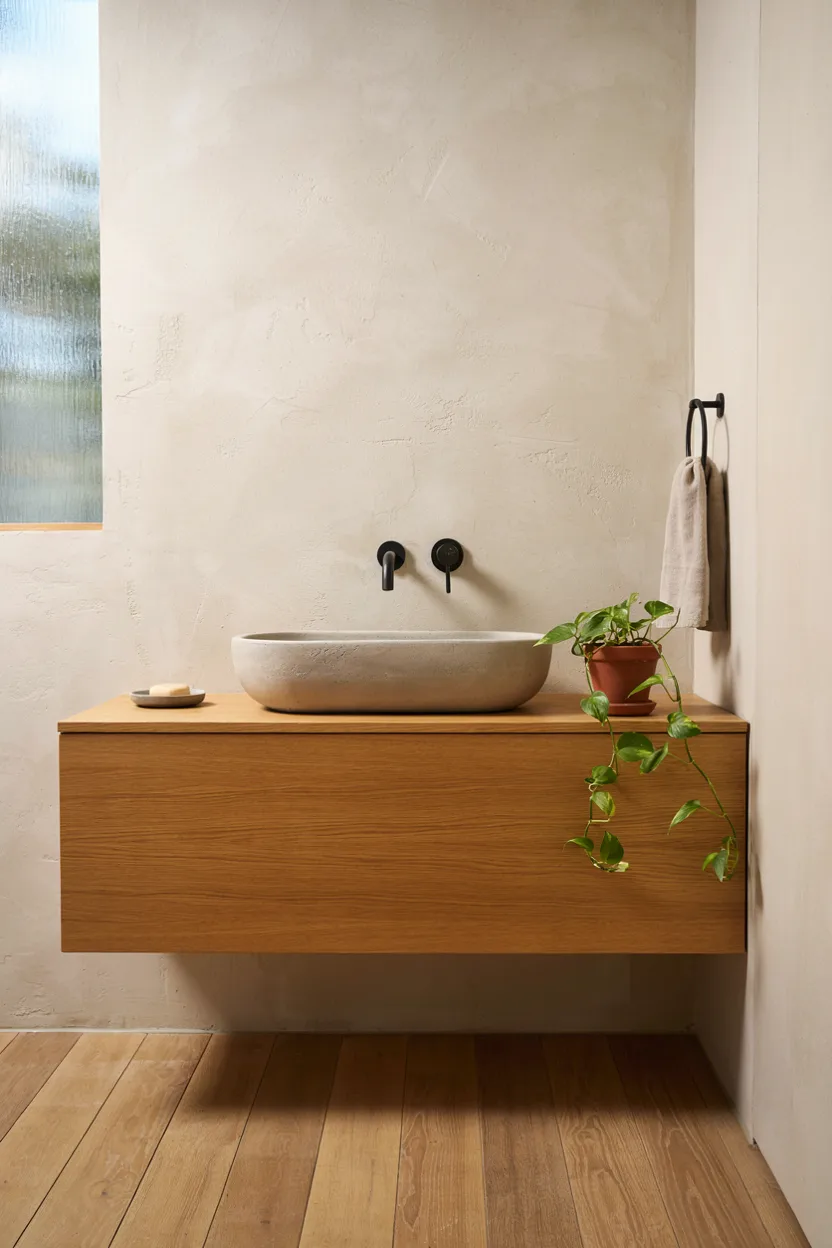
A concrete sink basin offers a modern, industrial-influenced take on Japandi bathroom ideas, using smooth, hand-troweled concrete to create a sculptural basin with a distinctly matte, tactile finish. This material choice pairs beautifully with warm wood vanities, creating intentional contrast between the concrete’s cool, subdued gray tone and the surrounding organic material palette central to Japandi design.
Because concrete is highly durable and develops a subtle patina over time, this Japandi bathroom idea ages gracefully rather than looking worn or dated. This basin style works particularly well in bathrooms leaning slightly more toward modern minimalism within the broader Japandi aesthetic, offering a distinctive alternative to more traditional ceramic or stone sink options commonly found elsewhere.
24. Candle & Incense Ritual Corner
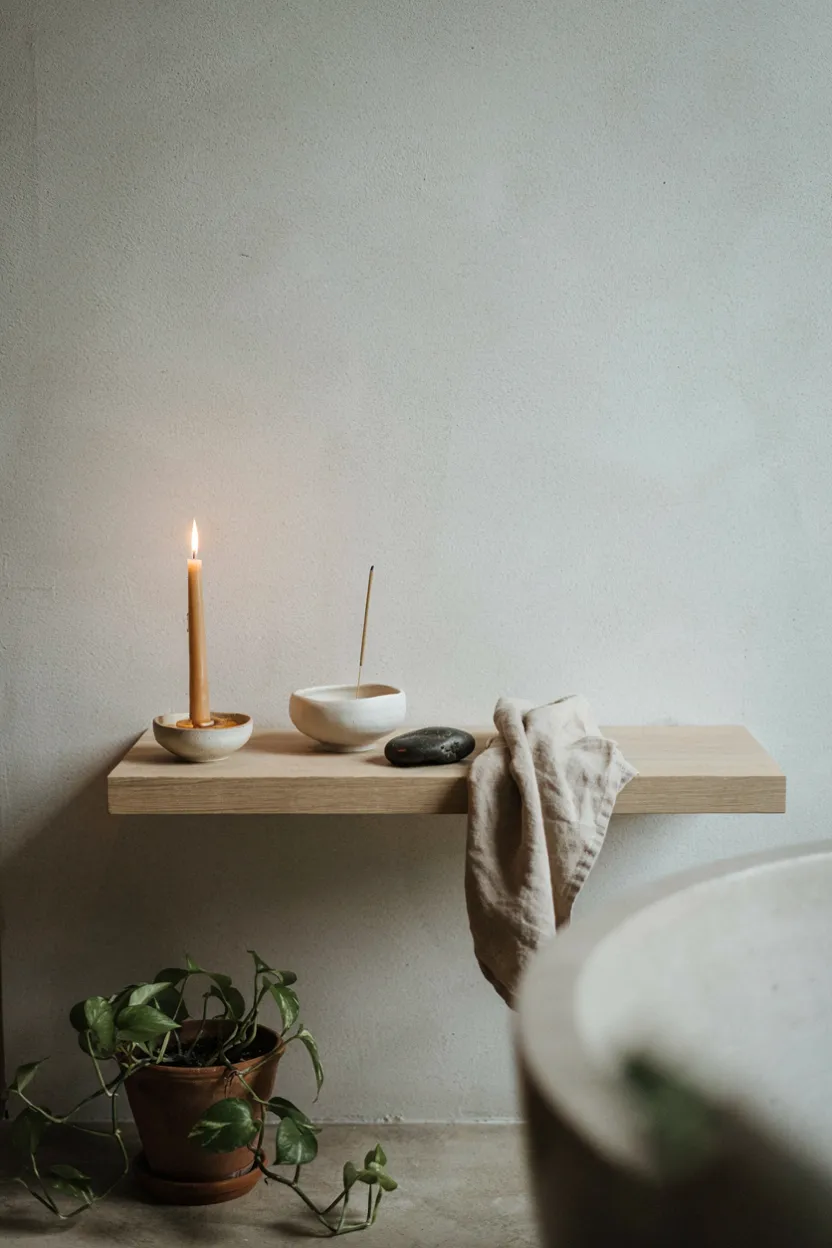
Dedicating a small corner to candles and incense introduces genuine ritual into Japandi bathroom ideas, creating a designated spot for mindful moments before or after bathing. This detail draws on both Japanese and Scandinavian traditions of intentional, unhurried self-care, encouraging the bathroom to function as more than a purely utilitarian space within the busy rhythm of everyday life.
This corner works particularly well positioned near the tub, where the scent and soft light can be enjoyed during a long soak. This Japandi bathroom idea benefits from restraint, using just one or two simple objects rather than an elaborate display, reinforcing the intentional simplicity central to genuine relaxation and mindful ritual throughout the space.
25. Sunken Soaking Tub
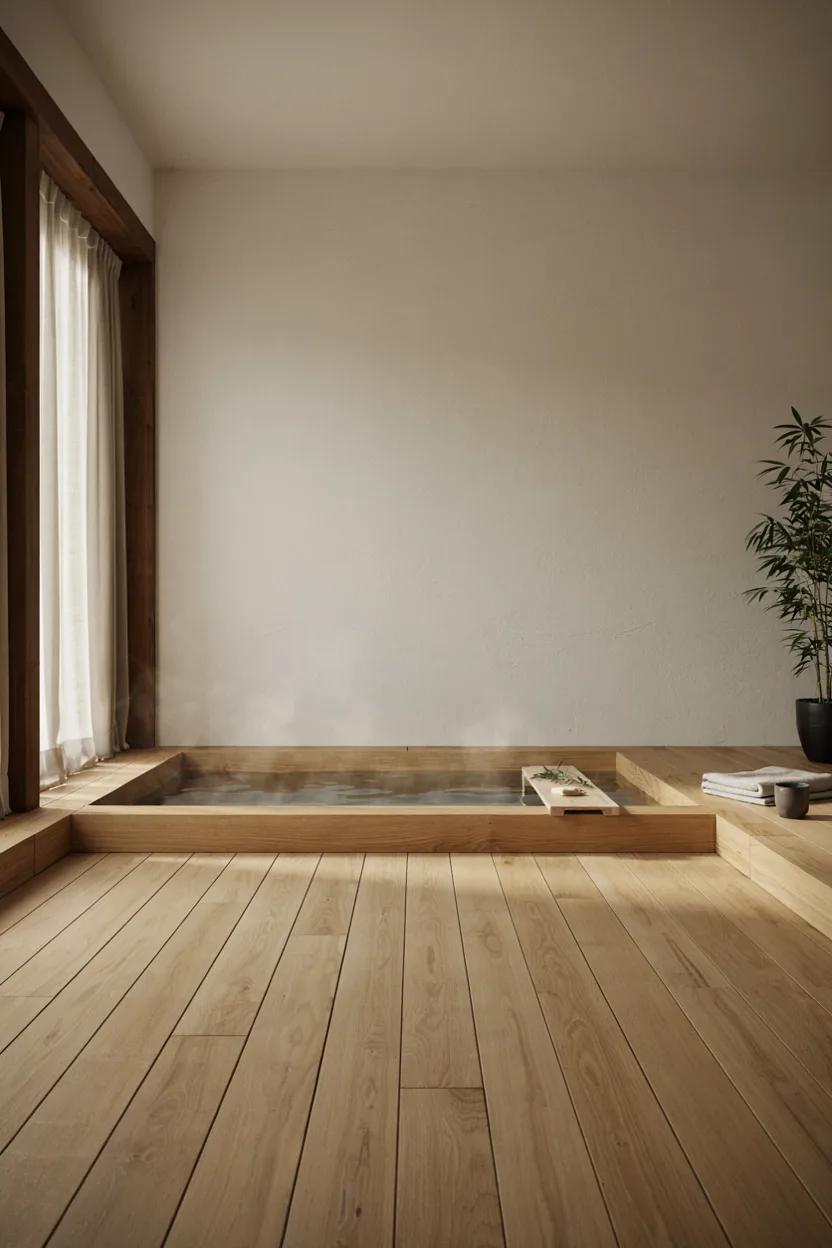
A sunken soaking tub delivers one of the most immersive Japandi bathroom ideas, building the tub partially into the floor so its rim sits flush with the surrounding surface. This design closely echoes traditional Japanese ofuro bathing culture, creating a deep, enveloping soak that feels considerably more grounded and ritualistic than stepping into a standard raised tub positioned above the floor.
Because sunken tubs require significant structural planning and plumbing work, this Japandi bathroom idea is typically reserved for larger renovations rather than simple updates. Surrounding the tub with natural wood decking reinforces the organic, spa-like atmosphere this design style depends on. The payoff is a genuinely unique, deeply relaxing bathing experience unlike any standard bathroom fixture available.
Conclusion
From sunken soaking tubs to zen garden window boxes, these Japandi bathroom ideas show how thoughtful, natural details can transform an everyday bathroom into a genuine space for relaxation. It’s not about adding more fixtures or decor — it’s about choosing pieces with intention and letting natural materials do the work. Pick a few Japandi bathroom ideas that resonate with you, and start creating a bathing space that truly feels like a retreat.

Join The Discussion