
Intro:
Indoor pools used to mean one thing: a plain rectangle of water tucked behind a glass door. That single idea is quietly falling out of favor. Designers are now treating indoor pools as full living spaces, layering in mood lighting, natural texture, and unexpected shapes the same way they would any other room in the house. Whether you’re drawn to dramatic black tile or a sunlit glass pavilion, these 24 indoor pool ideas prove there’s far more room for personality than the standard rectangle ever allowed.
1. Skylight-Topped Pools That Blur Indoor and Outdoor Light
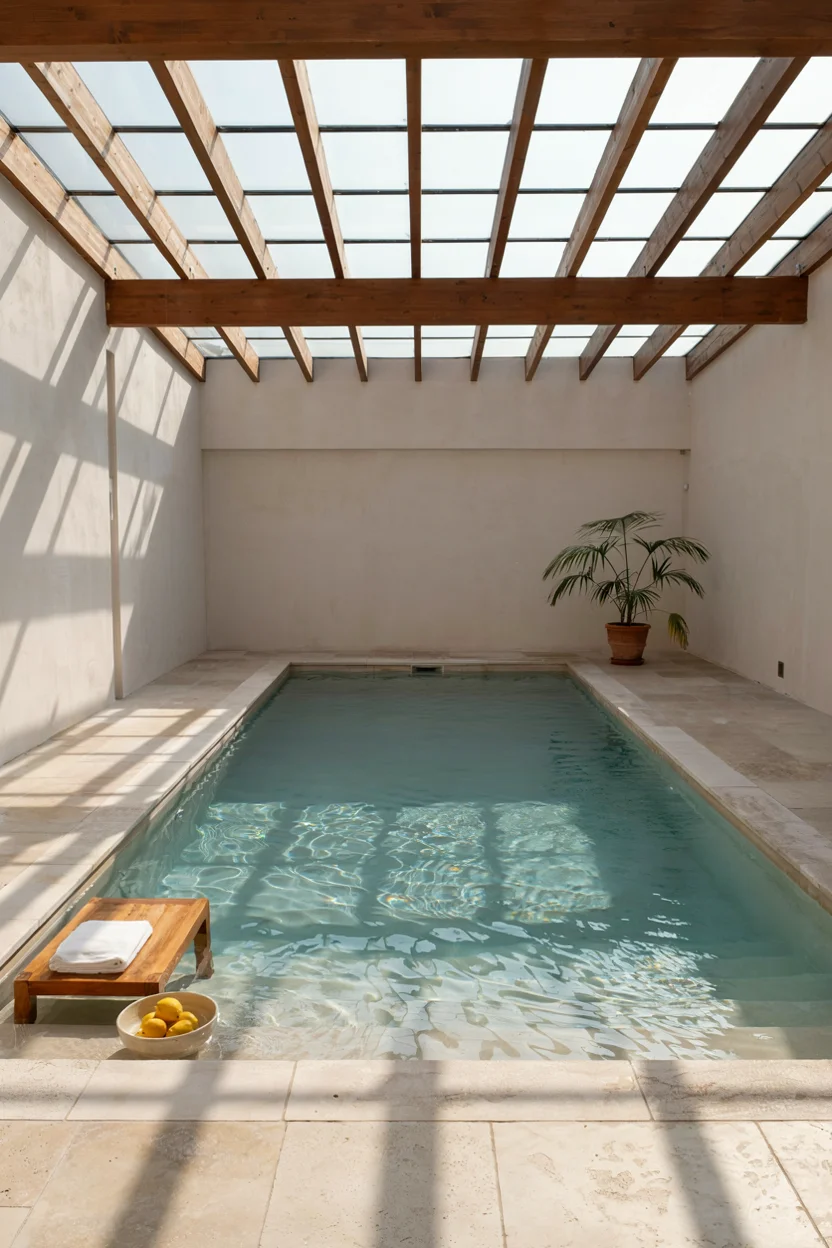
Skylights turn an indoor pool into a sundial of sorts, with light shifting across the water throughout the day. Designers are leaning into oversized glazing rather than small punched openings, letting the pool room read as bright and open even without a single exterior wall of windows. The effect softens the enclosed feeling that indoor pools often carry.
Beyond aesthetics, skylights cut down on artificial lighting needs and help regulate humidity by encouraging natural airflow when paired with operable vents. Pool builders are now specifying UV-filtering glass so the light stays soft rather than harsh, protecting furniture and tile finishes from fading over time while keeping the space glowing.
2. Sunken Lounge Areas Built Into the Pool Deck
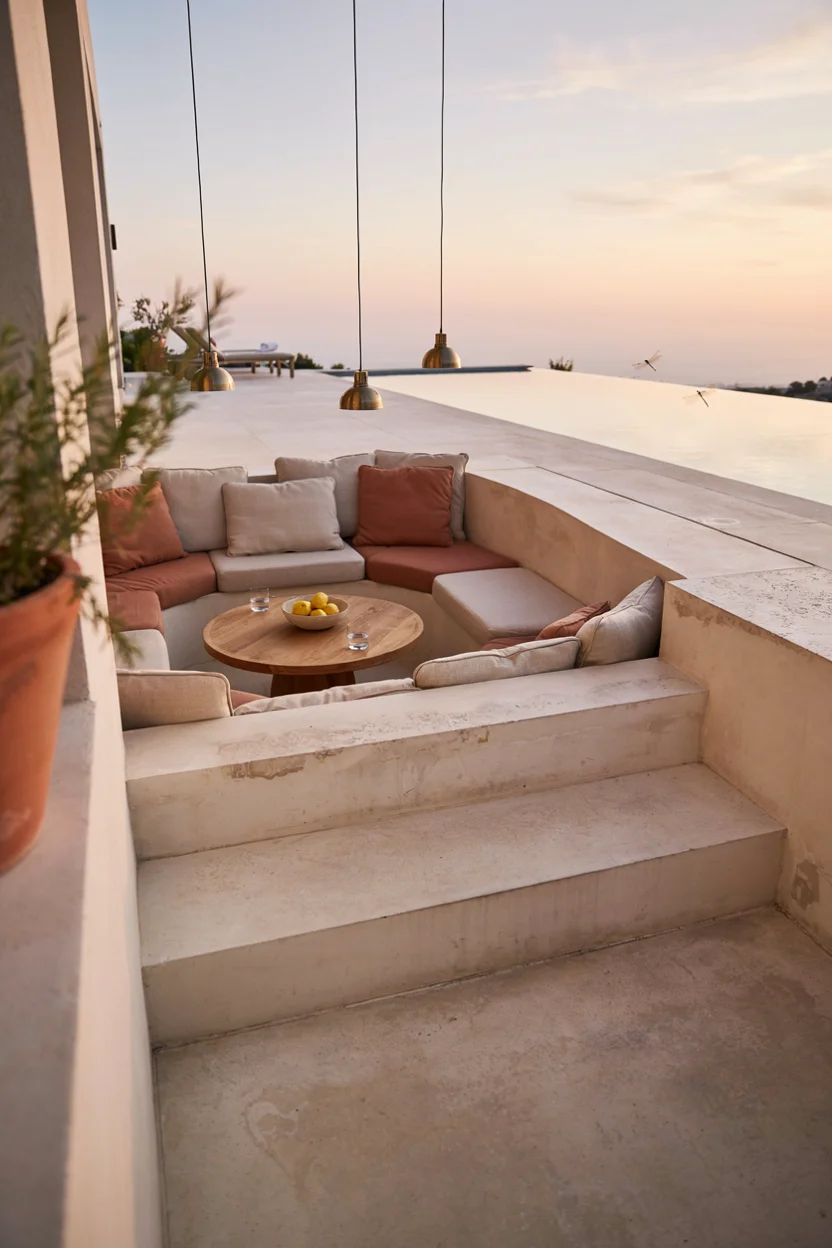
Sunken lounges give indoor pool rooms a second purpose beyond swimming. Instead of placing chairs around the perimeter, designers are carving out a lowered seating pit that feels intentional and architectural, almost like an extension of the pool itself. It creates a natural gathering spot for conversation without anyone needing to leave the room.
The sunken format also plays with sightlines, since guests seated below deck level see the water at eye height rather than looking down on it. Builders often finish these pits in the same stone or tile as the pool coping, tying the lounge visually to the water and making the whole room feel like one continuous design gesture.
3. Moody Black-Tiled Pools for a Dramatic Statement
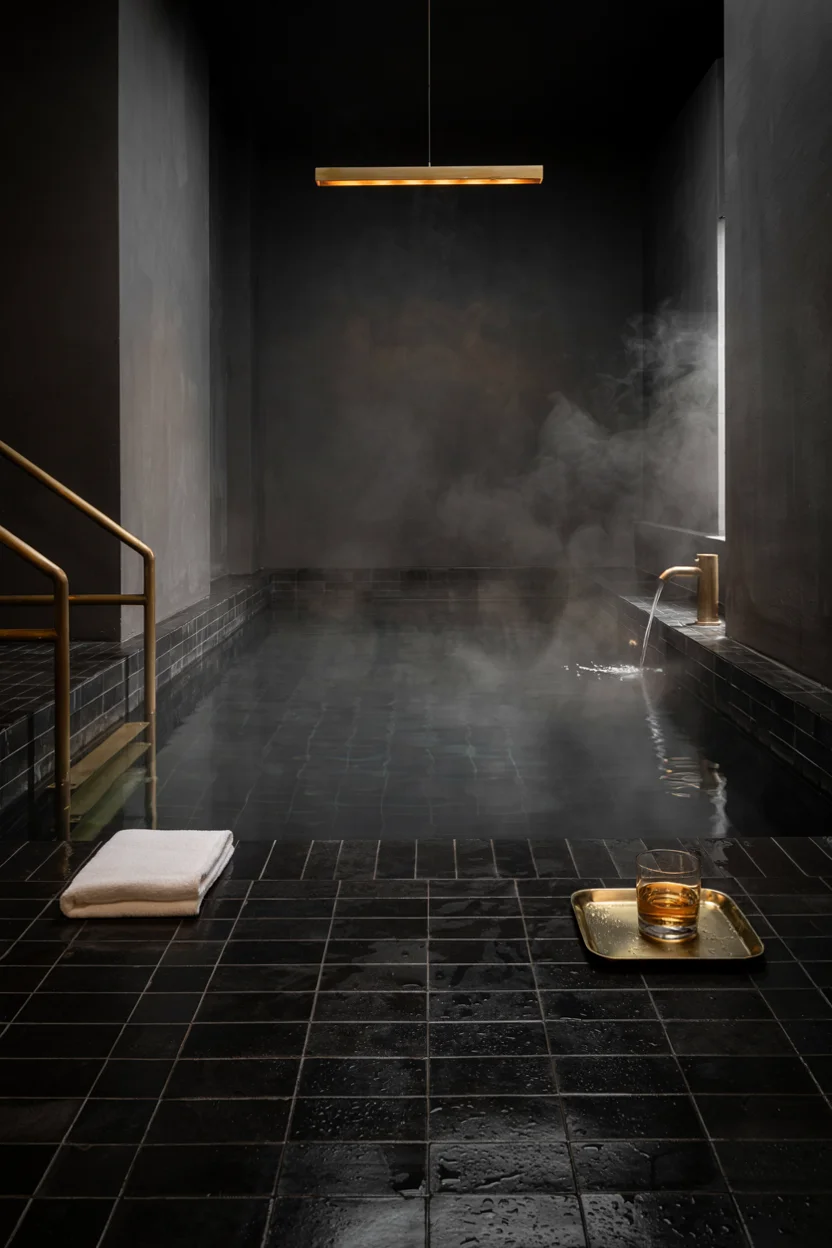
Black tile has moved from accent detail to full pool lining, and the shift changes everything about how the water reads. Instead of the expected turquoise, the pool becomes a dark, reflective plane that mirrors the ceiling and any nearby light fixtures. It gives the room a nightclub-like drama that daytime blue tile can’t replicate.
Designers pairing black tile with brass or matte black fixtures are leaning into a moodier, more masculine palette for pool rooms. The dark surface also hides mineral buildup and shadows better than lighter tile, which some homeowners find easier to maintain visually. It’s a bold choice, but one that photographs beautifully in low light.
4. Glass-Wall Pools That Open to the Garden
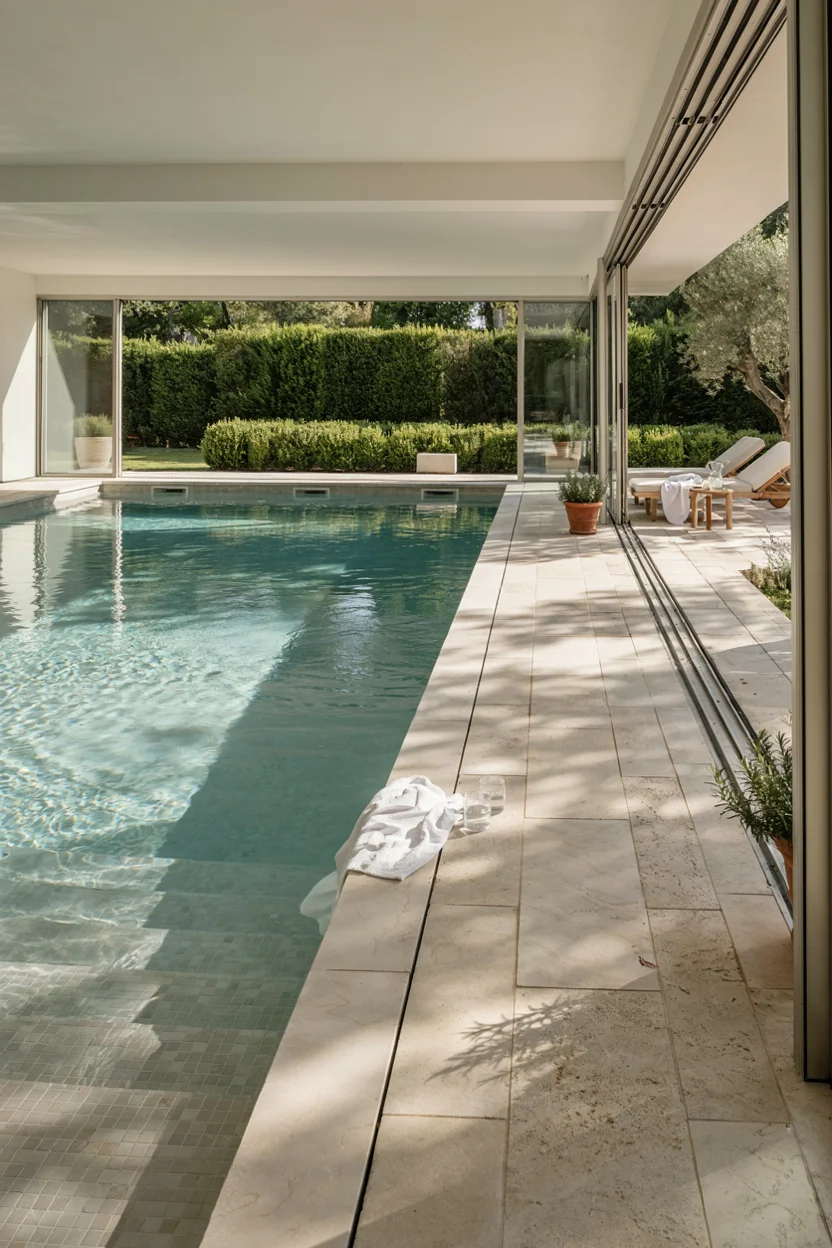
Retractable or fixed glass walls are the clearest way designers are dissolving the line between indoor and outdoor pools. Rather than treating the pool room as a sealed box, entire walls slide open to connect the water to a garden, terrace, or courtyard. It gives homeowners the comfort of a climate-controlled pool with the feel of swimming outside.
This approach also makes the pool room usable year-round, since the glass can stay closed in colder months and open completely in summer. Landscape designers are increasingly consulted alongside pool builders so the garden view through the glass feels curated rather than incidental, turning the pool room into a framed window onto greenery.
5. Minimalist Concrete Pools With Industrial Charm
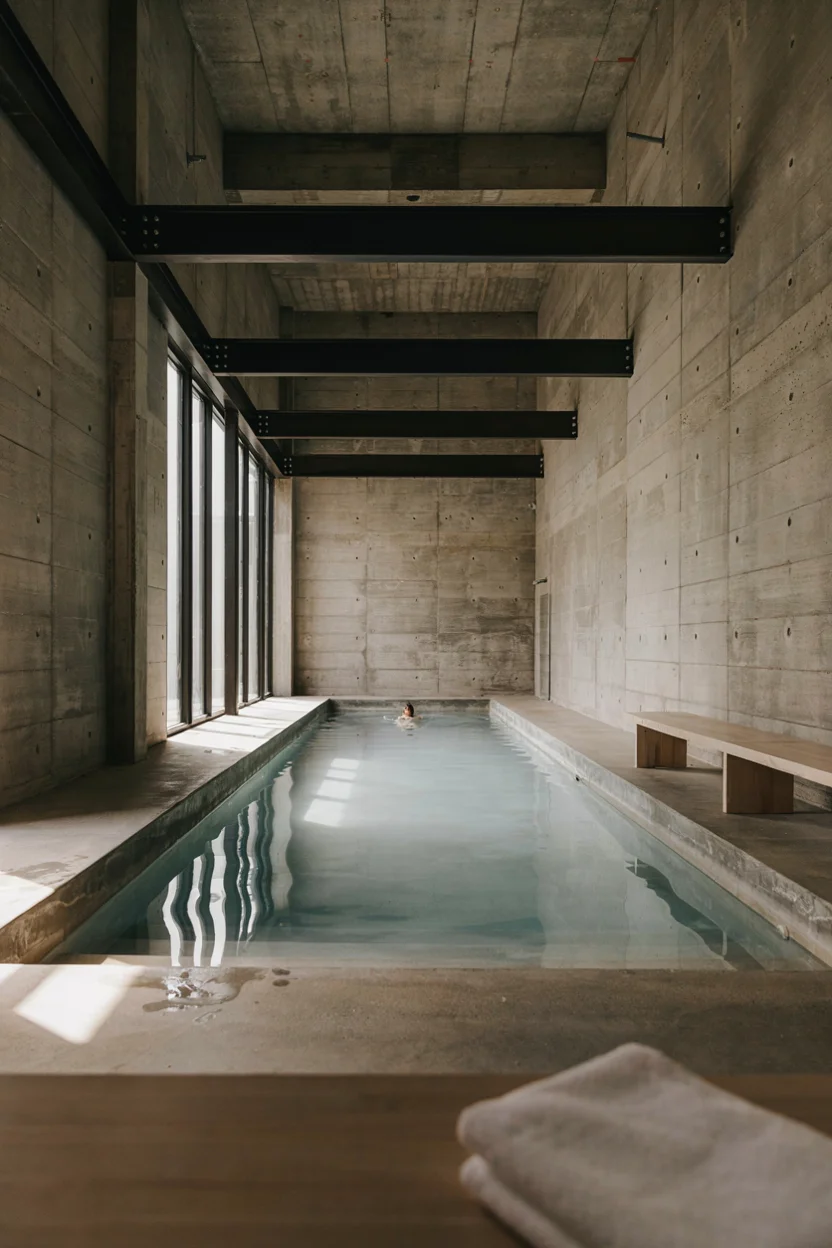
Polished or board-formed concrete is showing up as a full pool finish, not just a surrounding deck material. The rawness of the surface strips away ornamentation and lets the architecture of the room take center stage. It’s a departure from the polished marble or tile finishes typically associated with luxury pools.
This industrial approach pairs well with warehouse conversions, modern builds, and homes that favor exposed structural elements elsewhere. Concrete also tends to be more budget-friendly than natural stone while still reading as intentional and high-design. Designers often soften the look with a few textile or wood accents so the room doesn’t feel cold.
6. Biophilic Pool Rooms Filled With Living Plants
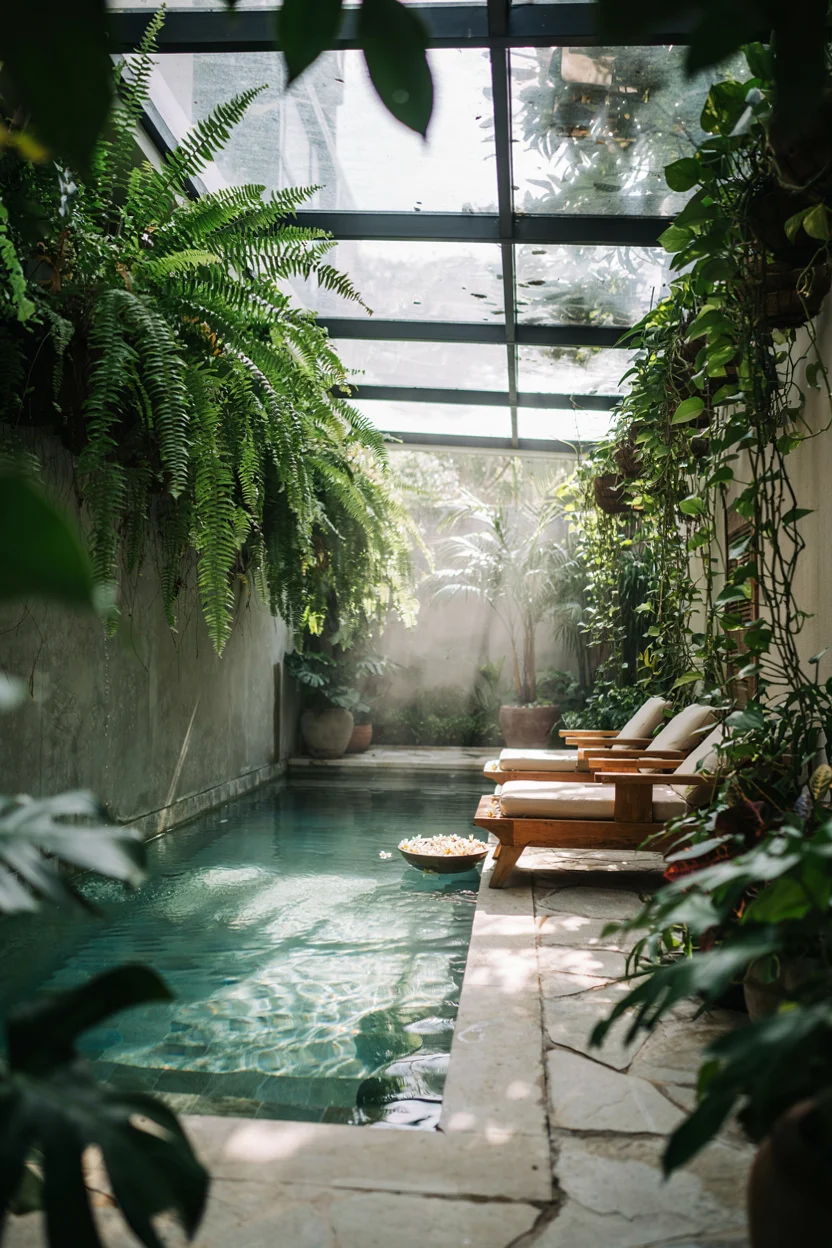
Biophilic design has moved well beyond a stray plant in the corner. Designers are now building entire indoor pool rooms around greenery, treating the plants as structural elements rather than decoration. Vertical gardens, hanging vines, and clustered potted trees turn the pool into something closer to a private conservatory than a conventional swim space.
The heavy plant presence also serves a practical purpose, since many tropical species thrive in the humid, warm conditions naturally created by an indoor pool. Homeowners get a low-maintenance jungle effect without fighting the room’s climate. The result feels closer to a resort spa than a backyard amenity, with greenery softening every hard surface.
7. Infinity-Edge Indoor Pools With Hidden Overflow Channels
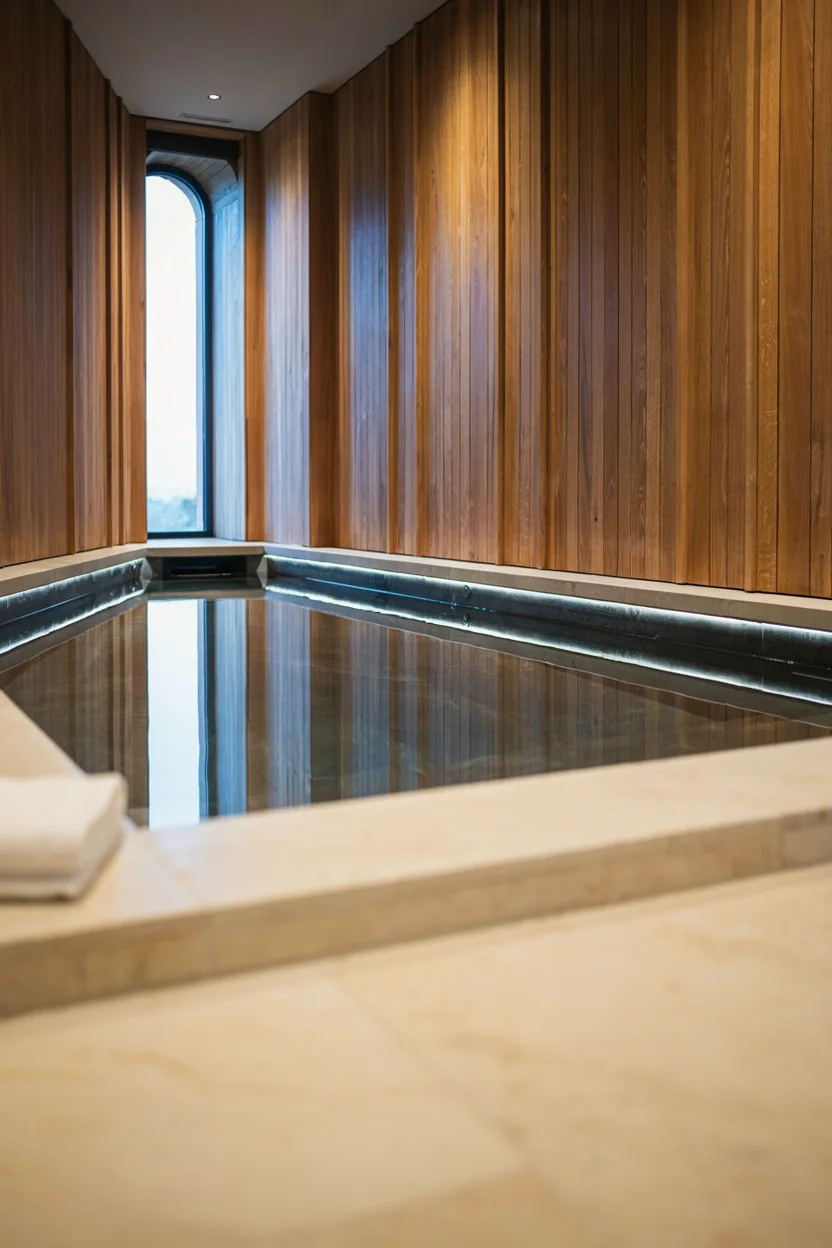
Infinity edges aren’t just for outdoor pools overlooking a view anymore. Designers are bringing the vanishing-edge effect indoors, using it to create a perfectly still, mirror-like surface even without a landscape backdrop. The hidden overflow channel keeps the water level exactly at the coping line, exaggerating the sense of stillness in the room.
Because there’s no view to borrow, the effect indoors relies entirely on the reflection of the ceiling, lighting, and surrounding materials. Rooms with wood paneling or patterned tile ceilings benefit most, since the still water doubles the visual impact of whatever is overhead. It’s a subtle engineering feat that reads as pure luxury.
8. Wood-Clad Ceilings That Warm Up the Pool House
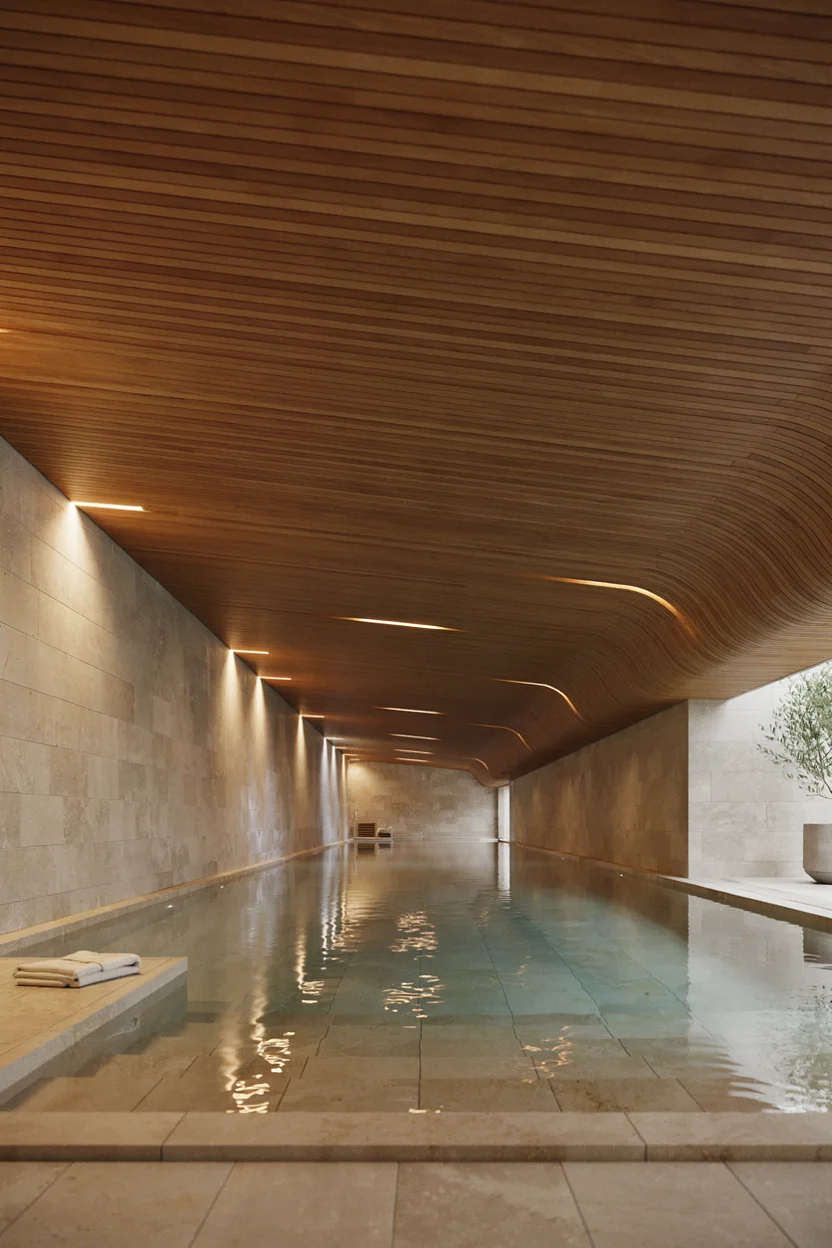
Pool rooms are often dominated by hard, moisture-resistant surfaces like tile and glass, which can feel sterile after a while. Adding a wood-clad ceiling introduces warmth without compromising durability, since the ceiling sits above splash zones and humidity levels that would otherwise damage wood flooring or walls. It’s becoming a favorite workaround for softening cold, clinical pool rooms.
Sealed cedar, teak, or engineered wood slats are commonly specified for their resistance to moisture and warping. Designers like the way the wood grain adds texture when reflected in the water below, essentially doubling the visual warmth of the material. Paired with warm-toned lighting, a wood ceiling can make an otherwise minimal pool room feel inviting rather than institutional.
9. Spa-Inspired Pools With Integrated Hot Tubs
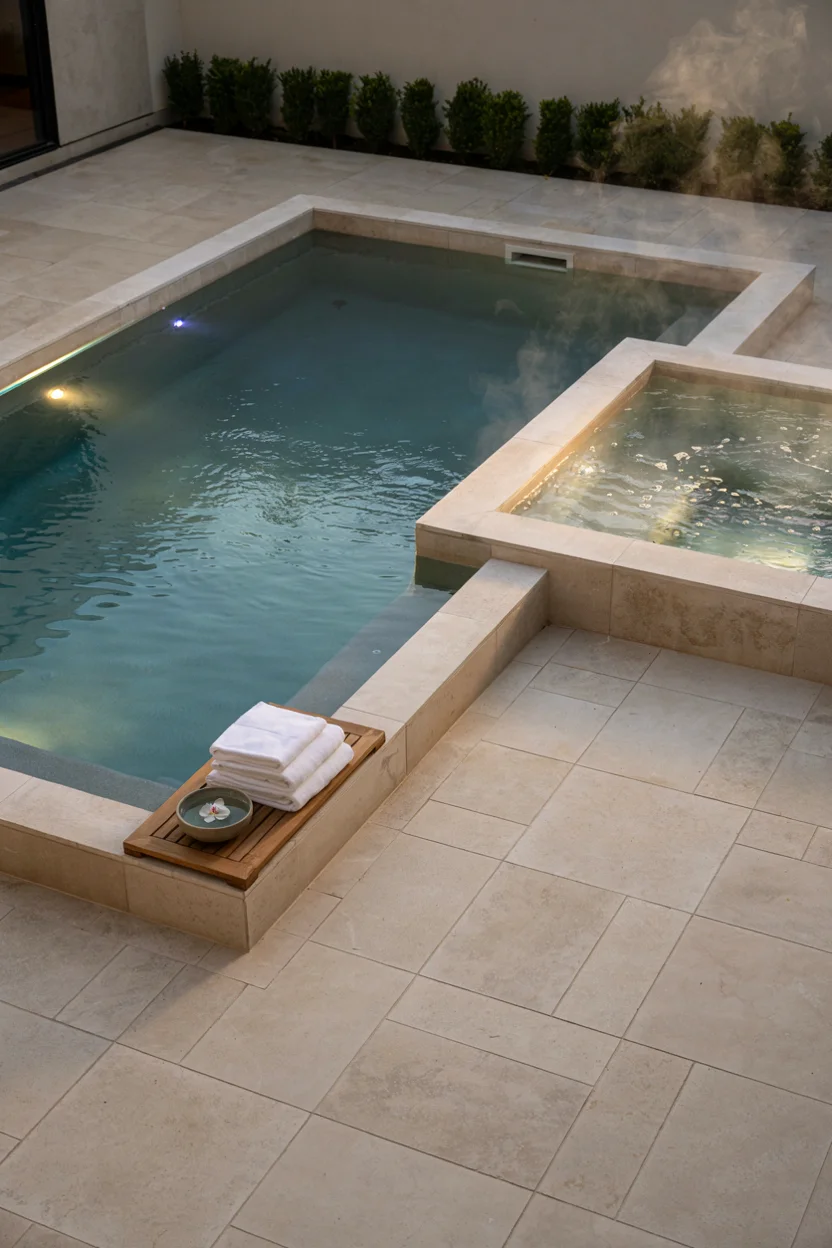
Rather than installing a separate hot tub elsewhere, designers are integrating it directly into the pool structure, often at a raised level with a small waterfall connection between the two. This creates a spa-like sequence where swimmers can move from cooler lap water into a heated soak without leaving the room. It reads as a single cohesive wellness feature rather than two separate installations.
The shared finishes between pool and hot tub, from tile to coping stone, help the two features feel unified instead of bolted together. Some designers add a shallow connecting waterfall so the sound of moving water fills the room, reinforcing the spa atmosphere. It’s a popular upgrade for homeowners who want a dedicated at-home wellness retreat.
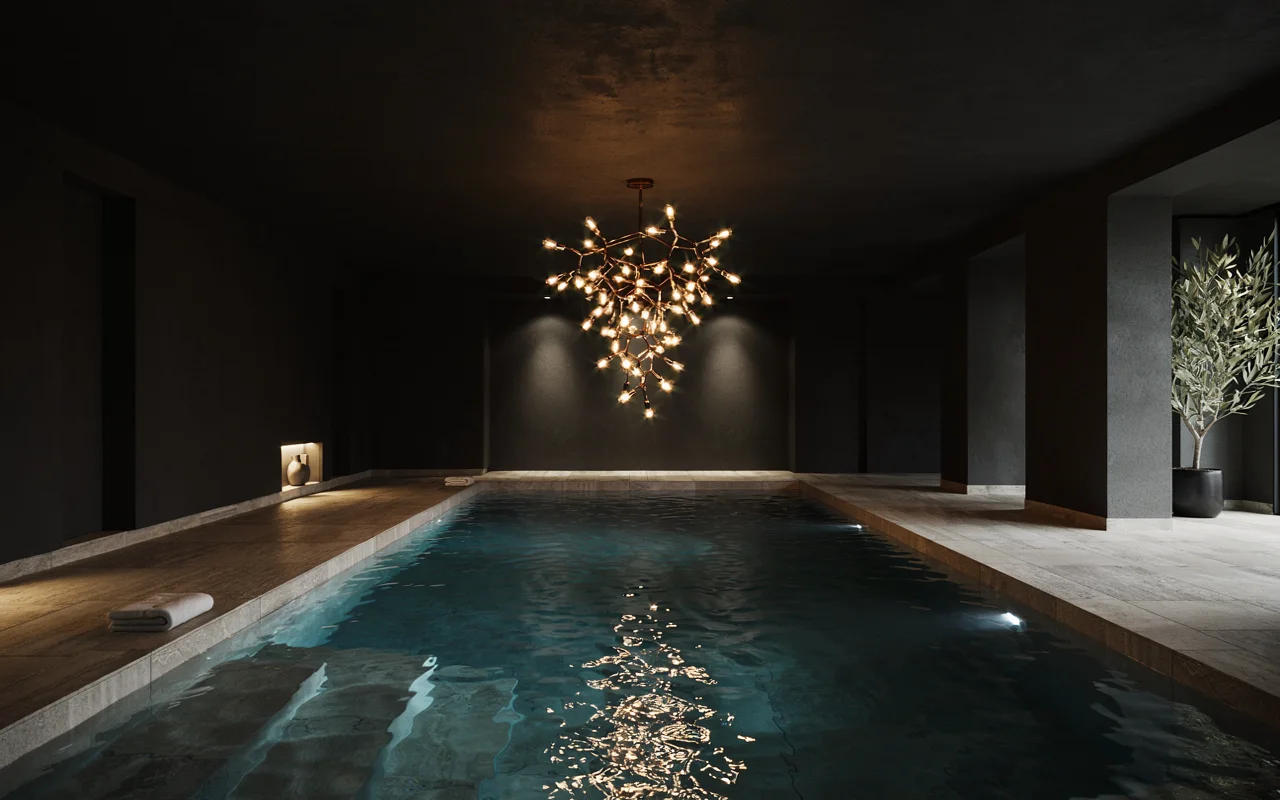
10. Statement Lighting Fixtures Above the Water
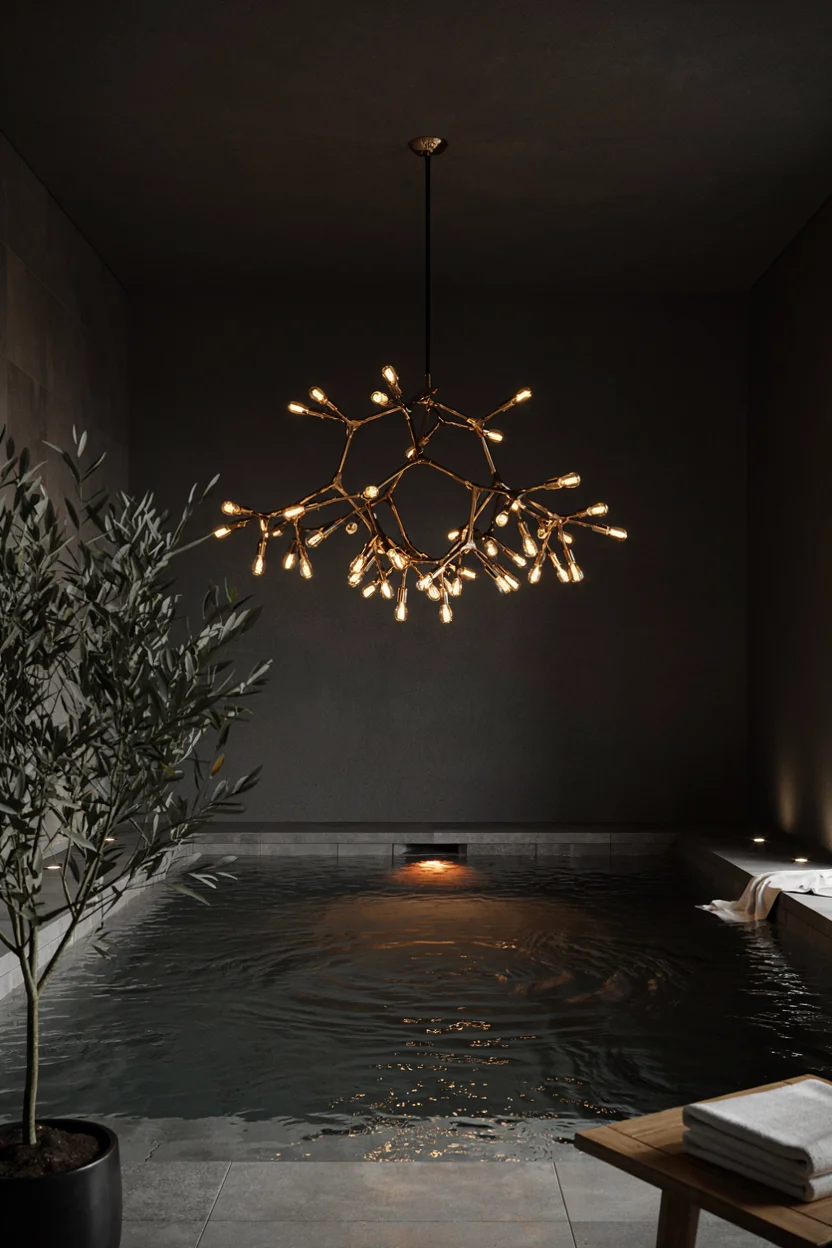
Lighting has become one of the biggest opportunities for personality in pool room design. Instead of relying on recessed can lights, designers are hanging oversized chandeliers, sculptural pendants, or linear fixtures directly above the water, treating the pool room like a dining room or entryway when it comes to lighting drama.
Because water reflects and doubles whatever hangs above it, a single striking fixture can transform the entire room’s mood at night. Fixtures are typically rated for high-humidity environments to prevent corrosion, but that hasn’t stopped designers from choosing bold, decorative shapes rather than purely functional ones. The chandelier over the pool has become its own design trend.
11. Natural Stone Pools That Mimic Grottoes
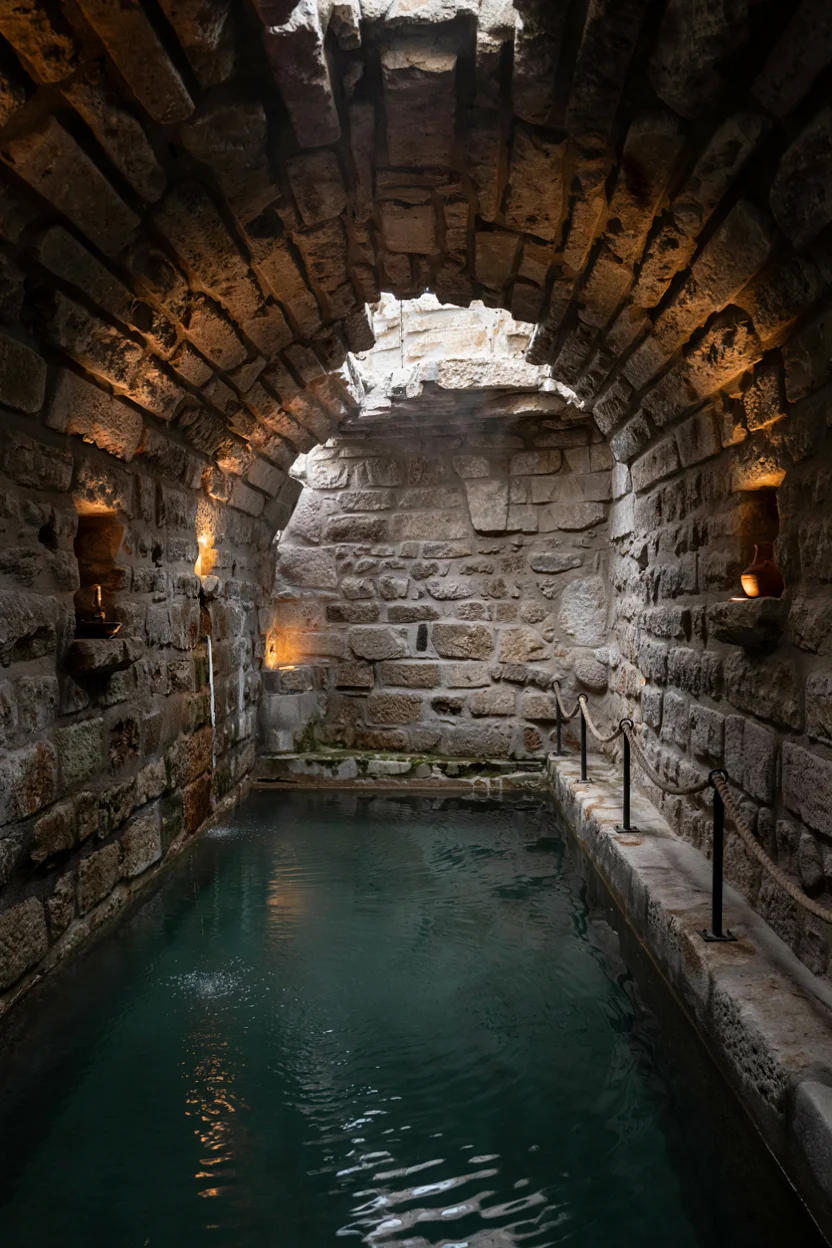
Grotto-style pools borrow from natural rock formations, using irregular stone cladding instead of flat tile to give the room a raw, cave-like quality. Designers are pulling this look indoors, often pairing it with a small trickling waterfall feature built into one stone wall. It creates a sense of discovery rather than the predictable rectangle-and-tile formula.
This style tends to work best in larger rooms where the stone’s texture and scale can breathe rather than feel cramped. Builders often use a mix of real and manufactured stone veneer to balance authenticity with cost and installation practicality. The result is a pool that feels closer to a natural spring than a built structure.
12. Mosaic Tile Pools With Bold Pattern Play
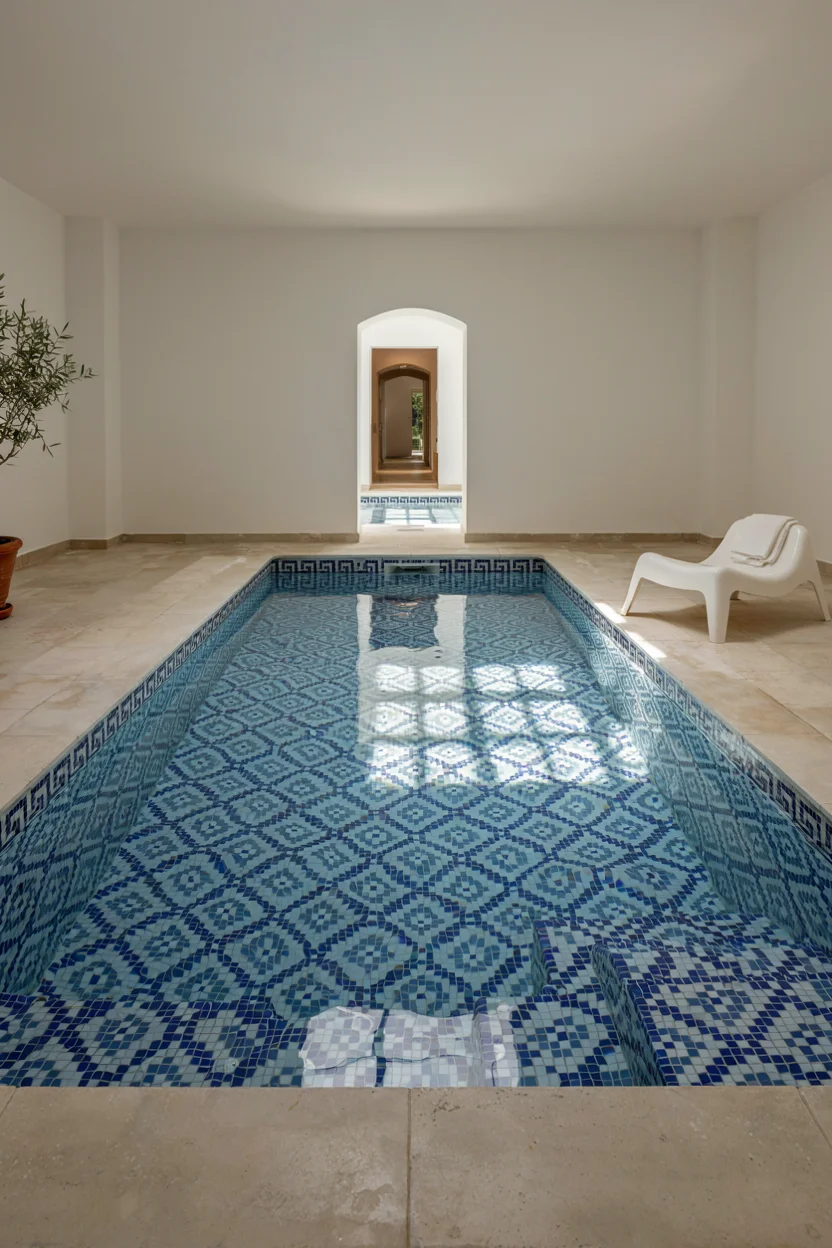
Mosaic tile is having a resurgence in pool design, moving away from uniform single-color finishes toward intricate patterns that reference Mediterranean or Moroccan influences. Designers are using mosaic work not just on the pool floor but climbing the walls, turning the water itself into a canvas for pattern and color.
Because mosaic tile is applied in small individual pieces, it allows for far more design flexibility than large-format tile, including gradients, borders, and custom motifs. It does require more meticulous installation and maintenance, but the payoff is a pool that feels handcrafted and distinctly personal rather than mass-produced. It’s a favorite for homeowners drawn to maximalist detail.
13. Retractable Roof Systems for Flexible Indoor-Outdoor Living
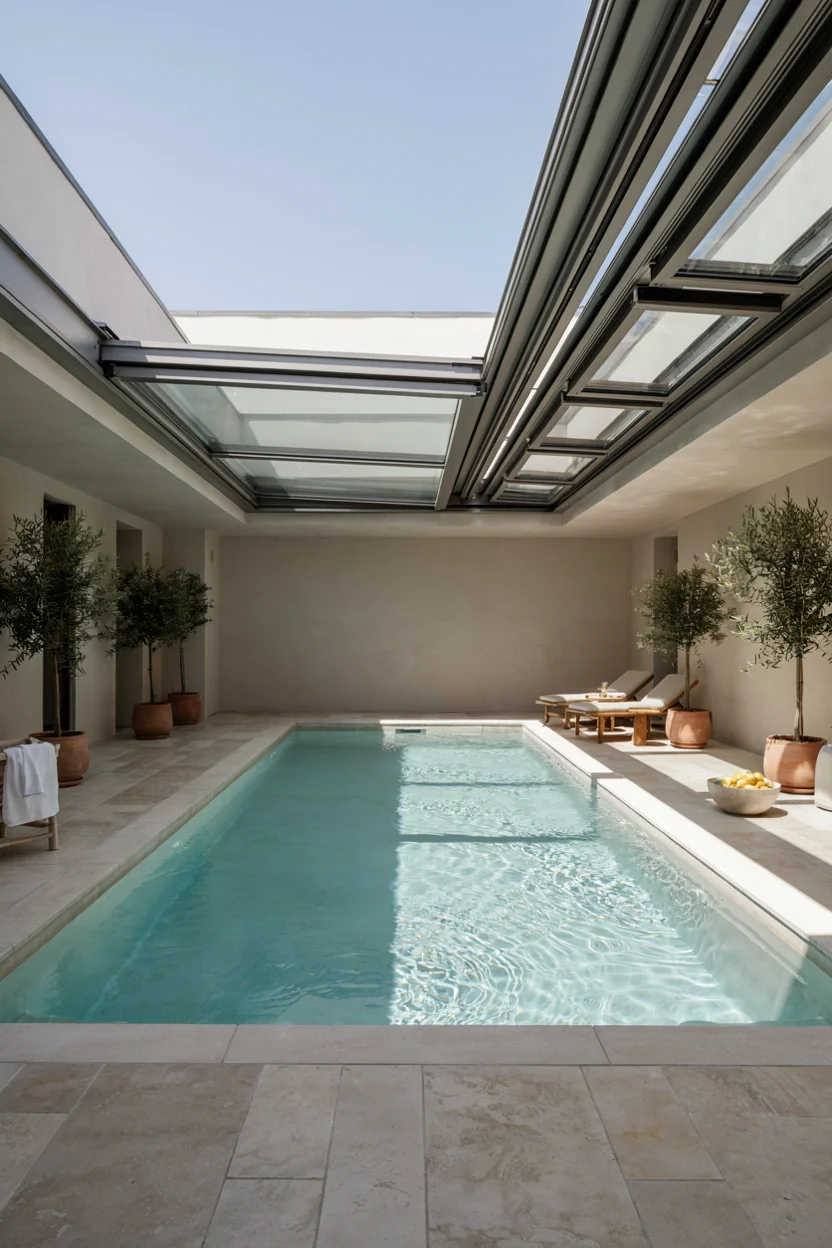
Retractable roofs give homeowners the best of both indoor and outdoor pools within a single structure. Designers are specifying motorized glass or polycarbonate panels that slide open on tracks, letting the room convert from a sealed indoor space to an open-air pool in minutes. It’s a significant investment, but one that adds year-round flexibility.
This system is particularly popular in climates with unpredictable weather, where homeowners want protection from rain or cold without sacrificing the feeling of swimming under open sky on nice days. Structural engineers work closely with pool designers to ensure the roof track integrates cleanly with the room’s architecture, keeping the mechanism as unobtrusive as possible when closed.
14. Underwater Viewing Windows for a Wow Factor
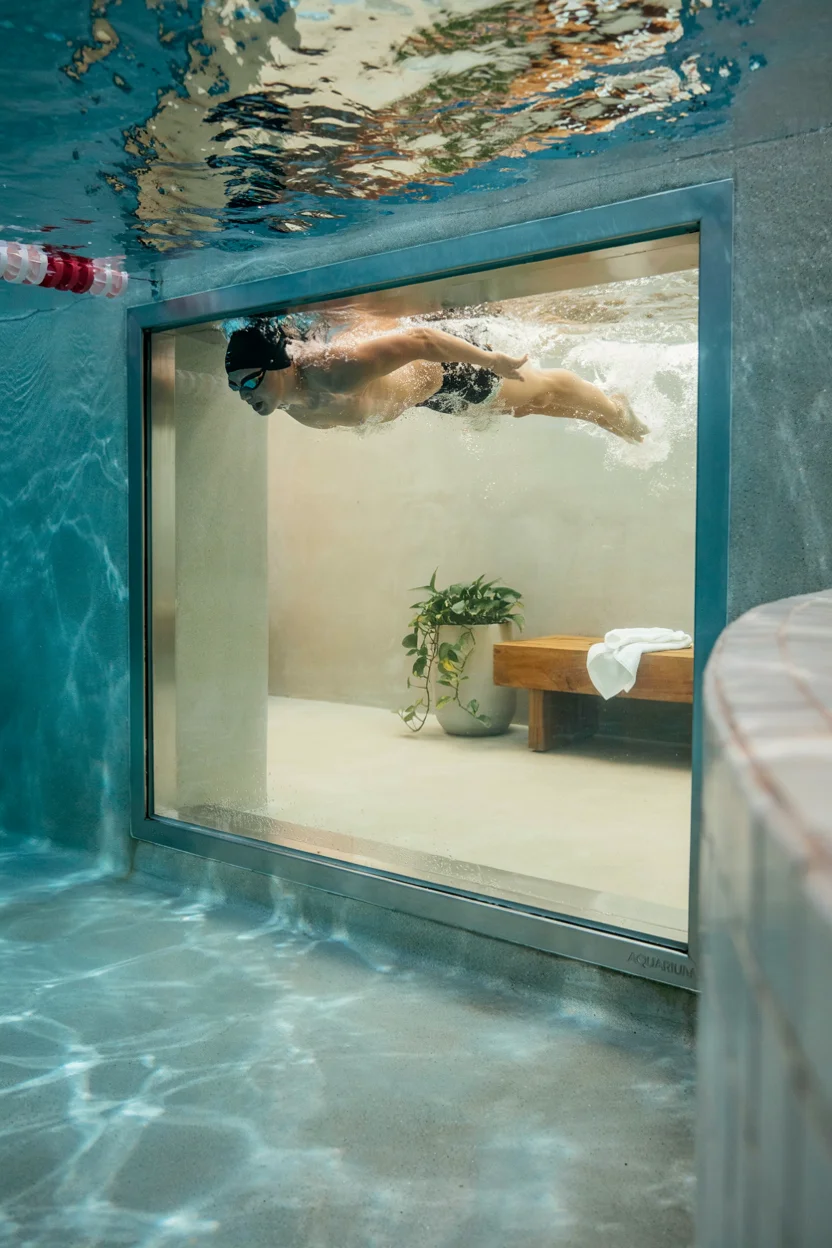
Underwater windows turn a pool into a design feature that can be appreciated even when no one is swimming. Designers are installing thick acrylic or laminated glass panels into one wall of the pool, allowing a view into the water from a hallway, gym, or lower-level room. It’s an unexpected architectural flourish that adds a sense of spectacle.
These windows require careful structural planning, since the glass must withstand significant water pressure, but the payoff is a striking visual connection between spaces. Some homeowners use the adjoining room as a home theater or lounge, letting the glowing blue window serve as ambient lighting and a conversation piece even when the pool isn’t in use.
15. Heated Pool Decks With Radiant Flooring
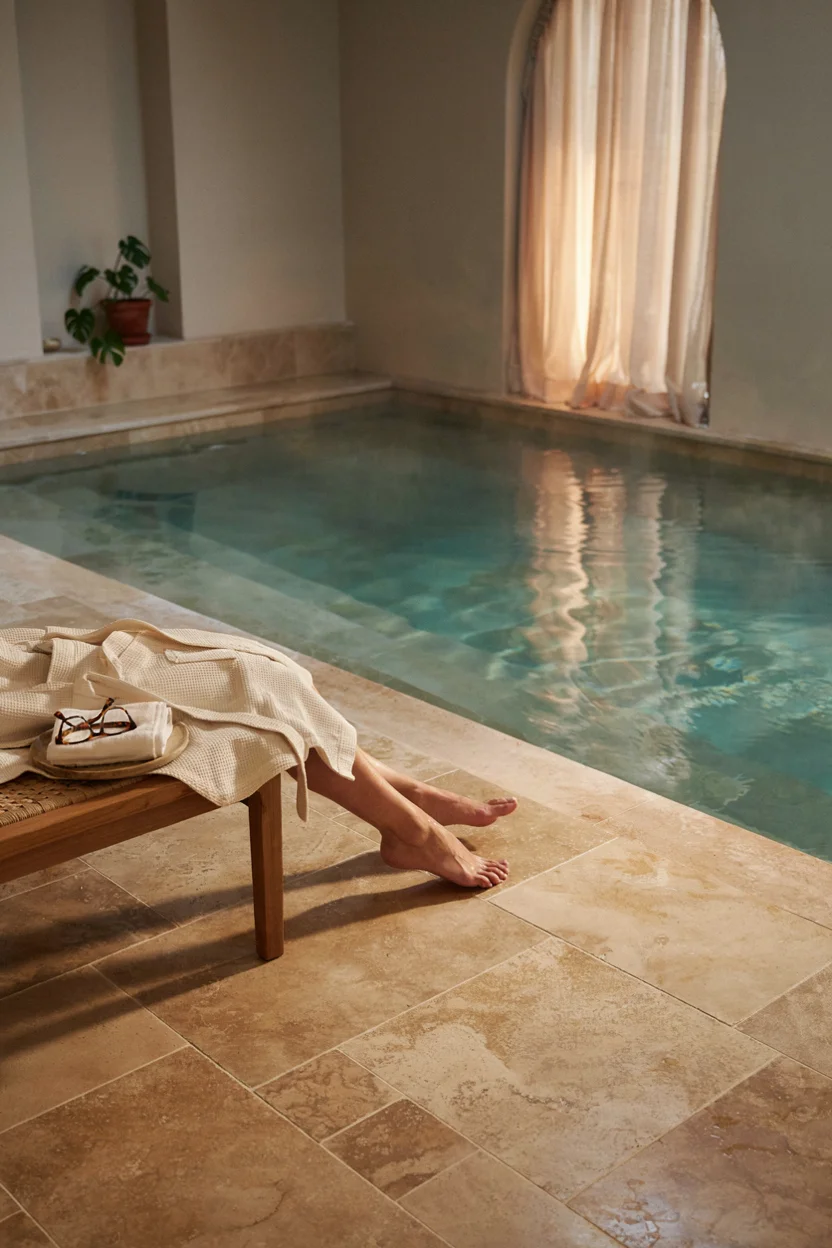
Radiant floor heating has become a quiet but significant upgrade in indoor pool design, embedded beneath the deck material to keep the surrounding surface warm and dry underfoot. It removes one of the biggest comfort complaints about pool rooms, which is stepping onto cold tile straight out of heated water.
Designers pair radiant heating with stone or large-format tile that conducts warmth evenly across the deck, avoiding cold spots. Beyond comfort, warm flooring also helps the deck dry faster, reducing slip risk and lingering dampness. It’s become a standard specification in higher-end pool builds, even though the heating system itself stays completely hidden from view.
16. Basement Pools That Maximize Below-Grade Space
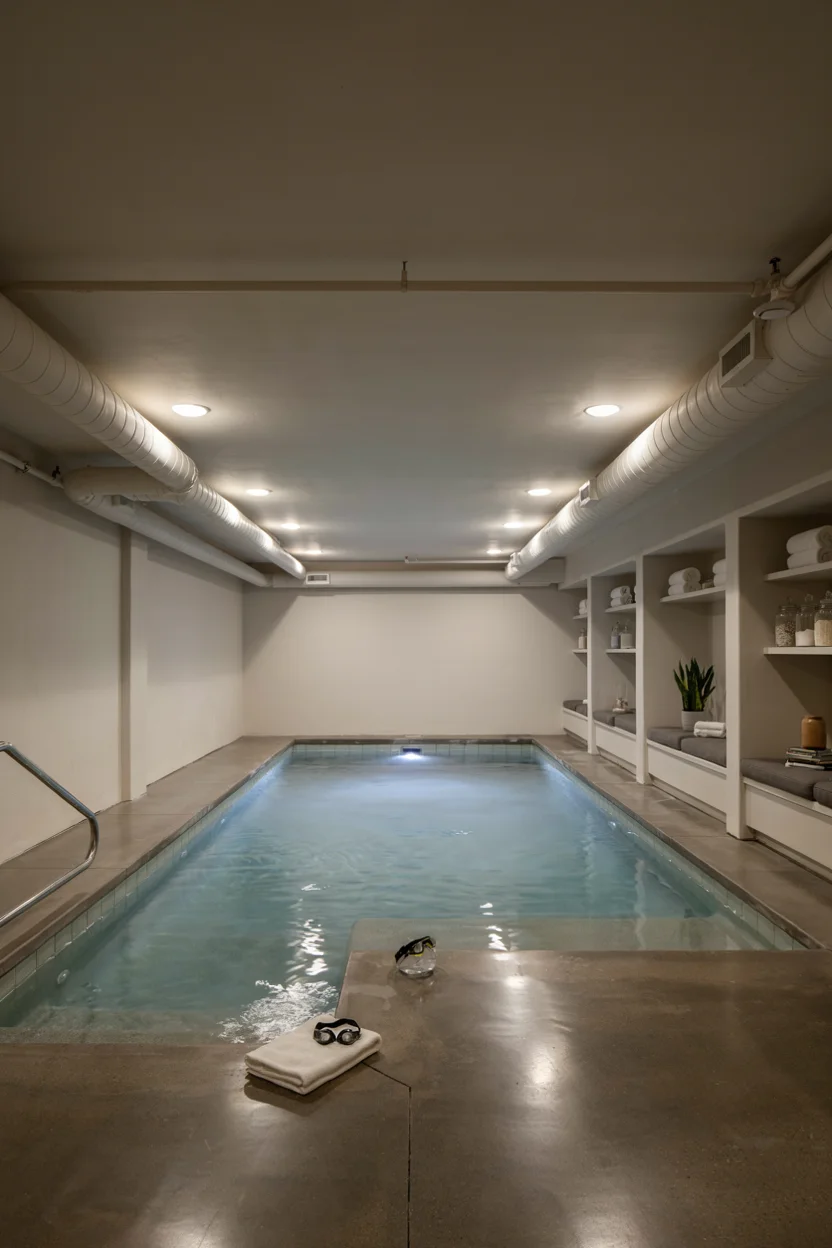
Basement pools solve a real estate problem: not every property has room for a pool addition, but many homes have unused below-grade square footage. Designers are converting basements into fully finished pool rooms, relying on mechanical ventilation and artificial lighting to compensate for the lack of natural light and airflow that ground-level pools typically enjoy.
The engineering challenges are significant, from waterproofing against groundwater to installing robust dehumidification systems, but the payoff is a private, enclosed pool that doesn’t require expanding the home’s footprint. Designers often lean into moody, intentional lighting schemes in these spaces, since there’s no daylight to work around or compete with.
17. Freestanding Pool Pavilions Separate From the Main House
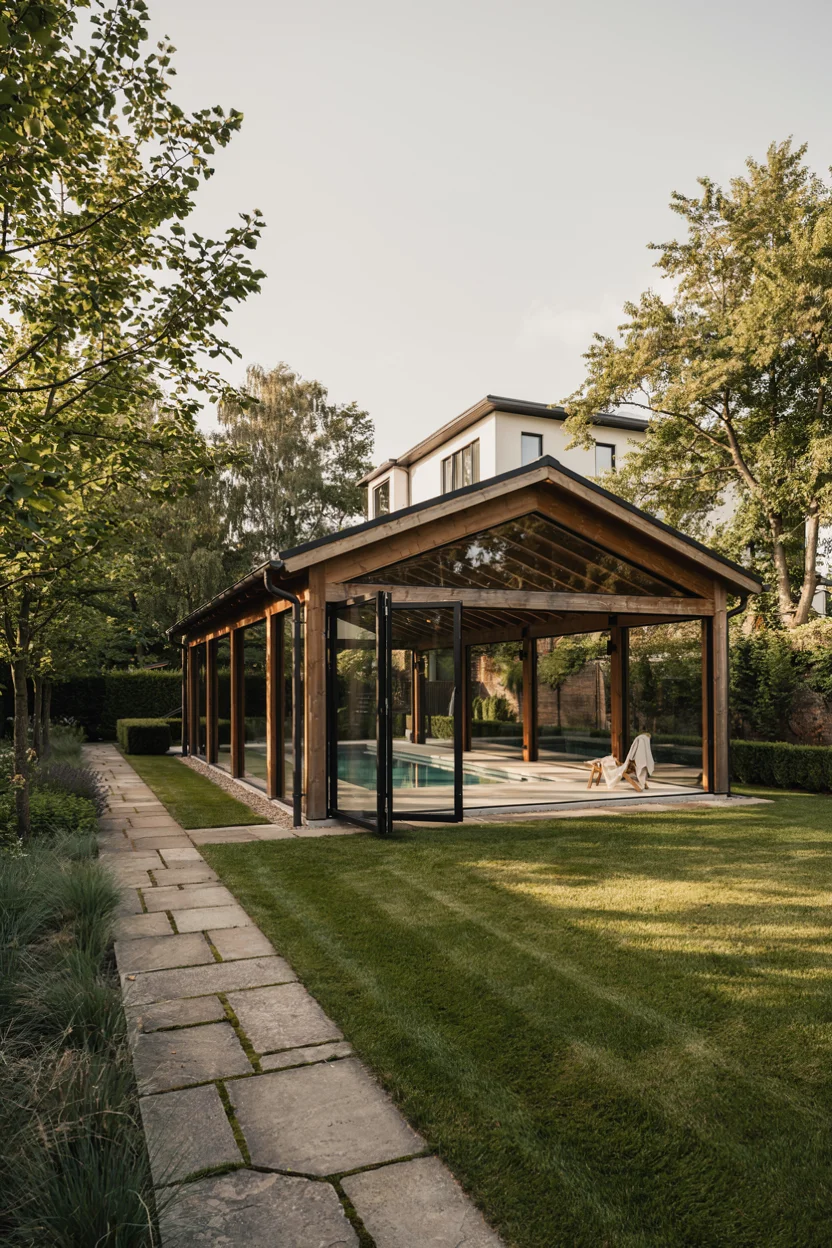
Rather than attaching the pool room to the main house, some designers are proposing detached pavilions as a separate destination on the property. This approach treats the pool as its own architectural moment, often with a distinct roofline or material palette from the primary residence, giving it the feel of a private retreat rather than an extension of daily living space.
Detached pavilions also help contain humidity and chlorine smell away from the main house, which can be a practical selling point for homeowners concerned about moisture damage to interior finishes. The short walk between structures, often along a landscaped path, adds a sense of ritual to using the pool, turning a swim into a small outing rather than an everyday errand.
18. Curved and Organic-Shaped Pools for Softness
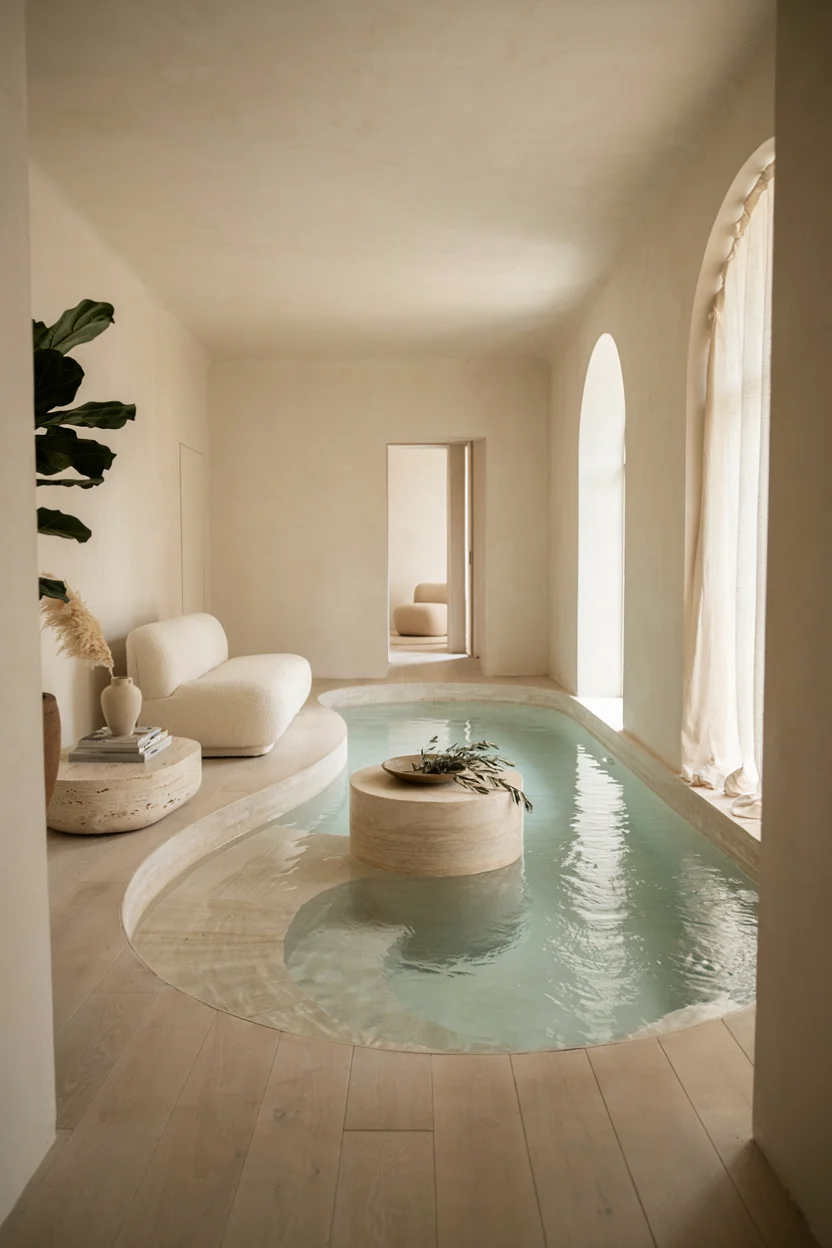
Rectangular lap pools remain popular, but designers are increasingly proposing organic, curved shapes for indoor pools that break from strict geometry. These freeform designs often echo natural forms like rivers or lagoons, softening the overall feel of the room and pairing well with curved furniture and plastered, rounded architectural details.
Curved pools require more complex construction than straight-edged designs, since tile and coping must be cut and fitted around continuous curves rather than straight lines. The added complexity is often worth it to designers chasing a calmer, less rigid atmosphere, particularly in wellness-focused homes where the pool room doubles as a meditative retreat rather than a lap-swimming facility.
19. Dark Academia-Inspired Pool Rooms With Wood Paneling
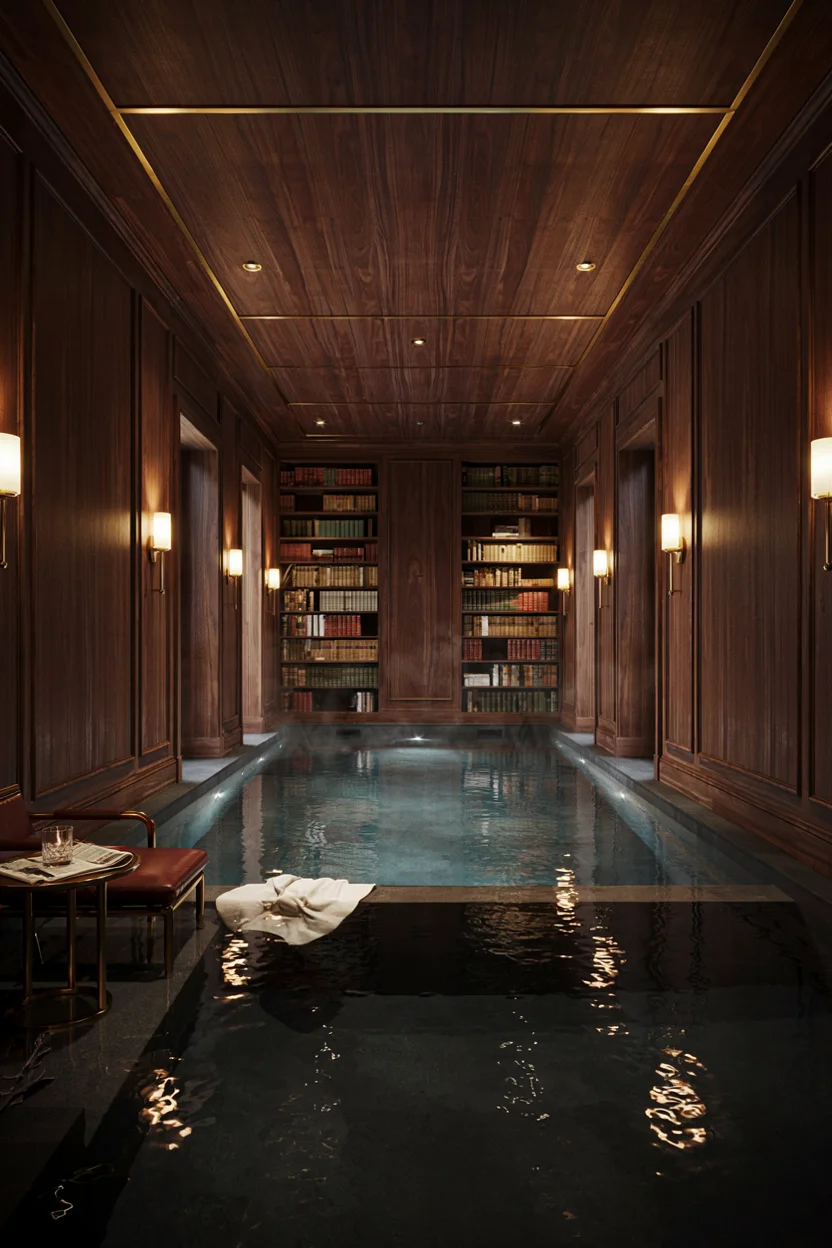
Dark academia’s rich wood tones and moody lighting have made their way into pool design, offering an alternative to the bright, airy look most indoor pools default to. Designers are paneling walls in deep walnut or mahogany, adding brass fixtures and coffered ceilings to create a room that feels more like a private study than a wellness amenity.
This approach works particularly well in historic or traditionally styled homes, where a bright glass pool room might clash with the architecture. Instead, the wood-paneled pool room extends the same material language found in a home library or study, letting the pool feel like a natural continuation of the house rather than a modern add-on.
20. Resort-Style Pools With Cabana Seating Indoors
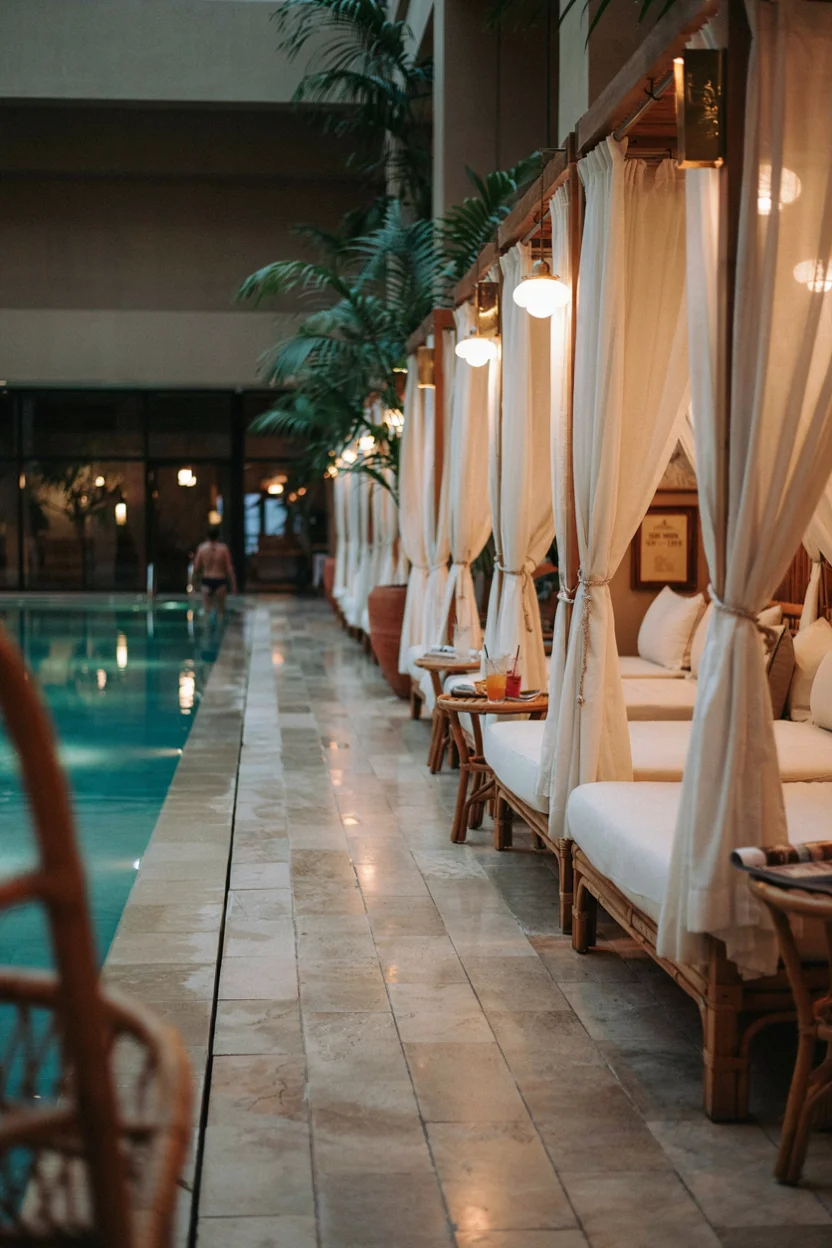
Designers are recreating the resort cabana experience indoors, adding draped daybeds, rattan furniture, and tropical planting around the pool’s perimeter. This approach turns the pool room into a year-round vacation setting, borrowing directly from hotel pool decks rather than typical residential pool design conventions.
The layered textiles and furniture require more maintenance in a humid environment, so designers often specify quick-drying, mildew-resistant fabrics designed for pool and patio use. The payoff is a pool room that feels like a getaway rather than a utilitarian swim space, with the cabana seating giving guests a reason to linger poolside long after swimming is done.
21. Compact Plunge Pools for Small Indoor Spaces
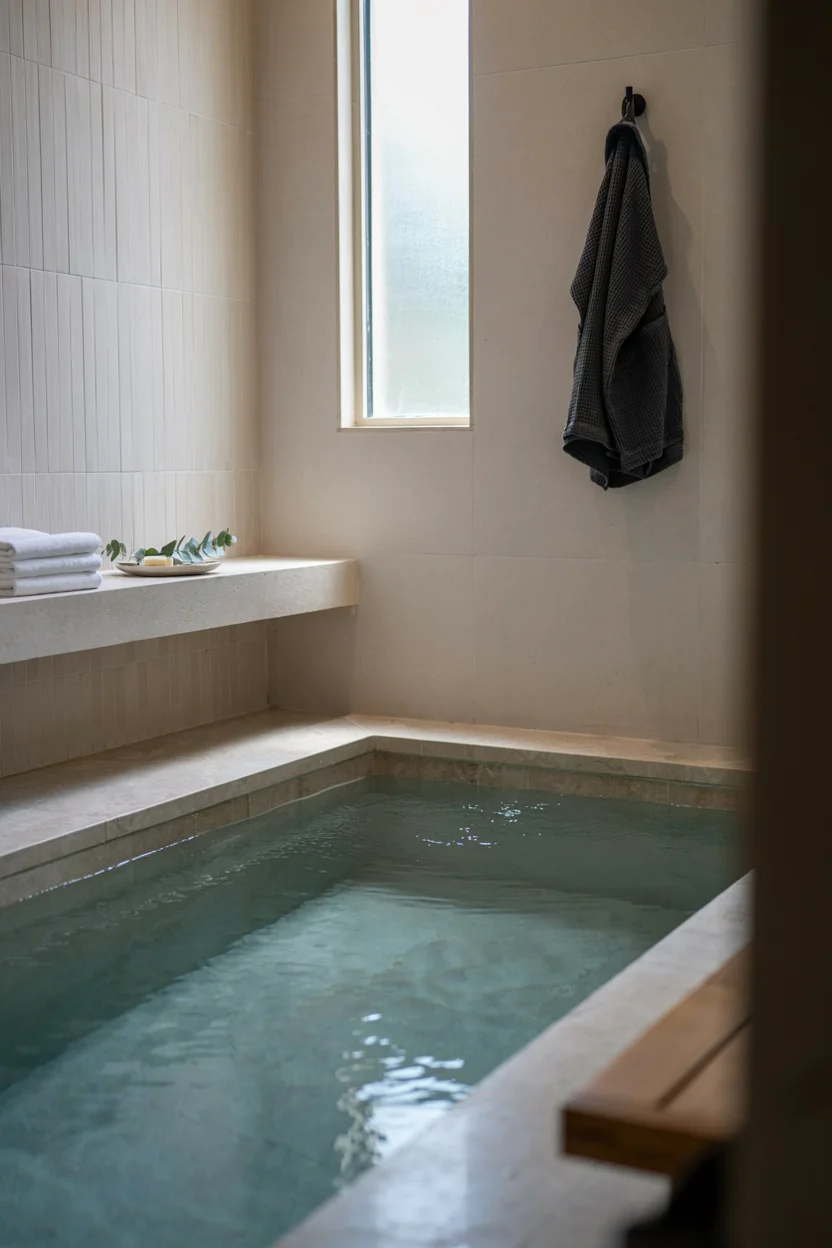
Not every home has room for a full lap pool, so designers are turning to compact plunge pools as a space-efficient alternative. These smaller, deeper pools are designed for cold therapy, quick dips, or relaxation rather than swimming laps, making them well suited to converted closets, narrow alcoves, or small basement rooms.
Because plunge pools require a fraction of the square footage of a traditional pool, they’re becoming a popular addition to home gyms and wellness suites focused on recovery. Designers often pair them with contrast therapy setups, placing a sauna or steam room nearby so homeowners can move between hot and cold environments within the same compact footprint.
22. Art Deco Pools With Geometric Tile Details
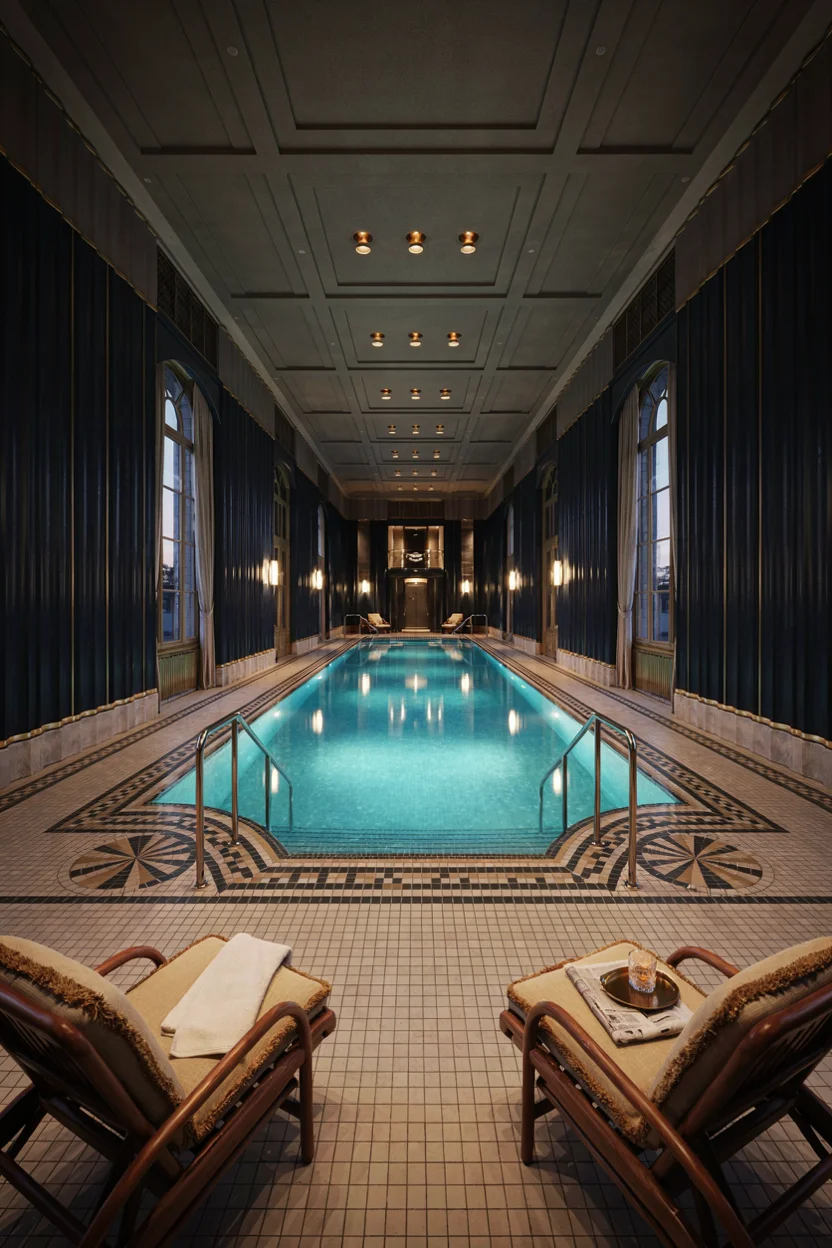
Art Deco’s geometric patterns and glamorous material palette are finding their way into pool design, with designers using bold tile borders, fan motifs, and symmetrical layouts to evoke the era. Brass fixtures and fluted paneling round out the look, giving the pool room a sense of vintage glamour rather than contemporary minimalism.
This style tends to suit homeowners drawn to a more formal, statement-making pool room rather than a casual wellness space. The symmetry and pattern work require precise tile installation, but the result reads as a deliberate architectural statement, closer to a grand hotel pool from the 1920s than a typical modern residential build.
23. Zen Garden Pools With Rock and Water Features
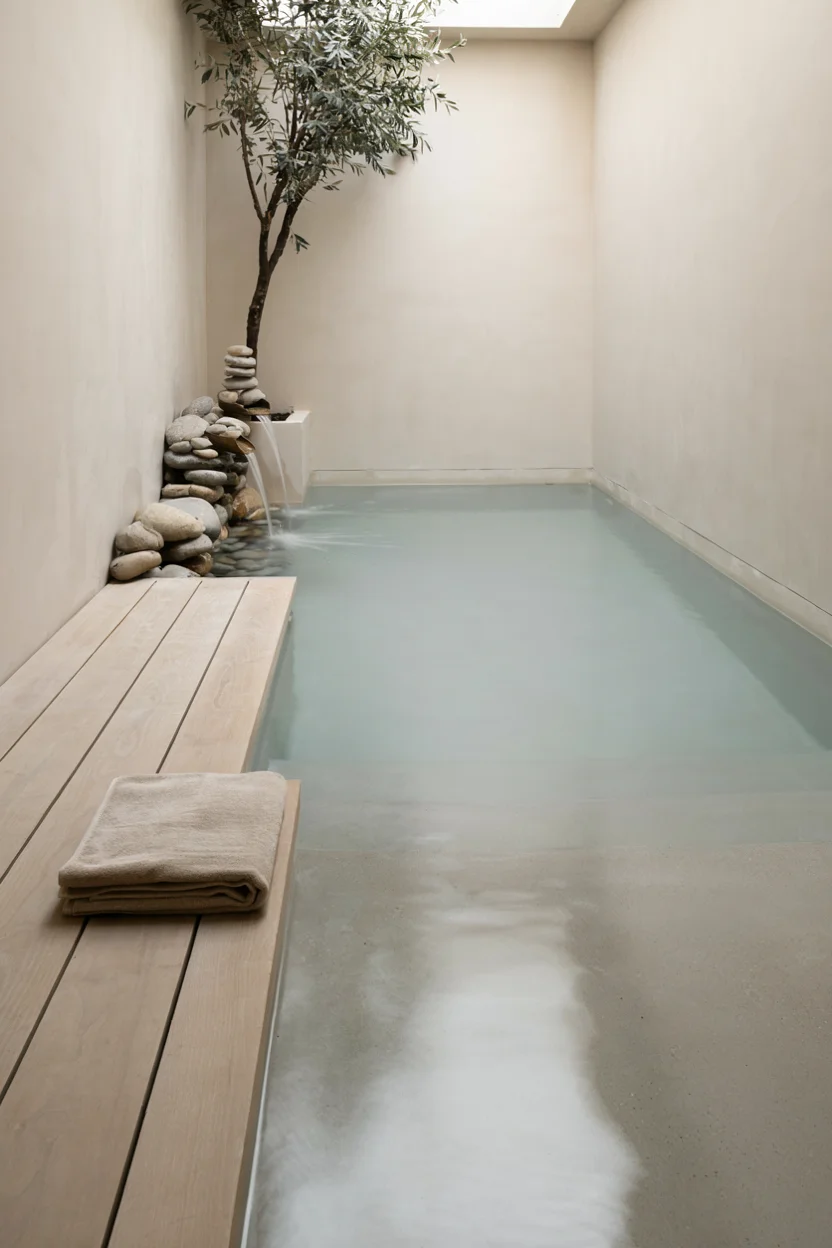
Zen-inspired pool rooms borrow from Japanese garden design, incorporating smooth river stones, a single sculptural tree, and additional water features that add gentle ambient sound to the space. Designers are treating these pools less as recreational swim spaces and more as meditative environments meant for slow, quiet use.
The restrained material palette, typically limited to natural stone, wood, and muted tones, keeps the room feeling calm rather than busy. This style pairs well with adjoining yoga or meditation spaces, since the pool becomes part of a broader wellness ritual rather than a standalone amenity. It’s a popular direction for homeowners prioritizing mental restoration over entertaining.
24. Convertible Multi-Use Pool Rooms for Fitness and Relaxation
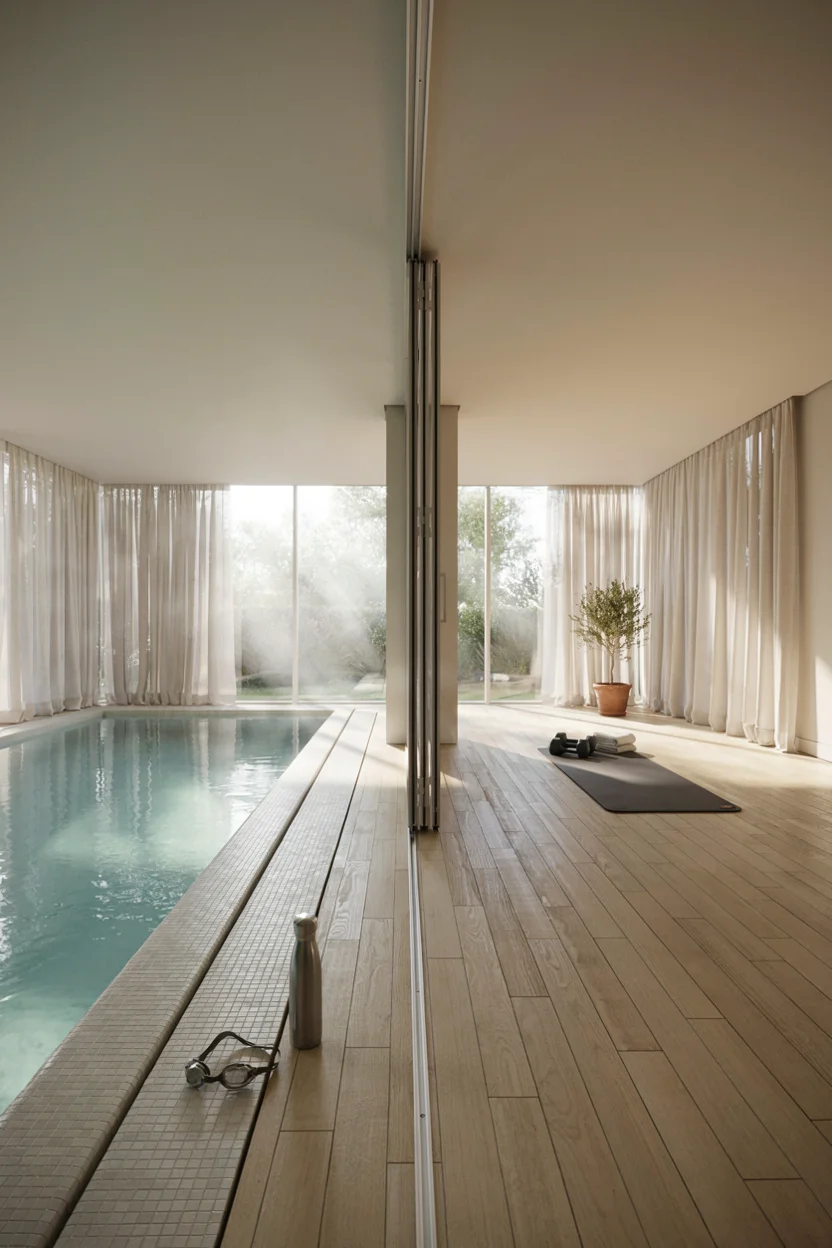
Rather than dedicating an entire room solely to swimming, designers are combining pool space with adjacent fitness or stretching areas, often separated by a movable partition. This lets homeowners use the room for a full workout routine, from lap swimming to yoga, without needing multiple dedicated spaces throughout the house.
The shared room approach requires careful humidity control, since fitness equipment and yoga mats need to stay dry despite the pool’s proximity. Designers typically solve this with strong dehumidification systems and a partial glass divider that allows visual connection between zones while limiting moisture transfer, making the multi-use layout practical as well as space-efficient.
Conclusion
From moody black tile to biophilic jungles and retractable glass roofs, these indoor pool ideas show that the standard rectangle-and-tile formula is no longer the only option worth considering. Whichever direction feels right for your space, the common thread running through all 24 is intention: every material, light fixture, and layout choice now works together to make the pool room feel like a true extension of the home, rather than an afterthought tacked onto it.

Join The Discussion