
Introduction
A truly primitive living room feels like it’s been lived in for generations, full of raw materials, muted tones, and pieces with real history. This collection of primitive living room ideas showcases everything from stacked stone fireplaces to reclaimed wood shelving, offering plenty of ways to bring that same timeworn charm into your own space. Each idea focuses on natural textures and handmade details rather than trendy decor, making the look feel timeless rather than fleeting. Scroll through for primitive living room ideas that turn simple materials into something full of character.
1. Exposed Beam Ceiling Statement
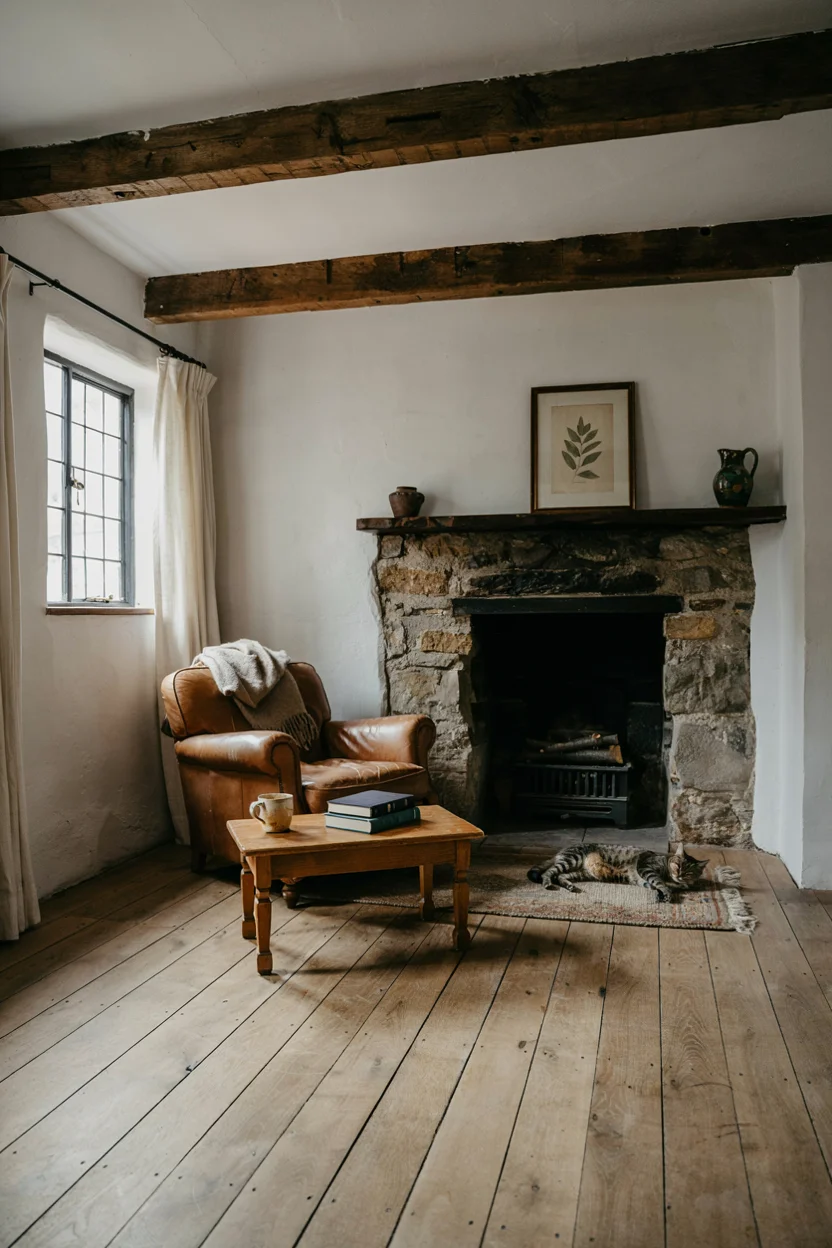
Exposed beams are one of the most defining primitive living room ideas because they draw the eye upward and immediately signal age and craftsmanship. Choosing beams with visible tool marks or a rough-hewn texture adds authenticity that painted or smooth wood simply can’t replicate. Pairing dark beams against a lighter ceiling creates contrast that keeps the room from feeling too heavy despite the substantial wood elements.
Beneath the beams, a stone fireplace and worn leather seating reinforce the primitive theme without competing for attention. Small paned windows further the historic feel by softening the natural light that fills the room. This idea works best in spaces with enough ceiling height to let the beams feel intentional rather than cramped, giving the whole room a grounded, architectural presence.
2. Reclaimed Wood Accent Wall
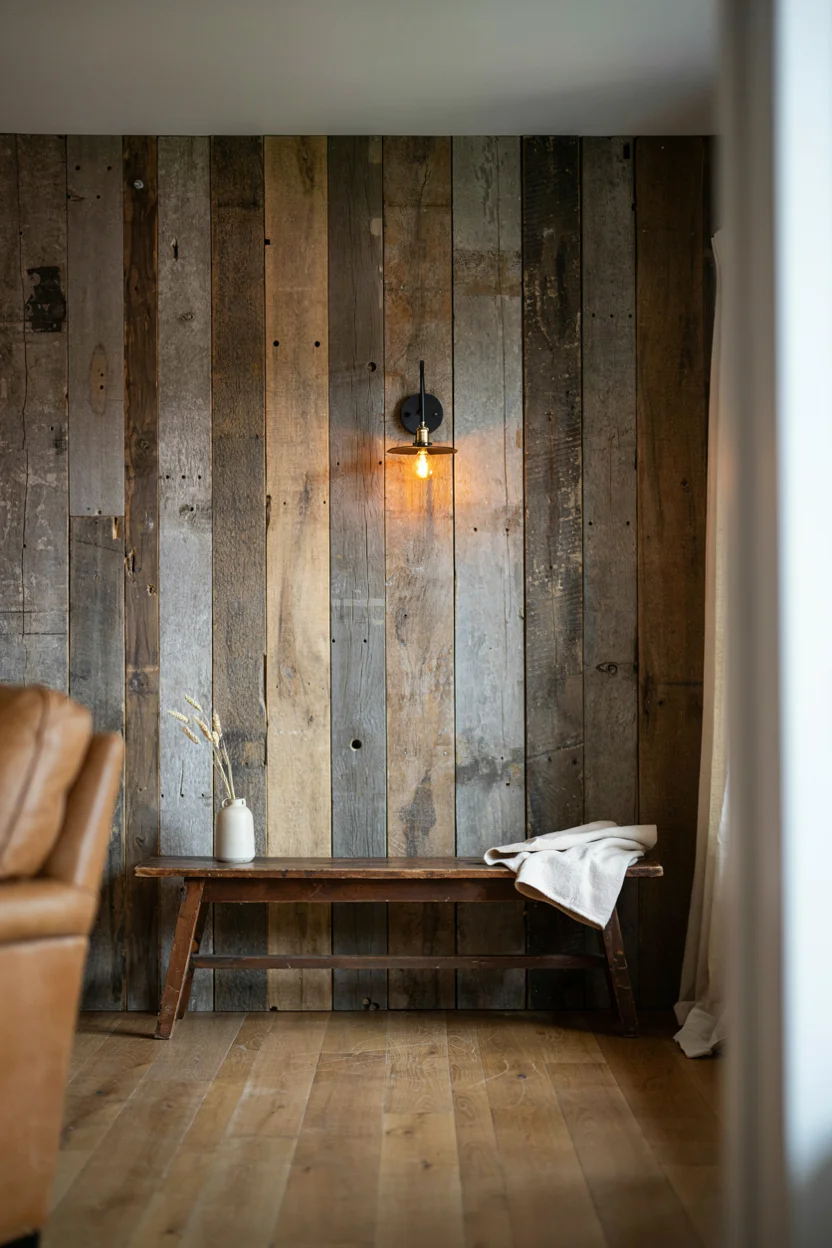
A reclaimed wood accent wall brings texture and history into primitive living room ideas without requiring a full renovation. The natural variation in board color and grain does most of the visual work, so the rest of the room can stay relatively simple. Choosing boards with visible nail holes, saw marks, or weathering keeps the wall looking authentic rather than manufactured.
A single black iron sconce mounted at the center adds a functional, old-world lighting element that complements the wood without overshadowing it. Placing a worn wooden bench beneath the wall gives the space a practical resting spot while reinforcing the primitive aesthetic. This idea works particularly well as a focal wall behind a sofa or across from the main seating area.
3. Antique Farm Table Centerpiece
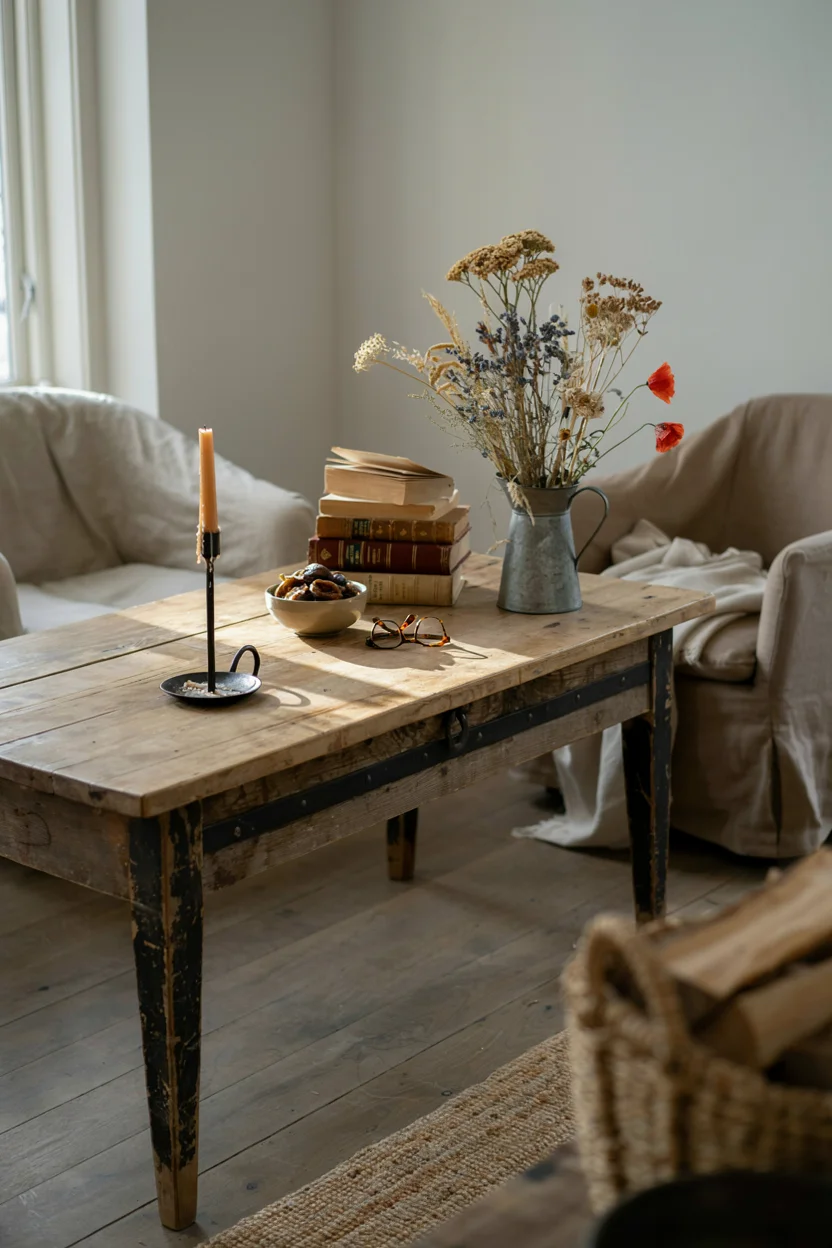
Repurposing an antique farm table as a coffee table is a practical, character-rich addition to primitive living room ideas. The worn surface, complete with scratches and stains from decades of use, tells a story that new furniture simply cannot replicate. Styling the table with old books, a tin pitcher, and a hand-forged candle holder keeps the vignette feeling gathered over time rather than staged.
Surrounding the table with neutral linen seating allows the table itself to remain the focal point of the room. This idea works well for anyone building a primitive living room around vintage or secondhand finds, since the table can anchor a mix of other aged pieces. Its low profile and sturdy build also make it a practical everyday piece, not just a decorative one.
4. Wool Blanket Ladder Display
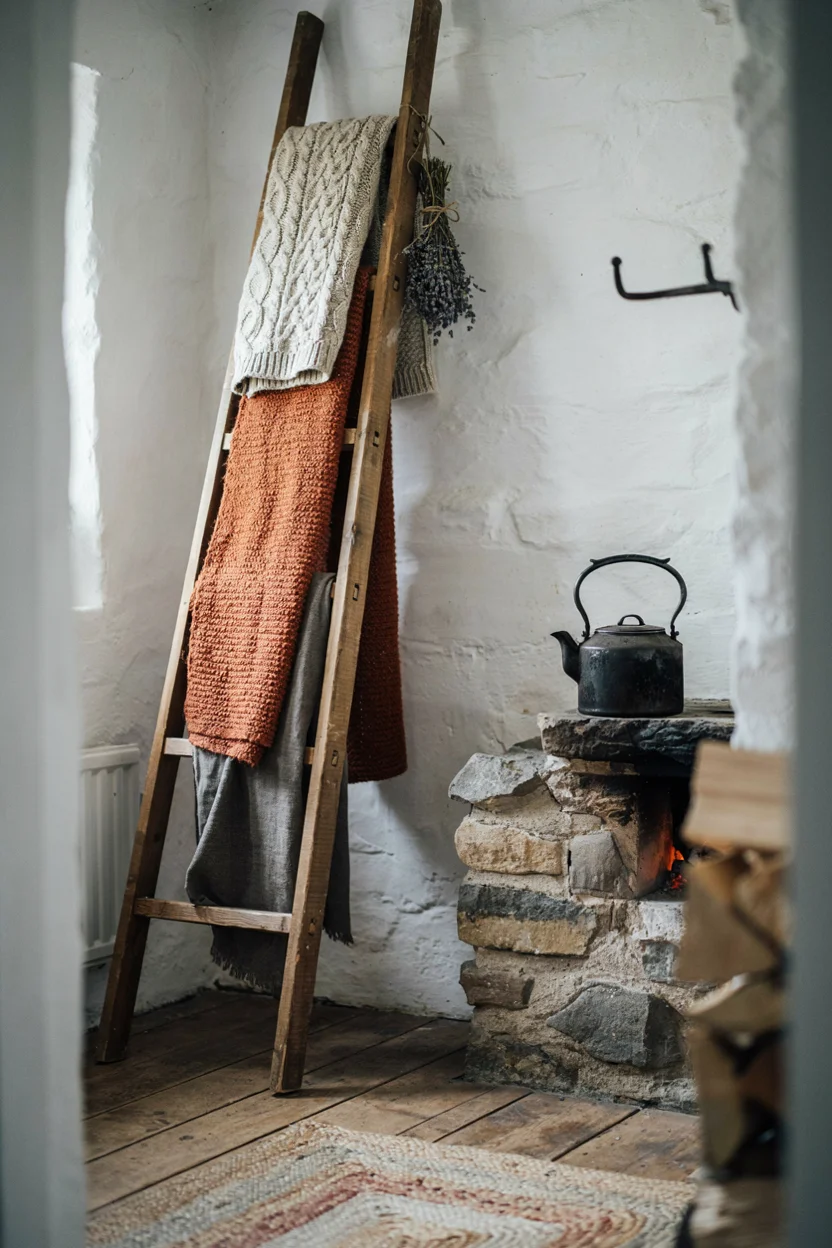
A blanket ladder is a simple but effective addition to primitive living room ideas, offering both function and texture in one piece. Leaning a tall wooden ladder against the wall instead of using a traditional shelf keeps the storage solution feeling rustic and unfussy. Layering wool blankets in muted, earthy tones adds warmth and softness that balances out the room’s harder architectural elements.
Positioning the ladder near a stone hearth ties the display into the room’s primitive theme, while a cast iron kettle nearby reinforces the historic feel. This idea is especially useful for smaller living rooms, since it adds storage and styling without taking up floor space. The blankets can also be swapped seasonally to update the room’s color palette with minimal effort.
5. Stone Fireplace Focal Point
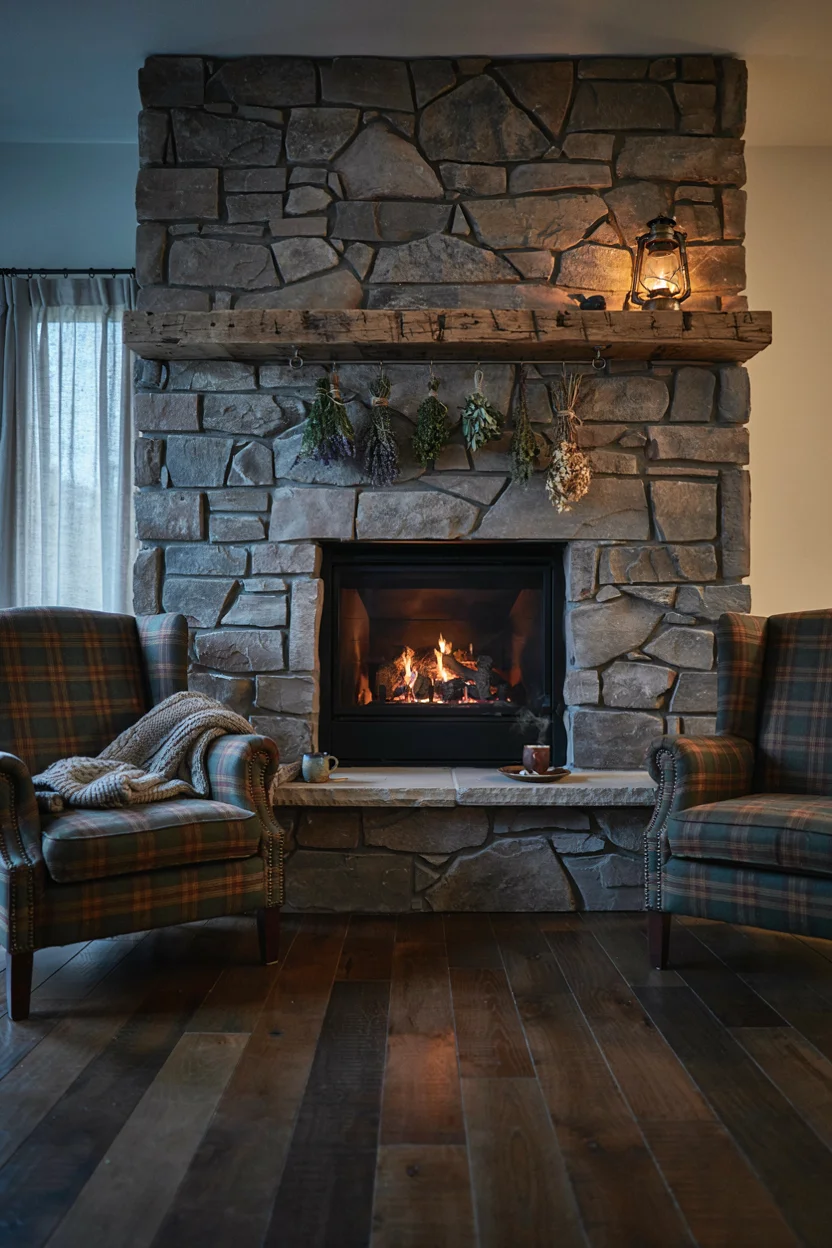
A stacked stone fireplace is one of the strongest architectural choices among primitive living room ideas, since it naturally becomes the room’s focal point. Choosing stones in varied sizes and natural, uneven coloring gives the fireplace an authentic, aged appearance rather than a manufactured look. A rough-hewn wood mantel across the top continues the raw material theme found throughout the rest of the room.
Styling the mantel with dried herb bundles and a single antique lantern keeps the display simple and true to the primitive aesthetic. Flanking the fireplace with worn wingback chairs in muted plaid fabric creates a cozy, symmetrical seating arrangement. This idea works best as the anchor point around which the rest of the living room’s furniture and decor are arranged.
6. Muted Plaid Textile Layering
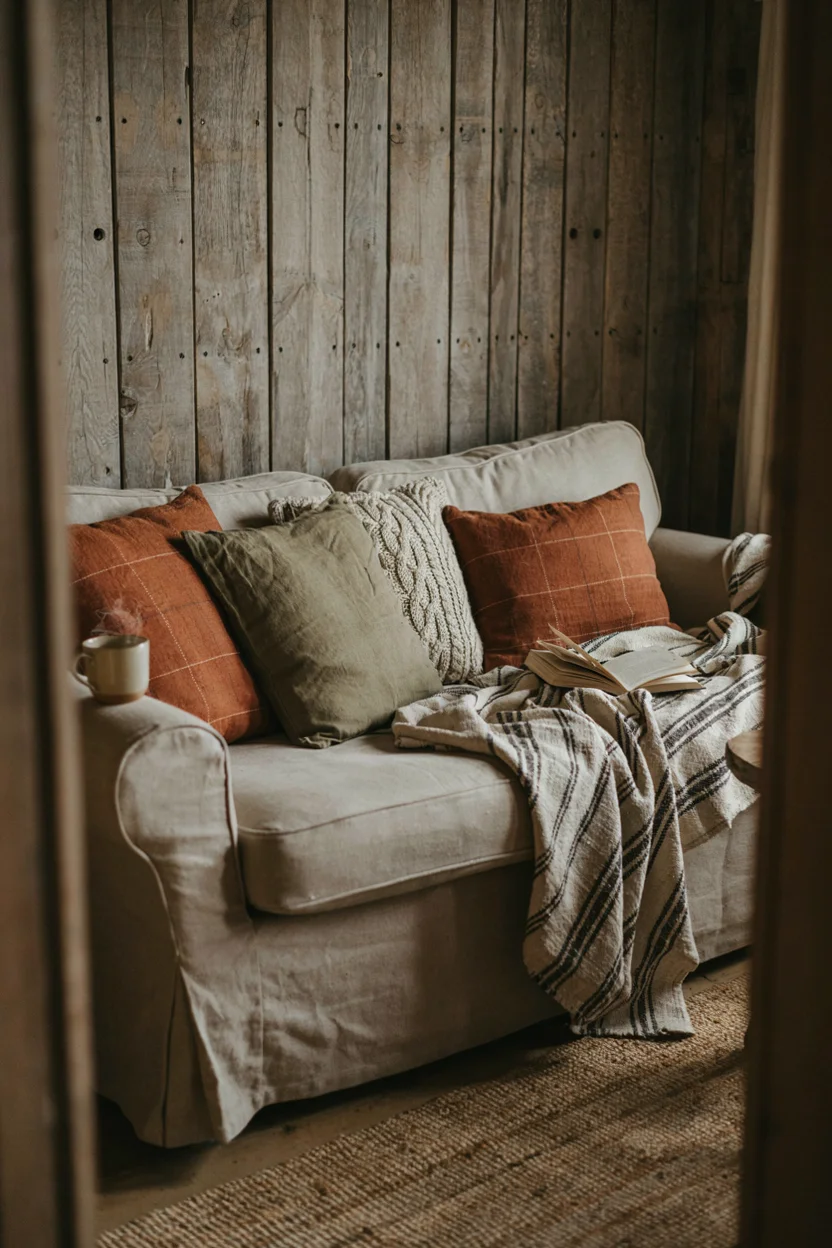
Layering muted plaid and homespun textiles is an easy way to bring softness into primitive living room ideas without straying from the color palette. Choosing fabrics in earthy tones like rust, olive, and cream keeps the look cohesive while still adding visual interest through pattern and texture. Mixing plaid with solid homespun weaves prevents the layered look from feeling too matched or overly coordinated.
A woven wool throw draped over the arm of the sofa adds another textural layer and offers practical warmth during cooler months. Set against weathered wood paneling, the textiles stand out as the room’s softest element, balancing the harder surfaces found elsewhere. This idea is one of the most budget-friendly primitive living room updates, since it can be achieved with pillows and throws alone.
7. Wrought Iron Chandelier Lighting
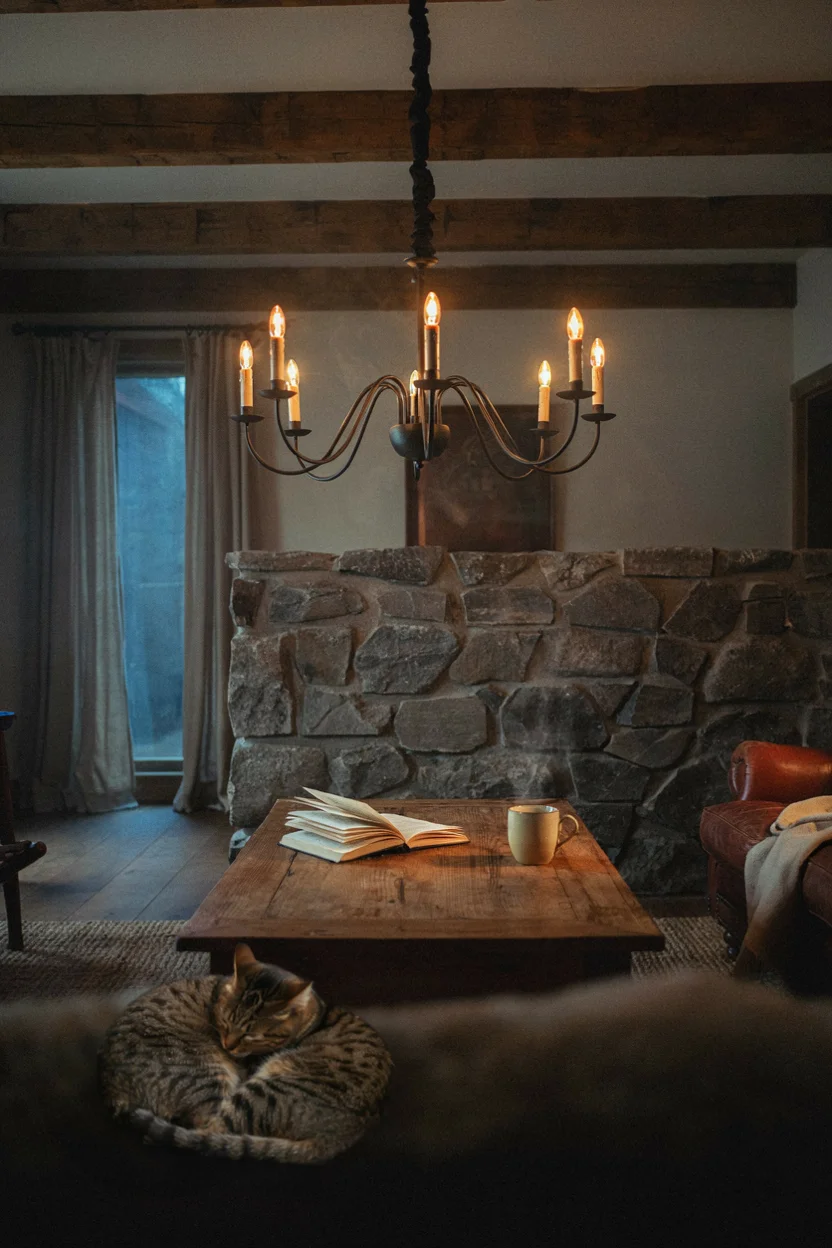
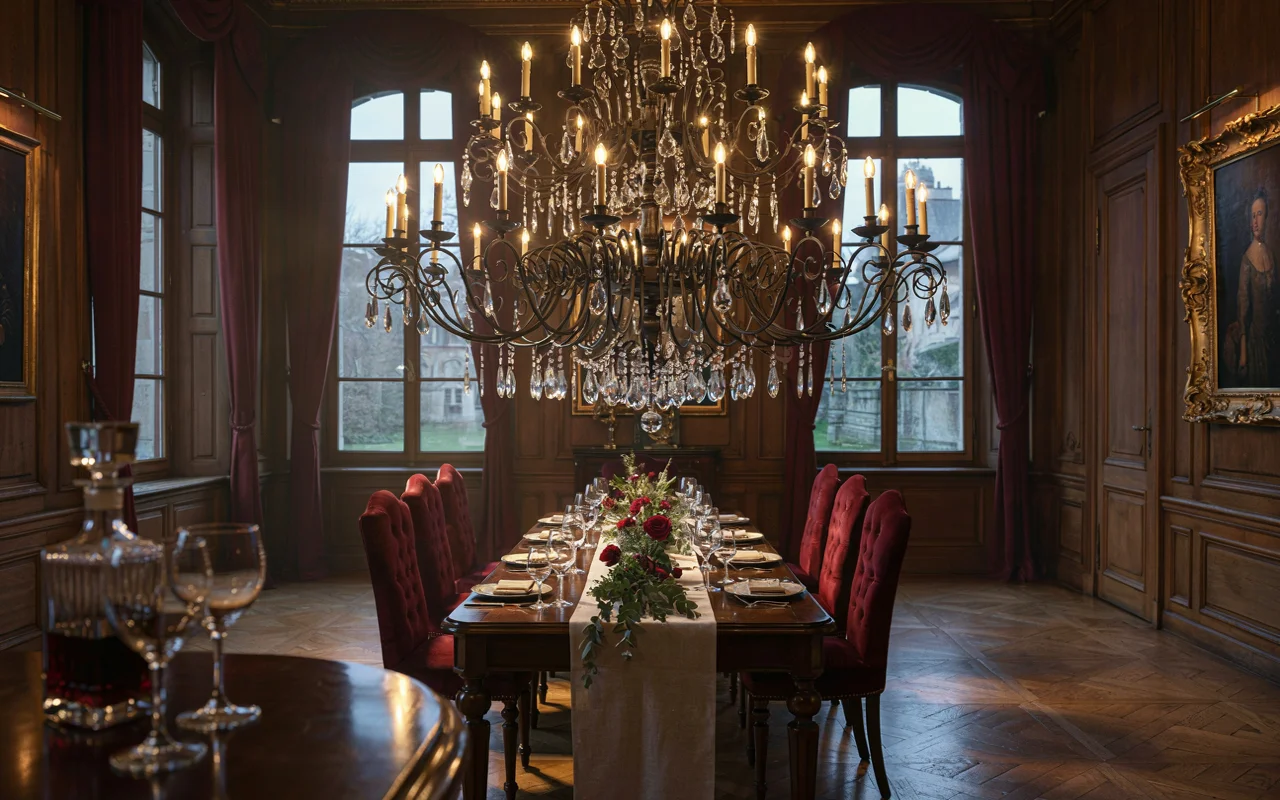
Lighting plays a major role in primitive living room ideas, and a wrought iron chandelier is one of the most effective ways to set the mood. The dark metal finish and candle-style bulbs mimic historic lighting fixtures while still offering modern convenience. Hanging the chandelier at a lower height than typical adds intimacy to the room and draws attention to the seating area below.
Paired with exposed ceiling beams and a stone accent wall, the chandelier ties together the room’s architectural and lighting elements into one cohesive primitive look. This idea works particularly well in living rooms with higher ceilings, where a hanging fixture can make a stronger visual statement. Dimmable bulbs allow the warm, low lighting to be adjusted for different times of day.
8. Vintage Crock Collection Display
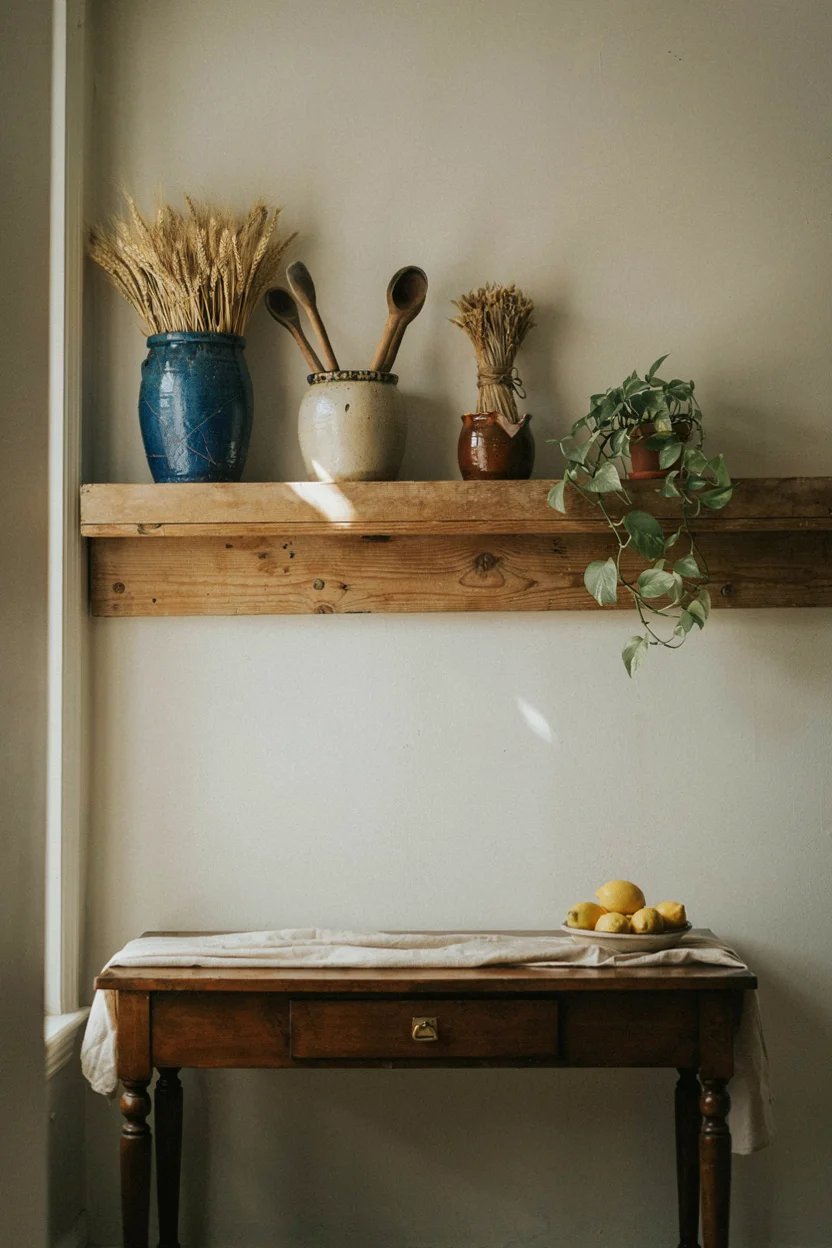
Displaying a collection of vintage crocks is a classic styling choice among primitive living room ideas, since it highlights functional antiques as decor. Grouping crocks in varying sizes on an open wooden shelf creates natural visual interest without needing additional embellishment. Filling a few of the crocks with dried wheat stalks or wooden spoons keeps the display feeling practical and lived-in.
Positioning the shelf above a rustic sideboard grounds the display and gives the room another layer of primitive character at a lower level. This idea is a great option for collectors, since the crocks can be added to gradually over time rather than purchased all at once. Muted, sunlit rooms photograph particularly well with this kind of earthy, textured vignette.
9. Homespun Rug Layering
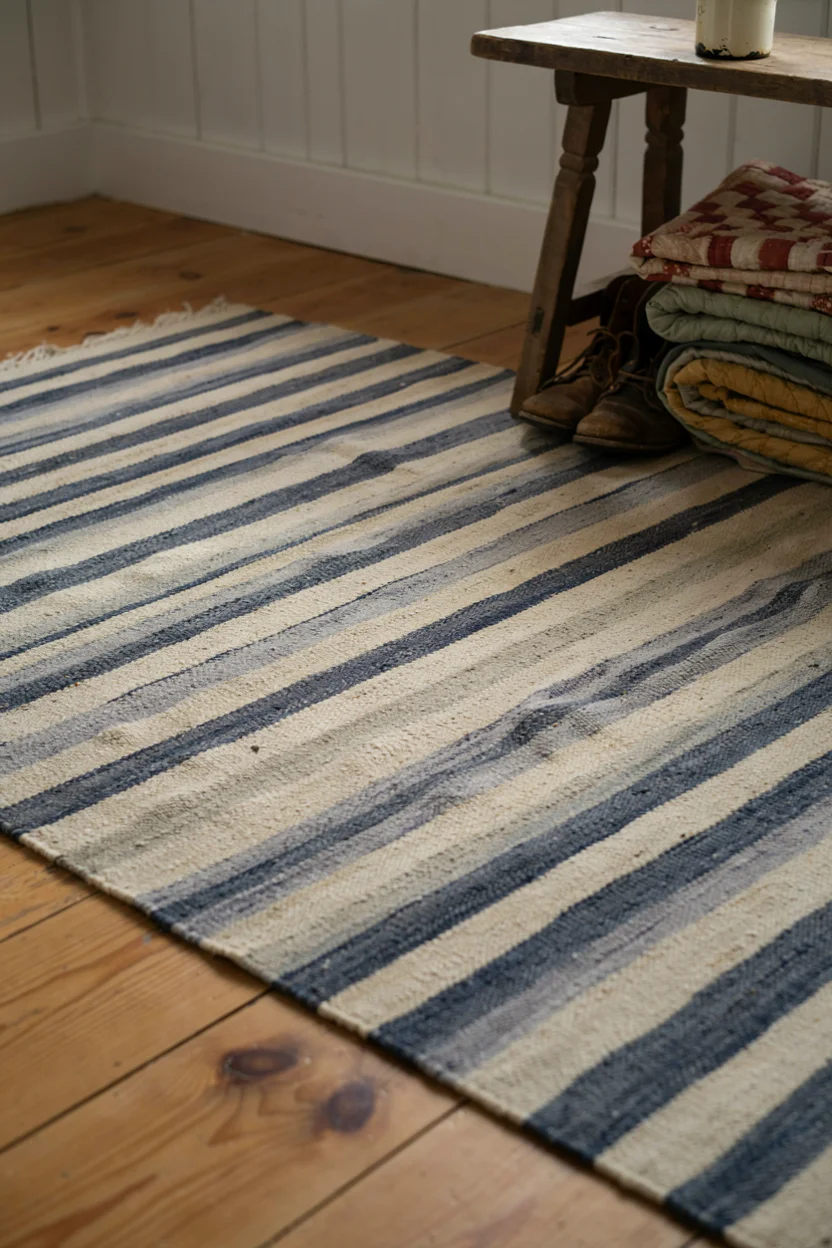
Layering a homespun rug over wide-plank wood flooring adds softness and pattern to primitive living room ideas without introducing modern materials. The faded stripe pattern feels handmade and historic, especially when paired with muted colors like blue and cream rather than bold, saturated tones. Choosing a rug with visible wear or slight irregularities in the weave keeps the look authentic rather than mass-produced.
Anchoring the rug beneath a primitive wooden bench ties the flooring into the rest of the room’s furniture choices. A folded stack of quilts in the corner adds another textile layer and reinforces the room’s cozy, gathered feel. This idea works especially well in living rooms with hardwood or reclaimed wood floors, where the rug can highlight rather than hide the flooring beneath it.
10. Dried Botanical Wall Arrangement
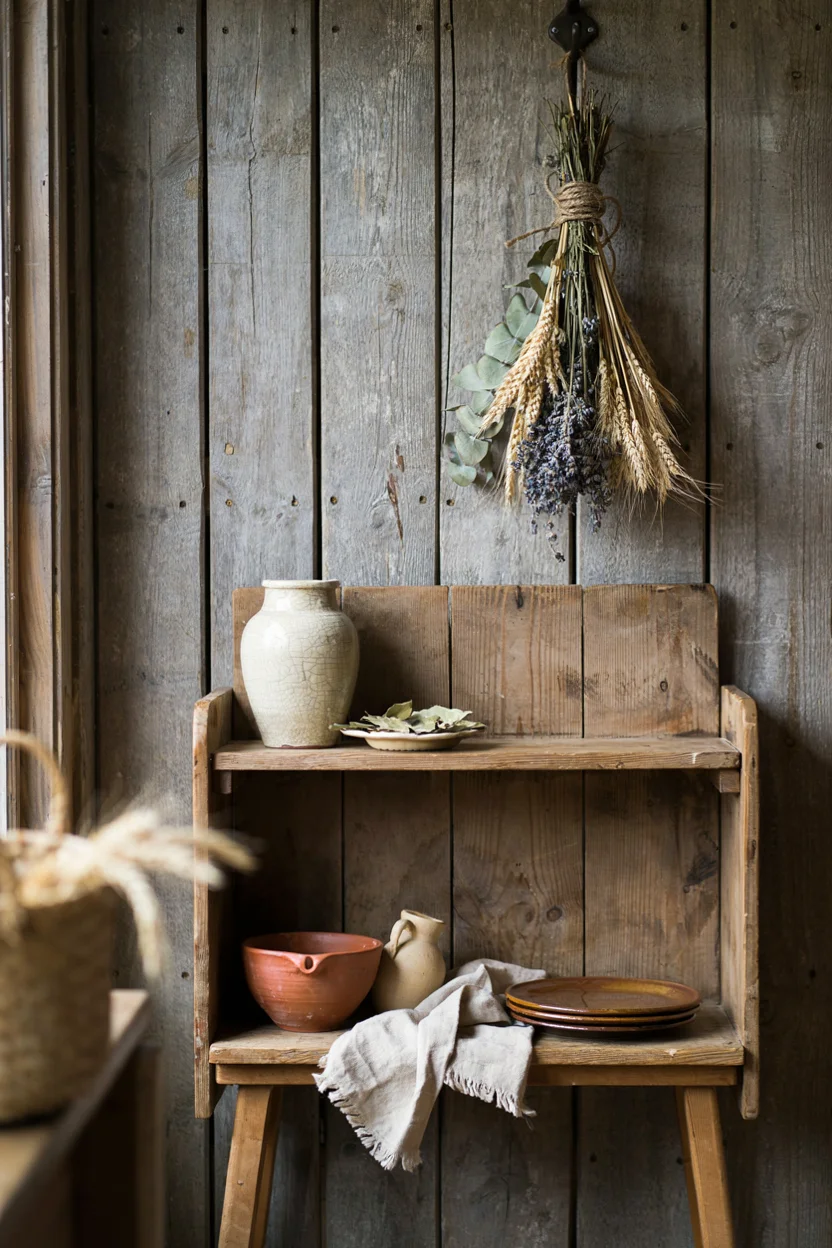
Hanging dried botanicals is a simple, low-maintenance way to bring natural texture into primitive living room ideas. Tying bundles of wheat, lavender, and eucalyptus with plain twine keeps the display feeling handmade rather than store-bought. Hanging the bundles upside down along a weathered wood wall adds vertical interest and references traditional drying methods used long before modern decor trends existed.
Positioning the arrangement above a primitive wooden hutch filled with earthenware pottery creates a layered, collected look that feels authentic to the style. This idea requires very little upkeep, since dried botanicals last for months without needing water or sunlight. It’s a particularly good choice for living rooms that need a soft, organic focal point above furniture that’s otherwise fairly plain.
11. Rope and Iron Curtain Hardware
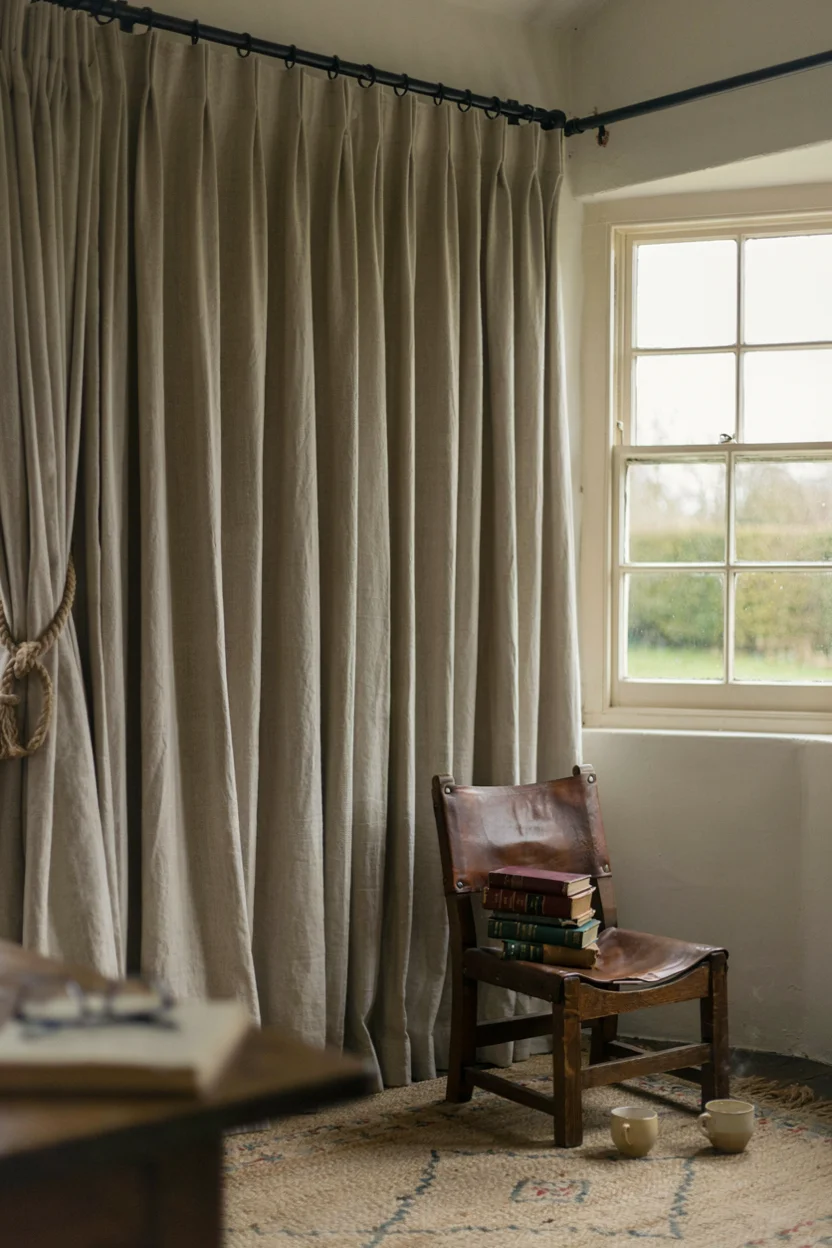
Swapping standard curtain hardware for rope and iron details is a subtle but effective touch among primitive living room ideas. A thick iron rod adds weight and an old-world feel that plain metal or wood rods can’t achieve. Rope tiebacks reinforce the handmade aesthetic and photograph beautifully against heavy linen curtains in muted, natural tones like oatmeal or flax.
Framing a small paned window with this hardware keeps the primitive theme consistent even in smaller architectural details often overlooked in a room’s overall design. Positioned beside a wood-and-leather reading chair, the window becomes a cozy focal point for reading or relaxing. This idea is an easy update for anyone looking to refine an already-primitive room without major furniture changes.
12. Cast Iron Cookware Wall Display
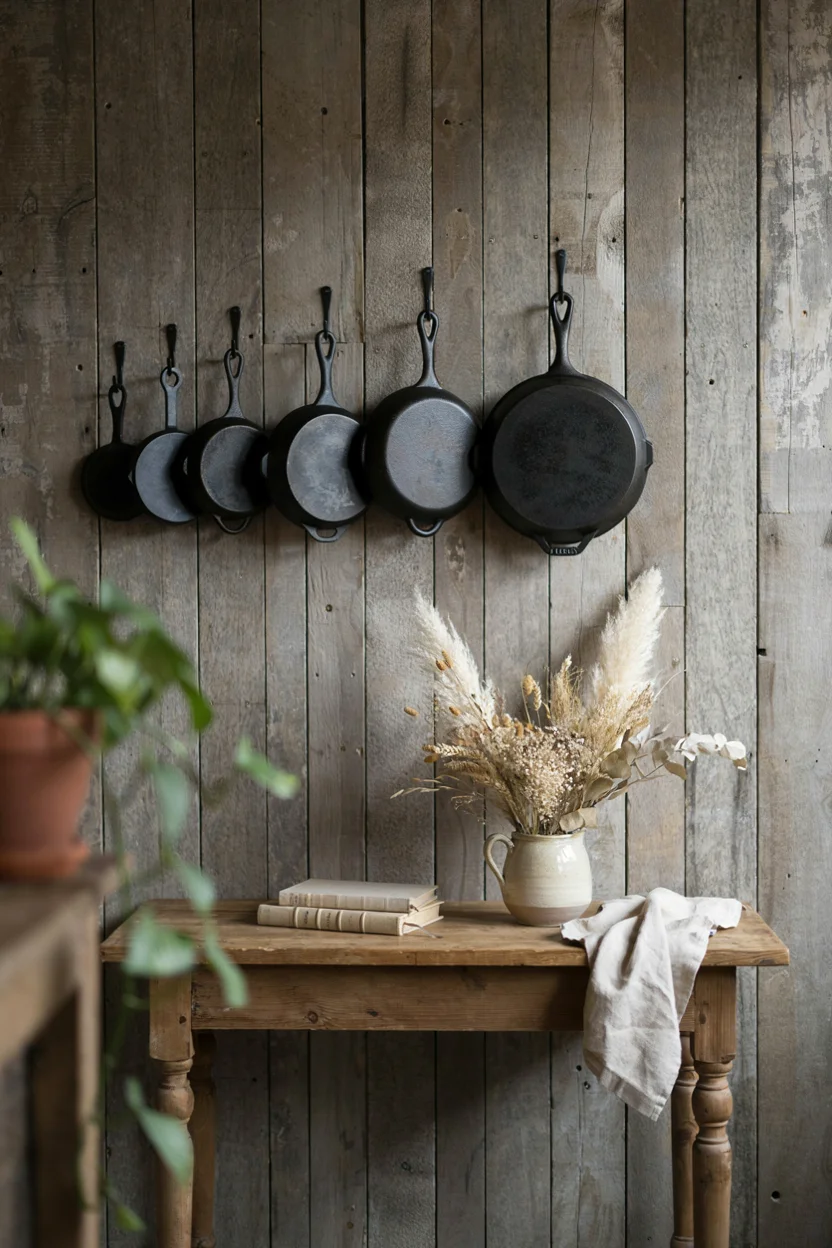
Displaying cast iron cookware on the wall is an unexpected but fitting choice among primitive living room ideas, since it repurposes functional kitchen items as decorative art. Mounting skillets in graduated sizes creates a natural visual rhythm, while simple iron hooks keep the installation looking utilitarian rather than overly designed. The dark, matte finish of the cookware contrasts nicely against lighter, weathered wood walls.
Positioning the display above a rustic console table extends the primitive theme to the room’s lower half as well. A single dried floral arrangement on the table softens the display without detracting from its handmade, historic feel. This idea works particularly well in living rooms that connect visually to a kitchen or dining space, creating a sense of continuity between rooms.
13. Ticking Stripe Upholstery Choice
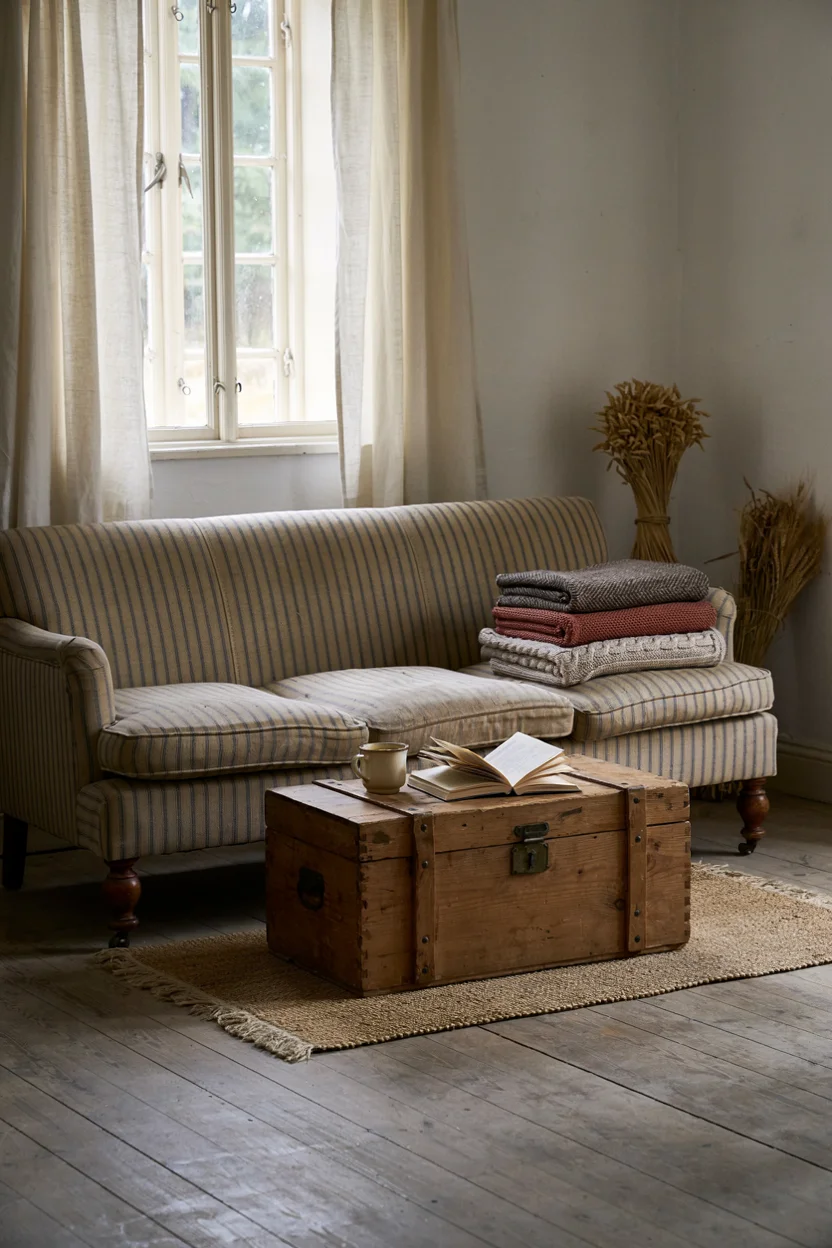
Choosing ticking stripe fabric for upholstery is a signature textile decision among primitive living room ideas, since the pattern has deep roots in early American and farmhouse design. The faded, narrow stripes add subtle pattern without overwhelming the room’s otherwise muted color palette. This fabric choice photographs particularly well against solid wood furniture, since the contrast highlights the texture of both materials.
Pairing the sofa with a wooden trunk used as a coffee table reinforces the room’s practical, storage-conscious design approach common in primitive interiors. A stack of folded wool blankets draped over one arm of the sofa adds warmth and an inviting, lived-in quality. This idea is a strong foundation piece for building out the rest of a primitive-style living room.
14. Wooden Peg Rail Storage
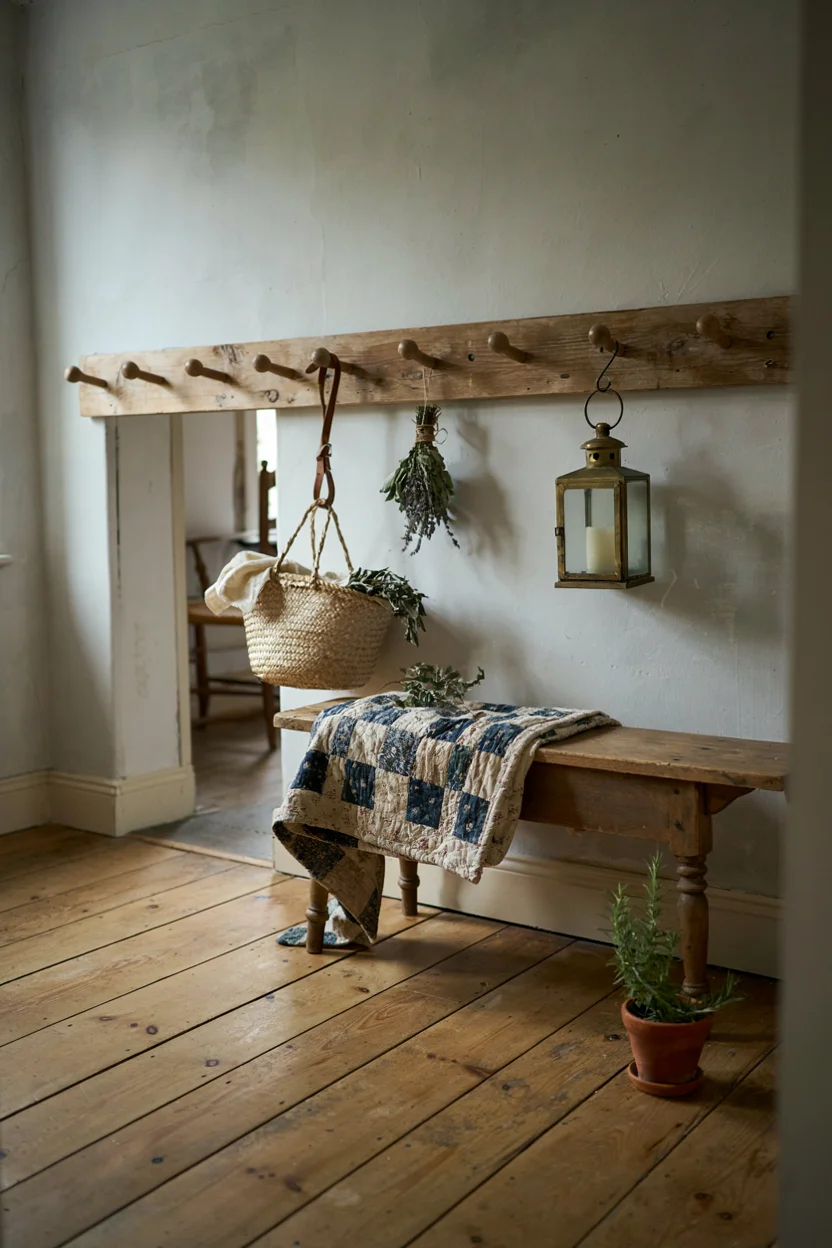
A wooden peg rail brings both storage and historic charm into primitive living room ideas. Originally used in early American homes to hang everything from coats to cookware, the peg rail translates easily into a modern living room as a functional display shelf. Hanging a mix of items, like a woven basket, dried herbs, and an antique lantern, keeps the display feeling practical rather than purely decorative.
Positioning the rail above a low bench extends the storage function further, giving the room a spot to sit or set down items. A folded quilt draped across the bench adds texture and softness beneath the rail’s more utilitarian elements. This idea is especially useful for smaller primitive living rooms that need extra storage without adding bulky furniture.
15. Whitewashed Brick Fireplace Wall
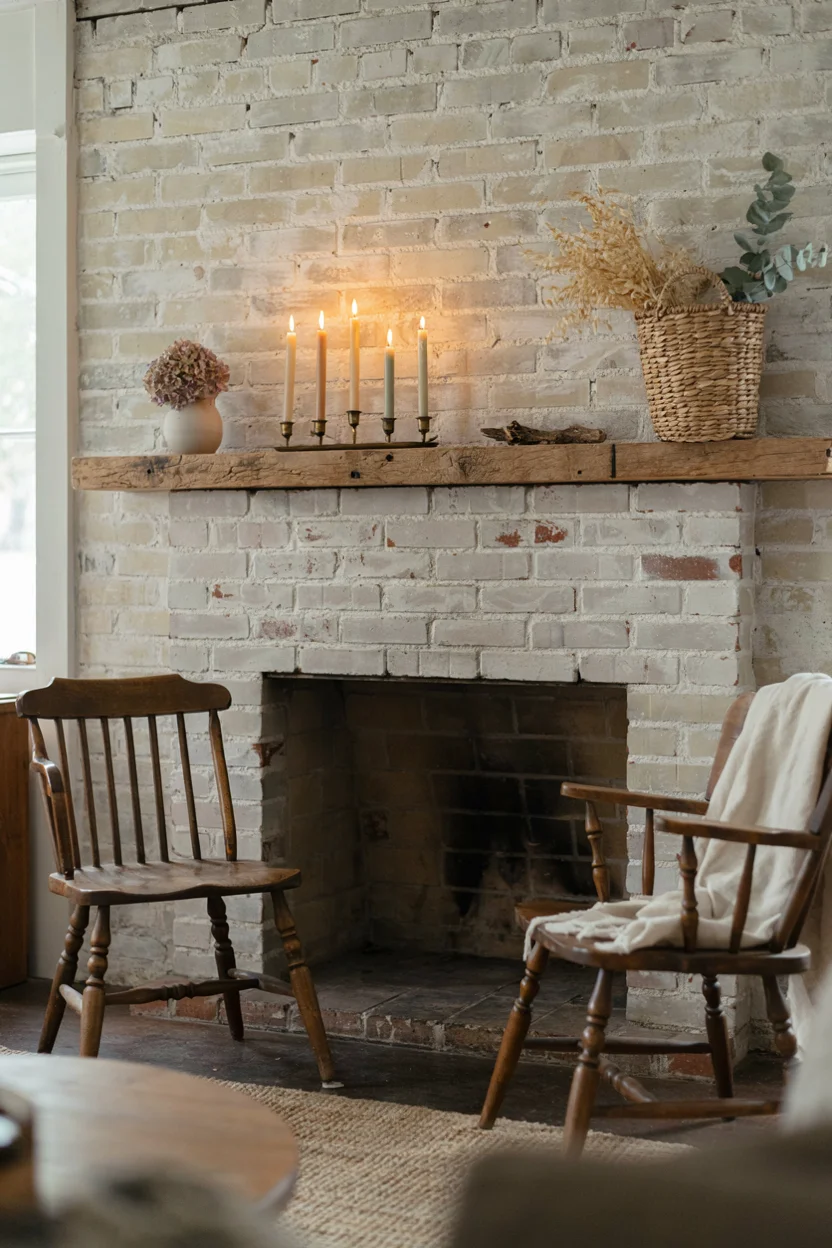
Whitewashing an existing brick fireplace is a popular update among primitive living room ideas, since it lightens the room while preserving the brick’s natural texture. Unlike a fully painted finish, whitewashing allows some of the brick’s original color and imperfections to show through, giving the wall an aged, softened appearance. This technique works particularly well in rooms that need more natural light without losing architectural character.
A simple wooden mantel styled with taper candles and a woven wall basket keeps the fireplace’s decor understated and true to the primitive aesthetic. Flanking the fireplace with primitive wood side chairs creates a balanced, symmetrical seating arrangement nearby. This idea is a great option for updating a builder-grade brick fireplace into something that feels older and more intentional.
16. Antique Trunk Storage Bench
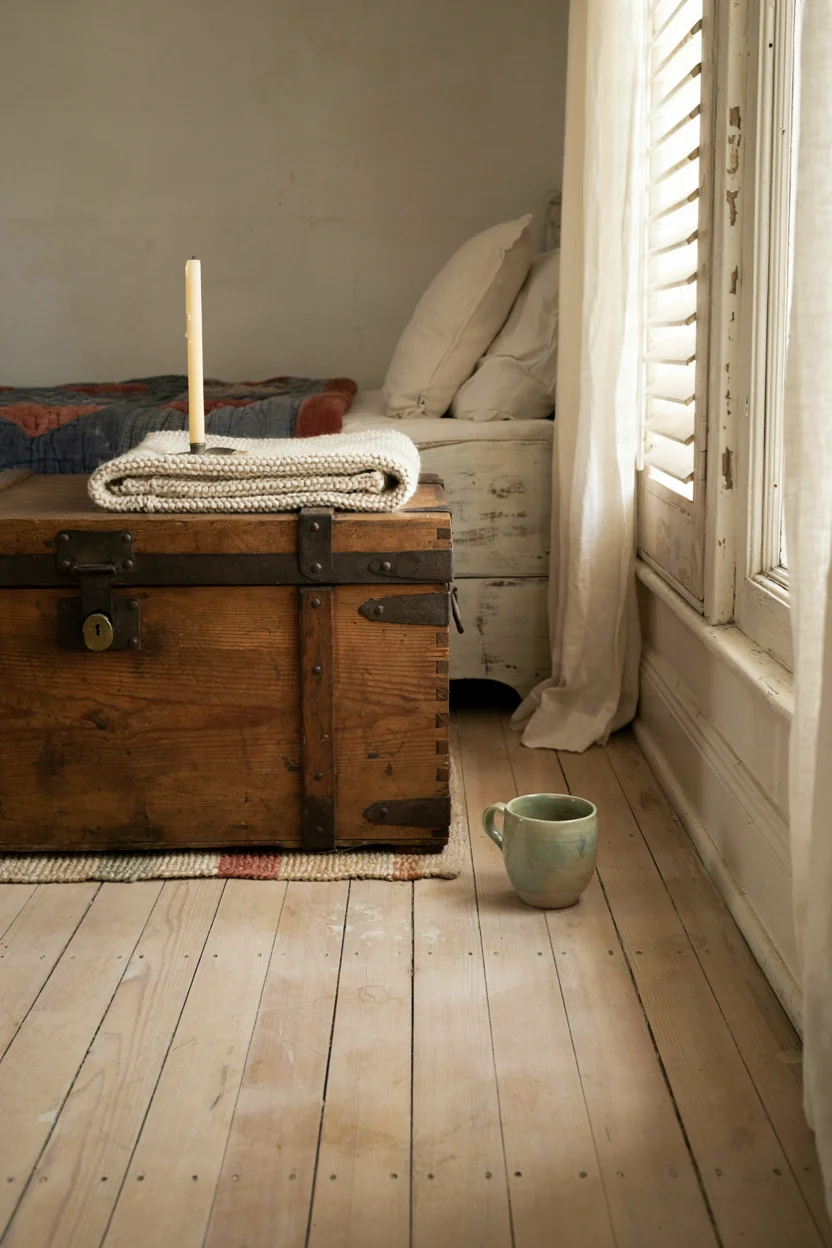
An antique trunk doubles as both storage and seating in this take on primitive living room ideas. The metal hardware and worn wood finish add authentic character that new furniture pieces rarely achieve, making the trunk a natural focal point even in a simply furnished room. Using the trunk at the foot of a daybed adds a practical landing spot for blankets, books, or shoes.
Topping the trunk with a folded wool blanket and a single pillar candle keeps the styling minimal and functional rather than cluttered. Positioned near a window, the daybed and trunk combination creates a cozy reading nook that feels both practical and historically inspired. This idea is especially useful for primitive living rooms that also need to serve as a flexible guest space.
17. Handwoven Basket Wall Grouping
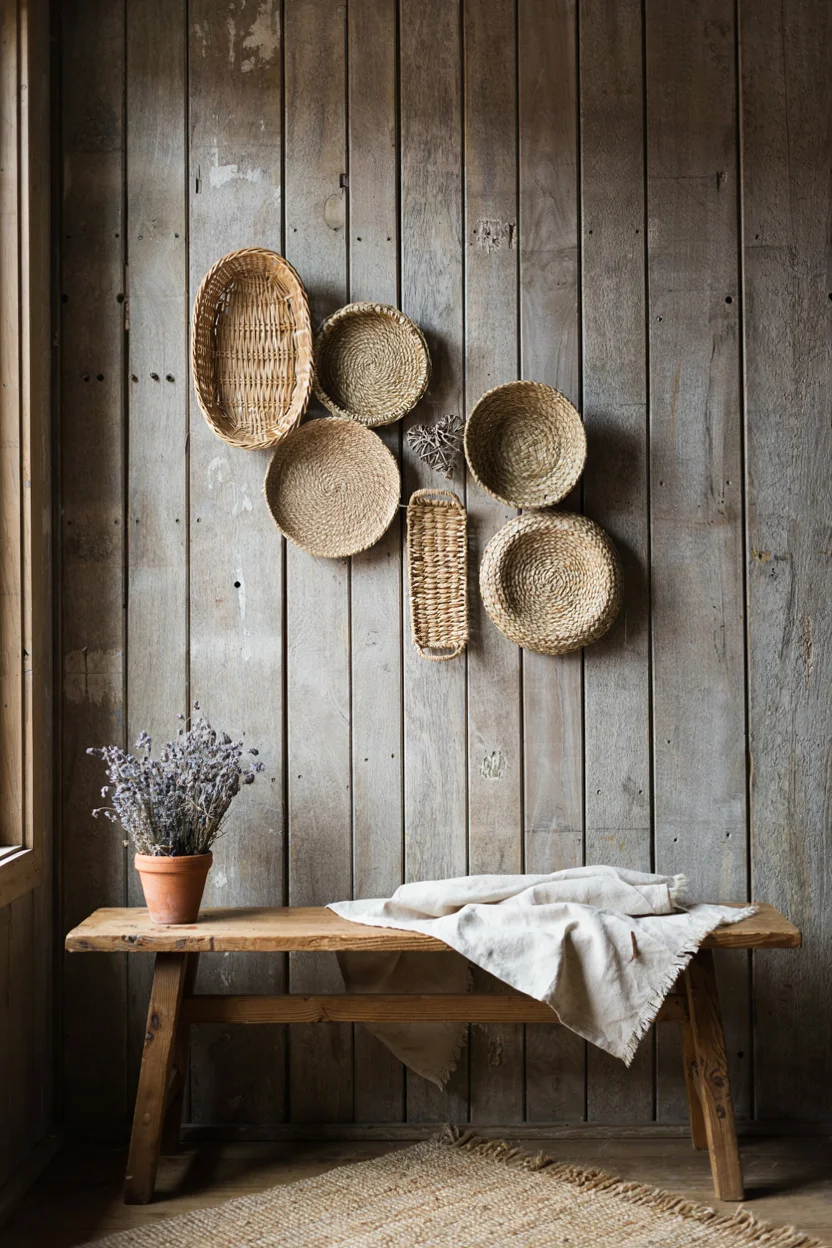
A wall grouping of handwoven baskets is a textural, budget-friendly addition to primitive living room ideas. Arranging the baskets in an asymmetrical cluster rather than a strict grid keeps the display feeling organic and collected over time. Choosing baskets in a range of natural fiber tones, from light wheat to deep brown, adds subtle color variation without straying from the room’s muted palette.
Positioning the display above a primitive wooden bench ties the wall grouping into the room’s furniture layout. A folded linen runner draped across the bench adds a soft textile element beneath the baskets’ more rigid shapes. This idea is particularly well suited to primitive living rooms with plenty of wall space but limited room for additional furniture or shelving.
18. Iron Candle Sconce Pairing
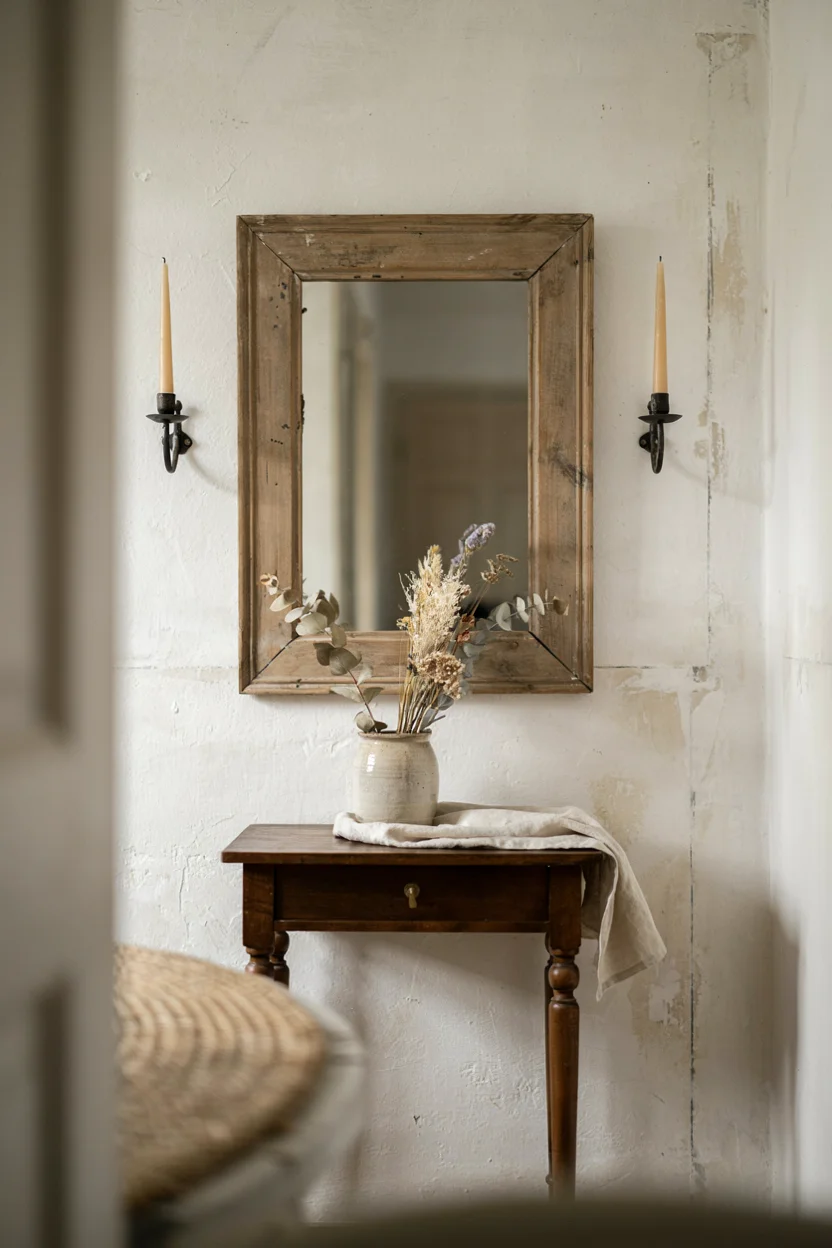
Iron candle sconces bring both function and historic detail to primitive living room ideas, especially when used in pairs for symmetry. The black matte finish contrasts beautifully against whitewashed or lightly painted walls, adding definition without introducing a modern element. Mounting the sconces on either side of a primitive wood mirror creates a balanced focal point that works well above a console table or fireplace mantel.
Styling the console table below with a small crock of dried flowers keeps the vignette simple and cohesive with the rest of the room’s primitive theme. This idea photographs especially well in the evening, when the candles cast soft, flickering shadows across the wall. It’s a small but impactful detail that adds warmth to an otherwise minimally decorated wall.
19. Raw Edge Wood Shelving
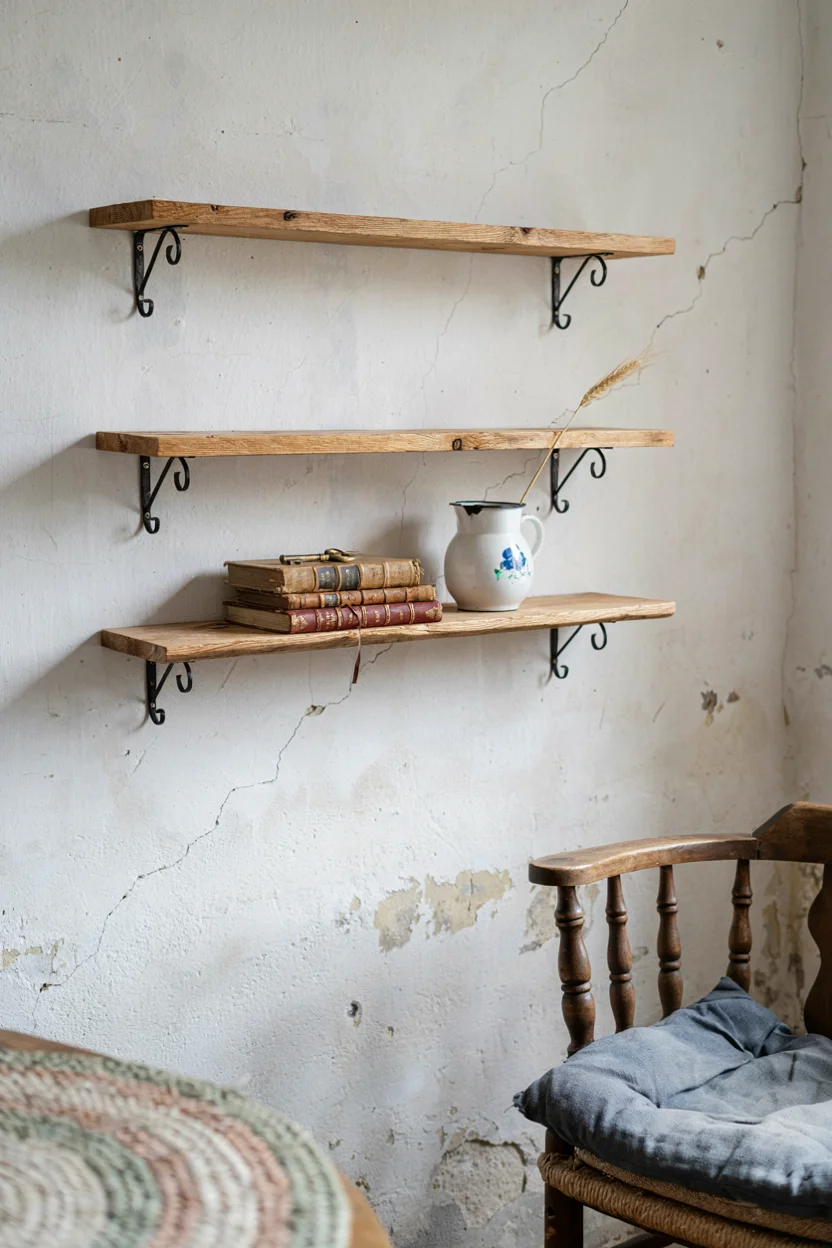
Raw edge wood shelving is a favorite structural detail among primitive living room ideas, since the natural, uneven edge of the wood highlights the material’s authenticity. Choosing simple iron brackets instead of hidden hardware keeps the installation looking handcrafted and consistent with the room’s overall aesthetic. Styling the shelves with a mix of stacked books, enamelware, and a single dried floral stem prevents the display from feeling overcrowded.
Mounting the shelves on a weathered plaster wall enhances the primitive feel, since the slightly imperfect wall texture complements the raw wood shelving. Positioned beside a primitive armchair, the shelves create a cozy reading corner within the larger living room. This idea works well for displaying a rotating collection of small antiques and books without requiring a full bookcase.
20. Neutral Linen Slipcover Seating
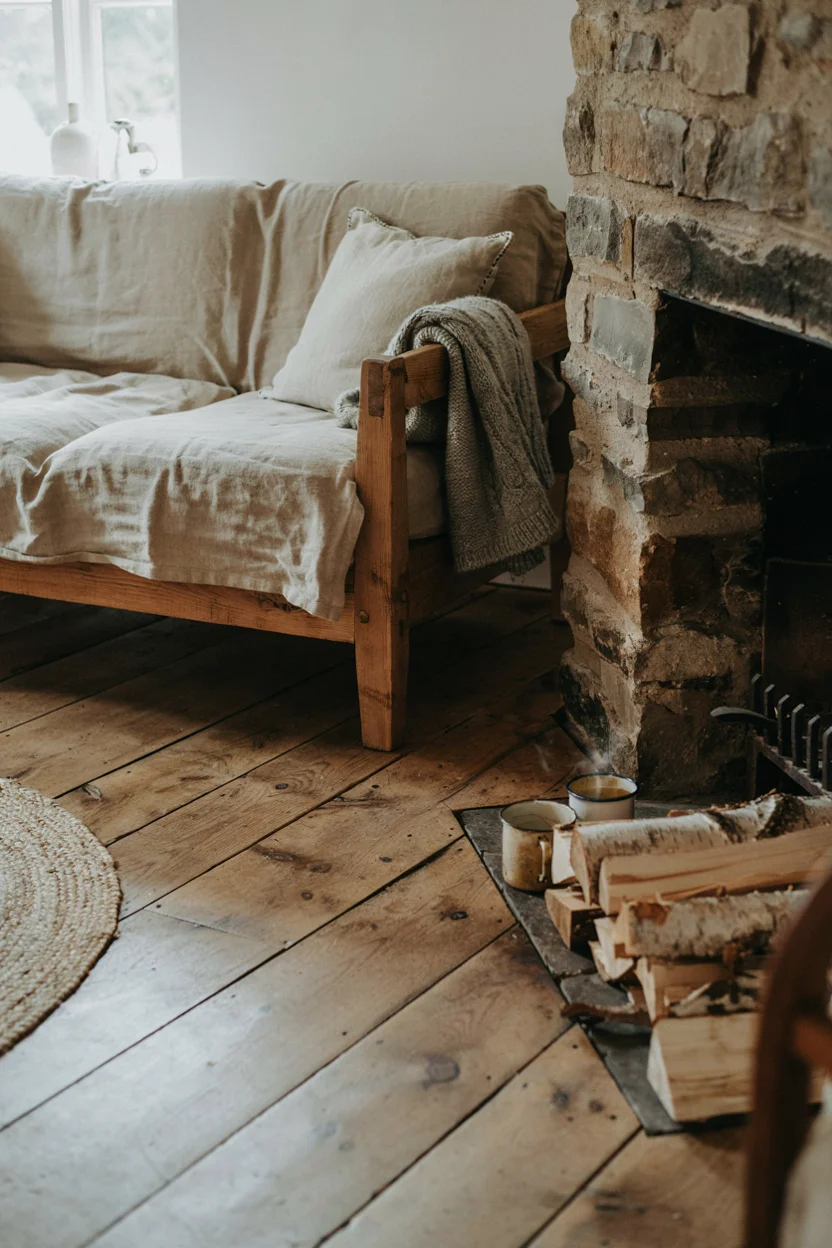
A linen slipcover softens the more rustic, structural elements found throughout primitive living room ideas, offering a comfortable contrast to wood, iron, and stone. Choosing a relaxed, slightly rumpled fit rather than a tightly tailored one keeps the sofa looking casual and lived-in, which suits the overall primitive aesthetic. Neutral tones like oatmeal or flax allow the slipcover to blend into the room rather than stand out.
Styling the sofa with a single homespun throw pillow keeps the accessories minimal and intentional, letting the slipcover’s texture speak for itself. Positioned near a stone hearth with stacked firewood nearby, the sofa becomes an inviting spot to relax within the room’s larger primitive setting. This idea is a practical way to make an heirloom or antique sofa frame feel fresh and usable again.
Conclusion
Creating a primitive living room comes down to choosing pieces with soul, rough wood, worn iron, faded textiles, over anything shiny or new. Pick a starting point, like a stone fireplace or a reclaimed accent wall, and let the rest of the room build around it naturally. These primitive living room ideas prove that a little imperfection is what makes a space feel truly welcoming. Pin your favorites and start planning your own timeless refresh.

Join The Discussion