
Introduction
Cottagecore living rooms capture the romantic essence of countryside living through vintage furnishings, natural materials, and cozy layering that evokes simpler times. But achieving this aesthetic requires more than randomly mixing floral patterns and antiques—successful cottagecore follows real design principles. These cottagecore living room ideas combine the dreamy, pastoral qualities you love with practical rules for color, proportion, and composition. Whether you’re working with a small apartment or spacious farmhouse, discover how to create authentic cottagecore charm that feels collected over time rather than decorated overnight.
1. Layer Vintage Floral Patterns Thoughtfully

Pattern mixing is fundamental to cottagecore aesthetics, but successful layering requires adhering to specific design rules rather than random combination. The key is varying scale while maintaining a cohesive color story—combine large-scale florals with medium and small prints, ensuring they share at least two common colors. This creates harmony despite the busy nature of multiple patterns, preventing overwhelming chaos that reads as cluttered rather than charming.
Start with your largest piece, typically the sofa, in your boldest or largest-scale pattern, then layer progressively smaller prints through pillows, curtains, and rugs. Limit your palette to three or four colors that appear across all patterns—perhaps soft pink, sage green, cream, and butter yellow. Include at least one solid or near-solid texture like linen or velvet to give the eye resting places between patterns. The “rule of three” works well: use your main floral pattern once, a secondary pattern twice, and a tertiary pattern three times throughout the room for balanced repetition.
View morehttps://dreamgardenspk.com/blog/
2. Incorporate Reclaimed Wood Furniture

Reclaimed and distressed wood furniture provides the authentic, lived-in quality essential to genuine cottagecore aesthetics. Unlike pristine new furniture, pieces with visible age—weathering, worn finishes, natural patina, even imperfections—tell stories and create the sense of history that defines cottage style. The irregular grain, nail holes, and color variations in reclaimed wood add organic texture impossible to replicate with manufactured pieces, grounding romantic florals and textiles with earthy substance.
Select reclaimed wood pieces strategically for maximum impact without overwhelming your space. Coffee tables, side tables, bookshelves, and console tables in weathered wood create foundational elements that anchor lighter, softer furnishings. Mixed wood tones work beautifully in cottagecore—don’t feel constrained to match. A honey-toned pine table pairs charmingly with a whitewashed oak shelf and a darker walnut side table, creating the collected-over-time feeling authentic to cottage living. Look for pieces with interesting details like turned legs, decorative brackets, or original hardware that enhance vintage appeal and cottage character.
3. Create a Cozy Reading Nook by the Window
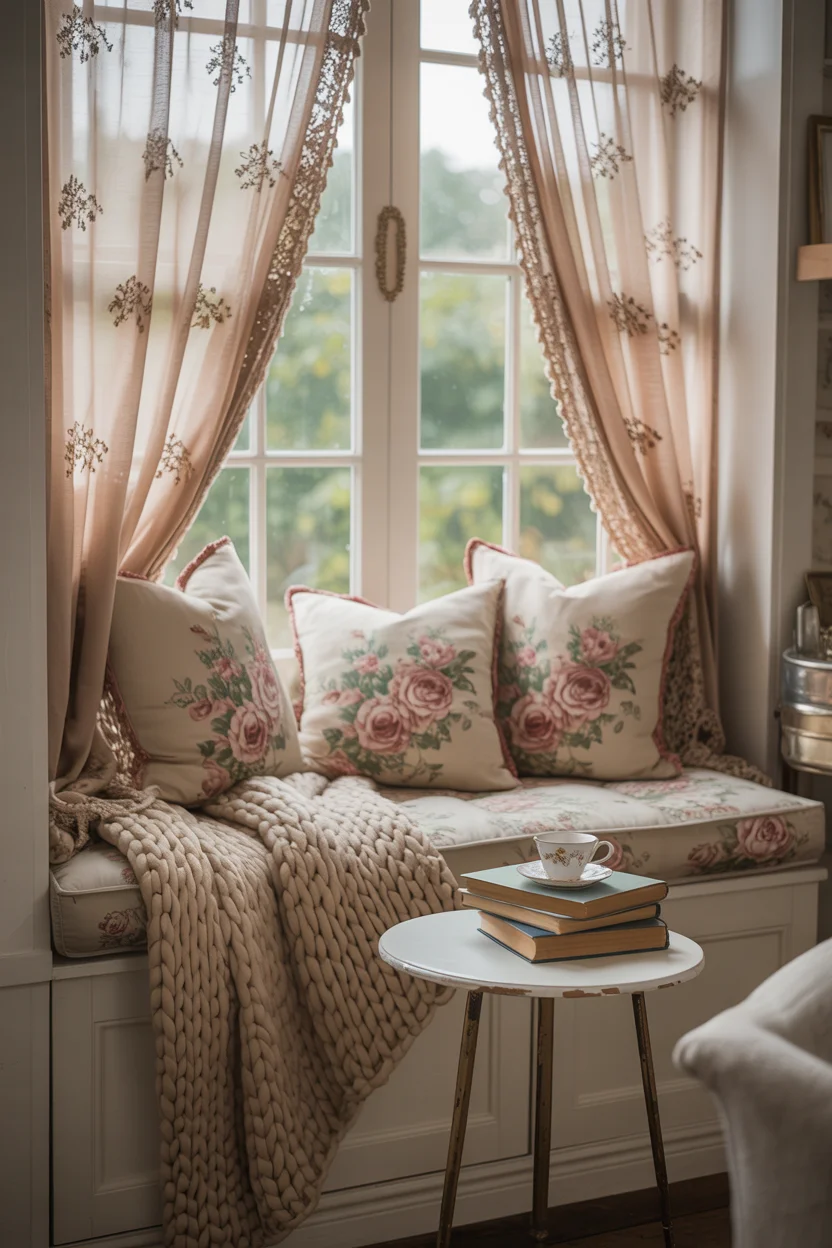
Window reading nooks epitomize the cottagecore emphasis on slow living and connection to nature, creating dedicated spaces for quiet activities like reading, knitting, or daydreaming. Position comfortable seating directly at windows to maximize natural light and views of gardens or trees, essential elements of the nature-centric cottagecore philosophy. The window location creates a liminal space between indoors and outdoors that feels particularly cottage-like and peaceful.
Design your nook with comfort as the primary rule. If you lack a built-in window seat, position a comfortable armchair, small loveseat, or pile of floor cushions near your brightest window. Layer soft textiles generously—multiple throw pillows in varied sizes and patterns, a cozy blanket within reach, and perhaps a sheepskin or velvet cushion for added luxury. Include a small side table for tea, books, and a reading lamp for cloudy days or evening use. Soft, romantic window treatments like lace curtains, embroidered panels, or light linen drapes filter harsh light while maintaining the view and creating that quintessential cottagecore softness.
4. Display Fresh and Dried Flowers Abundantly

Abundant flowers—both fresh-cut and dried—are non-negotiable in cottagecore living rooms, bringing nature indoors while adding color, texture, and often fragrance. Unlike minimalist styles where a single stem suffices, cottagecore embraces abundance; multiple arrangements throughout the room create the cottage garden atmosphere central to this aesthetic. Flowers connect your interior to the changing seasons and natural world outside, embodying the nature-focused philosophy underlying cottagecore design.
Follow the “odd numbers and varied heights” rule for arrangements that feel naturally gathered rather than formally designed. Display flowers in threes, fives, or sevens, using varied vessels—vintage pitchers, mason jars, ceramic vases, teapots—for collected charm. Mix flower types freely: wild meadow flowers, garden roses, grocery store blooms, and foraged branches all contribute. Dried flowers extend the garden feeling year-round; hang bundles of lavender, eucalyptus, or wheat from beams or shelves, or display preserved arrangements. Refresh flowers regularly, embracing imperfection as blooms age—the slightly wilted rose fits cottagecore’s appreciation for natural cycles better than perpetually perfect arrangements.
Explore morehttp://pinterest.com/Dreamgardenshome/
5. Use Soft, Muted Color Palettes

Cottagecore color palettes draw from nature’s softer tones—think faded rather than vibrant, aged rather than fresh. Dusty rose, sage green, butter yellow, lavender, peach, sky blue, and always cream or soft white create the gentle, romantic atmosphere essential to the aesthetic. These low-saturation colors feel vintage and peaceful, evoking antique textiles and cottage gardens rather than bold modern interiors. The muted quality creates cohesion even when mixing multiple colors and patterns.
Apply the 60-30-10 color rule for balanced cottagecore rooms: 60% dominant neutral (usually cream, soft white, or pale beige on walls and large furniture), 30% secondary color (perhaps dusty pink or sage green on upholstered pieces), and 10% accent colors (butter yellow or lavender in pillows and accessories). This prevents overwhelming sweetness while maintaining romantic charm. Avoid pure, bright colors that feel synthetic—even your whites should be warm and creamy rather than stark. If you inherit furniture in brighter colors, consider slipcovers in muted tones or chalk paint finishes that soften intensity. The overall effect should feel like sunlight filtered through linen curtains—gentle, warm, and naturally soft.
6. Incorporate Vintage Lace and Embroidered Textiles

Vintage lace, crochet, and embroidery add essential handmade charm and delicate femininity to cottagecore living rooms. These textiles represent traditional crafts and slower-paced living central to cottagecore philosophy, while their intricate details create visual interest and textural variety. The slight imperfections in vintage handwork add authenticity impossible to achieve with machine-made items, contributing to the collected, inherited feeling that defines cottage style.
Source these textiles thoughtfully for authentic rather than costume-like results. Scour estate sales, antique shops, and vintage markets for genuine crocheted doilies, embroidered pillowcases, lace tablecloths, and needlepoint pieces. Repurpose finds creatively—frame vintage handkerchiefs as art, convert embroidered linens into pillow covers, or drape crocheted blankets over furniture. Use lace judiciously; too much creates overwhelming fussiness, while strategic placement adds romance. Lace curtain panels, a crocheted throw on the sofa arm, embroidered pillows, and perhaps doilies under lamps create sufficient presence. Stick to white, cream, or ecru for these delicate textiles, allowing their texture to provide interest while maintaining the soft color palette. Layer them with rougher textures like wool and linen for necessary contrast.
7. Add Exposed Shelving for Collected Displays

Open shelving allows you to display the collections and found objects that personalize cottagecore living rooms and tell your story. Unlike minimalist aesthetics that hide belongings, cottagecore celebrates the display of beloved items—vintage finds, inherited treasures, handmade objects, and natural collections. Exposed shelves make these items part of your décor while keeping them accessible for use, embodying the cottagecore value of functional beauty rather than decoration for decoration’s sake.
Style shelves using the “varying heights and negative space” principle for collected charm without clutter. Group items in odd numbers, vary heights by stacking books or using small risers, and leave some empty space so shelves don’t appear overwhelming. Mix functional items (pretty dishes you actually use, favorite books, useful baskets) with purely decorative pieces (vintage finds, small vases, figurines). Create visual weight balance—heavier items on lower shelves, lighter ones above. Incorporate natural elements like small plants, shells, or pinecones. Repeat colors and materials throughout for cohesion; if you have blue ceramics, disperse them across shelves rather than clustering. Change displays seasonally to keep them fresh and reflect cottagecore’s connection to nature’s cycles.
8. Choose Overstuffed, Slipcovered Seating

Overstuffed, deeply cushioned seating covered in washable slipcovers embodies cottagecore’s prioritization of comfort and practicality over formal perfection. Generous proportions invite curling up with books or tea, while slipcovers in natural fabrics like linen, cotton, or canvas embrace the casual, lived-in aesthetic. The ability to remove and wash covers supports real life—spills, pets, muddy boots—rather than treating living rooms as pristine showplaces, aligning with cottagecore’s emphasis on functional, comfortable homes.
Select seating with classic cottage silhouettes—rolled arms, turned legs, skirted bases—and cover in cream, white, or soft neutrals for maximum versatility. The beauty of slipcovers is their changeability; switch to floral patterns for spring, ticking stripes for summer, or deeper colors for autumn while maintaining the same furniture investment. Embrace the wrinkles and casual draping of natural fiber slipcovers rather than fighting them—the slightly rumpled look contributes to cottage charm. Layer seating with multiple throw pillows in mixed patterns and a cozy blanket draped over the arm. Ensure your cushions are actually comfortable with sufficient fill and support; cottagecore aesthetics shouldn’t compromise genuine coziness. Down-fill cushions with feather-blend backs create that sink-in comfort while maintaining shape reasonably well.
9. Include a Stone or Brick Fireplace Focal Point

Fireplaces—whether stone, brick, or painted wood—create natural focal points that anchor cottagecore living rooms while providing literal and psychological warmth essential to cozy cottage atmospheres. The fireplace represents traditional home comforts and gathering places, embodying cottagecore’s nostalgia for slower-paced, community-centered living. Even non-working fireplaces contribute architectural character and provide mantels for seasonal displays that connect your interior to nature’s cycles.
If you’re fortunate enough to have an existing fireplace, enhance rather than modernize it. Leave stone or brick exposed for texture and authenticity, or paint brick in soft white or cream for a lighter cottage look while maintaining texture. If adding a fireplace isn’t possible, create a faux version with a decorative mantel and surround, filling the opening with candles or stacked logs. Style the mantel following the “symmetrical base with asymmetrical layering” rule: anchor ends with matching elements like candlesticks or vases, then layer art, mirrors, and found objects in the center with varied heights and depths. Seasonal mantels—spring flowers, summer greenery, autumn branches, winter evergreens—keep the display fresh and reinforce cottagecore’s nature connection. Arrange comfortable seating oriented toward the fireplace to create the intimate conversation area central to cottage living.
10. Incorporate Woven Baskets for Storage and Texture

Woven baskets serve double duty in cottagecore living rooms, providing essential storage while adding natural texture and organic warmth. Unlike plastic bins or modern organizers, baskets align with cottagecore’s preference for natural materials and traditional crafts. Their neutral tones complement any color scheme while their varied weaves add textural interest that softens upholstered furniture and hard surfaces. Baskets embody the cottagecore principle that functional items should be beautiful enough to display.
Follow the “multiple sizes, unified material” rule for cohesive basket use. Stick primarily to natural materials—seagrass, wicker, rattan, willow—in similar neutral tones, varying sizes from large floor baskets to small tabletop versions based on storage needs. Large baskets beside sofas hold throw blankets and extra pillows, medium baskets on shelves organize books or craft supplies, and small baskets on coffee tables corral remotes and coasters. Consider handles for baskets you’ll move frequently. Avoid overly perfect matching sets; cottagecore celebrates the collected look of slightly different baskets acquired over time. Display some baskets with contents visible—rolled blankets, firewood, plants—while others hide less attractive necessities. The varied textures and organic shapes of baskets add essential cottage character while maintaining the organized, peaceful atmosphere necessary for true coziness.
11. Hang Botanical Prints and Vintage Art

Botanical prints, vintage landscapes, and traditional art forms like embroidered samplers perfectly capture cottagecore’s romantic nostalgia and nature connection. Unlike modern abstract art, these traditional subjects—flowers, gardens, pastoral scenes, birds, countryside views—align with cottagecore’s celebration of natural beauty and simpler times. Vintage or vintage-style art adds the sense of history and collected charm essential to authentic cottage style, making rooms feel lived-in and personally curated.
Create gallery walls using the “varied frames, unified subject matter” approach for cottagecore charm without chaos. Mix frame sizes, shapes, and finishes—gold, wood, painted white—but maintain connection through subject matter (all botanicals, all landscapes, all nature-themed). Source vintage prints affordably through estate sales, online marketplaces, or thrift stores, or print public domain botanical illustrations yourself. Follow traditional hanging rules: largest pieces at eye level (57-60 inches to center), smaller works clustered around them, maintaining 2-3 inches between frames. Include three-dimensional elements like small shelves holding dried flowers or vintage objects to add depth. Consider non-traditional art like framed vintage handkerchiefs, pressed flowers under glass, or antique plates hung on walls. The eclectic mix creates visual interest while unified themes and careful arrangement prevent overwhelming clutter.
12. Layer Natural Fiber Rugs

Layered rugs add essential warmth, texture, and visual interest to cottagecore living rooms while providing practical comfort underfoot. This technique allows you to combine the durability and natural texture of woven fiber rugs with the pattern and color of vintage or floral styles, creating dimension impossible with single rugs. Layering also lets you introduce cottage patterns affordably, using expensive vintage or patterned rugs in smaller sizes atop affordable jute or sisal foundations.
Follow the “large neutral base, smaller patterned top” rule for successful layering. Start with a substantial natural fiber rug—jute, sisal, or seagrass—in a neutral tone that extends well beyond your furniture, anchoring the seating area. Layer a smaller patterned rug on top, either centered under the coffee table or positioned to define the main seating area. The top rug might be a vintage Persian-style piece, a floral needlepoint rug, or a traditional stripe—choose patterns with colors that complement your overall palette. Ensure the top rug is at least 2 feet smaller in both dimensions than the base rug so the natural fiber shows as a border. This technique adds cottage character while the natural fiber base provides practical durability in high-traffic areas.
13. Create Soft Lighting With Vintage Lamps

Soft, warm lighting from multiple vintage or vintage-style lamps creates the gentle illumination essential to cozy cottagecore atmospheres. Harsh overhead lighting contradicts cottage coziness, while layered table and floor lamps provide adjustable, intimate lighting that makes spaces feel warm and inviting. Vintage lamps—or new lamps with vintage aesthetics—add decorative charm while serving crucial functional purposes, embodying cottagecore’s appreciation for beautiful utility.
Apply the “three light sources minimum” rule for properly lit cottagecore living rooms. Include at least one table lamp, one floor lamp, and one additional source like a second table lamp or wall sconce. Position them in a triangle around the room for balanced distribution. Choose lamps with cottage-appropriate details: ceramic or porcelain bases with floral motifs, brass or bronze finishes, turned wood, milk glass, or oil lamp conversions. Fabric shades in cream, soft white, or gentle colors create flattering diffused light; avoid paper shades that look inexpensive. Use warm-toned bulbs (2700K) exclusively; cool white destroys cottage ambiance. All lamps should have dimmers or three-way bulbs for adjustability. The layered, warm illumination creates the soft, golden glow that makes cottagecore living rooms feel like refuges from modern harshness.
14. Display Collections of Vintage Treasures

Intentional collections of vintage items—teacups, bottles, books, ceramics, tins—add personality and the lived-in charm essential to authentic cottagecore living rooms. Unlike single scattered pieces, cohesive collections create visual impact through repetition while telling stories about your interests and finds. Collections embody cottagecore values of thrifting, preserving history, and treasuring beautiful objects rather than disposable décor, making your space feel genuinely collected over time.
Follow the “edit and display” rule for collections that charm rather than clutter. Curate collections down to your best or most meaningful pieces rather than displaying everything you own; quality over quantity prevents overwhelming chaos. Display collections using repetition and grouping—line up teacups along a shelf, cluster bottles on a windowsill, stack vintage books with spines showing beautiful colors and titles. Odd-numbered groupings (3, 5, 7 items) feel more natural than even numbers. Unite disparate collections through color, material, or theme; perhaps all your collections include blue items, or all relate to nature. Rotate collections seasonally to keep displays fresh and give stored items their moment. Collections should feel personal and discovered rather than obviously purchased as sets, so embrace varied pieces within your theme. This curated approach adds cottage character while maintaining the peaceful, organized atmosphere necessary for true coziness.
15. Incorporate Whitewashed or Painted Wood Furniture

Painted or whitewashed wood furniture creates the light, airy quality essential to cottagecore aesthetics while adding the vintage, distressed character that defines cottage style. Unlike dark wood that can feel heavy, painted pieces in cream, white, soft blue, sage, or pink brighten spaces while still providing the natural material connection cottagecore requires. The chippy, distressed finishes reveal wood beneath and create the aged, well-loved appearance that suggests furniture passed down through generations.
Create or source painted furniture using the “intentional distressing” approach for authentic rather than artificial aging. If painting existing wood furniture, use chalk paint for its matte, vintage appearance and easy application. Apply paint imperfectly, leaving some areas less covered, then sand edges, corners, and details to reveal wood beneath where natural wear would occur. For whitewashing, thin white paint with water and apply to raw or stained wood, wiping away excess to let grain show through. Don’t match finishes; cottagecore celebrates the collected look of pieces painted different colors in different eras. Mix painted furniture with natural wood and upholstered pieces to prevent overwhelming sweetness. The lightness of painted furniture balances heavier textiles and patterns while maintaining the texture and natural material that keeps cottagecore grounded rather than overly precious.
16. Add Exposed Beams or Wood Ceiling Details

Exposed ceiling beams add authentic architectural character that elevates cottagecore living rooms from simply decorated to genuinely cottage-like. Whether original to older homes or added decoratively to newer spaces, beams create traditional cottage architecture that grounds romantic décor in substance. The horizontal lines add visual interest to often-overlooked ceiling planes while making rooms feel more spacious by drawing eyes upward, counteracting any overwhelming effects of abundant pattern and collection below.
If you have existing beams, enhance them by leaving them natural, staining them darker for contrast against white ceilings, or painting them white for a brighter Scandinavian cottage feel. If adding decorative beams, ensure they’re proportional to your room—too small reads false, too large overwhelms. Simple box beams or faux beams work in most applications, installed by professionals or capable DIYers. Space them evenly, typically 3-4 feet apart, running parallel to your room’s length. Style choices should match your overall aesthetic: dark stained beams for English cottage charm, whitewashed for French country, natural honey tones for farmhouse. Beams provide convenient hanging points for dried flowers, wreaths, or pendant lighting that enhances cottage charm. The architectural element adds permanent character that supports and elevates your cottagecore furnishings and décor rather than relying solely on moveable elements.
17. Include a Vintage or Farmhouse Coffee Table

The coffee table serves as the functional and visual anchor of cottagecore living rooms, making vintage farmhouse or cottage-style tables essential investments. These pieces provide the substance and authenticity that grounds lighter, more romantic elements like floral fabrics and lace. A genuine vintage table with natural wear, patina, and imperfections adds the lived-in quality impossible to replicate with new furniture, while its generous proportions and sturdy construction support actual cottage living—serving tea, displaying flowers, holding books—not just decoration.
Select coffee tables following the “proportional scale and authentic materials” rule. The table should be substantial enough to anchor your seating area without overwhelming—typically two-thirds to three-quarters the length of your sofa. Solid wood construction with visible grain, turned or carved legs, and natural finish or painted distressing suits cottagecore best. Vintage farm tables, blanket chests with flat tops, old door conversions, or antique trunk-style tables all work beautifully. Style your table with cottage restraint: a small floral arrangement, stack of vintage books, pretty tray holding tea things, and perhaps one decorative object. Avoid overcrowding; the table needs functional surface area for actual use. The combination of sturdy vintage construction and thoughtful styling creates that perfect cottagecore balance of beautiful and functional.
18. Use Ruffled, Gathered, and Romantic Textiles

Ruffles, gathers, and romantic textile details add the feminine softness that distinguishes cottagecore from more utilitarian farmhouse styles. These delicate finishing touches create gentle movement, visual interest, and textural dimension while embodying the romantic nostalgia central to cottagecore aesthetics. Unlike stark minimalism, cottagecore celebrates these traditionally feminine details that reference historical dress and home décor, creating spaces that feel gentle and nurturing.
Apply romantic details judiciously following the “strategic placement” rule to avoid overwhelming fussiness. Choose one or two locations for ruffled or gathered details rather than applying them everywhere—perhaps ruffled curtains and gathered pillow shams, or a ruffled ottoman slipcover and gathered lampshades. Keep ruffles in soft, natural fabrics like linen, cotton, or light canvas; synthetic fabrics read costume-like rather than authentically vintage. Simple gathered ruffles feel more cottage-appropriate than elaborate tier structures. Balance feminine details with rougher elements like reclaimed wood, natural fiber rugs, and simpler shapes to prevent excessive sweetness. The goal is romance and softness, not overly precious or doll-like. When done thoughtfully, these details add movement and traditional cottage charm while maintaining livability and preventing the space from feeling like a stage set.
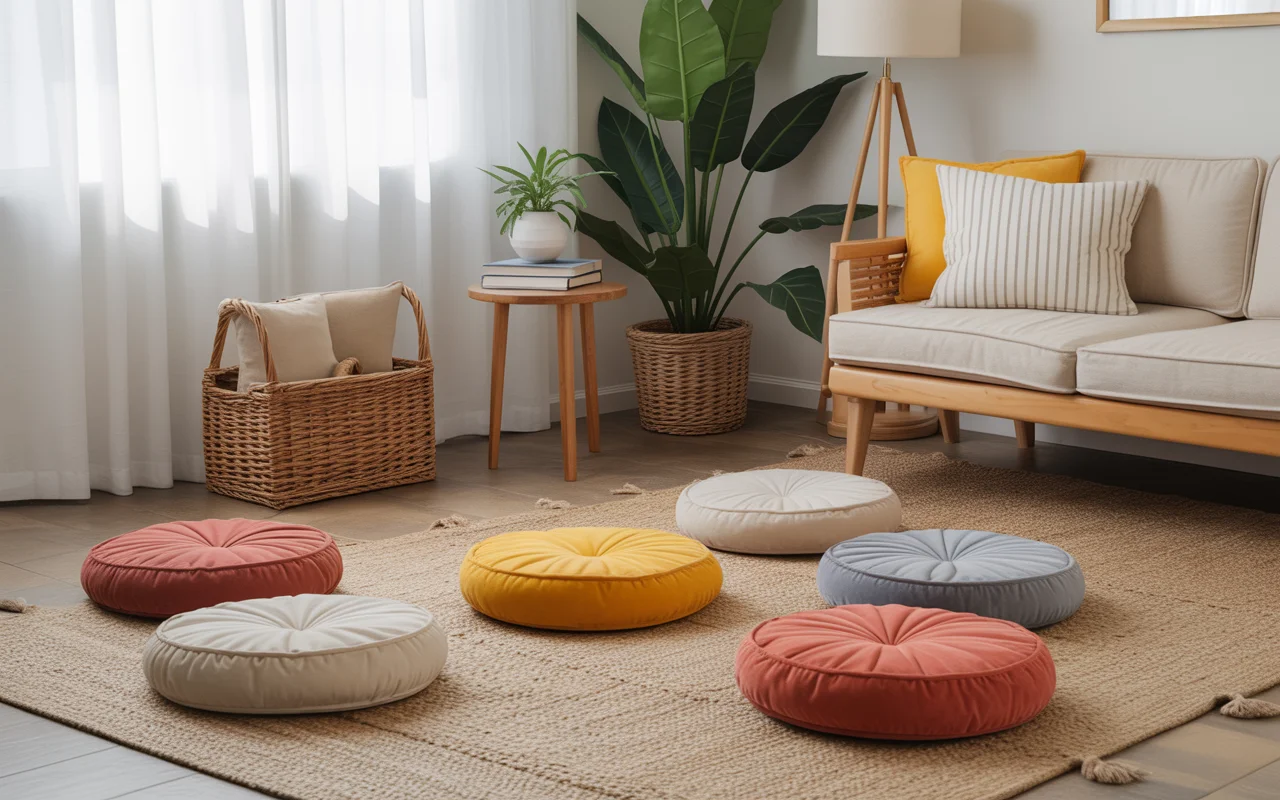
19. Create Cozy Corners With Floor Cushions

Floor cushions and oversized pillows create casual, flexible seating that reinforces cottagecore’s emphasis on comfort, informality, and leisurely activities like reading, crafting, or conversation. Unlike formal living rooms with rigid furniture arrangements, cottage spaces embrace relaxed, multi-functional seating that invites sprawling out with books or gathering friends around the fireplace. Floor seating adds the bohemian, unconventional note that keeps cottagecore from becoming too precious or stuffy.
Design floor cushion arrangements using the “layered textiles and strategic placement” approach. Position cushions in naturally underused corners—beside windows, near bookshelves, adjacent to fireplaces—creating mini destinations for specific activities. Layer a soft vintage rug first for cushioning and visual foundation, then pile floor cushions in varied sizes and complementary patterns following your established color palette. Mix patterns following the same rules as other textiles: varied scales with shared colors. Include some solid velvet or linen cushions for visual rest. Ensure cushions are actually comfortable with adequate fill—32-inch square cushions work well for seating, with smaller pillows for back support. Storage baskets nearby can hold these cushions when not in use if you prefer clearing the floor. The casual, bohemian element adds versatile seating while reinforcing the relaxed, slow-living philosophy central to cottagecore aesthetics.
20. Bring in Natural Elements and Greenery

Living plants and natural found objects embody cottagecore’s fundamental connection to nature and the outdoors. Unlike purely decorative elements, plants contribute living, growing presence that changes with seasons and requires care, supporting cottagecore’s slow-living philosophy. Natural collections—pinecones, acorns, branches, stones, shells—bring literal pieces of nature inside, creating tangible connections to the countryside and gardens central to cottage aesthetics. These elements ground romantic textile-heavy spaces in organic reality.
Follow the “abundant but intentional” approach to incorporating natural elements without creating clutter. Include multiple plants at varied heights—floor plants like fiddle leaf figs or palms, shelf plants like pothos or ivy, windowsill herbs in pretty pots. Choose plants you’ll actually maintain; cottagecore celebrates growing things, not dead ones. Appropriate containers matter: terracotta pots, vintage ceramics, galvanized metal, or woven baskets suit cottage style better than modern plastic. Display natural collections thoughtfully: fill bowls with seasonal items, arrange branches in vintage pitchers, line shelves with interesting stones or shells. Rotate natural elements seasonally—spring flowers and nests, summer garden cuttings, autumn pinecones and leaves, winter evergreen and berries—keeping your connection to nature current and alive rather than static. The abundance of natural, living elements distinguishes authentic cottagecore from purely decorative vintage styling.
Conclusion
Cottagecore living rooms succeed when romantic aesthetics meet real design principles—thoughtful pattern mixing, proper scale, quality vintage pieces, and abundant natural elements all working together. These cottagecore living room ideas prove that achieving authentic cottage charm requires more than random vintage finds and floral fabrics; it demands intentional choices about color, texture, and composition. Embrace the romantic, nature-connected lifestyle cottagecore represents while following time-tested design rules. The result is a genuinely cozy, beautiful space that honors cottage traditions while supporting comfortable modern living.

Join The Discussion