
Introduction
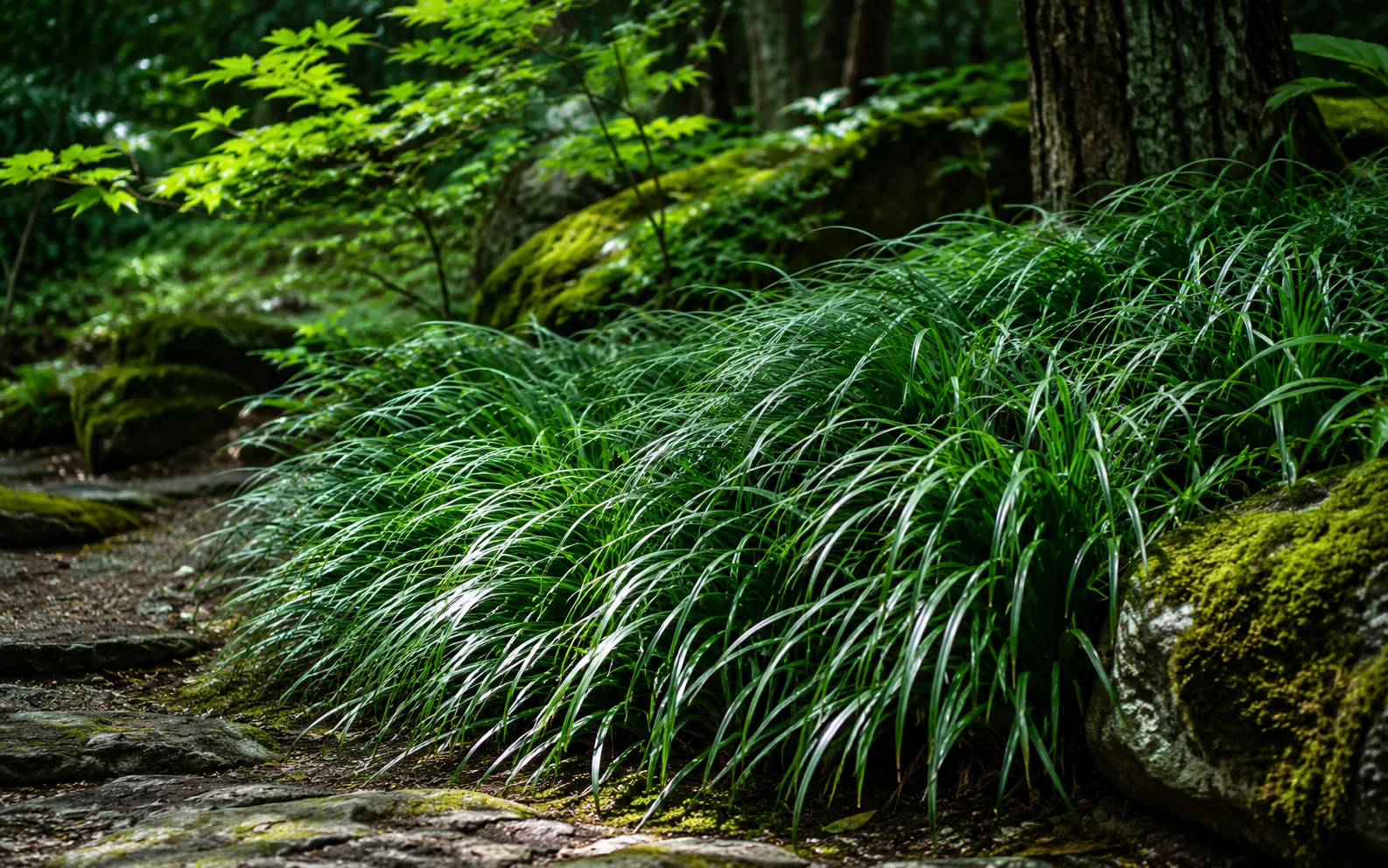
Ornamental grasses bring effortless elegance and year-round interest to any landscape. These versatile plants offer texture, movement, and color with minimal maintenance requirements. Whether you’re designing a modern garden or a cottage-style retreat, ornamental grass ideas can transform ordinary spaces into stunning outdoor sanctuaries. From towering statement pieces to delicate border plants, these grasses adapt to various climates and design styles while providing habitat for wildlife and visual appeal through every season.
1. Feathery Pampas Grass Display
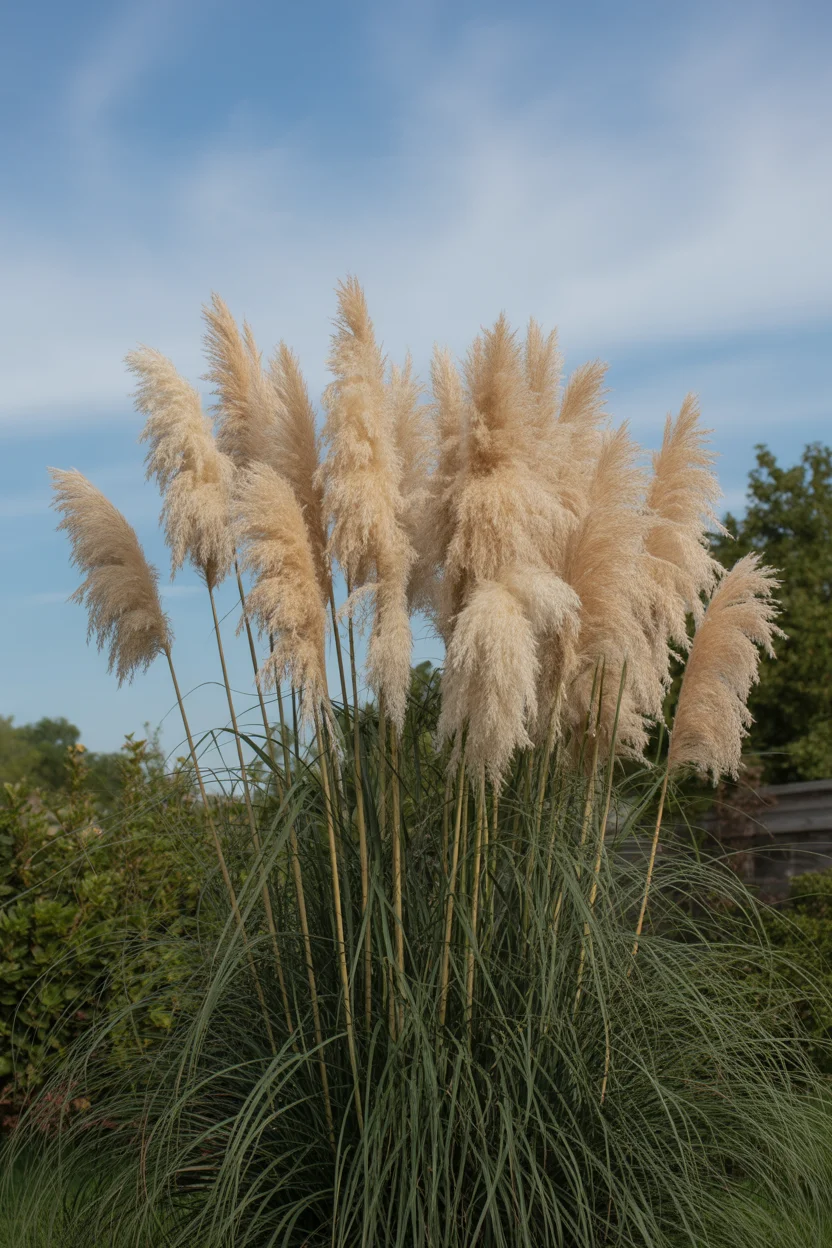
Pampas grass creates an instant wow factor with its towering plumes that reach heights of 8-12 feet. These dramatic plants work beautifully as privacy screens or standalone specimens in spacious yards. The creamy white or pink feathery blooms emerge in late summer and persist through winter, adding architectural interest when most plants have faded. Plant them in full sun with well-draining soil for best results.
This ornamental grass thrives in zones 7-11 and requires minimal care once established. Position pampas grass at the back of borders or use them to frame entryways for maximum impact. The plumes make excellent cut flowers for dried arrangements, bringing that outdoor beauty inside your home. Remember to wear gloves when handling, as the leaves have sharp edges that can cut skin.
2. Purple Fountain Grass Border
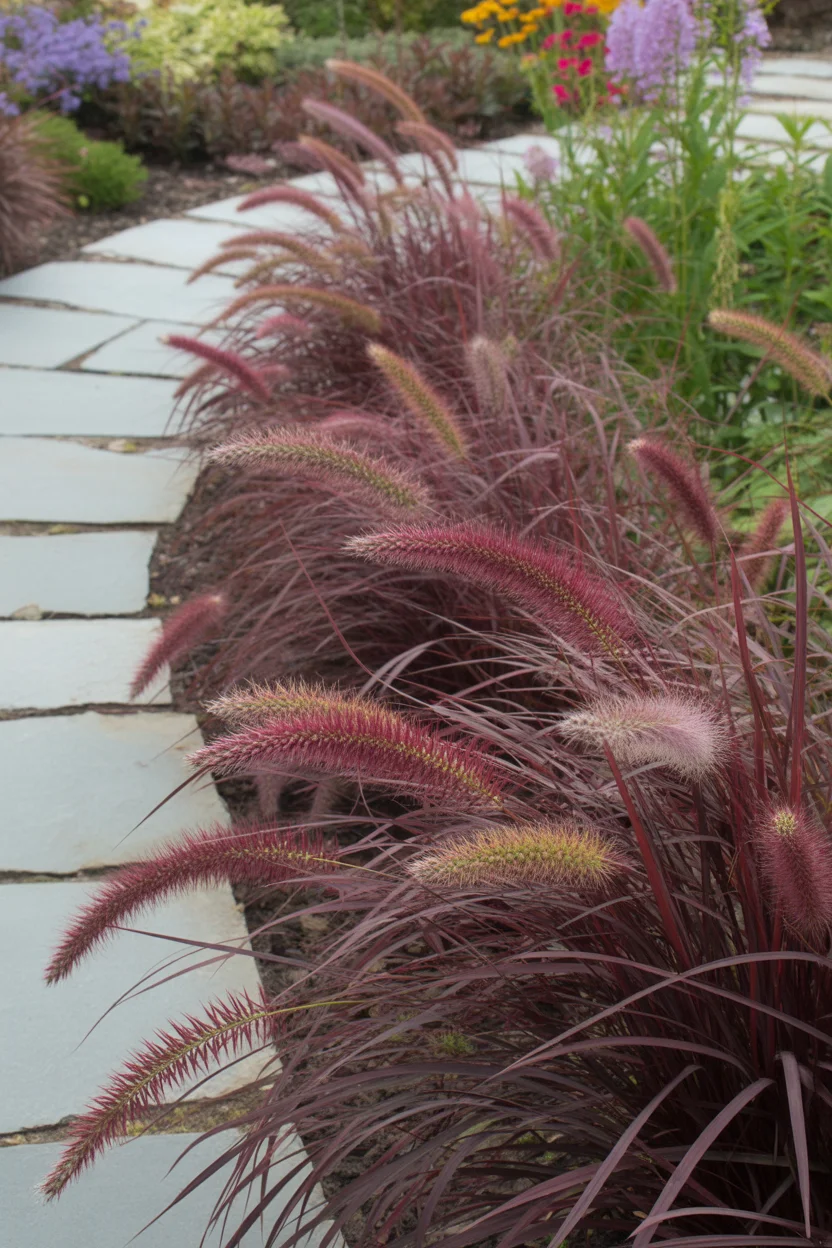
Purple fountain grass adds a bold pop of color with its wine-red foliage and fuzzy, purplish-pink plumes. This compact variety grows 3-5 feet tall, making it perfect for borders, mass plantings, or container gardens. The gracefully arching form softens hard edges along pathways and driveways while providing continuous color from spring through fall. Its fine texture contrasts beautifully with broad-leafed plants and flowering perennials.
This heat-loving grass performs best in full sun and well-drained soil across zones 9-11, though it’s often grown as an annual in cooler climates. The bottlebrush-like plumes emerge in midsummer and create stunning combinations with golden rudbeckia, pink sedums, or silver artemisia. Deer and rabbits typically avoid this grass, making it an excellent choice for areas with wildlife pressure. Regular watering during establishment ensures vigorous growth and vibrant coloration.
view morehttps://dreamgardenspk.com/blog/
3. Japanese Forest Grass in Shade Gardens
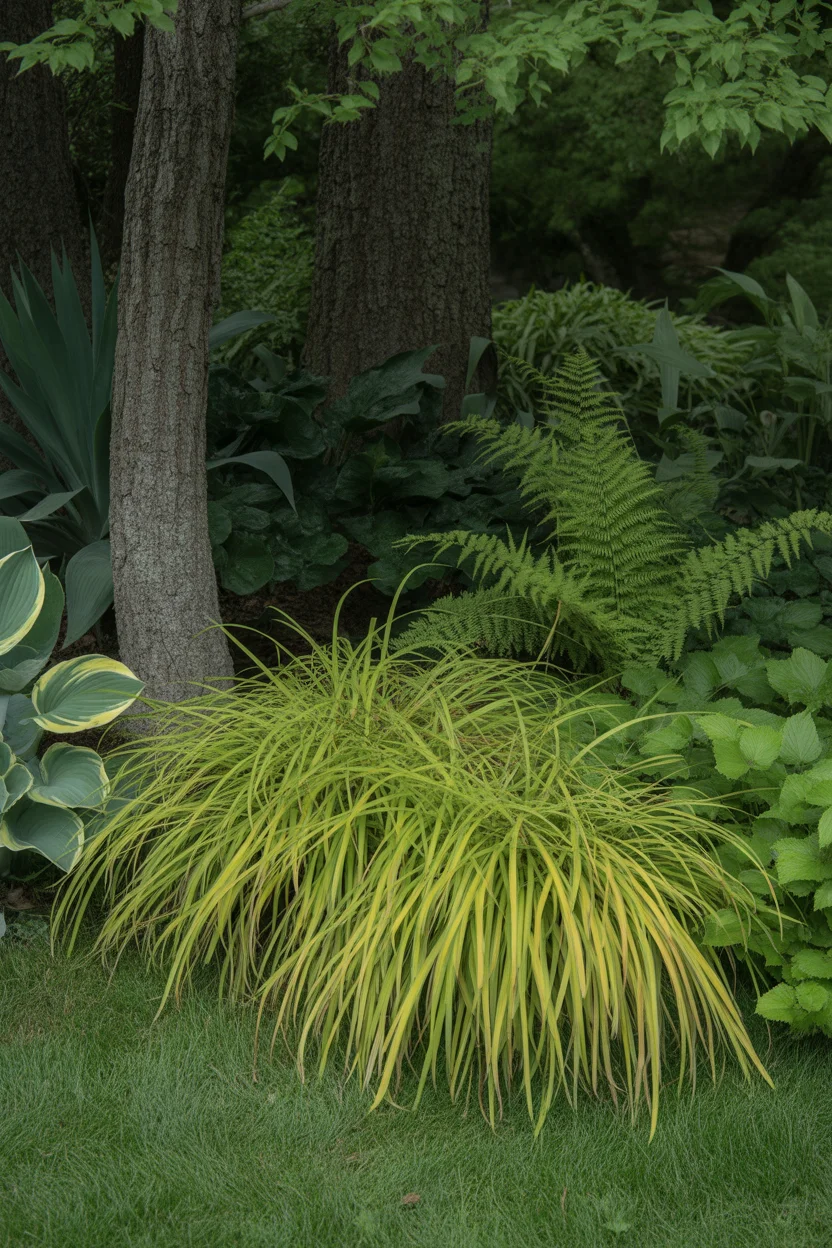
Japanese forest grass brings luminous color to challenging shade areas where few plants thrive. The cascading, bamboo-like foliage in shades of gold, chartreuse, or variegated green brightens dark corners with its glowing presence. Growing 12-18 inches tall, this elegant grass creates flowing mounds that soften the edges of shade gardens, woodland paths, or water features. Its slow growth rate and clumping habit make it ideal for small spaces.
Thriving in zones 5-9, this shade-loving ornamental prefers consistently moist, rich soil and protection from harsh afternoon sun. The foliage emerges in spring with intense coloration that persists until frost, providing months of visual interest. Pair it with blue hostas, dark heucheras, or delicate ferns for stunning textural contrasts. Japanese forest grass also excels in containers on shaded patios where its graceful form can be appreciated up close.
Explore morehttp://pinterest.com/Dreamgardenshome/
4. Blue Fescue Rock Garden Accent
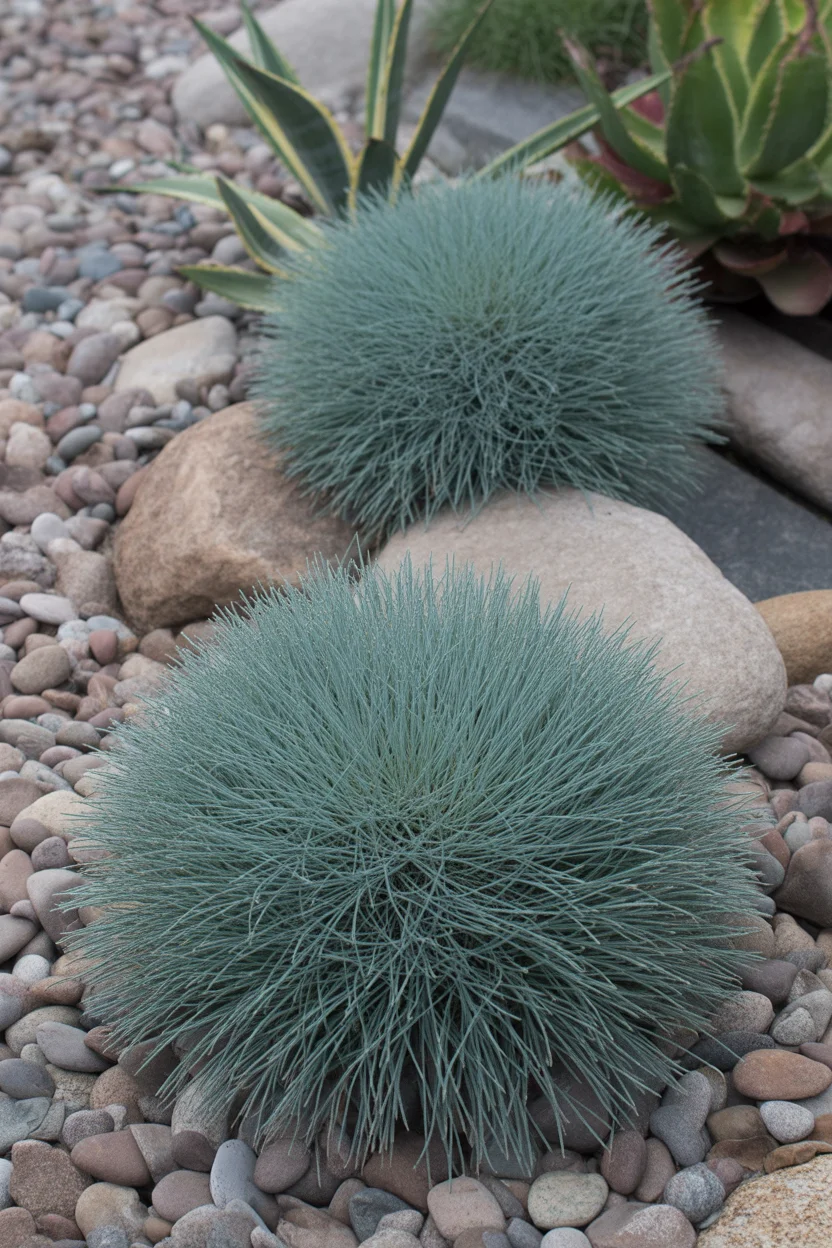
Blue fescue offers striking blue-gray foliage in neat, compact tufts perfect for rock gardens and xeriscaping. These low-maintenance grasses grow only 8-12 inches tall, forming tidy mounds that maintain their shape throughout the season. The fine, needle-like texture adds dimension to gravel gardens, border fronts, or between stepping stones. Their cool blue tones provide beautiful contrast against warm-colored stones, terracotta containers, or orange and yellow flowers.
Hardy in zones 4-8, blue fescue thrives in full sun with excellent drainage and actually prefers lean, dry soil conditions. This drought-tolerant grass requires minimal watering once established, making it perfect for sustainable landscapes. Plant multiple clumps in repetitive patterns for a cohesive design, or use individually as accent plants among sedums and sempervivums. Trim back old foliage in early spring to encourage fresh, vibrant blue growth.
5. Maiden Grass Privacy Screen
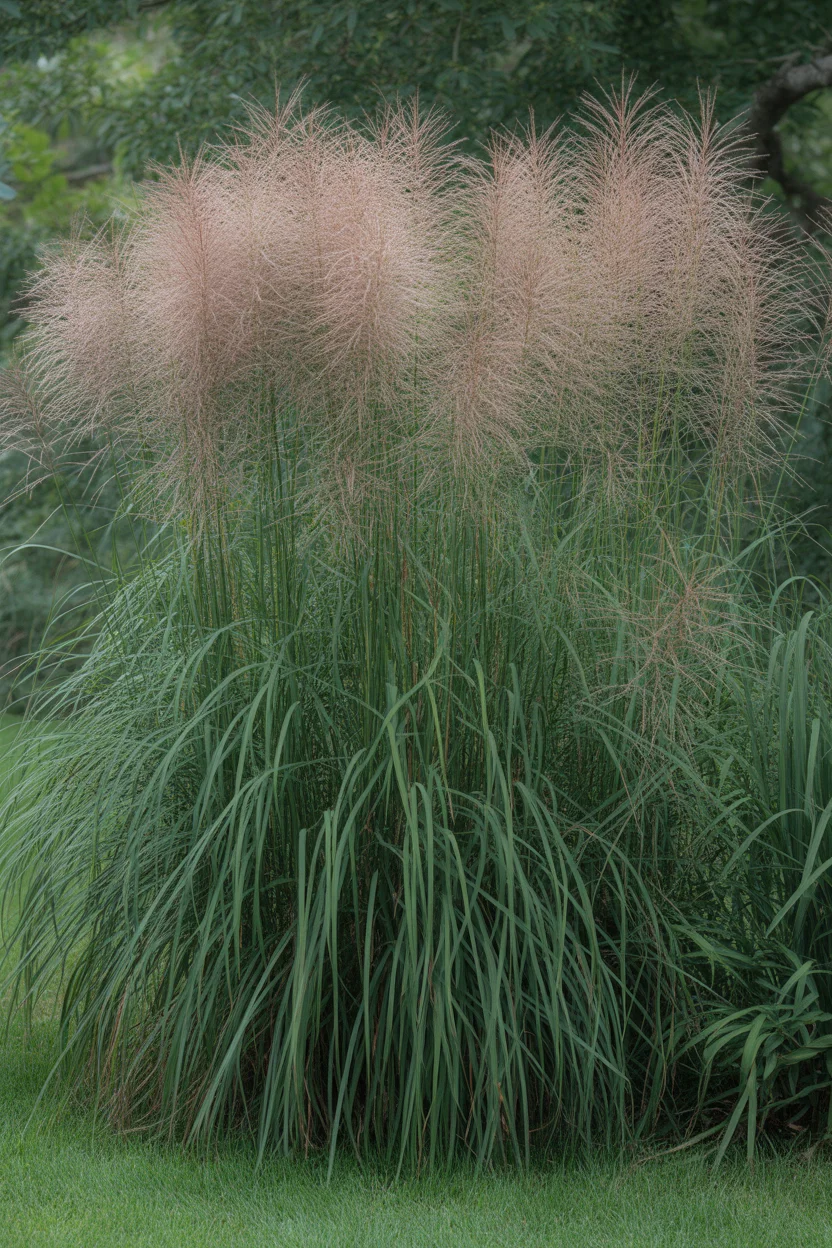
Maiden grass creates living walls of privacy while maintaining an airy, elegant appearance unlike solid fences. These tall grasses reach 5-8 feet in height with stunning silver, pink, or copper plumes that emerge in late summer. The vertical growth habit and dense foliage effectively screen unwanted views, buffer noise, and define property boundaries. The plumes catch light beautifully and provide winter interest long after other plants have died back.
This hardy grass thrives in zones 4-9 and tolerates a wide range of soil conditions in full sun. Plant specimens 3-4 feet apart for a solid screen that still allows air circulation. Maiden grass requires little maintenance beyond an annual spring cutting before new growth emerges. The rustling sound of wind through the blades adds sensory appeal, while the plumes attract birds seeking nesting material and seeds.
6. Mexican Feather Grass Meadow
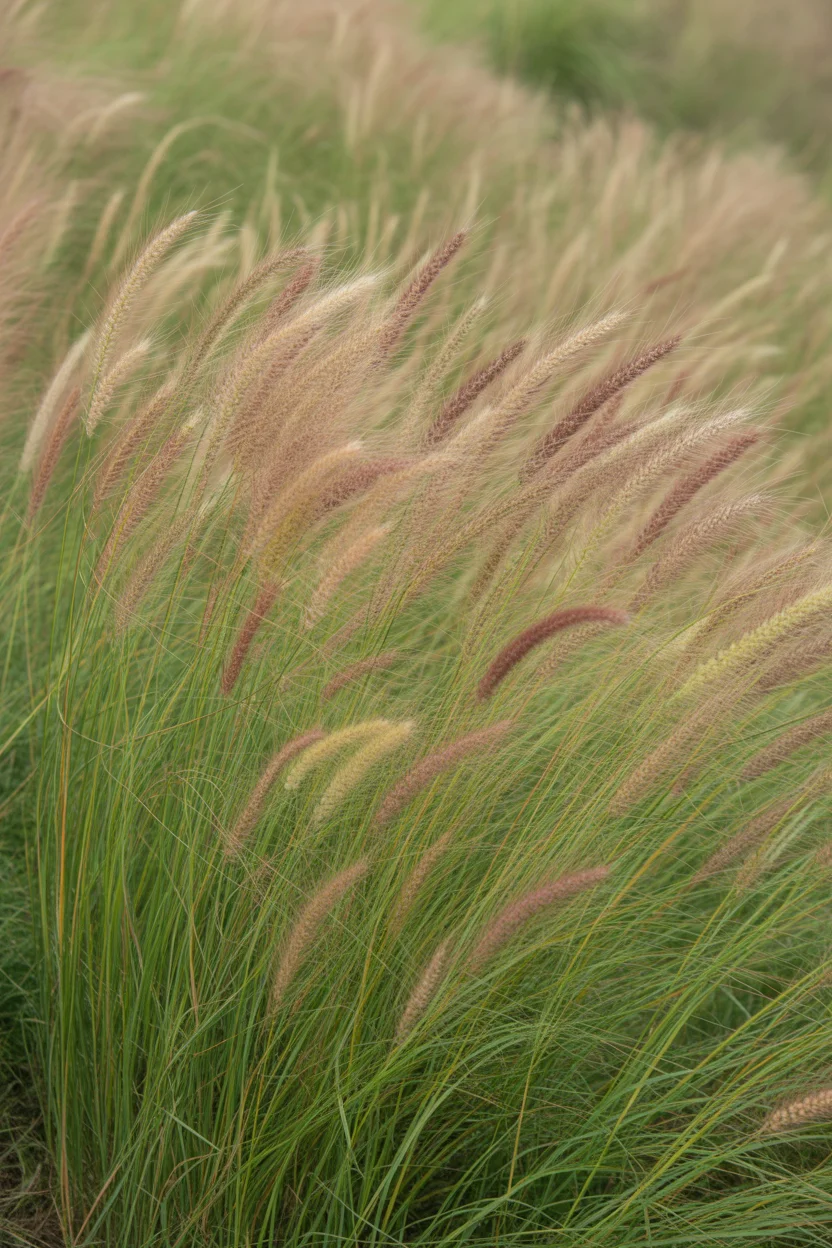
Mexican feather grass brings ethereal movement to naturalistic landscapes with its ultra-fine, hair-like texture. The soft green blades turn golden-blonde in summer, creating a meadow-like effect that sways gracefully with the slightest breeze. Growing 18-24 inches tall, this grass works beautifully in mass plantings, prairie-style gardens, or as a groundcover on slopes. The delicate appearance belies its toughness and adaptability to various conditions.
Suitable for zones 6-10, Mexican feather grass tolerates heat, drought, and poor soils once established. This self-seeding grass can naturalize in favorable conditions, creating expanding drifts of texture and color. Use it to soften hard hardscaping, fill gaps between perennials, or create transitions between formal and informal garden areas. The fine texture provides stunning contrast with bold flowers like echinacea, salvias, and ornamental onions. Cut back in late winter to make room for fresh growth.
7. Zebra Grass Focal Point
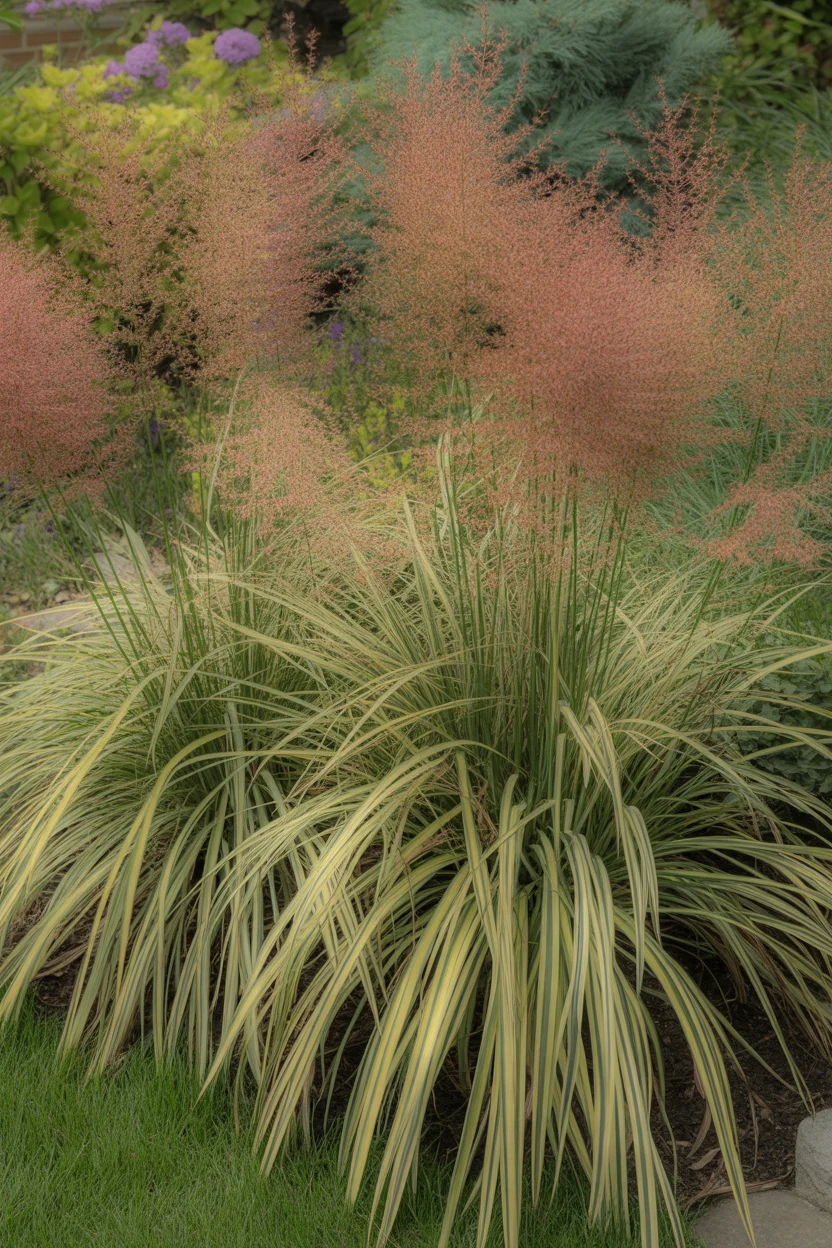
Zebra grass commands attention with its distinctive horizontal yellow bands that stripe across gracefully arching green leaves. This unique variegation pattern creates a focal point that draws the eye from anywhere in the garden. Growing 5-7 feet tall and wide, zebra grass makes a bold statement as a specimen plant in lawn areas or anchoring mixed borders. The late-season coppery plumes add another layer of interest above the striped foliage.
Hardy in zones 5-9, this grass prefers full sun and consistently moist soil for the most vibrant variegation. The horizontal banding becomes more pronounced as the season progresses, reaching peak intensity in late summer. Plant zebra grass where its architectural form can be appreciated from multiple angles, such as near patios, pools, or outdoor living spaces. It combines well with solid-green plants that won’t compete with its dramatic pattern, like purple salvia or white phlox.
8. Karl Foerster Reed Grass Structure
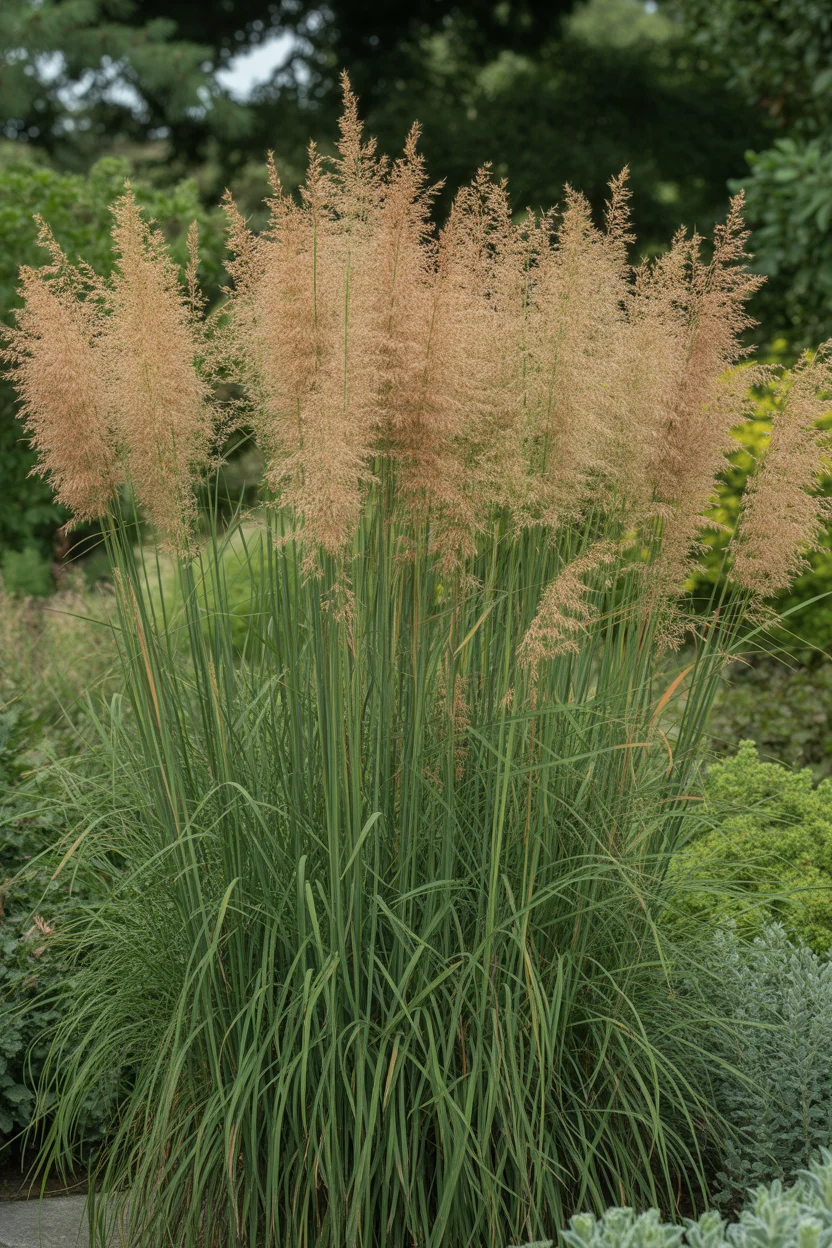
Karl Foerster reed grass provides unmatched vertical structure with its strongly upright form that never flops. This well-behaved grass grows 3-5 feet tall with narrow clumps and wheat-like plumes that emerge purplish in early summer, transitioning to golden wheat by fall. The rigid upright habit makes it perfect for formal gardens, modern landscapes, or anywhere clean lines are desired. It blooms earlier than most ornamental grasses, extending the season of interest.
Reliable in zones 4-9, Karl Foerster adapts to various soil types and moisture levels in full sun to partial shade. Plant it in repeating groups for rhythmic structure along borders, or use single specimens to punctuate planting beds. This grass tolerates clay soil better than most ornamentals and stands up well to wind and rain without staking. The plumes provide winter interest and food for birds, while the foliage turns attractive beige tones that persist through snow.
9. Muhly Grass Pink Cloud Display
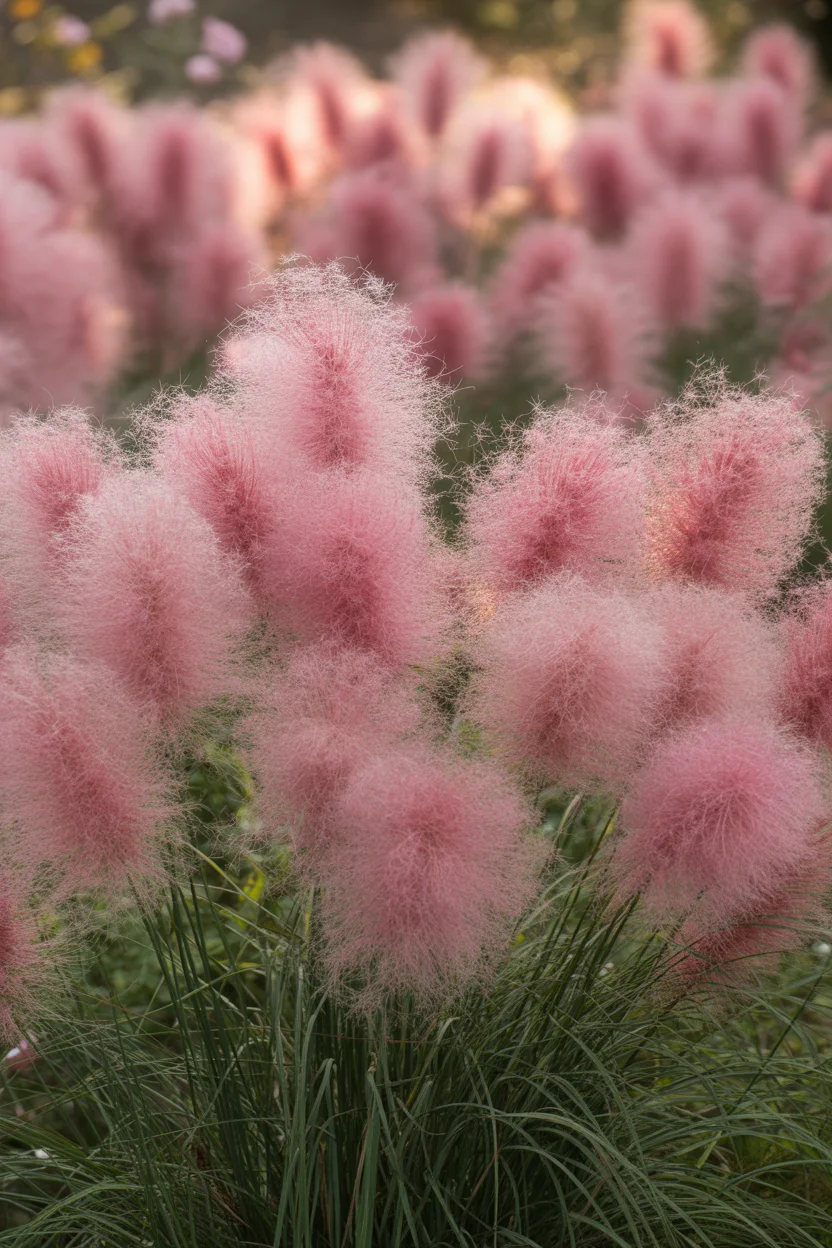
Pink muhly grass creates magical moments in fall gardens when its cloud-like pink plumes emerge. The airy, cotton-candy-colored flower heads seem to float above the fine green foliage, creating an ethereal display that glows when backlit by morning or evening sun. Growing 2-3 feet tall and wide, this grass makes a spectacular show when planted in sweeping masses or scattered throughout perennial borders for surprise bursts of pink.
Thriving in zones 5-9, muhly grass loves full sun and well-drained soil, showing excellent drought tolerance once established. The pink plumes appear in September and October, providing crucial late-season color when many plants are fading. This native grass requires virtually no maintenance and has no serious pest or disease problems. Combine it with blue asters, yellow rudbeckia, or purple Russian sage for a stunning autumn color palette that celebrates the season.
10. Switchgrass Prairie Garden
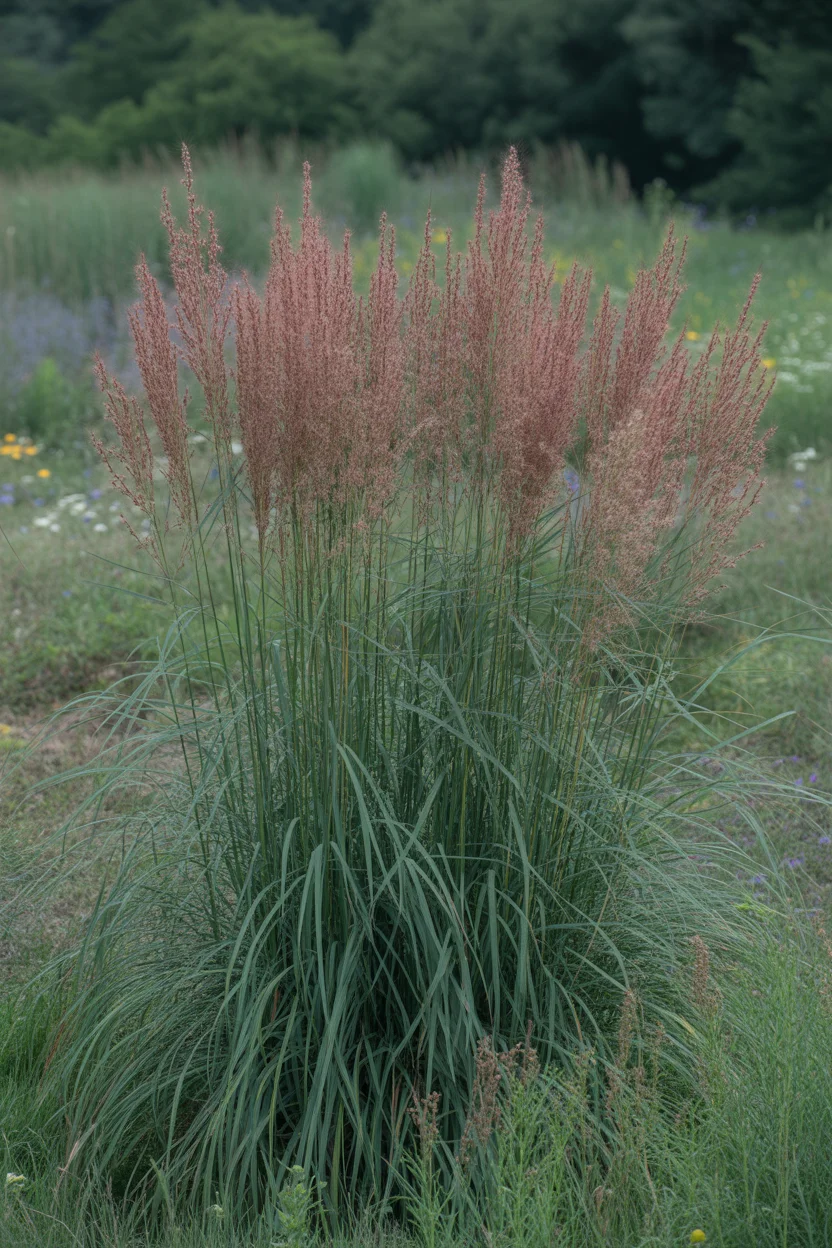
Switchgrass brings authentic prairie character to naturalistic gardens with its upright form and changing seasonal colors. This native North American grass offers blue-green foliage that transforms to stunning shades of gold, orange, and burgundy in fall. Growing 3-6 feet depending on variety, switchgrass provides vertical interest, wildlife habitat, and four-season appeal. The airy seedheads emerge in late summer, adding texture and movement to the landscape.
Hardy in zones 3-9, switchgrass adapts to nearly any soil condition from wet clay to dry sand. This low-maintenance grass requires no fertilizer, pesticides, or supplemental watering once established, making it perfect for sustainable landscapes. Plant switchgrass in masses for prairie restorations, use it as a tall groundcover, or incorporate it into rain gardens where it tolerates seasonal flooding. Birds feast on the seeds through winter, and the dense growth provides shelter for beneficial insects and small wildlife.
11. Black Mondo Grass Dramatic Contrast
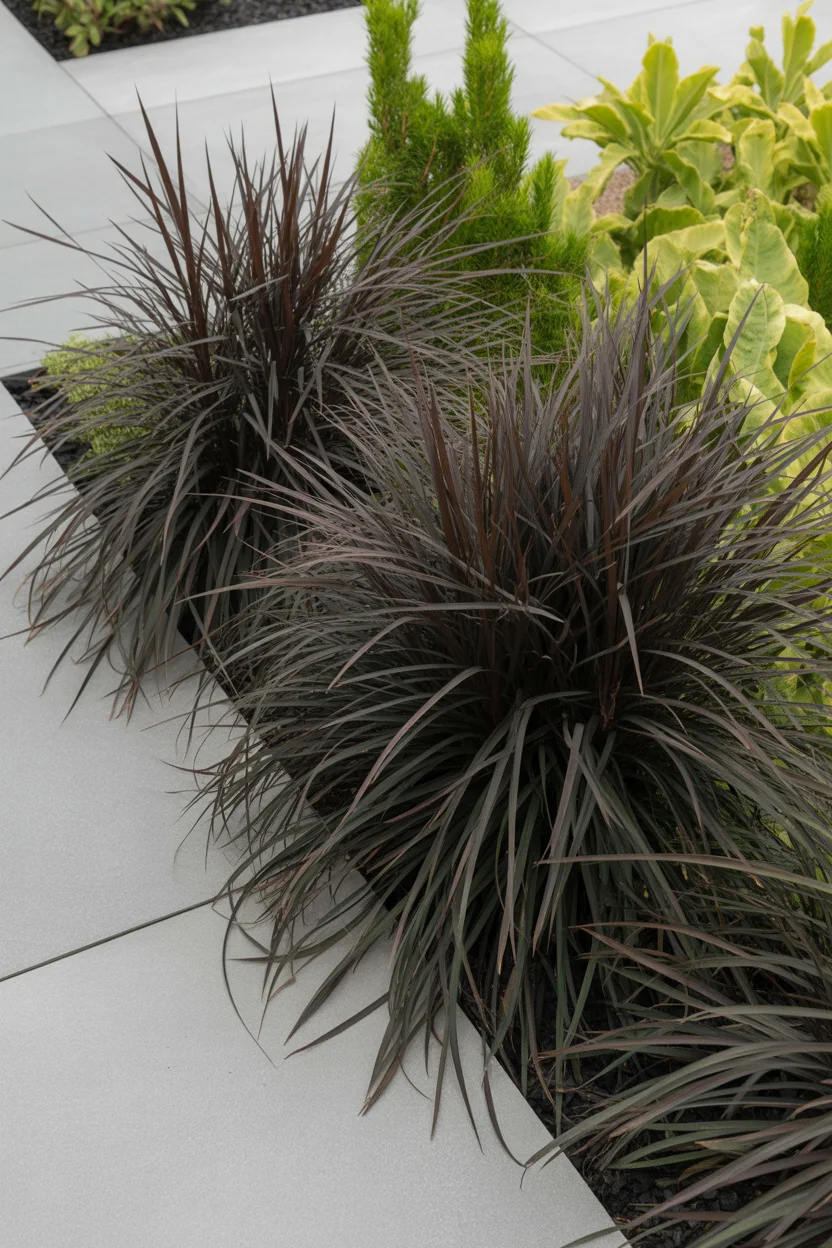
Black mondo grass delivers unexpected drama with its nearly black foliage that creates stunning contrast in garden designs. This unique plant (technically not a true grass but a lily relative) grows 6-10 inches tall with dark purple-black strappy leaves that hold their color year-round. The dramatic foliage makes powerful statements when paired with silver plants, bright flowers, or light-colored hardscaping. Small pink or white flowers appear in summer, followed by black berries.
Suitable for zones 6-10, black mondo grass performs best in partial shade to full shade with consistently moist, well-drained soil. Use it as an edging plant, groundcover, or accent in containers where its dark color creates striking contrast. This slow-growing grass works beautifully in Japanese-inspired gardens, contemporary landscapes, or anywhere bold color contrast is desired. Pair it with chartreuse hostas, white impatiens, or silver lamium for combinations that truly pop.
12. Liriope Border Groundcover
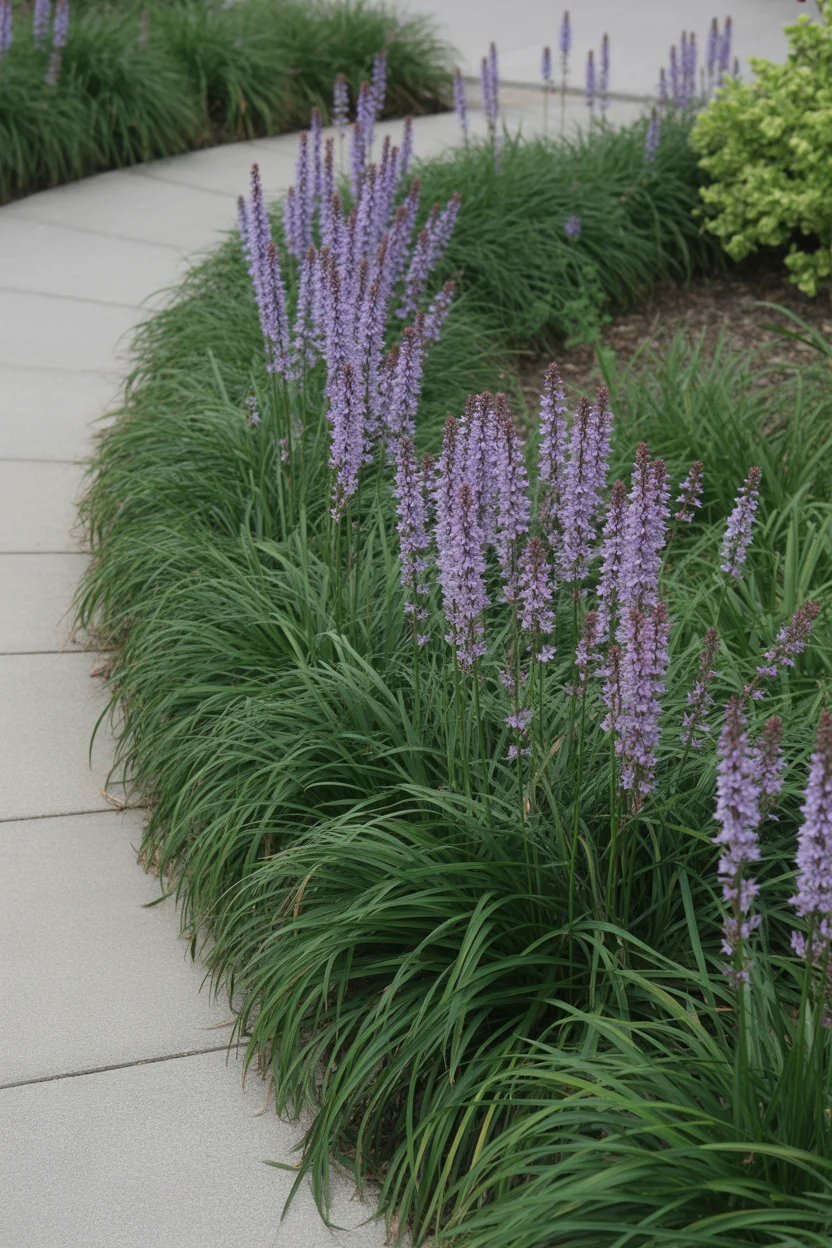
Liriope serves as a reliable groundcover and edging plant with its dark green, grass-like foliage and purple flower spikes. This tough, evergreen plant grows 10-18 inches tall with arching leaves that create tidy, fountain-like clumps. Spikes of purple or white flowers emerge in late summer, adding color when many plants are spent. The dense growth habit suppresses weeds effectively while providing year-round greenery in zones 4-10.
This versatile grass tolerates a remarkable range of conditions including deep shade, drought, and competition from tree roots where other plants struggle. Plant liriope as a border along paths and driveways, mass it as a low-maintenance groundcover under trees, or use it in containers. Variegated varieties with creamy yellow or white stripes brighten shady areas even more. Simply mow or trim back old foliage in early spring before new growth emerges for a fresh, clean appearance.
13. Northern Sea Oats Shade Beauty
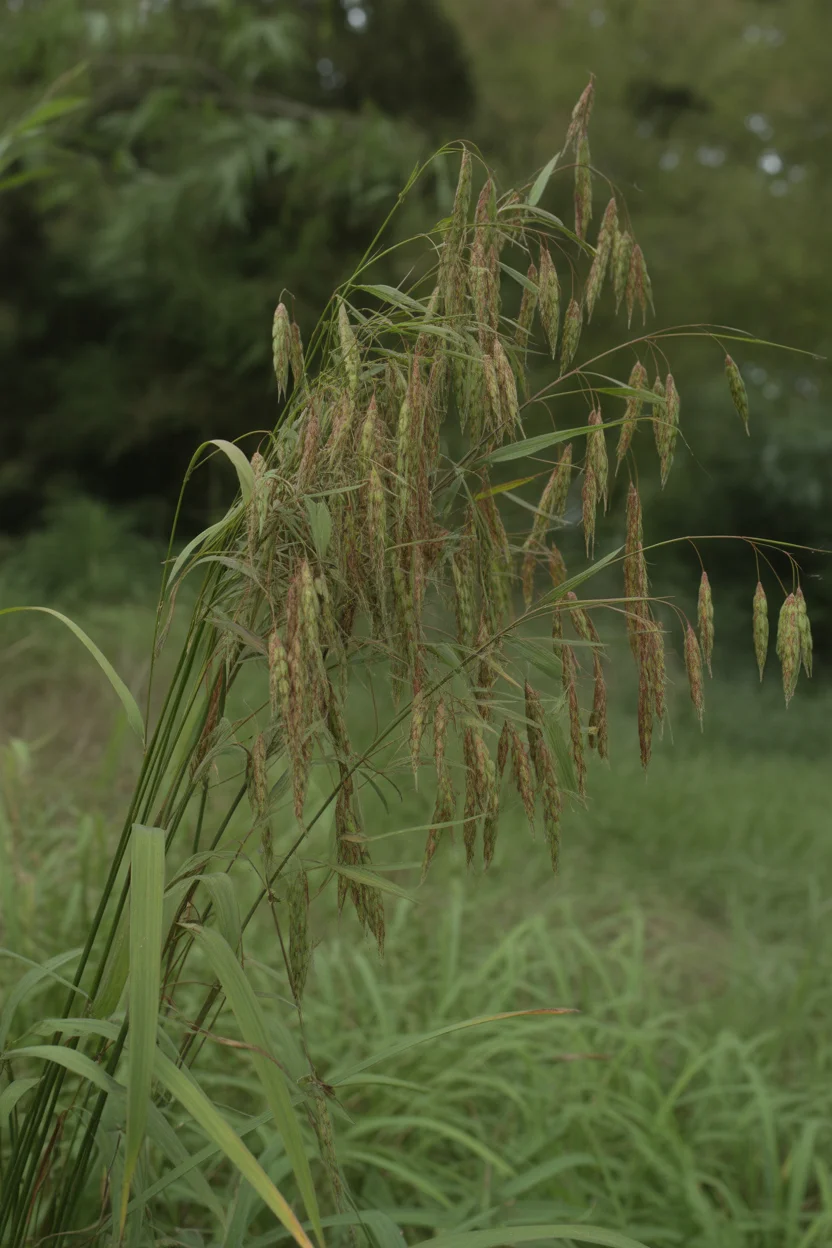
Northern sea oats bring unique character to shade gardens with their distinctive, flat seedheads that dangle from gracefully arching stems. This North American native grows 2-4 feet tall with bamboo-like foliage and oat-shaped seed clusters that emerge green in summer, turning copper-bronze in fall. The seedheads catch light beautifully and create gentle rustling sounds in breezes. This grass provides year-round interest, standing attractively through winter when many plants disappear.
Thriving in zones 3-9, northern sea oats tolerate more shade than most ornamental grasses while also adapting to full sun. This versatile plant handles a wide range of soil conditions from dry to moist, making it useful in challenging areas. The seedheads work beautifully in fresh or dried arrangements. Be aware that this grass self-sows readily in favorable conditions, so remove seedheads if you want to prevent spreading, or embrace its naturalizing tendency for informal areas.
14. Little Bluestem Native Grace
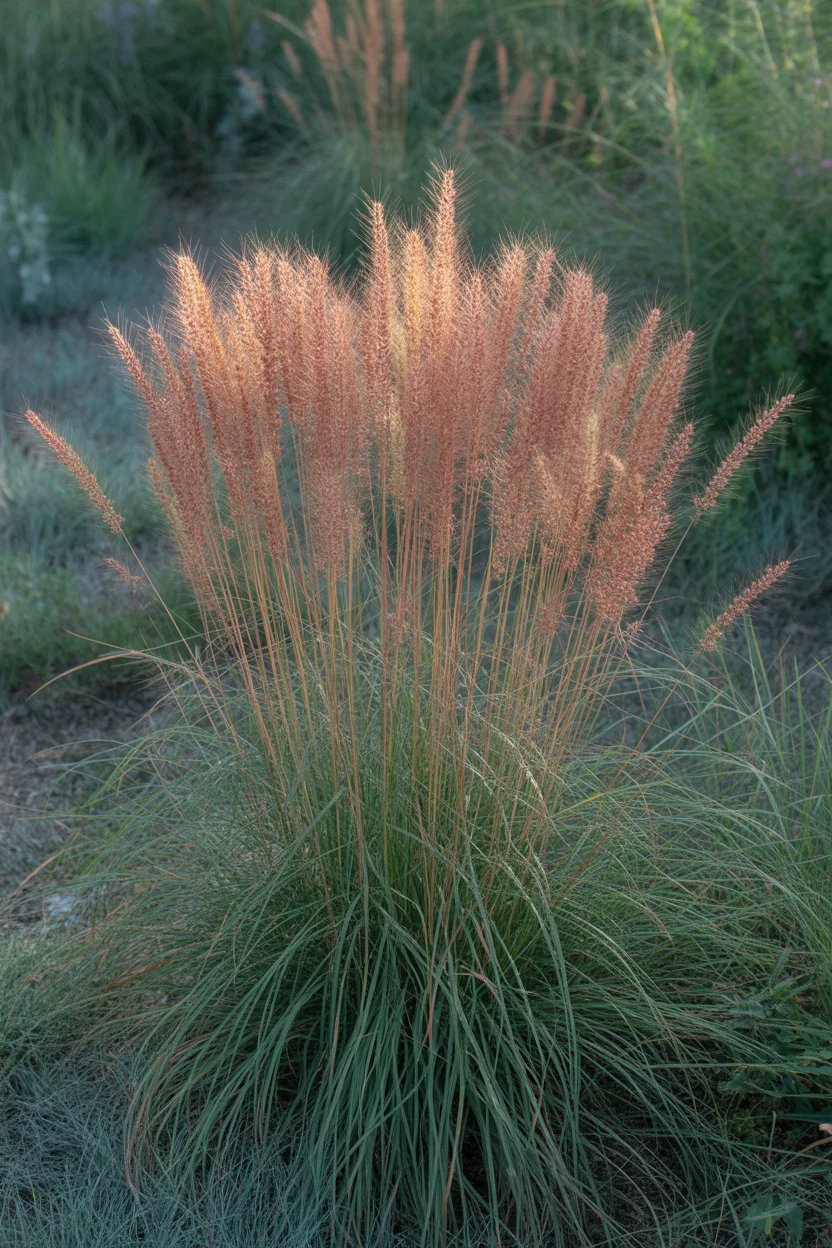
Little bluestem earns its place as a garden favorite with stunning seasonal color changes and compact size. This native North American grass shows blue-green foliage in summer that transforms to brilliant shades of copper, orange, burgundy, and purple in fall. Growing 2-3 feet tall, it fits easily into smaller gardens while providing big impact. The fluffy white seedheads add winter interest and catch light beautifully when covered with frost or snow.
Hardy in zones 3-9, little bluestem thrives in full sun with well-drained soil and excellent drought tolerance. This low-maintenance grass never needs fertilizer and actually prefers lean soils where it develops the most intense fall colors. Plant it in masses for a prairie-style garden, use it in borders with perennials, or incorporate it into native landscapes. Birds love the seeds, and the dense growth provides winter shelter for beneficial insects. It’s deer-resistant and has no serious pest or disease problems.
15. Feather Reed Grass Vertical Accent
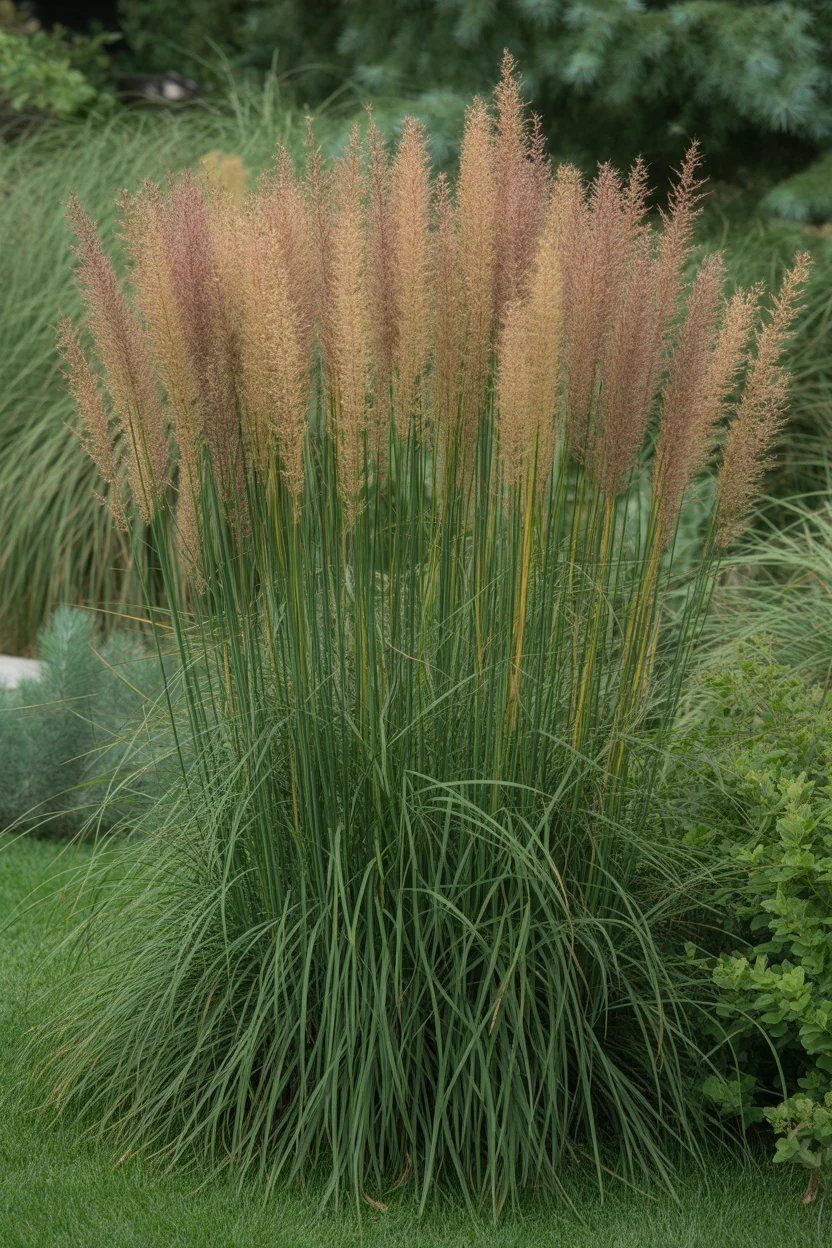
Feather reed grass delivers reliable vertical structure with its strongly upright, non-flopping form. This grass grows 4-6 feet tall with narrow clumps and feathery plumes that emerge purplish-pink in early summer, quickly turning golden wheat color. The columnar form makes it perfect for creating rhythm in borders, softening vertical elements like fences and walls, or adding height without bulk. It blooms earlier than most ornamental grasses, providing structure from early summer through winter.
Adaptable to zones 4-9, feather reed grass tolerates both heat and cold while performing in various soil types. It prefers full sun but handles partial shade better than many grasses. This low-maintenance plant requires no staking, stands up to wind and rain, and has no serious pest problems. Plant it in repeating groups for formal impact, use it to create privacy screens, or position single specimens as focal points. The golden plumes and wheat-colored foliage provide months of winter interest.
16. Sedge Grass Wet Area Solution
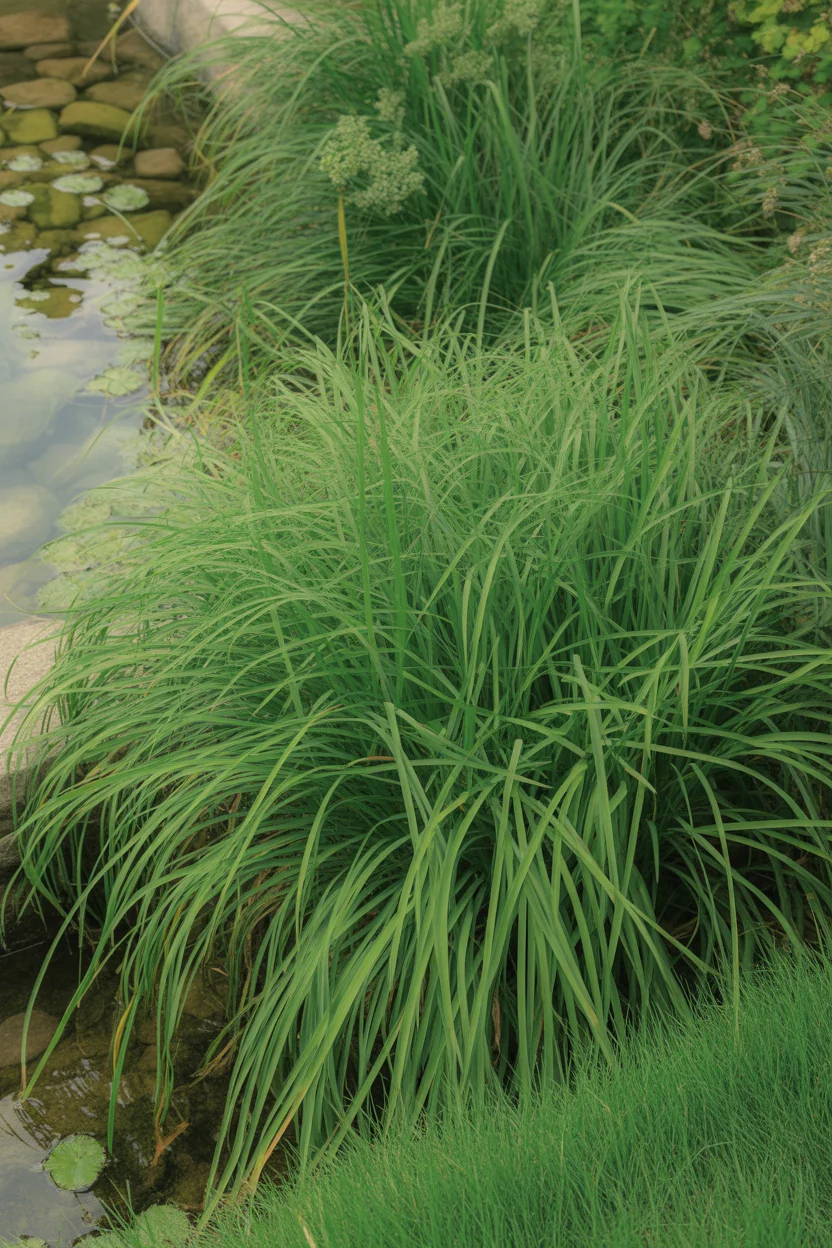
Sedges solve moisture problems with their ability to thrive in wet soils where other grasses fail. These grass-like plants offer diverse foliage colors from bright green to bronze, gold, and variegated patterns. Growing 6-36 inches depending on variety, sedges work beautifully along pond edges, in rain gardens, or any area with consistently moist to wet soil. Their dense, arching foliage provides texture, groundcover, and erosion control in challenging areas.
Sedges adapt to zones 3-9 depending on species, with options for sun or shade. Many sedges are evergreen or semi-evergreen, providing year-round interest. Use them as lawn alternatives in damp areas, plant them in bog gardens, or incorporate them into native landscapes where they support local wildlife. Sedges require minimal maintenance and have few pest problems. Their triangular stems distinguish them from true grasses—remember the phrase “sedges have edges” to identify them correctly.
17. Tufted Hair Grass Delicate Texture
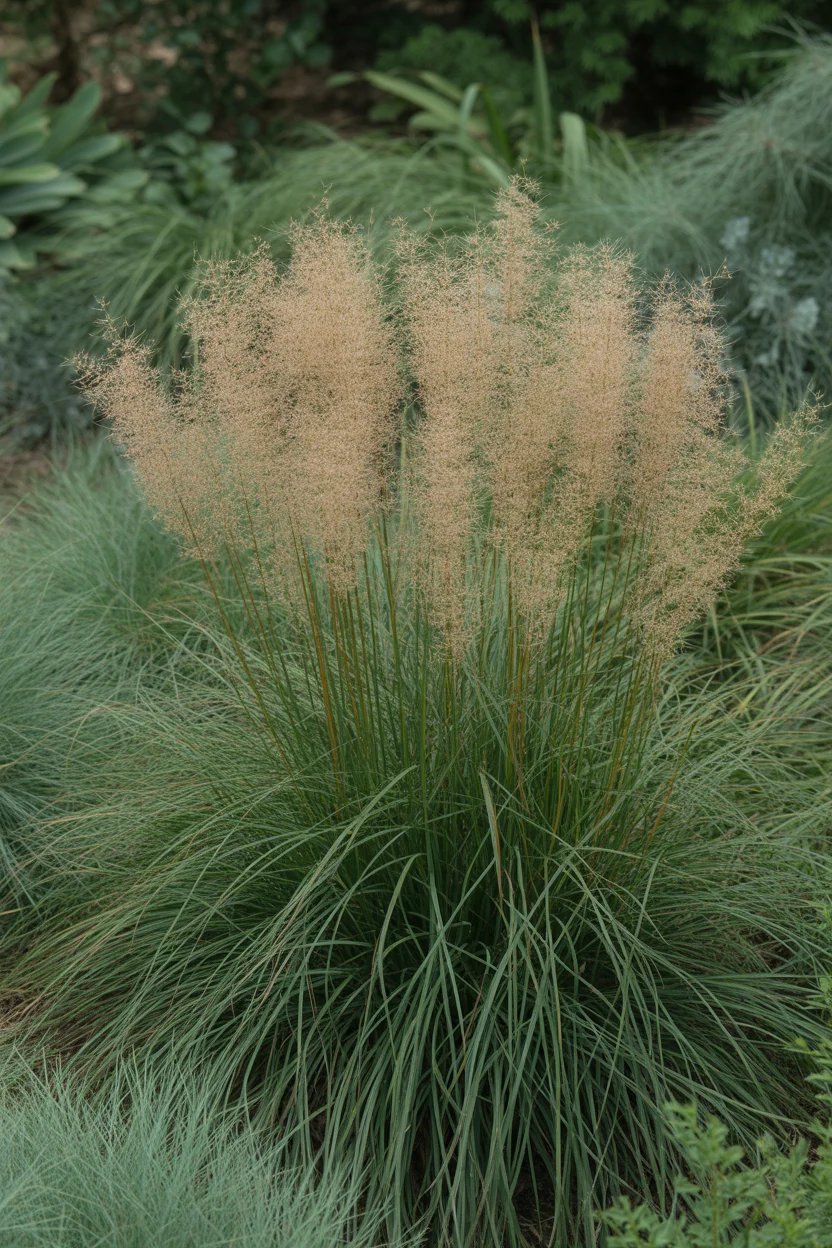
Tufted hair grass offers delicate, cloud-like blooms that create an ethereal effect in garden designs. This cool-season grass forms neat evergreen tufts of dark green, fine-textured foliage with airy flower panicles that rise 2-3 feet above the leaves. The billowing golden or purplish blooms appear in early summer, creating a see-through haze that allows viewing other plants behind them. The flowers catch light magically at sunrise and sunset, adding a dreamy quality to the landscape.
Hardy in zones 4-9, this grass prefers cool climates and performs best in partial shade with consistently moist soil. It’s an excellent choice for Pacific Northwest gardens and other areas with mild summers. Use tufted hair grass to lighten heavy plantings, create transitions between garden areas, or add movement to perennial borders. The evergreen foliage provides winter interest in mild climates. This grass combines beautifully with hostas, astilbes, and ferns in shade gardens, or with roses and catmint in partial sun locations.
18. Pennisetum Fireworks Colorful Display
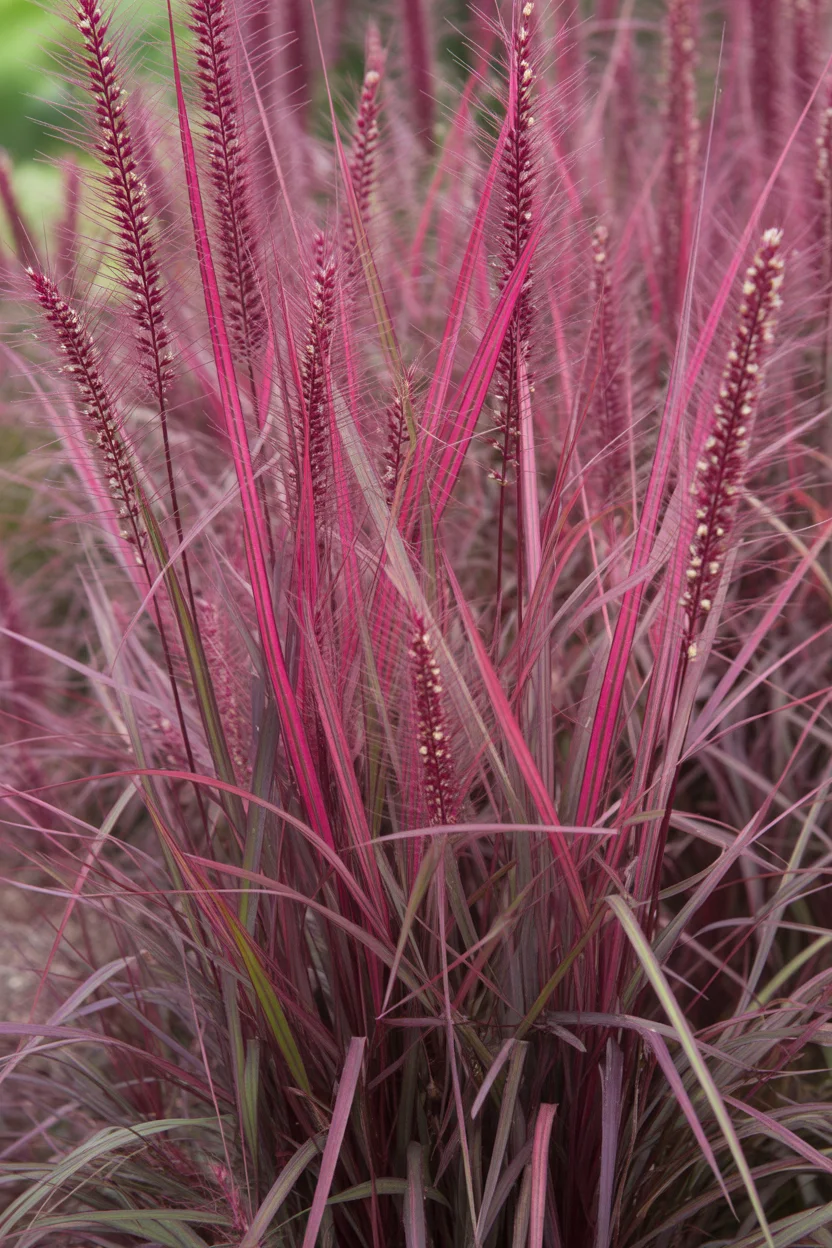
Pennisetum ‘Fireworks’ lives up to its name with explosive color combining burgundy, pink, and cream variegation. This ornamental grass grows 3-4 feet tall with narrow leaves striped in wine-red, hot pink, and creamy white that radiate from the center like fireworks. Burgundy-purple bottlebrush plumes emerge in midsummer, adding another layer of color. The entire plant creates a fountain-like form that draws attention as a specimen or in container displays.
This heat-loving grass performs best in full sun across zones 9-10, though it’s commonly grown as an annual in cooler climates. The vibrant variegation intensifies in hot weather and full sun, making it perfect for summer containers, tropical-themed gardens, or as a bold accent in mixed borders. Pair ‘Fireworks’ with chartreuse sweet potato vine, purple petunias, or silver dusty miller for stunning combinations. Keep soil consistently moist for the most vibrant foliage color and vigorous growth.
19. Carex Evergold Year-Round Color
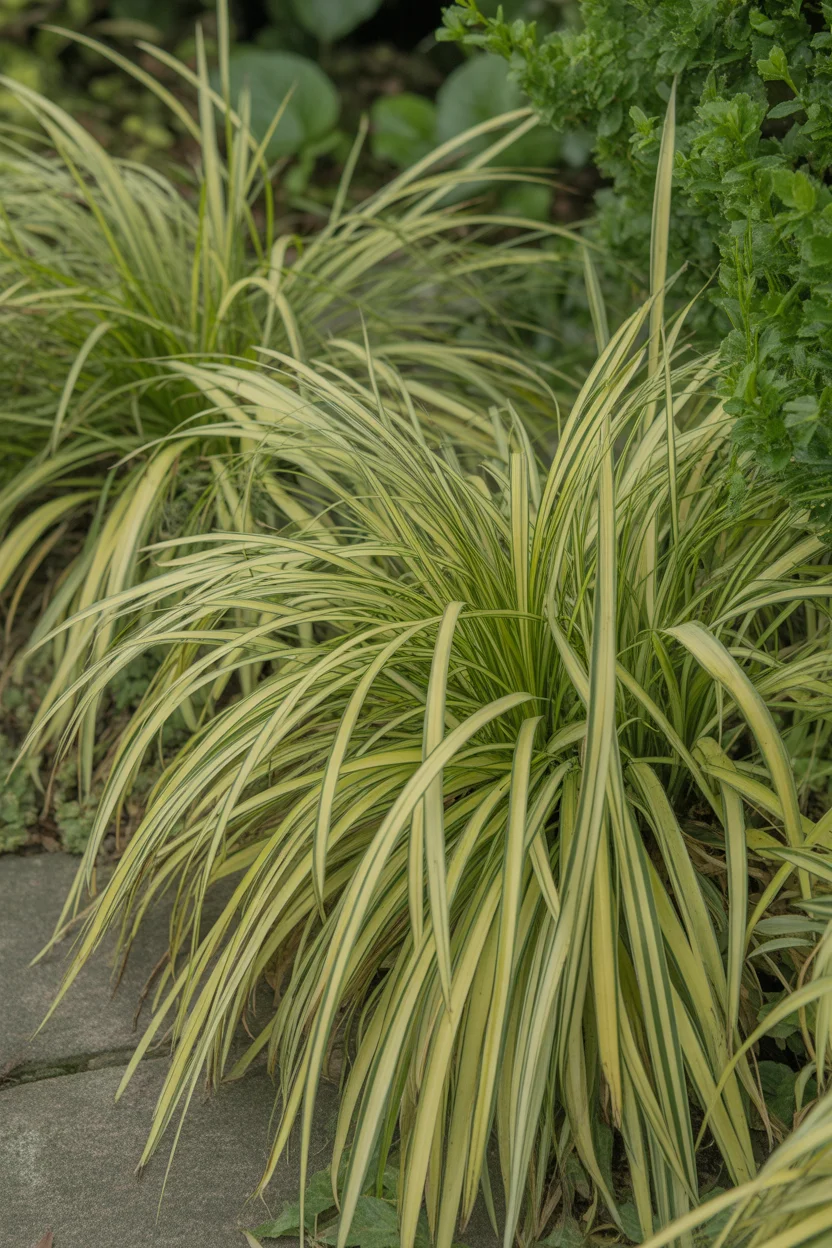
Carex ‘Evergold’ provides year-round color with its distinctive cream and green variegated foliage. This evergreen sedge grows 8-12 inches tall, forming graceful, arching mounds that brighten shady areas with their striped leaves. The creamy yellow centers with dark green margins create a glowing effect in low-light conditions. Unlike many variegated plants, ‘Evergold’ maintains its color intensity through winter, making it invaluable for four-season interest.
Suitable for zones 5-9, this shade-loving sedge prefers consistently moist soil and protection from hot afternoon sun. Use it as an edging plant along paths, mass it as a groundcover under trees, or feature it in containers for shaded patios. The fine texture and bright variegation combine beautifully with dark-leafed heucheras, blue hostas, and ferns. This low-maintenance plant requires only occasional removal of tattered leaves to maintain appearance. It tolerates deer browsing and has no significant pest problems.
20. Ruby Grass Container Showstopper
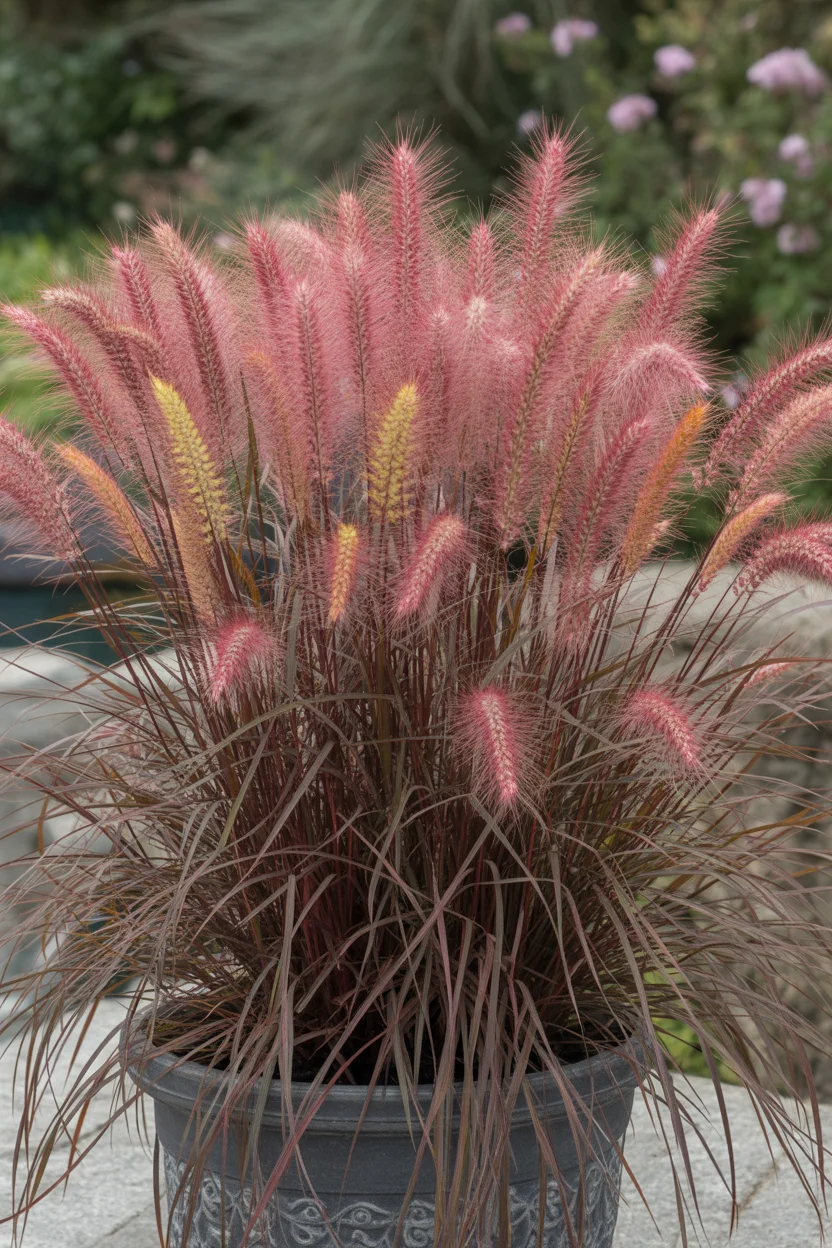
Ruby grass transforms containers into showpieces with its abundant rosy-pink, fluffy plumes. This compact grass grows 18-24 inches tall, producing masses of soft, cotton-candy-like seedheads that practically glow when backlit. The blue-green foliage takes on burgundy tints as temperatures cool, adding another dimension of color. The billowing plumes emerge continuously from midsummer through frost, providing months of ornamental value in containers, small gardens, or front-of-border positions.
Hardy only in zones 9-10, ruby grass is commonly grown as an annual in cooler regions where it delivers exceptional summer color. It thrives in full sun with moderate water and good drainage. Combine ruby grass with purple petunias, trailing verbena, or silver dichondra for stunning container combinations. The airy texture prevents it from blocking views of companion plants. This grass also attracts butterflies and looks spectacular in mass plantings where the pink plumes create undulating waves of color.
Conclusion
Ornamental grass ideas offer endless possibilities for creating dynamic, low-maintenance landscapes with year-round appeal. These versatile plants provide texture, movement, and color while requiring minimal care once established. From dramatic focal points to delicate accents, ornamental grasses adapt to various conditions and design styles. Start incorporating these beautiful grasses into your yard and enjoy their ever-changing beauty through all four seasons.


Join The Discussion