
Introduction
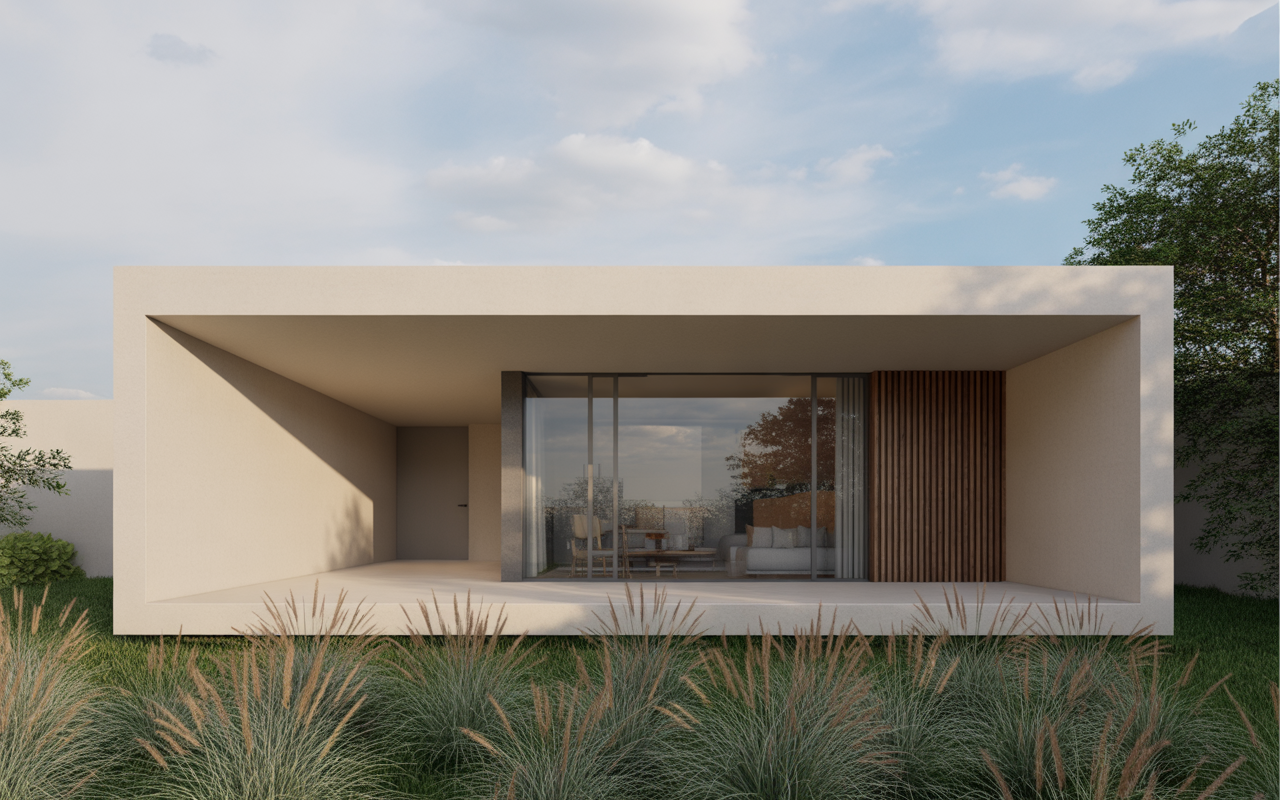
Tired of mowing, watering, and maintaining a traditional lawn? Grass-free front yards are revolutionizing landscape design with stunning alternatives that require less water, minimal maintenance, and maximum curb appeal. From succulent gardens to gravel pathways, these creative designs prove you don’t need grass to create a lush, inviting entrance to your home. Whether you’re dealing with drought conditions, looking to reduce your water bill, or simply want a more unique aesthetic, these 21 inspiring grass-free front yards will transform how you think about landscaping.
1. Desert Succulent Paradise
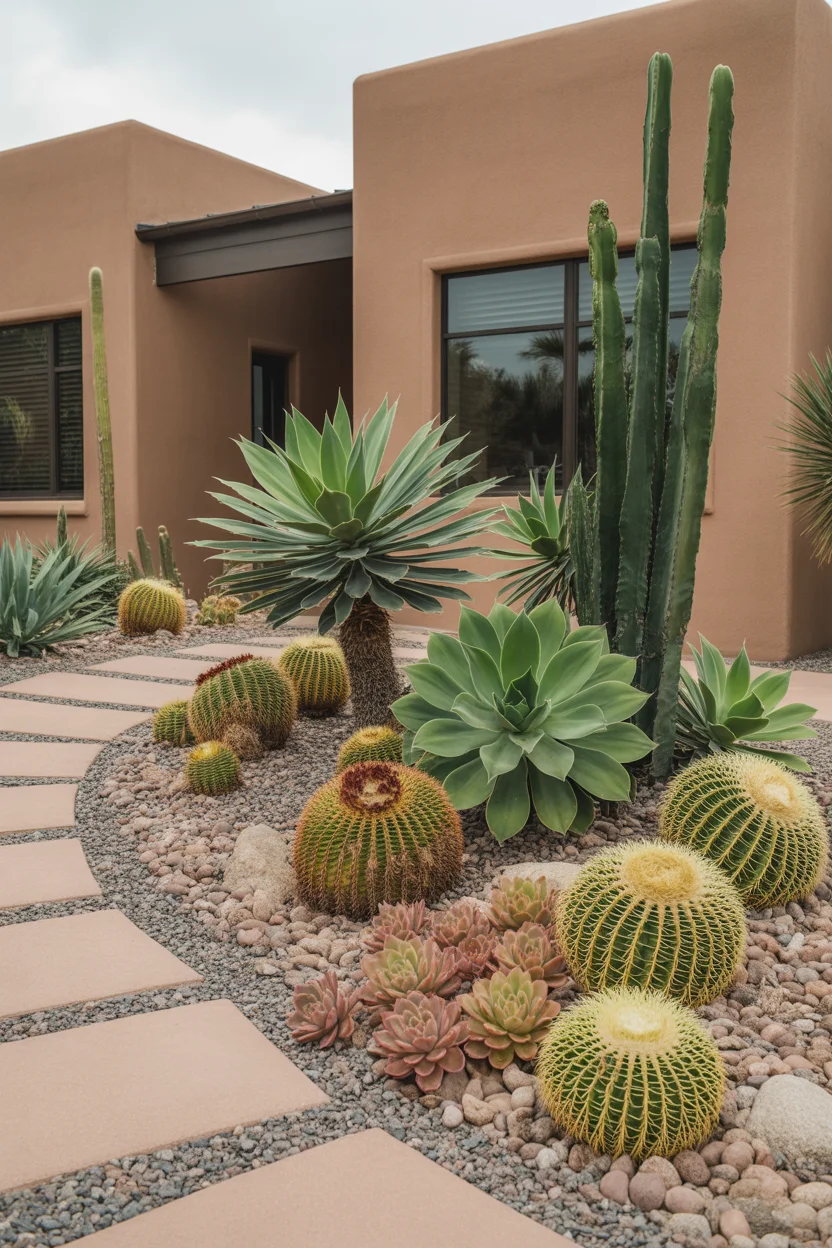
This stunning desert-inspired landscape eliminates grass entirely while creating incredible visual interest through diverse succulent varieties. The layered arrangement features towering agave as focal points, surrounded by mid-height barrel cacti and ground-covering sedums that form a tapestry of textures and colors. The warm-toned gravel mulch complements the plant palette while suppressing weeds and retaining soil moisture. This design thrives in hot, dry climates and requires watering only once or twice monthly during summer.
The decomposed granite pathways wind through the succulent garden, creating an inviting entrance that guides visitors to the front door. Strategic placement of larger specimen plants provides structure, while colorful blooming varieties like aloe and echeveria add seasonal interest. This grass-free front yard reduces water consumption by up to 80% compared to traditional lawns while providing year-round color. The low-maintenance design means no mowing, minimal pruning, and fertilizing only once yearly.
2. Modern Minimalist with Native Grasses
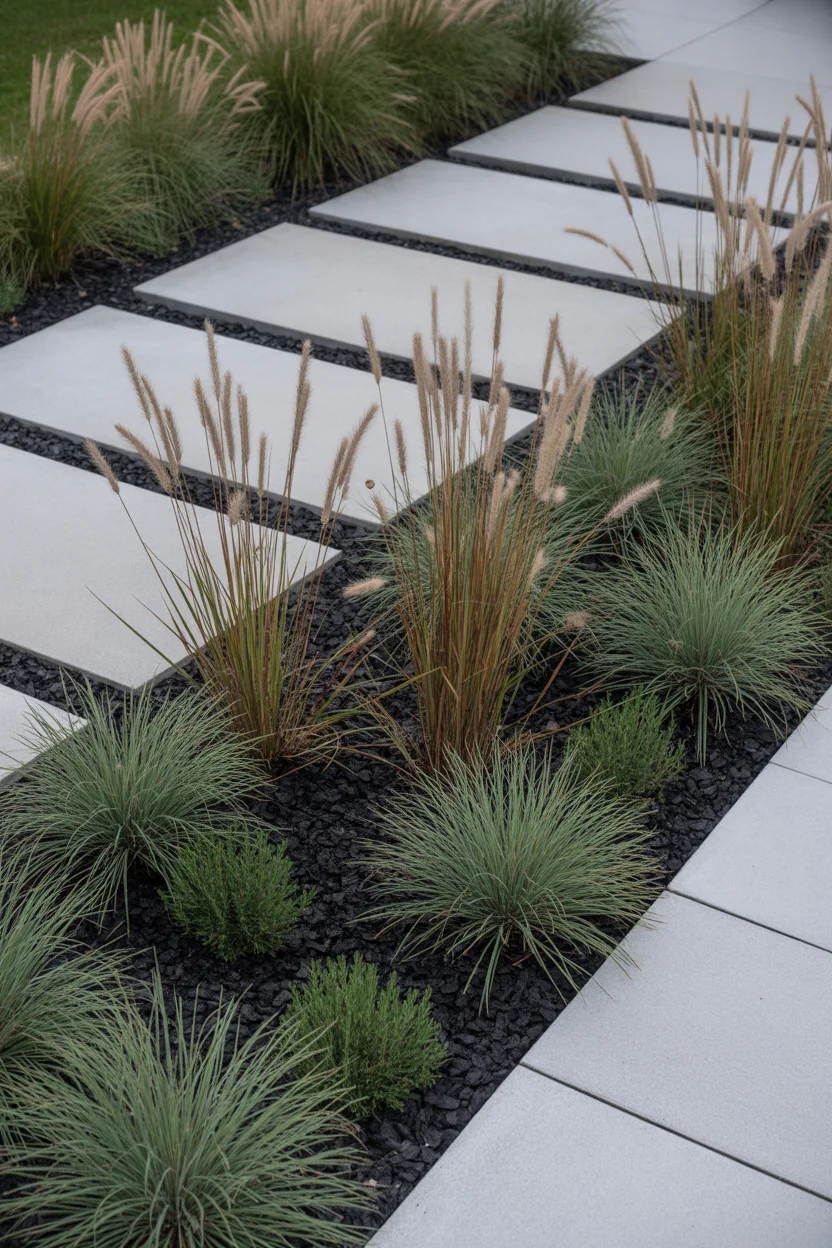
This sleek, modern approach to grass-free landscaping uses ornamental native grasses instead of traditional turf to create graceful movement and texture. The carefully selected varieties provide year-round interest, from fresh green shoots in spring to golden seed heads that sway in autumn breezes. The geometric planting beds are defined by crisp edges and separated by wide concrete pavers that create clean sightlines and easy maintenance access. Dark mulch provides contrast against the pale grasses while maintaining soil health.
The minimalist design philosophy shines through the restrained plant palette and emphasis on form over quantity. Native grasses require no mowing and thrive on natural rainfall once established, making this design incredibly sustainable. The repetition of plant groups creates rhythm and visual coherence, while the varying heights add dimension without overwhelming the space. This grass-free front yard exemplifies how contemporary aesthetics and environmental responsibility can merge beautifully, offering a sophisticated alternative to water-hungry traditional lawns.
view more https://dreamgardenspk.com/blog
3. Mediterranean Herb Garden
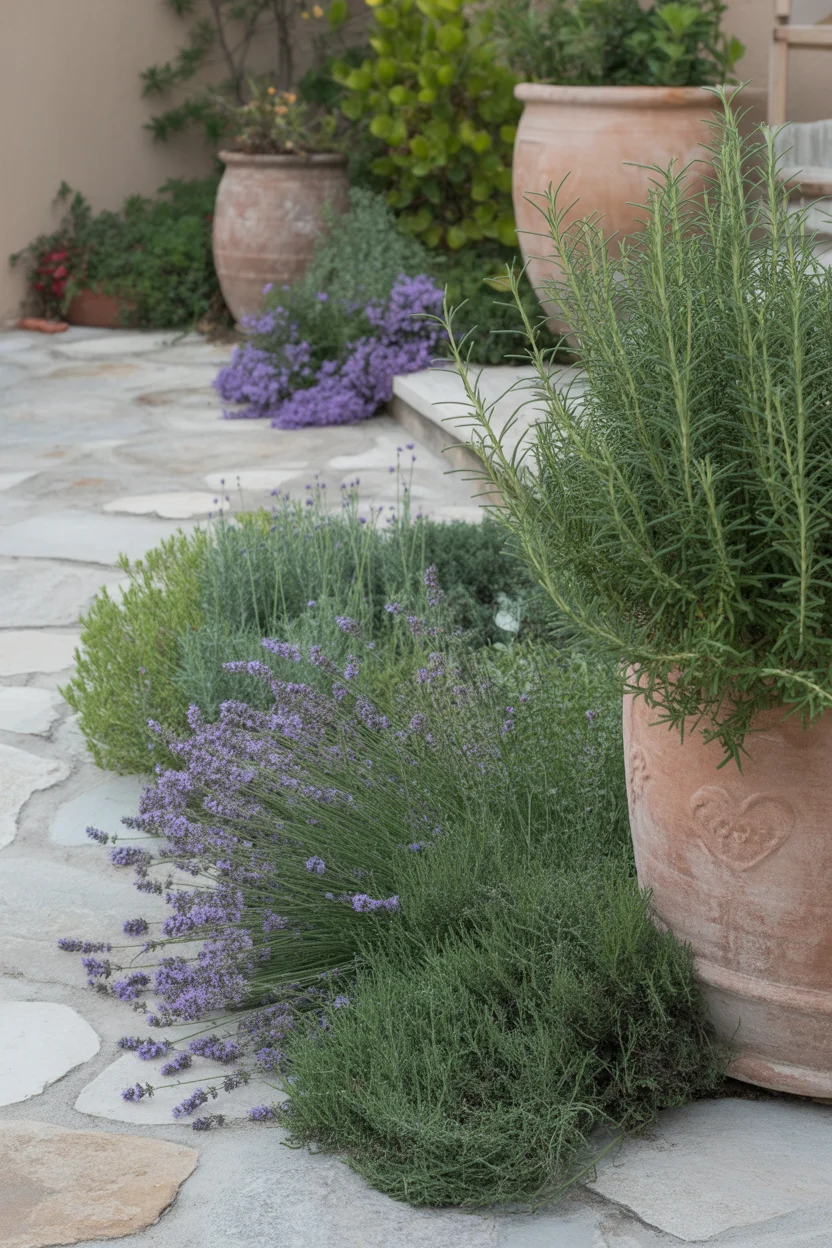
Transform your front yard into a fragrant Mediterranean escape with edible and ornamental herbs replacing traditional grass. This design features billowing lavender borders, spreading rosemary hedges, and carpets of creeping thyme that release wonderful aromas with every footstep. The silvery-green foliage typical of Mediterranean plants creates a calming, cohesive color palette that looks intentional and well-designed. Weathered stone pavers and terracotta pots add authentic European charm while providing structure to the informal planting style.
Beyond its stunning appearance, this grass-free approach offers practical benefits that traditional lawns can’t match. Herbs require minimal water once established and thrive in poor soil conditions that would challenge conventional turf. You can harvest fresh herbs for cooking throughout the growing season, turning your front yard into a productive landscape. The pollinator-friendly blooms attract beneficial insects and butterflies, supporting local ecosystems. This design works beautifully in dry climates and requires only occasional trimming to maintain its cottage-garden appeal.
4. Japanese Zen Garden
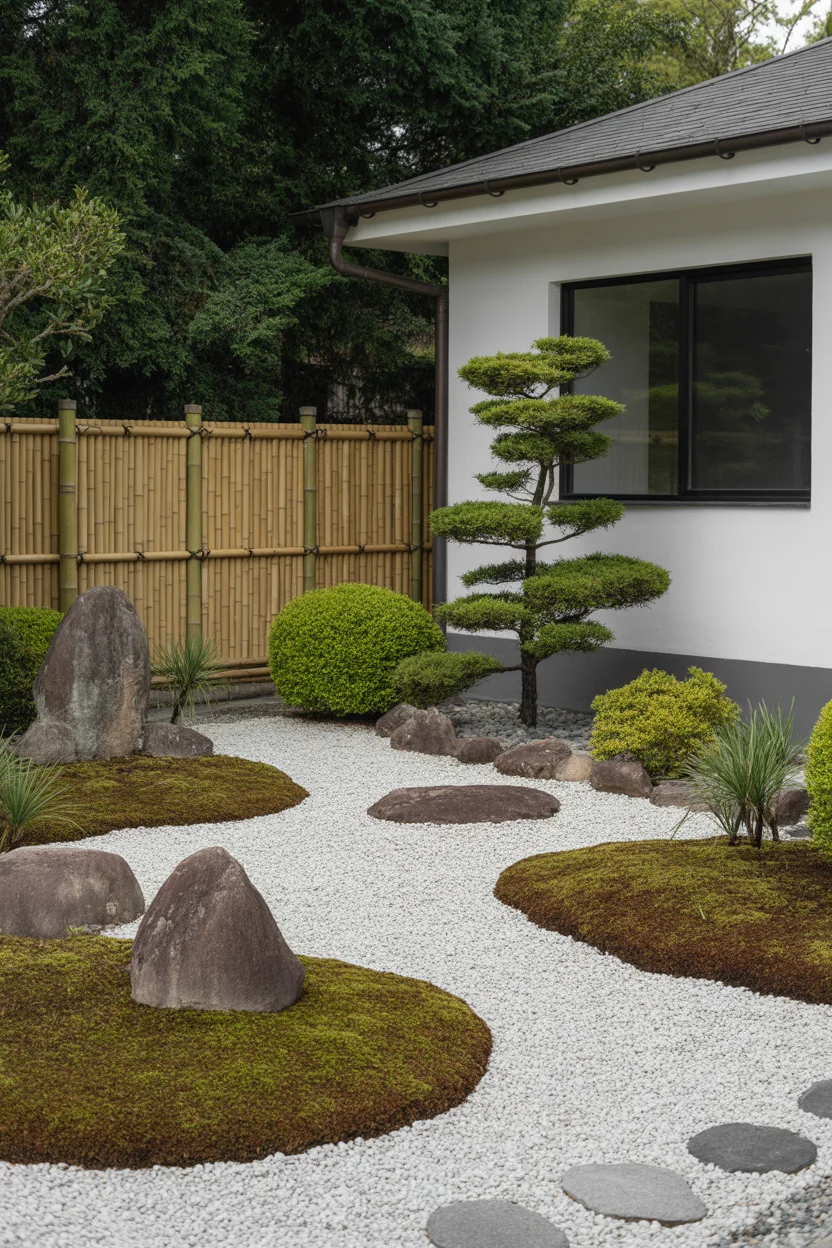
This contemplative Japanese-style garden replaces grass with raked gravel that symbolizes flowing water, creating a meditative space that requires zero mowing or watering. The precise placement of weathered boulders follows traditional principles of asymmetry and natural arrangement, with each stone carefully selected for its shape and character. Evergreen plants like boxwood, Japanese maple, and bamboo provide year-round structure and color while maintaining the minimalist aesthetic. The raked patterns in the gravel add visual interest and can be changed seasonally or as desired.
The beauty of this grass-free design lies in its emphasis on negative space and intentional simplicity. Unlike busy cottage gardens, the Zen approach uses restraint to create powerful visual impact through carefully chosen elements. Maintenance involves raking the gravel weekly and occasional pruning of sculptural plants to maintain their forms. The design encourages mindfulness and provides a peaceful retreat from busy modern life. This style works especially well for smaller front yards where every element can be appreciated, proving that grass-free landscaping can be both beautiful and spiritually enriching.
5. Wildflower Meadow
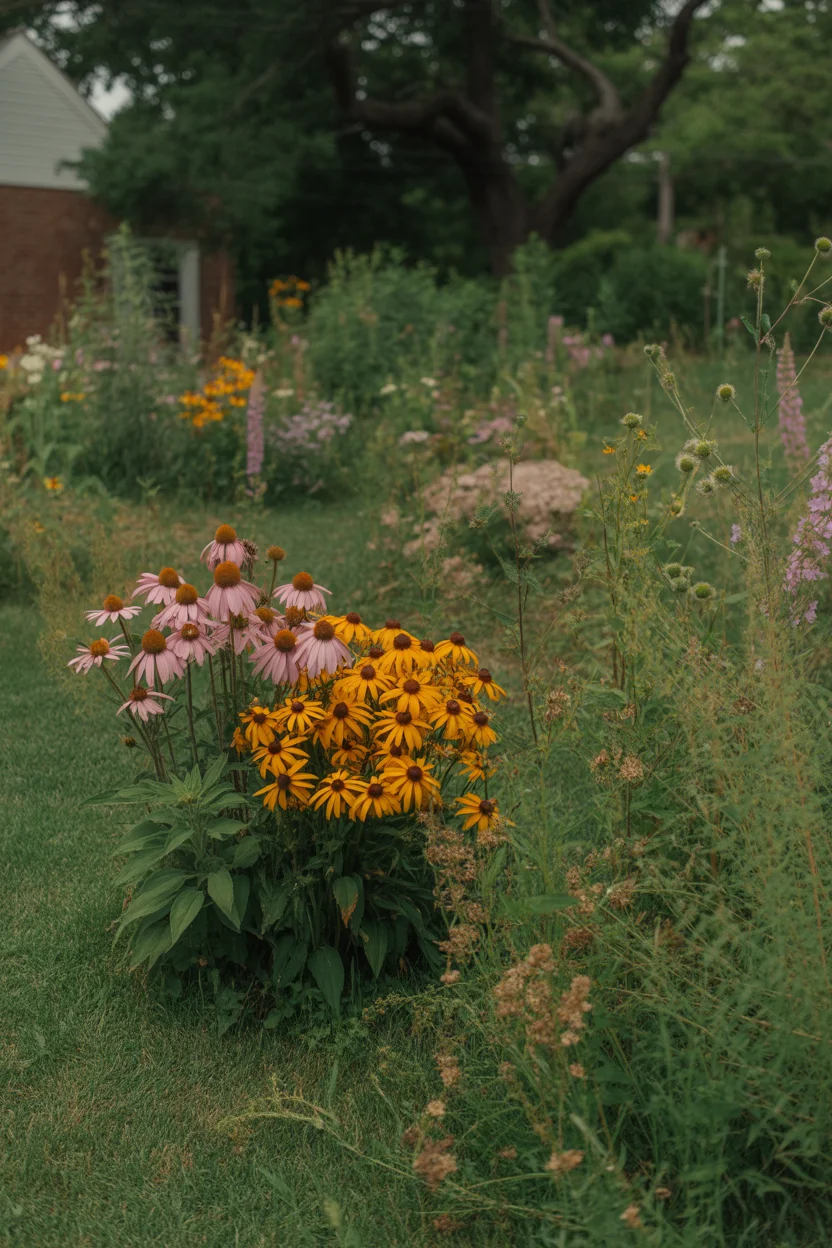
Embrace natural beauty with a wildflower meadow that transforms your front yard into a ever-changing display of color and texture. This grass-free approach uses native perennial wildflowers that bloom in succession from spring through fall, ensuring continuous visual interest and nectar sources for pollinators. The informal, meadow-like appearance may look effortless, but it’s actually a carefully designed ecosystem featuring plants adapted to your specific region. Interspersed ornamental grasses provide structure and movement while filling gaps between flowering periods.
This sustainable landscape requires significantly less maintenance than traditional lawns once established, needing only one or two cuts per year instead of weekly mowing. Native wildflowers develop deep root systems that prevent erosion, improve soil health, and require no supplemental watering after the first season. The resulting habitat supports butterflies, beneficial insects, and songbirds, creating a living ecosystem in your front yard. While some homeowners associations may resist meadow-style gardens, this approach represents the cutting edge of ecological landscaping and offers unmatched environmental benefits alongside its undeniable beauty.
Explore more at : Pinterset
6. Gravel and Boulder Garden
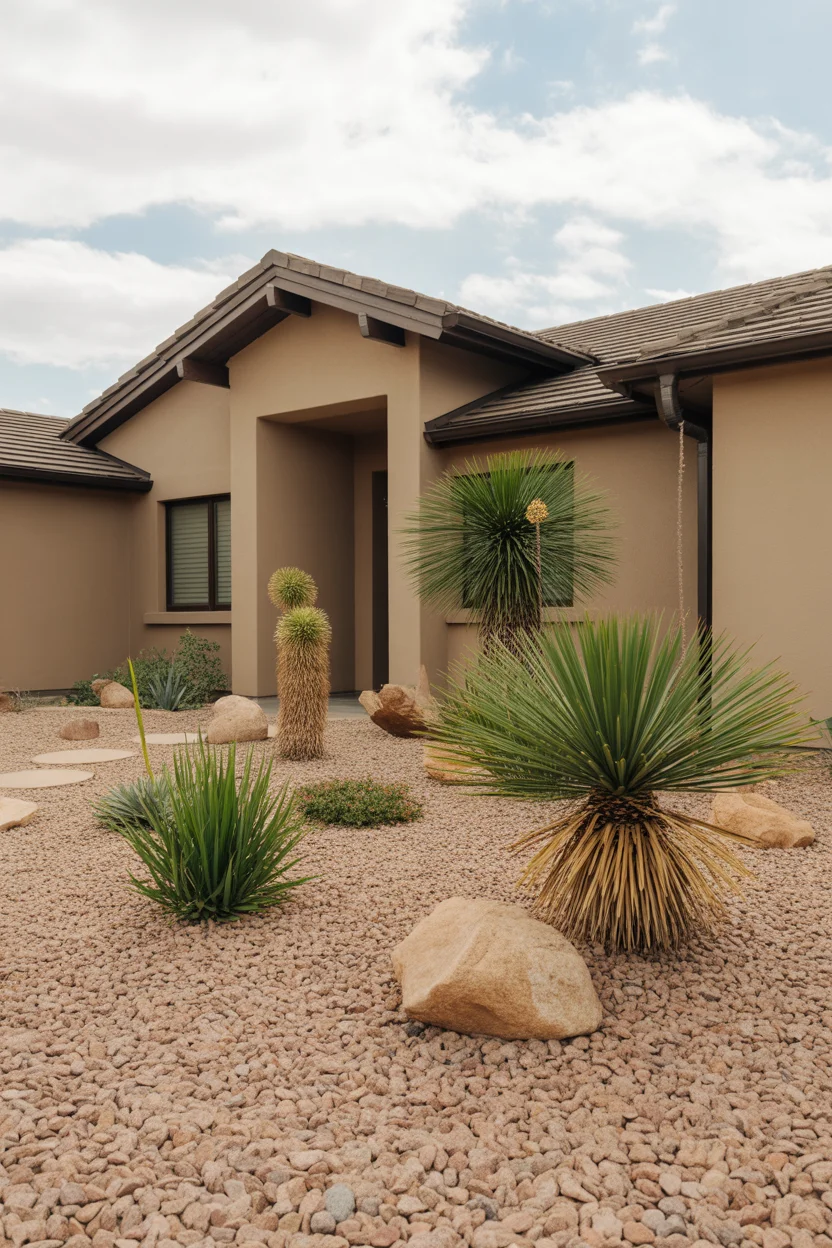
This bold, water-wise design uses gravel as the primary ground cover, creating a cohesive canvas that showcases carefully selected plants and architectural boulders. The warm-toned pea gravel or crushed stone provides excellent drainage while suppressing weeds and reflecting heat that many drought-tolerant plants love. Large boulders serve as natural sculptures, adding weight and permanence to the design while creating microclimates for plants. Strategic placement of dramatic specimens like yucca, agave, or ornamental grasses creates focal points that draw the eye through the space.
The practical advantages of this grass-free approach make it ideal for hot, arid climates or anyone seeking ultra-low maintenance landscaping. Gravel never needs mowing, watering, or fertilizing, reducing landscape maintenance to occasional weeding and plant care. The porous surface allows rainwater to percolate into the soil rather than running off, supporting groundwater recharge. While some might consider gravel austere, the right plant selection and boulder placement creates a sophisticated, gallery-like landscape that changes with the seasons as plants bloom and grasses turn golden.
7. Clover Lawn Alternative
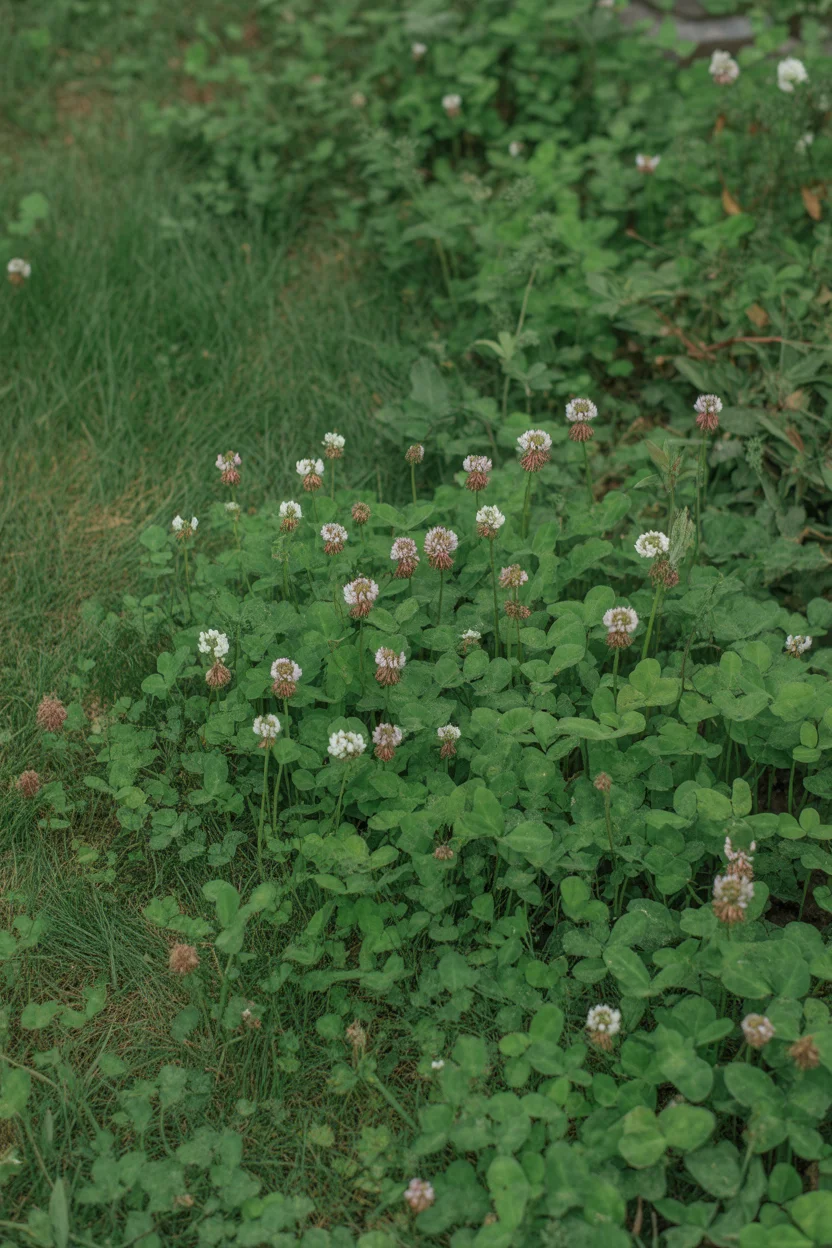
Clover presents a brilliant grass-free solution that maintains the traditional lawn appearance while eliminating most maintenance headaches. This nitrogen-fixing plant creates a dense, soft carpet that stays green through drought and heat that would brown conventional turf. White clover blooms attract beneficial pollinators, turning your front yard into a haven for bees while creating charming drifts of white flowers. The low-growing habit means you can choose to never mow or only occasionally trim for a more manicured appearance.
The environmental and economic benefits of clover make it an increasingly popular grass alternative for front yards. Clover naturally fertilizes itself through nitrogen fixation, eliminating the need for chemical treatments that pollute waterways. It requires 80% less water than traditional grass and tolerates foot traffic remarkably well. The dense growth crowds out most weeds, reducing or eliminating herbicide use. While some neighborhoods may initially question a clover lawn, this living ground cover offers all the visual softness of grass with a fraction of the environmental impact and maintenance requirements.
8. Moss Garden
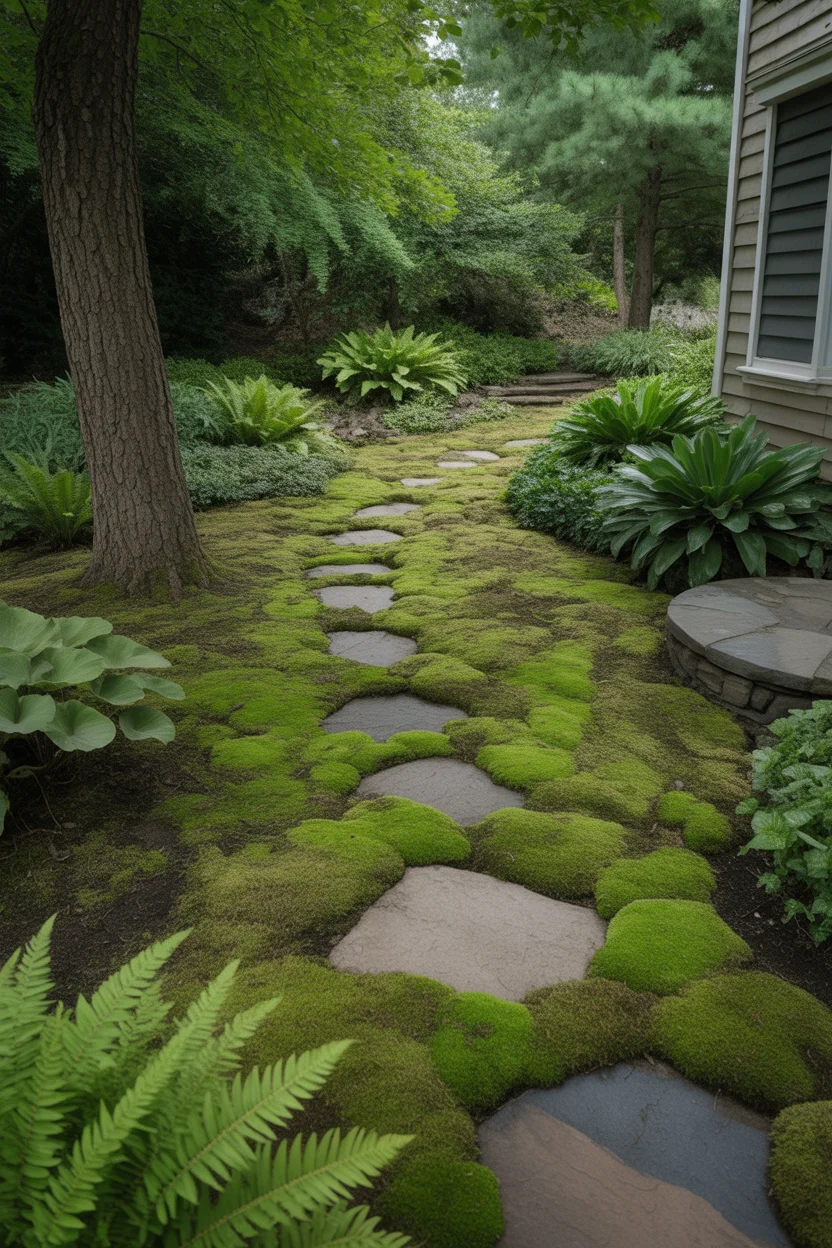
For shaded front yards where grass struggles, moss provides an enchanting grass-free alternative that creates a fairy-tale atmosphere. This velvety ground cover thrives in conditions that challenge conventional turf—shade, moisture, and acidic soil. Various moss species can be combined to create subtle variations in texture and color, from bright chartreuse to deep forest green. The carpet-like appearance feels luxurious and intentional, transforming problem shade areas into assets. Paired with ferns, hostas, and woodland plants, moss creates a cohesive forest-floor aesthetic.
The remarkable simplicity of moss maintenance makes it ideal for busy homeowners seeking grass-free front yards. Moss requires no mowing, fertilizing, or aeration—just adequate moisture and shade. Once established, it outcompetes most weeds and creates a self-sustaining ground cover that improves year after year. The initial establishment requires patience and consistent moisture, but mature moss gardens are nearly effortless to maintain. This grass-free option works beautifully around mature trees where grass struggles, creating a serene, low-maintenance landscape that looks intentionally designed rather than neglected.
9. Stepping Stone Pathway Garden
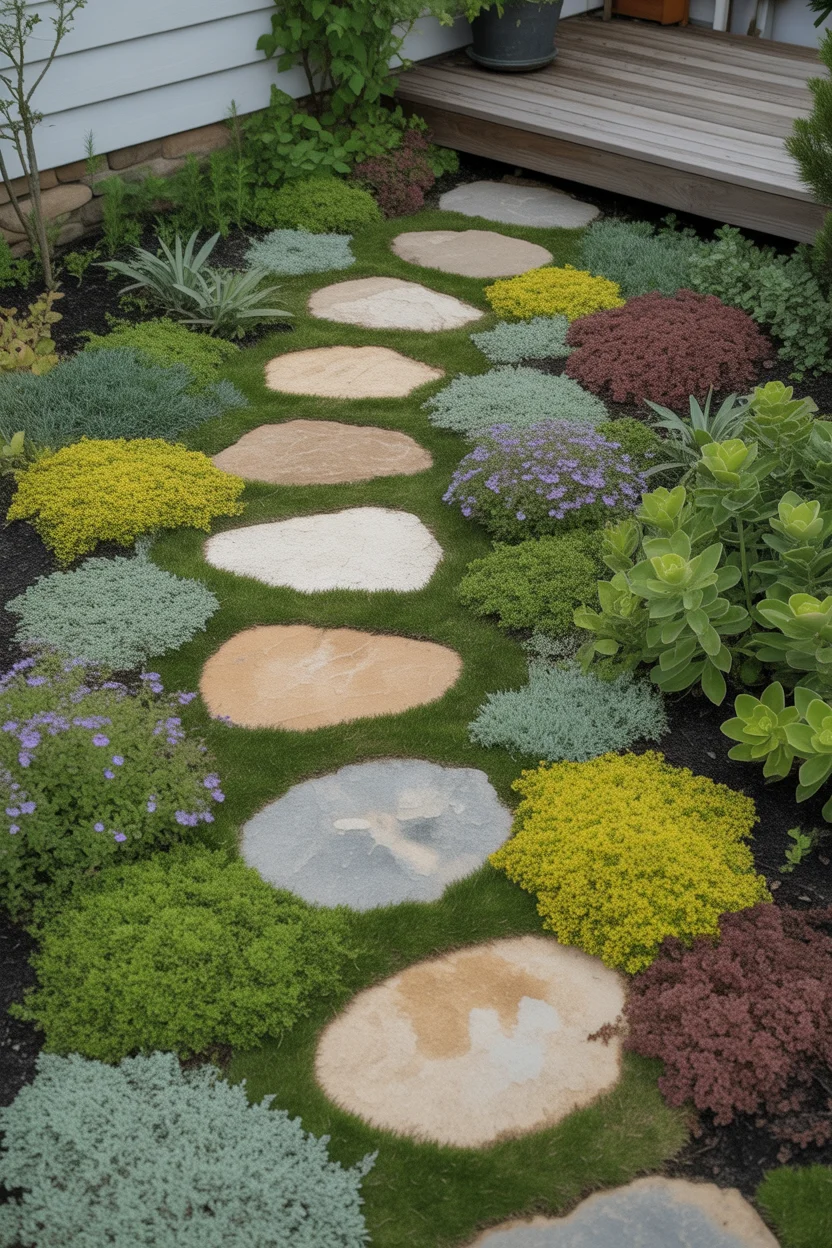
This charming design approach transforms your entire front yard into an artistic composition of pathways and planting pockets. Large stepping stones create primary circulation routes while generous gaps between stones showcase diverse ground covers that soften the hardscape. Creeping thyme releases fragrance when stepped upon, sedum provides succulent texture and drought tolerance, and flowering ground covers like ajuga add seasonal color. The irregular spacing and organic stone shapes create a cottage-garden feel that’s both practical and beautiful.
Beyond its aesthetic appeal, this grass-free design offers exceptional flexibility for customization and problem-solving. You can adjust the density of stepping stones based on traffic patterns, using more stones in high-traffic areas and fewer where plants can dominate. The design works equally well in sun or shade by selecting appropriate ground covers for your conditions. Maintenance involves occasional trimming of spreading plants and keeping pathways clear, but no mowing or edging. This approach transforms the front yard from a static green carpet into an engaging landscape that invites exploration and close observation.
10. Drought-Tolerant Perennial Border
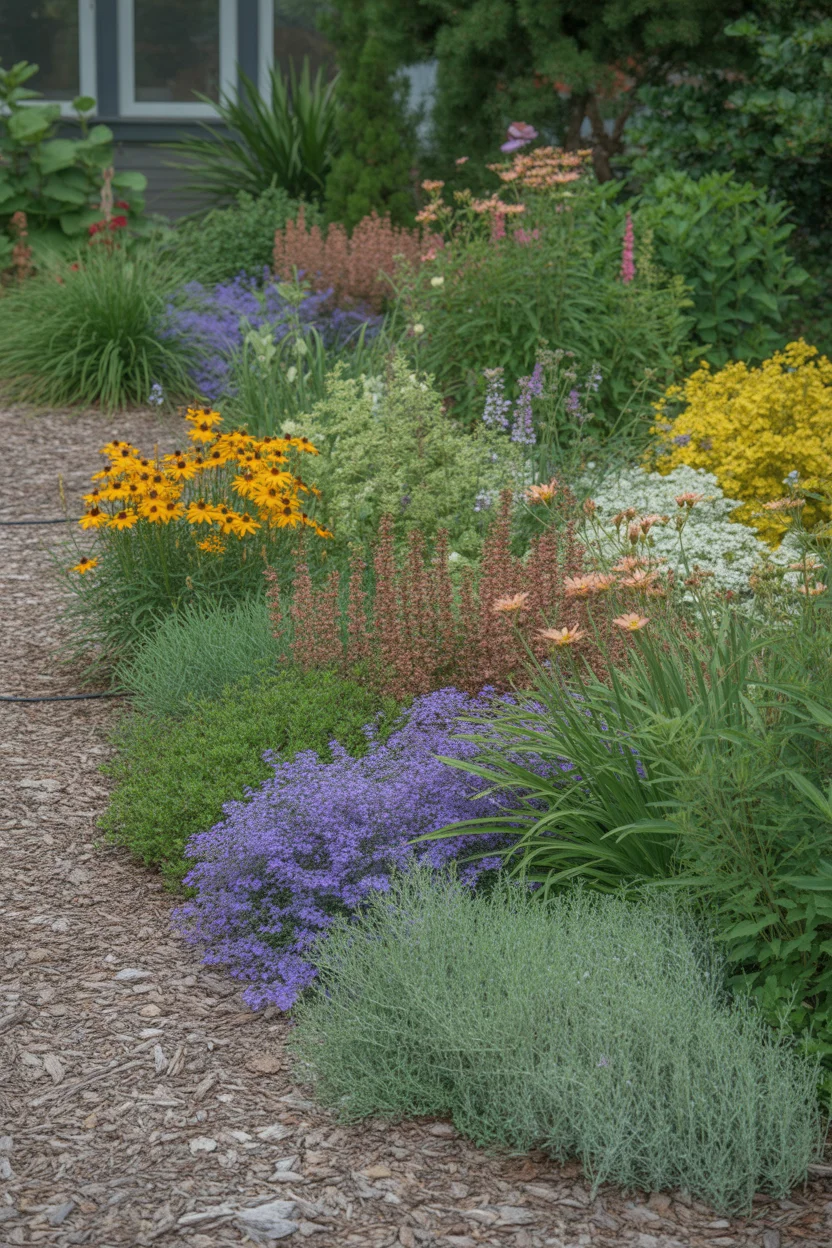
This dynamic grass-free design uses drought-tolerant perennials arranged in thoughtfully composed borders that provide three-season color. The layered approach places taller plants like Russian sage toward the back, mid-height perennials like salvia in the middle, and low-growing options like coreopsis at the front edge. This creates depth and ensures all plants are visible and appreciated. Bloom times are staggered so different plants peak throughout spring, summer, and fall, maintaining continuous interest. The generous mulch or gravel between plants suppresses weeds while conserving soil moisture.
The sustainability of this grass-free approach makes it increasingly relevant as water becomes scarce in many regions. Once established, these perennials require watering only during extreme drought, relying primarily on natural rainfall. The diversity of plant species supports pollinators and creates resilience against pests and diseases. Unlike annual bedding plants, perennials return year after year, making this a low-cost long-term landscaping solution. Maintenance involves spring cleanup, occasional deadheading, and division every few years—far less work than weekly mowing and the constant vigilance grass lawns demand.
11. Artificial Turf with Garden Beds
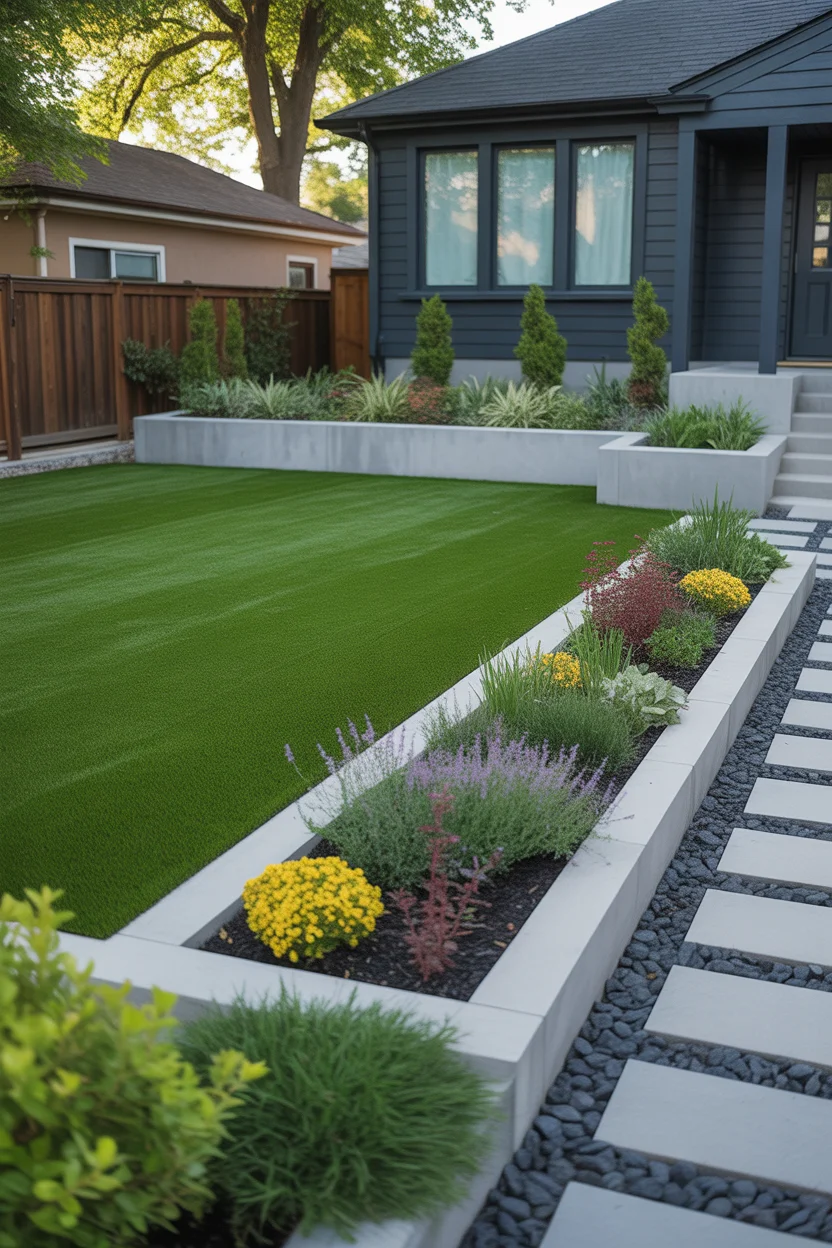
Modern artificial turf has evolved dramatically, now offering realistic texture and color that mimics natural grass without the maintenance burden. This grass-free solution maintains the traditional lawn appearance that some neighborhoods prefer while eliminating the endless cycle of mowing, watering, and treating. High-quality products feature realistic color variation, thatch layers, and soft texture that looks convincing year-round. When combined with real planting beds containing shrubs, perennials, and seasonal color, the artificial turf provides green softness while living plants add authenticity and seasonal interest.
The practical benefits of artificial turf make it worth considering despite the higher initial investment. Water savings can be dramatic—up to 55,000 gallons annually for an average lawn—making this grass-free option environmentally responsible in drought-prone regions. The surface remains clean, mud-free, and consistently attractive regardless of weather or season. Modern products are increasingly eco-friendly, made from recyclable materials and free from harmful chemicals. While not suitable for every aesthetic preference, artificial turf combined with real garden beds offers a pragmatic grass-free solution that maintains curb appeal while drastically reducing landscape maintenance and resource consumption.
12. Rock Garden with Alpine Plants
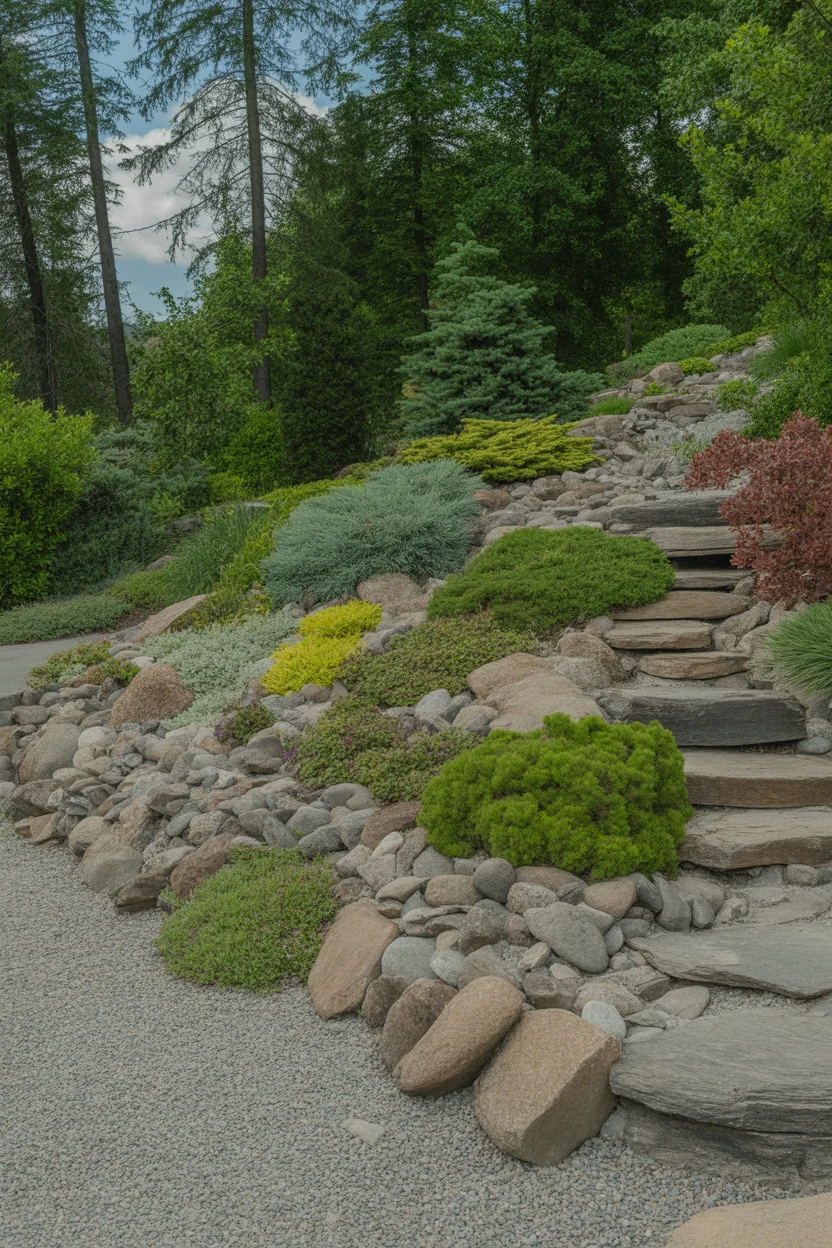
Rock gardens offer an elegant grass-free solution for challenging front yards with slopes, poor soil, or drainage issues. This design mimics alpine environments where plants grow among rocks in harsh conditions, creating a naturalistic landscape that looks intentional rather than problematic. Carefully positioned boulders and smaller rocks create planting pockets filled with gritty, well-draining soil perfect for alpine plants, dwarf conifers, and tough perennials. The varying elevations create visual interest and allow each plant to be showcased individually.
The resilience of rock garden plants makes this grass-free approach ideal for low-maintenance landscapes. Alpine plants evolved to survive in nutrient-poor soils with minimal water, making them perfectly suited to neglect once established. The rocks provide thermal mass that moderates soil temperature while the gaps ensure excellent drainage that prevents root rot. This design requires no mowing, minimal watering, and only occasional weeding. For front yards where grass struggles due to slope, shade, or poor soil, rock gardens transform liabilities into assets, creating distinctive landscapes that stand out in neighborhoods dominated by traditional lawns.
13. Hardscape Courtyard Design
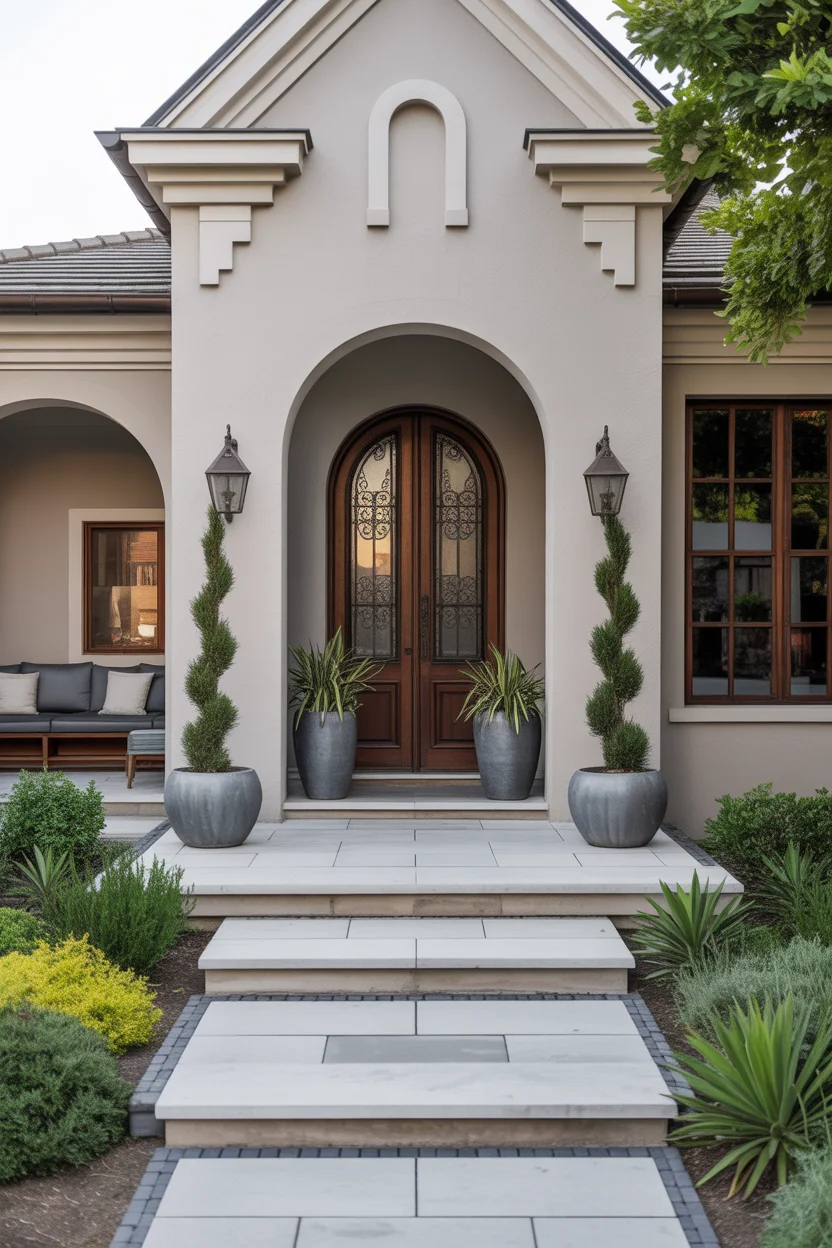
This architectural approach eliminates grass entirely in favor of hardscape that transforms the front yard into an outdoor room. Large-format pavers, natural flagstone, or stamped concrete create the primary surface, with generous planting pockets left for specimen trees, architectural shrubs, or sculptural plants like agave. Container gardens add seasonal color and flexibility, allowing you to refresh the look without major renovations. The hardscape defines clear circulation paths while creating spaces for outdoor furniture, turning your front yard into usable living space.
The lifestyle benefits of hardscape-dominated grass-free front yards extend beyond mere aesthetics. These spaces function as outdoor entertaining areas, meditation gardens, or simply attractive low-maintenance landscapes that enhance property value. Hardscape requires no watering, mowing, or fertilizing—just occasional sweeping and power washing. The initial investment is higher than planting grass, but the long-term savings in water, maintenance labor, and lawn care equipment make it cost-effective. This design works beautifully in urban settings, modern architecture, and drought-prone regions where every drop of water counts.
14. Native Groundcover Tapestry
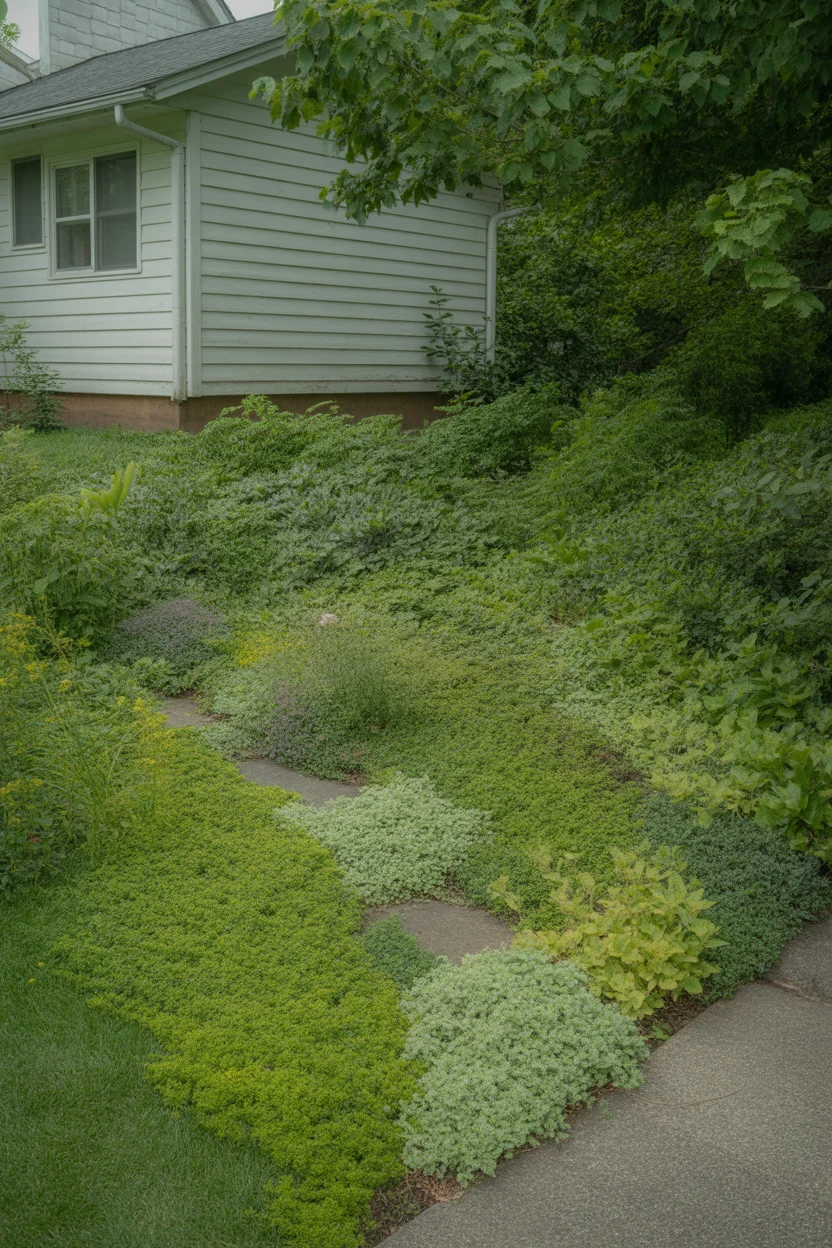
Creating a tapestry of native groundcovers offers an ecologically responsible grass-free front yard that supports regional biodiversity. This approach uses multiple low-growing native species that naturally occur in your area, ensuring they’re adapted to local climate, soil, and rainfall patterns. Different groundcovers bloom at various times, creating seasonal interest through flowers, foliage color changes, and textural variation. The interwoven planting creates a naturalistic appearance that mimics how plants grow in wild ecosystems, with stronger growers balanced by slower spreaders to prevent any single species from dominating.
The ecological advantages of native groundcovers make this grass-free approach particularly valuable for environmentally conscious homeowners. Native plants provide food and habitat for local insects, birds, and wildlife that evolved alongside them, supporting biodiversity that non-native lawns cannot. Deep root systems prevent erosion, filter stormwater, and require no irrigation after establishment. This design eliminates the need for fertilizers and pesticides while creating a resilient landscape that adapts to local weather patterns. Maintenance involves occasional trimming to maintain boundaries, but no mowing or intensive care, making it both beautiful and sustainable.
15. Deck and Container Garden
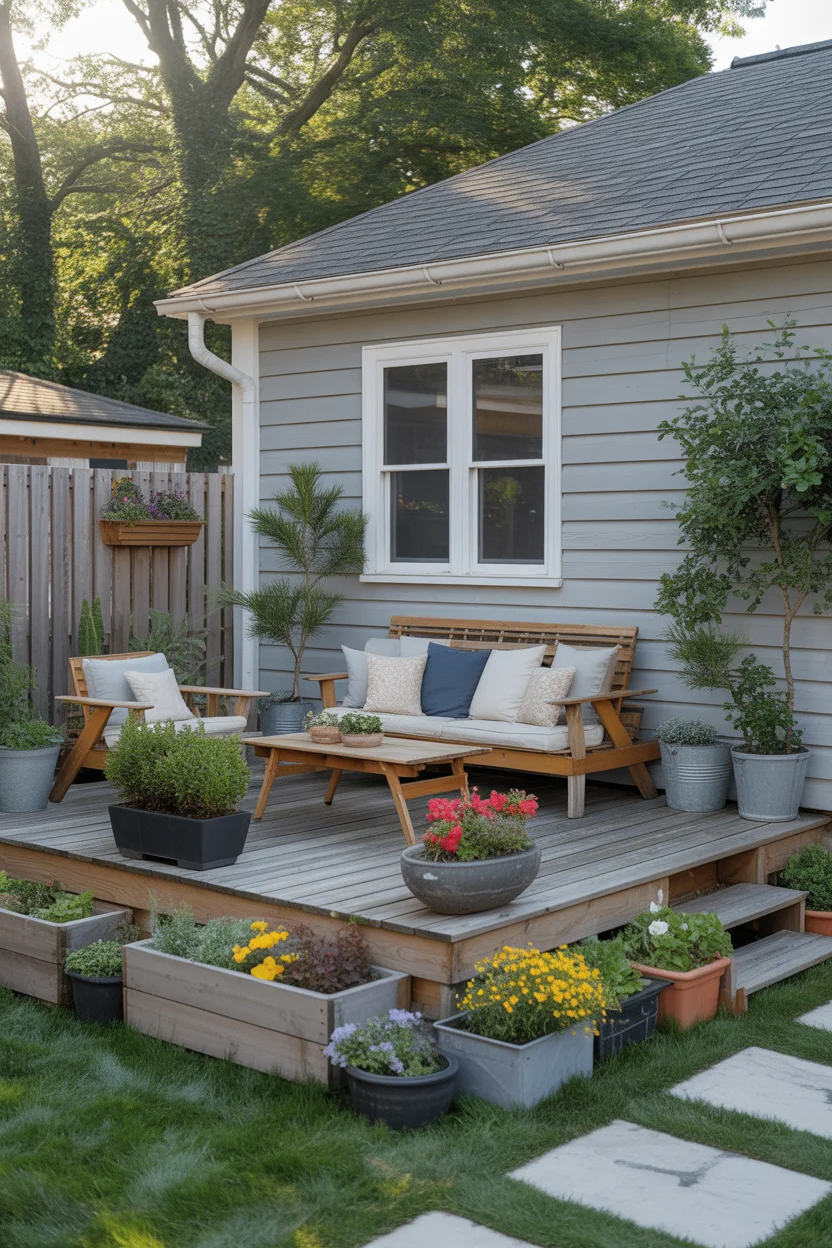
This innovative grass-free design replaces lawn with a low deck or platform that creates functional outdoor living space. The deck extends from the house into the front yard, providing space for seating, container gardens, and decorative elements. Surrounding the deck, container gardens of varying sizes create a flexible planting scheme that can be rearranged seasonally or as your preferences change. The combination of hardscape and containers completely eliminates grass while creating a distinctive, functional front yard that stands out from traditional landscapes.
The versatility of this approach makes it ideal for renters, frequent remodelers, or anyone who enjoys changing their landscape design. Containers allow you to experiment with plants unsuited to your in-ground soil conditions, growing acid-lovers in alkaline soil regions or vice versa. Seasonal refreshes are simple—swap out containers or replant them with new color schemes. The deck requires no watering and minimal maintenance beyond occasional cleaning and sealing. This grass-free solution works particularly well in urban settings, small yards, or properties where in-ground planting is challenging. While requiring initial investment, the flexibility and functionality make it a valuable long-term landscaping strategy.
16. Edible Front Yard Garden
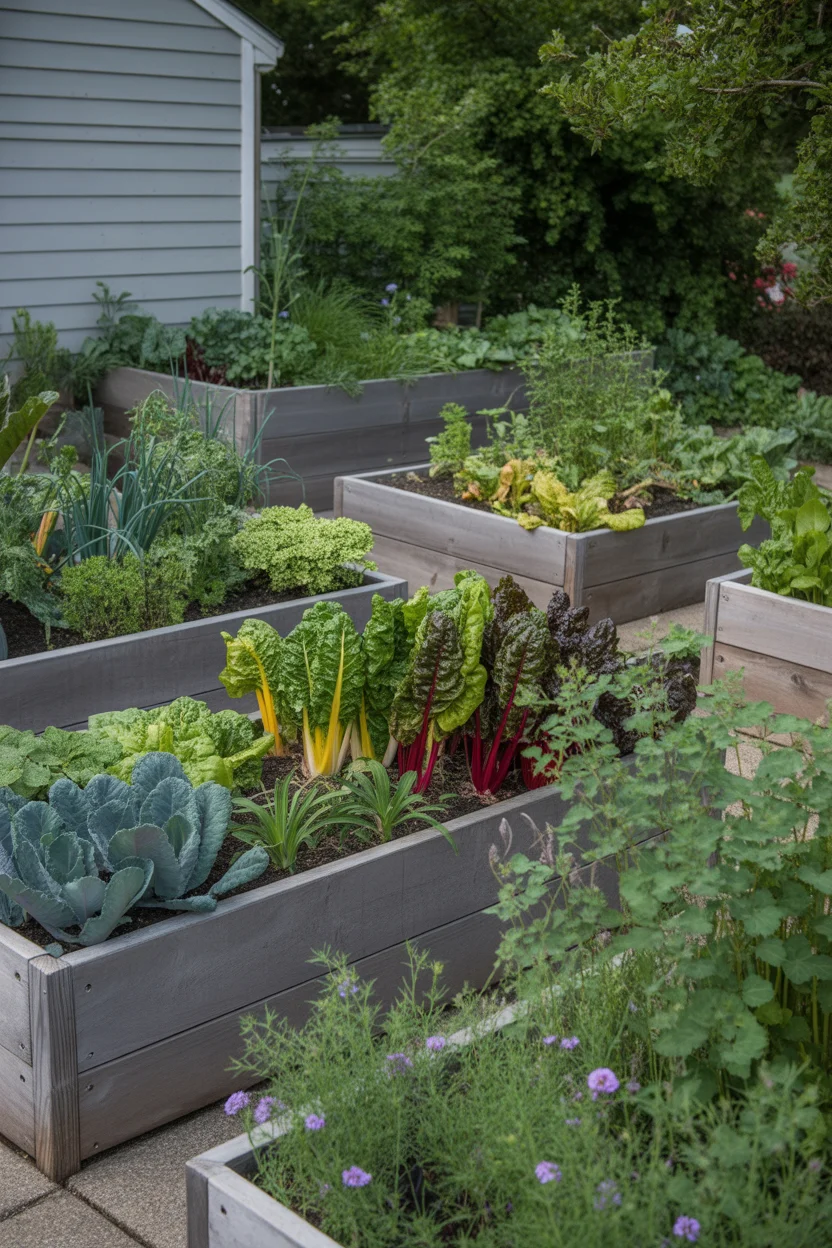
Transform your grass-free front yard into a productive landscape that feeds your family while looking beautiful. This design treats vegetables and herbs as ornamental plants, arranging them for visual appeal as well as harvest. Colorful Swiss chard, textural kale varieties, and architectural artichokes provide structure, while flowering herbs like lavender and blooming vegetables add seasonal color. Raised beds or defined borders create organization and improve drainage, while pathways of mulch, gravel, or pavers provide access for maintenance and harvest. The result challenges conventional separation of ornamental and edible landscapes.
The dual-purpose nature of edible grass-free front yards offers unique benefits that traditional lawns can’t match. You’ll harvest fresh, organic produce just steps from your kitchen while creating habitat for pollinators with flowering edibles. This approach significantly reduces grocery costs while eliminating the expense of lawn maintenance equipment, water, and treatments. Maintenance involves the rewarding work of planting, tending, and harvesting rather than the monotonous cycle of mowing. While some neighborhoods resist front-yard food gardens, this trend is growing as communities recognize the value of local food production and sustainable landscaping practices.
17. Monochromatic Silver Garden
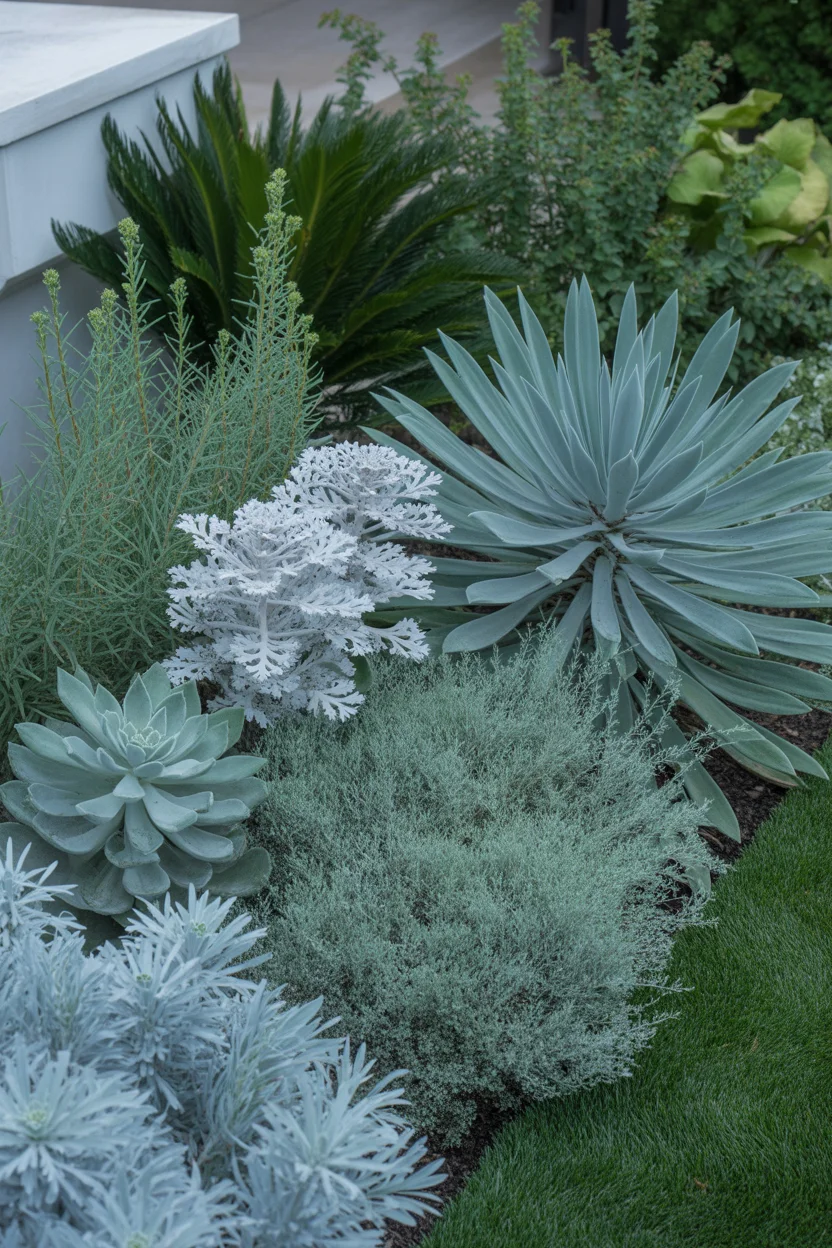
This elegant design approach uses silver and gray-foliaged plants to create a cohesive, sophisticated grass-free landscape. Plants like artemisia, dusty miller, lamb’s ear, and Russian sage offer incredible textural variety despite the limited color palette. The silvery leaves reflect light, creating a luminous quality especially beautiful in evening light or against darker home exteriors. Ornamental grasses with blue or silver tones add movement and height variation. The monochromatic scheme feels intentional and designed, demonstrating the artistic possibilities of grass-free landscaping.
Beyond its visual appeal, the silver garden offers practical advantages for water-conscious landscaping. Most silver-foliaged plants evolved in Mediterranean or arid climates, developing fuzzy or waxy leaf coatings that reduce water loss. This makes them exceptionally drought-tolerant once established, requiring minimal supplemental irrigation. The restrained color palette creates a calming, meditative quality while ensuring the landscape looks cohesive throughout seasons. Maintenance involves occasional pruning to maintain shapes and prevent legginess, but no mowing or intensive care. This grass-free approach works beautifully in modern, traditional, or cottage garden settings, proving that limited color palettes create powerful visual impact.
18. Tropical Paradise
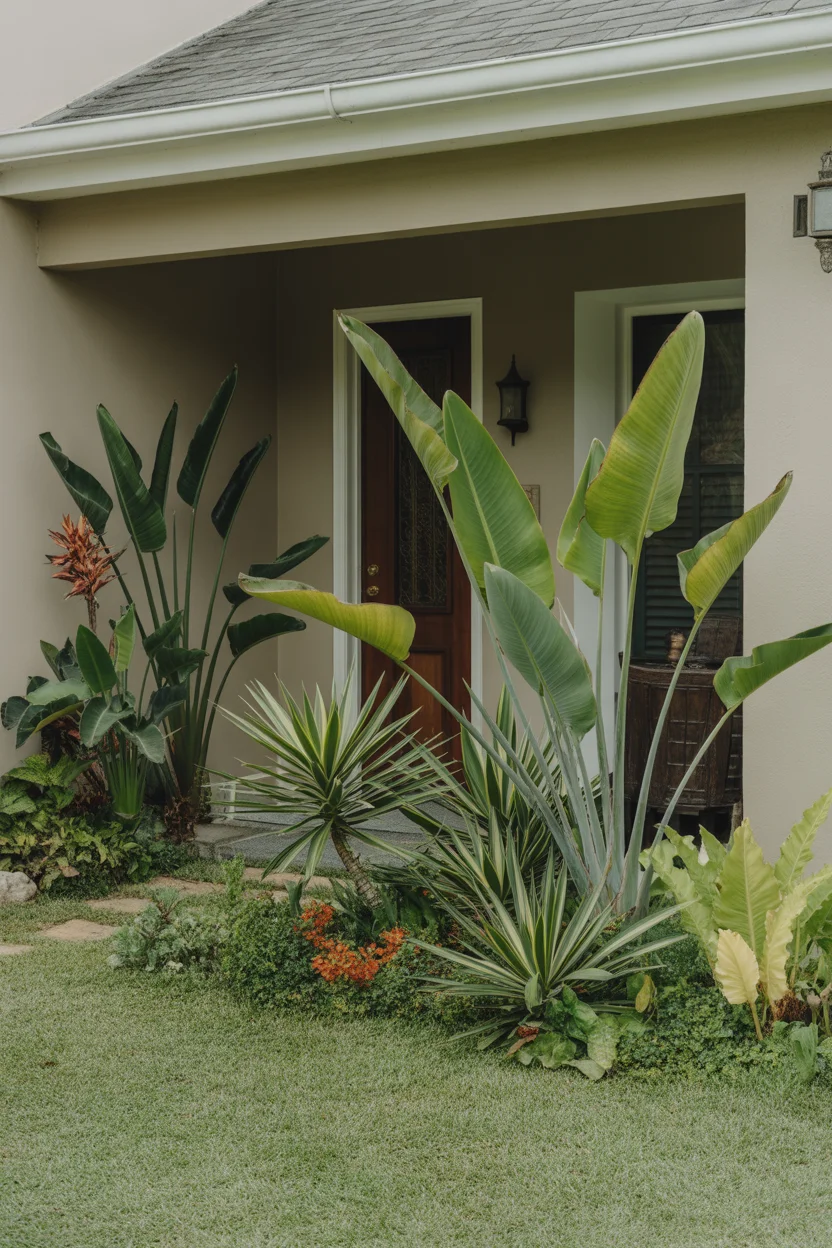
Bring vacation vibes home with a tropical-style grass-free front yard featuring bold, architectural plants with dramatic foliage. Large-leafed specimens like elephant ears and banana plants create instant impact, while bird of paradise and cannas add vibrant flowers. Layering plants of different heights and textures creates the lush, jungle-like density characteristic of tropical landscapes. Even in temperate climates, many tropical-looking plants are surprisingly hardy, while tender varieties can be treated as annuals or overwintered indoors.
This grass-free approach creates maximum visual impact with relatively few plants due to their substantial size. The bold aesthetic makes a strong design statement that sets your home apart from grass-lawn neighbors. Many tropical plants thrive in shade or part-shade where grass struggles, turning problematic areas into assets. While some tropical plants need consistent moisture, others like agave and succulent varieties are surprisingly drought-tolerant. Maintenance involves removing dead leaves and occasional division, but no mowing. This style works particularly well in warm, humid climates but can be adapted anywhere with proper plant selection, creating an exotic grass-free landscape that feels like a daily escape.
19. Woodland Shade Garden
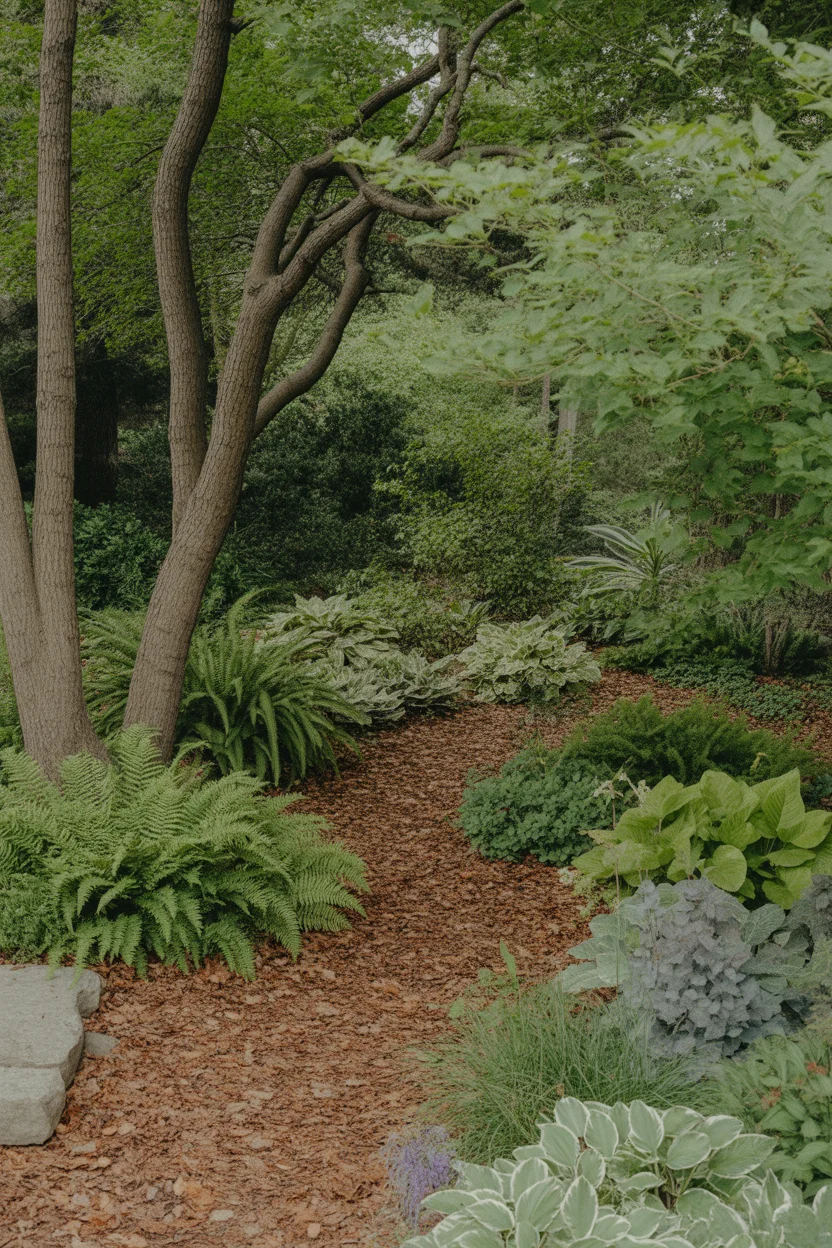
For properties with mature trees, a woodland shade garden offers a grass-free solution that works with existing conditions rather than against them. This design embraces the shade cast by trees, using it to showcase shade-loving plants that create a layered forest-floor effect. Ferns provide textural contrast, hostas offer bold foliage in countless varieties, and shade-blooming perennials like astilbe and hellebores add seasonal color. Natural leaf mulch pathways wind through the plantings, creating an organic, naturalistic feel while suppressing weeds and improving soil as leaves decompose.
The low-maintenance nature of woodland gardens makes them ideal grass-free alternatives for shaded front yards. These plants evolved to thrive in low-light, leaf-litter-rich environments similar to the conditions under yard trees. Once established, they require minimal watering and no mowing, with maintenance limited to spring cleanup and occasional division. The design improves year after year as perennials mature and multiply, creating increasingly lush displays. This approach transforms the frustrating challenge of growing grass under trees into an opportunity for creating a distinctive, serene landscape that enhances property value while requiring far less maintenance than struggling turf.
20. Paver and Groundcover Checkerboard
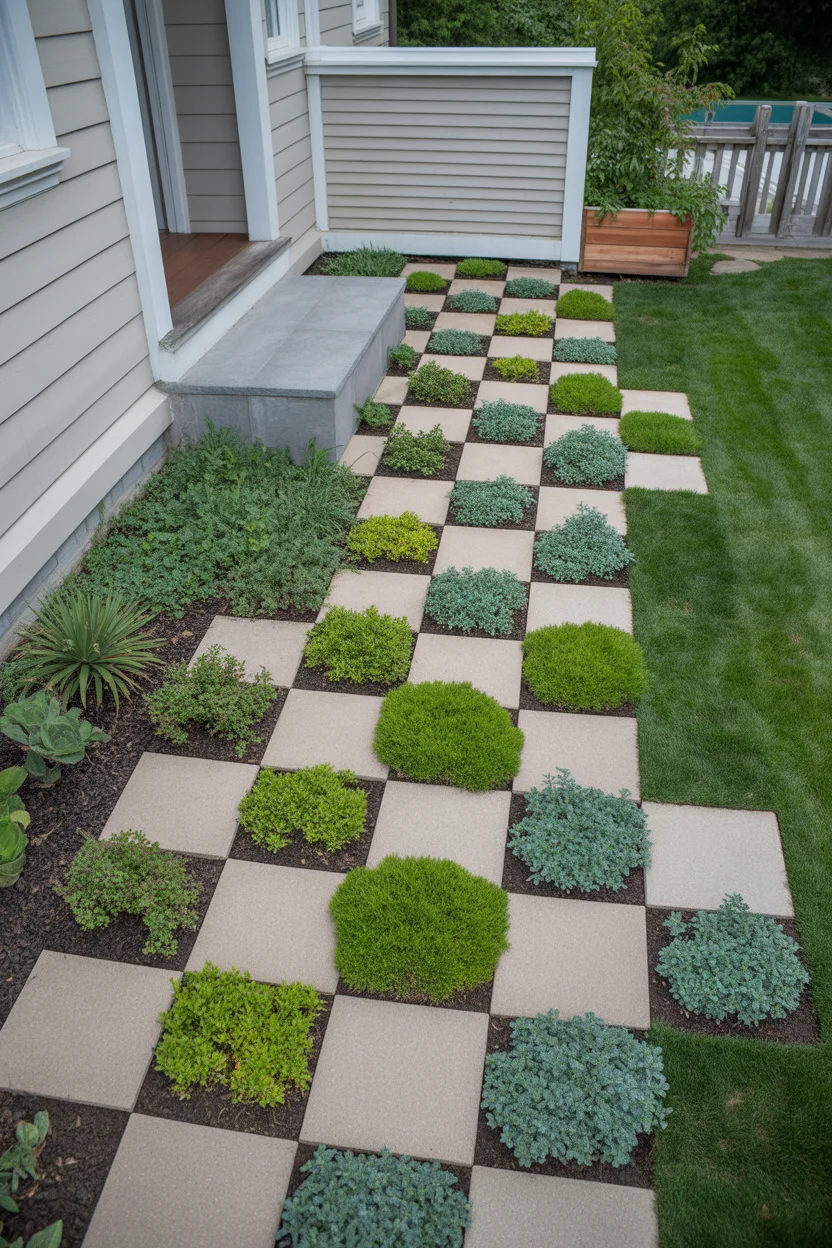
This geometric design creates visual interest by alternating hardscape and plantings in a checkerboard or grid pattern. Square pavers provide firm, clean surfaces for walking, while equally sized planting pockets contain low-growing groundcovers like thyme, sedum, or ajuga. The repetitive pattern creates order and rhythm while allowing you to walk anywhere across the front yard without defined paths. The contrast between hard and soft elements, and between the paver color and plant foliage, creates a striking contemporary look that works with modern and traditional architecture alike.
The balanced approach of this grass-free design offers both functionality and beauty. The substantial hardscape reduces overall plant maintenance while ensuring mud-free access during rainy weather. Yet the generous planting pockets prevent the landscape from feeling too hard or sterile, softening the geometry with living elements. You can customize the pattern by varying paver sizes, groundcover selections, or the ratio of hardscape to plantings. Maintenance involves trimming groundcovers to keep them within their pockets and occasional weeding, but no mowing. This design proves that grass-free front yards can be both highly functional and artistically adventurous.
21. Prairie-Style Native Planting
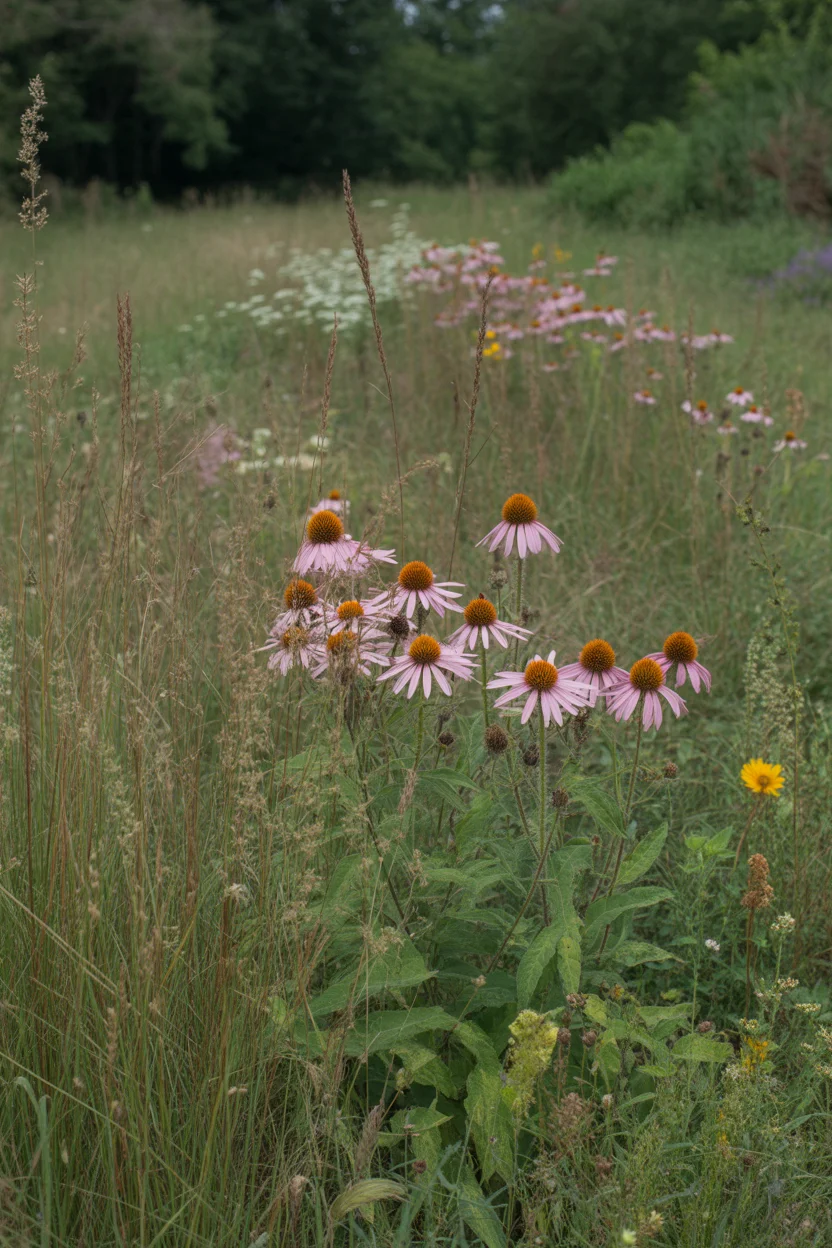
This ecological design embraces the natural beauty of prairie ecosystems, creating a grass-free front yard that celebrates regional native plants. Tall ornamental grasses like big bluestem and switchgrass provide structure and movement, while native perennial wildflowers add seasonal color and support pollinators. Plants are arranged in flowing, naturalistic drifts rather than formal borders, mimicking how they grow in wild prairies. The resulting landscape changes constantly with seasons, wind, and wildlife activity, creating a dynamic living artwork that connects your property to the larger regional ecosystem.
The environmental benefits of prairie-style plantings make them among the most sustainable grass-free landscaping options. Native prairie plants develop exceptionally deep root systems—sometimes 10 feet or more—that prevent erosion, filter stormwater, and sequester carbon. Once established, they require zero supplemental watering, fertilizing, or pesticide treatments while providing essential habitat for declining pollinator populations. Maintenance involves a single annual mowing in late winter to remove dead stalks. While this naturalistic style may face resistance from neighbors accustomed to manicured lawns, prairie gardens represent the cutting edge of ecological landscaping, offering maximum environmental benefit with minimal resource inputs.
Conclusion
Grass-free front yards offer endless possibilities for creating beautiful, sustainable landscapes that reflect your personal style while reducing maintenance, water consumption, and environmental impact. From Mediterranean herb gardens to prairie wildflower meadows, these 21 inspiring designs prove that eliminating traditional turf doesn’t mean sacrificing curb appeal. Whether you’re motivated by water conservation, reduced maintenance, or simply creating something more interesting than a standard lawn, there’s a grass-free solution perfect for your climate, aesthetic preferences, and lifestyle needs.


Join The Discussion