
Introduction
Open plan living doesn’t mean sacrificing definition or style in your dining space. The key to creating an intentional dining area within an open layout is thoughtful zoning, cohesive design, and strategic furniture placement. Whether you’re working with a kitchen-dining combo or a living-dining flow, these open plan dining area ideas will help you carve out a distinct eating zone that feels purposeful rather than accidental. From clever use of lighting to architectural elements, discover how to make your dining area the star of your open concept home.
1. Zone With a Statement Pendant Light
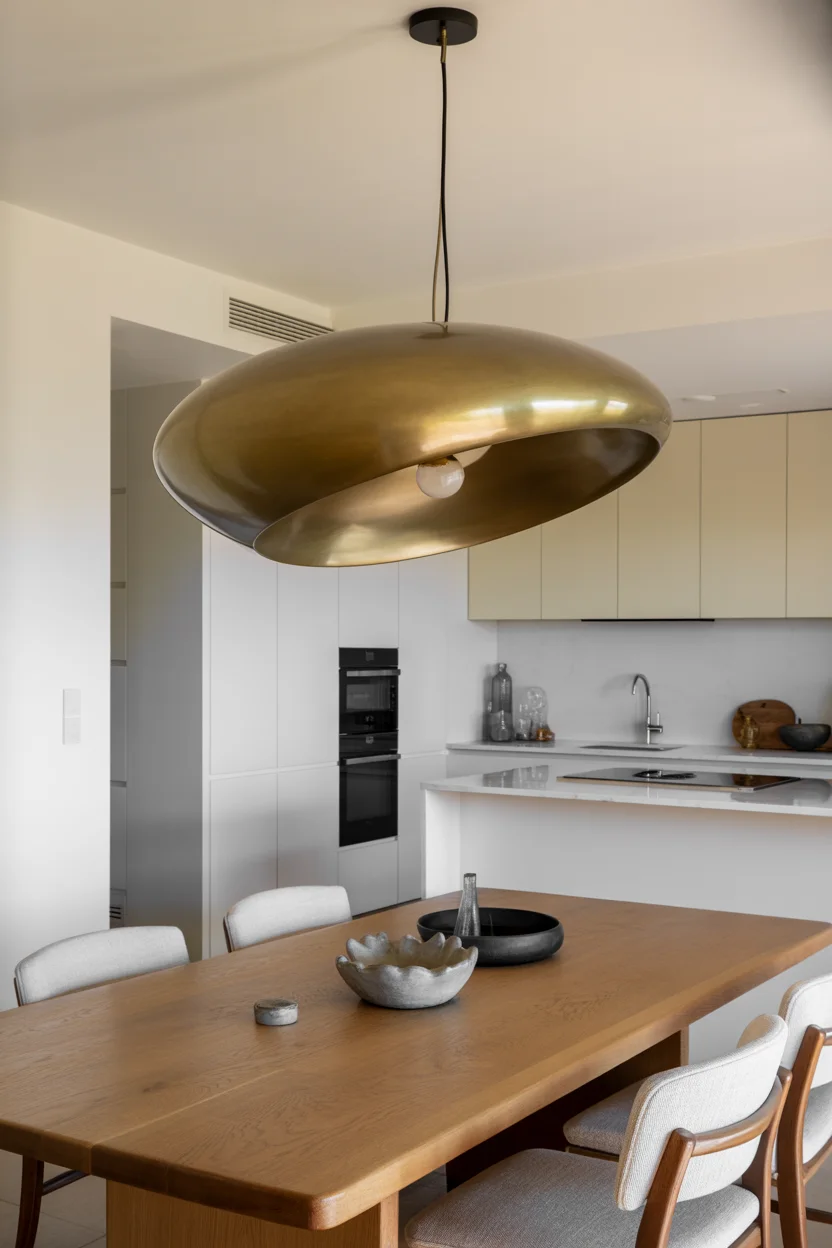
Statement lighting is one of the most effective ways to define your dining area without physical barriers. A bold pendant or chandelier hung at the right height (typically 30-36 inches above the table) creates an invisible boundary that signals “this is the dining zone.” Choose a fixture that complements your overall aesthetic while being substantial enough to command attention and anchor the space visually within the larger room.
The beauty of this approach lies in its flexibility and dramatic impact. Unlike permanent walls or dividers, lighting can be changed as your style evolves, and it serves dual purposes—functional illumination for meals and artistic focal point. Opt for dimmable options to control ambiance, transitioning from bright family dinners to intimate evening gatherings. Consider scale carefully; your fixture should be proportional to your table, typically one-half to three-quarters the table’s width for balanced visual weight.
2. Define Boundaries With a Large Area Rug
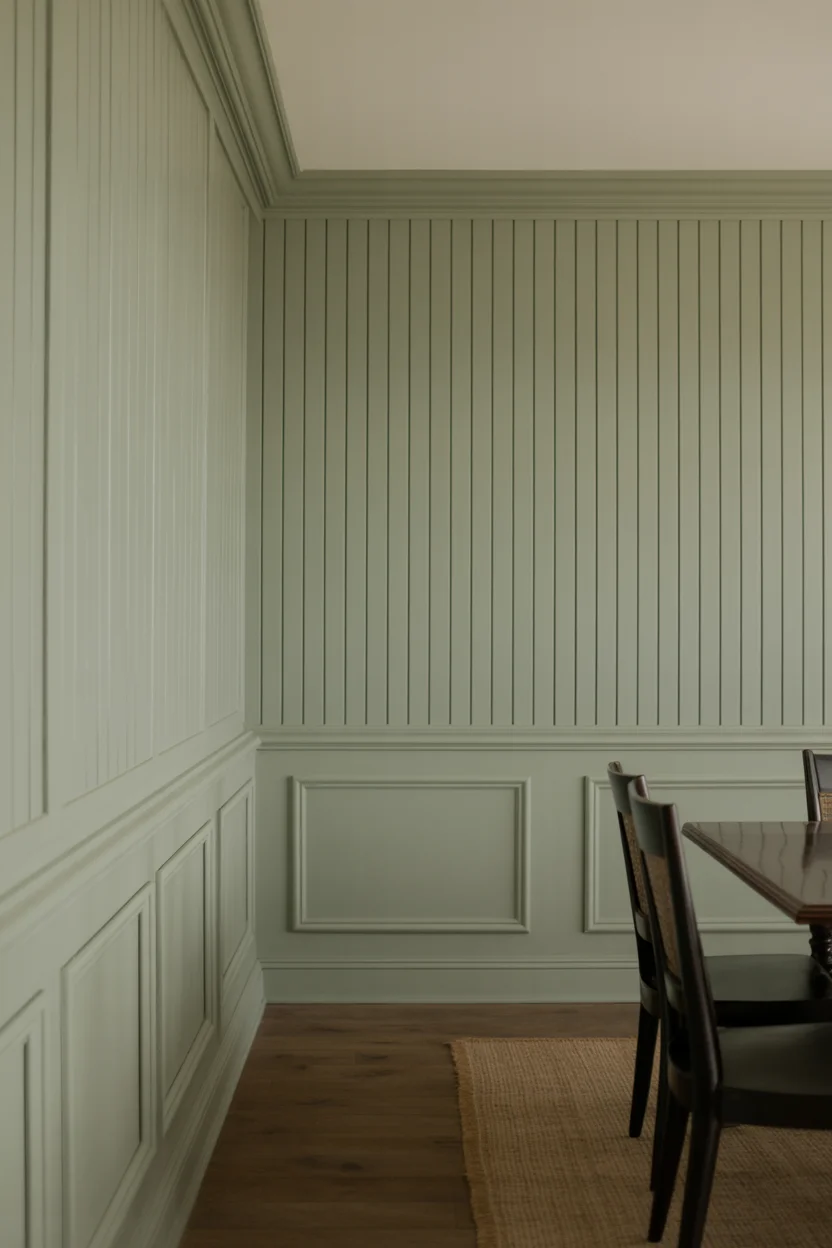
An area rug is perhaps the simplest yet most effective tool for establishing dining area boundaries in open plan layouts. The key is sizing—your rug should be large enough that all chairs remain on the textile even when pulled out for seating, typically requiring at least 24 inches of rug beyond the table on all sides. This creates a defined “island” within your open space that feels grounded and intentional.
Beyond mere definition, the right rug adds warmth, texture, and personality to your dining zone. Choose materials wisely for high-traffic eating areas—flatweave, indoor-outdoor rugs, or low-pile options resist staining and simplify cleaning. Pattern can either harmonize with your existing palette or provide contrast that further distinguishes the dining area. Remember that the rug color and design should complement both the dining furniture and the adjacent spaces for a cohesive flow throughout your open plan.
View morehttps://dreamgardenspk.com/blog/
3. Create Separation With a Half Wall
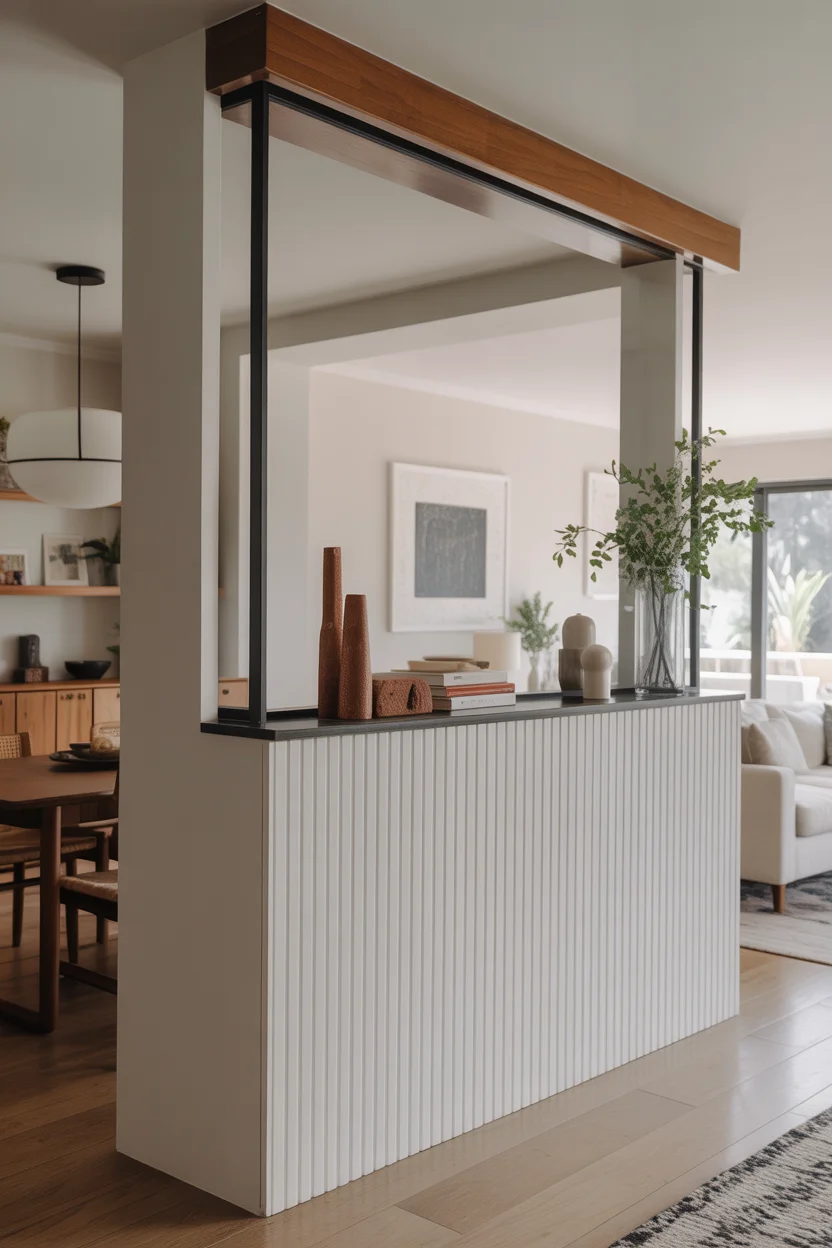
When you desire more physical separation without sacrificing the open feel, a half wall offers the perfect compromise. These partial barriers, typically ranging from 36 to 48 inches in height, create tangible division while preserving the airiness and light flow that makes open plan living desirable. They’re particularly effective for defining dining areas adjacent to living spaces, providing just enough separation to distinguish functions without isolation.
The versatility of half walls extends beyond mere division. The top ledge becomes valuable display space for plants, artwork, or decorative objects that enhance both sides of the partition. Consider integrating built-in shelving on one or both sides for added functionality and visual interest. Material choices should complement your overall design scheme—from matching your existing walls for seamless integration to contrasting materials like wood, tile, or stone that make an architectural statement while reinforcing the dining area’s distinct identity.
4. Position Furniture to Create Natural Flow
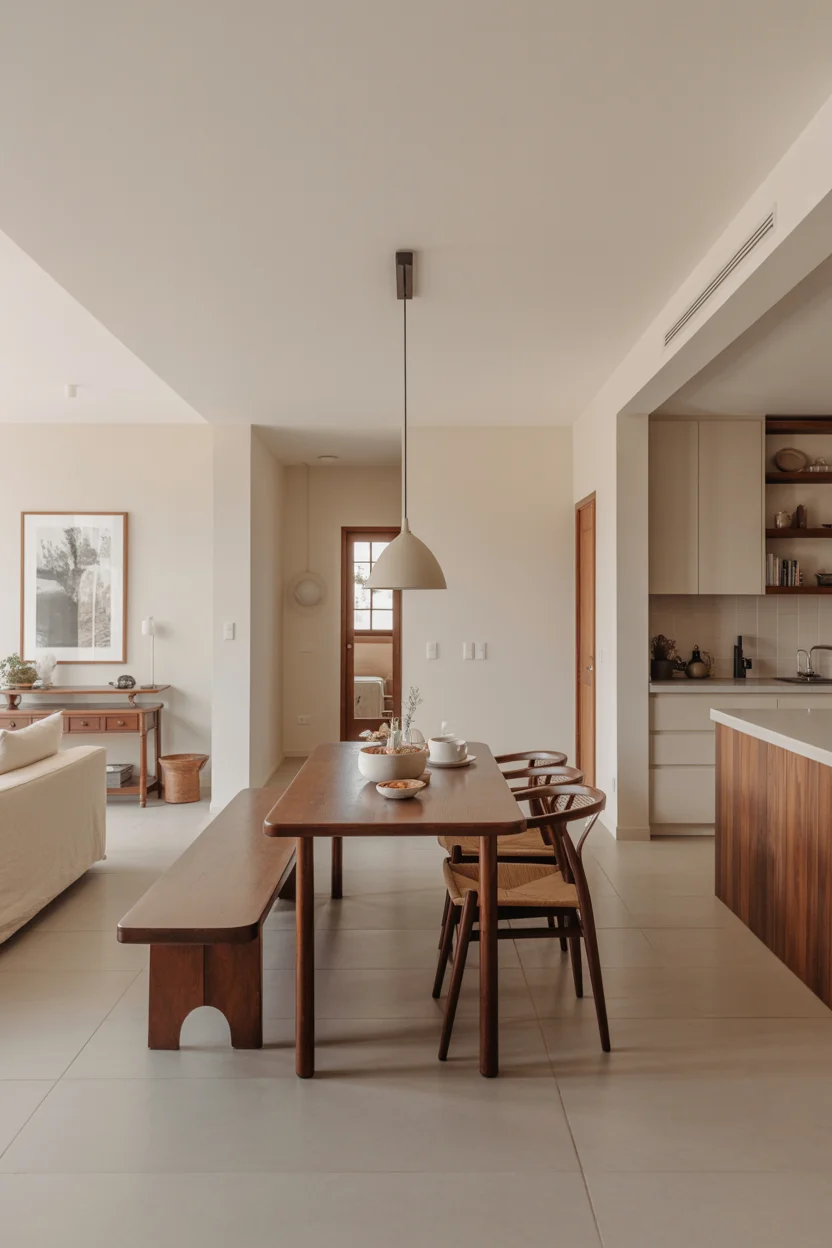
Strategic furniture placement is fundamental to creating intentional dining areas in open plans without adding physical structures. Position your dining table to create natural traffic patterns that direct flow around rather than through the eating space. This might mean placing the table perpendicular to your kitchen or using a buffet, console, or bench seating to create a subtle rear boundary that discourages through-traffic during meals.
Consider the relationship between all zones when arranging furniture. Your dining area should feel connected yet distinct from cooking and lounging spaces, with clear pathways that respect each zone’s purpose. Leave adequate clearance—typically 36-48 inches—for pulling out chairs and comfortable passage. Anchor pieces like credenzas or bar carts can serve double duty as functional storage and psychological boundaries, while thoughtful orientation of seating ensures diners don’t feel like they’re eating in a hallway but rather in a purposeful, protected space.
Explore morehttp://pinterest.com/Dreamgardenshome/
5. Install Different Flooring Materials
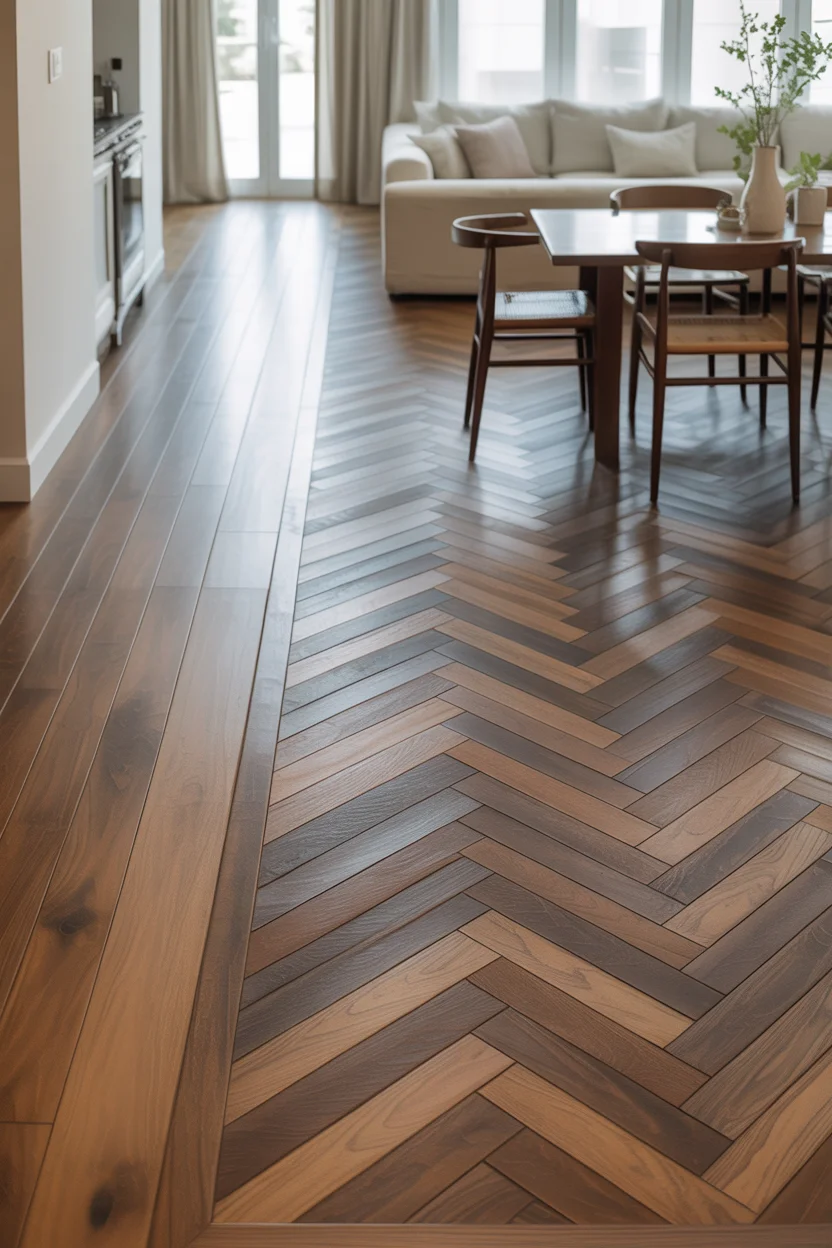
Different flooring materials or patterns provide permanent, architectural definition to your dining zone while maintaining visual continuity. This could mean transitioning from hardwood to tile, changing wood plank direction, or implementing a distinct pattern like herringbone or parquet specifically in the dining area. The material shift creates subconscious boundaries that feel intentional and considered, elevating your space beyond basic open plan layouts.
When selecting flooring variations, maintain some cohesive elements to prevent jarring transitions. Stay within a complementary color palette or use different formats of the same material—like switching from large-format tiles to smaller mosaics or changing from straight-lay to diagonal wood planks. The transition line itself becomes an important design element; consider where it falls in relation to your furniture and traffic patterns. This approach works particularly well when combined with other zoning techniques like rugs or lighting for layered definition.
6. Use Paint to Distinguish the Space
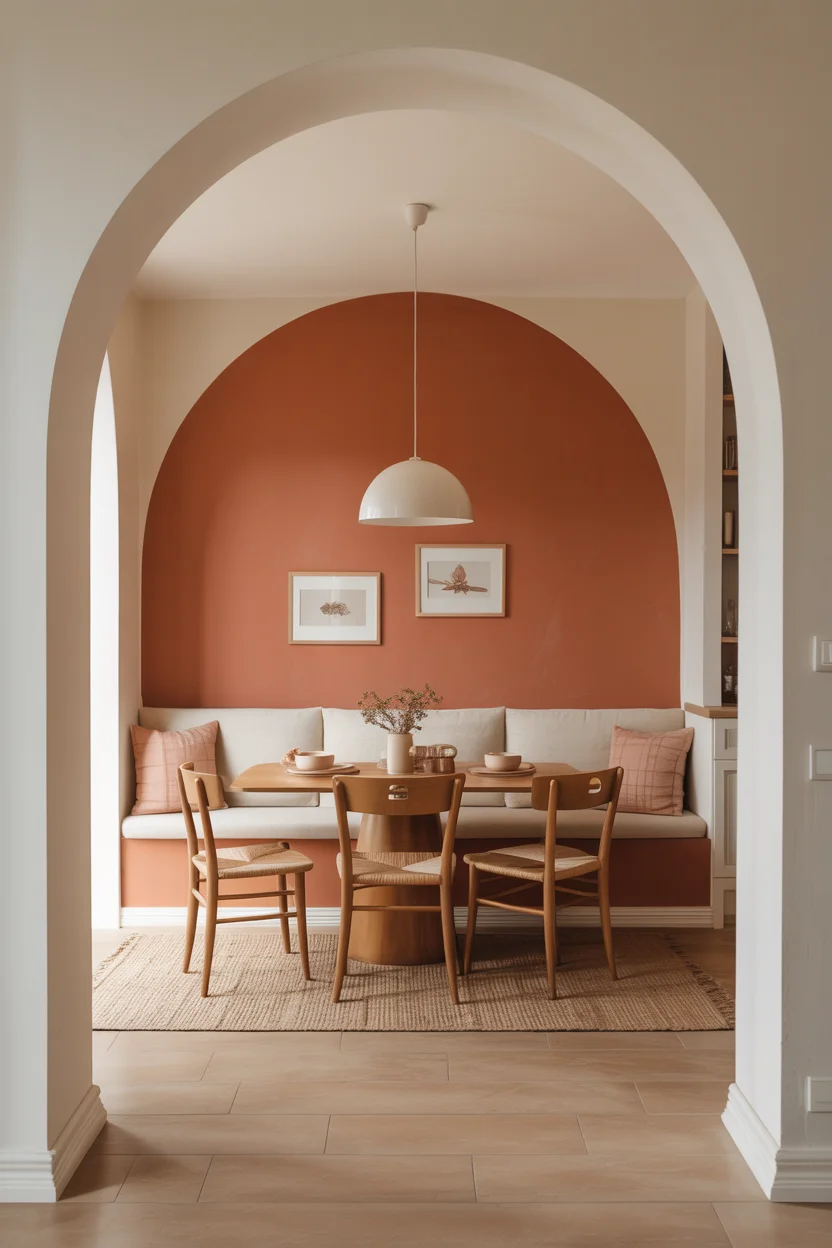
Paint is an affordable, non-permanent way to carve out intentional dining zones within open layouts. An accent wall behind or adjacent to your dining area creates a backdrop that frames the space and draws the eye, establishing clear visual boundaries. Choose colors that complement your overall palette while providing enough contrast to distinguish the zone—deeper, warmer tones often make dining areas feel intimate and inviting within larger, airier open plans.
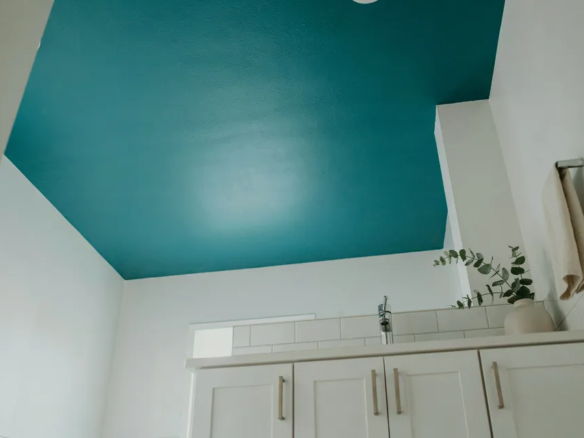
The impact of paint extends beyond single accent walls. Consider painting the ceiling above your dining area in a complementary shade, creating a “canopy” effect that defines the space from above. Alternatively, picture rails, wainscoting, or board-and-batten treatments painted in contrasting colors add architectural interest while delineating boundaries. The key is maintaining cohesion; your dining area should feel like a distinct chapter in the same story rather than a completely different book. Test samples in your actual lighting conditions before committing.
7. Add Architectural Details With Ceiling Beams
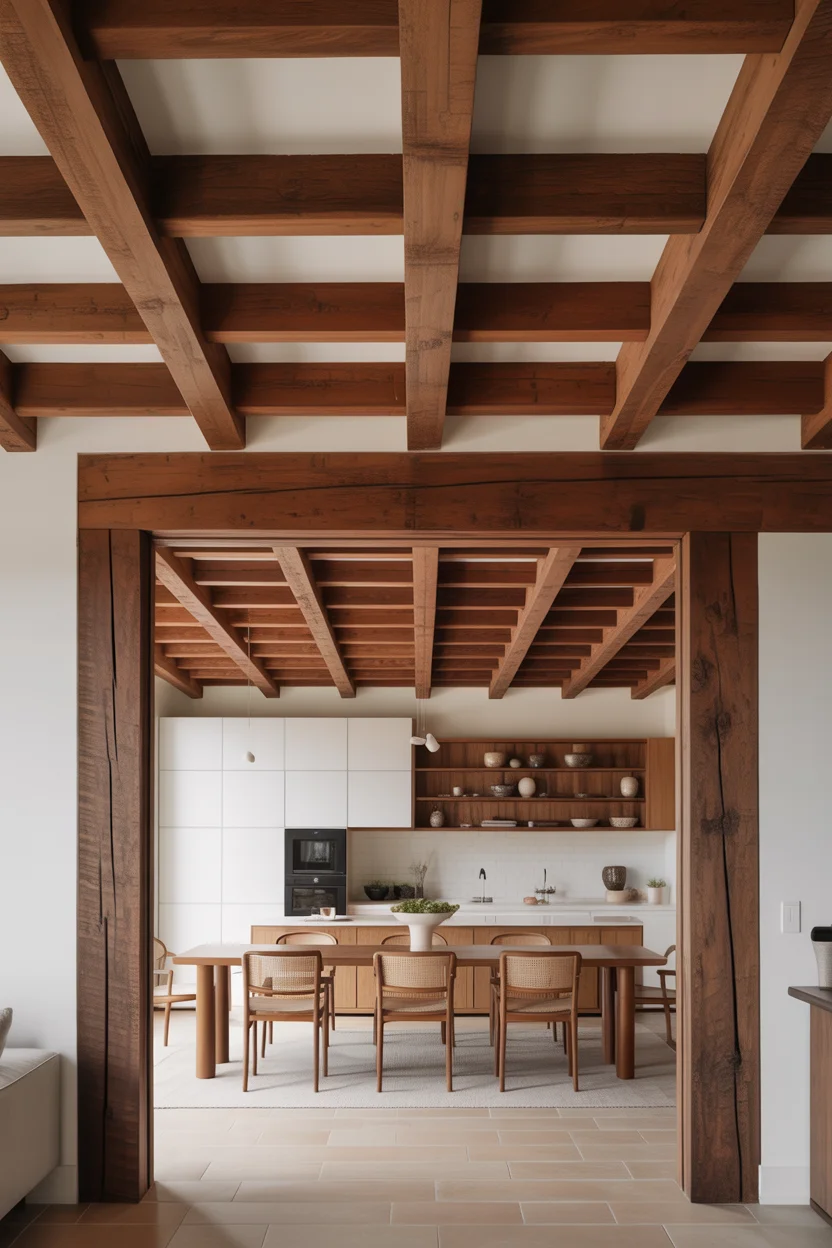
Ceiling treatments like exposed or decorative beams add architectural character while defining your dining area from above. Beams create visual “walls” in the ceiling plane, establishing a room-within-a-room effect without blocking sightlines or natural light. This approach works beautifully in spaces with higher ceilings where horizontal divisions feel more appropriate than vertical ones, adding warmth and structure to potentially cavernous open plans.
Whether you’re exposing existing structural beams or adding decorative ones, consider their orientation carefully. Beams perpendicular to your table create framing, while parallel beams can elongate the space. The material and finish should harmonize with your overall design—rustic reclaimed wood for farmhouse aesthetics, sleek painted wood for contemporary spaces, or dark-stained timber for dramatic contrast. Integrate lighting within or between beams for layered illumination that further emphasizes your dining zone’s special status within the open plan.
8. Position Next to Windows for Natural Definition
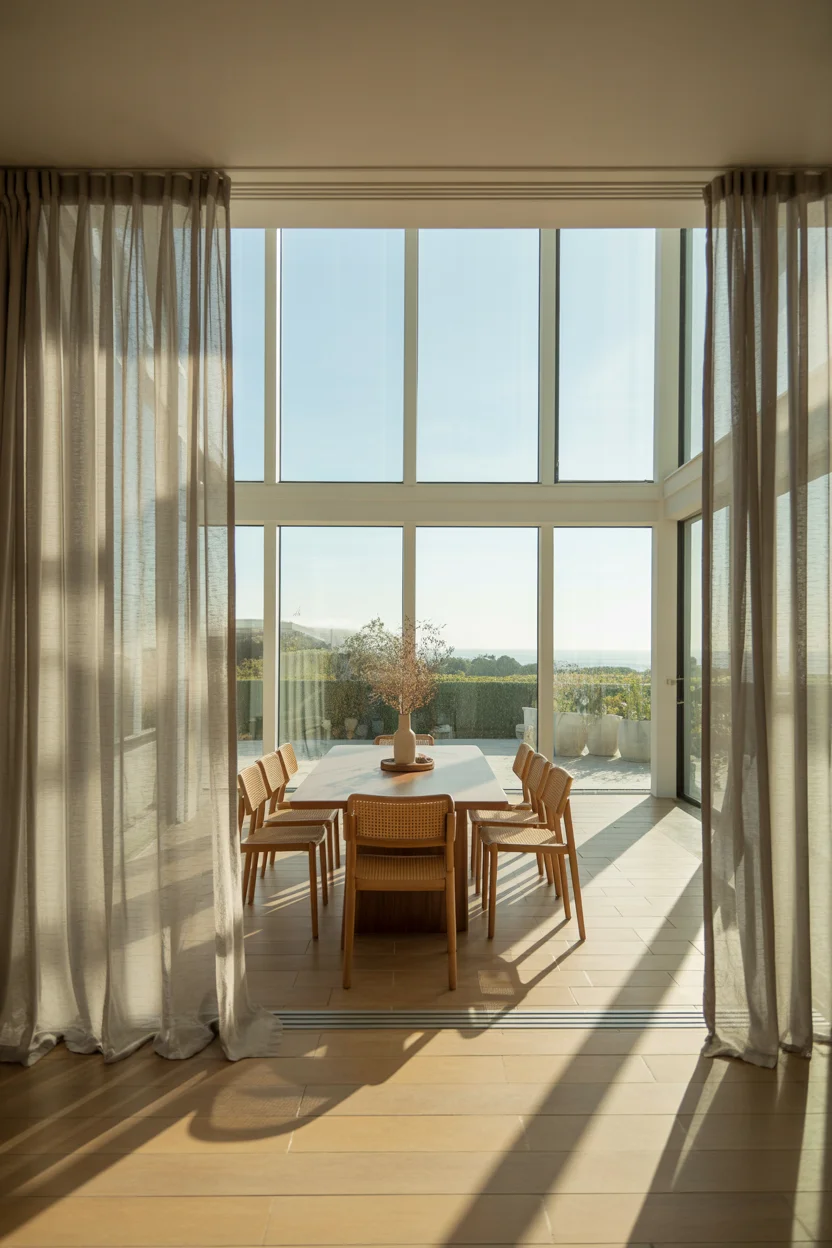
Strategic placement near windows provides natural definition for dining areas while capitalizing on desirable views and natural light. Positioning your dining table against or near a window wall creates an automatic focal point and destination within your open plan, making the location feel intentional rather than arbitrary. The architectural feature of the windows themselves provides a backdrop that frames and anchors the space psychologically.
This arrangement offers practical benefits beyond aesthetics. Natural light makes dining areas more inviting for daytime meals and reduces reliance on artificial lighting. Views create atmosphere and conversation starters while making the space feel more expansive. Consider window treatments that define the zone—floor-length curtains frame the dining area even when open, while shades provide privacy and light control. If privacy isn’t a concern, leaving windows undressed emphasizes the connection to outdoors and makes the window wall an even stronger defining element.
9. Install Built-In Banquette Seating
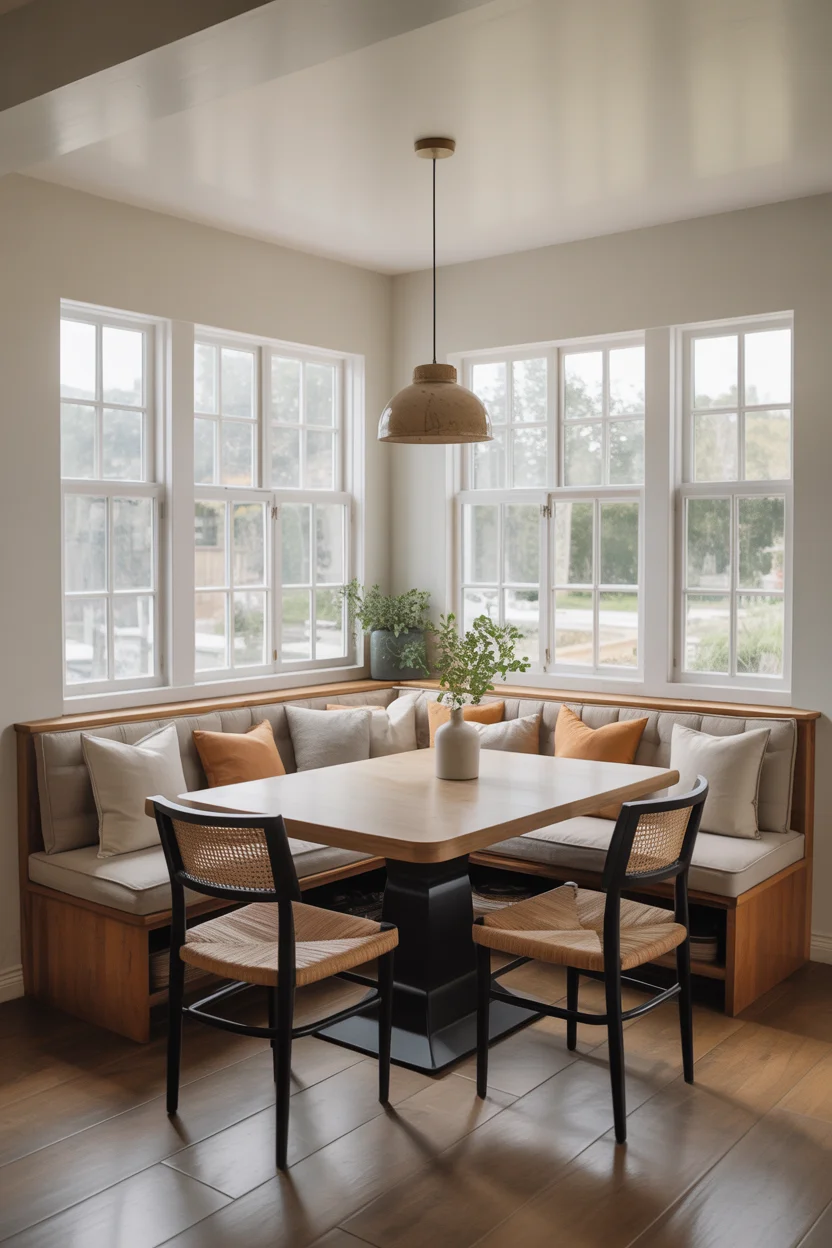
Built-in banquette seating transforms dining areas into distinctly defined zones through permanent architectural integration. Unlike movable furniture, banquettes create fixed boundaries that clearly communicate “this is the dining space,” while maximizing seating capacity in compact footprints. The built-in nature adds custom, high-end appeal that elevates your open plan beyond basic furniture arrangements, making the dining area feel like a designed destination.
Practical advantages make banquettes particularly suited to open plan dining. Integrated storage beneath seating provides valuable space for table linens, seasonal items, or dining accessories without adding freestanding furniture that might clutter sightlines. The fixed back and sides create a cozy, room-like feeling while maintaining openness toward the rest of the space. Customize with cushions, pillows, and fabrics that complement your overall scheme while giving the dining area its own character. Consider the height carefully—18 inches is standard—and pair with an appropriately sized table.
10. Create a Gallery Wall Backdrop
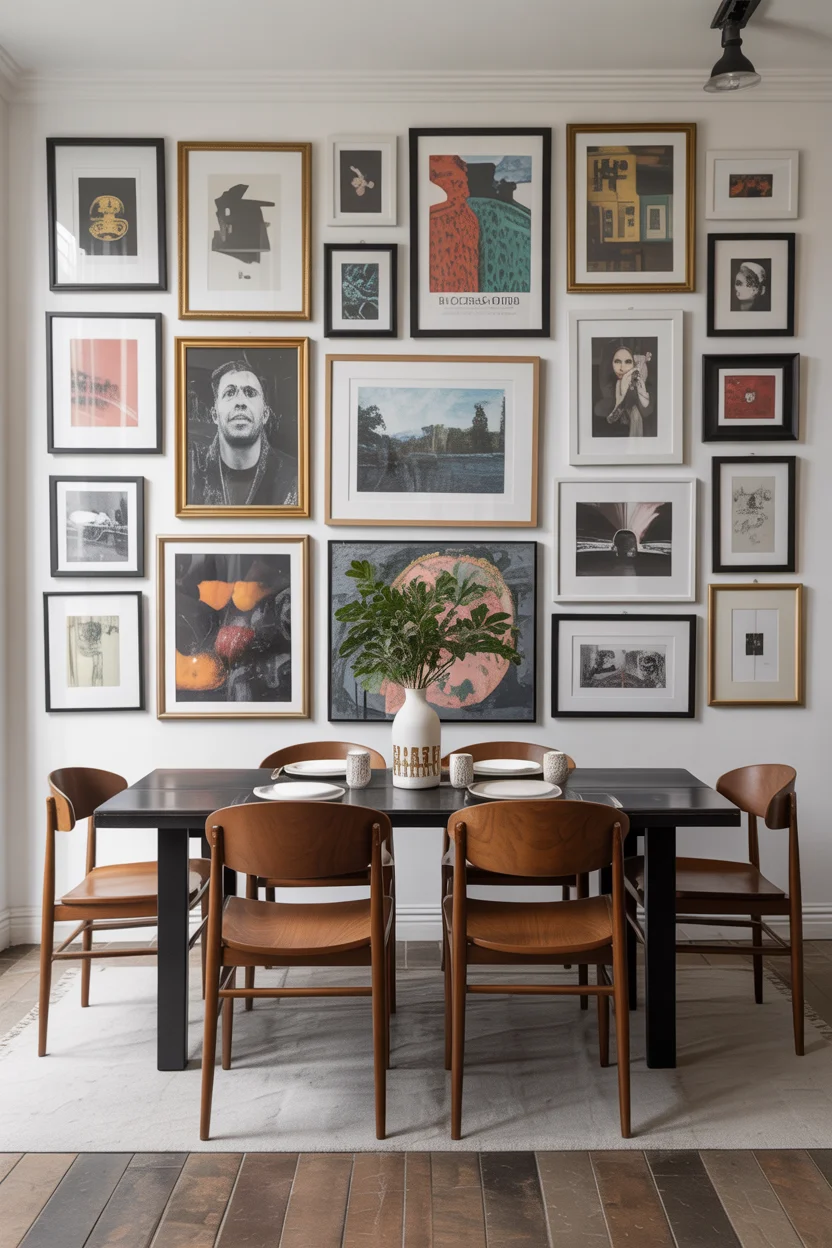
A curated gallery wall provides visual weight and definition to dining areas while expressing personality and style. This approach transforms a blank wall into a focal point that anchors your dining zone, creating the psychological effect of a distinct room even within an open plan. The concentrated visual interest draws attention to the dining area, making it a destination rather than just a pass-through space with a table.
Gallery walls offer endless customization to suit your aesthetic and budget. Mix artwork, photographs, mirrors, and objects for dimensional interest, or maintain uniformity with matching frames for a more formal look. The key to defining your dining space is creating sufficient density and scale—a few small scattered pieces won’t provide the visual weight needed. Extend the gallery wall to encompass the width of your table plus several feet on each side to properly frame and define the zone. This backdrop becomes conversation-worthy while clearly delineating your dining area’s boundaries.
11. Use Open Shelving as a Divider
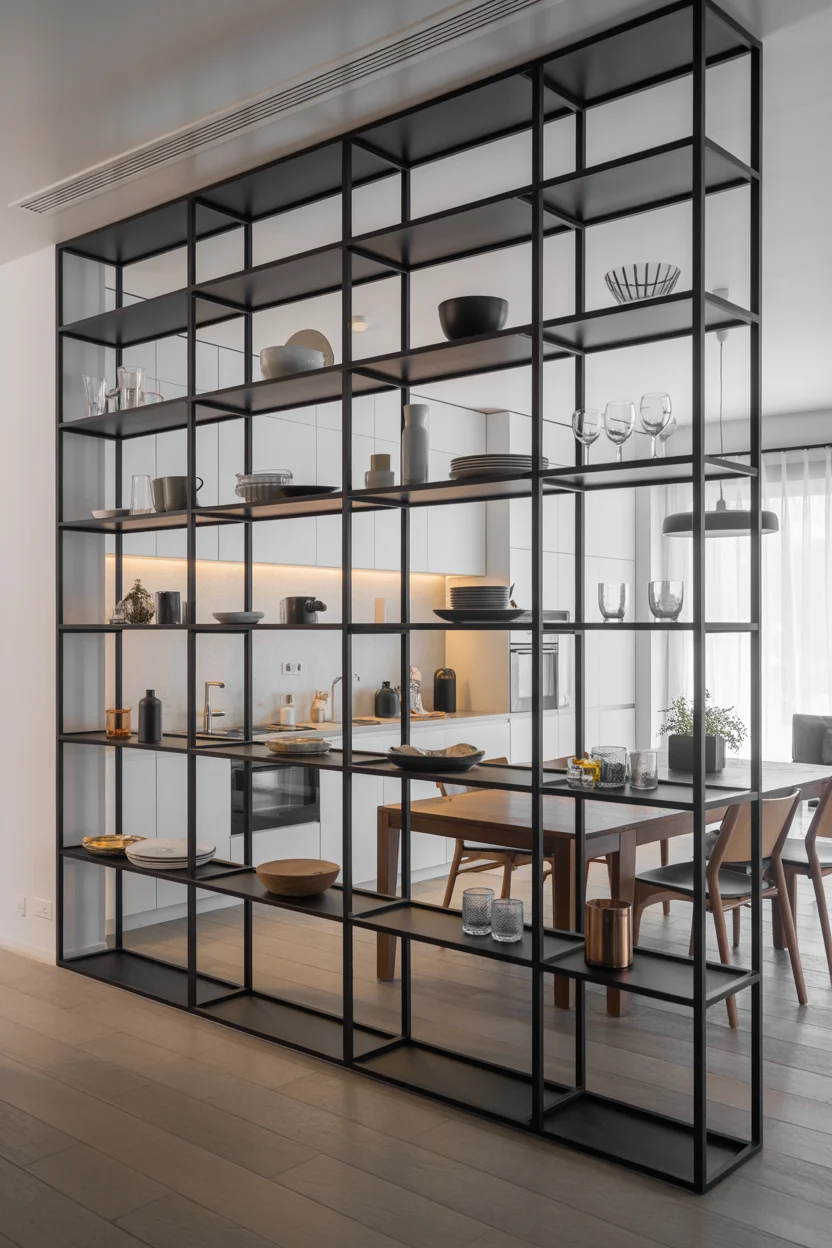
Open shelving units function as transparent dividers that define dining areas while preserving the openness that makes these layouts desirable. Unlike solid walls, shelving maintains visual connection and light flow between zones while providing substantial physical and psychological separation. The vertical element clearly establishes boundaries, transforming ambiguous open space into intentionally defined dining territory, and the display potential adds both function and personality.
Select shelving that complements your overall aesthetic—industrial metal frames for modern spaces, wooden units for warmth, or minimalist white shelving for Scandinavian-inspired interiors. The styling of shelves contributes to how effectively they define space; thoughtfully arranged displays create visual density that reinforces separation, while sparse styling maintains more openness. Consider practical aspects like accessibility from both sides if the unit is freestanding, and ensure it’s properly anchored for safety. The beauty of this solution is its dual functionality—defining your dining zone while providing valuable storage and display.
12. Designate With a Different Ceiling Height
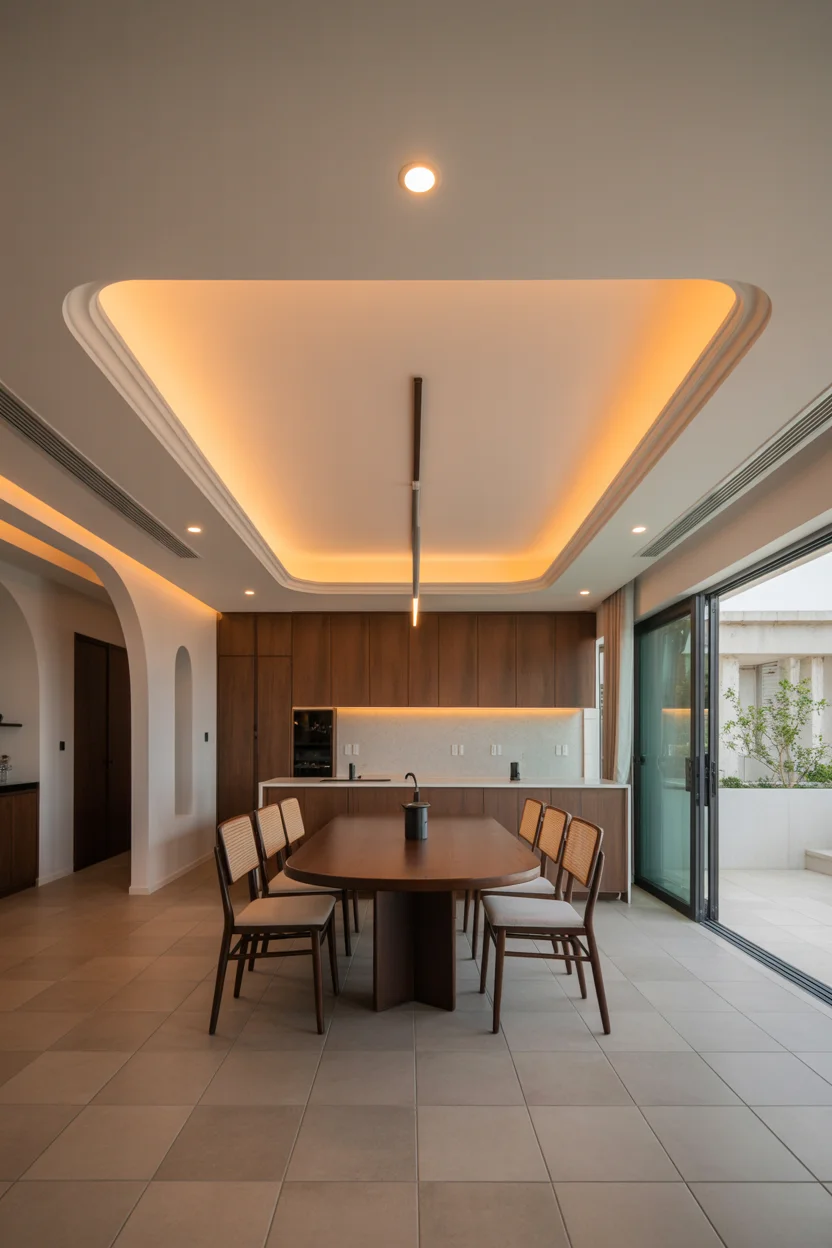
Varied ceiling heights provide architectural definition that literally creates rooms within open plans. Recessed trays, dropped soffits, or raised platforms above dining areas establish clear spatial boundaries from overhead, making the zone feel purposefully designed rather than arbitrarily placed. This approach is particularly effective in larger open plans where floor-level distinctions might get lost, bringing focus to the dining area through three-dimensional architectural variation.
While typically requiring professional installation or being incorporated during construction, ceiling modifications offer permanent, sophisticated zoning. Recessed trays can accommodate perimeter lighting that washes the dining area in ambient glow, while dropped soffits might integrate HVAC returns or speakers for a clean look. The depth of the change needn’t be dramatic—even a 6-12 inch variation creates noticeable definition. Paint the modified ceiling area in a complementary or contrasting shade to enhance the effect, or add details like beams, coffering, or decorative molding within the defined zone.
13. Incorporate a Freestanding Room Divider
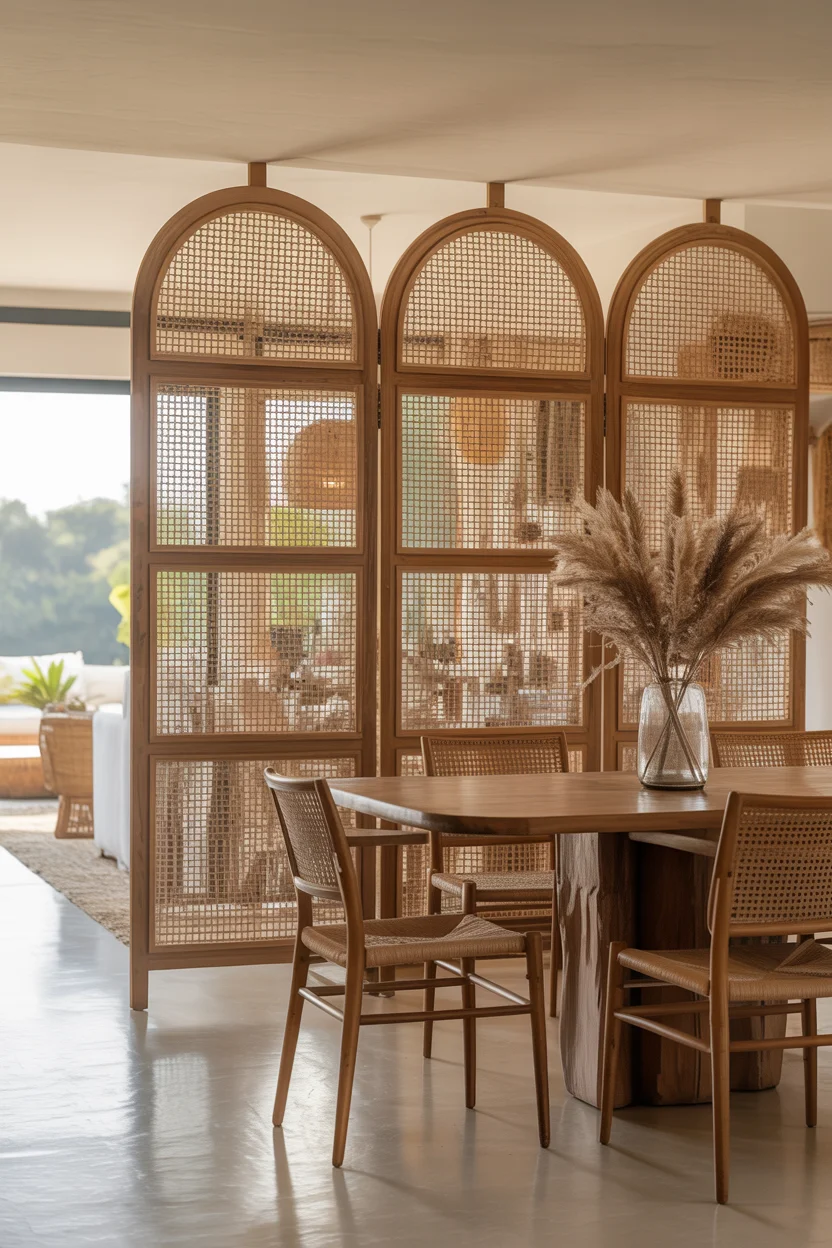
Freestanding room dividers offer flexible, non-permanent solutions for defining dining areas when you need more separation than lighting or rugs alone provide. These movable partitions create physical boundaries and visual backdrops that establish your dining zone as a distinct entity within the open plan. The advantage over permanent structures is adaptability—rearrange, remove, or replace them as your needs or style preferences evolve without renovation.
Today’s room dividers extend far beyond basic folding screens, though those remain versatile options. Consider slatted wood panels that provide separation while maintaining airiness, woven natural fiber screens that add texture and warmth, metal geometric designs for modern aesthetics, or even living plant walls for biophilic appeal. Position dividers to shield the dining area from through-traffic or create a backdrop without entirely enclosing the space. Ensure they’re stable and proportional to your room—too small appears ineffective, too large overwhelms. This solution works especially well for renters who can’t modify architecture.
14. Define With Contrasting Furniture Styles
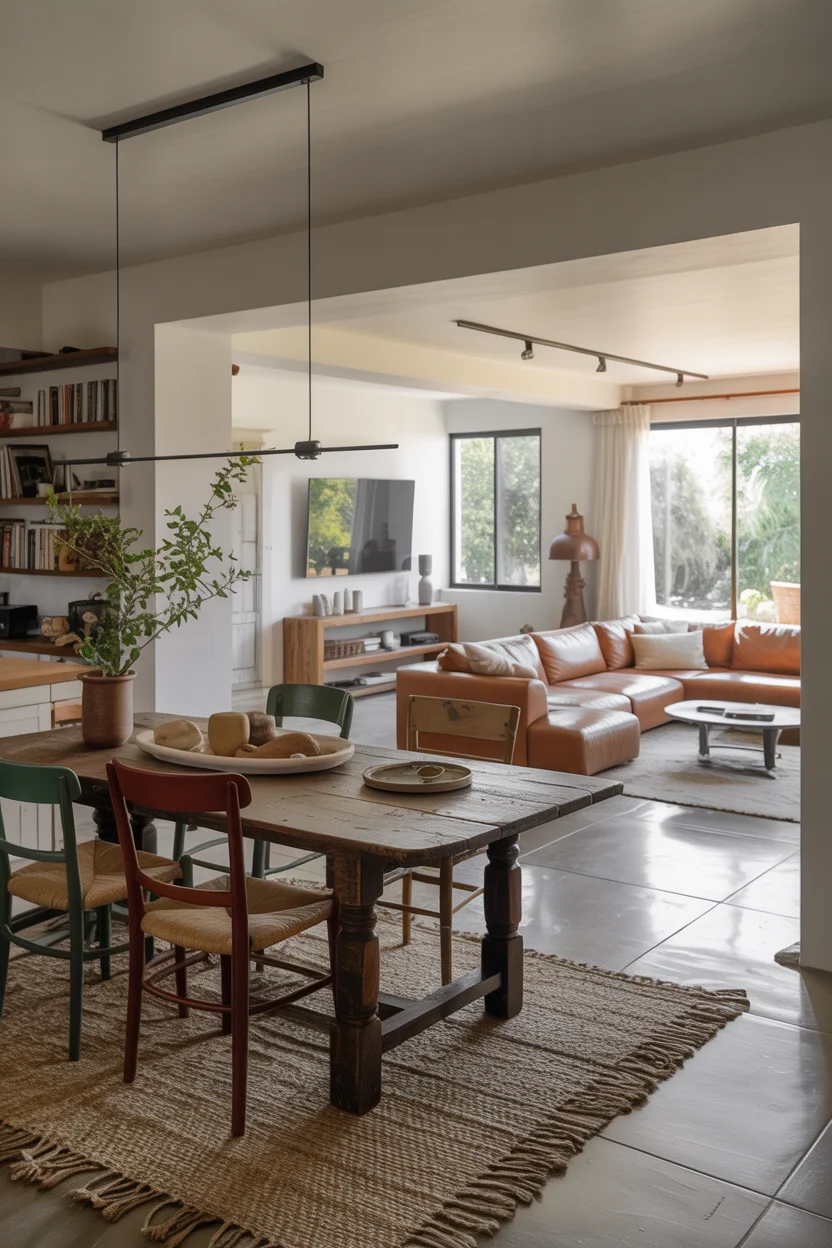
Deliberate furniture style contrasts can define dining areas within open plans while adding visual interest and personality. When your dining set represents a different aesthetic than your living or kitchen furniture—perhaps mixing modern with traditional, or industrial with bohemian—the style shift creates natural boundaries that feel intentional rather than accidental. The key is ensuring the contrast feels curated rather than random, with enough cohesive elements to maintain flow.
This approach requires careful balance. Choose one or two consistent elements that thread through all zones—perhaps a color palette, wood tone, or material—while varying the predominant style. Your rustic dining table might share wood tones with living room accents, or your modern dining chairs might echo metals found in kitchen fixtures. The furniture style becomes a zoning tool that clearly signals “you’re entering a different space” without physical barriers. This works particularly well for those who love mixing periods and styles, transforming potential design confusion into intentional eclecticism.
15. Add a Bar Cart or Buffet as a Boundary
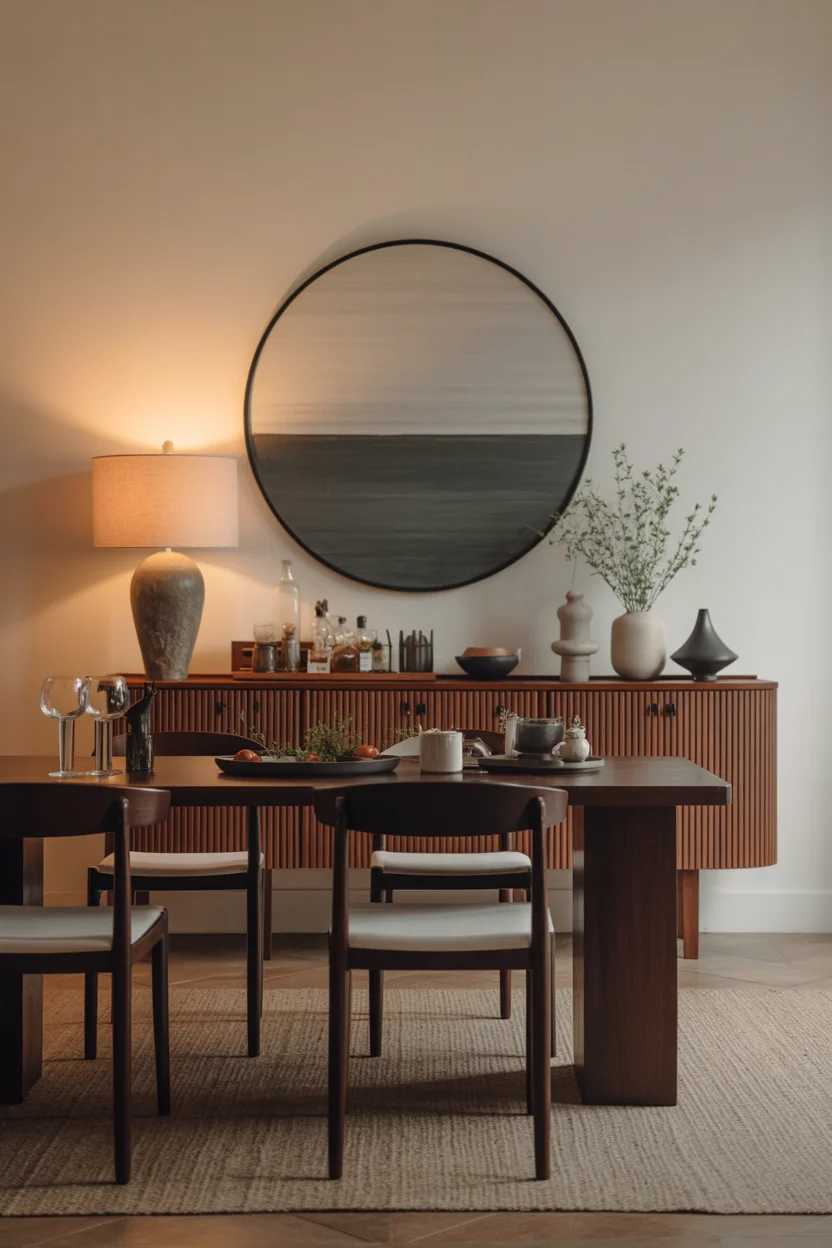
Strategic placement of functional furniture like buffets, credenzas, or bar carts creates subtle physical boundaries that define dining zones without blocking openness. Positioned behind or beside dining areas, these pieces act as low partitions that discourage through-traffic while serving practical purposes—storing table linens, displaying serveware, or housing bar essentials. The horizontal mass creates psychological boundaries that establish territory within open plans.
The beauty of this approach lies in combining form and function. Your buffet or bar cart doesn’t just define space; it actively supports dining activities with convenient storage and serving surfaces. Choose pieces with visual weight appropriate to your space—too delicate and they won’t effectively define the zone, too massive and they’ll block flow. Styling these boundary pieces with lamps, artwork, or decorative objects adds vertical elements that enhance the defining effect. Consider heights carefully; pieces around 30-36 inches provide separation while maintaining sightlines across the open plan.
16. Frame With Columns or Posts
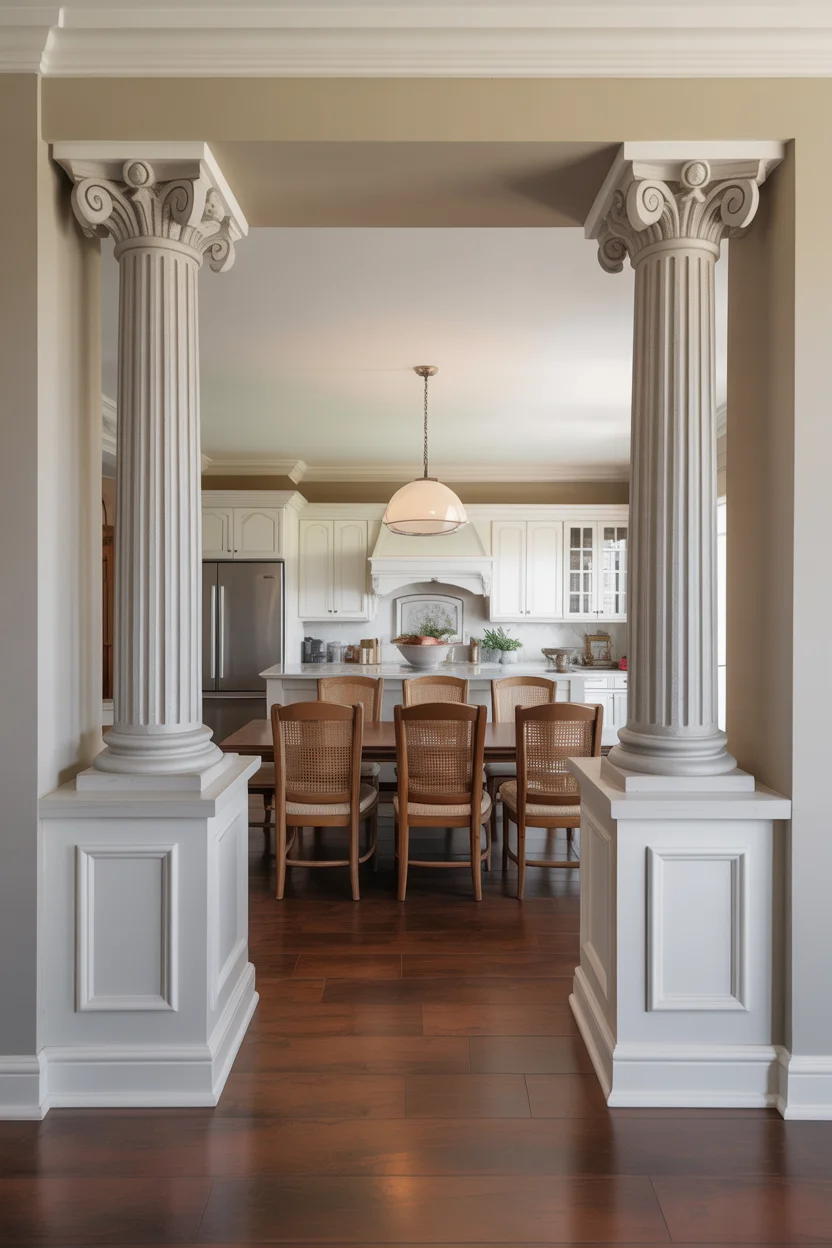
Architectural columns or posts create formal definition for dining areas while adding classical elegance to open plans. These vertical elements frame the dining zone like a traditional doorway, establishing clear boundaries without solid walls. Whether original to your home’s architecture or added cosmetically, columns create the sense of passing into a designated room, making your dining area feel intentionally carved out rather than arbitrarily placed within the open expanse.
The style of columns should complement your overall design aesthetic. Traditional spaces might feature classical columns with capitals and bases, while contemporary homes could incorporate simple square or round posts with minimal detail. Consider material carefully—painted wood for cohesion with trim, natural wood for warmth, or even metal for industrial spaces. Columns work particularly well at transition points where flooring changes or ceiling heights shift, reinforcing those boundaries with vertical emphasis. They’re most effective when combined with other zoning techniques like lighting or rugs for layered definition.
17. Establish Boundaries With Potted Plants
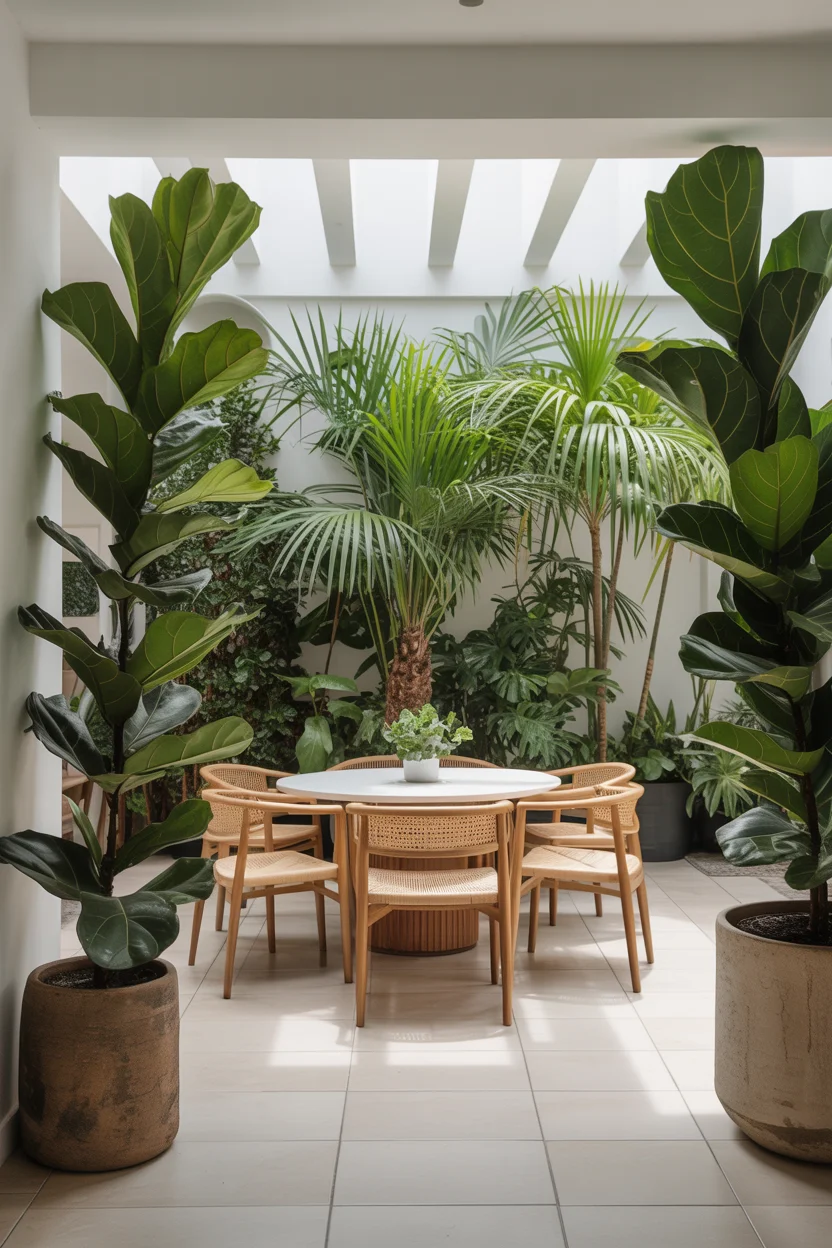
Large-scale plants offer organic, living boundaries that define dining areas while bringing nature indoors and improving air quality. Strategically positioned planters create vertical elements that establish psychological barriers without solid walls—guests naturally perceive the planted boundaries as space dividers. This biophilic approach feels fresh and contemporary while providing the flexibility to rearrange or seasonal variation, perfect for those who prefer adaptable rather than permanent solutions.
Select plants appropriate to your light conditions and maintenance commitment. Tall specimens like fiddle leaf figs, palms, bird of paradise, or large monstera create substantial presence, while clustering smaller plants achieves similar boundary effects with more variety. Consider planters as design elements themselves—coordinated ceramic pots reinforce cohesion, while varied vessels add eclecticism. Position plants at corners or along invisible boundary lines of your dining zone. Combine with other techniques like rugs or lighting for stronger definition. Beyond spatial division, plants soften hard architectural edges and create a more inviting, healthful dining environment.
18. Use Symmetrical Furniture Arrangement
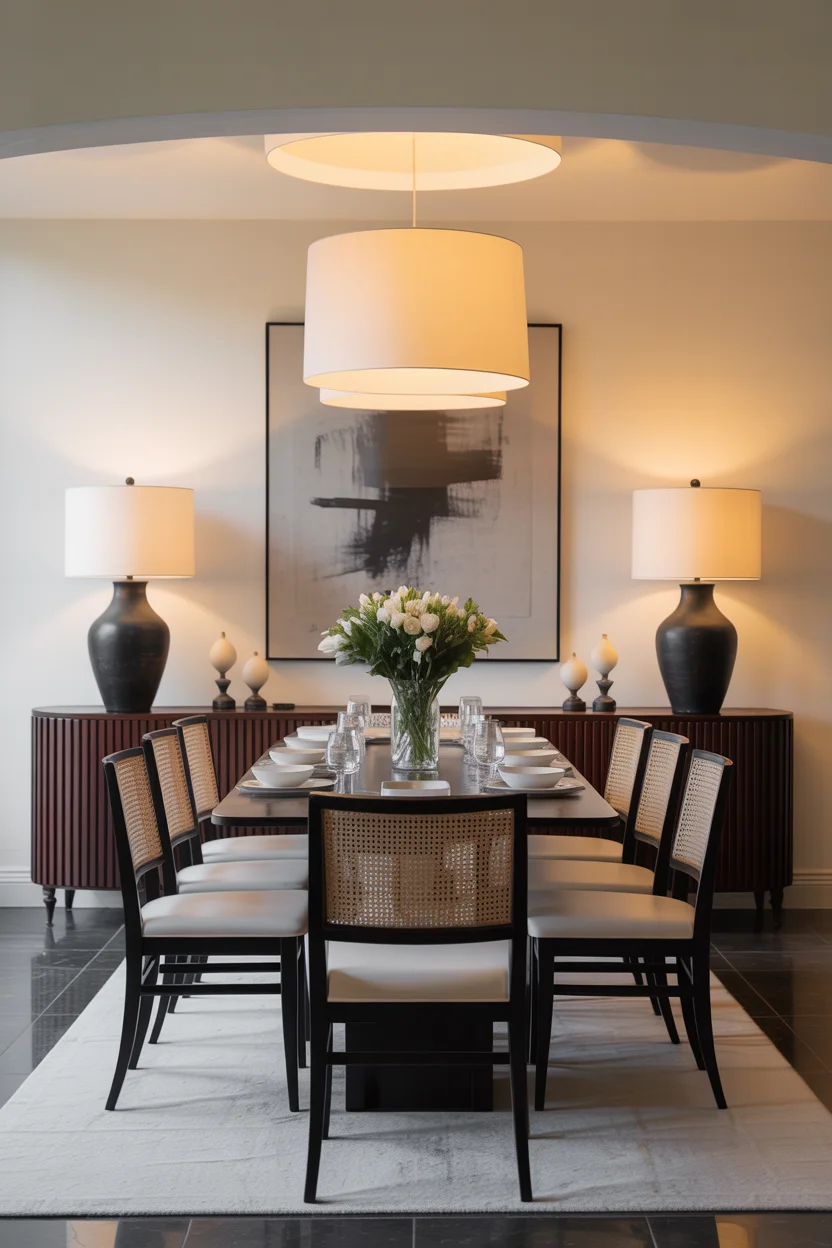
Symmetrical furniture arrangements create order and formality that clearly distinguish intentional dining zones from casual open plan flow. The balanced composition draws the eye and creates a sense of completeness that signals “designed space” rather than leftover area. Symmetry provides structure within the potential chaos of open layouts, making your dining area feel like a proper room with deliberate boundaries, even without walls to define it.
Achieving effective symmetry requires careful planning and typically works best with centered focal points—a window, artwork, or buffet. Arrange your table centrally, flank it with matching chairs or benches, and mirror accessories like lamps, plants, or art on either side. The formality of this approach suits traditional and transitional aesthetics particularly well, though it can be adapted for modern spaces with clean-lined furniture. While symmetry creates strong definition, avoid rigidity by introducing subtle variations—slightly different chair styles, varied heights in symmetrical displays—to maintain visual interest within the structured framework.
19. Create Visual Weight With a Large Dining Table
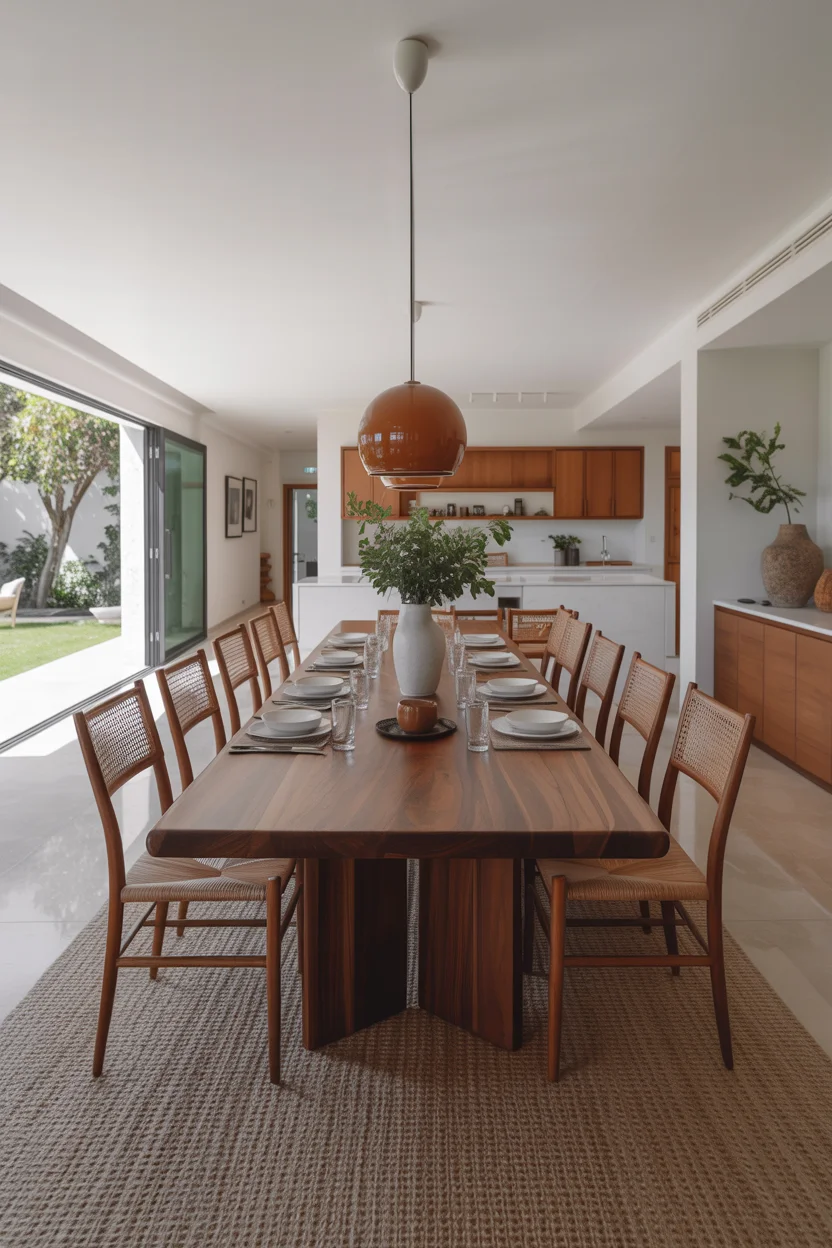
A substantial, large-scale dining table can single-handedly define your dining zone through sheer visual weight and presence. When the table is significant enough—whether through size, material mass, or distinctive design—it becomes an obvious anchor that needs little additional definition. This approach works particularly well in larger open plans where a properly proportioned dining table makes a bold statement that clearly establishes the area’s purpose and boundaries.
Selecting the right table requires balancing scale with your room dimensions. The table should feel substantial without overwhelming, typically leaving at least 36-48 inches of clearance on all sides for comfortable circulation. Consider material and design impact—a chunky reclaimed wood table carries more visual weight than a glass-topped version, while a distinctive pedestal base or unusual shape draws more attention than standard four-legged designs. The table itself becomes the zoning tool, so choose one that deserves this starring role. Surround it with complementary but less attention-grabbing elements to let the table define and anchor your dining area.
20. Install Wainscoting or Wall Paneling
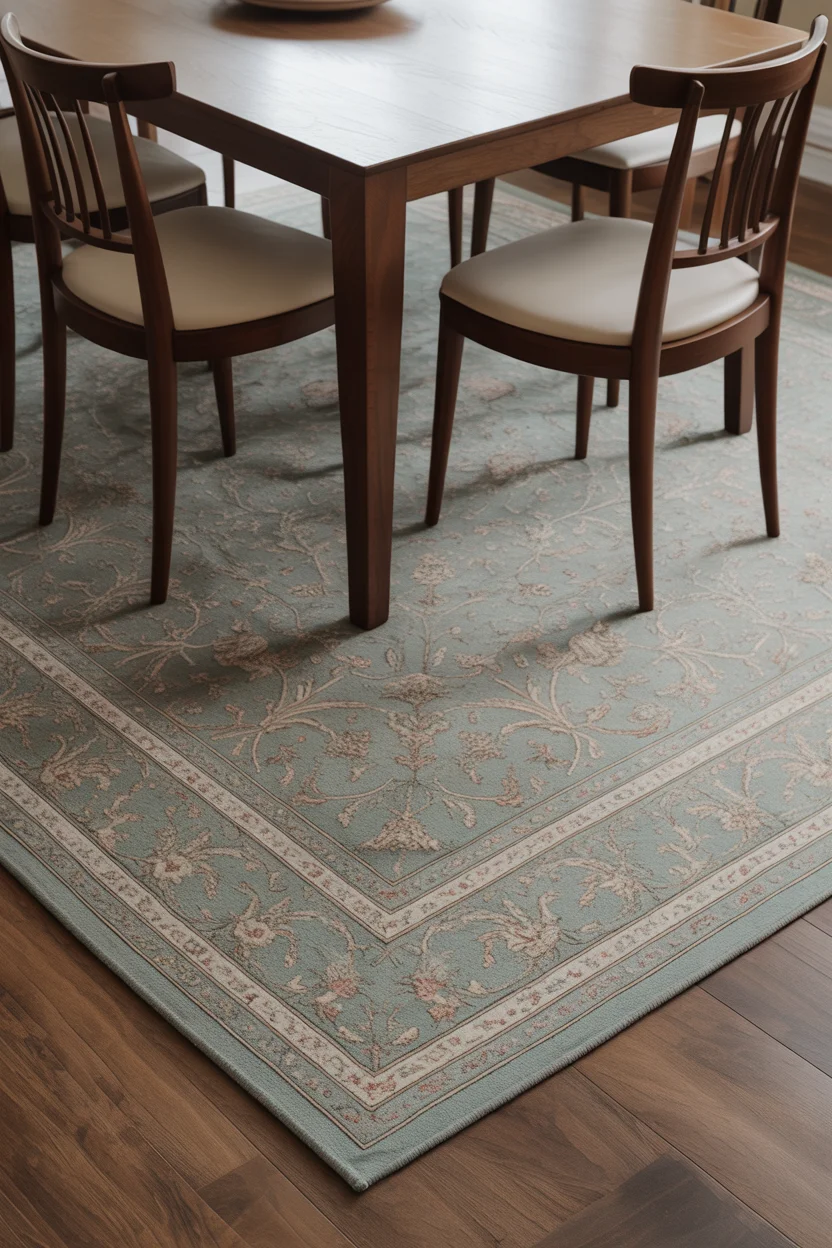
Wall treatments like wainscoting, board and batten, or paneling add architectural dimension that distinguishes dining areas within open plans. Installing these details specifically in your dining zone creates textural and visual variation that clearly establishes boundaries while adding classical elegance and perceived value. The three-dimensional quality of paneling creates shadows and depth that flat-painted walls lack, making the dining area feel like a considered, special space worthy of attention.
Application possibilities range from traditional to contemporary. Classic wainscoting with chair rails suits traditional aesthetics, while vertical board and batten offers farmhouse charm, and geometric paneling or picture frame molding works in transitional spaces. Consider painting the paneling in a color that differs from adjacent walls to enhance the defining effect, or keep it monochromatic for subtle textural variation. The paneling needs to extend far enough beyond your table to properly frame the dining area—typically to the width of the table plus chairs. This permanent upgrade adds both definition and resale value.
21. Layer Multiple Zoning Techniques
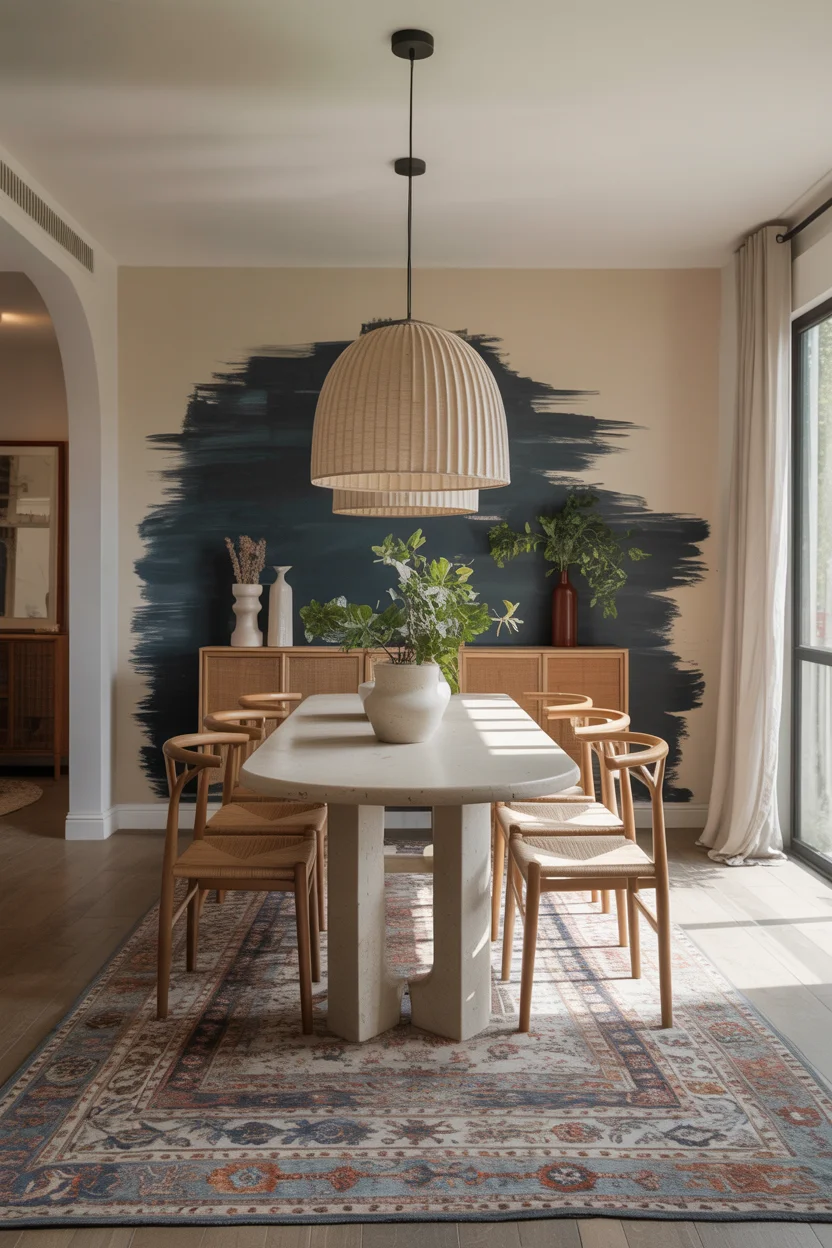
The most effectively defined dining areas employ multiple zoning techniques simultaneously, layering strategies for unmistakable boundaries and cohesive design. Rather than relying solely on a rug or lighting, combine several approaches—perhaps a statement pendant over a distinctive rug, backed by painted walls and framed with plants. This layered method creates redundancy that ensures your dining zone reads as intentional from every angle and to every visitor, elevating your open plan from basic to thoughtfully designed.
Strategic layering allows each element to shine while contributing to the greater goal of definition. Your rug might introduce pattern, while your lighting adds drama, and your paint provides color—each distinct yet harmonious. Start with one primary zoning technique as your foundation, then add complementary layers that enhance rather than compete. Consider balance; too many techniques might overwhelm, but three to four thoughtfully combined elements create richness and clear definition. This approach works across budgets—paint and a rug are accessible starting points, with lighting, furniture, or architectural details added as resources allow.
Conclusion
Creating an intentional dining area within an open plan doesn’t require walls—just thoughtful design choices. Whether you implement dramatic lighting, strategic furniture placement, architectural elements, or a combination of zoning techniques, the goal remains the same: carving out a distinct dining space that enhances rather than fights your open layout. These open plan dining area ideas prove that definition and openness can coexist beautifully. Choose the approaches that resonate with your style, space, and budget to transform your dining area into a purposeful destination.

Join The Discussion