
Introduction
Dark bedrooms have an unfair reputation for feeling cave-like and oppressive, but when executed thoughtfully, they create the most luxurious, cocoon-like sanctuaries. The secret to successful dark elegant bedroom ideas lies in balancing rich, deep tones with strategic lighting, varied textures, and reflective surfaces that prevent heaviness. Whether you’re drawn to charcoal grays, navy blues, forest greens, or true black, these sophisticated spaces prove that dark doesn’t mean dreary. Discover how to embrace moody elegance while maintaining warmth, dimension, and that essential cozy factor that makes bedrooms true retreats.
1. Layer Multiple Light Sources Throughout
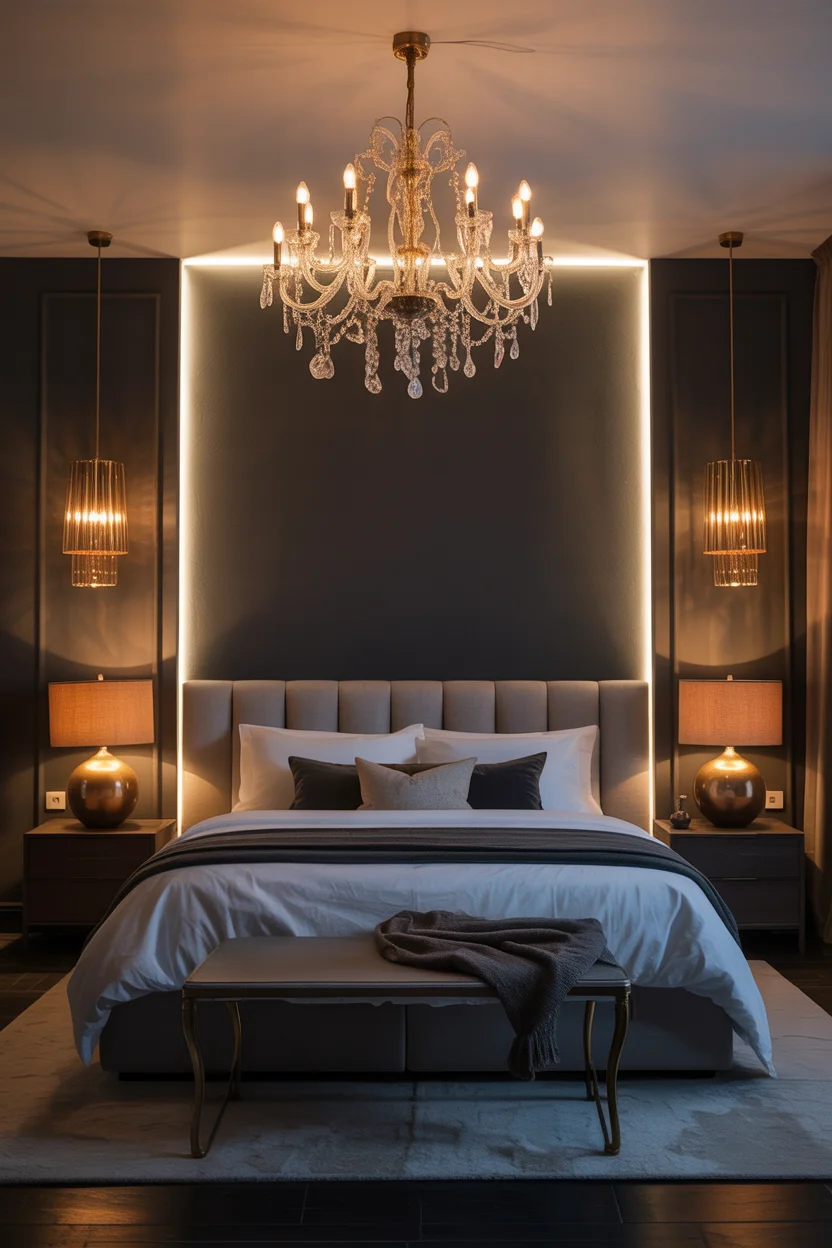
The cornerstone of preventing dark bedrooms from feeling heavy is abundant, layered lighting that creates depth and warmth. Unlike light-colored rooms that reflect natural light, dark walls absorb illumination, making multiple light sources essential rather than optional. Combine overhead fixtures, bedside lamps, wall sconces, floor lamps, and even candles to create pools of light at various heights and locations that add dimension and prevent oppressive shadows.
Strategic lighting placement transforms the mood entirely. Dimmable fixtures allow you to control intensity for different activities—bright for dressing, soft for relaxation, romantic for evenings. Warm-toned bulbs (2700K-3000K) are crucial in dark bedrooms; cool white lighting amplifies any cave-like qualities, while warm light creates inviting ambiance that counteracts the depth of dark colors. Consider uplighting to draw the eye upward and make ceilings feel higher, or backlit headboards that create dramatic glows. The investment in proper lighting makes the difference between oppressively dark and elegantly moody
2. Introduce Luxurious Velvet Textures
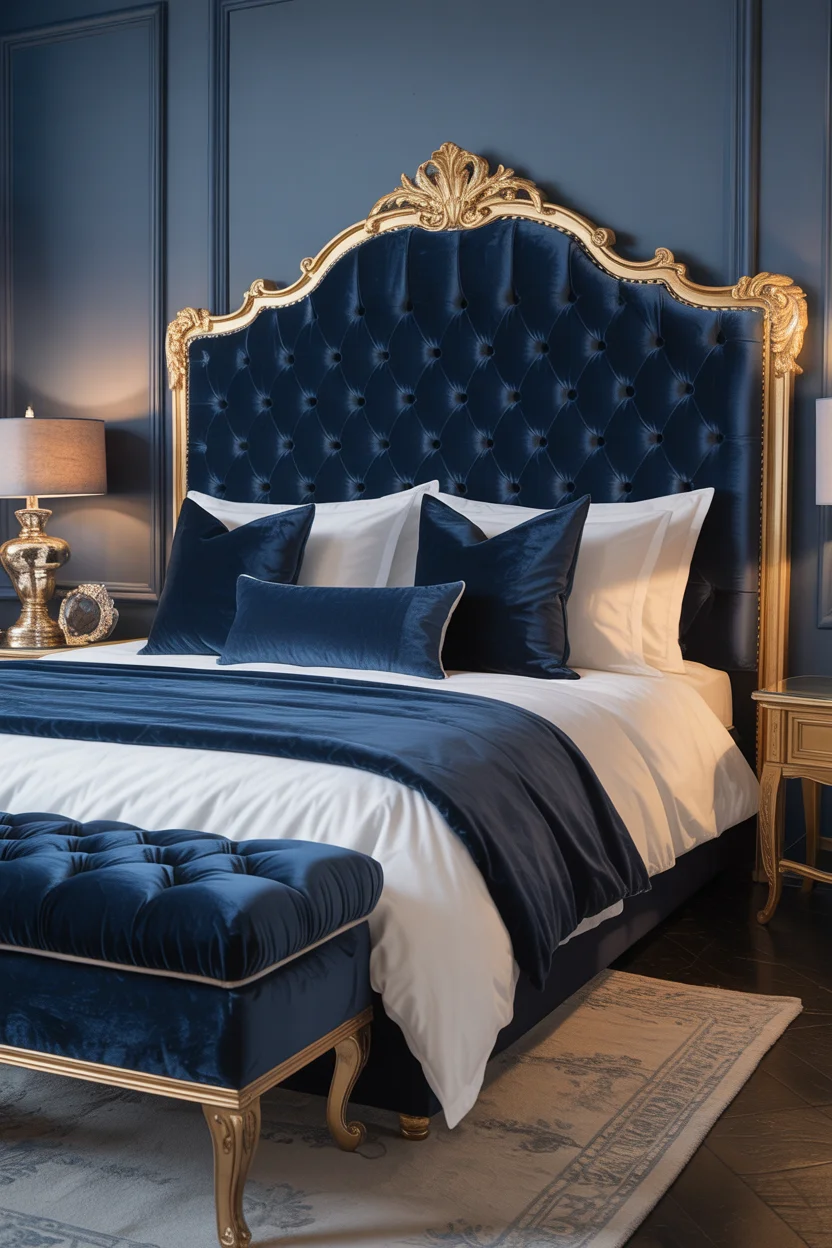
Velvet is the quintessential fabric for dark elegant bedrooms, offering visual depth through its light-catching pile that prevents flat, lifeless surfaces. The way velvet reflects light creates subtle variations in tone—appearing lighter from one angle, deeper from another—adding movement and interest to dark color schemes. This dimensional quality is essential for preventing dark rooms from feeling one-note or oppressive, while the inherent luxury of velvet elevates the elegant factor considerably.
Beyond aesthetics, velvet contributes crucial tactile richness that makes dark bedrooms feel cozy and inviting rather than cold or austere. The plush softness encourages touch and creates sensory warmth that balances the visual weight of dark colors. Incorporate velvet through headboards, drapery, throw pillows, blankets, or upholstered furniture pieces. Mix velvet sheens—matte cotton velvet for subtlety, crushed velvet for drama, or silk velvet for ultimate luxury. Consider jewel-toned velvets like emerald, sapphire, or burgundy that read dark while adding color complexity to charcoal or black base schemes.
View morehttps://dreamgardenspk.com/blog/
3. Incorporate Metallic Accents for Reflection
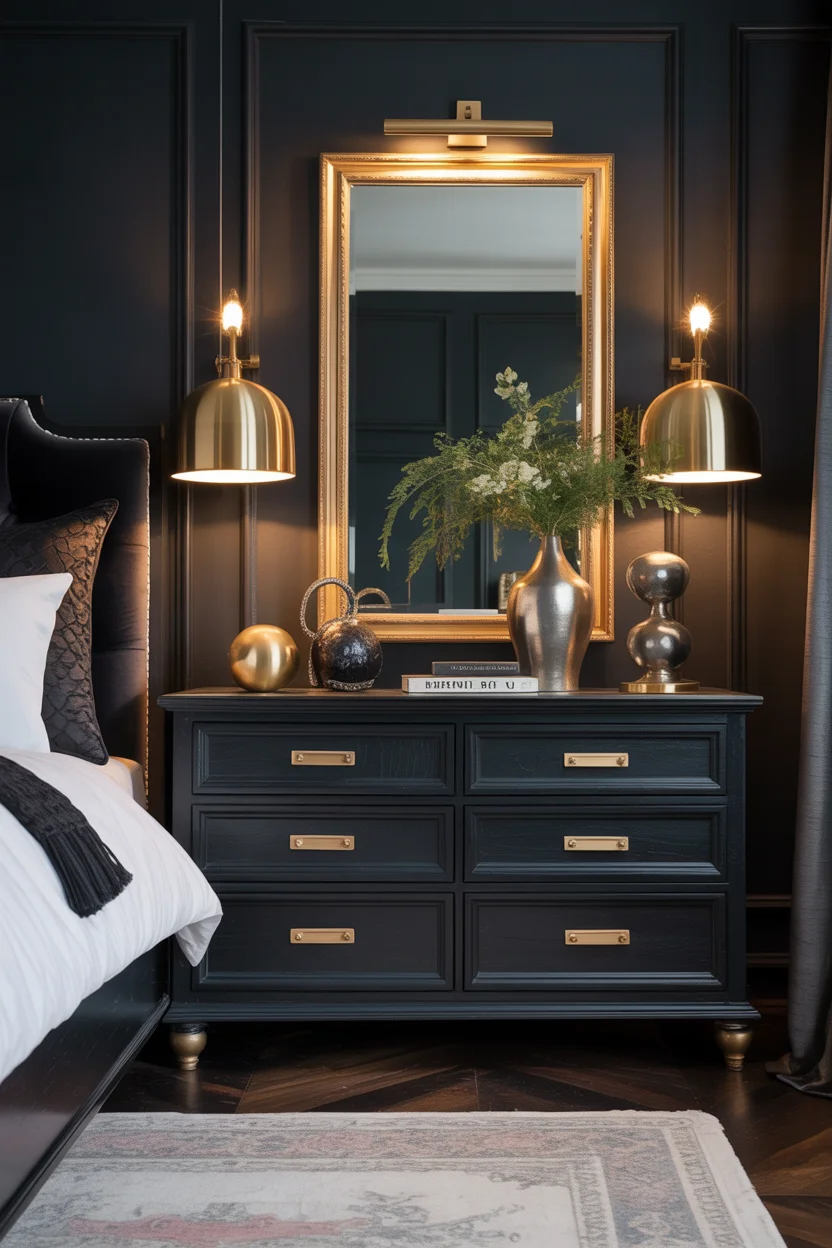
Metallic finishes are essential light-reflecting elements that prevent dark bedrooms from feeling flat or heavy. Gold, brass, copper, silver, or bronze accents catch and bounce available light around the room, creating sparkle points that add life and energy to deep color schemes. These reflective surfaces break up solid dark expanses and draw the eye around the space, creating visual movement that counters any potentially oppressive qualities of dark walls.
The key is strategic placement and appropriate quantity—enough to make impact without overwhelming. Incorporate metallics through lighting fixtures, mirror frames, drawer pulls, picture frames, decorative objects, or furniture legs. Warmer metals like brass, gold, and copper pair beautifully with charcoal, navy, and forest green, creating rich, jewel-box effects. Cooler metals like chrome, silver, and nickel complement true blacks and cool grays for more contemporary aesthetics. Consider varying finishes—polished for maximum reflection, brushed or antiqued for subtlety—to add another layer of visual interest while maintaining the elegant, cozy atmosphere.
4. Add Warmth With Natural Wood Elements
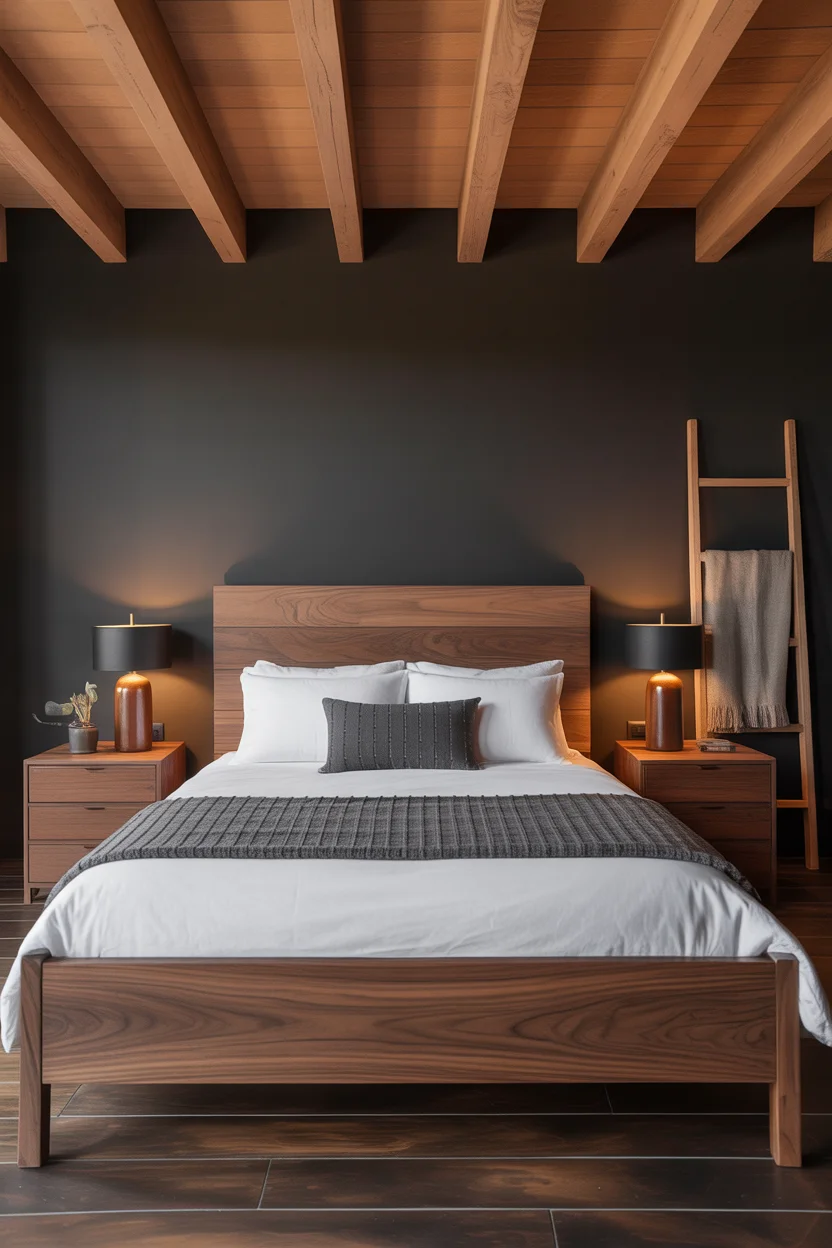
Natural wood introduces essential warmth and organic texture that prevents dark bedrooms from feeling cold or sterile. The inherent warmth of wood tones—from honey oak to rich walnut—creates visual and psychological coziness that balances the weight of dark colors beautifully. Wood grain adds pattern and visual interest that breaks up solid dark surfaces, while the natural material connects the interior space to the outdoors, grounding the design in comforting, familiar elements.
Select wood tones strategically based on your dark color and desired mood. Medium to dark woods like walnut, cherry, or mahogany create rich, sophisticated combinations with charcoal, navy, or black that feel cohesive and intentional. Lighter woods like oak, maple, or ash provide more contrast against dark walls, brightening the space while maintaining warmth. Incorporate wood through bed frames, nightstands, dressers, flooring, ceiling beams, or decorative accents. Consider the finish—matte or satin finishes feel contemporary and cozy, while glossy finishes add more light reflection. Real wood with visible grain provides more visual interest than veneers or painted pieces.
5. Choose White or Light Bedding for Contrast
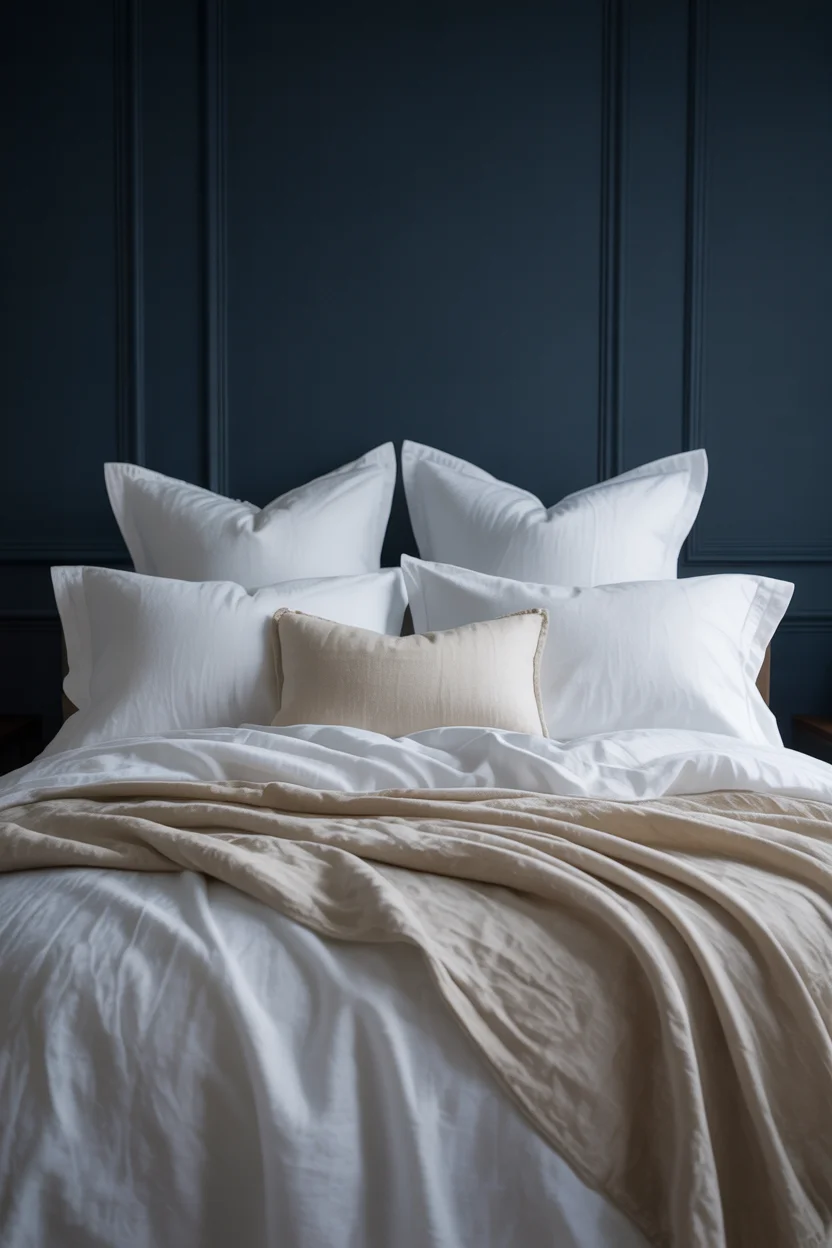
High-contrast bedding in white, cream, or light neutral tones creates a bright focal point that instantly prevents dark bedrooms from feeling oppressive. The bed typically occupies the most visual space in bedrooms, so dressing it in light colors ensures substantial brightness even with dark walls, floors, and furniture. This contrast is visually striking while serving the practical purpose of reflecting light and creating breathing room within the deep color scheme.
The psychological impact of light bedding in dark rooms cannot be overstated—it creates an inviting destination that beckons you to sink in, making the space feel restful rather than heavy. Layer various shades of white and cream in different textures—smooth cotton sheets, nubby linen duvet covers, chunky knit throws, velvet pillows—to create dimensional interest within the light palette. This monochromatic layering prevents the bedding from appearing flat while maintaining the light-reflecting properties. The combination of dark, cocooning walls with bright, fresh bedding creates the ultimate cozy-elegant balance that makes dark bedrooms so appealing.
Explore morehttp://pinterest.com/Dreamgardenshome/
6. Install Large Mirrors to Amplify Light
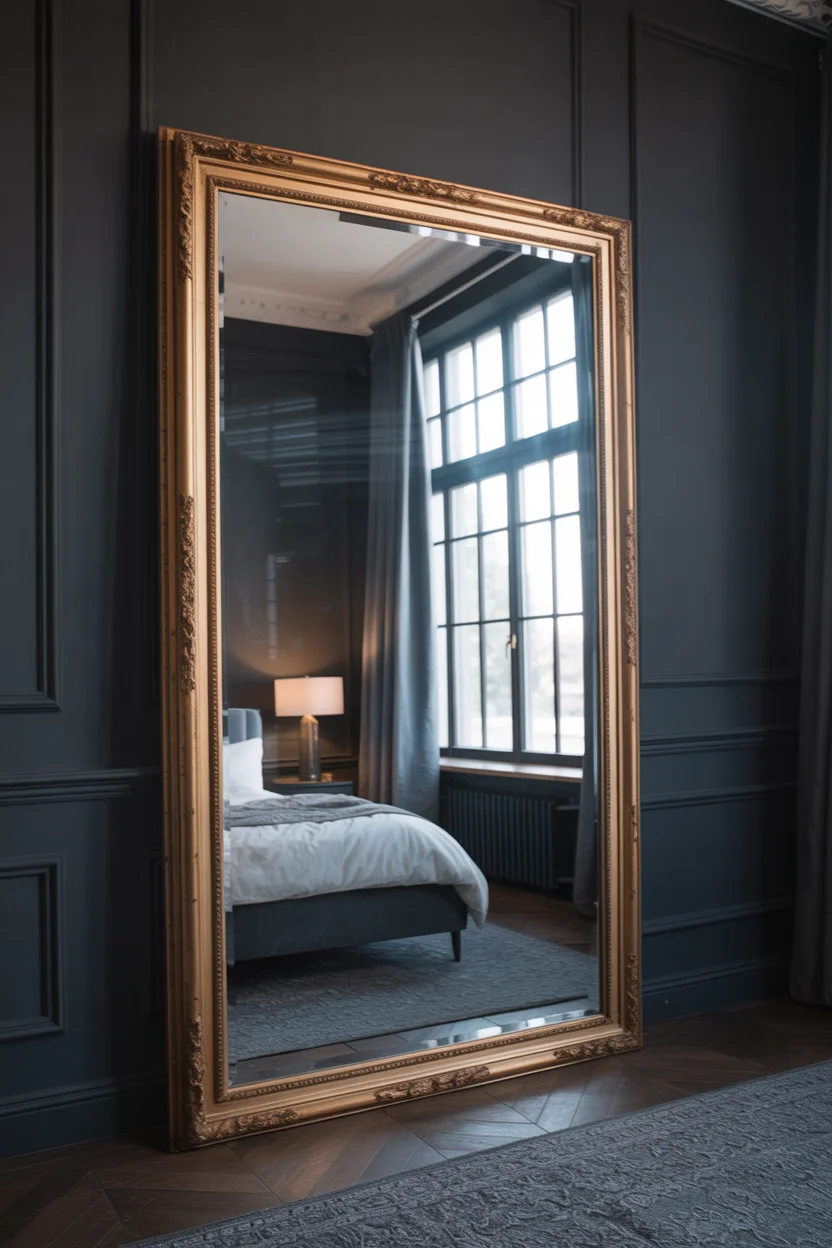
Large mirrors are non-negotiable in dark elegant bedrooms, serving the crucial function of amplifying whatever natural and artificial light exists. A substantial mirror effectively doubles your light sources by reflection, bouncing illumination throughout the room and preventing dark colors from absorbing all available brightness. Beyond the practical lighting benefits, mirrors create the illusion of expanded space, counteracting any cramped feelings that dark walls might otherwise create in smaller bedrooms.
Strategic mirror placement maximizes their impact. Position mirrors opposite or adjacent to windows to capture and reflect natural light throughout the day. Place them opposite light fixtures to double their effect, or behind table lamps to create glowing halos. Consider a large leaning mirror for casual elegance, a statement mirror above the dresser for traditional appeal, or even a mirrored wall for dramatic impact in smaller spaces. Frame selection matters—ornate gold or silver frames add glamour, sleek minimal frames suit contemporary spaces, and wood frames maintain warmth. The reflection itself becomes artwork while serving essential functional purposes.
7. Incorporate Rich Jewel Tone Accents
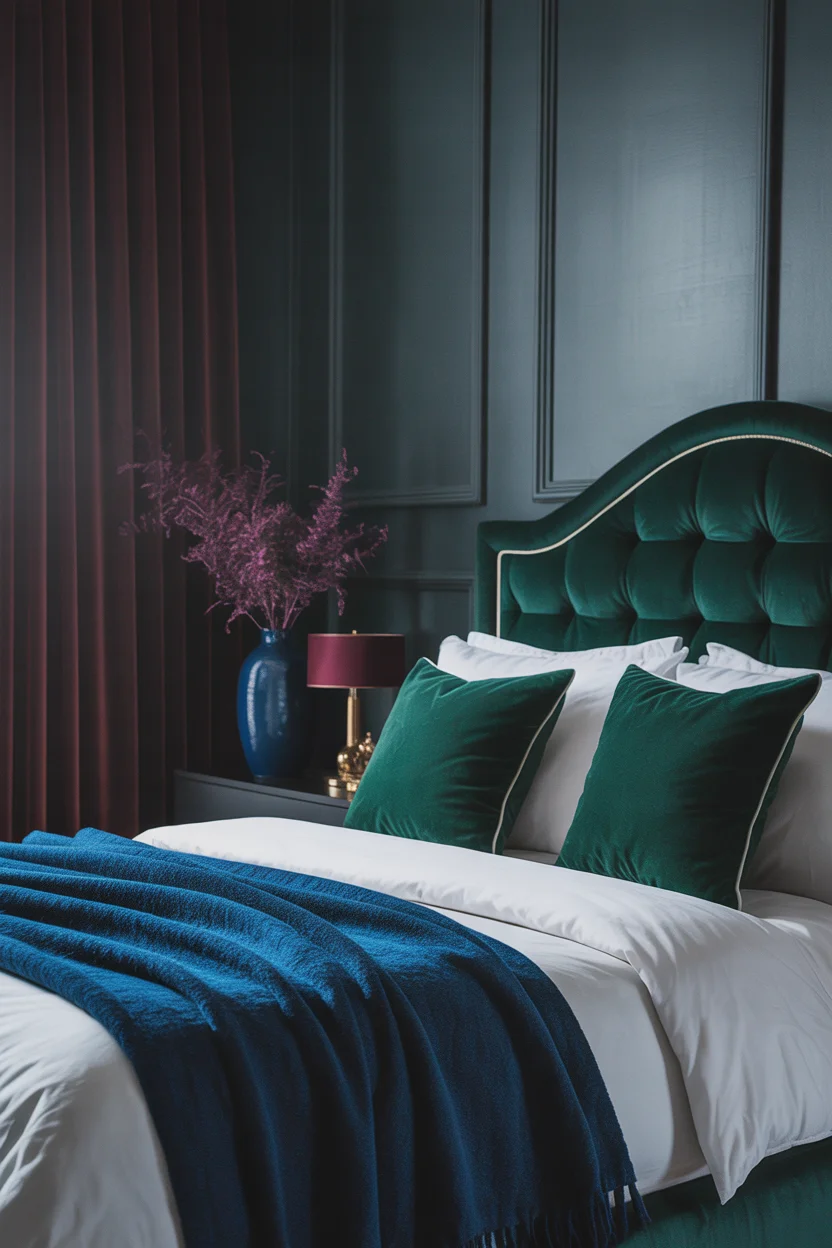
Jewel tones—emerald, sapphire, ruby, amethyst—add color complexity and richness to dark bedrooms without introducing brightness that would disrupt the moody aesthetic. These saturated, deep colors harmonize beautifully with charcoal, navy, or black base schemes, creating layered depth that prevents one-dimensional flatness. The inherent luxury associated with jewel tones reinforces the elegant quality while their darkness maintains the cozy, cocooning atmosphere that makes these spaces so appealing.
Jewel tones work best as accents rather than primary colors in dark bedrooms. Introduce them through throw pillows, blankets, area rugs, artwork, or drapery panels that add pops of sophisticated color without overwhelming. Consider the undertones of your base dark color when selecting jewels—cool charcoals and blacks pair beautifully with emerald and sapphire, while warmer dark browns complement ruby and amber tones. The slightly reflective quality of jewel tones in certain fabrics like silk or satin adds subtle light play similar to actual gemstones, contributing additional dimension and preventing heaviness while maintaining the dark, elegant palette.
8. Use Sheer Curtains to Soften Natural Light
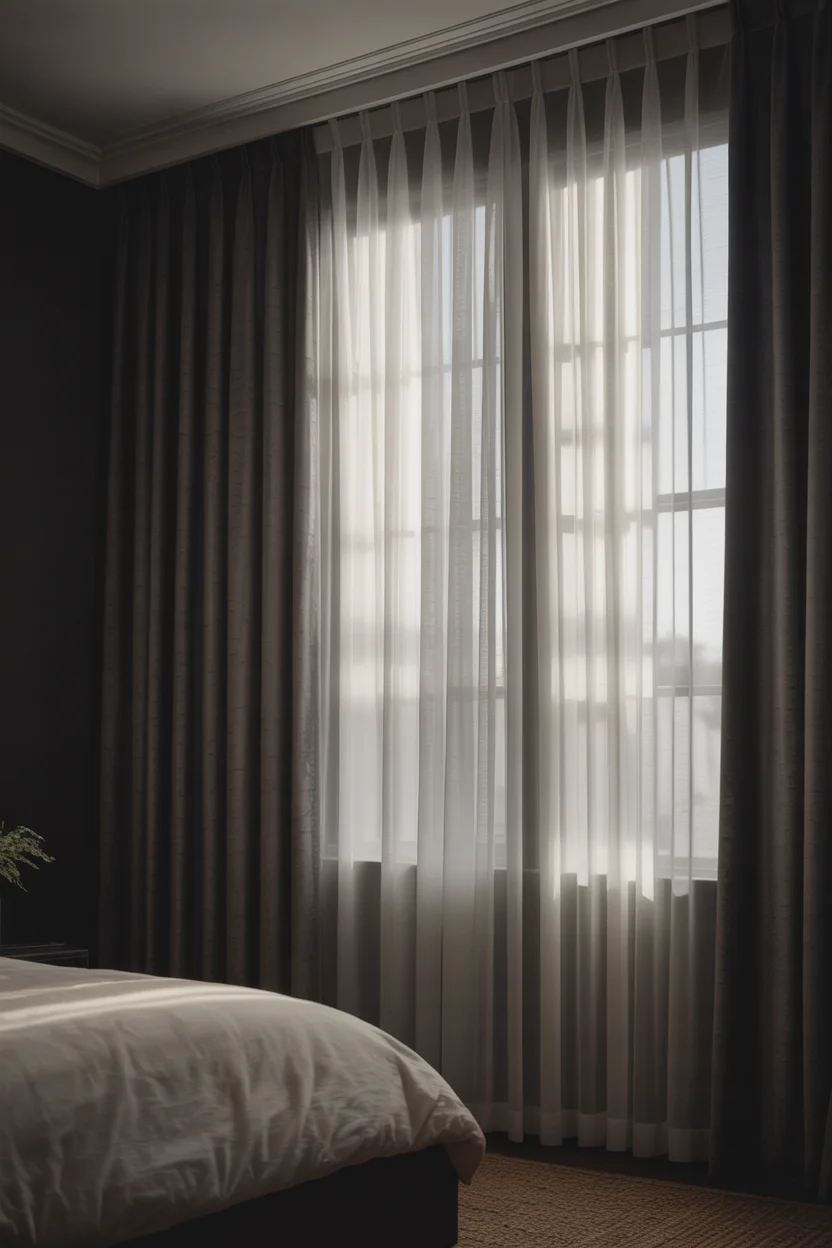
Sheer curtains provide the perfect window treatment for dark elegant bedrooms, filtering natural light to create soft, diffused brightness that illuminates without harsh glare. Unlike heavy drapes alone, sheers maintain connection to the outdoors and allow beneficial daylight to prevent cave-like feelings while still offering daytime privacy. The translucent quality creates gentle, romantic lighting that enhances the cozy factor while preventing the oppressive darkness that can occur with light-blocking treatments in already-dark rooms.
Layering is key to functional and aesthetic success. Install sheers as the layer closest to windows for daytime filtering, with heavier drapes, curtains, or blinds behind for light control when needed. Choose sheers in white, cream, or soft gray that complement rather than compete with your dark walls. The soft, flowing fabric adds textural lightness that contrasts beautifully with the visual weight of dark colors. Consider length carefully—floor-to-ceiling sheers create vertical lines that make ceilings feel higher, counteracting any lowering effect dark colors might create. During the day, keep sheers closed and heavy curtains open for filtered light; at night, close both layers for complete privacy.
9. Add Textural Contrast With Linen Fabrics
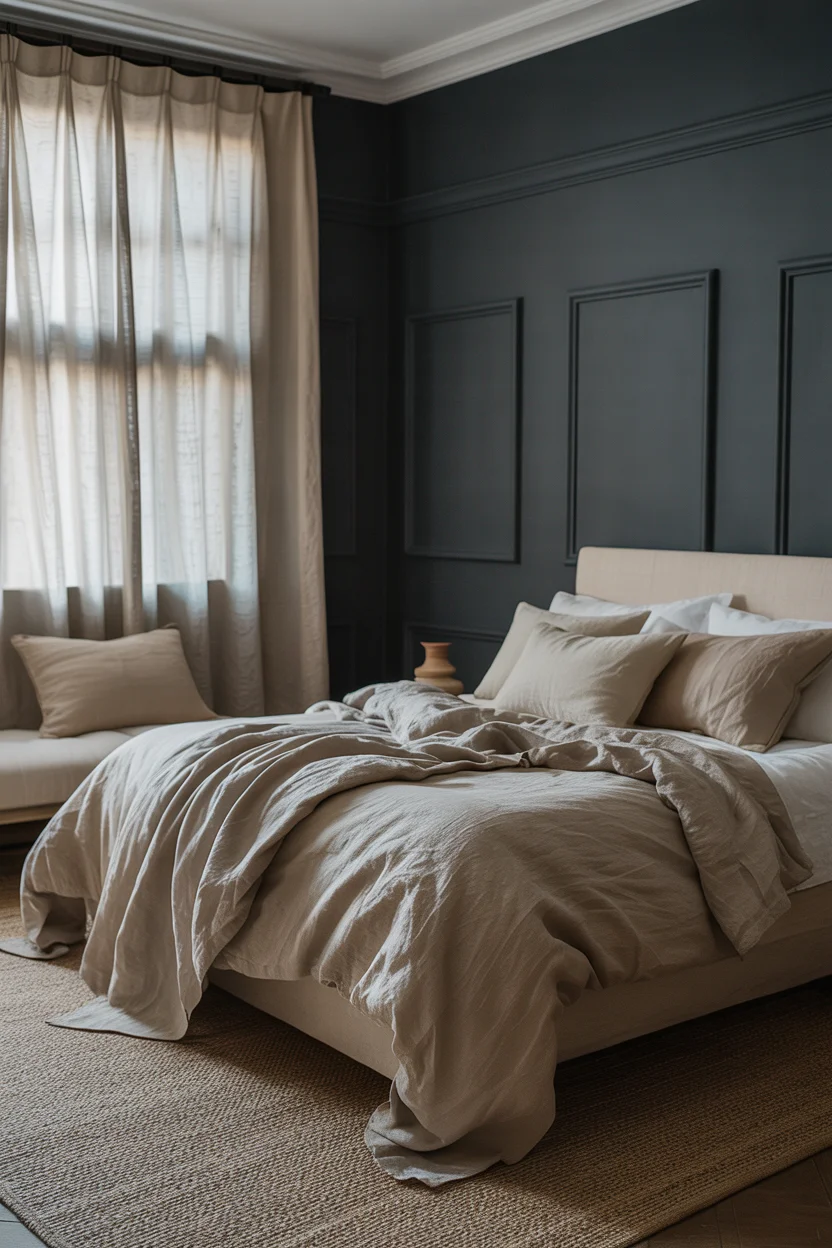
Linen brings relaxed, textural elegance to dark bedrooms through its characteristic slubs, natural variations, and casual drape that softens formal dark color schemes. The organic imperfections inherent to linen—subtle irregularities, gentle wrinkles, varied texture—add visual interest and approachable warmth that prevents dark elegant spaces from tipping into overly formal or stuffy territory. Linen’s matte finish provides crucial contrast to reflective surfaces like mirrors and metallics, creating textural balance that adds depth without shine.
The natural, breathable quality of linen contributes to the cozy, restful atmosphere essential in bedrooms. Despite its casual nature, linen possesses inherent sophistication that suits elegant aesthetics perfectly—it’s simultaneously relaxed and refined. Incorporate linen through bedding, curtains, throw pillows, upholstered furniture, or even wallcoverings for ultimate texture. Choose linen in light neutrals like white, cream, oatmeal, or soft gray to create contrast against dark walls, or select darker linen in charcoal or black for tonal sophistication. Pre-washed linen offers the softest hand and most relaxed appearance, perfect for creating cozy elegance rather than stiff formality.
10. Feature Statement Artwork With Light Elements
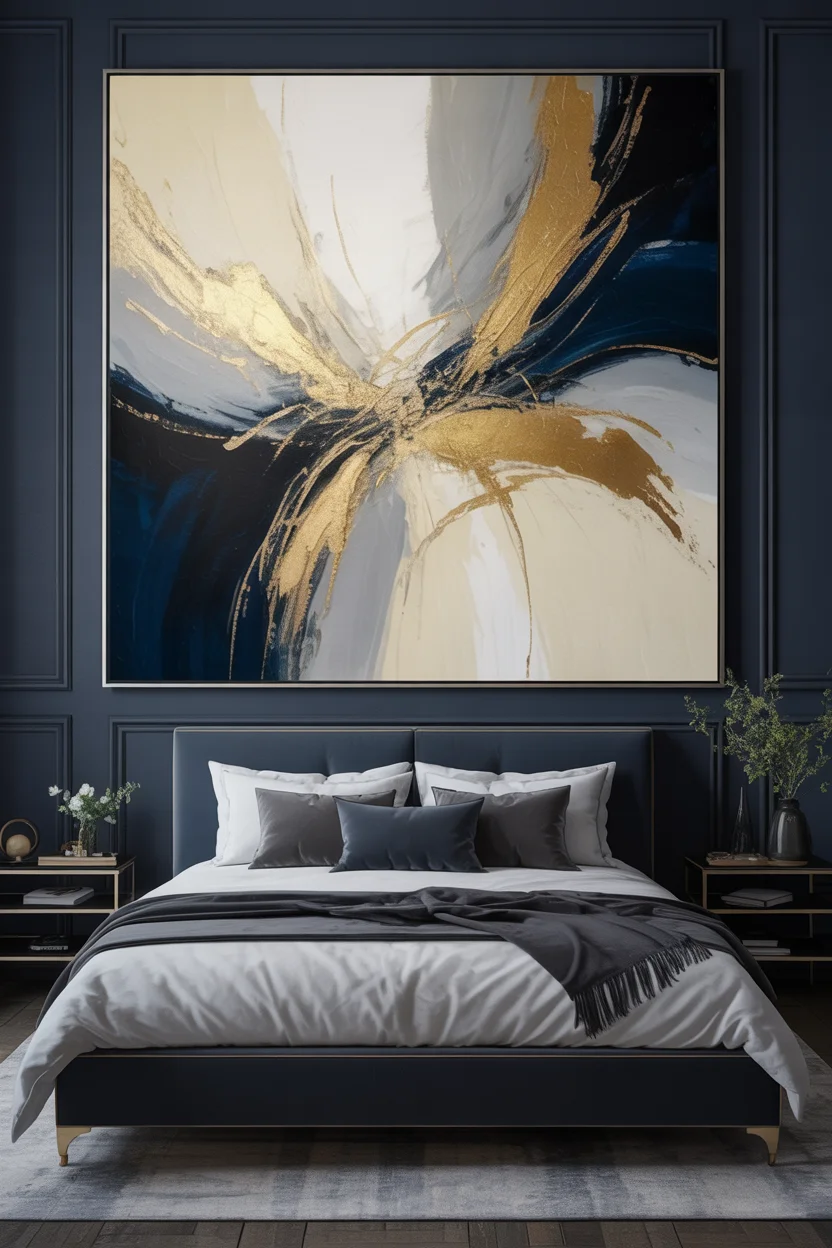
Statement artwork incorporating lighter tones, metallics, or bright elements serves double duty in dark bedrooms—creating focal points while introducing essential brightness and visual relief. Large-scale art breaks up expanses of dark walls that might otherwise feel monotonous or heavy, while lighter elements within the artwork reflect light and create breathing room. The right piece draws the eye and creates a conversation starter that elevates the space beyond simple dark paint application to curated, intentional design.
Selecting appropriate artwork requires considering both size and content. Oversized pieces make more impact than gallery walls in dark rooms, competing successfully with the visual weight of deep colors. Look for artwork with light backgrounds, metallic accents, or bright elements that contrast with your dark walls—abstract pieces with gold leaf, photography with bright subjects, or paintings with light compositional elements. The frame matters too; light-colored or metallic frames add additional brightness, while dark frames create seamless integration with walls. Position artwork with dedicated lighting—picture lights or directional spots—to ensure proper illumination that allows the piece to shine and contribute its light-reflecting properties effectively.
11. Incorporate Plush Area Rugs for Grounding
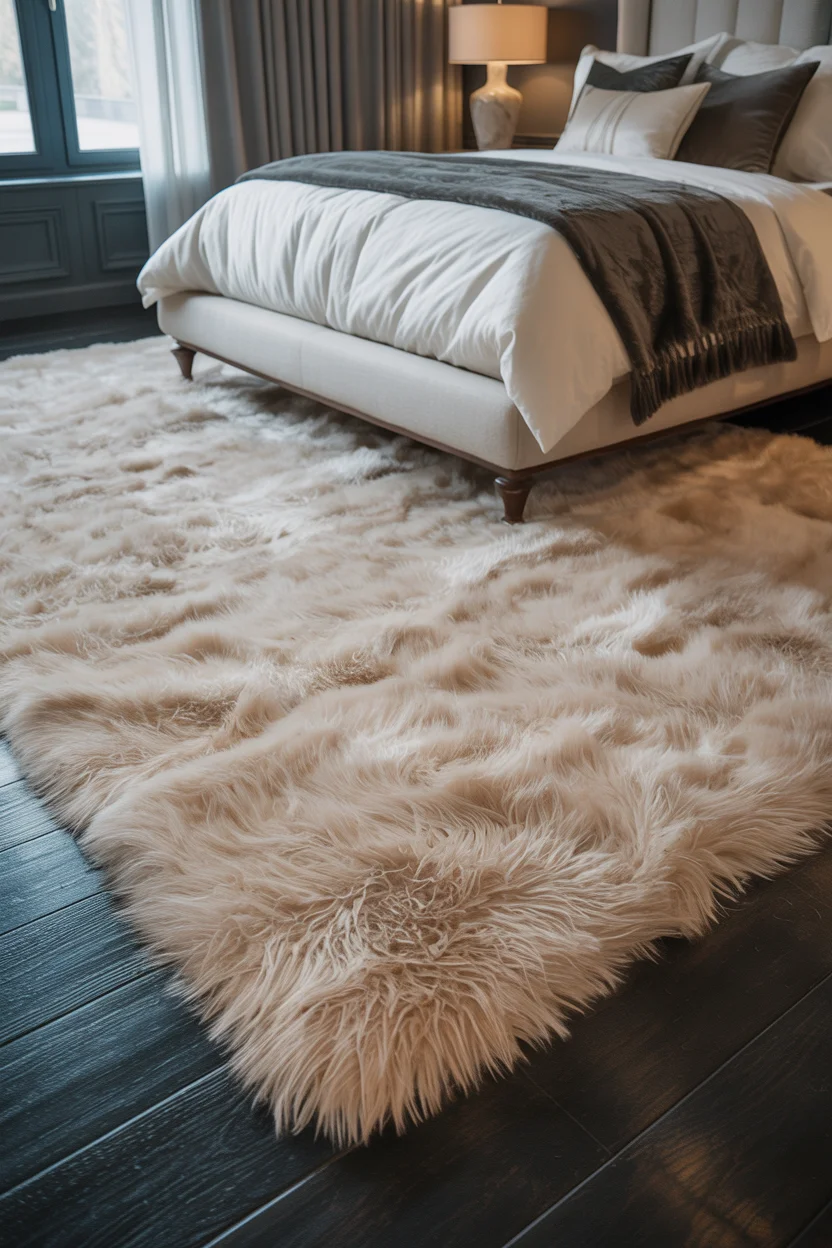
Plush area rugs in light or contrasting colors add essential grounding and textural warmth while introducing brightness at the floor level where dark bedrooms need it most. A substantial rug creates a soft, inviting foundation that makes the space feel cozy and luxurious rather than cold and heavy. The tactile pleasure of sinking your feet into plush fibers upon waking enhances the sensory comfort that makes dark bedrooms feel like true sanctuaries rather than just visually moody spaces.
Selecting the right rug involves considering size, texture, and color carefully. The rug should extend at least 18-24 inches beyond the bed on all exposed sides to create proper visual weight and practical function. High-pile, shag, or plush rugs add the most textural softness and visual contrast to smooth dark walls. Choose light neutrals like cream, ivory, or soft gray for maximum contrast, or select richly textured rugs in medium tones for subtler grounding. Natural materials like wool add warmth, while synthetic options offer easier maintenance. The rug breaks up dark flooring, adds a layer of insulation and sound absorption, and provides crucial textural variety that prevents visual and tactile monotony.
12. Paint the Ceiling a Lighter Shade
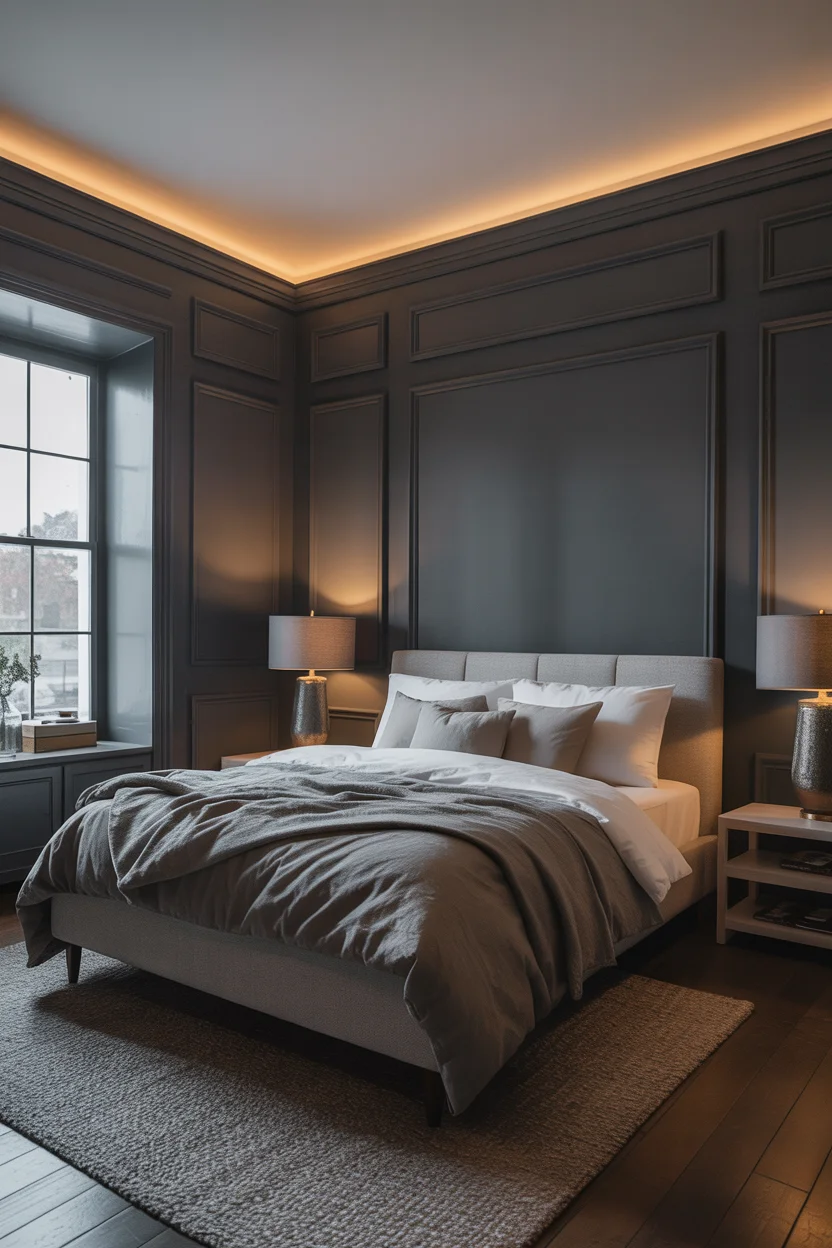
Painting the ceiling a lighter shade than your dark walls is one of the most effective techniques for preventing oppressive, cave-like feelings while maintaining moody elegance. The lighter ceiling draws the eye upward, creates the illusion of height, and most importantly, reflects light downward into the space rather than absorbing it. This overhead brightness prevents the “closing in” sensation that can occur when all surfaces—walls and ceiling—are uniformly dark, while maintaining the cozy, cocooning quality at eye level.
The ceiling needn’t be stark white to achieve this effect; in fact, a softer approach often feels more sophisticated. Consider a lighter tonal variation of your wall color—if walls are charcoal, try pale gray; if walls are navy, consider soft blue-gray. This creates cohesive flow while providing necessary contrast. Alternatively, warm whites or creams work beautifully, adding brightness without harsh whiteness. The lighter ceiling also showcases light fixtures more effectively and makes any ceiling details like molding or coffers more visible. This simple technique delivers significant impact in preventing heaviness while requiring minimal additional effort or expense beyond your wall painting project.
13. Create Contrast With White Trim and Molding
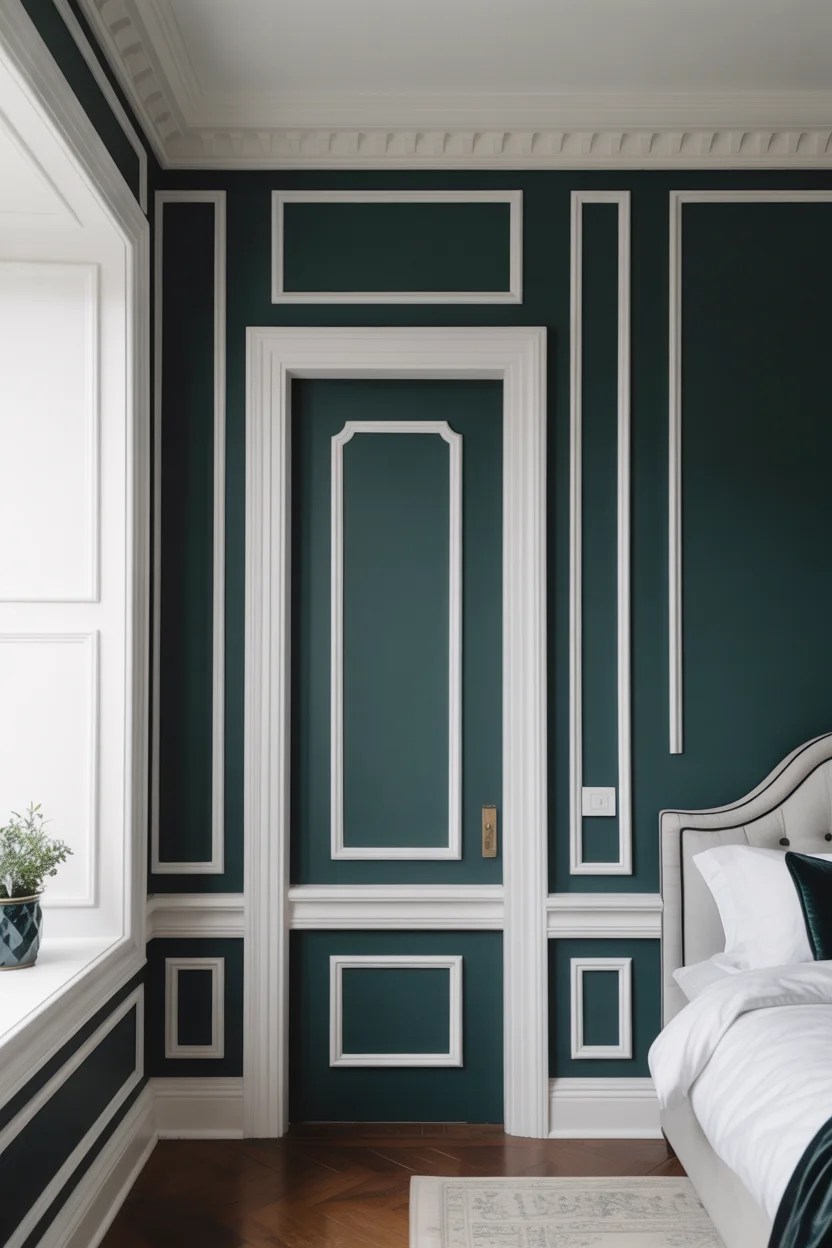
White or light-colored trim, molding, and architectural details create essential contrast and definition that prevents dark walls from feeling monotonous or oppressive. The bright lines frame and contain the dark color, creating visual interest through contrast while adding traditional elegance. This classic technique—dark walls with white trim—has endured because it successfully balances drama with brightness, allowing you to embrace deep colors without sacrificing light or creating heaviness.
The crisp contrast serves both aesthetic and practical purposes. Visually, white trim draws attention to architectural features, makes ceilings appear higher, and creates breathing room within dark color schemes. Practically, it reflects light along edges where walls meet ceilings and floors, maximizing available brightness. Consider the scope of trim work—crown molding, baseboards, door and window casings, wainscoting, or picture rails all contribute. The more trim elements you include, the more light-colored relief you create. Bright white creates maximum contrast for dramatic effect, while softer whites or creams provide gentler definition. Quality paint application matters; crisp lines between dark walls and white trim create the polished, intentional look that defines elegant design.
14. Introduce Greenery for Life and Color
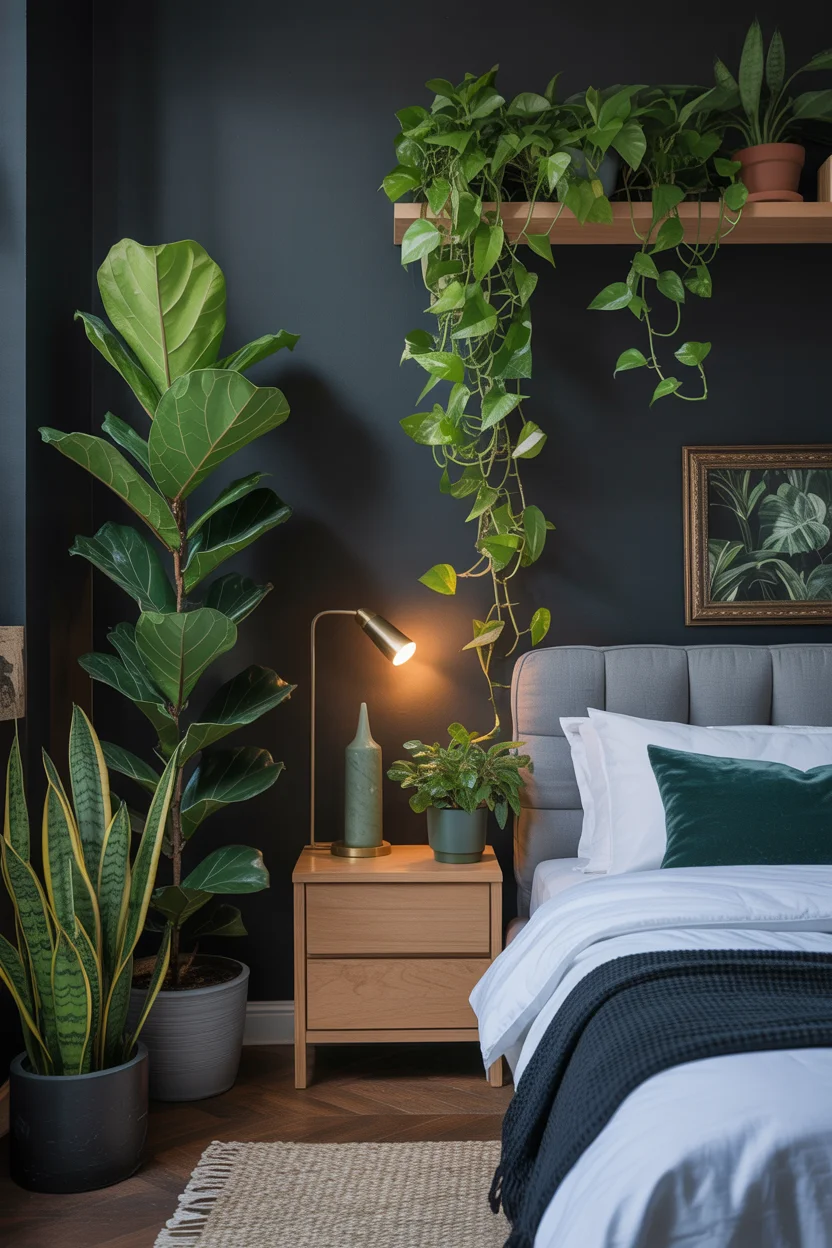
Living plants introduce essential natural color, texture, and vitality that prevents dark elegant bedrooms from feeling lifeless or stagnant. The vibrant greens create beautiful contrast against charcoal, navy, or black walls—a color combination nature itself favors, ensuring harmonious results. Beyond aesthetics, plants contribute oxygen, improve air quality, and create psychological connections to nature that enhance the restful, sanctuary-like quality bedrooms should embody, making dark spaces feel alive and healthy rather than tomb-like.
Select plants based on your bedroom’s light conditions and your maintenance commitment. Low-light tolerant varieties like snake plants, pothos, ZZ plants, or peace lilies thrive even in bedrooms with limited natural light, which often accompanies dark color schemes. Larger specimens like fiddle leaf figs, dracaena, or palms create substantial presence and architectural interest. Consider planters as design elements—white or light-colored pots add brightness, metallic planters contribute glamour, and natural materials like terracotta or woven baskets add warmth. Position plants at various heights for dimensional interest, and group them for impact. The organic shapes and natural variations of plants provide crucial contrast to the straight lines and solid colors dominating most bedroom designs.
15. Layer Varied Textures Throughout
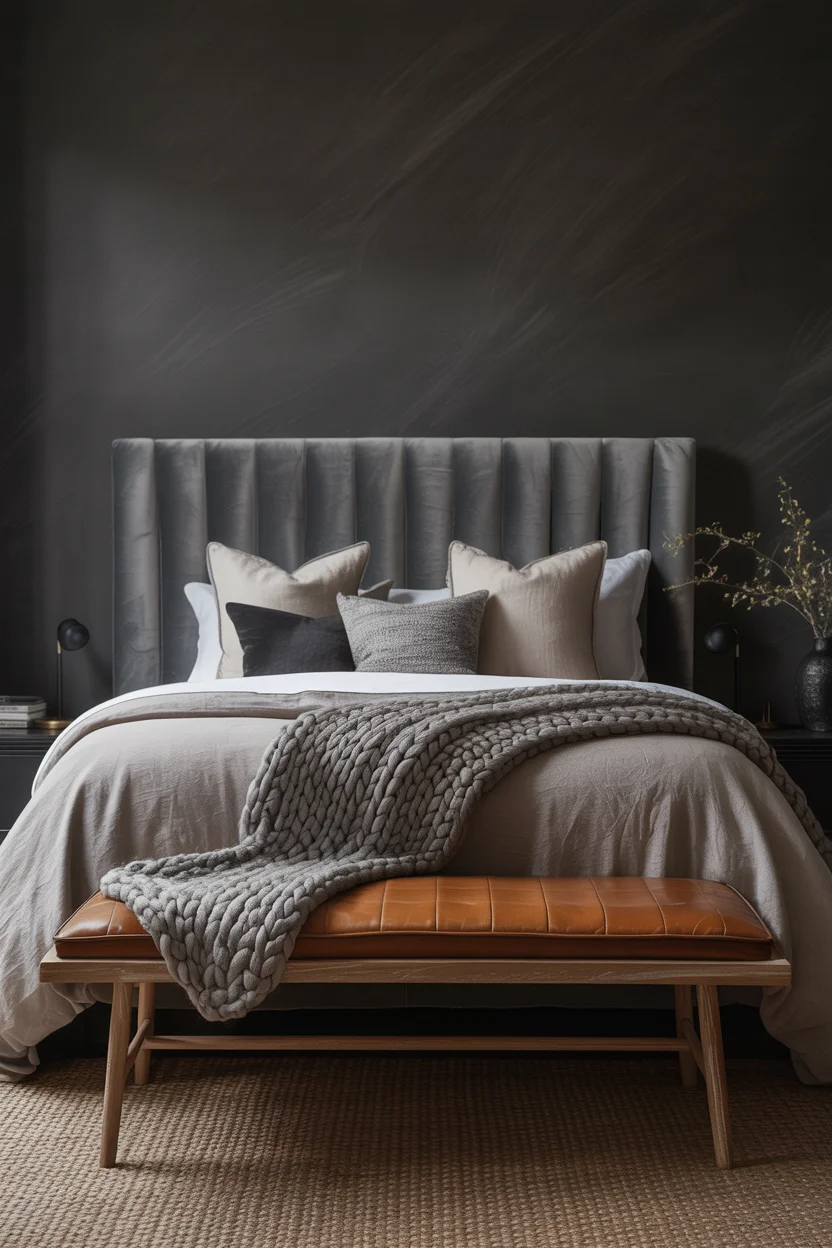
Aggressive texture layering is essential in dark elegant bedrooms because varied surfaces catch and reflect light differently, creating depth and visual interest that prevents flat monotony. In light-colored rooms, subtle texture variations suffice, but dark rooms require bolder textural contrasts to create dimension since color variation is limited. Smooth, nubby, plush, rough, soft, and hard textures should all coexist, each contributing distinct visual and tactile qualities that layer complexity into the space.
Create textural variety through intentional material selection across all bedroom elements. Combine smooth painted walls with textured wallpaper accents, plush velvet upholstery with crisp linen bedding, smooth leather chairs with chunky knit throws, polished wood furniture with rough natural fiber rugs. Each texture catches available light uniquely—velvet creates depth through pile variation, linen offers organic irregularity, silk reflects light smoothly, knits create dimensional shadows. The textural variety engages multiple senses beyond sight, making the bedroom feel rich and enveloping rather than heavy. This layering prevents the visual “flatness” that can occur with dark colors while contributing to the cozy, luxurious atmosphere that makes dark bedrooms so appealing.
16. Use Brass or Gold Light Fixtures
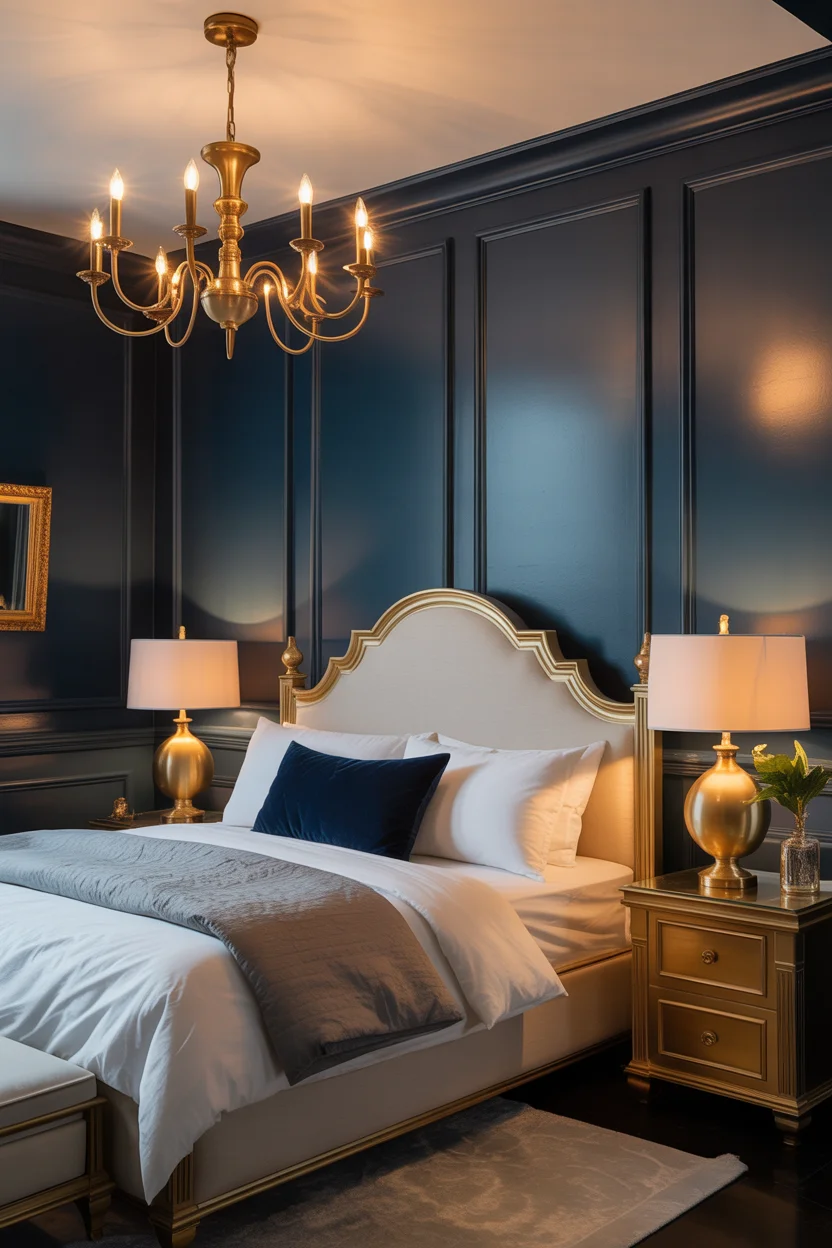
Warm metallic light fixtures in brass, gold, or bronze are particularly effective in dark bedrooms because they provide double duty—illumination and light-reflecting surfaces that sparkle and catch the eye. The warm tones of these metals create inviting, cozy ambiance that counters any potentially cold feelings from dark walls, while their reflective properties ensure maximum light distribution. Unlike painted or matte fixtures that blend into dark backgrounds, metallic finishes stand out and create focal points that add visual interest and elegance.
The warm glow of brass and gold complements dark color schemes beautifully, creating rich, sophisticated combinations that feel expensive and curated. These metals pair exceptionally well with charcoal grays, navy blues, forest greens, and deep browns, creating jewel-box effects that epitomize elegant design. Consider substantial fixtures that make statements—oversized chandeliers, dramatic pendants, or sculptural sconces that provide adequate light while serving as decorative elements. Mix metal finishes thoughtfully; brushed brass feels contemporary, polished brass reads traditional, and antique brass offers vintage charm. Ensure fixtures use warm-toned bulbs to enhance the cozy atmosphere, and install dimmers for flexible ambiance control essential in bedrooms.
17. Create a Feature Wall Behind the Bed
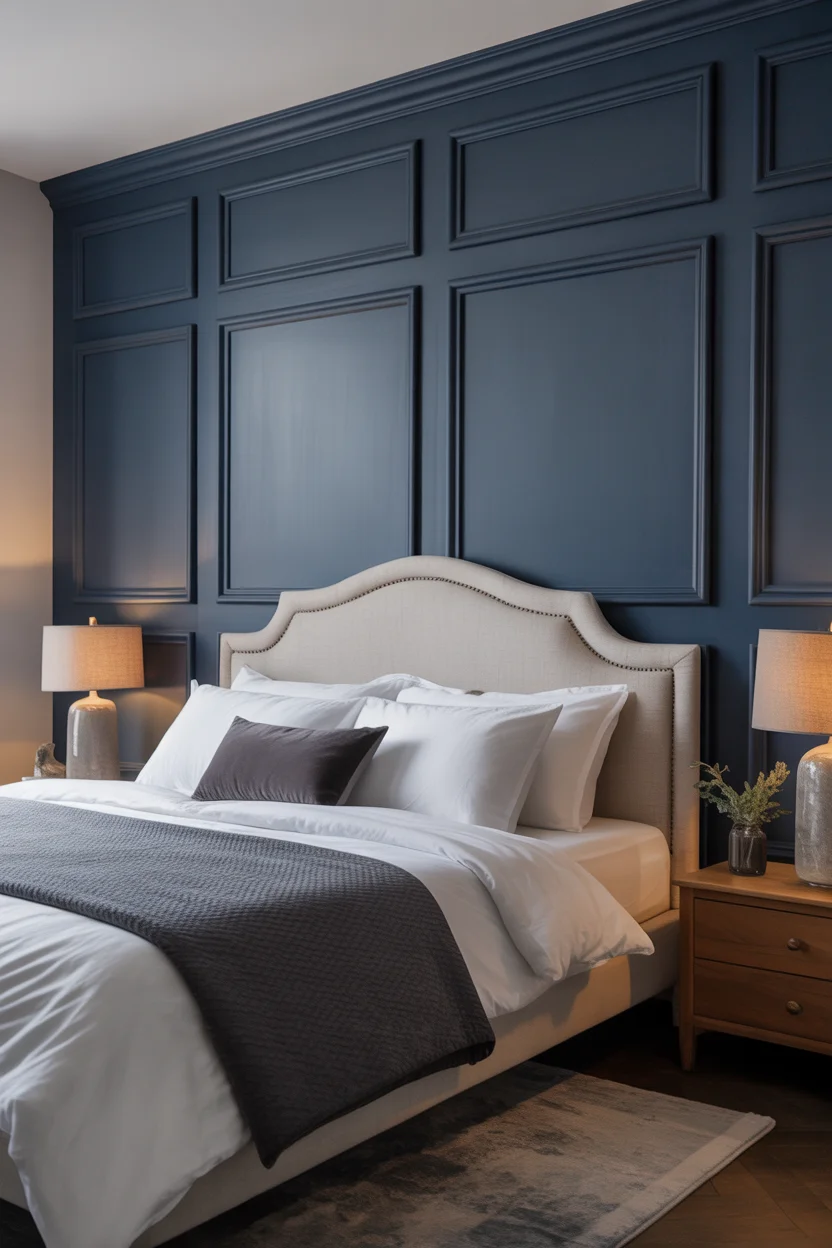
Creating a single feature wall in your darkest color while keeping other walls lighter allows you to embrace dark elegance without overwhelming the space or creating excessive heaviness. This strategic approach delivers the moody drama and cozy sophistication of dark bedrooms while maintaining overall brightness and airiness. The feature wall—typically behind the bed—creates a focal point and dramatic backdrop while the lighter surrounding walls reflect light and prevent cave-like enclosure.
This technique works particularly well for those hesitant to commit to fully dark bedrooms or working with smaller spaces where all-over dark might feel oppressive. Select your deepest, richest color for the bed wall and complement it with lighter tonal variations on remaining walls—charcoal feature wall with pale gray surrounds, navy accent with soft blue-gray elsewhere, or black feature with warm cream on other surfaces. Consider adding dimension to your feature wall through paneling, wallpaper, textured paint techniques, or fabric upholstery to maximize impact. This approach concentrates the dramatic dark color where it creates the most impact—framing your bed and creating a headboard effect—while maintaining overall room brightness and preventing heaviness.
18. Incorporate Reflective Lacquered Furniture
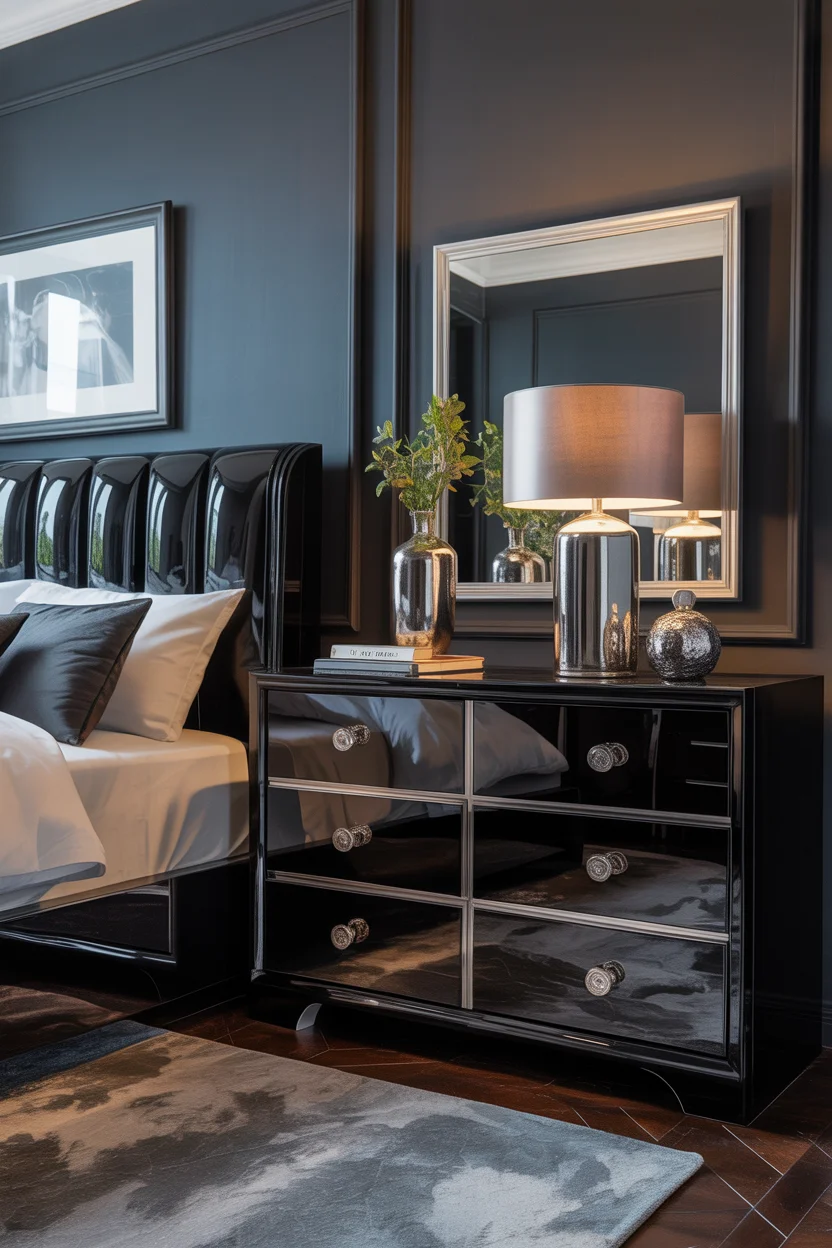
High-gloss, lacquered furniture introduces essential reflective surfaces that bounce light around dark bedrooms while maintaining tonal cohesion. Unlike matte furniture that absorbs light similarly to dark walls, glossy pieces create mirror-like reflections that add sparkle, dimension, and visual interest. This approach allows you to embrace dark-on-dark sophistication without creating flatness or excessive light absorption, as the reflective furniture surfaces compensate by distributing available light throughout the space.
Lacquered furniture brings contemporary glamour and luxury to dark elegant bedrooms. The ultra-smooth, glass-like finish feels expensive and refined, elevating the overall aesthetic while serving crucial functional purposes of reflecting light and creating visual variation within dark color schemes. Consider lacquered dressers, nightstands, wardrobes, or even headboards in colors that complement your walls—black lacquer against charcoal creates subtle tonal variation, while white or cream lacquer provides bright contrast. The reflective surfaces also create opportunities for playing with reflections of light fixtures, windows, and decorative objects, adding dynamic visual interest. Keep lacquered surfaces clean and polished to maximize their light-reflecting properties and maintain the sleek, elegant appearance that makes them effective in dark bedrooms.
19. Add Warmth With Layered Lighting in Warm Tones
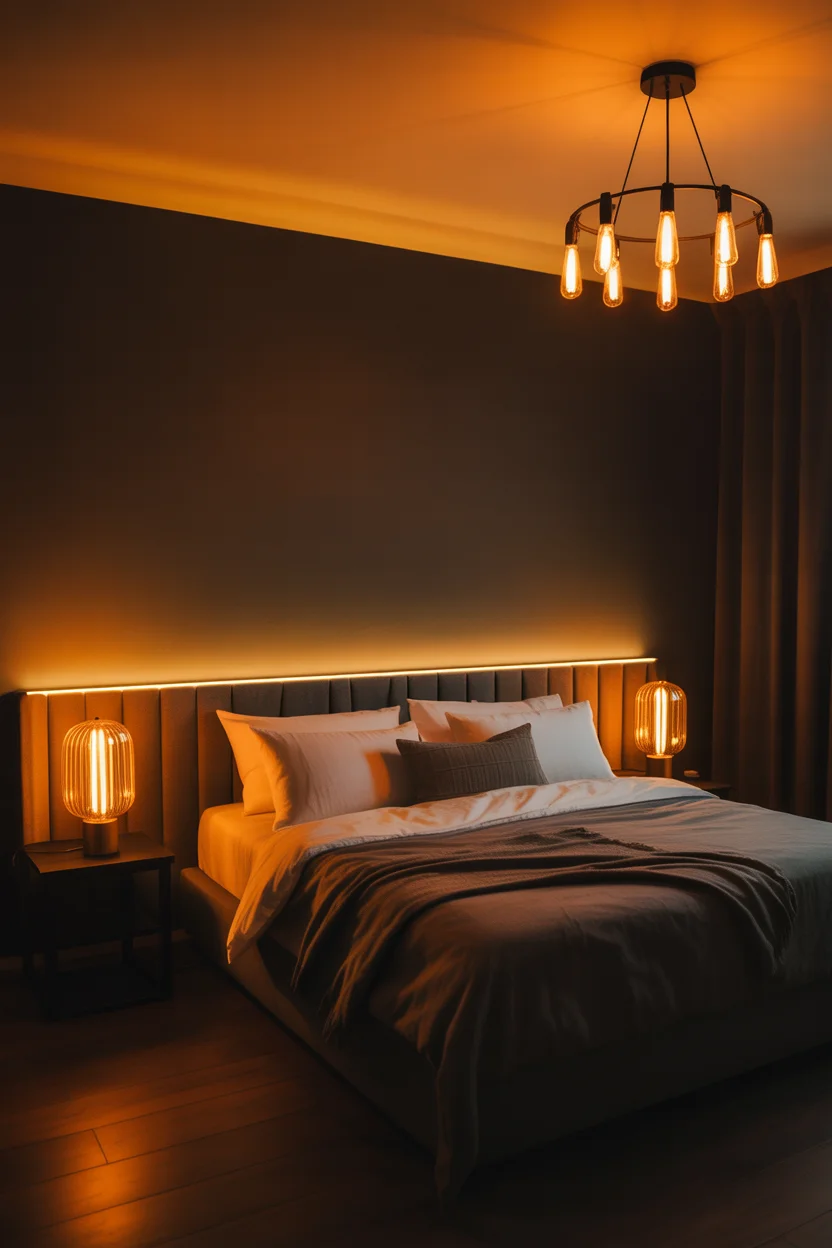
Bulb color temperature dramatically impacts whether dark bedrooms feel cozy or cold, making warm-toned lighting (2700K-3000K) absolutely essential. Cool white or daylight bulbs amplify any cave-like qualities and create uninviting, harsh atmospheres in dark rooms, while warm amber tones create the golden, inviting glow that makes dark spaces feel like cozy sanctuaries. This is perhaps the single most important lighting decision in dark elegant bedrooms—the right warmth transforms potentially oppressive darkness into enveloping comfort.
Evaluate every light source in your bedroom for color temperature, replacing cool bulbs with warm alternatives. Consider going even warmer than standard “soft white” with 2400K-2700K bulbs that emit decidedly golden light, especially in bedside lamps used for evening reading and relaxation. Vintage-style Edison bulbs create beautiful warm ambiance while serving as decorative elements themselves. Smart bulbs with adjustable color temperature offer flexibility, allowing slightly cooler light for morning routines and warmer tones for evening unwinding. Layer different warm light sources at varying heights and locations to create dimension, with ambient lighting from overhead fixtures, task lighting from reading lamps, and accent lighting from LED strips or candles all working together to create cozy, multi-dimensional illumination.
20. Install Wall Sconces for Ambient Glow
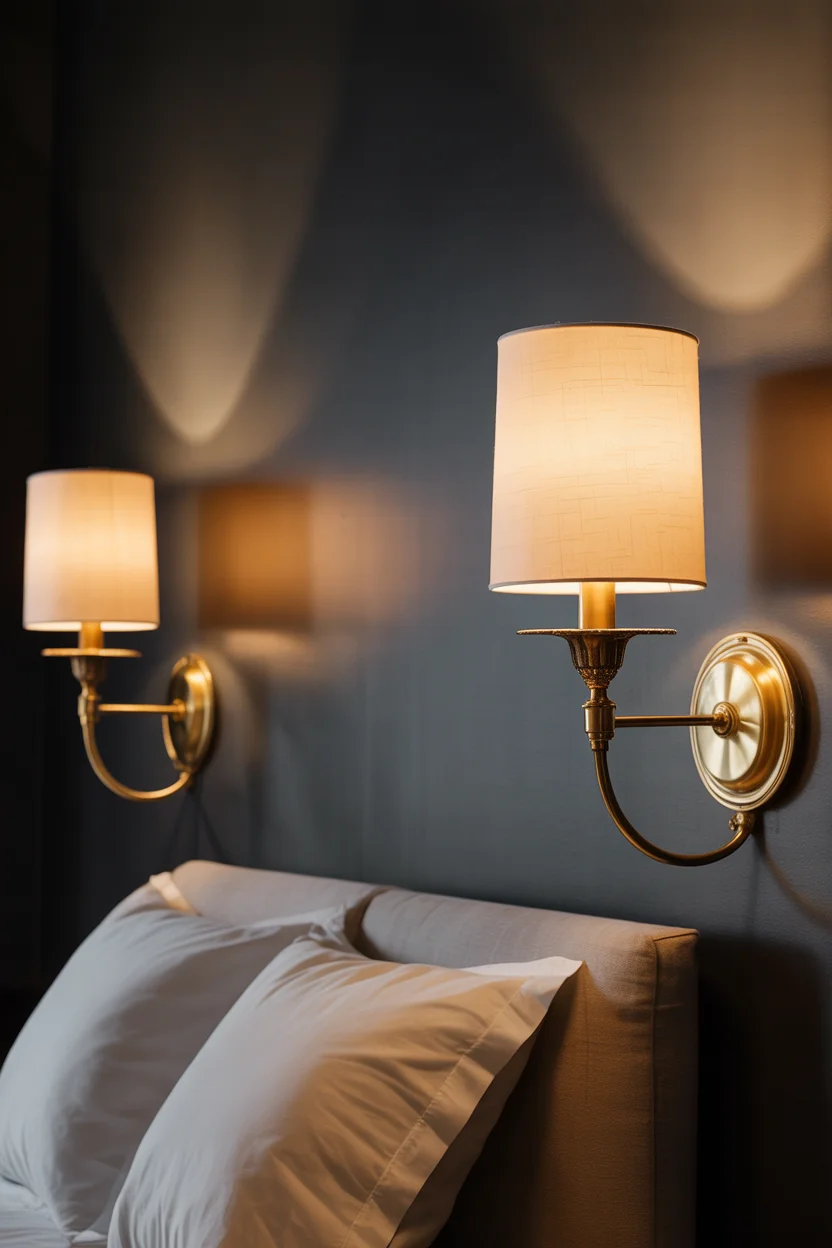
Wall sconces provide space-saving ambient lighting that’s particularly valuable in dark elegant bedrooms where multiple light sources are essential. Unlike table lamps that consume nightstand real estate, sconces mount to walls and direct light upward, downward, or both, creating soft glows that wash walls and prevent the harsh shadows that contribute to heavy feelings in dark rooms. The architectural quality of sconces adds elegance and intentionality, transforming functional lighting into decorative elements that enhance sophisticated aesthetics.
Strategic sconce placement maximizes their impact in dark bedrooms. Flanking the bed creates symmetry and provides convenient reading light without bedside lamp bulk. Positioning sconces 60-66 inches from the floor (to the center of the fixture) ensures appropriate height for seated reading while standing tall enough to create visual interest. Choose sconces that direct at least some light upward to brighten ceilings and create the illusion of height, counteracting any lowering effect dark walls might produce. Styles range from contemporary minimal arms to traditional fabric-shaded fixtures to industrial cage designs—select based on your overall aesthetic. Install dimmers for ultimate control, and use warm-toned bulbs to enhance cozy ambiance. The combination of wall-mounting and ambient glow makes sconces ideal for dark bedrooms where every lighting source counts.
21. Embrace Monochromatic Layering in Dark Tones
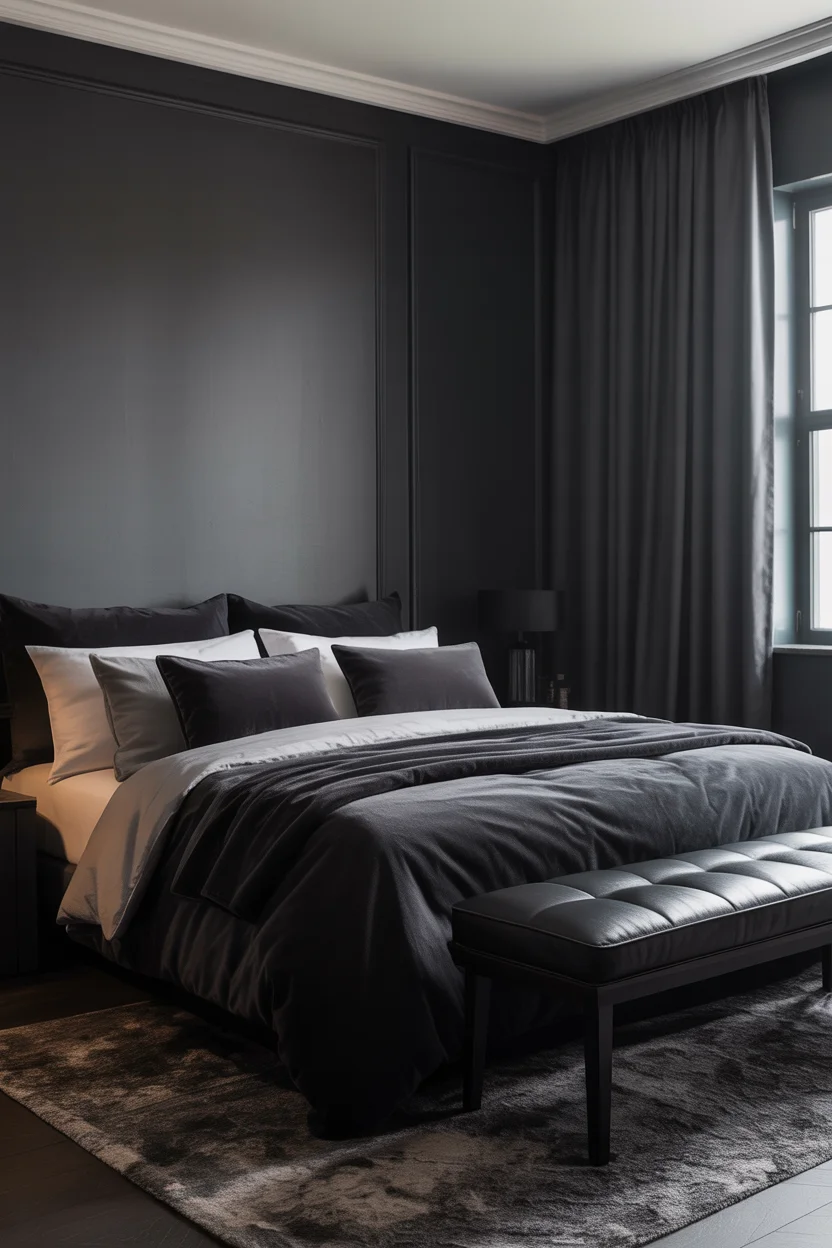
Monochromatic dark bedrooms that layer various shades of the same dark color family create sophisticated, cocoon-like elegance that feels intentional and cohesive rather than heavy. This tonal approach—combining black, charcoal, slate, and dark gray, or layering navy, midnight, and dark indigo—creates depth through subtle variation rather than contrasting colors. The limited palette feels calming and unified, while careful gradation from darkest to slightly lighter tones prevents one-dimensional flatness that could feel oppressive.
Success with monochromatic dark schemes requires obsessive attention to texture, as it provides the primary source of visual interest when color variation is minimal. Layer smooth, rough, matte, glossy, soft, and nubby textures aggressively to create dimension that color cannot provide. Incorporate subtle pattern through textured wallpaper, quilted bedding, or woven textiles that read as texture from distance. This approach creates the ultimate cozy, enveloping atmosphere—a dark sanctuary that wraps you in continuous, calming color. Ensure adequate lighting with multiple warm-toned sources, and incorporate some reflective metallic or light-colored elements to prevent excessive heaviness. The monochromatic dark bedroom represents the confident embrace of moody elegance for those ready to fully commit to the aesthetic.
22. Balance Darkness With White or Light Furniture
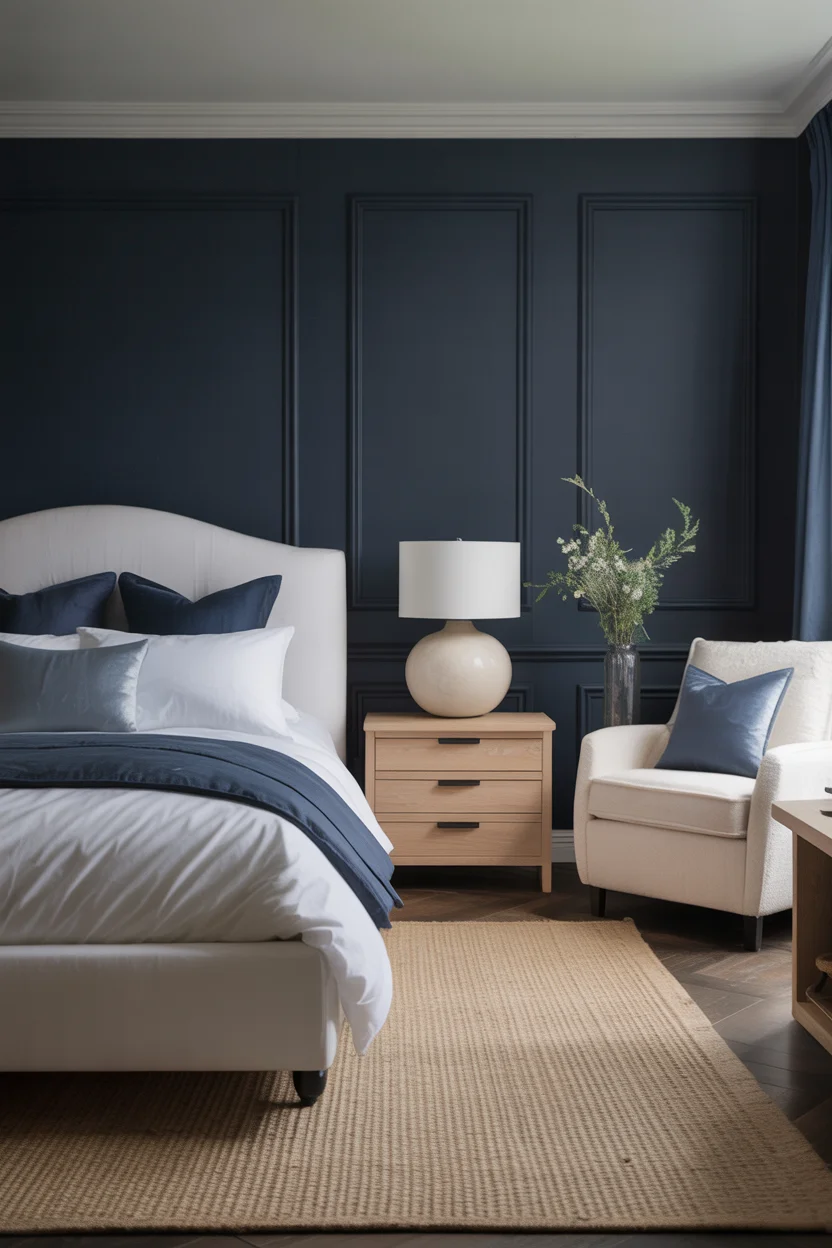
Substantial light-colored furniture creates essential brightness and visual relief in dark elegant bedrooms, preventing oppressive heaviness while maintaining sophisticated moody aesthetics. Unlike small light accessories that can get lost against dark backgrounds, significant furniture pieces in white, cream, light wood, or pale upholstered finishes provide enough bright contrast to impact the overall balance. The bed frame, dresser, nightstands, or seating in lighter finishes ensure adequate brightness without disrupting the dark elegant atmosphere you’re cultivating.
This contrast approach offers practical advantages beyond aesthetics. Light furniture remains visible and accessible in low-light conditions, while dark furniture might visually disappear against dark walls. The bright pieces reflect and distribute available light more effectively than dark furniture, contributing to overall brightness without adding more light sources. Consider which pieces make the most impact—a white upholstered bed frame creates a dramatic focal point, light wood dressers add warmth and brightness, or a cream-colored reading chair creates a cozy destination. The furniture needn’t match; in fact, mixing light wood tones with white or cream upholstered pieces adds variety while maintaining the light-colored presence that balances your dark walls and creates elegant, cozy harmony rather than oppressive darkness.
Conclusion
Dark elegant bedrooms prove that deep, moody colors create the most luxurious, cozy sanctuaries when balanced with strategic lighting, reflective surfaces, and varied textures. The secret isn’t avoiding darkness but embracing it thoughtfully—layering warm-toned lights, incorporating metallics and mirrors, choosing light-catching fabrics, and maintaining contrast through bedding or furniture. These dark elegant bedroom ideas demonstrate that sophisticated, enveloping spaces feel restful rather than heavy when designed with intention. Trust the transformative power of dark colors to create the intimate, cocoon-like retreat you deserve.

Join The Discussion