
Introduction
Winter window boxes deserve far more attention than they typically get. Most people pack away their planters the moment summer ends and never look back — but that’s honestly one of the biggest missed opportunities in seasonal decorating. A well-styled winter window box transforms your home’s entire exterior personality with surprisingly little effort and even less expense. These 21 winter window box ideas prove that the coldest months can produce the most magical curb appeal of the entire year.
1. The Classic Evergreen Window Box With Red Berry Clusters
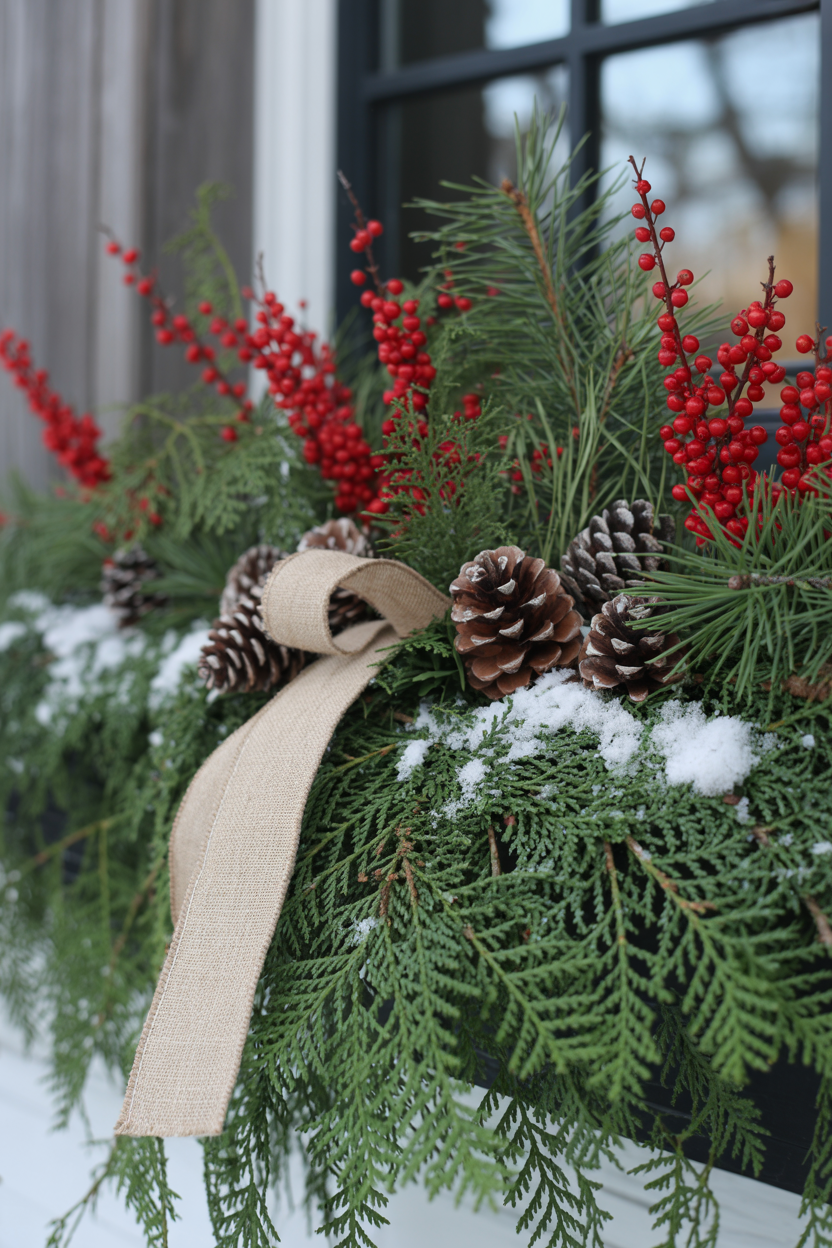
Classic evergreen and red berry window boxes earn their place as the most recognizable winter window box idea because they’re built on a color combination that feels instinctively seasonal without requiring any explanation. Fresh Fraser fir branches create a full, lush base that holds its visual weight even under snow accumulation. Red winterberry clusters tucked between the greenery layers create vivid color punctuation that reads beautifully from the street.
Pinecones nestled naturally throughout the arrangement introduce textural variation that prevents the box from looking flat or one-dimensional. The burlap ribbon detail keeps the styling feeling genuinely homemade and warm rather than overly manufactured. This combination works on virtually every home exterior style — whether your house is a modern farmhouse, a Victorian cottage, or a traditional colonial, fresh evergreen and red berries communicate welcome and warmth in the universal design language of winter hospitality.
2. The Frosted White and Silver Winter Window Box With Icy Elegance
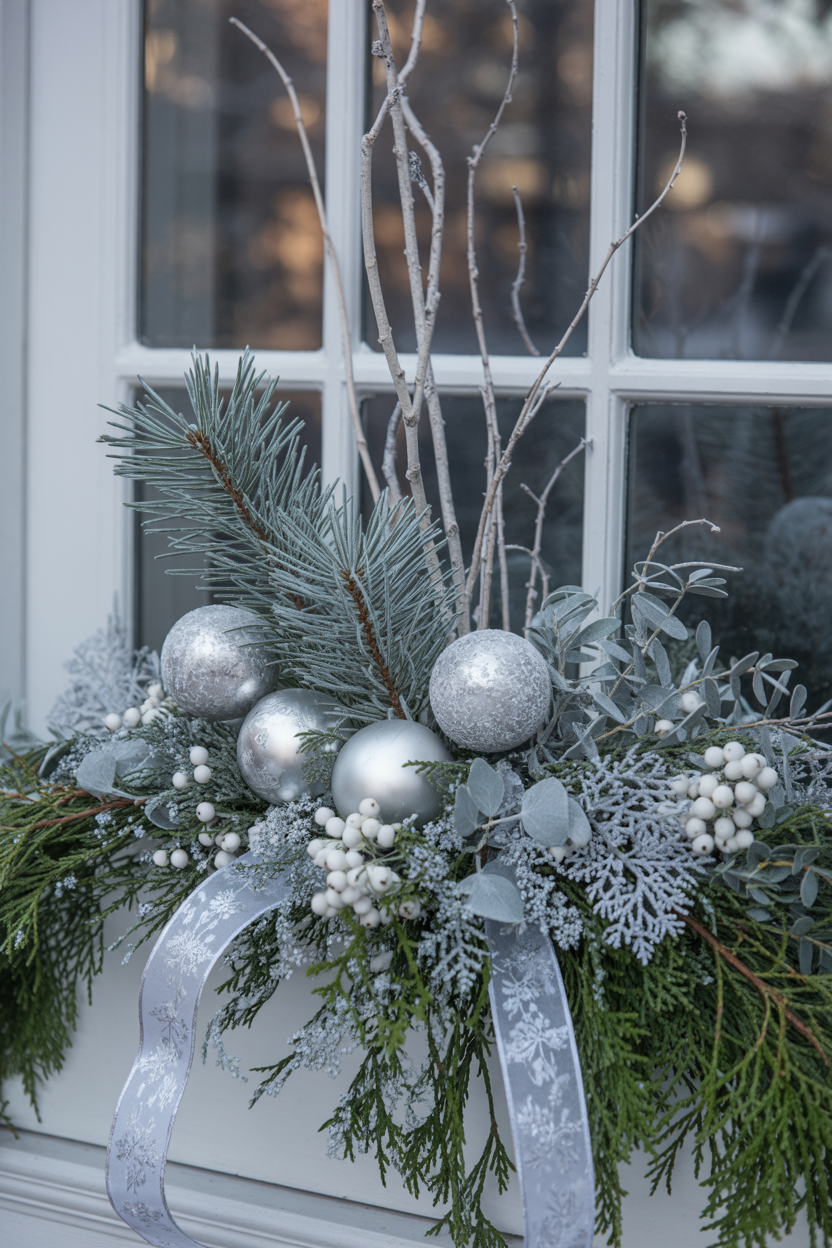
Frosted white and silver winter window boxes achieve an icy elegance that looks extraordinary against both dark and light home exteriors — because the pale metallic palette creates contrast in either direction. White-sprayed pine branches deliver the visual impression of heavy frost without requiring actual freezing temperatures, which means this arrangement looks magical from the first day of installation regardless of the weather. Dusty miller’s naturally silvery foliage contributes genuine botanical texture that manufactured alternatives simply cannot replicate.
Vertical white birch twigs rising above the arrangement’s primary greenery layer add architectural height that makes the window box feel designed rather than simply filled. Silver ornament balls nestled among the branches introduce a decorative dimension that bridges garden and holiday aesthetics gracefully. White berry clusters continue the pale palette throughout every level of the arrangement. This winter window box idea photographs extraordinarily well in winter light — the pale tones catch low-angled December sun with a luminous quality that warmer palette arrangements rarely achieve.
3. The Rustic Twig and Pinecone Winter Window Box With Woodland Character
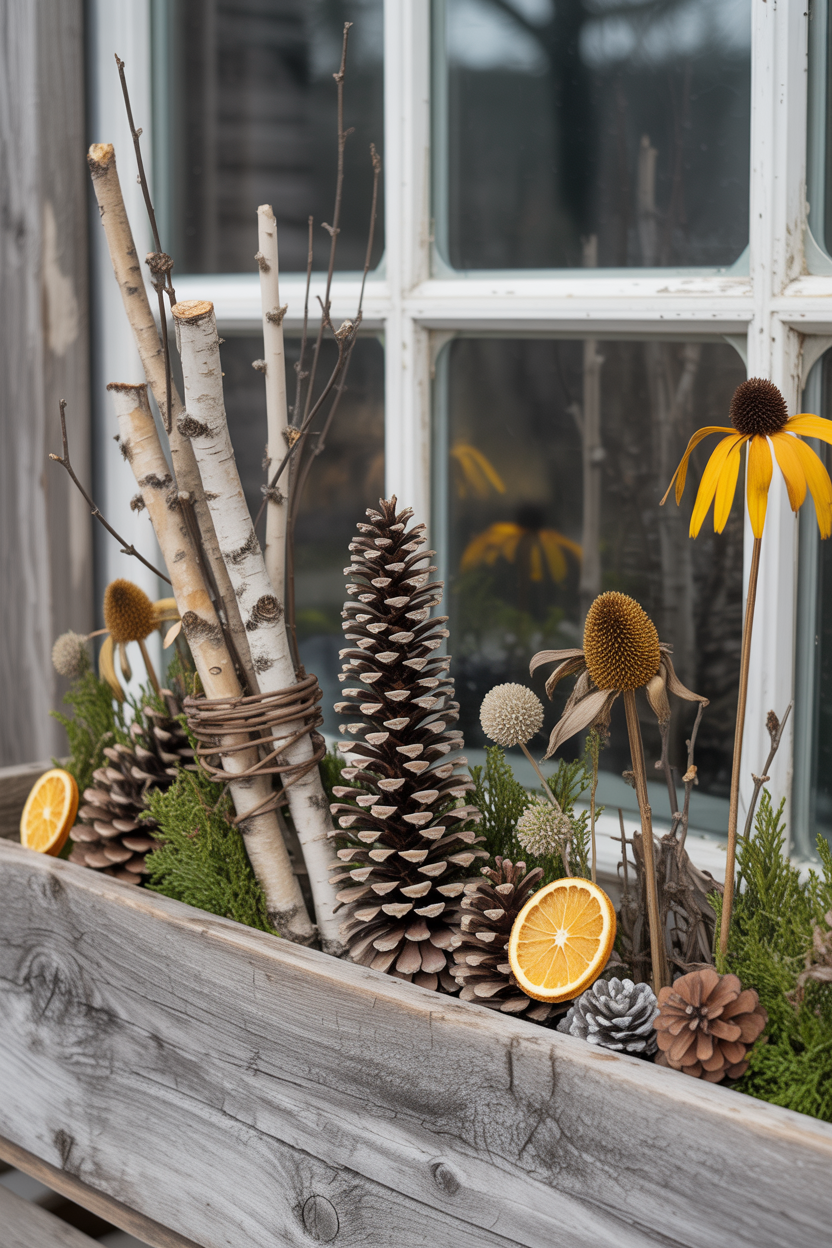
Rustic twig and pinecone winter window boxes prove that the most compelling seasonal arrangements often cost almost nothing when the natural landscape around you is treated as a design resource rather than simply a backdrop. Bare birch twigs bundled and wired throughout the arrangement create graphic linear interest that evergreen-only boxes never achieve — the negative space between branches becomes part of the design rather than an area needing to be filled. Varying pinecone sizes create natural scale variation that reads as genuinely organic.
Dried seed heads from black-eyed Susans and coneflowers left standing through winter introduce a prairie naturalism that feels increasingly sophisticated in contemporary garden design circles. Dried orange slices provide the arrangement’s only warm color note — enough to prevent the palette from feeling monotone without introducing anything artificially festive. This winter window box idea suits homes with natural wood siding, stone exteriors, or any architectural context where organic materials feel architecturally appropriate rather than stylistically incongruous.
4. The Cozy Lantern and Greenery Winter Window Box With Warm Glow
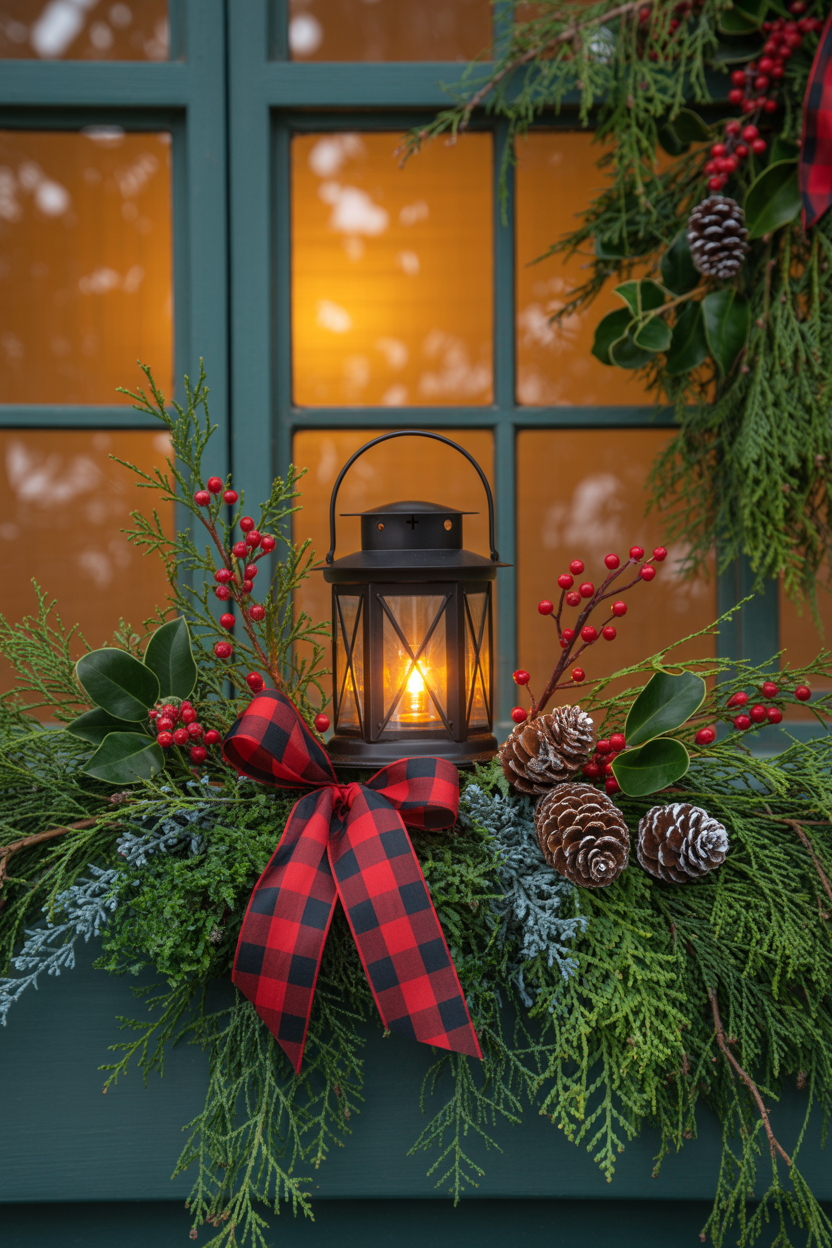
Lantern and greenery winter window boxes add the dimension that purely botanical arrangements always miss — actual light. A small battery-operated lantern nestled within fresh cedar and pine branches creates warm amber illumination that transforms the window box from a daytime display into an evening focal point with genuine atmospheric power. At dusk, when the lantern activates against the darkening exterior, the surrounding greenery glows with a warmth that makes the entire home front feel genuinely welcoming.
Buffalo check plaid ribbon bows introduce the cozy domestic narrative that makes winter window box ideas feel personally styled rather than professionally installed. Red berries and holly tucked throughout the greenery provide the seasonal color punctuation that the amber lantern light then dramatically amplifies after dark. Miniature pinecones scattered naturally complete the woodland material story. This arrangement works particularly beautifully on homes with covered porches or deep window ledges where the lantern light can reflect against architectural surfaces and multiply its warming effect.
5. The Magnolia Leaf and White Berry Winter Window Box With Southern Charm
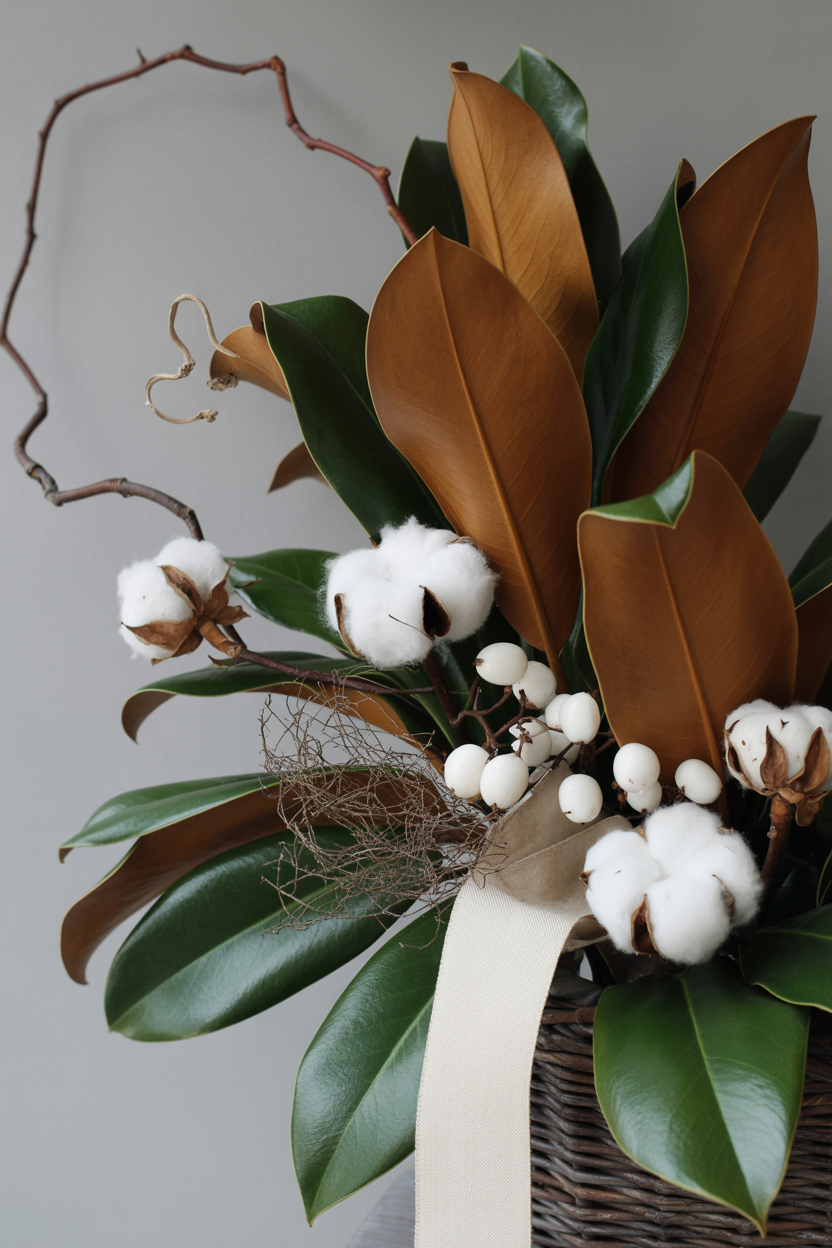
Magnolia leaf winter window boxes occupy a specific regional aesthetic register — they feel authentically Southern in their botanical vocabulary while remaining sophisticated enough to appeal to anyone drawn to glossy, dramatic foliage as a primary design element. Oversized magnolia leaves create bold graphic shapes that smaller-leafed evergreens simply cannot achieve. The contrast between their deep glossy green upper surfaces and warm brown undersides creates natural tonal variation within a monochromatic green palette.
White snowberry clusters against the dark magnolia leaves create the arrangement’s most striking visual moment — the pale spherical berries seem to almost glow against the deep green backdrop. Dried cotton bolls add textural contrast that feels genuinely distinctive and regionally specific in the most appealing way. Curling grapevine tendrils introduce organic movement that prevents the arrangement from feeling stiff or formally composed. This winter window box idea suits craftsman bungalows, colonial revival homes, and any exterior architecture where botanical abundance feels naturally at home.
6. The Festive Red Plaid and Evergreen Window Box With Holiday Spirit
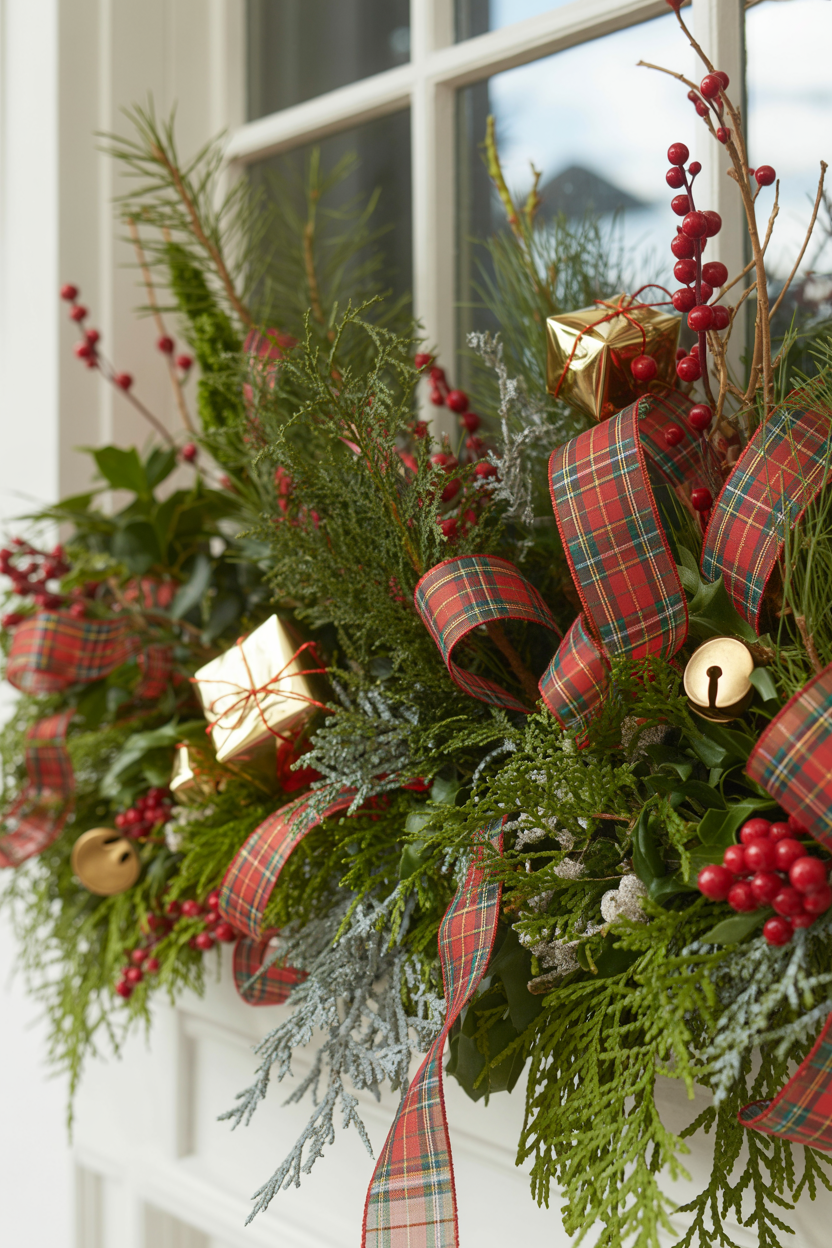
Festive plaid and evergreen winter window boxes commit fully to holiday celebration in a way that more restrained arrangements deliberately avoid — and the resulting exuberance is genuinely infectious. Mixed pine, cedar, and juniper branches create botanical variety that keeps the greenery base visually interesting rather than uniformly dense. Multiple plaid ribbon varieties layered throughout introduce color and pattern complexity that rewards close inspection while still reading as cohesively festive from the street.
Gold jingle bell accents wired among the branches catch winter light with a metallic sparkle that adds genuine vitality to the arrangement. Miniature wrapped gift boxes tucked within the greenery are the detail that makes children stop and look more carefully — a moment of delightful discovery that transforms the window box from exterior decoration into a small seasonal story. This winter window box idea suits homes where Christmas decorating is taken seriously and the exterior is expected to communicate the same celebratory spirit as the interior.
7. The Minimalist Japanese-Inspired Winter Window Box With Zen Calm
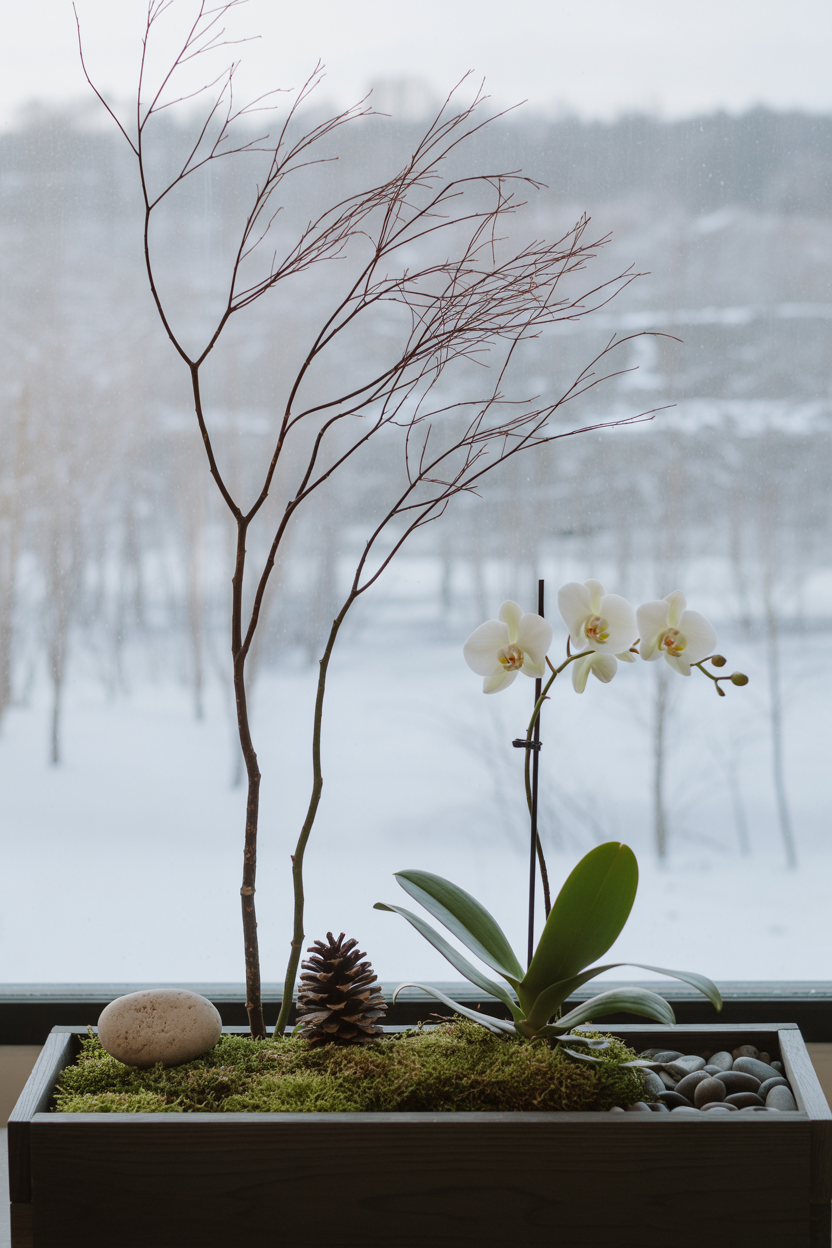
Minimalist Japanese-inspired winter window boxes challenge the dominant assumption that seasonal arrangements must be abundant to be effective — and they challenge it persuasively. Three perfectly placed bare Japanese maple branches rising upward create more visual drama through precise placement than a box stuffed with mixed materials ever achieves through volume. The arrangement’s power comes entirely from the considered relationship between branches rather than from botanical abundance.
A single white orchid stem anchored in preserved moss introduces living delicacy that makes the surrounding bare branches feel simultaneously stark and tender. Smooth river stones visible at the arrangement’s base ground the composition and introduce the material vocabulary of Japanese garden design at the window box’s lowest visible level. This winter window box idea suits contemporary homes, Japanese-influenced architecture, and any exterior context where restraint communicates sophistication more powerfully than abundance ever could.
8. The Burgundy and Gold Luxurious Winter Window Box With Rich Warmth
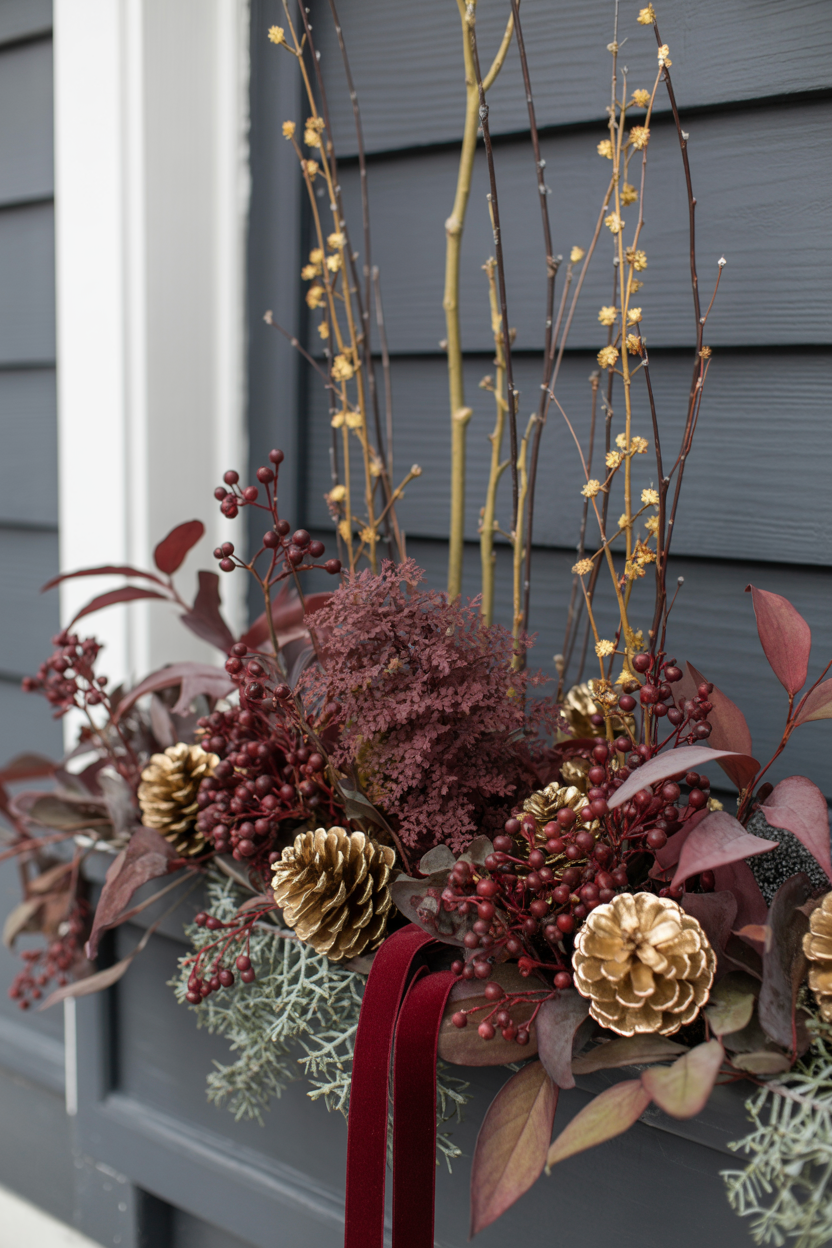
Burgundy and gold winter window boxes deliver exterior luxury through a jewel-toned palette that most seasonal arrangements avoid entirely — and the boldness of that color commitment creates genuinely extraordinary curb appeal during winter’s typically muted landscape. Deep burgundy leucothus foliage provides the arrangement’s primary botanical structure while introducing a rich color tone that few plants naturally achieve. The visual warmth of this palette against snow or frost creates a contrast that reads dramatically from significant distances.
Golden-yellow twig dogwood stems rising vertically above the primary arrangement layer introduce a warm metallic quality through purely natural botanical material — no paint or spray required. Deep wine-colored hypericum berry clusters tucked throughout the greenery maintain the jewel-tone palette at every level. Velvet burgundy ribbon woven through the arrangement bridges the botanical and decorative elements with a textile richness that feels genuinely luxurious. This winter window box idea suits brick homes, stone cottages, and any exterior where warm rich tones complement the existing architectural palette naturally.
9. The Snowy Woodland Winter Window Box With Faux Snow Magic
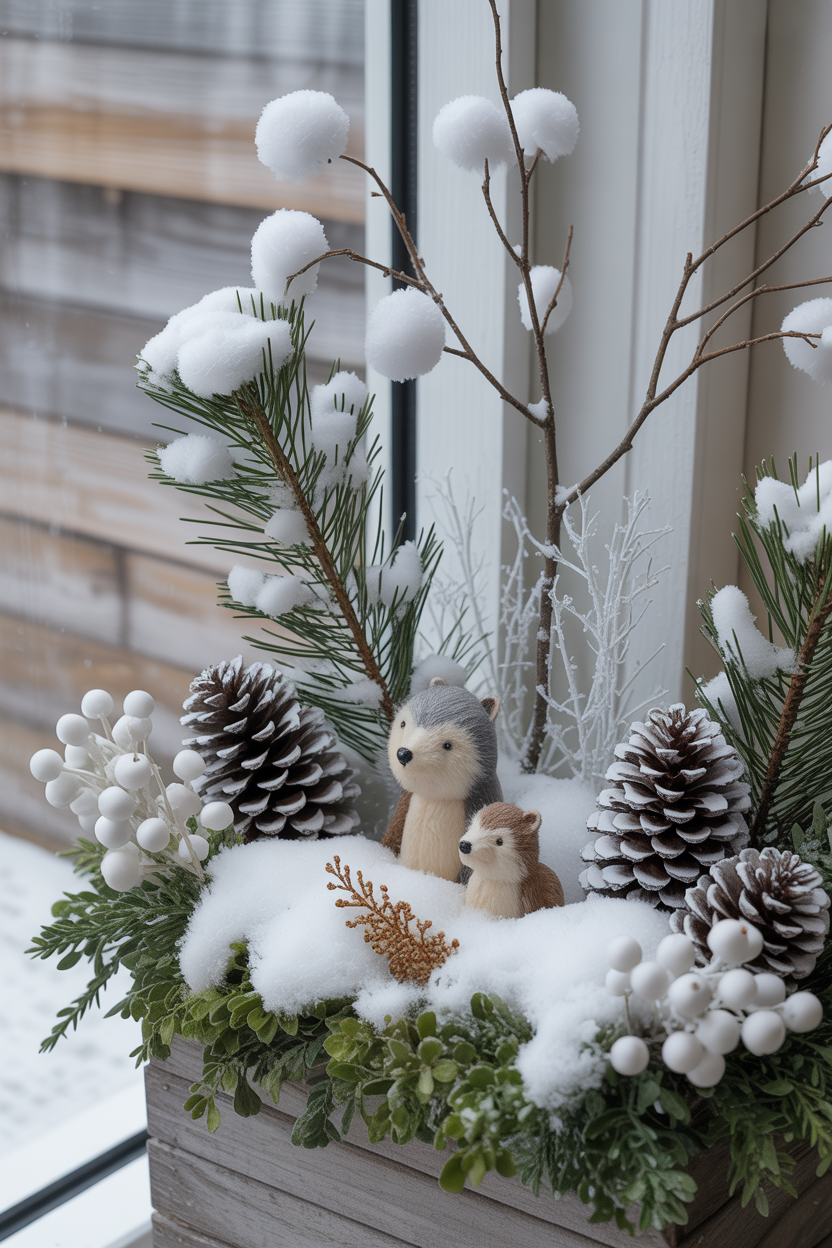
Faux snow winter window boxes solve one of seasonal decorating’s most persistent frustrations — the gap between the imagined winter wonderland aesthetic and the actual weather conditions that rarely cooperate with decorating ambitions. Generous faux snow application across pine branch tips creates the accumulated-snowfall impression that real weather provides unreliably and briefly. The key to convincing faux snow application is building it up in layers that follow gravity rather than coating branches uniformly in a way that no actual snowfall would produce.
Tiny woodland animal figurines nestled within the snowy branches are the detail that transforms this from a botanical arrangement into a small narrative scene — a frozen moment from a forest that exists only in the imagination and this window box simultaneously. Iridescent white berry clusters catch winter light with a subtle sparkle that suggests ice crystals without introducing obviously manufactured glitter. This winter window box idea photographs magnificently and rewards anyone willing to invest time in the snow application technique that makes the difference between convincing and theatrical.
10. The Dried Botanical Winter Window Box With Prairie Naturalism
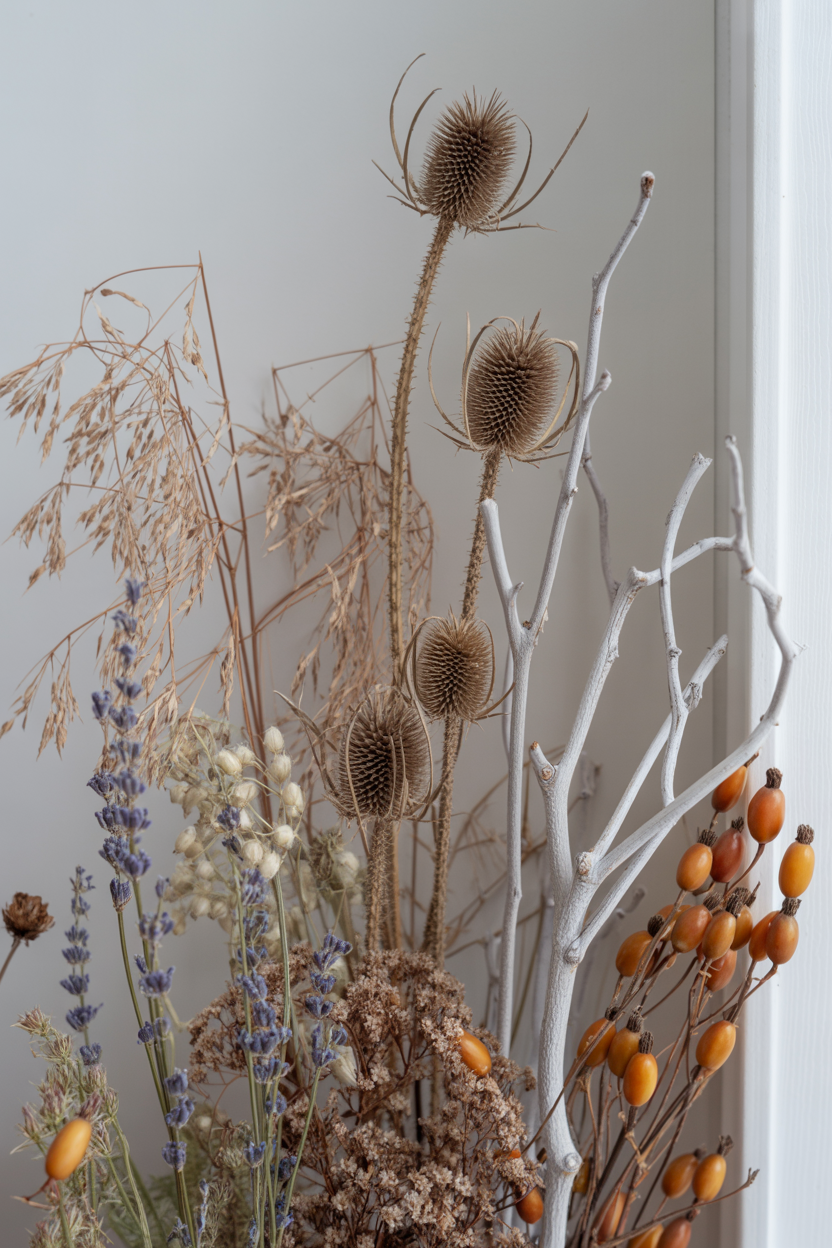
Dried botanical winter window boxes represent perhaps the most ecologically considered approach to seasonal exterior decorating — using materials that were growing and thriving during other seasons and continue providing beauty through their dried forms rather than requiring fresh cutting. Tall dried grasses moving in winter wind introduce a kinetic dimension that static arrangements entirely lack. That gentle movement makes the window box feel alive rather than installed, which is a genuinely rare quality in exterior seasonal decorating.
Preserved lunaria seed pods with their distinctive translucent coin-shaped forms catch winter light with an almost stained-glass quality that no other dried plant material replicates. Teasel heads rising dramatically above the arrangement’s primary level create bold sculptural silhouettes that read beautifully against light-colored home exteriors in winter’s low-angled sunlight. This winter window box idea suits naturalistic garden styles, prairie-influenced landscapes, and any home exterior where the aesthetic conversation between garden and architecture privileges honesty over ornamentation.
11. The Colorful Kale and Ornamental Cabbage Winter Window Box
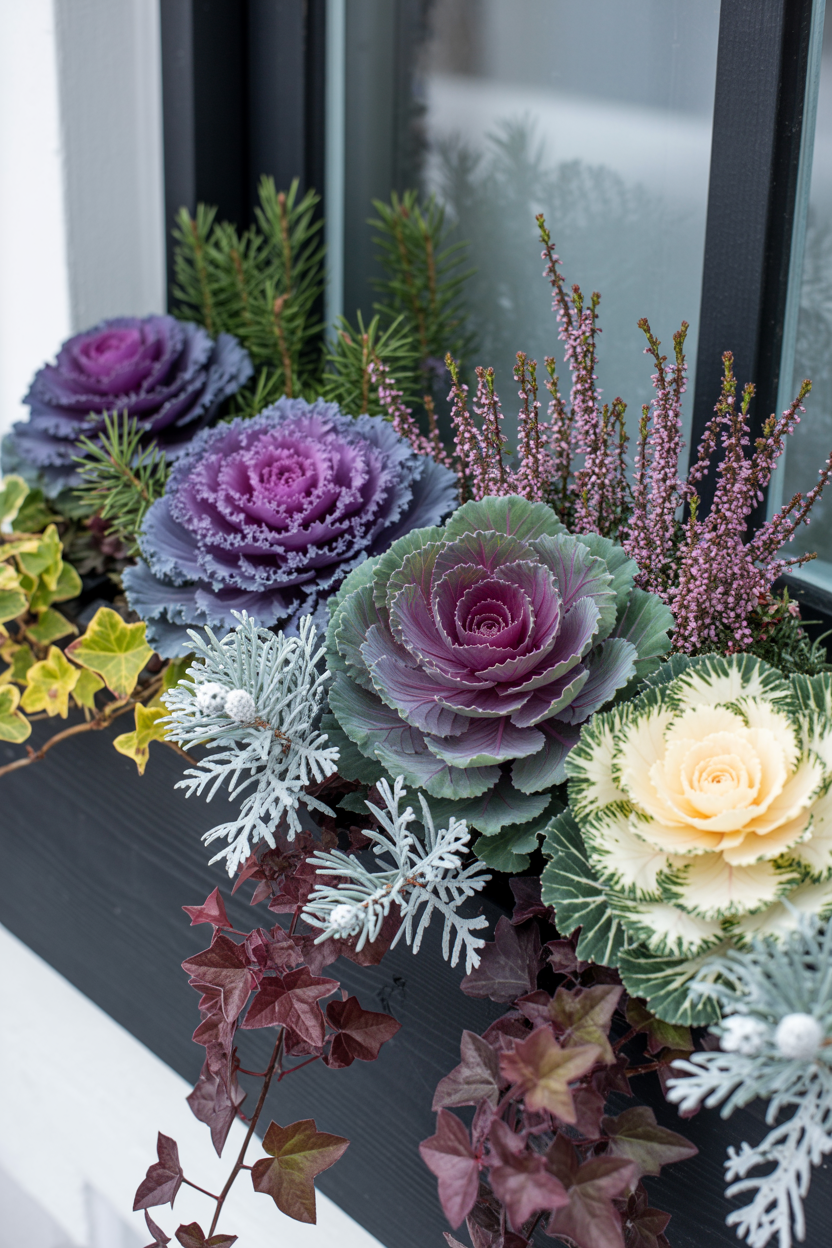
Ornamental kale and cabbage winter window boxes challenge the assumption that living plant arrangements must surrender to dormancy during the coldest months — because these remarkable plants genuinely intensify their color as temperatures drop rather than fading. Deep purple and cream ornamental kale rosettes achieve their most dramatic coloration in near-freezing conditions, meaning the window box looks increasingly spectacular as winter deepens. That counterintuitive behavior makes them one of the most rewarding winter window box ideas for gardeners who prefer living arrangements over dried or artificial alternatives.
Dusty miller’s silvery foliage threading through the arrangement creates visual continuity between the kale rosettes and pine sprigs while introducing a botanical texture that feels genuinely sophisticated. Purple heather sprigs add fine textural detail at a scale completely different from the broad kale leaves, creating scale variation that makes the overall composition feel considered rather than simply assembled. Burgundy ivy trailing over the box edge adds the flowing movement that prevents the arrangement from looking static or top-heavy.
Visit more https://www.pinterest.com/Dreamgardenshome/
12. The Copper and Bronze Metallic Winter Window Box With Warm Shimmer
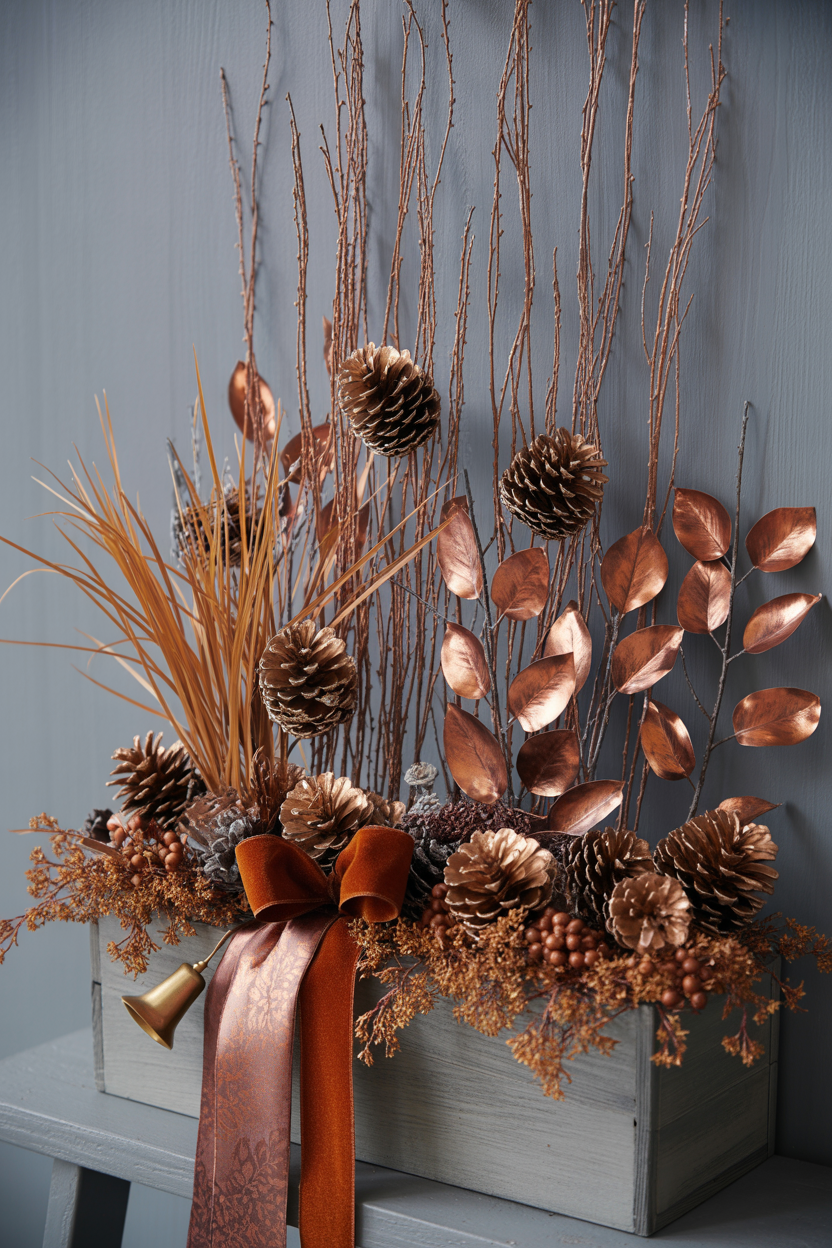
Copper and bronze metallic winter window boxes occupy the visual space between autumn’s departure and winter’s full establishment — a transitional palette that feels simultaneously warm and seasonal without committing to either the russet tones of fall or the cool whites and greens of deep winter. Copper-painted twig stems rising vertically create architectural structure while their metallic finish catches light with a warmth that no natural plant material quite replicates. The interplay between manufactured copper finish and genuine organic form is precisely what makes these elements so visually interesting.
Bronze-sprayed pinecones at multiple sizes throughout the arrangement create tonal variation within the metallic palette that prevents the box from reading as uniformly shiny or artificially uniform. Preserved copper-toned beech leaves still attached to small branches introduce the genuine botanical credibility that keeps the arrangement from feeling like a craft project rather than a designed exterior display. This winter window box idea works particularly beautifully against dark home exteriors where the warm copper tones create maximum contrast and visual warmth.
13. The Winter Berry Abundance Window Box With Wild Generosity
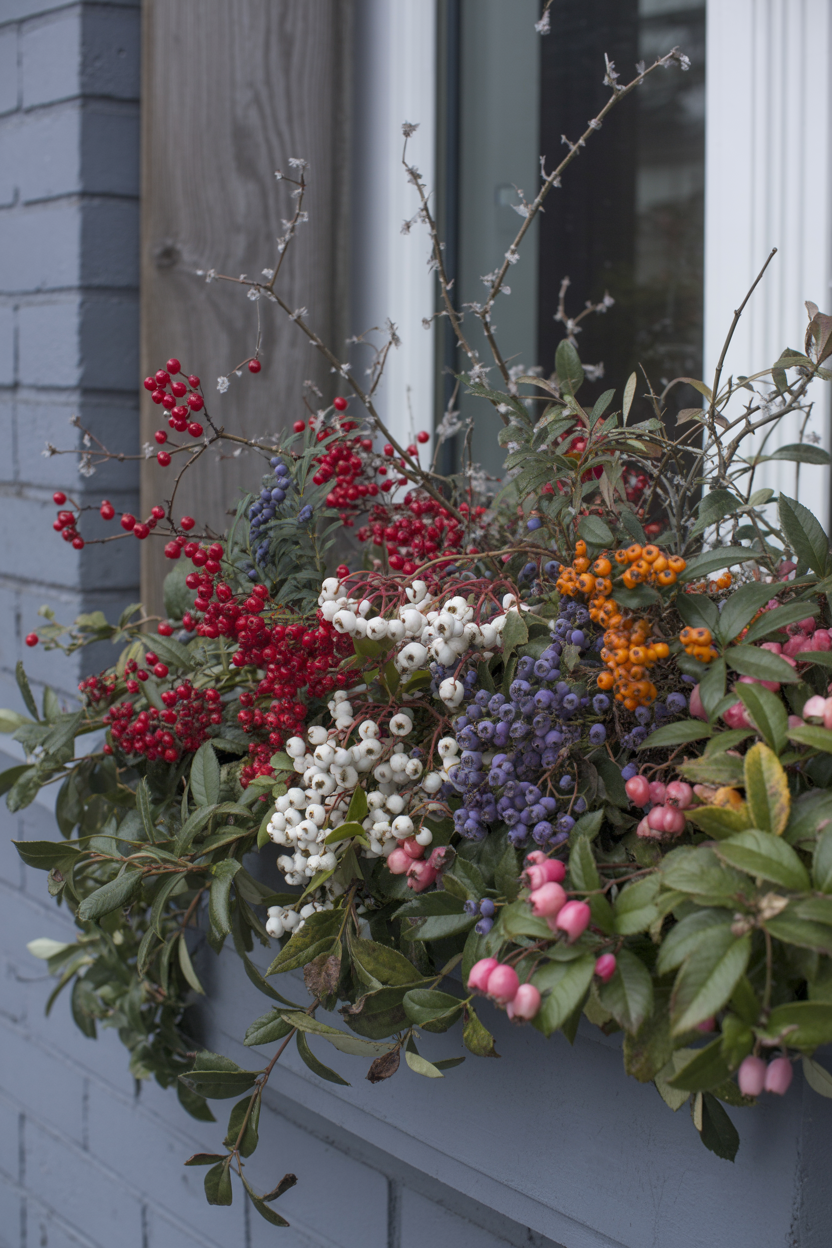
Berry abundance winter window boxes celebrate the remarkable botanical reality that winter landscapes contain extraordinary color in their fruiting plants — color that most gardeners overlook because it sits below eye level or outside familiar seasonal decorating vocabulary. A multi-berry composition featuring winterberry, snowberry, beautyberry, pyracantha, and rose hips simultaneously creates a color range within the berry category alone that rivals any flowering summer arrangement. The minimal holly foliage base makes a deliberate editorial decision — the berries are the design, and everything else exists simply to support them.
Deep purple beautyberry clusters are perhaps the arrangement’s most surprising element because their color sits entirely outside traditional winter decorating palettes while being absolutely authentic to the season’s actual botanical offerings. Orange pyracantha introduces the warm citrus note that prevents the composition from feeling cool or wintry in a melancholy sense. This winter window box idea rewards gardeners who spend autumn months in a different way — gathering berry branches deliberately rather than cutting plants back, treating the winter garden as a material resource rather than a dormant disappointment.
14. The Elegant White and Green Winter Window Box With Bridal Delicacy
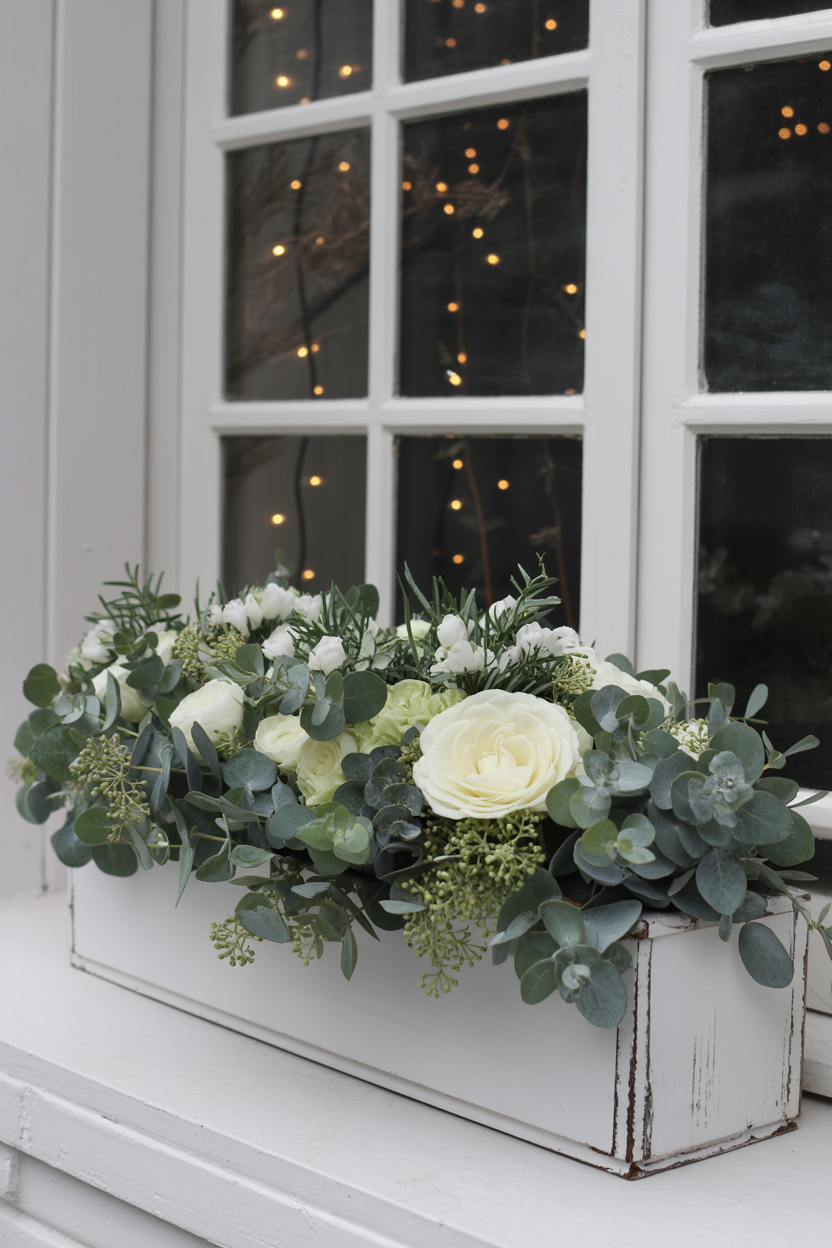
All-white and green winter window boxes achieve a bridal delicacy that no other seasonal color combination quite replicates — and the restraint of working within two colors forces every botanical choice to justify itself through form and texture rather than color contribution. White ranunculus blooms holding against winter cold are the arrangement’s most precious element — their layered papery petals look almost impossibly delicate in an outdoor seasonal context, which makes their presence feel genuinely remarkable rather than simply decorative.
White hellebore faces nodding gently within the arrangement introduce a quiet downward elegance that reflects their natural growing habit — these remarkable winter-blooming perennials earn their common name of Christmas rose through exactly this kind of cold-defying floral beauty. Deep green ivy trailing over the box edge provides the arrangement’s only strong color contrast while introducing the flowing movement that prevents the delicate white elements from feeling static. This winter window box idea suits homes with white or pale painted exteriors where the arrangement reads against the architecture with maximum refinement.
15. The Festive Herb and Edible Winter Window Box With Kitchen Garden Charm
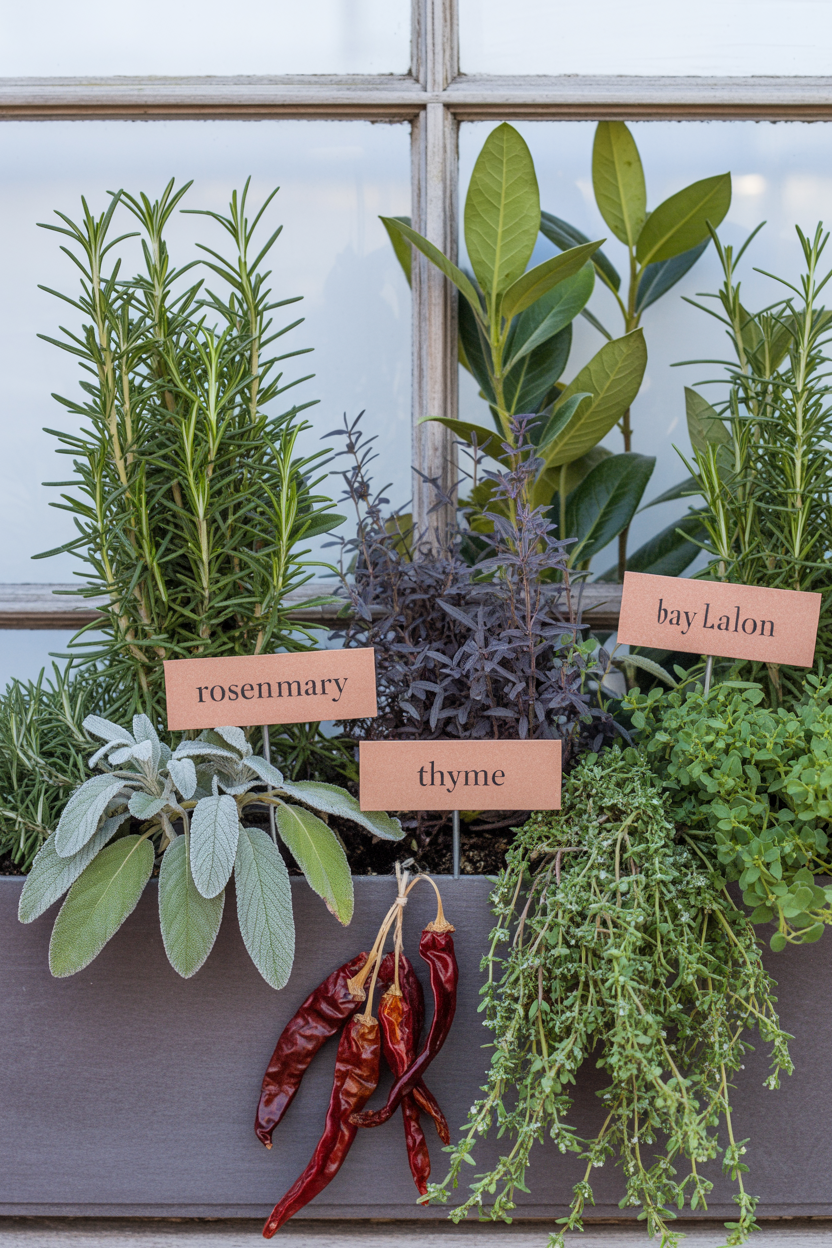
Herb and edible winter window boxes are the decorating approach that values usefulness as highly as beauty — and manages to achieve both simultaneously with a charm that purely ornamental arrangements rarely match. Rosemary plants trimmed into small Christmas tree conical shapes are the idea that stops every gardener in their tracks because it’s so obvious in retrospect and so genuinely delightful in execution. The dark needle-like foliage holds the shape perfectly through winter while the plants remain completely harvestable throughout their display season.
Dried chili pepper strings woven through the arrangement introduce vivid red color through an entirely edible, regionally significant botanical material that connects the window box to genuine culinary traditions. Frost-tinged purple sage leaves develop their most intense coloration in cold weather, making them increasingly beautiful as winter deepens. Small terracotta labels identifying each herb introduce the kitchen garden aesthetic at the level of fine detail — they communicate that this window box is functional as well as decorative and invites closer inspection from anyone passing within reading distance.
16. The Whimsical Fairy Light Winter Window Box After Dark
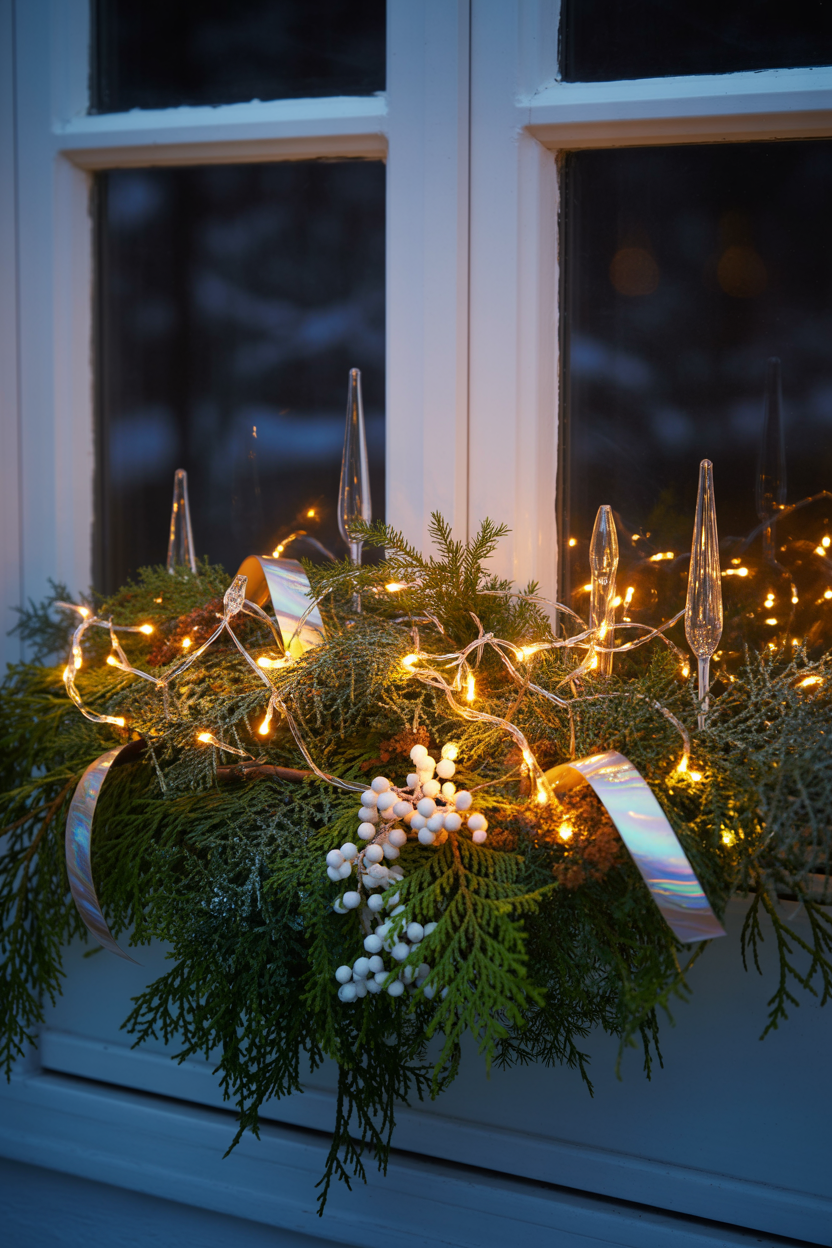
Fairy light winter window boxes operate on a simple but profound design principle — they treat the window box as a lighting installation that happens to contain botanical material rather than a botanical arrangement that happens to include some lights. That philosophical shift changes every subsequent decision about density, material choice, and installation. Micro fairy lights woven densely throughout the arrangement rather than simply laid across the surface create a genuinely immersive illumination effect where the light appears to come from within the greenery rather than simply sitting upon it.
Glass icicle ornaments catching and refracting that internal illumination create miniature light shows throughout the arrangement that shift with every breath of wind. The effect after dark is genuinely difficult to describe to someone who hasn’t stood in front of one — it creates a warmth and magic that transforms the home’s entire exterior personality. This winter window box idea is arguably most effective for homes whose evening presence matters as much as their daytime appearance — on street-facing windows where evening commuters pass regularly, these arrangements create genuine neighborhood wonder.
17. The Architectural Curly Willow Winter Window Box With Sculptural Drama
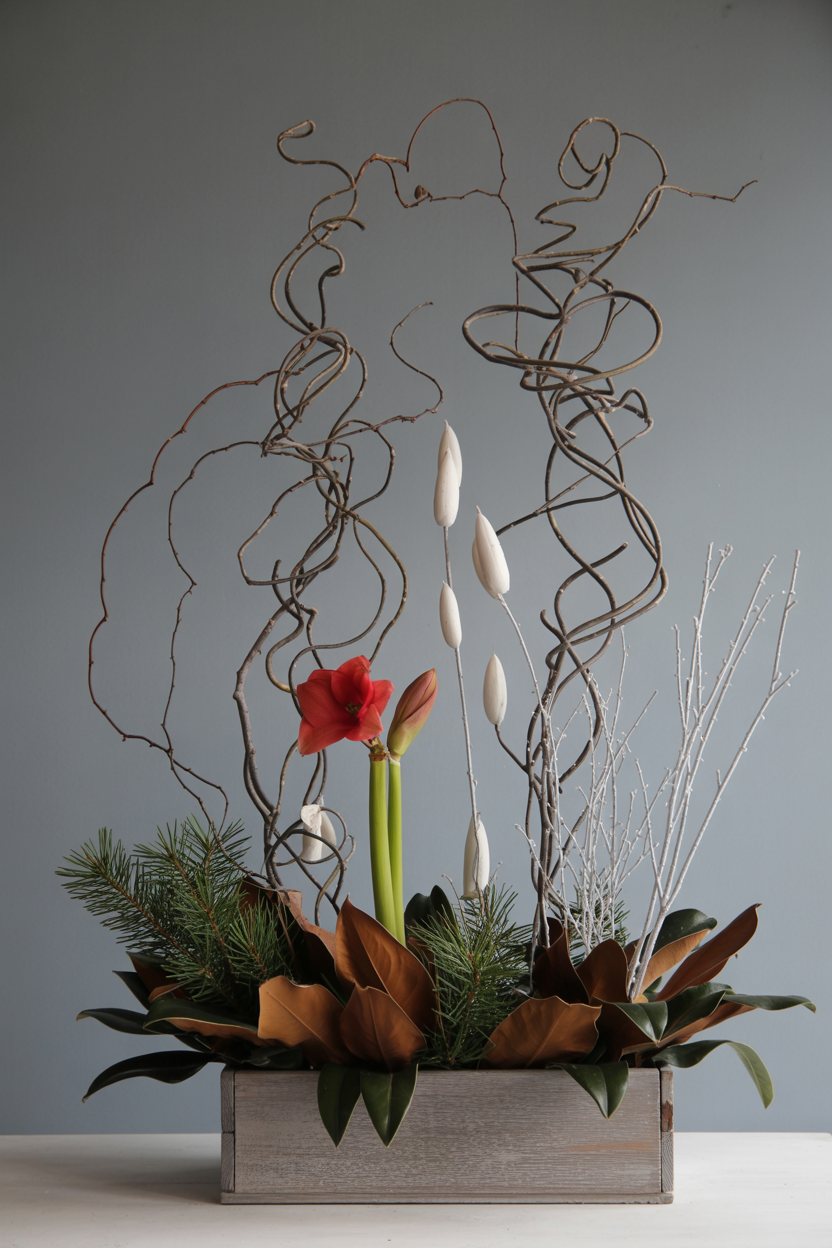
Curly willow winter window boxes make the boldest compositional statement available in seasonal exterior decorating because they extend dramatically above the window box boundary and claim architectural territory that conventional arrangements never reach. Curly willow branches rising two feet above the box in their characteristic spiraling forms create organic sculpture that transforms the window box from a contained display into an architectural event. Against a plain home exterior, these arrangements read like genuine outdoor art installations.
A single bold red amaryllis stem positioned as the arrangement’s clear focal point demonstrates sophisticated design restraint — one extraordinary bloom against sculptural branches and textural foliage makes more visual impact than multiple competing flowers ever could. Bleached lunaria seed pods introduce their translucent coin-shaped forms throughout the curling willow branches, creating a scattered treasure quality that rewards close inspection. This winter window box idea suits contemporary homes and any exterior architecture where sculptural design thinking feels more natural than traditional seasonal abundance.
18. The Woodland Creature Winter Window Box With Storybook Personality
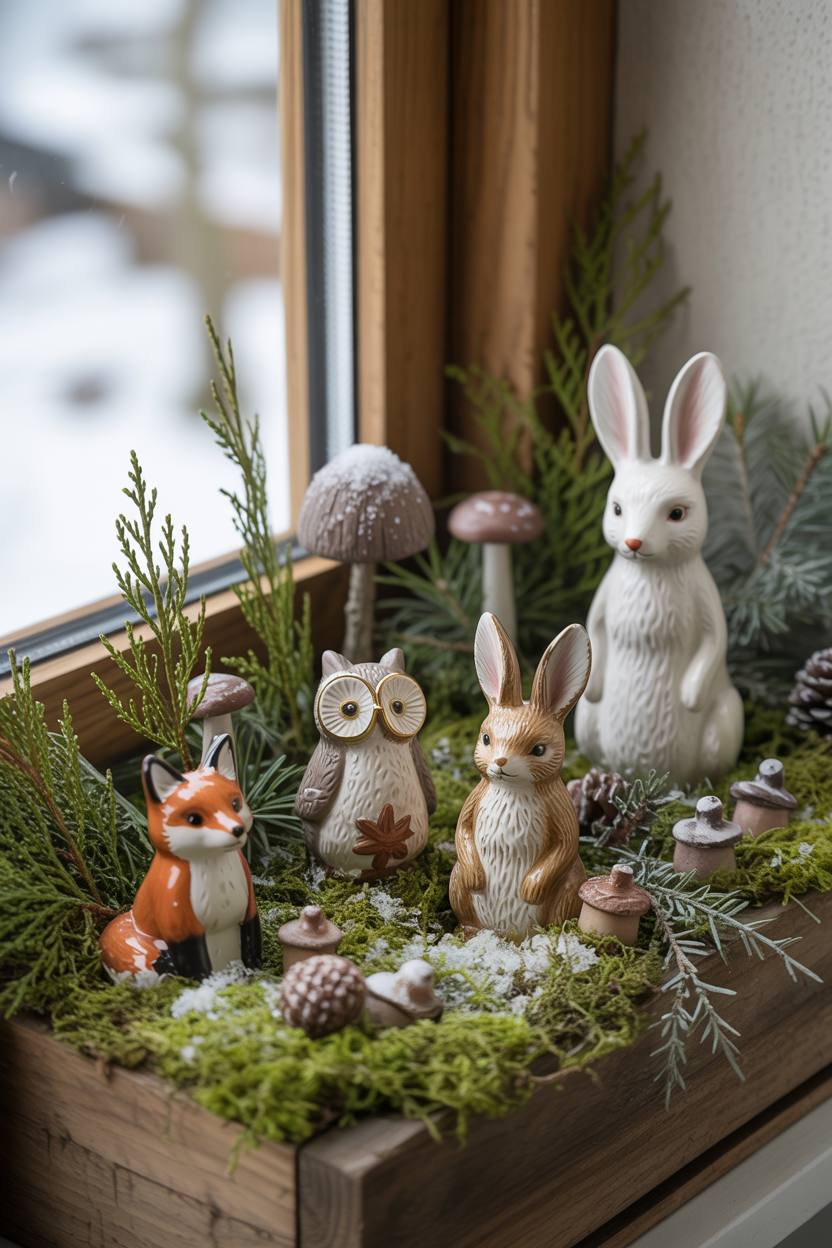
Woodland creature winter window boxes create something that no other exterior decorating approach achieves quite as naturally — they make adults and children stop walking and look more carefully, drawn by the small narrative scene embedded within what initially appears to be a conventional evergreen arrangement. Small ceramic woodland animal figurines placed with genuine consideration for storytelling rather than simply scattered across the greenery create the impression of a real moment — the fox pausing, the owl watching, the rabbits huddled together against the cold.
Preserved moss creating a forest floor effect at the arrangement’s base is the detail that elevates this from whimsical decoration into convincing miniature world-building. Without the moss groundplane, the figurines simply sit among branches. With it, they inhabit a landscape. Miniature mushroom accents and tiny acorn ornaments continue the woodland vocabulary at every scale throughout the composition. This winter window box idea is genuinely beloved by anyone who encounters it — which makes it one of the most socially successful exterior decorating choices available for any home that faces a sidewalk or shared outdoor space.
19. The Scandinavian Simplicity Winter Window Box With Nordic Grace
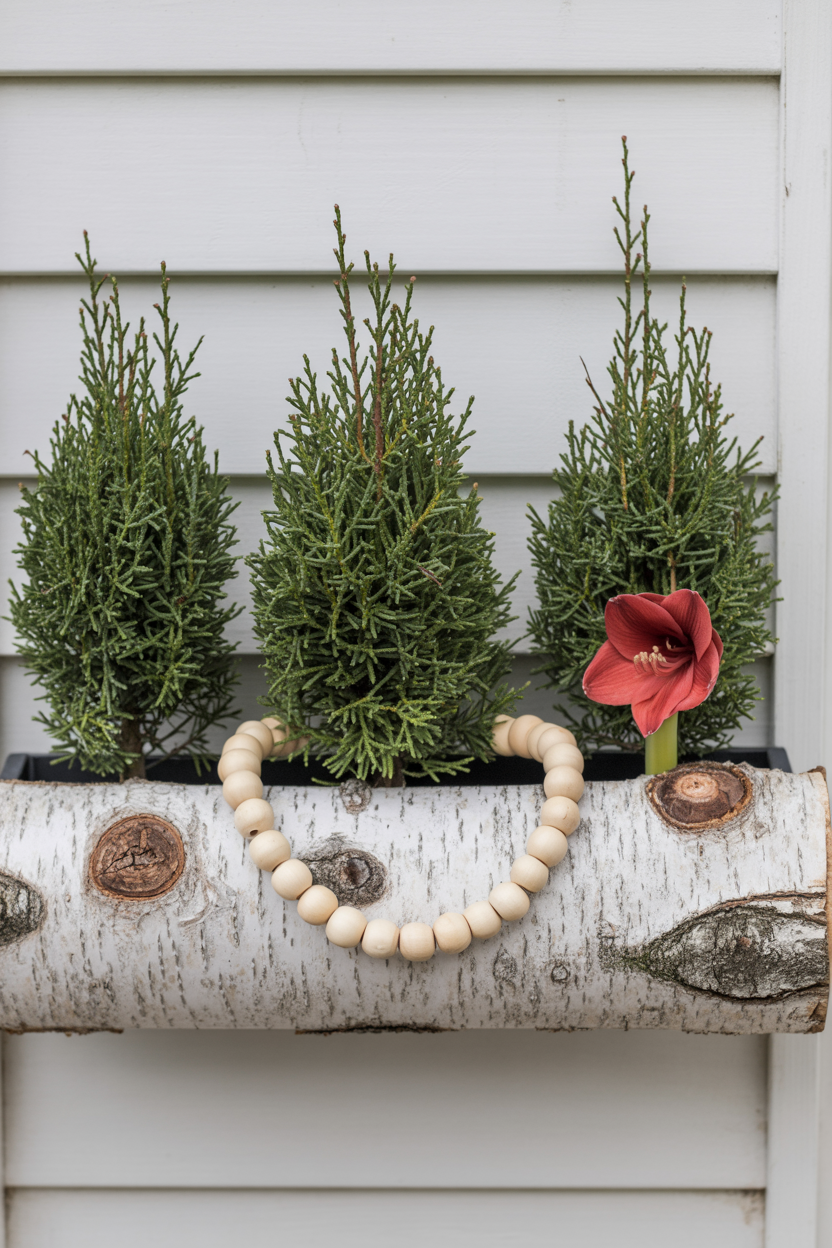
Scandinavian simplicity winter window boxes are exercises in decorating confidence — the confidence to stop adding when the composition already contains everything it needs. Three uniform juniper sprigs in a clean row establish the arrangement’s primary botanical structure through repetition and symmetry rather than variety and abundance. That repetitive simplicity creates a formal, considered quality that immediately signals intentional design rather than casual assembly. The white birch bark box panel continues the Nordic natural material vocabulary at the structure level.
A single red wax amaryllis bloom positioned as the arrangement’s sole color accent demonstrates exactly how much visual power a single carefully placed element can generate when its surroundings have the restraint to allow it space. The wooden bead garland looped across the front is the decorative gesture that humanizes the arrangement’s formal quality — it introduces warmth and handcraft without disrupting the essential Nordic calm. This winter window box idea suits modern farmhouses, Scandinavian-influenced architecture, and any home exterior where design restraint is understood as a form of genuine sophistication.
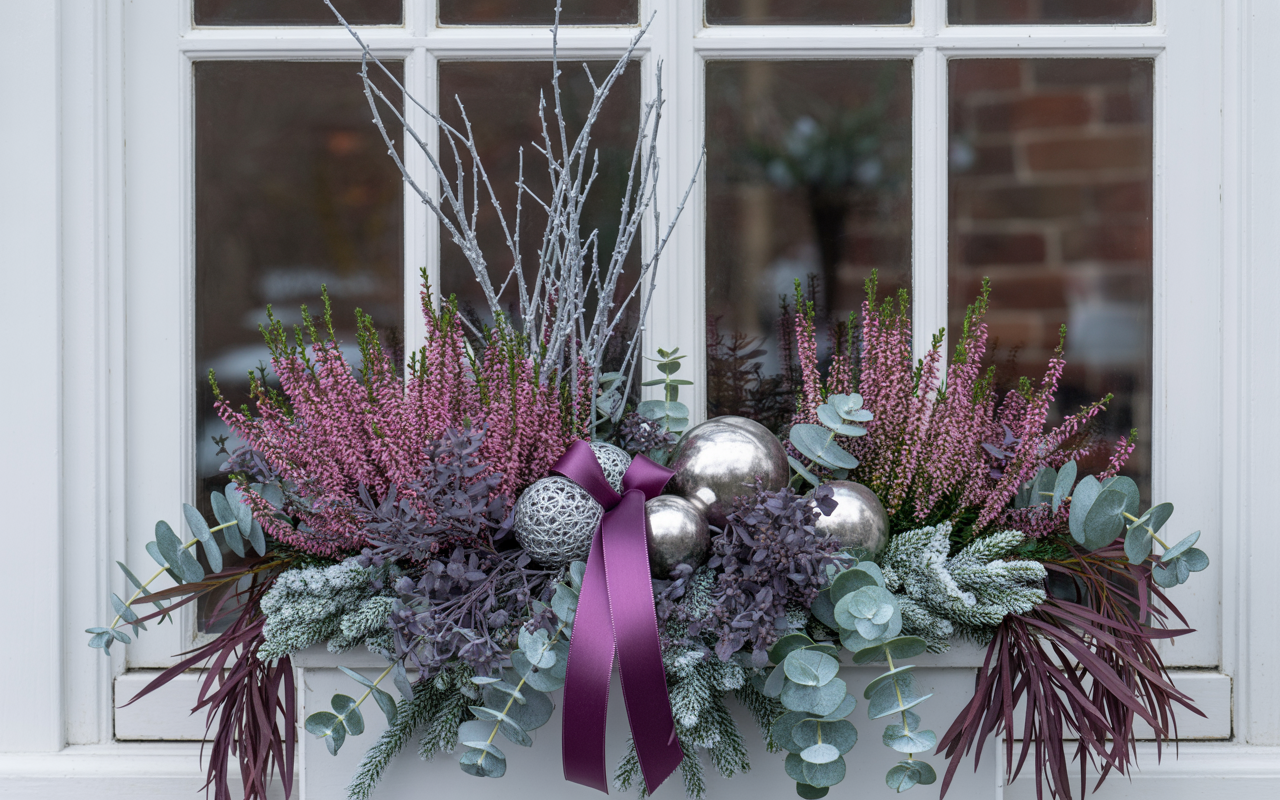
20. The Luxurious Purple and Silver Winter Window Box With Royal Presence
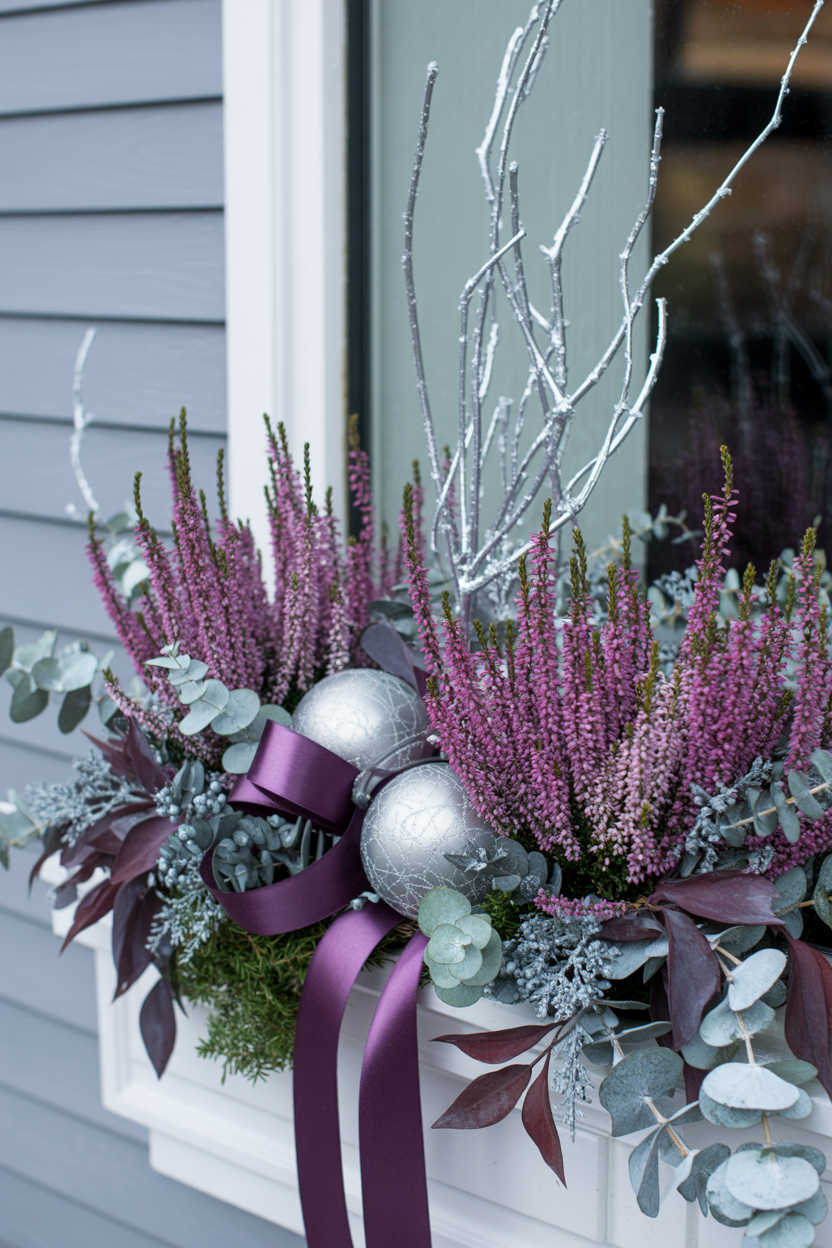
Purple and silver winter window boxes are the seasonal exterior decorating choice that makes neighbors genuinely stop their cars — because the combination is simultaneously unexpected and completely harmonious. Purple heather in full winter bloom is one of those botanical facts that surprises people who don’t garden seriously, because the idea that something blooms so prolifically and so beautifully in winter’s coldest conditions seems almost counterintuitive. The heather’s fine-textured flowers create an almost cloud-like purple mass that reads as an extraordinary color from remarkable distances.
Silver-frosted eucalyptus threading throughout the arrangement creates the cool metallic counterpoint that prevents the purple from feeling overly warm or autumnal. Amethyst-toned ribbon woven gracefully through the composition bridges the botanical purple and the decorative silver elements with a material that acknowledges both simultaneously. Silver twig stems rising above the primary arrangement layer add the architectural height that makes this composition visible from the street as something genuinely remarkable. This winter window box idea is for homeowners willing to embrace unexpected seasonal color — and be rewarded with the most talked-about exterior on their street.
21. The Timeless Winter Window Box That Works on Every Home
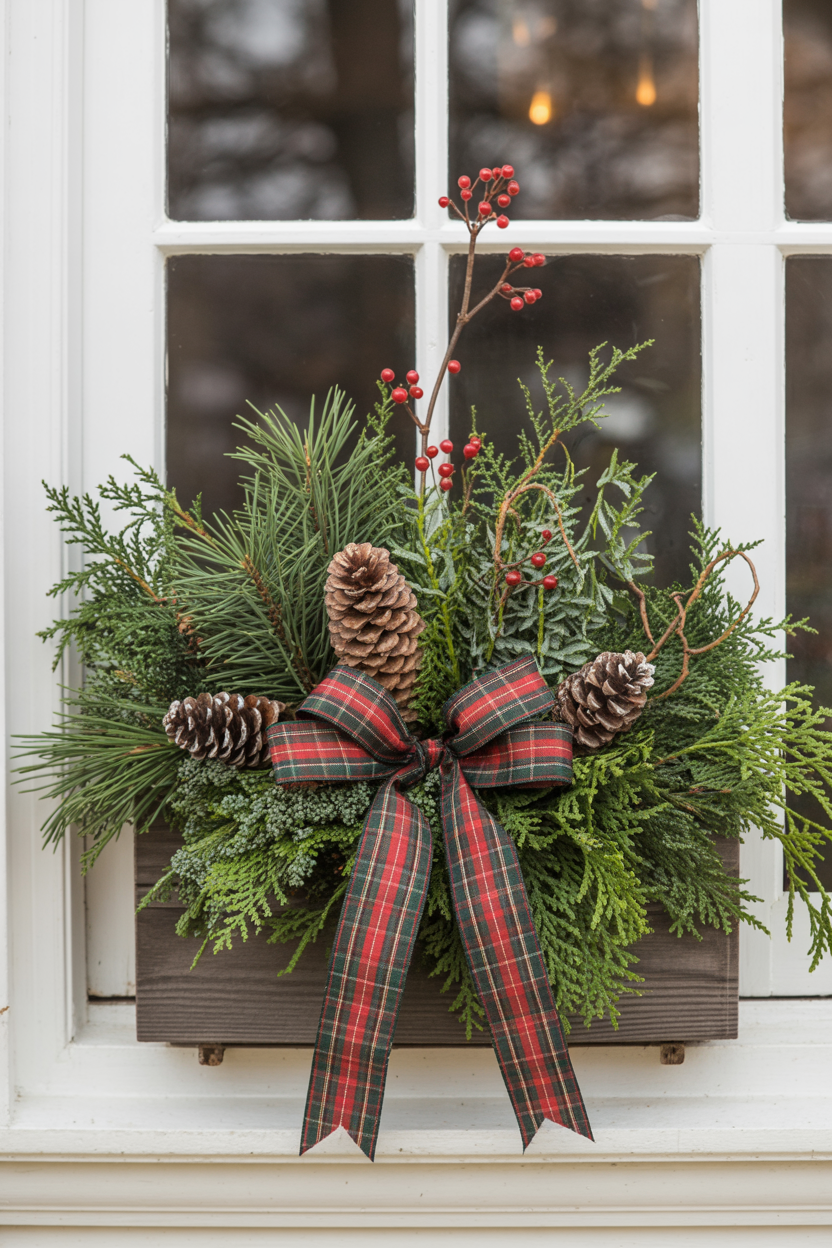
Timeless mixed evergreen winter window boxes work on every home because they’re built on the design principle of genuine botanical generosity rather than stylistic specificity. Mixed pine, cedar, and juniper create three distinct needle textures and three slightly different green tones that produce visual depth within a seemingly simple arrangement. That botanical variety is what distinguishes a genuinely beautiful evergreen window box from one that simply looks full — the eye finds more to discover as it moves across the varied textures.
Three pinecones at natural intervals rather than clustered together demonstrate the compositional principle that odd-numbered groupings with breathing space between them always read more naturally than even-numbered arrangements pushed together. Red berry clusters provide the seasonal color signal that makes the arrangement immediately communicate winter welcome to every passing observer. The clean plaid ribbon bow is the single decorative gesture that brings human warmth to the botanical arrangement — and it’s all this composition needs. This winter window box idea is the one to return to every year, because it never disappoints and never feels dated.
Conclusion
Winter window boxes reward one thing above everything else — the decision to actually try. Every idea here starts with a simple planter, a handful of gathered materials, and the willingness to treat your home’s exterior as worthy of the same creative attention as your interior. The cold months don’t have to mean bare boxes and forgotten ledges. Fill them intentionally and your home becomes the warmest-looking house on the street all winter long.

Join The Discussion